Skip to content
  • Home
  • Subscribe / donate
  • Events calendar
  • News
    • Local
    • National
    • Israel
    • World
    • עניין בחדשות
      A roundup of news in Canada and further afield, in Hebrew.
  • Opinion
    • From the JI
    • Op-Ed
  • Arts & Culture
    • Performing Arts
    • Music
    • Books
    • Visual Arts
    • TV & Film
  • Life
    • Celebrating the Holidays
    • Travel
    • The Daily Snooze
      Cartoons by Jacob Samuel
    • Mystery Photo
      Help the JI and JMABC fill in the gaps in our archives.
  • Community Links
    • Organizations, Etc.
    • Other News Sources & Blogs
    • Business Directory
  • FAQ
  • JI Chai Celebration
  • JI@88! video

Recent Posts

  • Sharing her testimony
  • Fall fight takes leap forward
  • The balancing of rights
  • Multiple Tony n’ Tina roles
  • Stories of trauma, resilience
  • Celebrate our culture
  • A responsibility to help
  • What wellness means at JCC
  • Together in mourning
  • Downhill after Trump?
  • Birth control even easier now
  • Eco-Sisters mentorship
  • Unexpected discoveries
  • Study’s results hopeful
  • Bad behaviour affects us all
  • Thankful for the police
  • UBC needs a wake-up call
  • Recalling a shining star
  • Sleep well …
  • BGU fosters startup culture
  • Photography and glass
  • Is it the end of an era?
  • Taking life a step at a time
  • Nakba exhibit biased
  • Film festival starts next week
  • Musical with heart and soul
  • Rabbi marks 13 years
  • Keeper of VTT’s history
  • Gala fêtes Infeld’s 20th
  • Building JWest together
  • Challah Mom comes to Vancouver
  • What to do about media bias
  • Education offers hope
  • Remembrance – a moral act
  • What makes us human
  • המלחמות של נתניהו וטראמפ

Archives

Follow @JewishIndie
image - The CJN - Visit Us Banner - 300x600 - 101625

Tag: refugees

Sponsoring a refugee family

Sponsoring a refugee family

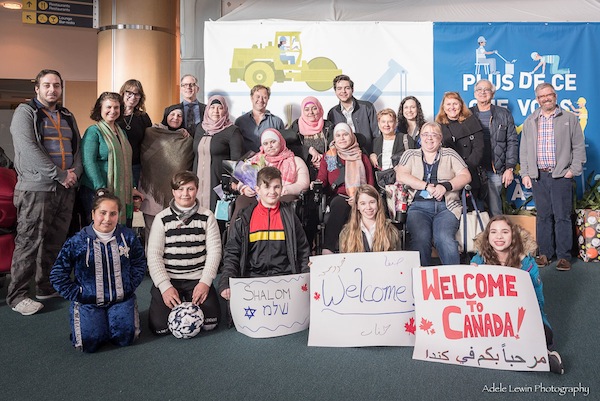
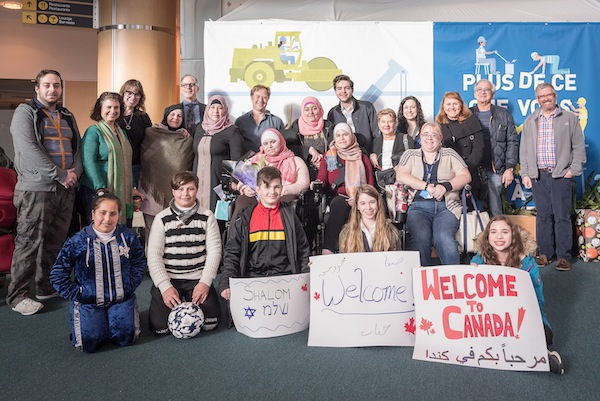
The Alsidawi family, sponsors and congregants at the Vancouver International Airport, January 2019. (photo by Adele Lewin Photography)

Canadian Jews have a long history of standing up for the rights and welfare of refugees. And while Jewish immigrants have often been at the receiving end of this generosity, Vancouver Jewish congregations have played a frequent and often crucial role in ensuring the safe relocation of many non-Jewish refugees as well. They have sponsored refugees from Tibet, families from Vietnam, as well as helped relocate Jews from North Africa and Hungary during times of political unrest. When Canada announced its intention to accept some 25,000 immigrants from in and around wartorn Syria in 2015, many Vancouver congregations once again stepped up to help.

The news of a little Syrian boy whose body had washed up onto a Turkish resort beach in 2015 became a haunting symbol of the war for many Canadians, Rosalind Karby and Miranda Burgess told the Independent. In November of that year, the two women, along with a small cadre of volunteers from congregations Beth Israel and Beth Tikvah, launched an appeal to sponsor a Kurdish family’s immigration to Canada. Karby, who is no stranger to philanthropic initiatives, said the decision to mobilize a sponsorship was a “no brainer” for her, and for many in the local Jewish community. “There’s no question. That [image] sort of galvanized us.”

By 2016, the effort to save Syrian civilians in peril had become an egalitarian issue: Orthodox, Conservative Reform and Renewal congregations here were finding their own ways to fundraise and reach out. In the Lower Mainland, Schara Tzedeck members voted to contribute funds to the Joint Distribution Committee’s humanitarian aid efforts, while Or Shalom, Temple Sholom, Beth Israel and Beth Tikvah applied to the federal government for permission to sponsor families to Canada.

Burgess said, for many, the decision to help fleeing Syrian families emanated from longstanding Jewish experience. “From wandering Aramaeans and other dispossessed Jews to post-Holocaust migrations, to a situation like this, it felt like a very direct line, I think, to a lot of people,” she said.

But, if the ethical decision to provide a lifeline for refugees was a “no brainer,” as Karby put it, the path to bringing that sponsorship to fruition was anything but simple. It was not merely a matter of overseeing their resettlement in Vancouver. There would be a long list of forms to fill out. There were meetings with immigration representatives and members of the Anglican Church archdiocese, which coordinated the sponsorship process for this program. And there were lengthy virtual meetings with the applicant family, who, for the time being, was living in a crowded refugee camp in eastern Jordan.

There was also an “exhaustive” number of details to collect, often over spotty wireless connections, to verify the family’s eligibility: education backgrounds, family histories, residences and connections for all adults. In all, about 40 pages of forms to fill out, said Burgess.

For the family, the application process had its own challenges. For Hanan Alsidawi, the mother, it meant repeated trips to the capital, Amman, an hour-and-a-half drive away from the refugee camp, to secure paperwork, signatures and permission. Her husband, who had been reported missing when the family fled Syria, had not been found. Making it to Canada safely now rested on Hanan’s own initiative and the kindness of strangers thousands of kilometres away in Vancouver.

Sponsoring a refugee family came with considerable financial responsibility. According to the Canadian government, the sponsors were in charge of covering all out-of-pocket costs for the family for one year, including food, lodging and incidentals. That meant the sponsors would need to have a minimum of $40,000 in the bank to qualify. Moreover, Burgess and Karby estimated, that was actually low: for a family of three, the cost of living would be closer to $50,000 a year. The team would need to raise at least $10,000 more than mandated by the government.

“At the time, BI had just completed five years of fundraising for the [synagogue’s] new building,” Karby said. It was also just wrapping up its annual High Holy Day Appeal, another important humanitarian project that relied on the congregation’s support. Asking the entire congregation to take on a third project – and quickly – seemed unrealistic.

After some thought, the sponsorship team decided to take a different tack: they would reach out to a smaller, select group of family and friends who might be able to cover the sponsorship. And they would put a top limit on each donation.

“We determined a maximum gift of $1,000 so that no one person would feel that they should just pay the whole thing and no one person could feel they had to meet up to some high standard,” Karby explained.

But that still meant coming up with at least 40 to 50 donations.

“So, we cast a wide net,” Burgess said. “We worked our networks.”

They appealed to donors both inside the congregations and out. They contacted people they knew had contributed to humanitarian initiatives before. And they appealed to friends far away.

“I went to graduate school in the United States and I have a big network south of the border,” Burgess admitted, noting that the idea struck a chord with American residents as well, “who, because of their own governmental circumstances weren’t able to do sponsorships but felt the same urgency.”

By the end of the appeal, they had received donations from as far away as Michigan, Massachusetts and Maryland. “All were very small, but contributed to the whole,” said Burgess.

They had met their goal – and then some. Karby said Beth Tikvah’s donation of $10,000, whose fundraising was coordinated by David Numerow, put the project over the top, bringing the total to just over $50,000.

Still, it took more than two years for the family to receive approval to immigrate. In January 2019, Hanan and her two children, Mahros and Safa, arrived at Vancouver International Airport to a fanfare of elated family and Jewish congregants. Some of the Alsidawi clan was already living in Vancouver, so Hanan and her children would be able to count on help with things like language interpretation and getting settled in their new city.

We were strangers, too

According to Congregation Beth Israel president Helen Pinsky, quite a number of BI congregants stepped up to support the initiative privately when it was announced. She said she chose to donate because the endeavour resonated with her values as a Jew.

“Many of us had been involved in sponsoring the Vietnamese refugees in the 1970s,” she said. “It had been a very happy, very successful experience for me.”

She said the experience taught her the value of such initiatives. The sponsorship, she said, “is certainly in keeping with our beliefs and how we should behave, according to our forefathers, and it seems like it is consistent with an organization of people who have strong feelings about pikuach nefesh, the saving of a soul.”

Rabbi Jonathan Infeld, who serves as Beth Israel’s head rabbi, said helping others is a core principle to the Jewish faith, specifically because of the historical experiences of the Jewish people.

“Torah tells us that we were foreigners in a foreign land and we need to care about foreigners, and people suffering,” Infeld said. That’s why the congregation – and other synagogues as well – felt it was essential to help Syrian families in distress. “We wanted to take up what the Torah told us in a very real, concrete way.”

Even though sponsors’ financial responsibilities ended in January, their bond with the Alsidawi family has not. Burgess and Karby continue to visit Hanan and her children and check up on their progress. By law, the sponsors are not permitted to offer further funding, and Karby admits that the transition will continue to take time for the small family.

For the volunteers, the past four years of effort was more than a gesture of generosity. It was crucial they help.

“You save one life, you save a world, and we were fated to do what, well, any human being should do, really,” said Karby. “But I think that our Jewish tradition of helping the needy, of trying to save a life definitely propelled Miranda and me.”

“Saving one life is as if you saved a whole world,” Burgess agreed. “And, now that geopolitics has intensified the Syrian crisis again and people are once again fleeing in vast numbers, I am so thankful we were able to help one family. I wish we could have helped all families, but to help one family is something and we were grateful we were able to do it.”

Jan Lee’s articles and blog posts have been published in B’nai B’rith Magazine, Voices of Conservative and Masorti Judaism, Times of Israel, as well as a number of business, environmental and travel publications. Her blog can be found at multiculturaljew.polestarpassages.com.

***

Note: This article has been amended to correct Rosalind Karby’s first name, which was misspelled in the original version.
Format ImagePosted on May 15, 2020June 5, 2020Author Jan LeeCategories LocalTags Alsidawi, Beth Israel, Beth Tikvah, Miranda Burgess, refugees, resettlement, Rosalind Karby, Syria, tikkun olam
Local team’s global impact

Local team’s global impact

Ran Sommer (photo from the Walking School Bus)

Ran Sommer was working as a project manager for a health region and moonlighting as a volunteer for a very small Vancouver-based international education charity. A trip to India to see the charity’s work in action changed the direction of his career – and the course of the organization.

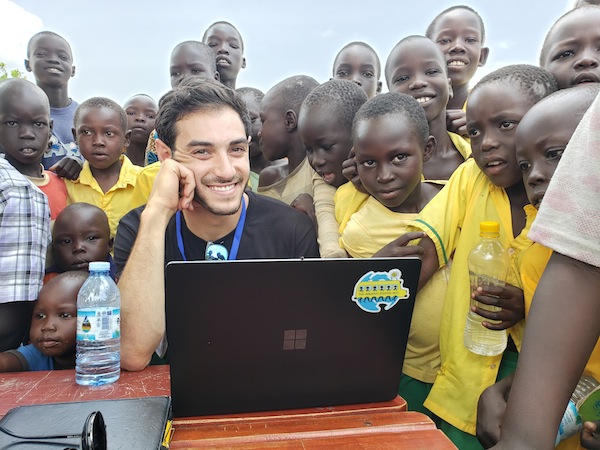
The Walking School Bus was the brainchild of another young innovator from the Vancouver area, Aaron Friedland, who has received numerous recognitions, including a Next Einstein award, which was presented by CNN’s Anderson Cooper, and as one of the Jewish Independent’s 18 Under 36 honourees. TWSB, as it is shorthanded, emerged out of a trip to Uganda

Friedland took, where he learned that many students in that country do not attend school because it is too far for them to walk. The first step in his venture to resolve the problem was a book by the same name, which started a fundraising campaign that led to the purchase of the first vehicle, which shuttles Ugandan kids to school then does duty as a taxi in the off hours to cover expenses and generate revenue for school materials.

When Sommer returned from earning undergraduate and master’s degrees at Wilfred Laurier University in Waterloo, Ont., Friedland was one of the first people with whom he reconnected. Both alumni of King David High School, they had been in the same social circles and Sommer had followed Friedland’s successes via social media. He came on board as a volunteer, serving as director of communications.

While Sommer was getting some good training at project management in his day job at the health authority, when he joined a self-funded trip to see TWSB’s operations in India, he was inspired to take a leap into the uncertain territory of a startup nonprofit.

“I was just so blown away to actually see what I was communicating about for the last year,” Sommer said, adding with a laugh: “To see not only that it was real [but] it was 10 times better than I thought it was and I should probably be communicating it better.”

The inspiration was mixed with sadness that he didn’t feel his full-time job was as meaningful. He and Friedland sat down, figured out how to scrape together enough to give Sommer a salary that would just cover his rent and expenses and Sommer became first-ever employee of TWSB, as director of operations. (Friedland was still unsalaried at the time.)

Despite rapid growth since Sommer’s hiring, it’s still a streamlined organization, with seven employees in Vancouver and eight overseas. But, with its tight budgets and small team, the organization has branched out in a range of directions.

The organization was never simply about getting kids from Point A to Point B. First, there is a research component. Graduate students develop symbiotic relationships with TWSB, joining self-funded excursions to the operations – now in India as well – and looking at data from the projects to enhance their delivery and outcome.

Once TWSB put in place the infrastructure to get students to school, they realized some were arriving hungry and thirsty, which impedes learning. The organization added water-catchment systems, chicken coops and community-supported agriculture to their operations. They developed supplementary curriculum, dovetailing with the objectives of the school systems where they work, including an offline database that serves as a sort of virtual library. In a country like Uganda, where a vast majority of the population does not have access to electricity, let alone wi-fi, the curriculum is aided by Raspberry Pi microcomputers – about $100 each – which can communicate with one another in a localized intranet, but not access the internet. Teachers can use the tablets to project material on screens – a benefit in places like some refugee camps TWSB works, where the teacher to student ratio can be one to about 260.

Throughout the charity’s projects are economic development initiatives that both help the communities they serve and create sustainable funding for their work. They created the BrightBox Macro classroom – a shipping container retrofitted into a solar-powered classroom. While students learn in a space that takes up about seven-eighths of the space, a solar charging room powers not only the shipping container classroom but the entire adjacent school. It also provides a charging hub, where people from the community can pay a few cents to charge their cellphones, tablets, flashlights or other electronics, similar to for-profit charging hubs common throughout the developing world. These fees will add up, according to projections, to eventually pay for the entire facility over time.

TWSB also has a small but aggressive fundraising arm that obtains grants from foundations and groups including National Geographic. The academic expeditions are funded by participants themselves, who are asked to raise an additional $1,000 to $2,000.

Based on studies that indicate students can double their reading comprehension exponentially in just months through the multisensory experience of reading the words while hearing them spoken, TWSB developed Simbi.

This “reading-while-listening application” uses different voices, accents and dialects to give the reader the most relevant voice available in their respective region. Again, outcomes are studied and the data shared to make the impacts greater. Simbi began as a part of TWSB curriculum program and then expanded independently as a startup aimed at an even broader market, with Friedland as chief executive officer, while he continues as executive director of TWSB. In addition to the thousands of students served by TWSB, Simbi is in use by another 10,000 who are not part of the project and the objective is to make Simbi available to unlimited numbers.

Through partnerships with Uganda’s minister of education and the United Nations refugee agency, TWSB has expanded its reach into refugee camps and remote public schools.

“There are currently 32,500 students who are interfacing with our technology,” Sommer said. In Uganda, there are 300,000 refugee students alone – not including others in low-income, remote or otherwise underserved communities. And, with expansion into India and a scalable model that they envision taking off globally,

Sommer predicts further exponential growth.

In addition to Sommer and Friedland both having attended Vancouver’s Jewish high school, there is another Jewish connection. The project began during Friedland’s studies in economics at McGill University, with the initial initiative launched within Uganda’s Abayudaya (Jewish) community.

While the Walking School Bus has grown, with 15 employees now around the world, its strength is still in the power of volunteerism, Sommer said.

“We’ve been able to maintain our values and the pillars of the organization because of an incredibly large army of volunteers that are so involved and motivated,” he said.

Format ImagePosted on March 6, 2020March 4, 2020Author Pat JohnsonCategories LocalTags Aaron Friedland, Ran Sommer, refugees, technology, tikkun olam, Uganda, Walking School Bus
Canadian refugee law study

Canadian refugee law study

Shauna Labman (photo from Shauna Labman)

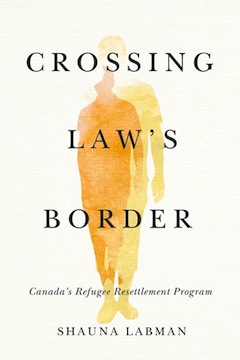
Amid the world’s largest refugee crisis since the Second World War, Winnipeg-based legal scholar Shauna Labman has come out with the book Crossing Law’s Border: Canada’s Refugee Resettlement Program, an in-depth look at how national and international law and policies have shaped Canada’s resettlement programs.

After growing up in Winnipeg, Labman did her undergraduate degree in English and religion at the University of British Columbia, then went into law school at the University of Victoria.

“At the end of law school, I was called to the bar in Ontario, and then I got a contract with the United Nations High Commissioner for Refugees in New Delhi, India,” said Labman. “I went to India, knowing about refugee laws that I’d studied in law school … which meant I knew about the Canadian context of refugees – how refugee claims are made in Canada, how the Immigration and Refugee Board works. I didn’t know anything about how refugees receive protection in a country like India, which has not signed the [United Nations] Refugee Convention or anything.”

After returning to Canada, Labman accepted a consultancy with the Canadian embassy in Beijing. Realizing that the life of a diplomat was not for her, she returned to UBC in 2007 for a master of laws, which was followed by a PhD. Her graduate supervisor was the current dean of the university’s Allard School of Law, Prof. Catherine Dauvergne.

Of her master’s thesis – “The Invisibles: An Examination of Refugee Resettlement” – Labman said, “It’s about the fact that refugees waiting for resettlement don’t get seen. We only see them when they are resettled … but the program is very ad hoc and there was very little attention given to it at the time.”

As Labman was starting her PhD, the ships Sun Sea and Ocean Lady arrived off the coast of British Columbia, carrying several hundred Tamil migrants seeking asylum from civil war in Sri Lanka. She recalled how resettlement was being discussed then. “The relationship between law and refugee protection and what I call ‘the layer legality of it all,’ how different laws work to position different refugees differently, became the basis of my doctoral work and this book,” she said.

After moving back to Winnipeg 10 years ago, she worked as a law professor at the University of Manitoba. Last July, she joined the University of Winnipeg and its Global College. As a human rights professor, she teaches courses on refugees, resilience, and concepts and conventions of human rights.

“I find this really rewarding work,” she told the Independent. “I sit on the board of the Immigrant and Refugee Community Organization of Manitoba and, in that program, I meet a lot of incredible people who spend a lot of time committed to creating a place of welcome for newcomers in our community.”

Labman’s book looks at Canada’s refugee resettlement program from the 1970s, when there were large numbers of people fleeing Vietnam, Cambodia and Laos, up to the Syrian resettlement that’s been happening in the past decade. It covers the different ways that Canada resettles refugees – the government’s resettlement program and the private sponsorship program, including the newly created Blended Visa Office-Referred program, which works with refugee referral organizations to screen refugees before connecting them with private sponsors.

“One way you can think of it is that resettlement itself is a complement to Canada’s inland refugee protection program,” she explained. “Because not that many refugees are able to come to Canada to claim protection, we have a resettlement program. Within that resettlement program, the government is doing resettlement, but the private sponsorship program allows the broader Canada population, individual citizens, to complement the government resettlement program by resettling refugees as well.

“We need only to look south at the U.S. to see how a change in government can affect refugee resettlement,” she said. “We have a legal obligation to asylum-seekers, but a lot of conversation about the border-crossers right now is about whether they are illegally entering the country and whether they are coming in violation of the law when they cross a border. I would say they’re not. I’d say that part of our recognition in the Refugee Convention is that they cannot be penalized for their entry and that, even within our Immigration and Refugee Protection Act, we recognize that refugees may need to cross in a different way or manner to make their claims of asylum.

“In the same way,” she added, “refugee resettlement isn’t a legal obligation, but law still plays out … in how these refugees are selected for resettlement before they enter our borders, which means that, when they are entering our borders, they are entering with a legal document permitting their entrance. They have a legally valid means of entering the country, even though they didn’t have a legal right to enter the country until they were selected for resettlement. So, the book looks at different ways the law operates within these two programs.”

image - Crossing Law’s Border book coverOne area in which the book does not delve, but that Labman said is important, is that the required forms are becoming more complicated to fill out, forcing applicants to seek help from lawyers. “It was too complicated for me to fill out when my family did a private sponsorship application,” she said.

While Labman’s book is academic, it is accessible to a broader readership. “It’s not going to be a page-turner if you’re not interested in refugee resettlement,” she said. “But, if you’ve, say, sponsored refugees and want to understand the program in more detail, it might be of interest. If you’ve worked with refugees, whether in a medical or educational context, in a settlement context … individuals working with refugees, there’s so much history and contextual details to the program. When I was writing this book, that information didn’t exist anywhere particularly clearly. So, if you want a comprehensive understanding of what resettlement in Canada is, this book has that.”

Also, for the main target audience – academics and graduate students in history, philosophy, political science, social work, sociology, law and others – Crossing Law’s Border provides a starting point for their own research on refugee resettlement and sponsorship.

“And, as Canada in the past few years has been promoting the expansion of private sponsorship to other countries, and other countries are taking up private sponsorship models, there’s lots of international interest by governments and policy makers and NGOs in those countries, in what Canada’s resettlement program is about,” said Labman.

The Winnipeg launch of her book took place on Jan. 16, and Labman is planning a launch at the Allard School of Law sometime in May.

Rebeca Kuropatwa is a Winnipeg freelance writer.

Format ImagePosted on February 14, 2020February 12, 2020Author Rebeca KuropatwaCategories BooksTags government, immigration, law, refugees, resettlement, Shauna Labman
Searching for a safe harbour

Searching for a safe harbour

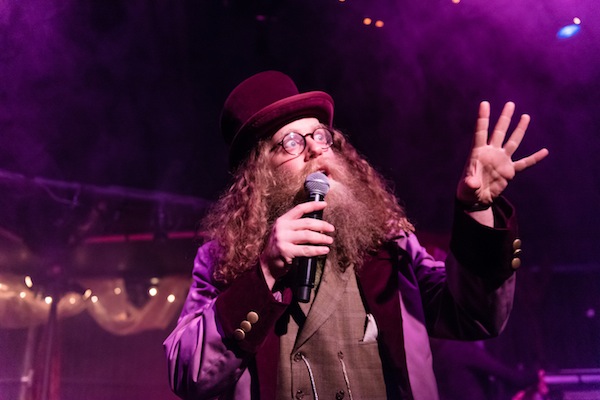
Ben Caplan is narrator and co-creator of Old Stock: A Refugee Love Story, which runs Jan. 24-30 at Frederic Wood Theatre, as part of the PuSh festival. (photo by Stoo Metz Photography)

The 2020 PuSh International Performing Arts Festival opens next week. Among the highlights is Old Stock: A Refugee Love Story, which follows Chaim and Chaya from the pogroms in Romania they are fleeing, to Halifax’s Pier 21, where they meet in 1908, to Montreal, where they end up living. The show, which runs Jan. 24-30 at Frederic Wood Theatre, is narrated and co-created by Halifax-based musician and performer Ben Caplan, with whom the Jewish Independent recently spoke.

JI: How and when did you become involved in the production?

BC: It all started with a phone call from 2b Theatre Company’s artistic co-director Christian Barry in mid-2015. Christian was familiar with my work as a songwriter and performer in the music world and he wondered if I would be interested in collaborating on creating a theatrical production featuring new songs that we would write together.

To be honest, I was skeptical at first. I tend to be a very solitary writer and, though I had a lot of experience in theatre many years ago, it had been a decade since I had performed in theatre. The first few writing sessions were pleasant enough and Christian and I got along great, but we were struggling to find the story that we wanted to tell. As we were searching and exploring to find the substance of what the work would consist of, a confluence of events conspired to show us the story that would become Old Stock.

The first thing was our growing consciousness of the scale of the human tragedy emerging in Syria as a growing number of refugees started trying to find their way out of the violence. Next came Prime Minister Stephen Harper’s comments about “Old Stock Canadians” during the 2015 leadership debate. This othering of “non-Old Stock Canadians” seemed to be vile and absurd. At what point does one get to call themselves “Old Stock”? I am the great-grandson of Jewish immigrants who came to Canada fleeing violence in their own home countries. Was I supposed to think of myself as “Old Stock” or did I fit into some other category in our [then] prime minister’s logic.

Around this time, Christian’s wife, who happens to be the celebrated playwright Hannah Moscovitch, gave birth to their first child, Elijah, and came across the immigration records of her own great-grandparents who immigrated to Canada in 1908 through Pier 2 in Halifax. She realized that, if her great-grandparents hadn’t made the journey to Canada, she would not exist, let alone her infant child. It was then that Hannah asked if she could write the scenes for the show we were trying to create.

With Christian’s vision of the artistic whole, my work as composer and lyricist, and Hannah’s work as playwright, we were off to the races and we worked together to create the show. We thought that the Jewish story from 110 years ago had a striking and tragic resonance with the tragedy unfolding in our own time. I should mention that, of course, the originating cast, musical director Graham Scott, our production manager and designer Louisa Adamson, and many others played a huge role in realizing the vision and bringing the music and the play into the world.

JI: In broad strokes, could you describe how the co-writing process worked?

BC: Christian Barry created the structures and conditions that made it possible for any of these songs to be written. I was probably not always the easiest artist to work with – I tend to desire quiet and solitude when I am writing.

The way it usually worked is that Christian would book a time and a space in whatever city we were able to meet up in (we did writing in Halifax, Montreal, Stratford and Banff) and the day would start with conversations and questions. We would talk, share ideas, listen to music, read texts, Google things, etc.

Out of our conversations and questions, the idea for a song would emerge. The first one we wrote was something for their arrival at Pier 2. We didn’t have a scene or a broader context to work with but, after awhile, Christian would say something like, “We know they are going to come through Pier 2, let’s start there.” I sat at the piano and started mashing out some chords and throwing words into the air. Christian had a wonderfully delicate touch after I got rolling, and would provide helpful comments, critiques, and throw ideas into the room.

JI: What is it about the production that drew you back to performing?

BC: I had stopped performing in the theatre after I became somewhat disillusioned of the possibilities of making a career in theatre. In 2005, the year I did my last theatre performance, I was working on academic pursuits, theatre and my hobby as a singer-songwriter. My life was over-full and something had to give. My logic was something like, in theatre, you need to rely on finding a lot of talented people who are willing to work on a project that takes a lot of time and resources to complete. As a singer-songwriter, there is more room to work solo and bring other people into the project as interest and resources permit. So, that’s the path I chose to express my artistic impulses. I gave up the dream of becoming an actor to focus on the more reasonable and safe path of becoming a songwriter. Ha!

When Christian called me to ask me to make a piece of theatre with him, it was a no-brainer. Being a part of this show has been one of the great privileges of my life. Not only did I get to collaborate with a crazy good team on writing the thing, but I had the opportunity to perform on stages that I wouldn’t have dared to dream of stepping onto when I was making theatre 10 years ago. It’s been an amazing learning experience and one that is sure to influence my work as a performer for the rest of my career.

JI: In what ways does the story and/or themes of Old Stock speak to you as a Canadian in 2020?

BC: What is most meaningful for me about the story and themes of the show is the humanization of the character of the refugee. It has been disturbing to see the ways in which migrants have been portrayed by so many politicians and media outlets around the world. They are often spoken of as hordes, masses and statistics. What is lost are the individual human lives – people with hopes, dreams, fears and trauma searching for a safe harbour.

In Old Stock, we tell the story of Hannah Moscovitch’s great-grandparents coming to Canada. We see their struggles to overcome their past and to generate new and complicated identities. I think that we all, as human beings, have complicated and multi-layered identities. I think that, among other things, this show is about demonstrating layered and sometimes tragic identities with compassion and a healthy dose of humour. That’s basically the most Canadian thing I can think of.

For tickets to Old Stock: A Refugee Love Story and other PuSh shows, visit pushfestival.ca. The soundtrack to Old Stock is available on Spotify, YouTube and elsewhere.

Format ImagePosted on January 17, 2020January 15, 2020Author Cynthia RamsayCategories Performing ArtsTags Ben Caplan, Christian Barry, Hannah Moscovitch, immigration, music, Old Stock, PuSh International Performing Arts Festival, refugees, theatre
A story of survival and safety

A story of survival and safety

Welcomers of the Alsedawe family at Vancouver International Airport Jan. 21. (Adele Lewin Photography)

More than three years ago, Hanan Alsedawe’s family story of survival began as a waiting game on both sides of the ocean. But, on Jan. 21, 2019, the wait became a welcome as Hanan and her children stepped foot on Canadian soil.

In early 2015, congregations Beth Israel and Beth Tikvah began the long process of sponsoring and reuniting a Syrian refugee family with family who already lived in Vancouver. We worked with the government-approved sponsorship agreement holder – the Anglican Diocese – to prepare and submit our private sponsorship application to the Canadian government. It was a journey requiring perseverance by our coordinating committee, and patience and understanding from the many donors of both synagogues who demonstrated belief in our efforts regardless of the length of time it was taking.

On the Jordanian-Saudi Arabian border, in the Azraq Refugee Camp, Hanan and her two children – Mahros and Safa – shared limited resources with more than 55,000 refugees. Their extended family had made their way to Canada under government sponsorship, but Hanan had stayed behind, in Duma, Syria, because her husband, Raslan Abdulmalik, had been taken away by Syrian government forces and she had no idea of what had happened to him. She waited, she hoped, she prayed, but, eventually, with no sign of Raslan being alive, yet with no confirmation that he was either in prison or dead, Hanan decided to escape from Duma. She made her way with her two young children to Amman, Jordan, and eventually was placed in the Azraq refugee camp. There, she waited for a miracle.

Sept. 2, 2015, was a watershed moment that captured the hearts of people around the world and galvanized Canada into accepting 25,000 Syrian refugees into the country. Hanan’s mother and five siblings came to our shores under those auspices. But it would take years of work and hope to bring the last of Fayzeh Alsedawe’s daughters, with her children, to join the family here.

More than three years after initiating the sponsorship, Beth Israel and Beth Tikvah fulfilled Hanan’s dreams of joining her mother and siblings in Vancouver. On Jan. 21, representatives of both synagogues were on hand at Vancouver International Airport to welcome their sponsored family.

On any given day, at any given time, the international arrivals hall at YVR is a kaleidoscope of colours. On that Monday in January, the full spectrum was visible, augmented by the cacophony of diverse languages and a blending of bodies. Clearly, Canada is at its most multicultural in an airport setting.

photo - Members of the Alsedawe family at YVR: Fayzeh, Hanan, Mahros and Hanadi
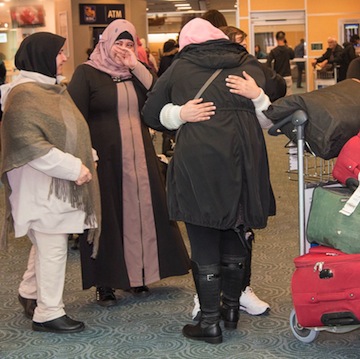
Members of the Alsedawe family at YVR: Fayzeh, Hanan, Mahros and Hanadi. (Adele Lewin Photography)

Also palpable was the range of emotions. There was the full gamut of human feelings on display among those awaiting families, friends and strangers to enter the hall. Contrasts abounded: joy competed with sadness, anticipation with angst, relief with uncertainty. Each person arriving searched for familiar faces, welcoming arms and handwritten signs, indicating that someone was there for them.

In this swirl of humanity were representatives of Beth Israel and Beth Tikvah, their dream to sponsor a refugee family from Syria finally reaching fruition. Sharing this moment – indeed, at the centre of this moment – was the local family: the mother, Fayzeh, and her five adult children, Hanadi, Huda, Maha, Hatem and Mohammed, who had arrived in Canada three years ago and had waited anxiously to be reunited with the remainder of their family.

There was something so surreal, yet so tangible and in the moment at that airport reunion. Words are inadequate to describe the outpouring of relief and love when Hanan and her children emerged in the arrivals hall. An invisible bubble enclosed the family, as they looked at each other for the first time in more than four years. And then, quickly, the bubble grew, as our delegation surrounded the family with our own contributions of hugs, gifts and welcome. One gift in particular seemed to unite the new family with our Canadian sponsors – a Whitecaps soccer ball given to 13-year-old Mahros. Soccer, a universal language for children and adults alike!

Every family has a history, a story that captures the essence of their character and experiences. The Alsedawes’ story is one of courage and hope. Their life in Syria was destroyed by war but their determination to escape, under circumstances almost impossible for us to comprehend, means that, today, their story is one of hope and gratefulness. In Hanan’s own words to the committee, “I thank God and I thank you.”

Settlement requires patience. Never has the Hebrew word savlanut meant so much to our small committee. Patience was required in the very lengthy process from application to arrival. Patience is required as we work to settle the children in school, the mother in English-as-a-second-language classes and the family into a way of life totally foreign to them. Within weeks of their arrival, the family had visited a family physician, dental appointments were booked, the children were enrolled in public school, bank accounts were set up and, important in this day and age, cellphones and tablets were provided to them.

Our year of sponsorship has only just begun, but this journey has been undertaken with the generosity of many people. Our donors have compassion and commitment, and understand that, “There but for the grace of God go I.”

Rosalind Karby is co-chair, with Miranda Burgess, of Beth Israel Congregation’s Committee for the Syrian Refugee Sponsorship Initiative.

Format ImagePosted on April 12, 2019April 10, 2019Author Rosalind KarbyCategories LocalTags Beth Israel, Beth Tikvah, immigration, refugees, Syria, tikkun olam

Taking principled stand

Rahaf Mohammed al-Qunun, an 18-year-old Saudi woman, was publicly welcomed to Canada Saturday. She had spent a week in a hotel in Thailand, asking for asylum in a Western country, saying that she did not want to return to her allegedly abusive family, whom she says have threatened to kill her.

Whether her family is indeed abusive has not been proven. But two factors make that issue somewhat moot. First, guardianship laws in Saudi Arabia require women to get permission from a father, husband, brother, son or other male relative in order to work, travel, marry, receive certain medical treatments and even to leave the house. This is codified inequality and abuse against about half the population of the country. In principle, that law alone should make all Saudi women eligible for refugee claims in democratic countries. Additionally, al-Qunun renounced Islam, which is an offence punishable by death in Saudi Arabia.

The teen’s arrival was a bit of a media festival, with Foreign Affairs Minister Chrystia Freeland embracing al-Qunun at Toronto’s airport.

The ostentatious greeting was extra-weighted because Canada is in an ongoing diplomatic spat with the Saudis. After Freeland tweeted a criticism of Saudi arrests of civil and women’s rights activists last year, the Saudis threw Canada’s ambassador out of the country and threatened to withdraw thousands of Saudi medical students from Canada, among other responses. The public greeting of a now-prominent Saudi dissident by a senior Canadian government official will be seen as a provocation, and perhaps it was intended as such.

Some commentators note that al-Qunun jumped the queue, not only flown to Canada to make a refugee claim, but accepted immediately as a refugee. The global visibility of her case resulted in a country – ours – leaping to accept her, even while one percent of refugees are resettled in a given year.

Also, some diplomats with Saudi experience are warning that the young woman should not be used as a political football – both because that could put her safety at risk and because it could unnecessarily enflame existing tensions.

David Chatterson, a former Canadian ambassador to Saudi Arabia, told the CBC that he worried about precedents.

“What happens the next time a teenage girl or adult woman from Saudi Arabia flees her family and declares herself to no longer be a Muslim, does that mean automatic sanctuary?” he asked.

Of course, diplomatic idealism is always tempered by economic and other realities. The CBC obtained, through an Access to Information request, evidence that the federal government heard concerns from Canadian businesses about their interests being jeopardized when Freeland’s tweets to the Saudis raised the ire of the kingdom’s rulers. On the flip side, Canada does not have as many economic ties to the Saudis as many European and other democratic countries, and this might give us a little more freedom to criticize. The U.S. president has already stated explicitly that he will not endanger American economic interests by contesting Saudi treatment of dissidents – including the murder and dismemberment of Washington Post writer Jamal Khashoggi.

Of 149 countries rated by the World Economic Forum in its annual report on gender equality, Saudi Arabia came 141st. Canada cannot free every one of the 16 million or so Saudi women, but we can ensure freedom for this one.

Yes, al-Qunun did effectively “jump the queue.” But, at the moment when the whole world was watching, that queue-jumping allowed Canada to take a principled stand for gender equality and for the freedom of – and from – religion.

Posted on January 18, 2019January 16, 2019Author The Editorial BoardCategories From the JITags al-Qunun, immigration, politics, refugees, Saudi Arabia, women

Rabbis call on Trudeau

Five local rabbis – Rabbi Lindsey bat Joseph, Rabbi Shmuel Birnham, Rabbi Laura Duhan Kaplan, Rabbi David Mivasair and Rabbi Dan Moskovitz – are among the 33 signatories to a public statement issued July 11 calling upon the Trudeau government to suspend Canada’s Safe Third Country Agreement with the United States. The 33 rabbis from across the country represent a diversity of Canadian Jewry.

The statement calls for the agreement to be suspended “until such time that Canadians can be confident that the United States is in fact a country to which refugee claimants can be returned safely.

“Our own Jewish people’s history instructs us of the necessity to find safe refuge in times of turmoil and lethal threat.

“Our people’s spiritual legacy teaches us that we must not stand idly by the blood of our sisters and brothers, regardless of where they are from.

“The Trump administration’s decision to separate children from their families seeking refuge along the U.S.-Mexican border and its neglect of a plan to reunite them seems to us to amply demonstrate that the U.S. is not a safe country to which refugees should be returned.”

The statement notes that the “agreement requires the Canadian government to review continually the human rights record of the U.S. There were calls to end the agreement in January 2017, when the Trump administration implemented its travel and immigration ban. At this time, it is clear beyond any reasonable doubt that Canada must review and re-evaluate the U.S. qualification as a safe third country.

“Nearly 2,000 children entering the U.S. for the purposes of claiming asylum between April and May have been separated from their families and are being held at detention centres. No one knows the effects of this trauma on these youth, but the human rights abuses are grotesque. According to ACLU, HRW, Amnesty International and media reports, minors are being held in metal cages, given foil blankets and, in many cases, without any visual stimuli in the format of books or toys. In some cases, parents are told their children will be taken for a bath but are not returned. Teenagers in cages are required to care for the younger children, including diaper changes. At one detention centre, staff are not allowed to console, lift or even touch the children, no matter how much agony or fear the child may express. Some children being held are still breastfeeding.”

The Canadian rabbis, “cognizant of our people’s own history as desperate refugees and our tradition of seeking justice … urge the Trudeau government to acknowledge that the United States is not a safe third country and to suspend the Safe Third Country Agreement until the U.S. meets its requirements.”

Posted on July 20, 2018July 18, 2018Author Rabbi David MivasairCategories WorldTags Canada, immigration, refugees, Trudeau, United States
Raising funds for basics

Raising funds for basics

Phillipa Friedland is trying to raise funds to sustain basic facilities at the Population and Immigration Authority in B’nei Brak, where thousands must go to renew or obtain visas to remain in the country. (photo from gofundme.com/restrooms-for-refugees-israel)

When she left Vancouver for Israel more than a year-and-a-half ago, Phillipa Friedland, 54, became involved in social activism. Today, she is trying to raise funds to sustain basic facilities like toilets and seating at the Population and Immigration Authority (PIBA) in B’nei Brak, where thousands must go to renew or obtain visas to remain in the country. The Independent interviewed Friedland recently to find out more about her involvement.

Jewish Independent: When did you learn about the work of the Population and Immigration Authority?

photo - Phillipa Friedland
Phillipa Friedland (photo courtesy)

Phillipa Friedland: I met an Eritrean refugee at the passport office when my daughter Eli and I lived in Israel in 2014, and we became friends. At the end of February, the Israeli government abruptly closed the South Tel Aviv PIBA office and left a note in Hebrew, not the first language of any refugees, stating that the PIBA office had moved to B’nei Brak, to a very large, barren parking lot in an industrial part of the city. I went with my friend to hand in his form and he waited in line six times, just to hand in the paper.

JI: You’re not happy with the facilities PIBA is providing. Why?

PB: The B’nei Brak municipality refuses to provide shade, toilets, water or seating for those who wait in line. Once refugees gain entry, there are ablution facilities and seating. However, there are approximately 40,000 refugees and the only places to apply for or renew visas are in Eilat and B’nei Brak. Knowing that thousands of people would converge on these centres, the government should have done infrastructural planning to accommodate such numbers.

Activists at the site have confided that, since the government closed the detention centres and refugee prison, they are using PIBA as a “soft” place to repel the refugees. They can no longer threaten them with prison or repatriation to a third African country, since these negotiations fell apart when it was revealed that these are not safe-haven countries for refugees. So, the goal is for the refugees to become so frustrated and disheartened by the visa process that they will voluntarily leave.

JI: How many asylum seekers are using PIBA in B’nei Brak, and where are they from?

PB: Most Sudanese have left Israel, so most of the PIBA users are from Eritrea. Some days, there are over 1,000 people there, though, in recent days [in late May], the number has dropped dramatically, as more refugees are given visas. Families are provided with six-month visas and single men are given two-month visas. They are required to take off work and are not paid when they leave to wait for a visa. By contrast, in many countries, a visa application can be obtained online.

JI: Are these asylum seekers also refugees, or a mixture of both?

PB: The Israeli government says they are all economic migrants. It has granted asylum to 11 people – a very poor showing for a country of refugees ourselves. The government … considers them infiltrators. In fact, the education minister declared openly on public TV that the migrants are infiltrators. It stuns me that a nation that promised to never forget has an education minister that has forgotten the persecution the Jews experienced.

JI: What are you doing at PIBA?

PB: After visiting the PIBA in B’nei Brak, I was compelled to take action. I was reviled by apartheid South Africa, and taught about the perils of discrimination and racism for 15 years at the Vancouver Holocaust Education Centre. I could not just watch quietly.

I decided to sponsor two toilets for a month in the barren parking lot where the refugees line up. These cost $600 per month. I also bought 10 benches, seating for only 50 people. Unfortunately, this is all that I could personally afford.

The toilets were so direly needed that, after three days at the site, I paid additional fees to have them emptied, as the company I lease them from only empties them once a week. Myself and an Eritrean lady, Sabrina, clean them when we are on-site, replenish the toilet paper and spray them with toilet spray.

I realized that I could not sustain this expense every month on my own, as I am an immigrant and earn a salary commensurate with working in a nonprofit organization. So I decided to start a GoFundMe Campaign called “Restrooms for Refugees.” So far, I have raised [almost $3,000]. The Good People Fund run by Naomi Eisenberg in New Jersey is donating $1,800 over three months. [gofundme.com/restrooms-for-refugees-israel]

The B’nei Brak site has been running very effectively thanks to amazing Eritrean volunteers who ensure the lines run smoothly and that people get a turn. One of them is Michael, who left Eritrea after 15 years in forced military conscription; he had 10 years still to complete. His back has many scars from being tortured in the military. He left his wife and four children behind and hopes to come to Canada, where his brother is living.

JI: What do you want Jewish Vancouverites to know about this? Why is it important to you personally, and why should it be important to us?

PB: I believe that, as Diaspora Jews, we have rose-coloured glasses on when it comes to Israel. I love and support Israel, however that does not mean I support racist and discriminatory government policies. Eighteen Jewish U.S. Democratic senators spoke out about Israel’s refugee policy and 400 rabbis, pilots, teachers and other groups spoke out vehemently against the deportation policy the government was adopting. Since Israel first accepted and then rejected the UN’s offer to Israel regarding the refugees, there has been no new Israeli policy. The refugees essentially live in limbo, renewing their visas and being treated with no dignity.

I believe we should treat everyone with dignity. I know that, being such a small country, Israel cannot open its doors to an unlimited number of people. However, those strangers within our Jewish borders should be treated with care, as commanded 37 times in the Torah.

Lauren Kramer, an award-winning writer and editor, lives in Richmond. To read her work online, visit laurenkramer.net.

Format ImagePosted on July 13, 2018July 11, 2018Author Lauren KramerCategories IsraelTags asylum seekers, B'nei Brak, fundraising, human rights, immigration, Israel, refugees
Operation Ezra update

Operation Ezra update

Khalaf and Gawre’s family is the 10th to come to Winnipeg thanks to Operation Ezra. (photo from Michel Aziza)

What started as a small local initiative has grown to be a leader, by example, and a reminder of what can be achieved when an intention is set and action is taken.

About a year ago, the Jewish Independent ran a story about Operation Ezra in Winnipeg that, at the time, was aiming to sponsor five Yazidi refugee families. Led by Michel Aziza, a local businessman and once a refugee himself (from Morocco), and a small group of individuals connected to the Jewish community, the initiative was a response to the plight of the Yazidi people being viciously persecuted by ISIS in Iraq.

Nafiya Naso, now a young woman, who came to Winnipeg as a child with her family, has been an instrumental figure in Operation Ezra.

“She was reaching out to people outside their community to raise awareness of the genocide that was going on, March of 2015,” said Aziza, recalling Naso’s early involvement. “I was semi-retired and looking for something to occupy myself, and this was a good opportunity for me to get involved with a volunteer-type of project. Essentially, that’s what I have been involved with over the last almost three years.

“At the beginning,” he said, “we knew nothing about the Yazidi people. After talking with Nafiya, we identified a family of eight people and thought we could raise the necessary funds to submit a sponsorship application. We started lining up a few speaking engagements for Nafiya…. We started speaking to people, making calls, and … the original target was $34,000 for this family of eight … [and] within three or four weeks, we raised $34,000. And that number kept on growing as people talked to other people.”

To date, with the generous help of people in Winnipeg and elsewhere, Operation Ezra has raised just over $500,000. This has made it possible for them to sponsor 10 Yazidi families – 55 people – with the last family having arrived in March.

“As soon as we realized this was bigger than a grassroots project, we decided to incorporate Operation Ezra within the organized Jewish community,” said Aziza.

Jewish Child and Family Service (JCFS) saw this as an opportunity to do something in line with what they were already doing – helping with the settlement of immigrants and refugees – so they came on board, gradually reaching out to other organizations and agencies.

Gray Academy of Jewish Education and the Jewish Foundation of Manitoba joined the effort and, currently, Operation Ezra is an umbrella group of some 20 different agencies and organizations. Most of the members are Jewish, but not all. There are two churches involved, the Salvation Army and a number of corporate partners, with IKEA being the biggest name.

Many volunteers help Operation Ezra in various aspects of the settlement process. Naso has been hired by JCFS to manage everything.

One service Operation Ezra offers is an English-as-an-additional-language (EAL) program, which takes place at a synagogue every Thursday, with 70 to 80 refugees attending and about 20 volunteer teachers. Some Yazidi participants are government-sponsored.

Out of the total 250 refugees who are government-sponsored, about 100 have asked for help from Operation Ezra. “So, we are touching the lives of about 200 people,” said Aziza. “We have organized and have helped organize many community events for the Yazidi people. We celebrated Yazidi New Year’s 6768 on April 18, 2018, with a very large number of people coming out for that dinner,” he said by way of example. “We’re trying to help this group of newcomers to get organized, and to organize themselves as a community … to socialize and to help each other and so on.”

According to Aziza, Operation Ezra is the only multifaith group doing this work in North America.

One recipient family of Operation Ezra is Majid and Safya, along with their children. They shared their thoughts on their experience to date, with translating help as needed from Naso.

“My name is Majid. I was born and raised in a small village…. I am married with two kids – one boy who is 4 and one girl who is 6. My wife, Safya, and I are currently enrolled in EAL classes, hoping to learn English and find work in the near future.

“On August 3rd, 2014, at around 9 a.m., my family, community members and I fled to Mount Sinjar. We were lucky to have escaped when we did. If we had stayed any longer, I would be in a mass grave with many other Yazidis. I can still hear the rapid gunfire as ISIS members surrounded everyone who wasn’t able to flee and started shooting.

“We then reached Mount Sinjar, where we stayed for seven days with little to no food or water. As we were coming down the mountain closer to the Kurdistan region, we were able to hop into a truck. But, soon after, we saw ISIS members driving at us, firing round after round. I still don’t know how we escaped that day. Everything was such a blur. All I really remember was covering my kids and wife, hoping they would make it. Fortunately, we all made it to a refugee camp in Dohuk.

“The conditions in the camp were very scary. We were always worried about getting enough to eat, drink … about medical treatment. And we stayed for a few months, but couldn’t make it. So, we left for Turkey hoping for better living conditions.

“After spending almost two years in Turkey,” he said, “we heard about Operation Ezra and reached out. And, by some miracle, we were sponsored. Everything felt like it was going to be OK after we received confirmation we would be coming to Canada.

“I will never forget the welcome we received coming down at the airport. I was in awe of all the people who had come to greet us and welcome us into their community.”

Majid said they arrived in Canada in December 2016. “My experience in Canada has been great and could not be any better!” he said. “I have many friends and family who are in refugee camps in Iraq and Turkey who call me and tell me that the situation in the camp is getting worse by the day. My dreams are that my family and I are able to live in Canada without the fear we faced back home – the constant fear for our lives, hate and discrimination we faced because of our religious beliefs.

“I encourage all Canadians to reach out to Operation Ezra and learn about this amazing program, the only program of its kind in the world today. We have thousands of Yazidi still living in segregated refugee camps, fearing for their lives and waiting for anyone to reach out and lend a helping hand. I also encourage the Canadian government to support groups like Operation Ezra to help out more refugees.”

Khalaf and Gawre’s family are the most recent Operation Ezra arrivals to Winnipeg. (Although they were the last family Operation Ezra had planned to sponsor, the group has unanimously decided to continue their efforts.)

“My name is Khalaf and I arrived in Winnipeg on March 29th with my mother, who is 83 years old, my wife, and five kids – two boys and three girls, ages ranging from 12 to 24. I was ripped away from my four older kids after ISIS attacked our village (Dugere).

“At 8 a.m., we heard gunshots and got calls from other Yazidi villages that ISIS had murdered hundreds of men and was kidnapping all the women and young girls. Ten minutes later, my family and I started walking toward the mountain. My mom and dad were so lucky they were able to get rides to the refugee camp in Dohuk. My wife, Gawre, and five children were stranded on the mountain for seven days.

“We were able to escape the mountain with the help of PKK [Kurdistan Workers’ Party]. We lived in a refugee camp on Dohuk for six months. The conditions were horrible and heartbreaking. Many people died in the camps, because there was no humanitarian aid, no water and no medical care. My father passed away, because we could not get him the medical attention he needed.

“Shortly after, we decided to go to Turkey. It was no better there, but we did not have a choice and could not afford to move back to Iraq again.

“My sister and her family were sponsored by Operation Ezra just over a year ago. We got on the list when we heard about this amazing project from the people in the refugee camp.

“Months after contacting Nafiya [Naso] and Asmaeil, we were told we would be sponsored! My family and I definitely won the lottery here. We will always be grateful for everyone who made this possible.

“My dream is to see my family and Yazidis around the world live free of persecution. We hope and encourage all Canadian and other countries around the globe to support groups like Operation Ezra and help them in saving lives.”

Naso added, “Operation Ezra is working to raise more funds and keep sponsoring Yazidi refugees. There are thousands waiting who are in desperate need of help. They have no voice, so we must be a voice for them and speak out for them.”

For more information and to make a donation, email [email protected] or visit jewishwinnipeg.org/community-relations/operation-ezra.

Rebeca Kuropatwa is a Winnipeg freelance writer.

Format ImagePosted on May 4, 2018May 2, 2018Author Rebeca KuropatwaCategories NationalTags immigration, Iraq, ISIS, Michel Aziza, Nafiya Naso, Operation Ezra, refugees, terrorism, tikkun olam, Winnipeg, Yazidi

Challenges in Mideast

The Russia- and Iran-backed Assad regime in Syria employed chemical weapons against its own citizens again last week. It’s hard to imagine that the atrocities in Syria could be any worse. Indeed, it is chilling to imagine what Syrian forces would be doing right now had Israel not neutralized that country’s nuclear capabilities in 2007.

Despite the horrific images coming out of Syria, much of the world’s attention, including that of the United Nations, was focused on Israel’s response to rallies on the Gaza border. It was striking to hear the outrage about Israel’s reaction to the Gaza events while a few hundred kilometres away the most atrocious acts were being perpetrated on a people by their own government. That said, the loss of life in Gaza is startling and we hope that the Israel Defence Forces can find non-lethal ways to defend against the protesters.

At the same time, it has been difficult not to be frustrated about the placement of blame. Portrayed by apologists as a peaceful rally – the so-called March for Return – the Friday events, for the second consecutive week, were a violent assault on the Israeli border. The planned action featured Gazans burning hundreds of tires in order to obscure the visibility of IDF soldiers. While tallying up the number of dead – 26 have been killed, according to the Associated Press Monday – it’s clear that the associations of some of the dead have been lost on most audiences, as at least 10 have been reported to be known combatants in the al-Aqsa Martyrs’ Brigade, Islamic Jihad and Hamas’ terrorist wings.

On Friday, the leader of Hamas in the Gaza Strip, Yehya Al-Sinwar, was employing what outside observers will likely dismiss as flowery rhetoric for domestic audiences when he exclaimed on Al-Jazeera that “We will take down the border [with Israel] and tear out their hearts from their bodies.”

Whether the actions of the IDF are deemed justified, the Diaspora community must continue to press for a non-military solution where possible and demand that the IDF remain restrained when demonstrators are unarmed. With a video surfacing that allegedly shows an IDF sniper shooting an unarmed Palestinian man while other soldiers cheer, there are calls for an investigation within Israel from across the political spectrum. As one Israeli politician said in the Times of Israel, “The battle isn’t just between us and Hamas; it is also for ourselves, for our values and for the identity of Israel society.”

It was, however, a leading figure in the Fatah government of Mahmoud Abbas, which runs the West Bank, who pointed out what should be obvious to the world. Dr. Mahmoud Habbash, a supreme judge in the Palestinian Authority Islamic court and Abbas’s adviser on religious and Islamic affairs, accused Hamas of “trading in suffering and blood, trading in victims” to get sympathetic headlines worldwide.

It seems to be working. “Solidarity” marches around the world included chants of “From the river to the sea, Palestine will soon be free.”

Against this backdrop, it may seem odd to raise the issue of Israel’s treatment of African refugees. As a Jewish newspaper, we feel it is our obligation to defend Israel from unjust accusations and attacks, and it is our duty also to condemn actions by Israeli governments or others that betray what we believe to be the just course.

Last week’s flip-flop by Prime Minister Binyamin Netanyahu was a disgrace and an insult to the values on which Israel prides itself.

A week ago Monday, Netanyahu announced an agreement with a United Nations refugee agency to alleviate a conflict about what to do with 38,000 African asylum-seekers currently in legal limbo in Israel by relocating about half of them to Western countries, including Canada. The next day, after getting pushback from right-wing members of his coalition and some aggressive residents of south Tel Aviv (where most of the migrants live) who want few or no migrants to remain in Israel, the prime minister reneged on the deal, seeking again to eject all 38,000.

As we have said in this space previously, it is ludicrous to suggest that 38,000 Africans – or half that – threaten the Jewish nature of the state. Neither, contrary to Netanyahu’s allegations, would the acceptance of these refugees – who fled violence and war – create a precedent.

If Israel wants to create a situation where it can avoid unwanted refugees while ensuring that it meets the obligations of a democratic state, it must develop the systems to appropriately adjudicate refugee claims. At present, situations like this – affecting the lives of 38,000 individuals – are being addressed arbitrarily and inappropriately. Israel, like Canada, Germany and other democracies, needs to have a standard by which the world’s homeless, who happen to find temporary refuge within its borders, are assessed and treated fairly within clearly defined legal parameters that recognize both the rights of individual non-citizens and the necessities of Israel, from the perspective of both the security of its citizens and the Jewish nature of the state. These are not incompatible objectives.

There is no shortage of challenges facing the Middle East. The situations in Gaza and Syria seem intractable. The fate of 38,000 migrants should not be so difficult to resolve.

Posted on April 13, 2018April 11, 2018Author The Editorial BoardCategories From the JITags asylum seekers, conflict, democracy, Israel, Middle East, Netanyahu, Palestinians, refugees, Syria

Posts pagination

Previous page Page 1 Page 2 Page 3 … Page 6 Next page
Proudly powered by WordPress