Declaration of independence

In this year of 2021, someone born in 1948 is or will soon be 73 years old. This is a good round age, surpassing the fabled three score and ten. A Jew born in that tumultuous year in Israel has lived their whole life in freedom, unhyphenated, and not as a member of an ethnic minority, as they might be in every other country in the world. Yet it has not been a garden of roses – three formal wars, and continuous threats from without and within.

We have to look back to better appreciate the miraculous story of Israel. In the days leading up to its Declaration of Independence, after the Partition decision at the United Nations, it seemed the whole world had turned against the Jews. Britain sold heavy weapons to a number of Arab countries, which announced non-recognition of the UN decision, and plans to march on Jerusalem. The U.S. State Department urged David Ben-Gurion not to declare statehood for fear of a new Holocaust. The Palmach numbered under 1,000; the Haganah, just organizing, a few thousand; the state, with no heavy armour and no air force. The Jewish population, numbering 600,000, scattered through the region, faced a hostile Arab population in the millions and seven organized armies amassing on its borders.

Ben-Gurion, our reborn Moses, appreciating that it was now or never, went ahead with the declaration. American President Harry Truman, thanks to the intervention of a Jewish friend, announced U.S. recognition. Nearly one million Arabs fled the territory at the urging of their Arab compatriots and for fear of Israeli retaliation.

Fighting even with sticks and stones, the Jews threw back the worst of the onslaught. Their secret weapon – they had nowhere else to go. Some Jews arrived from around the world to join the struggle. Some pilots flew in with their planes to create a small air force that was effective in turning back the Egyptian army. By the time a ceasefire was declared, Jordan had retained the Old City of Jerusalem and Judea and Samaria, which had been allocated to the Arabs. Similarly, Egypt occupied the Gaza Strip.

Israel ended with a larger land area than it had been allocated under the Partition. The price, aside from the destruction of war, was 1% of its population killed and exponentially more civilians and soldiers wounded. The agony of that time, when the issue of Israel’s existence was in doubt, is painful to relive, even today.

Egypt, Jordan and Syria attacked again in 1967, but Israel was better prepared. Israel drove out the Egyptians and Jordanians, and occupied the Egyptian Sinai, the Jordanian-controled West Bank and the Syrian Golan Heights. Though surprised by the Egyptians in 1973, Israel held the Sinai, and bartered it for a peace agreement with Egypt, followed by one with Jordan.

Today, so many things remain the same, and so many things are very different. The recent Abraham Accords have heralded a number of normalization agreements with Arab countries in the Middle East and Africa. The altered status of Israel among the nations is now recognized. Those who are near the pinnacle of technological achievement in the world recognize the Israeli presence among them, recognize that the country’s knowhow can offer important economic and security benefits to any who wish to engage to pursue such benefits. For some Arab countries, these benefits now appear much more advantageous than the sterile pursuit of Israel’s downfall.

Consider how Israel has changed the landscape around it. It is now supplying energy to Egypt and Jordan and pursuing the building of a pipeline to Europe. Arab countries are forming alliances because Israel is keeping hegemonic Iran in check both in its nuclear ambitions and militarily. Israel is working on relieving water shortages and dealing with desertification regionally and on a worldwide basis, as well as sharing security technology.

What appears no different is the widespread development of an anti-Israel sentiment, which is currently the more-politic face of antisemitic feeling. A product of pan-Arabism cum Islamism and carried into the West, it feeds and rejuvenates the embedded historic religious origins of anti-Jewish attitudes going back centuries. It has made a marriage with the white-supremacist movements in many countries, as well as making inroads in ostensibly progressive movements.

Israel is exhibiting still the growth pangs of its democracy. It is confronting the many challenges with which it was born. It is trying to absorb the 20% of its population who are Arabs, some of whom have been encouraged to exhibit rejection and hatred, some of whom are coming to the realization that life is actually better in Israel than it is for their co-religionists in the region. It also has to deal with the 10% in Orthodox Judaism who find it difficult to coexist with a secular government. It has to deal with a political system almost designed for impasse. And yet, Israelis have created a nation whose accomplishments astound the world. They will solve these problems as well.

While Jews everywhere have adhered to the biblical injunction toward loyalty and devotion to the countries of their refuge, most have never ceased “to weep by the rivers of Babylon.” This sentiment ultimately led to a “return” by some of our brothers and sisters. And, as they are our brothers and sisters, we in the Diaspora cannot fail to be concerned with their welfare. However, these days, more and more, the shoe is on the other foot. With the rising prominence and relevance of Israel, it is we Jews in the Diaspora who will be receiving warmth from the reflected glory of that Declaration of Independence.

For 2,000 years, the Jews of the world have been making it more or less on their own. They have not looked to the sovereign powers where they had landed to provide for them. They have made common cause with committed Jews and, time and time again, they have rebuilt the biblical community model. When the climate became stormy in one place, those who could ran to other places where Jews had found shelter and their brethren facilitated this when they could. Those who despaired of their fate went underground and discarded their label, some forever.

Jews in America – taking over from the Jews in Britain – have attempted to act as a proxy in defence of Jews for the last hundred or so years. In spite of the enormous resources available, rescuing important numbers of Jews in serious trouble was always limited by political considerations but it was done where possible.

The impact of Israel globally is yet to be fully appreciated. After three generations, they now have six-and-a-half million Jews, 10 times the population at inception. What will their impact be when their numbers are 10 times again?

The coming world impact of Jewry rivals that which it had during the pre- and post-Christian era of the Roman Empire. As then, our influence is in the realm of ideas. Then, it was ethics. These days, it centres on the importance of innovation and technology, though is by no means limited to these realms. The existence of the nation state concentrates the impacts and provides focus.

We Jews in the Western world may not yet have fully internalized that we now have someone in our court, as we have never had before. Wherever we are, if trouble arises, we have someone to look to. Since Israel’s Declaration of Independence, a voice has been raised when Jews anywhere are found to be in distress. Israel has done more than talk; it uses its limited resources to make a difference wherever it can – and not just for Jewish communities but for countries with few or no Jews. Israel’s independence, in part, represents our own.

Max Roytenberg is a Vancouver-based poet, writer and blogger. His book Hero in My Own Eyes: Tripping a Life Fantastic is available from Amazon and other online booksellers.
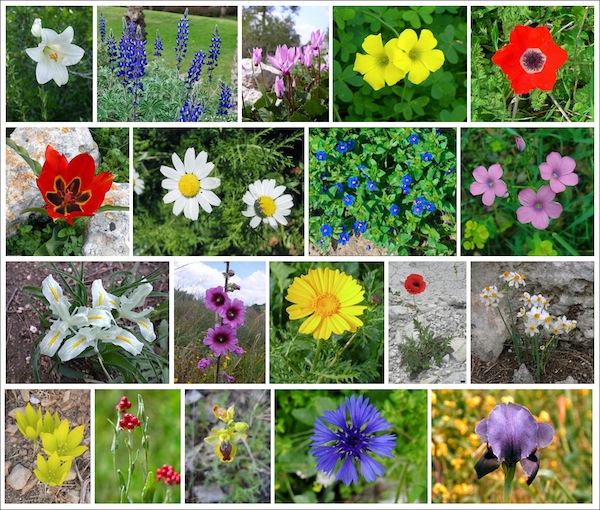
Israel’s wildflowers of spring

A collage of Israeli wildflowers. (MathKnight/Wikimedia Commons)

Every year, spring returns like a miracle and Israel is carpeted with wildflowers. There are nearly 3,000 types of wild plants in this tiny land, a wonderful profusion – among the most abundant on earth, growing in deserts and marshes, mountains and forests, and open fields.

We protect the wildflowers in Israel. Nature reserves prohibit picking any flowers, even the most common, which helps them propagate over wider areas. In turn, this brings the sunbirds, who feast on their nectar.

The Song of Songs, which we read every Passover, is the most beautiful love poem in the world. King Solomon wrote it as a dialogue between a young shepherd and his beloved: “Rise up, my love, my fair one and come away / For lo, the winter is past / The rain is over and gone / The flowers appear on the earth / The time of singing is come / And the voice of the turtle is heard in the land.”

The flowers he refers to, nitzanim, still carpet the fields – red poppies flaunting scarlet beauty in the grass.

In the Jerusalem Forest, cyclamens bloom in the crevices between the rocks. Called “Solomon’s Crown” in Hebrew, they lift their pink, cream or lilac heads on slender stalks. Clumps of wild violets, the dew shimmering, add their touch of magic.

We had good rains this winter and they have left a bequest of green. The Sharon Valley is dotted with tulips and narcissus – “I am the Rose of Sharon, a lily of the valleys.”

It is believed that King Solomon was referring to the black tulips of the Galilee. In spring, even the weeds are beautiful – the milk vetch (gadilan), which is just a common thistle, adds purple blooms to the roadside. The rock rose (labdanum) flowers abundantly in forest glades, and the orange ranunculus bursts forth. Like its velvety cousin, the anemone, it is a protected wild flower in Israel.

The perfume of daffodils, which delighted our winter, still wafts on the breeze, and the white, cream, yellow and blue noses of lupins are pushing through the soil. Oleanders are in bud, growing wild by the banks of the River Jordan and near streams in Galilee, promising summer. And the blue statice reminds us that we, too, have a Mediterranean coast like the famed Riviera – this sea plant flowers from spring until mid-summer, when its corolla drops off and only the sepal remains.

When you see the splendour of the land’s spring glory, the wildflowers glowing, you’ll echo the poet’s words: “Had I but two loaves of bread, I would sell one of them and buy white hyacinths to feed my soul.”

Dvora Waysman is a Jerusalem-based author. She has written 14 books, including The Pomegranate Pendant, which was made into a movie, and her latest novella, Searching for Sarah. She can be contacted at dwaysman@gmail.com or through her blog dvorawaysman.com.

Mourning, then celebration

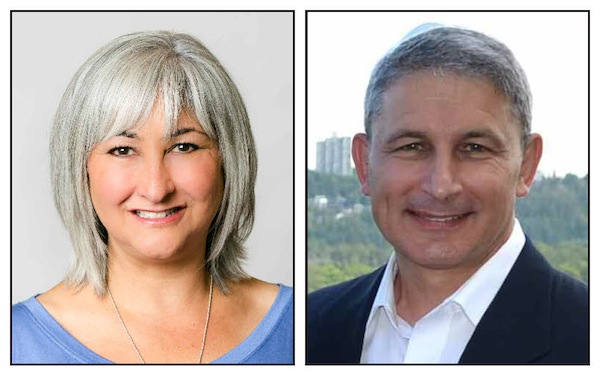
Pam Wolfman is chair of the Yom Ha’atzmaut committee and Geoffrey Druker leads the Yom Hazikaron committee. (photos from Jewish Federation)

For many years, Vancouver has been home to North America’s largest celebration on erev Yom Ha’atzmaut. While Israel’s Independence Day is marked in many cities around the world, Vancouver is unusual in that it marks the occasion on the day it occurs – many bigger communities celebrate on an adjacent weekend or later in the spring. The event is usually the largest Jewish community gathering of the year in British Columbia, which is a statement about the connection between Vancouver’s Jewish community and the state of Israel, say organizers.

Last year, with the pandemic declared mere weeks before Israel’s anniversary, the tough decision was made to cancel the local event and join an international celebration convened virtually by Jewish Federations of North America.

While Pamela Wolfman, chair of the Yom Ha’atzmaut committee of the Jewish Federation of Greater Vancouver, wishes the community could come together in person, being online does have a silver lining – it allows the program to be more expansive. Every Yom Ha’atzmaut features an Israeli musical performer or group. This year, the committee has arranged for five performers who have joined the Vancouver celebrations in years past to return in a virtual “best of” concert.

“We decided to bring back five of the favourite artists from recent years who performed here already, so they already had a connection with Vancouver, they’d already visited us and gotten to know us and vice versa,” said Wolfman, who has chaired the event since 2014.

She credits Stephen Gaerber, who preceded her as event chair, and his brothers and father, as the impetus for the focus on Israeli talent at the annual get-together.

“Our community really responds to that,” said Wolfman. “A majority of our community really does feel connected to Israel, wants to celebrate all the positive things about Israel. We want to take a break from the news and we want to celebrate Israel, the miracle of Israel – Israeli art, Israeli culture, Israeli music – and to do that together is just really fun for everybody, really positive.”

Wolfman herself became involved via an earlier involvement with Festival Ha’Rikud, the Jewish Community Centre of Greater Vancouver’s festival of Israeli dance for young people. Since the festival began 18 years ago, the kids have participated in Yom Ha’atzmaut celebrations every year.

“This year, especially, there’s a lot to celebrate, with everything positive that’s going on with Israel … with the Abraham Accords, with the vaccine rollout, it’s a really good year to get together and celebrate – and lots and lots of great music has come out of Israel this year, too.”

In addition to the “five favourites,” Wolfman promises “cute kids and a few surprises.” Lu Winters and Kyle Berger will emcee, and keep an eye out, as well, for many other familiar faces, as scores of community members have come together virtually for a community song – the iconic 1970 Israeli ballad “Bashana Haba’ah” (“Next Year”).

Since the community event always sells out, this year’s virtual version will turn no one away – plus, it’s free. (Donations are welcome during registration at jewishvancouver.com. Food can also be ordered online via links at the same time.)

There can be no Yom Ha’atzmaut without Yom Hazikaron. Israel’s Independence Day is celebrated the day after Israel’s national day of remembrance for those lost defending the country or killed in terror attacks. This year’s commemoration of Yom Hazikaron will also be online, but the committee, led by Geoffrey Druker, has experience at a virtual version of the solemn commemoration – they delivered a virtual commemoration last year.

Like Yom Ha’atzmaut, Yom Hazikaron holds a special place in Vancouver’s Jewish community. Many other cities in North America mark the occasion, but ours is somewhat unusual, said Druker. Gaby Peled, an Israeli-Canadian who passed away in 2019, was pivotal in structuring our commemoration along the lines of the Yom Hazikaron he knew on his kibbutz, Givat Haim.

When Druker, also from Israel, arrived here in 1988, he was surprised to discover how many members of the Vancouver Jewish community had lost loved ones – family and friends – in Israel’s various conflagrations. A slide show every year remembers the individuals who are connected to British Columbians – and, every year, more faces are added. Often, local people have not shared their stories of loss, and so, as they come forward with their experiences with bereavement, their people are added to the ceremony. Druker invites anyone to contact Federation to add a loved one to be acknowledged and mourned communally.

This year’s gathering will share the story of, among others, Shaul Gilboa, a pilot shot down in 1969 and a cousin of Vancouverite Dvori Balshine. Shimi Cohen will remember his brother, Shlomo Cohen, by reciting Yizkor.

“The ceremony itself is for the bereaved families,” Druker said. “That’s how I see it. We want to remember their loved ones and we want to give them a community hug to recognize their loss and their pain. Everything is geared toward that.”

The event has grown significantly over the years, partly because the Israeli population in Metro Vancouver has grown significantly. Many or most of the participants in the annual Yom Hazikaron commemoration have Israeli ties and it is a hugely significant day in Israel.

The virtual format does not allow the person-to-person interaction that a regular gathering does, where people can share condolences and commiserate, said Druker. But virtual is absolutely preferable to no commemoration at all.

“It’s a significant date for many,” he said, “so that’s why we have to keep going.”

To join the ceremonies, visit jewishvancouver.com.

Israeli election jigsaw puzzle

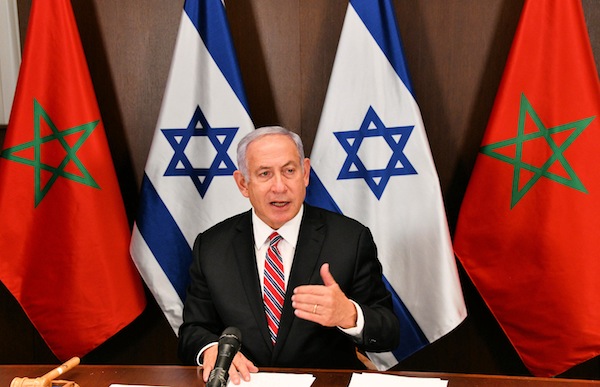
Prime Minister Binyamin Netanyahu at the start of a cabinet meeting this past January in Jerusalem. The two outside flags are the Moroccan national flags, placed there to celebrate the fact that Israel and Morocco had just established diplomatic relations. (photo by Haim Zach/IGPO via Ashernet)

The Israeli elections, which take place March 23, are not turning on conventional ideological schisms, according to two top observers. Rather than a left-right divide, the ballot question for most voters is yes-Bibi/no-Bibi.

Lahav Harkov, diplomatic correspondent for the Jerusalem Post, and Chemi Shalev, senior columnist and U.S. editor for Haaretz, analyzed the possible outcomes in a virtual event presented by the Centre for Israel and Jewish Affairs March 2.

Israel is in its fourth election cycle in two years, an unparalleled time of political turmoil. Harkov said she tends to err on the side of optimism but expects a fifth election before too long.

“I don’t see how we get out of this mess,” she said.

Shalev concurred, using a sports metaphor. “There is a saying in soccer, or football,” he said. “You play soccer for 90 minutes and, in the end, the Germans win, meaning no matter what you think during the game, the result is always that the German team wins and, in soccer, it’s usually true. In Israeli politics, it is also usually true.”

In each of the past three election campaigns, Shalev said, media and opponents of Prime Minister Binyamin Netanyahu convince themselves he is headed for defeat. Then the votes come in and coalition talks begin and he holds onto office.

True to script, said Shalev, polls suggest Netanyahu’s support is faltering, estimating his Likud party will take about 28 of the 120 Knesset seats, down from the 36 he holds now. But, as much as Netanyahu will face an uphill climb to cobble together 61 votes to form a working coalition, his opponents face even steeper challenges.

Netanyahu, nicknamed Bibi, has led Likud since 2006 and has been prime minister since 2009. Having also served for three years in the late 1990s, Netanyahu is the longest-serving prime minister in Israeli history and his doggedness in holding on to power has earned him another nickname: King Bibi.

Shalev depicted Netanyahu’s manoeuvrings after the last vote, in March 2020, as a sheer political masterstroke. Benny Gantz led Kahol Lavan (Blue and White), a centre-left coalition whose principal promise was to keep Netanyahu from another term. When coalition talks appeared doomed and another election inevitable, Gantz entered into a power-sharing agreement that delivered another term to Netanyahu and, in the process, exploded the Blue and White coalition. The broad spectrum of centre-left politics that had come together under Blue and White disintegrated and some of those voters have drifted off to the right and may never return to the left, said Shalev.

Gantz is running again but, while the question last election was whether he could best Netanyahu, the issue now appears to be whether he can garner the 3.25% threshold needed to eke out any Knesset seats whatsoever.

In fact, many parties are hovering in the polls around the cutoff mark, which could be a defining factor in the outcome. The Labour party, once the indomitable force in national politics, is on the ropes. Likewise, another erstwhile force on the left, Meretz, could also be wiped out of the Knesset. On the other hand, the smaller parties that do cross the electoral threshold will have outsized influence on whether Netanyahu hangs on or whether another leader can topple him.

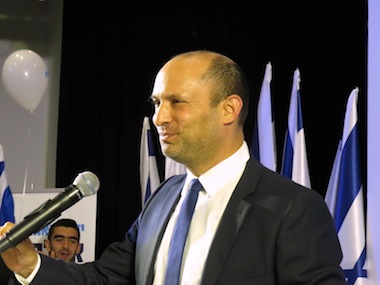
photo - Naftali Bennett speaks in Ramat Gan, in 2019. Among the parties Binyamin Netanyahu would need to form a governing coalition is Yamina, which is led by Bennett
Naftali Bennett speaks in Ramat Gan, in 2019. Among the parties Binyamin Netanyahu would need to form a governing coalition is Yamina, which is led by Bennett. (photo from IGPO via Ashernet)

Netanyahu’s political survival will depend on the ability of small right-wing parties to pass the electoral threshold to enter the Knesset and help him get to 61 seats. Among the parties Netanyahu would need to depend on are Yamina, led by Naftali Bennett, which is seen as an ideological heir to the defunct National Religious Party.

He would probably also need to rely on another new entity, called the Religious Zionist Party, which iss in an electoral agreement with two other small, far-right factions. The RZP, which tends to represent settlers and Charedi voters, is in partnership (for this round of elections, at least) with Noam, a party whose primary issue is opposition to rights for LGBTQ+ Israelis, which party adherents equate with the “destruction of the family.” The third party in the triumvirate is the extremist party Otzma Yehudit (Jewish Power), which Harkov said is a descendant of the outlawed movement of the late Rabbi Meir Kahane.

Kahane was an anti-Arab politician whose speeches in the Knesset were usually boycotted by all other members, leaving him to speak to a room consisting only of the speaker and the transcriptionists. In 1985, the Knesset passed a law banning parties that incite racism, effectively outlawing Kahane’s Kach party. He was assassinated in New York City in 1990 by an Egyptian-born terrorist.

While Kahane and his compatriots were shunned in their time, Harkov noted that Netanyahu intervened with the smaller right-wing parties, encouraging them – including Otzma Yehudit – to band together to help them collectively pass the electoral threshold.

“If they had not run together, they probably wouldn’t have made it into the Knesset,” she said, adding that tens of thousands of right-wing votes would have been effectively wasted.

Harkov added that she found it “interesting and sad” that, in the first of this four-election cycle, Netanyahu encouraged the small right-wing parties to run together and this caused a huge scandal, given the extremism of Otzma Yehudit.

“When Kahane was in the Knesset, everyone would walk out, no one would listen to Kahane speak when he would have his racist rants in the Knesset,” Harkov said. “Now, the prime minister is encouraging them to be in the Knesset.”

She credits an exhaustion with politics for the lack of outrage over the alliance this time around.

Shalev agreed. Israelis have had more than enough, he suggests.

“I have never seen such fatigue and, if I venture something about the elections, [friends] all look at me as if I’m a lost case,” he said.

Where the fault lines in Israeli politics were once left versus right, that paradigm is at least temporarily inoperable. The Israeli left is in disarray and Netanyahu’s greatest challenges come from the right, including several former allies. Gideon Sa’ar challenged Netanyahu for the Likud leadership last year and was soundly defeated. Frozen out by the prime minister, he left the party and formed New Hope.

“Policy-wise, they’re not that different from Likud,” said Harkov. “Sa’ar is quite right-wing.” He is pinning his hopes on voters seeking more of the same with less of the corruption surrounding the incumbent, who is under indictment on a number of bribery, fraud and breach of trust charges.

The second-largest party in the current Knesset is Yesh Atid, led by Yair Lapid. This more centrist, secular grouping could bridge some of the divide and make Lapid a possible successor to Netanyahu, but, like all scenarios, would require a coalition-building process akin to a jigsaw puzzle. While there are factions that would be happy to support Netanyahu and others that would support anyone but Bibi, the divisions are exacerbated by internal grievances and personality clashes.

Given the moving parts in any coalition talks, Shalev predicted a potential “outrageous scenario.” Netanyahu has been courting Arab voters and, with the Arab Joint List in disarray, he hopes he can dislodge some votes from those quarters. However, after the election, he would face a new challenge. Cobbling together 61 members might require recruiting Arab parties, which would likely be met with flat-out rejection by the far-right and religious parties Netanyahu would also need to hold. Likewise, religious and secular factions that might agree on supporting a particular candidate for prime minister might balk at joining a coalition with one another. In other words, while there might be 61 members ready to support Netanyahu, they might refuse to do so if it required sitting alongside ideological enemies. Every potential prime minister faces a similar dilemma.

A recent high court decision threw the issue of religious-state separation and the influence of the ultra-Orthodox on national policy and life into the headlines. The ruling recognizes conversions by Reform and Masorti (Conservative) rabbis in Israel (but not abroad). While this re-ignition of the divide between secular and religious Israelis is significant, it may or may not have a major impact on voters. Yesh Atid is avowedly secular, as is Avigdor Lieberman’s Yisrael Beiteinu party. Whether they will gain any political traction from the issue is a mystery.

While overseas observers assume the big political issues in Israel are the Palestinian conflict, Iran and national security, Harkov and Shalev say voters are more focused on bread-and-butter topics, including the pandemic and pocketbook issues. But the biggest question of all for voters, they both agree, turns on personality – primarily that of Netanyahu and voters’ feelings toward him.

Harkov believes Netanyahu has benefited from the Abraham Accords. It also won’t hurt him that Israel leads the world in the rollout of the coronavirus vaccine.

A particular challenge that a reelected Netanyahu would face is building a relationship with the new administration in Washington. Netanyahu bound his fortunes so personally to Donald Trump that Shalev believes it is impossible to build a meaningful connection with the Biden administration. Netanyahu was not an outlier on this front, he noted, citing opinion polls that suggested Israelis, were they able to vote for a U.S. president, would have supported Trump by a massive landslide.

A tree-lined memorial

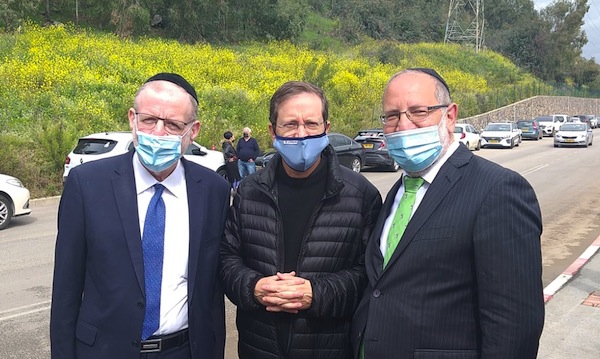
Left to right: Rabbi Dov Bakst, presidential advisor, Yitzhak (Buji) Herzog and Rabbi Shlomo Raanan at the March 4 launch of the Ayelet Hashachar initiative to create a promenade in Kiryat Shmona to commemorate Jewish COVID victims from around the world. (photo from IMP)

“What is the main defining characteristic of the COVID-19 era?” asks public activist Rabbi Shlomo Raanan. “The coronavirus brought about separation and disconnect. It separates between countries, divides communities and splits families. It’s about being lonely and alone. My goal is to foster connection. Every Jew has an intrinsic connection to Israel. Let’s help them develop that connection and make it grow.”

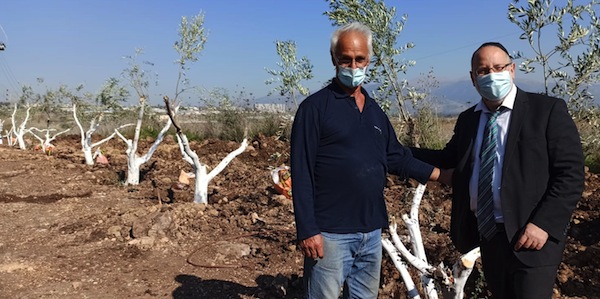
Raanan’s organization, Ayelet Hashachar, has recently launched an initiative to foster connection with Diaspora Jewry: a promenade in Kiryat Shmona to commemorate Jewish COVID victims from around the world. More than 100 olive trees will line the kilometre-long walkway. Each tree will represent a different Jewish community from across the globe, serving as a vehicle to commemorate members who passed away from the coronavirus. Visitors to the site can learn about the communities and members who succumbed to COVID by standing next to the tree and getting the story on a dedicated app via a QR code. Each community will have its own mini-site, featuring eulogies, historical anecdotes and any extra information the community wishes to include, for a bona fide living memorial.

“Throughout the years, Diaspora Jewry has always been there for Israel,” said Raanan, explaining what inspired him to reach out to Diaspora communities and provide this free service. “We felt that the time had come for us, here in Israel, to show them our solidarity and support during this very challenging time.”

The significance of the location of the commemorative promenade is not limited to the views of Mount Hermon that Kiryat Shmona affords. Israel’s northernmost city is no stranger to bereavement – its very name commemorates eight people, including hero Joseph Trumpeldor, who were killed, in 1920, while defending the area. More recently, the proximity of Kiryat Shmona to the Lebanese border has made it a frequent target for terror and rocket attacks.

Kiryat Shmona is a symbol of Jewish determination and tenacity. Off the beaten track, it needs to invest twice the effort to make itself relevant to the centre of the country. Despite the hardships associated with leading a border city, Mayor Avihay Shtern has been making strides to promote development and attract residents. The growing food-tech industry and the establishment of large academic institutions are examples of those efforts.

“I am proud and gratified to have this opportunity to reach out to Diaspora communities and commemorate their COVID victims,” said Shtern. “There are many memorials, but I’ve yet to see one honouring those who succumbed to the pandemic, even though we’re almost a year in, and it’s taken such a heavy toll globally.”

photo - Kiryat Shmona Mayor Avihay Shtern, left, with Rabbi Shlomo Raanan
Kiryat Shmona Mayor Avihay Shtern, left, with Rabbi Shlomo Raanan. (photo from IMP)

Shtern noted that the walkway, to be named “the Path of Life,” will serve as “a living history lesson” for local residents, as well as the many visitors and tourists who flock to the Upper Galilee. “I think it’s important for us to remember, and for the children of the future to know, what happened during this period. The coronavirus will soon disappear, but we must never forget those who were lost to the disease.”

A grand opening ceremony for the promenade was held on March 4, with the participation of the mayor, Raanan, senior public figures, as well as Jewish Agency chair Isaac (Bougie) Herzog.

Each tree, a story

Raanan sees special significance in planting trees as commemoration. “There is a beautiful verse in the book of Job: ‘For a tree has hope; if it is cut it will again renew itself and its bough will not cease.’ Trees signify revival, particularly olive trees,” he said. “They are a perfect metaphor for the Jewish people. Even when it looks lifeless, the olive tree still retains vitality deep inside. Olive trees are also very adaptive; they survive tough periods and can live for thousands of years. It’s certainly appropriate that the olive tree is the symbol of the state of Israel.”

Raanan welcomes community leaders and members who wish to have their community represented by a tree on the promenade. His staff of web developers will prepare the relevant text and visual material at no charge.

“The coronavirus separated people from their loved ones, often forcing victims to die alone,” he said. “This memorial accomplishes the opposite, bringing communities together and uniting people.”

Raanan has other plans to connect Diaspora Jewry with Israel, as well.

Parallel to the commemoration project in Kiryat Shmona, he is offering interested communities the opportunity to plant not just one tree but an entire olive orchard. “There are vast tracts of land across Israel that are neglected…. Communities can plant their own orchards in areas of national importance – the Galilee, the Negev, the Jordan Valley,” he said.

Of established projects, Raanan’s Chavrutah program was started more than two decades ago, with the aim of encouraging dialogue between secular and religious Israelis. The program now features close to 20,000 people studying in partnerships, in Israel and abroad.

Ayelet Hashachar’s goal in all its projects is to heal the divisiveness of Israeli society by working to eliminate mistrust between sectors, thereby breaking stereotypes and encouraging mutual respect.

For more information about how to have a community featured in the Path of Life commemoration project, email pathoflive@ayelethashachar.org or call 97-252-617-6222.

– Courtesy International Marketing and Promotion (IMP)


שאול גורדון בתחרויות הסיף באולימפיאדת טוקיו

שאול גורדון

הסייף הישראלי שאול גורדון ייצג את קנדה בתחרויות הסיף באולימפיאדת טוקיו שתתקיים בחודש יולי הקרוב. אחד עשר סייפים נוספים ייצגו את קנדה באולימפיאדה ביפן.

גורדון יליד תל אביב בן ה-26, גר בעיר ריצ’מונד שליד ונקובר בריטיש קולומביה מאז היותו בגיל עשר. הוא סיים תואר ראשון בשפה וספרות צרפתית באוניברסיטת פנסילבניה, שבפילדלפיה ארה”ב בשנת 2016. לאחר מכן עבר גורדון למונטריאול כדי ללמוד בפקולטה למשפטים באוניברסיטת מגיל. השנה הוא סיים לימודי תואר מתקדם שני במשפטים (על חוקי אבטחת החלל).

גורדון עזב את ישראל בגיל ארבע ועבר עם משפחתו לגור בעיר טורינו שבאיטליה. כבר בגיל שבע התחיל להתאמן בסייף בסגנון חרב. בגיל עשר (שש שנים לאחר מכן) עברה המשפחה לריצ’מונד. ומאז זה ביתו הקבוע למעט תקופות הלימודים הארוכות בארה”ב וקנדה.

בשנת 2019 זכה גורדון במקום השמיני באליפות העולם בבודפשט הונגריה שזה ההישג הגדול ביותר בקריירה שלו. באותה שנה הוא זכה גם במקום השלישי במשחקי פאן אמריקה שנערכו בלימה פרו. ואילו נבחרת קנדה שבה הוא משתתף הגיעה באותם משחקים למקום השני. הנבחרת הקנדית הגיעה עימו עוד פעם למקום השני במשחקי פאן אמריקה שנערכו בטורונטו בשנת 2015. גורדון זכה עם הנבחרת הקנדית גם במקום הראשון במשחקי גביע צפון אמריקה שהתקיימו בשנת 2011 בדאלאס טקסס. גורדון (המחזיק גם בדרכון ישראלי) זכה באוקטובר 2019 באליפות ישראל לבוגרים. כיום הוא מדורג במקום ה-22 בדירוג העולמי לסיף.

אחותו הצעירה של שאול, תמר גורדון, כשהייתה בת 15 זכתה גם כן באותה אליפות ישראל בסיף בתחרות לבוגרות (למרות גילה הצעיר). תמר גורדון (כיום היא בת 17) גם כן מתחרה בסגנון חרב, נמנית על נבחרת ישראל. היא אמורה לסיים את לימודי התיכון בריצ’מונד בעוד כשנה וחצי. לאחר מכן תלמד קרוב לוודאי באחת האוניברסיטאות בארה”ב. בשנה שעברה זכתה תמר גורדון מקום שלישי באליפות אירופה לקדטים (עד גיל 17) שהתקיימה בקרואטיה. היא זכתה במקום ראשון באליפות צרפת בשנת 2019. וכן הגיעה מקום שלישי בתחרות לקאדטים שנערכה בצרפת אשתקד.

אולימפיאדת טוקיו הייתה אמורה להתקיים במקור בקיץ אשתקד אך המשחקים הבינלאומיים נדחו לקיץ זה בגלל מגפת הקורונה. האולימפיאדה תיפתח ב-23 יולי ותימשך עד השמונה באוגוסט. לטוקיו אמורים להגיע למעלה מאחד עשר אלף ספורטאים (מ-207 מדינות), בהם לא פחות מ-85 ספורטאים מישראל. אם כן תהיה זו המשלחת הישראלית הגדולה ביותר אי פעם השתתפה במשחקים האולימפיים כלשהם. האולימפיאדה אמורה אגב להתקיים ללא קהל לאור המגפה חשש להידבקות עולמית.

שאול גורדון פגש את יאנה בוטביניק (בת ה-22) – שהיא סייפת הדקר הבכירה בישראל – בשנת 2018 באליפות העולם בוושי סין, ומאז הם ביחד. בוטביניק נמנית על נבחרת ישראל לומדת בימים אלה בחוג למתמטיקה ומחשבים באוניברסיטת קולומביה בניו יורק בארה”ב. היא עלתה מרוסיה לישראל בשנת 2010, ומגיל 14 החלה להתאמן בסייף. בגיל 17 היא זכתה לראשונה בתואר אלופת ישראל (לגילאים אלו). משנת 2019 בוטביניק נחשבת לבוגרת והיא סיימה במקום עשר באליפות אירופה, וזכתה במדליית ארד בברטיסלבה סלובקיה. כיום היא מדורגת במקום ה-68 בדירוג העולמי לסיף.

האח האמצעי של שאול, מתי גורדון (23), משחק דווקא רוגבי והוא נמנה על נבחרת ישראל ברוגבי שבע. מתי גורדון למד במשך ארבע שנים בחוג ללימודים אירופיים באוניברסיטת טורונטו. עתה הוא נמצא בשנה השנייה של לימודי לתואר במשפטים אוניברסיטת קווינס קינגסטון אונטריו.

Mufti house to be shul

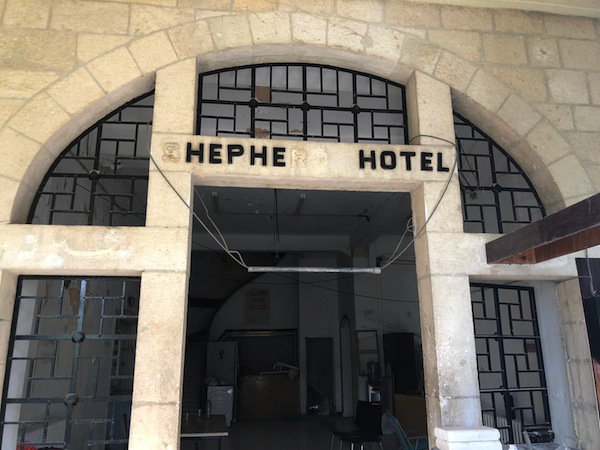
Hajj Amin al-Husseini’s mansion turned into the Shepherd Hotel for a period of time. (photo from Daniel Luria)

Hajj Amin al-Husseini, the mufti of Jerusalem in the 1920s and 1930s, who spent much of the Second World War in Berlin as a Nazi collaborator and war criminal, must be spinning in his grave in Beirut. The landmark mansion he built 88 years ago in affluent Sheikh Jarrah, between the Old City and Mount Scopus, is slated to become a synagogue in a future 56-apartment Jewish neighbourhood in east Jerusalem.

The 500-square-metre manor house, called Qasr al-Mufti (the Mufti’s Palace) in Arabic, today stands derelict at the centre of a largely completed 28-apartment complex which itself lacks an occupancy permit. The reason the new neighbourhood is not being finished – and indeed has not been marketed in the 10 years since demolition and construction began – is that the developers have applied to rezone the 5.2-dunam site to double the number of units to 56, according to Daniel Luria, a spokesman for Ateret Cohanim, which backs the housing project.

Luria was unclear when the rezoning application would be approved. The historic house at the core of the site will be preserved and repurposed for communal needs, including a synagogue and perhaps a daycare centre, he said.

“There is a beautiful poetic justice when you see the house of Hajj Amin al-Husseini crumbling down,” said Luria.

Though al-Husseini built the mansion, he never lived in it. Following the outbreak in 1936 of the Arab Revolt against the British Mandate government, the mufti became a fugitive, hiding in the Old City’s Haram ash-Sharif. When the British attempted to arrest him in 1937, he fled Palestine and the British made do with confiscating his property. The al-Husseini clan owned numerous properties in Jerusalem, among them the Palace Hotel (today the Waldorf Astoria), the Orient House and the villa subsequently turned into the Shepherd Hotel in Sheikh Jarrah on a plot of land known as Karam al-Mufti (the Mufti’s Vineyard), named for al-Husseini.

Among those who did occupy the mansion was his secretary George Antonius (1891-1942), who wrote The Arab Awakening while living there, in 1938. Antonius’s widow, Katy, continued living in the building, which functioned as a salon where wealthy Palestinian Arabs and British officials socialized. (The city’s British sports club had a “No Natives” policy.)

At one of her elegant soirées in 1946, she met Sir Evelyn Barker. The much-decorated general was commanding officer of the British forces in Palestine and Trans-Jordan from 1946 to 1947. The two carried on an affair and exchanged Judeophobic love letters. In April 1947, he wrote her about Jews: “Yes, I loathe the lot – whether they be Zionists or not. Why should we be afraid of saying we hate them. It’s time this damned race knew what we think of them – loathsome people.”

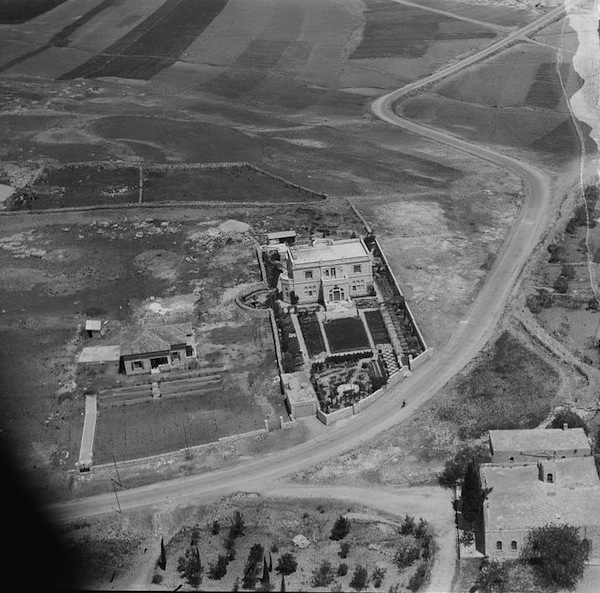
photo - Hajj Amin al-Husseini’s mansion in the Sheikh Jarrah neighbourhood circa 1938
Hajj Amin al-Husseini’s mansion in the Sheikh Jarrah neighbourhood circa 1938. (photo from Daniel Luria)

On April 13, 1948, both Scottish Highlanders garrisoned at the mansion and other British troops stationed at the nearby Police Academy failed to intervene for eight hours when a convoy of doctors and nurses headed to Hadassah Hospital came under fire from Arab guerillas. Seventy-eight Jews, many doctors and nurses, died in the massacre.

Following the War of Independence, the al-Husseini mansion became the Shepherd Hotel in the now-divided and impoverished city. It was eclipsed by the Hotel Jerusalem Intercontinental, today called the Seven Arches, which opened on the Mount of Olives in 1964. After the Six Day War in 1967, when Israel conquered and annexed east Jerusalem, the hotel was taken over by the custodian of absentee property.

In 1985, it was sold to C and M Properties Ltd., owned by Florida bingo hall billionaire Irving Moskowitz (1928-2016), the benefactor of right-wing Israeli settler groups intent on housing Jews in the eastern side of the now united city. Following the zoning of Plan 2591, a request was made on Nov. 6, 2008, to permit the company to build two new residential blocks, including 28 apartments on top of an underground parking lot. In January 2011, the four-storey Shepherd Hotel annex – added on to the mufti’s original mansion – was demolished to make way for the future housing.

Rather than attempt to rezone the site – which adjoins the British consulate – for a higher density at the beginning of the redevelopment process, it was decided to build what was legally permitted and later apply to amend the zoning, Luria explained.

“Ateret Cohanim is not involved in the building project but we have an interest in strengthening Jewish roots in and around the Old City,” he said.

Gil Zohar is a writer and tour guide in Jerusalem.

Israel’s corona experience

A Stitches by Orli mask, modeled by the designer Orli Fields.

A little over a year ago, Israeli radio news reported that Dr. Li Wenliang, an eye doctor in Wuhan, China, had tried to warn people that there were too many sick in his region. The report caught my attention because it stated that the doctor had been silenced by Chinese authorities.

When the coronavirus outbreak first became newsworthy, Israelis – from the prime minister on down – were sure we wouldn’t be seriously encumbered by it. We were in the mood to confidently assist others. I remember a man in front of me at the grocery checkout, turning around to ask if I knew why he was buying so many packages of toilet paper. When I said no, he told me he was sending toilet paper to family and friends in the United Kingdom.

In an unexpected turn of events, however, the virus became not just a key topic of discussion, but the manager of our daily lives. Over the long months of 2020, family visits and events were severely curtailed. In Israel, for religious and non-religious alike, Jewish holidays are always occasions for get-togethers, but not so this past year.

Some friends and acquaintances have become so nervous about catching the virus, they no longer want to converse, even outdoors, at a safe distance and from behind a mask. Fearing the spread of the pandemic, government officials, in turn, have put the kibosh on live cultural events.

Many people have learned to work from home and some have managed to re-create themselves, opening new businesses, such as those involving logistics, shipping and delivery. For example, a tour guide who used to lead groups through the colourful Mahane Yehuda Market now prepares and delivers baskets of shuk food items. Notably, during the pandemic, some lucky artists and galleries have found more of a demand for their work. Possibly this is due to the fact that people are home so much, staring at the walls, as it were. Yet, most artists-musicians, singers, actors and all the crews that keep theatres and other cultural facilities running have found themselves without work and without significant governmental bailout grants. All tolled, thousands of people have been laid off or have become unemployed altogether.

Whether because we were in lockdown or because we were anxious about being in situations where we might be exposed to people who have the virus, we have perfected online shopping to the level of an art. But some of us have also taken advantage of the farmers who are selling their produce directly to clients rather than through the now-quiet public markets.

We have learned to see ourselves as others see us, that is, in tiny boxes on Zoom. Some cultural institutions – such as the National Library of Israel, the Zionist Confederation House, Beit Avi Chai, Yad Izhak Ben-Zvi and others – have been broadcasting lectures and even some festivals on Zoom. I know one lecturer whose delivery has actually improved over Zoom.

photo - Another Stitches by Orli mask, also modeled by the designer Orli Fields
Another Stitches by Orli mask, also modeled by the designer Orli Fields.

Not only have we learned that we can talk and be understood with a mask over our nose and mouth, I have heard that there are people who, being self-conscious of their teeth and mouth, are now more confident in public because they are wearing a mask.

And masks have changed over the course of the pandemic. In Tel Aviv especially, you will see people wearing designer masks, even while most of us are dressing more simply. In my neighbourhood, for instance, the vast majority of people wear sweatpants and sweatshirts (called “training” in Hebrew) on a daily basis. Teenagers wear indoor-outdoor pajamas; sometimes, they venture outside in their slippers.

The pandemic has brought out lots of dark humour, something Israelis have always been good at. And people have become more cynical about government proclamations. As but one example, the “last lockdown we will have” has happened four times already.

The coronavirus has aided in dividing Israel even more, as certain segments of the population are singled out for their non-adherence to government policy, but are not held accountable for their non-compliance. As one doctor candidly told me, “healthcare decisions are hampered by political considerations.”

Until this pandemic, many discharged Israeli soldiers would travel to southern Asia or to South America to “clear their heads.” With the spread of corona, however, travel has no longer been a safe option, so, in the past year, some soldiers who finished their compulsory service decided to immediately enrol in colleges and universities.

Altogether, the pandemic has caused tremendous financial and emotional stress. We have learned that corona is the loneliest hospitalization and death. But government budget problems have left social service agencies and nonprofits with little or no funding to continue their work of easing the tension, so the psychological damage continues to spread, untreated.

On the brighter side, people have picked up new hobbies, such as gardening or building terrariums. Baking has become a big thing, too. Working on jigsaw puzzles is another activity going through a revival. There seems to be more appreciation of nature, as well, as people have been going out for walks or picnics near their homes as a way to cope. And there has been a significant rise in the number of people adopting dogs, which may help reduce or prevent stress disorders during the pandemic. (While the number of abandoned pets has not dropped in Israel, it has not increased.)

It is generally acknowledged that doctors, nurses and other hospital staff are on the frontlines of the pandemic, so they were the first to receive coronavirus vaccinations. However, there is no shortage of vaccines in Israel and two things happened just recently: “pop-up” inoculation stations opened, to accommodate both citizens and non-citizens, so that, basically, anyone who walks in with an ID can get one; and Israel’s prime minister began talking about vaccine diplomacy – selling or giving vaccines to other countries.

The few pluses of 2020 notwithstanding, however, I doubt most Israelis, if not all, would object to having skipped the past year.

Deborah Rubin Fields is an Israel-based features writer. She is also the author of Take a Peek Inside: A Child’s Guide to Radiology Exams, published in English, Hebrew and Arabic.


בעידן המגפה הקשה

את הלוויות של אבי ראיתי עם עוד מספר בני משפחה וחברים באמצעות “הזום” בשעה שתיים לפנות בוקר לפי שעון ונקובר.

הפעם הרגשתי מקרוב את הנזקים האיומים שמגיפת הקורונה עושה לנו, לחיינו, לקרובים כמו גם לרחוקים. אבי, משה רחמני, בן התשעים ואחד נדבק בנגיף בבית החולים איכילוב שבתל אביב, ולאחר פחות משבועיים נפטר מסיבוכים קשים. אני לצערי לא הצלחתי לעזוב את ונקובר והגיע להלוויתו שהתקיימה ביום ראשון האחרון, בבית הקברות האזרחי של קריית ענבים, בגלל שקשה מאוד לטוס מכאן בעת הזו. לפחות שתיים-שלוש עצירות בדרך ואני הייתי צריך לקבל בנוסף אישור מיוחד ממשלת ישראל להגיע להלוויה. לאחר מכן היה עלי להיכנס לסגר באיזה שהיא מלונית בישראל למשך כשבועיים ימים. ובחזרה לקנדה הייתי צריך לעבור הליך סיוטי דומה. החלטנו לכן במשפחתי שלא אטוס. זו היתה החלטה קשה אך מתבקשת בימים אלה.

את הלוויות של אבי ראיתי עם עוד מספר בני משפחה וחברים באמצעות “הזום” בשעה שתיים לפנות בוקר לפי שעון ונקובר. בקריית ענבים השעה הייתה שתיים עשרה בצהרים, וכארבעים איש הורשו להגיע לבית הקברות, בראשות אמי, לוצי רחמני שגם היא בת תשעים ואחת, ואחי, אמיר רחמני, שניהל את הטקס הקשה הזה. זה לא פשוט לראות איך קוברים את אבא שלך כל כך מרחוק – באמצעות הטכנולוגיה המתקדמת, במקום פשוט להשתתף בטקס צנוע עם חברי משפחה וחברים קרובים. זה מאוד מוזר ויוצר הרגשה של ניכור ומרחק המאוד אופיינית לעידן מגיפת הקורונה, ששינתה את חיינו לחלוטין.

photo - My father, Moshe Rahmani, ninety-one years old, contracted the virus at Ichilov Hospital in Tel Aviv, and after less than two weeks died of serious complications
אבי, משה רחמני, בן התשעים ואחד נדבק בנגיף בבית החולים איכילוב שבתל אביב, ולאחר פחות משבועיים נפטר מסיבוכים קשים

אני נפגשתי עם אבי לאחרונה רק לפני קרוב לשנה. היה זה בחודש מארס אשתקד, שבוע לפני שקנדה הכריזה על סגר לאור המגפה שהחלה לתפוס תאוצה בכל רחבי העולם. הגעתי לישראל למספר ימים כדי לפגוש את הורי בביתם בתל אביב. הם חששו קצת מהחלטתי לטוס כי אולי אני אדבק ואז גם אסכן אותם. הביקור עבר בשלום ובשלווה. הספקתי לשבת עם הורי ערב ערב ולשוחח שעות על שלל נושאים. אחרי שבוע טסתי בחזרה לוונקובר ולא ידעתי אז (כמובן) שאלו יהיו הפגישות האחרונות שלי עם אבי.

אבי נולד בירושלים. הוא גדל בבית דתי אך כבר כתלמיד תיכון החליט לבחור בדרך אחרת – חילונית. אמי ילידת אוסטריה הגיעה עם משפחתה לישראל עת הייתה בת שמונה. תחילה לנהלל ולאחר מכן המשפחה התיישבה בירושלים. הורי הכירו איפוא בירושלים ולאחר שלוש שנות חברות התחתנו ונשארו ביחד למשך שבעים שנה עד למועד פטירתו של אבי. הם הספיקו לגדל את אחי ואותי בביתם ברחוב המלך ג’ורג’ שבמרכז העיר. לאחר שעזבנו את הבית, הורי עברו לשכונת בית הכרם. לבסוף הם מאסו בירושלים ולפני כשבע עשרה שנה עזרו אומץ ועברו לתל אביב ופתחו בחיים חדשים.

אבי עבד כל חייו בתחום הביטוח בתקופת מגוריו בירושלים. הוא יצא לפנסיה עם המעבר לתל אביב. בעת שגר בירושלים נחשב לאוהד שרוף של קבוצת הכדורגל בית”ר ירושלים, וצפה במשחקים רבים מהיציעים במגרשי הכדורגל ברחבי הארץ. בשנות השמונים המיר את המגרשים בטלוויזיה ועד לאחרונה צפה במרבית המשחקים של בית”ר.

אבא נחלש בתקופה האחרונה ולפני שלושה שבועות הוא אושפז לטיפול מאסיבי בבית החולים איכילוב. שם לתדהמת כולנו נדבק בקורונה ומטבע הדברים מצבו החמיר מיום ליום. אמי, אחי ושתיים מהנכדות הספיקו לבקר אותו יום לפני מותו. התמונה הייתה קשה מנשוא. עכשיו הוא לא סובל יותר.

היום אני יכול להביו היטב את המשפחות שאיבדו את יקיריהם שנדבקו בקורונה.

What constitutes recruiting?

Galit Baram, consul general of Israel in Toronto and Western Canada, says the allegations of recruiting are unfounded. (Consul office photograph)

Last October, a coalition of foreign policy and Palestinian solidarity organizations delivered a formal complaint to David Lametti, justice minister and attorney general of Canada, alleging that Canadians are being recruited for the Israel Defence Forces. Accompanied by an open letter signed by more than 170 supporters, the complaint seeks an investigation into the actions of Israeli diplomats and consular officials, among others.

Under Canada’s Foreign Enlistment Act, it is illegal for foreign militaries to recruit Canadians in Canada. In 2017, at least 230 Canadians were serving in the IDF, according to the army’s statistics. The coalition, composed of Just Peace Advocates, Palestinian and Jewish Unity, and the Canadian Foreign Policy Institute, alleges that Israeli consular officials have invited Canadians to speak with IDF recruiting officers at the consulate and have sent IDF soldiers to speak at Canadian high schools. In a written statement to the Canadian Jewish Record, which was cited in an Oct. 28 article online, Galit Baram, consul general of Israel in Toronto and Western Canada, said, “Any allegations against Israel in this matter are unfounded.”

The complaint drew some attention. Montreal-based newspaper Le Devoir reported on it in a front-page article on Oct. 19, under the headline “Israel criticized for recruiting on Canadian soil.” The article pointed to a recruiting invitation posted on the website of the Israeli consulate in Toronto in November 2019. “An IDF representative will conduct personal interviews at the consulate. Young people who wish to enlist in the IDF or anyone who has not fulfilled their obligations according to the Israeli Defence Service Law are invited to meet with him,” read the post, which included contact information to schedule appointments. Further investigations by Le Devoir yielded similar recruiting invitations from 2014 and 2018.

Baram said the invitations were directed only to Israelis. “In Israel, the law requires compulsory service,” she stated. “Every Israeli, male or female, must serve in the Israel Defence Forces. Israeli citizens living abroad are obligated to settle their status with the Israeli authorities.” According to the Foreign Enlistment Act, foreign representatives can recruit their own citizens in Canada, so long as the recruits are not also Canadian.

Baram acknowledged that recruiting officers may be sent to large Israeli communities to conduct interviews, citing Toronto as an example. According to the 2016 Census, however, roughly four out of five Israelis in Toronto are dual citizens, and approximately 3,125 Israelis in Toronto are not Canadian. When invited to clarify to which group the invitations were sent, the consulate declined.

photo - John Philpot, a Montreal-based lawyer, is spokesperson for a coalition claiming that Canadians are being recruited for the Israel Defence Forces
John Philpot, a Montreal-based lawyer, is spokesperson for a coalition claiming that Canadians are being recruited for the Israel Defence Forces. (photo from english.khamenei.ir)

The coalition’s concerns extend beyond Israeli or dual citizens, however. “Any suggestion that all Israel does is recruit their own citizens who have to do their military duty is complete nonsense,” said John Philpot, a Montreal-based criminal-defence lawyer and coalition spokesperson. The Devoir article reported on a visit by an IDF colonel to a Toronto denominational school “to talk about his experiences as a new recruit and as a senior commander.” On the same day the complaint was filed, The Canada Files published an article by Yves Engler, a Montreal-based writer and signatory to the letter, documenting what Engler considers to be extensive promotion of the IDF in Toronto Jewish day schools.

As one example, he pointed to a talk by Seth Frieberg, an IDF “lone soldier,” in January 2020 at TanenbaumCHAT, a Toronto Jewish high school and Frieberg’s alma mater. Lone soldiers are foreign recruits to the military without immediate family in Israel. Frieberg joined the Israeli army in 2013 and served 14 months as a paratrooper. In an interview last October, he credited his time at the Eretz Hatzvi Yeshiva in Jerusalem, where he spent a year after high school, for partly driving his decision to enlist. His teachers spoke highly about Eretz Yisrael, the biblical land of Israel, and the importance of living there. He said he felt a greater connection to Israeli Jews, to the country, and was drawn to and admired the soldiers. He returned to Canada to complete an undergraduate degree at Western University and joined the IDF the following year.

The roots of his idea, however, began before his gap year. He was also motivated by a family history with the Holocaust and a course at TanenbaumCHAT. Two of his grandparents were Holocaust survivors, one of whom, his grandmother, was active in Holocaust education. “She’d always talk about that, so I think I had this idea in my mind about the horrors of the Holocaust,” he said. In his Grade 12 history course, a connection was made between the Holocaust and Israel: he took from it the idea that “had Israel been there during the time of the Holocaust, [it] probably wouldn’t have happened.” In this and other ways, Frieberg said, he relies on Israel. “In the worst sense … if anything bad happened to Jews or myself in Canada, I always have Israel to go to.” He reasoned he should do something for Israel in return: “And that could be charity, volunteer, or going to the army.”

As part of TanenbaumCHAT’s IDF Day, the annual event at which Frieberg spoke, students wear olive-green IDF T-shirts, matching clothing, and sell baked goods with green icing to raise money for the military. By Frieberg’s estimates, he spoke to 80 students about his experience in the IDF, including patrolling the Lebanese border and West Bank, searching for three kidnapped youth, and operations in Gaza. Did his talk inspire others? He said, “You’d have to ask them…. I was just there to tell them my story.”

Last year’s events were organized under the leadership of Israelis and former IDF soldiers Ariel and Lee Kestecher Solomon. Ariel, the school’s Israel engagement shaliach, or emissary, was a commander in the IDF and volunteers with the Jewish Agency for Israel. According to the agency’s website, Israeli emissaries are sent to Jewish communities abroad for two to three years “to strengthen and deepen the mutual connection between Israel and members of the community.”

In his Canada Files article, Engler characterizes these activities – IDF Day, talks by lone soldiers, fundraising for the military, and former soldiers with extended placements in Jewish day schools – as enticement to join the IDF. When invited to comment, Renee Cohen, TanenbaumCHAT’s principal, did not respond to multiple requests.

photo - Kolby Hanson, post-doctoral fellow at the U.S. Naval War College in Rhode Island, co-wrote a study of 25 countries that recruit non-citizens
Kolby Hanson, post-doctoral fellow at the U.S. Naval War College in Rhode Island, co-wrote a study of 25 countries that recruit non-citizens. (photo from kolbyhanson.com)

Why countries like Israel might recruit foreign citizens is a puzzle that caught the attention of Kolby Hanson, post-doctoral fellow at the U.S. Naval War College in Rhode Island. In a 2019 paper for Security Studies, he and co-author Erik Lin-Greenberg categorized the 25 countries that recruit non-citizens into three distinct groups. In an interview in October 2020, Hanson explained that countries either recruit for specific expertise or for sheer numbers to fill ranks, or, like Israel, “within narrow ethnic or commonwealth networks that are more symbolic programs.” As with India, Israel “[uses] the rules around their recruitment to make some statement about who they are and what the nation’s identity is.” Israel recruits foreign Jews for its military to assert its identity as a Jewish state and to establish deeper ties to Jewish communities abroad.

“Someone might grow up and say, ‘My cousin served in the IDF and that makes me feel like I’m really connected to Israel,’ or whether you know someone who came back after serving in the IDF,” said Hanson. Countries that recruit for symbolic reasons tend to have other programs, like expedited citizenship (as Israel has for Jews), to reinforce these ties.

The IDF itself is likely aware of the legal sensitivities around recruitment of Canadians. Hanson described an unusual exchange in an interview with Canadian IDF soldiers: “When we used the word ‘recruitment,’ we had a couple of people get tetchy…. They pounced on it and said, ‘No, no, it’s not recruitment. The IDF allows people to serve, but they don’t try to get people to.’”

In Canada, crossing the line into active recruitment is a legal issue. Unfortunately, it is not clear where exactly the line is. The Foreign Enlistment Act does not define recruitment, nor, according to Tyler Wentzell, doctoral student in law at the University of Toronto, is there case law.

A serving military officer and lawyer by training, Wentzell has published several articles on foreign recruitment and the history of the act. In an October 2020 interview, he said cases have been tried for recruiting for criminal or terrorist organizations, but not for the military of a sovereign state, for which the term would likely be interpreted differently.

“If you’re actually sworn into [a foreign] military in Canada, that definitely crosses the line,” he said, as would undertaking the stages of an intake funnel, including physical fitness and aptitude testing and evaluation. But, at earlier points, like attracting prospects, the line blurs. Is putting a Mountie on promotional material for Canada recruiting for the RCMP, asked Wentzell, or using a national symbol to promote the country? To complicate matters further, recruiting is also “a cultural sense that changes over time,” as with evolving Canadian attitudes towards high school rifle ranges and cadet corps.

In an October 2020 interview, Petty Officer Gian Barzelotti, a recruiter for the Canadian Armed Forces, described where he draws the line when recruiting in Canadian high schools. To students in Grade 10 or older, he advertises the benefits of joining the military, including a paid co-op program in which students can earn high school credit. With younger students, he emphasized, the CAF does not recruit. “We do talk about the military and who we are and what we do for Canada,” he said, but not about programs and benefits nor intake. “You’re not saying, ‘Go down this path and you’ll end up being in the military.’”

Tzofim Garin Tzabar, however, does just that. A branch of the Israeli Scouts that is 70% funded by the Israeli government and the Jewish Agency for Israel, Garin Tzabar describes itself as the “Israeli lone soldier IDF program.” Its online promotional video advertises an “unbelievable three months of one unforgettable absorption process,” “at least 20 new friends,” “a family for life,” and that 30% of its participants are accepted to the IDF’s officer and commander stream. It also lists an office in Toronto.

Likewise, in June 2020, Nefesh b’Nefesh, an Israeli absorption organization, advertised a webinar entitled “Joining the IDF” on the website of the UJA Federation of Greater Toronto. According to the event listing, the webinar featured “everything you need and want to know about joining the IDF,” including the lone soldier program, the structure of the military, preparatory Hebrew programs, and post-secondary degrees relevant to the IDF. Last year, Nefesh b’Nefesh facilitated the absorption of 390 lone soldiers from North America to Israel. Although the UJA Federation did not endorse the webinar, it did promote it on its website.

In practice, it seems the Canadian government has never done more than slap an offending party on the wrist. During the Vietnam War, said Wentzell, the U.S. army accidentally placed a recruiting ad in a Canadian magazine. “There was a great deal of correspondence back and forth saying, ‘Hey, could you lay off this?… The response was pretty consistently, ‘Yep, sorry.’”

The government maintains an interest in keeping Canadians out of foreign militaries and conflicts. Wentzell illustrated this by way of a Canadian who served in the 1948 Arab-Israeli war: “What happens when Benjamin Dunkelman gets in trouble on the other side of the planet? Do we get him home? Do we owe him anything? These were still live issues.” For the 200-plus Canadians serving in the IDF today, they still are.

“If Canada said to the Israeli consulate, ‘Stop all recruiting,’ [and] went to the schools and said, ‘You cannot have meetings where Israelis invite you to join the army’ … that would be a good step forward,” said Philpot.

To Philpot and the coalition, these acts are part of a “whole series of evidence” that point to IDF recruiting, including an event held by Deborah Lyons, Canadian ambassador to Israel. In January 2020, she hosted 33 Canadian IDF lone soldiers at her residence in Jerusalem to thank them for their service. “We at the embassy are very proud of what you’re doing. It’s really quite incredible,” she said. Philpot said all of this points towards recruitment.

Shortly after the complaint was filed, Lametti responded to questions in an unrelated press conference. He reiterated that Canadian law applies to foreign diplomats but referred calls for an investigation to the police and the public prosecution service. “I will leave the decision to the institutions we have in Canada to monitor the situation,” he said. In mid-November, the RCMP confirmed it was reviewing and assessing the evidence submitted.

Kevin Keystone is a Toronto-based freelance writer, editor and researcher. His writing has been published in the Literary Review of Canada, the Jewish Independent and Good Old Boat.