A Polish court’s ruling that a Canadian Holocaust scholar must apologize for tarnishing the memory of a wartime mayor in Poland continues to reverberate around the world.
The case is being condemned by Jewish organizations and historians as an attack on free academic inquiry. Scholars warn the ruling could further chill an already touchy area of research: the role played by Poles in the murder of Jews in Nazi-occupied Poland.
In a long-awaited ruling on Feb. 9, a civil court in Warsaw ordered two prominent Holocaust scholars to apologize to an elderly woman who claimed they had defamed her late uncle over his wartime actions.
Prof. Jan Grabowski, an historian at the University of Ottawa, and Prof. Barbara Engelking, a sociologist and founder of the Polish Centre for Holocaust Research, were accused of defaming Edward Malinowski, the wartime mayor of Malinowo, a village in northeast Poland, by suggesting in a book that he delivered several dozen Jews to Nazi occupiers.
The professors were ordered to apologize for a passage in Night Without End: The Fate of Jews in Selected Counties of Occupied Poland, a two-volume work they co-edited, which the court said “violated Malinowski’s honour” by “providing inaccurate information.”
The court declined a demand for monetary damages of 100,000 Polish zlotys (about $34,000 Cdn) but ordered the scholars to apologize to Malinowski’s niece, 81-year-old Filomena Leszczynska, who brought the case; publish a statement on the website of the Centre for Holocaust Research; and correct the passage in any future edition.
Leszczynska had argued that her uncle had actually aided Jews and was acquitted of collaboration in 1950.
Grabowski, whose father survived the Holocaust, called the outcome “a sad day for the history of the Holocaust in Poland and beyond Poland. I have no idea what will be the consequences as well as the implications of this trial. But I can say for certain this thing will be studied for a long time by historians,” he told the Globe and Mail.
Prior to the verdict, he warned that, if the lawsuit were successful, “then basically it will mean the end to the independent writing of the history of the Holocaust in Poland.”
The professors were sued under a Polish law allowing for civil action against anyone claiming that the Polish nation or state was responsible for Nazi atrocities. The law was amended in 2018 to drop plans to criminalize the offence.
In her ruling, the judge said the decision “must not have a cooling effect on academic research,” but that is how it is being perceived.
As a senior tenured professor, the verdict, Grabowski conceded in a Postmedia interview from Poland, is “unpleasant. But, imagine you are a 25-year-old graduate student of history. Do you think you’re going to embark upon discovery of difficult history? I don’t think so.”
Grabowski and Engelking said they will appeal the ruling.
Mina Cohn, director of the Centre for Holocaust Education and Scholarship at Carleton University in Ottawa, called the campaign against Grabowski and Engelking “ugly.”
“The Polish government’s attempt to discredit them, and to silence and distort the historical facts of the Holocaust in Poland is appalling,” Cohn told The CJN. “It endangers the basic right of the future freedom of historical research of the Holocaust in that country.”
She said that, as daughter and granddaughter of Holocaust survivors with roots in Poland, “I find this blatant attempt by the Polish government to reject the reality of inherent antisemitism within Polish society before and during the Holocaust, and to discredit survivors’ testimonies, very offensive.”
For Prof. Piotr Wrobel, a specialist in Polish history at the University of Toronto’s Munk School of Global Affairs, the case is an example of the current Polish government’s attempt to control the historical record.
“They try to shape the ‘official’ version and persecute people who do not share [it],” he told The CJN. “This is very sad.”
It was “very clearly” the intention of those behind the lawsuit “to freeze scholarly research into the Holocaust. This was supposed to be a warning. Young people should remember this. If your opinions [and] historical interpretations are different than the official ones, then do not touch the Holocaust,” Wrobel said. “There is a choice between comfort and truth.”
In a statement on Feb. 10, the University of Ottawa offered its “unwavering support” to Grabowski and his “widely respected” Holocaust research. The university called the verdict “unjust.”
“Prof. Grabowski’s critical examination of the fate of Polish Jews during World War II shows how knowledge of the past remains vitally relevant today,” said university president Jacques Frémont. “The impact his work has had in Poland, and the censorious reaction it has generated, demonstrates this truth.”
The university “emphatically supports” Grabowski’s “right to pursue historical inquiry unencumbered by state pressure, free from legal sanction and without fear of extrajudicial attack.”
In Israel, the Yad Vashem Holocaust memorial and museum decried the ruling as “an attack on the effort to achieve a full and balanced picture of the history of the Holocaust.”
Even before the verdict, David Silberklang, a senior Holocaust historian in Israel, said the libel case intended for the two scholars to be “sued into submission.”
The decision “damages an open and honest coming to terms with the past,” said Gideon Taylor, president of the Conference on Jewish Material Claims Against Germany, which sponsors historical research on the Holocaust.
Taylor said Poland “must encourage open inquiry into its history, both the positive and the negative aspects.”
Canadian historian Frank Bialystok, who has written extensively about the Holocaust, sees the verdict against Grabowski and Engelking as a flipping of political extremes in Poland.
The murder of Jews in Poland, even after the war, was documented at the time. “This research was acceptable during the communist era as a weapon against nationalism,” said Bialystok. Now, the two professors are being “vilified” by the nationalist camp.
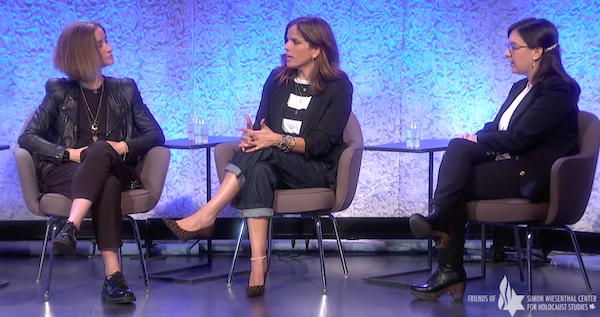
Friends of Simon Wiesenthal Centre said the ruling could have “a devastating impact on Holocaust research and education.” The organization said it is reaching out to senior government leaders, urging them to speak out against “Holocaust distortion in Poland.”
The American Historical Association went so far as to write Polish President Andrzej Duda, saying “a legal procedure is not the place to mediate historical debates” and urged Polish leaders to “uphold the rights of historians to investigate the past without legal harassment and with no fear of reprisals for making public their historical- and evidence-based findings.”
In 2018, Grabowski announced he was suing the government-funded group that backed Leszczynska’s libel case for allegedly libeling him. He claimed that the ultranationalist Polish League Against Defamation had itself defamed him by questioning his findings about the complicity of Poles in the wartime murder of Jews.
This article originally was published on facebook.com/TheCJN. For more on Prof. Jan Grabowski, see jewishindependent.ca/revealing-truth-elicits-threats.
The International Holocaust Remembrance Alliance, in 2016, adopted a so-called Working Definition of Antisemitism. Given the complexity and pervasiveness of this ancient bigotry, the statement itself is remarkably succinct at a mere 38 words.
It reads: “Antisemitism is a certain perception of Jews, which may be expressed as hatred toward Jews. Rhetorical and physical manifestations of antisemitism are directed toward Jewish or non-Jewish individuals and/or their property, toward Jewish community institutions and religious facilities.”
It is innocuous and hardly debatable. Where controversy has arisen is in the accompanying 11 examples, seven of which make reference to Israel. Examples provided of antisemitic manifestations include: accusing Jews as a people, or Israel as a state, of inventing or exaggerating the Holocaust; accusing Jewish citizens of being more loyal to Israel, or to the alleged priorities of Jews worldwide, than to the interests of their own nations; applying double standards by requiring of Israel a behaviour not expected or demanded of any other democratic nation; drawing comparisons of contemporary Israeli policy to that of the Nazis; and holding Jews collectively responsible for actions of the state of Israel.
Opponents of the definition, including a majority of Vancouver’s city council, which voted against adopting the definition in 2019, claim it could stifle free expression in the form of criticism of Israel – this despite the fact that the definition self-defines as “non-legally binding.” In a world where any individual with access to a computer has more power than even the most powerful figures in history to disseminate their views to a global audience, it is notable that “Zionists” are imagined to have the power to control what others think, do and say. The criticism is perhaps, ironically, a manifestation of the problem itself.
To their credit, the new U.S. administration has said it “embraces and champions” the definition. The previous administration also endorsed the definition. (Canada and 28 other countries, as well as scores of cities and other jurisdictions and organizations have similarly endorsed it.) But the Trump administration’s support was a component of a broader politicization of ostensible support for the Jewish community. By allowing Israel’s right to exist in peace to become a partisan tool, we risk polarizing politicians and the public, driving supporters to their corners on a topic where less polarization should be encouraged.
If there are problems inherent in the terminology, it is perhaps in the chutzpah of attempting to define it at all. It is almost universally acknowledged that antisemitism is uniquely capable of metastasizing as required by the perpetrator. It is, above all, a pathology of the antisemite, with more to do with the eye of the beholder than with Jewish people themselves. Antisemitism is very often (if not always) a projection of someone’s (or some society’s) own problems directed toward an empty vessel in the form of “Jews.” Note that antisemitism is most rampant in the places where Jews are fewest – or nonexistent.
Antisemitism differs from other prejudices and bigotries as well in the typical responses it engenders. We have unlearned a tendency to deflect blame for misogyny back onto its victims; we do not accept that violence against women is in anyway justified by, say, what a victim was wearing. We recognize racism as a flaw of it perpetrators and we do not accept that racism against people of colour is based on the behaviour or innate characteristics of the victims. Homophobia is a pathology of the homophobe; it is not nurtured or provoked by LGBTQ+ people. Yet how many times do we see people respond to antisemitic violence or words with a variation on the question: What did the Jews do to deserve it?
Last week, that formulation was hinted at by a Democratic member of the U.S. Congress, Rep. Andy Levin, of Michigan. “Injustice anywhere is an injustice everywhere,” Levin said during a webinar. “Unless Palestinian human rights are respected, we cannot fight antisemitism.”
This false equivalency and conflation – coming from a Jewish elected official, no less – is a picture-perfect illustration of why the IHRA was created.
As the new administration in Washington begins repairing the unprecedented social and economic damage done to the country over the past four years, it is encouraging to see one of its first acts being an explicit and enthusiastic commitment to the battle against antisemitism.
Journalists in Canada do not face the sorts of threats – sometimes life-endangering ones – that colleagues in many other countries do. But other factors impinge on the right of Canadians to diverse and thorough reporting of contentious issues, says an academic on the subject.
Robert Hackett, professor emeritus of communication at Simon Fraser University, spoke on the civil courage of journalists as part of the annual Raoul Wallenberg Day in Vancouver. The virtual commemoration, sponsored by the Wallenberg-Sugihara Civil Courage Society Jan. 17, featured a number of recorded events, including the screening of two films.
In recent decades, there has been a return to “partisan media,” said Hackett.
“Media, going back a couple of hundred years, were initially partisan media, reflecting the viewpoint of particular factions or parties,” he said. “We see that returning with a vengeance since the 1980s, with Fox News and so on.”
The internet has lowered attention spans and the “growing entertainment orientation” of the news media has changed the way reporting is done. Contradictory forces have upset the journalism sector in recent decades, he said. On the one hand, concentration and monopoly have placed control of “legacy media” – daily news, for instance – in fewer and fewer hands, reflecting a narrowing of perspectives. On the other hand, digital media and journalism startups have led to a fragmentation of public attention.
As the revenue structures of journalism have become strained due to competition for advertising avenues, resources for newsroom staff have declined, with commensurate impacts on the quality of reporting. Journalists who are expected to pump out several stories a day are unable to do the sort of investigative work common a generation or two ago and so rely on media releases. General reporters have replaced beat reporters with deep contacts and extensive background knowledge in an area of expertise. These structural changes have been accompanied by growing cultural skepticism toward expertise and even the definition of truth, said Hackett.
“It’s a different cognitive world,” he said. “We no longer seem to even have a shared reality.”
Some of Hackett’s recent research, in conjunction with the Canadian Centre for Policy Alternatives, has focused on fossil fuel industries and their influence on Canada’s press. He sees Canada’s largest print media company, Postmedia, as a booster of fossil fuels.
While Canadian journalists are fortunate not to face some of the life-threatening risks of reporters in many other places, there remain serious challenges to the ideal of a free media.
“There is still a certain degree of legal harassment and risk, especially for freelancers who don’t have a big organization behind them,” said Hackett. “The cost of a lawsuit for defamation, even if it’s a spurious lawsuit, is prohibitive. It’s intimidating. I know for a fact that freelancers have said they aren’t proceeding with stories because of fears of being sued.”
In addition, he added: “We don’t have effective shield or whistleblower laws, by and large, that would allow journalists to protect their sources.”
The online event, marking the 16th annual commemoration of Raoul Wallenberg Day in Vancouver, also featured two documentaries.
A Dark Place was produced by the Organization for Security and Cooperation in Europe’s Representative on Freedom of the Media. It follows female journalists around the world and the threats they receive online in reaction to their reporting on contentious stories. Threats of rape and murder, as well as other forms of intimidation, are almost ubiquitous. One study said that 60% of female journalists have experienced some form of online harassment or threats, according to the film. A panel discussion featured the film’s director, Javier Luque, and Arzu Geybulla, an Azerbaijani journalist who endured harrowing harassment and accusations of being a “traitor” for coverage of conflicts in the Caucasus.
The other documentary, Mohamed Fahmy: Half Free, by filmmaker David Paperny, follows Egyptian-Canadian journalist Mohamed Fahmy, who was jailed in Egypt for his reporting on the Arab Spring uprising in Cairo. Fahmy’s experience is one of many that journalists face daily in conflict zones and under repressive regimes, risking their freedom and their lives to report on events. Fahmy spent 438 days in an Egyptian prison before being pardoned by the country’s president, Abdel Fattah el-Sisi. Fahmy is now an adjunct professor at the University of British Columbia.
Alan Le Fevre, a director of the Wallenberg-Sugihara Civil Courage Society, welcomed participants to the annual event, which highlights the Second World War heroism of Raoul Wallenberg and Chiune Sugihara.
Wallenberg, a Swedish diplomat in Hungary, issued “protective passports” that identified bearers as Swedish subjects awaiting repatriation, thereby preventing their deportation from Hungary to death camps in Poland. Wallenberg disappeared in 1945 after the Soviets invaded Hungary. In 1957, the Soviet Union released a statement dated 1947, saying that Wallenberg had died of natural causes that year. Reports that Wallenberg was seen alive after 1947 have added to confusion and controversy around his fate.
Sugihara was vice-consul of the Imperial Japanese legation in Lithuania. At risk to his career and his life, Sugihara issued thousands of transit visas permitting Jews to travel through the Soviet Union to Japan and across the Pacific. Ostensibly, because a destination was required for a transit visa, the holders were destined for Curaçao. Many of those who escaped ended up on the West Coast of North America and there are several Vancouver families who owe their lives to “Sugihara visas.”
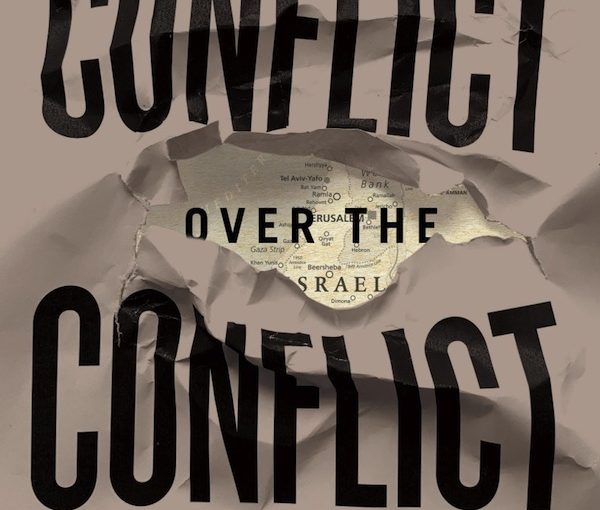
A new book on an incendiary topic turns out to be not quite as expected. The Conflict over the Conflict: The Israel/Palestine Campus Debate, by Kenneth S. Stern, may be the most comprehensive assessment of the (at least) 20-year battle on North American campuses between pro-Israel and anti-Israel forces.
Jewish and pro-Israel readers picking up the work might anticipate a litany of horrors, anti-Zionist if not antisemitic incidents, brawls, screaming matches, vandalism, boycotts and the like. There is that. But Stern argues that the perception that campuses are aflame in anti-Zionist rage is simply not true. More, he offers proof that the pro-Israel side is far from innocent of engaging in disgraceful tactics, too. There is ill will and there are bad actors on both sides. Most unexpectedly, as much as the book is about the conflict, it is more than anything an exercise in applied ethics on the topic of free expression.
Stern is the director of the Bard Centre for the Study of Hate, an attorney and an author. For 25 years, he was the American Jewish Committee’s expert on antisemitism and he was a lead drafter of the Working Definition of Antisemitism. He is also, it appears, something close to a free speech purist. As such, he rails against efforts by Israel advocates who have organized campaigns to censure (and censor) anti-Israel voices. He doesn’t let the other side off easily, either, calling out acts of harassment like drowning out pro-Israel speakers with the “heckler’s veto.”
The book, from New Jewish Press, an imprint of University of Toronto Press, begins with an empirical assessment. In institutions of higher learning in the United States, Israel is an issue in very few, he writes.
When speaking with Jewish audiences, Stern asks for a show of hands to gauge perceptions on anti-Israel attitudes. He asks for guesses on how many American colleges have divested from Israel.
“Many seem surprised when I say ‘zero,’” he writes. “There are relatively few campuses where Israel is a burning issue, and every year the number of pro-Israel programs … is usually at least double the anti-Israel ones. There are over 4,000 campuses in the U.S. – in the 2017-18 academic year, 149 had anti-Israel activity.… So the campuses aren’t burning.”
He does not dismiss the extreme tensions on a few campuses, however.
“[O]n some campuses where anti-Israel activity is prominent, pro-Israel Jewish students may feel marginalized, dismissed or vilified, sometimes with antisemitic tropes.” Identity politics and the conflation of Jewish people with “whiteness” creates racial conflict. “[T]he labeling of Jews as white becomes a problem when shared victimhood becomes a sacred symbol, a badge of honour, a precondition to enter a club of the oppressed. Antisemitic discrimination is rendered invisible.”
Though bigotry may play a role in the discussion, Stern does not see constructive resolutions in neologisms like trigger warnings, safe spaces and microaggressions.
“Faculty should have the right to give trigger warnings if they want, but I never do, and I think the idea is a horrid one,” he writes. “I teach Mein Kampf. It’s disturbing – get over it. College should prepare one to be an adult, and there are no trigger warnings after graduation day. Why are we encouraging students to be ostriches? Shouldn’t they, rather, be learning how to navigate things that will likely unsettle them over the rest of their lives?”
He quotes CNN commentator Van Jones, a strong civil rights proponent, who opposes “safe spaces” on campus: “I don’t want you to be safe ideologically. I don’t want you to be safe emotionally. I want you to be strong. That’s different. I’m not going to pave the jungle for you. Put on some boots and learn how to deal with adversity. I’m not going to take the weights out of the gym. That’s the whole point of the gym.”
Stern contends a fundamental error has been made in defining terms.
“We want campuses that are open to expression – including, perhaps even especially, difficult and disturbing ideas – but which protect students from real harassment and intimidation. Hate speech codes were efforts to say that ideas themselves can harass and intimidate. Ideas can and should make one uncomfortable (a comfortable college education is a wasted college education). But harassment is something different.”
Strategically, he argues, trying to censor hateful ideas is self-defeating and advances hate agents by martyring them.
“By trying to censor, rather than expose and combat, speech the students perceived as hateful, they were actually helping the alt-right and white supremacists,” writes Stern. “It’s no coincidence that the white nationalists in recent years have wrapped their racist and antisemitic messages around the concept of free speech. Why would progressives allow these haters to steal the bedrock democratic principle of free speech, disingenuously saying that this is what their fight is about? By trying to deny alleged racists platforms, progressives are helping white supremacists recast their vile message as noble protection of a right.”
Another strategic failure, he argues, is buying into the Palestinian narrative’s good/evil dichotomy.
“Israel’s case is best understood as inherently complex and difficult; playing into the ‘all bad’ and ‘all good’ binary of the other side renders those complexities invisible,” he writes.
The conflict on campus spills over, of course. Israel has created a list of 20 organizations, those that urge boycotts of the country, for instance, and bars their members from entering the country. Stern sees this as counterproductive: “You don’t make the case that blacklists (especially of academics) are proper if your goal is to oppose blacklists. You are conceding the argument.”
He gives an example of an anti-Israel campus activist who defends his group’s refusal to meet with Zionists “over cookies and cake” because “you Jews, in all due respect, you wouldn’t sit down with Nazis for tea and cake.”
He also reflects on the “Standards of Partnership” adopted by Hillel International, the Jewish campus organization, which proscribe engaging with groups or individuals that deny Israel’s right to exist, or who delegitimize, demonize or apply a double standard Israel, who support BDS or who exhibit “a pattern of disruptive behaviour towards campus events or guest speakers or foster an atmosphere of incivility.”
Writes Stern: “For those who are not yet ideological soldiers, but want to learn more, and want to do it around their campus Hillel, what sense does it make that adults are telling them they can only bring in certain types of speakers? Yes, the adults defined BDS as hateful. But does it make sense to tell students they have to go elsewhere than the Jewish address on campus to hear about it firsthand from those who support it?”
The litany of bad behaviours on all sides of the ideological divide is likely to make readers of Stern’s book uneasy, whether the reader is Zionist or anti-Zionist. But it is a rare and uncompromising testament to free expression that should give genuine free speech advocates an uplift, particularly in an era when ideologically driven regulation of expression and ideas, especially on campuses, has left many advocates of core liberal, academic values feeling beleaguered.
Joanna Garfinkel is part of the creative team behind the world première production of Berlin: The Last Cabaret, part of the PuSh festival. (photo from the artist)
The world première of Berlin: The Last Cabaret, presented at Performance Works Jan. 23-26 by City Opera Vancouver in association with Sound the Alarm: Music/Theatre, is almost sold out. Part of the PuSh International Performing Arts Festival, the only tickets that remain will be sold at the door, though writer and Jewish community member Joanna Garfinkel told the Independent, “I hope we are able to add more presentation opportunities, as well, since this is truly becoming an exciting and rich production.”
Set in Nazi Germany in 1934, a group of artists must decide whether or not to perform their new political show – which, reads the press release for Berlin, “challenges state media, calls out the Nazi classification of gay individuals as ‘degenerates’ and includes parodic inflection that women are being marginalized” under the new regime – or save themselves.
The opera takes place “two weeks after ‘the Night of Long Knives,’” said Garfinkel, “when the future had been cast, but many were not yet seeing it, including my own family. One thing that interested me a great deal is how people are forced to make compromises under oppression, and even make excuses for what’s happening around them.”
The “Night of the Long Knives” was the June 30, 1934, purge by Hitler of more than 85 members of the Sturmabteilung, the Nazi party’s initial paramilitary wing.
Rather than being a satire itself, Garfinkel explained that Berlin: The Last Cabaret “is more an unearthing of the under-heard Jewish and queer artists who flourished in the Weimar era and were crushed by the Holocaust. The humour we employ is their urgent satire, which feels fresh and relevant with all that is going in the world right now.
“My own family escaped from Berlin to Winnipeg (eventually), so I am both bound to respect and honour the history, and also privy to the dark humour we employ about it.”
City Opera Vancouver approached Garfinkel last spring, she said. They had “heard about me from my dramaturgical work with Playwrights Theatre Centre and the historically based Japanese Problem for my own company, Universal Limited. I was excited by the opportunity to work with an opera company, which would be new to me, but on something quite close to my heart, history and interest.”
The relevance of the opera was one of the reasons she joined its creative team. In regard to choosing projects in general, she said, “Right now, it feels like art must be speaking to the world and on behalf of marginalized voices. Theatre is too much work, and the world too messed up, to work on projects that don’t resonate on an activist level. I am lucky right now to get to choose to work on things that are so resonant.”
Garfinkel, who is billed as librettist for the production, clarified that categorization.
“I contributed story, structure and additional dialogue for this piece,” she said, “but it’s important to note that the songs themselves are historical, written by composers Eisler, Spoliansky, Hollaender and Weil, so I am not, technically, the librettist. However, building a story and play around preexisting songs presents its own challenges. It was of central importance to me that the Jewish/queer and other marginalized artists of the time were centred in our story.
“We were working with excellent (but unavailable!) collaborators in our composers and, together with director Alan Corbishley, music director and historian Roger Parton and choreographer Tara Cheyenne Friedenberg, tried to honour their work and build a vital story around it.”
Cheyenne Friedenberg is also a member of the Jewish community.
Berlin: The Last Cabaret stars actors with a background in music and spoken theatre, rather than traditional opera singers, and each performer, according to the press release, “was involved in the creation of their on-stage characters and storylines.” The production features a live four-person band.
Actor and comedian Sacha Baron Cohen delivered the keynote address last month at an Anti-Defamation League conference. His words quickly went viral because he pinpointed fears and challenges shared by millions about the power of social media. He hit many nails on the head.
“Democracy, which depends on shared truths, is in retreat, and autocracy, which depends on shared lies, is on the march,” he said. “Hate crimes are surging, as are murderous attacks on religious and ethnic minorities. All this hate and violence is being facilitated by a handful of internet companies that amount to the greatest propaganda machine in history.”
He was referring to social media like Facebook and Twitter and platforms like YouTube and Google, whose algorithms, he said, “deliberately amplify the type of content that keeps users engaged – stories that appeal to our baser instincts and that trigger outrage and fear.”
Had Facebook existed in the 1930s, he went on, it would have run 30-second ads for Hitler’s “solution” to the “Jewish problem.”
Baron Cohen acknowledged that social media companies have taken some steps to reduce hate and conspiracies on their platforms, “but these steps have been mostly superficial.”
“These are the richest companies in the world, and they have the best engineers in the world,” he said. “They could fix these problems if they wanted to.” The companies could do more to police the messages being circulated on their sites, he suggested.
He’s correct about the problems. But the first problem with his solution is that he is asking a couple of corporations to judge billions of interactions, making them not only powerful media conglomerates, which they already are, but also the world’s most prolific censors and arbiters of expression. Of course, by abdication, they are already erring on the side of hate speech, but is the alternative preferable? If we think Facebook chief executive officer Mark Zuckerberg has too much power now, do we really want to make him the planet’s censor-in-chief?
Yes, the platforms benefit from and, therefore, promote, the most extreme viewpoints. But, even if we could, would forcing those voices off the platforms make the world a safer place? There are already countless alternative spaces for people whose extremism has been pushed off the mainstream sites. Just because we can’t hear them doesn’t mean they’ve gone away.
Marshall McLuhan, the Canadian philosopher who declared “the medium is the message” died four years before Zuckerberg was born. He could have predicted that social media would change the way we interact and communicate. But has it fundamentally changed who we are? Or has it merely allowed our true selves fuller voice? Perhaps a little of both. Facebook, Twitter and the others are not agnostic forces; they influence us as we engage with them. But, in the end, they are mere computer platforms, human-created applications that have taken on outsized force in our lives. And all the input is human-created. Since the dawn of the industrial age, we have imagined our own inventions taking over and controling us, from Mary Shelley’s Frankenstein to 2001: A Space Odyssey’s Hal to Zuckerberg’s Facebook.
In all these cases, fictional or not, the truth is that the power remains in human hands. This is no less true today. We could, if the political will existed, shut down these platforms or apply restraints along the lines Baron Cohen suggests. But this would be to miss the larger point.
We live in a world filled with too much bigotry, chauvinism, hatred and violence. This is the problem. Dr. Martin Luther King said: “Darkness cannot drive out darkness; only light can do that. Hate cannot drive out hate; only love can do that.” And there are plenty of sites on social media that advance mutual understanding and love over hate. Are their messages as likely to go viral? Probably not. But that, ultimately, is determined by billions of individual human choices. A small but illuminating counterrevolution seems to be happening right now with a renaissance of the ideas of Mister (Fred) Rogers and his message of simple kindness. While much of the world seems alight in hatred and intolerance, a countermovement has always existed to advance love and inclusiveness. This needs to be nurtured in any and every way possible.
If Facebook were a country, its “population” would be larger than China’s. Bad example when we are discussing issues of free speech and the accountability of the powerful, perhaps, but illuminating – because an entity of that size and impact should be accountable. As a corporate body, it has few fetters other than governmental controls, which are problematic themselves. Concerned citizens (and platform users) should demand of these companies the safeguards we expect. We are the consumers, after all, and we should not ignore that power.
But neither should we abstain from taking responsibility ourselves. Social media influences us, yes. But, to an exponentially greater degree, it is merely a reflection of who we are. It is less distorted than the funhouse mirror we like to imagine it being. If what we see when we look at social media is a depiction of the world we find repugnant, it is not so much social media that needs to change, it is us.
It is the season of new beginnings: new school year, newly turning leaves and a new Jewish year. On a leisurely drive on Labour Day Monday in suburban Vancouver, bright orange pumpkins that weren’t there last time we passed had suddenly exploded into full-sized squash seemingly overnight. Summer, of course, is officially with us until Sept. 23, but, especially if your household has kids (or teachers), summer unofficially ended when the first school bell rang on Tuesday.
This is the time of year for reflecting back and looking forward. The promise and excitement of the new mixes with nostalgia and other emotions about the passage of time and memories – good or bad – of what we leave behind.
This coming Monday, we will hear from four speakers at FEDtalks, the launch of the Jewish Federation of Greater Vancouver’s annual campaign. Among them is Isaac Herzog, head of the Jewish Agency for Israel who (in last week’s Independent) acknowledged that one of the challenges our global Jewish community faces is engaging and involving young Jewish people. As students return to post-secondary campuses in British Columbia, across Canada and around the world, we can anticipate the usual challenges – some years better or worse than others – of campaigns, referenda and assorted political shenanigans that have particular impacts on Jewish students.
Understandably, young people who have grown up with connections to Judaism, Jewish peoplehood and Israel will take exception to some of the things they will face. Some will rise admirably in these encounters, as we have seen year after year, when students at Hillel, Chabad and some ad hoc Jewish and Zionist organizations have spoken out against misleading and false expressions on their campuses. Others, also understandably, will avoid such unpleasant controversies and focus on less polarized topics and activities. Those who take up the frontlines in these battles deserve our community’s support.
There are broader issues than Zionism on campus. Free expression is top of mind for many professors, students, parents and other interested parties. A particular flare-up over the summer involved the Vancouver Pride Society (VPS), which puts on the city’s largest annual event, banning the University of British Columbia and the Vancouver Public Library from participating in the Pride parade because they both provided space for presentations by speakers who are virulently vocal against the rights of transgender people. It was a rock and a hard place for many. The Pride society certainly has the right to welcome or exclude anyone they choose (although the amount of public funding and in-kind support they receive should require a degree of public accountability). But, seeing the province’s largest university and largest library system excluded from any event, for whatever reason, is upsetting. If ideas, however odious, cannot be discussed on a university campus or at a library, they cannot be openly discussed anywhere. Driving ugly ideas underground is not a solution. The answer to hate speech is anti-hate speech. And if, as critics said, the messages of the speakers were so insidious that they could lead to violence, then that was a job for the RCMP to confront, not, perhaps, the VPS.
A 2017 poll indicated that 69% of American students say that conservatives can “freely and openly” express their views on campuses, while 92% say the same about liberals. What the poll indicates, probably, is that being a conservative on campus today is more unpopular than being a liberal. Likewise, it is probably easier on most campuses to speak against Israel rather than for Israel. But does this mean an individual’s rights are being infringed? Unless there is a systematic and official injunction against the ideas someone expresses, the issue is probably not the right to speak freely and openly, but the courage and, not inconsequently, the privilege to do so.
Pro-Israel students have demonstrated courage in defending Israel against bad-faith campaigns and insinuations. In a significant number of cases, it has resulted in young adults who have become masters of community organizing and experts in responding to attacks – and, if they were not natural leaders before, they have developed skills that will advance them throughout their lives. Our instincts, as their elders, may be to shield them from the sometimes hateful ideas they will encounter. Instead, we should be supporting and encouraging them in confronting and contesting these ideas.
To all who are embarking on new adventures – and, especially at this time of year, aren’t all of us in some way? – may we be strengthened by courage, determination and the support of one another.
The Eurovision Song Contest, like the World Cup, is one of those cultural phenomena that seems to enrapture huge swaths of the world while North Americans observe it dispassionately, if at all, wondering what it’s all about.
For Jewish North Americans, the annual international songfest gained attention last year and this year for the 2018 Israeli victory by performer Netta Barzilai, a victory that comes with the privilege of hosting the next contest. So it was that the world descended on Tel Aviv last week for the 2019 edition.
Commentary on social media was polarized. Anti-Israel activists called for a boycott of the event, while Israelis and Zionists (as well as tourists who are as attuned to Israel-Palestine politics as most of us are to the nuances of Eurovision or the World Cup) posted photos of a rapturous Mediterranean seaside celebration.
Calls to boycott one of the world’s most watched cultural events because it takes place in Israel represent a continuing effort to portray Israel as a nation apart from the rest, an untouchable among countries. To make this approach make sense, Israel has to be recast to fit the narrative. Notably, there was no serious discussion of a boycott when Eurovision was hosted by Russia, an autocracy guilty of terrible crimes and oppression.
For all its bluster and online ubiquity, the boycott-Israel movement has largely been a failure on the surface. Last week, activists called for a boycott of Israeli wines and, in response, there was a run on Israeli wines at Vancouver-area liquor stores. Similar campaigns have regularly produced far more sizzle than steak, with counter buycotts negating any large impacts that the boycotts might inflict.
What the BDS movement does successfully, though, is solidify in the minds of uninformed or unengaged people the idea that the Israeli-Palestinian conflict can be blamed on one party. If peace, justice and coexistence were the real aim of the movement, they might choose to call out injustices and corruption by the Hamas and Fatah rulers in Palestine alongside wrongs perpetrated by the Israeli government and military. Indeed, boycotts need not have any actual economic success in order to succeed at planting a narrative – a fact the BDS movement has seized upon.
Meanwhile, there has been outrage from supporters of the BDS movement in response to legislative moves to block anti-Israel boycotts. The German Bundestag recently passed a resolution condemning BDS as antisemitic and calling it redolent of Nazi-era boycotts. Activists have responded with a classic goose/gander dichotomy, seemingly demanding the right to boycott while incensed that anyone might boycott them back.
As we have written in this space previously, legislative punishments for boycotting Israel, which have also been passed by many U.S. states, may come from the right philosophical place, but we’d prefer to see the basis of the movement countered intellectually, rather than with the blunt force – and unintended consequences – of these laws.
Ultimately, the message we should take from the Eurovision experience and the broader BDS movement is that misrepresentations must be met with truth, even if that seems like a Sisyphean effort. More specifically, the boycotts should be met with a forceful response that not only declares our opposition to the boycott itself. We must also loudly proclaim that the underlying assertion of unilateral Israeli guilt for this seven-decade conflict is a false premise upon which the entire BDS cause rests. Of course, Israel has responsibilities in the goal of a lasting peace, but so do Palestinians, a fact that BDS supporters and much of the world refuse to acknowledge.
Eurovision organizers tried unsuccessfully to keep politics out of the competition but they came anyway. The supposed controversies did nothing to detract from the “big show” and, in fact, could be said to have highlighted the complex entity that is Israel and its capacity to embrace diverse views.
While Israel’s entrant, Kobi Marimi, didn’t fare very well – coming in 23rd of 26 entrants – he gave an emotional performance, finishing his song “Home” with tears. He later told reporters, “I don’t have words to explain how much I love this country, and how proud I am for myself and my team.” We’re pretty proud, too.
American political commentator and writer Ben Shapiro addressed more than 900 people at the Faigen Family Lecture, which was held at Congregation Schara Tzedeck on Oct. 30. (photo by Jocelyne Hallé)
More than 900 people came out to hear conservative commentator and writer Ben Shapiro give this year’s Faigen Family Lecture, which took place at Congregation Schara Tzedeck on Oct. 30.
Saul Kahn began the evening by reading the names of the 11 Jews murdered at Tree of Life synagogue in Pittsburgh a few days earlier. After a moment of silence, Vancouver Hebrew Academy head of school, Rabbi Don Pacht, recited a prayer for those who were killed. The security presence at Schara Tzedeck was notable, from every attendee being checked at the entrance to several guards within the sanctuary.
In introducing the lecture, Kahn explained, “Almost a decade ago, Dr. Morris Faigen, of blessed memory, created the Faigen Family Lecture Series in partnership with Rabbi Pacht and the Vancouver Hebrew Academy. This endeavour arose from their mutual love of Israel, a shared concern for the mindset of the modern Jew in North America and a desire to help influence the next generation.”
Kahn thanked VHA’s Teagan Horowitz and office staff, Rochelle Garfinkel and the Schara Tzedeck staff, Dr. Jeffrey Blicker, “for his instrumental role in bringing this event to fruition,” the Jewish Federation of Greater Vancouver for help with the additional security and “Gina Faigen and the Faigen family for their appreciation of how very vital it is to have a program such as this that supports an open and meaningful exchange of ideas.”
Pacht linked the lecture’s importance to Jewish tradition, noting how the word cherubs (in Hebrew) appears only twice in the Torah. In Exodus, it appears when God is explaining to Moses how the Mishkan (Tabernacle) is to be constructed: the cherubs (“angels with childlike faces”) are set above the holy ark. However, in the beginning of Genesis, when Adam and Eve are expelled from the Garden of Eden, God places cherubs to guard the entrance. “Interestingly,” said Pacht, “here the word is translated differently. It’s translated, by Rashi, as ‘angels of destruction.’” One explanation – from Rabbi Moshe Mordechai Epstein, who was head of the talmudic academy in Slabodka, Lithuania – is that, “as parents, as educators, we have a responsibility to take the next generation, to cultivate within them, the ideas and the ideals that we hold most dear. If we are successful in our endeavour, they are cherubic, they are the angels with childlike faces. Unfortunately, if we’re not successful, there’s an entire different pathway that may lay before them.”
Among the values that need to be imparted, said Pacht, are the centrality of Israel and the moral values as laid out by the Torah. Free speech and open debate, he continued, are “most dear to us.” He put them among the ideals we have “from our parents and our grandparents, and we want to see that passed on from generation to generation.”
This generational aspect was picked up on by Gina Faigen with humour in her welcoming remarks. She said she sometimes wonders, “because I’m a lot more liberal than my late father was, if he didn’t create this event in part so that, on at least one day a year, I would have to listen to somebody who shared his views. It’s definitely something I have come to appreciate more as the years go by. My father was passionate about ideas, about intelligent discourse on Israel, and he created this lecture series to ensure a space in Vancouver for a conservative and pro-Israel perspective. I know he would be really excited by tonight’s speaker, Ben Shapiro.
“For those of you who share these views, we hope to continue to provide a place for you here,” she continued. “And, for those of you who may not share all of the speaker’s views, it’s great that you’re here open-minded and part of this conversation.”
Blicker – who suggested Shapiro as a potential speaker after he and his family heard him at a Passover event in Henderson, Nev., more than three years ago – introduced Shapiro. Among other things, Shapiro is a lawyer, editor-in-chief of DailyWire.com, host of the podcast The Ben Shapiro Show, and author of seven books.
Shapiro addressed his critics right off, admitting that he does “sometimes phrase things in an intemperate fashion or spoken too hastily or out of anger or even, on occasion, over the course of a 17-year career of writing things, I’ve written stuff that I disagree with and that I think is immoral. It’s my job to hear those critiques, it’s my job to respond to those critiques in good will and in the spirit of self-betterment, and I’ve tried to do so repeatedly in different places and I look forward to doing so in the future, as well as tonight, that is my job. It’s also the job of my critics to keep an open-mind and not to mistake a political viewpoint for objective righteousness or to slanderously mislabel people like me bigoted or racist – that is unjustified, unjustifiable and hypocritical.”
Given what had happened in Pittsburgh, Shapiro decided to speak about his planned topic – the future of the state of Israel – in connection to global antisemitism. He described three general types of antisemitism.
• Right-wing antisemitism – “in this view, the presence of an independent Jewish community is a threat to national identity.”
• Left-wing antisemitism is “based on hierarchies of power.” Therefore, “when you see an imbalance in life and inequality in life, that is inherently due to inequity, so, if you see two people in a room and one guy has five bucks and one guy has one buck, that means the guy with five bucks somehow screwed the guy with one dollar. Left-wing antisemites, in terms of group politics, see the Jews as the people with five dollars. The Jews are simply too powerful and, thus, they must have participated in exploitation and egregious human rights violations.”
Shapiro offered his take on how intersectional theory would rank the groups whose “opinions should be taken most seriously because they have been most victimized by American society: LGBT folks are at the top, then it usually goes black folks, then Hispanic folks, then women, then Asians, then Jews, then, at the very bottom, white males.” In this framework, since Jews and Israel are relatively successful, they must have done something terrible, “be responsible for the ills.”
• Radical Islamic antisemitism “is the most traditional form of antisemitism – not Islamic, but religious antisemitism.” This is the belief, said Shapiro, “that the religion of Judaism itself is to blame for the problems in Western society. The history of religious antisemitism obviously, goes back thousands of years and it spans a wide variety of religions.”
Today, he said, “Islamic antisemitism has been combined with a sort of Nazi-esque racial antisemitism, which is why you see textbooks in the Palestinian Authority referring to Jews as the sons of pigs and monkeys, and it’s also been combined with a sort of intersectional antisemitism … Jews are successful because they are somehow damaging other people and, also, they happen to be a terrible religion.”
For Jews in the United States and, to a lesser extent, in Canada, Shapiro said right-wing antisemitism is probably the biggest threat, “as we saw in Pittsburgh. There has been a spate of such violence that has been consistent throughout my lifetime.” He said, “The thing that folks don’t understand if they don’t live in the Jewish community is that every single person in the Jewish community is one degree removed from some sort of tragedy of this kind.”
However, he said, for Jews worldwide, radical Islamic antisemitism is the biggest threat. “Whether it is Jews who are living under the possibility of an Iranian nuclear [regime], whether it is … Jews living under the threat of Hezbollah rockets, whether it’s Jews living under the possibility of kidnapping along the Gaza border or whether it is Jews living under the possibility of being murdered while walking the streets in France, whether it is Jews being threatened with the possibility of murder in Malmö, Sweden, whether it is Jews being threatened with murder in London. Islamic antisemitism and the rise of that antisemitism throughout Europe is deeply dangerous to Jews across the world.”
“The thing that folks don’t understand if they don’t live in the Jewish community is that every single person in the Jewish community is one degree removed from some sort of tragedy of this kind.”
There are two main perspectives on antisemitism, said Shapiro. One is that antisemitism is not another form of racism, but is unique – that it comes from a “conspiratorial mentality that the Jews are behind everything bad and, therefore, the Jews must be annihilated.” The second view is that “antisemitism is not unique, it’s not an age-old virus, it’s no different really than anti-black racism or anti-Native American racism or sexism or homophobia…. That means we have to treat the death of a Jew in Efrat at the hands of a terrorist differently than we treat the death of a Jew in Pittsburgh at the hand of a white supremacist because these two Jews scan in different areas of this intersectional pyramid,” said Shapiro. “These two Jews are not equivalent. They are not being killed for the same reasons. The Jew being killed in Pittsburgh is being killed because that Jew is a victim. The Jew being killed in Israel may or may not be being killed because of victimology. It’s possible that that Jew was being killed because of Israeli settlements or some such [reason].
“The second view, as you might imagine, I believe to be deeply troubling, counterproductive and helpful to antisemitism.”
In Shapiro’s opinion, this latter, more troubling view is mainstream on the political left in the United States and in Europe. When a Jew is murdered in certain areas of Israel, he said, “we are supposed to take into account the territorial claims of Palestinians as though that justifies the murder of a civilian who happens to be living in Efrat. We’re supposed to pretend that the dispute is merely territorial and not a symptom of a broader underlying antisemitic disease. When a Jew is murdered in Pittsburgh, then we’re allowed to talk about antisemitism.” This is why, he said, Jews can be excluded from women’s marches and antisemitism can be tolerated, if the Jews in question rank lower than the antisemite in the intersectional hierarchy.
While Israel holds a high position in the world, it is under threat from forces that we refuse to call antisemitism, he continued, citing several examples, such as the numerous votes against Israel at the United Nations. Criticism of Israel is legitimate, he said, but holding the country to a higher standard than any other nation is antisemitic, “and that has been the standard to which the world has held Israel.”
He called wanting to boycott, divest from and sanction Israel “antisemitic in the extreme…. The stated goal by many of those pressing BDS is to destroy the state of Israel…. Not a single person pushing BDS has ever condemned the Palestinian Authority for insisting on a fully judenrein state, a state completely free from every single Jew. Israel allows – and should allow – millions of Arabs to live within its borders, millions of Muslims to live within its borders, that is a good thing. Israel is a multicultural, multi-ethnic democracy. The same is not true of any of the nations facing down Israel, and yet Israel is facing down boycott, divestment and sanctions for saying that we can build an extra bathroom in East Jerusalem. No other nation would tolerate this sort of nonsense. This is targeted hatred and nothing less.”
So, what is our mission, given these realities? “Well, number one, to stand up to antisemitism wherever we see it, on left and on right,” said Shapiro, whether it is coming from our allies or our enemies. “This is not a partisan issue nor should it be. And, our other mission is also the same as it ever was, which is to spread light. What we’re watching right now in American politics and, I think, Western politics more broadly, is a fragmentation of certain eternal and true values that used to undergird a civilization. Those basic values of faith and family and those values of tolerance and openness within the bounds of recognition of certain central individual rights, that’s all fragmented. And whenever society fragments, antisemitism starts to seep through the cracks. As the Tree of Life synagogue name attests, the only way to fight back against all of this is to cling to that Tree of Life, is to cling to the Torah.”
The attack on the Tree of Life synagogue was not just an attack on Jews but on civilization, said Shapiro, “because Judaism, Jews, we stand at the heart of Western civilization…. The only proper response is the same response Jews have given throughout time: to fight back, to fight darkness with light, to fight untruth with truth and fight death with life.”
Ben Shapiro responded to 22 questions at the Faigen Family Lecture on Oct. 30. (photo by Jocelyne Hallé)
After a standing ovation for his remarks, Shapiro responded both to questions submitted in advance by event sponsors and then to questions from an open mic. In total, he responded to 22 questions, which ranged from the political to the cultural, from economics to education, tort law to religion. Several of the questioners identified themselves as being Christian, many as fans.
One of the first questions was the language Shapiro uses around transgender issues. “When I’m talking about transgenderism,” he said, “the contention of folks in the political realm is that transgenderism is not, in fact, a mental illness; that, in fact, gender identity disorder or gender dysphoria, whichever DSM [Diagnostic and Statistical Manual of Mental Disorders] you choose to use, 4 or 5, that that particular disorder is no longer a disorder, it’s actually just an expression of gender identity that has no bearing whatsoever on mental health. That’s a lie, and it’s a damaging lie. And, when a society blinds itself to the realities that gender and sex exist, it is less likely to pursue policies that alleviate the pain of a lot of folks and it’s also less likely to pursue policies that have any realities extant on the ground.”
In a few responses, Shapiro differentiated between his use of language in dealing with people one-and-one versus in the political arena or on social media, noting in particular that Twitter is meant to be a more fun space, where you don’t have to be nice. He also talked about his general wariness of government intervention and offered pretty standard conservative views on immigration, economic migration, free speech and abortion.
When asked by the mother of a 14-year-old boy who brought Shapiro’s views into their liberal household about Shapiro’s portrayal at times of the left as monolithic (and unprincipled) and whether it was “part of the game, like [you do] on Twitter?” he responded, “No, it’s political shorthand.”
However, he added, he does try to distinguish between the left and liberals. For example, “when it comes to free speech, I think the left wants to crack down on free speech and I don’t think liberals do. I think liberals are happy to have open and honest debates; they just disagree with me on the level of government necessity in public life. Listen, every individual has different political viewpoints and people self-describe in different ways … but, as a generalized worldview, if I’m hitting the target, when I say the left, 85% of the time, that’s good enough for ditch work. In politics, you’ve got to cover too much ground to break down every single constituent of a particular group. Now, is it an over-generalization? Of course. But politics operates on generalizations, so do our everyday conversations.”
Social media is instrumental in forming and reflecting the prevalent views of our society. One sign of its importance is that leaders like U.S. President Donald Trump and Israeli Prime Minister Binyamin Netanyahu communicate mainly through Twitter nowadays. And, while many of us may bemoan this fact, the demand for simplistic, polarizing and aggressive political discourse seems as strong as ever.
In our own community, differences of opinion, especially on the topic of Israel, have led to divisiveness. Many Jewish community members choose to avoid the topic altogether. But, while pausing to think before we speak and refraining from saying hurtful things are to be lauded, there are issues that require discussion if we are to ever improve them, ourselves, the community, and the world. We need to create the spaces in which these conversations can safely take place. Any steps we can take to reach that goal, even incremental ones, like holding an event that is admittedly mainstream, but allows for debate on Israel, is a positive development.
This is one reason the Jewish Independent has joined the Jewish Federation of Greater Vancouver, Centre for Israel and Jewish Affairs, Jewish Community Centre of Greater Vancouver, Ameinu, Or Shalom, Schara Tzedeck, Beth Israel and Temple Sholom in co-sponsoring Left vs. Right: The Battle for Israel’s Soul. On Oct. 23, J.J. Goldberg of the Jewish Daily Forward and Jonathan S. Tobin of JNS.org – whose visit here is part of a series that has taken them to dozens of other Jewish communities – will model how we can argue passionately about something as heated as our views on Israel while remaining not only respectful of our “opponent,” but maybe even come to like them. (Click here for event information.)
The modeling of civil discourse about contentious issues is also one of the purposes of the Faigen Family Lecture Series, which will take place on Oct. 30. Presented by Vancouver Hebrew Academy, along with several sponsors, this year’s speaker is conservative journalist and commentator Ben Shapiro, who suggests that social media is not the appropriate place to seek dialogue, noting, “you don’t look to Twitter for meaningful conversation.” (Click here for story.)
The JI sponsored the documentary The Oslo Diaries at this year’s Vancouver International Film Festival for similar reasons. (The Israel Consulate General, Toronto and Western Canada, also sponsored this film. See jewishindependent.ca/oslo-diaries-peace-possible.)
While we all know that, ultimately, the Oslo Accords failed to bring an end to the Israeli-Palestinian conflict, the film shows just how close we came to peace. One of the most important aspects of the documentary, which is based on the diaries of the Israeli and Palestinian negotiators of the accords, is the evolution of the relationship between these enemies, which they were at the time.
One of the most powerful scenes in the film is a conversation between the two chief negotiators, Uri Savir on the Israeli side and Abu Ala on the Palestinian side. Initially, they compete with regard to the history of their ancestors in Jerusalem and how far back their family ties go. However, they soon agree that they are not at these talks to make a better past but to make a better future. While the Oslo Accords failed for reasons beyond their control, the negotiators accomplished what seemed impossible – they formed an agreement – and Savir and Ala, at least, became friends.
Earlier this year, as part of the Civil Conversations Project of the podcast On Being, host and creator of the show Krista Tippet interviewed Imam Abdullah Antepli of Duke University in Durham, N.C., who also co-created and co-leads the Shalom Hartman Institute’s Muslim Leadership Initiative, and Rabbi Sarah Bassin of Temple Emmanuel in Beverly Hills, Calif. The whole conversation is fascinating but one exchange illustrates why respectful discourse on controversial topics is so difficult.
First, Tippet notes that agreement shouldn’t be the goal of such discussions, but rather understanding. She gives an example from an interview Antepli did with Israeli journalist and author Yossi Klein Halevi, where Halevi told Antepli, “I am not a dove. I am not a leftist. My positions are very mainstream, skeptical Israel.” To which Antepli replied, “And I’m not interested in marginal Jews who will agree with everything Muslims believe about Israel.”
Second, in talking about this interview and his relationship with Halevi, Antepli says there is often “a conflation of political disagreement with moral disagreement…. Yossi is like my brother. There is hardly anybody who is closer to me like him, but watch us when we talk about Israeli-Palestinian conflict…. But do I ever doubt his integrity? Do I ever doubt his moral red lines? Do I ever doubt his moral imagination?… I think many people think political disagreement translates itself as moral arguments.”
About her work creating spaces in which her community can engage on controversial issues, Bassin says, “I put out the line that the only people I don’t want in this space are people who are going to physically threaten our security. But, beyond that, I think that we want to welcome as [many] diverse voices as possible…. And it’s been hard, and some people have been challenged by it, but, ultimately, the leadership has really embraced that, because they see the need for it.”
Many of our community leaders and organizations – not just those mentioned here – also see the need, and are continuing or beginning to establish spaces for civil dialogue and debate. We owe it to ourselves and the future of our community to lend them our support – and our voice.