Skip to content
  • Home
  • Subscribe / donate
  • Events calendar
  • Business Directory
  • FAQ
  • News
    • Local
    • National
    • Israel
    • World
    • עניין בחדשות
      A roundup of news in Canada and further afield, in Hebrew.
  • Opinion
    • From the JI
    • Op-Ed
  • Arts & Culture
    • Performing Arts
    • Music
    • Books
    • Visual Arts
    • TV & Film
  • Life
    • Celebrating the Holidays
    • Travel
    • The Daily Snooze
      Cartoons by Jacob Samuel
    • Mystery Photo
      Help the JI and JMABC fill in the gaps in our archives.
  • Community Links
    • Organizations, Etc.
    • Other News Sources & Blogs
  • JI Chai Celebration
  • JI@88! video

Recent Posts

  • Or Shalom reopens its doors
  • JFS from past to future
  • Need holistic approach
  • Sharing stories, advice
  • Journalist shares fears
  • Skills to live together
  • Road to independence
  • Cutting grass with scissors
  • Zionism as a solution
  • Deceit, desire & the divine
  • Reclaiming sacredness
  • Creative project ideas
  • Summer squares and cobbler
  • Thou shalt … summer commandments
  • Legal help for students
  • Revisiting myth of Lilith
  • Wrong person rebuked
  • Canada’s mixed messages
  • Questions for museum
  • Symposium on antizionism
  • Making soccer political
  • CJPAC lauds Pulver’s impact
  • City recognizes Vrba’s legacy  
  • Organ donation saves lives
  • Theodore’s March premiere
  • A healing Shabbaton
  • Supplying healthy food
  • A chime of metal tags
  • Yellowknife seder a first
  • Ishai energizes, unifies
  • A Lag b’Omer to remember
  • Expanding the healing
  • Hannah Senesh – a unique hero
  • Community milestones … May 2026
  • Деньги до зарплаты на карту Займ до зп онлайн за 5 минут 2026
  • Микрокредит онлайн в Казахстане Микрозайм в Акшамат

Archives

Follow @JewishIndie
image - The CJN - Visit Us Banner - 300x600 - 101625

Tag: free speech

Legislating a fine line

Vancouver Police last week arrested a woman for praising the Oct. 7 terrorist attacks. The woman, who multiple reports say is Charlotte Kates, a leader in a group called Samidoun Palestinian Prisoner Solidarity Network, was later released as police develop their case to present to the Crown for possible charges.

News of the arrest was met with a level of satisfaction among Jewish community organizations. Kates and Samidoun have been sources of outrage and concern for years. The group is routinely described as having “direct ties to the Popular Front for the Liberation of Palestine (PFLP),” which is designated as a terrorist entity under the Criminal Code of Canada. Canadian Jewish organizations have called for Samidoun to receive a similar censure – as it has in Germany, where it is a banned organization, and in Israel, where it is designated as a terrorist entity.

Kates, a British Columbia woman who is married to Khaled Barakat, a senior member of the PFLP, was arrested in relation to recorded statements made outside the Vancouver Art Gallery last month. There, she referred to several terrorist organizations as heroes and described the Oct. 7 attacks as “the beautiful, brave and heroic resistance of the Palestinian people.” She led a crowd of hundreds in chants of “long live Oct. 7.”

Emergence of the video led to absolute condemnation from BC Premier David Eby.

“Celebrating the murder, the rape of innocent people attending a music festival, it’s awful,” said the premier. “It’s reprehensible, and it shouldn’t take place in British Columbia. There is clearly an element of some individuals using an international tragedy to promote hate that’s completely unacceptable.”

Kates is banned from participating in public protests for five months, according to a statement released by Samidoun. An investigation is underway and it will be up to Crown prosecutors to determine whether charges are laid and the case goes to trial.

In announcing the arrest, Vancouver police spokesperson Sgt. Steve Addison explained the line police walk.

“We defend everyone’s right to gather and express their opinions, even when those opinions are unpopular or controversial,” said Addison. “We also have a responsibility to ensure public comments don’t promote or incite hatred, encourage violence, or make people feel unsafe. We will continue to thoroughly investigate every hate incident and will pursue criminal charges whenever there is evidence of a hate crime.”

The arrest comes as the federal government begins a process of reviewing Canada’s approach to hate-motivated expression. New legislation beginning its way through the wending process of Parliament is focused especially on “online harms” and involves a multi-pronged approach that would see amendments to the Criminal Code, the Canadian Human Rights Act and new laws addressing cyber-bullying, “revenge porn,” encouragement of self-harm and other actions.

The bill (click here for story) is part of an ongoing effort to address the social and technological challenges of hate-motivated crimes, as well as the range of dangers presented to children and others by online predators, bullies and extortionists.

The federal government’s efforts, long delayed and inevitably controversial, are part of an age-old effort to walk a line between the right to free expression, on the one hand, and the right, on the other hand, for people to be free from harassment and threats based on personal identity or other factors. Any discussion of balancing these contending rights – which is anything but an exact science – is destined to disappoint or anger people on both sides. 

The next steps in the current legal investigation – whether it proceeds to criminal charges and, if so, how the case proceeds and concludes – will also not satisfy everyone, if anyone. Indeed, it is a factor of this sort of case almost exclusively where many argue the challenging position that, in the words of Voltaire, “I disapprove of what you say, but I will defend to the death your right to say it.”

Few today would defend to the death the right of anyone to glorify Oct. 7 (or anything else, probably), but the point is that the right of free expression is considered by many to be sacrosanct. This has always been a core differentiator between our society and that to which we so often compare ourselves, the United States, whose constitution prioritizes precisely this sort of freedom.

An absolutist position is much easier for courts to adjudicate. Drawing lines in moral conundrums is a much more challenging undertaking.

As we watch this one case proceed locally, we will also be carefully observing the broader, legalistic and philosophical disputations occurring in Parliament as Bill C-63 proceeds through the creation process. The outcome, in both instances, will be necessarily imperfect. The hope is that they should be as just as human endeavours can be. 

Posted on May 10, 2024May 8, 2024Author The Editorial BoardCategories From the JITags Bill C-63, Charlotte Kates, free speech, governance, hate, hate speech, legislation, Online Harms Bill, online hate

Online harms mooted

A federal bill to address online harassment, bullying and hate has aspects to admire and others to cause concern. What happens in the committee process will determine the success of the proposed law.

That is the take of two experts – including one who had a hand in drafting the legislation. The devil, as always, is in the details of balancing free expression with the right to be free from threats and harassment.

Dr. Michael Geist, the Canada Research Chair in Internet and E-commerce Law at the University of Ottawa, who also serves on the advisory board of the Electronic Frontier Foundation, was joined in a recent online panel by Dr. Emily Laidlaw, Canada Research Chair in Cybersecurity Law and associate professor in the faculty of law at the University of Calgary. Her recent work includes projects on online harms, misinformation and disinformation, and she co-chaired the expert group that advised the federal government on the development of the Online Harms Bill, which is known as Bill C-63. The virtual panel, on April 17, was presented by the Centre for Israel and Jewish Affairs and moderated by Richard Marceau, CIJA’s vice-president, external affairs, and general counsel. More than 850 people registered for the event, indicating what CIJA board chair Gail Adelson-Marcovitz indicated is a depth of interest, and perhaps concern, about the bill.

Geist explained that the new bill is a result of years of work, following the federal government’s withdrawal of an earlier attempt at addressing the problem of online harms.

Bill C-63 is really three separate concepts rolled into one. It would amend the Canadian Human Rights Act and the Criminal Code, as well as introduce a new Online Harms Bill. Together, the components would codify currently inconsistent approaches to the problems.

The bill would redefine “hatred” in the Criminal Code and define a new crime of “offence motivated by hatred.” That offence, as well as advocating or promoting genocide, could lead to life imprisonment.

Amendments to the Canadian Human Rights Act would add the “communication of hate speech” via the internet or other telecommunication technology as a discriminatory practice. Individuals would be empowered to bring a complaint before the Canadian Human Rights Commission, which could penalize offenders up to $50,000. The law, if passed, would affect public communications, like social media posts, not private messaging or emails.

Separate components of the bill would make it easier and quicker to address specific offensive content, such as “revenge porn” and posts that could harm children, encourage suicide or bullying or otherwise endanger young people.

A digital safety commissioner and ombudsperson would help guide individuals through the process of dealing with bullying or other issues related to the law.

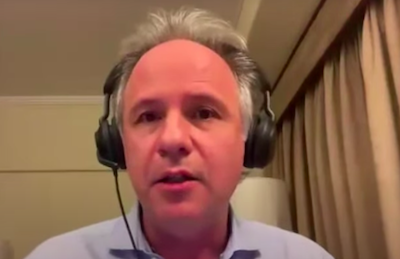
image - On April 17, Dr. Michael Geist of the University of Ottawa spoke as part of a CIJA panel discussion on the Online Harms Bill
On April 17, Dr. Michael Geist of the University of Ottawa spoke as part of a CIJA panel discussion on the Online Harms Bill. (screenshot)

Geist said many legal experts who seek to balance freedom of speech with freedom from abuse “breathed a sigh of relief” after the federal government abandoned earlier efforts and relied for the new bill on expert advice.

“It’s a pretty good starting point,” Geist said. “We know the broad brushstrokes of what that might include but there is a lot of uncertainty still, so it’s easy to like it when we don’t know the specifics.”

Geist and Laidlaw agreed on most points but had some differences around oversight. Geist said the bill appears to grant enormous powers to a new digital safety commissioner. The idea of life imprisonment for an online comment, he added, may be a sticking point. “I find that hard to justify,” he said.

Laidlaw said the new office of ombudsperson is an important step in helping individuals navigate online hate and harassment. The ombudsperson would be able to pass specific information on to the digital safety commission, whose mandate includes education and research supported by a digital safety office.

The bill would also place new obligations on corporations that run online platforms, like social media companies. At present, Laidlaw said, some companies, notably X (Twitter), are not taking the problem very seriously.

While Jewish advocacy organizations have long advocated for legal responses to hate speech, Geist warned of a double-edge sword.

“Could somebody who is supportive of Israel will be accused of promoting genocide?” he asked.

Geist upended the binary assumption of harassment and free expression, noting that the idea that limits on hate speech could chill expression ignores the existing, difficult-to-measure effects of online (as well as offline) harassment and bullying.

“There is already a chilling effect for anyone in our community and, frankly, in a number of communities, that speaks out on these issues,” he said. “The backlash that you invariably face causes, I think, many people to [reconsider] whether they want to step out and comment, and it’s not just online. There’s a chilling effect offline as well. These issues are very real and many of them will not be solved by legislation no matter what the legislation says.”

He fears a barrage of complaints, many vexatious, from all sides of many contentious issues.

While there is a needle-in-a-haystack challenge in addressing online harms, Geist said, addressing the problematic major players could have a broad impact, though no one believes online hate and bullying can be completely eradicated.

“The legislation talks about mitigating these harms, it doesn’t talk about eliminating them,” he said. Social media platforms, he believes, are looking for guidance on these issues and will be amenable to adhering to legislation. Moreover, he said, Canada’s proposals are somewhat belated responses that would put us roughly in line with the European Union, Australia, the United Kingdom and other jurisdictions.

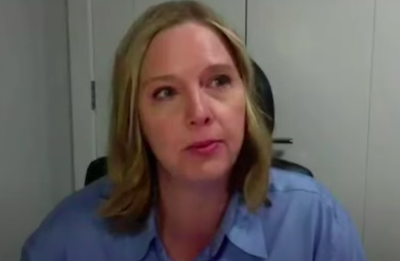
image - Dr. Emily Laidlaw of the University of Calgary, who joined the CIJA panel discussion on April 17
Dr. Emily Laidlaw of the University of Calgary, who joined the CIJA panel discussion on April 17. (screenshot)

The inability to erase hate and harassment is not an excuse to do nothing, Laidlaw said.

“Enforcement has always been an issue,” she said. “But I don’t think it’s a reason not to pass laws.”

Laidlaw took exception to criticism that the new bill would represent government censorship. The proposed digital safety commissioner would be an independent body comparable with the existing privacy commissioner. 

“Where there is some risk is in the fact that, in the end, government appoints the individuals,” she said. Still, the appointees would need to be approved by Parliament, not just the government in office.

“And remember,” she added, the commissioner’s “oversight is of companies, not of individuals. They’re not making individual content decisions or holding individuals accountable here.”

The commission would not be subject to legal rules of evidence, making it possible to immediately take down things such as child porn, encouraging suicide or other especially egregious posts.

Geist said this significant power demands that the government spell out more clearly the limitations of the commission.

“At a minimum, it seems to me that it is incumbent on the government to flesh out in far more detail where the limits, where the guardrails, are around the commission, so that we aren’t basically adopting a ‘trust us’ approach with respect to the commission,” said Geist.

Parliament is expected to take up consideration of the bill in committee soon and Laidlaw argued that some aspects deserve speedy passage while others require far more sober consideration.

“The Online Harms Bill could be passed with minor tinkering,” she said. The Criminal Code provisions, she said, give her serious concerns and deserve major revisions or complete scrapping. She also struggles with changing the Canadian Human Rights Act.

Geist agreed on taking the bill apart.

“I would separate out the bill,” he said. Criminal Code and Human Rights Act amendments deserve much deeper consideration, he said. The online harms piece, he said, could be tidied up and passed with tweaks. 

Posted on May 10, 2024May 8, 2024Author Pat JohnsonCategories NationalTags Bill C-63, Centre for Israel and Jewish Affairs, CIJA, Emily Laidlaw, free speech, governance, hate speech, law, legislation, Michael Geist, Online Harms Bill, politics

Universities have obligations

My mom left Brooklyn, NY, to attend Cornell University in the early 1960s at age 16. Among other things, women students had nighttime curfews. This type of legal responsibility or intervention, called in loco parentis (in place of a parent), was common, but, by the time my mother graduated, in the mid-1960s, times had changed. Curfews became a thing of the past.

When I got to Cornell in the 1990s, some things were the same. Cornell impressed upon its new students that “actions have consequences” and that “with rights and privileges come responsibilities.” That is, you were privileged to be there. If you did something stupid, you were held responsible. All this hit me while watching North American college campuses’ turmoil since the Oct. 7 Hamas massacre of Israelis.

I have a front row seat to the drama. My husband is a professor in Manitoba. Between the two of us, we have six degrees from five different universities. We’ve got insider knowledge. I watched some of the behaviour on campuses with horror during the first days after the attack, including seeing Dr. Russell Rickford, a Cornell professor, speak of his “exhilaration” in response to Hamas’s actions. I’m not listing all of the concerning antisemitic events that continue to occur at North American universities. We’re all seeing it on social media and the news.

The first good news I read was from an article written by Rob Eshman in the Forward, which covered Dartmouth University’s response. Dartmouth is a small school. Its academic experts on the Middle East collaborated quickly. On Oct. 9, they announced two public teach-ins, with expectations of a small crowd. Hundreds attended, and there were thousands of YouTube views. What’s the primary responsibility of a university? To educate and encourage students to be critical thinkers. Dartmouth rose to the challenge.

There are other universities following this educational approach, with mixed results. Some universities don’t have the academic firepower or the will to provide an appropriately diverse panel of experts. Some attempts have been derailed by harassment or protest. Other institutions have made poor educational efforts by platforming only one side (usually the pro-Hamas/genocide/apartheid side) of the conversation.

Most professors are evaluated for their performance and tenure on several measures: teaching, research and service. To do these aspects of their job, many feel that free speech is essential and that, while the university employs them, the administration may not hamper their speech as it pertains to teaching or research. Since early October, many professors have felt stifled when expressing their political views, particularly when it comes to anti-Israel political rhetoric about the war.

I recently read a Canadian university faculty union’s stance. The document stated all members had a right to academic freedom and free expression and the union would defend that. However, that right comes with “the responsibility to respect the rights and freedoms of others” and “does not confer legal immunity from hate speech and other violations of the law.” It also doesn’t protect a professor from criticism or condemnation from others.

This document reminds academic professionals what I was taught as an undergraduate: actions have consequences, and they must take responsibility for any consequences that may occur.

Many Jewish students are being physically harassed, verbally assaulted and intimidated on college campuses. Some universities are trying to take action. Cornell had a situation where a student made death threats towards Jewish students at the kosher dining hall. The FBI was quickly involved, the student was arrested. Soon after, the president of the university and the New York State governor sat down to eat in that dining hall with students. Rickford, the professor who spoke out about the Hamas attack as an exhilarating sign of liberation, is now on leave.

Other US universities have responded with less force. Some, like George Washington University, suspended student groups who used pro-Hamas rhetoric. Others, for example, MIT, have suspended students who participate in violent or disruptive protest from all non-academic activities. There are efforts to offer antisemitism education and awareness at some universities. Hillel, the Jewish student organization on many American and Canadian campuses, offers support and advocacy for struggling Jewish students.

Universities now also face legal action when they fail to protect Jewish students. The US Department of Education is opening investigations of antisemitism (and Islamophobia) at US schools such as Cornell, Columbia, Cooper Union, University of Pennsylvania and Wellesley College. There’s a lawsuit being brought against McGill in Montreal, with support from B’nai Brith Canada, and the University of British Columbia, York University, Toronto Metropolitan University and Queen’s University have had class action lawsuits filed against them for alleged antisemitic incidents.

Where does this lead? Consider again the notion that actions have consequences. In some widely circulated video clips, university students or professors scream obscenities and tear down posters of kidnapped victims of the Hamas attack. Some cover their faces; others sneer at the camera. Sometimes, a student is seized by regret later and begs others not to post the images. These choices, caught on video and distributed online, may affect students’ careers forever – and I think that’s OK.

Yes, university students are often (but not always) still adolescents. Perhaps, according to the research, their brains are still developing and they have poor impulse control. But they are also adults in our society. These are people who legally drink, drive, vote and fight in wars. These students are old enough to work, marry and have kids. With all these rights and also the privilege of attending university, they have the responsibility to behave appropriately. Think you might be embarrassed to be caught vandalizing posters of missing persons? Don’t do it.

University leadership and professors have an important role to play “in loco parentis.” It appears many have forgotten this. Students attend universities to get an education, to become critical thinkers and to contribute to leading and shaping our future society. They deserve more than “free speech” from their teachers. They need to learn multiple perspectives, history and policy, and that includes understanding nuance.

While most universities no longer impose curfews or other restrictions, professors owe it to their students to be mentors and role models. Professors should be upstanding community members beyond academic research and teaching. They should behave with integrity. The obligation to do service means different things in various academic disciplines, but, in every case, professors shape the next generation’s professionals beyond giving exams and classroom lectures. Teaching students how they should behave, with compassion and respect for others, matters.

Don’t get me wrong, it’s OK to speak out. Academic freedom is important, but universities have an obligation, too. They should expect students to behave with dignity and respect for the law, even when speaking out. Alumni can pressure universities to do better, as can lawsuits.

There’s no “one size fits all” answer. However, we should expect that every student should have access to education without discrimination. All students – Jewish and non-Jewish – deserve nothing less.

Joanne Seiff has written regularly for CBC Manitoba and various Jewish publications. She is the author of three books, including From the Outside In: Jewish Post Columns 2015-2016, a collection of essays available for digital download or as a paperback from Amazon. Check her out on Instagram @yrnspinner or at joanneseiff.blogspot.com.

Posted on November 24, 2023November 23, 2023Author Joanne SeiffCategories Op-EdTags antisemitism, free speech, law, racism, university campuses

Countering lies and hate

Peter Julian, the New Democrat member of Parliament for New Westminster, recently tabled a bill to address what he suspects are algorithms that encourage online extremism. B’nai Brith’s annual audit of antisemitic incidents, released recently, said three-quarters of antisemitic incidents last year took place online. And, as the Centre for Israel and Jewish Affairs notes in their Not On My Feed campaign, “Online hate leads to real-world violence.”

Few people would disagree that online hate and incitement are problems. How we confront it – that’s where we get into the weeds.

It is possible to control what people read on the internet – countries like China and Iran have demonstrated that, in anti-democratic and oppressive ways. Democracies like Canada should not join the high-tech book-burning that is internet censorship by government. Governments and regulatory bodies, of course, do have a role, however. Setting parameters for acceptable online behaviour and then enforcing these to the extent possible must be a role authorities take on. Staffing limitations are obviously a challenge, but several precedent-setting cases could send a message to others.

Social media behemoths like Facebook and Twitter should take action where they can to delete the most dangerous incitement. These corporations have proven themselves either incapable, unwilling or incompetent at this task. Governments need to incentivize vigilance by making lack of response financially unsustainable. In Germany and France, for example, social media platforms have 24 hours to take down hate speech or risk fines. Likewise, internet service providers (ISPs) have a responsibility to monitor the independent sites housed on their networks, the places where hate groups recruit and train.

Interventions like these are important, but of limited impact. For example, ISPs are based everywhere and every country has different rules around online content. Even Canada and the United States – countries perhaps as comparable as any two on earth – have dramatically different ideas about limitations on freedom of expression.

Attacking online hate and incitement is a perpetual game of Whac-A-Mole. However, just because a task is difficult does not mean we should shy away from it. On the contrary. We must do more of what is difficult.

We are a mere two generations into a connected civilization. We are still babes in the online woods. Yet, in many ways, we behave as though we are in the world we once knew.

We are no longer in a world of three TV networks and two daily papers. We are on a planet of nearly eight billion people – and anyone with an internet connection has an ability to reach audiences exponentially greater than the most powerful voices of a century ago.

It is simply not possible to effectively police online content – though we are correct to monitor and identify the worst of the worst.

There are two things that democratic societies that seek social peace and coexistence must strive toward. First, we need to empower individuals and organizations to counter untruths with truths. We must make it as easy to access the facts as it is to stumble upon misinformation and disinformation.

Google News, for one, has taken to adding a fact-checking section to their search results pages. The site Snopes.com provides a compendious analysis of online truths and fictions (although it has had its own veracity issues, involving a plagiarism controversy in 2021.) On issues of antisemitism, a veritable constellation of organizations exists to identify and correct misinformation, including HonestReporting, the Committee for Accuracy in Middle East Reporting and Analysis (CAMERA) and the Middle East Media Research Institute (MEMRI).

But we also need to attack this problem at the other end, on the “consumer” side. We must do a better job of educating and equipping people in democratic societies to critically discern fact from fiction, news from commentary, legitimate criticism from unfounded bias and hate. In a time when parents and others are concerned that education systems are not effectively teaching what are collectively, if imprecisely, called “the basics,” anyone asking teachers to also become instructors in the complexities of media bias and online incitement is going to come up against preexisting groups calling for more life skills training, more “three Rs,” more economic literacy, more mathematics and science, more physical fitness, etc. There is only so much that can be fit into a six-hour school day.

We live in a time and place where one of the most watched “news” networks routinely feeds falsehoods to viewers, even if a cost of doing business is a legal settlement of $787 million. Those lies led to an insurrection that tested the strength of American democracy more than anything probably since that country’s Civil War. That was an early warning signal for every democracy about the price of disinformation. We cannot hope this problem goes away, because what is likely to go away in such a scenario are our most cherished societal values.

We must do more of everything we are already doing. We must confront and contest the lies and hatred online (and in other media). We must allocate our philanthropic funds to organizations that counter lies and incitement. We must include everywhere we can – in formal and informal educational settings – lessons on identifying facts from falsehoods.

In an online world where conflict and hatred get algorithmic kicks to the front of the line, we must teach the young (and the older and less tech-savvy) to value that which unifies and enriches. In the simplest formulation, we need to remind our children, our grandchildren and ourselves of that old truism: don’t believe everything you hear or read.

Posted on April 28, 2023April 26, 2023Author The Editorial BoardCategories From the JITags free speech, hate speech, internet, online hate, Peter Julian

Claims of speech suppression

Independent Jewish Voices Canada recently released the report Unveiling the Chilly Climate: The Suppression of Speech on Palestine. It was compiled by Dr. Sheryl Nestel and Rowan Gaudet for IJV Canada.

Nestel is a retired sociology professor from OISE (Ontario Institute for Studies in Education), University of Toronto, and Gaudet is a master’s student at the University of Bologna in the global cultures program; he has done research for IJV in the past. The text below is from their report’s executive summary.

Focused on the Canadian context, the report seeks to shed light on the wave of suppression of speech regarding Palestine that is sweeping North America and parts of Europe. It documents the impact of reprisals, harassment and intimidation faced by Canadian activists, faculty, students and organizations in relation to scholarship and activism in solidarity with the struggle for Palestinian human rights. There is a connection to be made here between these attacks and efforts by pro-Israel advocacy groups to market the International Holocaust Remembrance Alliance Working Definition of Antisemitism (IHRA), a document that has come under vigorous attack by defenders of academic freedom and Palestinian human rights. While its proponents argue that this definition will not threaten freedom of expression or inhibit criticism of Israeli policies, the findings of this report demonstrate that these basic rights are already under threat and could be further imperiled if the IHRA were to be widely adopted.

The contribution of this report is two-fold: 1) the amount and quality of information gathered here is unprecedented and speaks to the worrisome prevalence of harassment and suppression of speech on Palestine on campuses and in Canadian civil society and 2) it surpasses a simple documentation of instances of repression by employing an ethnographic methodology to analyze the so-called “chilling effect” and its impact on governmental, institutional and individual decision-making. This research project situates itself firmly within the realm of critical qualitative inquiry, which seeks to employ qualitative research for social justice purposes, including making such research available for public education, social policy formulation and the transformation of public discourse. The inquiry is also shaped by decolonizing methodologies of social science research, which seek to challenge institutions, academic and otherwise, which prioritize colonial forms of knowledge production and maintain institutional commitments that impede indigenous self-determination. Finally, Nestel and Gaudet follow the directives proposed by queer, feminist and antiracist research methodologies, which entreat people to consider how their positions in social hierarchies of race, class, sexuality and citizenship mediate their experiences.

In all, the researchers collected 77 testimonies from 40 faculty members, 23 students, seven activists and seven representatives of organizations. Testimonies were collected from participants in Ontario, Manitoba, British Columbia, Saskatchewan, Nova Scotia, Quebec and Alberta. Among the academics responding were representatives of 11 disciplines from 21 Canadian universities.

Interviewees recounted that their experiences included political intervention into hiring; attempts to prevent access to event venues; and the attempted cancellation of public events on Palestine, as well as targeting and doxing, including the inclusion of 128 Canadian academics and activists on the website of Canary Mission, an organization that purports to document “individuals and organizations that promote hatred of the U.S., Israel and Jews on North American college campuses.” Threats of violence and genuine acts of violence were experienced by student activists and these often contained racial and sexual slurs including threats of sexual violence. Students were subject to warnings and disciplinary measures by university administrators whom respondents often described as being hostile to Palestine solidarity activism on campus. Faculty respondents reported restrictions on academic freedom, self-censoring of expression on Palestinian human rights, discriminatory treatment by academic publishing platforms, harassment by pro-Israel advocacy groups and media outlets, attacks from colleagues, political interference by university administration, classroom surveillance by pro-Israel student groups, and anti-Palestinian and anti-Arab racism. Indeed, the suppression of speech on Palestine has significant consequences in academia, where it threatens principles of academic freedom and encourages surveillance of critical intellectuals and activists and of the oppositional knowledge that they produce. 

As the research by Nestel and Gaudet reveals, the precarious employment conditions of more than half of Canada’s university teachers mean that, because of the “chilly climate” around speech on Palestine, untenured or pre-tenure faculty are reluctant to pursue academic or activist work in this area for fear of endangering contract renewals or future career prospects including access to publishing platforms so central to the academic tenure and promotion process. 

Unsubstantiated allegations of antisemitic intent and support for terrorism are commonly leveled against pro-Palestine academics and activists. Significantly, Palestinians, Muslims and non-Arab racialized participants appear to have borne the brunt of direct attacks on their scholarship and activism. The emotional impact of harassment and suppression was felt most acutely by Palestinian students and faculty interviewed. Jewish activists were not immune to attack and were often characterized by opponents as “kapos” or “self-hating Jews.” 

The report also documents how both on- and off-campus Israel-advocacy organizations have been at the forefront of efforts to suppress speech and activism on Palestine. As University of Pennsylvania political scientist Ian Lustick has argued, the pro-Israel organizations have constituted a “vigilante” force, which has made it “increasingly difficult to criticize Israel without fear of lawsuits, accusations of antisemitism, demands for political balance in staging of events, blacklisting of participants, or other forms of personal or institutional harassment.”

This report signals that an atmosphere of repression and recrimination related to discourse and activism around Israel/Palestine is ubiquitous and insidious and should be unacceptable in a democratic society.

To download a copy of the full report, visit ijvcanada.org/unveilingthechillyclimate.

– Courtesy Independent Jewish Voices Vancouver

Posted on December 23, 2022December 22, 2022Author Independent Jewish Voices VancouverCategories NationalTags free speech, Israeli-Palestinian conflict, survey

Free expression in workplace

I heard once about an executive who explained in an interview: we debate a lot behind the scenes, but when we present our opinion or policy, it is a united front. We expect all employees to avoid saying or writing anything that would contradict this in public, they continued. Further, it’s spelled out in the work contract what you can and cannot say, and employees must stand behind the policy decisions of the organization.

If you find this kind of approach unsettling, you wouldn’t be alone. Yet, it’s not an uncommon requirement of employees. I wondered, after hearing this, how much money employees have to earn to make it worthwhile to give up their opinions or their right to free speech. Also, what happens if, during the debate behind the scenes, a younger or less powerful employee has a viewpoint that is starkly different than the party line? How does that go? Must an employee then give up her income or change jobs in order to have freedom of expression on those topics? If mainstream, moderate opinions and moderate disagreements are swept under the rug, what else isn’t allowed?

After hearing of this model, which shuts down dissent or situations that might conflict with the policy, I felt nervous. I ended up joking around. This felt like the Mafia. Disagree with the boss? What happens if nobody likes what you have to say? You too could end up in the river wearing some concrete overshoes!

These issues around employment and freedom of expression loom large in democracies and rightly so. If we look back to Judaism’s most foundational texts, written and oral Torah, we see that, consistently, Judaism values hearing all the opinions. Minority voices or rejected outcasts also have their views included and written down. We’re still reading and hearing about rabbis and even outsiders to the community who expressed minority opinions 2,000 years ago that didn’t go forward. In other words, their views did not become “policy.”

For instance, in the Talmud, we learn about Hillel versus Shammai, but mostly Hillel, who is more lenient. The rabbis and, therefore, Jewish law, tend to follow Hillel’s lead. That said, nobody got rid of Shammai’s point of view. He didn’t get fired from the rabbis’ club for having an unpopular opinion.

I recently had a couple of informational interviews. Well, they were really just Zoom chats, which came about because a friend reposted something from a small advocacy group on Instagram. Beware of social media if you are a novice like me. I prodded my friend with an off-the-cuff comment, saying, “So, don’t you think this is just a PR scam?!” Oops … I wasn’t just writing my online friend.

To my surprise, both the chief executive officer and the education and programming lead of the group got in touch with me. They wanted to tell me all about their efforts to make positive change – it wasn’t a publicity stunt. They explained what they hoped to achieve. I was pretty embarrassed by my post. By the end of the first chat, I was impressed with the information they had offered me and how they had engaged. They welcomed all opinions. They asked me if I wanted to contribute in an open and friendly way.

Our second meeting resulted in them recruiting me to serve on a volunteer advisory panel because of what they saw as my expertise. I agreed willingly because our exchange had been such a positive experience.

There’s a meme offered this time of year, that, while how we behave between Yom Kippur and Rosh Hashanah matters, it’s how we behave the rest of the year that counts.

Choosing to be open to differing opinions and innovation keeps us learning and growing. It also aligns us with the model of the rabbis, who discussed and debated and recorded it all in plain view, with minority views counting, too. Also, admitting one’s mistakes – wow, how embarrassing was I on social media? – helps us grow and become better people.

The least Jewish model, I think, is the example with which I led off this article, where everyone is allowed to debate, in theory, but all opinions aside from the official party line are discarded or silenced. We’re speaking here of relatively mainstream opinions, not radical ones. Want the kicker? From what I understood, this is a model used by some nonprofit Jewish organizations.

The smaller advocacy group isn’t a Jewish organization, but one of their employees is. Part of our chat involved a bit of Canadian Jewish geography regarding their Winnipeg relatives. Also, they suggested that I perhaps write up a Jewish topic for their group one day. They were open and excited about diverse voices.

Work life and individual identity can sometimes be entirely separate things. Yet, in others’ lives, Jewish identity, values and models and careers go hand in hand. I want to address my Jewish identity through making the world a better place, including at work. Watching these two different models emerge on my radar recently reminded me that, in fact, non-Jewish organizations can model Jewish ways of questioning and validating ideas, while some Jewish groups choose not to do so.

In a perfect world, we’d all do meaningful, life-changing work. In real life, we know that compromises and the bottom line matter. Sometimes, work isn’t that place of deep meaning or free expression, and we can’t always say everything we think in the workplace, either. However, perhaps there’s a way to avoid stifling creativity – having multiple voices valued in the workplace, while still communicating the basic mission of the organization. Perhaps we can all learn and grow better this way, making educated debate matter, just as the rabbis did 2,000 years ago.

Joanne Seiff has written regularly for CBC Manitoba and various Jewish publications. She is the author of three books, including From the Outside In: Jewish Post Columns 2015-2016, a collection of essays available for digital download or as a paperback from Amazon. Check her out on Instagram @yrnspinner or at joanneseiff.blogspot.com.

Posted on October 7, 2022October 5, 2022Author Joanne SeiffCategories Op-EdTags debate, free speech, Judaism, lifestyle, work

Every person has a voice

Elon Musk’s purchase of the social media behemoth Twitter, which appears probable, is raising questions about what the new management could mean to users and society at large. For Jewish tweeters and others, there are red flags.

The growth of social media of all varieties over the past 15 years has resulted in a massive change in the public dialogue. People have some ability to amplify or diminish the voices they do or do not want to hear, resulting in an unprecedented ability to self-select the information (or misinformation) to which we are exposed. The relative anonymity of the media has had additional harmful impacts, with racist, misogynistic, homophobic, antisemitic and other hateful statements being posted in volumes too massive to effectively police. The spike in antisemitic hate crimes we have seen in recent years is almost certainly a result, in part, of online antisemitism moving into the “real” world.

Since 2016, when Russian and other bad actors influenced the U.S. presidential election in favour of Donald Trump, some platforms, including Twitter, have been driven to address some of the most egregious content on their sites and abuse of the medium. Their efforts, however imperfect and inadequate, reflect an assumption that hate speech should not be accepted.

Musk’s planned purchase of Twitter (which has a number of hurdles yet to overcome) raises fears among some that his self-identification as a “free speech absolutist” may reverse the small strides Twitter has made in addressing hate speech.

If Musk, who is presumed to be the richest person on earth and who is known to be a micromanager, chooses to imprint on Twitter his vision of absolute free speech, we should expect the limited efforts to police the worst content will be diminished or eliminated.

Of course, Musk would not be the final arbiter of what is acceptable. He may be the richest person on earth and Twitter may be among the most powerful communications platforms ever known, but they are still subject to government oversight.

Among the challenges, of course, is that Twitter, like the rest of the internet, effectively knows no national boundaries. So, while the United States is lenient toward extreme speech, different countries take a different approach.

For example, Canada’s Parliament is considering two proposals to make it illegal to deny or diminish the historical facts of the Holocaust. Legislation like this – as well as existing hate crimes laws that prohibit the targeting of identifiable groups – will inevitably come up against transnational norms set by platforms like Twitter. Will social media platforms face endless legal challenges? Or will the sheer volume of offences make it impossible to challenge any but the most outrageous affronts?

Canadians have always had a different approach to free speech than our American cousins. Our Parliament, like many in Europe, recognizes limitations in the interest of national harmony. These often lead to contentious debates over where lines should be drawn. Introduce an anarchic, foreign-owned social media platform into the equation and these discussions become far more complicated.

These are difficult issues. In a perfect world, absolute free speech would be ideal, because, again in a perfect world, individuals themselves would balance their right to expression with their responsibilities as citizens of a pluralistic society. But, we do not live in a perfect world and some compulsion sadly seems necessary to prevent, say, outright incitement to murder or genocide.

Here, though, is something not difficult or complicated at all – we do not need legislation or philosophical debates around freedom in order to counter hate speech right now. In this space, over many years, we have argued that the best way to confront bad, or hateful, speech is not stifling that speech, but countering it with truth, compassion and decency. Silencing hatred (even if it were possible in the wired world) will not eliminate hatred. We are in a war of words, and more words, not fewer, should be our approach.

A magnificent case-in-point occurred in the past month.

After the student society of the University of British Columbia passed a resolution endorsing the boycott movement against Israel, Santa Ono, the president of the university, responded with a thoughtful statement condemning BDS.

Too often, destructive, hateful messages like anti-Israel boycott resolutions are met with silence, usually with the excuse that such resolutions or protests are legitimate expressions of free speech. Of course, they may well be. But this argument, which was used by UBC administrators and others in the past, misses the point. Free speech does not mean the right to have one’s opinions uncontested. As Ono’s statement makes clear, both sides have a right to have their voices heard. That is free speech.

At a time when too many campuses across North America are roiling with anti-Israel spectacles, the significance of a statement like Ono’s did not go unnoticed. In fact, the university president received a letter from another president. Isaac Herzog, the president of Israel, wrote a “Dear Santa” letter, thanking Ono for his unequivocal statement.

That Israel’s head of state would intervene to express gratitude for Ono’s statement is itself a statement of how serious the threats are from uncontested hate speech. But it also reminds us that we do not need legislation or courts to stand up – as individuals and as a community – against egregious attacks. Every person has a voice. Some use it to spread misinformation and hatred. Others use it for good.

Posted on May 6, 2022May 4, 2022Author The Editorial BoardCategories From the JITags antisemitism, campus, Elon Musk, Empowerment, free speech, legislation, online hate, Santa Ono, social media, UBC

Criminalize Holocaust denial?

Criminalizing Holocaust denial would draw a moral line in the sand, say two advocates for legal action, but a lawyer and Canadian-Israeli former member of the Knesset has reservations.

Michal Cotler-Wunsh, head of the Nefesh B’Nefesh Institute for Aliyah Policy and Strategy and a former Israeli parliamentarian, acknowledged free speech concerns but focused more on the need for evidence-based decision-making before criminalizing those who question historical facts around the Shoah. She also noted that the countries that have adopted criminal sanctions against those who spread historical fabrications – Germany and France, for example – are among the very places where antisemitism is at its worst.

Sacha Ghozlan, a French legal expert and former president of the Union des étudiants juifs de France (Union of French Jewish Students), dismissed free speech concerns and warned against confusing cause and correlation between antisemitism and legal proscriptions.

“I don’t think you can draw a line between rising antisemitism in its new forms and the fact that a country has developed legislation to address rising Holocaust denial,” Ghozlan said.

Dr. Carson Phillips, managing director of the Neuberger Holocaust Education Centre, in Toronto, generally agreed with Ghozlan. Holocaust denial and expressions of hatred should not be protected grounds based on free speech arguments, he said.

“I don’t see this so much as a freedom of speech,” he said. “This is really an abuse of speech.… Does the listener have to be exposed to hate speech and an abuse of free speech?”

He argued that “putting a fence around free speech” is legitimate in cases where historical revisionism can lead to expressions of hatred.

The three speakers were panelists in an event presented by the Centre for Israel and Jewish Affairs (CIJA) March 29, titled Perspectives on Criminalizing Holocaust Denial.

A private member’s bill introduced in Parliament by Saskatchewan Conservative MP Kevin Waugh would amend the Criminal Code section that prohibits inciting hatred “against an identifiable group” to include “communication of statements, other than in private conversation, that wilfully promote antisemitism by condoning, denying or downplaying the Holocaust.”

Phillips contextualized Holocaust denial as a threat to Canadian society.

“The Holocaust is often [viewed] as being one of the foundational cornerstones of modern human rights and an attack on the Holocaust is certainly an attack on Canadian values and Canadian democracy and it needs to be taken very seriously,” he said.

While he supports criminalization, he acknowledged that this is only a part of the solution.

“I am an educator,” he said, adding that education has to exist alongside legal prohibitions.

“To me, it’s not an either/or situation, it’s a combination,” he said. “I see this as really strengthening and working together.”

Legislating against Holocaust denial would send a societal message, Phillips argued.

“It’s really important to draw a moral line,” he said. “In Canada, where we are a pluralistic society with strong democratic values, I think this is one example of a way of being able to draw a moral line in the sand and being able to say there are certain abuses of free speech that will not be tolerated and for very good reasons because we know where this can lead – obviously, to the Holocaust. But also looking at it from the perspective that Holocaust denial is a form [of], and leads to, antisemitism but it is also an attack on democratic values, which we value so much within the Canadian context.”

Ghozlan said that social media companies have faced calls to pull down expressions of hatred and Holocaust denial, but have often demurred based on the free speech assurances of the U.S. Constitution.

“But it’s not freedom of speech, it’s fake news,” he said. Advocates need to “level up pressure on social media, explaining to them that Holocaust denial is not about freedom of speech but it’s about an abuse of freedom of speech,” he said.

Cotler-Wunsh, former Blue and White party member of the Knesset and Canadian-raised step-daughter of legal scholar and former Canadian justice minister Irwin Cotler, said she has always been a fighter against antisemitism. But she raised red flags around the issue of free expression and focused more narrowly on whether a prohibition on Holocaust denial would have the desired outcome.

“Does the criminalization of Holocaust denial in fact meet the goal of combating antisemitism?” she asked. Banning Holocaust denial – which is easily debunked – may simply be a feel-good act that is “low-hanging fruit” in the battle against anti-Jewish hate and might detract from the bigger responsibility to remain vigilant, contest mistruths in the marketplace of ideas and educate, rather than merely seek to silence, she said.

Canada already has fairly robust legal consequences for hate expressions and Cotler-Wunsh warned that new laws that are difficult to administer, or that sit on the books without being enforced, could have the opposite of the intended effect.

By example, she said, a recent controversy around the Holocaust represents a missed opportunity. After Whoopi Goldberg said on the TV show The View that the Holocaust “was not about race,” she was suspended from the show for a period.

“I would have argued, if anybody would have asked me, that that was a great, great missed opportunity,” said Cotler-Wunsh. It was “exactly the moment to educate the millions of viewers of that show and be able to utilize that opportunity to engage in what the Holocaust was about.”

Education, while slow, is the only answer, she contended.

“At the end of the day, education is the key and that is one of the hardest things to say because it actually is the longest process,” said Cotler-Wunsh. “There is no quick fix in education.”

Where compulsion should be exercised, she said, is on social media platforms, which she said should adopt and implement the International Holocaust Remembrance Alliance Working Definition of Antisemitism.

She worries that passing legislation against Holocaust denial might let elected officials off the hook. She imagines legislators thinking, “Oh we’ve done something. We confronted antisemitism, when in fact data and empirics may show that criminalizing Holocaust denial hasn’t actually made a dent in the rising antisemitism in Europe 30 years [after some countries criminalized it].”

Cotler-Wunsh, Ghozlan and Phillips were in discussion with Emmanuelle Amar, director of policy and research in CIJA’s Quebec office. The event was opened and closed by Jeff Rosenthal, co-chair of the national board of CIJA.

Format ImagePosted on April 8, 2022April 7, 2022Author Pat JohnsonCategories WorldTags antisemitism, Carson Phillips, Centre for Israel and Jewish Affairs, CIJA, education, free speech, Holocaust denial, law, Michal Cotler-Wunsh, Sacha Ghozlan
“Rainbow Maccabees” talk

“Rainbow Maccabees” talk

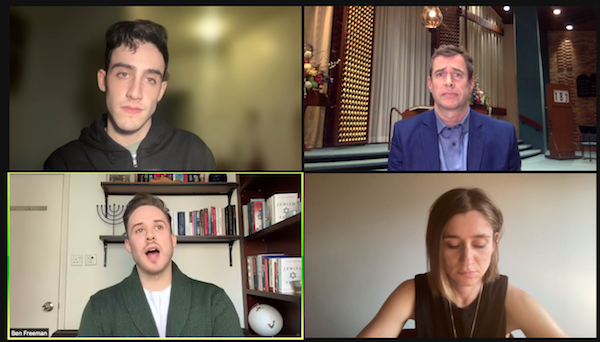
Participants in the Jan. 19 event Rainbow Maccabees: The LGBTQ+ Jews Leading the Fight Against Jew-Hate, included, clockwise from top left, Blake Flayton, moderator David Sachs, Eve Barlow and Ben M. Freeman. (screenshot)

Blake Flayton arrived at George Washington University, in Washington, D.C., four years ago, from a progressive home where ideas were fodder for passionate debate and disagreement. He anticipated vibrant engagement and free- flowing discussion on campus. Instead, he came head-on with a progressive culture that viewed free thinking as apostasy.

It took Flayton some time to assimilate the cognitive dissonance he experienced when he realized his political cohort had an ideology that rejected dissent – and an almost universal antipathy to Israel.

“I believed them, because how could I not?” he recalled. “I figured to myself, if I agree with these people on A through Y, I must also agree with them on Z. They plant these pervasive lies into the heads of young Jews that your community lied to you, your community betrayed you, your community brainwashed you into believing something horrible and we are here to save you from it. Sounds awfully like Christianity, right? We are here to redeem you from that so that we can all walk into a more blessed future. It has such ancient themes.”

Flayton was one of three young Jews, all members of the LGBTQ+ community, who participated virtually in a Canada-wide panel discussion on Jan. 19 called Rainbow Maccabees: The LGBTQ+ Jews Leading the Fight Against Jew-Hate. They speculated on why an apparently disproportionate number of the rising young stars in the pro-Israel movement come from the queer community.

Flayton, co-founder of the New Zionist Congress and recently appointed director of new media for the Jewish Journal, was joined by Eve Barlow, a Scottish-born, Los Angeles-based music journalist, and Ben M. Freeman, an educator and the author of Jewish Pride, who is also Scottish and is now based in Hong Kong. They met in conversation with Ottawa-area writer David Sachs, in an event funded by Congregation Beth Shalom of Ottawa Legacy Fund and a Jewish Federation of Ottawa micro-grant. It was supported by 11 national, regional and local Jewish organizations across Canada.

Left-leaning social and political spaces are where gays and lesbians first found widespread social acceptance. For queer Jews, this longtime safe harbour has become less welcoming – and this might account for why a seemingly disproportionate number of the new, young activists standing up to anti-Jewish hatred come from the LGBTQ+ community, Flayton speculates.

“I think it might be because we are naturally more likely to be exposed to progressive spaces and, therefore, we are more likely to find fault and to see the flaws of said progressive spaces,” he explained.

Freeman said being an openly gay man may give him an advantage in standing up to Jew-hate. LGBTQ+ people have been forced to advocate for themselves, he said, while the prevailing tendency, in some Jewish circles, is to keep one’s head down and not make trouble.

The hypocrisy progressive activists often display in their treatment of Jewish people versus LGBTQ+ or other minority communities is something Freeman has faced.

“When I tell people that I’m gay, the first thing they say to me is, what are your pronouns? Are you gay, are you queer, are you LGBTQ+? They want me to define my own identity,” he said. “But when I tell people that, as a Jew, I don’t identify as white, although I understand that I benefit from the advantage of being perceived as white, I am immediately told, no that’s incorrect. That hypocrisy you just can’t ignore.”

Barlow became politically engaged based on her own experiences in progressive British spaces – particularly seeing non-Jewish friends enthusiastically embrace the antisemitic Labour Party leader Jeremy Corbyn.

“I saw the hypocrisy with people who claim to be about morally righteous causes and liberalism and who have this screaming a blind spot when it comes to anti-Jewish bias,” Barlow said.

As Jews and as queer individuals, Barlow and her co-panelists embody characteristics that are not always welcome in today’s progressive environment, she said.

“Intellectualism and individual thought is discouraged,” said Barlow. “We are doing what so many people in social justice spaces have been actively discouraged from doing, which is having our own ideas about what we think is right and wrong.”

Barlow stressed that she has had to pick her battles, in part because she realizes that tormenting Jews online, rather than good-faith debate or actual persuasion, is the goal for many.

“The more that you are on the other side of antisemitism, the more you understand the love that people who hate Jews have for picking on the Jew and tripping the Jew up and making the Jew feel small and bad,” she said. “It’s this pleasure that they get out of their antisemitic rhetoric.”

In the antisemitic mind, “the Jew” takes the shape of whatever the perpetrator fears most, said Freeman.

“It’s not about us as Jews, it’s about the ideas of Jews,” he said. “If you are a society which is positioning itself as capitalist, the Jew can represent communism. If you are a society that is communist, you can frame the Jew as the capitalist. If you’re a society which views white people as the apex predators, then Jews are white. If you’re a society that views non-white people as conspiring to bring down Western society, white society, then the Jew is not white.… All these different forms share a common core. They are saying basically the same things about us, expressed in a slightly different language.”

As a people who have maintained a particular identity across millennia and continents, Jews exemplify a stubbornness that resists assimilation, which can enflame some people. Similarly, because Jewish security and social flourishing has been most assured in liberal, democratic societies, Jews have a vested interest in perpetuating stable societies, so are often targeted by those who seek to subvert them.

“There is a very strong association between antisemitism and illiberal ideologies, ideologies that hold contempt and disdain for institutions of liberal democracy and that hold contempt for the ideas that come from liberal democracy, like meritocracy, like freedom of speech, like academic freedom, like gender equality, etc., etc.,” said Flayton. “Jews have often been portrayed, or at least been treated, as a proxy for these institutions.… Today, there is illiberalism bursting out of every corner, from the farthest you can go left on the spectrum to the farthest you can go right and everywhere in between. There is a rise in populism, there is a rise in anti-intellectualism, there is a rise in anti-establishmentism and it’s been replaced with conspiracy thinking and grievance politics.”

Throughout Jewish history, Flayton continued, there have been repeated attempts by various ideologies to convince Jews that they will be better off if they abandon their uniqueness and assimilate into the new orthodoxy – or, conversely, that the Jews’ refusal to do so is the primary inhibitor of progress or the impediment to utopia.

“Of course, that’s never the case,” he said, citing instances from the Hellenizing ancient Greeks in the Hanukkah story, to the Christians who are convinced that Jews are holding humanity back from salvation by refusing to accept Jesus, to the Soviets, who camouflaged antisemitism in the guise of anti-Zionism.

Today, said Flayton, this takes the form of Jews being told that, if they only reject Israel or check their Zionism at the door, they will “be granted a seat at this table of diversity, equity and inclusion and that everything will be grand and the Jews will be protected, if only they give up their birthright to the land of Israel.”

He concluded: “It never works and, in fact, the Jews who were so vehement are not spared from antisemitism at all, because once the ideology has succeeded there is no longer any use for them.”

The event opened with greetings from Idan Roll, Israel’s deputy foreign minister, who is himself a young, gay Jew.

Format ImagePosted on January 28, 2022January 27, 2022Author Pat JohnsonCategories WorldTags Ben M. Freeman, Blake Flayton, Eve Barlow, free speech, identity, Jew-hate, leadership, LGBTQ+, moderator David Sachs, Zionism
Who stops the hate?

Who stops the hate?

Taylor Owen speaks at the third annual Simces and Rabkin Family Dialogue on Human Rights, Nov. 9. (screenshot)

Canada, like most of the world, is behind in addressing the issue of hate and violence-inciting content online. In attempting to confront this challenge, as the federal government will do with a new bill in this session of Parliament, it will be faced with conundrums around where individual freedom of expression ends and the right of individuals and groups to be free from hateful and threatening content begins.

The ethical riddles presented by the topic were the subject of the third annual Simces and Rabkin Family Dialogue on Human Rights, Nov. 9, in an event titled Is Facebook a Threat to Democracy? A Conversation about Rights in the Digital Age.

The annual dialogue was created by Jewish Vancouverites Zena Simces and her husband Dr. Simon Rabkin. It was presented virtually for the second year in a row, in partnership with the Canadian Museum for Human Rights.

The featured presenter was Taylor Owen, who is the Beaverbrook Chair in Media, Ethics and Communications, the founding director of the Centre for Media, Technology and Democracy, and an associate professor in the Max Bell School of Public Policy at McGill University. He presented in conversation with Jessica Johnson, editor-in-chief of The Walrus magazine.

The advent of the internet was seen as a means to upend the control of a society’s narrative from established media, governments and other centralized powers and disperse it into the hands of anyone with access to a computer and the web. Instead, as the technology has matured, online power has been “re-concentrating” into a small number of online platforms like Facebook, Twitter and YouTube, which now have more global reach and cultural power than any preexisting entity.

“Understanding them and how they work, how they function, what their incentives are, what their benefits are, what their risks are, is really important to democratic society,” said Owen.

These are platforms that make money by selling ads, so it is in their interest to keep the largest number of people on the platform for the longest time possible, all while collecting data about users’ behaviours and interests, Owen said. These demands prioritize content that is among the most divisive and extreme and, therefore, likely to draw and keep audiences engaged.

The sheer volume of posts – in every language on earth – almost defies policing, he said. For example, in response to public and governmental demands that the company address proliferating hate content and other problematic materials, Facebook has increased resources aimed at moderating what people post. However, he said, 90% of the resources dedicated to content moderation on Facebook are focused on the United States, even though 90% of Facebook users are in countries outside of the United States.

A serious problem is that limitations on speech are governed by every country differently, while social media, for the most part, knows no borders.

Canada has a long precedent of speech laws, and Parliament is set to consider a controversial new bill intended to address some of the dangers discussed in the dialogue. But, just as the issues confounded easy answers in the discussion between Owen and Johnson, attempts to codify solutions into law will undoubtedly result in fundamental disagreements over the balancing of various rights.

“Unlike in some countries, hate speech is illegal here,” said Owen. “We have a process for adjudicating and deciding what is hate speech and holding people who spread it liable.”

The United States, on the other hand, has a far more libertarian approach to free expression.

An example of a country attempting to find a middle path is the approach taken by Germany, he said, but that is likely to have unintended consequences. Germany has decreed, and Owen thinks Canada is likely to emulate, a scenario where social media companies are liable for statements that represent already illegal speech – terrorist content, content that incites violence, child exploitative content, nonconsensual sharing of images and incitement to violence.

Beyond these overtly illegal categories is a spectrum of subjectively inappropriate content. A single media platform trying to accommodate different national criteria for acceptability faces a juggling act.

“The United States, for example, prioritizes free speech,” he said. “Germany, clearly, and for understandable historical reasons, prioritizes the right to not be harmed by speech, therefore, this takedown regime. Canada kind of sits in the middle. Our Charter [of Rights and Freedoms] protects both. The concern is that by leaning into this takedown regime model, like Germany, you lead platforms down a path of over-censoring.”

If Facebook or YouTube is threatened with fines as high as, say, five percent of their global revenue if they don’t remove illegal speech within 24 hours, their incentive is to massively over-censor, he said.

Owen said this will have an effect on the bottom line of these companies, just as mandatory seatbelts in cars, legislation to prevent petrochemical companies from polluting waterways and approval regimes governing the pharmaceutical industry added costs to those sectors. Unfortunately, the nuances of free speech and the complexities of legislating it across international boundaries make this an added burden that will probably require vast resources to oversee.

“It’s not like banning smoking … where you either ban it or you allow it and you solve the problem,” said Owen. There are potentially billions of morally ambiguous statements posted online. Who is to adjudicate, even if it is feasible to referee that kind of volume?

Rabkin opened the dialogue, explaining what he and Simces envisioned with the series.

“Our aim is to enhance the understanding and create an opportunity for dialogue on critical human rights issues, with the hope of generating positive actions,” he said.

This year’s presentation, he said, lies at a crucial intersection of competing rights.

“Do we, as a society, through our government, curtail freedom of expression, recognizing that some of today’s unsubstantiated ideas may be tomorrow’s accepted concepts?” he asked. “Unregulated freedom of speech, however, may lead to the promulgation of hate towards vulnerable elements and components of our society, especially our children. Do we constrain surveillance capitalism or do we constrain the capture of our personal data for commercial purposes? Do we allow big tech platforms such as Facebook to regulate themselves and, in so doing, does this threaten our democratic societies? If or when we regulate big tech platforms, who is to do it? And what will be the criteria? And what should be the penalties for violation of the legislation?”

Speaking at the conclusion of the event, Simces acknowledged the difficulty of balancing online harms and safeguarding freedom of expression.

“The issue is, how do we mitigate harm and maximize benefits?” she asked. “While there is no silver bullet, we do need to focus on how technology platforms themselves are structured. Facebook and other platforms often put profits ahead of the safety of people and the public good.… There is a growing recognition that big tech cannot be left to monitor itself.”

The full program can be viewed at humanrights.ca/is-facebook-a-threat-to-democracy.

Format ImagePosted on December 10, 2021December 8, 2021Author Pat JohnsonCategories LocalTags democracy, Facebook, free speech, hate speech, human rights, legislation, politics, Simon Rabkin, social media, Taylor Owen, Zena Simces

Posts pagination

Previous page Page 1 Page 2 Page 3 … Page 5 Next page
Proudly powered by WordPress