Skip to content
  • Home
  • Subscribe / donate
  • Events calendar
  • News
    • Local
    • National
    • Israel
    • World
    • עניין בחדשות
      A roundup of news in Canada and further afield, in Hebrew.
  • Opinion
    • From the JI
    • Op-Ed
  • Arts & Culture
    • Performing Arts
    • Music
    • Books
    • Visual Arts
    • TV & Film
  • Life
    • Celebrating the Holidays
    • Travel
    • The Daily Snooze
      Cartoons by Jacob Samuel
    • Mystery Photo
      Help the JI and JMABC fill in the gaps in our archives.
  • Community Links
    • Organizations, Etc.
    • Other News Sources & Blogs
    • Business Directory
  • FAQ
  • JI Chai Celebration
  • JI@88! video

Recent Posts

  • Story of Israel’s north
  • Sheltering in train stations
  • Teach critical thinking
  • Learning to bridge divides
  • Supporting Iranian community
  • Art dismantles systems
  • Beth Tikvah celebrates 50th
  • What is Jewish music?
  • Celebrate joy of music
  • Women share experiences 
  • Raising funds for Survivors
  • Call for digital literacy
  • The hidden hand of hate
  • Tarot as spiritual ritual
  • Students create fancy meal
  • Encouraging young voices
  • Rose’s Angels delivers
  • Living life to its fullest
  • Drawing on his roots
  • Panama City welcoming
  • Pesach cleaning
  • On the wings of griffon vultures
  • Vast recipe & story collection
  • A word, please …
  • מארק קרני לא ממתין לטראמפ
  • On war and antisemitism
  • Jews shine in Canucks colours
  • Moment of opportunity
  • Shooting response
  • BC budget fails seniors
  • Ritual is what makes life holy
  • Dogs help war veterans live again
  • Remain vital and outspoken
  • An urgent play to see
  • Pop-up exhibit popular
  • An invite to join JWest

Archives

Follow @JewishIndie
image - The CJN - Visit Us Banner - 300x600 - 101625

Our Jewish-Canadian identity

Before Passover, a relative of ours in New Jersey asked if we would have problems getting Manischewitz wine. I told her all would be fine. Even though US alcohol had been taken off Manitoba’s shelves, we would just buy other brands of kosher wine instead, I said.

I felt confident about this possibility until I marched to the kosher section of the wine shop and saw the notification. The store encouraged us to buy whatever was available “right now” because all kosher wine, no matter where it is made, is imported through the United States. We were fine for Passover and, to be honest, my family is more flexible about wine the rest of the year, so the situation didn’t worry me too much. 

A Manischewitz joke from my mom, visiting from the States, made me wonder about how much kosher wine is available now in Manitoba, and I did some googling. Between the provincially run Liquor Marts and the private wine shop that caters to those who keep kosher, I saw about six wine varieties available.

Then, my husband told a story he’d heard from someone attending minyan. Their family kept kosher. To get the kosher wine they wanted during Manitoba’s ban on US alcohol, they placed a special order with Happy Harry’s liquor store in Grand Forks, ND. The dad drove from Winnipeg, crossed the border, picked up two cases of wine, paid the duty at the border and drove home again. It was a 470-kilometre round trip, more or less, to resolve the issue.

You don’t think a lot about this when supply chains function between countries, but, in the absence of kosher wine imports, you have whatever odds and ends are left – and Kedem grape juice, which is still available.

Plenty of Jewish Canadians may be asking what they will drink on the holidays. This made me think about the Babylonian talmudic tractate I’ve just started studying, Avodah Zara. This tractate, compiled by about 500 CE, concerns how one lives alongside idol worship. It considers issues like whether Jews should do business with non-Jews before their festivals, because the money they earn might go towards ritual sacrifice to idols.

It gets more specific though. Jews lived in diverse places, with many different cultures around them. The rabbis wondered, what if there were a water fountain and the water spurted out of a Greek god or an idol? Jews may not drink “from Zeus’s lips.”

The rabbis then suggest a more concerning health issue about these fountains with pipes. There was danger, they posit, because these pipes brought water from ponds or rivers. You might swallow a leech. Medical suggestions about what to do if you swallow a leech (or, heaven forbid, a hornet) follow. Apparently, one is allowed to boil water on Shabbat to deal with this problem, or swallowing vinegar might help. 

This discussion on Avodah Zarah, page 12, examines how to deal with many issues in communities where we Jews interact with others, working and living together, specifically mentioning Gaza and Bet She’an. Yes, those two locations have been in the news … funny how little changes.

This tractate page describes how to cope with another even more difficult dilemma. During this period – the Mishnah was compiled by about 200 CE, and the Gemara was added by 500 CE – some people believed that Shavrirei, a water demon, came out at night. If you got thirsty at night, you must wake up someone else to accompany you, as the demon would only be a problem if you were alone. However, if you were alone and thirsty, there was another solution. One knocked on the jug lid and recited an incantation: “shavrirei verirei rirei yirei rei.” Maybe reducing the name of the demon at each repeat results in causing the demon to disappear, too? 

To most modern thinkers, this whole approach will seem bizarre. An entire tractate is devoted to avoiding idol worship, since Jews believe in only one G-d. Yet, at that time, Jews also seemed to believe that dangerous demons existed, swallowing leeches could be resolved by consuming hot water, and a person would die from swallowing a hornet but might delay their demise by drinking vinegar. Worldviews are complicated, and full of contradictions.

These days, Jews, both in Israel and the diaspora, live in community with non-Jews. We must cooperate and get along even when our traditions don’t jibe. Further, we must consider when our actions are meaningful and when they’re tokenism. Some examples of avoiding idol worship suggest that Jews should avoid even the appearance of worshipping idols. For instance, if you get a thorn in your foot near an idol statue, don’t bow down there to pull out the splinter! It looks bad.

From the outside, sure, Jews in Canada can stand behind our country’s counter-tariffs and the choices made by our country and provinces to deal with trade issues. It’s within the rights of provinces to pull US alcohol from our shelves. That said, how then do Jewish families who require kosher wine to say Kiddush, celebrate Shabbat or weddings or holidays? According to at least one household, it requires crossing the border, paying the duty and getting on with things.

It’s not clear whether the counter-tariffs, lack of US alcohol sales or decreased Canadian tourism to the United States will make any difference in the Canada-US trade relationship. Like the incantation to get rid of the demon Shavrirei, perhaps reducing the names of those who bother us makes them disappear. Maybe it’s just a ritual that makes us feel better. We can’t tell from here. 

Over time, our priorities differ. Sometimes, we’re scared of a water demon. Other times, we’re feeling thrashed about by trade talks with an “orange” ruler of a different sort. In both cases, we might respond with token acts or incantations, which mostly don’t change things. Yet, the rabbis point out, water is essential to life. We must drink, so we come up with hopefully safe solutions to quench our thirst. Wine is a little less necessary, but we bless it multiple times a year, so does the kosher wine shortage matter more now? The issue creates discord between our Canadian and Jewish identities, as we live in the diaspora.

Perhaps all will be resolved when Canada’s internal trade between provinces improves. Maybe we’ll think less about this when the weather cools and we’re not quite so “thirsty.” Here we are, almost 2,000 years after these issues were first discussed, still wondering the best ways to live in diverse societies, meet our needs and get along with our neighbours. 

Joanne Seiff has written regularly for the Winnipeg Free Press and various Jewish publications. She is the author of three books, including From the Outside In: Jewish Post Columns 2015-2016, a collection of essays available for digital download or as a paperback from Amazon. Check her out on Instagram @yrnspinner or at joanneseiff.blogspot.com.

Posted on July 11, 2025July 10, 2025Author Joanne SeiffCategories Op-EdTags Canada, identity, kosher wine, Passover, politics, tariffs, trade, United States
Life amid 12-Day War

Life amid 12-Day War

Several Iranian missile barrages targeted residential areas in Ramat Gan and other areas of Israel. (photo by Yoram Sorek / Wikimedia Commons)

A missile alert blared! Early Friday morning, like 2 a.m. early, we ran into our saferoom, seemingly to seek safety from yet another Houthi missile from Yemen. As usual, I was the last to get there. Not because I heroically brought up the rear, but because I lagged behind, looking for my glasses and Ventolin puffer – in the heat of battle, I can’t seem to remember where I put them.

As I entered our sanctuary and slammed the heavy steel door shut, my wife exclaimed in disbelief, “We’re attacking Iran!”

Dumbstruck at first, thoughts then flew through my mind at hypersonic ballistic missile speed, including the prayer for the army, “He who blessed our forefathers Abraham, Isaac and Jacob, may He bless the fighters of the Israel Defence Forces, who stand guard over our land….”

The purpose of the siren that morning? Get Israelis in front of the TV, announce this remarkable development and prepare us for the days ahead. To advise us we were under emergency lockdown and we should remain close to safe areas until further notice, in anticipation of Iran’s retaliation.

So there we stayed for the rest of the night, watching history unfold. In shock. In awe. In fear.

* * *

Much later that morning, I noticed we were out of Manischewitz wine, needed for that evening’s Shabbat dinner. Now, I am not a religious person, but we are living in existential times. I needed to say the blessings.

“I’m going to the grocery store to buy some Manischewitz,” I told my wife.

“No!” she said. “We can be attacked any moment. We can do without the wine.”

“OK. I’ll go to the corner store,” I said by way of compromise. “We need the wine for the blessings tonight. I’ll be back in a minute.”

I guess everyone was looking for Manischewitz that day, as our corner store was sold out. I made my way to the store a bit further down the road, running, hoping not to be caught in a missile barrage. But that store also had sold out. Guess a lot of people wanted to say the blessings that Shabbat.

I tried one more store, a bit farther away, running faster, still hoping not to be caught in a missile barrage. Sold out there as well.

Determined to buy my Manischewitz, I ventured even further away, towards the main street, hoping even harder to not be caught during a missile alert, so much farther from home than expected. Found it! That night, we said the prayer for the IDF.

* * *

Speaking of blessings, I talked with a friend who has become very religious. As we discussed the situation, he asked what people who don’t believe in prayer are doing now. “Praying,” I deadpanned.

* * *

A few days later, my city was hit by two Iranian intercontinental missiles in the middle of the night. The impact was tremendously loud and tremendously scary. Our building shook. The destruction was immense, several blocks wide. With all the confusion and damage, there was no looting. Not here and not in other areas of the country suffering the same outrageous fortune from the mullahs’ missiles. 

In the morning, my wife and I walked along the main street – where I bought the Manischewitz – surveying the damage. You could still smell the dynamite. The huge front window of the bookstore was blown out. Now, if I were a looter … forget the TVs and stereos from the store next door or the perfume from the nearby pharmacy. As a bibliophile, I would probably loot the bookstore, grab a few bestsellers – not.

The scene was very humbling. Very depressing. 

* * *

My wife and daughter are sleeping in the saferoom. I remain in our bedroom across the hall, sprinting to join them several times a night as missile alerts blare. I’ve put an extra pair of glasses and my inhaler on a shelf to avoid delays.

Our saferoom is a messy fortress stocked with mineral water, canned goods, medications and passports. We each have packed an overnight bag, should our place be hit by a missile. How helpful are an extra pair of pants and underwear should we lose everything? We also put some shoes near the fortified steel door – we can’t imagine walking over rubble and shards of glass in our bare feet. Of course, we packed some personal keepsakes: photographs, favourite books, my plastic superhero figurines.

* * *

There was another missile alert the following Friday morning. As we made our way to the saferoom, I again brought up the rear. Again, not because of heroism but, this time, to grab the pots of food simmering on our stove. Dinner was my wife’s specialty. I wasn’t going to risk it to a ballistic missile fired by angry mullahs. This time, the Manischewitz was chilling in the fridge.

* * *

Anxious speculation comes to an end. Another Machiavellian Trump triumph. Doing the right thing, the moral thing. Several B-2 stealth bombers flew over 35 hours under the guise of a two-week bluff. To defeat tyranny, or at least to destroy those dang nuclear sites, “By wise counsel thou shalt make thy war.” (Proverbs 24:6) 

* * *

The ceasefire is holding. We unpacked our overnight bags and put the keepsakes back in place. Batman, the Green Arrow and the Flash are safely back on the library shelf. 

* * *

The financial cost to Israel of the 12-Day War, as it’s now referred, is huge, some billions of dollars. A war brought by surprise to the enemy – not against the Persian people but against the myopic, maniacal mullahs of the Islamic Republic of Iran. So please continue donating to your favourite Israeli charity or buy Israel Bonds or come visit and spend your tourist dollars here.

Israel lost 28 people during the war. According to Jewish mysticism, one soul is like an entire universe. But, while 28 universes were destroyed – and I don’t say this lightly – it was only 28, which is testament to Israel’s great preparedness and adherence to Home Front Command instructions. At every opportunity – billboards, newspapers, public service announcements, movie trailers – instructions were given. And again. And again.

* * *

Bring them home now. 

Bruce Brown, a Canadian-Israeli, made aliyah more than 25 years ago. He works in high-tech by day and, in spurts, is a writer by night. He is the winner of a 2019 American Jewish Press Association Simon Rockower Award for excellence in Jewish writing.

Format ImagePosted on July 11, 2025July 21, 2025Author Bruce BrownCategories Op-EdTags 12-Day War, Iran-Israel war, Israel
Trying to counter hate

Trying to counter hate

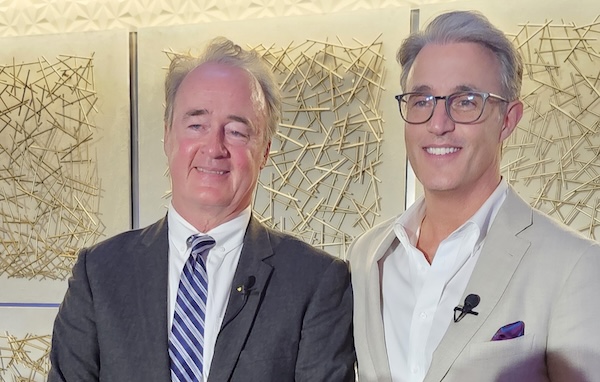
Warren Kinsella, left, and Ben Mulroney at Montreal’s Beth Israel Beth Aaron Synagogue June 19. (photo by Dave Gordon)

In 1980, when Warren Kinsella was in Calgary performing with his punk rock band, one of his friends tapped him on the shoulder to say some men in the crowd were giving a Nazi salute.

“I didn’t believe him. I didn’t think it was possible,” said Kinsella, now a Toronto Sun columnist, at a recent talk. “There, in fact, were three big guys, shaved heads, T-shirts, jeans, suspenders, Doc Martin boots, coloured laces, and they were making Nazi salutes.”

Kinsella confronted one of them, twice asking him to stop the salutes, and was greeted with an expletive and the word “Jew.” As the Irish-Catholic Kinsella tells it, a fist came his way, he hit back – a fight involving his buddies and the skinheads erupted. Eventually, the “skinheads retreated, battered or bruised,” said Kinsella. After the show, one of them pointed at Kinsella, saying, “We’ll be back.” 

“And the truth, my friends, is they never really left.” 

On June 19, at Montreal’s Beth Israel Beth Aaron Synagogue, Kinsella was joined by syndicated radio host Ben Mulroney, who acted as the moderator of the event called Weaponizing Genocide: Exposing Propaganda and Hate in the Age of Misinformation. It was a fundraiser for the Foundation for Genocide Education, which was founded in 2014 by Heidi Berger, a child of Holocaust survivors. The nonprofit aims to ensure that the subject of genocide is taught in North American high schools. 

Since that incident 45 years ago, Kinsella has battled Jew-hatred as a lawyer and as a journalist – at times with rifles jammed in his chest, police protection, bomb threats and death threats.

“I’ve seen lots of hate, but I have never seen it as bad as it is,” he said at the June event. What the Jewish people are fighting is not only a seven-front military war, but a propaganda war “we are losing,” he said.

Kinsella, the author of 10 books, will soon publish The Hidden Hand: The Information War and the Rise of Antisemitic Propaganda, along with an accompanying documentary.

Exactly 18 months before Oct. 7, 2023, social media profiles started popping up all around the Muslim world, Kinsella said. They had “very few followers” and were filled with “stuff about soccer matches and celebrities and pictures of kittens.” On the morning of the seventh, as Hamas and its allies were attacking Israel, thousands of these social media profiles came to life, he said, noting those that had just a few followers suddenly had half a million. 

“They pushed out lies,” he said, such as “there had been no murder, no rapes.” 

“It was an indication of how sophisticated and how effective these guys were, as they were able to get that word out into the stratosphere,” said Kinsella.

“Antisemites,” he added, “know that … this is the greatest political, cultural and economic revolution of our lifetimes,” with Generation Z’s primary source of information being TikTok, “one of the principal platforms for antisemitism on the planet.” 

After the event, Berger told the Jewish Independent that social media literacy for students is critical, to “learn when the term genocide is being used to manipulate their views and their emotions.”

In his remarks, Kinsella said some three million members of Gen Z in Canada believe Israel should be wiped off the map and that Hamas was justified in its actions. Weeks before Israel sent troops into Gaza, he said, young people across Western democracies were chanting the lies that they had seen online.

These were organized campaigns of protests, with professionally made signs, and the “disrupting and terrorizing of Jewish neighbourhoods with military precision,” said Kinsella. “They had talking points. They had food, drink, transportation. They even had legal representation for free….  And many of them were being paid to show up.” 

He said, “It was principally a campaign to seize the sympathies of our young. And it’s a campaign that’s winning.” 

Kinsella, president of Daisy Consulting Group, who has worked for various high-profile US and Canadian political campaigns, noticed that protesters used pithy phrases “very much like what political mainstream parties do,” such as “from the river to the sea” and “free Palestine.”

“Who’s against freedom?” he asked. “It’s nice.”

Media, government and nongovernmental organizations continue to take Hamas at its word, said Kinsella, citing an early example. On Oct. 17, 2023, when the Gazan Health Ministry declared that Al-Ahli Arab Hospital in Gaza City had been bombed by Israel and that 500 people were dead, it made headlines around the world. “The bombing was cited as evidence of Israel’s genocidal war,” yet evidence later showed it was a Palestinian Islamic Jihad rocket that hit the parking lot, and perhaps a few dozen were killed.

The day of the Montreal talk, Iran bombed Soroka Medical Centre in Beer Sheva, Israel – a war crime that almost no media reported on, said Kinsella.

“The line I always use with politicians: facts tell, but stories sell,” said Kinsella. “That’s why they try to overwhelm us, because they know if our story gets heard, if it gets seen, if it gets read, they will be defeated, because, at the end of the day, their story is a litany of hate.” 

Dave Gordon is a Toronto-based freelance writer whose work has appeared in more than 100 publications around the world. His website is davegordonwrites.com.

Format ImagePosted on July 11, 2025July 10, 2025Author Dave GordonCategories NationalTags anti-Israel protests, antisemitism, Ben Mulroney, education, Foundation for Genocide Education, journalism, mainstream media, PR, social media, speakers, university campuses, Warren Kinsella
Omnitsky’s new place

Omnitsky’s new place

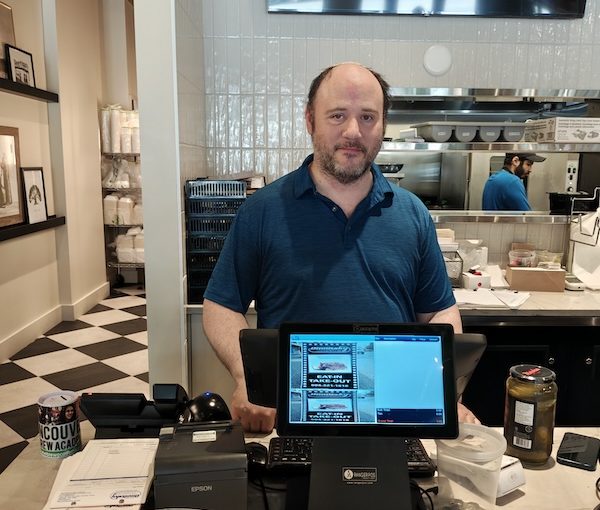
The move of Omnitsky Kosher to Fraser Street has been a positive one overall, says owner Richard Wood. (photo by  David J. Litvak)

Omnitsky Kosher recently reopened on Fraser Street in East Vancouver. Forced to move from its Oak and 41st location because of redevelopment, the deli’s owner, Richard Wood, took advantage of the situation to rebrand Vancouver’s longest operating kosher butcher and deli, which has its roots in Winnipeg’s North End.

Eppy Rappaport, who bought Omnitsky’s from William Omnitsky in 1983, brought the deli from Winnipeg to Vancouver almost 30 years ago. It’s a Canadian institution, having been established by William Omnitsky’s father, Louis, in 1910. Wood took over the business just over a year-and-a-half ago.

When the deli opened on Fraser Street two weeks before Passover, it was only selling Passover products. It’s now back in full operation, and bigger than ever.

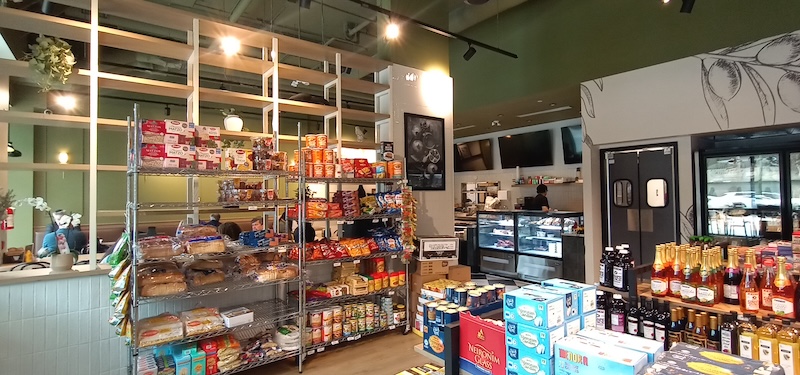
The new store is significantly larger than the old one. Divided into two sections, one half is basically a grocery store with an array of kosher products, ranging from meat, poultry and cheese, to grape juice, challahs, pickles, herring, crackers, cookies, and many more kosher items. The other half is a dining area that seats 40 to 50 people for breakfast, lunch, snacks and shmoozing.

“Everyone,” said Wood, “loves the spaciousness, the openness, the décor and the feel of the new dining area.”

He hopes that, eventually, the restaurant will be open for dinner as well, so that Jews who keep kosher “can enjoy a dinner out.”

Other than the larger dining room, Wood notes other differences between the Oak Street store and the one on Fraser: longer operating hours, additional kosher products and, in response to customer requests, more takeout meals.

Wood has started a WhatsApp group to let customers know about specials and to inform them about new products being offered, such as chicken wieners and salamis.

Omnitsky’s hosted its first event in April. The event itself was a first-ever in Vancouver: a third Passover seder, organized by Jewish Addiction Community Services Vancouver, which was led by Rabbi Joshua Corber, JACS’s director of addictions and mental health services. According to Wood, it was a rousing success that attracted more than 50 people.

Wood is open to hosting other after-hours events, like parties, book launches, poetry readings, musical performances, etc. He welcomes people’s suggestions, as he envisions keeping the restaurant open longer hours to accommodate the dinner crowd as well as bar and bat mitzvah parties.

photo - When Omnitsky’s first opened, it was only selling goods for Passover. Now, the store is offering a full selection of kosher products and the restaurant a full menu
When Omnitsky’s first opened, it was only selling goods for Passover. Now, the store is offering a full selection of kosher products and the restaurant a full menu. (photo by Cynthia Ramsay)

In addition to serving dinner on a daily basis, Wood said, “We want to offer some different menu items, like salmon or steak, to give our customers some affordable dining options, because going out for dinner is not cheap.”

Wood’s long-term plans for Omnitsky’s include employing a baker a few times a week to make bagels, pastries and other treats.

The deli is doing well in its new location, attracting new – and different – customers than it did on Oak Street.

“A majority of our clientele and regulars have returned, but we are seeing an increase in younger families coming in from the neighbourhood and younger Jewish families who are coming in for lunch on Sundays, which has been a popular day, and this is a major change from the old store,” said Wood. “In addition, we are having a broader increase in non-Jewish clientele coming in.”

This growth will require some innovative thinking to maintain.

“The challenge with the non-Jewish clientele is that the price of kosher food is substantially more expensive than non-kosher food and, therefore, some of our new non-Jewish customers in the neighbourhood find Omnitsky’s to be pricey,” said Wood.

While he is offering some value-added combos – for example, a hotdog, fries and a drink for $9.95 and a sandwich with fries and a drink for $24.95 – to make things more affordable for customers, he said, “the price of meat is something we have no control over.”   

Another challenge for Omnitsky’s is that some customers of the previous store, which was in the heart of the Jewish community, find it difficult getting to the new location. To address this issue, the deli offers free delivery on orders over $50.

Wood is open to suggestions from customers about how to improve the menu or any aspect of the store.

“I am always open to feedback either positive or negative,” he said.

While there have been some growing pains, including staffing and equipment issues, the move of Omnitsky’s to Fraser Street has been a positive one overall, said Wood, who would like his customers to see the deli, which also offers catering, as more than just a place to buy kosher food.

Jewish life “revolves around family, food and prayer,” said Wood, and he would like the Jewish community to view Omnitsky’s as a meeting place where they can shmooze, bump into their friends and be proud to be Jewish. A place where they can say “Am Yisrael chai,” have a kosher meal, do their Shabbat or holiday shopping or order takeout – even order shiva platters, which can be prepared on short notice.

“We want Omnitsky’s to be there for our customers through good times and bad times, for simchas and in times of mourning,” said Wood.

For more information on the deli, check out omnitskykosher.com or head to 3435 Fraser St. and grab a bite, something to eat in or take home. 

David J. Litvak is a prairie refugee from the North End of Winnipeg who is a freelance writer and publicist, and a mashgiach at Louis Brier Home and Hospital. His articles have been published in the Forward, Globe and Mail and Seattle Post-Intelligencer. His website is cascadiapublicity.com.

Format ImagePosted on July 11, 2025July 10, 2025Author David J. LitvakCategories LocalTags Judaism, kashrut, Omnitsky Kosher, restaurants, Richard Wood, takeout
Two visions that complement

Two visions that complement

Kim Rosin, left, and Alejandra Morales’s shared exhibit, Parallel Visions, is at the Zack Gallery until July 21. (photo from the artists)

The double exhibit Parallel Visions opened at the Zack Gallery on June 25. It introduces two artists – Kim Rosin and Alejandra Morales – who have different backgrounds, are different ages and had never met before. But their art is amazingly compatible.

“When Alejandra submitted the photos of her pieces, they were mostly of fruit, along with a fruit stand. I thought that it would be interesting to pair her with Kim’s allotments,” said gallery curator Sarah Dobbs about why she combined both artists in one show. “However, when I saw Alejandra’s work at her studio, there was so much more, so I had to rethink. 

“Upon reflection, I realized that both Kim and Alejandra turn to the natural world as more than just subjects of beauty. For Kim, painting from a community garden in West Vancouver becomes a way to reflect on growth, nourishment and the fragility of food systems in times of scarcity. Alejandra, working from northern Mexico, uses natural imagery as well, but in a dreamier way – exploring how Latin America is romanticized by outsiders. Though grounded in different geographies and experiences, both artists explore how abundance can hold layers of tension between beauty and critique, comfort and resistance. Hence the title, Parallel Visions.”

Rosin’s paintings are of her plot in a community garden. “I have always been interested in growing food,” she said. “From nothing, just a little seed, wonderful, nourishing plants grow. It feels almost magical. It makes me happy but also a little sad, because not everybody can grow their own food. Some people have to go without, when they don’t have a garden and can’t buy their vegetables because of high prices. When I look at my plot, I think of the food chain on our planet.”

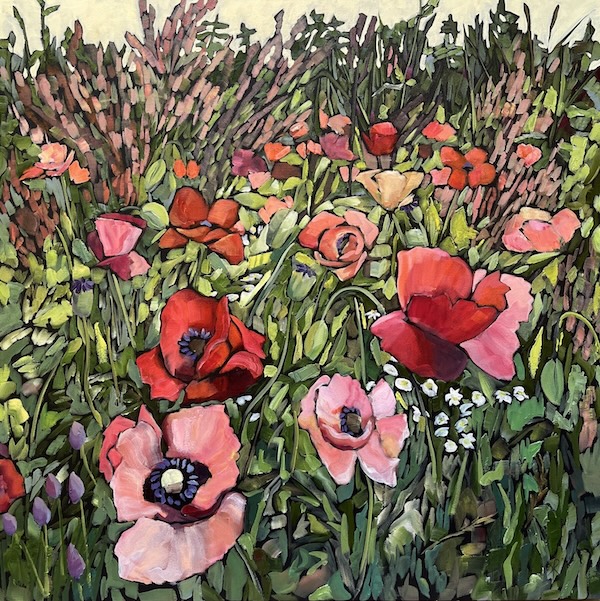
Her paintings are full of edible green things: kale and lettuce, beets and carrots. One can imagine the labour that went into growing such a lush garden and the tasty dishes after the harvest. The images reflect the artist’s love for the plants she grows, as well as her longing to share her cornucopia with everyone. Her painting of red poppies is a worthy companion to the vegetable plots, adding beauty to the nutritional component. “Many people grow poppies in our plots,” she said. 

photo - “Plot 5: Poppies and Pollinators” by Kim Rosin
“Plot 5: Poppies and Pollinators” by Kim Rosin. (photo from the artist)

Rosin also enjoys painting still life. “It is like a recording of a moment in time,” she said. “And the decorative element is there, too. People often appreciate such paintings, especially if they could ask me to include their favourite objects in the image.” 

She likes working on commissions, which she describes as “collaborations with the clients.”

“Commissions take a different mindset from making art of my own, less creative freedom,” she acknowledged. “Some clients have a certain vision, and my job is to bring that vision to life. One example is dog portraits. Dog owners want them realistic, almost photographic. I don’t have to interpret anything, as I do in my own paintings. It is easier in some way, like a mechanical exercise. My creativity is not as important as my skills as a painter. Of course, it is not that simple. When I paint, the image occasionally changes on its own, it has its own demands. Then I worry. What if the client doesn’t like the end result? What if they won’t buy this painting? Fortunately, that has never happened to me.”   

People’s stories have always served as an inspiration for her art. “I’m curious about everything – traveling, music, nature. Before I moved to Vancouver, I lived in Seattle,” she said. “I worked on theatre sets for several fringe theatres there…. After I moved here, I created a set for a musical on Granville Island. Teaming up with theatre companies was always a fabulous experience, despite the low budgets.” 

Like Rosin, Morales also likes working on commissions. “Some people are very relaxed. ‘You’re the artist. You know what to do.’ Other people are very involved. They want exactly what they envision and you, the artist, need to give them what they want,” she said.          

On the other hand, unlike the serene greenery in Rosin’s paintings, Morales’s paintings emphasize her unease with society’s contradictions and paradoxes. Her flowers are colourful and gorgeous, but unrealistic. “I wanted them too beautiful for this world, almost uncomfortable,” she said. “And the animals in my paintings – they fight, like humans do. There are conflicts there.”    

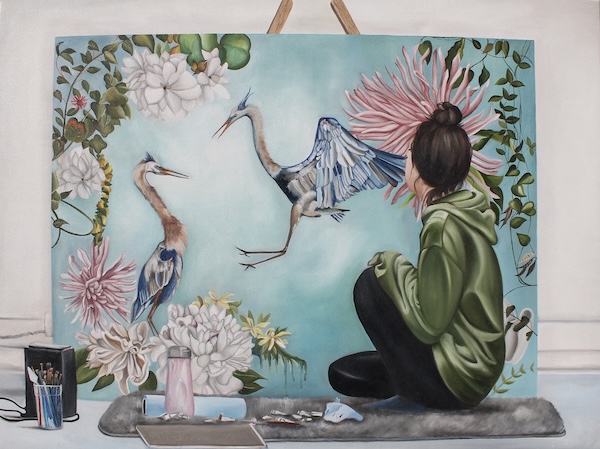
In her self-portrait, which is on display, the dichotomy between the pastel tones, the elaborate, narcissistic flowers, the birds in the middle of an angry confrontation and the pensive woman facing the painting echoes the artist’s contemplation on the incongruities of life. 

The self-portrait is titled “Will Happiness Find Me?” Many of Morales’s other paintings also sport titles that add a verbal facet to the art’s visual impact. “My titles come from books or songs. Or, I remember someone saying something, and it is relevant for this painting. Or a title could be a quote from an old show,” she said. Her tranquil landscape of a Vancouver shoreline is called “Nothing Mattered More Than Anything Else.”     

photo - “Will Happiness Find Me?” by Alejandra Morales
“Will Happiness Find Me?” by Alejandra Morales. (photo from the artist)

Morales moved to Vancouver four years ago from Mexico. “I received my BA from McGill University in 2016 and studied for my master’s degree in visual arts at UBC.”

Besides Canada, she studied art in Spain and in her native Mexico. “When I took art classes in Mexico, many students were housewives,” she recalled. “North Mexican culture is different than here. Women are supposed to follow a traditional path of a wife and a mother. The women that took art classes were anxious because they deviated from that path. I wanted to show their anxiety, their inner struggle in my paintings.”

According to Morales, women are freer here in Canada, the entire society more relaxed, and her art reflects the difference. “I painted a jungle in Mexico – and it was very bright and colourful. But when I painted a jungle here, the colours became less vivid, more muted. Maybe because it was raining outside,” she said.

Morales taught fine art as a teacher’s assistant, while she studied at UBC. “I liked teaching. I would like to do more of that,” she said. 

Her latest artistic project is rather unusual. She painted a series of cityscapes featuring dumpsters around Vancouver. “Some of them have amazing graffiti. It was such fun,” she said. 

Parallel Visions is on until July 21. Rosin’s website is kimthings.com; Morales’s is moralesalejandra.com. 

Olga Livshin is a Vancouver freelance writer. She can be reached at [email protected].

Format ImagePosted on July 11, 2025July 10, 2025Author Olga LivshinCategories Visual ArtsTags Alejandra Morales, Kim Rosin, Parallel Visions, Sarah Dobbs, social commentary, Zack Gallery
A melting pot of styles

A melting pot of styles

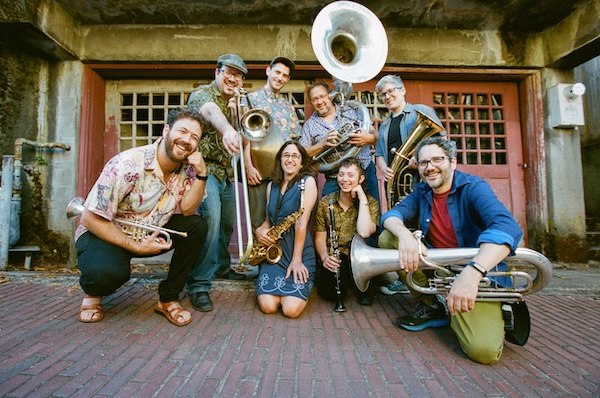
Seattle band Shpilkis helps open the Mission Folk Music Festival July 25. (photo from shpilkisseattle.com)

“We’re delighted to be featured at a folk music festival that understands the vast and expansive variety that makes up folk music, and to bring our unique sound to a community that may have never heard klezmer before,” Michael Grant of the band Shpilkis told the Independent. “We have a secret agenda to get hundreds of Mission Folk Fest enthusiasts into a Yiddish dance line! We love playing festivals and expect this to be a beautiful time.”

The Mission Folk Music Festival’s introduction to Shpilkis begins, “Are you ready to shake your tuchus, Mission folkies? Have we got the band for you!” Shpilkis is part of the weekend festival’s opening night lineup July 25. They play a midday concert on July 26 and share the stage for two different afternoon performances July 27. It’s the Seattle band’s first time participating in the festival, though trombone player Jimmy Austin has played it before, with a different group.

Grant plays the trumpet. He and Austin will be joined in Mission by Zimyl Adler (clarinet), Layne Benofsky (baritone), Stefanie Brendler (French horn), Nancy Hartunian (alto and soprano sax), Gary Luke (sousaphone) and Joey Ziegler (drum kit).

Shpilkis formed in 2017, originally convened by Brendler, said Grant. “The low brass players had been in a successful Seattle Balkan band together, and the rest of us knew each other from Jewish community and music spaces. In 2018, we added our sax and trombone players, and, in 2023, finally found a drummer!”

Some of the members play in other groups or musical projects, but Shpilkis is the primary band for all the musicians, he said.

Shpilkis plays traditional Eastern European Yiddish music, as well as more recent forms of it. The band’s description notes that “members come to this glorious music from a hodgepodge of backgrounds: religious, spiritual, secular, pagan; East Coasters, Midwesterners and Pacific Northwesterners born and raised; Jews and gentiles; music-educated and self-taught, with foundations in jazz, punk, folk, classical and pop.”

“Klezmer, particularly by the later 20th century, is a melting pot of styles – you can hear Greek, Balkan and Eastern European melodies mixed in with Americanish sounds – particularly jazz and even bluegrass,” Grant explained. “We love drawing from across the historical spectrum of klezmer music, from traditional 19th-century repertoire that’s been unearthed via the Kiselgof-Makonovetsky Digital Manuscript Project from a Kiev archive, to songs that were written in 1980s Brooklyn or Philadelphia, to fusion and contemporary repertoire. We always arrange songs to put our unique, raucous klezmer brass stamp on it, thinking, ‘How do we get our audience out of their seats and dancing to this?’ Klezmer is inherently dance music, so we prioritize songs that can both be played and danced to at a simcha or nightclub.”

But klezmer is even more than that. 

“Klezmer is the sound and musical language of our people,” said Grant. “It is exciting because it is inseparable from the Ashkenazi diaspora, as it integrates the musical influences of its changing environment and geographies while staying rooted in tradition. We as klezmorim love playing klezmer because it connects us to the past, present and future of Jewish cultural expression beyond borders.”

For the full Mission Folk Music Festival lineup – which features more than 20 acts, performing a range of genres – and tickets, visit missionfolkmusicfestival.ca. 

Format ImagePosted on July 11, 2025July 10, 2025Author Cynthia RamsayCategories MusicTags culture, folk music, klezmer, Michael Grant, Mission Folk Music Festival, Shpilkis
Library a rare public space

Library a rare public space

Samuel Elkind, head librarian at Vancouver’s Isaac Waldman Jewish Public Library, will be joining the team at Richmond Public Library later this month. (photo by Anne Lerner)

As head librarian at Vancouver’s Isaac Waldman Jewish Public Library, Samuel Elkind oversees everything from daily operations to long-term planning – curating collections, developing programs and building systems designed to serve the community. He put it plainly: “If I were hit by a bus tomorrow, I want the library to run without a hitch.” His core belief is that a library should be resilient, community-rooted and built to thrive beyond any one person.

Elkind’s approach leaves the Waldman in a secure place, as he soon moves on to Richmond Public Library. He will remain on the on-call list for the Waldman and assist through volunteering when he can, he said, in keeping with his “goals of guaranteeing the long-term continuity and stewardship of the Isaac Waldman Library.”

“It is my intention to stay on long enough to train my successor,” Elkind told the Independent. This is something that he, his boss, Hila Olyan, senior director of programs at the Jewish Community Centre of Greater Vancouver, and Eldad Goldfarb, the JCC’s executive director, planned from the beginning, he said. 

“I want to make sure that whoever replaces me receives training comparable to that which they would receive in a larger system, which I was so fortunate to have,” he said of his start at the Waldman this past January. “The master’s of library and information studies prepares you very well for the job, but there are some things that can only be learned in the field.”

Elkind didn’t begin his career in a library, but he built one, even before becoming a librarian.

At a summer arts camp in New Jersey, he came across a neglected shelf labeled “library.”

“It wasn’t a library,” he recalled. “So, I built shelves, gathered books and set up a simple lending system. I had no idea what I was doing, but the kids needed stories – and that was enough.” 

Even as his career moved in other directions, the idea of building spaces for stories stayed with him. Years later, while working in university admissions, he began to question his path. “I couldn’t figure out why I felt off,” he said. “But, after talking with colleagues and friends, I realized I was drawn to information access and protection, especially the preservation of stories that define who we are.”

That clarity led him to the University of British Columbia, where he completed a dual master’s degree in archival studies, and library and information studies. When the opportunity to lead the Waldman Library arose, he was ready. “I went to JCC camp. I taught at synagogues. It just felt like everything was falling into place,” he said.

Elkind came to the Waldman from Vancouver Public Library, where he worked a contract position as a children’s librarian. At the Waldman, he modernized the space – digitizing decades of program data, updating signage, rethinking the floor plan, and overhauling internal workflows. He also expanded the library’s public-facing programming, from weekly storytimes to Sunday Lego Stay and Play sessions, which align with the JCC’s activity schedule. “What do you do before or after swim lessons?” he asked. “Go to the library!”

“Our library is a bustling place, and has been becoming busier,” confirmed Olyan. “The library tends to service older adults and young children during the daytime hours but, come 3:30 in the afternoon, it is packed with school-age children reading books, playing games, doing crafts and checking out the computer. Sundays are busy with families and creative young people who take part in our weekly Lego club.”

To Elkind, these aren’t side projects – they’re core to what makes a library matter. His philosophy is grounded in third place theory – the idea that, beyond home and work, people need a third space to simply be. “Libraries are one of the last third spaces,” he said. “There aren’t many places left where you can just exist without spending money.”

That value is embedded in the library. “We’re providing space – quiet corners, conversation, presence – and those things are deeply needed,” he said.

Elkind’s inclusive lens extends beyond the JCC. He sits on the board of Out on the Shelves, Vancouver’s oldest queer library, established in 1983. He is also the founder of Gaming Without Othering the Self (GWOOTS), a tabletop RPG (role-playing game) initiative fostering queer community through collaborative storytelling.

“Role-playing games are group storytelling. More than just role play, it’s one of the most ancient human experiences. It’s about identity, imagination and connection,” he said.

GWOOTS runs weekly drop-in sessions across Vancouver with a focus on accessibility and community. “It started because I just wanted to run games for other grad students,” he said. “But I saw how many people were using RPGs to process experiences, explore identity and build relationships.”

For Elkind, GWOOTS and the Waldman are two different expressions of the same purpose. “At Waldman, I want to create space for the Jewish community. At GWOOTS, I want to create space for the queer community. But you don’t have to be Jewish or queer to feel welcome.”

Elkind’s commitment to belonging is shaped by lived experience. The day after the 2016 US election, he was sitting alone in a pizza shop near where he lived in California when two men entered wearing swastikas and began to spew antisemitic threats loudly. A waiter, sensing the danger, calmly ushered him out the back door.

“That’s one end of the spectrum,” Elkind said. “But I’ve also experienced radical acceptance in places I never expected.” 

He gave the example of walking into a game store in Maryland and spotting a sign that read, “This is a radically inclusive space. If you have a problem with that, leave.”

His version of inclusion is not passive. “Tolerance implies I’m gritting my teeth and allowing it,” he explained. “I don’t grit my teeth for anything. I believe in acceptance.”

Storytelling, in every form, is central to Elkind’s work. “Whether you’re building a library, running a game or telling a story, you’re shaping memory,” he said. “And that’s sacred work.”

When asked what he’d say to someone who’s never stepped foot in the Waldman Library or joined a GWOOTS game, he doesn’t hesitate. “Come,” he said. “We want you here. We want you to feel accepted and loved. We want you to be part of something.”

“Our librarian ensures a safe, welcoming space for everyone,” said Olyan, who has started reviewing applications to fill the vacancy made by Elkind’s departure. She said the JCC is looking for someone who has both “the professional qualifications and experience to service our community to the highest standards. And, we’re looking for someone who holds the same cultural and community values of the JCC. 

“So, what we mean is that a strong candidate ideally holds a master’s degree in library sciences and experience working in a community or school library. They also have a strong sense of community, responsibility and excellence. They love helping people (especially children and older adults) and they are knowledgeable about Jewish culture and/or literature.”

The Waldman is the only Jewish public library on Canada’s West Coast, said Olyan. “It brings people together and connects them with Jewish history, culture and tradition. The library hosts a collection of approximately 17,000 books, mostly by Jewish authors and relating to Jewish topics, including a vast number of Hebrew books. It offers computers, iPads, space to read and work, games and toys.”

The library opened in 1994, “thanks to the dedication of local community members and volunteers,” she said. “Its name honours the late Isaac M. Waldman, who worked as a structural and civil engineer, and was an ardent volunteer and generous supporter of local Israeli and Jewish nonprofit groups. Mrs. Sophie Waldman donated the funds that enabled the library to open, in memory of her husband.”

The library is run by the head librarian with a small team of library technicians, cataloguers and dedicated volunteers, said Olyan. “We’re always looking for volunteers who can support everyday operations, run special programs (including for children and older adults), and people willing to join our planning committee.”

For his part, Elkind said he has “absolutely cherished” his time at the JCC. 

“I cannot recall a time that I have ever felt so appreciated in a position, or where I have been so able to see the positive results of my work,” he said.

“Over my time here, I have been fortunate to gain rare experience in library management, and have quickly become practically acquainted with aspects of the library field well outside of children’s and teen services, some of which might have otherwise taken decades for me to encounter. I make the move to RPL comfortable in my ability to operate in libraries of all sizes, and in any number of roles therein.”

At Richmond Public Library, Elkind will be working as a librarian on the children’s team, a role that includes providing information service and patron assistance to library-goers of all ages. When asked what he was most looking forward to at RPL, he said, “Is it weird to say that I am looking forward to receiving a performance review? I am still early in my career and have a lot of growth and learning ahead of me. It is important to seek that out in many forms.

“I have definitely grown in my current position, as a librarian and as an administrator, and I am so lucky to have had this opportunity – I do not wish to sell that short by any means. Having another librarian to supervise me allows for a different type of growth, and an opportunity to learn the things that I do not know that I do not know.” 

Uriel Presman Chikiar is a student at Queen’s University and serves as executive vice-president of external relations at Hillel Queen’s.

Format ImagePosted on July 11, 2025July 21, 2025Author Uriel Presman Chikiar and Cynthia RamsayCategories LocalTags GWOOTS, Hila Olyan, inclusion, JCC, libraries, Richmond Public Library, Samuel Elkind, storytelling, third space, Waldman Library
TUTS debut for Newman

TUTS debut for Newman

(photo by Emily Cooper)

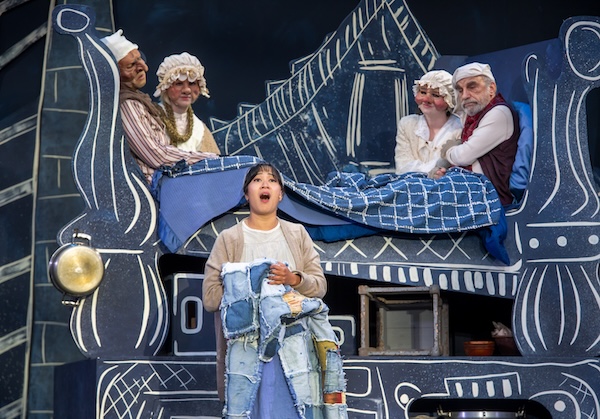
Jewish community member Richard Newman, top right, makes his Theatre Under the Stars debut, playing Grandpa Joe in Charlie & the Chocolate Factory, which alternates nights with Legally Blonde until Aug. 16 at the Malkin Bowl in Stanley Park. He is pictured here with, left to right: Bernardo Arana (Grandpa George), Twyla Raffé-Devine (Grandma Georgina), Imelda Gaborno (Mrs. Bucket) and Sophie O’Brien (Grandma Josephine). For tickets to either TUTS show, visit tuts.ca.

Format ImagePosted on July 11, 2025July 10, 2025Author Theatre Under the StarsCategories Performing ArtsTags Richard Newman, Theatre Under the Stars, TUTS

Harper to speak here

photo - Stephen J. Harper
Stephen J. Harper (photo from internet)

On Sept. 7, the Canadian Shaare Zedek Hospital Foundation, Western Region, presents A Special Evening Marking 50 Years of Supporting Shaare Zedek Medical Centre in Jerusalem, featuring former prime minister Stephen J. Harper. 

The event, moderated by Gordon Campbell, raises funds for Shaare Zedek Medical Centre’s Incubators Drive.

In 2024, more than 20,000 babies were born at Shaare Zedek’s Wilf Woman and Infant Centre – three times that of BC Women’s and Children’s Hospital. Of those, 1,100 required intensive care in the neonatal intensive care unit. The NICU operates 70 state-of-the-art infant stations, offering 24/7 care with specialized staff and cutting-edge equipment. The goal of the campaign is to raise enough money to purchase additional Giraffe Incubator Carestations, each costing $50,000, to meet growing demand and save more lives. Thanks to a matching donor, every dollar donated will be matched up to $118,000.

Marla Gordon and Justin Segal are emcees of the Sept. 7 event. Herb Silber and Eli Konorti are corporate committee chairs, while Carol Segal and Yael Segal are dinner chairs. The Jewish Medical Association of BC is the evening’s educational sponsor and the Dr. Harry and Ruth Frackson Speaker Series has contributed to the event. Community partners are the Jewish Federation of Greater Vancouver, Congregation Schara Tzedeck and the Jewish Independent.

Tickets for the VIP meet-and-greet are a minimum gift of $1,800, which includes tickets for two guests. Admission to the VIP cocktail dinner is $250 per person, and the price to only attend the moderated presentation is $36 per person. For more information and sponsorship opportunities, contact Ilan Pilo, Western Canada director of CSZHF, at [email protected] or 778-858-8748. 

– Courtesy Canadian Shaare Zedek Hospital Foundation, Western Region

Posted on July 11, 2025July 10, 2025Author Canadian Shaare Zedek Hospital FoundationCategories LocalTags fundraising, health care, Incubators Drive, Israel, Shaare Zedek Hospital, speakers, Stephen J. Harper
A night of impact, generosity

A night of impact, generosity

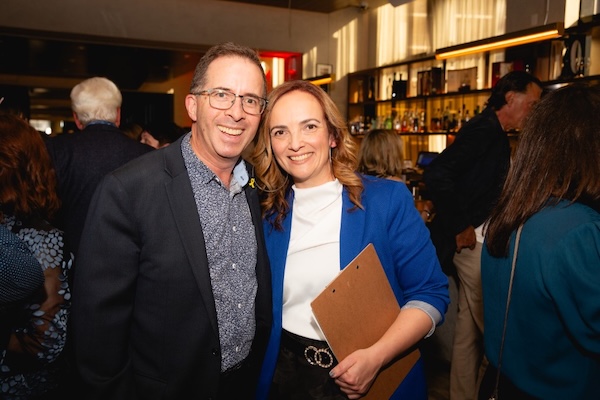
At the JFS Innovators Igniting Change event May 27, Arnold Silber, left, presented the Lighting the Way Award to his lifelong friend, Syd Belzberg. (photo by Rhonda Dent Photography)

The JFS Innovators Igniting Change event May 27, presented by Shay Keil, was a celebration of community, generosity and the drive to create lasting impact. The event raised more than $505,000 that will go directly toward providing food, counseling and emergency support to individuals and families in need. It will go a long way in ensuring that vulnerable members of the community have access to critical resources during times of hardship.

One of the most moving moments of the evening came with the premiere of a client video, sharing stories of resilience and hope. The video offered a reminder of the lives touched by Jewish Family Services Vancouver’s work and left few dry eyes in the room. It was a call to action, showing that, together, we can build a stronger, more caring community.

photo - Shay Keil, presenting sponsor of the JFS Innovators event, with JFS Vancouver chief executive officer Tanja Demajo
Shay Keil, presenting sponsor of the JFS Innovators event, with JFS Vancouver chief executive officer Tanja Demajo. (photo by Rhonda Dent Photography)

Another moving moment was when Arnold Silber presented the Lighting the Way Award to his lifelong friend, Syd Belzberg. It was a deeply personal tribute to a man whose quiet generosity and steadfast vision have helped shape a more compassionate community.

Silber reflected not only on Belzberg’s decades of dedication, but also on the enduring friendship between two people who share a deep belief in tikkun olam, repairing the world.

Stable Harvest Farm, a project close to Belzberg’s heart, stood out as a shining example of how one person’s passion can blossom into something that nourishes and uplifts so many. It was a reminder that behind every act of kindness is a person who chooses to care – and that choice can change lives. 

As with any successful event, the Innovators Igniting Change evening wouldn’t have been possible without the support of its sponsors and community partners. Their contributions were integral.

– Courtesy of Jewish Family Services Vancouver

Format ImagePosted on July 11, 2025July 10, 2025Author Jewish Family Services VancouverCategories LocalTags Igniting Change, Jewish Family Services, JFS, JFS Innovators, philanthropy, Shay Keil, Stable Harvest Farm, Syd Belzberg

Posts pagination

Previous page Page 1 … Page 31 Page 32 Page 33 … Page 662 Next page
Proudly powered by WordPress