Skip to content
  • Home
  • Subscribe / donate
  • Events calendar
  • News
    • Local
    • National
    • Israel
    • World
    • עניין בחדשות
      A roundup of news in Canada and further afield, in Hebrew.
  • Opinion
    • From the JI
    • Op-Ed
  • Arts & Culture
    • Performing Arts
    • Music
    • Books
    • Visual Arts
    • TV & Film
  • Life
    • Celebrating the Holidays
    • Travel
    • The Daily Snooze
      Cartoons by Jacob Samuel
    • Mystery Photo
      Help the JI and JMABC fill in the gaps in our archives.
  • Community Links
    • Organizations, Etc.
    • Other News Sources & Blogs
    • Business Directory
  • FAQ
  • JI Chai Celebration
  • JI@88! video

Recent Posts

  • Story of Israel’s north
  • Sheltering in train stations
  • Teach critical thinking
  • Learning to bridge divides
  • Supporting Iranian community
  • Art dismantles systems
  • Beth Tikvah celebrates 50th
  • What is Jewish music?
  • Celebrate joy of music
  • Women share experiences 
  • Raising funds for Survivors
  • Call for digital literacy
  • The hidden hand of hate
  • Tarot as spiritual ritual
  • Students create fancy meal
  • Encouraging young voices
  • Rose’s Angels delivers
  • Living life to its fullest
  • Drawing on his roots
  • Panama City welcoming
  • Pesach cleaning
  • On the wings of griffon vultures
  • Vast recipe & story collection
  • A word, please …
  • מארק קרני לא ממתין לטראמפ
  • On war and antisemitism
  • Jews shine in Canucks colours
  • Moment of opportunity
  • Shooting response
  • BC budget fails seniors
  • Ritual is what makes life holy
  • Dogs help war veterans live again
  • Remain vital and outspoken
  • An urgent play to see
  • Pop-up exhibit popular
  • An invite to join JWest

Archives

Follow @JewishIndie
image - The CJN - Visit Us Banner - 300x600 - 101625

A great-grandmother’s song

A great-grandmother’s song

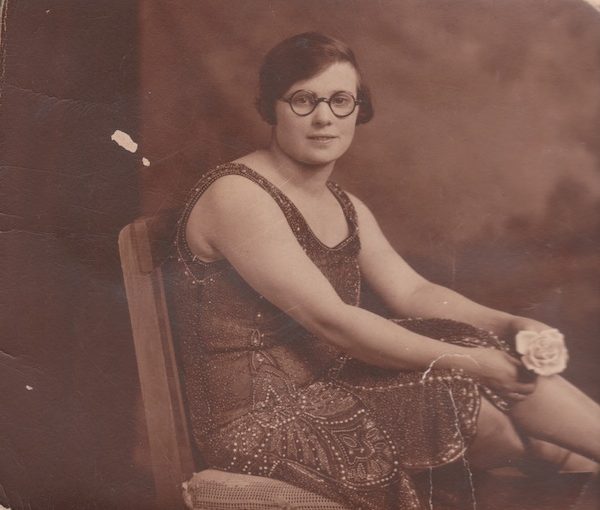
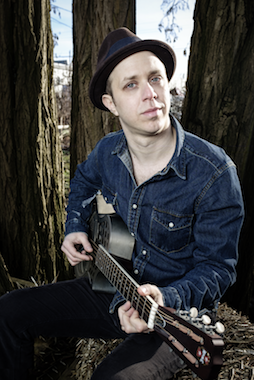
Jesse Waldman was inspired by his great-grandmother Adele Waldman to reimagine the Yiddish song “Papirosen.” (photo from Jesse Waldman)

Several weeks ago, I was offered a commission by the Shadbolt Centre for the Arts to do a musical piece for their Covid Chronicles series. A Jewish musician living in Vancouver, I made a video of the classic Yiddish tune “Papirosen.” It has special significance, and it’s something I want to share with others.

As far back as I can remember, my family has been into taking photos, videos and recordings – I have at least three huge albums and a bunch of VHS tapes from birthdays, bar mitzvahs, etc. As well, there was a piano in my grandparents’ living room and music was always part of our lives. Before my grandmother passed away, she gave me a cassette that had been made on a reel-to-reel tape machine in Toronto in 1958. It included my mom at 2-and-a-half-years-old singing nursery rhymes, interviews with other family members, and my great-grandmother, Adele Waldman, singing traditional Yiddish folk songs.

Adele was my grandfather’s mother and she died before I was born. The quality and soul of her voice is absolutely stunning – some of the most moving singing I’ve ever heard, both haunting and soothing at the same time. I could listen to the recordings a million times and still be amazed by the off-the-cuff performances she did in the kitchen of my grandparents’ house.

photo - Jesse Waldman
Jesse Waldman (photo from Jesse Waldman)

I recently went through my storage closet and found a binder of sheet music that used to live in my grandparents’ piano bench. It was mostly big band and jazz tunes, but also a handful of Yiddish songs, including “Papirosen,” which was one the songs Adele sang on those tapes. As I put the sheet music on my music stand and began to study it, I was transported back to Eastern Europe in the 1920s.

Written by Herman Yablokoff in that decade, this song has the most dark yet beautiful melody, and I absolutely adore it. I looked up the lyrics (translated into English) and was struck again by the powerful storytelling about a young boy selling cigarettes, or papirosen, on the streets, offering an introspective look at his inner world.

For the Shadbolt-commissioned piece, I combined Adele’s recorded performance of “Papirosen” and a reimagined rendition of the song that I performed on guitar. After trying a few different things, I landed on the idea of sharing the first segment of her performance (her rendition is five minutes long) followed by a one-take performance by myself. The video can be found at youtube.com/watch?v=RWAVr2W0vvo.

Format ImagePosted on April 2, 2021March 31, 2021Author Jesse WaldmanCategories MusicTags Adele Waldman, family, folk songs, history, Papirosen, Shadbolt Centre, Yiddish
JNF Pacific’s fresh face

JNF Pacific’s fresh face

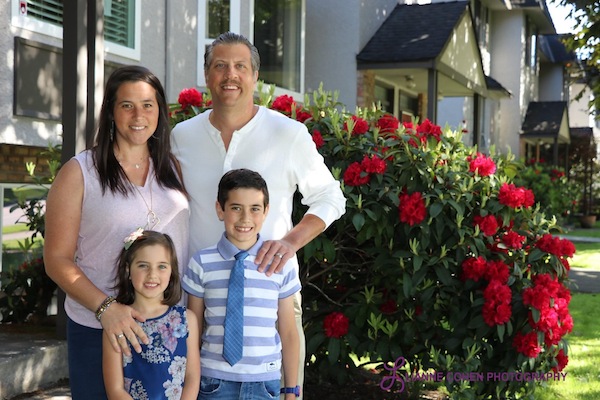
Michael Sachs, the new executive director of Jewish National Fund of Canada, Pacific region, with his wife Shira, a Hebrew and Judaics teacher at Vancouver Talmud Torah, and their children Izzy, 8, and Desi, 5-and-a-half. (photo by Michael Sachs)

The Jewish National Fund, founded by Theodor Herzl in 1901, is inextricably tied up in the history of the land and the state of Israel. Associated in the minds of generations of Diaspora Jews with planting trees in Israel, the agency – and its Canadian arm – have expanded into almost every area of civil infrastructure in that country.

The Jewish National Fund of Canada raises awareness and funds for projects that still include planting trees, but many years ago expanded into constructing water reservoirs, preserving natural habitats and building parks and bicycle trails. More recently, the focus has included social service infrastructures for vulnerable populations, such as at-risk youth, victims of domestic abuse, children with special needs, veterans and those with economic disadvantages.

For many years, JNF was represented in British Columbia by a shaliach, an emissary, sent here to advocate and raise funds for projects in Israel. Ilan Pilo was the last shaliach appointed and, when the Israeli office of JNF decided to stop funding the position, Jewish National Fund of Canada hired him and he continued in the role as executive director. Pilo and his family returned to Israel permanently this year after eight years in the community here.

Immediately after Passover, on April 5, Michael Sachs becomes the first non-Israeli to helm the Pacific region office. “I’m making history without doing anything,” he joked.

Sachs has spent the past decade working in the wholesale diamond sector as vice-president of sales at ERL Diamonds. In his off hours, he has been involved in an array of community organizations, including serving as president of the Bayit, a Richmond synagogue, during a time of exponential growth in membership. He has also served on the boards of the Kehila Society of Richmond, Vancouver Hebrew Academy, Tikva Housing, and on the development committee of Jewish Family Services. His efforts have been recognized both with a Jewish Independent 18 Under 36 Award, as well as a Jewish Federation of Greater Vancouver Young Leadership Award.

Although his community work has been extensive, Sachs may be familiar to most as a member of the family that ran Kaplan’s Deli for years. His mother and stepfather, Sally and Marshall Cramer, owned the restaurant and young Mike worked the counter.

“I always joked that one of the best sitcoms ever written would be something about being behind the counter of a Jewish deli because you hear everything that’s going on in the community, you meet everybody and it’s like watching a show,” he said.

In his early 20s, Sachs traveled to Israel on Birthright and he was transformed. “I came back and I longed for that connection,” he said, “because, when you’re there, it is electrifying through the soles of your feet; the energy, the buzz.”

Taking a leadership role in JNF may be a direct legacy of the impact of that visit.

Sachs refers to his new position as “an absolute dream.” He said, “Something like this is a once-in-a-lifetime opportunity.” And added, “JNF is, in my eyes, the global Jewish community’s hand in building Israel.”

Sachs and Pilo have been in contact and the former executive director will be on hand from his new home in Israel to assist virtually in the transition. Meanwhile, Sachs has set his sights on expanding the geographic reach of the Pacific region office. He aims to increase the agency’s presence in the Okanagan, on Vancouver Island and in the outlying Metro Vancouver communities.

Speaking before he formally takes on the role, Sachs said he doesn’t want to prejudge what changes might come, but he guarantees two things: “Excitement and energy.”

The staff of two in the regional office – Liisa King and Moran Nir – “do the work of five people,” he said.

“I don’t think I’ve ever seen such a group of dedicated community members as I have on the board of JNF,” he added, specifically citing Pacific region president Bernice Carmeli and vice-president Shannon Gorski.

Carmeli and Sachs would like to not only reach a broader geographic area, but a larger demographic. Just before the pandemic hit, Carmeli told the Independent, they were about to launch in earnest a new young adult division called JNF Future. As the reopening continues, both she and Sachs hope to develop that cohort and build a strong base of support among the next generation.

Carmeli sees Sachs, who turned 40 on March 27, as the ideal fit for expanding JNF’s message to wider audiences. She shares Sachs’ overt enthusiasm for the future.

“Onward and upward,” she said. “We have a new ED, a lot of exciting things are going to happen.”

Format ImagePosted on April 2, 2021March 31, 2021Author Pat JohnsonCategories LocalTags Jewish National Fund, JNF, Mike Sachs, milestones, philanthropy
Navigating gender, sexuality

Navigating gender, sexuality

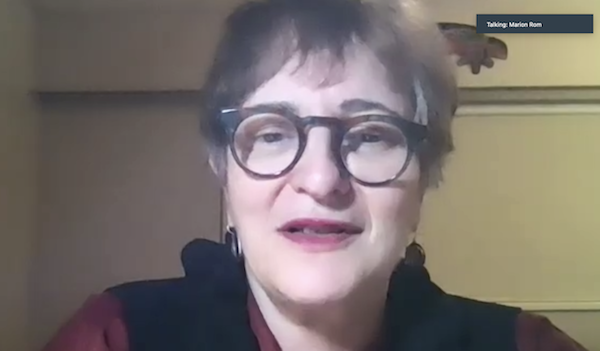
Marion Rom, who works with gender-diverse youth, spoke as part of a Beth Tikvah-hosted panel on the topic Navigating Gender and Sexuality in the 21st Century. (screenshot)

“Almost one-third of people who have gender dysphoria will attempt suicide and have mental health issues, and that’s why we often have such a high rate of kids with eating disorders who are transgender,” said Marion Rom, a counselor who works with gender-diverse youth in the Lower Mainland.

Rom was speaking as part of a March 11 panel on the topic Navigating Gender and Sexuality in the 21st Century. She defined gender dysphoria as when “your body doesn’t match the sense of who you are.” She also explained to the 65-plus attendees of the discussion the difference between sex and gender, some of the terminology around gender, and a few resources for those who want to learn more.

The panel, which was hosted by Beth Tikvah Congregation, also included Dean Kaplan, who joined the conversation from Washington, D.C., and the Abelson family – Kay, Bernard and their son Jason – who live here. The discussion was started by the congregation’s spiritual leader, Rabbi Susie Tendler.

“I think that we have a special mission, as the Jewish people, of finding people who have a potential to be marginalized and always elevating them, along with elevating everyone, to ensure that we are all in a sacred space,” said Tendler. She described her rabbinate as being “about opening doors” and a kehila kedosha, holy community, as one that creates pathways for everyone to be welcome in sacred spaces. She thanked the Zoom participants for their efforts in opening the door of community wider to “welcome everyone as their authentic selves because that’s the only way that, I believe, we really approach God.”

Rom was asked to speak by BT congregant Linda Steiner, who had heard Rom’s talk at a Habonim alumni meeting last year. The presentation was geared to older people, like Rom herself, who is 63.

She defined sexuality, and explained several terms, including lesbian (a female attracted to another female), heterosexual (females attracted to males and vice versa), bisexual (someone attracted to both males and females) and pansexual (someone attracted simply to the person, irrespective of gender). She broke down the acronym LGBTQ+ (lesbian, gay, bisexual, transgender, queer; with the plus including but not limited to asexual, two spirit, and allies). She also went through some of the gender terminology, such as cisgender (“either male or female”) and transgender (someone whose sense of self doesn’t match their birth gender). She spoke briefly about hormone therapy and gender reassignment surgery.

For people wanting to start learning more about gender and sexuality, Rom suggested the books Love Lives Here by Amanda Jette Knox and Transgender Children and Youth: Cultivating Pride and Joy with Families in Transition by Elijah Nealy, the Israeli documentary Family in Transition and the narrative film The Danish Girl (or the book from which it was adapted, written by David Ebershoff).

Dean Kaplan, 28, who goes by the pronouns they, them and their, came out as non-binary a couple of years ago. They spoke about how they see themselves and their relationship to how the world sees people like them. Describing themselves as Jewish, white and having grown up upper-middle-class and with privilege, Kaplan acknowledged that these factors have “contributed to me being able to live as myself comfortably.”

Despite that comfort, Kaplan first came out as queer in terms of their sexuality, at the age of 17 or 18, before identifying as gender-nonconforming.

“An important part of identifying as queer in almost any part of the world,” said Kaplan, “is not only understanding who you are, but also, in some ways, accepting this label as ‘deviant’ by society.”

In their early 20s, Kaplan began to realize “I very much enjoy connecting with parts of myself that would be considered feminine,” such as having longer hair and wearing tights.

From a young age, they said, “I’ve had this latent sense of difference in how I want to emotionally connect with people and that played a lot into my sense that I was gender-nonconforming. I think also a little bit of it is this sense that I want to live in a world and exist in space without a lot the negative aspects of masculinity that I was raised to cherish in a lot of ways. I’m still aware of the fact that almost all of my male friends are embarrassed to cry, even alone; it’s a sign of anti-masculinity. And so, being non-binary for me is very freeing in a lot of ways. I can be who I want to be and who I feel I am without the kind of embarrassment or labels that go with certain actions for certain genders.”

That said, the reactions to their coming out were mixed and some were hurtful. They get misgendered every day – “sometimes I correct, sometimes I don’t,” said Kaplan. That will depend, for example, on whether the person making the mistake is a superior at work or a peer. “Power and economics play into my ability to be myself in the spaces I happen to be in,” they said.

Jason Abelson, 24, started his transition in 2012, but his first memory of wanting to be a boy goes back to a gymnastics class when he was in preschool, so 4 or 5 years old. Initially, he attended an Orthodox elementary school in South Africa, where he was born, but his parents switched him to a public school. He used the fact that he was a swimmer to cut his hair short in Grade 4. He hated it when his parents would correct people who would mistake him for being a boy. “I just wanted to go and hide somewhere,” he said.

When his chest began to develop in puberty, he would try and hide it, but, eventually, he quit swimming. He has since picked the sport up again, and has joined an LGBTQ+ team.

When he was younger, he said, “I didn’t know what transgender was. I didn’t know that you could transition, that the feelings I had for wanting to be a boy were experienced by anyone else until an Oprah show that my mom was watching one summer’s afternoon. In that Oprah show, they had a transgender guy and his family, and shared his story.”

Seeing the possibilities for himself, Abelson thought about next steps and started the process of transitioning, one part of which is convincing a psychologist “that you are transgender.” He then saw an endocrinologist. In Grade 10 at the time, he stayed at the same school throughout. “I finished the first semester as a girl; came back five days later as a boy,” he said. “All we did was we changed the name on the class list.”

While he was given a key to the teacher’s washroom, he didn’t want to call attention to himself, so he avoided using the facilities. “Bathrooms still do give me a little bit of anxiety,” he said.

He started hormones nine years ago, at age 15. About a year after that, he had top surgery – prior to that he had used binders to keep his chest down.

With respect to going to an Orthodox shul after he started his transition, Abelson was told that he could come to services but would have to sit in the women’s section. Even now, attending a new synagogue and sitting on the men’s side, he said, “I don’t feel like I have a place in the shul. Being gay as well, I can’t get married in that shul, so that’s still a world that is being navigated.”

Kay Abelson spoke about both the emotional journey and the “very practical life journey.” She said she struggled with those early years when her son was asserting his identity – in his clothing choices and in his desire to cut his hair short, for example.

“I found it really hard, as a mother,” she acknowledged. “And it did cause some conflict in our family.” However, she noted, “For me, the time before Jason’s transition was more of a struggle than once he transitioned…. I found the earlier time hard, before we knew what we were dealing with. Bernard and I both always had a sense that there was something with Jason when he was growing up, but we just could not put our finger on it. And so, that moment of him watching the Oprah show and having that ah-ha moment was a huge turning point for all of us.”

It took time for her and her husband to understand and digest what was happening. She had fears about what people would think and say, but people were supportive and accepting, she said.

“When you start thinking about the history and the background about all those situations that Jason mentioned,” said Bernard Abelson, such as the first time he cut his hair short. “All I wanted to do was get him earrings so that he could look more feminine.” When people would refer to his son, “I was immediately defending, ‘This is my daughter.’… I thought I was

defending him. That’s the irony of all that, is that, as a parent, you think you’re doing the right thing by

defending them … but, at the end of the day, for him, as you’ve heard, it wasn’t working for him at all.”

One thing that helped the family was watching the documentary Becoming Chaz, about Chaz Bono’s transition. Watching it helped Bernard Abelson to accept, “This is real.”

“It’s been an incredible, incredible journey for all of us,” said Kate Abelson.

While some parents go through a mourning period for the son or daughter they once had, Kay Abelson said, “I never felt like I lost anything. In fact, I actually gained something through the process because, before Jason’s transition, as you heard in his story, he never felt comfortable with who he was. He was always yearning to be someone different, so he was never really happy within himself…. When he transitioned and he could actually stand loud and proud and be who he was … it was just so exciting.”

Rom reentered the conversation by stressing that the level of grieving varies among families. She then opened the question-and-answer session that included Dean Kaplan’s dad, Des Kaplan, talking about some of his challenges in understanding his child’s gender and sexuality. There was also discussion about Jewish tradition, which identifies at least six genders, and that some Jewish communities have changed the b’nai mitzvah rituals to be more gender-inclusive.

To watch the panel discussion, without the Q&A, visit btikvah.ca/inclusion-and-diversity.

Format ImagePosted on April 2, 2021March 31, 2021Author Cynthia RamsayCategories LocalTags Bernard Abelson, Beth Tikvah, Dean Kaplan, diversity, education, gender, inclusion, Jason Abelson, Judaism, Kay Abelson, Marion Rom, Rabbi Susie Tendler, sexuality, transgender
Penn & Teller stumped

Penn & Teller stumped

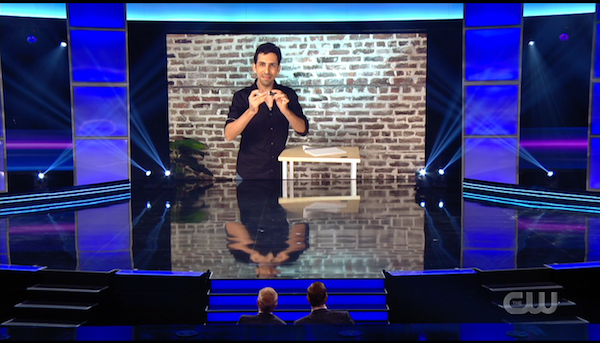
Illusionist Vitaly Beckman in the midst of fooling Penn & Teller on the March 19 broadcast of Penn & Teller: Fool Us. (screenshot)

Illusionist Vitaly Beckman has done it again – he stumped Penn & Teller a second time. The co-hosts of CW television network’s Penn & Teller: Fool Us could not figure out how Vitaly made a cup of coffee and a muffin appear from seemingly nowhere, brought into existence by his mere drawing of the items. They also could not figure out how he made the breakfast disappear, by simply tearing the illustration out of his sketchbook.

Vitaly’s winning performance, which aired March 19, can be seen via his Facebook page, facebook.com/beckman.vitaly, YouTube, or jewishindependent.ca. He first stumped the famous magicians in 2016 and his return to the reality show brought some tough (joking) remarks from Penn, who said he thought Vitaly was a nice guy the first time they met. Noting that he and Teller don’t like to be fooled once, let alone twice, Penn said, “You’re not a nice guy. You’re someone we have to take down!”

Despite the jovial animosity, Vitaly, who admitted to having been nervous in his first appearance on the show, told the Independent, “I was much more comfortable this time. However, the illusion I prepared, even though it looked simple in its execution, it was quite difficult to perform, requiring a lot of concentration, precision and coordination. I was rehearsing it for a few months before the show. So, when I was performing, I focused all of the nervous energy to work for me and help me execute well.”

Penn & Teller’s guesses at Vitaly’s secret – the use of mirrors and/or hidden assistants off-stage – proved incorrect, garnering Vitaly another Fool Us trophy.

Vitaly performed his act from his home in Metro Vancouver, while Penn & Teller were in Las Vegas, and a virtual audience appeared behind them.

“I’m used to feeding off a live audience’s energy and reactions, so not having any definitely makes it more challenging,” said Vitaly. “When I perform live, I like to interact with the audience, hear them laugh and be amazed; sometimes I bring a volunteer on stage. I purposely designed an act that wouldn’t rely on any of that, yet still translated through the TV screen. I think we all can connect to the idea of making a cup of coffee and a muffin or another favourite dish appear whenever we want one, and it’s certainly nice to have that ability during a pandemic!”

Vitaly is currently working on some TV projects and planning live tours. “I’m also working on brand new illusions, and can’t wait for you to see some of the new things,” he said.

Vitaly added, “I love to stay in touch with my fans, and hear their feedback about their favourite acts and what are they up to, so feel free to send me messages through my Facebook page.”

Format ImagePosted on April 2, 2021March 31, 2021Author Cynthia RamsayCategories Performing Arts, TV & FilmTags illusion, magic, Penn & Teller, Vitaly Beckman
Mandylicious babka baking

Mandylicious babka baking

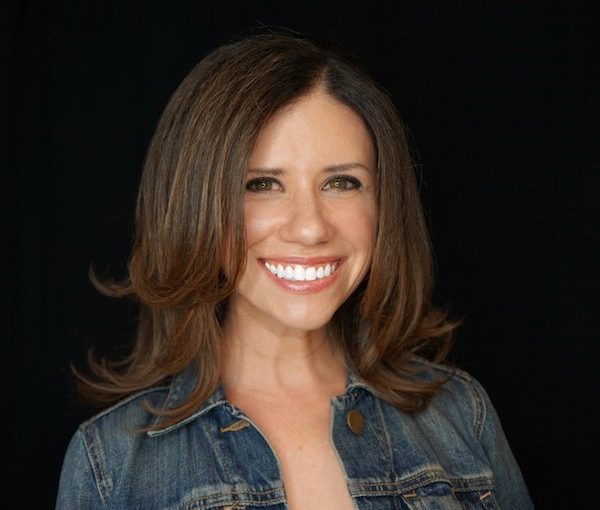
Mandy Silverman (photo from mandyliciouschallah.com)

Dozens of eager bakers joined Mandy Silverman, aka Mandylicious, for an evening of “thinking inside the braid,” as she shared various ways of making babkas – as well as her enthusiasm towards them – during a Zoom class hosted by Congregation Schara Tzedeck before Passover.

Silverman, a self-described “carbololgist,” is founder of Mandylicous Challah in Sharon, Mass. She was accompanied in this pre-Pesach virtual baking binge – titled Babkalicious with Mandylicious – by her husband and assistant, Dannylicious. The setting was their East Coast kitchen, where, by the time the first ingredients hit the mixing bowl, it was past 10 p.m., for them.

She demonstrated both traditional and new-wave babkas: the first, a standard babka twist filled with chocolate and, the second, shaped like a flower and filled with cookie dough. The secret for the latter’s filling is brown sugar, Silverman confided.

Throughout the presentation, she provided the audience with numerous pointers regarding the dough. Her recipes called for a more glutenous flour, one that is called bread flour – as opposed to all-purpose flour – which “helps the dough ball up easier.” Early on, she emphasized the importance of using instant yeast, which “means that it can just be added in with the rest of the ingredients in no particular order.” She suggested one should avoid quick-rise or rapid-rise yeasts, except when there is no alternative available.

“You can use it – you just have to proof it first. To proof active dry yeast, use the same amount (one tablespoon) but add it to one-third cup [of] 40ºC water and a pinch of sugar, and mix. When it bubbles, the yeast has been activated and can be added to the rest of the ingredients. Use one-third cup less water in the rest of the recipe,” she said.

photo - A heart-shaped chocolate babka made by Mandy Silverman, aka Mandylicious
A heart-shaped chocolate babka made by Mandy Silverman, aka Mandylicious. (photo from facebook.com/mandyliciouschallah)

“Dough consistency is crucial,” she stressed. “Dough that is too wet will be hard to shape and won’t bake properly. Dough that is too dry will not rise well and [will] taste dense and floury. The goal is to create a cohesive ball of dough that is not floury to the touch. Dough consistency can vary from kitchen to kitchen based on weather, humidity levels and type of flour used. You can get your dough to the proper consistency simply by adding flour or water, one or two tablespoons at a time, as the dough comes together, before the first rise – dough consistency will not improve as the dough rises.

“If you are finding that you are having to add a lot of flour, try using one-third cup less water at first and adding more as necessary,” she added. “After the first rise, dough can be refrigerated for up to five days or frozen for up to a month.”

Completely self-taught, Silverman became curious about baking after a family friend in her hometown of St. Louis would not divulge the recipe of a challah filled with honey. Before then, she confessed, she had never made anything with yeast, but decided to face the challenge.

Silverman started Mandylicious in 2013. During American Thanksgiving that November, which coincided with Chanukah, she posted an image of a turkey-shaped challah with a pumpkin-flavoured stuffing on Facebook. The image was so widely shared that people drove from as far away as New Hampshire and Maryland to purchase her challah. Since then, she has created more than 300 challah and babka recipes and has developed a worldwide following, including more than 33,000 Instagram followers.

Her fearlessness with challah and babka indicates that nearly all things can go well with the right dough. Among her culinary inventions, which she has described as “a diving board into carbs,” are Buffalo chicken challah, salami challah, pistachio pesto-stuffed challah and a red-velvet Christmas challah. Recent variations posted on her Instagram page have included challah French toast with a caramel core, rainbow-coloured challah (with rainbow sprinkles) and a strawberry and vanilla babka with a Fruity Pebbles crust.

Besides selling challah and babka and teaching classes, Silverman loves sharing recipes and tips, and supporting others who want to make their own challah. In the Boston area, Mandylicious offers a rotating assortment of gourmet challot. She uses 100% kosher and dairy-free ingredients and keeps a kosher kitchen.

For the recipes covered during the March 18 lesson, go to images.shulcloud.com/197/uploads/MandyliciousBabkaClass-Vancouver.pdf. Silverman is open to questions and can be direct messaged @mandyliciouschallah on Instagram.

Silverman’s class was part of the eight-part Schara Tzedeck Speaker Series. Two speakers remain: Rabbi Dr. Edward Reichman, a professor at Montefiore Medical Centre and the Albert Einstein College of Medicine, on April 11; and Judaics educator Michal Horowitz, from Five Towns, N.Y., on April 25. The Zooms start at 7 p.m. Register via scharatzedeck.com.

Sam Margolis has written for the Globe and Mail, the National Post, UPI and MSNBC.

Format ImagePosted on April 2, 2021March 31, 2021Author Sam MargolisCategories LocalTags babka, baking, challah, education, kosher, Mandylicious, Schara Tzedeck

Complex issues up for debate – IHRA definition

I met my husband long ago at Cornell University Hillel events. One event celebrated what looked like the success of the Israel-Palestinian peace process. It was part of the Oslo Accords and, in October 1994, the Nobel Peace Prize was awarded to Yasser Arafat, Yitzhak Rabin and Shimon Peres. It was a sunny, warm day, but things have shifted often since then. These are thorny political issues, but one can hope.

I recently completed studying the talmudic tractate of Pesachim. When finishing a tractate, one says a prayer called Hadran. It ends with Kaddish, much like what’s said at any Jewish service. It ends with praying for peace. We have lots of prayers for peace.

Meanwhile, my husband, now a biology professor, asked me to look at a motion from his faculty union. It claimed a deep concern with academic freedom. The motion proposed rejecting the IHRA’s definition of antisemitism. (The IHRA stands for International Holocaust Remembrance Alliance.) This motion theoretically responded to a student union motion that supported the IHRA’s definition. Many countries, including Canada, have adopted the IHRA’s working definition.

The politics behind this are tangled. Many on the political left suggest that to truly support truth and reconciliation and BIPOC (Black and Indigenous People of Colour), one must support all Indigenous movements worldwide. According to this argument, Palestinians must be supported as the sole true Indigenous people – against the colonial-settler narrative of Israel. There are issues with this position. One is that Britain is the colonial power whose actions helped lead to the creation of Israel. Also, Jews have been indigenous to, or lived in what is now, Israel for thousands of years.

There are practical consequences when universities debate these topics. North American Jews are a minority. This vote, which affects us, is one where we have no majority voting power. We rely on non-Jews to advocate for us and support anti-discrimination guidelines. We often must confront those who feel these definitions threaten them intellectually – while we’re feeling threatened in reality.

Jewish students on campus feel attacked. Jewish academics are forced to step up and speak out. In some cases, Jewish professors and students face discrimination as a result of this advocacy.

Just before Passover this year, at a special meeting, the faculty union put forth its agenda. The meeting agenda was to consider this motion that opposes the IHRA’s working definition of antisemitism. Those attending the meeting wouldn’t approve the agenda. (Note that approving the agenda is usually not a big deal.) Without an agenda, the motion couldn’t go forward. There was no vote.

Some attendees suggested that the entire union membership should vote. First though, they said, this motion should be considered by the cultural diversity and academic freedom committees. In the end? This meeting’s outcome just puts off the problem for the Jewish community.

Multiple professors in relevant fields spoke out against this motion, which opposed using a working definition of antisemitism. Behind the scenes, the local Jewish federation got involved. The motion was problematic – and it’s still out there. It could be voted on at another meeting, potentially one with even less notice or publicity.

It’s particularly troublesome that those voting on whether one can use the IHRA definition at this university in teaching or research aren’t all relevant experts. Most aren’t professors in religious studies, Jewish studies, Holocaust studies, Near Eastern studies. Most of the voting representatives won’t be Jewish. In their argument to maintain “academic freedom,” they’re proposing to limit the freedoms of colleagues. This limits others’ right to use whatever definitions they prefer when they speak about anti-Jewish discrimination.

There’s a bigger argument here. If Canadian universities want to show ally-ship with Indigenous communities and to be partners in truth and reconciliation, the way is clear. It starts much closer to home. Stand with Canada’s Indigenous peoples on the issues that matter to them. For instance, pressure the government to provide all Canadians with clean drinking water. Support Indigenous students at universities. Hire and appoint Indigenous peoples (First Nations, Inuit and Métis) to academic positions. The list is long. To start, read the Truth and Reconciliation Commission of Canada’s 94 calls to action.

None of these feuds are new. My husband and several other Jewish professor friends spent a lot of time on how to address this motion. This is “their” problem because they’re Jewish, but not because this is in their fields of research.

This gut-wrenching position is familiar. Does supporting academic freedom mean that antisemitism is up for discussion? It shouldn’t mean this, but antisemitic incidents are on the rise. Freedom of speech shouldn’t mean danger to minority students and professors.

Complexity isn’t resolved easily. Delving into these issues without lots of prior knowledge reflects badly on this faculty union and, by extension, the university. Smart people know there aren’t easy answers to entrenched political problems. Motions such as this one show a lack of rigour.

Canadian university professors should be sophisticated enough to know that complex issues aren’t resolved by simply opposing a working definition. It’s useless virtue signaling. Just as it shouldn’t be up to Black people or Indigenous people to fight every battle without allies, we, as Jewish people, shouldn’t have to keep fighting these battles alone over how to define antisemitism.

My husband and I met with a hope for peace. We care about human rights, but this union issue just seems to be wasting time during a pandemic. Opposing this working definition that protects a minority population, because it could possibly affect free speech? This really isn’t what a biology professor wants to be doing at work – even if he’s Jewish.

If Canadians care about peace, truth and reconciliation, and about the well-being of all people, we shouldn’t be attacking one group to elevate others. We shouldn’t have to keep fighting over definitions about discrimination against minorities.

Perhaps, we can leave the global political issues and their definitions up to the relevant experts. For us, it might be simple: we should show up to care for one another with respect instead. Advocate for better conditions close to home: safety without discrimination, fresh food, clean water, housing security, and economic and social supports. Even at their preschool, my children learned about key Jewish concepts like “Shalom Ba-bayit.” In other words, peace and tolerance start at home.

Joanne Seiff has written regularly for CBC Manitoba and various Jewish publications. She is the author of three books, including From the Outside In: Jewish Post Columns 2015-2016, a collection of essays available for digital download or as a paperback from Amazon. Check her out on Instagram @yrnspinner or at joanneseiff.blogspot.com.

Posted on April 2, 2021March 31, 2021Author Joanne SeiffCategories Op-EdTags academic freedom, antisemitism, discrimination, freedom of speech, IHRA, International Holocaust Remembrance Alliance, Israel, Israeli-Palestinian conflict, Judaism, university campuses

IHRA definition stifles speech

On June 25, 2019, the Liberal government of Justin Trudeau adopted the International Holocaust Remembrance Alliance (IHRA) definition of antisemitism, as part of Canada’s anti-racism strategy. Widely proposed around the world, the definition has evoked fierce debate.

In Canada, the NDP will consider a resolution against the definition at its national convention this month, one penned by B.C. former MPs Libby Davies and Svend Robinson. Meanwhile, a coalition of 100 Canadian Jewish organizations has objected to the NDP resolution.

Wherein lies the controversy with the IHRA definition?

The definition, though vague, is not, in itself, controversial: “Antisemitism is a certain perception of Jews, which may be expressed as hatred toward Jews. Rhetorical and physical manifestations of antisemitism are directed toward Jewish or non-Jewish individuals and/or their property, toward Jewish community institutions and religious facilities.” IHRA has promoted it as a “non-legally binding working definition.”

As is so often the case, the devil is in the details, and the details here are found in the 11 examples of what the definition considers actionable antisemitism: seven of them concern the state of Israel.

Those who defend the definition argue that Israel is treated unfairly in the media and in international political discourse and see antisemitism as the root of this discriminatory treatment. Yet Israel is a country whose founding wars and subsequent military occupation of the West Bank and Gaza have meant displacement of millions of Palestinians followed by the occupation and policing of that same population. The circumstances of the displacement and occupation are such that even the most generous interpretation of Israeli actions should recognize that an ongoing critical scrutiny of the Israeli state is a moral duty. Voices within and without Israel – and especially the voices of Palestinians and their allies – must be free to speak their experience and, yes, their accusations.

This is exactly the freedom that the IHRA definition would curtail. The burden should not be on those who criticize the Israeli state to prove that their statements are not antisemitic. Rather, the Israeli state, like any other, should bear the burden of demonstrating that criticisms of it are discriminatory, made in bad faith and nonfactual.

The definition’s history

The International Holocaust Remembrance Alliance was initiated in 1998. In 2016, it adopted a definition drafted by Kenneth Stern, director of the Bard Centre for the Study of Hate, to aid in the collection and sorting of possible instances of antisemitism. Stern has acknowledged that the definition has been misappropriated and is being “weaponized” against critics of Israel and has warned against the definition “being employed in an attempt to restrict academic freedom and punish political speech.”

In Canada, the adoption of the definition has been opposed by the B.C. Civil Liberties Association and the Ontario Civil Liberties Association. More than 450 Canadian academics have signed on to an open letter opposing its adoption by governing bodies. In 2021, the New Israel Fund Canada, which had previously urged Ontario to adopt the definition, reversed its position, citing concerns over free speech and academic freedom.

There have already been unjust consequences. Lives, livelihoods and reputations have been damaged, particularly in universities where academics have been harassed, censured and dismissed for teaching about the Israeli-Palestinian conflict or scheduling speakers on that topic – instances where the definition is acknowledged to be in play. The definition also has created what some argue is a limiting of speech critical of the Israeli state on social media platforms like Zoom or Facebook.

In one example, law professor Faisal Bhabha was accused of antisemitism by B’nai Brith Canada for his remarks in a debate that was sponsored by the Centre for Free Expression at Ryerson University. A petition was launched using the IHRA definition, calling for Bhabha to no longer teach human rights classes. The professor’s allegedly antisemitic act was to argue that Zionism as practised today in Israel amounts to “Jewish supremacy,” an opinion shared not only by many human rights organizations and Palestinian activists, but also by many Jews. Yet for those wielders of the definition the question cannot even be debated.

Similar incidents have been reported in the United States. To get a sense of the extreme rhetoric involved, consider that, in 2020, the U.S. State Department announced its intentions to declare the advocacy groups Oxfam, Amnesty International and Human Rights Watch antisemitic and to withdraw U.S. support for these groups. If only advocacy groups in Canada and the United States could find a way to declare criticism of the genocidal actions of the Burmese state to be merely anti-Asian prejudice, what a coup for Myanmar’s military junta that would be.

Not only is the speech of Jews not immune to these accusations, but even Jewish Holocaust survivors are not immune. When survivor Marika Sherwood attempted to give a talk at Manchester University called You’re Doing to the Palestinians What the Nazis Did to Me, Mark Regev, Israeli ambassador to the United Kingdom, intervened. The embassy claimed the title breached the definition and accused the Holocaust survivor of hate speech towards Jews.

Incredibly, the Simon Wiesenthal Centre listed the European Union’s insistence that products made in Israeli settlements must be so labeled as the third most serious antisemitic incident in 2015.

These examples, which are only a sample of many more, should be enough to convince anyone that there are few limits to the measures that Israel’s absolute defenders will take to use the IHRA definition to silence criticism of the Israeli state.

Opinions in Canada

Can the centuries-old hatred of Jews be redefined as criticism of the state of Israel or is this an unacceptable slippage of meaning? A recent (2020) poll indicated that a strong majority of Canadians believe that criticism of Israel is not antisemitic. Considering the importance of holding the state of Israel up to criticism, it must be demonstrated that said criticism is rooted in antisemitism, not assumed.

One of the examples in the IHRA definition states that referring to Israel as a “racist endeavour” is antisemitic, because it denies the Jewish people their right to self-determination. But surely there are methods of national self-determination that can be judged to be racist.

The definition claims that holding Israel to a higher moral standard than other countries is antisemitic. Considering the fact that every government on the planet receives vitriolic criticism, together with the previous claim that calling Israel a “racist endeavour” is antisemitic, one gets the sense that what is sought for Israel is a higher level of exemption from criticism than any other nation receives. We are perfectly free to call Canada a “racist endeavour,” after all. This happens frequently, often by the main victims of Canada’s very real history of racism, Indigenous peoples. Would we want to criminalize such speech in Canada as somehow a form of racism against Anglo-Saxons, or the French? Obviously not, yet our prime minister is willing to penalize the speech of Palestinians calling out Israel’s structural racism.

Most Jews live outside of Israel. Some are not Zionists or do not identify with the Israeli state as part of their Jewish identity. Yet, since Israel was founded as a reclamation of the ancient Jewish homeland and seeks to identify itself as “the Jewish state,” obviously those who hate Jews may hate the Israeli state and attempt to attack it. Yet states are prone, by their very nature, to all kinds of ethical challenges and must be held open to free and vociferous criticism. Again, the burden should be on the Israeli state to demonstrate that criticism of its actions is unfair and rooted in antisemitism. The claim that criticism of Israel is antisemitic should not be the first assumption but rather the last, after the criticisms – or, in the case of the recent investigation of Israel launched by the International Criminal Court, the legal allegations – have been fairly assessed.

Matthew Gindin is an independent journalist, writer and teacher of Jewish studies. You can follow his writing at matthewgindin.substack.com. Marty Roth is a retired professor of American literature and film studies, a freelance writer and member of Independent Jewish Voices.

Posted on April 2, 2021March 31, 2021Author Matthew Gindin and Marty RothCategories Op-EdTags academic freedom, antisemitism, discrimination, freedom of speech, IHRA, International Holocaust Remembrance Alliance, Israel, Israeli-Palestinian conflict, Judaism, NDP, politics, university campuses

IHRA definition a vital tool

Synagogues damaged. Community centres defaced. Children bullied. Threats of violence online. Hate targeting Jewish Canadians is growing. When it comes to hate crime, the Jewish community is the most frequently targeted group. According to Statistics Canada, an anti-Jewish hate crime occurs, on average, once every 24 hours.

We in British Columbia are not immune. The Vancouver Police Department reports that, in 2018, there were 141 hate crimes, of which Jews were the most targeted.

This rising threat is either unseen or misunderstood by most Canadians, which is why the International Holocaust Remembrance Alliance (IHRA) definition of antisemitism is so important. It can empower our political leaders, judges, educators, and others to recognize and address rising antisemitism. After all, if you cannot identify the problem, you will not solve it.

Grounded in decades of research by experts in Holocaust remembrance, antisemitism and Holocaust denial, IHRA, an international group comprising 34 member countries, including Canada, adopted – by consensus – a working definition of antisemitism.

The definition includes 11 illustrative examples that help Canadians understand the evolving nature of antisemitism. In all, the IHRA definition is a vital, non-legally binding instrument to combat antisemitism, one that provides flexibility, consistency and understanding of its many manifestations.

Since its publication in 2016, the IHRA definition has become the most widely supported definition of antisemitism for organizations and governments at home and abroad. It is an important instrument in the coordinated, consistent response to a grave international threat.

In Canada, support for the IHRA definition is widespread – backed by almost every Canadian Jewish organization, including the Canadian Rabbinic Caucus and rabbis and lay leaders of the Canadian Reform movement. The definition is a foundational part of the federal government’s national anti-racism strategy and is supported by the Canadian Human Rights Commission, the Canadian Race Relations Foundation, the Province of Ontario, and many municipalities.

Internationally, the definition has received extensive backing. From the European Union, to the United Nations Secretary General, to the Special Rapporteur on Freedom of Religion or Belief, to governments throughout the world, the IHRA definition of antisemitism is supported by leaders of every political stripe.

Notwithstanding the IHRA definition’s widespread recognition, there is a small but vocal cadre of detractors, unrepresentative of the Canadian Jewish community, who reject the IHRA definition, claiming it is a conspiracy to stifle criticism of the state of Israel. This contention is false.

The IHRA definition states explicitly that, “criticism of Israel similar to that leveled against any other country cannot be regarded as antisemitic.”

Here, the IHRA definition distinguishes between political expression on Israeli policies and hate targeting Israel as a Jewish collectivity. The IHRA definition describes manifestations of antisemitism, such as denying Jewish self-determination and characterizing Israel or Israelis with classic antisemitic images or symbols.

For nearly all Jewish Canadians, a connection with Israel is central to their Jewish identity. For 86% of Jewish Canadians, caring about Israel is an essential or important part of being Jewish, according to the 2018 Study of Jews in Canada. This link cannot be ignored or denied, nor can the link between anti-Zionism and antisemitism. Those denying the Jewish right to self-determination are, in essence, rejecting the heart of Jewish identity: peoplehood – a right to control our own destiny.

This tiny group of detractors also criticizes the IHRA definition as too vague. The IHRA definition is not a checklist. Context is critical. The real world is rarely black and white. When read together with the 11 examples, the IHRA definition provides a nuanced understanding that allows the specifics of a situation to be duly considered.

This unrepresentative faction goes on to assert that “real” antisemitism is rooted exclusively in white supremacy. This one-sided, dangerously narrow view erases Jewish experience, history and identity. While antisemitism is undoubtedly a prominent feature of white supremacy, antisemitism is not confined to any single position on the political spectrum. There is as much antisemitism on the extreme left as on the extreme right.

Antisemitism is not limited to a place, a time, or a specific political ideology. That is precisely one of the reasons that the IHRA definition is important. It is a tool to identify antisemitism wherever it may root, breaking through the subterfuge and identifying antisemitism in a thoughtful and context-specific manner, so that we can stand together as a society against antisemitism, building a better tomorrow.

Visit cija.ca/ihra to learn more about the IHRA definition of antisemitism and how you can get involved.

Geoffrey Druker chairs the Centre for Israel and Jewish Affairs (CIJA) Pacific Region Local Partnership Council. CIJA is the advocacy agent of the Jewish Federations of Canada, including the Jewish Federation of Greater Vancouver. CIJA is a national, non-partisan, nonprofit organization dedicated to protecting Jewish life in Canada through advocacy. It represents hundreds of thousands of Jewish Canadians affiliated with Jewish federations across Canada.

Posted on April 2, 2021March 31, 2021Author Geoffrey DrukerCategories Op-EdTags academic freedom, antisemitism, CIJA, discrimination, freedom of speech, IHRA, International Holocaust Remembrance Alliance, Israel, Israeli-Palestinian conflict, Judaism, university campuses

Declaration of independence

In this year of 2021, someone born in 1948 is or will soon be 73 years old. This is a good round age, surpassing the fabled three score and ten. A Jew born in that tumultuous year in Israel has lived their whole life in freedom, unhyphenated, and not as a member of an ethnic minority, as they might be in every other country in the world. Yet it has not been a garden of roses – three formal wars, and continuous threats from without and within.

We have to look back to better appreciate the miraculous story of Israel. In the days leading up to its Declaration of Independence, after the Partition decision at the United Nations, it seemed the whole world had turned against the Jews. Britain sold heavy weapons to a number of Arab countries, which announced non-recognition of the UN decision, and plans to march on Jerusalem. The U.S. State Department urged David Ben-Gurion not to declare statehood for fear of a new Holocaust. The Palmach numbered under 1,000; the Haganah, just organizing, a few thousand; the state, with no heavy armour and no air force. The Jewish population, numbering 600,000, scattered through the region, faced a hostile Arab population in the millions and seven organized armies amassing on its borders.

Ben-Gurion, our reborn Moses, appreciating that it was now or never, went ahead with the declaration. American President Harry Truman, thanks to the intervention of a Jewish friend, announced U.S. recognition. Nearly one million Arabs fled the territory at the urging of their Arab compatriots and for fear of Israeli retaliation.

Fighting even with sticks and stones, the Jews threw back the worst of the onslaught. Their secret weapon – they had nowhere else to go. Some Jews arrived from around the world to join the struggle. Some pilots flew in with their planes to create a small air force that was effective in turning back the Egyptian army. By the time a ceasefire was declared, Jordan had retained the Old City of Jerusalem and Judea and Samaria, which had been allocated to the Arabs. Similarly, Egypt occupied the Gaza Strip.

Israel ended with a larger land area than it had been allocated under the Partition. The price, aside from the destruction of war, was 1% of its population killed and exponentially more civilians and soldiers wounded. The agony of that time, when the issue of Israel’s existence was in doubt, is painful to relive, even today.

Egypt, Jordan and Syria attacked again in 1967, but Israel was better prepared. Israel drove out the Egyptians and Jordanians, and occupied the Egyptian Sinai, the Jordanian-controled West Bank and the Syrian Golan Heights. Though surprised by the Egyptians in 1973, Israel held the Sinai, and bartered it for a peace agreement with Egypt, followed by one with Jordan.

Today, so many things remain the same, and so many things are very different. The recent Abraham Accords have heralded a number of normalization agreements with Arab countries in the Middle East and Africa. The altered status of Israel among the nations is now recognized. Those who are near the pinnacle of technological achievement in the world recognize the Israeli presence among them, recognize that the country’s knowhow can offer important economic and security benefits to any who wish to engage to pursue such benefits. For some Arab countries, these benefits now appear much more advantageous than the sterile pursuit of Israel’s downfall.

Consider how Israel has changed the landscape around it. It is now supplying energy to Egypt and Jordan and pursuing the building of a pipeline to Europe. Arab countries are forming alliances because Israel is keeping hegemonic Iran in check both in its nuclear ambitions and militarily. Israel is working on relieving water shortages and dealing with desertification regionally and on a worldwide basis, as well as sharing security technology.

What appears no different is the widespread development of an anti-Israel sentiment, which is currently the more-politic face of antisemitic feeling. A product of pan-Arabism cum Islamism and carried into the West, it feeds and rejuvenates the embedded historic religious origins of anti-Jewish attitudes going back centuries. It has made a marriage with the white-supremacist movements in many countries, as well as making inroads in ostensibly progressive movements.

Israel is exhibiting still the growth pangs of its democracy. It is confronting the many challenges with which it was born. It is trying to absorb the 20% of its population who are Arabs, some of whom have been encouraged to exhibit rejection and hatred, some of whom are coming to the realization that life is actually better in Israel than it is for their co-religionists in the region. It also has to deal with the 10% in Orthodox Judaism who find it difficult to coexist with a secular government. It has to deal with a political system almost designed for impasse. And yet, Israelis have created a nation whose accomplishments astound the world. They will solve these problems as well.

While Jews everywhere have adhered to the biblical injunction toward loyalty and devotion to the countries of their refuge, most have never ceased “to weep by the rivers of Babylon.” This sentiment ultimately led to a “return” by some of our brothers and sisters. And, as they are our brothers and sisters, we in the Diaspora cannot fail to be concerned with their welfare. However, these days, more and more, the shoe is on the other foot. With the rising prominence and relevance of Israel, it is we Jews in the Diaspora who will be receiving warmth from the reflected glory of that Declaration of Independence.

For 2,000 years, the Jews of the world have been making it more or less on their own. They have not looked to the sovereign powers where they had landed to provide for them. They have made common cause with committed Jews and, time and time again, they have rebuilt the biblical community model. When the climate became stormy in one place, those who could ran to other places where Jews had found shelter and their brethren facilitated this when they could. Those who despaired of their fate went underground and discarded their label, some forever.

Jews in America – taking over from the Jews in Britain – have attempted to act as a proxy in defence of Jews for the last hundred or so years. In spite of the enormous resources available, rescuing important numbers of Jews in serious trouble was always limited by political considerations but it was done where possible.

The impact of Israel globally is yet to be fully appreciated. After three generations, they now have six-and-a-half million Jews, 10 times the population at inception. What will their impact be when their numbers are 10 times again?

The coming world impact of Jewry rivals that which it had during the pre- and post-Christian era of the Roman Empire. As then, our influence is in the realm of ideas. Then, it was ethics. These days, it centres on the importance of innovation and technology, though is by no means limited to these realms. The existence of the nation state concentrates the impacts and provides focus.

We Jews in the Western world may not yet have fully internalized that we now have someone in our court, as we have never had before. Wherever we are, if trouble arises, we have someone to look to. Since Israel’s Declaration of Independence, a voice has been raised when Jews anywhere are found to be in distress. Israel has done more than talk; it uses its limited resources to make a difference wherever it can – and not just for Jewish communities but for countries with few or no Jews. Israel’s independence, in part, represents our own.

Max Roytenberg is a Vancouver-based poet, writer and blogger. His book Hero in My Own Eyes: Tripping a Life Fantastic is available from Amazon and other online booksellers.

Posted on April 2, 2021March 31, 2021Author Max RoytenbergCategories Op-EdTags David Ben-Gurion, history, Independence Day, Israel, Yom Ha'atzmaut
Israel’s wildflowers of spring

Israel’s wildflowers of spring

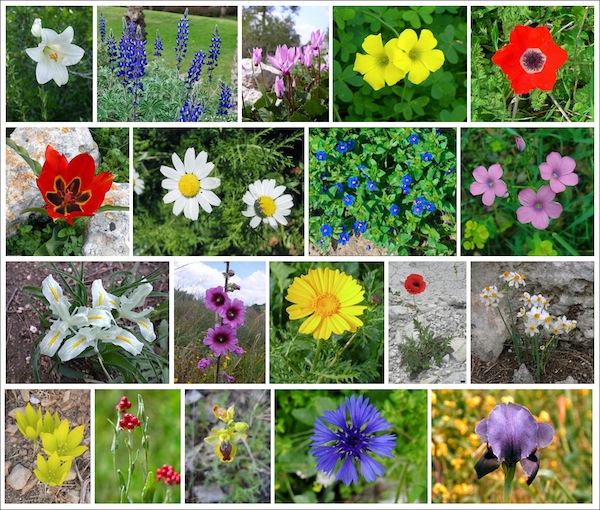
A collage of Israeli wildflowers. (MathKnight/Wikimedia Commons)

Every year, spring returns like a miracle and Israel is carpeted with wildflowers. There are nearly 3,000 types of wild plants in this tiny land, a wonderful profusion – among the most abundant on earth, growing in deserts and marshes, mountains and forests, and open fields.

We protect the wildflowers in Israel. Nature reserves prohibit picking any flowers, even the most common, which helps them propagate over wider areas. In turn, this brings the sunbirds, who feast on their nectar.

The Song of Songs, which we read every Passover, is the most beautiful love poem in the world. King Solomon wrote it as a dialogue between a young shepherd and his beloved: “Rise up, my love, my fair one and come away / For lo, the winter is past / The rain is over and gone / The flowers appear on the earth / The time of singing is come / And the voice of the turtle is heard in the land.”

The flowers he refers to, nitzanim, still carpet the fields – red poppies flaunting scarlet beauty in the grass.

In the Jerusalem Forest, cyclamens bloom in the crevices between the rocks. Called “Solomon’s Crown” in Hebrew, they lift their pink, cream or lilac heads on slender stalks. Clumps of wild violets, the dew shimmering, add their touch of magic.

We had good rains this winter and they have left a bequest of green. The Sharon Valley is dotted with tulips and narcissus – “I am the Rose of Sharon, a lily of the valleys.”

It is believed that King Solomon was referring to the black tulips of the Galilee. In spring, even the weeds are beautiful – the milk vetch (gadilan), which is just a common thistle, adds purple blooms to the roadside. The rock rose (labdanum) flowers abundantly in forest glades, and the orange ranunculus bursts forth. Like its velvety cousin, the anemone, it is a protected wild flower in Israel.

The perfume of daffodils, which delighted our winter, still wafts on the breeze, and the white, cream, yellow and blue noses of lupins are pushing through the soil. Oleanders are in bud, growing wild by the banks of the River Jordan and near streams in Galilee, promising summer. And the blue statice reminds us that we, too, have a Mediterranean coast like the famed Riviera – this sea plant flowers from spring until mid-summer, when its corolla drops off and only the sepal remains.

When you see the splendour of the land’s spring glory, the wildflowers glowing, you’ll echo the poet’s words: “Had I but two loaves of bread, I would sell one of them and buy white hyacinths to feed my soul.”

Dvora Waysman is a Jerusalem-based author. She has written 14 books, including The Pomegranate Pendant, which was made into a movie, and her latest novella, Searching for Sarah. She can be contacted at [email protected] or through her blog dvorawaysman.com.

Format ImagePosted on April 2, 2021March 31, 2021Author Dvora WaysmanCategories Op-EdTags Israel, King Solomon, landscape, Song of Songs, spring, wildflowers

Posts pagination

Previous page Page 1 … Page 220 Page 221 Page 222 … Page 662 Next page
Proudly powered by WordPress