When we hear about addiction and recovery, most of us might think of the incredibly difficult journey to achieve and then sustain sobriety. For certain, this is one reality.
That said, it’s one thing to refrain from using, and quite another to rebuild one’s life. One of Jewish Addiction Community Services’ clients told us that, although they have been in recovery for three years, they felt that their life had little meaning. Working together, we uncovered the “missing link”: their prior lifestyle had damaged, and in some cases severed, many of their connections to family and community. More importantly, that insight led to building some practical plans for reconnecting. They now report that they feel like they have turned the corner – rediscovering motivation for work, life, and being an active member of our community.
Another client, who had been using drugs for over 25 years, is now seven months sober. They recognize that Judaism’s role in their early life was important, and reconnecting to some aspect of that former life is comforting and familiar. This client attended a seder for the first time in many years and looks forward to the High Holidays.
It is no secret that community plays a crucial role in sustained recovery. The harder part is to operationalize the insight. Our role at JACS is to meet people where they are, help them find treatment, if needed, work with them to rebuild their lives, and be a link to the greater Jewish community. At the very practical level, we have helped clients connect with Tikva Housing, access the Jewish Food Bank and get financial help from Hebrew Free Loan Association. As well, working with rabbis and other agencies, we are helping individuals find ways to reconnect with a Jewish social network, support systems and the community at large.
JACS is proud that we are here to help our community. It is gratifying to know that, through education, counseling and connection, we are making a difference for those who need to know they have value and do indeed belong.
For more information about what we do, visit jacsvancouver.com.
Shelley Karrel is manager of counseling and community education at JACS Vancouver. She can be reached at [email protected].
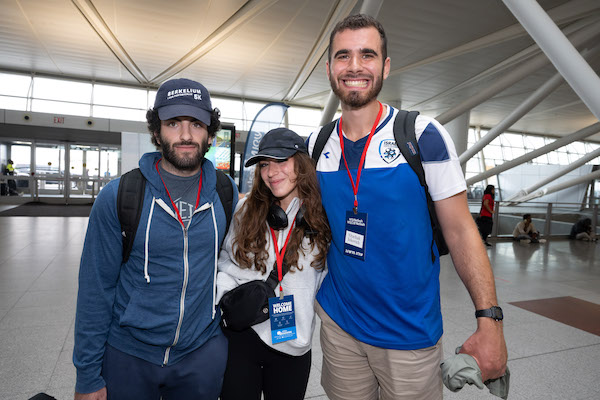
Yitzchak Ickovich (right) before boarding the plane at JFK Airport in New York Aug. 22. (photo by Shahar Azran)
Recent University of Victoria graduate Yitzchak Ickovich, 23, was one of 215 olim (immigrants) from the United States and Canada who moved to Israel and made aliyah last week on Nefesh B’Nefesh’s 64th specially chartered El Al flight. The flight was facilitated with Israel’s Ministry of Aliyah and Integration, the Jewish Agency for Israel, Keren Kayemeth Le’Israel (KKL) and Jewish National Fund-USA.
After becoming a citizen, Ickovich will draft into the Israel Defence Forces as a lone soldier. He will join the 3,500 men and women from around the world who are currently serving as part of the FIDF-Nefesh B’Nefesh Lone Soldiers Program.
Most of the future lone soldiers on the Aug. 22 flight are part of Tzofim-Garin Tzabar, a Friends of Israel Scouts program, who before and throughout their military service are adopted by Israeli communities that serve as their home away from home. Their absorption period includes ulpan Hebrew studies, educational tours in Israel, introduction to the military structure and the different positions.
The charter flight comprised 22 families, with 75 children among them, 15 single men and women, and 17 retirees. The youngest oleh on the flight was four months old, and the oldest oleh was 77 years old. Also onboard were seven doctors and 15 health professionals who will be integrating into the Israeli medical system. Twenty-seven of the olim are part of the Nefesh B’Nefesh-KKL Go Beyond initiative, which is aimed at developing Israel’s peripheral regions and Jerusalem.
Last summer, a pilot initiative to further streamline the aliyah processing was offered to a handful of olim – representatives of Israel’s Ministry of Aliyah and Integration, and the Population and Immigration Authority handed out teudot oleh (immigration certificates) onboard. For the first time, this opportunity was extended to all the passengers on this year’s charter. While still on the flight, olim filled out the relevant forms and were handed their teudot, finalizing their aliyah processing.
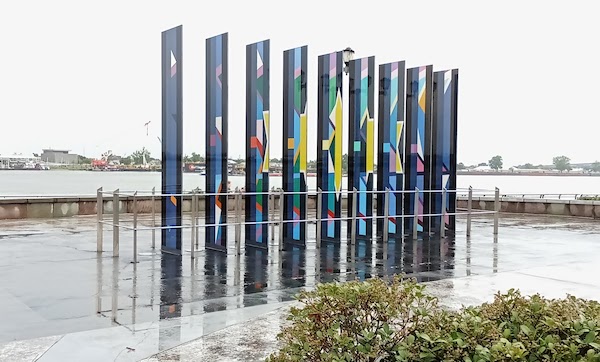
Israeli artist Ya’acov Agam’s Holocaust memorial is located in Woldenberg Park. (photo by Adina Horwich)
On Friday, June 2, about 20 minutes before Shabbat candlelighting, I checked my email. I saw one from Cynthia Ramsay, editor of the Jewish Independent. We’ve been in touch for more than two years. The subject line read, “Congratulations, you are an AJPA Rockower Award Winner!”
It reminded me of the messages we all receive at one time or another, telling us we have won a million dollars, give or take. I opened it gingerly and my eyes widened in disbelief. “Adina, I have great news. You have won a Rockower award.” Several lines down, I read there is to be an American Jewish Press Association conference and awards banquet in July, in New Orleans. I immediately shot back, “Cynthia, are you serious?!” I decided right then, I am going to this. I am to be honoured for an article I submitted in March 2022, recounting my aliyah story – I live in Jerusalem – and paralleling it with that of an Israeli couple’s similar, and different, experiences with immigration to Vancouver.
The event was in four weeks’ time: July, high season, crowds, lines. I pushed past every sane reason not to go and spent the next two weeks organizing an itinerary. I registered for the banquet and reserved my room, throwing in a long weekend to Toronto before the conference to see my elderly parents and a few relatives.
As I lit Shabbat candles, I broke down in tears. Of elation and joy. It had been a long while since I cried. This meant so much to me. I was going on an ego trip! My very own!
After a 20-plus-hour ordeal getting to New Orleans from Toronto, I saw the light of day dawning on NOLA, as the city is affectionately called, combining the abbreviation for New Orleans with that of its home state, Louisiana. I was in my hotel room shortly after 9 a.m., then went downstairs to find the AJPA conference. I was warmly welcomed by Taylor and Jessica, head office personnel, who handed me a gift bag and offered me breakfast, for which I was very grateful.
I entered the assembly room and listened to a session in progress, then took a walk to get acquainted with my immediate surroundings. I later rested and prepared for the moment I’d come all this way for: the Rockower Awards Ceremony and Banquet Night. Around 5:30 p.m., I descended to the lobby, decked out in my finest, high heels and all (last time I wore those shoes was eight years ago, at my son’s wedding) and traipsed (hobbled) across the street to the Louisiana Pavilion of the National WWII Museum.
In the entrance hall, tables and chairs had been set up. Jazz musicians played a selection of local repertoire. Cocktails and hors d’oeuvres were plentiful. We were encouraged to have a look around the museum. Eventually, we took our places at the tables for dinner, during which, Alan Smason, AJPA president, read off the names of the winners. I could barely touch my food as I waited to hear my name. In the end he just said, “The Vancouver Jewish Independent” and Taylor came over to hand me my honourable mention certificate. I relaxed and finished dinner, the best part being the dessert: a thick slice of bread pudding, doused in a super-sweet, rum-flavoured glaze. The evening wound up with several participants heading to a bar somewhere, while others, including me, went up to Rosie’s on the Roof, right in our hotel. There, we chatted together with other journalists, from St. Louis, Dallas, Houston, Albuquerque and more.
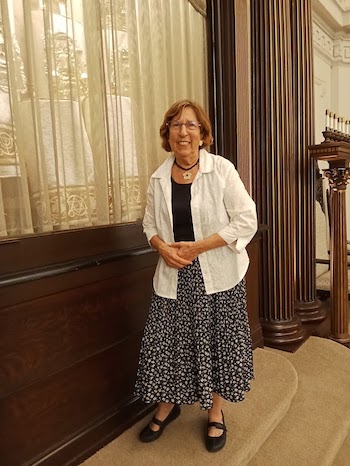
Docent Diane Cohen in front of the aron kodesh (left) of Touro Synagogue on St. Charles Avenue. (photo by Adina Horwich)
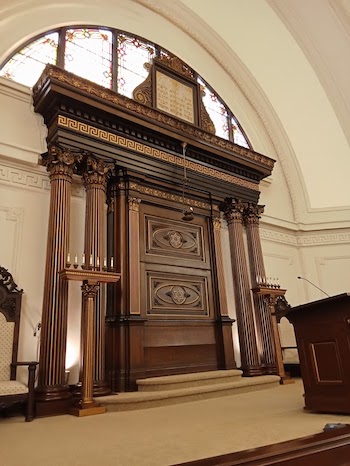
The next day, I took the tram to a meeting I’d arranged with docent Diane Cohen, a lifelong New Orleanian, at the Touro Synagogue on St. Charles Avenue. Cohen and I sat in the front row of the sanctuary, elegant and in pristine condition, as was the entire building, which was built in 1908 – the congregation’s history goes back to 1828! She shared with me some of that history and the community’s origins and growth. Later, she showed me around the lobby, chapel and office. We had a good discussion and I felt so touched to have spent about two hours in this remarkable venue, which continues to thrive, housing an active, vibrant, welcoming community. (See tourosynagogue.com.)
The aron kodesh of Touro Synagogue. (photo by Adina Horwich)
From there, Cohen drove me to a Walgreens where I bought a bus pass. Then I bussed down Canal Street towards Bourbon. As it was midday, things were not quite hopping, but it was enough to give me an idea of the many shops, restaurants, tourist sights and traps. I could conjure up an image of what night life and Mardi Gras celebrations must be like.
The bus driver let me off, suggesting I head down to the Riverfront, where I could hop on the ferry that crosses to the other side of town. After walking about 10 minutes to the wharf, the heavens burst open with a huge shower of warm rain. I boarded the next ferry. The ride was all of five minutes, but it afforded me a skyline view of the city and, hey, I can say I sailed down the Mississippi River.
I stayed on for the return ride, then meandered along the Woldenberg Park boardwalk, happening upon a colourful panel structure created by Israeli artist Ya’acov Agam, who designed it as a Holocaust memorial, a gift to New Orleans. From any which way one views it, light glistens through the menorah and Star of David symbols, panels ever shining, even in rain, honouring the victims.
Further along, I was treated to the sight of a characteristic of the region, a paddlewheeler riverboat. Staying on course, I found my way to the French Quarter. Having lived my adolescence in Montreal, it was warming to see French street names and other remnants of the French period there. I saw a woman in a candy store washing Granny Smith apples, preparing them for dipping in a variety of sugary coatings, reminding me of the taffy apples of my childhood. The fleur-de-lis emblem was everywhere, including on the bathroom floor tiles at my hotel and the chairs in the lobby.
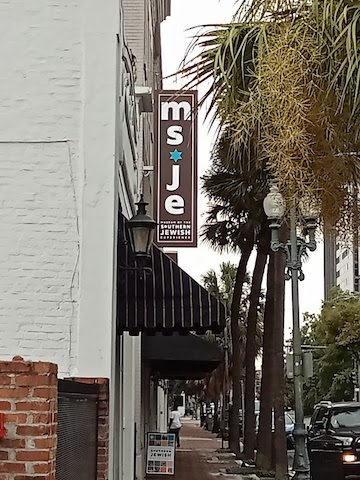
I returned to the St. Charles Avenue tram line, getting off a stop before my hotel to visit the Museum of the Southern Jewish Experience (msje.org). Well, what an experience, indeed. After showing my AJPA participant’s badge, Abbey allowed me in, and Jim showed me around the small but charming and interesting museum. Visitors see the historic beginnings of Jewish settlement in the Southern states, how communities formed, often with just a handful of individuals. Meetings and gatherings were held in homes, rented rooms, sometimes even at churches. Land for cemeteries was purchased. Hebrew schools instructed children. Sisterhoods held functions, raised money to support these efforts. From peddlers to grocers, small dry goods shops opened, which later flourished into department stores.
Visitors to the Museum of the Southern Jewish Experience learn about the historic beginnings of Jewish settlement in the Southern states. (photo by Adina Horwich)
Jews were involved in cotton and other agricultural production. Trade ties were woven between the various populations, be they French, Spanish, British or Indigenous. The slow, but steady influx of Jews led to the formal establishment of synagogues and community facilities and institutions. Jewish presence figured prominently and was largely welcomed. Both Sephardi and Ashkenazi Jews gravitated to this region. Various levels of observance and traditions added to the fabric, and tension. It took time to determine a way to blend customs and decide how prayers would be led. Most congregations became affiliated with Reform Judaism – as many could not afford a full-time rabbi, either visiting clergy would come once every few weeks or lay members would lead services. Many a personal story is told. Families were close.
As I moved from room to room, I imagined the hardships, resourcefulness and sheer tenacity of these early pioneers, who had fled their native lands, to reach these shores or inland, remote, rural regions, to build new lives and opportunities. Today, there is so much going on in the South: a number of Jewish newspapers, initiatives, shared enterprises. Jews hold key roles and responsibilities in their cities. Community members are well-connected to one another, both in person and digitally, meeting individual needs, celebrating and sharing lifecycle events, holidays, prayers and cuisine. I was moved and impressed by the overall sense of purpose and furthering of a common goal: to maintain and strengthen Jewish identity. This goal has been unwavering over decades, through education and diverse joint programs and activities. Also, by fostering positive and supportive relations and cooperation with fellow residents of all backgrounds.
Towards the end of the exhibit, many well-known celebrities’ photos were displayed, all of whom hail from Southern Jewish communities. I was especially enchanted by the link to a directory where one can click on any given town or city where a community existed (or still does) and read about their specific story. I have completed Alabama’s list and hope to read through every single state. Check it out at isjl.org/encyclopedia-of-southern-jewish-communities.html.
Reluctantly, I left New Orleans. Upon returning home and unloading all the papers and paraphernalia I brought back with me, I unpacked from my carry-on several beaded necklaces that had been used as table centrepieces at the banquet. As the staff was cleaning up at the end of the evening, I asked if it would be all right to take a handful. Each colour represents a value or virtue: purple for justice, green for faith and gold for power. I could use a bit of all three!
Adina Horwichwas born in Israel to Canadian parents. In 1960, the family returned to Canada, first living in Halifax, then in a Montreal suburb. In 1975, at age 17, Horwich made aliyah, and has lived mostly in the Jerusalem area. Her award-winning article can be read at jewishindependent.ca/immigration-challenges-2.
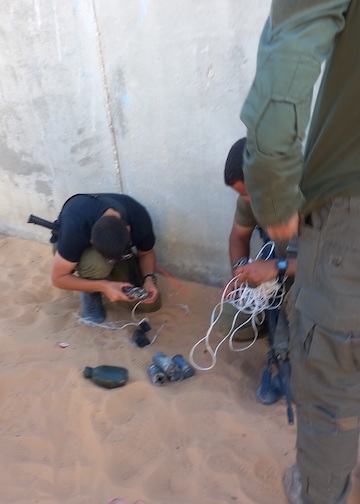
An Israel Defence Forces patrol. The mural on the right was painted by Batsheva Schneider when she was doing her military service. (photo by Gil Zohar)
Fans of Fauda may recognize the Tze’elim Urban Warfare Training Centre (UWTC) in the western Negev Desert near Kibbutz Tze’elim. The base – where Israel Defence Forces infantry and commanders train in the type of house-to-house and subterranean combat expected in the Gaza Strip, but also in the West Bank, southern Lebanon and other Middle East locations – was used as a set for the hit TV series. But, while faudameans “chaos” in Arabic, the disarray in this sprawling 24-hectare base has been finely calibrated to accustom troops to real-life conditions of fighting in Arab cities and villages.
Soldiers in the midst of operations training. (photo by Gil Zohar)
Located inside the larger Tze’elim Training Base, the UWTC simulates the maze of a multi-storey Middle Eastern urban environment. Established in 2005, it was built at a cost of $45 million.
The warren of 600 structures includes garbage-strewn streets, storefronts, schools, houses, shacks, an eight-storey apartment block and mosques. The muezzin’s call blares from the minarets, which are illuminated with green Islamic lights. Garages advertise cars for sale. Jeeps patrol the dusty streets. Holes blown in walls allow soldiers to avoid entering a building via the doorway, which may have been booby-trapped.
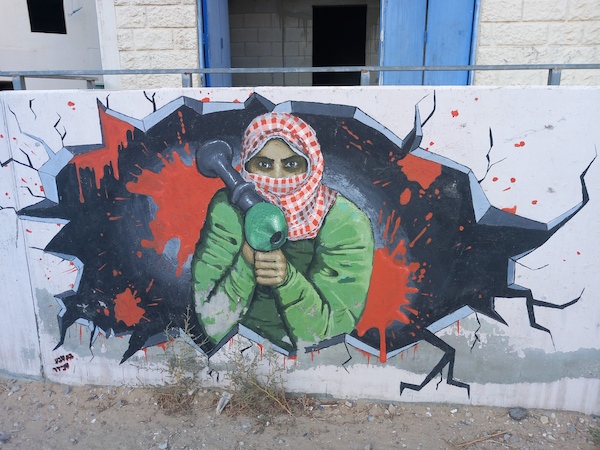
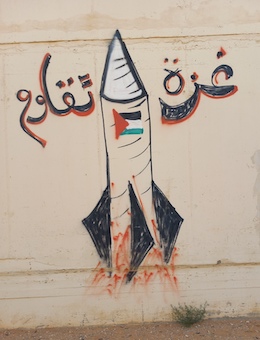
Most striking are the murals and graffiti scattered across the site, some painted by Batsheva Schneider when she was doing her military service. The images include Islamic Jihad fighters firing RPGs, Hamas founder Sheikh Ahmad Yassin, Qassam rockets from Gaza, and guerrillas with their faces covered by a keffiyah scarf marked “shahid” (martyr). One Arabic sign just says “death.”
Murals and graffiti are scattered across Tze’elim. (photo by Gil Zohar)
Entering a mock-up of a claustrophobic Gaza terrorist tunnel, this writer felt the palpable panic among my fellow journalists behind me as they urged me forward in the pitch-black darkness.
Images include Qassam rockets from Gaza. (photo by Gil Zohar)
Other buildings are decorated to replicate a salon in a private home. The verisimilitude extends down to framed family photographs, flowers in a vase, recent newspapers from Gaza and art with Quranic verses. Simulators showing mortar strikes and explosions suggest to soldiers what they might witness outside the living room window.
In addition to the IDF, Israel’s “Mini Gaza” has been used for urban warfare training by U.S. Army soldiers and United Nations peacekeepers. The project was developed to meet the need for better urban warfare training by the IDF, as a response to the challenges of the Second Intifada of 2000-2005. It is regularly updated as new terror strategies evolve.
Training exercises here are meant to help soldiers and their officers distinguish between combatants and civilians, and prepare them for situations where terrorists exploit civilians as human shields.
This writer was part of a delegation of international journalists on a tour organized by the Israel Government Press Office. The invitation came before the recent military operation in Jenin.
Gil Zohar is a writer and tour guide in Jerusalem.
“I see how it looks…. Just another teen suicide. Or maybe an accidental OD. Another addict who fooled his parents. No…! I know my Owen…. Never, never, never….”
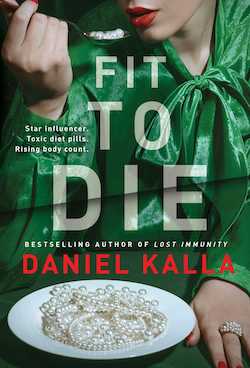
This is the reaction of Owen’s mother – who happens to be a U.S. senator – to her son’s death in Daniel Kalla’s latest thriller Fit to Die (Simon & Schuster Canada). L.A. detective Cari Garcia initially writes off the reaction as a mother ignorant of her child’s drug use, and bristles against the political pressure to determine the young track star’s cause of death. When she learns he died from ingesting a capsule that contained 2,4-Dinitrophenol, or DNP – used as a fertilizer, pesticide or explosive, but also abused by people to lose weight – she becomes more motivated to solve the mystery, in part because of a tragedy in her own past.
Meanwhile, here in Vancouver, toxicologist Dr. Julie Rees is dealing with a mysterious increase in deaths among bodybuilders, finding out that DNP is the cause. Then, a famous pop star and social media influencer dies in her penthouse, showing the same symptoms. And the co-owner of a wellness centre with locations in Los Angeles and Vancouver dies of a similar overdose. All the cases are connected and the L.A. and Vancouver police and medical personnel have to work together to find out who’s behind the influx of DNP on the market.
Like all of Kalla’s books, Fit To Die is an intriguing read, suspensefully written. While I didn’t enjoy it quite as much as I have his other thrillers – it was somewhat repetitive and the main characters’ backstories didn’t ring as true to me – I still wanted to know whodunnit. I also value having learned about the real-life issue of toxic diet pills and gaining some insight into body dysmorphia and eating disorders. I trust Kalla’s facts, as he is not only a writer, but an emergency room physician and a University of British Columbia clinical associate professor. He was kind enough to answer some questions via email.
JI: There are some Jewish-sounding surnames in the novel. In what ways does your being Jewish enter into your novel writing?
DK: Well, in this case the Hertzberg-Davis Centre is the real forensic lab for the LAPD. So that made it easy. I couldn’t remove the Jewish influence in my writing even if wanted to, which, obviously, I don’t. I’ve written a historical trilogy, The Far Side of the Sky, that is explicitly a Jewish story. In thrillers like Fit to Die, I don’t consciously think about my background or religion, but there is no doubt it influences the writing.
JI: Do you name characters after friends, or sometimes offer naming opportunities for charity auctions or the like?
DK: Haha. I learned early in my writing career to never name a character after a friend. It only ends badly. I’ve never auctioned off a character name for charity, but I would love to. It can be agony finding the right character name. Why not outsource it?
JI: This is your 10th thriller. How has your writing style and/or process evolved since your first one?
DK: I hope I’ve learned from some of my past mistakes. Paradoxically, it gets easier and harder. Easier in the sense that I’m more confident in my voice and the nuts and bolts of my storytelling. Harder in that I’m more critical of my writing and fear becoming derivative in my stories. But the one thing that keeps me going is my enthusiasm for telling a new story. I think I’m more passionate than ever.
JI: From the several thrillers of yours that I’ve read, your topic choices are timely and coincide with current events. The medical side, you’ve got covered. But what are some of your sources for other aspects? In this book, for example, how the dark web works and even the pop culture aspects, including language, like “partizzle”?
DK: I obviously have a huge advantage with respect to the medical background, but that’s only a part of it. As you point out, this story – about a (real) and deadly diet pill that is marketed online to the most vulnerable and amplified by toxic social media – took some intense research. I had to learn all about body dysmorphia and immerse myself in the TikTok culture, which explains some of the Zoomer slang one of the character uses, like “partizzle.” I was lucky to have a local VPD superintendent help guide me through the logistics of what an investigation into this kind of complex online conspiracy would look like.
JI: Where do you find time to write?
DK: For me, it’s never about the time. I’m lucky to work in the ER, which is shift work, but I think I could find time no matter what my day job was. For me, it’s all about momentum and inspiration. When I have those, I find the time. When I don’t, free time doesn’t help.
JI: What part of your soul does writing feed?
DK: Not to sound overly melodramatic, but it kind of feeds my core. Medicine does, as well, but in a very different sense. I find purpose as a doctor, but I find my passion as a writer. I can imagine retiring one day from medicine, but I can’t imagine not writing.
JI: Can you speak about the process of getting a book from idea to publication?
DK: The challenge of transforming the kernel of an idea into a publishable novel always seems insurmountable from the outset – this book particularly. I wanted to build a compelling mystery and resurrect some characters from a past novel (The Last High) and introduce new ones, all while tackling a highly sensitive yet vitally relevant topic: how the toxic diet culture and social media prey on the most vulnerable. I like to think I met the challenge, but, of course, that’s for each reader to decide.
A recently retired rabbi who was born and raised in Vancouver is offering an insider’s look at life as a congregational leader.
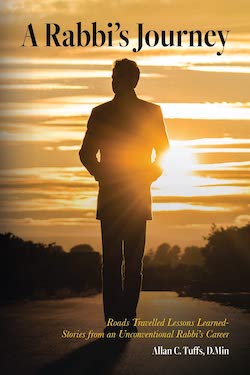
Rabbi Allan Tuffs, who now lives part-time in south Florida and in the Raleigh-Durham area of North Carolina, has published A Rabbi’s Journey: Roads Traveled Lessons Learned – Stories from an Unconventional Rabbi’s Career. The 54 bite-sized chapters (coincidentally, he notes, the same number as parshas in the Torah) range from touching and hilarious to insightful and tragic.
Tuffs was born in Vancouver – he’s 10 days older than the state of Israel – and his home life was tough. His mom had a mental illness and his largely absent father had alcoholism. He and his sister would end up in the foster system.
The bookish, thoughtful Allan devoured everything he could read about Israel (among other topics) and, when he was invited to join the Labour-Zionist youth group Habonim, his life changed and everything else is as result of that connection.
“Habonim was kind of like a family to me, it really was,” he told the Independent in a telephone interview from North Carolina. “The people were warm and inviting and I was looking for my place in the Jewish community.”
Being the product of an intermarriage – “My father was not Jewish, my mother was,” he said – made the young Allan feel like an outsider.
“Intermarriage was still somewhat rare in those days,” he said. “I did not have a real religious background. I guess I was spiritual. I was very proud of my Jewish heritage and Habonim was very Jewish, very Israel-oriented, and it had a deep sense of purpose. It was kibbutz-oriented and there was this idea that the Jewish people had a role in the world, to repair the world, so to speak. That appealed to my youthful idealism.
“We had meetings almost weekly,” he added. “Here we were, these young kids.… I don’t really know if we understood what we were talking about, but we studied some of the great early socialist Zionist thinkers.”
In addition to their interest in Israel, social justice causes closer to home also drove the Habonimniks’ activism.
“We were pretty uniformly against the war in Vietnam,” he said. “We were quite disturbed by the racial injustices happening in the United States and also we were involved in fighting for Indigenous peoples’ rights in Canada. There was this sense that we are going to make the world a better place because we are Jews, because we have this ideology, because we are cognizant of the whole history of being a minority, being persecuted.”
In 1969, Tuffs headed to Israel and lived for two years at Kibbutz Menara, almost flush against the Lebanese border (and, coincidentally, now part of Vancouver’s partnership region in Israel). It was during the War of Attrition and the reality of the conflict was intense. Concentric rows of barbed wire were interspersed with landmines and German shepherd dogs patrolled the perimeter of the kibbutz.
While socialism, not Judaism, was the religion of the kibbutzniks, Tuffs notes in his book that a fortuitous meeting in Jerusalem changed the young man’s path again. Working in the holy city to earn a plane ticket home, he encountered an Orthodox rabbi from Seattle, with whom he began studying Budokan karate and Talmud. Among other things, the mix of eastern and western influences would follow Tuffs through his life. He integrates contemplative and meditative practices into his Judaism and practises yoga.
Returning to North America – and Habonim – Tuffs worked as a counselor at the movement’s camps in Pennsylvania and Washington, D.C.-adjacent Maryland. While in the D.C. suburbs, he started teaching Hebrew at a Conservative synagogue. He was hired for his language skills but the gaping holes in his Jewish knowledge – he never had a bar mitzvah – led his employer to suggest taking a few courses at Baltimore Hebrew College. This was the beginning of “a lifelong love of Jewish learning,” he writes.
Now in his mid-20s, he still wasn’t sure what to do.
“I was scholarly, but I would never be a scholar – too solitary,” he writes. “I was interested in psychology, but the thought of listening to people’s problems five days a week gave me a headache. I’m something of a ‘ham’ but would never be an actor. I’m a do-gooder – hardly a way to make a living.… What profession would allow me to do a little of all these things?”
Turns out the rabbinate fit quite nicely for 40 years. While a child of intermarriage with no early Jewish education might not seem a top candidate for the clergy, fate intervened again. Tuffs’ Hebrew language skills got him a job running a Conservative synagogue youth group in Maryland on the understanding that he would become shomer Shabbat and keep kosher. The job, in fact, put him under the wing of the rabbi and gave him more experience.
“This opportunity amounted to a rabbinic internship,” he writes.
Tuffs spent two years learning the ropes of the rabbinate. He began leading Shabbat services at a local nursing home. In 1977, he entered Hebrew Union College – Jewish Institute of Religion, spending the first year on the Jerusalem campus and four more at the institute’s New York centre.
He experienced “imposter syndrome,” partly because he had only one Jewish parent. But, he concluded, “with such a high frequency of intermarriage these days, who better than a rabbi of mixed parentage to welcome others like himself or herself into the Jewish fold? Suddenly, my rabbinate had renewed significance and purpose.”
In his book, Tuffs reflects the tumultuous and historic times he has lived through. After receiving his ordination, his first convention of the Reform movement’s Central Conference of American Rabbis, in 1983, saw the historic decision to recognize patrilineal descent.
Over the next 40 years, as he shares, he navigated synagogue politics – some comedic, some sad, including a corrupt sisterhood president and an authoritarian, bullying board president. He discusses his decision to officiate at same-sex weddings, his activism on behalf of persecuted Christians in the Middle East, and his congregation’s support of orphans in Haiti.
The tragic collapse of a condominium building in Surfside, Fla., in 2021, hit Tuffs close to home. A young couple whose marriage he had presided at just weeks earlier were killed in the disaster.
The hurricane that devastated parts of Florida and other states in 2005 ravaged his temple. The silver lining was that Tuffs was able to be part of a rebuilding project that made the sanctuary more welcoming, removing the elevated bimah that instilled “an air of un-approachability” for the rabbi and cantor.
Perhaps because he came to the Reform rabbinate with some Conservative movement experience, Tuffs considers himself on the traditional side of Reform. He wears a kippa and dons a tallit when praying, something that was unusual in some American Reform congregations when he started out.
“I embraced the growing trend in the movement toward reintegrating older, discarded ritual practices into religious life,” he writes. “At the same time, I was sold on the Reform idea of personal autonomy in matters of ritual practice.”
He would serve at congregations in Wisconsin and Pennsylvania before spending 25 years at Temple Beth El, in Hollywood, Fla., from which he retired a year ago.
Fate almost brought Tuffs back to Canada before he ever made it to Florida. Desperate to escape the Wisconsin winters, he was invited to consider a position at a synagogue in Ottawa. His mind was made up for him when a congregant enthusiastically offered: “Rabbi, you’ll be able to skate to work on the Rideau Canal four months a year.”
In addition to all else, Tuffs obtained a doctorate in ministry, for which he wrote a dissertation about masculine spirituality, which was published as a book. He was a rabbinic fellow at the Shalom Hartman Institute in Jerusalem for five years and studied at the Institute for Jewish Spirituality.
Reflecting back on his life, Tuffs can’t recall precisely where or how he first connected with Habonim. Everything that came after, though, can be traced back to that early Vancouver connection.
Tuffs’ book is available in ebook format on Amazon, though it is currently not available to order in Canada as a hardcopy.
Family friends in their 80s just came over to visit. It was perhaps their first time at our house in a year or so. They’ve been busy. They had a family member move back to Winnipeg, there’s been a pandemic and, well, we’ve been busy, too, with kids on summer break, work obligations, visits from relatives, and home renovation.
When they first visited, our new (to us) historic home was empty. While the house had great character, original workmanship and many good points, it also needed a ton of work. We’ve had it all, from asbestos and electricity to plumbing, insulation, and so many other repairs. It didn’t have a single bathroom that worked.
When they walked in today, they said, “Oh wow! It looks like you’re home! It looks like you really live here now.” My kids then took our friends on a grand tour. They were amazed and impressed by all that’s happened. They saw such big improvements and wanted to know what we’d done ourselves, what our contractors had completed, and when and how it had happened. It was wonderfully reassuring, and also strange. We hadn’t realized how long it had been.
I couldn’t pin down when last they’d visited, even though I looked at the calendar. Then I also noticed that it’s Elul, the Jewish month where we’re supposed to wake ourselves up. We hear the shofar each day if going to morning minyan, a way to remind ourselves that Rosh Hashanah and Yom Kippur are coming. We need to look inward, do teshuvah, which is usually translated into English as repentance. Another way of understanding this word is to read it as return.
I have heard sermons or read things that entreat me, as a Jewish person, to start repenting – it’s time to apologize, repair relationships and become a better person. We need the reminder that repairing relationships and apologizing for things we’ve done wrong is important all the time. It’s also a specific ritual to prepare for the High Holidays.
Even as we enter this teshuvah season, I’m thinking of that other definition, the notion of return. Our household has been working hard to cope, in good humour, through an entire year of living through a house under renovation.
We’re lucky – we have a home! It’s mostly been warm and comfortable. Still, we’re all sleeping in temporary places. I’ve had my clothing “organized” in a laundry hamper for the entire year. We’ve had times with one functional bathroom and no kitchen. During this year, there have been days when getting to my chest of drawers or my oven has been an impossibility. We’ve moved and lost things multiple times. We’ve had days without water or heat. Other times, my kids are going to sleep or practising piano or doing homework with contractors working and making noise in the background.
When I see the house through my friends’ eyes, it’s a huge undertaking. This renovation is, in some ways, helping return this home to its best self. When it’s complete, we will have opened up windows and doors that were closed off for 40-some years or more. Things will be safe, full of warmth, light and air, with electricity that’s up to code and even the installation of a much-needed structural beam.
Seeing this house change through my friends’ eyes made me think about this return concept. When we return to ourselves, and hear our inner voice again, it means several things. Our teshuvah/return helps us be the best we can be. First, perhaps we’ve lost our way, but, as the morning liturgy reminds us, we were created in the divine image. It’s like an old house. We have good bones! Maybe we need to do some upkeep, work to stay up to date. Returning to our best selves might require us to listen, pay attention to our gut feelings, do some renovation.
Also, the teshuvah or returning work might be different from year to year. To make a new year a fresh start, we might well have to return to our core values and strengths, open up disused spaces that had been blocked off in ourselves. Sometimes, we start by apologizing to ourselves, too. We all underestimate how far we’ve come and how much we’ve grown and changed. I know our family is guilty of forgetting how much we’ve dealt with over the last year. Although we do remind each other of the changes we’ve experienced, change feels like the only constant right now, as walls move, windows and doors are repaired, and the light comes in again. Through this, we never know which piece of furniture will need moving or what we’ll have to clean (again) because of construction dust.
It’s also about being grateful. Having a kitchen to cook in this summer has been a celebration. How lucky it is to have all this garden produce and to have a place to cook it in. So many don’t have a kitchen or a garden. Maybe they lost it to fire or a bombing. Every day, I feel grateful even as I’m exhausted by my new garden’s potential zucchini and squash crop.
This return work must be grounded in a bigger reality. More than one person has remarked to me that they couldn’t do what we’re doing. In context, though, I’m not sure it’s such a big deal to renovate an old house. People are fleeing wildfires, losing their homes and families, and suffering from war, famine and disease across the world. Living in the middle of a renovation doesn’t feel like too much. It’s a privilege to have a home and have the resources to undertake this repair.
When I’m considering my gut feelings, I know I have high (perhaps unreasonable) expectations of myself and others. I suspect others may approach self-improvement this way, too. Perhaps the biggest teshuvah is remembering that we return to ourselves, while understanding that others might be elsewhere on this path … and that’s OK. Wishing you everything good as we begin 5784!
Joanne Seiffhas written regularly for CBC Manitoba and various Jewish publications. She is the author of three books, including From the Outside In: Jewish Post Columns 2015-2016, a collection of essays available for digital download or as a paperback from Amazon. Check her out on Instagram @yrnspinner or at joanneseiff.blogspot.com.
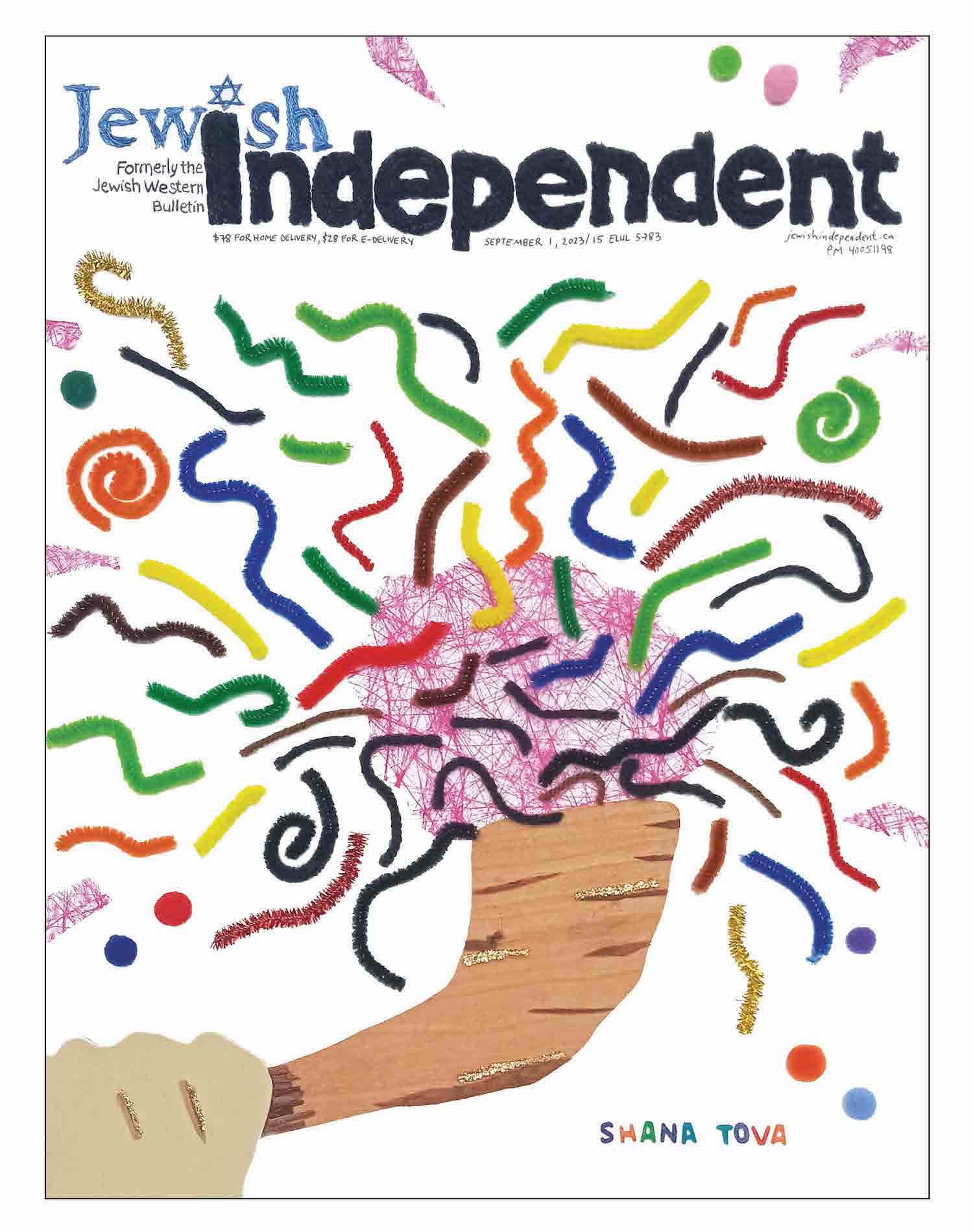
I spent hours online trying to find a suitable piece of art for this year’s Rosh Hashanah cover, then even more hours for what I might do myself. I really wanted to include a shofar in whatever I did, as a call to hope and action, for myself as much as anyone else.
I stumbled on artist Yitzchok Moully’s Elul Shofar Art Challenge (moullyart.com). Moully’s work is bright, colourful, full of life. As I mulled it over, I received an email from local artist Merle Linde, who generously created art for the JI ’s Passover cover this year and for last’s year Rosh Hashanah issue. She sent me an emotionally charged piece lamenting the countless trees that have been destroyed by wildfires. The base painting was an acrylic pour, and I spent several fun hours learning about and practising the technique, deciding it wasn’t quite what I wanted for my shofar blast.
I eventually came across creativejewishmom.com, the site that inspired my 2020 Passover cover depicting the Israelites (made of corks) crossing the Red Sea, who made a second appearance for Passover 2021, participating in Zoom seders. This time, it was a Tashlich picture made with yarn, coloured paper and felt marker that caught my eye on creativejewishmom.com. Inspired, I made the JI masthead out of yarn and ink, and created the shofar and the hand holding it – I wanted there to be a human presence, as we are critical to any change, for better or worse.
The middle section of the page eluded me for days, and I tried various things that just didn’t feel or look right. Thankfully, a middle-of-the-night couple of hours resulted in the finished cover, albeit with some tweaking in Photoshop. It ended up being more cheerful than I was intending. I am happily surprised at my latent optimism, and hope that readers also find it uplifting.
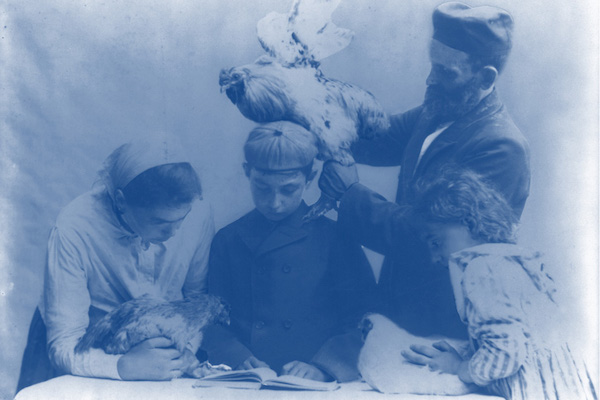
A family performs the kapparot ritual with two hens and a rooster, circa 1901. (photo from Library of Congress via brandeis.edu)
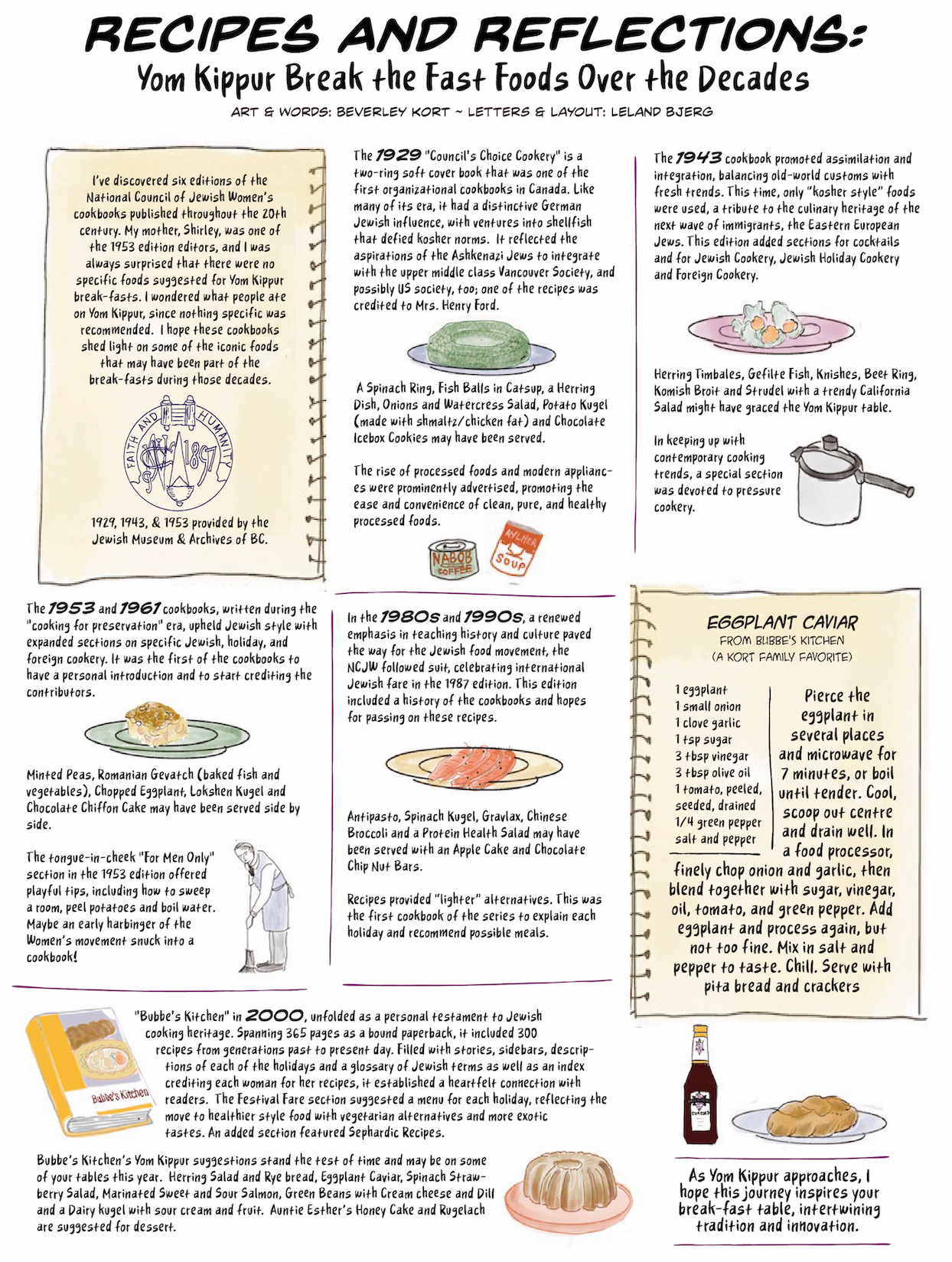
Whether or not the custom of eating chicken for a High Holiday meal arose from a desire to replace the ritual of kapparot, roast chicken is often served at the holiday table. Here are a few chicken recipes you might like to try this new year, as well as sweet potato sides and desserts made with pomegranates – another food with holiday symbolism. A coffee cake is always good to have on hand for visitors, or to help break the Yom Kippur fast.
ROAST HERBED CHICKEN
1 3-pound chicken 4 garlic cloves 2 bay leaves 3 tbsp melted unsalted pareve margarine salt and pepper to taste 1/4 tsp thyme 1/4 tsp sage 1/4 tsp oregano 1/4 tsp marjoram 1/4 tsp basil
Preheat oven to 425ºF. Grease a baking pan.
Rinse and dry chicken. Rub skin with 1 cut garlic clove, then place it inside chicken with other cloves and bay leaves.
In a bowl, mix margarine with salt, pepper, thyme, sage, oregano, marjoram and basil. Place 1 tablespoon inside chicken, tie legs together and place, breast side down, in baking pan. Brush the rest of the spiced mixture over the outside of the chicken. Bake 45 minutes. Turn it over and bake 40-45 minutes longer.
SIMPLEST ROAST CHICKEN
1 5-pound chicken 1 lemon cut in half 4 garlic cloves 4 tbsp unsalted pareve margarine salt and pepper to taste 1 cup chicken soup, water or wine
Preheat oven to 500ºF. Grease a roasting pan.
Remove excess fat, neck, gizzards and liver. Combine lemon, garlic, margarine, salt and pepper in a bowl and stuff inside chicken.
Place chicken breast side up in a baking pan with legs facing the back of the oven. Roast 10 minutes then move with a wooden spoon to keep it from sticking. Continue roasting 40-50 minutes.
Tilt chicken to get juices into roasting pan. Remove chicken. Put juices in a pan, add soup, water or wine and bring to a boil. Reduce liquid by half. Serve sauce in a bowl or pour over chicken.
CHICKEN WITH DRESSING (this was a favourite of my mother, z”l)
1 5-pound chicken salt to taste 3/4 tsp ginger 1 sliced onion 1/2 cup celery your favourite stuffing 3/4 cup boiling water 4-6 sliced potatoes
Preheat oven to 400ºF. Grease a roasting pan.
Sprinkle chicken cavity with salt and ginger. Place in roasting pan. Stuff with your favourite stuffing. Add onion and celery. Roast 20 minutes.
Reduce temperature to 350ºF and bake 20 minutes more. Add boiling water and potatoes and continue baking 1 1/2 hours more.
MY MOM’S (Z”L) CANDIED SWEET POTATOES
8 sweet potatoes 1/4 cup brown sugar 1 tsp cinnamon 1/2 cup crushed nuts (optional) 2 tbsp margarine 2 tbsp non-dairy creamer 2 tbsp orange juice
Preheat oven to 350ºF. Grease a casserole dish.
Boil sweet potatoes in water until soft. Remove, cool and peel. Place in a bowl and mash.
Add brown sugar, cinnamon, nuts, margarine, non-dairy creamer and orange juice. Spoon into greased casserole and bake 30-45 minutes.
In a saucepan, combine Sabra, margarine, brown sugar and nutmeg. Simmer for three minutes. Pour over sweet potatoes.
Spoon potatoes and sauce into orange halves. Bake 30 minutes.
APPLE-POMEGRANATE COBBLER (This recipe is adapted from a Food & Wine recipe)
2 cups pomegranate juice 6 peeled, halved, cored, sliced 1/2-inch thick apples 1 cup sugar 2 1/4 cups flour kosher salt 2 tsp baking powder 1 stick cold unsalted butter, cut into small pieces, or 1/2 cup unsalted pareve margarine 1 cup cold heavy cream or pareve cream pomegranate seeds pareve vanilla ice cream
Preheat oven to 375ºF. Place an eight-by-eight glass baking dish on a foil-lined rimmed baking sheet.
In a small saucepan, bring pomegranate juice to a boil over high heat, reduce to 1/3 cup (approximately 15 minutes). Pour into a bowl. Fold in apple slices, 3/4 cup sugar, 1/4 cup flour and 1/2 tsp salt. Put into baking dish.
In a bowl, whisk 2 cups flour, 1/4 cup sugar, baking powder and 1/2 tsp salt. Add butter or margarine and cut until mixture resembles coarse crumbs. Stir in 1 cup cream.
Gather topping and scatter over apple filling. Brush top with cream, sprinkle with sugar. Bake 60-70 minutes or until filling is bubbling and topping is golden. If crust is browning, tent with foil.
Let cool for 20 minutes. Sprinkle with pomegranate seeds. Top with vanilla ice cream.
POMEGRANATE ICE (makes 5 cups)
8-10 seeded pomegranates 3-4 tbsp lemon juice 1 1/2 tsp grated lemon peel 3/4 cup sugar
Whirl pomegranate seeds in blender. Strain and save liquid for 4 cups.
Add lemon juice, lemon peel and sugar. Pour into a metal pan and cover with foil. Freeze 8 hours. Remove and break into chunks. Blend into slush. Refreeze until firm.
SOUR CREAM COFFEE CAKE
3 cups flour 1 1/2 cups sugar 1 1/2 tsp baking soda 1 1/2 tsp baking powder salt to taste 3/4 cup butter or margarine, melted 1 1/2 cups sour cream 3 eggs 1 1/2 tsp vanilla 1/2 cup chopped nuts 2 tbsp sugar 1 tbsp cinnamon 1/4 cup chopped nuts
Preheat over to 350ºF. Grease a baking pan.
In a mixing bowl, mix flour, sugar, baking soda, baking powder and salt.
Add butter or margarine, sour cream, eggs and vanilla and mix.
Add nuts and blend well. Pour half into baking pan.
In a bowl, mix sugar, cinnamon and nuts. Pour over batter. Add rest of batter. Bake 1 hour.
QUICK CRUMB COFFEE CAKE
2 1/4 cups flour 3 tsp baking powder salt to taste 1 cup sugar 6 tbsp unsalted margarine, melted 1 egg 3/4 cup milk 1 1/2 tsp vanilla 1/2 cup brown sugar 2 tbsp flour 2 tsp cinnamon 2 tbsp crumbled margarine 1/2 cup chopped nuts
Preheat oven to 350ºF. Grease a baking pan.
In a mixing bowl, blend flour, baking powder and salt. Add sugar, margarine, egg, milk and vanilla and blend well.
Spread batter on bottom of greased baking pan.
In a small bowl, combine brown sugar, flour, cinnamon, margarine and chopped nuts. Sprinkle on top of batter. Bake 30 minutes or until a toothpick inserted in the centre comes out clean.
Sybil Kaplanis a Jerusalem-based journalist and author. She has edited/compiled nine kosher cookbooks and is a food writer for North American Jewish publications. She leads walks of the Jewish food market, Machaneh Yehudah, in English.