Skip to content
  • Home
  • Subscribe / donate
  • Events calendar
  • Business Directory
  • FAQ
  • News
    • Local
    • National
    • Israel
    • World
    • עניין בחדשות
      A roundup of news in Canada and further afield, in Hebrew.
  • Opinion
    • From the JI
    • Op-Ed
  • Arts & Culture
    • Performing Arts
    • Music
    • Books
    • Visual Arts
    • TV & Film
  • Life
    • Celebrating the Holidays
    • Travel
    • The Daily Snooze
      Cartoons by Jacob Samuel
    • Mystery Photo
      Help the JI and JMABC fill in the gaps in our archives.
  • Community Links
    • Organizations, Etc.
    • Other News Sources & Blogs
  • JI Chai Celebration
  • JI@88! video

Recent Posts

  • Federation now across BC
  • Israel fighting for its existence
  • Deal strengthens Iran
  • Patriotic belonging diminishes
  • A campaign to engage
  • Upstanders’ first live event
  • Responding to Carney
  • Having your own home
  • Music a family tradition
  • Musical to warm heart
  • Community milestones … June 2026
  • Sharing her passion for Israel
  • Or Shalom reopens its doors
  • JFS from past to future
  • Need holistic approach
  • Sharing stories, advice
  • Journalist shares fears
  • Skills to live together
  • Road to independence
  • Cutting grass with scissors
  • Zionism as a solution
  • Deceit, desire & the divine
  • Reclaiming sacredness
  • Creative project ideas
  • Summer squares and cobbler
  • Thou shalt … summer commandments
  • Legal help for students
  • Revisiting myth of Lilith
  • Wrong person rebuked
  • Canada’s mixed messages
  • Questions for museum
  • Symposium on antizionism
  • Making soccer political
  • CJPAC lauds Pulver’s impact
  • City recognizes Vrba’s legacy  
  • Organ donation saves lives

Archives

Follow @JewishIndie
image - CJN box ad Rockowers 2026

Category: Op-Ed

Be sure to wash your hands

Before bed each night, our kids practise their reading, both in Hebrew and in English. We have a routine where I knit and sit next to a kid, listening to him reading his Hebrew Grade 3 stories, and their dad does English with the other kid. Then we switch. Recently, I’ve heard two separate easy-reader versions of the story about Hillel and the mitzvah of cleanliness.

For those of you who might not be up on Grade 3 curriculum, Hillel was a great teacher of Torah. One day, he is rushing off and his students ask him, “Where are you going?” He answers, “To do a mitzvah!” And they say, “What is the mitzvah?” And he says, “Cleaning is a mitzvah!” as he heads to the bathhouse.

In one story, it points out that Hillel was also trying to show that, in general, keeping clean is important. We should clean our fruits and vegetables before eating, clean our bodies, clean our houses, etc. This is obviously a useful lesson for kids. It’s good to know that Hillel taught us to keep clean. (I’ll need to mention this next time I’m asking everyone to tidy up their toys and things!)

Even in the Torah, there are multiple reminders to wash. While this isn’t news for Jews, frequent washing isn’t every culture’s practice. During outbreaks of the Black Death in Europe, Jewish communities were often spared because of their insistence on cleanliness, while those around them were dirty and, therefore, more prone to catching this illness. This meant most Jews avoided the plague (Black Death), which was transmitted by rats and fleas. Unfortunately, this also led to situations in which the Jewish community was blamed for the illness, because why weren’t the Jews getting sick, when everyone else was? Through the lens of history, we know why – they washed and, therefore, had fewer fleas and rats around.

In the Torah portion Ki Tisa (Exodus 30:11-34:35), G-d tells Moses to construct a fancy washstand for Aaron and his sons in the Tent of Meeting. Essentially, being clean is part of doing holy work.

The weird thing about all this isn’t that our tradition spends a lot of time on how to properly wash and keep clean and, therefore, be ready for holy work. The weird thing is how often we forget to wash despite this information.

The outbreak of COVID-19 (the coronavirus) is a firm reminder of what we can do, every day, to stay well. We can wash our hands, with soap, with some frequency. You can recite the alphabet or the aleph-bet to be sure you’ve washed long enough. Washing well is not some mystical religious ritual. It’s essential to our health and well-being.

We can also practise social distancing, another tradition straight out of the Torah. Lepers had to stay outside the camp for several days, for example. This is not new information, folks! It was old news by the time the rabbis were creating our oral tradition, what became the Talmud.

The advice around a virus outbreak changes every day, so I cannot predict what officials will know or say when this article is published. However, disease outbreaks aren’t new. We’ve been wrestling with how to deal with them for as long as the Jewish people has been around. Considering things like skin diseases and leprosy as part of this, then, as mentioned, there’s information about how to deal with that going to the Torah.

One parallel that I can’t skip is – remember the golden calf? When Moses was getting the Ten Commandments, there was a mad rush to collect valuables and build the golden calf as a way to reassure the scared and frustrated Israelites. But it didn’t turn out so well. Acquiring wealth or idols didn’t help us avoid scary or frustrating things. We can’t know the future and alas, no amount of gold – or toilet paper – can keep us healthy.

The gold calf story reminds me of the reports of preppers, who are madly hoarding hand sanitizer, toilet paper, masks and other essentials. They are afraid, of course, but this illogical amount of acquisition causes shortages. It also gouges others by trying to resell these items at high prices. Of course, medical professionals haven’t advised anyone to do this hoarding – and Moses didn’t tell anyone to build a golden calf either.

We have to rely on the best medical advice we can get and do practical, everyday things to stay safe, like washing and social distancing.

I hope everybody stays healthy, but it would be wrong of me not to do my part in encouraging that. So? In the words of another famous character in our household, Ernie from Sesame Street, “Now everybody wash! Everybody – wash your hands!”

Some things just don’t change.

Joanne Seiff has written regularly for CBC Manitoba and various Jewish publications. She is the author of three books, including From the Outside In: Jewish Post Columns 2015-2016, a collection of essays available for digital download or as a paperback from Amazon. Check her out on Instagram @yrnspinner or at joanneseiff.blogspot.com.

Posted on March 13, 2020March 12, 2020Author Joanne SeiffCategories Op-EdTags coronavirus, health, Hillel, Judaism, lifestyle, Talmud, Torah
Landscape better health

Landscape better health

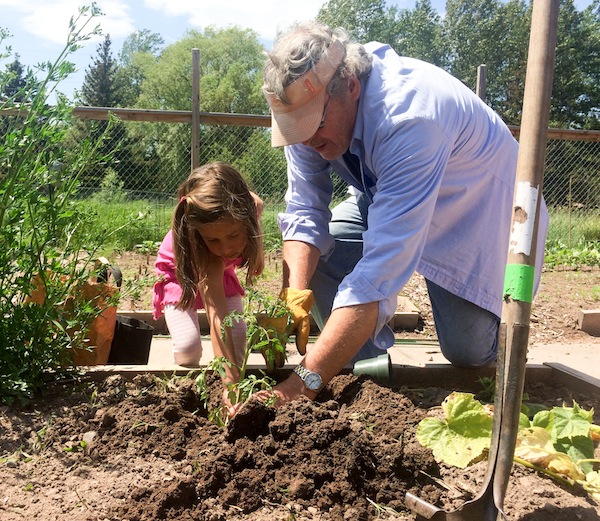
People who spend time gardening, doing yard work and have direct contact with soil feel more relaxed and happier. (photo by Brad Greenlee)

It’s natural to long for spring when it’s cold outside. But there’s a good reason why you may pine for green. Living landscapes are an important part of the outdoor lifestyle that North Americans enjoy, but the benefits go beyond the barbeque and backyard baseball. Green spaces are necessary for our health.

“The advantages of grass and landscaping surpass the usual physical benefits that result from outdoor activity,” said Kris Kiser, president and chief executive officer of the Outdoor Power Equipment Institute (OEPI). “Numerous studies have found that people who spend more time outside or are exposed to living landscapes are happier, healthier and smarter.”

Researchers have studied the impact of nature on human well-being for years, but recent studies have found a more direct correlation between human health, particularly related to stress, and the importance of people’s access to nature and managed landscapes.

Getting dirty is actually good for you. Soil is the new Prozac, according to Dr. Christopher Lowry, a neuroscientist at the University of Bristol in England. Mycobacterium vaccae in soil mirrors the effect on neurons the pharmaceutical provides. The bacterium stimulates serotonin production, which explains why people who spend time gardening, doing yard work and have direct contact with soil feel more relaxed and happier.

Children who are raised on farms, in a “dirtier” environment than an urban setting, not only have a stronger immune system but are also better able to manage social stress, according to the National Academy of Sciences.

photo - Studies have shown that people who spend more time outside or are exposed to living landscapes are happier, healthier and smarter
Studies have shown that people who spend more time outside or are exposed to living landscapes are happier, healthier and smarter. (photo from pxhere.com)

Living near living landscapes can improve your mental health.

Researchers in England found that people moving to greener areas experienced an immediate improvement in mental health that was sustained for at least three years after they moved. The study also showed that people relocating to a more developed area suffered a drop in mental health.

Greening of vacant urban areas in Philadelphia reduced feelings of depression by 41.5% and reduced poor mental health by 62.8% for those living near the vacant lots, according to one study.

According to Dutch researchers, people who live within a half mile of green space – such as parks, public gardens and greenways – were found to have a lower incidence of 15 diseases, including depression, anxiety, heart disease, diabetes, asthma and migraines.

A 2015 study found that people living in areas with more trees had a boost in heart and metabolic health. Other studies show that tasks conducted under the calming influence of nature are performed better and with greater accuracy, yielding a higher quality result. Spending time in gardens, for instance, can improve memory performance and attention span by 20%.

Living landscapes can also make you smarter. Children gain attention and working memory benefits when they are exposed to greenery, says a study led by Payam Dadvand of the Centre for Research in Environmental Epidemiology in Barcelona. In addition, exposure to natural settings may be widely effective in reducing attention deficit/hyperactivity disorder symptoms in children.

Research has shown for adults, as well, that being around plants helps them concentrate better at home and at work. Charlie Hall, Ellison Chair in International Floriculture at Texas A&M, believes that spending time in gardens can improve attention span and memory performance by as much as 20%.

A National Institutes of Health study found that adults demonstrate significant cognitive gains after going on a nature walk. In addition, a Stanford University study found that walking in nature, rather than a concrete-oriented, urban environment, resulted in decreased anxiety, rumination and negative affect, and produced cognitive benefits, such as increased working memory performance.

Living landscapes also can help you heal faster. Multiple studies have discovered that plants in hospital recovery rooms or views of esthetically pleasing gardens help patients heal up to one day faster than those who are in more sterile or austere environments. Physicians are now prescribing time outdoors for some patients, according to recent reports, and Park Rx America is a nonprofit with a mission to encourage physicians to prescribe doses of nature.

All of these benefits reinforce the importance of maintaining our yards, parks and other community green spaces. Trees, shrubs, grass and flowering plants are integral to human health. Not only do they provide a place for people and pets to play, they directly contribute to our mental and physical well-being.

Format ImagePosted on March 13, 2020March 12, 2020Author OPEI & TurfMutt FoundationCategories Op-EdTags environment, gardening, health

Words of praise for libraries

We have a lot of interesting Jewish educational opportunities in Winnipeg, where I live. If you made a big effort, you could be busy learning, attending lectures, events and classes much of the time. It might be possible to find something to do nearly every day of the week, but most of us don’t or can’t.

Maybe you can’t get out due to health issues or because you’re the caretaker for others. Perhaps it’s just too dark and cold right now, and you aren’t all that keen about going out after dinner. (I hear you!) There are many reasons to say no, we can’t manage something.

The last few weeks, I’ve found myself in this situation. Someone in my household got sick, or I did. The weather was just too cold. I wanted to hibernate. I wasn’t sure the car would start or the event cost too much or … you get the picture.

However, I found a solution that has really enriched this season. There were some books on Jewish topics that friends suggested online, and even a book written by someone I knew. I couldn’t afford to buy them all, nor did I know yet that I wanted to own them. This is where the public library is an amazing resource. I had all the books delivered to one library, where they sat on the holds shelf with my last name on them.

When I checked them out, I worried that I would not be able to finish them in time. Maybe I was being overambitious. Not to worry, it turns out. Most of the books were finished long before they were due – they were that good.

What were they? Well, now that I’ve read these books, I’m happy to make a couple recommendations! The first was Sacred Treasure – The Cairo Genizah: The Amazing Discoveries of Forgotten Jewish History in an Egyptian Synagogue Attic. Genizahs are where some Jewish communities stored their old (both holy and mundane) documents for many centuries. Written by Rabbi Mark Glickman, who I studied with at summer camp as a teenager, this book was the Jewish equivalent to an Indiana Jones story. I love reading about Jewish social history and, to be honest, it made Shabbat and several sick days absolutely a joy. I told all my friends I was geeking out on the genizah book!

The second book I loved was The Unorthodox Match by Naomi Ragen. Ragen is a beloved American-Israeli novelist, and this book didn’t let me down. It was both a love story and a realistic account of how some Chassidic and ultra-Orthodox communities operate. There’s a great divide. These groups both encourage ba’alei teshuvah (those who “return” to more traditional Judaism), but they also ostracize them, as not being the same as those who were raised from birth in these communities. The novel emphasizes the differences between what Judaism teaches about accepting converts and strangers and how communities actually act, sometimes alienating those who seek to be included.

After reading these books, I was struck by how I was able to enrich my Jewish learning simply by using the library and the couch when it was so cold out. Yet, if cities like mine cannot figure out their finances, it’s possible that some of our public libraries (along with wading pools, swimming pools, arenas, etc.) will soon be closed due to budget cuts.

We can choose to read at home and learn more about Jewish topics this way, but only if the public libraries remain open and they can afford to buy these books. We may complain about our taxes, but we are given a great gift when we can access these literary “riches” for free.

Canadian winters are long. I count myself lucky that, when I couldn’t go out, I was able to sit by the fire and read and learn this winter. If we want that learning option to be available, we all have to commit to doing our share to keep libraries (and all the other benefits of a tax-paying society) open and thriving.

Joanne Seiff has written regularly for CBC Manitoba and various Jewish publications. She is the author of three books, including From the Outside In: Jewish Post Columns 2015-2016, a collection of essays available for digital download or as a paperback from Amazon. Check her out on Instagram @yrnspinner or at joanneseiff.blogspot.com.

Posted on March 6, 2020March 4, 2020Author Joanne SeiffCategories Op-EdTags books, education, geniza, history, libraries, lifestyle, Mark Glickman, Naomi Ragen

Adding colour to our lives

Life is such an adventure, but its appeal for us depends so much on our attitude. One of the amazing things about this fact – that our attitude makes all the difference – is that this appears to be a law of nature. How we “reflect off” the events in our lives is crucial to our fate.

Most of us know a little bit about the nature of sight, the mechanics of seeing. We know less about the role played by light in our world. Light travels in units called photons. We know that these photons travel really fast, even when they have to bounce around in a world full of atoms to get where they are headed, which is everywhere. Photons travel so fast, we don’t notice that random atoms are impeding their progress a bit. In spite of that, they reflect off all the objects in our world and succeed in entering our eyes.

The lenses in our eyes focus this reflected light onto the light-sensitive rods and cones on the retina at the back of our eyeballs. (The rods work in dim or dark situations and the cones in bright light.) These create variable electrical charges sent along the optic nerve to the brain. Our brains interpret these stimuli as the visions that we see before our eyes. Did you know that the curvature of our eyes results in the images we receive being upside down? Our brains turn them right-side up for us.

What we are seeing is the reflected light. Any light absorbed by the objects we are looking at, we will not see. The same is true about colour. We only see the colours that the objects we are looking at reflect. All other colours are the ones that have been absorbed by these objects and we will not see them. Colour is all about light reflecting off the things in the world around us.

In the same way, it is our reactions to the realities we face in life that determine the kinds of lives we will lead. Different reactions, different lives. What does it mean to say that our reactions can be of overwhelming importance in determining our fates? It means that, to an important extent, our fates are in our own hands. (What does that do to the blame-games we have been nursing all our lives?)

I am getting to be what some people might term “an old guy.” Others, less kind, might say, “an old fool.” One would have to be foolish to live a whole life without understanding the principle I have enunciated above. And yet, it is only at this late date that this has become so clear to me.

Of course, I always knew I had to hustle my butt if I wanted to achieve the things I desired for my family and me. Yet, I never achieved the clarity of insight that I now have. I would venture to say that there are others of my fellow travelers who might have been, who might still be, wanting in this matter.

When all is said and done, there is no substitute for having a positive attitude. There are so many good things in our lives that we have to appreciate, that we have to be grateful for. There are so many people we pass every day who are less fortunate than we are. But that does not absolve us from the need to actively present our own best case to the world, to be up and at ’em every day, meeting the challenges we all face and will face. Without that, we are beat before we start.

Being open to the positive is a necessity if we hope to take advantage of any opportunities that might come our way if we reach out. Like the photons of light in our world, we move forward in our lives toward our goals in spite of impediments we might face; or we find paths to goals we hadn’t considered before.

I am not talking merely about amassing material possessions. I am talking about spending time working out how to ensure we are adding the colour we want to see in our lives. If all of this is dependent wholly on ourselves to determine what the elements of our lives are going to be – not our parents or our partners or our bosses or the economy – then what are we going to do about it? If, in spite of our positive attitude, we are not happy, if we are not satisfied, what are we going to do about it? I must confess, I never had this moment of clarity until I was 70 years of age. That’s a whole lot of living to have gone through without thinking about such things.

At the age of 71, unheralded, I flew across half a continent to try and reconnect with a woman I had known when we were teenagers more than 50 years before. I can report that we can look back now at almost 15 years of happily married life. We are keeping each other alive.

So, what I am writing about here is seeing the reflections off the objects (subjects?) that make up the elements of our lives. We have to be aware of the reflections streaming into our eyes, and consciously translate the images making their way into our brain. What colours are being reflected? Are we absorbing what those images are telling us? Or are we seeing them without really seeing them, same old, same old? And, if we do see them, and we don’t like what we see, what are we going to do about it? It is never too late to make an effort, I can tell you that!

Max Roytenberg is a Vancouver-based poet, writer and blogger. His book Hero in My Own Eyes: Tripping a Life Fantastic is available from Amazon and other online booksellers.

Posted on February 28, 2020February 26, 2020Author Max RoytenbergCategories Op-EdTags aging, lifestyle, philosophy, science

When Joseph went missing

A friend recently went through a scary time and, as a result, I did, too. His niece in Minnesota, a young mother, simply disappeared. She went out on a date and didn’t come home. Her mother was with the woman’s children. When she didn’t know what to do, she contacted police, the story was in the media and the important, informal networks of the Missing and Murdered Indigenous Women and Girls (MMIWG) swung into action.

Like many friends, I tried to pass the word along about a woman who was missing. Her family needed her. My friend couldn’t sleep. He worried. I worried. The worst part seemed to be not knowing how to help, what to do and what happened. Things seemed very dangerous.

Some in the Jewish community may say, this isn’t about me. They would be wrong on several levels. First, and most apparent, your prejudice is showing. There are many Jewish community members who have ties to multiple other communities in Canada. Yes, there are indigenous Jews; as well, there are many other cross-cultural, interreligious and inter-ethnic family connections of which you may not be aware.

Second, anyone can be at risk. Missing people and human trafficking are as old as time. When Joseph’s brothers throw him into a pit and then sell him to the Ishmaelites (Genesis 37:28), they’re participating in human trafficking and slavery. They turn Joseph into a missing person. His parents go through the anguish of not knowing what happened to their child. If you’re a parent or, heck, if you’ve ever lost a pet, it’s not hard to imagine this anguish.

Rashi’s commentary says that Joseph was sold several times. According to Midrash Tanhuma, he’s sold from the Ishmaelites to the Midianites and, from there, into Egypt. This description is not unlike what happens now to women captured in wartime. News reports offer similar stories of women enslaved today – by Boko Haram or, to mention refugees closer to home, Yazidi women who were enslaved by ISIS, some of whom have found homes in Canada.

Some believe slavery is a thing of the past, tied to faraway, evil people – like the narratives I’ve heard from Canadians about the American South. People might be evil, but they aren’t far away. This is a modern issue. Once a person is being trafficked, it’s very hard to break free. She’s possibly been forcibly confined, addicted to drugs, beaten and sexually assaulted. She may be hidden, unable to get help, and brainwashed by those who kidnapped her.

There are charities that work against human trafficking, and many nongovernmental organizations do, as well. However, I was recently invited to participate in a raffle. The business offered a prize in exchange for donating to an anti-trafficking organization. I got as far as clicking through to the organization’s donation page before I saw that it did its work through a lens of Christian evangelizing. Here’s what I found: “Agape International Missions has an incredible team of staff members and volunteers who faithfully carry out our mission, day in and day out. At AIM, we believe that Christ through His Church will defeat the evil of sex trafficking, so we invite you, the Church, to join us in this fight!”

Further, if you wanted to work for them, and you’re not Christian? Too bad. Here’s what their job search info looked like: “You should consider pursuing a career with AIM if: You’re a Christian; You agree wholeheartedly with our Statement of Faith. As the foundation for all we do, our Christian faith is a uniting factor among volunteers and staff.”

Essentially, this Christian organization uses an “us” versus them narrative, in which this religiously motivated group is all good. They are out to conquer this evil that happens to faraway (non-Christian) others. Sadly, if you change the religious ideology, I’m not sure Jewish communities are much different in how we portray social action issues.

Kidnapping, human trafficking, using sex as a weapon – many people like to think these terrible things don’t happen to “us.” However, this naïve view harms victims, perpetuating the idea that these things only happen to people far away or long ago, or who somehow did something wrong to deserve it.

Joseph, according to Jewish tradition, was our relative, a part of our family. His brothers kidnapped and sold him. My friend’s niece went missing this winter. This isn’t some ancient or distant problem. Some argue that, if Joseph hadn’t been his father’s favourite, or if he’d behaved better, this wouldn’t have happened to him – this is blaming a victim.

In Joseph’s case, he lived. He was found, and he flourished over time, in Egypt. My friend’s niece came home to her mother and children after a week. It’s still unclear what happened to her. It sounds like something like human trafficking may have taken place. We (helpers outside the family) may never know.

Every time a missing person is found safe, it’s lucky – but it’s not a sure thing. Often, many hundreds of people’s efforts go into finding someone, and keeping others safe.

If you’re sent a missing person’s information, don’t judge whether or not the person is “worthy.” Send it onwards. Just imagine if your relative or friend went missing – wouldn’t you want everyone’s help, without judgment or religious prejudice?

Joanne Seiff has written regularly for CBC Manitoba and various Jewish publications. She is the author of three books, including From the Outside In: Jewish Post Columns 2015-2016, a collection of essays available for digital download or as a paperback from Amazon. Check her out on Instagram @yrnspinner or at joanneseiff.blogspot.com.

Posted on February 14, 2020February 12, 2020Author Joanne SeiffCategories Op-EdTags human trafficking, Judaism, lifestyle, slavery, tikkun olam, Torah, women

What is the worth of work?

Recently, I’ve had numerous encounters with middle-aged women. This isn’t strange. I’m talking to women who are a lot like me: dealing with school-aged kids, piano lessons, finding childcare, etc. What’s remarkable is that the same conversation pops up – about work.

One friend, an author and artist, said that she does the math every time she’s invited to do a workshop or a special event. Will the cost of travel, supplies and teaching preparation be worth the return? She’s often told, “Well, we can’t afford to pay you to teach” but, when she shows up for the single event she agreed to do for payment, what happens? People surround her, saying, “Well, if we’d only known you were coming, we would have paid for you to do a multi-day workshop!”

Another woman explained that she is only now, after years of staying at home, getting back to very part-time work in her field. Why? The cost of childcare would have canceled out anything she would have earned with part-time work.

Among women who juggle a full-time job with conventional hours, there’s an acknowledgement that it’s extremely hard to manage. In some cases, their partners step up to do the childrearing and run the household. In others, there are moms who are obligated to work full-time, be “on call” as the primary caretaker and either do, or hire someone to do, all the household chores. For many, this works because everyone’s healthy and they have support from extended family. In case of illness or lack of family support? Forget it. Of course, since these women do manage it, anyone who struggles is seen as “not as capable” as a woman who “has it all.”

This is a big topic, and it’s also (surprise!) a Jewish topic. We’ve been wrestling with it forever. In Exodus, the Israelites flee Egypt and slavery. Yet, in Exodus 14:12, the Israelites are afraid and they actually suggest to Moses that it would be better to return to Egypt and slavery (work without being paid) than to die in the wilderness. Lacking faith, they struggle with how they will be fed, and manna appears for them.

The first question is, what is the value of our work? For the Israelites, they were willing to live for nothing more than food and housing, as Egyptian slaves, rather than cope with being tossed out into the unknown. They didn’t value their work, and perhaps didn’t have the confidence that things could be different. Yet, when they take that risk, miraculously, their basic needs are met.

There are no guarantees. We can offer up our work for free – in whatever professional fields we’re qualified to do so – but there’s no surety that, at the end, we’ll have any offer of full-time, paying work. I see women doing this all around me. There’s an expectation that you’ll volunteer to offer your presentation, and you’ll also tack on free teaching, writing, editing, professional-level creative work or even childcare for others’ children. (Yes, I’ve been asked to do all these things for free.)

Here’s the second question. Is the Israelites’ manna in the desert the ancient equivalent of the “guaranteed minimum income” or “basic income” concept? At what point in modern society do we decide that everyone should get enough to eat? When is it acceptable to say, “Everyone should have a warm place to live, no matter what you earn or your special needs or other health challenges”?

In the Talmud, in Berachot 17a, the sages of Yavneh say that we are all G-d’s creatures, those who learn Torah in the city and those who labour in the fields. That both kinds of people rise early. Neither one is superior. Their work has equal merit as long as they “direct his heart towards Heaven.” This includes the idea that the labourer doesn’t presume to do the Torah scholar’s work and the scholar doesn’t presume to do the labourer’s. In this gendered ancient world, this leaves out women. Then Rav Hiyya acknowledges that women are offered “ease and confidence” because they do an enormous amount to sustain Jewish learning through raising their kids Jewishly and supporting their husbands who study Mishnah.

So, even in talmudic times, work was valuable and considered important, no matter what you did. Further, a woman who is doing “traditional” things like taking care of her children’s education or her husband is owed “ease and confidence” for her efforts.

Our work has meaning. It has important economic and social value. However, sometimes, when we compare our resumés, we feel lacking; certainly if we are being asked to do work for free. It turns out that we shouldn’t be expected to work for free, because our work, no matter what it is, is equivalent and necessary.

A more modern reminder: Martin Luther King, Jr., preached that all work is crucial and deserves fair pay. He supported the Memphis Sanitation Workers’ strike. To be healthy, we need trash collection. Garbage collectors matter.

There’s also no such thing as being out of the workforce. That dinner you cooked, the snow shoveled, the cleaning you did to keep someone healthy, the child you kept safe – according to the rabbis, if you do your work with the right intention, it’s all equally important.

I was recently invited by a favourite undergrad professor of mine to submit a short bio for the Cornell University Near Eastern studies department’s alumni page. I read some previous ones – doctors, rabbis, professors and others – and felt out of my league. Then I talked about it with my husband and thought about it. Being asked to share my work experience on that forum means, like the rabbis’ view of work, mine is valuable too – and so is yours.

Joanne Seiff has written regularly for CBC Manitoba and various Jewish publications. She is the author of three books, including From the Outside In: Jewish Post Columns 2015-2016, a collection of essays available for digital download or as a paperback from Amazon. Check her out on Instagram @yrnspinner or at joanneseiff.blogspot.com.

Posted on February 7, 2020February 6, 2020Author Joanne SeiffCategories Op-EdTags Judaism, lifestyle, Torah, women, work

The comfort in imperfection

We’re not perfect. Yes, and you’re saying, so, why is this in the newspaper? I’m writing this over winter break. Like many families, we chose a staycation. We’ve done some walks and games outside, and a lot of time just hibernating, resting and rejuvenating indoors. All the Chanukah treats were investments in this: new toys that our twins could play with for hours, books, warm socks – and a huge gift for all of us: my husband chose to repaint our main bathroom as part of his time off.

I know, you’re still thinking, why is this in the Jewish newspaper?

Well, first, if you’re a Jewish family who celebrates only Chanukah, winter break gets long. It’s a time when the radio and TV are full of someone else’s holiday celebrations. In a cone of silence, my family has always turned inwards, to hang out together. My parents used to joke it was the time of year for wallpapering. (My mom would choose the paper and my dad would hang it and curse about wallpaper!)

Aside from a much-improved colour and some very important anti-moisture paint, the bathroom fix-up also gives us a chance to seek comfort and self-improvement from within, by focusing solely on our household. I think my husband gets a great sense of satisfaction when he finishes a home repair project and feels it is a “job well done.” He dwells endlessly on the parts that aren’t perfect, and what might be better.

This is connected to the Torah portion Vayechi (Genesis 47:28-50:26) for a few reasons. This portion is very much about family, connections, our blessings and our imperfections. Joseph’s father, Jacob, is dying. Jacob’s dying blessings and wishes are both comforting to some and very uncomfortable for others. His need to include Ephraim and Menashe (his grandchildren) and to offer blessings out of birth order strike many as unfair. The rabbis discuss why Jacob crossed his arms and preferred the younger over the older grandchild. One wonders why he includes the children of his favourite child at all.

Yet, if you think back, Jacob has never been particularly even-handed with his kids. This is the dad that made Joseph the multicoloured coat. Joseph is the child of his old age. Jacob is unfair. He plays favourites, and this rubs us wrong as modern parents or family members. Dads shouldn’t play favourites, right?

When you read Jacob’s predictions (or blessings) for each of his children, some of them sound generous, and others are really harsh. It’s hard to imagine how this experience would feel from a modern perspective, it’s so out of whack with how we see modern family relationships. True, his sons have not been consistently upright people. However, at least Jacob mentions them. He doesn’t even acknowledge Dina – his daughter doesn’t exist here.

This story remains something I dwell upon because my twins’ Hebrew names, in part, are Ephraim and Menashe. Their dad’s Hebrew name is Yoseph (Joseph). Their grandfather’s name? Ya’akov (Jacob). You get the picture. Whenever we bless our kids on Friday nights, we say, in Hebrew, “May you be like Ephraim and Menashe.” Then we translate the prayer into English. We say, “May you be like …” and we use their English names. May they be like (true to) themselves.

When we reflect on it, we can see that, even among our patriarchs, like Jacob, we have imperfect role models. Jacob stole his twin brother’s birthright. He wrestled with the Divine. He played favourites with his children in harmful ways. He was by no means a perfect person. In a sense, this is comforting. No matter how crummy our mistakes or imperfect our efforts, we know that many biblical role models also weren’t perfect. Perfection may be overrated.

Our best hope is that we be true to ourselves – continually striving to seek peace and justice and pursue it, in a flawed world. We can commit to doing our best, within our own particular skill sets, to making things better.

As we start a new secular year, 2020, and decade, we have so many opportunities to reflect on what’s not right about the world. Yet, we can also gain comfort from the knowledge that imperfect people (and paint jobs!) can still make a positive difference for a long time to come.

Here’s to a better world in 2020 – imperfections, warts and all.

Joanne Seiff has written regularly for CBC Manitoba and various Jewish publications. She is the author of three books, including From the Outside In: Jewish Post Columns 2015-2016, a collection of essays available for digital download or as a paperback from Amazon. Check her out on Instagram @yrnspinner or at joanneseiff.blogspot.com.


Posted on January 31, 2020January 28, 2020Author Joanne SeiffCategories Op-EdTags Chanukah, ethics, home repair, Judaism, lifestyle, Torah

A page of Talmud each day

Jan. 5, 2020, was a momentous day in the Jewish world. It was the start of another cycle of daf yomi. What’s daf yomi? It’s the tradition, about a hundred years old, of studying a page of Talmud a day. It takes more than seven years to read it all. At the end of the cycle, after reading the entire Talmud, there’s a siyum hashas, a celebration of learning. The last one was held Jan. 1, in the MetLife Stadium in New Jersey, to a sold-out crowd.

There are also smaller siyums (celebrations) to commemorate finishing a talmudic tractate. Being invited to a siyum was likely the first time I ever learned about this kind of study. Sure, I learned snippets of Talmud in religious school or when I heard sermons at Temple. When I got to Cornell University as an undergraduate though, I met a small but thriving group of Orthodox Jewish students who lived together while attending school. One of those students had a siyum, and invited other Jewish students. I had no idea what was going on.

I was reminded of this when I read an article by Rabbi David Bashevkin on the JTA website online. It was about what it was like to take a bunch of teenagers, doing a weeklong NCSY Torah learning program (run by the youth movement of the Orthodox Union), to the enormous siyum in MetLife Stadium. He defined the teens as “not attending Jewish day school” and explained that the Yinglish at the event and the Talmud study process were all foreign to these teens, but that they understood the deep meaning of the gathering.

I struggled with the article’s headline – it called the teens “secular.” Any kid who attends a weeklong event run by the Orthodox Union is choosing a Jewish lifestyle, even if it isn’t the same as those who attend Jewish day schools or yeshivot.

Beyond this headline definition of “secular,” I saw the great divide not mentioned. This chasm – of being a liberal Jewish woman – caused me to feel, for years, that I was not capable or worthy of studying Talmud in depth, never mind daf yomi.

I wasn’t taught the skills to study Rabbinic Hebrew or Aramaic in my Reform congregation’s religious school. I learned basic prayers, Hebrew and knowledge of Jewish holidays and customs. When I lived in Israel on a kibbutz for a year in high school, I immersed myself in Modern Hebrew every day – but I never saw anyone studying Talmud!

At Cornell, I took Modern Hebrew classes and one Biblical Hebrew literature course. I met the students who lived in the Cornell Centre for Jewish Living. I got “closer” to knowing Orthodox people than I’d ever experienced growing up in Virginia. When I returned to graduate school in religious studies, I began learning basic talmudic terminology. Slowly, painfully, I made my way through the text with lots of dictionaries and help.

About 20 years ago, you could get a CD-ROM with the whole Talmud on it, and some of it had stilted English translation available, but not all of it. Otherwise, one had to have access to a whole set of Talmud or a good library and be conversant in Rabbinic or Modern Hebrew (Adin Steinsaltz was slowly creating translations of Talmud for those who spoke Modern Hebrew) to make it through the text.

Over the years, I had occasional study partners. We worked our way through a few pages of Talmud. In every situation, my partners were unconventional. They had to be willing to study with a woman, willing to study in a slow mishmash of what we understood in Hebrew/Aramaic and English – and, further, willing to make the modern, 21st-century connections offered by my academic (not yeshivah) training.

This fell by the wayside when I had twins. Study time was nonexistent, although writing this column let me study the Torah portions as they seemed relevant. To learn more about Talmud, I signed up to get Ilana Kurshan’s memoir, If All the Seas Were Ink – it was an adult selection from the kids’ PJ Library book program.

I never finished the book. I felt ashamed instead. Here was Kurshan, an author and translator with several kids, including twins, and she had time to study daf yomi. I ignored the fact that she lived in Israel, where access to both Talmud study and childcare was much easier to find. I reminded myself that everyone is different. Our challenges might not be the same, and I returned to working as a freelancer, looking after twins, and running our household.

Then something miraculous happened. My Jewish Learning, a Jewish online resource, started a new daf yomi program. I signed up for my email a day. A friend of mine, a rabbi who is also a knitter, is chatting with me online about the new cycle of study, as a kind of study partner. And, through the miracle of technology, I have managed – so far – to keep up with my page a day. Through sefaria.org, we now have free access online to both the original and (a mostly decent) English translation of these texts.

It’s early days yet. However, today’s page, Berachot 5a and 5b, touches on twins, health troubles, commitment to learning, and, for me, it’s relatable. Most important, it teaches that, in our rich Jewish tradition, it’s never too late to commit to learning more, no matter when one begins. I started on Jan. 5. It’s never too late to start!

Joanne Seiff has written regularly for CBC Manitoba and various Jewish publications. She is the author of three books, including From the Outside In: Jewish Post Columns 2015-2016, a collection of essays available for digital download or as a paperback from Amazon. Check her out on Instagram @yrnspinner or at joanneseiff.blogspot.com.


Posted on January 24, 2020January 22, 2020Author Joanne SeiffCategories Op-EdTags daf yomi, education, Judaism, Talmud

A counselor’s import

At sleep-away camp, the camp counselor is the person your child is going to turn to as a replacement for you. Even if it’s a day camp, it is the counselor who will be there to comfort, encourage, discipline and befriend your child. Therefore, you need to understand the counselor’s role before you drive away, looking in the rearview mirror at the teary-eyed or over-excited son or daughter you are leaving behind – especially if it’s their first experience of going to camp.

While it can be wonderfully rewarding, camp counseling is a 24-hour-a-day commitment and the job requires a lot of skills. Most camps have training sessions, sometimes very intensive ones, before the start of the summer sessions, and only the most qualified are chosen, as they can make or ruin kids’ experiences.

New counselors who think that camp will be a long, outdoor holiday for themselves are mistaken – they are being paid to work. Theirs is a leadership role, and having fun is only part of the equation. They may have to deal with all kinds of personal problems, such as homesickness, or a child who feel inadequate at or left out of various activities.

The most dedicated counselors make time to get to know their campers. They explore why the kids came to camp and what they are looking forward to doing. They need to keep up with their charges’ accomplishments and help them get involved in whatever activities are being programmed. The object is to spend quality time with each child so that, in the new world they are in, the campers feel that there is at least one person on their side and available to help them if the need arises.

Parents should make sure to inform the camp of any special occasions or events in their child’s life that will take place while the child is at camp, such as a birthday.

A counselor has many roles to fulfil. Sometimes, if a child is homesick, for example, a counselor will need to remind them of the reasons they came to camp, get them enthused about the good times they will have once they settle in, and the great friends they will make. It’s often a good idea for counselors to discuss their own experiences when they were young campers, such as funny incidents, exciting adventures, or pranks that were played on them.

In talking to camp counselors, some of the adjectives they used about the experience were “exciting,” “rewarding,” “memorable,” “fun.” They also said, “I hated leaving my new friends”; “I felt so proud of the kids”; “it was a fantastic time.”

Most of these counselors lived in a cabin or tent with three to eight kids for whom they had full responsibility over the camp sessions. Sometimes, they had to be referee or an impartial adviser, if any disputes arose between the children.

For kids, camp is about trying new things, becoming independent and widening their horizons. Try and confirm that the counselors responsible for your child are sympathetic, conscientious, have a sense of humour and are concerned with security and safety before you wave goodbye to your child.

Dvora Waysman is a Jerusalem-based author. She has written 14 books, including The Pomegranate Pendant, which was made into a movie, and her latest novella, Searching for Sarah. She can be contacted at [email protected] or through her blog dvorawaysman.com.


Posted on January 24, 2020January 22, 2020Author Dvora WaysmanCategories Op-EdTags camp, education, kids
In the unlikely event that …

In the unlikely event that …

Most issues that arise at camp can be solved so that your child enjoys the experience, and perhaps learns that problems can be overcome. (photo from flickr.com)

The moment most working parents dread is when they discover, halfway through, that the summer camp they chose is not a good fit for their kid. The money is often already spent. How can this best be resolved for the child, the parent and the camp itself?

The first step is easy. If you’re relying on your child to relay all the issues, it’s possible you aren’t getting the whole story. The moment something seems to be going wrong, speak to your child’s counselor or the supervisor in charge of their daily activities. This could be something simple. Is your kid too hungry, too tired or getting too much sun? Is there a personality conflict between kids in the bunk? Sometimes it is possible to catch things before they get out of hand, such as separating the kids who are having difficulties, or to find solutions to the problems causing discomfort.

Next, keep communication lines open and keep abreast of the problems. How are the solutions working? Keep evaluating how things are going on a day-to-day basis. If it doesn’t change at all, don’t dally. Camp sessions don’t last long. It can be hard to find out exactly what’s happening to your kid if communication isn’t good.

If things don’t improve, it’s time to talk to the camp director. This can be a quick conversation in a hallway or a formal meeting. It’s important to air your concerns and see how they can be addressed. This is an opportune moment to figure out exactly what’s going on. Does the director seem concerned? Hopefully, the director will want to seek solutions, instead of explaining defensively that things should stay as they are.

In some cases, your kid might need extra help or to spend less time at camp. In these cases, a smart director can evaluate on the spot what might help. One year, I figured out which camp activity days sounded too hard for one of my kids to manage. On those days, he went to work with me while his twin was at camp. He didn’t drop out entirely, and I had a back-up plan that worked out.

A quick example here of when you know it’s time to bail. When my twins were in preschool, I signed them up for a Jewish community centre summer camp. I was surprised to find that there was little Jewish content. Further, they spent a part of every Friday watching movies at the day camp for 3- to 5-year-olds. When I asked about it, I was told that no one else saw the movies as a problem, but that they would switch the movies to the afternoons, since my children attended the morning half-day session.

What followed was a big show each week about how careful they were to adjust the movie activities – solely on my behalf. I was also told that the camp consisted of 50% non-Jews. They wouldn’t provide more Jewish flavour (blessings before meals, songs or activities) at the Jewish community centre where we were living at the time, for fear of alienating non-Jews.

The director then told me that, if I really wanted to iron this out, I would need to wait until after the summer camp season so he could have time to explain how his camp functioned. (This wasn’t the right place for us – I didn’t set up the mansplaining follow-up meeting.)

There are times when it’s immediately necessary to withdraw your kid from a camp, perhaps due to safety issues. This is a case of triage. You must find alternate childcare or summer activities and bounce back from a trying situation.

In these cases, it is unlikely that you’ll get your money back. The camp has already committed to paying its staff, buying equipment, paying rental fees and more. Further, unless they have done something illegal or egregiously wrong, it’s hard to prove that your difficulties require reimbursement.

Yes, it’s a bad feeling, but often we need to model moving on from bad experiences for our kids. It’s important to meet your child’s needs and get that kid back to enjoying the summer. If it’s possible to offer fair feedback about the camp to the director, sponsoring organization or agency, that is a worthwhile step. If another parent asks, you can explain what went wrong. But, on no account is it helpful to smear the camp through social media – avoid the lawsuit! Instead, focus on making things right with your children.

Our summers are short. Sometimes a bad camp experience is a good example of how to make the best of things. Learning to seek solutions and closure when problems arise are great life lessons to learn.

Joanne Seiff has written regularly for CBC Manitoba and various Jewish publications. She is the author of three books, including From the Outside In: Jewish Post Columns 2015-2016, a collection of essays available for digital download or as a paperback from Amazon. Check her out on Instagram @yrnspinner or at joanneseiff.blogspot.com.

Format ImagePosted on January 24, 2020January 22, 2020Author Joanne SeiffCategories Op-EdTags kids, parenting, problem-solving, summer camp

Posts pagination

Previous page Page 1 … Page 29 Page 30 Page 31 … Page 56 Next page
Proudly powered by WordPress