Skip to content
  • Home
  • Subscribe / donate
  • Events calendar
  • News
    • Local
    • National
    • Israel
    • World
    • עניין בחדשות
      A roundup of news in Canada and further afield, in Hebrew.
  • Opinion
    • From the JI
    • Op-Ed
  • Arts & Culture
    • Performing Arts
    • Music
    • Books
    • Visual Arts
    • TV & Film
  • Life
    • Celebrating the Holidays
    • Travel
    • The Daily Snooze
      Cartoons by Jacob Samuel
    • Mystery Photo
      Help the JI and JMABC fill in the gaps in our archives.
  • Community Links
    • Organizations, Etc.
    • Other News Sources & Blogs
    • Business Directory
  • FAQ
  • JI Chai Celebration
  • JI@88! video

Recent Posts

  • Story of Israel’s north
  • Sheltering in train stations
  • Teach critical thinking
  • Learning to bridge divides
  • Supporting Iranian community
  • Art dismantles systems
  • Beth Tikvah celebrates 50th
  • What is Jewish music?
  • Celebrate joy of music
  • Women share experiences 
  • Raising funds for Survivors
  • Call for digital literacy
  • The hidden hand of hate
  • Tarot as spiritual ritual
  • Students create fancy meal
  • Encouraging young voices
  • Rose’s Angels delivers
  • Living life to its fullest
  • Drawing on his roots
  • Panama City welcoming
  • Pesach cleaning
  • On the wings of griffon vultures
  • Vast recipe & story collection
  • A word, please …
  • מארק קרני לא ממתין לטראמפ
  • On war and antisemitism
  • Jews shine in Canucks colours
  • Moment of opportunity
  • Shooting response
  • BC budget fails seniors
  • Ritual is what makes life holy
  • Dogs help war veterans live again
  • Remain vital and outspoken
  • An urgent play to see
  • Pop-up exhibit popular
  • An invite to join JWest

Archives

Follow @JewishIndie
image - The CJN - Visit Us Banner - 300x600 - 101625

Category: News

Volunteering connects

Volunteering connects

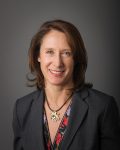
Karen James, board chair of the Jewish Federation of Greater Vancouver. (photo from JFGV)

Volunteers are integral to almost every nonprofit organization, and Jewish Federation of Greater Vancouver is no exception. With this year’s annual campaign well underway, the Jewish Independent spoke with Karen James, who became Federation’s new board chair earlier this year.

Jewish Independent: You’ve been involved with various organizations over the years, such as the Jewish Family Service Agency and the Canadian Jewish Political Affairs Committee. With which organizations are you currently volunteering?

Karen James: When I took on the role of chair of Federation, I let go or passed on most of the other things I was doing. I had been on the board of JFSA and chaired for the past year, but have passed that on. I am still representing Vancouver on the Jewish Agency for Israel board of governors meetings but that is the only other thing I am doing. That still connects to Federation, as we support the agency and Vancouver now has a stronger voice with the agency. I still support CJPAC and JFSA in any way I can.

JI: How do you balance volunteering with working? Is it a challenge?

KJ: I am very fortunate to have a business that does not demand too much time of me right now. Mostly, the balance is between volunteering and time for myself and time for a social life.

The board chair is a significant role. There is no question that I would not be able to do much else. There are many different and moving parts to Federation and this role. I couldn’t imagine having a full-time job and doing this. I want to learn and support everything going on in our community but there are limits to my time and energy sometimes.

JI: How and when did you become involved in Federation, and in what capacities to date?

KJ: I first became involved at Federation in 2007 when I came back from a Federation-led mission to Israel. I took on the role of vice-chair for community and sat at the campaign table. After that, I was women’s philanthropy chair, then chair of financial resource development and then, in 2013, chaired the Israel and overseas affairs committee for four years before stepping into the board chair role…. Because of my involvement over the past 10 years, I can see the full picture of what Federation does and what is happening in the community.

JI: What motivated you to take on the role of Federation board chair?

KJ: I like working with people and the move to chair of the board did seem like a natural progression. I also know that Federation is looking at longer-term succession and was looking at me possibly filling the role, so it wasn’t a surprise…. I want to give back. I have the time and energy to give to my community. Community means everything to me. I was disengaged and, when I moved back to Vancouver, I said I wanted to be part of community, that it was missing from my life. We can be there for each other in times of need and in times of celebration and naches.

JI: In what ways have you witnessed Federation evolving with the community and its needs?

KJ: The 2020 Strategic Priorities. As we developed [it], we sought input from a wide cross-section of community stakeholders, partner agencies, etc. – 2020 is a commitment to more flexible funding models and more grassroots.

I have witnessed that we all [are affected by] the affordability issues in our city. We not only need to address this within our community in the city but also in the suburbs of Vancouver, where our Jewish population is moving to. Over half of our community now lives outside of Vancouver. How can we address their needs, because, if we don’t, we run the risk of losing them entirely? We will need to provide services and programs closer to where this population is living.

It’s also expensive being involved in community life in the city. Housing payments, food, transportation, these are all issues that affect our community members. And then, the cost of Jewish day school, synagogue membership, JCC membership. It all adds up. We have to be able to support these families and individuals, too.

JI: What excites you most about this year’s campaign?

KJ: Incentive and the opportunity it represents to grow the base of support. If we’re going to help everyone, we need everyone. Everyone has a role to play. Tzedakah is a mitzvah you have to do yourself.

Sense of urgency: the community is at a turning point. If we can connect people – either by bringing programs and services to where they live or by keeping the programs and services affordable and offering subsidies – then we can keep them connected to community. Otherwise, we’ll lose them. We only have so much time to make a real difference.

JI: What, if any, of the 2020 priority items speak to you personally, or most?

KJ: Food security and affordability, but especially regional communities and reaching out them. I lived in White Rock/South Surrey for almost 30 years and was there when the WRSS JCC got started. There was nothing out there when I was raising my children and it was a long drive into Vancouver. I know how important it is to provide Jewish [options] outside of Vancouver…. The affordability issues are driving them out there, now we have to take care of them.

JI: When you’re talking to people about the campaign, what do you say to them about the benefits of contributing or volunteering?

KJ: I get more than I give. It is rewarding to me and I feel so lucky to be able to volunteer and give of my time and my resources. The rewards for being involved, for giving and helping are the connections to my Jewish family/community.

JI: If there is anything else you’d like to add, please do.

KJ: I know what it feels like to be disconnected from community, and it has been so valuable for me to connect. I barely knew anybody and, by getting involved, I’ve learned what community is all about.

One of the incentives to which Karen James was referring is that annual campaign chair Alex Cristall and his family will donate an additional $250 to the campaign for each gift from a donor who missed last year’s campaign or who is making a first-time gift. For more information on this initiative, the campaign in general and the types of programs and services Federation supports, visit jewishvancouver.com.
Format ImagePosted on November 10, 2017November 9, 2017Author Cynthia RamsayCategories LocalTags Jewish Federation, Karen James, philanthropy, volunteering
We must plan for end-of-life

We must plan for end-of-life

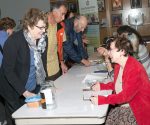
The Oct. 29 Jewish Seniors Alliance Fall Symposium on Preparing for End-of-life Transitions drew 160 participants to the Peretz Centre for Secular Jewish Culture. (photo by Alan Katowitz)

The Oct. 29 Jewish Seniors Alliance Fall Symposium on Preparing for End-of-life Transitions drew 160 participants to the Peretz Centre for Secular Jewish Culture. Several aspects of the topic were discussed, with Dr. Sue Hughson speaking on the importance of advance care planning, and Rabbi Philip Bregman presenting some of the Jewish perspectives to be considered.

JSA president Ken Levitt opened the afternoon, welcoming attendees and encouraging them all to become supporters or members of JSA, if they weren’t already. He then introduced Gyda Chud, JSA vice-president, who moderated the symposium, and introduced each speaker.

Hughson has been practising veterinary medicine since 1990. She has been involved in social activism in various forms over the years and currently serves as past president of the British Columbia Humanist Association. Along with her duties on the national board of Dying with Dignity Canada, she is co-chair of the DWDC Vancouver chapter. One of DWDC’s stated purposes is to “educate Canadians about all of their legal end-of-life options, including the constitutional right to medical assistance in dying … and the importance of advance care planning.”

Hughson began by pointing out that talking about dying won’t kill you and that supporting end-of-life choices is pro-choice not pro-death. She outlined the various documents that should be completed in order to plan, in advance, for orderly outcomes. Some of the documents that need to be completed are an advance directive; a representation agreement; and an enduring power of attorney. These documents should be easily accessible – keep them in the freezer, for example. If they are in a safety deposit box, they will not be easily accessed. She also suggested bringing them to the hospital so that the staff is aware of your wishes. These issues should be discussed well in advance with family and close friends so that everyone involved is cognizant of the planning.

In British Columbia, said Hughson, we have the right to a second opinion, the right to refuse treatment, the right to end our own life and the right to assisted death (if a person qualifies).

There are a number of organizations that can help expedite the planning. One is Nidus, another is Dying with Dignity. They have a lot of information on their websites and are also accessible by telephone. Other helpful aids are estate lawyers and financial planners.

One point about the representation agreement, she pointed out, is that there are two forms: No. 9 is the form for capable adults and No. 7 is for those unable to complete it on their own. In this type of agreement, you are outlining your choices, so that, should you become incapable, those acting on your behalf can carry out your wishes. You can register your documents with Nidus. It is interesting to note that eight out of 10 doctors have done advance care planning because they see the importance of doing so.

Bregman was senior rabbi at Temple Sholom from 1980 to 2013. He has been Jewish chaplain at the University of British Columbia since 2013 and serves as executive director of Hillel BC. He explained the importance in Judaism of having an ethical will, where you record the beliefs and ideas that you want to pass on to future generations. This has been a practice in Judaism for thousands of years, he said.

An ethical will can be written on paper or take the form of a video. Bregman emphasized how important it is to have the discussion about end-of-life with your family: what you want to happen regarding funeral arrangements, burial, etc. If the dying person avoids the issues because they think their family is afraid to discuss them, the dying person may feel isolated.

Bregman explained that the Vidui is said at the deathbed if the dying person is unable to say it themselves. It is a prayer asking God for forgiveness. He stated that people usually die at night or early morning, and he thinks it may be because they wish to be alone. But he has experienced what he called the awesome feeling of being present at the moment of death and being aware of the soul leaving the body. The tradition of naming children after a departed relative stems from the idea of the continuation of the neshamah (soul) in a new being, he explained.

The rabbi emphasized the importance of organ donation as helping with life. It is not against Jewish tradition, he said, and is accepted even by the Orthodox. He said people should talk with the Chevra Kadisha (Burial Society) to learn more about the traditions surrounding the preparation of the body for burial. For example, in order to be kosher, the coffin must be biodegradable. There must also be holes in the coffin for a quicker return to nature. We are, after all, only burying the vessel, the neshamah has already departed.

To a question about cremation, Bregman replied that, in Judaism, nothing should be done that is disrespectful to the body and burning is considered disrespectful by most rabbinical authorities. Regarding leaving your body to science or a postmortem, he said it is important to specify that the body be returned for Jewish burial, otherwise it will be cremated. Finally, he stated how important it is to make funeral arrangements in advance, how helpful that is for the family and, again, he encouraged everyone to become an organ donor and help save a life.

Chud then thanked the speakers and invited everyone to partake of the refreshments. A video of the entire event, as well as the PowerPoint by Jack Micner, an estate lawyer who was unable to speak at the symposium due to unforeseen circumstances, will be available on the Jewish Seniors Alliance website.

Shanie Levin, MSW, worked for many years in the field of child welfare. During that time, she was active in the union. As well, she participated in amateur dramatics. She has served on the board of the Jewish Federation of Greater Vancouver and is presently on the executive of Jewish Seniors Alliance and a member of the editorial committee.

Format ImagePosted on November 10, 2017November 9, 2017Author Shanie LevinCategories LocalTags death, end-of-life, JSA, seniors

Grandparent parents

This past summer, the topic of grandparents parenting their grandchildren was front and centre at the Jewish Child and Family Services Winnipeg (JFCS) annual general meeting. The Independent spoke recently with a couple of the participants in the June event.

Corinne Ackerman, 73, was joined by her husband, Harvey, 75, at the AGM. The couple has two grown children – a son who lives and works in Auckland, New Zealand, and a daughter who lives in Winnipeg. Seven years ago, their daughter’s family began experiencing difficulties, to the point that Manitoba Child and Family Services (CFS) became involved.

“Harvey and I were aware there were problems in their home, but we didn’t know how bad,” Corinne told the Independent. “We got a phone call from our daughter, saying that CFS was coming to the school to apprehend their three boys. And, of course, when I heard that, I just was absolutely stunned…. I grabbed my car, went to the school and met the social worker. I said, ‘You’re not taking them. I’m their grandmother and they are coming with me.’”

Everyone ended up at CFS, which then evaluated the possibility of the Ackermans taking charge of their grandsons. “They came to our apartment. They checked it,” said Corinne.

By that evening, all three boys were with their grandparents in their apartment. However, said Corinne, “We had them here with us for about 10 to 12 weeks. They [CFS] wouldn’t let us keep them. You can’t have three children in a two-bedroom apartment.

“At that point, friends of mine … and even the principal at the kids’ school called me … and said to call JCFS. It took a lot for me to do that. You become so embarrassed. Harvey and I were just mortified.

“I did, and God bless Emily Shane [who was then at the helm of JCFS]. She sent workers and the process began. They found a foster home for the three boys, but it very quickly deteriorated. It was just awful.”

Ian, now 14, the youngest, was having the most trouble. He also needed some major dental work. All of those involved decided it would be best if Ian went back to live with his grandparents. Ian’s brothers are now 18 and 20.

“I don’t even remember how it all happened, but the agreement was, the boys were going to another foster home and Ian would stay with us,” said Corinne. “And he’s been with us now since he was 7 years old.”

The Ackermans have made a point of assuring Ian that his parents and brothers love him.

“I think that he knows that he’s loved and that we still love his mom, dad and brothers,” said Corinne. “Ian would like to be home with his mom and dad if it was possible. But, I think he’s pretty happy here. And, for as long as he needs us to be here, we are going to try to take care of him.”

While there were some hurt feelings within the family when all of this happened, of course, everyone has made amends for Ian’s sake. They all speak regularly, and Ian visits his mom and dad regularly.

When asked about the difference between raising your own kids versus raising your grandchildren, Corinne said, “Well, when you raise your grandchildren, you get a better appreciation for the love you have. I love my daughter, I love my son, I love my in-laws, but you love your grandchildren on a different level, and we just adore Ian. At times, he’s very difficult, but at times, he’s an absolute blessing.”

The Ackermans have had to realign their lives in order to parent their grandson. It was a drastic change and they depend on JCFS for respite.

“We are not people who go out all the time, but it does cut down on the freedom to do so,” said Corinne. “But, we’re OK with that. Ian is important enough to us that it’s worth it.

“Ian has some challenges in school and that makes it quite difficult for any parent. We’ve done our best to get him the help he needs, and I can say that JCFS has been fabulous. Ian had a reading clinician, as he had a little speech impediment, and now it’s gone. JCFS has been wonderful with whatever Ian has needed.

“There are issues when a child is taken from their parents, and issues before that, and they’ve been very helpful throughout,” she continued. “As far as Harvey and I, when I really have it up to my head … I’ll give the social worker a call and she’s always there to help and give advice.

“Ian is the most invaluable young man because, whatever we do for him, he does back for us tenfold. He’s a wonderful kid. A million foster homes are wonderful, but family is family and there’s a difference.”

The other panelist at the JCFS AGM was Karla Berksen, 73, who also took in her two grandchildren seven years ago. Berksen was awarded custody because her daughter was unwell and her husband could not care for the kids.

Berksen and her partner of many years, Arthur Chipman, took in the children when Paige was 4 and Jacob was 8. At the time, Berksen was a newly retired financial planner and was spending part of her winters in Mexico.

“My daughter was still alive when I got the kids,” Berksen told the Independent. “She wasn’t a very well person, so we spent a lot of time with her. When they came to me, they were just dropped off. Arthur’s been quite amazing, because people my age don’t think this is something they want to do for their retirement. But, this is what we’re doing, although Arthur is still working.”

Both children attended and graduated from Brock Corydon School’s Hebrew immersion program. “Jacob had his bar mitzvah two years ago and Paige will have her bat mitzvah in March,” said Berksen.

“I feel very grateful to have the kids. It makes me a little tired sometimes. But, as I said at the JCFS AGM, I’ve only had two anxieties in my whole life. One was nine months after I stopped smoking – I had an anxiety attack realizing I wasn’t going to have a cigarette again. The other one happened a couple years after I got the kids, and I realized that I’m going to have teenagers again. That’s my biggest fear – going through the teen years again. You can only build them up, but they have to take charge and you never know what will happen.”

Berksen said both of her grandchildren are very talented. Her grandson is a gifted musician who is self-taught on the saxophone, drums, guitar and piano, with plans to one day become a studio musician and music teacher; he also enjoys playing hockey. Berksen’s granddaughter loves the arts and curling. Both kids spend part of their summers at Camp Massad.

Although Berksen hopes one day to again spend time in Mexico, her current priority is to raise her grandchildren up through their university studies. “I don’t see it as my life being on hold,” said Berksen. “This is it. This is my life and I enjoy it for the most part. I enjoy watching these two kids grow up. They keep me alive and busy.”

Rebeca Kuropatwa is a Winnipeg freelance writer.

Posted on November 10, 2017November 9, 2017Author Rebeca KuropatwaCategories NationalTags family, JCFS, parenting, Winnipeg
Talk of death is healthy

Talk of death is healthy

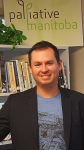
Mike Goldberg, community outreach and education coordinator at Palliative Manitoba. (photo from Mike Goldberg)

Despite the fact that the vast majority of us have lost a loved one, fear and misunderstanding often complicate the grieving process, according to Mike Goldberg, community outreach and education coordinator at Palliative Manitoba.

“Death is not a part of our culture,” said Goldberg. “We tend to revere youth and vitality over age and wisdom, as opposed to Eastern cultures.”

Goldberg, who grew up through the Jewish school system in Winnipeg – attending Ramah Hebrew School and Gray Academy of Jewish Education – earned his master’s degree in gerontology from the University of Regina. He gives many presentations and talks to people in different communities about palliative care and what he describes as “our death-denying society” – and how we can positively change that culture. He also facilitates educational programs at Palliative Manitoba for healthcare aides and support workers; assists people with intellectual disabilities; works with members of First Nations communities; and facilitates grief support groups for kids ages 9 to 12 (called Kids Grieve Too) and 13 to 17 (called Teens Grieve Too).

There was a time when people “just aged in place and the family took care of them at home … and there was nothing else to say about it,” said Goldberg. “That was just the way things were done. But, now it’s more commonplace to see somebody who is getting older being supported in a healthcare facility, a seniors care home.

“It certainly has to do with technology and the economy. You don’t see a lot of people with families that have one primary breadwinner, while the others are able to support family members who are elderly or sick in the family. Everybody seems to have to work, right?”

He said that more Eastern cultures, and sometimes South American ones, can be “more communal and more of a collective society.” He said, “I think we’d like to think we’re communal and collective in Canada, but we’re very much individualistic and self-reliant here. And, we’re very similar to the U.S. in that way.

“We don’t really have a lot of space to care for our elderly family members when it comes to the aging process, so we’ve established these support systems outside the home. And then, it sort of perpetuates itself – this cycle of having the aging experience happen outside the home … and the dying experience happens outside the house. And that has contributed to a fear or denial of death. It just doesn’t happen in our purview.

“If a person is approaching end-of-life, if they have a terminal illness or if they simply have a life-limiting illness … if they need extra supports at their place of residence, we can connect a worker to them to meet with them at home and to provide a supportive presence, to be a companion with them,” he said about Palliative Manitoba.

“For those looking for grief support,” he continued, “we have volunteers that can call you and have a conversation over the phone with you about once a week. Again, they’re not there to provide advice, they’re just there to listen and provide a supportive presence. We find the most appropriate way to support somebody through grief is to listen to them.”

Goldberg is a proponent of inviting open conversations about death and dying, and of exposing kids to death, grief and loss at a young age, not sheltering them. He suggested being as direct as possible with kids and with anyone you meet in terms of language, while also being hyper-aware of word usage – not using euphemisms and metaphors concerning death.

“It’s difficult to talk about death, because it’s something that is going to happen to all of us and represents this unknown,” he said. “But, it’s universal and, to better support each other, we need to talk about it.

“We also need to educate professionals working in this field, who are supporting those approaching end-of-life. These are the people on the ground, experiencing life and death every day. They need to have a high quality of understanding of how to communicate, what the right and wrong things are to say, and being better listeners.

“That’s really crucial,” he stressed. “It doesn’t matter what role you have in society – a nurse or whoever – if we just became better at listening to each other, then that would go a long way in having more direct conversations about death and dying, and changing the culture around it.

“The thing that I’ve come to understand working in this field is that it’s not homogenous emotions we experience. It’s a wide variety of emotions and sometimes a rollercoaster of emotions. The grieving process is not the five-step staircase we tend to think it is. It’s a fluid process that you could go back and forth between the stages.

“There’s certainly a lot of hope in grief and in death,” he said, “and I see that when people tell me that they couldn’t imagine doing what I do, because of the sadness that comes along with grief. I just tell them that I’m able to be with people in one of the most important and sacred times of their life, at the end of life. And, to be able to work with somebody and hear their stories and be with them is a privilege.

“The reality is, everybody grieves differently. There’s no right or wrong way. It’s just however you’re able to make sense of what’s going on.”

Rebeca Kuropatwa is a Winnipeg freelance writer.


Format ImagePosted on November 10, 2017November 9, 2017Author Rebeca KuropatwaCategories LocalTags death, end-of-life, family, health
ביקור חשוב

ביקור חשוב

נציגי הפדרציה היהודית של ונקובר ביקרו בישראל, ברשות הפלסטינית ובירדן. (צילום: twitter.com/JewishVancouver)

משלחת של הפדרציה היהודית של אזור מטרו ונקובר בשיתוף פעולה עם המרכז לעניני ישראל והיהודים בקנדה, חזרה מביקור חשוב בישראל, ברשות הפלסטינית ובירדן. בראש המשלחת עמדה יו”ר מועצת המנהלים של הפדרציה היהודית, קרן ג’יימס. כן השתתפו בה המנכ”ל, עזרא שנקן, היו”ר לשעבר סטיבן גרבר והיו”ר של המרכז, דיוויד קייפ.

המשלחת מסרה בדיונים שניהלה עם נציגים שונים מישראל את תמיכתה בישראל ואת הרצון להגיע לשלום באזור. הפגישות התנהלו בין היתר עם בכירים במערכת הפולטית בישראל. ובהם: שר התשתיות הלאומיות, האנרגיה ומקורות מים, יובל שטייניץ (ממפלגת הליכוד), שרת המשפטים, איילת שקד (ממפלגת הבית היהודי), סגנית שר במשרד החוץ, ציפי חוטובלי (ממפלגת הליכוד) וסגן השר לעניינים דיפלומטיים במשרד ראש הממשלה, מיכאל אורן (ממפלגת כולנו). כן התקיימה פגישה עם נציג האופוזיציה יו”ר מפלגת יש עתיד, יאיר לפיד. בנוסף התקיימו פגישות עם שגרירת קנדה בישראל, דבורה ליונס והקוסטוס (שומר המקומות הקדושים) של הכס הקדוש בישראל הפורש, האב פיירבטיסטה פיצאבלה.

נציגי הפדרציה היהודית לקחו חלק בישיבת חבר הנאמנים של הסוכנות היהודית לארץ ישראל, שדנה במשמעות החוק של ממשלת ישראל בנושא הגיור (המאפשר לרבנות הראשית בישראל סמכות בלעדית בהליכי הגיור), וכן בהשעיית ההסכם לגבי סידורי התפילה בכותל המערבי (“מתווה הכותל”), על ידי ראש הממשלה, בנימין נתניהו, עקב לחצן של הפלגות החרדיות יהדות התורה וש”ס. כידוע יו”ר הסוכנות היהודית, נתן שרנסקי מתנגד להשעיית סידורי התפילה החדשים וחוק הגיור. יצויין עוד כי שני נושאים אלה מטבע הדברים מעסיקים רבות יהודים הגרים בישראל ומחוצה לה, שלא נמנים על הזרם האורתודוכסי (בהם רפורמים וקונסרבטיבים).

המשלחת התשתפה גם באירוע הרשמי בכנסת לזכרו של ראש הממשלה לשעבר, יצחק רבין ז”ל.

נציגי הפדרציה היהודית והמרכז לענייני ישראל והיהודים יצאו לרמאללה ושם נפגשו עם ראש הממשלה של הרשות הפלסטינית, פרופסור ראמי חמדאללה. הנציגים מסרו לחמדאללה את תמיכתם בהסכם השלום בין הצדדים, וכי על הרשות הפלסטינית לקבל את הצעתה של ממשלת ישראל לחדש את המשא ומתן בנושא השלום. הם ביקשו מראש ממשלת הרשות הפלסטינית לעשות יותר כדי להילחם בהסתה ובטרור. בפדרציה היהודית מציינים בהקשר זה כי החשוב היה להם להסביר ישירות לראש הממשלה הפלסטינית מהיא העמדה של היהודים בתפוצות בנושאי השלום וישראל.

כן נפגשו נציגי המשלחת בעמאן עם ראש הלשכה המלכותית של ירדן ולשעבר ראש ממשלת ירדן (בשתי קדנציות), ד”ר פיאז א-טראונה. המשלחת הציגה לפניו מסרים דומים לאלה שהועברו לראש הממשלה הפלסטינית, תוך הדגשה שעל המנהיגים הערבים להפעיל לחץ על הרשות הפלסתינית לעשות יותר כדי להילחם בהסתה ובטרור. וכן להניע את הרשות לקבל את עמדת ישראל ולחדש את המשא ומתן לשלום. בישיבה עם ד”ר א-טראונה נכח גם שגרירה של קנדה בירדן, פיטר מקדוגל.

בפדרציה היהודית מבקשים לציין כי מידע בדבר שתי הפגישות עם ראש הממשלה הפלסתיני, ועם ראש הלשכה המלכותית של ירדן, נמסר לממשלות קנדה וישראל, שאף הביעו תמיכה בהן.

קדמו לפגישות בישראל, ברשות הפלסטינית ובירדן, ביקור בלונדון שכלל פגישות של נציגי המשלחת המשותפת עם נציגים של ראשי הקהילה היהודית. הדיונים כללו בעיקר את נושאי הגברת הביטחון והמלחמה באנטישמיות. המשלחת השתתפה גם באירועי מאה שנה להצהרת בלפור עם שר החוץ הבריטי, בוריס ג’ונסון, שנערכו בלשכת יושב ראש בית הנבחרים הבריטי, ג’ון ברקו. המשלחת ביקרה עוד בבית קנדה בלונדון ונפגשה עם נציגו מטעם ממשלת קנדה.

Format ImagePosted on November 8, 2017Author Roni RachmaniCategories עניין בחדשותTags Balfour Declaration, CIJA, Israel, Jewish Federation, Jordan, London, Palestinian Authority, הפדרציה היהודית, הצהרת בלפור, ירדן, ישראל, לונדון, מרכז לעניני ישראל והיהודים, רשות הפלסטינית

VHEC renewal now underway

Through education and remembrance, the Vancouver Holocaust Education Centre engages British Columbian students, educators and the broader public with the history of the Holocaust – the Shoah – and its ongoing relevance. Building on the VHEC’s achievements as Western Canada’s foremost Holocaust teaching museum, the centre’s renewal project, currently underway, will reconfigure the centre’s space to better serve the community and advance the organization’s vital mission.

The preservation of the VHEC’s collection of artifacts, and their use in support of Holocaust education in the post-eyewitness era, has emerged as a new area of emphasis for the future. To provide access to its archival collections and to better meet the needs of students and educators, the centre is proceeding with needed infrastructure upgrades, with support from the Government of Canada (Canada 150 Cultural Infrastructure Program), the Province of British Columbia (British Columbia/Canada 150: Celebrating B.C. Communities and their Contributions to Canada) and the Jewish Community Foundation.

The project will feature temperature and humidity-controlled archival storage and display facilities to enhance the visitor experience. The centre also looks forward to incorporating electronic access portals, which will allow visitors to interact with key themes in Holocaust history and with artifacts, documents and testimonies from the collections at the touch of a screen. Additionally, the VHEC is developing a designated audio-visual programming space that will allow Holocaust survivor outreach speakers – perhaps the centre’s most powerful, and certainly most in-demand, educators – to interact with students and participants in remote locations throughout British Columbia and beyond.

The VHEC renewal project will enable the centre to reach more students, to fulfil its obligation to archival donors and to engage in the time-sensitive work around ensuring that Holocaust-era artifacts from the community can be collected and integrated into exhibits and educational programs.

With plans for an eventual redevelopment of the Jewish Community Centre of Greater Vancouver in progress, the VHEC is ensuring that key aspects of the renewal are modular and transferable, in the event that the centre relocates in the coming years. The renewal will build in flexibility and sustainability.

The VHEC looks forward to welcoming students, teachers and community members to its renewed facility in early 2018, and to using its improved facility as a platform for carrying out its programming and interacting with the community. Guests attending the Nov. 22 special event in support of the VHEC, called “Looking Back … Moving Forward: Expanding the Reach of Holocaust Education,” will learn more about the centre’s upcoming plans, and preview the inaugural exhibition that will open in its renewed space.

Featuring a commissioned series of portraits of VHEC Holocaust survivor volunteers, the exhibition will honour and put a human face on those who survived the Shoah and have contributed to the VHEC community. Pulitzer Prize-winning photojournalist Marissa Roth created a similar exhibition of portraits of Holocaust survivors associated with the Museum of Tolerance in Los Angeles, currently on permanent exhibition at the museum. Inspired by this remarkable project, the VHEC is launching a documentation and exhibition project by Roth at an important time of transition for the centre and for Holocaust education.

The exhibition of black-and-white, matted and framed archival silver gelatin prints will be accompanied by biographical and historical information, and reflections on survival and the importance of education and remembrance. Representing and honouring the survivor volunteers who are no longer with us is an important aspect of the project, which will feature posthumous portraits – photographs of photographs of survivors, in some cases held by descendants.

Embodying the VHEC’s commitment to engaging with the past with eyes fixed firmly on the future, the renewal project and the Roth portrait exhibition will honour survivors, invite the participation of next generations and extend the reach of the VHEC’s work to new audiences, asking ever-more-challenging questions of how we extrapolate insights from history to navigate present-day affronts to social justice and human rights.

Nina Krieger is executive director of the Vancouver Holocaust Education Centre. This article originally appeared in the centre’s magazine, Zachor.

Posted on November 3, 2017November 1, 2017Author Nina KriegerCategories LocalTags Marissa Roth, photography, Vancouver Holocaust Education Centre, VHEC
Recalling a lost aunt

Recalling a lost aunt

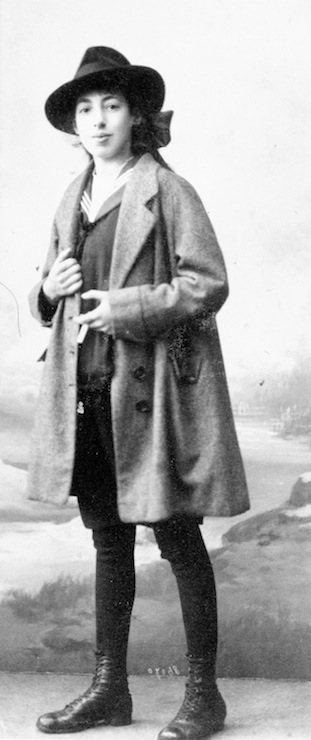
Rosetta van Dam, circa 1920. (photo from Louise Sorensen)

The Dutch Holocaust Memorial of Names has provided the opportunity to write and have published a piece about a person named on the memorial. I contributed stories about six of my murdered relatives, and wrote one of those stories in English, about my Aunt Rosa.

photo - Rosetta van Dam, circa 1920Rosetta van Dam (1904-1942), or Ro, was my mother’s younger sister. She was the first in the family to be deported and murdered, on Aug. 3, 1942, in the first Auschwitz gas chamber, at the age of 38. She had responded to the Nazi call to report for “labour in Germany.”

Ro lived in Rotterdam at the family home on Bergweg 99, where I was born and where she had her own room on my grandparents’ floor. Ro was totally withdrawn and had virtually no social life. She always wore a girl scout uniform, with heavy wool knee-high socks and sandals. She likely would have preferred men’s clothing but it was totally taboo at the time for women to dress in that way.

Ro’s voice was very deep and I believe now that she may have been transsexual or, in any event, a lesbian. I was told that my grandparents had been dragging her to a number of doctors, of course with no result. She ended up a virtual hermit, usually disappearing to her room. I think she did some secretarial work, perhaps for my grandparents’ business.

From 1929 to 1936, we lived in the same Rotterdam house. As a toddler and preschooler, I was too young to understand my aunt, but was curious and eager to please her.

Several years ago, I visited Auschwitz and learned that Ro never reached the Birkenau gas chambers because they were not yet in operation on Aug. 3, 1942. I was informed of this while standing in that very gas chamber, the only one that had not been destroyed, feeling deeply sad about my aunt.

Louise Sorensen was born in the Netherlands in 1929, where she lived with her parents and older sister. In May 1940, when the Nazis occupied Holland, they lived in a suburb near Amsterdam. Two years later, the Nazis ejected them from their home and the family was forced into the Amsterdam ghetto. By January 1943, they were separated and hidden in various locations throughout the country until the Canadians liberated them on April 17, 1945. Sorensen immigrated to Vancouver in 1959; her Danish husband has passed away and she has two sons and three grandsons. She has been active with the Vancouver Holocaust Education Centre since its inception: she was a board member for 10 years and has been speaking in schools and to other audiences for about 30 years. This article also appeared in VHEC’s Zachor.

Format ImagePosted on November 3, 2017November 1, 2017Author Louise SorensenCategories WorldTags Amersterdam, Holocaust, memorial, Netherlands, Rosetta van Dam
Netherlands builds memorial

Netherlands builds memorial

A bird’s-eye view of the Holocaust Memorial of Names to be built in Amsterdam. (photo from holocaustnamenmonument.nl)

More than 70 years after the Second World War, a memorial in Amsterdam will be erected with the names of all the Dutch Holocaust victims. This will finally provide the Netherlands with a tangible memorial where the 102,000 Jewish victims and 220 Sinti and Roma victims can be commemorated individually and collectively.

Up to now, no memorial in the Netherlands has listed each individual Holocaust victim by name. For surviving relatives, a place to commemorate family members is invaluable. In addition, a memorial listing the more than 102,000 names serves as a reminder to current and future generations of the dangers of racism and discrimination.

Between 1933 and 1945, the Nazis murdered an estimated six million Jews and hundreds of thousands of Sinti and Roma. Of the 140,000 Jews who lived in the Netherlands in 1940, 102,000 did not survive the war.

Not all Jews were murdered in the gas chambers of the extermination camps Auschwitz-Birkenau, Treblinka, Belzec, Majdanek, Chelmno and Sobibor. Many were murdered in mass executions or died as a result of sickness, hunger, exhaustion or slave labour. The Dutch Holocaust Memorial of Names commemorates all these victims.

Designed by Polish-Jewish architect Daniel Libeskind, whose studio is headquartered in New York City, the Dutch Holocaust Memorial of Names will be located in the heart of the Jewish Quarter of Amsterdam. The memorial consists of the four Hebrew letters that make up the word zachor, to remember. When visitors enter the memorial, they find themselves in a labyrinth of passageways flanked by two-metre-tall brick walls that convey the message, “In memory of.” Inscribed on each of the 102,000 bricks is a name, date of birth and age of death, in such a way that the name of each victim can be touched.

In combination with the highly reflective geometric forms of the steel letters, the brickwork connects Amsterdam’s past and present. A narrow void at the point where the brick walls meet the metal forms makes it appear that the steel letters float, symbolizing the interruption in the history and culture of the Dutch people.

Anyone can adopt a name on the memorial by donating 50 euros. For more information, visit holocaustnamenmonument.nl.

Format ImagePosted on November 3, 2017November 1, 2017Author Dutch Holocaust Memorial of NamesCategories WorldTags Amsterdam, Daniel Libeskind, Holocaust, memorial, Netherlands
Join in Limmud 2018

Join in Limmud 2018

Limmud Vancouver is now accepting program proposals for the April 14-15, 2018, learning symposium. Organizers seek presentations on a range of topics – text study, Jewish history, social action, arts and culture, family programs, and more – and welcome a range of formats: for example, lecture, interactive music and movement, chavruta-style small group, PowerPoint. They hope both new and returning presenters will prepare proposals, and encourage both experienced teachers and new voices to share areas of personal expertise. The Limmud principle is, “Every learner can be a teacher. Every teacher should be a learner.”

In 2018, Limmud Vancouver returns to Beth Israel Synagogue. The Saturday night event will shift: before sunset, participants will learn from several diverse presentations; after sunset, they’ll enjoy Havdalah and a reception. There will be only one weekend ticket sold, good for both Saturday night and Sunday.

Limmud Vancouver 2018 chairperson Laura Duhan Kaplan is well known around town for her breadth of teaching and organizational skills. The previous chairperson, Avi Dolgin, and the core group that created Limmud Vancouver will be staying on to create this next weekend. But Limmud Vancouver is looking for community members to join the team. They need volunteers on the existing committees – publicity, community outreach, venue, family programming, etc. And they would like to have one or two more people managing the computer tech for the presenters on the Sunday. As well, they are looking for two people to create the printed program guide – a time-limited task that calls for writing, editing, layout and production abilities. And they are also open to new initiatives; for example, Jewish theatre, monthly topic gatherings, and so on. What would you love to see at the next LimmudVan? What would you love to take on?

Contact [email protected] with any questions. If you have specific program ideas you’d like to discuss, contact [email protected]. To join the team or offer help, contact [email protected]. And, last but not least, to submit a presentation proposal, go to limmudvancouver.ca/submit-a-proposal. The deadline for proposals is Dec. 15, 2017.

Format ImagePosted on November 3, 2017November 1, 2017Author Limmud VancouverCategories LocalTags Avi Dolgin, education, Laura Duhan Kaplan, Limmud
A fine line we all walk

A fine line we all walk

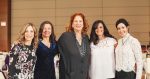
Left to right: Choices co-chair Debra Miller, Choices co-chair Sarah Marel-Schaffer, keynote speaker Lisa Friedman Clark, Choices co-chair Judith Blumenkrans and Jewish Federation of Greater Vancouver women’s philanthropy chair Megan Laskin. (photo from JFGV)

This year marked 13 years since the inception of Choices and some 450 women gathered in the Beth Israel reception hall to mingle over dinner and support Jewish women’s philanthropy. The keynote speaker was Lisa Friedman Clark, a New York native who commanded the floor as soon as she described herself as the “luckiest unlucky woman alive.”

Clark’s story is compelling. Diagnosed in 1995 at age 23 with a rare form of ovarian cancer, she endured chemotherapy and survived the illness against incredible odds. Andy Friedman, her boyfriend at the time, stood by her side throughout and, two years later, the couple married and began what she described as a “storybook life.” The arrival of twin boys completed their new family and both were pursuing successful careers up until Sept. 11, 2001. That morning, Andy went to work on the 92nd floor of One World Trade Centre and never came home.

There were audible gasps from the audience as Friedman Clark described the details of the morning her life changed forever. “He called me after the second plane had hit and said he was in a room with all his colleagues and they had plenty of air,” she recalled. “Later, we found out that the plane had hit one floor above him and the damage to the stairwells was so bad that he and his 68 colleagues could not get down. His floor was the line of demarcation between life and death. Those on floor 92 and above died.”

“I was 39 years old with two 11-year-old boys whose hero had just been killed in one of the most horrific manners one could think of,” she continued. “One minute you’re rushing to get the kids off to school and, in a split second, your husband has been murdered and life as you knew it has ceased to exist.”

Friedman Clark’s message was devoid of self-pity. “We all walk a fine line between being a donor to Federation and being a recipient of its generosity,” she told the crowd. “We never know when our lives will change.”

Federation counselors, social workers and support groups in New York were trained to deal with families affected by terrorism and came directly to the aid of her family and others in the same situation, she said. “They were uniquely able to understand our needs, and they were also there with financial aid for anyone who needed it. This help was invaluable and, had it not been for the many people that helped me at Federation, I’m not sure where I’d be today.”

Another story that touched a chord with Choices attendees was that of Ronit Yona, an Ethiopian Jew who, as a child, was rescued during Operation Moses. She lived in Israel for several years and more recently moved to Vancouver with her husband and two sons. Yona recalled her early years as a child in Ethiopia, growing up in a village that was home to 1,000 Jews and a life that revolved around home, school and synagogue. At the age of 9, everything changed. “The Ethiopian government wouldn’t allow us to practise our customs,” she explained. “I found myself following my father through the jungle at night as he led our donkey and horses, all loaded with our entire life. My father told me that, if the soldiers found us, they would kill us.”

Yona and her family became refugees in Sudan, in a tent camp where there was no sanitation and dysentery was rife. She recalled walking four hours a day to fill heavy jugs with water for the family. Then, at 10 years old, she found herself on an airplane with other Ethiopian families en route to Jerusalem. “What I didn’t know then, as a child, was that we weren’t walking alone on that journey,” she said. “ORT helped my father train as a nurse in Ethiopia and, later, the global Jewish community gave its money, time and energy to the Jewish Agency to rescue the Jews of Ethiopia who were stranded in Sudan.”

“We are all here this evening because we care about the future of the Jewish community, here at home, in Israel and around the world,” Megan Laskin, chair of women’s philanthropy at the Jewish Federation of Greater Vancouver, told attendees. “We’re celebrating making good choices for ourselves as strong women and setting a lasting example of l’dor v’dor. Women’s philanthropy is truly a force and your contributions are changing and saving lives.”

Last year, Choices generated more than $2.1 million. For information on this year’s campaign, visit jewishvancouver.com.

Lauren Kramer, an award-winning writer and editor, lives in Richmond. To read her work online, visit laurenkramer.net.

Format ImagePosted on November 3, 2017November 1, 2017Author Lauren KramerCategories LocalTags 9/11, annual campaign, cancer, Choices, Jewish Federation, Lisa Friedman Clark, philanthropy, terrorism, women

Posts pagination

Previous page Page 1 … Page 201 Page 202 Page 203 … Page 322 Next page
Proudly powered by WordPress