Skip to content
  • Home
  • Subscribe / donate
  • Events calendar
  • Business Directory
  • FAQ
  • News
    • Local
    • National
    • Israel
    • World
    • עניין בחדשות
      A roundup of news in Canada and further afield, in Hebrew.
  • Opinion
    • From the JI
    • Op-Ed
  • Arts & Culture
    • Performing Arts
    • Music
    • Books
    • Visual Arts
    • TV & Film
  • Life
    • Celebrating the Holidays
    • Travel
    • The Daily Snooze
      Cartoons by Jacob Samuel
    • Mystery Photo
      Help the JI and JMABC fill in the gaps in our archives.
  • Community Links
    • Organizations, Etc.
    • Other News Sources & Blogs
  • JI Chai Celebration
  • JI@88! video

Recent Posts

  • Federation now across BC
  • Israel fighting for its existence
  • Deal strengthens Iran
  • Patriotic belonging diminishes
  • A campaign to engage
  • Upstanders’ first live event
  • Responding to Carney
  • Having your own home
  • Music a family tradition
  • Musical to warm heart
  • Community milestones … June 2026
  • Sharing her passion for Israel
  • Or Shalom reopens its doors
  • JFS from past to future
  • Need holistic approach
  • Sharing stories, advice
  • Journalist shares fears
  • Skills to live together
  • Road to independence
  • Cutting grass with scissors
  • Zionism as a solution
  • Deceit, desire & the divine
  • Reclaiming sacredness
  • Creative project ideas
  • Summer squares and cobbler
  • Thou shalt … summer commandments
  • Legal help for students
  • Revisiting myth of Lilith
  • Wrong person rebuked
  • Canada’s mixed messages
  • Questions for museum
  • Symposium on antizionism
  • Making soccer political
  • CJPAC lauds Pulver’s impact
  • City recognizes Vrba’s legacy  
  • Organ donation saves lives

Archives

Follow @JewishIndie
image - CJN box ad Rockowers 2026

Category: Local

Fader joins HFLA

For the first time in the 100-year-plus history of the organization, the Hebrew Free Loan Association of Vancouver (HFLA) has hired an executive director. In July, HFLA brought Lynne Fader on board to fill the new role.

Active between 1915 and the middle of the Great Depression and then reinvented in 1979, the purpose of the volunteer-run organization is, as the name suggests, to provide interest-free loans to members of the Jewish community. As the community has grown and spread out, the current board of directors decided it was time to extend HLFA’s reach and hire a part-time executive director.

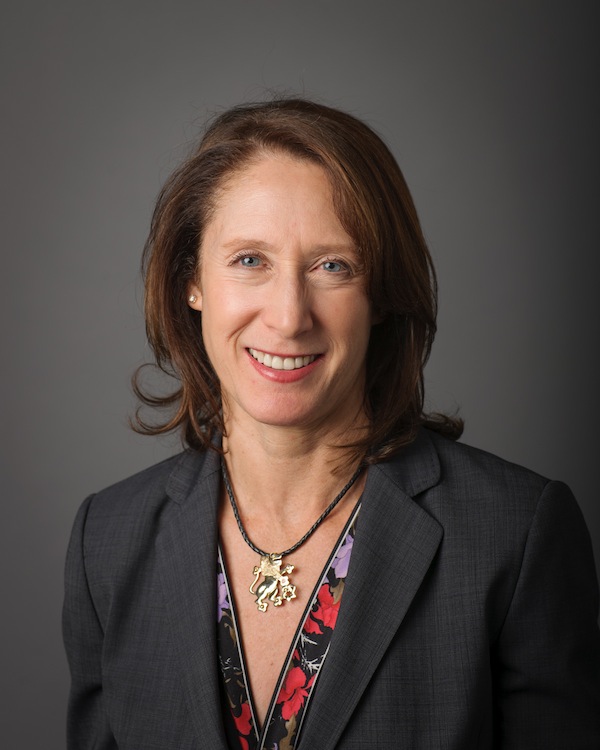
photo - Lynne Fader is the first executive director of the Hebrew Free Loan Association of Vancouver
Lynne Fader is the first executive director of the Hebrew Free Loan Association of Vancouver. (photo from Lynne Fader)

Fader is a familiar face for many in the Jewish community, especially those in Richmond, as she was a founder of the Richmond Kehila Society. Since 2000, Fader has been co-executive director of Kehila and she will continue her work there, as it and HFLA have complementary missions. She also has served as a volunteer on various boards, including those of Richmond Jewish Day School and Richmond Multicultural Society.

Fader recently sold the company she owned and ran for 14 years, ER Plus Risk Management Inc., an enterprise that involved her in efforts to advance access for women in the trades and in the safety industry. She has worked with different levels of government both professionally and as a volunteer, and is looking forward to using her networking skills and drive to significantly raise the profile of HFLA.

Not only will Fader be meeting in the coming months with community leaders, but she will be planning and implementing educational opportunities for people who could most benefit from an HFLA loan. “I recognize that the HFLA is a hidden community treasure,” she told the Independent. “I look forward to meeting with fellow agency professionals in the effort to allow front-line professionals to have a face and a contact to connect with for their clients and members.”

The grassroots nature of HFLA – it has been run by volunteers for nearly 40 years – is a great fit for Fader. She understands the association’s mission and method: help people before they fall into poverty and as they emerge from financial difficulties. With a deep knowledge of the Lower Mainland’s various social safety networks from her work with Kehila, Fader is in the unique position of being able to refer applicants who don’t fit the HFLA framework for a loan to the appropriate assistance.

The HFLA board will continue to perform the work of interviewing and granting financial assistance. The association currently has $417,000 in loans out in the community. The loans are primarily to people in the Lower Mainland but reach as far away as Tofino, Victoria and Salt Spring Island. One of the reasons HFLA was looking to hire an executive director is the increasing number of Jews migrating to more affordable locations in the province, such as Squamish, the Sunshine Coast and further into the Fraser Valley.

In addition to Fader, HFLA also has recently hired a new office administrator, Judy Walker.

“I’m confident that Judy’s unique blend of technical and interpersonal skills will ensure those inquiring about loans are met with a professional experience,” said Leana Gaerber, vice-president of HFLA’s board of directors.

For more information on applying for a loan or becoming involved as a donor or guarantor, call 604-428-2832 or visit hfla.ca.

Michelle Dodek is a freelance writer living in Vancouver.

Posted on August 25, 2017August 25, 2017Author Michelle DodekCategories LocalTags Hebrew Free Loan Association, HFLA, Kehila Society, Lynne Fader
Beth Tikvah’s rabbi

Beth Tikvah’s rabbi

Rabbi Adam Rubin, wife Judith and their children. (photo from Rabbi Adam Rubin)

When Rabbi Adam Rubin and his family visited Congregation Beth Tikvah in February of this year, they fell in love. “They seemed to like us, too, I guess, because I got the job,” the rabbi told the Jewish Independent.

Rubin was born in Santa Monica, Calif., and grew up in Tustin, a small community outside of Los Angeles. He went to a public high school, which had only a few Jews, and first found a connection to Jewish community when he went to Jewish summer camp in northern California.

Rubin worked as a counselor in his college years, then furthered his journey into Jewish culture with a trip to Israel. He had a remarkable experience there, staying with a working-class Israeli family and wandering around Jerusalem for hours every day, fascinated. After a friend handed him a brochure for Pardes Institute of Jewish Studies, he was intrigued and made plans to study there.

After graduating from University of California, Berkeley, with a degree in American and European history, Rubin spent two years at Pardes. Despite the traditional yeshivah curriculum, there is no expectation of Orthodox observance. Free to experiment and find his own relationship with Judaism, Rubin became observant.

He studied Israeli politics and history and went on to do his doctorate at University of California, Los Angeles, in Jewish history, focusing on the Hebrew culture of the Yishuv in the 1920s and 1930s, in the era of Hayim Nahman Bialik. He was interested in people who came to Palestine to refashion Jewish life, as Ahad Ha-am (Asher Ginsberg) and the followers of cultural Zionism did. Cultural Zionism was more focused on the renewal of Jewish culture than the political renewal of a Zionist state.

Rubin settled into an academic life in Los Angeles, teaching rabbinical students at Hebrew Union College (HUC) as well as students at University of Southern California (across the street). After several years in academia, though, he was less than happy.

“The core thing in an academic life is research and writing,” he said. “I can do that, but I’m a people person, very social. I love to be with people, and my favourite part of the job was the faculty connection to the broader community, which HUC required of its teachers.” Also, over time, “the love of history faded and was replaced with the love of Torah.”

By that time, Rubin had become “egalitarian observant,” was involved in an independent minyan and had enjoyed a study chavruta (group, literally friendship) for years. He was “living a meaningful, wonderful Jewish life,” he said, “and didn’t feel like I needed to be a rabbi to do that.”

As he increasingly wanted to serve the Jewish community more directly and to be with people, he turned to the rabbinical path. After his ordination at Ziegler School of Rabbinic Studies, he became assistant rabbi at Beth Shalom, a Conservative synagogue in Seattle.

“I wouldn’t have been able to make this major transition without the support of my wife Judith,” said Rubin, noting that he needed to take a significant loss of income and become a student again to become a rabbi. His wife, an experienced elementary school teacher, will be teaching secular studies at Richmond Jewish Day School.

Although Rubin had a “great experience” at Beth Shalom, he wanted his own pulpit. “I used to joke that I was the oldest assistant rabbi in the U.S.,” he said.

The Rubins have two children: Elior, 7, who will be going to RJDS, and Na’amah, 3, who will be going to a francophone preschool.

The rabbi is looking forward to taking up the spiritual helm at Beth Tikvah.

“I love that Beth Tikvah congregation has a do-it-yourself spirit – a great deal of the religious life of the shul is done by the congregants themselves. I love how deeply committed our members are to the flourishing of the community, and how much they love and support one another.”

When asked what he hoped to bring to Beth Tikvah, Rubin replied, “My passion for exploring the spiritual riches of the Jewish tradition and sharing the sacred experience of living a life of mitzvot, combined with a commitment to the intellectual rigour and seriousness of deep Torah study.”

Matthew Gindin is a freelance journalist, writer and lecturer. He writes regularly for the Forward and All That Is Interesting, and has been published in Religion Dispatches, Situate Magazine, Tikkun and elsewhere. He can be found on Medium and Twitter.

Format ImagePosted on August 25, 2017August 25, 2017Author Matthew GindinCategories LocalTags Adam Rubin, Beth Tikvah, Judaism, Richmond

Notary services here

Until recently, Israeli families with children in British Columbia were required to travel to Toronto to renew or extend their children’s Israeli passports. The Israeli Consulate in Toronto is now collaborating with three local notaries public – one each in Vancouver, Calgary and Winnipeg. In Vancouver, Adam Brosgall, owner and principal lawyer at Brosgall Legal, has been approved by the Israeli Consulate General in Toronto to be the notary public in British Columbia to assist Israeli citizens who wish to renew or extend their under-18 children’s travel documents.

Brosgall will notarize the parents’ signatures on their children’s passport renewal or extension forms and identify the minors appearing before him, with their updated passport photos, and sign the back of the photos.

Parents wishing to use the notary public’s services must arrange a meeting and come together with their child and the following documents: forms for renewal/extension of a passport, filled in but unsigned (the parents will both sign in front of the notary public); birth certificate of the minor with the names of both parents; photocopies of the parents’ passports; and two recent five-by-five-centimetre passport photos of the child.

Both parents must come to the meeting with the notary public, along with the child, and the notary public’s service comes at a fee. After the notarization, the signed forms and the children’s photographs must be sent by mail to the Consulate General in Toronto. Only requests signed by Brosgall (in Vancouver) will be approved by the consulate.

Those who choose not to appear before the notary public may continue to travel to the consulate in person to renew/extend their children’s passports.

For more information and to book an appointment, email to [email protected] or call 604-685-ADAM (2326).

Posted on August 25, 2017August 22, 2017Author Adam Brosgall and Consulate General of Israel in TorontoCategories LocalTags Adam Brosgall, Israel, travel

Encourage menschlichkeit

The Bayit in Richmond has launched a new youth initiative, called Marc’s Mensches. Starting in September, the program aims to encourage youth in the community by rewarding them for good deeds.

The basic layout of the Marc’s Mensches program is as follows. If you witness a youth from the community (grades 5-10) doing a good deed – within either the Jewish or non-Jewish communities – enter them to be a Marc’s Mensches winner. Each month, a panel will review all the candidates and the impact their good deed has had, and they will decide a mensch for each month. The winner will be awarded a certificate of appreciation, as well as a $25 gift card to Amazon. The same candidate cannot win two months in a row.

At the end of the 10-month school year, each monthly winner will automatically be entered for the final prize. The panel will look at the each one of Marc’s Mensches and determine who has had the largest impact – that mensch will be awarded a $1,000 scholarship for Jewish education.

This program is made possible by the donations of Donald and Bonnie Dwares on behalf of their son Marc Dwares, Marshall and Sally Cramer, and Jeffrey Sachs. The Bayit is asking the entire Jewish community to participate and to give as many youth as possible the chance to be recognized for their contributions.

To submit a nominee, contact Matti Feigelstock at 604-771-8897 or visit thebayit.ca/mensches.

Posted on August 25, 2017November 1, 2017Author The BayitCategories LocalTags Judaism, tikkun olam

Milman now a judge

In Ottawa on June 14, the Hon. Jody Wilson-Raybould, minister of justice and attorney general of Canada, announced the following appointments under the new judicial application process announced on Oct. 20, 2016: Carla L. Forth, QC, partner at Guild Yule LLP, Michael Tammen, QC, a sole practitioner, Warren B. Milman, a partner at McCarthy Tétrault LLP, and Nitya Iyer, QC, a partner at Lovett Westmacott, were appointed judges of the Supreme Court of British Columbia.

The new judicial application process emphasizes transparency, merit and diversity, and will continue to ensure the appointment of jurists who meet the highest standards of excellence and integrity.

Milman, a member of the Jewish community, practised litigation with the Vancouver office of McCarthy Tétrault LLP for 24 years, with a focus on insolvency, commercial litigation, class actions defence and constitutional law. In the course of his practice, he also acted on many occasions for both for the Crown and for the defence in criminal and regulatory prosecutions.

Milman came to the law after earning a bachelor of arts from McGill University and pursuing graduate studies in classical archeology at the Hebrew University in Jerusalem from 1985 to 1988. He obtained his LLB and BCL from McGill in 1992. He was called to the British Columbia Bar in 1993 and admitted to the State Bar of California in that same year.

In addition to his private practice, Milman has devoted a substantial part of his career to promoting meaningful access to justice for ordinary Canadians. He has taken on numerous pro bono cases before courts and regulatory tribunals. In addition, he served as chair of Pro Bono Law of British Columbia, both prior to and during the organization’s merger with the Access Justice Society to form Access Pro Bono in 2010. He was appointed a governor of the Law Foundation of British Columbia in 2010 and served as chair of its board of governors in 2015 and 2016.

Posted on August 25, 2017August 22, 2017Author Department of Justice CanadaCategories LocalTags British Columbia, law, Supreme Court, Warren Milman
Shibli: a model Israeli town

Shibli: a model Israeli town

Ruth Wasserman Lande is one of the four speakers at FEDtalks, the kickoff event of the Jewish Federation of Greater Vancouver’s annual campaign, on Sept. 13. (photo from Ruth Wasserman Lande)

In her “day job,” Ruth Wasserman Lande is deputy director-general of the Federation of Local Authorities in Israel, a position in which, among other things, she seeks out the best practices of municipal governments around the world and shares them with cities and towns in Israel. As a “volunteer, extracurricular” side gig, she is involved in a pilot project that could have massive implications for Israel’s cohesion, security, economic and social advancement and the place of minorities within the country.

She and a group of volunteers – many of them, like her, alumni of the Wexner Foundation’s Israel fellowship at Harvard University’s Kennedy School of Government – are turning a disadvantaged Bedouin village in the north of Israel into a model community that can be replicated across the country.

Improving the economic conditions and the integration of non-Jewish citizens into the Zionist project is crucial for Israel’s future, Wasserman Lande said in a telephone interview with the Jewish Independent, and the Bedouin population is critical to this undertaking. She will speak about the project and its potential impacts at FEDtalks, the kickoff event of the Jewish Federation of Greater Vancouver’s annual campaign, next month.

The town of Shibli Um El-Ghanem has a population of 6,700, all of whom are Muslim Bedouins and many of whom serve in the Israel Defence Forces or alternative civil service. Bedouins in the country’s north have a long history as “exemplary citizens,” going back to service in the War of Independence, she said.

“The potential impact of the 180,000 Bedouins in the north is far larger than their absolute number, and the country’s strategic alliance with them since the establishment of the state has been, and remains, key to its national security interests,” Wasserman Lande has written. The pilot project will “serve as a positive example to others in the village who do not serve in the IDF, as well as other minorities, who find themselves in the crossroads between different vectors which threaten to draw them away from moderate integration into Israeli society.”

Wasserman Lande notes that Egypt’s poor treatment of its Bedouin population is to blame for some of the anti-government unrest in Sinai, while Israel’s comparative success in integrating Bedouins has dissuaded many in that community from becoming attracted to extremist movements. Success in this pilot project is integral, she contends, to cementing Bedouin allegiance to Israel and providing an example to other minority communities.

The project is a multi-pronged effort to identify and address challenges and opportunities within the town. It includes the establishment of a centre for scientific excellence, as well as a regional centre of United Hatzalah, the first aid brigade created and run by Charedi Jews, which is often first on the scene at emergencies, providing basic medical care until the arrival of Magen David Adom. It also includes the creation of a Bedouin Heritage Visitors Centre, which will represent northern Bedouin culture and heritage.

A regional industrial park serving Jewish and Arab communities in the Lower Galilee is intended to provide opportunities for employment and growth.

In analyzing the untapped assets of the town, Wasserman Lande and her team identified tourism as a potential source of economic growth. Shibli is located at the base of Mount Tabor, which is home to two important churches – one Catholic and one Orthodox Christian – and is located in a place of immense natural beauty. The churches attract 500,000 pilgrims a year, but the area has done little to maximize the economic potential of these visitors. When the model is replicated in other towns, she said, economic assets unique to each place will be identified.

Shibli was selected to test the model because it ticked many boxes, one of which was the cooperation of the local authorities, including a mayor who is a dual Canadian-Israeli citizen. It is also notable that the town is on Israel’s demographic and geographic periphery and is socioeconomically disadvantaged.

While there are tangible components to the project, there are also capacity-building aspects that target less visible obstacles to the success of communities like Shibli. The central government, through its various ministries, allocates significant financial resources to local communities, but some are better than others at doing the administrative work required to access funding and use it efficiently. While public aid may be available, Wasserman Lande said, obtaining it often depends on “being able to speak to the right people, open the right doors, do the right follow-up.” Successful use of funds also depends on confronting nepotism and a lack of transparency in some communities. Part of the project is to develop skills in local leadership.

Wasserman Lande sees the entire undertaking as a Zionistic one.

“The vision is Zionistic, my drive and incentive is Zionistic,” she said. “I’m thinking, what is good for my country? It is very important for my country strategically that this particular population is aligned with its interests.”

If successful, the project will advance the Zionist project within Israel and abroad, she said.

“That will create, if it’s a success story, a model formulation for other minorities,” said Wasserman Lande. “It will also be a flagship against BDS [the movement to boycott, divest from and sanction Israel] across the world as a beautiful, successful model formulation in a completely Muslim village. In a little bit of a later stage it can even serve as a potential bridge – a people bridge – between Israel and the Saudi Arabian Bedouins, Egyptian Bedouins … but we are not there yet. Furthermore, it will empower and enhance the Bedouins themselves, first and foremost those that live in that particular village.… That is something very, very special.”

Prior to beginning this project and her position as deputy director-general of the municipal authority, Wasserman Lande was an advisor to the late former president of Israel, Shimon Peres. From him, Wasserman Lande learned something that she said has served her well in this undertaking.

“I will say only one thing [about Peres]: he didn’t think that anything was impossible,” she said. “It was an inspiration for me. That’s really the driving force behind this whole project because I can definitely say from the bottom of my heart that it is very challenging.”

Wasserman Lande will be one of four speakers at FEDtalks on Sept. 13 – for tickets, visit jewishvancouver.com/fedtalks2017. The Independent has invited all four speakers to be featured in advance of the event. Next week: Rabbi Joseph Telushkin.

Format ImagePosted on August 18, 2017August 16, 2017Author Pat JohnsonCategories LocalTags annual campaign, FEDtalks, Israel, Jewish Federation, peace, tikkun olam
Anger over flag-raising

Anger over flag-raising

Kids4Peace at Camp Solomon Schechter. (photo from k4p.org)

Camp Solomon Schechter (CSS), located outside of Olympia, Wash., was mired in controversy earlier this summer, after it temporarily flew a small Palestinian flag alongside the large American, Canadian and Israeli flags that usually wave above the camp. The flag was hoisted to welcome a delegation from Kids4Peace, which included Palestinian Muslim and Christian children. The children had come to the Jewish summer camp to foster friendship and understanding.

According to a source at the camp, the decision to raise the Palestinian flag was not a political one, but was intended as an expression of the mitzvah of welcoming guests (hachnassat orchim).

The 13 children from Kids4Peace, whose visit inspired the incident, spent five days at the camp, where they attended Jewish prayers every day and learned about Zionism and Israel. Founded in Jerusalem in 2002, Kids4Peace is “a global movement of youth and families dedicated to ending conflict and inspiring hope in divided societies around the world,” according to its website. The organization works with more than 500 Palestinian, Israeli and North American youth.

“It provided an opportunity for many American Jewish campers to meet a Palestinian for the first time, and to recognize that there are Palestinian partners who want to work – together – for peace,” Kids4Peace Northwest regional director Jordan Goldwarg wrote on the Kids4Peace blog about the camp visit. “It provided an opportunity for Palestinian Kids4Peace participants to experience American Jewish life and to gain a deeper understanding of why a strong, stable Israel is so important for Jews the world over.”

The flag incident was first publicized on the Mike Report, an amateur news blog hosted out of Seattle by right-wing, pro-Israel activist Mike Behar, who was highly critical of the actions of CSS. The news of the raising of a Palestinian flag sparked intense criticism online and among some parents and alumni, including many British Columbians connected to the camp. The apology subsequently issued on the CSS Facebook page was met with so many hostile comments that the page itself was taken offline for a time.

The incident attracted attention in American Jewish papers, as well. Tablet’s Leil Leibowitz, who acknowledged that, on one level, the flag raising was a “sweet gesture,” nevertheless wrote a fiery op-ed accusing CSS of addressing “the Israeli-Palestinian conflict in a mindless, morally preening way, treating it not as something concrete but as a collection of grand symbolic gestures,” and suggesting that training children on such empty theatrics would set them up to join “fringe anti-Israel groups” as adults.

In a letter sent to parents and supporters following the visit, the camp wrote: “For the sake of a teachable moment, we did raise the Palestinian flag as a sign of friendship and acceptance. It was met with uncertainty by some campers and staff, especially the Israeli’s [sic], but all understood that the message of hope for peace by flying the Israeli flag alongside helped develop empathy. Still we plan to take down all the flags for Shabbat since there is no peace and also to relieve the sadness and anger that some feel by the site [sic] of the flag.”

The letter also said the camp remains “unabashedly pro-Israel and we are celebrating Israel alongside our new friends.”

“Camp Solomon Schechter is a proud Zionist and pro-Israel camp,” a subsequent statement said. “We honour the Israeli army and Israeli people on a daily basis at CSS. Our goal was to create a safe space for all, and begin dialogue among the next generation.”

The camp’s executive director, Sam Perlin, and co-board president, Andy Kaplowitz, also issued a statement responding to the depth of the negative responses from some members of the community: “Camp Solomon Schechter regrets raising the Palestinian flag alongside U.S., Canadian and Israeli flags … we neglected to foresee in such actions the serious political implications and, for that lapse in judgment, we are deeply sorry.”

Kids4Peace released an official statement, saying that, “To some, the Palestinian flag evokes the failure of past negotiations, continued hostility toward Israel and a feeling that there is no partner for peace.

“At the same time, the Palestinian youth who came to camp are precisely those peace leaders who are reaching out to work with Israelis to counter incitement and build a new future on a foundation of mutual respect and understanding. These Muslim and Christian youth are also part of the Palestinian people, and they deserve only admiration and support.”

The statement also noted, “Unfortunately, most Americans and Israelis never encounter any pro-peace Palestinian voices. Instead, their perspectives are shaped by painful past experiences and media portrayals that reinforce negative views. But it is wrong to view all Palestinians as enemies of Israel or the Jewish people. That’s why Kids4Peace came to camp in the first place.”

Both the Israeli and American governments have flown Palestinian flags in gestures of welcome or goodwill. The White House flew the Palestinian flag when Palestinian President Mahmoud Abbas met with U.S. President Donald Trump earlier this year. Israel lifted its ban on flying the Palestinian flag in 1993 and there were Palestinian flags flown at the Knesset in 2013, when a Palestinian delegation visited. Likewise, at a ceremony thanking all those who helped douse the wildfires in Israel’s north in 2016, the Palestinian flag was flown at an Israeli air base, next to the flags of Turkey, Russia and Greece.

Matthew Gindin is a freelance journalist, writer and lecturer. He writes regularly for the Forward and All That Is Interesting, and has been published in Religion Dispatches, Situate Magazine, Tikkun and elsewhere. He can be found on Medium and Twitter. This article was originally published by CJN.

Format ImagePosted on August 18, 2017August 16, 2017Author Matthew GindinCategories LocalTags camp, Camp Solomon Schechter, Israeli-Palestinian conflict, Kids4Peace, peace
IDF colonel visits Vancouver

IDF colonel visits Vancouver

Left to right: Ilan Pilo, Jewish National Fund, Pacific Region; Col. Adam Susman, Israel Defence Forces defence attaché to Canada; and Rabbi Shmulik Yeshayahu of the Ohel Yaakov Community Kollel. (photo from Community Kollel)

While acknowledging that the situation in the Middle East is constantly changing, Col. Adam Susman told those gathered at the Ohel Yaakov Community Kollel on July 18 that the biggest threat to Israel is Iran, “as it has been for years.”

Susman, who is the Ottawa-based Israel Defence Forces (IDF) defence attaché to Canada, was in Vancouver at the invitation of the Jewish National Fund of Canada, Pacific Region.

Born in the United Kingdom, Susman moved to Moshav Sde Nitzan in southern Israel at the age of 3, according to JNF’s website. He joined the IDF’s Givati Brigade in 1987 and became a battalion commander after serving as head of the anti-ballistic and training branches. In 2005, he was appointed commander of Hanegev infantry brigade and chief of staff of the Sinai division, protecting Israel’s southern border. In 2009, he became commander of the Dan district in Home Front Command, working to ensure the safety of civilians in the metro Tel Aviv area. Prior to his appointment as the defence attaché to Canada in 2014, Susman was head of the International Military Cooperation Department of the IDF General Staff.

Rabbi Shmulik Yeshayahu of the Community Kollel was the emcee of the Vancouver event. “It is fitting to have this meeting during the weekly Torah portion of Matot-Masei,” he said in his opening comments. “In this parashah, a portion of the Jewish people stays behind on the way to the Holy Land, preferring to farm on the other side of the Jordan River rather than go in and fight for the land. They stayed there while the rest of the tribes fought and, later, they joined them. In Judaism, we have great respect for those who risk their lives to protect other people, and especially our homeland.”

Before introducing Susman to those gathered, Ilan Pilo, executive director and Jerusalem emissary of JNF Canada, Pacific Region, presented a brief video about JNF’s activities throughout Israeli history. He then invited the president of Royal Canadian Legion’s Shalom Branch, Ralph Jackson, to speak. Jackson, who introduced himself as “the only Jew in the Scots Guards during World War Two,” presented a donation of $5,000 to Susman for Beit Halochem, a nonprofit that cares for disabled Israeli veterans.

Leonard Shapiro, Shalom Branch vice-president, noted how the branch was formed during a time of great prejudice, when Jews needed their own veterans organization. “It has been a long time now since we’ve gone to war, however, thank God. We don’t get many new members. If anyone here would like to join and support our organization and activities, you don’t have to have been in the army, you just need to be over 18 and not have committed any horrible crimes. Little ones, OK,” he joked.

Susman shared a bit about himself and his experience in the Givati Brigade, which was the most highly decorated brigade in the 2014 conflict, a fact no doubt known to the many IDF veterans in the audience.

Susman is one of 16 Israeli attachés around the world – a small number that, he said, was due to Israel never having been part of a military coalition with another country. He outlined the ties between the Israeli and Canadian militaries, the chief threats to Israel today and the IDF’s response.

“There is cooperation between the IDF and the Canadian military strategically and practically,” he said. “The relations between the IDF and the Canadian military are good.”

Asked if the change of Canada’s federal government to the Liberals from the Conservatives had had any effect on that relationship, Susman said it had not.

Turning to the situation in Israel’s own region, he emphasized the lack of stability.

“The Middle East is an interesting neighbourhood, always changing – what I tell you today may not be true tomorrow,” he said.

“The biggest threat is Iran, as it has been for years,” he continued. “[Mahmoud] Ahmadinejad took every opportunity to say that Israel should disappear from the map of the world. The main threat they’ve posed has been building Hezbollah – without Iran, it would be a small organization. In recent years, Hezbollah has been fighting in Syria and they’ve lost a lot of people, but they’ve also gained a lot of operational experience. They have also steadily increased in rocket capabilities and can now reach Eilat.”

Susman said that Syria had previously been a big threat to Israel, but that’s no longer the case, due to its civil war and ISIS, as well as the reduction of the country’s chemical weapons by Western countries.

Hamas in Gaza is the next biggest threat, he said, noting that it is also supported by Iran. “They only exist to fight,” he said. “They are not building up Gazans as they claim. A good example is the tunnel found during 2014 Protective Edge, kilometres of resources that could [have been used] for clinics and schools. Gaza is a piece of cheese, there is 80 metres between the top and the water table, dotted with tunnels. That’s a major challenge.

“The Sinai is also a security problem,” he added. “Nobody controls it, and so everybody is in there. There was no Egyptian military following the peace agreement, so that’s the result. The MFO (Multinational Force and Observers) was created to survey the Sinai and, by the way, there are many Canadians in it.

“Some people say the IDF is a military that has a country,” quipped Susman. “We are strong, and we are good at finding solutions.”

Susman cited Iron Dome as an example. The IDF initially divided Israel into 157 zones with two missile interceptors for each missile. That was successful, he said, but each missile cost $70,000 so that intercepting one fired missile cost $140,000. Therefore, the IDF sought improvements. Israel was divided into 254 zones, he said, and each one had only one missile interceptor per fired missile. This system has a 90% success rate stopping missiles, which is still not good enough in Susman’s view. “We will improve yet further,” he said.

During the question-and-answer period, an audience member commented, “You said Iran is the biggest threat against Israel but you didn’t say what Israel is doing against Iran.”

“That’s right,” replied Susman without further explanation, eliciting laughter from the crowd.

The evening ended with the singing of “Am Yisrael Chai,” led by Yeshayahu.

Matthew Gindin is a freelance journalist, writer and lecturer. He writes regularly for the Forward and All That Is Interesting, and has been published in Religion Dispatches, Situate Magazine, Tikkun and elsewhere. He can be found on Medium and Twitter.

Format ImagePosted on August 18, 2017August 16, 2017Author Matthew GindinCategories LocalTags Community Kollel, Hamas, IDF, Iran, Israel, Jewish National Fund, JNF, security, Shalom Branch, veterans
“Hacking” community

“Hacking” community

Kara Mintzberg, left, and Dana Troster at the Community Hackathon. (photo from Jewish Federation of Greater Vancouver)

On a sunny Sunday, June 25, 40 Jewish young adults gave up a day at the beach and devoted themselves to building a better community. And three teams within this group saw their ideas chosen to be developed and piloted.

Led by Jewish Federation of Greater Vancouver’s young adult program Axis, the goal of the Community Hackathon is a more connected community whose members design the programs and services they wish to see. This is the second phase of the project, which began in January, when a core group of Jewish young adults convened for a pre-Hackathon workshop focused on improving the Jewish experience for young adults and young parents.

“Jewish Federation has demonstrated that they are committed to engaging the next generation of Jewish leaders,” said Bryan Hack, chair of the Axis steering committee. “We’ve seen that in how they’ve included young adult engagement as a key element of their 2020 Strategic Priorities and in creating opportunities like the Community Hackathon, that are platforms for the involvement and leadership of young Jewish adults.”

Jewish Federation is one of only three organizations in North America to host a Community Hackathon. They received a grant from the PresenTense Group and the Covenant Foundation to facilitate the program and to fund the ideas generated through it.

The Community Hackathon was a full-day event at the Museum of Vancouver. Participants used design thinking to generate and prototype project ideas to tackle this challenge: “How to identify what people find meaningful in Jewish connection and then respond with appropriate experiences, infrastructure and communication.” Using this question as a framework, participants worked collaboratively in smaller teams to come up with tangible and sustainable solutions. They were led through the process by a facilitator from UpStart, an organization committed to being an engine for Jewish innovation.

Three of the teams will see their ideas piloted, using seed grants of $2,500 US each plus training and mentorship from UpStart and local coaches over the months to follow. The selected proposals were:

Shabbat Share (Adina Goldberg, Elliot Cheng, Jonathan Polak, Rebecca Denham, Bryan Hack and others), with the idea to create crowdsourced Shabbat dinners;

Shmooz (Rebecca Shaw, Gabby Switzer, Ali De Levie, Courtney Cohen, Kathleen Muir and Tamir Barzelai), which proposes the creation of a personalized interface that represents current events in the community, along with opportunities and a directory in a consolidated format with map and calendar capabilities; and

Treehouse Mentorship (Simone Landa, Lia Hershkovitz, Shayna Goldberg, Genna Cohen, Noah Kass and Dave Elezam), which will connect established Jewish mentors and community leaders with young professionals and newcomers to Vancouver to build a stronger community.

For more about Axis and to become involved, visit axisvancouver.com.

Format ImagePosted on August 18, 2017May 19, 2021Author Jewish Federation of Greater VancouverCategories LocalTags community-building, Hackathon, Jewish Federation, technology
Israel’s human capital

Israel’s human capital

Some of the attendees at the July 16 event, left to right: Daniel Wosk, Julia Goudkova, Shai Josopov, Sigal Kleynerman and Daniel Milner. (photo from CFHU Vancouver)

Israel’s best “natural resource” is its people. On July 16, at the Jewish Community Centre of Greater Vancouver, four speakers, representing diverse segments of Israeli society, gave TED Talk-style presentations before a sold-out crowd at the Jerusalem: City of Gold and Tech event. The common denominator of the speakers was their connection to Hebrew University of Jerusalem.

Presented by Canadian Friends of Hebrew University (CFHU) in conjunction with the Jerusalem Foundation and the JCCGV, the evening presented the many ways in which Israel is using its human capital to leverage its place in the world and continue to be the innovative nation for which it has become renowned.

Lior Schillat is the head of the Jerusalem Institute for Policy Research (JIPR), an organization that collects data on multiple aspects of Jerusalem. Although statistics don’t tell the whole story, the data collected by Schillat’s institute shed a great deal of light on how people in Jerusalem live, work and play. He explained that the city is constantly faced with a power struggle between three groups with very different worldviews: ultra-Orthodox Jews, Arabs and “the general public.” These groups have not only diverse needs and interests but also huge variances in almost every part of daily life. JIPR attempts to use the data they collect to influence lawmakers to try to minimize conflicts and use the city’s diversity to empower everyone, said Schillat, “instead of the zero-sum game we used to play, where we win and the others lose. We want to turn Jerusalem into a win-win for everyone.”

Schillat’s optimism was shared by the second presenter, Maya Halevy, director of the Bloomfield Museum of Science in Jerusalem. Although her goal is to promote an interest in and love of science, her ultimate objective is to ensure that Israel has a workforce equipped for the future. She explained the programs in STEM (science, technology, engineering and math) that her museum provides to all segments of Jerusalem’s population.

“We need to make connections with families and students,” she said. “Over 200,000 Arab and ultra-Orthodox visitors use our museum. We serve all communities with STEM literacy.”

Halevy said that, while it is easier to attract ultra-Orthodox families to the museum, Arab families as a whole stay away but they send their children through school programs. Her message, similar to Schillat’s, was that Israel will thrive when all segments of the population are educated and have equal chances to be successful.

Meanwhile, Yonatan Avraham is living his dream of becoming a physicist and an entrepreneur. He is an example of someone who is thriving because of the education he is receiving at Hebrew U. He is also the beneficiary of Toronto philanthropist Seymour Schulich’s scholarship program. Avraham expressed his gratitude regarding the place where he is studying.

“I am at the intersection of three unique resources that are ecosystems for innovation: the academic knowledge at Hebrew U, Jerusalem as a municipality supportive of start-up companies and a young, dynamic student atmosphere,” he said. “The combination has produced many innovators who are able to take their ideas to market and grow the Israeli economy.”

Helping smart people turn their ideas into companies that make money is how the final speaker of the night fit in. Tamir Huberman serves in several capacities at Yissum, Hebrew U’s technology transfer company. He works with researchers who are constantly asking the question, “How can I make this better?” What “this” is depends on the scientist, he said, but, with Israeli chutzpah, tachlis (getting to the point quickly), problem-solving ability and the pressure of existential threats fueling the process, Huberman explained that Israel is producing many great companies. Yissum is the exclusive owner of all intellectual property produced at Hebrew U and has created 120 spin-off companies since its creation in 1964. Profitable for the university, Yissum helps monetize the brain-power Halevy nurtures, Schillat influences and Avraham exemplifies.

Format ImagePosted on August 18, 2017August 16, 2017Author CFHU VancouverCategories LocalTags Canadian Friends of Hebrew University, CFHU, entrepreneurship, Israel, Jerusalem, technology

Posts pagination

Previous page Page 1 … Page 131 Page 132 Page 133 … Page 181 Next page
Proudly powered by WordPress