Skip to content
  • Home
  • Subscribe / donate
  • Events calendar
  • News
    • Local
    • National
    • Israel
    • World
    • עניין בחדשות
      A roundup of news in Canada and further afield, in Hebrew.
  • Opinion
    • From the JI
    • Op-Ed
  • Arts & Culture
    • Performing Arts
    • Music
    • Books
    • Visual Arts
    • TV & Film
  • Life
    • Celebrating the Holidays
    • Travel
    • The Daily Snooze
      Cartoons by Jacob Samuel
    • Mystery Photo
      Help the JI and JMABC fill in the gaps in our archives.
  • Community Links
    • Organizations, Etc.
    • Other News Sources & Blogs
    • Business Directory
  • FAQ
  • JI Chai Celebration
  • JI@88! video

Recent Posts

  • עשרים ואחת שנים להגעתי לונקובר
  • Eby touts government record
  • Keep lighting candles
  • Facing a complex situation
  • Unique interview show a hit
  • See Annie at Gateway
  • Explorations of light
  • Help with the legal aspects
  • Stories create impact
  • Different faiths gather
  • Advocating for girls’ rights
  • An oral song tradition
  • Genealogy tools and tips
  • Jew-hatred is centuries old
  • Aiding medical research
  • Connecting Jews to Judaism
  • Beacon of light in heart of city
  • Drag & Dreidel: A Queer Jewish Hanukkah Celebration
  • An emotional reunion
  • Post-tumble, lights still shine
  • Visit to cradle of Ashkenaz
  • Unique, memorable travels
  • Family memoir a work of art
  • A little holiday romance
  • The Maccabees, old and new
  • My Hanukkah miracle
  • After the rededication … a Hanukkah cartoon
  • Improving the holiday table
  • Vive la différence!
  • Fresh, healthy comfort foods
  • From the archives … Hanukkah
  • תגובתי לכתבה על ישראלים שרצו להגר לקנדה ולא קיבלו אותם עם שטיח אדום
  • Lessons in Mamdani’s win
  • West Van Story at the York
  • Words hold much power
  • Plenty of hopefulness

Archives

Follow @JewishIndie
image - The CJN - Visit Us Banner - 300x600 - 101625

Category: Life

Renewal requires courage

Did you notice what a great day it was today? Rain or shine, there are lots of people out there who are so happy you are alive. Besides yourself, I mean. I bet you did some things today that added to that number.

I’m feeling pretty good myself, remembering stuff from my youth. In December, we light the candles marking Chanukah, the Festival of Lights, as it is called. I always liked this holiday as a kid, along with Rosh Hashanah, because there were good things to eat at the party we always had. And older people in the family gave you money, Chanukah gelt. I hope they still do that, although I haven’t heard much about it since the kids got big and left home to form their own households.

Many people – unless they have Jewish neighbours or notice the lights around Christmas time – don’t know about Chanukah because it is not in the Bible, and because the events surrounding it happened later. After the empire forged by Alexander the Great broke up, the piece in which Israel was included was under the rule of kings named Antiochus.

These kings liked to fancy themselves gods. One of them put a statue of himself in the Jewish Temple. This was just too much for the Israelites and they rose up under the leadership of the Maccabees – Mattathias and his five sons – and drove out their Greek rulers.

Chanukah is about renewal, because that’s what the holiday celebrates, the renewal of the Temple in Jerusalem after the land was freed. Current Israel is part of that same story, as the ingathered exiles renewed national life on their land. Our national renewal is an assertion that our past is merely prologue, with the full story yet to be written.

Jewish history of the recent two millennia may not illustrate it, but Jews can be fighters when roused. The self-rule reestablished back then was ultimately surrendered to Roman rule, when they lost their unity. But Jews kept on fighting to achieve independence until, finally, the Romans used their power to exile Jews from their land. We must remember that the Romans executed Jesus because they feared that he would lead such a revolt, but the Jews continued their opposition after his death.

It took 12 legions to pacify the Jews – Rome conquered the Britons with only two legions. The Romans exiled the survivors to secure their rule, but the power of the religious ideas spawned in Israel conquered Rome itself a hundred years later. Those ideas were borne into exile by Jews who proved to be among the first martyrs.

More recent Jewish military history, in Israel – leaving aside the resistance without weapons in the Warsaw Ghetto, holding off the Nazi soldiers for weeks – proves that Jews can be fierce fighters.

The whole idea of renewal excites the blood. Renewal can make you feel like you can cancel out all the ills of the past, as if they never really happened. One can turn a corner and start out fresh. It is an idea around which one can rally believers, as has been done in so many places at so many different times.

Many people have fought and died in defence of renewal. It is at the heart of every movement that seeks to channel people’s efforts for change. It can be local, regional, national or global. It can have a religious or patriotic motivation. Its beauty is that it can have its origin in the lives of each and every one of us.

Change is not easy. We may be very unhappy with important elements of our lives, but taking drastic action to materially transform our lives takes courage and, often, an acceptance of the risk of substantial loss. Some of us may have done this at some time in our lives and not even appreciated that we were risking all for renewal.

It may not have been on a battlefield, but I consciously sought to renew my life when I reached out at the age of 70. I reached out to seek a relationship with a person I had known only superficially more than 50 years earlier as a teenager. The object of my continued memory and attention, my future bride, mustered up the courage to take me on as an unknown quantity, and her courage has enriched both our lives.

Truth be told, the times that haunt us most in our lives are those when we did not “seize the bull by the horns” and do the thing we really wanted to do. But, in the end, failing to act for lack of courage, or for some other reason, we settled for less than we ached to reach for. We can count every one of those times in our mind’s eye. Don’t we agonize sometimes about those steps not taken? We can never know for sure what the ultimate outcome would have been.

Looking out through the windows of my eyes, seeing the young and not so young, I am filled with enthusiasm for the future. I see the possibilities we all face in our lives to reengineer what the future holds for us.

There is so much happening out there of which I may have no understanding. What I do know is, if we really put our minds to it and concentrate on this renewal business, we can be sure to make our tomorrows fantastic.

Happy renewal in whatever calendar you follow, wherever in the world you are!

Max Roytenberg is a Vancouver-based poet, writer and blogger. His book Hero in My Own Eyes: Tripping a Life Fantastic is available from Amazon and other online booksellers.
Posted on December 13, 2019December 12, 2019Author Max RoytenbergCategories Celebrating the HolidaysTags Chanukah, conflict, history, lifestyle
Holiday of light, community

Holiday of light, community

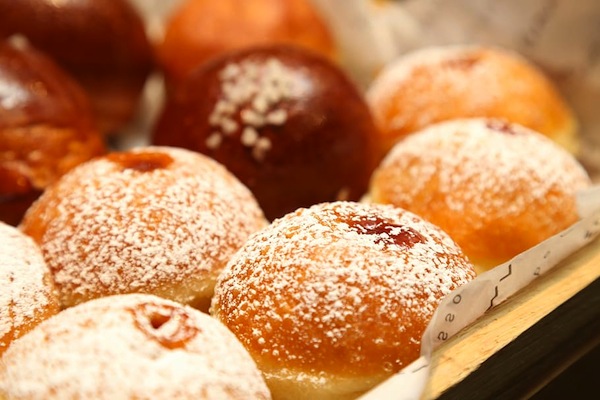
In recent years, sufganiyot have easily become the unsung heroines of new Chanukah traditions. (photo from piqsels.com)

Full disclosure, Chanukah has always been my favourite holiday. It has all the things a good holiday needs: dark wintery nights, deep-fried oily foods, magical lights, melancholy songs and cozy family time.

As a child, I looked forward to latkes and gatherings round the stove at my grandparents’ house, homemade sufganiyot – the jam-filled deep-fried doughnuts, consumed exclusively and excessively on this holiday – and the week-long vacation from school. Needless to say, my romantic view of Chanukah was somewhat tarnished as I reached adulthood only to realize that Chanukah is considered a vacation for schoolchildren; for university students and working normal folk, it’s business as usual, plus sufganiyot, plus kids. Living in Israel, a country that demands a lot of sobering up as you reach adulthood, I still count this as one of my top three.

The origin story of Chanukah frames it as a holiday of miraculous intervention. Chanukah songs and school teach us that this holiday is all about chasing away the darkness – most appropriate, given its wintery timing – and the Maccabees and their ferocious war of rebellion against the Greek-Hellenistic Seleucid Empire. We have the admirable protagonist of Judah Maccabee, waging his David vs. Goliath-like war against the archvillain of tyrant Antiochus IV Epiphanes, famous in Jewish lore for his relentless persecution of the Jews. And, of course, there’s the miracle of the oil: as the victorious Jews returned to purify the recaptured Temple, the tiny amount of oil they had miraculously lasted for the eight days it took to do so. This talmudic tale is the source of the modern eight-day celebration of Chanukah centred on the ritual of lighting the chanukiyah, adding a candle with each day.

These mythical tales reinforce the traditional Jewish narrative of a war of independence, and the few fighting and winning against the many, with the aid of a heavenly power. As a Jewish holiday, Chanukah joins the lore of religious and cultural oppression, a fierce tale of valour with a great hero in Judah Maccabee, and a grand finale celebrated in the Temple. Its roots also lent themselves perfectly to creating the holiday’s traditions; the oil from the lamp becoming a staple in both foods and in lighting the chanukiyot, when those were still oil-based, as well as holiday songs equating this religious war with chasing away the darkness.

With time and as with many holiday traditions, the modern celebrations of Chanukah grew to outshine these origin stories. This is partly helped by the holiday’s lack of family traction – no vacation time for grownups, no prescribed big family meals like on Rosh Hashanah or Passover – leaving more room for personal traditions to form and for purchasable items or foods to take centre stage. Our traditions become lighting the candles with our roommates or sharing fancy doughnuts with our work colleagues.

For me, the loose nature of Chanukah tradition also represents the growing pains of adulthood, as we’re freed to make, or burdened with constructing, our own traditions with our own families and friends. A lot of this comprises practical choices, like who to celebrate with and where, but, in the broader perspective, this is our way of connecting, or disengaging, from our community. A way of choosing our group of peers, perhaps redefining some set-in-concrete values we never considered were malleable along the way.

Chanukah provides us with an opportunity to redefine some of those traditions along with their meaning, reshaping them according to our personal beliefs and faith. Take the Chanukah narrative, for example. Do we continue to raise our children on tales of Jewish plight and persecution, of wars as heroic, of the Temple as an utmost goal worth sacrificing our lives for? Are stories of male combative heroism the most important lesson we want to teach the next generation? Is religious separatism still an essential value, or how do we tell this tale while encouraging pluralism and tolerance? And where are all the women in these stories? (There is the tale of Judith and her beheading of opposing military leader Holofernes, which is a rare account of female heroism in a terribly masculine world.) Essentially, how do we create a more challenging version of the holidays and still allow our children, and ourselves, to enjoy these traditions, not losing our sense of community as we go?

In a way, it’s fitting that the main paraphernalia of Chanukah – the chanukiyah, has also historically been a vessel for establishing Jewish identity in the Diaspora. As one of the few items used in Jewish ritual that doesn’t have a Christian parallel (like a censor or chalice, for example), the artists making these objects were free to use any type of decoration, as there was no risk the object would be mistaken for a non-Jewish item. Thus we find chanukiyot with the eagle of the local Austro-Hungarian emperor, architectural flourishes resembling renowned local structures – be they churches or mosques – or even the Chanukah tale of Judith beheading Holofernes. There are Moroccan chanukiyot made of reused sardine cans, as this was a predominantly Jewish industry, Italian chanukiyot featuring animal hybrids and putti (baby angels common in Italian

Renaissance and Baroque art) and Israeli chanukiyot with the Israeli flag. (The Israel Museum has an impressive collection of Chanukah lamps, museum.imj.org.il/stieglitz.)

As the questions of reestablishing our communal and individual identity remain, the grounding of Chanukah in our everyday world is often found in much more earthly places. In recent years, sufganiyot have easily become the unsung heroines of new Chanukah traditions. Bakeries and cafés are finding ways to make their doughnuts progressively outrageous with each passing year, adapting them to the millennial taste for opulence, decadence and quick satisfaction, since who knows what tomorrow might bring. It might not be a perfect solution, but it is undeniable that existential quandaries are best answered while consuming vast amounts of deep-fried, sugary foods while singing songs in the candlelight.

Avia Shemesh is an art history PhD student, studying medieval Spanish art, and living in central Israel. She is passionate about anything to do with art and culture, and loves to write about the ways we interact with the visual world around us and with one another. When not working or writing, she likes to travel, bake and go to yoga classes, like the borderline millennial she is.

Format ImagePosted on December 13, 2019December 12, 2019Author Avia ShemeshCategories Celebrating the HolidaysTags Chanukah, chanukiyah, Judaism, lifestyle, tradition
Courage, particularity

Courage, particularity

The chanukiyah is an expression of Jews’ commitment to place the particular into the mainstream of history. (photo from pxhere.com)

Jewishness is not merely determined by a biological accident. It involves commitment and dedication to the spiritual worldview contained within the vast literature produced through Jewish history. Without Torah – however understood – Jewish identity lacks a vital and ultimate purpose. Torah saves Jewish identity from being reduced to pure secular nationalism or racist folk sentimentality.

During the Chanukah period, one is challenged to reflect on the two main motifs of this festival: the Maccabean struggle and the rekindling of the menorah. A Jew can draw inspiration from his people’s courage to revolt against religious tyranny and from his being a member of a community that nurtures its national identity on the basis of a spiritual vision of life.

The Maccabean revolt is a compelling symbol not because of chauvinist nationalist tendencies but because of the values and way of life that this revolt aimed to preserve. The Maccabean revolt expressed intense loyalty and passionate dedication to monotheism and mitzvot. The courage, commitment and heroism of the Maccabees should not, however, be divorced from that for which they fought.

One of the distortions of modern existentialism is the exaltation of the virtues of sincerity, devotion, authenticity, etc., irrespective of their specific content. The sincerity of the Nazis in no way mitigates their barbarity and depravity. Subjective attitudes are important aspects of human behaviour only if their content is worthwhile and significant.

It is ludicrous to celebrate Maccabean courage and devotion without seriously considering the underlying values that motivated them to persevere in their struggle. In order to appreciate the full importance of the Maccabean victories over the enemies of the Judaic tradition, we must understand the basic values of that tradition.

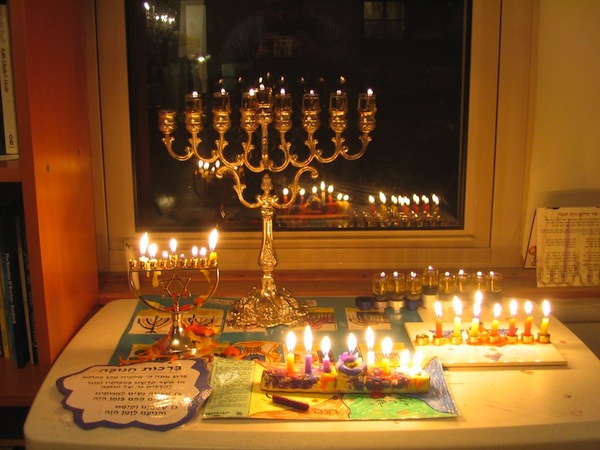
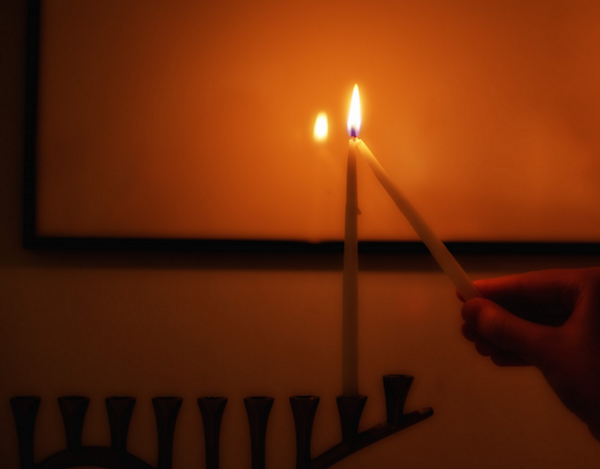
The lights of the Chanukah menorah symbolize the strength to remain different and the right to sustain particular values and loyalties in a world in which one is different and often isolated. Placing the Chanukah menorah near the window for all to see represents the great message that Jews convey to the world: we choose not to hide the flame of our spiritual tradition within the secluded confines of our people, our family, but rather we wish to have our flame radiate light in the marketplaces of history. The Chanukah menorah is a concrete expression of Jews’ commitment to place the particular into the mainstream of history, to enter the marketplace with dignity and integrity.

To love Judaism, one must Jove Jewish particularity. This love is expressed by a passionate involvement with Jewish history and with efforts to enhance the well-being of the particular people who are the living carriers of the Judaic tradition.

Chanukah focuses attention on the problematic issues involved in the survival of a community within a world whose values and cultural rhythms seem so dissimilar and foreign to its own. How can one sustain the vitality of the intimate family in an impersonal world of mass culture? How can one keep alive a vital interest in that which is unique to one’s particular culture and experience if one allows modern technology to bring a diverse array of values and cultures into one’s private home?

Some Jews believe that cultural particularity is incompatible with modern mass culture and that the bonds holding together the family of Judaism cannot bear the stress caused by exposure to the cultural rhythms of the broader culture. According to this school of thought, Chanukah celebrates the Maccabees’ courageous repudiation of the world culture of their time, Hellenism. “Hellenistic” and “Hellenization” have become derisive terms that connote the assimilating Jew, the cultural opportunist without deep roots in his community’s value system.

Those who accept this assessment of Judaism in the modern world turn to social and cultural separation in order to secure Judaism’s survival. Withdrawal into well-defined ghettos, the total rejection of secular learning even remotely related to cultural values, banning television sets in one’s home or any form of alien culture – all these build up the walls insulating this vulnerable community from the threatening world outside. Radical separation is the way these people express their will to survive.

Others are skeptical as to whether this approach can succeed. Modern communication technology makes it impossible to escape acculturation to modern Hellenism. It is, in their opinion, futile to resist. We should accept our fate and accommodate ourselves to the inevitability of our assimilation.

A third option rejects the defeatism of the latter point of view and also the separatism of the former. This approach questions the belief that Judaism has always survived because of its radical separation from the surrounding culture. Chanukah does not commemorate a total rejection of Hellenism but, as Elias Bickerman shows in From Ezra to the Last of the Maccabees, the revolt focused specifically on those aspects of foreign rule that expressly aimed at weakening loyalty to the God of Israel.

The Maccabees rejected the paganization of Judaism. They were selective in their attitude to Hellenism: they rejected what was considered to be inimical to the continuity of Judaism and incorporated within their way of life what was compatible with Jewish values and practices.

To determine the criteria of such a cultural selection is undoubtedly difficult. Can one ever determine the point beyond which outside cultural influences destroy an individual’s character and identity?

Maimonides’ thought was clearly enriched by his exposure to the writings of Aristotle, Ibn Vaja and Al Farabi. Soloveitchik was enriched by Kierkegaard, Kant and Hermann Cohen. These two great teachers who strengthened Jewish particularity by their halachic teachings are examples of cultural openness and of the intellectual and spiritual enrichment that results from exposure to non-Jewish intellectual and spiritual frameworks.

The major question that we must ponder on Chanukah is whether the Jewish people can develop a profound personal identity that will enable it to meet the outside world without feeling threatened or intimated. The choice need not be ghettoization or assimilation. Can we absorb from others without being smothered? Can we appreciate and assimilate that which derives from “foreign” sources, while at the same time feel firmly anchored to our particular frame of reference?

Chanukah is a time to reflect on such questions. How we answer them will influence our priorities, the types of families and institutions we build, and the character of the leaders we train.

The destinies of both Israel and the Diaspora depend on how solidly we build Judaic values into the core of our identities, so that Jews will be able to interact with the world from a position of dignity and rootedness. The modern return to Jewish nationhood is incomplete and destined to end in assimilation, if we do not witness a modern return to the values for which the Maccabees fought.

Jewish chauvinism and mistrust of the world is lessened when we experience the joy of mitzvah. Intense Judaic learning in the spirit of Maimonides and Soloveitchik is the key to integrating Jewish particularism with modernity. Israel’s great gift to the Jewish world is that it enables us to realize that ghettoization or assimilation are not the only choices possible in the modern world.

Rabbi Prof. David Hartman (1931-2013) was founder of the Shalom Hartman Institute. This essay on Chanukah, one of several on the holiday, dates to 1980. This and other writings have been brought to light by SHI library director Daniel Price. Articles by Hartman, z”l, and other institute scholars can be found at shalomhartman.org.

Format ImagePosted on December 13, 2019December 12, 2019Author Rabbi Prof. David Hartman SHICategories Celebrating the HolidaysTags Chanukah, Judaism, modernization, tradition
Spinning joy for Chanukah

Spinning joy for Chanukah

The lights of chanukiyot could be seen in the neighbourhood windows. (photo by Neil Harris/uberdox.aishdas.org)

There once was a dreidel named Dreidelhead. Dreidelhead had three brothers and lived with his parents in Flushing, N.Y. His first name was Noon but everyone just called him Dreidelhead because his head and body were shaped like a big dreidel. His three brothers were named Gimel, Hay and Shin.

Dreidelhead’s parents taught all of the children how to sing, dance and, of course, spin. So, during the holiday of Chanukah, all four children would sing, dance and, of course, spin at Chanukah parties and celebrations in their neighbourhood. Noon, Gimel, Hay and Shin would link their arms together and dance around the chanukiyah, singing Chanukah songs. It was quite a sight to see, the four dreidel brothers dancing together and spinning around the table. Everyone, especially children, loved to watch them.

Dreidelhead, like his brothers Gimel, Hay and Shin, was named after a Hebrew letter. Each brother had their letter stitched onto the front of their shirt, so that, when people saw them standing together, people would be reminded of the great miracle that occurred.

Dreidelhead’s letter, Noon, represented the word nes, miracle. Gimel’s letter represented gadol, which means great. Hay’s letter represented hayah, which means happened, and, finally, Shin’s letter, which is one of the last letters of the Hebrew alphabet, represented sham, the Hebrew word for there. So, when Noon, Gimel, Hay and Shin stood together, they reminded people that Nes gadol hayah sham, a great miracle happened there, in Israel, many years ago.

On the first night of Chanukah, after lighting the candles and singing songs, and before they were about to eat the scrumptious latkes that their mother and bubbie had made, Dreidelhead’s zaide would always tell the boys the story of the miracles that took place during the Festival of Lights. As their mom put down a plate of golden brown potato pancakes on the table and some sticky jelly doughnuts, their zaide recounted the tale of a band of Jewish rebels named the Maccabees, who were led by Mattityahu, a Jewish priest, and his five sons.

“A long time ago,” Zaide began, “there was an evil king of Syria named Antiochus, who forbade the study of Torah and wanted Jews to bow down to idols and eat pork. He also put idols right in the Holy Temple in Jerusalem.”

“I’d rather eat latkes and jelly doughnuts than pork,” Dreidelhead announced as he glanced hungrily at the plate of steaming latkes and sufganiyot.

“Yeah, me too,” chimed in Hay.

“Well, you’ll be eating some soon, just let your zaide finish his story,” Dreidelhead’s mom interjected.

“But, we already know the story of Chanukah,” Dreidelhead whined. “We learn it in Hebrew school every year.”

“I know you do,” Zaide patiently replied. “So, nu, if you know the story, tell us what happened next.”

“Well, um, the Maccabees, who were led by Judah the Maccabee (the Hammer) overthrew Antiochus and came to the Holy Temple to light the menorah and to cleanse it of all of the idols that were placed in it. When they came to light the menorah, there was only enough oil to last one night, but a miracle occurred and the oil lasted for eight days and eight nights,” Dreidelhead replied all in one breath.

“And so what do we do to commemorate the miraculous victory and the miracle of the oil?” Zaide asked.

“Well,” replied Dreidelhead, “uh, well, we light the candles for eight nights and put the chanukiyah in the window, we tell the story of Chanukah and eat potato latkes fried in oil. And we can also eat jelly doughnuts fried in oil. That’s what they do in Israel. Oh, yeah, and dreidels like us spin on Chanukah!”

“Don’t forget the part about the Chanukah gelt,” Gimel said.

“Oh, yeah,” said Dreidelhead. “We also get money or Chanukah gelt.”

“That’s true,” Zaide replied. “But, try to remember, boys, that the most important part of Chanukah is not getting money or presents, but lighting the candles, remembering the story and the miracles, and spinning for children during Chanukah. In fact, before your bubbie and I came to America, we would spin for all of the children in our little village in Russia on Chanukah.”

“Your zaide’s right boys,” Bubbie piped in. “And, back in the Maccabees’ time, according to an old legend, we dreidels were used to warn students studying Torah that Antiochus’s troops were coming.”

“So our ancestors helped save people’s lives – they were heroes!” exclaimed Hay.

“That’s right,” Dreidelhead’s father acknowledged. “So, you boys should be proud to be dreidels. Anyway, after you thank your bubbie and zaide for their wonderful Chanukah stories, I want you to wash your hands and then you can eat. You’ll need lots of energy if you’re going to dance for the boys and girls in the neighbourhood tonight.”

Later that evening, the dreidel brothers roamed the neighbourhood searching for Jewish families who were celebrating Chanukah. They were easy to find. The dreidels just looked for houses that had a chanukiyah displayed on the windowsill. They knocked at people’s doors and announced in unison, “Happy Chanukah! It’s the dreidels!” If there were any children in the household, they would jump up and down and shout at the top of their lungs, “The dreidels are here! The dreidels are here!” The children would plead with their parents to invite the dreidels into their home. Once inside, the dreidels would spin and sing for the children, just as their parents and grandparents did before them.

And so, during the eight nights of Chanukah, while the candles were burning, Dreidelhead and his brothers would dance and spin, bringing joy wherever they went.

David J. Litvak is a prairie refugee from the North End of Winnipeg who is a freelance writer, former Voice of Peace and Co-op Radio broadcaster and an “accidental publicist.” His articles have been published in the Forward, Globe and Mail and Seattle Post-Intelligencer. His website is cascadiapublicity.com.

Format ImagePosted on December 13, 2019July 2, 2020Author David J. LitvakCategories Celebrating the HolidaysTags Chanukah, dreidel, fiction, Judaism

Some Chanukah trivia

  1. What does the word Maccabee mean?
  2. Who were the five sons of Mattathias?
  3. What is a Chanukah lamp called?
  4. What are the letters on a dreidel outside of Israel? Inside Israel?
  5. In which book of the Bible do we read the story of Chanukah?
  6. Who was Judith and why is she mentioned on the Shabbat of Chanukah?
  7. What was Mattathias’s wife’s name?
  8. How many candles are in a box of Chanukah candles?
  9. Why do we give gelt on Chanukah?
  10. How many years occurred between the desecration of the Temple and the killings in Modiin by Mattathias and the Maccabee uprising?
  11. According to Jewish custom, what kind of oil should be used for the Chanukah lights?
  12. Why were the schools of Hillel and Shammai in disagreement about Chanukah?
  13. What is unique about the mitzvah of kindling Chanukah lights?
  14. How should one popularize the mitzvah of lighting the candles for Chanukah?
  15. What king ordered the people of his kingdom to become Greek in religion and culture?
  16. Why don’t Jews celebrate the things really done by the Maccabees?
  17. Why did Judah Maccabee want this holiday celebrated for eight days?
  18. Who were the Hasmoneans?
  19. How long did the war continue after the Temple was rededicated?
  20. How did each of the Maccabean brothers die?

 Trivia answers

  1. One tradition says it means hammer and was applied to the Maccabee family because of their strength. Another says it stands for Mi kamocha baelim Adonai, Who is like you among the great ones, O G-d?
  2. Judah, Jonathan, Jochanan, Eleazar, Simeon
  3. Chanukiyah
  4. Nun, gimmel, hay, shin; nun, gimmel, hay, po
  5. The story does not appear in any book of the Bible. It is found in Maccabees I and Maccabees II, part of the Apocrypha, books not included in the Bible.
  6. Judith was a Hasmonean woman, whose story is a book of the Apocrypha. She saved her town from destruction by killing the general in charge.
  7. No one knows because she is never mentioned in the books of Maccabees.
  8. 44
  9. During the Middle Ages, adults began to play games on Chanukah. In the 1700s, children began to play dreidel and were given coins for playing.
  10. One year
  11. Olive oil
  12. Hillel wanted one light on the first night and additional lights added each night. Shammai wanted eight lights on the first night and one subtracted each night.
  13. Even if one does not have food to eat, one should beg or sell their clothing to buy oil and lamps to light for Chanukah.
  14. Place the lights at or near the outer part of the door facing the street or in a window facing the street.
  15. Antiochus Epiphanes
  16. The rabbis did not want military battles commemorated, so they created the story of the oil being found by the Maccabees and lasting eight days.
  17. Because the men had been fighting at the time of Sukkot and had not celebrated it, they decided to commemorate that holiday by observing this one for eight days.
  18. The Maccabees were part of the House of Hashmon and called Hasmoneans, a title of honour that denoted its high standing.
  19. The war continued 127 more years.
  20. Judah was in battle and his unit became sandwiched between two enemy divisions. Eleazar was under attack by a unit on elephants – he thought the king or general was on a particular elephant so he thrust a sword into the elephant and it fell on him and crushed him. Yochanan was attacked by a tribe near the Dead Sea. Simeon was entertained by his son-in-law, made drowsy from wine and assassinated by the son-in-law’s accomplices. Jonathan was put to death by the Syrian king Tryphon.

Sybil Kaplan is a journalist, lecturer, book reviewer and food writer in Jerusalem. She created and leads the weekly English-language Shuk Walks in Machane Yehuda, she has compiled and edited nine kosher cookbooks, and is the author of Witness to History: Ten Years as a Woman Journalist in Israel.

Posted on December 13, 2019December 12, 2019Author Sybil KaplanCategories Celebrating the HolidaysTags Chanukah, history, Judaism, Maccabees
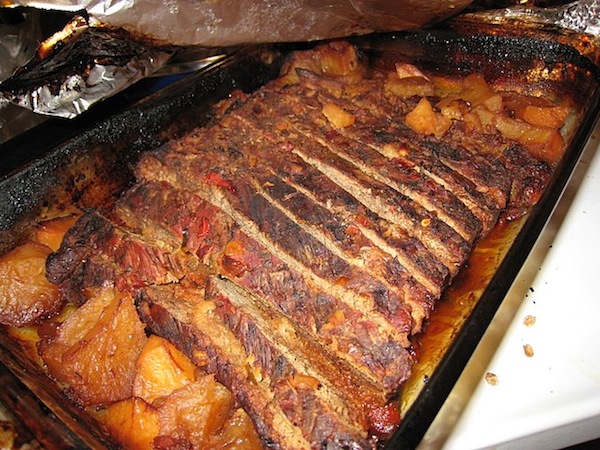
Brisket recipes for holiday

Brisket recipes for holiday

(photo by Josh Evnin)

In traditional Jewish cooking, brisket is most often braised as a pot roast, especially as a holiday main course, usually served at Rosh Hashanah, Passover and on the Sabbath. For reasons of economics and kashrut, it was historically one of the more popular cuts of beef among Ashkenazi Jews. Brisket is also the most popular cut for corned beef, which can be further spiced and smoked to make pastrami. But why not try it for Chanukah? It’d make a great holiday main dish.

First, some background. Brisket is a cut of meat from the breast or lower chest of a cow. It is one of the nine primal cuts of beef, though the precise definition of the cut differs internationally. The brisket muscles include the superficial and deep pectorals. As cattle do not have collarbones, these muscles support about 60% of the body weight of standing or moving cattle. This requires a significant amount of connective tissue, so the resulting meat must be cooked correctly to tenderize the connective tissue. The term brisket is derived from the Middle English brusket, which comes from the earlier Old Norse brjósk, meaning cartilage.

MOM’S EASY-TO-MAKE BRISKET
6-8 servings

4-pound brisket
2/3 package onion soup mix
paprika
parsley flakes
dill
6 carrots
8 potatoes

  1. Preheat oven to 350°F.
  2. Place the brisket in a foil-line baking pan. Sprinkle onion soup mix, paprika, parsley flakes and dill on top. Add carrots and potatoes. Seal in foil.
  3. Bake for one hour per pound of meat.

BRISKET AND FRUIT
8-10 servings

2 sliced onions
1 3- to 4-pound brisket
1 1/2 cups beer or wine
1 cup pitted prunes
1 cup dry apricots
3 tbsp brown sugar
2 tbsp orange marmalade
1 tsp brandy
1 tsp grated lemon peel
juice of 1 lemon
3/4 tsp ground ginger
1/2 tsp cinnamon
1/2 tsp Worcestershire sauce

  1. Preheat oven to 350°F. Line a baking pan with foil to cover brisket.
  2. Sprinkle half the onions on foil, place brisket on top; place remaining onions on top of brisket and seal. Roast three hours.
  3. Combine beer or wine, prunes, apricots, sugar, marmalade, brandy, lemon peel, lemon juice, ginger, cinnamon and Worcestershire sauce in a bowl and blend.
  4. Spread mixture on top of brisket. Reduce heat to 300°F. Cover pan and cook one hour, adding more beer or wine if sauce appears dry.

Sybil Kaplan is a journalist, lecturer, book reviewer and food writer in Jerusalem. She created and leads the weekly English-language Shuk Walks in Machane Yehuda, she has compiled and edited nine kosher cookbooks.

Format ImagePosted on December 13, 2019December 12, 2019Author Sybil KaplanCategories Celebrating the HolidaysTags brisket, cooking
Trio of cheesy pastas

Trio of cheesy pastas

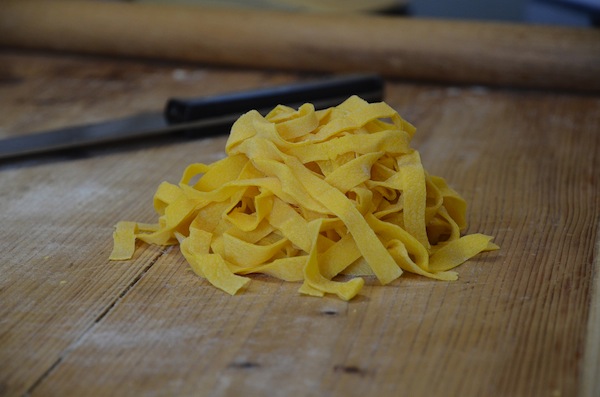
(photo from Umbe Ber/Pixabay)

Every time I do a food column, I look up its history, and I am continually fascinated by what I learn. We all know what is pasta – unleavened semolina mixed with water or eggs and formed into various shapes. It was not until 1874 that the word pasta came into popular use, from the Italian. However, there is mention, as early as the first century CE of fried dough as an everyday food.

Lagana is mentioned in a fifth-century cookbook as an ancient version of lasagna. A kind of boiled dough is mentioned in the Jerusalem Talmud, common in ancient Israel from the third to fifth centuries CE. Dry pasta became popular in the 14th and 15th centuries; tomatoes came to Italy in the 16th century and to Italian cuisine in the 17th century. Pasta became popular in North America with the Italian immigration at the beginning of the 20th century.

How many kinds of pasta do you think there are – long, medium length, short cut, stretch, soup, with fillings and gnocchi? There are 163!

Here are some recipes, which use different kinds of pasta.

MY FAVOURITE LO-CAL FETTUCCINE ALFREDO
4 servings

8 ounces fettuccine noodles
4 cups pareve chicken soup
1 cup low-fat sour cream
2 tbsp low-fat margarine
2 minced garlic cloves
3 tbsp chopped parsley
2 tbsp Parmesan cheese

  1. Cook noodles in chicken soup 12 minutes. Drain. Place in a bowl.
  2. In a frying pan, melt margarine. Sauté garlic one minute. Reduce heat and add sour cream and blend. Add noodles.
  3. Serve with parsley and Parmesan cheese.

CHEESY FETTUCCINE ALFREDO
4 servings

1/3 cup butter or margarine
8 ounces cooked, drained egg noodles
1/2 cup grated Parmesan cheese
1/2 cup grated Swiss cheese
1/2 cup half and half

  1. Melt butter or margarine in a frying pan.
  2. Add noodles and toss well.
  3. Sprinkle with cheese and toss gently until cheeses are melted and blended.
  4. Add half and half just to heat. Serve at once.

PENNE WITH EGGPLANT, OLIVES AND FETA
4-5 servings

3 tbsp olive oil
2 1/2 diced medium red bell peppers
3 chopped garlic cloves
1/2 pound eggplant, cut into 1//2-inch cubes
1 1/2 tsp oregano
1 1/2 cups canned tomatoes in juice diced or 1 pound regular diced tomatoes
1/2 cup thinly sliced fresh basil or 1/4 cup dry
1/4 cup pitted Kalamata or other black-brine cured olives
2 tbsp tomato paste
1 tbsp red wine vinegar
2 3/4 cups crumbled feta cheese

  1. Spray a rectangular baking dish with vegetable spray. Preheat oven to 350°F.
  2. Heat oil in a large pot. Add bell peppers and garlic. Sauté three minutes. Add eggplant and oregano. Reduce heat, cover and cook until eggplant is soft (about 15 minutes).
  3. Add tomatoes, 1/4 cup fresh basil (or 1/8 cup dry), olives, tomato paste and vinegar. Cover and simmer about 12 minutes.
  4. Cook pasta in boiling salt water until just tender. Drain well.
  5. Stir pasta into vegetable mixture. Transfer to baking dish and bake for 20 minutes. Sprinkle with feta and 1/4 cup fresh (or 1/8 cup dry) basil.

Sybil Kaplan is a journalist, lecturer, book reviewer and food writer in Jerusalem. She created and leads the weekly English-language Shuk Walks in Machane Yehuda, she has compiled and edited nine kosher cookbooks.

Format ImagePosted on December 13, 2019December 12, 2019Author Sybil KaplanCategories Celebrating the HolidaysTags cooking, pasta, recipes
Sweetness of chocolate chips

Sweetness of chocolate chips

(photo by Kimberly Vardeman)

Chocolate chips were created when chocolate chip cookies were invented in 1937 – Ruth Graves Wakefield of the Toll House Inn in Whitman, Mass., added cut-up chunks of a semi-sweet Nestlé chocolate bar to a cookie recipe.

The cookies were a huge success, and Wakefield reached an agreement in 1939 with Nestlé to add her recipe to the chocolate bar’s packaging in exchange for a lifetime supply of chocolate. Initially, Nestlé included a small chopping tool with the chocolate bars. In 1941, Nestlé and at least one of its competitors started selling the chocolate in “chip” (or “morsel”) form.

Originally, chocolate chips were made of semi-sweet chocolate, but today there are many flavours of chips, including bittersweet, peanut butter, butterscotch, mint chocolate, white chocolate, dark chocolate, milk chocolate, and white and dark swirled chips.

Here are some of my favourite recipes.

MOM’S CHOCOLATE CHIP COOKIES
5 dozen small cookies

1/3 cup oil (Mom, z”l, used 1/2 cup shortening)
1/4 cup brown sugar
1/2 cup white sugar
1 egg
1 package chocolate chips
1/2 tsp baking soda
1/2 tsp salt (I eliminate this)
1 1/8 cups flour
1/2 cup chopped nuts
1/2 tsp vanilla

  1. Preheat oven to 375°F. Spray cookie sheets with vegetable spray or cover with parchment paper.
  2. Combine oil, sugars and egg in a mixing bowl or food processor.
  3. Add chocolate chips, baking soda, flour, nuts, vanilla (and salt). Blend well.
  4. Spoon on cookie sheets with a teaspoon or tablespoon. Bake for eight to 10 minutes. Remove from oven and let cool on a rack.

ELISHEVA’S CHOCOLATE CHIP OATMEAL COOKIES
I tasted these at a Hadassah Israel meeting. They were made by one of our members and I had to have the recipe.

1 cup margarine or butter, softened (I use 3/4 cup oil)
1 1/4 cups firmly packed brown sugar
1/2 cup white sugar
2 eggs
2 tbsp milk (I use Rich’s non-dairy creamer or soy milk)
2 tsp vanilla
1 tsp baking soda
1 3/4 cups flour
pinch of salt (which I don’t add)
2 cups uncooked oatmeal
1 package chocolate chips
1 cup coarsely chopped nuts (optional)

  1. Preheat oven to 475°F. Place parchment paper on cookie sheets.
  2. Beat margarine or butter (or oil) and sugars until creamy in a bowl. Add eggs, milk and vanilla. Beat well.
  3. Add flour and baking soda (and salt). Mix well.
  4. Stir in oatmeal, chocolate chips and nuts. Mix well.
  5. Drop by rounded tablespoons onto cookie sheet. Bake for nine or 10 minutes for a chewy cookie, 12 to 13 minutes for a crispy cookie.

DIABETIC (SPLENDA) CHOCOLATE CHIP COOKIES
30 cookies

2 cups flour
1 tsp baking powder
1 tsp baking soda
1/4 tsp salt (I never add salt)
1 cup melted butter (I use 1/4 cup + 2 tbsp vegetable oil)
1 cup Splenda brown sugar blend
2 large eggs
1 tbsp vanilla extract
2 cups semi-sweet chocolate chips

  1. Preheat oven to 375°F. Line cookie sheets with parchment paper.
  2. Combine flour, baking powder and baking soda in a bowl. Set aside.
  3. Mix butter (oil) and Splenda in a large bowl. Stir in eggs. Add vanilla and mix. Stir in flour mixture. Fold in chocolate chips.
  4. Drop dough by tablespoon onto cookie sheets. Bake for 11 to 13 minutes. Allow to cool before moving to racks to cool completely.

Sybil Kaplan is a journalist, lecturer, book reviewer and food writer in Jerusalem. She created and leads the weekly English-language Shuk Walks in Machane Yehuda, she has compiled and edited nine kosher cookbooks.

Format ImagePosted on December 13, 2019December 12, 2019Author Sybil KaplanCategories Celebrating the HolidaysTags baking, cookies, recipes
Mystery photo … Nov. 29/19

Mystery photo … Nov. 29/19

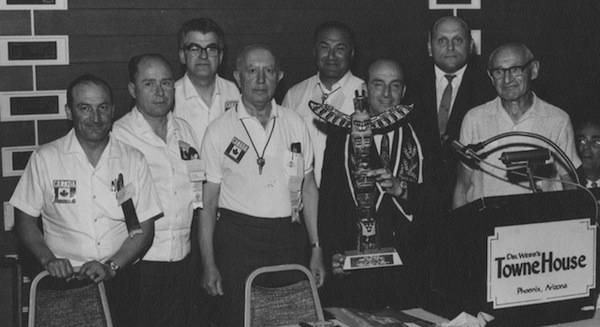
Group of B’nai Brith delegates at a Phoenix convention, 1975. Dave Jackson is on the left and Harry Buller is fifth from the left. (photo from JWB fonds, JMABC L.10220)

If you know someone in this photo, please help the JI fill the gaps of its predecessor’s (the Jewish Western Bulletin’s) collection at the Jewish Museum and Archives of B.C. by contacting [email protected] or 604-257-5199. To find out who has been identified in the photos, visit jewishmuseum.ca/blog.

Format ImagePosted on November 29, 2019November 27, 2019Author JI and JMABCCategories Mystery PhotoTags B'nai B'rith, Dave Jackson, Harry Buller, history, Jewish museum, Jewish Western Bulletin
The broader impacts of war

The broader impacts of war

Vancouver Peace Poppies co-founder Teresa Gagné at the White Poppy Memorial in 2018. (photo by Diane Donaldson)

A local group is hoping to broaden the scope of Remembrance Day as more than an occasion to honour the brave men and women who have died while serving for their country. Through the distribution of white poppies, the Vancouver Peace Poppies (VPP) movement strives to extend the focus on Nov. 11 to all those who have suffered as a result of military conflicts.

Teresa Gagné, who co-founded VPP with Denis Laplante in 2008, stresses that the group intends no disrespect towards soldiers. Instead, they wish to bring more awareness to the toll warfare has on the whole population, whether it be the loss of life or other trauma experienced. Beyond representing the victims of war, civilian and military, the white poppy, according to VPP, also challenges the beliefs, values and institutions that create the view that war is unavoidable.

“I have always had respect and sympathy for veterans, who put their life, health and family on the line to serve,” Gagné said. “I believe they deserve recognition and support, but, for years, I was uncomfortable wearing a red poppy, because of the undercurrent of promotion and recruitment for present and future wars that I detect in many public events around the topic of supporting veterans. The white poppy attracts questions, and gives me a chance to explain the nuances of my support.”

A 2016 study by Alexandre Marc, a specialist in conflict and violence for the World Bank, brought to light the overwhelmingly disproportionate number of casualties among non-combatants as opposed to combatants in recent decades. According to some reports, civilians constitute 90% of wartime fatalities, a ratio that has existed since the mid-1950s.

What’s more, Marc’s research points out that global poverty is increasingly concentrated in countries affected by violence and that prolonged conflict keeps countries poor.

Gagné and Laplante have been active in the peace movement since their teens. Their 2008 launch of VPP began by distributing handmade white poppies as a way to promote discussion and a broader focus for Remembrance Day. The following year, while still a “kitchen table” operation, they imported 500 cloth poppies from Britain. VPP now sends out more than 5,000 poppies across Canada annually.

Since 2016, VPP has partnered with the B.C. Humanist Association to host Let Peace Be Their Memorial, an annual Remembrance Day wreath-laying ceremony that includes peace songs, short presentations and poetry. This year, the Multifaith Action Society is also a co-host. The event poster highlights, “The time and location of the ceremony has been chosen to avoid any appearance of competition with, or disrespect for, veteran-focused events.”

Holocaust remembrance

As in previous years, this year’s ceremony at Seaforth Peace Park on Nov. 11, 2:30 p.m., will include a special wreath laid in memory of Holocaust victims.

Two members of the Vancouver Jewish community, Marcy Cohen and Gyda Chud, are engaged in the local movement. In 2017, Cohen attended her first Let Peace Be Their Memorial and then sought to get others in the community involved.

photo - Henry Grayman and Deborah Ross-Grayman with the Holocaust wreath at the memorial last year
Henry Grayman and Deborah Ross-Grayman with the Holocaust wreath at the memorial last year. (photo by Diane Donaldson)

“I was far more affected emotionally than I anticipated,” said Cohen of the occasion.

After learning of the history, values and focus of VPP, Chud recently joined the committee, and seeks to profile their work in the larger Jewish community. She represented Pacific Immigrant Resource Society (PIRS), a local refugee service group, in laying the refugee wreath in 2017 and 2018.

“The memorial serves as a powerful and compelling call to action for everything we can and must do to create a more peaceful world,” said Chud.

Last year’s Holocaust wreath was laid by Henry Grayman and Deborah Ross-Grayman, both children of Holocaust survivors. Having each experienced the intergenerational effects of trauma, the couple, both therapists, are facilitators for the Second Generation Group, an organization in Vancouver comprised of children of Holocaust survivors sharing their experiences among peers.

The people laying the Holocaust wreath at this year’s Let Peace Be Their Memorial have yet to be announced.

Poppies’ history

The red poppy widely worn today first appeared in 1921 on what was then called Armistice Day. In 1926, the No More War Movement, a British pacifist organization, came up with the idea for the white poppy and, in 1933, the Co-Operative Women’s Guild in the United Kingdom sold the first white poppies as a means of remembering that women had lost husbands, sons and fathers during wartime.

The wreaths that Vancouver Peace Poppies and other groups make, a mix of white and red poppies, highlight the amount of civilian suffering. VPP also distributes white poppies in schools in an effort to teach students that wars mostly kill non-military people, pollute the environment and send the message that violence as a means to settle disputes, even for adults, is acceptable.

VPP hands out its poppies by donation to increase awareness of its cause and not as a fundraiser. Poppies cost $1.25 each, of which 95 cents goes to the Peace Pledge Union, a pacifist organization based in London, England, which, since 1934, has advocated for nonviolent solutions to global problems. A $1 or $2 donation allows VPP to provide subsidized poppies for classroom use and free poppies to disadvantaged groups.

For poppies and more information, visit peacepoppies.ca or call 604-437-4453.

Sam Margolis has written for the Globe and Mail, the National Post, UPI and MSNBC.

Format ImagePosted on October 25, 2019October 23, 2019Author Sam MargolisCategories Celebrating the HolidaysTags conflict, Gyda Chud, Holocaust, Marcy Cohen, memorial, peace, Remembrance Day, Teresa Gagné, war

Posts pagination

Previous page Page 1 … Page 22 Page 23 Page 24 … Page 77 Next page
Proudly powered by WordPress