Skip to content
  • Home
  • Subscribe / donate
  • Events calendar
  • News
    • Local
    • National
    • Israel
    • World
    • עניין בחדשות
      A roundup of news in Canada and further afield, in Hebrew.
  • Opinion
    • From the JI
    • Op-Ed
  • Arts & Culture
    • Performing Arts
    • Music
    • Books
    • Visual Arts
    • TV & Film
  • Life
    • Celebrating the Holidays
    • Travel
    • The Daily Snooze
      Cartoons by Jacob Samuel
    • Mystery Photo
      Help the JI and JMABC fill in the gaps in our archives.
  • Community Links
    • Organizations, Etc.
    • Other News Sources & Blogs
    • Business Directory
  • FAQ
  • JI Chai Celebration
  • JI@88! video

Recent Posts

  • Sharing her testimony
  • Fall fight takes leap forward
  • The balancing of rights
  • Multiple Tony n’ Tina roles
  • Stories of trauma, resilience
  • Celebrate our culture
  • A responsibility to help
  • What wellness means at JCC
  • Together in mourning
  • Downhill after Trump?
  • Birth control even easier now
  • Eco-Sisters mentorship
  • Unexpected discoveries
  • Study’s results hopeful
  • Bad behaviour affects us all
  • Thankful for the police
  • UBC needs a wake-up call
  • Recalling a shining star
  • Sleep well …
  • BGU fosters startup culture
  • Photography and glass
  • Is it the end of an era?
  • Taking life a step at a time
  • Nakba exhibit biased
  • Film festival starts next week
  • Musical with heart and soul
  • Rabbi marks 13 years
  • Keeper of VTT’s history
  • Gala fêtes Infeld’s 20th
  • Building JWest together
  • Challah Mom comes to Vancouver
  • What to do about media bias
  • Education offers hope
  • Remembrance – a moral act
  • What makes us human
  • המלחמות של נתניהו וטראמפ

Archives

Follow @JewishIndie
image - The CJN - Visit Us Banner - 300x600 - 101625

Byline: The Editorial Board

We’re all in this together

Does it seem like people are behaving more kindly this week? Maybe it’s the sunshine. But maybe it’s the realization, amid all the alarming news and concerns over the spread of coronavirus, that we are all, truly, in this together.

We live in particular times that may be defined – especially as exemplified by some political leaders and their followers – as uncharitable, xenophobic, chauvinistic, mean-spirited and self-interested. These attitudes have been demonstrated, among other ways, in the attitudes of many people toward migrants from other places. These ideas trickle down to the way we treat one another – in traffic, in online interactions, in schools and workplaces, in voting – behaving in ways that take into consideration only (or mostly) our own well-being at the expense of the well-being of others. There are magnificent exceptions, of course, everyday acts of kindness and gestures of humanity great and small. But our age, it can probably be agreed, includes a lot of pettiness, intolerance and plain old snark.

Our parents or grandparents understood the meaning and necessity of sacrifice for the greater good. The communal effort during the Second World War, on the home front and among those serving, was a generationally defining undertaking. While wars, sadly, have continued, in our corner of the world, the burden has fallen on an increasingly smaller number of people – those families with members in the service. But, for at least a generation of North Americans, we have not been called upon for an unavoidable collective sacrifice for the greater good. Again, this is not to say that many people are not sacrificing for the greater good – individuals are devoting themselves to causes greater than themselves, including climate change, but they are doing so by choice. They may be driven by desperation, fear, environmental justice or other motivations, certainly, but, ultimately, it is voluntary.

Then along comes a virus with apparently incalculable potential to cause illness and death and we realize that we are not so separate after all. While they have resisted on issues like climate change, governments worldwide have stepped up (some of them more slowly and irresponsibly than others) and taken seriously the science that predicts grave consequences if we do not take urgent actions now. And individuals, in the first days of what will be an unprecedented period of unknown duration, appear surprisingly amenable to following government-issued restrictions on behaviour for the hope of long-term health, not only for themselves but for those who are more vulnerable due to age or underlying health conditions.

There is nothing good about a global pandemic. But good things happen when people act in unity to advance collective well-being. Individuals and groups have responded with astonishing immediacy when called upon to act. Places of public meeting, including restaurants and cafés, have faced the painful but unavoidable truth that they have to temporarily change their service model. This will have untold economic and social impacts as staff are displaced, with concentric circles as these workers lose purchasing power and these realities ripple through the economy, already suffering multiple unknowns and slowdowns.

In our community, synagogues and communal organizations have adopted stringent and unprecedented measures, many canceling live services and opting for alternative venues like online learning.

We witness the immediacy of these factors’ economic ripples. As our community cancels public events, advertisements are understandably pulled from our newspaper. As a result, we have made the choice to cancel an additional issue next month, and not publish for two weeks, April 10 and 17, rather than the scheduled one-week hiatus. We will have a healthy Passover issue on April 3 and we urge you to support our work and celebrate the holiday by considering advertising or inserting a greeting message in that issue or in the ones resuming April 24 and after.

In the meantime, as we come together to confront this very serious challenge, we are reminded, as Temple Sholom’s Rabbi Dan Moskovitz writes in this week’s issue writes in this week’s issue, we do not do so as Canadians or Chinese or Italians or Israelis. We are people living in different places who face the same pathogens and the same reality.

In Jewish tradition, the value of pikuach nefesh, of saving a life, overrides almost every other consideration. Among other things, this suggests that we should view our current situation through a slightly altered lens. While all of us should be doing everything we are advised to avoid getting the virus, we should be doing so not only, perhaps not primarily, for our own health, but in order to prevent us transmitting it to another person. For many of us who are younger or do not have underlying health concerns, COVID-19 could be a very unpleasant inconvenience. For others we know and love, it could be far more serious.

The top advice we have received is to wash hands with soap frequently and thoroughly, and also to stay home to avoid physical contact as much as possible. Some people are suggesting we treat these days like Shabbat. Spend time with family. Read books. Take a walk. Engage in passive activities. Turn off electronics for a time to avoid the noise of the world which, at this time, is particularly loud.

And be kind to one another. If you know of a senior or other person whose health could be endangered by going out, do their shopping. See what else they might need. Call your family and friends. Set up a virtual dinner party or a play date for your kids. Since you’re not spending money on restaurants and theatre, consider donating to charity and arts organizations.

This is all good advice. But we suspect, given some unscientific observations of kindness and communal care in the last few days, that most of us already know what to do.

For more information and latest updates from Canada’s public health authorities: canada.ca/en/public-health/services/diseases/coronavirus-disease-covid-19.html.
Posted on March 20, 2020March 21, 2020Author The Editorial BoardCategories From the JITags coronavirus, culture, health, lifestyle, politics

Religion and the state

A week is a lifetime in politics, goes an adage. And so it would seem. Just one week ago, we posited that Binyamin Netanyahu’s coalition of the right was likely to form the next government in Israel. Since then, Benny Gantz, head of Israel’s Blue and White party, has been reinvigorated by Netanyahu’s challenges in pulling together a coalition, after original exit polls had the Likud-led coalition at 60 seats out of the 120 in the Knesset. This number has dropped through the actual vote count to 58, and it has changed the outlook.

As it has in the previous two elections, the result will hinge on the decision of Avigdor Liberman and his Yisrael Beitenu party, a right-wing but defiantly secular movement. Liberman has publicly released his demands for support. Among them: he will not support a government led by Netanyahu (or any other individual under indictment) and he wants to increase the number of ultra-Orthodox serving in the military, introduce civil marriage, thereby taking control of this lifecycle event from the exclusive purview of the rabbinate, and hand decision-making about commerce and transportation on Shabbat to local governments. Meanwhile, Gantz is having a rebellion in his own ranks about seeking support from the largely Arab Joint List in parliament. So, the process is largely back to where it’s been for more than a year, with no more certainty of who will form the next government.

Whatever happens, Liberman’s sweeping secularist proposals are nothing to ignore. The ally-turned-nemesis of Netanyahu, Liberman seems to have learned from the masters how to leverage minimal electoral success to enormous political advantage. In the past, it has been the religious parties that conditioned their support for desperate-to-make-a-deal leaders on getting key benefits and concessions for their respective communities. If Liberman succeeds in helping create a Blue and White government that implements some of his plans, it will represent the same tail-wagging-dog effect that religious parties used to assert Orthodox standards across much of Israeli society. Except Liberman will leverage his seven seats to repeal some or much of what those religious parties have achieved.

This Israeli moment brings to mind other rapidly changing political fortunes. Joe Biden, whose campaign was struggling to survive a few weeks ago, is suddenly (again) the undisputed front- runner for the Democratic nomination in the United States. There is another parallel between Israel and the United States that is currently evolving, this one less publicly known. While Liberman strives to diminish the connection between religion and state in his country, U.S. President Donald Trump is moving his country more in the direction of Israel’s religiously influenced society.

As in Canada, many religious organizations in the United States do an enormous amount of good, in many cases filling in gaps where government services can’t or won’t. Republican administrations have tended to expand – contract out, if you will – some social services previously delivered by governments, while the Obama administration, for example, introduced safeguards to prevent those agencies from discriminating against individuals or groups who they might deem outside their theological teachings.

Writing in the New York Times Sunday, Katherine Stewart, author of a book on religious nationalism, warned that Trump is eliminating those Obama-era safeguards and making it easier for publicly funded agencies to discriminate. For example, clients receiving services from a taxpayer-supported Christian organization could be forced to profess allegiance to Jesus in order to access services or an employee could be fired for not living a “biblical lifestyle,” the definition of which the religious organization, presumably, could define at their own whim.

A test case in Missouri seems innocent enough: a church maintains it should get federal funding to build a kids’ playground; that being refused such money represents discrimination against religion. The corollary is clear: if preventing tax money from funding religious organizations (even for something as innocuous as a playground) is discrimination, Stewart warns, “then the taxpayer has no choice but to fund religion.” This would represent an abrogation of one of the most fundamental cornerstones of the U.S. Constitution: the First Amendment, which declares, “Congress shall make no law respecting an establishment of religion, or prohibiting the free exercise thereof….” The framers of the Constitution were concerned not only that eliminating the barrier between government and religion would corrupt a government intended to serve all citizens but, perhaps equally, that it would corrupt religious institutions themselves. A number of the people on the test case’s side are also leaders among Trump’s evangelical constituency.

What was especially jarring when perusing the Sunday Times was a far more prominent story – on page A4, to be specific – about how Quebec’s secularism law is having a detrimental effect on civil servants, mostly women, from cultural minorities. The law, which precludes people who work in most roles in the public service from showing any external indications of religiosity – a kippa, a headscarf, a crucifix, a turban – is preventing individuals from beginning or advancing in their careers and, in some cases, effectively chasing them out of the province.

These disparate examples from three very different societies indicate the folly both of excessive religious interference in governmental affairs and heavy-handed efforts to have the opposite effect. Somewhere in the middle must be a commonsensical approach to these extremities. Of the three countries in the examples, Israel is perhaps the one where the challenges are most concrete and affect the most people. What, if anything, happens as result of Liberman’s gambit will be a fascinating experiment to watch.

Posted on March 13, 2020March 12, 2020Author The Editorial BoardCategories From the JITags Avigdor Liberman, Benny Gantz, Binyamin Netanyahu, democracy, Donald Trump, elections, extremism, freedom, Israel, Quebec, religion, secularism, United States

United by challenges

After two inconclusive elections in Israel, incumbent Prime Minister Binyamin Netanyahu appears certain to form a government after elections Monday, ending an unprecedented period of political instability.

Whether Netanyahu himself, under indictment and slated for a trial this month on corruption charges, will remain prime minister for long, the right-wing is certainly poised to govern for the near future. Israel’s Supreme Court explicitly refused to offer an opinion on whether a convicted prime minister could continue in office, a question that may now go from theoretical to very real.

Jews in the Diaspora, including a great many here in British Columbia, follow politics in Israel casually or closely, as many of us do the machinations of American politics that are also roiling this week. Canadian politics and those in British Columbia, around issues of environmental policy, disruptive protests and a host of other topics, have people here at home fired up about politics even without elections on the near horizon.

While there are countless issues and contests vying for our attention, there is also an undercurrent of less immediate yet possibly more ominous peril facing our democracies. Threats of external influence from bad actors, like a repetition of the Russian interference in U.S. elections in 2016, are cause for serious concern. The rise of domestic extremism – in mainstream politics as well as in the form of underground and sometimes violent movements – also deserves close attention. So does apathy.

All of these influences and attitudes present dangers to our democracies – in Canada, in the United States, in Europe and Israel. Newer democracies in Central and Eastern Europe have demonstrated how fragile the tissue of open, accountable and responsive government can be. It is alarming to witness the path that Hungary, Russia, Turkey and Poland have been on recently. Our democracies – in the United States and Canada, even Israel – may be somewhat older, but these countries are still warnings of how things that we take for granted can be snatched away. Democracy is less an enormous oak with deep and broad roots than it is a delicate flower that requires nurturing and constant attention.

For this reason, when there are government policies or election outcomes with which we disagree, we should remind ourselves that democracy may be the ultimate win-some-lose-some proposition and recommit ourselves to respect for the institutions of our democracy, not just when they serve our interests but even – especially – when they deliver outcomes that we find disagreeable. At the same time, we should be identifying and calling out every instance when a political leader or movement threatens the institutions or norms of our democracy.

Amid all of these political dramas, very daunting situations that recognize no geographic or ideological boundaries are challenging each and every one of us. This week, again, coronavirus is spreading and causing panic. Meanwhile, the dangers posed by climate change escalate every day. The economic impacts of these global concerns are blaring across the business pages: pandemic fears are causing wild stock market fluctuations, while the measures necessary to alter the course of climate change demand fundamental economic shifts. All of these threaten to exacerbate existing inequalities locally, nationally and internationally, threatening our morality and the stability of our world.

In the face of existential issues like these, the differences in our ideologies in countries like Canada, Israel or the United States fade into shades of grey. This is perhaps optimistic: that the differences between us are minimal in comparison to the difficulties we face together. That should motivate us to look beyond or to bridge our differences and recognize both the humanity in those with whom we disagree and the challenges to humankind that we must overcome together or succumb to apart.

Posted on March 6, 2020March 4, 2020Author The Editorial BoardCategories From the JITags Canada, coronavirus, democracy, economics, Israel, Netanyahu, politics, United States

Happy Purim 2020!!

image - JI Purim Spoof 2020

Posted on March 6, 2020March 6, 2020Author The Editorial BoardCategories Celebrating the HolidaysTags clickbait, politics, Purim, satire

Antisemitism, Part 2 of 2

Last week in this space, we addressed some of the challenges facing the Jewish people globally, which were put into stark relief by the latest edition of an Anti-Defamation League report titled Global 100. The most recent annual review of antisemitic attitudes worldwide paints a disheartening picture.

There are (at least) two inferences to draw from the report: that what we’ve been doing to confront antisemitism isn’t working or, perhaps more disturbing, they are working and, without them, the situation would be much worse.

First, a point that deserves repeating. Antisemitic ideas are most rampant in places where there are few or no Jews, because antisemitism is far less about Jews than about the antisemites and their need for scapegoating or other psychosocial outlets. But that fact is of limited comfort for the Jewish woman attacked on the subway or the hundreds of people evacuated from Jewish community centres around New York state last Sunday due to bomb threats.

We who are writing these words and you who are reading them can, for the most part, do little about the global situation, but the familiar saying, “Think globally, act locally,” rings as true as ever. While there are myriad organizations working nationally and internationally in the interests of the Jewish community and Israel – and we would like to see more of that, as well as some means of quantifying their results – the greatest impacts most of us can have are probably right here in our own neighbourhoods.

Again, advertising the great achievements of Jews and Israel may not be the best strategy. There is no need for, or value in, diminishing Jewish achievement and pride, but there is value in simultaneously reinforcing the universal humanity of Jewish people.

Without reopening that can of worms about whether Trump (or Bolsinaro or Orban or Modi or Mohammad bin Salman) is bad for the Jews – because we have national and international organizations operating on those macro-diplomatic fronts – what can ordinary folks like us, who feel afraid, helpless and perhaps disenfranchised, do to have an impact and, no less crucially, feel less isolated and disempowered?

As individuals, we can engage with others in our midst: with the church down the street, the service clubs in our communities, the ethnocultural groups that abound in Vancouver and across Canada, and the pet parents we meet at the dog park. The objective, we think, should not be a full court press to persuade these people that Jews are awesome. The point should be to rebuild the relationships that Jewish communities and individuals have enjoyed with the broader Canadian mosaic; not to advocate for these other groups and individuals to stand with us, but to stand with them so that, together, we form bonds of mutual understanding and care.

It is sometimes noted, especially on social media and in conversations among friends – you’ve certainly heard it – that some of the most concerning voices today are not coming from far-right radicals (though these are troubling) but from ostensibly reasonable people on the left. Ameliorating this challenge is not going to come from declaring them the enemy and polarizing our voices with their opposite – which is what is happening quite frequently in a perilous form of the-enemy-of-my-enemy-is-my-friend construction (see Trump/Bolsinaro/Orban/Modi/MBS above). The challenge will be addressed by rebuilding or strengthening the bridges between our communities and causes – not because it is the expedient thing to do, but because it is the right thing to do.

Last week on the front page, we featured two (of many) individuals in our community who are leading local voices in the movement against climate change, each using different strategies toward the same goal. They are not doing this as ambassadors of the Jewish people, of course, but they are doing so as Jews, motivated by their values and urgent commitment to saving the planet. They are Jewish allies in a diverse mix of dedicated activists.

Countless other Jewish community members are working across faiths and cultures to advance all the communities they encounter. Holocaust survivors are partnering with indigenous residential schools survivors in joint educational initiatives, and there are Jews who are actively supporting the Japanese community’s call for redress from the B.C. government for its role in the grave mistreatment of Japanese-Canadians during the Second World War. Local Jewish groups and individuals are doing everything from working to stop human trafficking to sponsoring Syrian refugees to participating in interfaith activities to making food for the homeless.

The pages of this paper are filled regularly with stories that are not, let’s say, Jewish-specific, but of Jewish people making positive contributions to the world. Motivated by a vast range of factors, often by their Jewish values, these points of light in the world are acting on issues important to them and building interpersonal and cross-community bridges in the process.

When we began this two-part conversation last week, we pointed out that, if we had the solution to antisemitism, you would have heard it. We don’t. It seems nobody does. The work being done at the national and international levels by the vast network of Jewish and Zionist organizations is mostly admirable and should be supported. But each of us also needs to look closer to home and remember that, as Margaret Mead said, a small group of thoughtful, committed citizens can change the world – and perhaps make some friends along the way.

While celebrating and preserving what is unique in our Jewishness, we should also enhance what was successful in parts of the 20th century: allying with the diversity of individuals and groups in our multicultural society to remind them – and ourselves – that we are not alone, but part of a larger human enterprise.

Posted on February 28, 2020February 26, 2020Author The Editorial BoardCategories From the JITags ADL, Anti-Defamation League, antisemitism, Global 100

Antisemitism, Part 1 of 2

The recently released 2019 version of an ongoing Anti-Defamation League survey on global antisemitism, titled Global 100, contains predictable but still depressing confirmation of anecdotal evidence that antisemitism is growing, not receding, almost everywhere on the planet.

At a time of economic and social change and upheaval, people search for explanations and scapegoats. While so much can change, while we witness so many reversals and inversions, plus ça change, plus c’est la meme chose. The unified theory of the root of the world’s problems, for so many across continents and centuries, remains some variation of blaming the Jewish people.

If we had a solution to the challenge of antisemitism, you would have heard it. It’s easy to cite failures, noting that whatever we’ve been doing obviously isn’t working. The approach commonly used to fight both antisemitism and anti-Zionism – “Look at the great things we contribute to the world! Please like us!” – is almost certainly barking up the wrong tree, given that antisemites and anti-Zionists are driven, to a large degree, precisely by an envy of Jewish and/or Israeli success and achievement. Bigots never have doubted that Jews are clever; that’s exactly what they hate.

But overt bigots are not really our greatest threat. The sensibilities highlighted in the Global 100 report are slightly more oblique, evincing a complex of presumptions about Jewish character, power, influence, intentions and untrustworthiness. It is not so much discrimination of the we-hate-Jews variety, but a (slightly) more subtle bias that is extrapolated to conclude this or that about Jewish people. And these biases are held, as the report illustrates alarmingly, not by a small fringe group of violent haters, but by large minorities – and, in some societies, large majorities – of ordinary people. These are people who, on a wide range of human affairs, behave rationally and humanely, but not when it comes to Jews.

It also deserves to be noted that the statistics on anti-Jewish bias are almost directly inversely proportionate to the presence of Jews in a society; that is, anti-Jewish sentiment is strongest in places where there are few or no Jews. Because, to a large extent, antisemitism is not about Jews at all, but is a projection of the fears, animosities or ignorance of the carrier.

The wild-eyed Jew-haters who occasionally emerge are comparatively few, although the damage they can wreak, of course, is enormous. Their ideas and their actions are condemned by all good people. The broader swath of ideas Global 100 identifies as indicative of antisemitism in a society are more instinctual and less overt. The people who carry them are probably inclined to deny any conscious negativity toward Jews and would recoil from being called antisemitic. In many cases, they might be amenable to self-assessing and unlearning these attitudes, if approached appropriately and educated.

This is the hopeful part. These alarming numbers may not represent entrenched antisemitic ideas that are growing and cannot be effectively challenged. The majority of people who harbour such ideas, in Canadian and other Western societies we know best, are probably receptive to reason. So, why have we not succeeded?

Our likeliest allies – indeed, the people and groups with which Jewish people have consistently marched, organized and made common cause for a century or more: progressives, anti-racism advocates, social activists – have lately turned against us, either openly or more quietly, because they have decided that Israel represents an embodiment of antithetical values and that Jews, by extension, are inclined to have some degree of association with Zionism and are, therefore, either unwelcome in these movements or required to repudiate Israel.

There are other complexities that go beyond Israel. Certainly the antisemitism that permeates the British Labour party and some other parts of the Western left goes far beyond anti-Zionism and often echoes the basest medieval bigotry.

Nonetheless, these movements and the individuals who comprise them should be engaged, not cast away and dismissed. In many cases, they are ignorant or have not thought deeply about these topics, or they have not been confronted about the problems in their worldview. Since they are, in theory, our natural allies, we should be investing more effort and goodwill in building bridges, not blowing them up.

Antisemitism is distinct in many ways, but it must be viewed alongside the panoply of prejudices and bigotries being contested by progressive people and others of goodwill. By giving up on our natural allies – even if some of them don’t seem like allies right now – we risk the longer-term dangers of isolation or, possibly worse, befriending people who really are not our natural allies.

On the global stage, look at how Israel’s lack of friends has driven its leaders and diplomats into the arms of fascist-adjacent governments in Hungary, Poland, Brazil and elsewhere. Abandoned by its natural allies in the liberal democracies, Israel has been embraced by – and has embraced – those who should be its natural enemies. This is the potential for Jews in North America and Europe if we fail to protect and fortify the alliances previous generations have built with trade unions, progressive political parties, anti-racism activists and the broader pluralist societies we inhabit.

In next week’s issue, we will look at some approaches that are bearing fruit and other ideas we could consider in response to the challenges in the world generally and those presented in the Global 100 report specifically.

Posted on February 21, 2020February 26, 2020Author The Editorial BoardCategories From the JITags ADL, Anti-Defamation League, antisemitism, Global 100
Help save local media

Help save local media

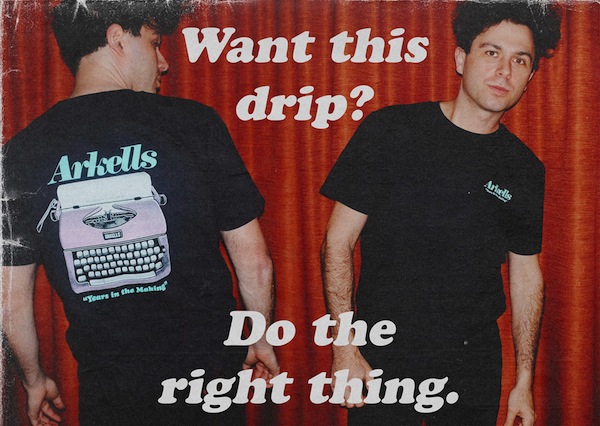
(photo from arkells.com)

In what seems like a random act of kindness, the Canadian rock band the Arkells has put out an offer to their fans. Subscribe to a community newspaper and get a swag T-shirt from the band.

Musicians are facing their own challenges these days, as streaming services are upending the traditional royalty and revenue streams of their industry. But they are perhaps not yet at the level of near-desperation the print media sector has been facing in recent years. The advent of the internet and other factors (but mostly the internet) have made people expect for free things we used to access primarily through purchasing.

Oddly, perhaps, many of us are prepared to pay for multiple subscription services for media – Spotify for music, Netflix, Crave, Disney and an ever-growing number of video services – but most people still react to paywalls on print media by finding a free (to them) alternative. As a result, print outlets from the New York Times and the Globe and Mail to, well, the Jewish Independent have struggled to find alternative sources of revenue and the means to compensate for the reality that readers are demanding (and getting) for free what they once paid for.

In keeping with the issue-driven approach to songwriting for which the Hamilton-based band is known, it was a pleasant and heartfelt message that the Arkells – whose lead singer, Max Kerman, is a member of the Jewish community – put out to their fans.

“If you’re an engaged member of your community, you’re probably thankful for the people who report the news. And even if you’re not, you’re probably still reassured to know that someone is keeping tabs,” they write.

“Good reporting not only keeps us in the loop, but also makes sure our big wigs are held accountable – to ensure there is no sneaky biz.

“Somewhere along the way, we took this for granted. We forgot that we have to pay for this vital service, and that reporting the news isn’t free. In our own city, we’ve seen our local newspaper continue to shrink, and we worry about its future and the future of other local newspapers.”

The band invites their fans to join them in investing in “the things that truly matter.”

“Let’s start,” they write, “by supporting your local paper or a daily publication you really admire. It’s been years in the making. No more running from that paywall.”

They are asking listeners to take out a year-long paid subscription to a print or online media platform (or gift one to a friend) and to let them – the Arkells – know. Then the specially designed band T-shirt will be on its way to you.

Obviously, a gesture like this is not going to save the industry. But it is sweet nonetheless, especially to see someone without a vested interest making this case. Then again, maybe their point is that every citizen does have a vested interest in the success, or at least survival, of local media.

For the Jewish community in British Columbia … that’s us! For 90 years now, the Independent and our previous incarnation the Jewish Western Bulletin have been printing the first draft of our community’s history. At the risk of sounding self-aggrandizing, there are times when we write stories as much for posterity as for this week’s readers. We know that the archives of this paper is often the first destination for people researching aspects of our community’s history. We believe that, decades hence, researchers will see in a visit to Vancouver by a renowned researcher or an act of tikkun olam or a project by local high school students as the germ of a movement, or a way-station in the progress of an idea, that is significant in its own right but also speaks to a larger trend in our community or society. Or maybe someone will just enjoy the read. In other words, we view our work as immediate and, ideally, enduring in some manner even we cannot foresee.

While in many cities across North America, the local paper is operated by the Jewish federation, here it has been run for well more than a half-century now by independent business operators taking a not insignificant risk for the community’s benefit. Operating a Jewish newspaper was never going to be the route to riches. The remarkably small number of people who have led this endeavour over the past nine decades knew this at the outset. But the challenges of the 21st century are particularly acute.

We thank you for your support and humbly ask you to recommit to our shared enterprise in this, our 90th, year. Perhaps a gift subscription to family or friends – especially younger generations, whose engagement is critical not only for the future of our newspaper but for our community. Or simply a gift to help sustain the paper, which would mean a great deal to the small team that puts this package together each week and, we believe, to the strength and future viability of our community. Plus, you could get a cool shirt for you, your kids or grandkids if you let the Arkells know about it!

Format ImagePosted on February 14, 2020February 12, 2020Author The Editorial BoardCategories From the JITags Arkells, history, journalism, newspapers, tikkun olam

Loss-loss only solution

The parallels between the Trump impeachment trial in the U.S. Senate and the release of the Trump administration’s Israeli-Palestinian peace plan are striking. Donald Trump, a master of diversion, unveiled his incendiary proposal for the Mideast at the height of the Senate’s process. Just as the impeachment trial was, in some senses, a process whose outcome was predetermined by the Republican majority, so too is the Mideast proposal outcome predetermined in that it barrels over the Palestinian opposition and rubber-stamps almost everything the more extreme elements of the Israeli body politic have long demanded.

The approach is counterintuitive – like almost everything this U.S. president has done. Supporters might contend that, since all the rational thinking of the best diplomatic minds has not resolved this problem, a 180-degree turn that electroshocks the status quo might be better than nothing. The proposal is so one-sided that, out of sheer outrage, it has at least forced the Palestinian leadership to articulate what they will (or, rather, won’t) accept to a degree greater than they have expressed in recent years.

In the end, though, this emphasis on winning and losing – the Trump plan would be a clear win for Israel and a commensurate loss for Palestinians – is precisely the wrong approach. We may believe that the Palestinian leadership has betrayed their people by rejecting previous offers of coexistence, and conclude that what their people get is what their leaders deserve. But the Palestinian people deserve better than this.

Israel and the Zionist project have always had to contend with the realities and vagaries of coexistence – what other choice do Jews really have? Despite early warnings, coexistence with their neighbours was a widespread expectation among the early Zionists, some of whom thought (naïvely, in retrospect) that they would be welcomed with open arms by the other peoples in the region. But, even with the history of conflict and the absence of anything to give us a great deal of hope, some slow evolution that leads toward coexistence is the only realistic alternative to the status quo of suspended violence and intermittent war.

We need to recognize, above all, that a lasting resolution is not going to look like a win for one side and a loss for the other. Likewise, it is not going to resemble a win-win, as negotiators in various arenas, as well as salespeople, like to say. It will be a lose-lose proposition. An enduring peace and coexistence will almost certainly occur only when both sides are willing to accept a loss on many or most of their key demands – and accept that loss as a price for their children’s lives and well-being.

More immediately, we should be very wary of any master plan for peace that is scribbled out in the middle of an election campaign or another drama like an impeachment. The contents of such a plan are almost certainly more geared to the outcome it is trying to influence (votes for Likud or the Republican Party) or distract from (the U.S. president’s impeachment and trial or the Israeli prime minister’s loss of immunity from prosecution) than the problem it is ostensibly meant to address. Israelis and Palestinians, both, deserve self-determination and lasting peace.

Posted on February 7, 2020February 6, 2020Author The Editorial BoardCategories From the JITags impeachment, Israel, Israeli-Palestinian conflict, peace, Trump, United States

When is never again?

Monday was International Holocaust Remembrance Day. Scrolling through social media, it was jarring to see the juxtaposition of images and ideas reflecting on that terrible history intermingled with the mundane and fantastical miscellany of everyday 21st-century life. This is the reality of our world: the grave realities of yesterday and today poking through the onslaught of witty memes, outrage over a vast range of real and imagined evils, cute kittens and the panorama of detritus and riches available to, and bombarding us, at every moment.

This is how it is. Even as we recommit ourselves to the promise of “never again,” still we carry on with our daily lives. Yet these realities are not, and should not be, disconnected from one another. The memory of the Holocaust and its victims, and the importance of listening to and learning from its survivors and its messages, are sacred obligations. But their lessons and meanings can and should be applied to the more commonplace events we experience. History is a prism through which we should view the present and the future.

Like the jarring extremes that can be found scrolling social media on Holocaust Remembrance Day, this collision of gravity and triviality is problematic. We recoil from inappropriate comparisons. Yet, in a world where legitimate causes struggle to be heard above the competing din, we often fall back on the most incendiary formulations, so every injustice becomes “fascism,” every leader we dislike a “Nazi.” This dilutes the seriousness of the history it invokes – and it also makes it more difficult to identify and draw attention to genuinely grave dangers, including literal fascism or fascist-adjacent ideas and actions emerging in Europe and closer to home.

The number of lessons to be drawn from the Holocaust are as innumerable as there are human behaviours. A relevant one for our time is the fragility of democracy and civil order. The actions of Raoul Wallenberg and Chiune Sugihara (click here to read story) are examples of a dystopic situation where good people are driven to break laws and norms promulgated by evil forces. In situations where democracy and social order are upended, goodness is criminalized and malevolence is institutionalized.

Democracy is under threat in much of the world right now. Human nature is such that we take for granted once-unimaginable wonders – gadgets in our pockets containing the breadth of human knowledge, the perceived right of every individual to live free from fear of tyranny – almost as soon as we access them. We forget that democracy is barely two centuries old and that it is not only imperfect but tenuous. With extraordinary ease, individuals of various stripes have managed to smother or at least severely disfigure nascent democracies in Russia, Poland, Hungary and elsewhere in Eastern Europe. A more established democracy in Turkey has been twisted away from its secularist, pluralist roots. The world’s largest democracy, India, is engaged in serious religious-based oppression.

In Israel, there are social forces and political parties pushing the extremes, as well. The Kahanist party, Otzma Yehudit, is aiming to again contest the March elections and has been rooting around the emerging electoral alliances for a slot. To his credit, Naftali Bennett, head of the New Right bloc and no raging moderate himself, rejects being in a tent with Otzma Yehudit and rightly warns other parties to steer clear.

And, in ways whose significance we may not yet be able to judge, the fabric of American democracy – checks and balances between branches of government – is being threatened. The president, indicted for attempting to extort our ally Ukraine to participate in political dirty tricks in exchange for desperately needed military funding to defend itself against the encroaching Russian military, seems destined to be exonerated by a Senate more concerned with party discipline than the rule of law, the constitution or human decency. If the probable outcome is realized, it will represent a blow to the grand ideals of the world’s oldest contemporary democracy.

Is raising this example itself a symptom of the problem we are discussing? Is it relevant and proper to discuss the American or Israeli situation in the same context as Russia, Poland or Hungary? Do we diminish the memory of the Holocaust by raising this topic in this perspective? Is it equally specious to assert that we won’t know, perhaps until it is too late, whether we should have been more or less vigilant when a man with little or no respect for norms of nicety or constitutionality ascended to the highest office in the democratic world?

This is the line we walk when we say “never again.” The magnitude of the history underpinning this promise is so enormous that we risk lessening it through invocation. Yet, if we isolate that history and its lessons, like good china saved only for the most special occasions, are we not conversely risking the very promise we undertake?

Posted on January 31, 2020January 28, 2020Author The Editorial BoardCategories From the JITags antisemitism, democracy, history, Holocaust, Israel, racism, United States
Auschwitz 75 years on

Auschwitz 75 years on

The King David Hotel was partially obscured by a temporary security barrier as part of the preparations that were carried out in Jerusalem for the arrival of leaders from more than 45 countries for in the Fifth World Holocaust Forum, which took place at Yad Vashem this week, and marked the 75th anniversary of the liberation of Auschwitz-Birkenau in Poland. (photo from Ashernet)

Monday marks the 75th anniversary of the liberation of Auschwitz-Birkenau. That date, Jan. 27, has been set aside annually to mark International Holocaust Remembrance Day.

Scores of officials from around the world were to descend on Jerusalem this week to attend a ceremony at Yad Vashem and a forum on the Holocaust. Expected guests include Canada’s Governor-General Julie Payette, Prince Charles, Russian President Vladimir Putin, French President Emanuel Macron, U.S. Vice-President Mike Pence and a long list of royalty, heads of government and others from around the world, especially from Europe.

Among the more attention-grabbing guests is Volodymyr Zelensky, president of Ukraine. Zelensky is a particularly interesting man in a particular role at an interesting time. He will be in Jerusalem alongside Pence and other world leaders at the very moments when the U.S. president is undergoing an impeachment trial initiated as a result of a phone call with Zelensky, probably the only reason most North Americans know his name. But that is among the least remarkable things about the leader.

A political neophyte (aside from playing the Ukrainian president in a satirical TV series), Zelensky was elected on an anti-corruption platform. In advance of his visit to Israel for the commemoration events this week, he engaged in a lengthy and witty interview with the Times of Israel about his family’s history – some relatives live in Israel and he has visited and performed comedy there many times – and his reflections on Jewishness, Israel and contemporary politics.

It caused some curiosity when Zelensky was elected because he has, in his words, “Jewish blood.” It is a common term, perhaps especially in formerly Soviet societies where religion was officially negated and so identities are defined obliquely, but the phrase “Jewish blood” is unfortunate in the context of Ukrainian history.

Among the considerations facing the country at present is the complicity of its citizens in the Holocaust, including in the massacres at Babi Yar, a ravine in the capital of Kyiv, where an estimated 100,000 to 150,000 individuals were murdered during the Nazi occupation, including more than 33,000 Jews on one day in September 1941.

In 1976, Soviet officials erected a monument marking the site and the cataclysm – ignoring the Jewish particularity of the mass murder and lamenting the deaths of Soviet victims of Nazism. It is undeniably true that victims at Babi Yar also included Roma, communists, Ukrainian nationalists and prisoners of war, all of whom deserve to be commemorated and mourned. But the omission of the Jewish identities of most of the victims at the site has been a point of pain and conflict for decades.

Zelensky’s government is remedying this. Begun by civic officials and Jewish leaders and endorsed by Zelensky’s predecessors, a Babi Yar Holocaust Memorial Centre is being constructed, with anticipated completion in 2023. The government is also undertaking a more transparent assessment of the country’s role and its citizens’ collaboration during the Second World War, outpacing most of their eastern European neighbours in addressing this dark past.

Still, some red flags remain. Zelensky claims that there is no antisemitism in Ukraine, an unequivocal statement that bewilders. It would be careless for any leader to ascribe complete innocence of bigotry to their entire citizenry, more so the leader of a country with a history like Ukraine’s.

He is, in some ways, between a rock and a hard place. While making blanket denials of Ukrainian antisemitism, he is also attempting to move his society away from the glorification of nationalist – meaning, among other things, inevitably antisemitic – historical figures. He points to the fact that he, a novice politician with “Jewish blood,” was elected to the country’s top post as evidence of tolerance in Ukrainian society. It does seem encouraging.

Also encouraging is the extensive list of world leaders arriving at Yad Vashem not only for a commemoration but for an educational forum, titled Remembering the Holocaust: Fighting Antisemitism. Israel’s President Reuven Rivlin has said the purpose of the meeting is “to think about how to pass on Holocaust remembrance to generations who will live in a world without survivors, and what steps we must take to ensure the safety and security of Jews, all around the world.”

Seventy-five years after that terrible epoch, the topic remains timely.


Format ImagePosted on January 24, 2020January 22, 2020Author The Editorial BoardCategories From the JITags antisemitism, Auschwitz-Birkenau, Holocaust, Israel, politics, Ukraine, Volodymyr Zelensky, Yad Vashem

Posts pagination

Previous page Page 1 … Page 17 Page 18 Page 19 … Page 49 Next page
Proudly powered by WordPress