Skip to content
  • Home
  • Subscribe / donate
  • Events calendar
  • News
    • Local
    • National
    • Israel
    • World
    • עניין בחדשות
      A roundup of news in Canada and further afield, in Hebrew.
  • Opinion
    • From the JI
    • Op-Ed
  • Arts & Culture
    • Performing Arts
    • Music
    • Books
    • Visual Arts
    • TV & Film
  • Life
    • Celebrating the Holidays
    • Travel
    • The Daily Snooze
      Cartoons by Jacob Samuel
    • Mystery Photo
      Help the JI and JMABC fill in the gaps in our archives.
  • Community Links
    • Organizations, Etc.
    • Other News Sources & Blogs
    • Business Directory
  • FAQ
  • JI Chai Celebration
  • JI@88! video

Recent Posts

  • Story of Israel’s north
  • Sheltering in train stations
  • Teach critical thinking
  • Learning to bridge divides
  • Supporting Iranian community
  • Art dismantles systems
  • Beth Tikvah celebrates 50th
  • What is Jewish music?
  • Celebrate joy of music
  • Women share experiences 
  • Raising funds for Survivors
  • Call for digital literacy
  • The hidden hand of hate
  • Tarot as spiritual ritual
  • Students create fancy meal
  • Encouraging young voices
  • Rose’s Angels delivers
  • Living life to its fullest
  • Drawing on his roots
  • Panama City welcoming
  • Pesach cleaning
  • On the wings of griffon vultures
  • Vast recipe & story collection
  • A word, please …
  • מארק קרני לא ממתין לטראמפ
  • On war and antisemitism
  • Jews shine in Canucks colours
  • Moment of opportunity
  • Shooting response
  • BC budget fails seniors
  • Ritual is what makes life holy
  • Dogs help war veterans live again
  • Remain vital and outspoken
  • An urgent play to see
  • Pop-up exhibit popular
  • An invite to join JWest

Archives

Follow @JewishIndie
image - The CJN - Visit Us Banner - 300x600 - 101625

Author: Tamara Micner

Poland’s wartime contradictions

In August, Poland’s right-wing cabinet approved a bill that would criminalize using the phrase “Polish death camp” or “Polish concentration camp,” with punishments including fines or imprisonment.

The bill raises questions about Poland’s role in the Holocaust. It echoes the country’s communist-era stance on the Second World War – that Poland was a victim and heroically saved Jews.

Growing up, I was told the opposite by my family, my Jewish day school and the broader community – that Poland was antisemitic and complicit in the Holocaust.

But recently, I’ve come to believe that both narratives are true. As we approach the High Holy Days and Yizkor, I think it’s worth reflecting on whether we as a community can see Poland’s role in the Holocaust differently.

This summer, I visited Poland for the first time with my sister, and the trip was full of contradictions. For example, we learned that Christian Poles – including our local guide’s grandparents – were sent to concentration camps, too. The Nazis killed two to three million Christian Poles and three million Jewish Poles. In total, Poland lost one-fifth of its prewar population – more than any other European country. But, those numbers represent roughly 10% of the Christian Polish population and 90% of the Jewish Polish population.

At the POLIN Museum in Warsaw, I learned about Zegota, the Council to Aid Jews. The Polish government-in-exile created it to support and fund Jewish resistance in Poland, including the Warsaw Ghetto Uprising; it was the only such organization created by a European government.

At Yad Vashem, Poland has the most Righteous Among the Nations of any country. Yet, it also lost one of the highest percentages of Jews of all European countries.

We found that Holocaust memorials were also inconsistent, dependent on local policies rather than a unified national one. In our baba’s hometown of Wlodawa, the Jewish cemetery is now a park, without a Holocaust memorial, unlike the many memorials around Warsaw, Krakow and the preserved camps. This inconsistency seems to reflect the divisions within Polish society about whether, and how much, Poland took part in the Holocaust.

In our zeyda’s (z”l) hometown of Bilgoraj, we spoke with three people (through our guide) who live near his former house, which was recently torn down to build a shopping mall. One of them, who had the same build and attire as our zeyda, recognized our family name and said that our zeyda’s next-door neighbors were rumored to have hidden Jews (including, possibly, one of our zeyda’s younger sisters). Another neighbor said her mother hid a Jewish man for three days before he fled town, and that Jews and Christians lived in peace before the war. (Our grandparents never expressed that.)

Nearby, a new development claims to recreate the town shtetl, including Isaac Bashevis Singer’s house, a Belarusian-style (not a local-style) synagogue and luxury apartments. We called it “shtetl Disney.” We didn’t see any information on display about why the real shtetl disappeared, and I only hope that no one will want to live in a place that seeks to profit from nostalgia for a lost community. But that, too, depends on how people see their country’s role in that loss.

At the Krakow Jewish Culture Festival, we took a synagogue walking tour with a guide who, like a growing number of Poles, has discovered her own Jewish ancestry since communism ended. (She’s now a Yiddish lecturer at Columbia.) We learned that Polish-Jewish history dates back 1,000 years, since Jews fled the Crusades and got special protection, including freedom of religion, from a series of Polish kings. We also saw “Jewish-style” restaurants run by and for non-Jews, and “shtetl rabbi” statuettes being sold in the Old Town – we felt uncomfortable seeing people exoticize and capitalize on our culture.

We also saw a play, based on a true story, about a Jewish Torontonian with Polish roots who visits Poland for the first time, confronts the history and legacy of the Holocaust and witnesses the country’s “Jewish revival,” led by Jews and Christians. Seeing some of our experience reflected back at us emphasized, for me, that Polishness and Ashkenazi Jewishness are partly intertwined, whether or not we acknowledge it.

Realizing that our family is more Polish than we’d thought was both heartwarming and heartbreaking. On our way to Wlodawa, we bought fresh forest blueberries along a highway, and realized our grandparents would have grown up eating them, rather than discovering them in Vancouver as adults, as we’d assumed. In Wlodawa, the restaurant where we ate lunch could have been our baba’s dining room: the walls were peach, the curtains were lace and doilies covered the tables. In Lublin, flea-market stalls sold porcelain figurines just like the ones in her glass-doored cabinets. Were we in Poland, or at home?

Several times, I’ve wondered what to make of these contradictions.

The Jewish community, coming from collective trauma, can insist that Poland was a perpetrator; the Polish government, wanting to avoid collective reflection or partial responsibility, can insist it was a victim or martyr.

The truth is, some Christian Poles collaborated and killed Jews; some joined the partisans or hid Jews; most did nothing. The country was occupied and partitioned, and no one (Jewish or Christian) knew what was going to happen. There was a death penalty for resisting or hiding Jews. The truth is, societies are messy and heterogeneous, and we can’t make universal statements about them.

My question is, do Jews and Polish society want to perpetuate narratives that deny the differences within Polish society during the Second World War? Or do we want to heal?

If we want healing, I believe both communities need to accept that Poland was both perpetrator and victim, complicit and righteous – much as we may not want to, and much as that may feel difficult or even impossible. If we can accept this paradox, maybe then we can move from our respective pain to some kind of healing.

Tamara Micner is a playwright and journalist from Vancouver who lives in London, England. Her work has appeared in the Globe and Mail, Wall Street Journal and London Review of Books.

Posted on September 16, 2016September 15, 2016Author Tamara MicnerCategories Op-EdTags healing, history, Holocaust, Poland, Second World War
Jews leave Venezuela

Jews leave Venezuela

Moises Brunstein now lives in Toronto, but he still has family in Venezuela. (photo from Moises Brunstein)

Political upheaval, economic disintegration, rising crime rates and the implosion of social services have brought Venezuela to its knees. The lucky ones see Soviet-style, hours-long supermarket lineups; the unlucky see bare shelves in a country said now to have the worst inflation rate on the planet, in some sectors upwards of 700%. The chaos, combined with rising antisemitism, has spurred a massive flight of Jews.

Caracas’ once-thriving Jewish community of nearly 30,000 has dwindled in just a decade and a half to a quarter its former size. The exodus continues in conditions exacerbated by the sudden departure of foreign investment and international corporations.

Interestingly, Venezuela was among the first countries to recognize Israel and, in 1991, supported revoking the 1975 United Nations resolution comparing Zionism to racism. Jews have lived in relative peace there for hundreds of years, until the last decade.

In May 2004, Tiféret Israel – the oldest synagogue in Caracas – was vandalized after demonstrators at a government-sanctioned protest graffitied on city walls slurs such as “Sharon is a murderer of the Palestinian people,” “Viva the armed Palestinian people” and “Free Palestine.”

In November of that year, armed and hooded state policemen broke into the Colegio Hebraica, a Jewish grade school in the city. During the three-hour sweep of the premises, under the pretext of a weapons search, the doors were locked and bolted with the children inside. Agents found nothing of interest.

Venezuela’s chief rabbi condemned the raid as community “intimidation.” The Stephen Roth Institute for the Study of Contemporary Antisemitism and Racism – based at Tel Aviv University in Israel – reported that the intrusion was “perhaps the most serious incident ever to have taken place in the history of the Jewish community.”

In December 2007, Venezuela’s secret police raided the Hebraic Social, Cultural and Sports Centre, again under the pretext of searching for weapons and drugs, of which they found none.

Coincident with the Gaza War (Operation Cast Lead, December 2008-January 2009), a number of incidents occurred, beginning with then-president Hugo Chávez expelling the Israeli ambassador.

Later, in a public broadcast, Chávez said, “From the bottom of my soul, I damn you Israel. You are a criminal and terrorist state that is openly exterminating the Palestinians,” and he accused Israel of “Nazi-like atrocities.”

At the same time, the Venezuelan foreign ministry dubbed Israel’s actions “state terrorism” and government officials were seen wearing keffiyahs and waving Palestinian flags in the streets at an anti-Israel march said to have been organized by Chávez himself.

On a Friday night in January 2009, armed men broke into Tiféret Israel and gagged and bound security guards. The thugs ransacked offices and left antisemitic slogans on the walls, including a call for the expulsion of Jews from Venezuela. Religious objects in the sanctuary were ruined, and a list of the country’s Jews was stolen.

In February 2009, Beit Shmuel Synagogue was the target of a bomb that shattered windows and damaged a nearby car.

According to the 2009 World Conference against Antisemitism, the average of 45 anti-Israel articles published a month in 2008 jumped to five a day during January 2009, and there were newspapers that accused Israel of genocide.

And the situation didn’t improve much after the Gaza War. For example, the country’s main Jewish organization, La Confederación de Asociaciones Israelitas de Venezuela (CAIV), reported more than 4,000 antisemitic incidents in 2013. And, as recently as this year, the Venezuelan United Nations ambassador, Rafael Ramirez, asked in a speech at UN headquarters in New York whether Israel was “trying to impose a ‘final solution’ on the Palestinians in the West Bank.”

Little of this is shocking to Moises Brunstein, an expat now living in Toronto.

A first-generation Venezuelan, Brunstein’s Romanian parents arrived in Venezuela by Red Cross boat in 1941, after having been prisoners in Nazi-occupied France. With no command of the language and no money, Brunstein’s father worked his way up to become president of the local hydro authority.

“We lived a very nice life,” Brunstein told the Independent. That is, until Chávez came to power. Twelve years ago, at age 29, it was time to go, Brunstein said. With only four suitcases, he came to Canada, leaving behind all of his books, furniture and currency. Some cousins remain in Venezuela, but his father’s side has left for Florida, Australia and Spain; his mother’s side for Canada.

It is his belief that the state is trying to squeeze the Jewish community out of Venezuela. “In 2010 and 2011, the main building where Jews had stores was extricated by the government,” he said. “My mother, a lawyer, saw her offices taken over.

“Everything changed when the government aligned themselves to Hamas, Hezbollah and Iran. The Palestinian flag flew in the Venezuelan congress.”

Brunstein last visited Caracas in 2009 for a cousin’s wedding, and found security to be unusually high. “You don’t wear yarmulkes in public,” he warned.

There are various reasons why many Jews remain in the country, he said. The elderly aren’t necessarily mobile and have no command of a second language; those with businesses find it hard to leave.

Brunstein mails his mother basic foods, medicine and personal hygiene products, as well as a Passover care package.

Meanwhile, an expat living in New York, Freddy Steiner, runs his apparel and clothing stores in Caracas – Componix Clothing – from the United States, but his visits back home have steadily declined.

In 2000, about a year after the Chávez revolution, Steiner moved his family from Caracas to Miami.

“Pure safety, the number one issue,” he explained. “The kidnappings start[ed] to rise, the security was deteriorating. More and more people leave each year, knowing how much this is affecting the next generation.”

Caracas, he noted, consistently is ranked among the 10 most dangerous cities in the world, with medical services next to non-existent, except for the wealthy.

“The entire economy is in a coma, shut down,” he said. “Since early spring, malls and restaurants shut down at 7 p.m., there’s no electricity and no water.”

According to Rabbi Ariel Yeshurun of Sky Lake Synagogue in North Miami Beach, which has a sizeable Venezuelan membership, many of his congregants express concern about family who remain in Venezuela.

Abraham Levy Benshimol, former president of CAIV and of the Ascociación Israelita de Venezuela, said that, in addition to the difficulties experienced by all Venezuelans, those Jews who remain are facing increased challenges because of the exodus. “You still have the same number of schools, but you don’t have the same number of contributors,” he said. “So that’s a big problem.”

Chaya Perman, the wife of Rabbi Moshe Perman, director of Venezuela’s Chabad Centre, said, “The recent anti-Zionism is part of what is going on internationally.”

According to Perman, “nearly every Jewish family is affiliated in some way,” with some 90% of Jewish children attending Jewish day school; kosher meat, pizza, and bread products are still available. Given the overall circumstances, however, houses of worship are using up financial reserves to keep afloat, though they are “not yet at the point where they think they need help from wealthy Jewish communities,” she said.

For the Permans, two married children with their husbands and 15 grandchildren remain in Venezuela. They, much like the rest of the community, don’t know whether tomorrow will be better or worse. But there’s always hope.

“It’s a wait-and-see attitude,” said Perman.

Dave Gordon is a Toronto-based freelance writer whose work has appeared in more than a hundred publications around the world.

Format ImagePosted on September 16, 2016September 15, 2016Author Dave GordonCategories WorldTags antisemitism, Chávez, economic crisis, emigration, Venezuela
Jewish education fund

Jewish education fund

A longtime advocate for Jewish education, Leon Glassman has established the Leon Glassman Fund for Jewish Continuity through Education with a $1 million endowment at the Jewish Community Foundation. (photo by Don MacGregor)

Learning of new challenges in accessibility to Jewish education in Greater Vancouver, Leon Glassman did exactly what he has always done: he stepped up.

A longtime advocate for Jewish education, Glassman established the Leon Glassman Fund for Jewish Continuity through Education with a $1 million endowment at the Jewish Community Foundation. This endowment fund will support tuition assistance at Jewish day schools and ensure that every family that wants to send their children to a Jewish day school on the Lower Mainland can do so, regardless of their financial means.

As a young father, Glassman made the decision to move his family from Regina to Vancouver because, at the time, the Saskatchewan capital did not have a Jewish school. Looking back, he recalled that, as a child, he had a very limited Jewish education, “so it was always important to me that my children would know their background and have a Jewish identity.”

Glassman’s son-in-law, Jonathan Berkowitz, said that his father-in-law also embraces “the principle that all Jewish children should have access to a Jewish education.”

Over the decades, Glassman has invested untold amounts of time, energy and resources in improving the quality of, and access to, Jewish education. But, he recently discovered that local day schools have been facing the daunting dual challenges of the impact on families of the Lower Mainland’s high cost of living and the schools’ accompanying difficulty in keeping pace with subsidy requests. Families continue to grapple with Metro Vancouver’s housing costs: being reasonably close to a Jewish day school, for many young families, means they spend so much on housing, they cannot afford tuition. The schools, in turn, have faced significant challenges meeting the demand for increased subsidies.

In response, Glassman established the education fund. It will be a legacy that reflects his passion, generosity, lifetime commitment to community and, most importantly, to the continuity of Jewish life and Jewish identity through education.

When asked why Jewish education is important, Glassman said, “Antisemitism is, sadly, once again on the rise, in part through anti-Israel sentiment. Israel is a big part of who we are. Most criticism of her is unfounded and the younger generation must be able to counter the falsehoods. That’s the negative side. On the positive side, the younger generation should know their background, take pride in where they came from and, above all, take pride in who they are.”

While Glassman’s million-dollar gift has started his namesake fund, it is his hope that the community will increase the capital of the fund by making contributions to mark the significant life events of friends and family. In that way, the entire community will both participate in and benefit from the growth of this fund.

For more information or to make a donation to the Glassman fund, visit jewishcommunityfoundation.com.

Format ImagePosted on September 16, 2016September 15, 2016Author Diane Stein JEWISH FEDERATIONCategories LocalTags education, endowment, Glassman, Judaism
Youth mentorship program

Youth mentorship program

Kathleen Muir, youth services coordinator at the Jewish Community Centre of Greater Vancouver. (photo from Kathleen Muir)

Chill Chat, a peer mentorship program that began a few years ago but seemed to disappear, has been reignited in Vancouver as a hub for youth programs in the community.

The program’s revitalization can partly be attributed to the new Jewish Community Centre of Greater Vancouver youth services coordinator, Kathleen Muir, who has returned to her hometown of Vancouver after getting a degree in social work at the University of Calgary. She brings with her a wide rage of experience, including working in the areas of homelessness and addiction, and suicide prevention and intervention, as well as with disabilities organizations in Calgary and impoverished school districts in Barbados.

Chill Chat is “a peer-to-peer mentorship program” for Jewish youth aged 12 to 22, explained Muir in an interview with the Independent, “but it’s customized to needs and interests, so it really means that anyone who is interested, there is a place for them.”

She said, “You can go into it if you have a disability or if you don’t have a disability, you can go into it if you have any mental health concerns or if you don’t.”

Chill Chat is a three-tiered system, where the mentees are mainly in grades 8 and 9, but with some in grades 7 and 10, and the mentors are in Grade 10 and up.

“You have the grades 11 and 12 that are both going to give support and receive support from Hillel and [the Jewish Students Association at the University of British Columbia],” she said. “What’s really cool about that and something that I love is that it really makes it clear that you can receive help and also be able to give help and, just because you are receiving help doesn’t mean you don’t have the ability or expertise to give out help, too.”

About the role of Chill Chat in the Vancouver Jewish community, Muir said, “We are creating this huge network fabric for support that’s going to be across the board and, because Chill Chat is based on informal support of calling the person or meeting up with them, rather than [come,] sit down, workshop, go home. You have these groups of people who are able to call each other whatever time they need, who are able to provide support that a service that is 9-5 can’t provide.”

When Muir joined the JCC staff, Chill Chat was focusing more on supporting kids with disabilities, but she wanted to broaden that scope because, she said, “we’ve all been there and needed some kind of advice.”

And the program is now better supported itself. “We have so many different stakeholders who know about the program, who know how it’s run and who are highly invested in it, so it doesn’t just fall on to me,” said Muir.

Chill Chat has partnerships with a variety of organizations, such as the CIJA, CJPAC, JCC Maccabi, Festival HaRikud, the Duke of Edinburgh Award and Queerious. This allows the program to “really meet the needs that the participants want,” said Muir.

“If you have a kid that is already interested in athletics, then pairing up with a mentor and both of them working towards JCC Maccabi – they are working towards a common goals together,” she said by way of example.

The commitment for participants is that they communicate once a week in some way, in any form, “from Snapchat to a telegram,” and, once a month, mentors and mentees have to meet up face-to-face.

The meet-ups can be facilitated by the JCC, which hosts a Chill Chat Chill each month, where, said Muir, “we get together, we watch a movie, have a pizza party, go ice skating. Once a month we also have a Chill Chat Ed and we bring in educators to talk about what a mentoring relationship is like and how to support each other. We have an amazing partnership coming in November with CIJA and CJPAC, who are going to bring in people in the political world to do a world café and speak one-on-one with out mentors and mentees”

To take part in Chill Chat, teens and young adults can email Muir at [email protected], call her at 604-257-5111, ext. 308, or complete the form at thecalloutjcc.com/#!get-connected/c2022. There is a meet-and-greet picnic on Sept. 25, from 11 a.m. to 1 p.m., in the JCC Teen Lounge.

Zach Sagorin is a Vancouver freelance writer.

Format ImagePosted on September 16, 2016September 16, 2016Author Zach SagorinCategories LocalTags Chill Chat, JCC, mentorship, Muir, outreach, youth
Son honors father’s legacy

Son honors father’s legacy

For the Love of Spock explores Spock actor Leonard Nimoy’s legacy and his relationship with his son, Adam. (photo from For the Love of Spock via space.com)

When Leonard Nimoy announced in 1949 that he wanted to be an actor, and was leaving Boston for Hollywood, his Russian-Jewish parents were stunned.

“My grandfather said that he should take up the accordion,” said Adam Nimoy, Leonard’s son and the director of the new documentary For the Love of Spock. “You could always make money with the accordion. Those were Max Nimoy’s words of wisdom to my dad, if the actor thing didn’t work out.”

He needn’t have worried. Not because Leonard Nimoy eventually made it after 15 years of bit parts in movies and TV shows, thanks to Star Trek. Or because his talent and curiosity propelled him into singing, photography, poetry and film directing. Nimoy had a deeply ingrained work ethic, independent of the arts, that perpetually drove him. From folding chairs at the Boston Pops and selling vacuum cleaners in his hometown to installing aquariums in Los Angeles, Nimoy was determined to support himself and his family. But his ambitions assuredly lay elsewhere.

“He had a tremendous hunger to achieve, which was the dream of his parents coming over here, to achieve something in American society,” explained his son. “This is why he was so able to relate to Spock. My dad felt like an outsider, of a minority, of an immigrant background in a very defined neighborhood of Boston with other immigrants, and with a desire to assimilate himself into the greater culture.”

Nimoy, who died last year at the age of 83, is front and centre in For the Love of Spock.

The public often conflates an actor with a role. The documentary is wilfully guilty of that, too, delving into Nimoy’s personal life only so far as it relates to Spock or to Adam’s relationship with his dad. But it does include the story of how Nimoy took a childhood memory of seeing elders in synagogue making the “shin” gesture and adopted it as a Vulcan greeting.

“He was very connected to his Jewish roots and very proud of his Jewish roots,” Adam Nimoy said during a recent interview. “He repeated the story of the Spock salute hundreds of times, literally, with great pride about where he got it – that Spock is an embodiment of some of Judaism.”

He added, “It’s become a universal symbol. My dad, through Spock, has spread this tradition of Judaism to the world. The magnitude of that fact alone, that so many people all over the planet salute my father with a ‘shin,’ is just mind-boggling to me.”

Of course, not everything Leonard Nimoy did endeared him to his son. Driven to make the most of what might be a short-lived gig on Star Trek – NBC canceled the show after three seasons, in fact, although it found greater success in syndication – Nimoy accepted every personal appearance he was offered.

“It took a toll on us, we had challenges we had to deal with, without him around, without his involvement in the family,” said his son. “His career was number one. This is what caused a lot of friction between the two of us because I just didn’t feel like I had that much of his attention early on. He had a great love and respect for the fans, but trying to get him to look at me was very challenging for me.”

Alas, that experience continued beyond Adam’s adolescence. He was at University of California Berkeley in the late 1970s, on his own path to getting a law degree, when his father made a stop at Wheeler Hall on a college speaking tour.

“I waited for him to finish,” Adam recalled with a painful clarity. “I thought we were going to go to dinner together. He came up the aisle, signed some autographs and came up to me and said, ‘I have to catch a plane. I got another commitment I got to make tomorrow in Los Angeles, and I’m leaving.’

“I was devastated. ‘What am I, borsht?’ It wasn’t until later in his life that it was less about Leonard and his career and more about ‘what’s going on with my kids and my grandchildren.’”

Adam and Leonard were estranged for a stretch, exacerbated by the actor’s drinking and his son’s drug use. When asked if it was difficult to forgive his father, though, he doesn’t hesitate: “No, because I’m in 12-Step, and that’s a huge part of what 12-Step’s all about.”

Resentments and setbacks play only a passing role in For the Love of Spock, which is an unabashed tribute to Leonard Nimoy’s contributions as an actor and a man to a character who was and is widely embraced for embodying intelligence, science, fairness and integrity. (And for being different, of course, and living on the margins of mainstream society.)

The film omits the elder Nimoy’s record as a major benefactor of Jewish causes: the Israel Philharmonic Orchestra, a childhood centre at Temple Israel of Hollywood and the career counseling centre at Beit T’Shuvah, a Jewish recovery house.

It also leaves out the degree to which the actor passed down his pride and love of being Jewish.

“I would say that I am more religious than my father was,” said Adam. “I like to study Torah, I like to go to services on a regular basis on Friday night. Particularly the weekly Torah study has been very meaningful to me over the past couple of years. It’s just mind-boggling to me about the divine inspiration of the written word and how it always applies to something going on in my life. This is what enriches my life, and brings new meaning to my life.”

For the Love of Spock has two remaining screenings at Park Theatre in Vancouver: Sept. 18, 9:45 pm., and Sept. 20, 6:45 p.m.

Michael Fox is a writer and film critic living in San Francisco.


Format ImagePosted on September 16, 2016September 15, 2016Author Michael FoxCategories TV & FilmTags fatherhood, Judaism, Leonard Nimoy, Spock, Star Trek
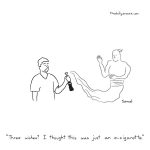
This week’s cartoon … Sept. 16/16

This week’s cartoon … Sept. 16/16

For more cartoons, visit thedailysnooze.com.

Format ImagePosted on September 16, 2016September 15, 2016Author Jacob SamuelCategories The Daily SnoozeTags e-cigarette, genie, thedailysnooze.com
משטרת הגבולות ומריחואנה

משטרת הגבולות ומריחואנה

(צילום: gsa.gov)

תופעה שהולכת להחמיר: משטרת הגבולות האמריקנית מונעת כניסת קנדים לארה”ב אם עישנו מריחואנה

אין גבול לחוצפה כנראה אצל משטרת הגבולות האמריקנית (יו.אס קסטמס אנד בורדר פרוטקשן). מתברר שלאחרונה במספר מקרים שוטרי גבול אמריקניים שאלו אזרחים קנדיים שמבקשים לעבור את הגבול לארצות הברית, אם הם עישנו אי פעם בחייהם מריחואנה. אלה שעונים בתמימות וביושר כי אכן עישנו בעברם את הסם הקל – לא יוכלו להיכנס יותר לארה”ב. הדחייה היא לתמיד ומדובר בגזירה קשה ביותר. במקרים מסויימים (תוך כדי עזרה של עורך דין) יכולים הנדחים לבקש אישור זמני להיכנס לארה”ב. ורק לאחר שיעברו בדיקה רפואית, בדיקה משטרתית וכן ימסרו טביעות אצבעות, יתכן ויונפק האישור הזמני לתקופה של בין שנה, שנתיים ועד לחמש שנים. ולאחר מכן הם יאלצו לבקש לחדש את האישור שוב ושוב לכל החיים. הנפקת האישור הזמני אינה זולה והיא עולה אלף ומאתיים דולר, וכן יש לשלם בנפרד שכר טירחה לעורך הדין שטיפל בתיק. כל חידוש אישור כזה כרוך כמובן בתשלום נוסף.

image - U.S. Customs and Border Protection logoקנדי מאזור ונקובר מתיו הרווי (בן ה-39) שביקש לעבור את הגבול האמריקני כדי להגיע לקונצרט בסייאטל, נדחה על ידי משטרת הגבולות האמריקנית, לאחר שהודה כי כשהיה בן 18 עישן מריחואנה (ואז הוא נחקר במשך כשש שעות). הרווי מציע למי שנשאל פשוט לשקר ולא להודות כי עישנו את הסם בעבר, ואז הם יוכלו לעבור את הגבול בשקט.


משטרת הגבולות האמריקנית פועלת בהתאם לחוק הפדרלי ולא מעניין הסוכנות הפדרלית שכבר בשלוש מדינות בארה”ב, כולל וושינגטון הסמונה לפרובינציית בריטיש קולומביה, עישון מריחואנה הוא הליך חוקי. בוודאי ובוודאי שמשטרת הגבולות לא תתייחס כלל לעובדה, שבקרוב עישון מריחואנה יהפוך להליך חוקי גם בקנדה. אז גם צפוי שהתופעה של קנדיים שלא יוכלו להיכנס לארה”ב תלך ותגדל.

בממשלה הפדרלית של קנדה כועסים מאוד על משטרת הגבולות האמריקנית ומבטיחים לנסות ולפעול לשנות את הגזירה, נגד אזרחים מקומיים תמימים שמבקשים לעבור את הגבול לשכנה מדרום. השר לביטחון פנים, רלף גודל, מציין שמדיניות משטרת הגבולות היא מגוחחת ויש לטפל בנושא בדחיפות.

ולעניין החוק בקנדה: הארגון הרפואי של קנדה מבקש מהממשלה לקבוע בחוק החדש, שעישון מריחואנה יתאפשר רק לאלה שמלאו להם 21, ולהטיל מגבלות על כמות השימוש בסם לאלה שטרם מלאו להם 25.

מטריה לכל צרה שלא תבוא: קורס ללמוד להשתמש במטריה להגנה עצמית

מטריות נפוצות בוונקובר הנחשבת לאחת הערים הגשומות ביותר בעולם ולכן זכתה לכינוי “ריינקובר”. ולכן תמיד מומלץ להסתובב בכאן עם מטריה כי גשם שעלול לרדת בכל רגע. אך מתברר שלמטריות יש עוד שימושים ובאקדמיה לסייף שבעיר מעבירים סדנאות על מה אפשר לעשות עימן, חוץ מלהתגונן מהגשם או לרקוד בו.

לאור ריבוי האלימות ברחובות המשתתפים בסדנא בת השעתיים לומדים בחלקה הראשון, טכניקות שונות כיצד אפשר להיעזר מטריה פתוחה ככלי להגנה עצמית לחסום מכה או להסטית אותה. לחילופין ניתן להפוך את המטריה לכלי נשק מאולתר של ממש ולהשתמש בשתי הקצוות שלה (בידית או בחנית) בעת סכנה שאורבת.

החלק השני הוא קורס לנימוסים והליכות עם מטריות. למשל: להציע גם לאחרים להתחלק במטריה שלך, כשלא משתמשים במטריה יש לדאוג שההחנית שלה תכוון כלפי מטה, יש להנמיך את המטריה כשהולכים מול אנשים אחרים, יש לנער את המטריה לפני שנכנסים למקום סגור (מסעדה, משרד או בית). וכמובן שאין שלוח הודעות טקסט כשהולכים עם מטריה פתוחה – זו מתכונות לתאונות.

Format ImagePosted on September 14, 2016Author Roni RachmaniCategories עניין בחדשותTags border patrol, Canada, marijuana, rain, umbrella, United States, Vancouver, ארה"ב, גשם, וונקובר, מטריה, מריחואנה, משטרת הגבולות, קנדה
More than a pageant

More than a pageant

Vancouver Jewish community member Alicia Ohana is Miss Canada Petite 2016/17. (photo from misscanada.tv)

This August, self-described proud Jewish community member Alicia Ohana won the title of Miss Canada Petite 2016/17.

The mission of the national competition, which took place in Toronto, is to “help raise funds and bring public awareness to [competitors’] charitable causes; promote multiculturalism, special events and nonprofit fundraisers throughout Canada. Be a symbol of today’s modern woman!”

Born and raised in Vancouver, Ohana, 23, works at All Hair & Skin Care, a beauty salon owned and operated by her family. She had never competed in a pageant before, but was inspired to get involved because of the various opportunities this particular event provides.

“The Miss Canada Globe Pageant is a beauty pageant that offers girls all over Canada a chance to get involved in their community and represent a charity of their choice to help fundraise for improvements,” she told the Independent in an interview before the competition. “I was modeling jewelry for a company and met another girl that previously participated in the same pageant. She said it was a life-changing experience that opened many doors for her community-wise and has, overall, made her a well-rounded person with more unique experiences.”

Excited by the prospects of meeting new people, making a difference and traveling, Ohana began the lengthy application process.

“I went through multiple interviews by application, phone and essay submission,” she said. “They accept people who want to make a change, are looking for something new and exciting, and can handle pressure.”

And the pressure was intense, as Ohana realized once she was accepted into the contest, for which she was sponsored by Pharmasave (Oak and 41st), After Five and the Jewish Community Centre of Greater Vancouver.

“To prepare, I have been working out everyday (thank you, JCC!), researching charities, fundraising to help cover costs of the pageant, and trying to find appropriate gowns, clothes and attire,” she said. “I have been educating myself on foreign events, I have been writing many essays on how I plan on helping my charity and community, and I’ve also been designing and making my national costume.”

Ohana admitted that she was surprised by the time, work and commitment required.

“It’s taken me months to prepare and it’s honestly unbelievable,” she said. “I thought this was going to be about great hair, dresses and a trip to Toronto! But, it turns out, it’s a whole lot of research about my community and becoming involved to make it a better place.”

Ohana’s road to the pageant had its obstacles. In April, mere months before the competition, she made the difficult decision to withdraw due to her father’s battle with mental illness.

“My father unfortunately slipped into a huge depression, causing me to put more important things first,” she explained.

It was the time spent at her father’s side while he was in hospital that opened her eyes to the needs of that facet of her Vancouver community.

“I met other patients and saw how lovely and warm they were, and saw how grim the hospital was, and I realized I could help raise awareness about the conditions and actually make a change with the help of the pageant,” said Ohana. “The patients inspired me to make changes for their sake.”

Ohana jumped back into the competition in June with the hope of making those changes.

“It has actually set me back quite a bit,” she admitted. “I’ve returned donations, let go of sponsors, and didn’t have time to properly fundraise, which has caused me to work way harder, but I believe everything will work out fine!”

In light of her experiences, Ohana used the pageant platform to get involved with the VGH & UBC Hospital Foundation, specifically the fundraising unit for mental health care. But her commitment extends beyond the event.

“Because of what my father went through, the conditions at the hospital really struck a chord with me and this is more of a personal goal, to make things better, rather than just for the sake of the pageant,” she said.

Nonetheless, her participation in the pageant was essential for her to make the impact she wanted.

“This pageant is helping me get involved with charities that have helped my family personally and is giving me more of a voice,” she said. “Before I joined, I felt I could only help so much, but now it’s given me the power to join the foundation and raise awareness.”

Ultimately, Ohana wishes to help instil a sense of hope and community in the hospital’s mental health patients and their families.

“I hope to organize a group of people affected by mental illness directly or indirectly to help patients, once discharged, become more involved in the community so they do not feel so lost,” explained Ohana before the pageant. “I want to provide support for the patients in terms of visitation and outings, as many of them do not have supportive families or visitors and are faced with loneliness, boredom and a tough environment both inside and outside the hospital.”

During her father’s illness, Ohana saw firsthand the valuable difference being part of a strong, supportive community makes.

“As my family has experienced, a sense of community is everything,” she said. “Without this wonderful Jewish community, things would have been a lot harder and we would not have been able to handle it.”

Ohana – who won Miss Petite British Columbia and then took the national title – is following through on her pageant goals. Inspired by the 80 contestants of the event, she said, “I created OHANA support circles right after the pageant to help people who have gone through rape, abuse, mental illness, homophobia, molestation, eating disorders and many other forms of trauma; for victims to share their stories with other victims who do not have a support system. I’m hoping I can strengthen communities and destroy the fear that has been put in people. It has been lovingly received and I have had many men and women approach me to join. My pageant sisters across Canada are also taking on my challenge and starting circles in their communities.”

The group is accessible via facebook.com/ohanasupportcircles.

Ohana is also collecting donations in the form of toys, art supplies and books in support of fundraising for mental health care, which can be dropped off at All Hair & Skin Care on Oak Street.

“This year,” said Ohana, “I promised myself to try everything new that comes my way – and my life has definitely changed since I have.”

Brittni Jacobson is a freelance writer living in Toronto.

Format ImagePosted on September 9, 2016September 7, 2016Author Brittni JacobsonCategories LocalTags mental health, Miss Canada Petite, Ohana, pageant, tikkun olam, VGH
Federation envisions 2020

Federation envisions 2020

To read more about the Jewish Federation of Greater Vancouver’s 2020 Strategic Priorities, visit jewishvancouver.com/2020.

An estimated 50% of Metro Vancouver’s Jewish community lives outside of the city of Vancouver. For young families with at least one Jewish parent, the proportion of Jews living outside of Vancouver jumps above 60%. Like other area residents, they are moving to the suburbs in the elusive search for affordable housing – and that search has taken them far away from the organizational centre of the community, at Oak Street and 41st Avenue.

In setting its 2020 Strategic Priorities, the Jewish Federation of Greater Vancouver addresses the challenge of an increasingly dispersed community, as well as that of an aging population. It also considers the fact that, while it is expensive to live in Metro Vancouver, it is even more expensive to be involved Jewishly.

Over the past two years, Federation has surveyed Jews both in Vancouver proper and outside of the city to find out what they consider to be the priorities of the community and where resources should be allocated. The Connect Me In online surveys reached more than 300 people in outlying areas, 200 of whom agreed to further conversations with Federation, according to Federation chief executive officer Ezra Shanken.

“We’ve had hundreds of conversations with groups and individuals,” Shanken told the Independent. “We wanted to know what areas are lacking. We also asked how should Federation feel and how does it feel? We heard that Federation and the Jewish community is not accessible enough.”

A look into the near future, the 2020 document highlights a number of key areas that have been identified for strategic investment. The report’s subtitle gives the clear message for the idea behind the plan: “Moving our Jewish Federation from Strength to Excellence,” and excellence requires more resources.

As the main fundraising organization of the Jewish community, Federation directs support not only to large, high-profile institutions like Jewish Family Service Agency and Vancouver Talmud Torah, but also to many smaller organizations for which it would be impossible to adequately fundraise independently. The dollars raised and then allocated by Federation are meant to ensure that its 40 constituent agencies are able to sustain a diverse, well-rounded Jewish community without the worry of constant fundraising.

With such a large number of organizations and a wide range of needs, every year the allocation process requires Federation to make difficult decisions. The 2020 plan is intended to identify current community needs, predict the amount of money needed to meet those needs and then raise the necessary funds. The identified priorities include both local and international obligations.

Locally, engaging the next generation, addressing new and evolving community needs, investing strategically in the community and closing the funding gap to meet ongoing needs are the priorities. Each area has a number of key issues embedded within it and all of the details are available on the Federation website. The breakdown of needs is laid out to include the current level of funding and what it covers, as well as the projected needs with their accompanying cost.

Federation’s international commitments include supporting a variety of projects in Israel and communities around the world. Shanken said he is often asked about the amount of money that leaves the local community.

“It used to be an 80:20 ratio of money going to Israel – UIA [United Israel Appeal] was set up to build Israel,” he explained. “Now, it’s more like 30:70 because the way we engage with Israel is very different. We have an Israel department here, we bring the Shinshin [Year-of-service] program to Vancouver for Israel engagement with our community and we fund the Gesher [Bridge] program that brings young Israelis here.”

He also noted that Federation facilitates the funding of some special projects in Israel, which are separate from Federation’s budget. The way these funds are directed is a result of the donor’s wish to feel a sense of ownership of their gift. However, cautioned Shanken, “The sense of ownership cannot replace the duty to help all agencies.”

Federation plans to continue strategically funding existing organizations, while putting in place some new programs. The Diamond Foundation recently gave seed money to bring in a part-time community developer to reach out to marginalized communities. Jewish education, services for seniors and other Jewish programming are among the ways Federation plans to “get out there,” according to Shanken. He offered as an example Federation’s PJ Library, which provides books with Jewish content to more than 1,000 Jewish children in the Lower Mainland.

To read more about Federation’s 2020 Strategic Priorities, go to jewishvancouver.com/2020 or join the conversion on social media, #ourcommunity2020.

This year’s annual campaign launches on Sept. 22, 7 p.m., at the Queen Elizabeth Theatre with FEDtalks, featuring author, radio host and founder of Zuckerberg Media, Randi Zuckerberg; Reut think thank founder Gidi Grinstein; One Clip at a Time co-founder Alison Lebovitz; and journalist Terry Glavin. For tickets and more information, visit jewishvancouver.com/fedtalks2016.

Michelle Dodek is a freelance writer living in Vancouver.

Format ImagePosted on September 9, 2016September 7, 2016Author Michelle DodekCategories LocalTags Federation, FEDtalks, fundraising, Shanken, Vision 2020
Living with prostate cancer

Living with prostate cancer

Sima Elizabeth Shefrin’s new book, Embroidered Cancer Comic, will be launched on Sept. 15 at the Roundhouse.

Cancer is a word often whispered. Sex is certainly not spoken of in polite company. Yet Sima Elizabeth Shefrin tackles both topics in her new book, Embroidered Cancer Comic (Singing Dragon, 2016), which receives its Vancouver launch on Sept. 15 at Roundhouse Community Centre.

The comic begins with Shefrin’s husband, Bob Bossin, coming home from the doctor with a diagnosis of high cholesterol. “Oh, he also said my PSA was up,” Bossin tells Shefrin. After some understandable delays, Bossin gets the needed biopsy. While the couple are enjoying a funny movie together, the call from the doctor comes: prostate cancer.

book cover - Sima Elizabeth Shefrin’s new book, Embroidered Cancer ComicIn a mere 30 pages, with text and illustrations by Shefrin, Embroidered Cancer Comic shows Bossin’s uncertainty over treatment options, his efforts to learn more about the cancer, the emotional stress on him and Shefrin, as well as the effects of the cancer and its treatments on the couple’s sex life.

“The strain of the prostate cancer journey on relationships cannot be overstated, yet patients and their partners are left to figure this out for themselves,” writes Dr. Peter Black of Vancouver Prostate Centre – Bossin’s surgeon – in a brief commentary at the end of the comic, where both Shefrin and Bossin also share more of their story.

Helping others was one of Shefrin’s goals.

“I’m hoping the book will help couples in this situation be able to communicate,” she told the Independent.

Already, it’s had an impact.

“I thought it had potential for being a major project, especially after I got the publishing contract,” said Shefrin. “But then, of course, you don’t leave that in the hands of the gods. Singing Dragon has been very good for getting publicity in Britain, in both the comic and the medical worlds. In Canada, I’ve done most of it myself.

“I believe that this book can do real good in the world,” she said, sharing that a man in Quebec had written her “about what a difference it had made to both him and his wife.”

She said, “That’s what I’m hoping to do. I believe in the comic, so I’m willing to do whatever pushing I need to, to get it out into the world.”

Shefrin is a noted fabric artist, her website name – stitchingforsocialchange.ca – perfectly describing the nature of her work.

“I have often used my art to work through life events and to create awareness and conversation about taboo or contentious subjects,” she writes at the end of the comic book. “But nothing has made me feel as vulnerable as the creation of this comic. At the same time, it has helped me realize that, when you’re there, cancer becomes a part of daily life, like buying groceries or washing dishes.”

It took Shefrin three years to sew the embroidered line drawings, which were then photographed for the book. When asked if she ever thought of creating the images in a more expedient way, Shefrin said, “Fabric is my medium. The books I illustrated are mostly paper collage, but even when I work in paper, I think like a fabric artist. I did drawings first and then embroidered them, and I always liked the embroidered result better than the original drawing.”

The book “started out as a piece of art,” she said. “I thought I might self-publish or maybe simply photocopy a kind of catalogue for a show. But, one day, I came across the Graphic Medicine site and realized that there was a whole world out there of people making comics about medical issues. I’d had no idea.

“So, I started looking at the site regularly as well as at their Facebook page. Occasionally, there would be postings for people looking for comic strips on this and that and, if it was vaguely relevant, I’d send out my work. I do this a lot and often it comes to nothing. But, a couple of months later, I got an email from Jessica Kingsley saying they might be interested in publishing my work. It took me about an hour to figure out who they were and how they found me. They published it through their imprint, Singing Dragon. After that, the focus shifted and became about creating the comic, a story with a beginning, middle and end, instead of an art series. Now that it’s in print, I’m back to creating the quilts for the art series.”

The book has received many very positive reviews, including one in the U.K. medical journal The Lancet – and, according to the book’s Facebook page, it earned “a lovely personal note from Judi Dench,” who is mentioned in the comic. Specifically, when Shefrin asks her husband, “Who really excites you?” his answer is Dench.

The most touching review of the book comes from Bossin. “And because you live with cancer, whoever you live with lives with it, too, as Elizabeth’s comic shows so tenderly,” he writes. “For me, there is no one I would rather live with cancer with. No one.”

Those curious about what Dame Judi said and other stories behind the comic’s creation can ask Shefrin and Bossin at the Sept. 15 launch, which starts at 7 p.m. The quilted original illustrations are on display at the Roundhouse’s Window Gallery until Oct. 30.

Format ImagePosted on September 9, 2016September 7, 2016Author Cynthia RamsayCategories BooksTags Bossin, comics, health, prostate cancer, relationships, Shefrin

Posts pagination

Previous page Page 1 … Page 489 Page 490 Page 491 … Page 661 Next page
Proudly powered by WordPress