Skip to content
  • Home
  • Subscribe / donate
  • Events calendar
  • News
    • Local
    • National
    • Israel
    • World
    • עניין בחדשות
      A roundup of news in Canada and further afield, in Hebrew.
  • Opinion
    • From the JI
    • Op-Ed
  • Arts & Culture
    • Performing Arts
    • Music
    • Books
    • Visual Arts
    • TV & Film
  • Life
    • Celebrating the Holidays
    • Travel
    • The Daily Snooze
      Cartoons by Jacob Samuel
    • Mystery Photo
      Help the JI and JMABC fill in the gaps in our archives.
  • Community Links
    • Organizations, Etc.
    • Other News Sources & Blogs
    • Business Directory
  • FAQ
  • JI Chai Celebration
  • JI@88! video

Recent Posts

  • Story of Israel’s north
  • Sheltering in train stations
  • Teach critical thinking
  • Learning to bridge divides
  • Supporting Iranian community
  • Art dismantles systems
  • Beth Tikvah celebrates 50th
  • What is Jewish music?
  • Celebrate joy of music
  • Women share experiences 
  • Raising funds for Survivors
  • Call for digital literacy
  • The hidden hand of hate
  • Tarot as spiritual ritual
  • Students create fancy meal
  • Encouraging young voices
  • Rose’s Angels delivers
  • Living life to its fullest
  • Drawing on his roots
  • Panama City welcoming
  • Pesach cleaning
  • On the wings of griffon vultures
  • Vast recipe & story collection
  • A word, please …
  • מארק קרני לא ממתין לטראמפ
  • On war and antisemitism
  • Jews shine in Canucks colours
  • Moment of opportunity
  • Shooting response
  • BC budget fails seniors
  • Ritual is what makes life holy
  • Dogs help war veterans live again
  • Remain vital and outspoken
  • An urgent play to see
  • Pop-up exhibit popular
  • An invite to join JWest

Archives

Follow @JewishIndie
image - The CJN - Visit Us Banner - 300x600 - 101625

Author: Maayan Jaffe-Hoffman JNS.ORG

Making your own traditions

Making your own traditions

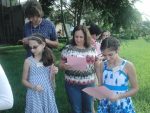
As an alternative or addition to synagogue services, you could find a nice place outside in which to pray or reflect. (photo by Jan Lieberman via Wikimedia Commons)

There is a lot of beauty to the traditional synagogue experience. However, a traditional High Holidays service just does not speak to some, especially many young adults.

“Buying seats for the High Holidays is super-expensive,” said Rachel Moses, a marketer for a Jewish nonprofit from Mt. Washington, Md. “It also just doesn’t feel like it’s my place.”

If you think like Moses, consider skipping the tickets, and celebrating Rosh Hashanah and Yom Kippur outside the traditional four walls of your family synagogue. Here are nine alternative ways to connect to the High Holidays without stepping foot in a shul.

  1. Build community

Thomas Arnold, who works in Homeland Security and is from Pikesville, Md., says people often interpret Yom Kippur as a heavy day of repentance. In contrast, the day’s prohibitions – things like fasting, not wearing leather footwear, not making love to your partner, refraining from taking a bath – are intended to help us think less about our own needs and more about those of others.

“The point is to understand there are people that don’t have food, that don’t have water, that don’t have shoes to wear,” said Arnold, citing the 18th-century ethical Jewish book Mesillat Yesharim: The Path of the Upright by Italian rabbi and philosopher Moshe Hayyim Luzzatto. “We don’t have sex because there are people in the world who don’t have partners and cannot connect in that way.”

Arnold looks for people who are in need, lacking something or are lonely, and makes a point of giving to them during the High Holiday season. Sometimes, he invites them over for a meal, and other times he just lends them a helping hand.

“On Rosh Hashanah and Yom Kippur, make it about other people,” he said.

  1. Host a meal

Rabbi Jessy Gross, named by the Forward as one of the most inspiring rabbis of 2016, said some of her best holiday memories are not from the synagogue, but from places where people came together, like at her holiday table.

“Having meals with other people, especially if the person hosting can serve traditional Jewish foods, creates an opportunity … to celebrate Jewish food and culture,” said Gross.

Shari Seidman Klein of Beit Shemesh in Israel agrees. She cooks a holiday meal for her family, as well as for her children, a few of whom choose not to attend traditional activities. Apples and honey, round raisin challah and other sweet things bring the kids and their friends back to her dining room each year.

  1. Change something

Klein said she often instructs her Hebrew school students, many of whom are products of intermarriage, to use the High Holidays as a time to better themselves. She tells them, “Take on one thing for one day.”

For example, rather than fasting on Yom Kippur, she recommended giving up candy, soda or something else they like to eat. Older individuals might decide to give up the personal comfort of watching TV, or they might make the higher commitment of refraining from talking badly about others.

“It’s the idea of tikkun olam, bettering the world,” said Klein. “That one thing on that one day can take you back to the basics of being – and thinking.”

  1. Do Tashlich

One of Gross’ favorite rituals is Tashlich, for which all a person needs is access to a body of natural water such as a creek, pond or river. She recommends taking some bread or crackers and spending some time by the water meditating or journaling.

“I like to think about where I have missed the mark or haven’t reached my potential and cast this out,” she said. “It is great opportunity to … think about what you want as we evolve into the coming year. It’s a process of spiritual cleansing and preparedness.”

  1. Form a minyan

The Israeli organization Tzohar has been working to bring together the religious and secular Jewish communities in the Jewish state. In the central city of Lod, Tzohar’s executive vice-president, Yakov Gaon, said his organization found that many secular Israelis refrain from going to synagogue, not because they don’t want to pray, but because the service is too fast, politicized, costly or uncomfortable.

“They don’t know how to dress, when to stand up or sit down,” Gaon said.

About 15 years ago, Tzohar began creating alternative minyans in community centres, schools and gyms. The services bring like-minded people together. Each service is assigned a leader who announces the prayer page numbers to read, and explains what’s happening in the prayers. Today, more than 56,000 people take part in these Yom Kippur services at 300 locations across Israel. An additional 1,500 people attend one of Tzohar’s 60 Rosh Hashanah services.

  1. Go to Israel

While it may be too late now to book a trip, in general, traveling to Israel on or around the High Holidays is a more special experience than traveling there during nearly any other time of year, said Arnold, whose daughter is studying in Israel for the year.

Arnold said Israelis have a reputation for being rude or pushy, but during the Hebrew month of Elul – this month, which leads up to Rosh Hashanah – Israelis tend to mellow out.

“It’s like they know it instinctively,” Arnold said with a laugh. “Their Jewish souls come out and they know it is the Yamim Noraim (High Holy Days) and they better get themselves together.”

The whole country prepares with holiday festivals, music, delicious holidays foods and smells, he said.

  1. Host discussion

Skipping the rabbi’s sermon? Write your own, and invite others to hear it. Klein has tapped into several online resources, such as myjewishlearning.com, to provide fodder for discussion at the table, or for her son and his friends to discuss in an intimate setting. Gross, too, said that using online content and hosting a discussion group can help you learn about the holiday, and then share those insights with others.

  1. Reflect in Elul

There is still time to make an Elul reflection calendar. Create a pie chart divided by the Hebrew months, said Gross. Break each pie down by the number of days in that month. On each slice, record a guided meditation question or something you want to work on. Then, every morning or before bed, read it and reflect.

Here, too, Gross added, there are plenty of online trigger questions if you need guidance.

  1. Have a picnic

Mt. Washington’s Moses said hosting or attending a holiday picnic brings people together, offering a venue to eat traditional foods and also spend time in nature. While the children are playing, the adults can host the aforementioned discussion group, or meditate under the open sky.

  1. Pray outside

In general, being outside is a good way to infuse spirituality into your holiday. Transform your backyard, a park or a forest into a synagogue and pray.

Most years, Moses attends Baltimore Hebrew Congregation’s Rosh Hashanah Under the Stars program, which offers an alternative Jewish New Year get-together for members and non-members.

“There are thousands of people there, right under the stars, with no ceiling above you,” said Moses. “You feel like you are one with nature, with each other and with God – whatever sense of God there is.”

On years she cannot make the service, she and her family might travel to Ocean City, Md., instead. “We’ll just sit there and listen to the ocean,” she said.

To read more from JNS.org, click here.
Format ImagePosted on September 23, 2016September 21, 2016Author Maayan Jaffe-Hoffman JNS.ORGCategories Celebrating the HolidaysTags High Holidays, Judaism, prayer, Rosh Hashanah
Can we all get along?

Can we all get along?

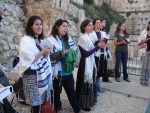
Women of the Wall was founded as a minyan of women from different movements coming together on common ground for Rosh Chodesh. (photo by Michal Patelle via Wikimedia Commons)

In April 2015 – in the aftermath of the death of 25-year-old African-American Freddie Gray inside a police van after being arrested by the Baltimore Police Department, followed by days of riots in Baltimore, Md. – African-American street gangs, the Bloods and Crips, stood side-by-side against police brutality. The Baltimore Sun, and several national papers and social media outlets, carried photographs of the members of the typically warring gangs posing together, with captions about the gangs being determined to “unite for a common good.”

Tzippi Shaked, author of Three Ladies, Three Lattes: Percolating Discussions in the Holy Land, believes that the case of the Bloods and Crips unifying together is a valuable lesson for the Jewish community, in which there are frequent divisions along religious lines. This was echoed by Israeli Prime Minister Binyamin Netanyahu in his annual Rosh Hashanah greeting last year, in which he urged Jewish unity by working “together … [to] build our Jewish state – because we’re united, proud of our past and committed to our future.”

Can Jewish people of different religious denominations truly unite and work together for a common good?

The concept of Jewish unity is one that comes up around the High Holidays due to the Torah portions read before the holidays: Nitzavim and Vayelech. In Nitzavim, we read, “Today, you are all standing before God your Lord; your leaders, your tribal chiefs … even your woodcutters and water drawers.” (Deuteronomy 29:9) Eighteenth-century Rabbi Schneur Zalman explained this in his famous work Likkutei Torah as all Jews standing equally and united before God despite their differences.

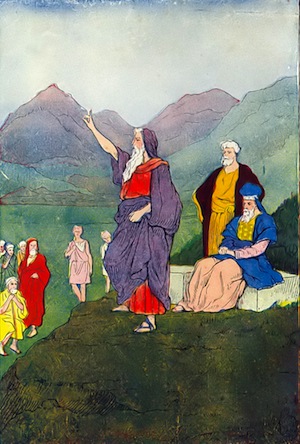
Vayelech also concludes when Moses addresses “the entire assembly of Israel” (Deuteronomy 29:1) in a unified manner. Such a colorful image is harder to picture today, when headlines and op-eds tend to stress divisiveness, and the parts over the whole.

“I come from a family with a Charedi brother. I am Modern Orthodox. I have a sister who is secular. Growing up, my father was secular and my mom religious. If we can pull it off under one roof, I believe so can society in general,” said Shaked.

photo - Moses speaks to the Children of Israel.  An illustration from The Boys of the Bible by Hartwell James, published by Henry Altemus Company, 1905 and 1916
Moses speaks to the Children of Israel.  An illustration from The Boys of the Bible by Hartwell James, published by Henry Altemus Company, 1905 and 1916. (photo from Wikimedia Commons)

Shaked, together with one Charedi and one secular woman, spent two and a half years discussing the topics that divide and unite Jewish women, and then embarked on a mission to teach others that, while Jews might not always agree ideologically, politically or religiously, they can be united. This is the topic of her book.

Rabbi Joel Oseran, vice-president emeritus for international development at the World Union for Progressive Judaism, said that, in his experience, it is “rare to see the common good having the highest value,” especially in Israel, where “the playing field among denominations is not level at all.”

“When I am right and you are wrong, how can there be diversity?” Oseran asked. “You have to allow for more than one way to be right in order to respect diversity.”

Shaked disagreed, saying that unity and friendship have little to do with accepting others’ opinions or hoping to change them.

“It’s naive to think that anyone will change his or her mind,” she said, and it has more to do with a belief that people can become friends in spite of differences in levels of religious observance.

“It is very easy to rip apart the other. It is very difficult to look for the positive,” she said. “Irrespective of which religious background you come from, you have to ask yourself, do I look to build bridges or do I look to inflame?”

This has been Marne Rochester’s modus operandi. An active Conservative Jew, Rochester moved to Israel 26 years ago. In the Jewish state, she maintains her Conservative identity, while sending her daughter to a religious school and praying at a variety of different synagogues. She is most active in a Jerusalem Masorti (Conservative) congregation, but she also attends a Sephardi, egalitarian minyan.

“I think Conservative and Orthodox, and Conservative and Reform, have a lot in common,” said Rochester. “Both the Orthodox and Conservative movements are halachic movements. We just see the interpretation more liberally than the Orthodox.”

When it comes to daily life, she said it’s easy to get along, especially in Israel, where Conservative congregants tend to follow more of the movement’s code of conduct, as opposed to the United States, where “a lot of people who belong to Conservative shuls don’t necessarily go by what the movement says.”

Rochester has Orthodox friends willing to eat in her home and share Shabbat together with her.

But, Rochester, who takes part in monthly Women of the Wall ceremonies at the Kotel, said the biggest differentiator between the Orthodox and the Conservative is the role of women in public Judaism and the synagogue. While in Orthodox Judaism women take a back step to men in religious life, “since my bat mitzvah, I read from the Torah, lead services, put on a tallit and tefillin,” she noted. “But, I feel like in my neighborhood, we all get along. We all respect each other and don’t check each other’s tzitzit.”

Rochester added that Women of the Wall was founded as a minyan of women from different movements coming together on common ground for Rosh Chodesh. While it has become a major media focus, and a point of divisiveness between Jews in the Diaspora, in Israel, at its core, “You have Orthodox, Reform and Conservative women all together – that is such a powerful, beautiful thing.”

Oseran said he wishes he would see more leaders taking a stance in the direction of unity.

“I am not optimistic from the top down,” he said, but admitted positive steps are percolating on a grassroots level.

“There are many Orthodox Jews who understand there is more than one way to be Jewish and are prepared to bridge some of the differences in order to be stronger together,” he said, noting that Israelis could learn a lot from the Jewish Federations of North America movement, which is built on a sense of a collective Jewish community in which any Jewish people can fit and find their place.

“How do you create a building bridges mindset?” Shaked asked. “Take the time to make yourself available to talk to others. Be open to meeting people.… We all have to take the plunge.”

She also recommends celebrating the successes of others and volunteering in communities different than your own.

Harkening back to the unity established by the Bloods and Crips in the wake of the Baltimore riots in 2015, Shaked said she read a study published more than 20 years ago by the Simon Wiesenthal Centre that found that gang members cannot unify by simply learning about one another through movies, being told positive messages about one another, or even through dialogue. Rather, they need to work together on a common project. By working for a common goal, the Bloods and Crips found unity.

“I ask this Rosh Hashanah to join with all Israelis, with friends of Israel, with the Jewish people everywhere in wishing for a better future,” said Netanyahu is his previous Rosh Hashanah address.

“I believe these friendships can be struck. I have seen it and I live it,” Shaked said.

To read more from JNS.org, click here.
Format ImagePosted on September 23, 2016September 21, 2016Author Maayan Jaffe-Hoffman JNS.ORGCategories Celebrating the HolidaysTags Charedi, Conservative, High Holidays, Jewish values, Judaism, Masorti, Orthodox, Reform
A year of diplomacy, terror

A year of diplomacy, terror

Prime Minister Binyamin Netanyahu kisses Adel Banita’s 2-year old son on the forehead in Hadassah Hospital on Oct. 5, 2015. Netanyahu was visiting Banita, who was stabbed by a Palestinian terrorist in Jerusalem’s Old City. Her husband, Aharon, 22, died later of his injuries. (photo from Ashernet)

The Jewish year 5776 could be probably best described as a year of diplomacy and terror. Despite the toll of death and misery being inflicted by radical Islamic terror groups around the world, Israel this past year has been relatively quiet in so much as it has not had an outright war with its neighbors. Terror, however, has been present, with the knife and automobile being the weapons of choice to inflict fear and mayhem on the long-suffering citizens of Israel.

Radicalized, mostly young, Arab terrorists have been responsible for murdering or seriously injuring innocent men, women and children by stabbings or ramming their vehicles into groups of people, usually standing at bus stops or hitchhiking posts. Death and injury have also been caused by throwing large stones at passing cars in the West Bank. In several instances, firearms have been used by terrorists to kill people enjoying an evening out. On Aug. 17, a terrorist from the West Bank shot dead four people and injured a further six individuals at a restaurant in Tel Aviv. Perhaps the most outrageous attack was the murder of 13-year-old Hallel-Yaffe Ariel as she slept in her bed in her home in Kiryat Arba on June 30.

The year has been marked by intensive diplomatic activity, particularly as far as the African continent is concerned. Major countries, such as Kenya, Uganda, Ethiopia and Rwanda, played host to Prime Minister Binyamin Netanyahu this past summer. Their leaders have also visited Israel and trade agreements were signed. One African leader said the visit of the Israeli prime minister to Africa was to “reset Africa’s diplomatic relations with Israel.” Many African countries are anxious to use Israeli technology for water management and agricultural development. It is also worth noting that many African nations have also been victims of radical Islamic terrorism.

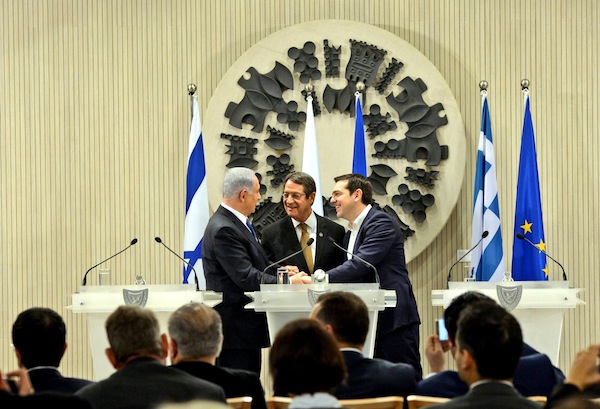
Israel’s Mediterranean neighbors were not forgotten this past year. Mutual interests of both energy and security have brought Greece, Israel and Cyprus closer. Greece and Israel have conducted military exercises in each other’s country, and the three countries are working together to maximize the natural gas deposits that have been discovered in the eastern Mediterranean.

Despite the tensions in the Middle East, beneath the surface, much is happening between Israel and its neighbor Jordan. Perhaps the most significant long-term change is the soon-to-be-completed Jezreel Valley railway project. Apart from the advantage for Israelis living in the north and working in the Haifa area, the new rail link will enable Jordanians to have a Mediterranean trade outlet, via Haifa. The only link to the sea for Jordan at present is at Aqaba on the Red Sea.

Another project between Israel and Jordan concerns the rapid evaporation of the Dead Sea. Already the lowest point on earth, the sea level is getting lower every year. Also, the annual replacement of water from rivers in the north does not reach the Dead Sea. This river water is being used for agriculture and domestic purposes. In principle, the two countries have agreed to build a water feed from the Gulf of Eilat to the Dead Sea. On the way, the flow of water would power generators to produce electricity.

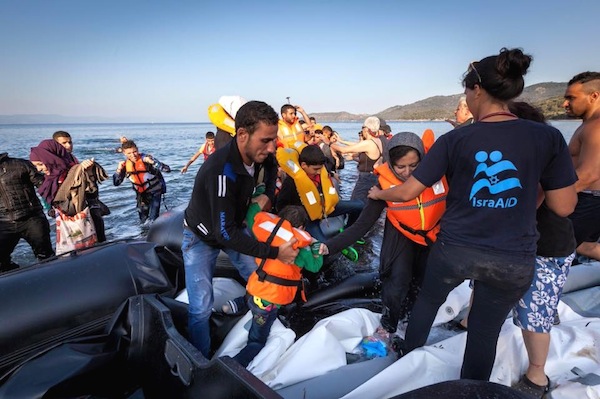
As regards her other neighbors in the region, the terrible humanitarian crises being played out in Syria and Libya have once again demonstrated that Israel will never turn her back on those in need. As thousands of refugees have been pouring onto some Greek islands via Turkey to escape the unrelenting wars in the Middle East and North Africa, Israel’s aid organizations and medical teams have been on hand to offer help and expertise.

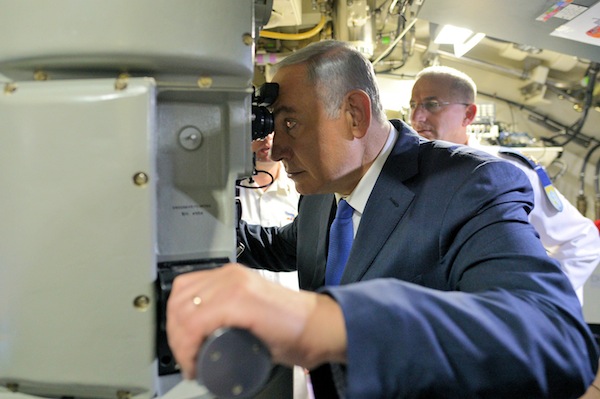
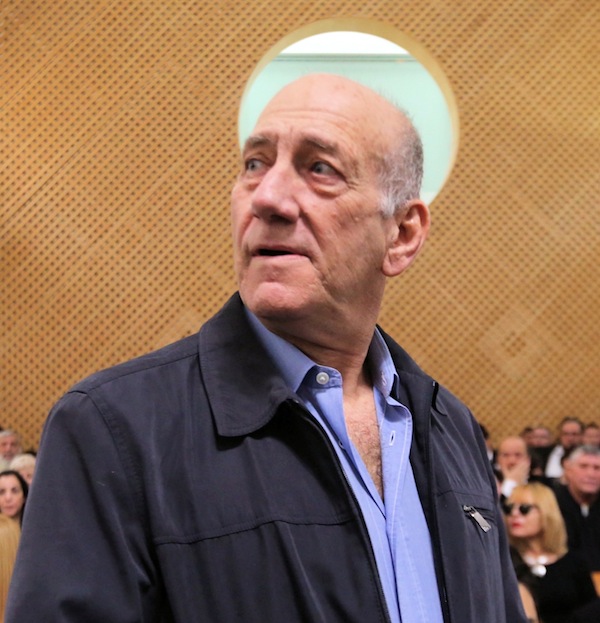
Among other happenings during the year, another state-of-the-art submarine was delivered during the summer from a German shipyard to augment Israel’s submarine fleet. And, finally, former prime minister Ehud Olmert was sent to prison after being found guilty of corruption and bribery. The positive side of this? The rule of law is the same in Israel for all of its citizens.

photo - Medical and rescue teams from IsraAID attend to Syrian refugees who have just landed in a rubber boat on the Greek island of Lesbos after the perilous crossing from Turkey
Medical and rescue teams from IsraAID attend to Syrian refugees who have just landed in a rubber boat on the Greek island of Lesbos after the perilous crossing from Turkey. (photo from Ashernet)
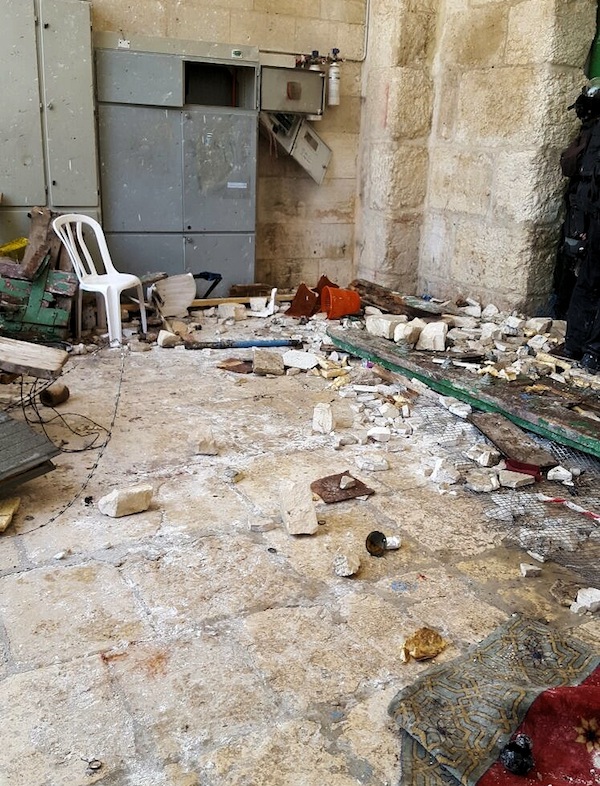
photo - The entrance to Al-Aqsa Mosque on the Temple Mount in Jerusalem after rioters tried to prevent police from arresting Arab stone-throwers
The entrance to Al-Aqsa Mosque on the Temple Mount in Jerusalem after rioters tried to prevent police from arresting Arab stone-throwers. (photo from Ashernet)
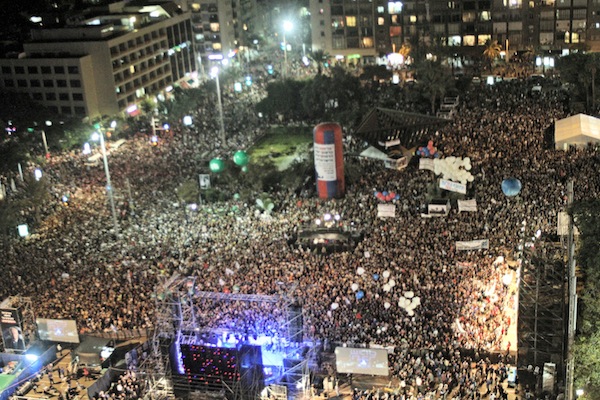
photo - In Tel Aviv in October 2015, thousands of Israelis came together to remember the 20th anniversary of the assassination of Yitzhak Rabin, who was murdered by Yigal Amir in this square
In Tel Aviv in October 2015, thousands of Israelis came together to remember the 20th anniversary of the assassination of Yitzhak Rabin, who was murdered by Yigal Amir in this square. (photo from Ashernet)
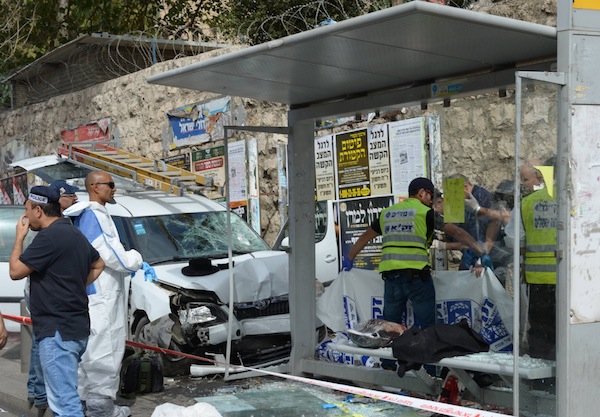
photo - A bus stop in Jerusalem’s Malkei Yisrael Street after a terrorist drove his car into the stop, killing one man, and then got out of his vehicle to stab others at random
A bus stop in Jerusalem’s Malkei Yisrael Street after a terrorist drove his car into the stop, killing one man, and then got out of his vehicle to stab others at random. (photo from Ashernet)
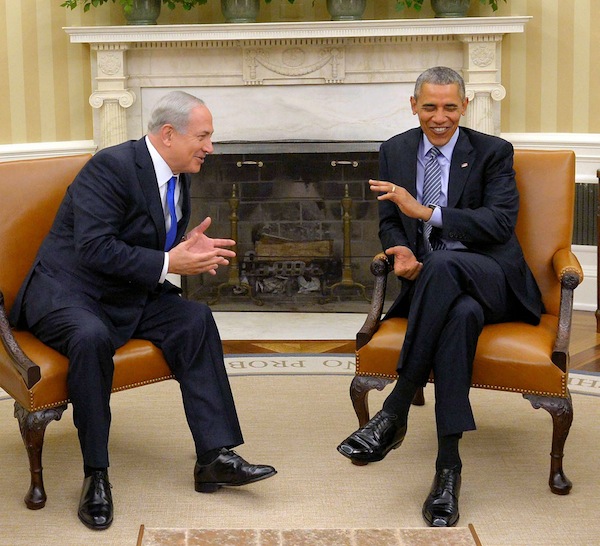
photo - Prime Minister Binyamin Netanyahu and President Barack Obama in Washington, D.C.
Prime Minister Binyamin Netanyahu and President Barack Obama in Washington, D.C. (photo from Ashernet)
photo - Prime Minister Binyamin Netanyahu looks through the periscope of the latest submarine to be delivered to the Israeli navy by the German government
Prime Minister Binyamin Netanyahu looks through the periscope of the latest submarine to be delivered to the Israeli navy by the German government. (photo from Ashernet)
photo - Prime Minister Binyamin Netanyahu, left, Cypriot President Nicos Anastasiades, centre, and Greek Prime Minister Alexis Tsipras at a meeting in Nicosia to cement trilateral relations
Prime Minister Binyamin Netanyahu, left, Cypriot President Nicos Anastasiades, centre, and Greek Prime Minister Alexis Tsipras at a meeting in Nicosia to cement trilateral relations. (photo from Ashernet)
photo - Former Israeli prime minister Ehud Olmert at the Supreme Court in Jerusalem following the court’s decision to uphold his prison sentence
Prime Minister Binyamin Netanyahu, left, Cypriot President Nicos Anastasiades, centre, and Greek Prime Minister Alexis Tsipras at a meeting in Nicosia to cement trilateral relations. (photo from Ashernet)
photo - The Tamar gas rig in the Mediterranean, off the Israeli coast
The Tamar gas rig in the Mediterranean, off the Israeli coast. (photo from Ashernet)
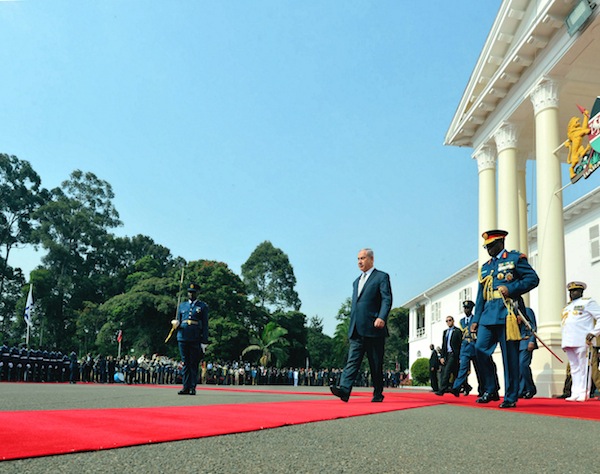
photo - Prime Minister Binyamin Netanyahu outside Government House in Kenya, stepping out to inspect the honor guard
Prime Minister Binyamin Netanyahu outside Government House in Kenya, stepping out to inspect the honor guard. (photo from Ashernet)
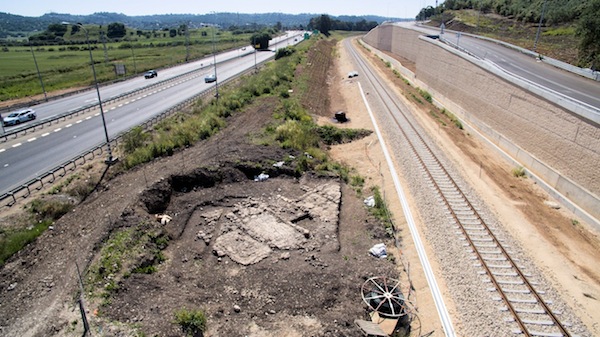
photo - The almost-complete Jezreel Valley railway that goes from Haifa to the Jordanian border
The almost-complete Jezreel Valley railway that goes from Haifa to the Jordanian border. (photo from Ashernet)
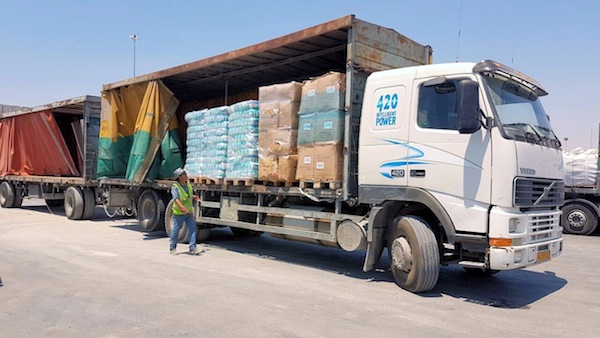
photo - Goods from Turkey enter the Shalom Crossing into Gaza with goods from Turkey. Recently, Turkey and Israel resumed normal diplomatic relations for the first time since the 2010 Mavi Mamara affair
Goods from Turkey enter the Shalom Crossing into Gaza with goods from Turkey. Recently, Turkey and Israel resumed normal diplomatic relations for the first time since the 2010 Mavi Mamara affair. (photo from Ashernet)
Format ImagePosted on September 23, 2016September 21, 2016Author Edgar AsherCategories IsraelTags Greece, Israel, Jordan, Netanyahu, Obama, peace, refugees, terrorism, Turkey
Rabbi finds his calling

Rabbi finds his calling

Rabbi Yosef Ben Zruel, aka “Rabbi Yossi,” engages with students at Boys Town Jerusalem. (photo from BTJ)

As 32 out of Boys Town Jerusalem’s 100 seventh graders took their places in class on the first day of school, their teacher, Rabbi Yosef Ben Zruel, surveyed the rows of anxious students with a smile. “I look at you and I see myself,” he told them.

“I remember my mother bringing me by bus to Boys Town on my first day of school in seventh grade. We have a lot in common!”

Like their teacher, the current students come from difficult and disadvantaged backgrounds: broken homes, unemployment, poverty, neglect and abuse. Although many students are Israeli, the school also has boys who have come from Ethiopia, France and Russia. As situations around the world become more difficult, parents are sending their children to Boys Town, where they know they will be well educated and properly cared for. The school provides a safe haven for 900 boys annually, who might otherwise have no place to go.

The school focuses on preparing the boys to be productive citizens of tomorrow, benefiting the state of Israel and beyond, as many of the students eventually work for international companies. Graduates serve in the military, and then go on to careers in business, high-tech, medicine or education, like their teacher.

Now in his forties, “Rabbi Yossi” notes that he gained vital teaching skills from that first day at Boys Town onward. “I teach what I learned from my own teachers, who gave me tools for life,” he said.

Yet his journey to become a member of the faculty of Boys Town took several decades to complete. After graduating with honors in 1991 from BTJ’s electronics department, Ben Zruel served a three-year term of duty in the Israeli air force. He then entered university to pursue advanced electronics studies before realizing he’d taken a wrong turn. “I always wanted to be a teacher,” he said.

Turning to education and Jewish studies, Ben Zruel became a rabbi and taught elementary school for nearly 20 years. Three years ago, he was delighted to accept a job at his alma mater.

“I walked back into the school, and everything had changed – except, of course, for the students. As in my days, I saw boys struggling to grow and develop, to overcome hardships and to meet the demanding BTJ curriculum that combines academic, technological and Jewish studies.”

That’s when he knew that his course of teaching had already been charted. “I tell my students what my teacher – Rabbi Elimelech Yaakov, today a BTJ principal – told us: ‘You are the elite! You are the finest, most capable students to have ever studied here!’ That lifted our spirits and spurred us to believe in ourselves and to soar.”

The emotional and psychological problems that affect the students take a heavy toll on their well-being. For many, there is no food at home and the three nutritious meals provided by the school are important. Dealing with these issues is an integral challenge to a BTJ teacher, Ben Zruel said. “I tell all my students, as I was taught, if you fall, get up. Believe in yourself. Be curious about your world, and learn as much as you can so that you can give to others.”

To his students’ joy, Ben Zruel often expands the curriculum beyond the classroom walls.

“Boys Town once taught practical courses in carpentry, mechanics and printing,” he said. “In today’s technological world, I still find it essential to learn to build from scratch.”

Last year, Ben Zruel instructed his students in the ancient Middle East art of building a “tabun” oven from clay and stone to bake pita bread.

“Perhaps it’s crazy to be a teacher,” he mused, “but it’s clearly a mission of love. Hopefully, my students will someday continue the circle of passing on the gift of knowledge and energy for life.”

With the help of its many supporters, Boys Town Jerusalem will be able to keep providing hope, encouragement and opportunity to thousands of disadvantaged boys.

Format ImagePosted on September 23, 2016September 21, 2016Author Boys Town JerusalemCategories IsraelTags education
New inclusion classes

New inclusion classes

Shalva founder Kalman Samuels, left, and Mayor of Jerusalem Nir Barkat, centre, help youngsters cut the ribbon at the grand opening of the new Shalva National Children’s Centre. (photo from IMP)

Dozens of smiling preschool and kindergarten youngsters recently filed into a revolutionary new inclusion class, which integrates both special needs and other children in the same classroom environment. The opening of the inclusion class was attended by Mayor of Jerusalem Nir Barkat, who has championed the needs of special education since he took office nearly eight years ago.

Housed in the new $55 million dollar Shalva National Children’s Centre – built on seven acres near Shaare Zedek Hospital – this class is part of the wider umbrella of services for the special needs community in Jerusalem. The new state-of-the-art National Children’s Centre provides services to the Israeli community, as well as serving as a research facility focusing on special needs.

Shalva has been the leading Israeli institution providing programs to children with special needs since it was founded by Canadian immigrant Kalman Samuels, along with his wife Malki, in 1990. The land on which the campus was built was donated by the municipality.

Barkat praised the Samuelses for their selfless dedication to the community.

“Shalva was a jewel when it originally opened in Har Nof. Now, it’s a bigger and more expensive jewel, but it’s worth every shekel and every dollar invested in this place,” said Barkat.

“It’s overwhelming. After 10 years getting the land, working to get all the permits, all the challenges we faced, the battles we had to fight to build this centre, the people that tried to stop us. It’s a complete miracle,” said Kalman Samuels, with tears welling up in his eyes, as the children and their parents filed into the building.

Sara Chana Wolff, the mother of Avraham, a 5-year-old child with special needs who will be participating in the educational program, was effusive.

“I just feel endless gratitude towards Shalva,” she said. “When they see that there is something else they can do to help the kids, they turn the world upside down to make it happen. It’s very humbling and inspiring when I look at what Shalva and the Samuels family has done for the community.”

Gal Katzir, whose 3.5-year-old son Sahar will be attending kindergarten classes at Shalva and helped cut the ribbon with Barkat, remarked, “We are so happy with our choice. We thought this would be a special opportunity for Sahar to get to know kids that are different from him. Also, they have so many resources that aren’t in any other kindergarten that we know Sahar will benefit from. Sahar was just great on his first day, he didn’t cry or anything, he just said, ‘Bye-bye, Mommy.’ I was the emotional one!”

Format ImagePosted on September 23, 2016September 21, 2016Author IMP Group Ltd.Categories IsraelTags children, education, inclusion, SHALVA, special needs
Ways to engage teens

Ways to engage teens

Free Spirit Experience helps troubled teens “restart” their lives. (photo from freespiritexperience.org)

Adolescence is a time of transition and confusion and teens themselves often don’t understand what’s happening. They frequently send mixed messages and get angry when adults do the same. They want to be independent and strong, but they also need adults’ physical and emotional support. Navigating the turbulent landscape of the teenage experience can be equally challenging for teens and the adults in their lives.

photo - Dr. Tamir Rotman, founder of Free Spirit Experience
Dr. Tamir Rotman, founder of Free Spirit Experience. (photo from freespiritexperience.org)

Although it can be compelling to dismiss their experiences, making the effort to understand teens can have an enormous impact on their ability to channel their energy, passion and idealism. When teens are feeling confident, clear, safe and supported, they can accomplish incredible things.

Like any other effort to improve, consistency is key. With a little understanding, compassion and sensitive and intentional practices, you can improve your relationship and help your teen tap into their potential.

Dr. Tamir Rotman, clinical psychologist and founder of Free Spirit Experience, which helps troubled teens “restart” their lives, shares his advice on how to improve communication and connection with your teen.

  1. Go with their flow. Pay attention to when they need you close by and when they want some distance. Give them choice to connect by saying, “I’ll be around if you need me.” This is a great way to be available without imposing on them.
  2. Be an anchor of stability. Although they may fight you on it, for teens, stability is safety. Be predictable, in a good way, so they can rely on you when they need to.
  3. Start young. If you want them to feel safe to talk to you, it’s important to start listening to them when they are young children. Be curious about the things that interest them and know enough about their interests to ask relevant questions. This effectively says, “I am interested in you, I care.” If it’s late in the game, you can still earn their trust, but you will have to show genuine and persistent interest for them to buy it and take you seriously.
  4. Listen during a conflict. If you really listen and try to understand them, they will try to listen to you, too. Even when you’re sure you’ve heard it all already or that they are trying to rock the boat, stay curious. Genuinely ask them what happened to truly seek to understand where they are coming from.
  5. Validate their feelings. It’s crucial to validate their feelings. It’s a very common mistake to start by giving advice or explaining yourself or the other person involved. However, that will only alienate your teen and make them feel more isolated. Always start by acknowledging their experience and their side. You can say, “It must be really difficult/sad/frustrating to…,” so they hear that you are interested in understanding them and they have a safe space to be heard.
  6. Be proactive. Reach out to your teen when you see that they are struggling. Find a good time to say, “I see that you are having a tough time and I really want to help.” Don’t be afraid to be creative, ask for outside help, and use trial and error with your teen to find a solution.
  7. Be patient. Trust yourself and be patient with the process. Even when your teen is acting stormy, just know that the turbulence reflects their thoughts. Do your best to have compassion for your teen and for yourself. Involve your teen in the process in whatever way possible. The best solutions come when change comes from a conscious choice.
Format ImagePosted on September 23, 2016September 21, 2016Author IMP Group Ltd.Categories LifeTags at-risk youth, family life, teenagers
גדול ונוצץ

גדול ונוצץ

מכרה היהלומים החדש גאצ’ו קיו. (צילום: debeersgroup.com)

מכרה היהלומים החדש גאצ’ו קיו אמור להכניס לקופתה של קנדה קרוב לשבעה מיליארד דולר, במשך שתיים עשרה השנים בהן הוא צפוי לפעול. כך עולה מדוחות של החברה לייעוץ כלכלי ארנסט אנד יאנג. יש לזכור שמדובר במכרה היהלומים הגדול ביותר בעולם. יצויין כי גאצ’ו קיו הוא המכרה השישי וכמובן הגדול ביותר בקנדה לכרייתם של יהלומים.

גאצ’ו קיו שהחל לפעול בתפוקה מסחרית מלאה החל מהשבוע (ביום שלישי ה-20 בספטמבר), נמצא בטריטוריות הצפון-מערביות במדינה. הטריטוריות הצפון-מערביות יהנו מהרוב המוחלט של הכנסותיו של המכרה (כתשעים אחוז). המכרה צפוי לייצר בכל שנה בממוצע כארבעה וחצי מיליון קראט. קרוב לשמונה מאות מיליון דולר הושקעו בהקמתומ – הליך שנמשך לאורך עשר השנים האחרונות. למרות שהמכרה עבד באותה תקופה (הקמה) בתפוקה קטנה, הוא הצליח לייצר הכנסות של כשבע מאות וחמישים מיליון דולר. מתוכם כארבע מאות מיליון עברו לקופת הטריטוריות הצפון-מערביות וכשלוש מאות וחמישים מיליון דולר עברו לשאר חלקי קנדה.

מכרה גאצ’ו קיו נמצא בבעלות שני גופים: חמישים ואחד אחוז – בידי דה בירס קנדה אינק (תאגיד לכרייה וסחר ביהלומים שבסיסו ביוהנסבורג ובלונדון והוא שולט על רוב שוק היהלומים בעולם), וארבעים ותשעה אחוז – בידי מאונטן פרובינס דיימונדס אינק (תאגיד כרייה קנדי שמשרדיו הראשיים נמצאים בטורונטו). בעלי גאצ’ו קיו נזקקו ללא פחות של שמונה שנים תמימות, כדי לנהל משא ומתן עם ממשלת הטריטוריות הצפון-מערביות לקבלת רשיון להקמתו. המכרה ממוקם באגם קנדי שנמצא במרחק כמאתיים ושמונים ק”מ מילונייף – עיר הבירה של הטריטוריות הצפון מערביות. כשבע מאות עובדים עסקו בבנייתו המסובכת של המכרה. וכארבע מאות עובדים יועסקו בו בשלב הפעלתו באופן מלא. מטבע הדברים מרבית העובדים הם אינדיאנים שגרים באזור. ועד עובדי המזון והניקיון של גאצ’ו קיו (שמייצג כשישים עובדים) המועסקים על ידי ספק חיצוני, שוקל בימים האחרונים לנקוט בעיצומים, לאור משא ומתן ללא תוצאות עם הנהלת המכרה להעלת השכר.

שוק היהלומים מנסה להתאושש מהמשבר העולמי של שנת 2008 ועדיין לא ברור מה צפוי לו בעתיד הקרוב לעין. אחד הקרבנות של המשבר הקשה היא חברת התכשיטים בן מוס שהחליטה בחודש יולי לסגור את כל חמישים וארבע החנויות שלה, הפרוסות ברחבי קנדה. וזאת לאחר מאה שנות פעילות. בן מוס מקיימת בימים אלה מכירות של מלאי התכשיטים שלה בהנחות של עד ארבעים אחוז.

אגב בישראל תאגיד שפע ימים (חברת האקספלורציה לאבנים יקרות) עוסק לאחרונה בחיפוש יהלומים באזור נחל הקישון. זאת בהתאם לאמונת המייסד החרדי שלה שיש לעסוק בכריית יהלומים באזור חיפה.

חתונה לכולם: ראש עיירה הזמין את כל התושבים לטקס נישואיו

מה עושים כשראש ישוב קטן מחליט להתחתן עם בת זוגתו והוא פופולרי? מזמינים את כל התושבים לאירוע. כך החליט ג’סטין אלטמן, ראש העיירה וויטצ’רץ’-סטופוויל שבמחוז אונטריו (מרחק כשעת נסיעה מטורונטו) שמונה כ-40 אלף איש. הוא הזמין את כולם לטקס החתונה עם בת זוגתו ג’ני הילייר.

אלטמן רכש את שירותים לאירוע החתונה רק מספקים מקומיים. באירוע שנערך תחת כיפת השמים נכחו אלפי תושבים שגדשו את המקום. בסיומו הזוג הטרי עזב את המקום בכרכרה לבנה רתומה לשני סוסים לאור מחיאות כפיים. אלטמן ביקש מאורחיו הרבים שלא להביא מתנות אלה לתרום כספים לרכישת טריילר ממונע שינוע ברחבי הישוב כדי לעזור תושבים מבוגרים ומוגבלים.

Format ImagePosted on September 21, 2016September 20, 2016Author Roni RachmaniCategories עניין בחדשותTags Altmann, diamond, Gahcho Kué, mine, wedding, Whitchurch-Stouffville, אלטמן, גאצ'ו קיו, גדול ונוצץ, היהלומים, וויטצ'רץ'-סטופוויל, חתונה, מכרה
Challenging films at VIFF

Challenging films at VIFF

Soon after he discovered he was Jewish, Csánad Szegedi reached out to Rabbi Boruch Oberlander. Szegedi’s transformation from virulent antisemite to Orthodox Jew is the topic of the documentary Keep Quiet. (photo from Gábor Máté/AJH Films & Passion Pictures)

While this year’s Vancouver International Film Festival holds much that will be of interest to Jewish Independent readers, the list is short when it comes to specifically Israeli or Jewish-related films that will appeal.

Perhaps surprisingly, the Israeli films are harsh critiques of Israel. Beyond the Mountains and Hills (Israel/Germany) is about a dysfunctional family (a metaphor for the country), Junction 48 (Israel/Germany/United States) is about an Arab-Israeli rapper who faces racism, among other Israeli-inflicted ills; Between Fences (Israel/France) is a documentary about Israel’s internment of African refugees at the Holot Detention Centre and Vita Activa: The Spirit of Hannah Arendt (Israel/Canada) is about Hannah Arendt, who, among other things, was critical of Jewish leadership during the Holocaust and did not approve of the state of Israel as it was founded.

Among the other film offerings is Keep Quiet (United Kingdom/Hungary), a documentary about Csánad Szegedi, the staunch antisemite who helped found Hungary’s far-right party Jobbik and its Hungarian Guard, which has since been banned. As a member of the European Parliament, he continued to foment hatred until a fellow nationalist and racist outed him as being Jewish – his grandmother had not been the adopted daughter of the Klein family, as she told him, but their daughter. The documentary includes interviews Szegedi did with his grandmother (about her imprisonment in Auschwitz, and other matters) and a conversation with his mother, who also found out later in life that she was Jewish. He asks both women about his increasing embrace of antisemitism over the years, why didn’t you stop me? Their responses are thought-provoking and sad.

Keep Quiet does not accept Szegedi’s transformation unquestioningly and gives speaking time to the doubters, as well as the cautious believers, such as Rabbi Boruch Oberlander, head of the Orthodox Rabbinical Council in Budapest. Oberlander has supported and taught Szegedi since the former antisemite contacted the rabbi for help. The event that ends the film is Szegedi’s attempt in 2013 to speak in Montreal about his Jewish journey – he wasn’t allowed to stay in the country. Before being put on the next plane home, however, Szegedi recorded a lecture, which was played at the event, with Oberlander fielding the hostility it wrought in some attendees. In Oberlander’s view, we must love every Jew, no matter how wicked. Of his choice to help Szegedi, he says, “I pray that I shouldn’t be disappointed.” Even Szegedi is unsure as to whether he would ever turn his back on Judaism – maybe, he admits, but not likely.

The way in which the filmmakers present Szegedi’s story is informative and balanced, and viewers get a sense of the man and his deeds, as well as about Hungary and how a political party as racist as Jobbik can find success there.

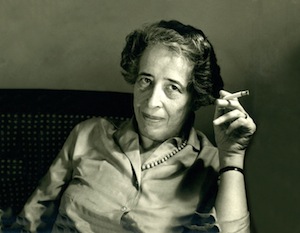
photo - Hannah Arendt
Hannah Arendt (photo from the Hannah Arendt private archive via Zeitgeist Films)

Vita Activa also does a good job of including both fans and critics of Arendt’s work, but mainly uses Arendt’s own words to explain her thoughts and analyses. The film uses as its foundation the Adolph Eichmann trial, about which Arendt wrote Eichmann in Jerusalem: A Report on the Banality of Evil (1963), describing Eichmann as “a typical functionary,” and thus an example of the “banality of evil.” (Viewers should be warned that there are many disturbing Holocaust-related images in this film.)

“Eichmann was quite intelligent but he had that dumbness,” she tells an interviewer in one of the clips included in the documentary. “It was that dumbness that was so infuriating, and that was what I meant by ‘banality.’ It has no depth; it isn’t demonic. It’s simply the unwillingness to ever imagine what others are going through.”

Another of Arendt’s theories – about refugees – remains relevant. With no rights, refugees are considered “superfluous” by a regime, she argued, and denationalization and xenophobia become a powerful weapon of totalitarian politics.

In Keep Quiet, a political journalist describes Hungary as a “part of the world where history has been manipulated” and the effects that such manipulation has upon generations. Arendt broadens that view beyond Europe, saying, “It has been characteristic of our history of consciousness that its worst crimes have been committed in the name of some kind of necessity or in the name of a mythological future.”

In addition to her early work, Vita Activa touches upon Arendt’s personal life, which offers some further understanding of the philosopher, who was seen by many to lack empathy. In one interview, she talks about how Auschwitz shouldn’t have happened, how she could handle everything else but that. Yet, she criticized the Jewish leadership who cooperated with the Nazis – the councils and kapos – and hypothesized that, if there had been no such leadership, there would have been chaos and suffering and deaths but not six million. One professor interviewed for the documentary calls Arendt’s comments “irresponsible,” another says they showed her complete ignorance of history, yet another says she regretted her remarks later in life.

The film also notes Arendt’s change from supporting Zionism to condemning elements within it. Among other things, she said, “A home that my neighbor does not recognize is not a home. A Jewish national home that is not recognized by and not respected by its neighboring people is not a home, but an illusion, until it becomes a battlefield.” And she pointed to tendencies within Zionism that she considered “plain racist chauvinism” that do “not differ from other master race theories.”

The documentary also covers Arendt’s 1951 Book of Thoughts, in which she contemplates the nature of forgiveness, revenge, reconciliation. For her, the latter doesn’t forgive or accept, but judges. When you take on the burden of what someone else did, she believed, you don’t accept the blame or absolve the other of the blame, but take upon yourself the injustice that occurred in reality. “It’s a decision,” she said, “to be a partner in the accountability, not at all a partner to the guilt.”

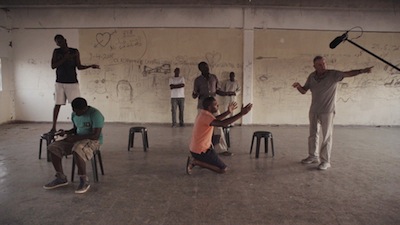
photo - A “theatre of the oppressed” workshop at the Holot Detention Centre in Israel
A “theatre of the oppressed” workshop at the Holot Detention Centre in Israel. (photo from Vancouver International Film Festival)

Reconciliation and forgiveness don’t enter the picture in either the documentary Between Fences or the fictional (but based on a real person) Junction 48. They each highlight important, even vital, issues in Israeli society, but do so in such a condemnatory, predictable way that anyone but the choir won’t be able to sit through these films.

Without much context, Between Fences looks at the poor situation in which asylum seekers from Eritrea and Sudan find themselves when they reach the safety of Israel. In many countries, these asylum seekers face problems, but viewers wouldn’t know that from this documentary, nor would they begin to understand the atrocities being committed in their homelands. However, they will learn how Israel doesn’t recognize their refugee status and makes every effort to send them back, how racist Israelis are towards these newcomers and a host of other problems with Israel and its people. Not one government official or Israeli is interviewed, although some Israelis participate in the “theatre of the oppressed” workshops in Holot on which the film focuses. In addition to leaving many questions unanswered, the film also begins and ends confusingly and is slow-paced.

Bias also makes Junction 48 almost unwatchable for anyone who would like to see the Israeli-Palestinian conflict resolved, so that both peoples’ rights and safety are ensured. From the second sentence of the opening, the perspective is made clear: “The Israeli city of Lod is the Palestinian city of Lyd, which once sat on the main railway junction. In 1948, tens of thousands of Palestinians were exiled from Lyd in order to resettle the town with Jews….”

photo - Samar Qupty and Tamer Nafar in Junction 48
Samar Qupty and Tamer Nafar in Junction 48. (photo from VIFF)

We then meet Kareem, an aspiring young rapper, whose parents are worried about his involvement with drug dealers and his future in general. His friends not only deal and take drugs, but visit prostitutes and dabble in other criminal activity. Nonetheless, every Israeli they encounter is the real bad guy, from the police to other rappers to the government, which is knocking down one of their homes to build a coexistence museum. Oh, the irony.

The only entertaining and thought-provoking aspect of this film is the music by lead actor and film co-writer Tamer Nafar, which is available online.

In the end, the Jewish Independent chose to sponsor what a VIFF programmer called a “classic Jewish comedy,” though, having seen a screener of the film, the Jewish aspect is hard to discern. While much lighter (and non-political) fare than the other offerings, it has much to say – or show, really, as the dialogue is minimal – about social awkwardness and a lack of direction in life. The protagonist, Mike, works at a pizza place in New Jersey and has the energy level of a slug and the magnetism of zinc. Yet, somehow, he has friends, albeit not great ones.

Short Stay is one of those films that moves apace with its main character, so slowly and in all different directions, as Mike both physically wanders the streets and mentally wanders to destinations unknown. Viewers don’t gain insight into what motivates Mike, who seems unperturbed by his lack of career, social skills, direction and future, but they root for him, empathize with what must be his loneliness.

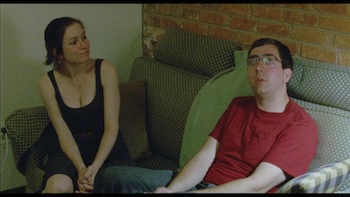
photo - The social awkwardness of the protagonist of Short Stay, Mike, is obvious in his exchanges with others
The social awkwardness of the protagonist of Short Stay, Mike, is obvious in his exchanges with others. (photo from VIFF)

Short Stay director Ted Fendt best describes the acting of the nonprofessional cast, many (all?) of whom are his friends. “The film contains a range of performance styles from the fairly natural (Marta and Meg), to Mark and Dan’s B movie ‘villains,’ who might have stepped out of an Ulmer or Moullet film, to the quasi-Bressonian, unaffected manner Mike delivers his lines.” And therein is a Jewish link, Edgar G. Ulmer.

Another Jewish filmmaker – Vancouver’s Ben Ratner – will be premièring his short film, Ganjy, at this year’s festival. About a former boxer suffering from dementia pugilistica, who is in desperate need of help when three friends visit, Ganjy was inspired in part by Muhammad Ali. Its creators are looking to fundraise enough to take the film to other festivals, as well as contribute to the Muhammad Ali Parkinson Centre. For more information, visit indiegogo.com/projects/ganjy-film#.

For more information about and the full schedule of films playing at VIFF, visit viff.org.

Note: This article has been edited so that it is clear Hannah Arendt was speaking of tendencies within Zionism that she considered “plain racist chauvinism” that do “not differ from other master race theories,” and not condemning Zionism as a whole.

Format ImagePosted on September 16, 2016September 18, 2016Author Cynthia RamsayCategories TV & FilmTags anti-Israel, anti-Zionism, antisemitism, Arab Palestinians, Arendt, asylum seekers, hip-hop, Holot, Israel, Judaism, Szegedi, Vancouver International Film Festival, VIFF, Zionism
Reut fills social gaps

Reut fills social gaps

Gidi Grinstein (photo from Jewish Federation of Greater Vancouver)

When Gidi Grinstein finished his army service in Israel in 1995, he wanted to “make a contribution to the most dramatic issues of our time.” And it wasn’t long before he began making tracks in that quest, about which he will talk at Jewish Federation of Greater Vancouver’s annual campaign launch on Sept. 22.

Grinstein, now 44, coordinated Israel’s negotiations with the Palestinians, serving as secretary for the Israeli delegation at the Camp David Summit at the tender age of 29, while serving in the office of prime minister Ehud Barak from 1999 to2001. “They called me on Friday afternoon,” Grinstein recalled. “And they said, ‘The first meeting is tomorrow night. If you come, you have the job.’ It took me about three seconds to think about it.”

Grinstein had a close-up view of the strengths and weaknesses of the inner workings of the government. After the conclusion of the negotiations, he received a Wexner fellowship and spent a year at Harvard University’s Kennedy School of Government, thinking about how to move Israel forward through the many challenges that it faces. As he told Israel21c, “There is a systemic problem deriving from the gap between the complexity of the emerging challenges facing the country and the weakness of the tools of governance to meet those challenges.”

Grinstein concluded that tackling this problem “would have to come from the outside” and, after his year at Harvard, he set out to create a nongovernmental body to address Israel’s most pressing problems.

“Governments in general are weak when it comes to innovation,” Grinstein told the Independent, “so NGOs experiment and explore, try new methods; when there is rightness, the government takes them on.”

Grinstein said Reut (meaning “clear vision”), the organization he founded with two others, aims “to help communities drive their own long-term development and create a vision for the next 10 years.”

Reut does this by mobilizing economic potential, key institutions, the municipal and central government and entrepreneurs. “Reut is a platform for social innovation that aims at what I call ‘inclusive prosperity,’” said Grinstein, “prosperity that includes Jews and Arabs, the wealthy and the poor, everyone. Only inclusive prosperity will bring Israel forward into its future as what it is meant to be.”

Grinstein said Reut exists “to create integrative models to tackle big problems, problems with no market or government solutions, problems where solutions don’t exist or cannot be afforded.”

He pointed out that “the state of Israel does not have a specific unit of people dedicated to long-term well-being of its people, as if that will just take care of itself!”

Grinstein said, in Israel’s early years, it led the world in societal innovation but, in recent decades, it has focused on technological innovation without a corresponding degree of societal innovation, leading to an imbalance. He told Haaretz last year that technological innovation benefits far fewer people than societal innovation. “It creates social gaps,” he said, adding that “Israel has gone from being one of the most egalitarian countries in the world to one of the least.”

Grinstein laid out his vision for Israel in his 2015 book Flexigidity: The Secret of Jewish Adaptability and the Challenge and Opportunity Facing Israel. He views Israel’s role as both a light unto the nations and a key agent of the historical vision and special role of the Jewish people, with concerns that need to transcend a narrow focus on economic and security concerns, as important as those issues are.

Reut’s projects include Firewall Israel, a web platform designed to support every Jewish and pro-Israel community in the world in their local fight against boycott, divestment and sanction challenges; TOM (Tikkun Olam Makers), which addresses neglected societal problems faced by people with disabilities, the elderly and underprivileged, by creating affordable options for them; and the Leapfrog Centre, which offers consulting and training to municipalities, based on knowledge developed through Reut’s efforts in the city of Tzfat (since 2011) and in the Western Galilee (since 2010).

Grinstein will be joined at the Sept. 22 campaign launch, FEDtalks, by Randi Zuckerberg, author, radio host and founder of Zuckerberg Media; Alison Lebovitz, One Clip at a Time co-founder; and journalist Terry Glavin. For tickets and more information, visit jewishvancouver.com/fedtalks2016.

Matthew Gindin is a Vancouver freelance writer and journalist. He blogs on spirituality and social justice at seeking her voice (hashkata.com) and has been published in the Forward, Tikkun, Elephant Journal and elsewhere.

Format ImagePosted on September 16, 2016September 15, 2016Author Matthew GindinCategories IsraelTags equality, Federation, FEDtalks, governance, Grinstein, high-tech, Israel, Reut, tikkun olam

Will state be free?

Binyamin Netanyahu may not have expected the international reaction he received when he accused opponents of Jewish settlements in the West Bank of supporting the ethnic cleansing of Jews. While he went too far, there is some truth to be learned from the fallout.

The Israeli prime minister made the comments in a video, where he noted that nobody suggests that two million Arab citizens of Israel are an obstacle to peace. Yet the presence of Jews in the areas most people assume will eventually be Palestine under a two-state solution, he said, is repeatedly held up as proof that Israel is not acting in good faith toward a two-state objective.

Netanyahu was pointing out one of the glaring hypocrisies in the discussion of an eventual peace agreement and a two-state solution. He was intentionally inflammatory but, in the process, he set off a reaction that is illuminating and worth consideration.

First, we need to understand this basic fact: nobody expects Jews living outside the Green Line to voluntarily become citizens of a future Palestinian state. The entire discussion is an exercise in rhetoric. But this fact, too, raises other issues. Not many believe that Jews in an independent Palestine could live as citizens the way Arab citizens of Israel do under law (however imperfect this ideal might be in practice), partly because it’s probable that nobody would be free in an independent Palestine. If history is any measure, an independent Palestine might be a theocracy run by Hamas, a kleptocracy run by Fatah or some hybrid thereof. Regardless, Palestinian Authority President Mahmoud Abbas, among others, has insisted that no Jews will be permitted to live in an independent Palestine. The world ignores these racist statements, or excuses them as the legitimate reaction of a people long oppressed by the Jewish state.

Since most Jews would flee of their own volition if they found their homes outside the new borders of Israel, Netanyahu’s claims of ethnic cleansing can be seen as inflammatory and false, since it is not the Palestinians who would evacuate the Jews from the West Bank, but the West Bank Jews themselves, knowing the place held no future for them. But, while Netanyahu should be criticized for exploiting the term ethnic cleansing, perhaps to deflect criticism from the settlements, he has also drawn attention to the uncomfortable truth that the dream of Palestinian “freedom” for which so many in the world (including, for instance, most delegates to the recent Green Party of Canada convention) have devoted so much of their energies, is in fact a cause that may instead create a country that is nobody’s dream of a free and independent homeland.

Netanyahu is guilty of poking a hornet’s nest. However, his critics, too, should look at their own assumptions and motivations. The prime minister went too far in summoning imagery of mass deportations, but others have not gone far enough in addressing the reality that the movement for Palestinian independence in infused with unhealthy ideologies, of which excluding Jews from citizenship is just one.

Posted on September 16, 2016September 15, 2016Author The Editorial BoardCategories From the JITags Abbas, Arab-Israeli conflct, Green party, Netanyahu, Palestinians, settlements, two-state solution

Posts pagination

Previous page Page 1 … Page 488 Page 489 Page 490 … Page 661 Next page
Proudly powered by WordPress