
For more cartoons, visit thedailysnooze.com.
Images
Glimpse into Schiffer’s work
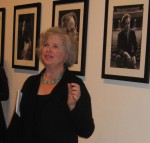
Jennifer Levine, Fred Schiffer’s daughter, speaks at the opening of the exhibit of her father’s work. (photo by Cynthia Ramsay)
On April 16, with the help of volunteers from King David High School and others, the Jewish Museum and Archives of British Columbia welcomed more than 250 visitors to the opening night of Fred Schiffer Lives in Photos. At the Make Gallery until May 31, the exhibit is part of the Capture Photography Festival.
Michael Schwartz, coordinator of programs and development at the JMABC and curator of the exhibit, gave the crowd a brief overview of what the JMABC does, and how the Schiffer photos fit into the museum’s holdings.
Of the 300,000 photographs housed by the JMABC, said Schwartz, “The Schiffer collection comprises over 10,000 photos. The JMABC has been working on this collection – organizing it, processing it – since it was donated by Schiffer’s family in 2001. To date, we’ve digitized 2,000 photographs, which are available to researchers online. The 45 photos that you see in this exhibit are selected from those 2,000, and an additional six photos are on display at the atrium of the Langara library through May 4th in a satellite exhibit.”
Schwartz explained that Schiffer fled Vienna, seeking refuge in England, where he stayed for 10 years before heading to Argentina, where he also lived for 10 years. “He arrived here in Vancouver in 1958 with his wife Olive and their two young children, Jennifer and Roger.”
The Schiffers operated a small studio under the Hudson’s Bay Co. building, on Seymour Street. “Schiffer was respected by his peers, not only for his skill but for being a kind and generous man, a true mensch, as we say,” said Schwartz. “He was president of the local photographic association, wrote frequently for the association newsletter and shared his knowledge of the trade with his colleagues.” He was one of the people who “led the charge to develop a professional photography program at Langara.”
After thanking the partners and funders of the exhibit, as well as his colleagues, Schwartz introduced Jennifer Levine, Schiffer’s daughter, who attended the opening from Toronto.
While her father was the person behind the photographs, she said, “he had two quite remarkable women who loved him and worked with him”: her mother, “who was the person you would always meet in the studio and who was also the organizer and the bookkeeper,” and her aunt, Irene, “who was not only a master retoucher but, also, I think she did some of the printing … together they discussed how things should be, and collaborated to make the prints happen.”
The family came to Vancouver from Buenos Aires, which had a “very lively photographic culture and my father was part of a group of photographers who met together, collaborated, discussed their work … they were sophisticated, they had annual photo shows in art galleries,” said Levine. When he came here, he thought he could interest the Vancouver Art Gallery in his work. “The response was, ‘Oh no, that’s photography, that’s not art.’ And it’s interesting that Vancouver has become such … an international centre for exciting work in photography, but let me tell you that, in the ’50s and ’60s, that was not happening.”
For her father, she said, “coming to Vancouver, which he chose to do, I think, largely for his children … because he had a sense of what was happening in Argentina, meant that the exploratory and experimental nature of his work would have to be held in because people in Vancouver were not interested…. I see how he had to shape his work for the marketplace and I know he did it for us and I honor him for that…. Artists have to make compromises sometimes for the people they love, and my dad did. I’m really proud of him as a photographer but I’m proud of him as a dad, too.”
– With the video file of Wendy Fouks

A rockin’ Yom Ha’atzmaut
Israeli musician Micha Biton headlined the community’s Yom Ha’atzmaut celebration. (photo by Rhonda Dent)
It was just shy of a sellout crowd on April 22 at the Chan Centre for the Performing Arts, as Israeli rock pioneer Micha Biton headlined the community’s main celebration of Yom Ha’atzmaut.
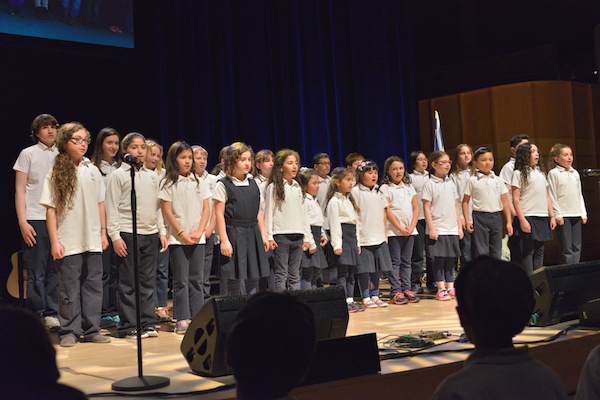
As it does every year, the evening began with the conclusion of Yom Hazikaron, led by Geoffrey Druker. In the singing of the national anthems, Vancouver Talmud Torah Choir was joined by Partnership2gether twin school Alei Givah Choir in Kfar Giladi (by video) for O Canada, while Richmond Jewish Day School Choir and Partnership2gether twin school Hameginim Choir in Kiryat Shmona (by video) sang Hatikvah.
Diane Switzer, board chair, Jewish Federation of Greater Vancouver, which led the celebration supported by some 50 community partner organizations and countless sponsors and volunteers, spoke briefly. She provided an overview of how the funds raised here for our partnership region in Israel – Eztabah Hagalil (the Galilee Panhandle) – are spent.
“Our Gesher Chai (Living Bridge) program aims to deepen connections with Israel on a person-to-person basis,” she said. “It builds lasting ties between our two communities, and is a cornerstone of Jewish Federation’s work.
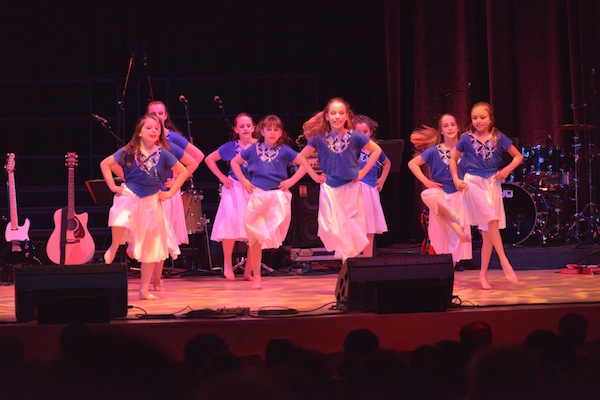
“Through Gesher Chai, we help local day school students build enduring relationships with their peers at their sister schools in Israel. We fund exchanges between local educators and their Israeli counterparts so they can develop a shared curriculum. And we help connect the JCC Or Chadash dancers you’ll see tonight with the Hora Goel dancers from our partnership region. The impact of these programs, which promote Jewish identity and unity for elementary and high school students, can be felt around the world and here at home.
“Etzbah Hagalil is geographically, economically and politically removed from the centre of Israel,” she continued. “It is surrounded on three sides by Syria and Lebanon, and often bears the brunt of attacks when tensions flare. High unemployment and limited opportunities for education and advancement are ongoing concerns, and the area is home to many at-risk youth. Jewish Federation’s strategic investment in this region is aimed at breaking the cycle of poverty, improving living standards and developing the region’s long-term economic prospects.”
Warming up the crowd before Biton’s performance was the Or Chadash dancers. The evening also included greetings by video from Premier Christy Clark, as well as from mayors Benny Ben Muvchar (Mevo’ot Hermon), Giora Saltz (Galil Elyon), Rabbi Nisim Malka (Kiryat Shmona), Ilan Or (Yesod Hama’ala) and Herzel Boker (Metula).
For more photos from the event, click here.

בחשבונות הפטורים ממס
ההחלטת ממשלת השמרנים של סטיבן הרפר, להגדיל את סכום ההשקעה בחשבונות הפטורים ממס לעשרת אלפים דולר בשנה, כבר בתוקף. (צילום: CBC News screenshot via YouTube)
ההחלטה להגדלת סכום ההשקעה בחשבונות הפטורים ממס לעשרת אלפים דולר כבר בתוקף
ההחלטת ממשלת השמרנים של סטיבן הרפר, להגדיל את סכום ההשקעה בחשבונות הפטורים ממס לעשרת אלפים דולר בשנה, כבר בתוקף. כך מבהירים גורמים רשמיים ברשות המיסוי הקנדית – קנדה רווינו אייג’נסי. זאת לאור חוסר בהירות בנושא.
כבר מספר חודשים שבממשלה הפדרלית מדברים על הרצון לאפשר להגדיל את סכום ההשקעה השנתית, בחשבונות הפרטים ממס (הטי.אף.אס.איי). לטענת האופוזיציה הדבר נובע רק משיקולים פוליטיים ברורים לאור הבחירות הכלליות, שיתקיימו בחודש אוקטובר הקרוב.
ואכן הצעת תקציב המדינה החדש שהוצגה בשבוע שעבר בפרלמנט, על ידי שר האוצר ג’ו אוליבר, כללה את ההחלטה לאפשר להשקיע בחשבונות הפטורים ממס, עד עשרת אלפים דולר בשנה. ההחלטה כאמור כבר בתוקף ומי שכבר שהשקיע השנה בחשבונות הפטורים ממס 5,500 דולר, יוכל להגדיל את השקעתו בתוספת נכבדת של עוד 4,500 דולר.
הממשלה הפדרלית החליטה להנהיג את החשבונות הפטורים ממס, כבר בשנת 2009. בהתאם להחלטה המקורית עד 2012 ניתן היה להשקיע בחשבונות אלה, מדי שנה 5,000 דולר. והחל משנת 2013 ההחלטה שונתה ותקרת הסכום השנתית הועלתה ל-5,500 דולר. בסך הכל מדובר בהשקעה כוללת פטורה ממס בהיקף של 36,500 דולר בכל אותן שבע שנים (2009-2015). עם החלטת הממשלה משבוע שעבר, להגדיל את תקרת הסכום לעשרת אלפים דולר בשנה, ההשקעה הכוללת בחשבונות אלה מגיעה כבר ל-41,000 דולר (עד לסוף השנה הנוכחית). יש לזכור שכל הרווחים מהכספים שמושקעים בחשבונות יחודיים האלה, גם הם פטורים ממס.
עד היום רק 11 מיליון קנדיים שהם כמעט כשליש מתושבי המדינה, משקיעים כספים בחשבונות הפטורים ממס. ויש רבים בציבור שעדיין אינם מבינים את היתרונות הברורים בחשבונות הפטורים ממס.
לאור המצב בשטח: ראשי הקהילה היהודית קיימו סדנת אימון בנושא אבטחה
לאור הגברת האיומים והסכנות כנגד הקהילות היהודית בעולם, בעיקר מצד גורמים איסלמיים קיצוניים, ראשי הקהילה היהודית של מטרו ונקובר בראשות הפדרציה היהודית, קיימו לאחרונה סדנת אימון בנושא אבטחה. ביום האימון היחודי השתתפו נציגים של משטרת ונקובר ושל המשטרה הפדרלית (האר.סי.אם. פי). כן השתתפו נציגים של המרכז לענייני ישראל והיהודים בקנדה, ושל רשת האבטחה של הקהילות (אס.סי.אן) – שהיא זרוע הביטחון של הפדרציות היהודיות בצפון אמריקה.
ביום האימון דנו המשתתפים בין היתר: בחששות כלליים בנושא הביטחוני, בדאגה לביטחון הארגונים היהודים המקומיים, הצורך לספק לארגונים את הכשרה הביטחונית הראויה, הידוק הקשר עם רשויות אכיפת החוק, באפשרות של התרחישים הגרועים ביותר והתגובות היעילות ביותר, ומהיא הדרך הטובה לשמור על איזון בין שמירה על הביטחון ומתן תחושה של קבלת פנים במוסדות היהודיים. נציגי רשת האבטחה של הקהילות סיפקו מידע על המתרחש בתחום הביטחוני, בקרב הקהילות היהודיות השונות בצפון אמריקה.
בשנים האחרונות חלה עלייה באיומים ובתקיפות כנגד יהודים ומוסדות יהודיים בקנדה. ביולי אשתקד בתקופת מבצע “צוק איתן” הותקפו יהודים על ידי מפגינים פרו-פלסטינים בקלגרי, בעת שהתקיימה הפגנה נגד ישראל. חלק מהמותקפים נזקקו לטיפול רפואי. באותו חודש הותקפו יהודים במיסיסוגה שהפגינו מול ארגון ‘הבית הפלסטיני’. ואילו בטורונטו כתובות נאצה וצלבי קרס רוססו על תחנת אוטובוס מקומית, באזור בו גרים יהודים רבים.
בפברואר השנה דיווח הקונסול הכללי של ישראל במונטריאול ומזרח קנדה, זיו נבו קולמן, כי בעת שביקר בהליפקס המשטרה עצרה לחקירה מוסלמי מקומי. זאת לאחר שפרסם בחשבון הטוויטר שלו ציוצים פוגעניים נגד קורבנות השואה. הוא גם לעג לנספים בפיגועי ה-11 בספטמבר.
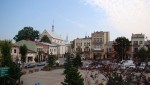
Film on fate of Polish town
Filmmaker Haya Newman’s father Ozer Fuks grew up in Wolbrom, Poland. He escaped the town in 1939. (photo from wolbrom.pl)
The town of Wolbrom, Poland, had a population of around 10,000 in 1939; about half of the residents were Jewish. Because it was very close to the German border, it was occupied on the day the Second World War began with the invasion of Poland on Sept. 1, 1939.
Haya Newman, a Vancouver teacher of Yiddish and now a filmmaker, has spent the past several years investigating what happened to the Jews of Wolbrom. On April 14, the evening before the community gathered to mark Yom Hashoah, Newman premièred her documentary Wolbrom: My Father’s Hometown in Poland before a packed audience at Temple Sholom.
Newman’s father, Ozer Fuks, came from the town, and trouble began well before the invasion of the Nazis. When Ozer was 4 years old, his father was murdered in front of his leather goods shop. In 1939, Fuks was in the Polish army and he managed to escape the Nazis through the Soviet Union.
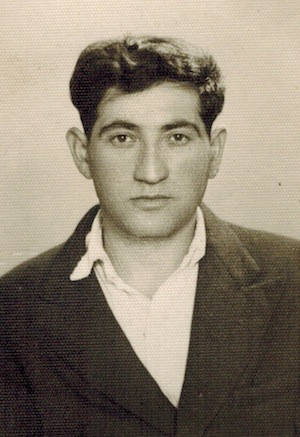
The project of assembling information on her father’s hometown began from almost nothing, given that her late father kept his past during the Holocaust secret.
In her attempts to gather information, Newman visited the few remaining members of her father’s family in Israel. When that branch of the family opted to leave Europe for Mandate Palestine, Newman said, the remaining family told them they were crazy, heading to a barren desert. They are the only members of her father’s family that survived.
Newman’s documentary, which was filmed by her husband, Tim Newman, follows her first to Israel and then to Wolbrom, in search of the missing pieces.
The outline of the story of Wolbrom’s Jewish residents is similar to that of Jews in thousands of other Polish villages, towns and cities.
The Jewish residents were rounded up by the Nazis and their collaborators. Some were shot on the spot while the rest were forced on a six-day march that circled back to the same town. The able-bodied who survived were forced into slave labor.
In 1941, about 8,000 Jews from the surrounding area were forced into the ghetto in Wolbrom. Eventually, some were transported to concentration camps. But most of them met a grisly fate closer to home.
A memorial was erected in 1988, apparently by residents of Wolbrom themselves, remembering the 4,500 Jews killed and buried in mass graves outside the town.
“This must be carved in Polish memory as it is carved in stone,” the memorial reads in Polish.
Walking to the site, Newman ran into locals who shared some of the stories that had come down from the older villagers.
Three holes were dug in a clearing, they said, and planks were placed across them. The Jews were ordered to undress and as they individually walked across the planks, they were shot and fell into the ravines. When the dirt was pushed over the bodies, one local recounted, the earth cracked from the movement of those still alive.
A story survives of a boy who did not. A youngster managed to escape through the forest as the murdering was going on. Police chased after him, calling out to local boys who were tending cows to catch him, which they did. An officer stood on the boy’s hands and shot him point blank.
Wolbom’s synagogue was turned into a pile of rubble during the war. The Jewish school is now an agricultural supply store – with Nazi graffiti covering the doors. While Newman said she was largely greeted with warmth during her visit, which took place in 2005, she sensed some defensiveness among Poles.
“The fact of the matter is that 90 percent of Polish Jews were killed and a lot had to do with the Polish population,” she said, adding that hundreds of Jews who had been in hiding and survived were killed after the war by Poles. There are 327 documented cases of killings, either individual murders or in pogroms in the immediate aftermath of the war, but estimates are that as many as 2,000 Polish Jews who survived the Holocaust were murdered after liberation.
The reactions from some of the locals caught on video are intriguing.
“There is nothing to look for,” said one man, “You can’t turn back time.”
Another told her, “Take it easy, it’s all in the past.”
Newman visited the home where her grandmother had lived and the woman who resided there at the time was somewhat nonchalant about the property’s provenance.
“When we bought the house, it was empty,” she said.
Other residents spoke of the horror and upset felt by non-Jewish people at the fate of their Jewish neighbors. One woman said her mother picked up Yiddish playing with the Jewish kids in town before the war. Others provided helpful information to direct Newman to the relevant sites of the former Jewish community.
Overall, the people of Wolbrom were open and very willing to speak with her, she said. “It seemed like they were waiting for me there.”
It has been 10 years since the trip that formed the backbone of the film and Newman noted that it is not only the survivors who are passing away, but the eyewitnesses who can add to the fullness of what happened during that period.
“Within five, 10 years, they are not going to be there anymore,” she said.
Rabbi Dan Moskovitz spoke after the screening and referenced the just-ended Pesach holiday to emphasize the need to tell the stories of the more recent past. Just as the Hagaddah marks the narrative of the Exodus, he said, today’s generation should be recording the narratives of this era.
“We need to tell our stories so our children can tell them the way we tell the Hagaddah,” he said. “Go home, write down and tell your story.”
Newman’s next projects include a documentary about Yiddish on the West Coast, a film about her mother’s hometown in Poland and another about Vancouver singer Claire Klein Osipov.
Pat Johnson is a Vancouver writer and principal in PRsuasiveMedia.com.
Analyzing talmudic sages
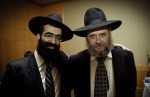
Vancouver colleagues and friends, Rabbi Binyomin Bitton, left, and Rabbi Eliezer Lipman (Lipa) Dubrawsky, spent many hours discussing scholarly Torah subjects, and the 300-page Hebrew volume by Bitton titled Rabbi Eliezer Hagadol was released in time for the second anniversary of Dubrawsky’s passing. (photo by Noam Dehan)
Rabbi Binyomin Bitton shared a unique bond with the late Rabbi Eliezer Lipman (Lipa) Dubrawsky, who was educational director of Chabad-Lubavitch of British Columbia in Vancouver. In addition to being personal friends, they spent many long hours discussing scholarly Torah subjects across the board.
In time for the second anniversary of Dubrawsky’s untimely passing at the age of 56, Bitton, co-director of Chabad of Downtown, released a book of in-depth research and analysis on the opinions and mindsets of two talmudic sages, Rabbi Eliezer ben Hyrcanus and Rabbi Yehoshua ben Chananya, based on the unique approach and teachings of the Lubavitcher Rebbe, Rabbi Menachem M. Schneerson.
“The idea first came to me shortly after Rabbi Dubrawsky’s passing,” explained Bitton. “His first name was Eliezer, and his father’s name was Yehoshua. I felt it would be a fitting memorial for two men who dedicated so much of their lives to Torah to explain the positions of two sages whose names they bear.”
While he was not initially sure if he would have enough material for a book, Bitton’s research yielded a robust, 300-page Hebrew volume titled Rabbi Eliezer Hagadol (The Great Rabbi Eliezer), an honorific often used for the talmudic sage, which Bitton said aptly described his great friend and mentor, as well.
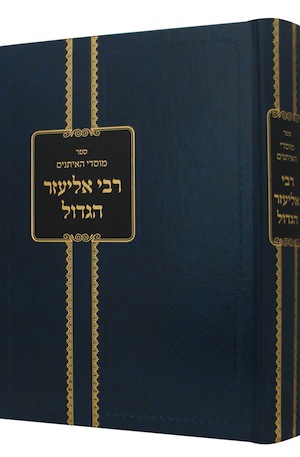
Following a pattern championed by the Rebbe, the author identifies the prototypical approaches of the two first-century sages, and then goes on to apply those same underpinnings to seemingly unrelated arguments of theirs dotting the talmudic landscape.
“The Rebbe had a unique way of learning, of leshitasayhu” – the notion that the rulings of talmudic sages on disparate subjects are related to one another, explained Bitton, “and this forms the basis of the book. The widely accepted approach to leshitasayhu is that the ruling on one particular subject evolves from another one.
“By the Rebbe, it works on a different, deeper plane. In his view, many opinions evolve from a quintessential point in which the two sages essentially disagree and, from there, their opinion evolves in numerous subjects, which, at first glance, may not be related at all. Accordingly, the Rebbe further explains how the approach of each sage evolves and/or is connected to their Hebrew name, soul, place of residence, responsibilities, position and more. This, too, was incorporated in the book with regards to Rabbi Eliezer and Rabbi Yehoshua.”
In 45 chapters, Bitton masterfully weaves common threads through the full gamut of human experience, demonstrating how the sages approached dozens of subjects that can be traced to the same fundamental axioms.
The book was released just in time for 27 Nissan, the second anniversary of the rabbi’s sudden passing in 2013. Thus, the book’s second part deals with the two sacrifices that frame the time of year: the Omer barley offering that was brought to the Temple in Jerusalem on the second day of Passover, and the two loaves brought seven weeks later on Shavuot.
Expounding upon a discourse of the Rebbe, Bitton applies the Rebbe’s principles to a number of different aspects of the two offerings – even explaining how they reflect through the kabbalistic lens of Chabad Chassidic tradition.
“Rabbi Dubrawsky dedicated his life to learning Torah and teaching Torah every single day,” said Bitton, “and I truly feel that through sharing Torah with others, we can perpetuate his special life.”
This article is reprinted with permission from chabad.org. To sponsor other works and/or buy Bitton’s, visit chabadcitycentre.com/book.

Corrin retires
After 20 years, librarian Karen Corrin retired in March from the Waldman Library. (photo by Olga Livshin)
Karen Corrin retired from her position as a librarian at the Isaac Waldman Jewish Public Library on March 30, after exactly 20 years with the library. She has been with the Waldman from the very beginning.
“There was always a small library at the old JCC,” she remembered. “I took my children there when they were young. The new library opened on the second floor of the new building in 1994. I was studying for my master’s at the library school at UBC then. My program was for two years, from 1993 to 1995, so I didn’t apply to work there, but I was at the opening. I remember Amos Oz speaking. He talked about the importance of words.”
With the new library space came new funding, so the Waldman could hire a librarian and a library technician. Corrin wasn’t among the new hires but when, a few months later, the position of the librarian opened again, her friends urged her to apply.
“I was still at school. I wanted to be a cataloguer when I graduated, but a job was a job, so I applied and got it.” She started working for the Waldman in April of 1995.
Her previous experience, both personal and professional, prepared her for this position. “I have always loved libraries,” she said with a smile. “I would go with my kids to a local library, and we would bring library books home for everyone.” Before she started her program at the University of British Columbia, she worked as a volunteer coordinator and in fundraising. She also had management skills and knew computers. All of this combined made her a perfect fit for her new duties as the Waldman librarian.
“Waldman is almost unique. There are so few JCC libraries in North America,” she lamented. “Most city libraries are funded by the governments, but Waldman is a community library. The funds come from fundraising. That’s why, from the beginning, it was run by volunteers.”
According to Corrin, there are about 30 regular volunteers at the Waldman, and she considers them the best PR people the library could have. “They care about the library, about books and about the community. They have time to chat to the patrons, to explain things, to help everyone find what they are looking for. The value of the library volunteers is great, it can’t be overrated. They are our gems.”
Corrin herself also worked as a volunteer, although not for the Waldman. “About my history with libraries,” she said, “I always volunteered at my children’s elementary schools in their school libraries. First for my son in Richmond and then for my daughter at [Vancouver] Talmud Torah.”
She emphasized that the volunteers who run the front desk of the Waldman liberate the librarians to do their main jobs – fundraising, acquisitions and event planning.
“There are several kinds of events,” she explained. “People would come in and ask us, why don’t we have a book club? So we would start a book club. We saw what events the community centre was running, and if there was something missing, something a library could supply. Another kind of event comes with the Canada Council grant. We would apply for a grant to pay a writer. If we got it, we could invite a writer for an event or a reading. We had a few children’s writers speaking at the library through this grant. We also had some book launches of local authors and sometimes poetry readings – those were often funded by Yosef Wosk. It all comes from what the community wants.”
Recently, the most profound community-inspired change at the Waldman was the introduction of ebooks. Before that, but also during Corrin’s term at the Waldman, it was computerizing the catalogue. “When I started, we still used cards,” she recalled. “Libraries are always reinventing themselves, but I think that the most important purpose of a library is to be a community hub, a meeting place. That’s why we ran educational courses and children’s events at the Waldman. There is always something going on. You’re never bored at the library.”
Surprisingly, the profession of a librarian wasn’t Corrin’s first choice. When she was young, she wanted to be a teacher. “I always thought a teacher has to be perfect. He is the one molding children’s minds. I was afraid I wasn’t perfect enough,” she recalled of her youthful dreams. But the library job gave her a lot of satisfaction, and now she has plans to be a teacher, too. She and her husband plan to travel to Spain as volunteer English teachers. They have already done this in Hong Kong, with high school students, and loved it.
“I have lots of other things I’d like to do now that I have more free time: walking, learning how to play piano, swimming outside at Kits pool. I might come back to the Waldman as a volunteer,” she mused.
Olga Livshin is a Vancouver freelance writer. She can be reached at [email protected].
Art shares esthetic, stories
Judith Joseph (photo by Olga Livshin)
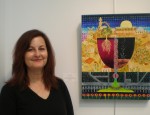
The current exhibit at the Zack Gallery, Tales of Light and Dark, features two artists from opposite sides of the continent. Alina Smolyansky is a local artist; Judith Joseph lives and works in Chicago. Their paintings hang side by side on the gallery walls as if they belong together. Their similar small size, bright color and propensity to tell stories balance the differences in technique and visual effects, as well as the two artists’ distinct creative auras.
Both artists explore Judaic themes. In the case of Joseph, her paintings relate her family’s history through the medium of Jewish symbolism. Almost every piece of hers includes birds as their most important element. Peacocks, firebirds and owls populate Joseph’s work.
“I love birds because they can fly. I wish I could fly,” Joseph said in an interview with the Independent. “A bird stands in for a person but it doesn’t have age or gender, it isn’t poor or rich. It represents everyone.”
In a way, in her art, she does fly, free of the restrictions of reality. Using the bird metaphor and the mysticism of the Torah, she spins tales of courage and suffering. Several of her paintings are dedicated to her grandmother who came to America from Ukraine after the First World War. In one image, a girl travels across the ocean on a menorah. Her vessel is wobbly, but she hangs stubbornly for her life, and the menorah glows with triumphant light, illuminating pain and sorrow but also victories and achievements.
Many pieces incorporate metal-foil embossing into the paintings. The process used for the embellishment is called repoussé. “I learned repoussé in high school,” Joseph recalled. “I like working with metal.” Her owls’ feathers and floral borders of her paintings glint with intricate copper patterns, infusing the pictures with a sophisticated and funky ambience.
Her paintings always start with an emotion and an idea, she said. “I always have a sketch book with me and, whenever an idea appears, I make a sketch. Most paintings in this show come from my sketches practically unchanged. I know that if the emotion that inspired it is genuine, unfiltered, then people respond to it.”
Like any art show, this one only highlights a small segment of the artist’s output. The majority of her art is beyond the scope of the show. “I paint ketubahs,” she said. “Most of my commissions are ketubahs. I started making them in high school and still love them. By now, I have done hundreds of them. Recently, I also do digital ketubahs. I would paint by hand, then have the image photographed professionally, and then play with it on the computer: add calligraphy, change colors, customize. I had to learn new software to do that, and my skills are still limited, but I’m learning.”
The courage to combine old materials, ancient art form and new computer skills is what makes Joseph a 21st-century artist. The same modern streak also made her collaborate with an online seller of ketubahs, the Canadian company ketubah.com. “Three of their bestsellers are mine,” she said with a smile.
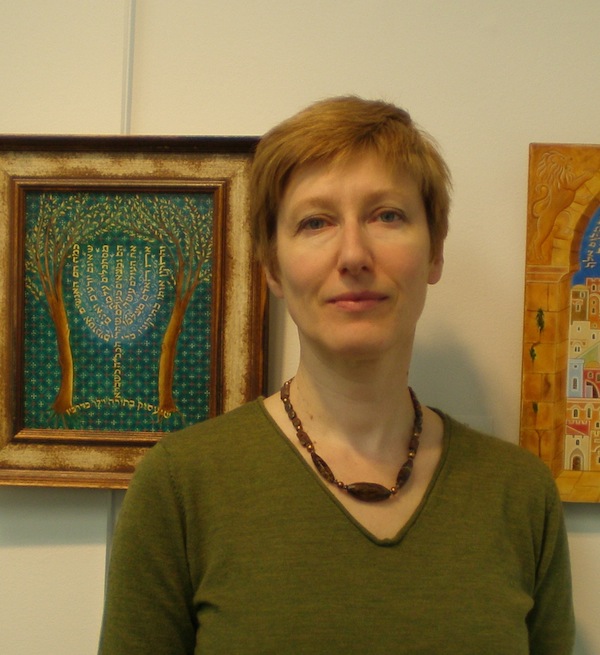
She works predominantly in egg tempera, the type of paint that was exclusively used until about 1500, when it was largely replaced by oil paints. Few artists still use egg tempera, but its brightness attracted not only Joseph but also her partner in this show, Smolyansky.
The credit for bringing them together belongs to the gallery director, Linda Lando. “I put them together because I thought that their work has a similar sensibility,” Lando said. The artists didn’t know each other before the show.
Unlike Joseph with her art degree, Smolyansky arrived at this point in her life by a vastly different route. She started her professional life as an engineer in Kiev. Like many Jews during the Perestroika era, she immigrated to Israel and, after four years there, she came to Canada in 1995. She kept working as an engineer, but wasn’t satisfied with her professional life. She felt the need for a change.
“I was searching for myself,” she explained. “I’ve been a dreamer all my life. I liked making up and writing stories and painting watercolors. When I was a child, I attended an art school. I always liked learning, always was an A student. If I could, I would be a permanent student,” she admitted.
To satisfy her craving for knowledge, she studied writing at Douglas College, and then enrolled in the professional communications program at Royal Roads University. She was thinking of a technical writing career, but felt she couldn’t settle.
At about the same time, around 2006, she began studying yoga, and discovered a spiritual path. “I’m not religious,” she said, “but I need to form my own connection to the Creator. I need to understand where we are coming from and where we are going.”
She quit her engineering position and spent some time in Thailand at a yoga school, but an unknown force was still pushing her towards a different goal.
“I was on Granville Island,” she recalled. “It was 2008, and I was looking for some classes to take when I saw this ad for an icon painting class. It was absolutely unexpected. I didn’t know anything about icons, but it seemed I was driven to this class. I took it and I was good from the beginning.”
The class introduced her to egg tempera and to icon paintings, both Eastern Orthodox and Roman Catholic. “I was fascinated by egg tempera. I haven’t painted watercolors since.”
She stayed with her icon teacher for three years, until he moved out of the city. She still paints icons on commission and she teaches icon painting, occupying a small but exclusive artistic niche in Vancouver. But she didn’t abandon her quest for knowledge. In search of more spiritual learning, she began her studies with Bnei Baruch Kabbalah Research and Education Institute, based in Israel.
The mysticism of kabbalah appeals to her. “My art in this show is influenced by my kabbalah studies, especially the … Zohar,” she said. Her Tree of Life gladdens the eyes, her old scholar contemplates the Jewish destiny and her menorah shines for all.
The exhibition continues until May 16. To learn more about the artists, visit judithjosephstudio.com and lettherebelightart.com.
Olga Livshin is a Vancouver freelance writer. She can be reached at [email protected].
We walk a little taller
Karon Shear, left, and Marilyn Berger. (photo by Binny Goldman)
Moshe Feldenkrais is quoted as saying, “When you know what you are doing, then you can do what you want!” How appropriate that some of us who spent the two nights of the Passover seders sitting at the table – or reclining, as directed – were now being taught to sit properly.
On April 13, about 50 people gathered at the Oakridge Seniors Centre (OSC) to attend an event co-hosted by Jewish Seniors Alliance of Greater Vancouver to learn the helpful movements of the Feldenkrais Method.
Alexandra Henriques, manager of OSC, graciously welcomed the audience and called upon JSA president Marilyn Berger, who said how impressed she was with the surroundings and the newsletter put out by OSC, and said she would come back to sample some of the lunches being offered at the centre. Berger then acquainted those gathered with the aims of JSA, mentioning its advocacy for the betterment of the quality of life for seniors and the peer-counseling courses being offered.
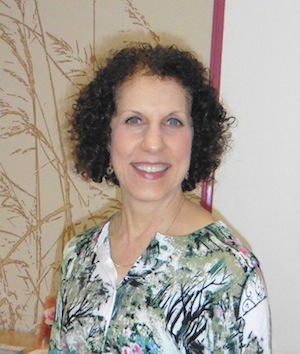
Berger then introduced Vita Kolodny, a nurse and a movement educator, who gently eased the audience through the mindful movements that can be used to ease back pain. By a quick questioning of the audience, we learned that almost all in attendance had suffered from back pain at one time or another.
We all sit so much during the day, doubling the stress placed on our back compared to when we stand, Kolodny explained. That is why we may prefer to stand when experiencing back pain.
Kolodny led those gathered through the correct way of positioning our bodies and ways of strengthening the skeletal muscles. It is important to reeducate our brains to the new ways of sitting by repeating the movements we learned, slowly and with awareness of how our whole body participates, with a rest in between the exercise.
A question was asked by Lou Segal: “Is it better to train one’s body to sit in the new and correct way, even while resting, so it becomes our natural way of sitting?” The answer was yes.
Dr. Norman Doidge’s book The Brain’s Way of Healing was recommended reading if attendees cared to learn more about neuroplasticity and the Feldenkrais Method.
Some constructive and supportive suggestions were made during the demonstration. For example, sit forward in a chair with feet flat on the floor. A pillow may be placed behind your back, remembering to maintain the arch in your back. As well, it helps to sit on an armless chair, stool or exercise ball while maintaining good balance.
Gyda Chud of JSA thanked Kolodny, using her penchant for alliteration, saying “Vita was vital, vivacious and vibrant in her presentation,” echoing the feelings of the audience, all of whom were visibly sitting upright, already making the changes suggested by Kolodny that afternoon.
Not only were our hearts smiling – as suggested in the theme – but our spines were, as well.
Discussions followed over dessert and hot drinks.
Berger, in thanking “the gregarious Gyda Chud and our ever incredible Karon Shear,” reminded everyone of the JSA Spring Forum on April 26, which will take place at the Jewish Community Centre of Greater Vancouver. The theme is YOLO: You Only Live Once.
So, let’s live it tall!
Binny Goldman is a member of the Jewish Seniors Alliance of Greater Vancouver board.

Canadian Jews behind bars
Rabbi Zushe Silberstein (photo from cjnews.com)
When Rabbi Zushe Silberstein heard that the Jewish inmate standing before him in a Montreal jail was due to be released in just three days, he didn’t hesitate. “My daughter is getting married this weekend,” he said. “I would be honored if you could attend the wedding.” The prisoner stared at him, certain he had misheard. A rabbi inviting a newly released prisoner to a family wedding? It seemed impossible. But in the next breath Silberstein was offering to help arrange a suit if needed.
This conversation occurred two years ago and, that weekend, the former convict did indeed attend the wedding. The encounter was nothing extraordinary for Silberstein, who heads Chabad Chabanel in Montreal and regularly visits Jewish inmates in Montreal jails. “We bring them food and sandwiches, we daven, put on tefillin with them and celebrate Jewish holidays with them,” he said. There’s a seder at Pesach, a Megilla reading on Purim, menorahs on Chanuka and services on Rosh Hashana.
“My main thrust has always been to tell these marginalized Jews, you’re not alone, you’re not forgotten, there’s someone out there who cares about you. We’re there to comfort, to advise them and to show them the Jewish community cares about them.”
Fifteen years ago, the rabbi founded Maison Belfield as a halfway house for up to six men at a time, offering newly released Jewish inmates shelter, food, clothing, therapy and reintegration assistance. Aiding Jewish prisoners is a consuming task and one he takes seriously.
“The Rebbe teaches us not to forget any Jew, no matter where she or he may be,” he explained. “If there’s a Jewish person in need, we must care for them. It’s why my children and I have more than once traveled 14 hours to help one single Jew in jail. My Shabbos table often has former inmates gathered around it.”
Over the 30 years Silberstein has been involved with Jewish chaplaincy, he’s seen all kinds of Jews behind bars, “from a prominent lawyer to children from dysfunctional homes to people with substance abuse issues and those who are highly affluent,” he said. “Nobody is immune to falling into this kind of situation.”
He refused to disclose the number of Jews presently incarcerated in Montreal, saying only “one is too many,” and that High Holy Day services and Passover seders in the jails see an attendance of up to 10.
Correctional Service Canada (CSC) revealed that as of March 31, 2014, there were 177 offenders who identified themselves as being Jewish, representing 0.8 percent of the total offender population. That was up from 159 in April 2005. CSC engages Jewish chaplains, who regularly provide religious services, religious education programs and one-on-one counseling with Jewish inmates, said Julie O’Brien, media relations advisor for CSC. “If a Jewish offender has a rabbi, the chaplain will put the two in contact.” Chaplains may approve kosher diets for inmates who require them, a religious dietary policy that was first formalized in 1992.
“Thirty years ago, the provincial government refused to allow kosher food and we had to pay $30,000 to provide it to Jewish prisoners,” recalled Silberstein. “Eventually, under threat that we’d go to the Supreme Court of Canada, the federal and provincial governments … provided that kosher food at government expense, after the minister saw that we were serious and would not give up. Today, in Quebec’s prison systems we have excellent cooperation for the needs of Jewish prisoners.”
O’Brien said the CSC ensures spiritual accommodation to assist offenders in practising their religion or spirituality as fully as they desire within the correctional setting, up to a level generally available to people in the community. The Jewish community also has representation on the interfaith committee, an advisory group on religious and spiritual practice for inmates in CSC institutions.
Funding for the visits to Jewish inmates and to support the expenses of Maison Belfield is direly needed, Silberstein said. “Prayer books cost money and so does the seder, the tefillin and the food we bring to Jewish inmates each week. Our halfway house is also an expensive proposition, with a mortgage and heating to be paid and the costs of regular living supplies in addition to food, clothing and therapy.”
When Chabad of Richmond recently replaced its High Holiday prayer books and was looking for a new home for its several hundred older versions, Rabbi Yechiel Baitelman posted on a Chabad site that he was ready to pass them on. The first request came from Rabbi Binyomin Scheiman in Illinois, founder of the Hinda Institute (formerly the Jewish Prisoners’ Assistance Foundation), which aids the families of incarcerated Jews, arranges visitations and helps with the re-entry process after they are released. “We estimate there are up to 150 Jews incarcerated in the state of Illinois and these High Holiday prayer books are so important,” he said. “For Jewish inmates, Rosh Hashana is a time in their life when they’re very open, and repenting for mistakes they’ve made in their lives. The prayer books are an extremely generous contribution.”
In general, Jewish prisoners are very marginalized within Jewish communities, sometimes even demonized, Scheiman said. “It’s even worse than being forgotten – they and their families are sometimes shunned by the community.” He works closely with the Aleph Institute, which was founded in 1983 and has branches in many different states. Its goal is to provide professional services to nearly 4,000 men and women in U.S. federal and state prisons and their approximately 25,000 spouses, children and parents.
No such organization exists in Canada, though various rabbis in different parts of the country carry out initiatives of their own. Baitelman visits the six to 12 Jewish inmates in Metro Vancouver jails from time to time and tries to send Purim packages to them. In Vancouver, semi-retired Rabbi Dina-Hasida Mercy has served as the Jewish chaplain to Pacific region federal prisons since 2012 and takes weekly excursions into the Fraser Valley to meet with the small number of Jewish inmates and any other inmates who want to talk to her. “There are definitely people in my group that are not halachically Jewish,” she said.
A basic need they all share is for a kind, listening ear, one that won’t judge them and report on them, she explained. She’s also committed to practical projects, including the delivery of donated prayer books and general Jewish literature into the federal institutions. As a woman visiting men in jail, Mercy said she’s never felt physically threatened. “The guys tend to be fairly protective of their chaplains,” she reflected. “In many ways, the prisons are far safer than the city streets because the inmates have been called to task for their offences and are monitored, whereas out in the community you have people who might still be in their crime cycle.”
There isn’t enough support and understanding for inmates in the Jewish community and the wider community in general, she said. “It’s a societal perception that bad guys are put away and should stay away, but these people need to find jobs and take a place in the community when they come out. Many have just committed incredibly stupid mistakes in judgment with terrible consequences, but they need our help to reintegrate into community.”
What’s needed, she said, is a halfway house based on Jewish values, a place that might offer a job bank, educational opportunities and perhaps even a little business. “Inmates need a way to regain their self-sufficiency. They come out of prison with $80, which is barely enough to get you from the Fraser Valley into Vancouver. As a society, we need to work on our compassion for people who want to rebuild their lives and, yes, it means doing things that are not comfortable for us.”
Rabbi Menachem Matusof, head of Chabad in Alberta, has visited Jewish inmates in Alberta jails for the past 27 years. He estimates there’s six to 12 incarcerated in his province and also finds funding a challenge. Sometimes, there are conflicts. One year, he brought a mobile sukka to the Jewish women’s jail in Calgary, where an inmate was incarcerated for murder. In an interview for the Jewish Star, Matusof was asked why he would bother doing this. “Murdering is a much bigger issue than sukka and lulav,” he was told. “My response was this: because someone committed a crime one time, this means s/he should not do another mitzvah? What does one have to do with another? The murder was being handled by the courts. Meanwhile, this is still a Jewish individual who needs help, and we’re here to help them at whichever level they need.”
Another painful instance of conflict involved a former mashgiach in Calgary who was a child molester. Prior to the man’s imprisonment, Matusof recalled being worried the man would turn up to services. “I disallowed him to come to Chabad House and told the community I would call the police in the middle of Yom Kippur if he walked into shul and even laid eyes on a child,” he said. After the man was jailed, the rabbi decided that as a community rabbi it would be best to send another rabbi to visit him.
Still, most of the Jewish inmates Matusof visits he described as “sweet, wonderful people who unfortunately got caught in bad situations. It’s not our place to judge.”
There are also schemers, and Matusof gets requests from non-Jewish inmates who want to speak about possible conversions to Judaism. He always waits until they are released from jail, “but once they’re out, they no longer have interest!” Other inmates claim they are Jewish and want kosher meals. “We talk to them and find out immediately if they’re telling the truth,” he said. “Most of the time, I’m not fooled.”
Lauren Kramer, an award-winning writer and editor, lives in Richmond, B.C. To read her work online, visit laurenkramer.net. A longer version of this article can be found at cjnews.com, where it was originally published.