Skip to content
  • Home
  • Subscribe / donate
  • Events calendar
  • News
    • Local
    • National
    • Israel
    • World
    • עניין בחדשות
      A roundup of news in Canada and further afield, in Hebrew.
  • Opinion
    • From the JI
    • Op-Ed
  • Arts & Culture
    • Performing Arts
    • Music
    • Books
    • Visual Arts
    • TV & Film
  • Life
    • Celebrating the Holidays
    • Travel
    • The Daily Snooze
      Cartoons by Jacob Samuel
    • Mystery Photo
      Help the JI and JMABC fill in the gaps in our archives.
  • Community Links
    • Organizations, Etc.
    • Other News Sources & Blogs
    • Business Directory
  • FAQ
  • JI Chai Celebration
  • JI@88! video

Recent Posts

  • המלחמות של נתניהו וטראמפ
  • Zionism wins big in Vegas
  • Different but connected
  • Survival not passive
  • Musical celebration of Israel
  • Shoppe celebrates 25 years
  • Human “book” event
  • Reclaiming Jewish stories
  • Bema presents Perseverance
  • CSS honours Bellas z”l
  • Sheba Promise here May 7
  • Reflections from Be’eri
  • New law a desecration
  • Resilient joy in tough times
  • Rescue dog brings joy
  • Art chosen for new museum
  • Reminder of hope, resilience
  • The national food of Israel?
  • Story of Israel’s north
  • Sheltering in train stations
  • Teach critical thinking
  • Learning to bridge divides
  • Supporting Iranian community
  • Art dismantles systems
  • Beth Tikvah celebrates 50th
  • What is Jewish music?
  • Celebrate joy of music
  • Women share experiences 
  • Raising funds for Survivors
  • Call for digital literacy
  • The hidden hand of hate
  • Tarot as spiritual ritual
  • Students create fancy meal
  • Encouraging young voices
  • Rose’s Angels delivers
  • Living life to its fullest

Archives

Follow @JewishIndie
image - The CJN - Visit Us Banner - 300x600 - 101625

Tag: youth

Three essential life lessons

Three essential life lessons

Time at summer camp is an incredible gift to give kids and teens. (photo from Camp Kalsman)

In a world where children and teens are met with a barrage of external pressures telling them who they should idolize, what they should wear and how they should spend their time, summer camps provide a respite. As much as I try to help my three kids build resilience and a strong moral compass, I know that, as soon as they walk out the door, it can be an uphill battle every day of the school year. 

As parents, we need more places outside of our home where our kids and teens can feel at home while they can practise the critical thinking, self-awareness and problem-solving skills we all know are so essential. This is why I love summer camp for my kids – and I’m not just saying that because I’m the director of a summer camp! Ask anyone who grew up at an overnight summer camp and most will tell you that camp was where they felt most comfortable in their own skin, where they were celebrated for exactly who they were, and where they learned many of the lessons that have stuck with them throughout their adult life. 

Here are the top three life lessons that kids and teens can take away from summer camp.

1. Find your people

Each summer, kids arrive at camp with a ton of baggage and it’s not just in the form of trunks and duffels and sleeping bags. The beauty of summer camp is that campers can shed that layer (or layers) of themselves that build up over the course of the year and spend time exploring who they are, what brings them joy, who brings out the best in them … without the pressures of school peers who “know them.”
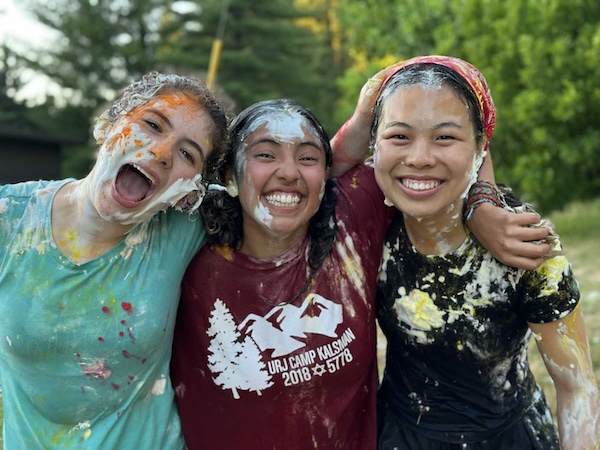
photo - The beauty of summer camp is that campers can shed that layer (or layers) of themselves that build up over the course of the year and spend time exploring who they are, what brings them joy
The beauty of summer camp is that campers can shed that layer (or layers) of themselves that build up over the course of the year and spend time exploring who they are, what brings them joy. (photo from Camp Kalsman)

Spending time in an immersive environment like overnight camp enables kids and teens to be vulnerable with their peers in a safe and supported way; eventually worrying less about how they “should be” and feeling more comfortable and confident in who they are. It’s in this state of self-confidence – nurtured by kind, compassionate counselors – that campers are able to find “their people” who “just get them,” reinforcing what we at URJ Camp Kalsman (and every other overnight summer camp!) have known for years: camp friends are the best friends.

2. Be still, present, open

Camp creates an environment that is ripe for self-awareness, self-discovery and meaningful connections away from the pressures of school, sports and, yes, well-meaning adults at home. Without a message to respond to or an assignment to complete, kids and teens are presented with … time. Not the time filled with camp activities (although there is plenty of that, too) but those significant, intentional moments where nothing is planned … the 15 minutes of serenity in the canoe in the middle of the lake or the walk, together with a friend from the cabin, to the dining hall under a canopy of trees, or the silence after hours of belly-laughter, staring up at the stars surrounded by cabinmates. The stillness of those moments, which are so hard to come by when we are shuffling kids to and from school and activities, are priceless and are built into the fabric of summer camp.
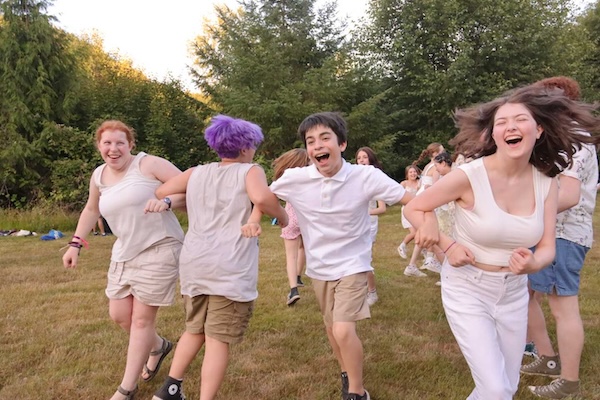
photo - Camp creates an environment that is ripe for self-awareness, self-discovery and meaningful connections
Camp creates an environment that is ripe for self-awareness, self-discovery and meaningful connections. (photo from Camp Kalsman)

3. Don’t run from mistakes

As parents, we want our kids to be gritty – to be able to take responsibility for a mistake and bounce back, whether from making a poor choice, disappointing a friend, failing a test, or not being cast in the school play. At camp, mistakes and failure happen every day, and kids must live with it – there is no escape, they can’t hide in their rooms alone or take the long way to class to avoid a friend. Camp is a 24/7 living and learning experience, where campers are supported and guided through conflict and failure, whether it is not making it to the top of the tower or tension with a bunkmate. Mistakes happen, we fall short of expectations, and camp provides the structure to help kids recognize where they missed the mark and the opportunity to try again tomorrow – or in 15 minutes!

Time at summer camp is an incredible gift to give kids and teens – one that they will benefit from long into adulthood. 

Rabbi Ilana Mills is camp director, URJ Camp Kalsman. If you are interested in learning more about URJ Camp Kalsman, visit campkalsman.org or contact Mills at [email protected].

Format ImagePosted on January 12, 2024January 11, 2024Author Rabbi Ilana MillsCategories LocalTags Camp Kalsman, identity, Judaism, life lessons, youth
More important than ever

More important than ever

“This summer, the grounds of Camp Hatikvah will echo with laughter, song, and the spirited expressions of Jewish and Israel pride”: Liza Rozen-Delman, camp executive director. (photo from Camp Hatikvah)

For decades, Camp Hatikvah has been a cornerstone of the Jewish community, serving as a summer haven where traditions are cherished, friendships blossom and identities are proudly embraced. It has always been more than just a recreational retreat; it has been a powerful catalyst in shaping the future leaders of the Jewish community.

Developed in the aftermath of the Holocaust, Hatikvah was created to produce proud, happy Jewish youth who were committed to the rebuilding of the Jewish people and a homeland in Israel. As a 1949 article in the Jewish Western Bulletin (the predecessor of the Jewish Independent) stated, Camp Hatikvah provided early participants with a “place where they could live and express themselves as Jews, unhampered with fear of others and free from the out-of-place feeling that is so often a part of North American Jewishness.”

Today, as we witness a disheartening resurgence of antisemitism, the original mission of Camp Hatikvah seems to be as important as it was at the time of the camp’s creation.

“The need for a space where children can feel safe, embrace their heritage and express their identity without reservation is, once again, vital” said Liza Rozen-Delman, the camp’s executive director. “I am devastated by the current state of the world, but we are dedicated to rising above it and playing a critical role in combating hate.”

The camp’s leadership recognizes the need to renew its dedication to its original mandate, emphasizing that, in the face of external threats, the camp becomes not only a refuge but a dynamic force in cultivating resilience and unity.

“In response to the current crisis, this summer promises to be a rallying point for Jewish pride, a resolute stand against the hate we have seen, and a celebration of every aspect of who we are as a people,” said Joanna Wasel, board president.

As they begin preparing for summer, Rozen-Delman explained that the camp staff are gearing up to create an immersive experience that fosters a sense of pride, belonging, and love for all things Jewish. Through carefully curated activities and the camaraderie that comes from being part of a supportive community, campers will leave with not just memories of a fun-filled summer but also a strengthened sense of identity.

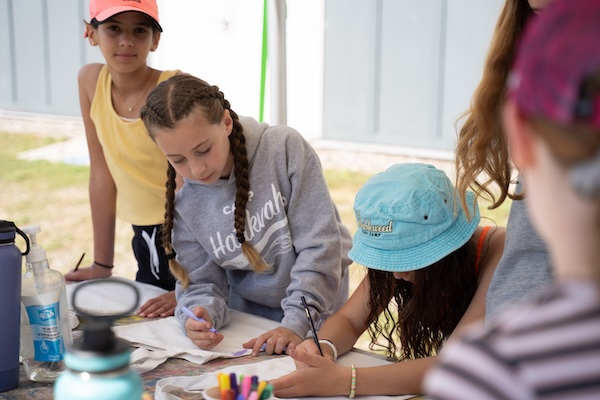
photo - Kids working on a project at summer camp
Kids working on a project at summer camp. (photo from Camp Hatikvah)

Camp Hatikvah also plans to intensify its Israel programming this summer in an effort to empower its campers with a more profound understanding of the Jewish state’s history and culture but, most importantly, its necessity. In a world where misinformation and delegitimization about Israel is rampant, Camp Hatikvah is determined to ensure that its campers and staff are equipped to advocate for the right of the Jewish people to live in peace and security in a homeland of their own.

“This summer, the grounds of Camp Hatikvah will echo with laughter, song, and the spirited expressions of Jewish and Israel pride,” said Rozen-Delman. “From the youngest to the oldest, everyone will be encouraged to stand tall, speak loud, and embrace every aspect of who they are.”

The importance of Camp Hatikvah extends beyond the traditional camp experience; it is a cornerstone for fostering resilience, unity, and an unapologetic celebration of one’s identity. Camp Hatikvah continues to play a pivotal role in creating a space where yet another generation of Jewish youth feel not only safe but truly at home. 

– Courtesy Camp Hatikvah

Format ImagePosted on December 15, 2023December 14, 2023Author Camp HatikvahCategories LocalTags Camp Hatikvah, education, identity, Israel, Liza Rozen-Delman, summer camp, youth
Encouraged to be oneself

Encouraged to be oneself

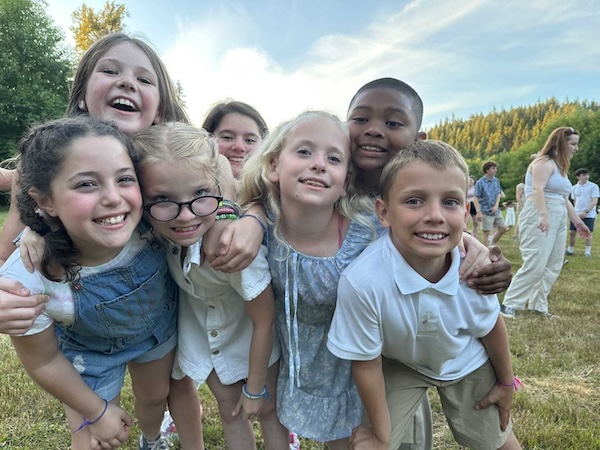
Lifelong friends can be made at summer camp. (photo from Camp Kalsman)

Fun is in all that we do,” Rabbi Ilana Mills, director of URJ Camp Kalsman, told the Independent. “Our staff creates dynamic programming that lets campers laugh and play in a way that doesn’t happen anywhere else. Where else can you spend a day with your friends and your evening doing messy night with a slip-n-slide, water balloons, shaving cream, and more?”

Summer camp is a unique experience for children and young people, for campers and counselors. While fun is at the forefront of programming, so is learning. In the case of Jewish camps, there is the added element of Shabbat observance and other elements of Judaic practise and values.

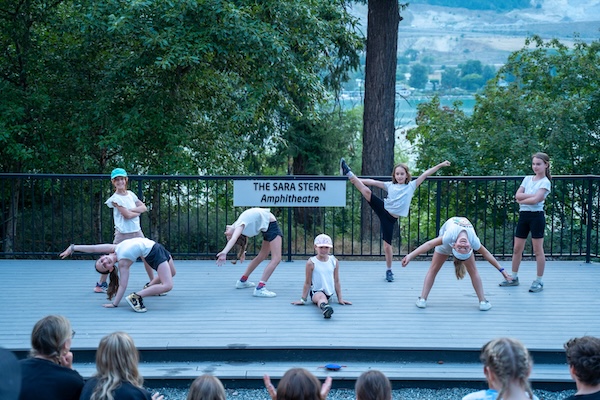
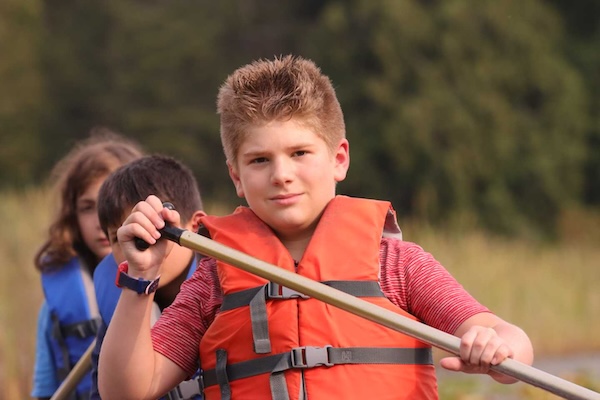
Looking at the example of Camp Kalsman, which is located north of Seattle, one can see the breadth of activities summer camp can offer. A typical day at Kalsman includes singing, pool time, prayers, and activities that range from canoeing and kayaking on the lake, to climbing the camp’s tower and/or high ropes, to farming or gardening, to painting or having a cook-out.

The camp has chugim (electives), which usually run three to four days, and campers do a project during them, said Mills. “Campers will get to rank their choice from a list of options and we do our best to give campers their choices,” she said. Chugim includes such things as pottery, embroidery, hiking, water aerobics, yoga or soccer.

And older campers have “Sababa Time,” said Mill. “Sababa Time is an hour each day where older campers get to choose their own activities from a number of creative options that changes each day. Those might include volleyball, board games, outdoor cooking, or spa days.”

The camp schedule also carves out free time for campers.

“Life is so busy and camp is as well. Free time enables campers to choose what they need on any given day,” said Mills. “Whenever we have free time, we have options for campers to choose which option best fits their needs.  Some campers need to get energy out, so they play basketball or go to the pool. Others may need down time, so they may read a book in the trees. Campers use free time to relax, recharge and have fun in a manner that best suits them. Recreation can be a time to re-create, to rejuvenate.”

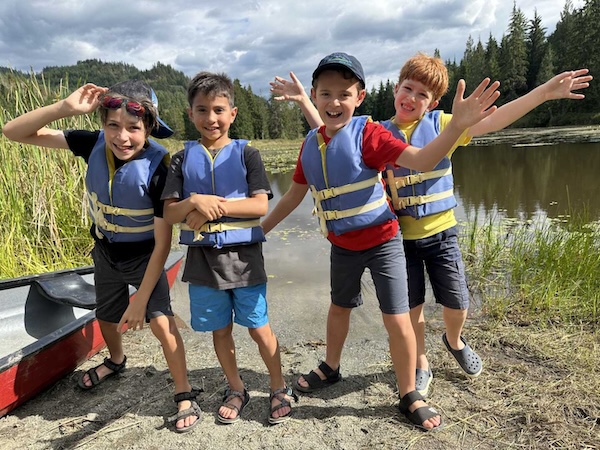
photo - Kids at Camp Kalsman get ready to take a canoe out onto the lake
Kids at Camp Kalsman get ready to take a canoe out onto the lake. (photo from Camp Kalsman)

In addition to obvious practices, such as the celebration of Shabbat and group tefillah (prayer), Kalsman tries to impart Jewish values and culture throughout activities.

“We design our programs to foster a holy community through connection between campers, between campers and staff and between campers and the larger community,” said Mills. “We believe connection is important on every level, so our cabins do cabin time every night to form connections and, every week, we have all-camp programs, where campers of different ages can get to know one another. When we eat, pray and sing together, we connect to the larger community.”

Camp Kalsman ends each night in siyum, “a special closing prayer where we pray Hashkiveinu and Shema using a special tune written just for Camp Kalsman,” said Mills.

When asked what summer camps in general – and Jewish camps specifically – can give kids that schools can’t, Mills shared a quote from a 10-year-old camper, who said, “Kalsman lets me take off all the masks I have to wear at school and really be me.”

“At Kalsman, our campers know that they are valued, honoured and supported for who they are,” said Mills. “Camp enables kids to be kids, to be free, and to have fun in a way that they don’t get anywhere else. It frees them of the burdens of school and competition and allows them an outlet to be part of a great community. Kalsman campers disconnect from their devices and connect to a larger, holy community. Campers learn independence and problem solving, they learn they can make mistakes and how to manage mistakes in a safe environment. Camp is the place where kids can explore who they want to be in the world.” 

Format ImagePosted on December 15, 2023December 14, 2023Author Cynthia RamsayCategories LocalTags Camp Kalsman, education, identity, Israel, summer camp, youth
Writing in praise of neoteny

Writing in praise of neoteny

Campers being silly at Rockbrook Camp for Girls. (photo from rockbrookcamp.com)

Today, the word of the day is neoteny. It’s really a term from evolutionary biology, but it describes the retention of childlike attributes in adults. You might think of a grown-up who has a “baby face,” or is generally “cute.” When you are talking about these kinds of physical features, we tend to think it’s a good thing to have “young looking skin” or the “energy of youth,” for example. Neotenic people are usually attractive. Being neotenous is mostly considered a good thing.

But what about personality traits, attitudes or approaches to the world? What about these ways of being childlike? Think about what life is like as a child. The world is magical, full of curiosities, almost always kind and wondrous. As kids, we spend so much time being creative and playing. We feel so many more things – joy, excitement, anticipation, and the broad sensuous world around us. All of this probably makes it so easy to make friends (“Come on! Let’s play!”).

You’ve also noticed what usually happens when we grow up. We get serious, we latch on to patterns of behaviour, we get scared, we feel the need to protect what we believe, we accept responsibilities and feel pressure to perform and “be” someone in particular. As adults, we spend almost all of our time, mostly alone, working to stay organized and fighting opposing forces. We’re all too consumed by those adult things we’ve grown to accept as important, and it ain’t easy.

photo - Kids at Rockbrook Camp for Girls with soapy hair
(photo from rockbrookcamp.com)

It’s no surprise to see that being an adult overpowers those childlike traits. Sadly, to grow up often means losing touch with what we used to be, those aspects of being human we loved as kids. As adults, we have a harder time feeling what makes the world wonderful, a harder time making friends, and a much harder time playing and having fun. Of course, there are exceptions to this, but that’s the point. They are exceptions. And that’s too bad.

Let’s remember the value of being childlike even as adults.

Let’s be joyful as we’re responsible.

Let’s be curious when encountering opposing beliefs.

Let’s be friendly and playful, cooperative and excited about learning new things.

Let’s strive to foster our innate neotenous instincts.

Bringing this back to camp.… Summer camp is a place where kids can really be kids. It’s a special time when they are encouraged to play, make friends, be creative and explore the world around them. Separate from the forces of home and school (which are fundamentally about forming “adults”), camp provides a wonderful opportunity to strengthen our “kid selves.” It celebrates and fosters the neotenous traits. Camp is a joyful break from all that training, and that’s a big part of why it’s so fun.

Maybe we could say…. Camp helps you learn how to be a really great kid so that, later in life, you’ll be a really great (happy, satisfied, remarkable) adult.

Camp’s power to strengthen these “kid traits,” I suspect, will be a big part of that success. 

Jeff Carter is director of Rockbrook Camp for Girls, which is in the western part of North Carolina. For more information, visit rockbrookcamp.com.

Format ImagePosted on December 15, 2023December 14, 2023Author Jeff CarterCategories Op-EdTags education, lifestyle, neoteny, Rockbrook Camp for Girls, summer camp, youth
CJPAC bridges engagement

CJPAC bridges engagement

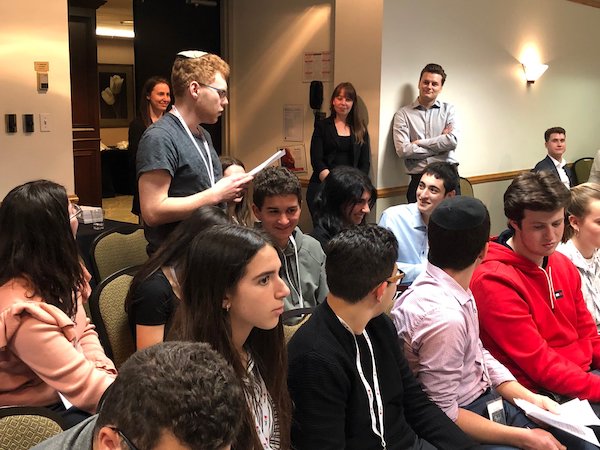
Avishai Infeld speaking during a mock question period at CJPAC’s Generation: Student Leaders Program. (photo from CJPAC)

When it comes to making a mark in Canadian politics, waiting for elections is a thing of the past. The Canadian Jewish Political Affairs Committee (CJPAC) is a bridge to meaningful political engagement, and the year 5784 is a perfect opportunity to jump in.

For Vancouverite Avishai Infeld, CJPAC kindled his political curiosity. “CJPAC ignited the spark of political interest that I long had,” he said.

Drawing from his participation in several CJPAC programs, Infeld added, “It showed me just how accessible yet valuable political engagement can be.”

CJPAC is a national, independent, multi-partisan organization with offices in British Columbia, Ontario and Quebec. It is committed to involving Jewish and pro-Israel Canadians in the democratic process.

“When you think ‘CJPAC,’ think volunteering and campaigning,” said Kara Mintzberg, CJPAC’s director for the B.C. region. “During elections, we’re like a political concierge. We help connect community members to candidates and campaigns of their choice.”

Yet, CJPAC’s role extends beyond elections, building relationships between politicians and the community year-round. The nonprofit also molds Canada’s future political leaders through innovative, hands-on programs.

Sarah Warsh, a product of CJPAC’s national Generation: Student Leaders Program, speaks highly of its transformative impact. “Growing up in Nanaimo, B.C., connecting with CJPAC was an invaluable experience,” she said.

Tailored for Jewish students in grades 10 through 12, the program features regular virtual and in-person sessions, cultivating political knowledge and skills. “Generation was the turnkey that immersed me into politics, multi-partisanship and the Jewish community,” said Warsh, who went on to participate in CJPAC’s flagship Fellowship Program for post-secondary students, where, each year, CJPAC equips 50 of Canada’s top, pro-Israel, politically engaged students with the tools to win campaigns.

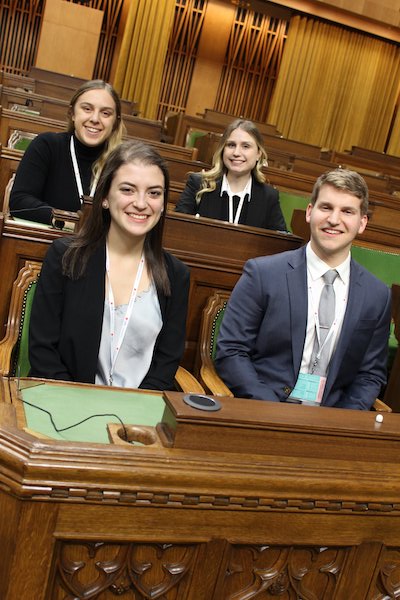
photo - Sarah Warsh (top left) in the House of Commons while participating in CJPAC’s Fellowship Program
Sarah Warsh (top left) in the House of Commons while participating in CJPAC’s Fellowship Program. (photo from CJPAC)

Since 2006, more than 500 of Canada’s brightest have graduated from the Fellowship Program, with more than one-third assuming roles in political offices across the country, including Warsh. She credited CJPAC for jumpstarting her career in a national political party, a federal political leader’s office and a premier’s office. “The decision to get involved with CJPAC was one of the best I’ve made,” she said.

Both programs send participants to Ottawa for multiple days to meet with politicians, strategists and staffers.

“Thanks to everything I gained from CJPAC,” said Infeld, “I have volunteered on campaigns in Canada, served on an MP’s youth council, and now work as the Hillel Montreal advocacy coordinator.”

For those acquainted with politically inclined students in high school or post-secondary education, applications for CJPAC’s Fellowship Program close Sept. 12, while the Generation program applications are due by Oct. 6.

But, even if you’re not a student or don’t know one, there’s still a chance to engage – attend CJPAC’s inaugural B.C. ACTION Party. Save the date for May 16, 2024, and get ready to celebrate political engagement with Jewish and political communities.

To learn more, visit cjpac.ca. For specific inquires, reach out to Mintzberg by email ([email protected]) or phone (604-343-4126).

– Courtesy CJPAC

Format ImagePosted on September 1, 2023August 31, 2023Author CJPACCategories LocalTags Avishai Infeld, education, Kara Mintzberg, politics, Sarah Warsh, youth
First Jewish Prom a success

First Jewish Prom a success

Rachel Gerber and Judah Moskovitz, regional co-presidents of BBYO Vancouver, at the first annual Jewish Prom on May 6. (photo from BBYO & JCC Teens)

BBYO, in partnership with the Jewish Community Centre of Greater Vancouver (JCC), held its first annual Jewish Prom on May 6. Organized by BBYO’s regional teen board, this inaugural event brought Grade 11 and 12 students together for an evening of celebration and connection. From the decorations to the music, the celebration not only exceeded expectations but also established itself as an annual event within Vancouver’s Jewish teen community.

From its inception to its execution, the planning process embraced BBYO’s core principles of youth empowerment and involvement – the event was planned by the teens, for the teens. The prom was held at Heritage Hall on Main Street, and the venue was transformed. It was a red-carpet theme for the occasion, complete with lights, balloons, confetti and Oscars-themed centrepieces. Teens enjoyed a snack bar, dessert bar, beverages and popcorn. There was a photobooth on site, along with carnival games, and a live DJ kept the energy up. The décor and set-up provided the perfect backdrop for the evening’s festivities.

With more than 125 students in attendance, the atmosphere was electric from the start. The DJ played a mix of popular hits and classic dance tunes. Students from various schools came together, forging new friendships and rekindling old ones as they danced, socialized and had fun.

The BBYO Teen Regional Board worked hard to ensure that the event was both safe and enjoyable for everyone. The planning process brought together teen committees, professional staff, philanthropists and other community leaders who provided guidance and raised money in support of this initiative. Staff, volunteers and professional security were on site during the event, which was alcohol- and drug-free.

“We are thrilled with the success of our first-ever BBYO prom,” said Rachel Gerber and Judah Moskovitz, BBYO’s regional board co-presidents. “Our goal was to provide an opportunity for Jewish teens completing high school to come together and reconnect, for a fun evening, and we definitely achieved that. We want to thank everyone who attended and helped make the event such a success.”

BBYO Vancouver’s Prom is anticipated to become a highlight of the annual social calendar, bringing together Jewish teens throughout the Lower Mainland, Sea-to-Sky Corridor and Vancouver Island. BBYO Vancouver is looking forward to next year’s prom, which promises to build on this year’s event. The regional board is already brainstorming ideas for new decorations, themes and activities.

In addition to prom, BBYO holds weekly teen meetings at the JCC, regular social events in Vancouver, as well as in Langley and on the North Shore. Within just a year, the regional board has engaged more than 300 Jewish teens from various Metro Vancouver high schools, an accomplishment that began with a cohort of fewer than 20 teens, primarily from King David High School.

As the regional board continues to grow, with seven emerging leaders and increasing interest in leadership roles from more teens, BBYO’s local impact expands further – notably, Moskovitz’s election to BBYO’s AZA international board as grand aleph shaliach. Working alongside a teen counterpart from Spain, Moskovitz will assume responsibility for all Judaic content and teen programming for BBYO internationally.

BBYO is a leading global, pluralistic, Jewish teen movement aspiring to involve more Jewish teens in more meaningful Jewish experiences. BBYO welcomes Jewish teens of all backgrounds, denominational affiliation, gender, race, sexual orientation or socioeconomic status, including those with a range of intellectual, emotional and physical abilities.

With a network of hundreds of chapters across North America and in 62 countries around the world, BBYO reaches nearly 70,000 teens annually. For more information about BBYO Vancouver and its teen-led board, contact Efrat Gal-Or, regional director, at [email protected].

– Courtesy BBYO & JCC Teens

Format ImagePosted on May 26, 2023May 25, 2023Author BBYO & JCC TeensCategories LocalTags BBYO, inclusion, JCC, Jewish Community Centre of Greater Vancouver, Judah Moskovitz, Judaism, Rachel Gerber, teens, youth
Mental health concerns

Mental health concerns

Smartphones, even if you hug them, won’t hug back. It’s not revelatory, but an effective allegory to understand what’s missing with screen interactions.

Though screens replaced direct, in-person human interactions during the pandemic, by necessity, it only worsened a problem that still exists: the less real the contact, the worse the depression and loneliness.

Toronto author Dr. H. David Burstein draws this correlation in his first book, Smart Phones Don’t Give Hugs: A Guide Out of Loneliness (Talk+Tell, 2022). The book takes an in-depth look at loneliness and depression, its modern causes and how it might be alleviated.

“Humans are social creatures who have a need to connect and cooperate with others, with the purpose of being part of something bigger than themselves,” said Burstein. “We want to be needed and to know we are loved.”

image - Smart Phones Don’t Give Hugs book cover

More than two years of gathering socially via a screen have led people to lose the ability to really connect with one another in an organic off-the-web way, he said.

“Maybe we are so enchanted by the social aspect of technology that we have forgotten what it was like to shake hands or bump fists, as opposed to like, comment and subscribe. We have forgotten how to foster lasting human connections,” he said. This, he believes, has contributed to the general worsening of people’s mental health.

A Statistics Canada survey on mental health over the course of the pandemic, which was released in September 2021, found that one in four Canadians reported depression, up over the previous year from one in five. Toronto’s Centre for Addiction and Mental Health (CAMH) showed in surveys last year that loneliness and depression spiked during the pandemic and continue to be a growing problem.

In addition to his own findings, Burstein corrals some of the wisdom available from various Jewish sources, including Dennis Prager, author of The Rational Bible; Rabbi David Wolpe of Temple Sinai in Los Angeles; Abraham Isaac Kook, former chief rabbi of Israel; Rabbi Noah Weinberg, Aish HaTorah founder; and Rabbi Harold Kushner, author of When Bad Things Happen to Good People, who died only recently, on April 27.

One of Burstein’s tips is to pay attention to the signs your body is giving you.

“Just like when we’re thirsty, we drink; when we’re hungry, we eat; our emotions are not to be ignored. If we’re lonely, we need to be with people,” he said.

But an obstacle for many people is understanding that there’s a problem.

“It is difficult for people to admit being lonely because they think it means that they feel like a loser,” he said. “But I have also learned that when we are challenged, there are three ways we can react. One is to confront, second to retreat, third to ignore. My tendency had been to respond instinctively with the last two, but this time I decided to lean into the subject. It is a heavy subject requiring a lot of self-reflection, so I had to pace myself. I wrote the book for my own clarity, and to help others as well.”

Included in those “others” are his three teenage children. He is increasingly worried about their well-being, given the amount of time they spend on screens. Though quick to point out that there are benefits to screen time, moderation is key, said Burstein, and the quality of consumption is important, too.

Through the process of writing, Burstein became more aware of what, in his own life, needed work.

“I take my personal relationships more seriously,” he said. “I still worry about what tech is doing to us.”

Jonathan Wasserlauf is a freelance writer, and a political science major and law student based in Montreal.

Format ImagePosted on May 12, 2023May 11, 2023Author Jonathan WasserlaufCategories BooksTags David Burstein, mental health, screen time, smartphones, youth
Building skills and confidence

Building skills and confidence

Shelly Bordensky is the JCC Inclusion Services support worker for PRISM. (photo from JCCGV)

A new program at the Jewish Community Centre of Greater Vancouver aims to equip 13-to-17-year-olds with leadership skills, personal insights and paid work experience. Funded by a grant from the Diamond Foundation, the Pre-employment Program for At-Risk Youth within an Inclusive Supportive Modality (PRISM) is seeking referrals of young people who could benefit from this supportive introduction to the world of work. The workshops begin March 23 and meet weekly on Thursdays, 3:30-7 p.m. The referral deadline is March 9.

“Our definition for youth who may benefit from this program is intentionally broad,” said JCC Inclusion Services support worker Shelly Bordensky. “The goal of the program is to limit risk factors for youth, such as social exclusion – youth who may live in lone-parent homes; are recent immigrants or refugees; are living with mental health challenges or diverse abilities; are historically underserved; or are otherwise marginalized – by building skills, networks of support, and exposure to possible future career paths in Jewish communal work.”

“When you care about a teenager, whether as a parent or other trusted adult, you are keenly aware that raising a child includes preparing them for life out in the real world,” added JCC social worker Lisa Cohen Quay. “The amazing part of the PRISM program is that it isn’t just about a first job. Sessions include learning about what jobs exist in Jewish agencies, meeting with a vocational counselor, writing a resumé, taking care of your mental well-being, and so much more – not the least of which is the opportunity to try working in an area of interest at the JCC.”

Quay further explained that this paid work opportunity also gives teens an adult employer to serve as a vital future reference. “It will be wonderful if this program excites teens to come be part of the work force with those of us serving in Jewish agencies, or in another community centre,” she said. “The relationships and insights they develop in PRISM can set them on that course.”

PRISM is an offering of JCC Inclusion Services, under the direction of Leamore Cohen. For more information and accessibility supports, Cohen can be contacted at [email protected] or 604-638-7288.

– Courtesy Jewish Community Centre of Greater Vancouver

Format ImagePosted on February 24, 2023February 22, 2023Author Jewish Community Centre of Greater VancouverCategories LocalTags education, inclusion, PRISM, youth
A unique bat mitzvah

A unique bat mitzvah

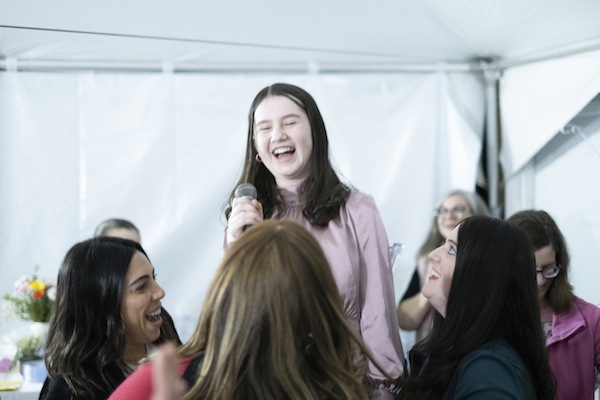
Chaya Mushka Hecht gives her bat mitzvah speech. (photo from Chabad Okanagan)

More than 50 women and girls gathered recently to celebrate a Jewish community milestone in Kelowna. It was the bat mitzvah of Chaya Mushka Hecht, the eldest daughter of Rabbi Shmuly and Fraidy Hecht, who have been serving together as co-directors of Chabad Okanagan for the last 12 years.

Raising their family while serving the Kelowna and outlying communities, the rabbi and his family have made it a priority to try and infuse their next generation with the gift of passion for a life of service and dedication to community, and making the world better for all.

In her bat mitzvah speech, Mushka spoke about her namesake, Chaya Mushka Schneerson, the Lubavitcher Rebbe’s wife, of blessed memory (obm). She shared a story about the rebbetzin helping prevent a family – who she did not know – from being evicted from their home. (For the full story, see jewishpress.com/judaism/parsha/a-beautiful-story-about-the-rebbetzin/2021/02/11.)

“I learn from this story to help someone else whenever I can, even when I know I will not get anything in return,” said Mushka. “I also learn from this story to help others just for the mitzvah and not to show off to others how great you are that you helped someone.”

For her part, Mushka has initiated several programs, including arranging a Monday night class for women that ran for almost a year. The class was about trusting in G-d and the healing it can bring to people. The book they learned from, Gate of Trust, was originally written in Arabic by 11th-century Spanish Torah scholar Rabbeinu Bachya Ibn Pekudah, and they started the last chapter just before Mushka’s bat mitzvah.

Mushka also carries with her Shabbat candle sets, which include candles, matches, blessings and a prayer, to give to any Jewish women that she meets while she’s out. She does this to encourage Jewish women to appreciate the gift of Shabbat and to celebrate their power in bringing Divine light to the world.

As well, she has stood with her brother on a street corner in downtown Kelowna distributing free cookies that she baked. Many passersby – none of whom were Jewish – expressed their surprise and appreciation.

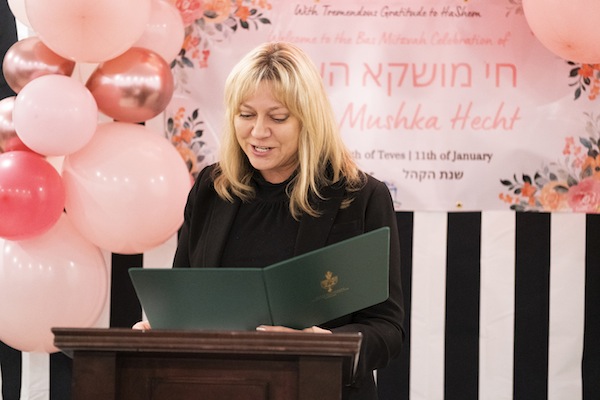
After seeing Mushka around over the last couple years, and knowing the rabbi and his family and the work they do, Member of Parliament Tracy Gray (Kelowna-Lake Country) said she was “honoured to bestow upon Chaya Mushka a special parliamentary award for young leadership in honour of her bat mitzvah.”

The certificate offered congratulations to Mushka on her bat mitzvah and best wishes for her life journey. It read, in part: “This certificate recognizes your life dedicated to the service of others, even at such a young age, and your initiation into the prominent leadership role as a proud Chabad woman.”

photo - MP Tracy Gray reads the certificate she presented to Chaya Mushka Hecht on the occasion of Mushka’s bat mitzvah
MP Tracy Gray reads the certificate she presented to Chaya Mushka Hecht on the occasion of Mushka’s bat mitzvah. (photo from Chabad Okanagan)

“At the event, the women celebrated the honourable feminine power of leadership,” said Rabbi Hecht. “My role model and beloved life teacher was the Lubavitcher Rebbe, obm, who was passionate about establishing women in leadership groups and conventions as early as the ’50s.”

Fraidy Hecht spoke about the infinite and unconditional value of every human soul, and how precious children ought to be to their parents, first and foremost, for simply being a child of G-d here on earth in their care, and how blessed they are to be their child’s Divinely chosen custodian.

Everyone in attendance at the bat mitzvah received a book of Psalms, a mini-biography of Chaya Mushka Schneerson, and a copy of the novelette that Mushka wrote and published in honour of her bat mitzvah. The message of the novelette was how girls her age are being called upon to be a light and positive influence in the world.

Attendees participated in various activities, including beading, singing and dancing, and had dinner together.

Mona Steinberg, a member of the Chabad Okanagan community, shared her reflections of the event.

“Mushka’s bas mitzvah was just so wonderful, Mushka’s speech was so intelligent and mature,” she said. “I can tell she has worked hard to become an important and dedicated future leader and inspiration for Jewish women. [They] should be very proud.”

“The world has become a better place,” remarked Olya Krasavina, from Yumster Life Photography in Kelowna.

– Courtesy Chabad Okanagan

Format ImagePosted on February 24, 2023February 22, 2023Author Chabad OkanaganCategories LocalTags Chaya Mushka Hecht, Judaism, milestones, tikkun olam, Tracy Gray, youth

Playing against hatred

A basketball game may not be able to bring about world peace, but at least one game has acted as a bridge to increasing mutual understanding and empathy.

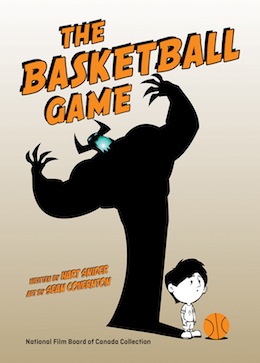
The graphic novel The Basketball Game (Firefly Books, 2022) is based on the National Film Board of Canada animated short of the same name. Written by Hart Snider and illustrated by Sean Covernton, it is based on Snider’s memories of his first year at Jewish summer camp. It proved to be a unique experience.

image - The Basketball Game book coverIt was July 1983. The camp was Camp BB Riback in Pine Lake, Alta. Snider was 9 years old and “totally homesick,” finding refuge in the comic books he had brought with him. That is, until he meets Galit. (The book is dedicated to his “partner, collaborator, inspiration and best friend, Galit,” his daughter and his parents.)

For young Hart, Camp BB made him feel at home. “Even both my parents went to this camp,” he writes. “It was a tradition in the community. It was a place to just be ourselves … and that was important because back then, growing up Jewish in Alberta wasn’t always so easy.”

Back then, in Eckville, Alta., the winter before Snider’s first summer at camp, teacher Jim Keegstra, “also the town’s mayor, was fired by the local school board.

“Believing the curriculum was ‘incomplete,’ Keegstra had been teaching Holocaust denial and antisemitic conspiracy theories in his classroom – that Jewish people had an international plot to control the world and were to blame for everything that’s wrong.”

But one Eckville parent, Susan Maddox, “noticed her 14-year-old son had some strange new opinions.” She looked through his notebooks, then filed a complaint with the school board.

Meanwhile, more than a thousand people attended a rally at the Edmonton Jewish Community Centre to figure out how to respond to the situation. One of the ideas proposed – by then Camp BB director Bill Meloff, z’’l – was to invite some of Keegstra’s former students to the camp for a “day of fun and fellowship,” which included the title’s basketball game.

image - Team A: In The Basketball Game, each team imagines the other side as monstrous stereotypes – until they get to know one another. (Text by Hart Snider / illustrations by Sean Covernton)
(Text by Hart Snider / illustrations by Sean Covernton)

In a brilliantly drawn sequence, the team players are depicted as their negative stereotypes, how they see one another. Blue Team – a horned demon, a world-controlling banker and an evil wizard – versus Red Team – a skinhead, a Nazi and a member of the KKK. The game is intense. Then, an opposing player compliments Hart’s shot. “Thanks, man,” says Hart. The game continues, kids versus kids, no more monsters.

“Looking back, it’s amazing that it happened at all,” writes Snider. “That Keegstra’s students were invited to the camp, and they actually came.”

image - Team B: Team A: In The Basketball Game, each team imagines the other side as monstrous stereotypes – until they get to know one another. (Text by Hart Snider / illustrations by Sean Covernton)
(Text by Hart Snider / illustrations by Sean Covernton)

That’s the thing. Someone had to extend the invitation, and someone had to accept. An illustrated reproduction of an actual newspaper clipping from 1983 notes that attendance at the camp was voluntary and that a preliminary survey indicated that about 10% of Eckville Junior-Senior High School’s 186 students “would be willing to attend.”

Here we are, almost 40 years later and, as Snider notes in his introduction: “Racism, conspiracy theories and antisemitism are spread every day on social media and other platforms. The hate that Keegstra taught in his classroom is now found in memes, videos and forums. Over and over again, we are challenged with the question, how do we deal with fear and prejudice?

“I hope we can continue to find common ground and have empathy for each other, but, most importantly, I hope that parents and kids keep talking to each other.”

The book, intended for readers 12 years old and up, includes more on the Keegstra trial, discussion questions and a glossary.

Snider participates in the 2023 Cherie Smith JCC Jewish Book Festival, which takes place Feb. 11-16.

Posted on December 9, 2022December 8, 2022Author Cynthia RamsayCategories BooksTags animation, antisemitism, Camp BB, education, film, graphic novel, Hart Snider, Jewish Book Festival, Jim Keegstra, National Film Board, NFB, Sean Covernton, The Basketball Game, youth

Posts pagination

Previous page Page 1 Page 2 Page 3 Page 4 … Page 10 Next page
Proudly powered by WordPress