The world’s economies have never been more integrated or interdependent. This is most immediately evident in the fact that a war halfway around the world sends gasoline prices skyrocketing in Metro Vancouver.
But that interdependence has also permitted the most dramatic, swift and merciless sanctions ever seen – as a response to that very war. Within days of Russia’s invasion of Ukraine, a jaw-dropping catalogue of economic penalties was slammed against the Russian regime. Not only that, but the sanctions have taken aim at individual millionaires and billionaires who exist in a symbiotic, mafia-like relationship with the Russian dictator, Vladimir Putin. Every day, the news is filled with one company after another cutting ties with Russian businesses, stopping trade with Russian producers and withdrawing their products and services from Russian consumers.
Cultural boycotts have also been swift. The Vancouver Recital Society canceled a scheduled event with the Russian piano wunderkind Alexander Malofeev and scores or hundreds of similar cancellations have taken place in the classical music arena and other cultural sectors. International sporting competitions have barred Russian participation.
The combined effects of these thousands of individual actions are intended to put pressure on Russian citizens who will then, the plan goes, turn on their leader who will then, perhaps, alter his murderous invasion and withdraw or, better still, be ousted in favour of a return to the nascent democracy Russia was nurturing before Putin put his boot heel on its neck.
If these sanctions work, it could be a turning point in human history – nonviolent economic retribution outmanoeuvring brute force. (In addition to economic sanctions, Western countries have also supplied Ukraine with military equipment and other supports, while stopping short of meeting the entreaties of Ukraine’s President Volodymyr Zelensky that the West get more directly involved, including by implementing a no-fly zone over his country, which would equate to a direct military conflict between Russia and the West.)
Events are unfolding by the minute, with more than two million refugees flooding neighbouring countries in the course of just 10 days and horrific images of destruction and death flowing out to the world. Amid all this, a few observations stand out.
Israel’s Prime Minister Naftali Bennett traveled to Moscow after Zelensky implored him to act as an intermediary. Israel has fraught, complex and deep historical and contemporary connections with both countries, including a massive chunk of Israel’s population that came from Russia and Ukraine in the past 30 years and another large proportion with older roots in the region. Bennett and Zelensky are, it has been noted, the only two Jewish heads of government in the world. Zelensky’s steadfastness during these weeks of war has inspired the world, perhaps especially Jews worldwide, who now see him as a David defending both his homeland and democracy itself from the Goliath of Putin’s military. It would be remarkable if the prime minister of Israel were able to play a part in brokering the end to war and restoring national integrity to Ukraine.
In this space, we have been critical of cultural boycotts that target Israeli performers, athletes and others. Cultural interactions between citizens of diverse countries are the lifeblood of global civilization. In the case of real or proposed sanctions against Israel, the end-goal is ambiguous. Depending on the proponent, movements to boycott Israel aim to variously sanction particular policies, end the occupation or end Israel (as the term “anti-Zionist” implies). They are, for all intents, a punishment without end, given that the end-goal is vague. In the case of Russia, the hope is that the short, sharp shock of sanctions will lead to a satisfactory resolution and then we will ideally again soon welcome Russian performers and athletes, to say nothing of a return to trade with one of the world’s largest economies. The clarity of the call – leave Ukraine alone! – is critical to success. Unlike the undefined or obscured goals of BDS, the campaign against Russia is clear. If Russia retreats, sanctions will be peeled back.
There is another issue worth considering. It is notable that countries guilty of egregious crimes, such as the Chinese government’s imprisonment of hundreds of thousands of its Uyghur Muslim citizens and others, have not brought down the near-unanimous wrath of the West. Perhaps this is proof of the dictum that white lives elicit greater global concern than lives of people of colour. It may also be that the world understands that the invasion of Ukraine might be a precursor to greater territorial ambitions. It is also unavoidable that, for the Western collective memory, war in Europe evokes the gravest ghosts of the 20th century.
We will soon know whether the most comprehensive sanctions ever imposed (undergirded by materiel support) can end this conflict without the worst case scenario – direct conflagration between nuclear powers, Russia and the West – coming to pass. If they are successful, it would signal a new age in which concerted economic influence, rather than boots on the ground, can turn the tide of history.
At our press time, the people of Ukraine were waiting, as they have for weeks, to see what fate has in store for them. Vladimir Putin, the Russian despot, has been threatening to invade the country – again. Under Putin, Russia has already illegally occupied the Crimean peninsula and two enclaves in eastern Ukraine. Pro-Russian extremists are also in control in Transnistria, a breakaway entity to the west of Ukraine that the world community recognizes as part of Moldova. In the Russian countryside surrounding the parts of Ukraine that Russia has not already occupied, an estimated 190,000 Russian troops are poised to attack.
Putin’s designs on Ukraine are ostensibly about his concerns over Ukraine potentially joining NATO, which some Russians view as a step too far in the incremental loss of Russian dominance over what was once the Soviet Union and, before that, the Russian Empire. He is also motivated by his own desire for power and expanding his influence. Along with other Russian nationalists, Putin views Ukraine as more than a neighbouring country but rather an integral part of a sacred Eurasian (Russian-dominated, of course) land.
Western powers have warned and cajoled Putin, who seems to revel in tormenting his adversaries. He is almost certainly aware that no one (save, perhaps, himself) wants war. The United States, having just catastrophically escaped a military debacle in Afghanistan, has no interest in continuing their role as the world’s policeman. The leaders of France, the United Kingdom, Germany and other Western powers have warned of serious consequences if Putin follows through on what appear to be unconcealed ambitions to invade, but none of those countries will risk the lives of their young people to defend Ukrainian sovereignty. It was precisely occasions like this for which the United Nations was envisioned, but the ideals of its founders have run aground on the rocks of realpolitik.
Genuine threats of reprisals are limited to economic sanctions. Here, too, Putin knows that embargoes and other economic penalties would be devastating not only for his country but for the economies of the West. Western Europe depends on Russian oil and anything – military instability or international sanctions – could send fuel and heating costs, which are already at record highs in many places, further through the ceiling. At a certain point, that could threaten the stability of some Western governments. More worrying is the fact that Ukraine has always been, and remains, the “breadbasket” of the region. Military or economic disruptions that harm Ukraine’s ability to get products to market could lead to food shortages. The possibilities are bleak.
Canada is home to one of the Ukrainian diaspora’s largest populations. More than 1.3 million Canadians are from, or descended from, the place. A significant proportion of North America’s Jewish population, too, is from that area and an even larger proportion departed to the new world through Ukraine’s Black Sea ports.
Ukraine has somewhere between 43,000 and 200,000 Jews. Definitions of “who is a Jew” are complicated by nearly a century of enforced atheism and centuries more of rampant antisemitism. The 200,000 estimate is the number who would qualify for Israeli citizenship under the Law of Return.
According to the New York Times, synagogues have hired Israeli security guards and hired buses for rapid evacuations. The Jewish Agency is said to have evacuation plans at the ready.
For all Ukrainians, the past 100 years have been a series of tumults. Jewish Ukrainians have been especially vulnerable during these times of upheaval – and the older Jews today, and those with any sense of history, may rightly understand they have more to fear than other potential victims of a Russian invasion.
Israeli government officials have been remarkably tight-lipped on the subject, other than to urge the 12,000 Israelis in Ukraine to come home as soon as possible – reportedly only 4,000 have so far done so.
It is easy, understandable even, to suggest the time has come for Jews in Ukraine and other places where life is especially difficult, to leave for Israel or elsewhere. Certainly, we are thankful that Jews with nowhere else to go have a Jewish state ready to take them in.
But Ukraine is their home. There are hundreds of Jewish organizations and institutions in Ukraine, a place where Jewish civilization goes back 1,200 years and where a vast amount of Jewish culture emerged in the past several centuries, including important streams of Hasidism and many noted authors and artists.
As the world waits on Putin, the latest in far too long a line of Russian tyrants, we watch with a sense of helplessness, knowing that people are afraid and suffering. And we hope that those in power pull back from the brink.
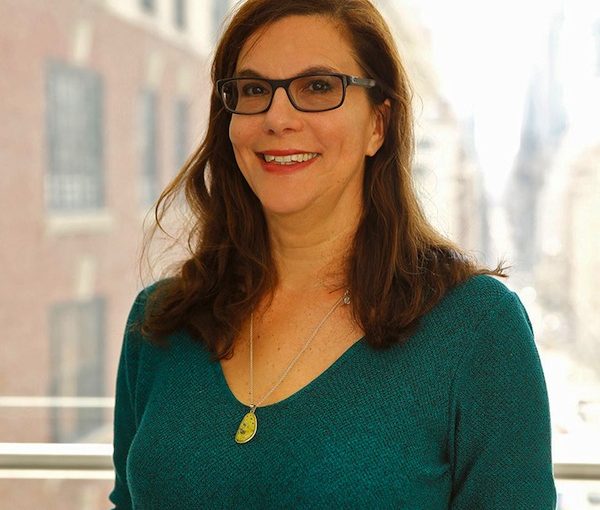
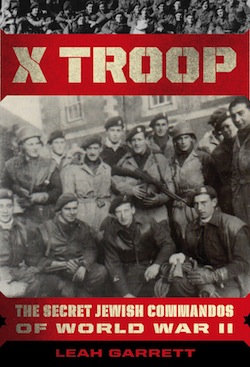
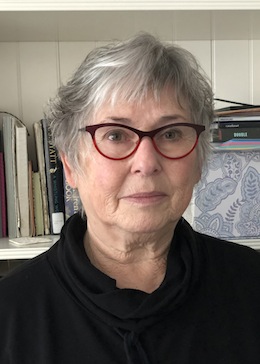
Leah Garrett has pieced together the most comprehensive story yet of a little-known but fascinating footnote to the Second World War, and she shares her findings in her new book, X Troop. (photo by Deb Caponera / Hunter College)
Using recently declassified military records and interviewing family members, author Leah Garrett has pieced together the most comprehensive story yet of a little-known but fascinating footnote to Second World War history – and the role that a few score of Jewish men played at pivotal moments in the conflict.
Garrett is a professor at Hunter College, in New York City. As part of the Cherie Smith JCC Jewish Book Festival, she will speak about her new book, X Troop: The Secret Jewish Commandos of World War Two, in a virtual event on Feb. 6.
X Troop tells of the 87 men – 83 of them Jewish – who made up the No. 10 (Inter-Allied) Commando, 3 Troop. The secret weapon X Troop members shared was that most of them were from German-speaking parts of Europe, had escaped occupied countries and, as Jews, had a deeply personal drive to defeat the Nazis.
Formed officially on July 2, 1942, the unique commando unit would, among other things, allow British forces to expedite interrogation of captured Axis soldiers.
“X Troop would be Britain’s secret shock troop in the war against Germany,” Garrett writes. “They would kill and capture Nazis on the battlefield. But that would not be all. They would also immediately interrogate captured Germans, be it in the heat of battle or right afterward. The men’s fluency in German would enable them to get essential intelligence that would guide the next moment’s choices rather than having to wait to interview prisoners until they were back at headquarters.”
No less than Winston Churchill himself gave the group their nickname.
“Because they will be unknown warriors … they must perforce be considered an unknown quantity. Since the algebraic symbol for the unknown is X, let us call them X Troop,” declared the then-prime minister of the United Kingdom.
One of the many consequential incidents, which could have turned disastrous, was when two troop members, whose anglicized noms de guerre were Roy Wooldridge and George Lane, were captured by the Germans and taken to a command post. The next day, they were driven to the French countryside and, instead of being summarily executed as they had feared, found themselves in the château that was serving as headquarters for field marshal Erwin Rommel.
“During his training … Lane had been taught to give only his (fake) name, rank and serial number if he was captured,” writes Garrett. “But instead he found himself having an extended conversation with the field marshal over tea. Lane fortunately recovered his composure and didn’t say anything that would give him and his comrade away.”
Later, when they were transferred to a POW camp in central Germany, which was filled with 300 British officers, the pair was able to share their knowledge of Rommel’s location – information that was surreptitiously conveyed back to London through a hidden homemade wireless radio.
“A few months later … during the Normandy campaign, Rommel’s staff car was strafed by RAF Spitfires as he drove from Château de La Roche-Guyon to the front near Saint-Lô. The attack left Rommel, one of Germany’s best and most creative generals, with serious injuries, and from that moment on his participation in the war was effectively over,” notes Garrett.
The irony was that some of the members of X Troop suddenly transformed from prisoners of war – Jews of German or Austrian origin, who were viewed as “enemy aliens” – to members of an elite British military troop.
“I found it rather odd that one day I could not be trusted with anything more lethal than a broomstick and the next I was told that I was going to be a spy for the British,” said one member, Tony Firth. “But who said that the English are logical?”
The men faced a fourfold risk if captured. Hitler had ordered Allied commandos to be shot on sight. As refugees from Europe who may have still had family in Nazi-occupied areas, they risked not only their own lives, but those of their families. As Jews, they were the explicit target of state-sanctioned murder and, as German or Austrian nationals, they would be considered traitors to their homelands if captured.
The commandos were trained in a Welsh village and, though each had each created a false persona, it took wilful blindness for the village folk to not realize there was something odd about these particular British soldiers. Recalled one townswoman, “… when we would ask them what nationality they were, they would say: ‘Vee are English.’” (A memorial to X Troop in that Welsh village today ostentatiously omits the fact that almost all of them were Jewish.)
Though trained together and with a tight-knit sense of camaraderie, the troop was deployed not as a group but across the British military. The book follows members of the troop through heroics and horrors at Normandy and in Egypt, Italy, Greece and Yugoslavia. In the end, half of the men would be killed, wounded or forever missing in action.
Some reviewers have drawn parallels between the real-life exploits of X Troop and a 2009 Hollywood blockbuster, but Garrett contrasts the facts and fictions. “Whenever possible, the X Troopers used their intelligence to outmanoeuvre the Nazis and to capture them before a shot was fired,” she writes. “In this regard, the X Troopers were the opposite of Quentin Tarantino’s vengeful Jews in his film Inglourious Basterds. Rather than wreaking personal revenge on the Germans, they followed the rules of war. They coolly collected battlefield intelligence from the enemy and outwitted them using their intellect rather than brute force. And even in extreme instances, such as when Colin Anson confronted the man who had been responsible for his own father’s death, they refused to compromise their own moral standards.”
Among the lessons the author aims to convey is the heroism of Jews in the fight against Nazism, adding a new layer to a growing literature on resistance of various forms.
“Through their exemplary and courageous service,” Garrett writes, “their story challenges the idea that only in Israel did the Jews become armed warriors who fought to try to establish a safe life for themselves and their families.”
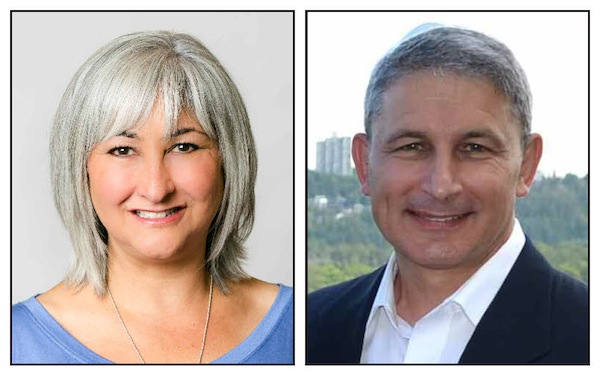
Pam Wolfman is chair of the Yom Ha’atzmaut committee and Geoffrey Druker leads the Yom Hazikaron committee. (photos from Jewish Federation)
For many years, Vancouver has been home to North America’s largest celebration on erev Yom Ha’atzmaut. While Israel’s Independence Day is marked in many cities around the world, Vancouver is unusual in that it marks the occasion on the day it occurs – many bigger communities celebrate on an adjacent weekend or later in the spring. The event is usually the largest Jewish community gathering of the year in British Columbia, which is a statement about the connection between Vancouver’s Jewish community and the state of Israel, say organizers.
Last year, with the pandemic declared mere weeks before Israel’s anniversary, the tough decision was made to cancel the local event and join an international celebration convened virtually by Jewish Federations of North America.
While Pamela Wolfman, chair of the Yom Ha’atzmaut committee of the Jewish Federation of Greater Vancouver, wishes the community could come together in person, being online does have a silver lining – it allows the program to be more expansive. Every Yom Ha’atzmaut features an Israeli musical performer or group. This year, the committee has arranged for five performers who have joined the Vancouver celebrations in years past to return in a virtual “best of” concert.
“We decided to bring back five of the favourite artists from recent years who performed here already, so they already had a connection with Vancouver, they’d already visited us and gotten to know us and vice versa,” said Wolfman, who has chaired the event since 2014.
She credits Stephen Gaerber, who preceded her as event chair, and his brothers and father, as the impetus for the focus on Israeli talent at the annual get-together.
“Our community really responds to that,” said Wolfman. “A majority of our community really does feel connected to Israel, wants to celebrate all the positive things about Israel. We want to take a break from the news and we want to celebrate Israel, the miracle of Israel – Israeli art, Israeli culture, Israeli music – and to do that together is just really fun for everybody, really positive.”
Wolfman herself became involved via an earlier involvement with Festival Ha’Rikud, the Jewish Community Centre of Greater Vancouver’s festival of Israeli dance for young people. Since the festival began 18 years ago, the kids have participated in Yom Ha’atzmaut celebrations every year.
“This year, especially, there’s a lot to celebrate, with everything positive that’s going on with Israel … with the Abraham Accords, with the vaccine rollout, it’s a really good year to get together and celebrate – and lots and lots of great music has come out of Israel this year, too.”
In addition to the “five favourites,” Wolfman promises “cute kids and a few surprises.” Lu Winters and Kyle Berger will emcee, and keep an eye out, as well, for many other familiar faces, as scores of community members have come together virtually for a community song – the iconic 1970 Israeli ballad “Bashana Haba’ah” (“Next Year”).
Since the community event always sells out, this year’s virtual version will turn no one away – plus, it’s free. (Donations are welcome during registration at jewishvancouver.com. Food can also be ordered online via links at the same time.)
There can be no Yom Ha’atzmaut without Yom Hazikaron. Israel’s Independence Day is celebrated the day after Israel’s national day of remembrance for those lost defending the country or killed in terror attacks. This year’s commemoration of Yom Hazikaron will also be online, but the committee, led by Geoffrey Druker, has experience at a virtual version of the solemn commemoration – they delivered a virtual commemoration last year.
Like Yom Ha’atzmaut, Yom Hazikaron holds a special place in Vancouver’s Jewish community. Many other cities in North America mark the occasion, but ours is somewhat unusual, said Druker. Gaby Peled, an Israeli-Canadian who passed away in 2019, was pivotal in structuring our commemoration along the lines of the Yom Hazikaron he knew on his kibbutz, Givat Haim.
When Druker, also from Israel, arrived here in 1988, he was surprised to discover how many members of the Vancouver Jewish community had lost loved ones – family and friends – in Israel’s various conflagrations. A slide show every year remembers the individuals who are connected to British Columbians – and, every year, more faces are added. Often, local people have not shared their stories of loss, and so, as they come forward with their experiences with bereavement, their people are added to the ceremony. Druker invites anyone to contact Federation to add a loved one to be acknowledged and mourned communally.
This year’s gathering will share the story of, among others, Shaul Gilboa, a pilot shot down in 1969 and a cousin of Vancouverite Dvori Balshine. Shimi Cohen will remember his brother, Shlomo Cohen, by reciting Yizkor.
“The ceremony itself is for the bereaved families,” Druker said. “That’s how I see it. We want to remember their loved ones and we want to give them a community hug to recognize their loss and their pain. Everything is geared toward that.”
The event has grown significantly over the years, partly because the Israeli population in Metro Vancouver has grown significantly. Many or most of the participants in the annual Yom Hazikaron commemoration have Israeli ties and it is a hugely significant day in Israel.
The virtual format does not allow the person-to-person interaction that a regular gathering does, where people can share condolences and commiserate, said Druker. But virtual is absolutely preferable to no commemoration at all.
“It’s a significant date for many,” he said, “so that’s why we have to keep going.”
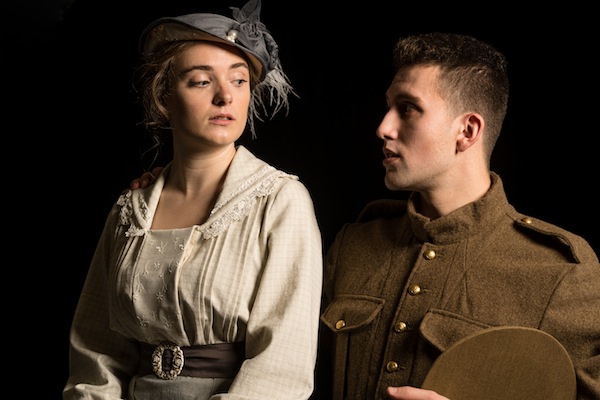
Laura Reynolds and David Volpov in The Wars, which opens Nov. 7. (photo by Javier R. Sotres)
Timothy Findley’s award-winning novel The Wars, adapted by Dennis Garnhum for the stage, comes to University of British Columbia’s Frederic Wood Theatre Nov. 7-23. Directed by Lois Anderson, it will be performed by UBC Theatre and Film’s graduate class of 2020, among whom is Jewish community member David Volpov.
Volpov takes on the leading role of Robert Ross, who is described as “a tender-hearted idealist who shares a strong bond with his wheelchair-bound sister” and “trades his comfortable Canadian life for the harsh world of trench warfare in World War I.”
“What I find challenging about playing Robert is imagining the play as a series of events, with each event slowly transforming him into a new person,” Volpov told the Independent. “At first, he’s a shy city boy who comes from a wealthy family. Over the course of the play, he becomes a confident lieutenant, who’s gained a lot more life experience. It’s not until he escapes his domestic life and goes to war that he truly discovers who he is. He discovers more about his sexuality, his morality around war and his will to live.
“As well as being a war story, the play is also a coming-of-age story. Finding those moments of change has been a rewarding experience because Robert is such a complicated character to crack. Even though he’s so young, he has so much trauma and weight that he carries with him to France. It feels like a big step for Robert every time he grows or learns something, or pushes past his comfort levels.”
Volpov is in his final year of the bachelor of fine arts acting program at UBC. As a writer, his plays include The Minimum-Wage Dame and Ten Years Later. His acting credits include Promethean Theatre Company’s productions of Of Mice and Men and Saint Joan.
“I love working with Promethean because we’re a small group of friends who are passionate about theatre,” he said. “We come together and discuss what stories we want to tell, what stories we think are important to tell. Then we go ahead and tell them. There’s nothing high-brow about it.”
Volpov’s appreciation for storytelling comes in part from his parents.
“My parents were Jewish immigrants from the former Soviet Union – my mom from Latvia and my dad from Belarus. Having grown up persecuted for being Jewish, they found it important to pass on their life stories to me, and that I understood what it meant to be Jewish,” he explained.
Growing up in Richmond as a secular Jew, he said, “It wasn’t until I was a teenager and spent one summer at Camp Tel Yehudah in Upstate New York that I felt connected to my heritage. The camp was oriented on teen leadership, so each camper chose a global issue which they were passionate about, researched it and created an activism action plan.
“The issue I chose to dive into was gun safety,” he said. “My group and I created a policy plan that we got the chance to take to Washington, D.C. We met with senators’ aides and representatives of the NRA [National Rifle Association] and the Brady Campaign. It was very important to be able to speak with people on both sides of the issue and still be able to have a healthy discussion. The experience impacted me a lot because it was the first time that I felt like I had a voice about something I was passionate about, something that felt so personal to me. That’s one thing that really helped in my acting from then on. Before that, I knew how to read and play someone else’s script, but that was when I learned how to make someone else’s text feel like it was my own.”
Considering the text of The Wars, Volpov said that one of the reasons Findley wrote about the First World War “is because that was the war that changed everything. It marked the first use of chemical weapons in war and the first time that the senselessness of war was widely reported. World War I marked a point where the world shifted to a much more cynical outlook, where the chaos of the world was realized.
“Presently,” he said, “we’re living in a similarly cynical time, in a new age of increasing isolationism – of Brexit and [Donald] Trump, and the climate crisis, too. The message that the play applies to the First World War can also apply to today: even when we’ve lowered our faith in our leaders and in humanity, we can always hold onto hope and lean on meaningful connections to others to get by.”
He added that “these connections take precedence over mere survival. The play is so life-affirming because it’s all about finding hope and joy even during the hardest times.”
For tickets to The Wars, call 604-822-2678 or email box.office@ubc.ca.
Vancouver Peace Poppies co-founder Teresa Gagné at the White Poppy Memorial in 2018. (photo by Diane Donaldson)
A local group is hoping to broaden the scope of Remembrance Day as more than an occasion to honour the brave men and women who have died while serving for their country. Through the distribution of white poppies, the Vancouver Peace Poppies (VPP) movement strives to extend the focus on Nov. 11 to all those who have suffered as a result of military conflicts.
Teresa Gagné, who co-founded VPP with Denis Laplante in 2008, stresses that the group intends no disrespect towards soldiers. Instead, they wish to bring more awareness to the toll warfare has on the whole population, whether it be the loss of life or other trauma experienced. Beyond representing the victims of war, civilian and military, the white poppy, according to VPP, also challenges the beliefs, values and institutions that create the view that war is unavoidable.
“I have always had respect and sympathy for veterans, who put their life, health and family on the line to serve,” Gagné said. “I believe they deserve recognition and support, but, for years, I was uncomfortable wearing a red poppy, because of the undercurrent of promotion and recruitment for present and future wars that I detect in many public events around the topic of supporting veterans. The white poppy attracts questions, and gives me a chance to explain the nuances of my support.”
A 2016 study by Alexandre Marc, a specialist in conflict and violence for the World Bank, brought to light the overwhelmingly disproportionate number of casualties among non-combatants as opposed to combatants in recent decades. According to some reports, civilians constitute 90% of wartime fatalities, a ratio that has existed since the mid-1950s.
What’s more, Marc’s research points out that global poverty is increasingly concentrated in countries affected by violence and that prolonged conflict keeps countries poor.
Gagné and Laplante have been active in the peace movement since their teens. Their 2008 launch of VPP began by distributing handmade white poppies as a way to promote discussion and a broader focus for Remembrance Day. The following year, while still a “kitchen table” operation, they imported 500 cloth poppies from Britain. VPP now sends out more than 5,000 poppies across Canada annually.
Since 2016, VPP has partnered with the B.C. Humanist Association to host Let Peace Be Their Memorial, an annual Remembrance Day wreath-laying ceremony that includes peace songs, short presentations and poetry. This year, the Multifaith Action Society is also a co-host. The event poster highlights, “The time and location of the ceremony has been chosen to avoid any appearance of competition with, or disrespect for, veteran-focused events.”
Holocaust remembrance
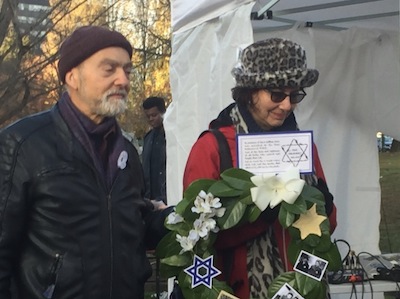
As in previous years, this year’s ceremony at Seaforth Peace Park on Nov. 11, 2:30 p.m., will include a special wreath laid in memory of Holocaust victims.
Two members of the Vancouver Jewish community, Marcy Cohen and Gyda Chud, are engaged in the local movement. In 2017, Cohen attended her first Let Peace Be Their Memorial and then sought to get others in the community involved.
Henry Grayman and Deborah Ross-Grayman with the Holocaust wreath at the memorial last year. (photo by Diane Donaldson)
“I was far more affected emotionally than I anticipated,” said Cohen of the occasion.
After learning of the history, values and focus of VPP, Chud recently joined the committee, and seeks to profile their work in the larger Jewish community. She represented Pacific Immigrant Resource Society (PIRS), a local refugee service group, in laying the refugee wreath in 2017 and 2018.
“The memorial serves as a powerful and compelling call to action for everything we can and must do to create a more peaceful world,” said Chud.
Last year’s Holocaust wreath was laid by Henry Grayman and Deborah Ross-Grayman, both children of Holocaust survivors. Having each experienced the intergenerational effects of trauma, the couple, both therapists, are facilitators for the Second Generation Group, an organization in Vancouver comprised of children of Holocaust survivors sharing their experiences among peers.
The people laying the Holocaust wreath at this year’s Let Peace Be Their Memorial have yet to be announced.
Poppies’ history
The red poppy widely worn today first appeared in 1921 on what was then called Armistice Day. In 1926, the No More War Movement, a British pacifist organization, came up with the idea for the white poppy and, in 1933, the Co-Operative Women’s Guild in the United Kingdom sold the first white poppies as a means of remembering that women had lost husbands, sons and fathers during wartime.
The wreaths that Vancouver Peace Poppies and other groups make, a mix of white and red poppies, highlight the amount of civilian suffering. VPP also distributes white poppies in schools in an effort to teach students that wars mostly kill non-military people, pollute the environment and send the message that violence as a means to settle disputes, even for adults, is acceptable.
VPP hands out its poppies by donation to increase awareness of its cause and not as a fundraiser. Poppies cost $1.25 each, of which 95 cents goes to the Peace Pledge Union, a pacifist organization based in London, England, which, since 1934, has advocated for nonviolent solutions to global problems. A $1 or $2 donation allows VPP to provide subsidized poppies for classroom use and free poppies to disadvantaged groups.
For poppies and more information, visit peacepoppies.ca or call 604-437-4453.
Sam Margolishas written for the Globe and Mail, the National Post, UPI and MSNBC.
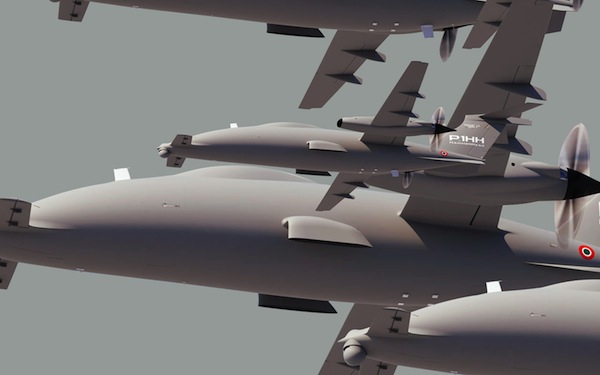
An image of drones filling the sky from Reva Stone’s Falling. (photo from Reva Stone)
Multi-awarding-winning Winnipeg artist Reva Stone researched drones for three years and then began creating art to share some of what she had learned about how the technology affects our lives. The exhibit erasure, which comes from that research, features three works – Falling, Atomic Bomb and Erase. It is on display at the University of Manitoba’s School of Art Gallery until April 26.
“I’m very much an observer of what’s going on with new technologies, so when I saw the impact that UAVs [unmanned aerial vehicles] were starting to have – especially with war and changing the nature of war – I applied for and got a Canada Council [for the Arts] grant to do a lot of research and reading about what actually is happening,” Stone told the Independent.
She went so far as to get two quadcopters, to understand what they really sounded like, and hoping to use them in her art, which she has.
“I was working on this, and then I started thinking about our skies filling up with these commercial and militarized drones and how they were basically machines … that could fall out of the sky … that could crash into each other, that could bring down an aircraft. We were filling up our skies,” she said. “And then, about two years ago, I was reading and realized that we were now targeting not other countries, but targeting humans.”
Artist Reva Stone’s exhibit erasure warns about the use of drones in our society. (photo from Reva Stone)
Stone ended up making five or six individual pieces that deal with different aspects of the use of drones, but relate to one another. Depending on the exhibition venue, she decides which ones will work best together in a particular space.
Originally, drones were developed for spying purposes for the military. Later versions were outfitted with weapons for protection and assault. More recently, commercial drones have been developed. Now, anyone can buy a drone for as little as $20. This easy accessibility is challenging our society, contends Stone, causing hazards to planes in airports, affecting people at parks and disrupting the peace.
“Drones are becoming these things that fly in the air that have no human controllers … that are almost autonomous,” she said.
Stone often uses computers, movies, motors and speakers to help fully immerse visitors in her art pieces.
The work Falling, she said, “is an animated video that I made that has to do with what I see as a very new future, wherein UAVs are ubiquitous, because of civilian, military, commercial and private use.
“It’s almost slow motion or balletic on a massive screen,” she said. “There’s constant falling out of the skies, sometimes flipping as they fall. Sometimes, there’s a drone that has exploded in the sky … sometimes, small and far away and, sometimes, they’re so big when they fall through the sky that they look almost life-size and you’ll have to back away from the screen … that will be the feeling you get. Then, sometimes, there are these little windows that open up and you look through, into another world, and that world is more about what we’re fighting about – the fact that we are actually using these to make war. Other than that, some of them are commercial, some are cute, some are scary looking … and it’s like a continuous rain coming down.”
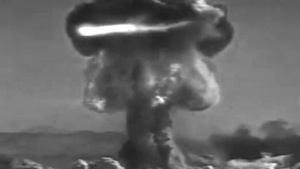
Atomic Bomb is also a film.
“I started with an early atomic bomb explosion,” said Stone. “It was a 30-second film and I made it into an almost 20-minute video. I really slowed it down and altered the time to give the impression that the person in the exhibition space is looking at a still image caught in time. I show this video together with texts that I found speak to the history of the use of radio-controlled airplanes and UAVs, and to longheld ideas about collateral damage – the relationship between … the use of atomic bombs and the use of drones and collateral damage, which, to me, is a huge issue with the use of drones as military.”
A single frame from Reva Stone’s Atomic Bomb video piece. (photo from Reva Stone)
The first text is from Harry Truman, the American president who made the decision in the Second World War to use the bomb, and it reads: “The world will note that the first atomic bomb was dropped on Hiroshima, a military base. That was because we wished, in this first attack, to avoid, insofar as possible, the killing of civilians.”
The next one is from John Brennan, Central Intelligence Agency director from 2013 to 2017: “There hasn’t been a single collateral death because of the exceptional proficiency, precision of the capabilities we’ve been able to develop.”
According to Stone, “This is just bullshit. But this is part of the cleaning up of the media presentation of all these ideas and all these things I’ve been researching, that I’ve been noticing going on over time. And, it has actually made me change the name of the work. I was going to call all three of them a totally different name. Recently, maybe a month ago, I changed it to erasure because of the erasure of people, the erasure of a lot of critical dialogue that’s been happening since I started researching in 2015 … how we are mediated, what we are presented with as a culture. The info is so mediated by how it’s reported, and if it’s reported.”
Stone wants “her audience to consider how the capabilities of such technology may be turned against citizens and how governments might, and do, get away with employing them in the name of patriotism in ways that ultimately test the ethical and moral values of its citizenry,” notes the exhibit description. “With news cycles moving so rapidly, the reports of deadly events quickly fall from memory, seemingly erased from public consciousness.”
The third piece, Erase, is interactive. Stone said it is based on what, in her view, the Obama administration practised – the targeting of individuals based on algorithms, mostly guilt by association.
“With this one, I’m actually replicating the procedure,” she said. “I have my two quadcopters that are doing the surveillance and capturing people in the exhibition space, unbeknownst to them. Then, they get captured and saved.
“Then, it’s a process that goes on, that they get played back. And you begin to realize that you’re under surveillance, the people in the space. And, every so often, a target comes up over one of them, one of the captured images. It’s really intense and an explosion occurs, and that person actually comes out of my captured list. That person will never show again. They’ve been erased.”
The exhibit erasure opened Feb. 7. For more information about Stone and her work, visit revastone.ca.
Itay Exlroad as Dancer Soldier. (photo by Giora Bejach, Courtesy Sony Pictures Classics)
An audacious work of art that melds raw emotion and absurdist allegory into a blistering assessment of contemporary Israel, Samuel Maoz’s Foxtrot deserves to be seen and demands to be discussed.
Winner of the Silver Lion at the Venice Film Festival – where Maoz’s taut debut, Lebanon, won the Golden Lion in 2009 – and eight Ophir Awards (Israel’s Oscars), including best film, director and actor, Foxtrot uses a small-scale story to examine some of Israel’s deepest issues: the concept of military sacrifice, the oppression of Palestinians and the legacy of the Holocaust.
Skilfully strewn with ironies all the way to the final shot, Foxtrot was shortlisted for the Academy Award for best foreign language film but did not receive a nomination.
The film begins with a middle-aged man (the sublime Lior Ashkenazi, who played a fictitious prime minister last year in Norman and Yitzhak Rabin in this month’s 7 Days in Entebbe) opening his door to the worst possible news for a father with a son in the army. Even as the gravity of the situation and the intensity of his response wallops us in the face and grabs us by the collar, Maoz counter-intuitively undercuts the emotional naturalism with precision camerawork and a stylized set design.
It appears, at first, that the filmmaker is evoking the surreal, detached and alienating experience of being struck with a life-changing bulletin. But we get the nagging feeling, from Ashkenazi’s character’s black-humour interactions with the army representatives to the off-centre introductions of his wife and daughter, that there’s more on tap than the melodrama of domestic tragedy.
Indeed, Maoz pulls the rug out from under us, then cuts from the climate-controlled setting of a high-in-the-sky condo to an isolated checkpoint in the barren, forgotten north of Israel. This is where the son, Yonatan, is assigned the “mission” of guarding a remote, nonessential road with a handful of other bored young men.
The tilted shipping container that comprises the soldiers’ base and barracks fronts on a puddle-strewn mudfield, which they must trudge across to the checkpoint. The roadblock itself is cartoonishly minimalist, resembling a set you’d see onstage more than a military installation, and putting us in mind of surrealist (anti-)war films like Apocalypse Now and Catch-22.
Nothing happens in this God-forsaken spot, and everything happens here. Each detail has significance, though one must pay close attention because it may not be clear until events play out. In fact, the meaning of a close-up or sound cue often remains obscure until the movie is over, at which point the viewer is required to arrive at his or her interpretation.
Two key events occur at Yonatan’s base: one at the checkpoint involving a carload of Palestinians heading home from a party and the other in the barracks when the soldiers are killing lonely downtime. The latter scene, in which Yonatan relates an anecdote from his father’s youth, is the most astonishing passage in this taboo-trampling movie.
Left to right: Danny Isserles as Official Military Officer, Yehuda Almagor as Avigdor, Michael’s brother, and Lior Ashkenazi as Michael. (photo by Giora Bejach, Courtesy Sony Pictures Classics)
Yonatan has rendered his memory into a graphic novel, and Maoz brings it to life in the form of animation. This harrowing episode connects the Holocaust – and the self-reliance, persistence, shared sacrifice and residual faith that survivors applied to building the Jewish state – to a modern Israel, where idealism has curdled into a pursuit of temporary pleasures, and worse offences.
To be sure, in every land and every age, older generations castigate young people for ignoring tradition and abandoning their core values. But this parable takes place in Israel, so Yonatan’s father’s hormone-driven rashness hearkens to Esau swapping his birthright for a bowl of stew.
Threaded through Foxtrot is a critique of Israel’s leaders for maintaining a culture of cynicism and corruption that results in the unnecessary deaths of young soldiers. Furthermore, each loss is described as heroic regardless of the circumstances.
This is not unique to Israel, of course, but it’s harder to push back against the military spin when you’re a small country surrounded by enemies than a superpower. Maoz satirizes PR functionaries in the opening scene, in fact, and never stops spearing sacred cows.
Maoz’s triumph, finally, thanks in large measure to Ashkenazi’s unexpectedly vulnerable performance, is tracking the human cost amid the not-quite-real scenarios and sociopolitical commentary. Foxtrot is an altogether remarkable work, not least because it is a beautiful film about ugly truths.
Foxtrot is in Hebrew with English subtitles, runs 113 minutes and is rated R for some sexual content, including graphic images and brief drug use. It opens at Vancity Theatre on March 23, and runs to April 1.
Michael Foxis a writer and film critic living in San Francisco.
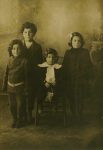
Left to right, Harry, Joseph, Benjamin and Rachel Seidelman, in approximately 1906. (photo from JMABC L.25670)
The following is an edited version of remarks presented at the Jewish Museum and Archives of British Columbia (JMABC) Intersections speakers series on Dec. 15 about the museum’s online exhibit Letters Home.
Recently, my wife Shelley and I were on a tour of Italy that stopped at the Cassino War Cemetery for soldiers killed during the Battle of Monte Cassino, a battle which resulted in 55,000 Allied casualties. In the 15 minutes we were there, we found two headstones with a Magen David, for soldiers from British Columbia who were killed in this Second World War battle. These headstones commemorate just two of many soldiers who have died in the fight for democracy but whose bodies are interred far away from family. My Uncle Joe was even less fortunate. Since his body was never found, there is no grave and, therefore, no headstone.
The First World War claimed the lives of 38 million civilians and soldiers alike. Approximately 2,700 Canadian Jews served in the Canadian Expeditionary Force, with about 1,200 seeing combat. Of those, an estimated 123 died in battle.
In late 1917, Gen. Douglas Haig, commander of the British Expeditionary Force, insisted that the key to victory on the Western Front was capturing the area around the village of Passchendaele, near Ypres in Belgium. Even though bad weather had turned the battlefield into a quagmire, Haig was determined to proceed.
At Passchendaele, on Oct. 26, 1917, 15,654 Canadian soldiers were killed. Among those who paid the terrible price for this hopeless decision was Pte. (Edward) Joseph Seidelman, 20, of Vancouver. His father, William, was a Hungarian Jewish immigrant who, after living in Kansas and Seattle, had settled in Vancouver in the 1890s. There, he met Esther Pearlman from Winnipeg. The two were married in 1896. Joseph was born a year later, followed by four more children during the next decade. Their father unfortunately died in 1907, leaving Joseph, Rachel, Harry and Ben; William was born after his father died and was named after him.
In 1916, Joseph was a student at the University of British Columbia. He would have graduated in 1918, the final year of the university’s transition from being an annex of McGill University to being a fully independent UBC.
Yearbooks are meant to celebrate successes at the institution but the 1918 edition also records the experiences of students who went to fight in the war and returned home, and it laments those students who went to war and did not return. One section is entitled “Military” and includes a copy of the Roll of Honour in Memoriam plaque that hangs in the foyer of the UBC War Memorial Gymnasium. It also contains brief biographies of those who were killed in action, including Joseph. Seventy-eight UBC students lost their lives during the war, and are commemorated on plaques in the War Memorial Gymnasium.
Compelled to do his patriotic duty, Joseph enlisted in the Western Universities 196th Battalion, which was made up of more than 150 students from universities in Manitoba, Saskatchewan, Alberta and British Columbia. Joseph was in England by November 1916. Early in 1917, he was sent to northern France and found himself in the muddy trenches of the Western Front.
So, how much do we know about someone who lived and died so long ago? Well, because of the letters featured in the JMABC online exhibit Letters Home, we have come to know Edward Joseph Seidelman better. In addition, in the 1918 yearbook, there is also a short mention of Joseph in a message from Prof. Lemuel Robertson, the first chair of the classics department at UBC. “Do you remember those little talks on socialism with Coughlan, or when Norman Hughes came into class the day after a dance, in the hope that he wouldn’t be asked anything? And Seidelman, too?” There are only three words but they give us a clue into his personality, that perhaps he liked to party.
In the letters Joseph wrote to his sister Rachel over nine months, he discussed family business and Vancouver affairs – in one letter, he expressed surprise at being a candidate for a Rhodes scholarship – and stated his hope that the war might end soon, though his optimism about the war varied. Even though he was in the centre of the action, he seems, in retrospect, to have been somewhat ignorant of how the war was actually proceeding.
The following letters are only examples drawn from the 87 he wrote. The letters from May 7, 1917, and are part of the JMABC online exhibit.
Camp Hughes, Man., Oct. 2, 1916: “I am going to Brandon again on Thursday afternoon and will stay over Friday, the 6th of October and also Saturday. I stayed with a Jewish family named Kisner and they were glad indeed to have me. Five or six decent-looking Jewish families wanted me to stay with them but Kisners had me first. Mrs. Kisner is only about 30 years old and she comes from the same city in Russia where mamma comes from, Novgorod. Mrs. Kisner introduced me to her 18-year-old sister….”
Dec. 24, 1916: “I knew Mr. Gibson’s son who was reported killed. Mamma has no reason to worry about me. It looks as though Germany will surrender to the Entente Allies…. I read in a London newspaper to-day called Lloyd’s Weekly News that a very high official of the German government … has confessed that Germany is starving and will give to England all that England demands even surrendering the Kaiser himself if necessary. It is quite possible, therefore, that the war may stop within a month or two by Germany’s sudden and complete surrender.”
Joseph stated that he applied for a transfer to the Royal Flying Corps but they were not taking any more applicants at that time. Instead, he was taking a lieutenant’s course and would perhaps go to a military training school later.
Feb. 17, 1917: “Two large Trans Atlantic liners carrying about 12,000 sacks of mail were reported torpedoed and sunk by German submarines and so let me tell you once again not to send anything valuable, for a German submarine might put an end to it.”
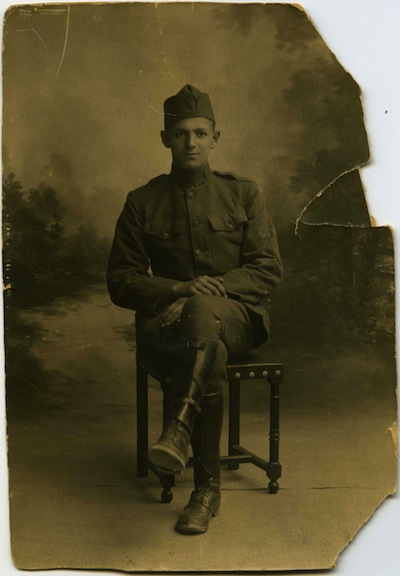
Joseph Seidelman in uniform. (photo from JMABC L.25664)
Feb. 27, 1917: “No doubt there are still many fellows hanging around in Vancouver who should be in the Army. I cannot understand their state of mind unless they have no self-respect or sense of honour. Let them go their ways while there is no conscription but I certainly am glad I am not in those times in civilian clothes. The B.C. University will have to wait until the end of the war for me at least.”
March 4, 1917: “France is certainly a muddy place. You ought to hear our artillery guns hurl death and destruction into the rank of the Huns [Germans]. The artillery makes most of the noise at night and then, when you wake up, you hear the terrific reports of each shot as quickly as the pat-pat-pat of a typewriter.”
March 11, 1917: “Things are somewhat interesting around this part of the world. British aeroplanes fly over us about as thickly as birds. To-day the Huns were firing at our aeroplanes and the puffs of smoke from the enemy’s shells bursting around the aeroplanes could easily be seen. It is very regrettable though that one of the enemy’s shells must have pierced the petrol tank of one of our aeroplanes, for it came down a mass of flames with a thick black column of smoke shooting out behind it. I never saw a single German aeroplane since I came to France. No doubt they have their wits scared out of them.”
April 7, 1917: “The chances of peace do not … look as rosy as I thought but the Huns will be defeated ultimately.”
April 17, 1917: “To-day after returning with a party from a certain part of France where the Germans were once expelled from and the ground all cut and plowed up with trenches, I found waiting for me a parcel containing a broken biscuit tin with some of mamma’s home-made confectionary (including many crumbs) and a tin of strawberries and coffee.”
May 7, 1917, datelined “some other place in France this time”: “I suppose it must have been reported to you that I was very slightly wounded by two very small pieces of shrapnel and, as I feel that you folks at home are very anxious to hear particulars, I want to assure you that there is absolutely nothing whatever for you to worry about. The two wounds I got are on the outer side of my right leg, one above the knee about the centre and the other below the knee about the centre. Although each wound has the appearance of nothing more than a [scratch?] on the skin, nevertheless I had to come to the hospital, where it is a pleasure to be for a change. One of the attendants told me that the leg will be alright again in about 5 days. So tell mamma to be happy and cheerful at home.
“I received three letters from you while I was in the firing line. I was much surprised to hear of the murder of Chief of Police McLennan. I guess Vancouver was shocked at the time almost as badly as a war event.”
On May 22, 1917, from “somewhere in France,” Joseph writes that he still has not rejoined his battalion after his leg injury, as another shrapnel piece was found in his leg, and required more medical attention at the hospital. Joseph tells Rachel that the shrapnel was found with the aid of an X-ray, and the doctor let him keep the shrapnel as a souvenir.
On July 3, 1917, again from “somewhere in France,” Joseph has returned to his battalion. In this letter, he tells Rachel that, on the night of May 5, 1917, when he received his leg wound, he still made the effort to help out a wounded officer. A telegram indicating Joseph’s return to the battalion from the hospital was sent to Joseph’s mother, Esther, on July 5, 1917.
On Oct. 14, 1917, still “somewhere in France,” Joseph reports “nothing to write about.” It is the last letter he writes home.
Joseph fought and survived the Battle for Vimy Ridge, was wounded in the leg in another battle and spent several weeks in an army hospital before being sent back to the front. On Oct. 26, the first day Canadian soldiers fought at Passchendaele, he was killed. Joseph was the first Canadian Jewish soldier from Vancouver to die fighting in the war.
UBC Remembrance Day Ceremonies have been held since 1951, when the War Memorial Gymnasium was opened. Since that time, I have attended nearly every ceremony. At first, I went with my brother and our father, Harry, who was too young to be part of the First World War and too old to be part of the Second World War. In the early years, my father would speak with veterans who knew Joseph. Over time, they all have passed away, but I have continued to attend the memorial ceremony with various members of my family as a way to remember my Uncle Joe, who is lying somewhere in France with no grave or headstone; our own kever avot (tradition of visiting the graves of our fathers).
Perry Seidelmanis, among other things, president of the board of the Jewish Museum and Archives of British Columbia.
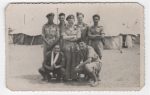
The author and fellow servicemen at a moral leadership course in Fayid, Egypt, in 1951. (photo from Alan Tapper)
It was the spring of 1951 and I was serving in the British Royal Air Force in the Suez Canal Zone of Egypt. I was one the many hundreds of thousands of young British conscripts sent to Egypt to replace the local workers, who had been told by their government to leave their jobs servicing the British military there. While these men did menial jobs, the work provided them a subsistence wage, which they lost by leaving. Times were difficult.
Alan Tapper served in the British Royal Air Force in 1950-51. (photo from Alan Tapper)
I worked for the air force intelligence unit. My job was to document all the incidents that took place in an area from Iraq to Egypt. There were a large number of shootings, disturbances in villages and casualties, both Egyptian and British.
Drug smuggling was also an issue. Habbaniya in Iraq was a British air force base at the time, and part of our command. The unit I was in also employed local Arabic-speaking trackers for intelligence work. Hashish was the drug of choice then and a tracker with the RAF once brought back some to our office for airmen to sample at the end of a cigarette.
I was based in Ismailia, in northern Egypt, on the edge of an airfield. I lived in a tented compound where the locals regularly fired volleys of bullets into the base. They were indiscriminate. Not a pleasant experience.
I also worked in the civilian labor office, where I discovered information on the large number of Jewish people from different countries living in Alexandria and Cairo. My job entailed monitoring all previous applications forms and that’s how I found out that there were many Jews in the region, both Ashkenazi and Sephardi, who had worked for the British forces during the Second World War.
Even though the nominal head of Egypt at that time was King Farouk, the British government had a colonial attitude and controlled the whole of the Suez Canal Zone from Port Said to Suez, with army and air force bases throughout the area. Britain knew the strategic importance of this waterway to countries of “the Empire.”
Fifty years later, the British government recognized the effort of the conscripts who served in Egypt by giving us a Suez Medal. They were going to charge us 50 pounds for the medal, but changed their minds after the uproar the idea caused. Regardless, I’m glad to have served, and I still have the medal. I wear it at Remembrance Day ceremonies.
I was in Egypt for 16 months. One of the most memorable parts of my time in the Suez Canal Zone was when I attended a moral leadership course organized by the Jewish chaplain to the British Armed Services in Fayid, Egypt, during Pesach 1951. It was attended by Jewish servicemen stationed in the area and special Pesach food was brought in for the seder and the festival. It was a wonderful experience to meet fellow Jews in – of all places at Passover – Egypt.
Alan Tapperis a local freelance writer. His work has been published in the Vancouver Sun, Province, Courier, National Post, among others, as well as the Jewish Western Bulletin, now the Jewish Independent, and online publications. His first story was published in the London Evening Star when he was 14.