Skip to content
  • Home
  • Subscribe / donate
  • Events calendar
  • News
    • Local
    • National
    • Israel
    • World
    • עניין בחדשות
      A roundup of news in Canada and further afield, in Hebrew.
  • Opinion
    • From the JI
    • Op-Ed
  • Arts & Culture
    • Performing Arts
    • Music
    • Books
    • Visual Arts
    • TV & Film
  • Life
    • Celebrating the Holidays
    • Travel
    • The Daily Snooze
      Cartoons by Jacob Samuel
    • Mystery Photo
      Help the JI and JMABC fill in the gaps in our archives.
  • Community Links
    • Organizations, Etc.
    • Other News Sources & Blogs
    • Business Directory
  • FAQ
  • JI Chai Celebration
  • JI@88! video

Recent Posts

  • BGU fosters startup culture
  • Photography and glass
  • Is it the end of an era?
  • Taking life a step at a time
  • Nakba exhibit biased
  • Film festival starts next week
  • Musical with heart and soul
  • Rabbi marks 13 years
  • Keeper of VTT’s history
  • Gala fêtes Infeld’s 20th
  • Building JWest together
  • Challah Mom comes to Vancouver
  • What to do about media bias
  • Education offers hope
  • Remembrance – a moral act
  • What makes us human
  • המלחמות של נתניהו וטראמפ
  • Zionism wins big in Vegas
  • Different but connected
  • Survival not passive
  • Musical celebration of Israel
  • Shoppe celebrates 25 years
  • Human “book” event
  • Reclaiming Jewish stories
  • Bema presents Perseverance
  • CSS honours Bellas z”l
  • Sheba Promise here May 7
  • Reflections from Be’eri
  • New law a desecration
  • Resilient joy in tough times
  • Rescue dog brings joy
  • Art chosen for new museum
  • Reminder of hope, resilience
  • The national food of Israel?
  • Story of Israel’s north
  • Sheltering in train stations

Archives

Follow @JewishIndie
image - The CJN - Visit Us Banner - 300x600 - 101625

Tag: Second World War

A long life working, helping others

A long life working, helping others

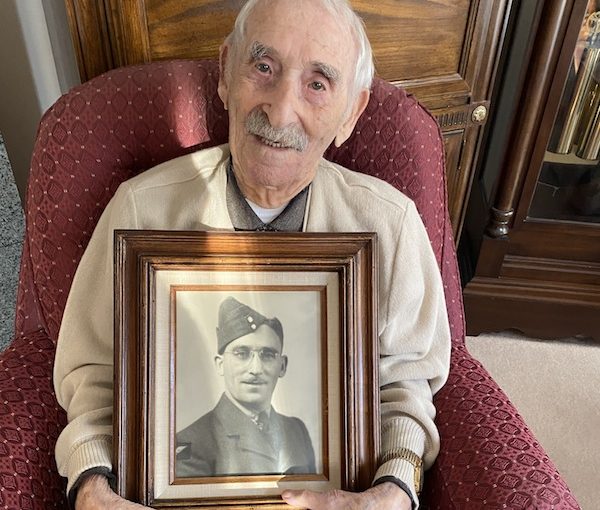
At 109, Richmond resident Reuben (Rube) Sinclair might be Canada’s oldest Second World War veteran. (photo from Reuben Sinclair)

A Richmond resident is almost certainly Canada’s oldest Second World War veteran. Reuben (Rube) Sinclair received a special recognition on Remembrance Day, though, because of confidentiality issues, Veterans Affairs Canada can’t confirm he’s the oldest service member. But, at the age of 109, basic statistics suggests that, if Sinclair isn’t the oldest, he’s got to be close.

The centenarian spoke with the Independent virtually via Zoom about his life and what advice he might have for aspiring super-seniors like himself.

Sinclair was born in 1911 on the family farm near Lipton, Sask. Lipton was one of many “colonies” created by Baron Maurice de Hirsch in Canada, Argentina and Palestine to resettle oppressed Jews from Europe. Sinclair’s father, Yitzok Sinclair (born Sandler), traveled from Ukraine, via Liverpool and arrived at Ellis Island Jan. 4, 1905, on the SS Ivernia. He made his way to Saskatchewan, where he was given land by de Hirsch’s Jewish Colonization Association. However, the land was poor and so the newcomer worked for the Canadian National Railway long enough to save up and buy a better plot and build a house. When he was settled, he sent for his wife, Fraida (born Dubrovinsky), and their two young sons.

Reunited in Lipton, the family grew to include not only Samuel and Sol, who were born in the old country, but the only sister, Clara, then Rube and the youngest, Joe.

The last survivor of his birth family, Sinclair has fond memories of the farm life. He and the other two youngest did chores while the older two headed to university. Samuel became a medical doctor and Sol was a professor of agriculture at the University of Manitoba.

“There was a whole colony of Jewish families,” Sinclair said. “My parents had one of the largest farms – 16 quarter-sections [more than 2,500 acres]. I remember we had 42 horses. We had milk cows. I had my jobs. My job was to go collect the eggs from the chicken house and, when I was 12, I was already driving our car.… Always things to do on a farm.”

Yitzok donated a few acres to the community and helped construct a school, which doubled as a synagogue. On Shabbats and Jewish holidays in winter, the boys would sleep in the hayloft so the local men could stay in the house and not walk home in the freezing Saskatchewan weather.

“My father was a leader in the community,” he said.

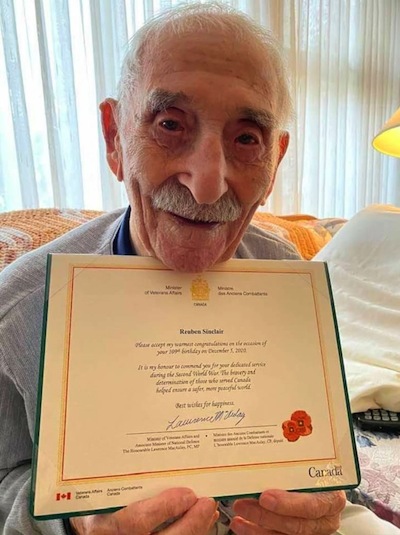
photo - Reuben Sinclair holds a birthday message from Veterans Affairs Canada
Reuben Sinclair holds a birthday message from Veterans Affairs Canada. (photo from Reuben Sinclair)

Sinclair joined the Royal Canadian Air Force during the Second World War and was stationed in North Battleford, Sask. In the days before radar was commonplace, he taught Allied pilots how to take off and land in the dark using a “standard beam approach,” which involved a navigation receiver that allowed the pilot to line the aircraft up with the runway when preparing to land.

“In the air force barracks, I was on the top bunk,” he said. “I always got the top bunk because the younger generation would come home drunk and I wouldn’t sleep in the bottom bunk.”

One day, he encountered a barrack-mate in tears. Sinclair recalls the conversation: “They’re sending me to Vancouver, he said, and my family is all here around Brandon, Manitoba. So I said, that’s no problem. When they want a person to go to Vancouver, they don’t care who the person is. Vancouver wants one person. So, I said, don’t cry. We’ll go see the commanding officer. I told him that my wife has got family in Vancouver and I’d be glad to go instead. He said they don’t care, all they want is one person. So, I was the person who went to Vancouver at that time and I’m still here,” he recalled with a laugh.

Joe, the youngest of the five siblings, had served in the army and after the war joined Rube in British Columbia. They started Sinclair Bros. Garage and Auto Wrecking, in Richmond, just across the two old Fraser Street bridges from Vancouver.

“My job was to go out and find old cars and we had a tow truck,” Sinclair said. “I’d bring them in and my younger brother would wreck them. We opened a wrecking company.” They also bought surplus army vehicles to fix up and sell.

The business soon became a sort of family compound. A small house adjacent went up for sale and the Sinclairs bought it, bringing parents Yitzok and Fraida to the coast. Then sister Clara and her husband Morris Slobasky bought a general store that was next door.

Because of his wartime experience, Sinclair developed migraine headaches and was told to go to a drier climate. He thought Arizona sounded good, but his wife, Ida, had siblings in the Los Angeles area and a brother-in-law offered him a job in a furniture store in Anaheim.

In 1964, Rube and Ida packed up the three kids – Nadine (now Lipetz), Karen and Len – and moved to Southern California.

“He put me in charge of the furniture store,” Sinclair said of his brother-in-law. “I knew nothing about furniture, but I learned pretty quick.”

Soon he was in business for himself again.

“Then my boss that I worked for in Anaheim, his wife wasn’t very well and she spent a lot of time in Palm Springs,” Sinclair recalled. “So, he said, instead of me going back and forth, I’ll move to Palm Springs and you can have the store, just pay me for the inventory.”

In 1994, Ida had a stroke and the couple moved back to British Columbia. She passed in 1996. Rube still lives in their Richmond condo.

Rube and Ida were active in their communities. In Los Angeles, they raised more than a million dollars for City of Hope, a cancer hospital and research facility. Both were active members of Schara Tzedeck Synagogue here, he especially in the Men’s Club, and he is proud of his lifetime honorary membership in the shul. In addition to their three adult children – Nadine is in Vancouver; Karen and Len in California – he has six grandchildren, 16 great-grandchildren and one great-great-grandchild.

Asked if he has any advice for others, Sinclair didn’t hesitate.

“That’s easy. I always say, if you have a problem, don’t worry; you’ll lose your hair. Fix it. If you have a problem, fix it. Don’t sit back and worry. Worry is not going to help.”

Any bad habits?

“I don’t think so,” he said after a thought. “I spent most of my life working and, in my spare time, working for people less fortunate. That was my enjoyment in my spare time.”

Two years ago, the City of Richmond named Sinclair an “honoured veteran.”

Recalled daughter Nadine: “He was part of the Remembrance Day service in Richmond and they made a big deal about it. They sent a limo and he sat with the mayor and the Silver Cross Mother. They gave him a wreath and then they walked him around. He was up on the dais with the mayor and the head of the RCMP as the soldiers all walked by. It was a very big deal for him.” Last Remembrance Day, he received a certificate from Veterans Affairs.

If, by some chance, Sinclair is not

Canada’s oldest veteran of the Second World War, he seems determined to attain that title.

“I’m not going anywhere,” he said. “I still have some unfinished business.”

Format ImagePosted on January 15, 2021January 13, 2021Author Pat JohnsonCategories LocalTags memoir, Reuben Sinclair, Richmond, Rube Sinclair, Second World War, tikkun olam, veterans
Call for digital art

Call for digital art

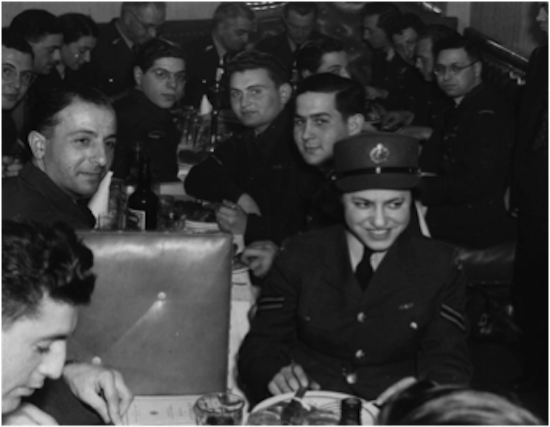
(photo by Alex Dworkin/Canadian Jewish Archives)

During the Second World War, 17,000 Jews were enlisted in the Canadian Armed Forces, serving their country despite Canada’s “none is too many” Jewish immigration policy. Of these 17,000, at least 279 were women. To highlight the contributions of these Jewish servicewomen and to combat the lack of public awareness of their participation in the war, original artworks are being sought.

Canadian artists who self-identify as Jewish and as women are invited to submit proposals for 2D digital artwork, inspired by the stories of the 36 Jewish service women featured on the website She Also Serves, live-ucalgary.ucalgary.ca/she-also-serves.

Submissions should include a maximum 500-word idea for an original 2D digital artwork (created, for example, using Photoshop, digital photography, digital collages, etc.) for a vertical banner measuring 75 by 165 centimetres. A link to your website, or a pdf including 10 examples of previous work and a curriculum vitae, must accompany the submission. Digital copies of drawings, paintings or other non-digitally generated works will not be considered.

In the end, 10 artists will be invited to create works based on the proposals submitted. Criteria for evaluation include clarity of theme, quality of research supporting the proposal, creativity, visual presentation, and quality of supporting documents. The jurors are Dr. Jennifer Eiserman, associate professor, department of art, University of Calgary; Saundra Lipton, adjunct librarian, U of C; Dick Averns, Canadian Forces artist; and David Bercuson, U of C department of history.

Selected artists will receive a contract indicating that each artist retains copyright and will be paid a CARFAC group exhibition fee of $395. These works will be printed on banners that will be hung throughout the existing exhibitions and galleries at the Military Museums in Calgary during Jewish Heritage Month, May 2021. In addition to the physical exhibition, artworks will be virtually circulated on the project website.

Submissions are due by Dec. 31, 2020 and artists will be notified by Jan. 22, 2021, regarding the jury’s decision. Artists invited to participate will be asked to send TIFF files of completed pieces by April 1, 2021. Send submissions and any questions to Eiserman at [email protected].

Format ImagePosted on November 27, 2020November 25, 2020Author University of CalgaryCategories Visual ArtsTags digital art, Jennifer Eiserman, Jewish Heritage Month, Jewish women, Second World War, University of Calgary
Reckoning with family’s past

Reckoning with family’s past

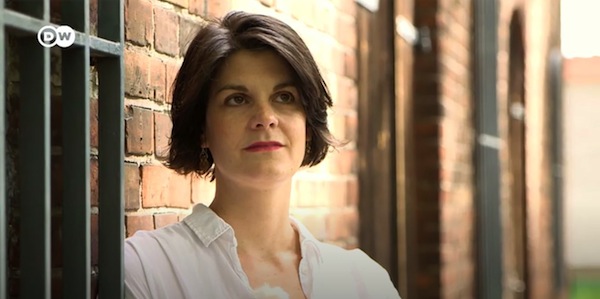
Writer and illustrator Nora Krug spoke with the Globe and Mail’s Marsha Lederman at a virtual event Oct. 27. (photo by DW Deutsche Welle)

The first time Nora Krug heard the word “Jew” was in elementary school during religion class, which was taught by the local priest. He told students that Jews killed Jesus.

Born in the German city of Karlsruhe, Krug is now associate professor of illustration at the Parsons School of Design in New York City, and author of the book Belonging: A German Reckons with History and Home. She spoke with Marsha Lederman at a virtual event Oct. 27 presented by the German Consulate General in Vancouver, the Vancouver Holocaust Education Centre, the University of British Columbia and the University of Victoria. Lederman is the Western arts correspondent for the Globe and Mail and her own book, Kiss the Red Stairs: Intergenerational Trauma, the Holocaust, and Me, is to be published in 2022.

“I came home from school that day and confronted my mother about it,” Krug recalled. “I said, ‘Are Jews evil?’ She got really angry because [it was] so obvious to her that this was something that nobody in Germany should ever think or say.”

A few years later, in her early teens, when she began learning about the Holocaust, she made a yellow star and intended to wear it as an act of solidarity with the Jewish people. Her mother, again, set her on a more appropriate path.

Krug explores her own struggles with her family’s past, as well as that of her country, in the book, a visual memoir that incorporates prose, graphics and photography. (See jewishindependent.ca/creative-engaging-memoir.)

The book was challenging on many fronts, Krug said, including her intention to tell one family’s story about the war era without downplaying German atrocities or doing anything that would appear to paint Germans as victims. While Germans did suffer during the war, it was ultimately a result of their own government’s actions.

“I’m not saying that Germans did not suffer during the war. I think they did,” she said. “But it was a self-imposed suffering.”

Like many aspects of researching a family’s or a country’s past, some things are unknowable and, at times, evidence can raise more questions than it answers. For instance, Krug had been told that her grandfather was a lifelong social democrat. But, when she dug through archives and found the military questionnaire that Germans in the American sector of occupied Germany were required to fill out to explain their war-era activities, he had acknowledged being a Nazi party member. Holding the document in her hands – not a facsimile, but the very document on which her grandfather had responded to more than 300 questions – was chilling, she said. The knowledge of her grandfather’s relationship with the Nazi party could only lead to speculation when she pieced two other facts together.

Krug had always known the location where her grandfather’s office had been in Karlsruhe. But only when she was researching the book did she discover that the Jewish centre and a synagogue were right across the street. Where was her grandfather when the synagogue was attacked on Kristallnacht and Jews were beaten in the streets? In the book, she posits four possibilities, from watching out his office window to laying home in bed sick to the most alarming possibility: that maybe he was among the mobs perpetrating the attacks.

Having lived for the past two decades in the United States – and being married to a Jewish man and having a 5-year-old daughter who is beginning to ask questions about history – all impacted her decision to write the book.

“I don’t think I would have done that had I not left Germany because I think, when I lived in Germany, I felt like I learned everything there is to learn about the war, what else is there to investigate?” she said. “That was my thinking. But, since I’ve been living in New York, I’m an individual and I am a German representing my country.”

Being away from her homeland also made her consider history more from an individual perspective.

“I think when you live as a German among Germans you accept the collective understanding of how we grew up learning about the war,” she said, crediting Germany with doing a good job addressing the topic as a nation. “But I think where we have to really still catch up is to do it on an individual basis, to really go back into our families, into the archives, into the cities where we grew up, what happened in our streets, in our houses, and investigate more deeply on an individual level.”

These are complex challenges and Krug sees a problem with the way Germans struggle with their national identity because of the terrible history of the 20th century.

“I think Germans really need to learn to love their culture,” she said. “I have a problem with it, too. I’m not saying I know how to do that. But I do think it’s a dangerous thing to only highlight our guilt. I think we need to learn, as Germans, to replace the word guilt or shame with the term responsibility.”

By struggling to express national pride, she said, Germans tend to abandon that to a fringe element.

“The problem is a lot of Germans who are willing and open to looking back at the past from a critical angle cannot express this love for their culture,” she said. “I think Germans should try to learn to do that because, otherwise, we leave it to the extreme right to do it for us and that’s a big problem.”

After Krug’s conversation with Lederman, a high school teacher submitted a question noting that some Canadian students are expressing fatigue at learning about Canada’s history of residential schools and asked whether German kids are getting tired of learning about the Holocaust. Krug acknowledged this might be the case and suggested ways of teaching that make the lessons more directly relevant for the present.

“If we had learned in Germany, for instance, more about the German resistance movement, we could have applied that knowledge to the present as well and asked ourselves, how can I help minorities that are harassed today or how can I make sure that we defend our democracy?” she said. “I think the more important question to ask is not what would I have done back then but what am I doing today on a daily basis to reflect on the issues that we have in our countries, no matter what country that is.”

Format ImagePosted on November 13, 2020November 11, 2020Author Pat JohnsonCategories LocalTags antisemitism, Germany, history, Holocaust, memoir, Nora Krug, Second World War
From baseball player to spy

From baseball player to spy

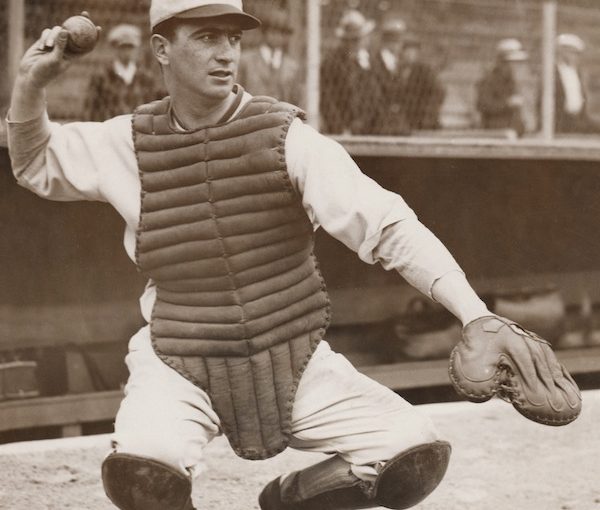
Moe Berg as a catcher during his time in Major League Baseball. (photo from Irwin Berg)

Near the end of John Ford’s essential 1962 western, The Man Who Shot Liberty Valance, a newspaper editor coins the credo, “When the legend becomes fact, print the legend.”

The fact, as we all know, is that Americans are all-star myth-makers and myth-lovers. Many American Jewish boys caught the bug via the improbable immigrant saga of Moe Berg, a paradoxically brilliant professional athlete who led a secret second life as a spy for the U.S. government. How much of Berg’s story is true, though, and how much was legend passed among kvelling kids in the schoolyard?

Aviva Kempner, who hit a home run with her 1998 documentary about another Jewish ballplayer, The Life and Times of Hank Greenberg, was the obvious, natural and best-equipped filmmaker to take on the mid-20th-century mysteries at the heart of Berg’s minor celebrity.

The Spy Behind Home Plate, which screens at the Vancouver Jewish Film Festival March 8 at the Rothstein Theatre, is a testament to Kempner’s determination and persistence. Chock full of dozens of contemporary and archival interviews, and packed with rare photos and even rarer film footage, The Spy Behind Home Plate is a definitive record of Berg’s achievements.

Although it’s an effective way to impart information, the dogged, dog-eared marriage of talking heads, vintage visuals and period music can’t fully evoke the shadowy stealth and deadly risks of Berg’s wartime activities. Hamstrung by her budget, Kempner wasn’t able to stage reenactments or employ other strategies to illustrate the unfilmed and unrecorded liaisons and conversations that Berg had in Europe in 1944 and 1945. The Spy Behind Home Plate, therefore, is like the steady everyday player who notches the occasional three-hit game but never achieves the transcendent grace and power of a superstar.

Morris (Moe) Berg, international man of mystery, was born in New York in 1902. His father had fled a Ukrainian shtetl for the Lower East Side, where he started a laundry before buying a drugstore in Newark.

The family moved to New Jersey when Moe was a boy, and he grew into an excellent student and a terrific baseball player. After a year at New York University, he transferred to Princeton, where he was a star shortstop (back when the Ivy League was the top, if not the only, sports conference) and graduated Phi Beta Kappa.

While his older brother Sam fulfilled Dad’s wishes and went to medical school, Moe signed a contract to play pro ball. He acceded to his father’s demands up to a point by attending Columbia Law School in the off-seasons, earning his degree and passing the New York bar in 1929.

It was a false bargain: Moe despised the idea of being a lawyer, while Bernard Berg never accepted a baseball career as a legitimate pursuit. In fact, the old man refused to go to the park and see his son play.

From an athletics standpoint, his dad wasn’t missing much. A knee injury early in Moe’s career, compounded by primitive diagnosis and treatment, severely slowed him. Over 15 years as a backup catcher, Berg notched exactly 441 hits in 663 games.

What set Moe apart was his charm, charisma and erudition. He studied Sanskrit at the Sorbonne one off-season, and read multiple newspapers every day. When he went to Japan on a barnstorming tour with Babe Ruth and other Major League stars, he learned Japanese.

Berg carried a camera everywhere on that trip, and made a point of checking out the roof of a tall Tokyo hotel in order to shoot a 360-degree panorama of the city. It’s not altogether clear if he was already working officially (albeit surreptitiously) for the U.S. government, but his film was of significant help when the United States went to war with Japan after Pearl Harbor.

In fact, in early 1942, Berg recorded a radio segment in Japanese that was broadcast in Japan and drew on the goodwill he’d accumulated over two prewar visits.

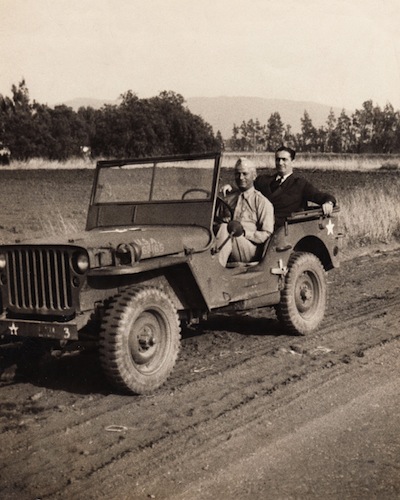
photo - Moe Berg in a military jeep in California with his brother Sam during the war, July 1942
Moe Berg in a military jeep in California with his brother Sam during the war, July 1942. (photo from Irwin Berg)

Berg had been sent on research missions to South America, but that was too far from the real action. It appears he found a home in 1943 in the newly created Office of Strategic Services (OSS), the intelligence branch that evolved into the Central Intelligence Agency after the war.

His primary and crucial assignment was to ascertain how close the Germans were to having a nuclear weapon, and to sway Italian scientists from the Axis to the Allies. To successfully carry off his cover story, Berg was briefed on the science and strategy of the Manhattan Project.

One biographer recounts, “The OSS had given the Manhattan Project its own spy, in effect, its own field agent to pursue questions of interest wherever he could in Europe. And that was Moe Berg.”

Kempner accords a great deal of screen time to this episode in Berg’s clandestine career as a professional spook. It’s a great story, in which the solidly built former catcher is assigned to attend a conference in Switzerland and determine – from the keynote speech by a visiting German scientist, Werner Heisenberg – if the Nazis are within reach of perfecting the bomb.

Berg carries a pistol to the symposium, with orders to use it on Heisenberg if he deems it necessary. It would be churlish of me to recount the outcome of Berg’s suicide mission except to say that the catcher-turned-spy who spoke seven languages lived unhappily ever after the war.

Kempner leaves us wanting to know more about Berg’s later years. By the weirdest of coincidences, Sam Berg headed a group of doctors sent to Nagasaki to study the effects of radiation poisoning. Incredibly, Moe and Sam never knew about each other’s exploits. This lone fact reveals that there’s still more to know about Moe Berg’s story.

The Vancouver Jewish Film Festival runs until March 8. For tickets and the movie schedule, visit vjff.org.

Michael Fox is a writer and film critic living in San Francisco.

Format ImagePosted on February 28, 2020February 26, 2020Author Michael FoxCategories TV & FilmTags baseball, history, Manhattan Project, Moe Berg, nuclear, politics, Second World War, Vancouver Jewish Film Festival, VJFF
Jewish war brides talk

Jewish war brides talk

At the University of British Columbia on Nov. 21, Prof. Robin Judd will speak on What’s Love Got to Do With It? Jewish War Brides and North American Soldier Husbands after the Second World War. (photo from Robin Judd)

Prof. Robin Judd noticed that a significant number of the earliest Holocaust memoirs written by women were penned by “war brides” who had married American, Canadian or British soldiers.

In the course of teaching about the Holocaust at Ohio State University, the coincidence struck her and, as happens in research, led her onto a new topic. She is nearing completion on a book about the experiences of Jewish women – and a few men – in Europe and North Africa who married Allied service personnel and moved to Canada, the United States or Britain. She will give a guest lecture on the subject at the University of British Columbia next week and the public is welcome to attend.

The lecture is titled What’s Love Got to Do With It? Jewish War Brides and North American Soldier Husbands after the Second World War, and Judd told the Independent that love certainly played a key role, but some of the other factors at play also interest her.

“What prompts individuals from radically different cultures, who may not necessarily speak the same language, what prompts them to create relationships with one another and long-lasting relationships, relationships that are going to result in marriage and then bring the civilians to Canada, Britain or the United States?” she asked.

Most of the soldiers that Judd is studying were Jewish themselves, though there are exceptions to the rule.

In some cases, the wives would arrive in the new country before or otherwise apart from their new husbands or fiancés. An entire infrastructure was in place to accommodate and integrate them.

“The war brides, particularly if you come to the United States or to Canada as a war bride, first you live with other war brides at least temporarily in a kind of war bride home or war bride camp and you travel on a war bride ship and there are particular Red Cross workers who teach English and show films and cooking classes,” she said.

If the fiancés or husbands were not yet decommissioned or were traveling with their units, the brides may have found themselves in the position of living with their new in-laws.

“These were not the spouses they were planning for their sons,” Judd comments. “And all of a sudden here you have this woman show up. You are processing stories that you are hearing about the war and all of a sudden here comes this person and you might not be able to communicate, you might not have a shared language, you might not know how to even ask questions about what this person had experienced.”

Feeling isolated and foreign, some of these women used the opportunity to express their experiences privately, to themselves, in writing.

“Some of the women that I’ve spoken to have told me that they used that time to write out their story, to put it to paper, because they needed to kind of get it out and there was no one with whom they could talk, literally,” she said. “But then, as they began to create networks, make new connections, maybe by that point their now-husbands have returned to Canada, Britain or the U.S., a number of them tell me that they then destroyed them.”

By an apparent coincidence, though, Judd concluded that it was disproportionately the women who had married soldiers who were among the first to publish English-language Holocaust memoir narratives for general readers in the 1970s and ’80s. She has a theory about this, but admits she could be wrong: these may have been some of the first women who were asked to speak about their early life and Holocaust experiences to Jewish women’s groups, federations and other community audiences, acclimating them to become among the first to put them on paper for general readers.

“But, again, I could be completely wrong,” she said.

Judd’s lecture is supported by a Holocaust education fund in UBC’s department of history to support undergraduate education on the Holocaust. The fund supports a biannual lecture, alternating years with the Rudolf Vrba Memorial Lecture, and is incorporated into an undergraduate course, History of the Holocaust, taught by Prof. Richard Menkis, who is also chair of the committee that manages the fund. The public is welcome to attend on Thursday, Nov. 21, 5-6:15 p.m., at Buchanan D217 at UBC.

Format ImagePosted on November 15, 2019November 13, 2019Author Pat JohnsonCategories LocalTags Holocaust, Robin Judd, Second World War, UBC, war brides, women, writing
View of the past

View of the past

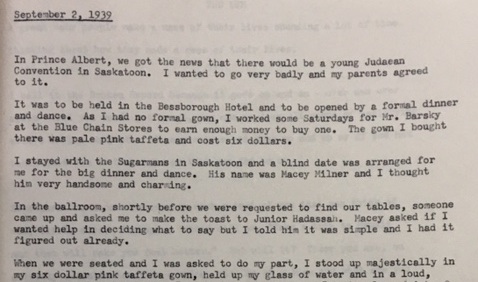
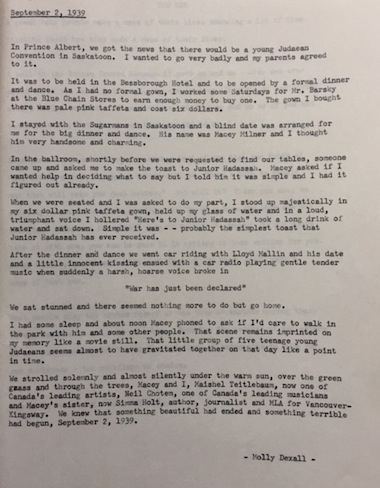
This diary note from Molly Dexall, recalling events from Sept. 2, 1939, was found by her son, Fred Dexall, and Alex Krasniak, community support worker at Yaffa House, in one of Dexall’s old binders. It was written by his mother, who was 19 at the time; she died in 1977. It is reprinted here with permission, marking 80 years since the outbreak of the Second World War on Sept. 1, 1939.

September 2, 1939

In Prince Albert, we got the news that there would be a young Judaean Convention in Saskatoon. I wanted to go very badly and my parents agreed to it.

It was to be held in the Bessborough Hotel and to be opened by a formal dinner and dance. As I had no formal gown, I worked some Saturdays for Mr. Barsky at the Blue Chain Stores to earn enough money to buy one. The gown I bought there was pale pink taffeta and cost six dollars.

image - A diary note from Molly Dexall, recalling events from Sept. 2, 1939

I stayed with the Sugarmans in Saskatoon and a blind date was arranged for me for the big dinner and dance. His name was Macey Milner and I thought him very handsome and charming.

In the ballroom, shortly before we were requested to find our tables, someone came up and asked me to make the toast to Junior Hadassah. Macey asked if I wanted help in deciding what to say but I told him it was simple and I had it figured out already.

When we were seated and I was asked to do my part, I stood up majestically in my six dollar pink taffeta gown, held up my glass of water and in a loud, triumphant voice I hollered “Here’s to Junior Hadassah” took a long drink of water and sat down. Simple it was – probably the simplest toast that Junior Hadassah has ever received.

After the dinner and dance we went car riding with Lloyd Mallin and his date and a little innocent kissing ensued with a car radio playing gentle tender music when suddenly a harsh, hoarse voice broke in

“War has just been declared”

We sat stunned and there seemed nothing more to do but go home.

I had some sleep and about noon Macey phoned to ask if I’d care to walk in the park with him and some other people. That scene remains imprinted on my memory like a movie still. That little group of five teenage young Judaeans seems almost to have gravitated together on that day like a point in time.

We strolled solemnly and almost silently under the warm sun, over the green grass and through the trees, Macey and I, Maishel Teitlebaum, now one of Canada’s leading artists, Neil Chotem, one of Canada’s leading musicians and Macey’s sister, now Simma Holt, author, journalist and MLA for Vancouver-Kingsway. We knew that something beautiful had ended and something terrible had begun, September 2, 1939.

– Molly Dexall –

Format ImagePosted on August 30, 2019August 29, 2019Author Molly DexallCategories LocalTags Canada, history, memory, Second World War, youth
Not long ago, not far away

Not long ago, not far away

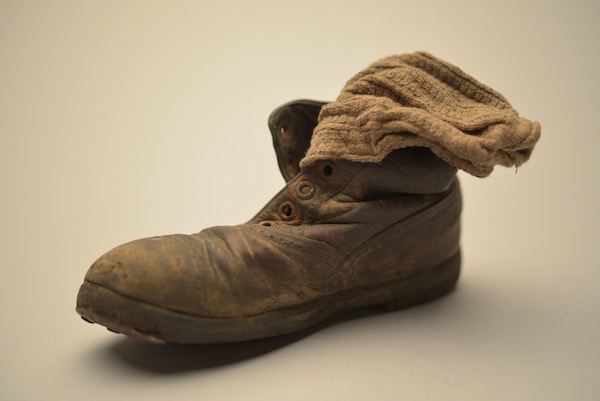
This child’s shoe and sock were found in January 1945 among thousands of others at Auschwitz-Birkenau, abandoned by the Nazis as the Red Army approached. (photo from Collection of the Auschwitz-Birkenau State Museum, Oswiecim, Poland. ©Musealia)

On display now at the Museum of Jewish Heritage in New York City, the exhibit Auschwitz: Not Long Ago. Not Far Away is the most comprehensive Holocaust exhibition ever mounted in North America about Auschwitz. Dedicated to the victims of the death camp, the goal of this exhibit is to make sure no one ever forgets.

A study conducted by the Conference on Jewish Material Claims Against Germany reported that 41% of Americans and 66% of millennials say they don’t know about the Auschwitz death camp, where more than a million Jews and others, including Poles, Sinti and Roma, Soviet prisoners of war, homosexuals, Jehovah’s Witnesses and others, were executed. And 22% of millennials say they haven’t even heard of the Holocaust.

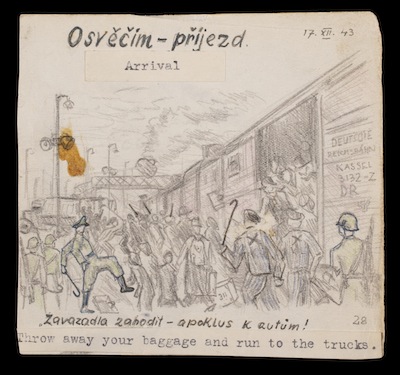
image - Artist Alfred Kantor’s depiction of arrival in Auschwitz: “Throw away your baggage and run to the trucks”
Artist Alfred Kantor’s depiction of arrival in Auschwitz: “Throw away your baggage and run to the trucks.” (photo from Gift of Alfred Kantor, Museum of Jewish Heritage, N.Y.)

“Seventy-three years ago, after the world saw the haunting pictures from Auschwitz, no one in their right mind wanted to be associated with the Nazis,” Ron Lauder, founder and chair of the Auschwitz-Birkenau Foundation Committee and president of World Jewish Congress, said. “This exhibit reminds them, in the starkest ways, where antisemitism can ultimately lead and the world should never go there again. The title of this exhibit is so appropriate because this was not so long ago, and not so far away.”

The exhibition consists of 20 galleries spanning three floors, and features more than 700 original objects and 400 photographs. They are on loan from more than 20 institutions and private collections around the world, as well as the Auschwitz-Birkenau State Museum in Poland.

An audio guide given to each visitor upon entry details the items on display. Visitors will see hundreds of personal possessions, such as suitcases, eyeglasses, photos, shoes, socks and clothes that belonged to survivors and those murdered at the concentration camp. In one glass case, a child’s shoe is on display with a sock neatly tucked inside. We are left to wonder, who put that sock in the shoe and were they expecting the child to shower and then retrieve it?

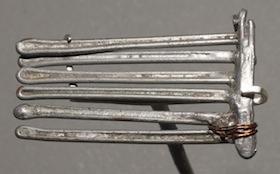
photo - Determined to survive, and to have a head of hair again one day, Ruth Grunberger made this comb for herself in Auschwitz, using stolen scrap metal and wire
Determined to survive, and to have a head of hair again one day, Ruth Grunberger made this comb for herself in Auschwitz, using stolen scrap metal and wire. (photo from Collection of the Museum of Jewish Heritage. Gift of Ruth Mermelstein, Yaffa Eliach Collection donated by the Centre for Holocaust Studies.)

Auschwitz was located 31 miles west of Krakow in the small southern Polish town Oswiecim, which dates back to the Middle Ages. Jews were a part of its society for centuries. Auschwitz-Birkenau was conceived and initially constructed to house 100,000 Soviet prisoners of war and slave labour, before it became a factory of death. The architect who designed the camp was Fritz Ertl, a native of Austria. Ultimately, some 1.1 million Jews and thousands of others were killed there. Many who arrived at Auschwitz were sent directly from the overcrowded, sealed, windowless boxcars to the gas chambers and crematoriums.

There are videos throughout the exhibit, including one of Hitler and a large adoring crowd. There’s a concrete post that was a part of the fence at the Auschwitz camp, and a part of the original barrack for prisoners at the killing centre.

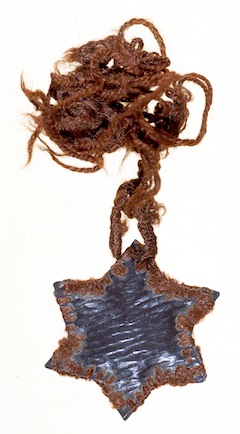
photo - Margit (Manci) Rubenstein made this Star of David necklace from material taken from the lining of her shoes and shoelaces while imprisoned in Auschwitz (1944)
Margit (Manci) Rubenstein made this Star of David necklace from material taken from the lining of her shoes and shoelaces while imprisoned in Auschwitz (1944). (photo from Collection of the Museum of Jewish Heritage. Gift of Sugar siblings in memory of Rosenfeld and Schwartz families.)

A German-made Model-2 boxcar, like those used to transport people to Auschwitz, sits outside the museum. In a video, survivors talk of the horrible conditions and stench inside those boxcars.

Viewers can see the operating table, test tubes and instruments used in medical experiments. There’s a gas mask used by the SS and a model of a gas chamber door used in crematoria 2, 3, 4 and 5 – and testimonies from survivors of the camp. To show the striking contrast between the victims and the perpetrators, there are photos of Rudolf Hess at his nearby residence with his family enjoying the outdoors.

Nazi ideology and the roots of antisemitism are traced from the beginning, to understand what happened before the gas chambers were created. Discrimination and bigotry against Jews existed long before Hitler came into power, of course. In one room, there’s an anti-Jewish proclamation issued in 1551 by Ferdinand I that was given to Hermann Göring for his birthday by German security chief Reinhard Heydrich. The proclamation required Jews to identify themselves with a yellow ring on their clothes. Heydrich noted that, 400 years later, the Nazis were completing Ferdinand’s work.

In a video seen near the end of the exhibition, Holocaust survivors urge people to refrain from hate and to work for peace.

This exhibition was in Madrid before coming to New York. This important and moving must-see exhibition is both a reminder and a warning.

Alice Burdick Schweiger is a New York City-based freelance writer who has written for many national magazines, including Good Housekeeping, Family Circle, Woman’s Day and The Grand Magazine. She specializes in writing about Broadway, entertainment, travel and health, and covers Broadway for the Jewish News. She is co-author of the 2004 book Secrets of the Sexually Satisfied Woman, with Jennifer Berman and Laura Berman.

***

Located in the Museum of Jewish Heritage, at 36 Battery Place, entry to the exhibit Auschwitz: Not Long Ago is by timed tickets available at mjhnyc.org. An audio guide is included with admission, and tickets range from $10 to $25. Hours are Sunday to Thursday, 10 a.m.-9 p.m. (last entry at 7 p.m.), and Friday, 10 a.m.-5 p.m. (last entry at 3 p.m.). The exhibit will be in New York until January 2020.

Format ImagePosted on June 14, 2019June 12, 2019Author Alice Burdick SchweigerCategories WorldTags Auschwitz, history, Holocaust, Nazis, Ron Lauder, Second World War
D-Day: heroism, horror

D-Day: heroism, horror

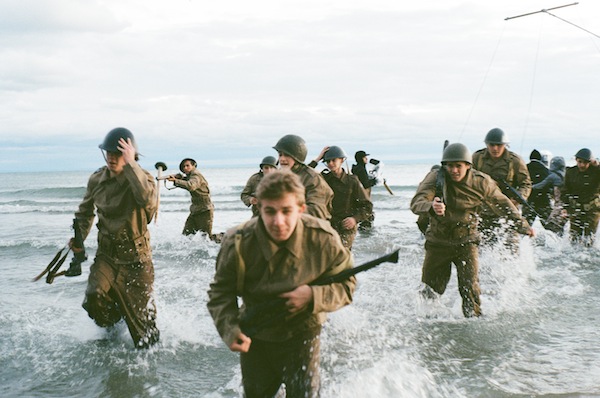
The fear, bloodshed and massive loss of life in the cause of freedom are illustrated through remarkable – and convincing – dramatic reenactments in D-Day in 14 Stories. (photo from YAP Films and the History Channel)

The horrors and heroism of D-Day took place 75 years ago June 6. A remarkable new documentary, with distinct Canadian and Jewish connections, will air on the History Channel June 1. D-Day in 14 Stories includes firsthand recollections from Allied and German soldiers and French civilians – many of them kids or teenagers at the time of the conflict.

The massive battle of the Second World War saw more than 150,000 Canadian, American, British and other Allied soldiers storm the beaches of France, marking the turning point of Nazi – and Allied – fortunes.

D-Day in 14 Stories is a social history of D-Day, a joint production of YAP Films and the History Channel. The events on that long-ago day in 1944 are illuminated by eyewitness accounts from some of the few remaining veterans of that historic battle.

On D-Day alone, 359 Canadian soldiers were killed. More than 5,000 Canadian soldiers died during the succeeding weeks of fighting in Normandy. The fear, bloodshed and massive loss of life in the cause of freedom are illustrated through remarkable – and convincing – dramatic reenactments, visual effects and historical footage, including a trove of colour film taken by a soldier using an early Bell and Howell handheld movie camera.

Many soldiers on both sides were just following orders but, as Morton Waitzman recounts in the documentary, some Jewish soldiers felt a particular motivation.

“Being of the Jewish faith myself, and so many of my comrades, we knew we had to get over there as soon as possible to do whatever we could to stop this terrible curse,” he said. As a communications specialist, he connected American and British forces with members of the French Underground to help coordinate the battle.

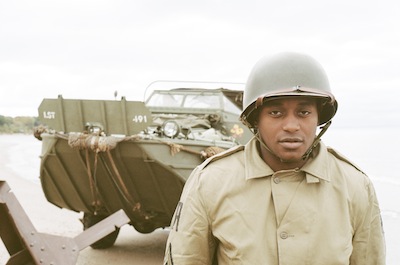
photo - D-Day in 14 Stories makes the effort to capture the particular experiences of African-American and First Nations soldiers
D-Day in 14 Stories makes the effort to capture the particular experiences of African-American and First Nations soldiers. (photo from YAP Films and the History Channel)

The Germans were anticipating an attack, but had no idea when, where or how large a force the Allies would assemble. The documentary follows a wall of soldiers parachuting through a cascade of tracers. In all, 13,000 Americans dropped inland by air to support the amphibious landing and undermine the German response.

While one Allied soldier says, “Anybody who says they weren’t afraid is not telling the truth,” a German soldier recounts, tellingly: “We had no fear. We were convinced that we would win.”

Until D-Day, the British Air Force had strafed the Normandy coast, but returned to their island redoubt. French residents of the area were familiar with the routine: take shelter when the alarms go off and come back out when they ring again.

Bernard Marie was a 5-year-old child in Normandy at the time.

“The big difference is that, on June 6th, the siren never came back,” he said.

In all, 7,000 vessels embarked from Britain to the French coast. The Allies had no illusions about the cost of the operation. Casualties were anticipated to reach 25 to 30%.

Emotionally powerful dramatizations follow 16- and 17-year-olds as they face the life-and-death moment for themselves and the free world.

“Some never got off the boat,” recalled one soldier. “They were shot, bodies laid all over, boats turned upside down, real chaos. We still kept going forward.… Soldiers.”

One survivor remembers that, despite the explosions all around him, his sole consideration when coming ashore at Normandy was that his socks were soaked through.

The average soldier was carrying 35 kilograms on his back and, for those whose vessels did not manage to make it close to shore, jumping off the ship, in many cases, led to almost instantaneous drowning.

If they survived the initial landing, the soldiers had to confront the German enemy firing down from above at Allied soldiers who were effectively sitting ducks. A German soldier recalls: “We merely had to point that machine gun and it was like cutting wheat with a scythe. For the odd miss, we had a thousand hits.”

The film admirably makes the effort to capture the particular experiences of African-American and First Nations soldiers.

Waitzman, the Jewish American soldier, went on to fight in Europe and participated in the liberation of concentration camps.

“We became eyewitnesses to the Holocaust by what we saw,” he says in the film. “We were very compelled to tell the details to young people. We had to talk, to fight this as much as possible.”

Another veteran of the battle reflects on the loss of life, but ponders the alternative: “God knows what would’ve happened if we hadn’t done it.”

Format ImagePosted on May 24, 2019May 23, 2019Author Pat JohnsonCategories TV & FilmTags D-Day, history, Holocaust, Second World War, television
Remembering our fallen

Remembering our fallen

(photo by Yoram Adler)

On Remembrance Day, Nov. 11, a small group of Jewish community members gathered in the Jewish section of Mountain View Cemetery to commemorate Canadians who have served in the armed forces. Organized and led by Rabbi Steven L. Nemetz, a member of the Royal Canadian Legion Branch 179, the ceremony was attended by more than 30 people, including children, nieces and nephews, and grandchildren of men and women who served in the Allied armed forces. Many attendees brought with them wartime photos of their uniformed family member(s).

The 100-bell Bells of Peace ceremony marked 100 years since the end of the First World War. Each person present at the memorial was invited to step forward to ring a ship’s bell after the announcement of their name and the name, relation and rank or service of their fathers, uncles, aunts, and other relatives.

Kaddish was recited. “Last Post” was played by a cadet trumpeter and a piper played the lament, which recalls the end of battle, and “Amazing Grace.” The commemoration opened with O Canada and concluded with Hatikvah.

Format ImagePosted on November 16, 2018November 15, 2018Author Nemetz ShtiebelCategories LocalTags Remembrance Day, Second World War, Steven Nemetz
Recalling the heyday of radio

Recalling the heyday of radio

The writer’s father listening to the radio, circa 1940. (photo from Libby Simon)

This black-and-white picture, lined with age, was taken of Papa in about 1940. His attire reflects a time when a vest was commonly worn under a man’s suit jacket. It is rarely seen today, nor is the armband on his shirtsleeve. His white shirt makes the ensemble too formal to be worn at home, especially with his often-repaired dress shoes. But Papa was a Hebrew teacher and, perhaps uniquely to him, he always dressed as if he were going out. The bare, worn floor reveals a modest home, not uncommon in the 1930s, considering the widespread impacts of the Great Depression.

He sits in rapt attention, hunched on a stool, his expression tense, his eyes fixed on an old, brown, wooden floor radio. We grew up with that radio the way people grow up today with television. It connected our family with the outside world, but each for different reasons. As immigrants, Yiddish was our first language and, for him, radio undoubtedly served as an opportunity to hone his English, as well as to receive its messages. Although I was still a preschooler, I remember what he was listening to because the scene in this photo was repeated several times every day from 1939 to 1945, the years of the Second World War. Papa was listening to the news. But the true catastrophic human saga unfolding beyond the photo, even as he listened, would not emerge until after the war ended.

Fortunately, we here in Canada escaped the devastating fate of our relatives. As a child, I was only aware that certain foods were rationed, like tea, coffee, sugar and butter. My four brothers and I would fight over the krychik (Yiddish for the end piece of a rye bread). It was not the bread itself, but the limited availability of butter on the krychik that made this a special treat worthy enough to be fought over. If Papa were home, he would assign it to me as the youngest and as the only girl, much to the dismay of my brothers. But the rations coupon books provided by the Canadian government gradually extended to include many other staples, such as meat, cheese and evaporated milk. These were needed for the soldiers and the war effort.

I also remember short musical promotions appealing to Canadians to buy Victory Bonds. As a second-grader, I stood up in class one day and patriotically sang one such little ditty, which still reverberates in my memory. My substitution of the word “bun” for “bond” exposes my childhood ignorance that I only came to realize in retrospect as an adult. The lyrics go as follows:

“Buy a ‘bun’ V for Victory / Show you’re fond of your liberty / Keep on buying to keep them flying, / And don’t ever stop till they’re over the top.

“Every dollar makes Hitler holler / And every ‘bun’ you buy will make him groan / So help flood our Chest, / Do your best and invest / In Canada’s Victory Loan.

“Oh, Canada, we stand on guard for thee.”

photo - The writer’s father listening to the radio, circa 1940The radio became such a central focus and source of news that, when the war ended in 1945, I wondered what would happen to it. “Papa,” I asked, “now that the war is over, will they close the radio?”

“Why do you think they will close the radio?”

“Because,” I answered, “what else would they have to talk about?”

It was then I learned that radio not only delivered news about war. It also provided entertainment. For example, I discovered Hockey Night in Canada. My brothers and I would huddle around the radio every Saturday night and listen to Foster Hewitt, in his inimitable high-pitched excitement shout, “He shoots! He scores!” The contagion caused a clutch of five kids to holler in unison along with the sound of the roaring crowd – but only for the Toronto Maple Leafs. In time, I became a hockey aficionado, and could spout names like Syl Apps, Turk Broda or even Conn Smythe, their manager. Establishment of the Hot Stove League began during those early years and continues to this day.

We used to listen to shows like John & Judy, a serial about life in a small Canadian city, and Share the Wealth, with Bert Pearl. And Second World War songs filled the airwaves, like the “White Cliffs of Dover,” referring to the Battle of Britain. “We’ll Meet Again,” a song that resonated especially with soldiers off to battle and their families and sweethearts who had the heartbreak of waiting and not knowing if they would ever return.

Papa’s faded photo tells not only a personal story, but the story of many in Canada. It also highlights the role of radio in our lives. It served to bring the world into our homes between two catastrophic events – the Great Depression and the Second World War. We cannot overlook its importance as a medium of communication that brought the world into millions of living rooms across the country.

Of course, time brings change. My parents are long gone and my siblings and I have dispersed across North America. Radio was eventually muscled out by television but, today, you can “turn your radio on” in a resurgence of popularity. As a segment of mass media, the power of radio has infiltrated our lives again, even on the internet. And, online, you can go back to your childhood with “retro music” and shows like Roy Rogers and The Lone Ranger. It still connects us, though without taking up nearly as much floor space.

Libby Simon, MSW, worked in child welfare services prior to joining the Child Guidance Clinic in Winnipeg as a school social worker and parent educator for 20 years. Also a freelance writer, her writing has appeared in Canada, the United States, and internationally, in such outlets as Canadian Living, CBC, Winnipeg Free Press, PsychCentral and Cardus, a Canadian research and educational public policy think tank.

Format ImagePosted on November 9, 2018November 7, 2018Author Libby SimonCategories Op-EdTags Canada, history, radio, Second World War

Posts pagination

Previous page Page 1 Page 2 Page 3 Next page
Proudly powered by WordPress