Skip to content
  • Home
  • Subscribe / donate
  • Events calendar
  • Business Directory
  • FAQ
  • News
    • Local
    • National
    • Israel
    • World
    • עניין בחדשות
      A roundup of news in Canada and further afield, in Hebrew.
  • Opinion
    • From the JI
    • Op-Ed
  • Arts & Culture
    • Performing Arts
    • Music
    • Books
    • Visual Arts
    • TV & Film
  • Life
    • Celebrating the Holidays
    • Travel
    • The Daily Snooze
      Cartoons by Jacob Samuel
    • Mystery Photo
      Help the JI and JMABC fill in the gaps in our archives.
  • Community Links
    • Organizations, Etc.
    • Other News Sources & Blogs
  • JI Chai Celebration
  • JI@88! video

Recent Posts

  • Federation now across BC
  • Israel fighting for its existence
  • Deal strengthens Iran
  • Patriotic belonging diminishes
  • A campaign to engage
  • Upstanders’ first live event
  • Responding to Carney
  • Having your own home
  • Music a family tradition
  • Musical to warm heart
  • Community milestones … June 2026
  • Sharing her passion for Israel
  • Or Shalom reopens its doors
  • JFS from past to future
  • Need holistic approach
  • Sharing stories, advice
  • Journalist shares fears
  • Skills to live together
  • Road to independence
  • Cutting grass with scissors
  • Zionism as a solution
  • Deceit, desire & the divine
  • Reclaiming sacredness
  • Creative project ideas
  • Summer squares and cobbler
  • Thou shalt … summer commandments
  • Legal help for students
  • Revisiting myth of Lilith
  • Wrong person rebuked
  • Canada’s mixed messages
  • Questions for museum
  • Symposium on antizionism
  • Making soccer political
  • CJPAC lauds Pulver’s impact
  • City recognizes Vrba’s legacy  
  • Organ donation saves lives

Archives

Follow @JewishIndie
image - CJN box ad Rockowers 2026

Tag: politics

Responding to COVID

Responding to COVID

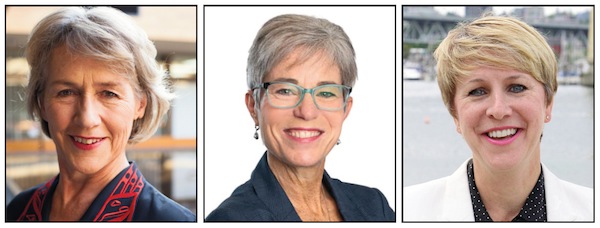
Left to right: MP Joyce Murray, MLA Selina Robinson and Vancouver Councilor Sarah Kirby-Yung spoke at a June 3 webinar hosted by the Canadian Jewish Political Affairs Committee. (photos from the internet)

“Intense” was the word used by speakers from all levels of government to describe their experiences during the pandemic emergency.

In a June 3 webinar on Zoom, federal and provincial cabinet ministers and a Vancouver city councilor addressed COVID-19: What’s the New Normal? The event was hosted by the Canadian Jewish Political Affairs Committee.

Joyce Murray, member of Parliament for Vancouver-Quadra, is Canada’s minister of digital government, a role that took on sudden significance when even Parliament began operating virtually and almost all federal civil servants are being asked to work from home.

“It’s been an incredibly intense time,” she said. “I never thought I would work harder than I do as a minister in Ottawa, but I would say these last few months have been much more intense than I expected.”

A million Canadians were able to apply for the Canada Emergency Response Benefit (CERB) on the first day, which Murray said illustrates the scope and speed of the government’s electronic mobilization.

Responding to a question from an audience member, she acknowledged that there may be some inequities in the program – some people are earning more not working than a neighbour might earn on the job – but the decision was made to ramp up immediately, knowing that anomalies were likely.

The federal government has not decided when to reopen the U.S. border, Murray said. The current, extended closure ends June 21.

“Our primary focus is the safety of Canadians,” she said. “We’ll be taking the advice of public health officials and thinking about all of the different ramifications and make a decision when the time comes.”

The discussion was moderated by James Moore, a former Conservative MP, who pressed Murray on the unanticipated federal expenditures resulting from the pandemic.

“Fortunately, Canada entered this in a very strong fiscal position compared with most of its G-20 partners,” she responded. “So we were ready and able to respond and there is now approximately $150 billion in direct support to Canadians that has been put on the table. That makes it one of the most ambitious response plans in the world. But our view is that we had fiscal firepower, it was right to use it and it will help our economy emerge more quickly and more strongly when the pandemic allows us to do that safely. Our focus right now is on helping Canadians and getting that right.… We will return to a strong fiscal position when it’s time.”

Selina Robinson, British Columbia’s minister of municipal affairs and housing, noted that the provincial government stepped up with $5 billion in emergency funding.

“It would be very, very hard coming out of this if we had people who were evicted from their homes and couldn’t put food on the table,” said Robinson, who is MLA for Coquitlam-Maillardville. “I think everybody agrees that we needed to invest in people, so that they can continue to feed their families.”

Provincial Health Officer Dr. Bonnie Henry has warned that no pandemic in history has not had a second wave. Robinson said British Columbia and other jurisdictions are ready for that potential.

“I think we’re far better prepared for any future waves, given the experience we’ve had over the last few months,” she said.

Murray lamented the sharp rise in anti-Asian hate crimes, while Moore warned that U.S. President Donald Trump “is going to run for reelection against China, and not against Joe Biden” – he fears the repercussions for Asian communities in North America as a result.

Robinson said the Jewish community is uniquely placed to be allies to those affected by this phenomenon, as well as to racialized individuals during the parallel upheavals around race, police violence and Black Lives Matter.

“I’m really proud to be part of the Jewish community and knowing that our history as a Jewish community has historically stood up for these values, to make sure that there is space for everyone and for standing up when we see injustice,” she said. “We will continue to do that and I urge everybody who is participating to make sure that you use your voice however and wherever you can.”

Sarah Kirby-Yung, a Vancouver city councilor, also spoke from a personal perspective, noting that her immediate family is of Asian descent.

“I’m incredibly distressed when I hear from members of the Asian community, seniors and vulnerable people particularly, who are afraid to leave their home or go for groceries or are changing their pattern because of who they are,” she said.

Vancouver’s budget has taken a swift kick during the pandemic, but Kirby-Yung rejected the rumour that the city is approaching bankruptcy.

“We are looking at about a $150 to $200 million projected revenue gap for Vancouver through the end of 2020,” she said. “Vancouver is not going bankrupt. We are in reasonable shape, but it doesn’t mean that we don’t have to be very thoughtful about our spending in our decisions.”

Format ImagePosted on June 12, 2020June 11, 2020Author Pat JohnsonCategories NationalTags anti-racism, CJPAC, coronavirus, COVID-19, economy, health, Joyce Murray, politics, racism, Sarah Kirby-Yung, Selina Robinson

Politics in the pandemic

Clockwise from the top left are Amanda Blitz, Kathleen Monk, Amanda Alvaro and Chad Rogers.

Political pundits Amanda Alvaro, Chad Rogers and Kathleen Monk recently participated in an hour-long panel discussion on politics during COVID-19, examining how Canada’s leaders have fared since the start of the pandemic, what still needs to happen and how the coronavirus will shape the nation’s politics in the future. Hosted by the Canadian Jewish Political Affairs Committee (CJPAC), the May 14 webinar was emceed by its general counsel and director of communications, former news anchor Amanda Blitz.

The CBC Power & Politics regulars began, not with partisan jabs, but with kind words for the other sides of the political aisle. Alvaro, who frequently champions Prime Minister Justin Trudeau and the Liberals, paid a compliment to Premier Doug Ford of Ontario. “He’s really been able to connect well with Canadians. He’s delivered the news in a way people want to hear,” she acknowledged.

Rogers, a Conservative stalwart, praised Minister of Small Business Mary Ng as a person “who has done the hard work with a tremendous amount of humility and ability.”

And NDP proponent Monk lauded the work of the nation’s public servants, whose “yeoman’s efforts” have brought Canadians home from abroad and supplied them with stimulus cheques in a timely fashion.

Nonetheless, it took only a few seconds for Andrew Scheer’s name to appear on Alvaro’s list of those who have not performed well during the crisis. Rogers sprang to the Conservative leader’s defence, countering that it is exceedingly difficult for anyone on the right to watch a government spend as much as the Liberals currently are. “We’ve already allocated more money than we did in World War Two. For a Conservative, this is the worst horror movie ever written,” he asserted. “We are going to have things in this crisis that are going to be horrible missteps.”

Monk, meanwhile, criticized Quebec’s response to the pandemic but commended British Columbia’s. “It is amazing how good public policy can save lives. Never has it been more evident that we are a country of different governments, different territories,” she said.

Nobody on the panel could dispute the economic toll of the pandemic, including double-digit unemployment. Monk shone light on how women have been disproportionately affected, dubbing it a “she-cession,” as a higher ratio of women work in sectors brought down by COVID-19.

Both Alvaro and Rogers gave kudos to the federal government for providing emergency assistance to individuals quickly. However, Rogers claimed the Liberals were using “COVID-19 as a cover to put their boot heel to the throat of the oil and gas industry in Alberta. There is an extreme environmental agenda trying to pivot the Canadian economy into something it isn’t,” he said.

Of course, China was discussed.

“Despite the erosion of China’s image recently, we can’t avoid China,” Alvaro said. “There are many reasons why China can’t be written off, but many reasons why China is making it very difficult for countries to have a positive relationship with them.”

“The Chinese government is a totalitarian cult of death,” Rogers declared. “They could have aided the world by getting a week or a month ahead of the [COVID-19] curve. We should be very mindful every time we speak with them.”

“China has not done itself any favours with their management of the post-crisis phase,” Monk added.

In the midst of the pandemic, the Conservative party leadership race is taking place. All of the panelists steered clear of the Derek Sloan method of populism – which questioned the patriotism of Dr. Theresa Tam, Canada’s chief public health officer – and saw it more as a contest between Erin O’Toole and Peter MacKay.

All also agreed that it is remarkably challenging to campaign without being able to press the flesh and make stump speeches. However, Alvaro said, while people are at home, politicians do have a captive audience if they “can tap into the digital space that is less time-consuming than going door to door.”

On the topic of leadership, Rogers predicted that Trudeau will, as the crisis subsides, give consideration to his future as leader and ultimately decide it will be time to step down before the next federal election.

“It will give him an honourable exit, after establishing himself as essentially a wartime leader and not having to face a caucus that has lost faith in him,” Rogers said.

As the discussion wrapped up, Monk postulated that a potentially positive outcome from the crisis would be an increase in trade closer to home, i.e., within North America.

Alvaro said there will be many questions to follow: “Much of this will obviously be judged on how the recovery comes about, and how we fix the things we have fundamentally ignored, like long-term-care facilities.”

Rogers appealed to all in attendance to make a charitable donation, as nonprofits have been struggling for funds during the pandemic; a request that was backed by all the panelists.

For more information about CJPAC, visit cjpac.ca.

Sam Margolis has written for the Globe and Mail, the National Post, UPI and MSNBC.

Format ImagePosted on May 29, 2020May 28, 2020Author Sam MargolisCategories NationalTags Amanda Alvaro, Amanda Blitz, Chad Rogers, CJPAC, Kathleen Monk, politics

Favourable position

British Columbians, like others in much of the world, are stepping gingerly into what may be a post-pandemic period – or an “inter-pandemic” phase, if the predicted second wave bears out. Our daily briefings from Dr. Bonnie Henry, the provincial health officer, and Health Minister Adrian Dix are cautiously optimistic, tempered with the reality that some people, given an inch, will take a mile. Confusion around, or contempt for, changing social distancing guidelines has meant numerous instances of inappropriate gatherings.

All in all, though, British Columbians have so far experienced among the lowest proportions of COVID-related illnesses and deaths than almost any jurisdiction in the developed world. Each death is a tragedy, yet we should be grateful for those who have recovered and the fact that so many of us have remained healthy so far. Thanks should go to all those who have helped others make it through, including first responders, healthcare professionals and also those irreplaceable workers we used to take for granted: retail and service employees and others who have allowed most of us to live through this with comparatively minimal disruptions.

In our Jewish community, so many individuals and institutions have done so much, from delivering challah to providing emergency financial and other supports for those affected by the economic impacts of the pandemic.

Canadians, in general, seem to be making it through this time as well as can be expected. Polls indicate that Canadians are overwhelmingly supportive of the actions our governments have taken during the coronavirus pandemic. How the federal and provincial governments manage the continuing economic repercussions and the potential resurgence of infections in coming months will determine long-term consequences both for us and for their popularity.

In signs that things are returning to something akin to pre-pandemic normal, Binyamin Netanyahu, Israel’s once-and-still-prime minister, is complaining about a “left-wing coup” and asserting that “the entire right” is on trial. In fact, it is not an entire wing of the Israeli political spectrum that is on trial, but Netanyahu himself, for bribery, breach of trust and fraud. He is accused of exchanging favours to friends and allies in return for hundreds of thousands of dollars in trinkets like cigars and champagne, and favourable coverage in media. Whatever strategy his team has for inside the courtroom, his PR strategy is pure deflection: blame the media, the court system, political opponents. He’s fighting two trials: the one in the justice system and the one in the court of public opinion. Netanyahu has managed to save his political hide thus far, through three successive elections and a year of coalition-building and horse trading. Predicting what might happen next is a popular but fruitless pastime.

More signs that things are not so different came from U.S. President Donald Trump on the weekend. As the death toll in the United States approached 100,000, Trump took time off from golfing to deliver Twitter rants, including retweets calling Hillary Clinton a “skank” and smearing other female Democrats for their appearance. Trump also insinuated that MSNBC TV host Joe Scarborough is a murderer.

Sitting (mostly) comfortably in our homes watching such things from afar, it’s no wonder Canadians are feeling good about the way our various governments – federal and provincial, of all political stripes – are behaving these days.

Posted on May 29, 2020May 28, 2020Author The Editorial BoardCategories From the JITags British Columbia, Canada, coronavirus, COVID-19, Israel, Netanyahu, politics, Trump, United States
On brink of radical change

On brink of radical change

Prof. Shlomo Hasson was slated to bring a pessimistic forecast for the Middle East’s future to a Vancouver lecture March 31, but his visit was canceled due to the coronavirus crisis. (photo from CFHU Vancouver)

The Middle East is in a time of historical change and geopolitical shifts. The outcome is unknown and, for Israel, there may be good and bad consequences.

This is a core message from Prof. Shlomo Hasson, a professor at the department of geography, School of Public Policy, and Leon Safdie Chair at the Institute of Urban and Regional Studies at the Hebrew University of Jerusalem. Hasson was to speak in Vancouver March 31 at an event organized by the Vancouver chapter of Canadian Friends of the Hebrew University, but the lecture was canceled due to the coronavirus crisis. The Independent spoke with him by telephone about what he intended to discuss.

“We are in the midst of turmoil in the Middle East because we have this havoc with Iran and the intensifying tension between the United States and Iran,” he said. “We have the ongoing conflict within the Middle East, especially in Syria, the war now between Turkey and Syria. We have the recent events in Libya, we have a worsening situation in Yemen. I’m not optimistic about the Middle East and, when it comes to the Israeli-Palestinian case … the peace talks were stalled for a long time and now it seems that [U.S. President Donald] Trump’s initiative, in a way, helps to revive the issue but did it in such an awkward way that I’m not optimistic at all about the consequences of this initiative.”

The warming of relations between Israel and Saudi Arabia, as well as with some Gulf states, is cause for limited hope, he said.

“This is indeed a good reason to celebrate because there has been a change, even a significant change, between the Gulf states and even Saudi Arabia, and Israel because [they] are facing the same adversary, which is Iran,” Hasson said. “Israel supports Saudi Arabia because it supports them in containing Iran. In that sense, I think there is something to celebrate but this is very modest, because … the public in Saudi Arabia, for example, does not support Israel. It’s sort of an alliance between the rulers of the countries, but the public is not there yet.”

An additional crisis is climate change, which is hitting the region especially hard and will continue to do so, although this also presents opportunities for Israel to build bridges.

“We face the problem of water scarcity and droughts and flooding,” Hasson said. “I think that, especially in this crisis, Israel can help a lot because we have the technology, we’ve mastered the know-how and we can help the Middle East and Africa, while coping with this issue.”

Speaking before the most recent Israeli elections, Hasson predicted that, regardless of the outcome, they wouldn’t play a significant role in the bigger Middle East picture.

“Israel is not the central actor here,” he said. The central actors are Saudi Arabia and Iran, with China, Russia and the United States intervening from outside.

“Israel is in a position of reacting to these global, regional and intra-state developments,” he said. Even if Blue and White had won, said Hasson, it is still a right-wing party and the Israeli populace is developing a rightward consensus. “I don’t think that these elections are going to present a significant change in Israel’s political behaviour.”

He compares this moment in Middle East history to the pivotal epochs of the past.

“About 100 years ago, we still had the Ottoman Empire and, after that, we had the colonial regimes, the Sykes-Picot regimes, and then we have the nation-state regimes. The Middle East is at the brink of a change, a radical change, and nobody knows for sure what’s going to happen to the Middle East,” said Hasson. “But, in a way, it’s going to affect everything, it’s going to affect the global structure, it’s going to affect the relationships between the United States, China and Russia.”

Format ImagePosted on April 3, 2020April 1, 2020Author Pat JohnsonCategories WorldTags CFHU, elections, Hebrew University, Israel, Israeli-Palestinian conflict, Middle East, peace, politics, Shlomo Hasson
Among Canada’s best books

Among Canada’s best books

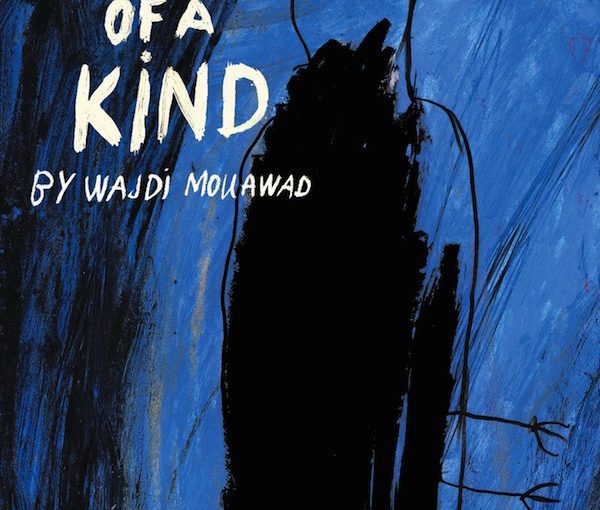
In the play Birds of a Kind by Wajdi Mouawad, the character of Eitan, injured in a terrorist attack in Jerusalem, lies in a coma. As his estranged parents and his grandmother hope for his recovery, they bitterly dig ever deeper into their familial dysfunction. At one point, the doctor tells them about Eitan, “What matters is the voices of those dear to him. His parents, his friends.”

His father responds, “His friends are in Berlin.” His mother, “Or New York.” His grandmother, “But his fiancée is here.” (The Palestinian fiancée that his parents cannot fathom and regarding whom they are nasty, based on a mix of racism, fear, guilt, concern over their own identity, secrets they have kept and more.) The doctor tells the trio, “The stronger the emotional attachment, the quicker the brain responds. We reconstruct ourselves through affection.” Godspeed to Eitan, then.

Birds of a Kind is a fascinating, if somewhat predictable, story and Mouawad’s exposition of complex and hyper-relevant topics, such as group identity versus individual choice, is nuanced and poetic; he uses language beautifully. It is no wonder that Montreal-based translator Linda Gaboriau earned the play its 2019 Governor General’s Literary Award for translation (from French to English).

Also faring well in last year’s awards was Calgary writer Naomi K. Lewis, whose Tiny Lights for Travellers was a finalist in the non-fiction category of the prize, which is funded and administered by the Canada Council for the Arts.

image - Tiny Lights for Travellers book coverLewis is extremely candid and self-critical in this travel memoir. Readers learn about her family, her struggle with developmental topographical disorientation (which means she can’t envision a map in her head and, therefore, often gets lost), the complicated messages about Judaism she received growing up, her insecurities about being Jewish (including a botched nose job when she was a teen) and her failed marriage, among other things. We follow her on her literal and metaphorical journeys to self-discovery, -understanding and -acceptance, as her personal story is interwoven with her retracing of the route her grandfather took in 1942 to escape from Nazi-occupied Netherlands to southern France, from where he then traveled through Spain and Portugal to get to London, England.

While Tiny Lights for Travellers includes excerpts from Lewis’s grandfather’s journal of his escape, it is mostly about Lewis and her exploration of identity, family history and the Holocaust. As Lewis notes well into her book, “the journal seemed a tease, so withholding, the anomalous 30-page confession of someone who otherwise lived inside his own experience with no desire to make himself known to anyone.”

Lewis may have set out with a goal of learning more about her grandfather, of connecting to her past, “trying to find what made me,” but there are not clear links from the past to the present. The journey is revealing in the end, just not about her grandfather or exactly how she came to be who she now is, but rather in coming to terms with who that person is.

Format ImagePosted on April 3, 2020April 2, 2020Author Cynthia RamsayCategories BooksTags #ShowUpForShabbat, Birds of a Kind, Governor General’s Literary Award, Israeli-Palestinian conflict, Judaism, literature, memoir, Naomi K. Lewis, politics, Tiny Lights for Travellers, Wajdi Mouawad
Writing for Israel at UN

Writing for Israel at UN

Aviva Klompas recently published the book Speaking for Israel: A Speechwriter Battles Anti-Israel Opinions at the United Nations. (photo from Aviva Klompas)

Aviva Klompas came close to writing a declaration of war. In early 2013, after an Israeli post was fired upon by Syria – one of a number of attacks – Klompas was tasked with penning a condemnation that would be submitted to the United Nations.

Still relatively new as director of speechwriting for Israel’s Permanent Mission to the UN in New York City, she recalled the criticism she received: “Be more direct. Be more assertive about things,” she was told. “I thought to myself, ‘channel outrage.’ I tried to do so. I wrote this very stern letter, and I took it to the ambassador to review.”

Klompas, who spoke with the Independent recently, said she then learned the art of diplomacy, and how words might set off an international firestorm.

“To be clear,” Ambassador Ron Prosor, then Israel’s permanent representative to the UN, told her, “you don’t have any authority to declare war.” And it was off to a rewrite.

Thankfully, there weren’t any other close calls, but there are many other fascinating stories – many of which Klompas has brought to light in Speaking for Israel: A Speechwriter Battles Anti-Israel Opinions at the United Nations (Skyhorse, 2019). The book is a candid examination of how the Israeli delegation – and Israel as a whole – is perceived and treated in the international body.

image - Speaking for Israel book coverDuring Klompas’s time at the UN, several major events occurred, including but not limited to the Iran deal, countless anti-Israel resolutions, Palestinians’ bid to join the International Criminal Court, the kidnapping and murder of three Israeli teenagers, and 50 days of war between Israel and Hamas in Gaza. She wrote the book, she said, to show the tireless work of those who advocate for the Jewish state and who rarely get their due.

“It always feels like it is an uphill battle by the nature of the bias at the UN,” she said. “There are people who show up every single day and never say, ‘Why are we doing this? We should leave the UN.’ I’ve never had a single colleague make that suggestion. They came to work and did the job. I think, it’s a little bit my story, but it’s really our story.”

Klompas was director of speechwriting from 2013 to 2015.

“It’s very few people that make the headlines – the ambassador, maybe the deputy ambassador, maybe the foreign minister – but what about everyone else that is doing it day in and day out?” she asked.

About her work, the Toronto native said it advanced Israel’s policies and informed public opinion. Being successful at it, she said, required overcoming some challenges. For one, there was a culture clash.

“Certainly, Israelis are much more direct in their feedback, which is for better or for worse. At first, it is startling, but then you get to understand that it’s not personal,” she said.

Learning how to write in someone else’s voice was difficult, too. Prosor has “a very distinct style,” she said, describing him as “extremely articulate, funny, charming and intelligent. To be able to write for somebody like that takes time.”

In addition, Prosor took a different approach to diplomacy, when “so many speeches can be dry and not entirely lively,” said Klompas. “He’d be all too happy to break out into song in the middle of a speech, whether it be a song about African nations, which got him a standing ovation from some of the African nations in the General Assembly, [or] he would sing John Lennon’s ‘Imagine.’ In a speech about women, he sang Aretha Franklin’s ‘Respect.’”

Klompas gave him the nickname “the Singing Diplomat.”

“Ambassador Prosor felt it was very important to be heard and, to be heard, you have to be different,” she explained. “He knew he had to capture attention to get people to listen.”

In the beginning, she would have to write up to 20 drafts of a speech before she got a sense of the ambassador’s voice and style. Sometimes, there wasn’t much time to tweak.

“It’s pretty stressful,” she said. “You can get a phone call any time of day or night, weekend, and be told the Security Council is convening a special session, come down to the office, we have to get writing. You could have a couple of days’ notice or a couple of hours’ notice. And emergency sessions tend to get a lot of publicity.”

Klompas, who is now associate vice-president of Israel and global Jewish citizenship at Combined Jewish Philanthropies in Boston, said there were poignant takeaways from her job as a speechwriter.

“You can’t be easily deterred by situations that seem unfair or unreasonable. You need a courage of conviction to deflect the constant attacks and brush aside the fact that systems and processes aren’t as simple as one might hope,” she said. “I’d say that my experience gave me a greater sense of what happens behind the scenes in international diplomacy, and the ways in which Israel is working to find equality in the family of nations.”

Dave Gordon is a Toronto-based freelance writer whose work has appeared in more than 100 publications around the world.

Format ImagePosted on March 27, 2020March 26, 2020Author Dave GordonCategories BooksTags Aviva Klompas, diplomacy, Israel, politics, Ron Prosor, UN, United Nations

We’re all in this together

Does it seem like people are behaving more kindly this week? Maybe it’s the sunshine. But maybe it’s the realization, amid all the alarming news and concerns over the spread of coronavirus, that we are all, truly, in this together.

We live in particular times that may be defined – especially as exemplified by some political leaders and their followers – as uncharitable, xenophobic, chauvinistic, mean-spirited and self-interested. These attitudes have been demonstrated, among other ways, in the attitudes of many people toward migrants from other places. These ideas trickle down to the way we treat one another – in traffic, in online interactions, in schools and workplaces, in voting – behaving in ways that take into consideration only (or mostly) our own well-being at the expense of the well-being of others. There are magnificent exceptions, of course, everyday acts of kindness and gestures of humanity great and small. But our age, it can probably be agreed, includes a lot of pettiness, intolerance and plain old snark.

Our parents or grandparents understood the meaning and necessity of sacrifice for the greater good. The communal effort during the Second World War, on the home front and among those serving, was a generationally defining undertaking. While wars, sadly, have continued, in our corner of the world, the burden has fallen on an increasingly smaller number of people – those families with members in the service. But, for at least a generation of North Americans, we have not been called upon for an unavoidable collective sacrifice for the greater good. Again, this is not to say that many people are not sacrificing for the greater good – individuals are devoting themselves to causes greater than themselves, including climate change, but they are doing so by choice. They may be driven by desperation, fear, environmental justice or other motivations, certainly, but, ultimately, it is voluntary.

Then along comes a virus with apparently incalculable potential to cause illness and death and we realize that we are not so separate after all. While they have resisted on issues like climate change, governments worldwide have stepped up (some of them more slowly and irresponsibly than others) and taken seriously the science that predicts grave consequences if we do not take urgent actions now. And individuals, in the first days of what will be an unprecedented period of unknown duration, appear surprisingly amenable to following government-issued restrictions on behaviour for the hope of long-term health, not only for themselves but for those who are more vulnerable due to age or underlying health conditions.

There is nothing good about a global pandemic. But good things happen when people act in unity to advance collective well-being. Individuals and groups have responded with astonishing immediacy when called upon to act. Places of public meeting, including restaurants and cafés, have faced the painful but unavoidable truth that they have to temporarily change their service model. This will have untold economic and social impacts as staff are displaced, with concentric circles as these workers lose purchasing power and these realities ripple through the economy, already suffering multiple unknowns and slowdowns.

In our community, synagogues and communal organizations have adopted stringent and unprecedented measures, many canceling live services and opting for alternative venues like online learning.

We witness the immediacy of these factors’ economic ripples. As our community cancels public events, advertisements are understandably pulled from our newspaper. As a result, we have made the choice to cancel an additional issue next month, and not publish for two weeks, April 10 and 17, rather than the scheduled one-week hiatus. We will have a healthy Passover issue on April 3 and we urge you to support our work and celebrate the holiday by considering advertising or inserting a greeting message in that issue or in the ones resuming April 24 and after.

In the meantime, as we come together to confront this very serious challenge, we are reminded, as Temple Sholom’s Rabbi Dan Moskovitz writes in this week’s issue writes in this week’s issue, we do not do so as Canadians or Chinese or Italians or Israelis. We are people living in different places who face the same pathogens and the same reality.

In Jewish tradition, the value of pikuach nefesh, of saving a life, overrides almost every other consideration. Among other things, this suggests that we should view our current situation through a slightly altered lens. While all of us should be doing everything we are advised to avoid getting the virus, we should be doing so not only, perhaps not primarily, for our own health, but in order to prevent us transmitting it to another person. For many of us who are younger or do not have underlying health concerns, COVID-19 could be a very unpleasant inconvenience. For others we know and love, it could be far more serious.

The top advice we have received is to wash hands with soap frequently and thoroughly, and also to stay home to avoid physical contact as much as possible. Some people are suggesting we treat these days like Shabbat. Spend time with family. Read books. Take a walk. Engage in passive activities. Turn off electronics for a time to avoid the noise of the world which, at this time, is particularly loud.

And be kind to one another. If you know of a senior or other person whose health could be endangered by going out, do their shopping. See what else they might need. Call your family and friends. Set up a virtual dinner party or a play date for your kids. Since you’re not spending money on restaurants and theatre, consider donating to charity and arts organizations.

This is all good advice. But we suspect, given some unscientific observations of kindness and communal care in the last few days, that most of us already know what to do.

For more information and latest updates from Canada’s public health authorities: canada.ca/en/public-health/services/diseases/coronavirus-disease-covid-19.html.

Posted on March 20, 2020March 21, 2020Author The Editorial BoardCategories From the JITags coronavirus, culture, health, lifestyle, politics

United by challenges

After two inconclusive elections in Israel, incumbent Prime Minister Binyamin Netanyahu appears certain to form a government after elections Monday, ending an unprecedented period of political instability.

Whether Netanyahu himself, under indictment and slated for a trial this month on corruption charges, will remain prime minister for long, the right-wing is certainly poised to govern for the near future. Israel’s Supreme Court explicitly refused to offer an opinion on whether a convicted prime minister could continue in office, a question that may now go from theoretical to very real.

Jews in the Diaspora, including a great many here in British Columbia, follow politics in Israel casually or closely, as many of us do the machinations of American politics that are also roiling this week. Canadian politics and those in British Columbia, around issues of environmental policy, disruptive protests and a host of other topics, have people here at home fired up about politics even without elections on the near horizon.

While there are countless issues and contests vying for our attention, there is also an undercurrent of less immediate yet possibly more ominous peril facing our democracies. Threats of external influence from bad actors, like a repetition of the Russian interference in U.S. elections in 2016, are cause for serious concern. The rise of domestic extremism – in mainstream politics as well as in the form of underground and sometimes violent movements – also deserves close attention. So does apathy.

All of these influences and attitudes present dangers to our democracies – in Canada, in the United States, in Europe and Israel. Newer democracies in Central and Eastern Europe have demonstrated how fragile the tissue of open, accountable and responsive government can be. It is alarming to witness the path that Hungary, Russia, Turkey and Poland have been on recently. Our democracies – in the United States and Canada, even Israel – may be somewhat older, but these countries are still warnings of how things that we take for granted can be snatched away. Democracy is less an enormous oak with deep and broad roots than it is a delicate flower that requires nurturing and constant attention.

For this reason, when there are government policies or election outcomes with which we disagree, we should remind ourselves that democracy may be the ultimate win-some-lose-some proposition and recommit ourselves to respect for the institutions of our democracy, not just when they serve our interests but even – especially – when they deliver outcomes that we find disagreeable. At the same time, we should be identifying and calling out every instance when a political leader or movement threatens the institutions or norms of our democracy.

Amid all of these political dramas, very daunting situations that recognize no geographic or ideological boundaries are challenging each and every one of us. This week, again, coronavirus is spreading and causing panic. Meanwhile, the dangers posed by climate change escalate every day. The economic impacts of these global concerns are blaring across the business pages: pandemic fears are causing wild stock market fluctuations, while the measures necessary to alter the course of climate change demand fundamental economic shifts. All of these threaten to exacerbate existing inequalities locally, nationally and internationally, threatening our morality and the stability of our world.

In the face of existential issues like these, the differences in our ideologies in countries like Canada, Israel or the United States fade into shades of grey. This is perhaps optimistic: that the differences between us are minimal in comparison to the difficulties we face together. That should motivate us to look beyond or to bridge our differences and recognize both the humanity in those with whom we disagree and the challenges to humankind that we must overcome together or succumb to apart.

Posted on March 6, 2020March 4, 2020Author The Editorial BoardCategories From the JITags Canada, coronavirus, democracy, economics, Israel, Netanyahu, politics, United States

Happy Purim 2020!!

image - JI Purim Spoof 2020

Posted on March 6, 2020March 6, 2020Author The Editorial BoardCategories Celebrating the HolidaysTags clickbait, politics, Purim, satire
From baseball player to spy

From baseball player to spy

Moe Berg as a catcher during his time in Major League Baseball. (photo from Irwin Berg)

Near the end of John Ford’s essential 1962 western, The Man Who Shot Liberty Valance, a newspaper editor coins the credo, “When the legend becomes fact, print the legend.”

The fact, as we all know, is that Americans are all-star myth-makers and myth-lovers. Many American Jewish boys caught the bug via the improbable immigrant saga of Moe Berg, a paradoxically brilliant professional athlete who led a secret second life as a spy for the U.S. government. How much of Berg’s story is true, though, and how much was legend passed among kvelling kids in the schoolyard?

Aviva Kempner, who hit a home run with her 1998 documentary about another Jewish ballplayer, The Life and Times of Hank Greenberg, was the obvious, natural and best-equipped filmmaker to take on the mid-20th-century mysteries at the heart of Berg’s minor celebrity.

The Spy Behind Home Plate, which screens at the Vancouver Jewish Film Festival March 8 at the Rothstein Theatre, is a testament to Kempner’s determination and persistence. Chock full of dozens of contemporary and archival interviews, and packed with rare photos and even rarer film footage, The Spy Behind Home Plate is a definitive record of Berg’s achievements.

Although it’s an effective way to impart information, the dogged, dog-eared marriage of talking heads, vintage visuals and period music can’t fully evoke the shadowy stealth and deadly risks of Berg’s wartime activities. Hamstrung by her budget, Kempner wasn’t able to stage reenactments or employ other strategies to illustrate the unfilmed and unrecorded liaisons and conversations that Berg had in Europe in 1944 and 1945. The Spy Behind Home Plate, therefore, is like the steady everyday player who notches the occasional three-hit game but never achieves the transcendent grace and power of a superstar.

Morris (Moe) Berg, international man of mystery, was born in New York in 1902. His father had fled a Ukrainian shtetl for the Lower East Side, where he started a laundry before buying a drugstore in Newark.

The family moved to New Jersey when Moe was a boy, and he grew into an excellent student and a terrific baseball player. After a year at New York University, he transferred to Princeton, where he was a star shortstop (back when the Ivy League was the top, if not the only, sports conference) and graduated Phi Beta Kappa.

While his older brother Sam fulfilled Dad’s wishes and went to medical school, Moe signed a contract to play pro ball. He acceded to his father’s demands up to a point by attending Columbia Law School in the off-seasons, earning his degree and passing the New York bar in 1929.

It was a false bargain: Moe despised the idea of being a lawyer, while Bernard Berg never accepted a baseball career as a legitimate pursuit. In fact, the old man refused to go to the park and see his son play.

From an athletics standpoint, his dad wasn’t missing much. A knee injury early in Moe’s career, compounded by primitive diagnosis and treatment, severely slowed him. Over 15 years as a backup catcher, Berg notched exactly 441 hits in 663 games.

What set Moe apart was his charm, charisma and erudition. He studied Sanskrit at the Sorbonne one off-season, and read multiple newspapers every day. When he went to Japan on a barnstorming tour with Babe Ruth and other Major League stars, he learned Japanese.

Berg carried a camera everywhere on that trip, and made a point of checking out the roof of a tall Tokyo hotel in order to shoot a 360-degree panorama of the city. It’s not altogether clear if he was already working officially (albeit surreptitiously) for the U.S. government, but his film was of significant help when the United States went to war with Japan after Pearl Harbor.

In fact, in early 1942, Berg recorded a radio segment in Japanese that was broadcast in Japan and drew on the goodwill he’d accumulated over two prewar visits.

photo - Moe Berg in a military jeep in California with his brother Sam during the war, July 1942
Moe Berg in a military jeep in California with his brother Sam during the war, July 1942. (photo from Irwin Berg)

Berg had been sent on research missions to South America, but that was too far from the real action. It appears he found a home in 1943 in the newly created Office of Strategic Services (OSS), the intelligence branch that evolved into the Central Intelligence Agency after the war.

His primary and crucial assignment was to ascertain how close the Germans were to having a nuclear weapon, and to sway Italian scientists from the Axis to the Allies. To successfully carry off his cover story, Berg was briefed on the science and strategy of the Manhattan Project.

One biographer recounts, “The OSS had given the Manhattan Project its own spy, in effect, its own field agent to pursue questions of interest wherever he could in Europe. And that was Moe Berg.”

Kempner accords a great deal of screen time to this episode in Berg’s clandestine career as a professional spook. It’s a great story, in which the solidly built former catcher is assigned to attend a conference in Switzerland and determine – from the keynote speech by a visiting German scientist, Werner Heisenberg – if the Nazis are within reach of perfecting the bomb.

Berg carries a pistol to the symposium, with orders to use it on Heisenberg if he deems it necessary. It would be churlish of me to recount the outcome of Berg’s suicide mission except to say that the catcher-turned-spy who spoke seven languages lived unhappily ever after the war.

Kempner leaves us wanting to know more about Berg’s later years. By the weirdest of coincidences, Sam Berg headed a group of doctors sent to Nagasaki to study the effects of radiation poisoning. Incredibly, Moe and Sam never knew about each other’s exploits. This lone fact reveals that there’s still more to know about Moe Berg’s story.

The Vancouver Jewish Film Festival runs until March 8. For tickets and the movie schedule, visit vjff.org.

Michael Fox is a writer and film critic living in San Francisco.

Format ImagePosted on February 28, 2020February 26, 2020Author Michael FoxCategories TV & FilmTags baseball, history, Manhattan Project, Moe Berg, nuclear, politics, Second World War, Vancouver Jewish Film Festival, VJFF

Posts pagination

Previous page Page 1 … Page 23 Page 24 Page 25 … Page 36 Next page
Proudly powered by WordPress