Yad Vashem holds an almost sacred place in the Jewish world. The foremost repository of materials relating to the Holocaust, and Israel’s official memorial to the victims of Nazism, the centre is practically an obligatory destination for visiting diplomats and foreign dignitaries. It is a solemn place dedicated to the terrible past, but with an explicit vision for a future without hatred and genocide.
Yad Vashem is rightly focused on the Jewish particularity of the Shoah. We take for granted the logic of Yad Vashem being located in Jerusalem. The capital of Israel and, spiritually, of the Jewish people seems a logical place to remember this massive cataclysm in Jewish history. But it commemorates a history that took place thousands of kilometres away, in Europe. Its presence in the Jewish state is itself a statement about Jewish particularism. But this does not erase the universal lessons Yad Vashem advances.
Since its founding in 1953, it has been a model for the world in commemorating and educating about the worst chapters in human history. The events of the 20th century that necessitated the invention of the word “genocide” did not end with the Holocaust. Genocides have occurred since 1945 – and before. Educators and others who strive to preserve and transmit these histories and their lessons struggle over the balance between respecting the very specific characteristics of the Holocaust, for example, with the broader messages for all humanity. At a time when antisemitism is experiencing a resurgence, it is essential that the role of Jew-hatred be addressed and confronted, at least in part with the recent past as a warning for the dangers of complacency.
While the struggle between universality and particularism is challenging, all can probably agree that Yad Vashem stands as a monument to human rights and the dignity of all people – and as a lesson to those in societies where those values are compromised. At the same time, the existence and focus of Yad Vashem safeguards the particular and monumental horrors of the genocide against the Jews.
This is why there is rightful concern over the proposed appointment of former brigadier general Effi Eitam as head of Yad Vashem. His proponents – including Prime Minister Binyamin Netanyahu, who nominated him for the position – contend that Eitam’s career has been spent defending the Jewish state. And among the lessons many people take from the exhibits of Yad Vashem is the necessity of a Jewish state as a bulwark against a world that has yet to cure itself of antisemitism.
But Eitam’s military record is more than troubling, and this is the main reason for concerns about his appointment. During the First Intifada, he brutally instructed his troops to break the bones of a 21-year-old Palestinian prisoner, Ayyad Aqel. The soldiers beat the young man to death. Four of Eitam’s soldiers were court-martialed and the Military Advocate General reprimanded Eitam and recommended he never be promoted. (He was.) In addition to his military career, he served two terms in the Knesset representing various religious parties, and held several cabinet portfolios.
Beyond Eitam’s record of heinous action is a record of deeply concerning and racist ideas. He has referred to Arab Israelis as a “cancer” and promoted ethnic cleansing of West Bank Palestinians: “We’ll have to expel the overwhelming majority of West Bank Arabs from here and remove Israeli Arabs from political system,” he said in 2006.
Referring to human beings with terms like “cancer” is precisely the sort of dehumanization that can be a precondition to genocide. In any society – including one as open as Israel, where diverse views and expressions are the norm – these statements must preclude someone from a role like head of the world’s foremost research centre about, and memorial to, the Shoah. Eitam’s military service – he was part of the raid on Entebbe, among other things – can be seen as evidence that a strong Israel is the best defence for the Jewish people in a world capable of genocide. But Eitam’s statements cannot be justified from the mouth of one who seeks to advance the lessons, particular or universal, that Yad Vashem is expected to convey.
The nomination is threatening to create yet another schism in the government, as Netanyahu’s coalition partner Benny Gantz opposes Eitam’s appointment. Ideally, a more suitable leader will be found for this important role, one who stands as a defender of the sanctity of the Shoah and its lessons for humanity.
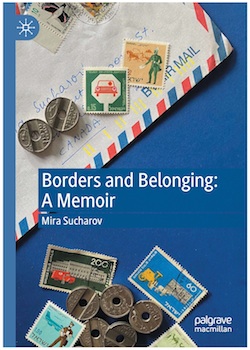
Many Jewish Independent readers will be familiar with the name Mira Sucharov. Whenever the paper ran her op-eds, at least one passionate letter to the editor could be expected. Agree with her or not on the topic of the Israeli-Palestinian conflict, she makes you think. And her latest book, Borders and Belonging: A Memoir, offers insight into how her mind works and how she has come to form her continually evolving ideas on the controversial subject.
But it’s not all politics and there’s no academic speak, though Sucharov is well-trained and has much experience in these areas – she is a professor in Carleton University’s department of political science and is University Chair of Teaching Innovations; she has developed courses for the university and has won teaching awards; she has multiple writing and editing credits. Borders and Belonging explores Sucharov’s political views and their development, but gives more time to childhood experiences, both happy and anxiety-ridden, including being a child of divorce, past romantic crushes, tales from Jewish summer camp, insights gained from living on a kibbutz, and more. It is an at-times cringeworthingly open coming-of-age story.
“I gave my dad and my mom parts to read, and I checked the scene about my daughter with her, as I did want at least their tacit blessing that this memoir wasn’t going to cause pain,” said Sucharov when the Independent asked about her candidness. “As for other family members, I basically let the chips fall where they may. I did make an effort to generally not try to ‘score points’ regarding other family members, for the most part. There’s a maxim in writing creative non-fiction (memoir), one that my writing mentor emphasized to me as well: write from scars, not wounds. Not only did I not try to actively make my family and friends appear in a bad light, I tried, most of the time anyway, to spotlight my own foibles and vulnerabilities. I think it makes for a more interesting read anyway. No one wants to read a memoir written by a narrator who is defensive and who is unaware of her own flaws.”
And Sucharov reveals many of her perceived flaws. She has dealt with high levels of anxiety her whole life, it seems, and, in many an instance, her stomach flips or lurches from feelings of rejection, excitement over a boy, worry over being among kids she doesn’t know, pleasure at being in beautiful surroundings, or tension at being confronted by someone who disagrees with her.
In addition to the sometimes-brutal self-assessment, readers will also be struck by Sucharov’s memory. The details – books read, games played, reimagined conversations, etc. – are noteworthy. And Sucharov did take notes, she said. She kept a journal for a couple of summers when she was a camp counselor and when she was in Israel in the early 1990s. But, she said, “I remember a lot. For some childhood scenes, I juxtaposed memories of objects I knew I owned (specific toys, games, clothing and books) with particular events I recall occurring. So, for example, when ‘Leah’ sleeps over, I don’t recall if I read Roald Dahl on that particular night, but I do know that I read lots of Roald Dahl at that point in my life, so I inserted it as a period detail.
“Same with the Archie comic being read in the cabin while I inadvertently undress in front of a boy, causing me great embarrassment. I don’t know for certain whether we were reading Archie comics on that particular day, but I do know that we read Archie comics during that time in our life. Adding these details is a way of setting scene and drawing the reader into a world, rather than writing, ‘we used to read Archie comics.’ I treasured my toys, books and games. I’m still trying to forgive my mom for selling my remote-controlled R2-D2 robot toy at a garage sale for five bucks one summer, while I was away at camp.”
By way of another example, Sucharov said, “As for the separation scene that takes place before I’ve even turned 4: my own memory is that my parents asked me to pick toys to place in one house and in another. Recently, though, my dad gave me a different account: he said that he and my mom took me into their bed, placed me between them and broke the news. I do not recall this. So, instead, I used the memory that I did have, even if it had been partly of my own creation. In that case, it may not have been totally accurate, but it succeeds at capturing the emotional dynamics of the event – me having to cope with my parents’ separation, which was traumatic.”
Other aspects, such as exactly which scary Disney movie she watched at her dad’s, were verified with one of her “all-time favourite tools: IMDb!” And some instances she recounts are composites of multiple moments.
Sucharov has no regrets about laying so much out there publicly. “I’m a firm believer in modeling vulnerability,” she said.
“In writing and in teaching, it creates a crucial connection between writer or professor/instructor and reader or student,” she added. “By introducing our backstage selves, it can help others better learn how to soar. It is an ethic of generosity.”
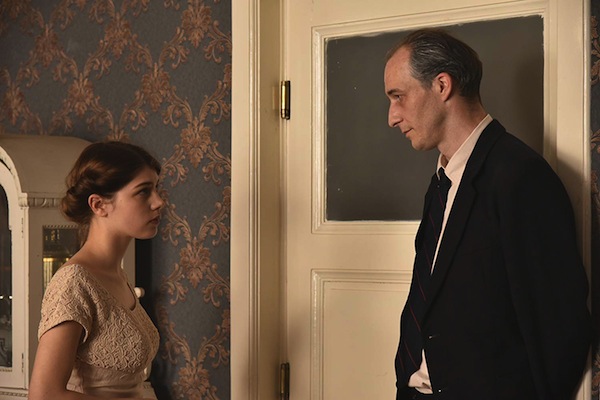
Abigél Szoke and Károly Hajduk in the film Those Who Remained. (photo from Menemsha Films)
The Hungarian movie Those Who Remained has been making the rounds at international film festivals, including, in recent weeks, the Victoria International Jewish Film Festival. And perhaps no other film at this year’s VIJFF, which contained six features and one short, generated as much discussion afterwards.
“In its purest form, Those Who Remained represents near-perfect film composition, entailing exceptional directing, editing, pacing, acting and cinematography. A film of this calibre only comes along every few years,” said Farley Cates, a committee and jury member of this year’s VIJFF.
“This film was selected for its ability to leave such a strong impression on the viewer, pondering its many layers and facets from a psychological and geopolitical perspective. This film is like a wondrous painting in which the longer you look at it, the more you see happening,” added Cates, who will serve as co-director of the festival in 2021.
The film takes place in Budapest during the period between the end of the Second World War and the 1956 Hungarian Revolution. While surviving Hungarian Jews did go to Israel and elsewhere, a large number stayed in their homeland. The Jewish population of Hungary today is estimated to be well over 100,000, the vast majority of whom live in Budapest.
The postwar period for Jews who remained in Hungary was difficult. An Orwellian state of affairs had commenced: people were questioned by the police in the middle of the night; colleagues reported on other colleagues. Amid this upheaval in Hungarian society, the two principal characters in the film – Aldo, a middle-aged doctor, and Klara, a teenage girl – deal with the trauma they experienced during the Holocaust.
Abigél Szoke, who plays Klara, was selected by Variety as one of the “10 Europeans to watch” in 2020. The magazine calls her a “revelation”: “She makes Klara’s energy, pain and smarts palpable, all the while being touchingly tuned to the emotional shadings of Aldo.”
The relationship between Aldo (played by Károly Hajduk) and Klara never develops into anything scandalous, though some of the peripheral characters in the film perceive it to be so. Despite Klara’s advances, Aldo does not allow the relationship to become sexual.
The film is a tale of survival, depicting two people’s attempts to get on with the normal, sometimes banal tasks of everyday life within the shadow of the unspeakable atrocities they witnessed and experienced only a very short time before.
Repressed emotions among survivors was a central theme to the VIJFF panel discussion after the film. Speakers included Budapest-born survivor Adrienne Carter, University of Victoria professor Charlotte Schallié, psychologist and member of the Victoria Shoah Project Robert Oppenheimer and music professor Dániel Péter Biró of the University of Bergen in Norway. Among other things, they discussed the common tendency of many survivors to refuse to talk about the events of the camps and the persecution afterwards, just as, in the film, Aldo refuses to say anything about the loss of his wife and children.
What is interesting, too, about this movie, the panelists noted, is that it was made in a Hungary led by Viktor Orban, a populist, nationalist and authoritarian leader who has presided over the country in an undemocratic fashion for the past 10 years. In fact, Hungary has produced a number of films set in the period around the war recently, including 1945 (2017) and Son of Saul, which was selected as the best foreign language film at the 2015 Academy Awards.
Orban has displayed a penchant for playing up the antisemitic caricature of Jews as the power brokers of the world stage. A popular target of his has been 90-year-old Hungarian-born financier George Soros, a regular figure of derision among right-wing groups in North America, as well. In 2017, Orban, who ironically received a scholarship from the Soros Foundation to study at Oxford in the late 1980s, plastered billboards across the country in an anti-migrant campaign featuring a smiling Soros that read “let’s not let Soros laugh in the end.”
Sam Margolishas written for the Globe and Mail, the National Post, UPI and MSNBC.
***
Note: This article has been amended to reflect the correct name of the film festival. It is the Victoria International Jewish Film Festival.
Diabetes Canada named Gerri Klein as Diabetes Nurse Educator of the Year, 2020, citing Klein’s dedication and passion for her work. For three years, rain or shine, she led a noontime Walk the Walk program for patients living with diabetes; she often makes home visits to vulnerable seniors afflicted by the condition and has accompanied patients to smoking cessation clinics, psychologist and psychiatrist visits, as well as support meetings such as Alcoholics Anonymous and Al-Anon visits.
* * *
The board of directors of the Kehila Society of Richmond has announced the appointment of its new political liaison, Zach Segal, effective this month.
Segal grew up in Richmond, attending Richmond Jewish Day School and Steveston High School. He then studied political science at the University of British Columbia and the University of London.
Following university, Segal worked in Ottawa for four years as a political advisor under the last Conservative government. Today, he can be found working at Vancouver-based Canada Mortgage and Housing Corp.
As a strong advocate for community involvement among Jewish youth, Segal has spoken to schools and Jewish youth organizations about political activism and community involvement. He and his family have a long history in the Lower Mainland and within British Columbia’s Jewish community, dating back to his great-grandparents. He is an active member of the Jewish community and a longtime member and volunteer with CIJA, CJPAC and a variety of other outreach Jewish community organizations.
The board looks forward to Segal assisting in the continued growth of Kehila’s Richmond Jewish community and the community at large. He is a passionate and strong advocate who is ready to roll up his sleeves to make a real difference.
For more information, contact the Kehila office at 604-241-9270.
It has been a particularly reflective and momentous week. The U.S. elected Joe Biden as its 46th president and Kamala Harris as vice-president, the first Black woman and first woman of Asian and Indian descent elected to that high office. Around the world, there were nearly audible sighs of relief and cries of jubilation as the count trickled in and it became clear that president-elect Biden had cleared the 270 Electoral College threshold, even as the counting of ballots continues and results are not certified until early in December. More solemnly, this week was the commemoration of the 82nd anniversary of Kristallnacht and of Remembrance Day. And, right at the dawn of this emotional week, we learned of the passing of Rabbi Lord Jonathan Sacks. Britain’s former chief rabbi, Sacks died of cancer on Shabbat at age 72.
Formally called chief rabbi of the United Hebrew Congregations of the Commonwealth, Sacks held the role from 1991 to 2013, during which time his scholarship in philosophy helped him elucidate Jewish theology to general audiences as a regular guest on BBC Radio. He was admired and his death lamented by leading figures in British society, not least the heir apparent to the throne, Prince Charles. He was good friends with now-retired Anglican bishop George Carey, who was the head of the Church of England, strengthening interfaith relations.
Sacks’s time in leadership was not without controversy. He has been viewed by some as too accommodating of orthodoxy and not adequately inclusive of progressive or liberal strains of Judaism. Sacks skipped the 1996 funeral of Rabbi Hugo Gryn, the leading figure in Reform Judaism, drawing rebukes from liberals. In contrast, a book Sacks authored, The Dignity of Difference, implied that all religions and streams therein are equally valid, a thesis that was deemed too ecumenical by some British Orthodox Jews. One rabbi accused him of “heresy.”
In other words, Sacks leaves behind a mixed legacy, though few among us in this generation have left such a lasting mark on contemporary Judaism. The sort of centralized religious leadership that British Jewry and others in Europe have is unfamiliar to North American Jews. But anyone in a position of responsibility in the Jewish community knows the perils of presuming to speak on behalf of all – or most – Jews. Anyone in a job like Sacks’s would draw admirers and detractors. Chief rabbi is, of course, not a political role, but it must be a profoundly political one nonetheless, to elicit an accusation of heresy.
The concept of heresy seems to have seeped from the theological into the political realm in recent years. Fanaticism and extreme loyalty have always played a part in politics. But, in the highly polarized situation we see in the United States and many other places, differences of opinion are magnified into civilizational, even existential, divisions. This certainly seemed to be the case in the U.S. elections. Not everyone likes the incumbent President Donald Trump but, to paraphrase a beer commercial, those who like him like him a lot. While Biden won the support of a vast majority of Jews, surveys suggest that somewhere between 20% and 30% of American Jews voted for Trump’s reelection, a higher vote for a Republican than in many of the last presidential elections. The vehemence of opinion on both sides – some decry Trump as antisemitic while others claim he is the most pro-Israel president ever – would be confusing to the proverbial Martian.
We are assimilating this news in a week where we reflect on the destruction of European Jewry in the Holocaust, the world wars, the bloody history of the 20th century and all the conflict and misery and bloodshed it wrought. The 21st century seems similarly full of divisions and conflicts. Political polarization in democratic countries, as well as growing authoritarian tendencies in several democracies, call for a response.
Biden ran as a unifying figure bent on restoring a sense of moderation and respect to public discourse. Whether one individual can alter the trajectory of a divided society will be seen as the president-elect navigates a narrowly divided House and Senate to shepherd his legislative vision into reality. The unexpected tightness of Republican-Democratic splits in both chambers may exacerbate his challenge. A small tail of far-left Democrats and of far-right Republicans could wag the dog that is their respective party. On the other hand, this challenge could present an opportunity, if there are those willing to fight for what is right and to compromise across the aisle when appropriate and necessary. Such a shift from the failure of bipartisanship in recent years would be monumental indeed. But it could effectively reduce the influence of extremes.
Perhaps what these disparate events illustrate is that conflict – from the cataclysmic to the mild awkwardness of politics at the Shabbat table – is innate to humans. But so is confronting conflict and difference intellectually and with open hearts. Seeking moderation and compromise has lost currency in the age of social media and 24/7 cable news. Nuance is blurred and enlightenment darkened by ideological certainty.
We should seek understanding wherever we might find it and avoid elevating mere mortals to unattainable standards or demonizing them beyond all reasonable recognition. In our spiritual and political realms, in our daily work and home life, we can all commit to some additional humility, to deeper listening and to finding wisdom wherever it might be, even in unexpected places.
It will take about two weeks to verify and count the mail-in ballots from Saturday’s B.C. provincial election. The province saw a 7,200% increase in voting by mail this year, a result of the pandemic and educational efforts to make people aware of what was perhaps the safest option for casting a ballot.
There is no doubt about the overall outcome. The New Democratic Party, under returning Premier John Horgan, won a majority government handily. The NDP increased its vote share in every part of the province and the opposition Liberals, under Andrew Wilkinson, who resigned in the aftermath, had its worst showing in almost three decades. The mail-in ballots will determine the outcome in a small number of close races, but it will not alter the big picture.
Some are complaining that two weeks is a long time for the elections branch to complete the process. However, we do not know the level of complexity involved in validating and counting the vast number of mailed votes. But it seems reasonable to take time to ensure such important work is done properly, rather than quickly.
What we should not lose sight of, regardless of what party we supported, is the small miracle of the election itself. Many or most of our ancestors came from places where free and fair elections followed by a peaceful and orderly transition of power were unfulfilled dreams. Startlingly, in what had been viewed globally as the bedrock model of democracy itself – the United States – we are bracing for one of the most uncertain moments in political history next Tuesday. Polls show that the incumbent president is headed for defeat. But polls were deeply wrong about this candidate four years ago. More importantly, there are concerns about his willingness to leave office if defeated – and even about potential intimidation of voters at the polls and violence in the aftermath of the election.
As Canadians, we should feel fortunate and grateful. As earthlings, we should wish and work for a world where all people are as free as we are to choose those who govern us and to do so with confidence, knowing that we will be physically safe and our elected officials will respect our choices.
The latest Arab country to normalize relations with Israel is Sudan. It is the third Arab country in recent months to initiate bilateral relations with the Jewish state – and only the fifth in history.
In addition to the practical realities of the new relationship, there is also something symbolic about the announcement of mutual relations. It was in Sudan’s capital, Khartoum, that the Arab League met after the 1967 war and issued the “three nos” – no peace with Israel, no recognition of Israel, no negotiations with it.
After trouncing its invading neighbours in six days of war, Israel extended an olive branch, offering land for peace. In exchange for the Arab world’s recognition of Israel and its right to exist, Israel would return the land it obtained in the war to Egypt and Jordan. The response was the triple negative. The occupation of the West Bank and Gaza Strip began that year and could have ended that year, but Arab states were more opposed to any recognition of a Jewish state than they were concerned with the fate of the land Israel occupied or the people who lived there.
The seemingly sudden about-face by, first, the United Arab Emirates, then Bahrain and now Sudan has as much to do with regional geopolitics as it does with any Arab admiration for Israel. There is also the fact of the U.S. election in the timing of these announcements, and other international financial and defence features of these deals that are less clear in intent. In history, all things happen for a range of reasons – the end of apartheid, the collapse of the Soviet bloc, for example – but these various inputs do not distract from or diminish the larger outcome.
More than a half-century after the Arab world said no, no, no, so far in this year we have heard yes, yes, yes. And the rumours now are that Saudi Arabia will follow soon. This would be the most potentially significant development yet in this regard, even as there should be major questions about allying with another despotic regime.
What’s true is that the opening of relations with Israel represents an end to the effective Palestinian veto over Arab relations with Israel. And the radical departure of Arab states from the diplomatic status quo will likely alter the position of Palestinian leaders, as they realize their diminished standing in the Arab world’s regional calculation. That could result in the most substantial change of all.
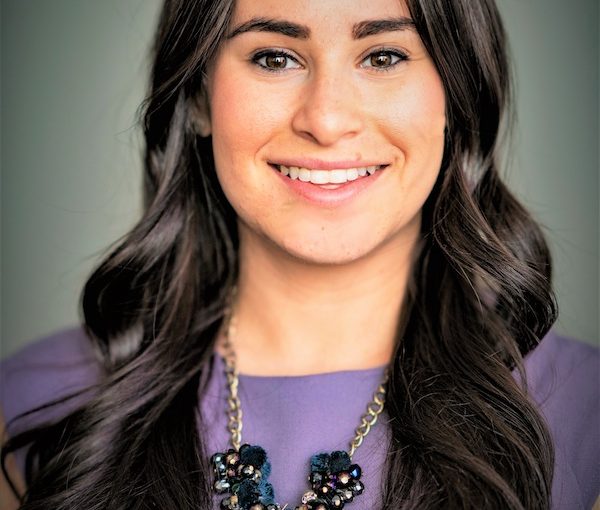
Rachael Segal is media spokesperson for the BC Liberals. (photo from BC Liberals)
Facing a campaign unlike any other, with shaking hands and kissing babies prohibited by social distancing protocols, all parties needed to reimagine how they would reach voters. Rachael Segal, media spokesperson for the BC Liberals, had to figure out how to get her party’s message to British Columbians.
“We can’t have a media bus, so, as the person responsible for media relations, how I connect with media now is very different than how I would do it in a normal campaign,” she said. “I’d be on the bus, I’d be with the leader.”
Instead, the leader is often driving himself to the modest-sized events that typify the 2020 campaign. Instead of facing a phalanx of TV cameras and radio mics, party leader
Andrew Wilkinson speaks to a pooled camera, with his message then shared among the media consortium. It’s an experience all parties are dealing with. But the leaders, as well as candidates in 87 ridings across the province, still have to communicate their positions.
“Obviously, Andrew still needs to get out there and get his message out there,” said Segal. “We’re making announcements daily, just like we would on a campaign normally, they’re just different.”
Wilkinson, a medical doctor as well as a lawyer, is particularly sensitive to the health risks and safety of his team, Segal said.
Segal, who grew up in Kerrisdale, is the official campaign spokesperson for the party during the election and is second-in-command at party headquarters when in non-campaign mode. As senior director of the party, her role is a loosely defined collection of responsibilities that she describes as “basically whatever hole is there, I try and fix it.”
One of her primary responsibilities is stakeholder relations, which means meeting with particular community groups and connecting them with the leader and other members of the legislature.
“Andrew and I have done Shabbat dinners, we’ve done Rosh Hashanah meals, we’ve done tons of Jewish community events,” Segal said by way of example. She also hosts the party’s podcast and started a young professional women’s group “to try to engage the 30-to-50-year-old women demographic, which is the largest swing demographic in British Columbia.”
Segal came to the role in April 2019. She already had a long resumé in education, politics and media.
She attended Vancouver Talmud Torah elementary and Magee high school and received her undergraduate degree at the University of Victoria, where she was the first president of the Jewish student organization when Hillel House opened there. She served as national president of the Canadian Federation of Jewish Students before graduating from UVic in 2005. She then went to the University of Leicester, in the United Kingdom, for a law degree, followed by a master of laws from Osgoode Hall, in Toronto.
She worked on Parliament Hill for Conservative MPs David Sweet and Scott Reid, as well as Senator Linda Frum, and was a senior policy advisor overseeing corrections and the parole board for then-minister of public safety Steven Blaney.
While studying in Toronto, Segal worked full time as an on-air legal and policy correspondent for Sun News, until that network shut down. She worked in criminal law and then civil litigation for a time but found it not her speed and returned to media, joining Toronto’s Bell Media radio station News Talk 1010. She returned to Vancouver in 2018 and covered as maternity leave replacement for the B.C. regional director of the Canadian Jewish Political Affairs Committee. She joined the BC Liberal party staff three days after that position ended.
“This election is really about who British Columbians can trust to lead them through economic recovery,” said Segal. “When we think about the ballot question, that’s really what British Columbians are voting on. Who do they trust to lead them through the next stage of this pandemic from an economic perspective? We have an incredible team who are all very experienced. We have former ministers, we have doctors, we have lawyers, we have just a really diverse and interesting team of very smart people.”
Given significant turnover – seven cabinet ministers have opted not to seek reelection – Segal questioned who would be on the frontbenches of a reelected NDP government.
“The question is, what does an NDP cabinet look like in the next government and do they have the bench strength to be the best party to lead this province economically?” she said.
Segal takes seriously her position as one of the few Jewish individuals on the campaign team.
“It’s a real privilege to be able to represent the community within this political sphere and it’s something I take very not lightly,” she said.
Of her job on the campaign and her slightly less hectic role the rest of the time, she added: “My job is pretty different, wild, fun. Every day is a new adventure. It’s pretty great. And we have such an incredible team, so they make it all even better.”
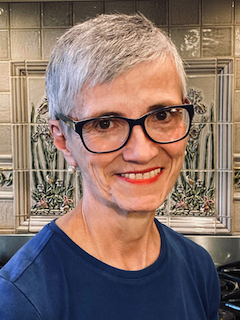
Maayan Kreitzman said the Green party knew it was getting the “full package” when they tapped her as their candidate in the provincial election for the riding of Vancouver-False Creek. There are schisms in the environmental movement between those who see value in direct action protests and those who endorse electoral politics. Kreitzman backs both.
Kreitzman is a leading member of the Vancouver chapter of Extinction Rebellion, a global movement that practises civil disobedience to draw attention to the climate and ecological crisis, she said, based on “a theory of change that learns from many movements in the past that have basically put their bodies in the way of injustice.” She cited as models the U.S. civil rights movement, the Indian independence movement and the suffragists.
The group shut down the Burrard Street Bridge last year and is currently involved, with other groups, in a camp in Burnaby that is physically blocking the construction of the TMX pipeline.
But Kreitzman has harsh words for the environmental movement and its limited impacts.
“The environmental movement over the last 30 years has won some battles but we’re obviously losing the war because the climate and ecological catastrophe continues unabated essentially,” she said.
While she believes in blockades, she also believes in ballots.
“I definitely believe in both,” she said. “I think when the Green party chose me as a candidate they knew that they were getting the full package. They were getting somebody who believes in direct action, who believes in doing things that are illegal when they are ethical and the right thing to do. There are other people in the Green party that believe that, too. [Former federal Green leader] Elizabeth May got arrested on Burnaby Mountain in 2018. I’m certainly not alone in that.”
Beyond the shortcomings of the environmental movement, she excoriated the political system’s status quo.
“It’s utterly failing. It’s not fit for purpose. It has not delivered the systemic changes to our economy that we need to see in order to actually have a sustainable life and future on this planet,” she said.
Above a range of policy topics she champions, Kreitzman wants to create a citizens’ assembly on climate and ecological justice – this parliament of ordinary people selected to reflect demography “would devolve power from elected government to a more representative and radically democratic form of government.”
“Citizens’ assemblies go through a very rigorous and well-facilitated deliberative process where they have access to experts and all the best information and then they are empowered to make either decisions or recommendations, depending how their terms of reference are set up,” she explained. “The citizens’ assemblies are able to make way better, faster and more radical decisions on issues that are totally intractable for elected politicians because elected politicians operate on such short cycles and they have such perverse incentives. It’s very hard and we’ve seen how totally incapable elected politicians around the world are of making the kinds of decisions that we need in order to survive on this planet.”
Kreitzman has been thrown into politics mere days after completion of her PhD in resources, environment and sustainability at the University of British Columbia. Her research specialized in sustainable agricultural systems and, more specifically, perennial agriculture.
She was born in Vancouver to a Canadian father and an Israeli-Canadian mother, attended Vancouver Talmud Torah and Eric Hamber high school and was active in Hillel at UBC, as well as in the Graduate Students Society.
She wants to win the election – but winning isn’t everything.
“This race is not just about that,” she said. “It’s also about telling the truth and just giving a platform to a sustainability scientist, a youngish person and somebody who is willing to talk very openly about the failures of our current government systems. Not just our current government and the NDP, but our current government system and their lack of democracy, and the failures of the environmental movement itself, because neither have been effective and so far nothing has really been effective.”
While she is critical of government generally, she has harsh words for the NDP government particularly.
“This government’s record on the environment has been a total loss, it’s a complete failure,” Kreitzman said. “They’ve embraced the oil and gas industry even more than the BC Liberals have and I never thought I would say those words, that the NDP government has actually been worse for climate change and the environment than the BC Liberals have been. It’s shocking, but it’s true.”
She referenced a report from Stand.Earth, which outlines subsidies to fracking and indicates that the oil and gas industry receives four times as much in provincial government subsidies than it produces in royalties to the province.
As the candidate in Vancouver-False Creek, she is sounding the alarm that sea-level rise will make parts of the most densely populated neighbourhoods of Vancouver uninhabitable.
* * *
Kreitzman’s colleague Scott Bernstein is running for the Greens in Vancouver-Kingsway. He sees it as an ideal opportunity to contrast NDP policy with his ideas because he is facing off against Adrian Dix, the minister of health.
Scott Bernstein (photo from Scott Bernstein)
Bernstein is director of policy at the Canadian Drug Policy Coalition, which is based in the faculty of health sciences at Simon Fraser University. While he has a graduate degree in environmental studies, his career has shifted to drug policy. He was a junior co-counsel on the landmark 2011 Insite case at the Supreme Court of Canada, which found that the federal government’s failure to grant an exemption allowing users to consume illicit drugs at the Vancouver safe consumption site breached the Charter of Rights because it undermined the “maintenance and promotion of public health and safety.”
He also worked at Pivot Legal Society in the Downtown Eastside and operated a private practice for a time as well, before coming to the drug coalition about three-and-a-half years ago. He has worked for George Soros’ Open Society Foundations, in New York, focusing on drug policy at the UN level and in Africa, and he spent two years with the U.S. Peace Corps in Uzbekistan.
The record-breaking recent months of opioid deaths contrasts, Bernstein said, with the response to COVID.
“There are a lot of structural problems with how the government is dealing with the overdose crisis and it really was highlighted when we had another public health crisis and, all of a sudden, we saw how the government could sort of snap to attention, dedicate funding, have information flow, have protocols and guidelines and resources available to address COVID where, in reality, the overdose crisis is now in the fifth year since it was declared a public health emergency in B.C. and we’ve never seen the response that we saw with COVID, that materialized in a few weeks,” he said. He credited retiring Minister of Mental Health and Addictions Judy Darcy as “a wonderful and caring person,” but added: “they also didn’t give her sufficient resources to deal with the problem and she doesn’t have a lot of power in the cabinet.”
* * *
Ian Goldman, the Green candidate in Vancouver-Fairview, grew up in Toronto and moved west in 1988 to attend law school at UBC. He later did a master’s in international relations, also at UBC, and has practised immigration law in private practice since 1998.
Ian Goldman (photo from Ian Goldman)
The first-time candidate is up against George Heyman, the NDP minister of environment and climate change strategy.
“It’s unfortunate that, in my area, the NDP have really strong support in the sense that he’s not really feeling pressure, I don’t think,” Goldman said. “Hopefully, I can make him feel some pressure. That’s the most important thing for me.”
The New Democrats have taken climate change more seriously than previous Liberal governments, he said, “But I think they’re more of a status quo party. They say they’re taking it seriously but then their actions show them out to be more status quo, no serious climate action, really.”
COVID is a serious issue, he said, but it has allowed governments at all levels to push environmental issues and climate change to the back burner, he argued.
“As soon as the pandemic’s over, people will wake up and say, oh my God, we’ve got a really serious issue here again,” said Goldman. “That’s why I joined the Green party. I’ve always been interested in environmental issues. My kids and I and my wife go for a lot of outdoor trips, we go hiking, a lot of outdoor activities we do together. That’s where my interest in the environment comes from.”
He added: “If people are really serious about tackling this issue, they should at least consider the Green party.”
* * *
Michael Barkusky (photo from Michael Barkusky)
Michael Barkusky, an economist and certified public accountant, is in a rematch with Andrew Wilkinson, now the leader of the Liberal party, in the riding of Vancouver-Quilchena. He acknowledged it’s an uphill battle in the Liberal stronghold.
“What I’m trying to do is strengthen the Green party in general,” he said. But it is also an opportunity to press the party leader on environmental issues.
“I think the BC Liberals need to improve their green credentials substantially to be relevant in the long term,” said Barkusky, who came to Canada from South Africa in 1980. (More about his background and career is in our story from the last election, at jewishindependent.ca/apartheid-impacted-views.) He said former premier Gordon Campbell was innovative on a range of policies, including the carbon tax. He said Campbell’s successor, Christy Clark, backtracked on Campbell’s environmental policies.
The Liberal party is, Barkusky said, a “broad church with some very conservative elements and [Wilkinson] probably can’t do a lot of things that he would do if he had a completely free hand. I think the pressure needs to be kept up on them as much as it has to be kept up on the NDP.”
As he campaigns, Barkusky said, voters tell him they think the NDP ran a good government in part because of the Green party’s influence.
“And now they [the NDP] are trying to say they’ll do a better job without us,” he said. “I can’t buy that.… Quite a lot of voters in the riding agree with me. They feel that we had good government in the last three years and they credit the Green party with being an element of it being good.”
While he disagrees with the Liberals’ promise to eliminate the provincial sales tax for a year, he said changing it could be justifiable. Reducing it from seven percent on most items, or changing the number of items it covers, is a discussion worth considering, he said. But he sees the promise as akin to the NDP’s promise in the last election to eliminate tolls on bridges.
“It’s just kind of instant popularity,” he said. “A relatively bad policy that will resonate well with a certain constituency.”
Barkusky finds it interesting that there are four Green candidates in Vancouver who are Jewish, and noted that the federal Green party just elected a Jewish woman to lead it.
“That’s a lot of tikkun olam consciousness,” he said.
***
Note: This article has been amended to reflect that Maayan Kreitzman is a leading member of the Vancouver chapter of Extinction Rebellion, not of the British Columbia chapter, as originally stated.
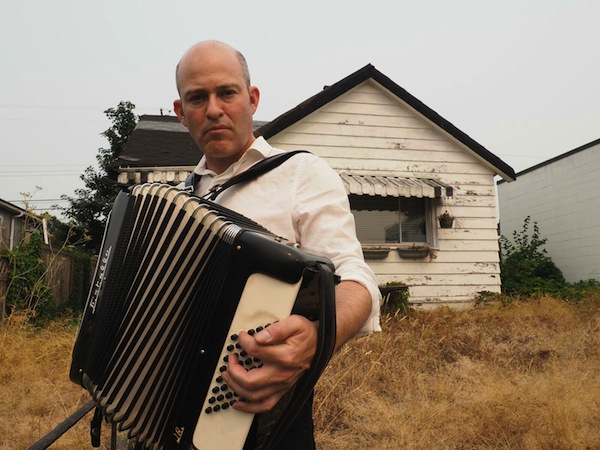
The theme for this year’s Downtown Eastside Heart of the City Festival is “This Gives Us Strength.” One of the more than 50 events that will take place over the festival’s 12 days is Spotlight on the East End on Oct. 30, 8:30 p.m. Curated by artist-in-residence Khari Wendell McClelland, the online presentation will feature “the compelling creativity and strength of Vancouver’s Downtown Eastside-involved artists and residents who illuminate the vitality, relevance and resilience of our neighbourhood and its rich traditions, cultural roots and music.” Among those artists is klezmer-punk accordionist Geoff Berner, with whom JI readers will be familiar.
JI: You released Welcome to the Grand Hotel Cosmopolis late last year (jewishindependent.ca/honestly-jewish-and-radical) and you also had a new musical, then COVID hit. What have you been doing creatively over this time?
GB: I just finished working on a lovely project for KlezKanada with the great theatre artist Jenny Romaine and a lot of other talented folks. It’s called Vu Bistu Geven? (Where Have You Been?) and it’s about figuring out the history of the land that KlezKanada takes place on. It was commissioned for their 25th anniversary. It felt particularly right to work with Trina Stacey, a Kanien’kéha singer, researcher and teacher. We talked a lot during the making of the piece about the value of recovering our ancestors’ languages, in order to find a way to think outside of capitalism and colonialism.
JI: You were scheduled to perform an outdoors concert in Roberts Creek Sept. 11. Did that happen? In what ways does an in-person audience affect your performance?
GB: Yep, that concert went off nicely. Everyone was outdoors and properly distanced. The folks in Roberts Creek are lovely. I’ve played only two other shows like that since the pandemic, one at a park in Vancouver, for Alan Zisman, and another in Chilliwack at the Tractor Grease. It sure was nice to play live again. It’s been a bit of a strain these past months, not being able to do the thing I’ve devoted my life to doing. I miss that magic human connection that only live music can do.
JI: What inspires you to participate in events like the DTES Heart of the City Festival?
GB: What inspires me is the honour to be invited. I’ve tried to be a friend to folks in the DTES, opposing displacement by City Hall-backed developers, fighting to stop the war on drugs, fighting against legislated poverty, and other stuff. It means a lot that I’m allowed to be part of things.
JI: Chelm is a recurring theme/subject in your work. If you had to offer “advice from Chelm” for people coping right now, what might that be?
GB: Advice from Chelm? Well, Chelm was the “Village of Fools” of Jewish legend, but in fact it was a real place, where the people had to struggle to survive. They weren’t fools at all, just ordinary people trying to live. Several fine Yiddish poets came from Chelm. So the advice from Chelm is, the real fools are people who look down on communities of other human beings.
JI: You helped start the BC Ecosocialist Party. Any opinions on the election you’d like to share?
GB: I have real hopes for the BC Ecosocialists. B.C. voters need to at least have the choice to be able to vote for people who will actually stand up against LNG, Site C, legislated poverty, colonialism and the war on drugs.
* * *
Heart of the City runs Oct. 28 to Nov. 8. For tickets and information, visit heartofthecityfestival.com.