Skip to content
  • Home
  • Subscribe / donate
  • Events calendar
  • News
    • Local
    • National
    • Israel
    • World
    • עניין בחדשות
      A roundup of news in Canada and further afield, in Hebrew.
  • Opinion
    • From the JI
    • Op-Ed
  • Arts & Culture
    • Performing Arts
    • Music
    • Books
    • Visual Arts
    • TV & Film
  • Life
    • Celebrating the Holidays
    • Travel
    • The Daily Snooze
      Cartoons by Jacob Samuel
    • Mystery Photo
      Help the JI and JMABC fill in the gaps in our archives.
  • Community Links
    • Organizations, Etc.
    • Other News Sources & Blogs
    • Business Directory
  • FAQ
  • JI Chai Celebration
  • JI@88! video

Recent Posts

  • Sharing her testimony
  • Fall fight takes leap forward
  • The balancing of rights
  • Multiple Tony n’ Tina roles
  • Stories of trauma, resilience
  • Celebrate our culture
  • A responsibility to help
  • What wellness means at JCC
  • Together in mourning
  • Downhill after Trump?
  • Birth control even easier now
  • Eco-Sisters mentorship
  • Unexpected discoveries
  • Study’s results hopeful
  • Bad behaviour affects us all
  • Thankful for the police
  • UBC needs a wake-up call
  • Recalling a shining star
  • Sleep well …
  • BGU fosters startup culture
  • Photography and glass
  • Is it the end of an era?
  • Taking life a step at a time
  • Nakba exhibit biased
  • Film festival starts next week
  • Musical with heart and soul
  • Rabbi marks 13 years
  • Keeper of VTT’s history
  • Gala fêtes Infeld’s 20th
  • Building JWest together
  • Challah Mom comes to Vancouver
  • What to do about media bias
  • Education offers hope
  • Remembrance – a moral act
  • What makes us human
  • המלחמות של נתניהו וטראמפ

Archives

Follow @JewishIndie
image - The CJN - Visit Us Banner - 300x600 - 101625

Tag: photography

Trees bring Zack to life

Trees bring Zack to life

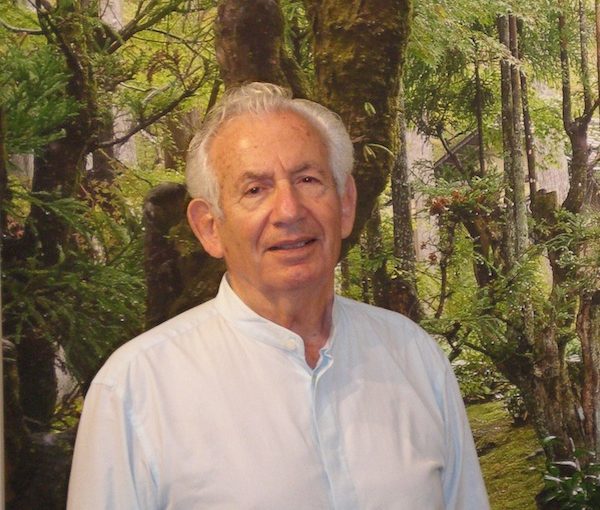
Michael Seelig is donating the proceeds from his exhibit Trees to the Zack Gallery. (photo by Olga Livshin)

Trees, Michael Seelig’s new solo photography exhibit at the Zack Gallery, opened last week. It is a fundraiser for the gallery, which is located in the Jewish Community Centre of Greater Vancouver.

Such philanthropic initiatives “are of ultimate importance to the gallery and the community, as everybody wins when the gallery is well-supported,” said Zack director Linda Lando. “We have approximately three benefits a year, and they come in different ways. Sometimes, they’re initiated by the artist, sometimes by myself or another staff member of the JCC.”

Seelig’s decision to donate all the proceeds came from the heart, and it’s not the first time. His previous show at the Zack, which was held five years ago, was also a benefit. “This is my way of contributing to the JCC,” he said in an interview with the Independent. “We have a longstanding connection to the centre. My wife was president of the JCC some time ago, and we’ve given several donations to the community over the years.”

Unlike his previous show, which focused on architectural images – Seelig was an architect before he retired – this show is all about trees. A cornucopia of greens dominates the gallery walls.

“When Linda asked me to do a show this year, I didn’t have much in mind,” he said. “I started going through my photographs, selected the best 20, and then realized that eight of them were photos of trees. Looking back, I’ve always photographed trees. Maybe I have an affinity for trees. So, I thought I’d make it the theme of this entire show.”
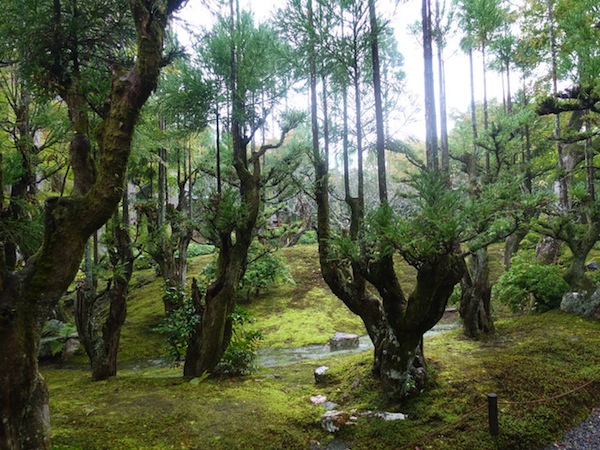
photo - “Garden Kyoto” by Michael Seelig
“Garden Kyoto” by Michael Seelig.

Seelig has been drawn to trees and their unique charm for a long time. “I think my love of trees comes from my childhood, when I was growing up in Israel,” he said. “Jewish people are the only ones I know who have a holiday dedicated to trees: Tu b’Shevat. During that holiday, we cherish trees, plant them, take care of them, so they can take care of us. That tradition probably influenced me from a young age to love trees and photograph them. I take photos of trees wherever I travel.”

In the Zack exhibition, there are pictures of trees from Israel and Scotland, Canada and Japan.

“There is a book I read recently,” Seelig said, “called The Hidden Life of Trees, by Peter Wohlleben. He is a German forester and writer and he knows trees. He says trees form communities. They communicate with each other and with us. It was a fascinating book, and I agree with the author; his book inspired me. Have you noticed that old stumps sprout new growth sometimes? That is because there are other trees around. Trees are life-givers; they create the air we breathe. Without trees, there would be no life on earth.… In Canada, and particularly in British Columbia, we often take trees for granted. Most of us do not pause to look at them and admire their beauty, solidity and permanence. We forget that, without trees, our planet cannot survive. This show pays homage to trees in many parts of the world.”

Seelig’s trees are all different; each one has its own shape and personality. Some are gnarled and twisted, while others stretch up in straight lines.

“I like it that they don’t talk to me,” he joked. “Trees are my models, but they’re more obedient than people when it comes to posing for a photo. I can take my time snapping pictures of trees. They are perfect photography objects. A tree just stands there. You can walk around it, see it from 360 degrees or from underneath. And every view is different. You can’t do this with a person.”

In addition to Seelig’s photographs of trees, the show includes several watercolours, most of which he painted specifically for this exhibit. Only two small works are exceptions. “When I was looking through my archives in preparation for this show, I found a small painting, created by my father in 1940. He painted a street in Haifa, and there is a tree in the image. The second painting is mine; I painted it in 2010, also in Haifa. Seventy years passed between these two paintings, but their colour schemes are surprisingly similar. And there are trees in both paintings.”

The sizes of the images on display vary greatly. While Seelig’s father’s painting would fit in a school notebook, and most of the photographs are the perfect size for a family home, a huge triptych on canvas of one of his Kyoto garden photos would enliven a hotel foyer or a corporate conference room. “I invited some designers to the show,” Seelig said. “Maybe one of them would like it.”

Seelig’s approach to photography is consistently organic. He doesn’t edit his photos with Photoshop, doesn’t even crop them.

“My pictures are exactly what I see,” he said. “And now you see them, too. There are other photographers who manipulate their photos with editing software, many of them wonderful artists, but I don’t do that. I don’t call myself an artist either, even though I use my creativity for many things in my life. I used artistic judgment for my work as an architect, before I retired. Now, I make greeting cards and wedding invitations with my photographs and my paintings. I illustrated a couple of children’s books, written by my daughter and her husband. Even making dinner for our friends is a form of art for me.”

The Trees exhibit runs until Oct. 20.

Olga Livshin is a Vancouver freelance writer. She can be reached at [email protected].

Format ImagePosted on October 4, 2019October 2, 2019Author Olga LivshinCategories Visual ArtsTags environment, Michael Seelig, painting, philanthropy, photography, trees, Zack Gallery
Photos inspire a dream

Photos inspire a dream

“Curiosity,” photo by Liron Gertsman.

One of the most important issues we should be grappling with nowadays is the preservation of our habitat. At the forefront of the nature preservation movement are photographers and one of them is Liron Gertsman, a young, award-winning local nature photographer whose solo show, Essence of Earth, is at the Zack Gallery until Sept. 22.

The show is sponsored by Esther Chetner.

“Eldad Goldfarb, executive director of the Jewish Community Centre of Greater Vancouver, approached me about this upcoming sponsorship opportunity, aware of my own concern about climate change and my passion for photography,” Chetner told the Independent. “Though I’ve traipsed parts of the globe enjoying the wonders that photo details can deliver, I’m not at all technically trained nor technologically nimble…. I recognize the remarkable quality of Liron’s images, and see value in making his work accessible to others.”

Calling Gertsman a “rising star,” Chetner said, “Encouraging this type of exquisite work is another way to help people appreciate our natural world more deeply and then, hopefully, to work toward preserving such essential global health and diversity. The more we see and appreciate about our natural environment, the more we will all be inclined to proactively protect it.

“Jewish values are quite aligned with environmental stewardship, and so having Liron’s work displayed at the JCC seems like an appropriate fit.”

Part of the proceeds of the exhibit will benefit the gallery, and another part will go to the Nature Trust of British Columbia.

“There are several charities concerned with nature preservation in B.C.,” Gertsman said, “but I like the Nature Trust because they purchase land specifically to build and maintain a treasury of wild areas.”

The 19-year-old photographer is passionate about preservation. (See jewishindependent.ca/tikkun-olam-through-photos.)

photo - Liron Gertsman has loved nature and photography all his life
Liron Gertsman has loved nature and photography all his life. (photo by Ian Harland)

“I’ve loved nature and taking photographs all my life,” he told the Independent. “Recently, I started moving toward doing it professionally, like giving photography workshops or guiding people on their bird-watching expeditions.”

His photographs are like a guided tour. “I want people to witness nature,” he said. “I want to share with them what I see, even if they can’t travel themselves.”

To cover some of his costs, he has, at times, formed partnerships with companies and organizations.

“I choose companies focused on nature conservation,” he explained. “They would subsidize some aspects of my trip, or sometimes an entire trip, in exchange for photo use and social media marketing, usually through my Instagram account, which has close to 50,000 followers.”

For instance, in May and August of this year, Gertsman partnered with Ocean Outfitters, an ecotourism company based in Tofino.

“They are Tofino’s first carbon-neutral ecotourism company, and they have committed to donating $200,000 a year for multiple years towards restoration of the Tranquil Watershed,” he said.

Gertsman’s photos at the Zack Gallery are full of life and colour. His birds seem to soar through the gallery space. His landscapes are like windows, looking out into the British Columbia wilderness. Stars twinkle in the night sky. Pink crags reflect in the still surface of the lake. Waterfall gurgles across the boulders. Owls hide in the grass, and gulls skim over the rippling wavelets. But the beauty and serenity of his images filled me with apprehension. Could we lose all of this gorgeousness? The night after I visited his show, I had a dream, and Gertsman’s imagery figured heavily in my dreamscape.

* * *

“What is it, Grandpa?” a girl asked.

“A picture archive,” the old man replied.

“But it’s not a memory crystal.”

“No, it’s from the 21st century, an antique. Two hundred years old,” he said, inserting an outmoded device into a slot of his com-link and opening the files. Hundreds of pictures appeared on his screen. Nature, when it flourished.

“Oh,” his granddaughter said with interest. “What are those?”

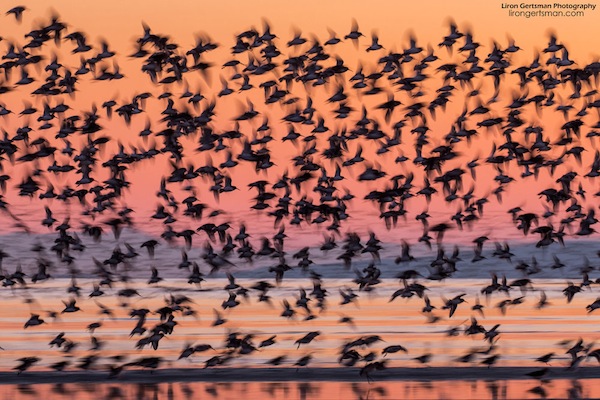
“Birds,” he whispered reverently. In the image, hundreds of small dark bodies hurtle across the peachy sky, their wings pumping so rapidly, the image blurred.

“Like a hologram in a museum?”

“Yes. Only they were alive. Flying.”

“But why is the wall pink? Why would they paint it pink?”

photo - “Sandpiper Sunset,” by Liron Gertsman
“Sandpiper Sunset,” photo by Liron Gertsman.

The old man glanced at the wall of the cave that housed the archives. Nobody lived on the surface of the earth anymore. Nobody could survive the toxic environment. People inhabited underground caverns such as this one and, mostly, they didn’t bother painting the walls. There were few resources anymore.

“It’s not a wall, it’s the sky,” he said. He had been very young when the last of humanity had moved underground, but he still remembered the sky. Scientists said that, in a few more generations, they could live outside again, but he wasn’t sure his granddaughter would last that long. He certainly wouldn’t.

“Our teacher said the sky should be blue,” the girl insisted.

“The sky could be any colour. This is probably sunset.”

“What is sunset?” She had never seen the sun.

He sighed, but, before he could explain, her gaze had skipped to another image.

“It looks like a fountain,” she marveled, “but what are these green blobs?”

The old man winced. “Trees. Bushes. It’s not a fountain. It’s a waterfall.”

Her finger zeroed in on another image. “I know,” she said triumphantly. “These are dogs. Strange dogs, though.”

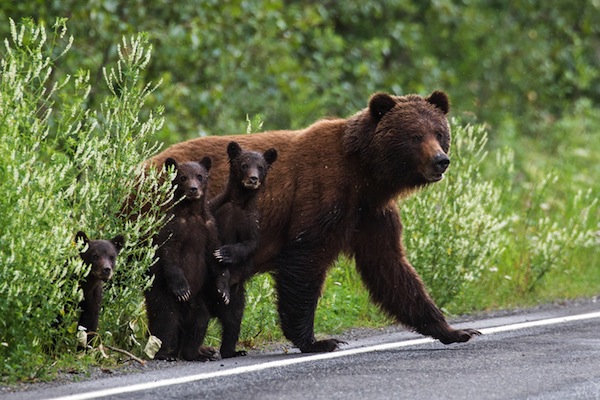
“These are not dogs. These are bears. The mother bear is….” He contemplated the animals on the screen, trying to remember his own textbooks. He had never seen a living bear either. “I think she is as big as I am,” he said at last. “Maybe bigger. And the little bears are probably your size.”

“So huge?” She eyed him with doubt. “They lived outside, too?”

He nodded.

“I don’t think I’d like it outside,” she said. “Everything is different. I like it better here.” She climbed off her chair and started to leave. “We have everything here.” She went out into the corridor. “I think it’s all fairy tales anyway,” she called back.

The old man remained still, staring at the closed door with sadness.

* * *

Essence of Earth opened at the Zack Gallery. To see more of Gertsman’s work, visit lirongertsman.com or instagram.com/liron_gertsman_photography.


Olga Livshin is a Vancouver freelance writer. She can be reached at [email protected].

Format ImagePosted on September 6, 2019September 4, 2019Author Olga LivshinCategories Visual ArtsTags environment, Esther Chetner, Liron Gertsman, photography, Zack Gallery
Goldene Medina comes here

Goldene Medina comes here

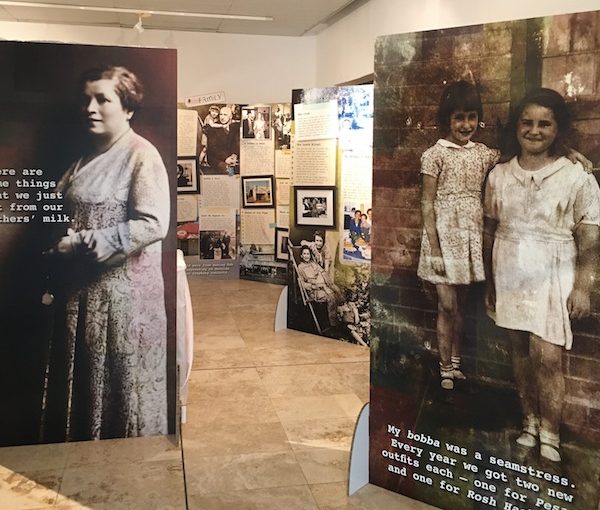
The Goldene Medina exhibit is designed to have the feel of a scrapbook album, to have come from any Jewish South African’s family memoir. (photo from South African Jewish Museum)

The Goldene Medina exhibit arrives in Vancouver July 29 for two weeks. A celebration of 175 years of Jewish life in South Africa, the exhibit was displayed in South Africa, Australia and Israel prior to arriving here, where it is making its North America debut at Congregation Beth Israel. Local Jewish community member Stephen Rom, who is from South Africa, saw it for the first time in Sydney and was instrumental in bringing it to the city.

“You need to remember your past to engage in the present,” reflected Rom. “I was struck by the level of professionalism of this exhibit, which was produced by the South African Jewish Museum in Cape Town. What’s different about it is the way the stories have been written. Nobody is named or personally identified. This is the story of all Jews in South Africa, the community as a whole.”

The Goldene Medina was the Jews’ name for Johannesburg when they arrived during the gold rush in 1886. “This exhibition has soul – it’s not a dry exhibition of facts and figures,” noted Wendy Kahn, national director of the South African Jewish Board of Deputies. “It’s one that tells real stories of families that have been living in South Africa for 175 years.”

“This is a social history,” agreed Gavin Morris, director of the museum, “the story of families and people and their experiences as South Africans and as Jews for 175 years, from our forefathers arriving to contemporary Jewish South Africa. Everything is taken from unpublished memoirs, articles and out-of-print books, to give the exhibit a sense of a scrapbook album, of any Jewish South African’s family memoirs. Our goal was for people to find their own stories in similar stories.”

The stories are excerpts written in the first person and accompanied by photographs old and new. One excerpt, titled “My Mother’s Table,” reads, “At my mother’s table, ‘being full’ was never a reason to stop eating. Some of the many reasons to have some more included: ‘I cooked this especially for you because I know you like it,’ ‘you can’t put so little leftovers back into the fridge,’ ‘it’s freshly made,’ and ‘you don’t like my cooking.’ Refusing more was to snub the generosity and abundance that was on offer. Eating was proof that you were loved and that you knew how to love back.”

Another, titled “Cubs,” reads: “After my mom realized that I only knew Jewish kids, she sent me off to Cubs – not exactly your standard Jewish activity. I came home with my first friend and said, ‘Mom, isn’t it wonderful? Here’s my first friend from Cubs and guess what – we’ve got the same Hebrew teacher!’ He was the only other Jewish kid there and we found each other. My mother gave up after that.”

A third is titled “A Surprise Guest”: “What is the epitome of Jewish chutzpah? Inviting the president of the country to attend your bar mitzvah. And what is Jewish mazel? When the president actually accepts. The bar mitzvah boy delivered his handwritten note to a security guard outside [Nelson] Mandela’s Houghton estate. He hoped to get a card from Mandela in return. Instead, his parents received an official call to say the president will attend. On the day, President Mandela arrived and sat at the main table, between the bar mitzvah boy and his father.”

The excerpts are thought-provoking, poignant, entertaining, informative and never boring. And the photographs are deeply intriguing, telling a story of their own – a timeless Jewish story that has relevance to all Jews whose ancestors have known immigration and resettlement.

Accompanying the Goldene Medina in Vancouver will be the exhibit Shalom Uganda: A European Jewish Community on the Ugandan Equator 1949-1961, curated by Janice Masur.

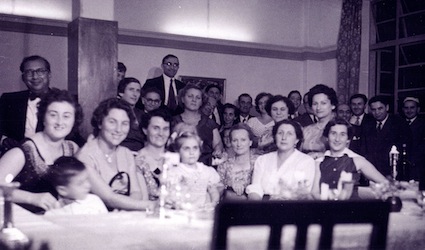
photo - The Kampala Jewish community gathers for visit of Chief Justice Joseph Herbstein from South Africa, 1958. Gifted by Ilsa Dokelman, in 2005
The Kampala Jewish community gathers for visit of Chief Justice Joseph Herbstein from South Africa, 1958. Gifted by Ilsa Dokelman, in 2005. (photo from Janice Masur)

“As a child, I lived in this remote European Jewish community on the shores of Lake Victoria in Kampala, Uganda, under British Imperial rule, with no rabbi or Jewish infrastructure. Yet, this tiny community of 23 families and 20 children (15 of whom were born in Kampala) identified as Jews and formed a cohesive group that celebrated all the Jewish festivals together,” explained Masur. “Now that most references to Jews in Uganda pertain to … Abayudaya Jews, I want this history – my story about my Ashkenazi Jewish community in Kampala – to be remembered in the Jewish Diaspora.”

The photos and stories that comprise the Ugandan display are, said Masur, “a testament to a determined but isolated group of Jews who were secular in a [remote] place but upheld their Jewish identity and traditions as best as was possible,” given the lack of religious, educational or cultural Jewish institutions. (For more about the Ugandan Jewish community in which Masur grew up, click here.)

The July 29 opening night of the Goldene Medina starts at 7:30 p.m. at Beth Israel, where the display will be up until Aug. 14.

Lauren Kramer, an award-winning writer and editor, lives in Richmond. To read her work online, visit laurenkramer.net.

Format ImagePosted on July 12, 2019July 10, 2019Author Lauren KramerCategories LocalTags Beth Israel, Goldene Medina, history, Janice Masur, photography, South Africa, Stephen Rom, Uganda
Plants’ hidden beauty

Plants’ hidden beauty

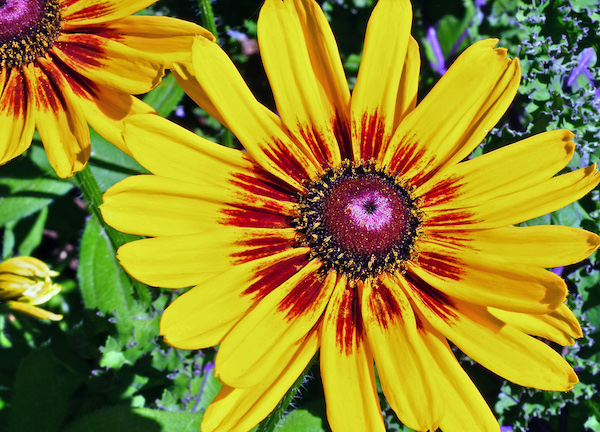
Yellow gazanias, by Pamela Fayerman. Eighteen of Fayerman’s macro photos form the exhibit Intimate Encounters, which is at VanDusen until June 27.

Well-known for her writing about medicine, science and health policy in the Vancouver Sun, award-winning journalist Pamela Fayerman has another area of expertise, perhaps somewhat lesser known: macro photography. Her first exhibit – Intimate Encounters: Botanical Closeups – opened at VanDusen Botanical Garden with a reception on April 6.

Born in Prince Albert, Sask., Fayerman grew up in Saskatoon. She moved to Toronto to attend Ryerson University School of Journalism, with the intention of becoming a photojournalist. While she changed her mind about that, she said the “photography courses at Ryerson taught me about important things like using light, subject composure and print developing. Even though everyone does digital photography these days, the foundations for those of us who learned on old SLR cameras are still pertinent.

“While I was at Ryerson, I got an incredible break with a story scoop that would be a defining career opportunity,” she said. “I sold the front-page story to the Globe and Mail and then I was invited to continue working there on a freelance basis. When I graduated from Ryerson, the company – then called FP Publications – offered me a job at their other newspaper: the Winnipeg Free Press.”

Fayerman worked at the Free Press for five years, mostly covering the law courts. During that time, she took a year break to study at Queen’s law school, focusing on the Charter of Rights and Freedoms.

“When I moved to Vancouver in the mid-1980s, the law beat was already taken,” she said, “so I had a variety of beats, including City Hall, before landing the medical beat in 1995. I think I’m probably the most experienced medical journalist in Western Canada and I’ve certainly had plenty of incredible professional development opportunities through American fellowships at places like Columbia University, MIT and the National Institutes of Health. It’s a highly challenging, satisfying beat for someone like me with insatiable curiosity. I cover health policy, which involves stories about the politics, economics and mechanics of the healthcare system; medical research; and clinical medicine. The latter often involves the mind-blowing ‘wow’ stories about lifesaving innovations.”

Fayerman became interested in botanical photography about a decade ago, she said, “because I’m obsessed with plants and gardening. It’s the only thing I do that could be described as mindfulness, and that’s important because journalists always take our work home with us. We never stop thinking about the stories we’ve just finished or the ones we’re working on.”

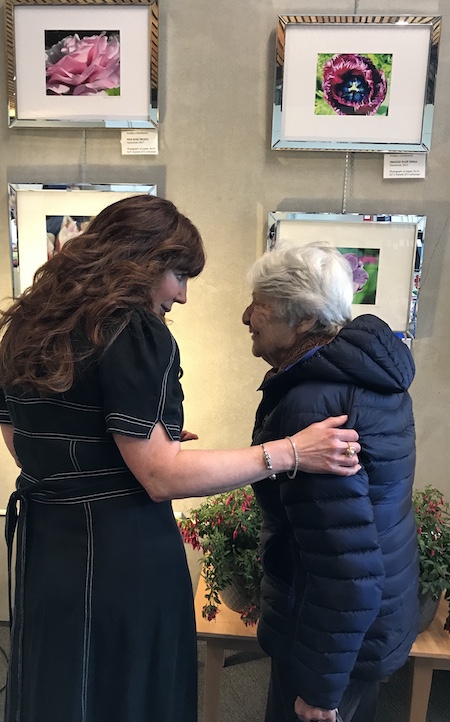
photo - Pamela Fayerman with landscape architect Cornelia Oberlander at the opening reception of Intimate Encounters: Botanical Closeups, featuring Fayerman’s photography
Pamela Fayerman with landscape architect Cornelia Oberlander at the opening reception of Intimate Encounters: Botanical Closeups, featuring Fayerman’s photography. (photo from Pamela Fayerman)

Fayerman said the best way to capture the biology and anatomy of plants in detail is with a macro lens.

“Flowers are so often extravagant and exotic and they are a naturally ideal subject for macro photography because of their sensual shapes, sublime colours and luscious textures,” she explained. “Plants always have hidden, intriguing beauty, often only revealed through macro photography. I use available light and get really close to the mysterious microstructures of plants.”

Her talent for photography has been recognized in various ways, including her being chosen as one of about 100 photographers across the country to participate in the Canada’s Golden Hour Photo project.

“The period right after sunrise and just before sunset is when you can achieve some magic in colour photos, especially blues and mauves,” she said. “In my exhibition, there’s a photograph of an echeveria succulent I shot in California that is a nice demonstration of how to exploit the golden hour before sunset.”

In addition to journalism and photography, Fayerman said, “For about 15 years, I’ve volunteered at the Louis Brier nursing home. In May, I put plants in the pots in the Shalom courtyard and then I tend to the plants weekly until November. My mother was a resident for a short time before her death and this was a project my family initiated in her memory. The residents and family members often express their appreciation because it beautifies the area, which is quite a serene oasis. Last year, one of the residents asked me weekly if I would plant some medical marijuana as well!”

Fayerman also volunteers as a board member for the Vancouver Botanical Garden Association.

“When I learned about the Yosef Wosk Library at VanDusen, that has a gallery inside it named for Roberta Mickelson, I was keen to get my first exhibition there,” said Fayerman, who has been selling her photos for several years via her website, pamelafayerman.com. “I’ve got 18 photographs on display – all of them for sale – including works on paper and on canvas. The retail store at VanDusen is also now carrying my matted prints.”

Intimate Encounters runs until June 27. For more information, visit vandusengarden.org/learn/library.

Format ImagePosted on May 31, 2019May 30, 2019Author Cynthia RamsayCategories Visual ArtsTags art, Pamela Fayerman, photography, VanDusen
A mind-blowing exhibit

A mind-blowing exhibit

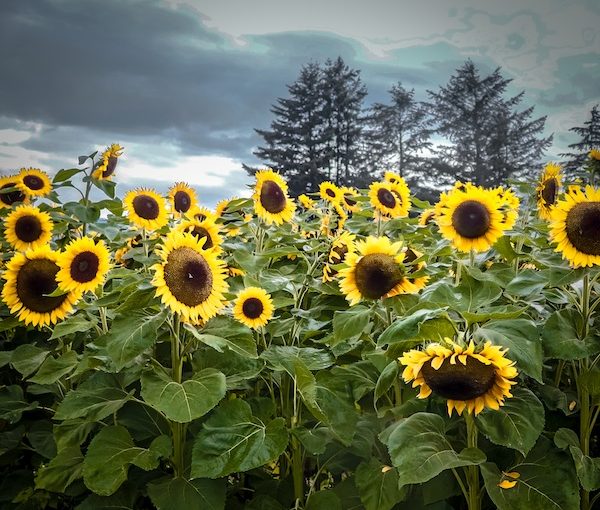
“Sunflowers” by Jocelyne Hallé.

The new show at Zack Gallery, #SeasonsAtZack features Instagram artists. A fundraiser for the gallery, the exhibit is extremely eclectic.

“The theme of the show is based on the theme of Festival Ha’Rikud, ‘Seasons of Israel,’” said Daniel Wajsman, marketing coordinator at the Jewish Community Centre of Greater Vancouver. “Every year, the gallery has a group show to coincide with the festival and the artists submit their paintings to the gallery. This year, we thought: why don’t we do social media instead? These days, everyone has a camera…. We all take pictures with our phones and share them with friends and family. This is one step further. Why can’t we share our photos with everyone? That’s what Instagram does – it is a site where we share our images with the world. That’s what we aimed for in this show at the Zack. We wanted to change the concept of what art is.”

The gallery started with the idea that only artists who have an Instagram account would be featured in the exhibit, but later opened the submission process to everyone, said Wajsman. All of the images from the show will be on the JCC’s Instagram page and prints will be available for purchase in different sizes and formats.

About a third of the photos in the exhibit come from a select group of people: staff members of several Jewish organizations, who went to Israel in April for a professional seminar. The organizations participating in the seminar were the JCC, Jewish Federation of Greater Vancouver, Jewish Family Services, Louis Brier Home and Hospital, Vancouver Holocaust Education Centre and Nava Creative Kosher Cuisine.

“We work closely together, but we don’t all know each other,” said Wajsman. “Some of us are Jewish, and some are not. The seminar had a double goal: to teach us about Israel and Jewish history and to connect us with each other.”

Regular visitors to the Zack Gallery will be familiar with many of the photographers in the exhibit. Some of the photos are by artists who have exhibited previously at the gallery – like Lauren Morris, Michael Abelman and others – and submitted photographs of their paintings for the show.

Another set of participants includes local masters of photography, such as Jocelyne Hallé, Judy Angel and Ivor Levin. Each one has more than one of their images on display.

Halle’s “Sunflowers” photo was taken recently. The bright sunny heads of the large flowers contrast sharply with the heavy stormy clouds overhead, and the juxtaposition evokes strong emotions. “It wasn’t Photoshopped at all,” said Hallé. “It’s just the way I took it.”

In contrast, Angel’s airy images glow and shimmer with transparent sunlight. They are so light, they seem translucent, able to fly off the wall like magical butterflies.

photo - “Umbrellas” by Ivor Levin
“Umbrellas” by Ivor Levin.

Beside them, Levin’s photos look like drawings, their colour schemes and compositions inspired by the rains and umbrellas of the autumn season in Vancouver.

New artists also have a strong presence in this show. For them, having their names under their art on the gallery walls is a fascinating experience. One of this crowd is Linda Lando, the Zack Gallery director. “I’m not an artist,” she said. “I’ve never displayed anything before.”

One of her photos, the colourful “Ein Gedi Night,” was taken on her trip to Israel, as a member of the seminar. “We visited Kibbutz Ein Gedi late at night,” she said. “It is a beautiful floral oasis in the desert. They have amazing flowers, and this blooming tree was near the entrance.”

Robert Johnson, also part of the seminar and a longtime JCC employee, has a couple of his photos in the show. One of them is particularly memorable: a photo of a camel with a sad expression, lying under a tree. The title of the photograph is “This is Not a Camel.”

“He talked to me,” Johnson said with a smile. “People were riding him all day, and he didn’t want to be a riding camel anymore.”

The variety of the images in the show is mind-blowing: from Israeli landscapes to mud bathers on the shore of the Dead Sea to abstract composition. #SeasonsAtZack continues until June 9.

Olga Livshin is a Vancouver freelance writer. She can be reached at [email protected].

Format ImagePosted on May 17, 2019May 16, 2019Author Olga LivshinCategories Visual ArtsTags #SeasonsAtZack, art, Festival Ha’Rikud, Instagram, Israel, photography, Zack Gallery
Creating pause and reflection

Creating pause and reflection

“Wink Wink – Whatcha Looking At?” by Shira Gold.

Shira Gold’s photographs seem to create a break in the space-time continuum. For a moment, the busyness and noise of the world fades away, and the viewer is standing on a beach watching the light and shadows of the clouds over the ocean, or in a snowy field, inhaling the crisp, cool air. A quiet contentment, a sombre joy.

Gold is one of some 30 artists joining the West of Main Art Walk for the first time this year. More than 60 artists will open their homes or studios to the public over the Mother’s Day weekend, May 11-12. Several other Jewish community members are also participating, including Michael Abelman, Olga Campbell, Pnina Granirer, Lauren Morris and Rae Maté, some of whom have been involved from the beginning in what used to be called Artists in Our Midst – Granirer co-founded the walk with Anne Adams in 1993.

“Crissy Arseneau and I were invited to join in by our All Together Collective partner painter Amy Stewart,” Gold told the Independent. “We are reuniting at Amy’s studio on Granville Island for the weekend of the walk. I chose to participate because showing locally is something that is important to me. The walk is a unique way to see the immense talent of creators that live in our city. The types of work being shown will be so diverse, crossing many mediums, and the artists vary from emerging to seasoned Vancouver talent. I also love the idea of being able to visit artists in the spaces they create their work in.”

While there is a preview exhibit and sale on May 9 at the Roundhouse Community Centre, with donated artwork being sold to raise money for Coast Mental Health’s art programs, some artists are raising money for other projects over the weekend. Granirer, for example, is offering her works at 50% off as a fundraiser for Stand Up for Mental Health, which was started by her son, David Granirer, to help reduce the stigma surrounding mental health, among other things. Gold will be selling her fabric-based prints May 11-12, with proceeds going to the Children’s Arts Umbrella Foundation in honour of her mother, Melanie, z’l, “paying tribute to her work in helping shape the school in its early years.”

Growing up, Gold took classes in various visual and performing arts at Arts Umbrella. “I was introduced to photography at Arts Umbrella in my early teens, when they began courses in film photography and darkroom,” she said. “As a child, words and pencils often failed me. Capturing and making images was a way for me to express my view of the world. Having a camera in hand changed the trajectory of my life.”

However, Gold said, “I pushed pause on photography for several years and turned my attention towards fashion design. I worked in design and manufacturing in Montreal, which ended abruptly when my mother was diagnosed with cancer. I took on the role as her caregiver for three years, until her passing. During that time, she and I began to recognize the immense need for patients and caregivers to learn how to engender support around their illnesses, learn advocating strategies and engage in mind/body medical tools to help support a positive mindset through health challenges. We began to develop offerings to meet these needs.

“My mom passed away before this was fully realized. Along with my husband, I gleaned the knowledge through personal experience, as well as course work at the Benson-Henry Institute for Mind Body Medicine at Harvard’s continuing medical classes … to write and complete a workbook/guidebook entitled Choosing Joy’s Empowerment Index. Not long after completing the book, I became pregnant with my first child. It was a time of great introspection. I began to recognize that the pursuit of Choosing Joy was a way for me to keep my mom’s memory alive and not a personal pursuit and decided to change paths. We chose to donate the books created to nonprofits that could share them with people in need.”

photo - “Longing” by Shira Gold
“Longing” by Shira Gold.

About her choice of a new path, Gold said, “Care-giving, grief, new motherhood – those collective experiences reshaped my outlook on how I chose to spend my days and I was ready to begin to deconstruct and share my experiences with others in the hopes of creative dialogue around common issues of struggle and transition. I started my first major body of work – ‘Reflect, Transform, Become’ – as I was preparing to welcome my second child.

“Shot over several years, taking a handful more to complete, the series of 18 women documents the trials and metamorphoses that come with new motherhood, as well as the challenges of experiencing new life without my mother in it,” she said. “This reclaiming of my visual voice shaped my identity as I settled into motherhood. The release of this work was a turning point in my life.”

“Reflect, Transform, Become” has been recognized with honourable mentions from the International Photography Awards and the Julia Margaret Cameron Awards. Her series “Good Grief,” which she describes as “a visual dissertation of my grief journey,” has had selections shown in Italy, Greece, the United States and here in Vancouver. Locals will recognize many of the places Gold has photographed.

“In fact,” she said, “the majority of my work is shot within 10 minutes from my children’s school. Some may perceive the limitations of time and spaces as prohibitive to their creative process, but I like to look at it as an advantage. My reality creates parameters which have enabled me to hone my eye and find moments that are meaningful to me, often minute and fleeting.”

As for the ways in which Judaism or Jewish community influence her approach, Gold said, “I think our culture, our religion, encourages reflection – personal reflection, reflection of our people and their struggles. There are built-in meditative moments in our prayers, in our holidays, in our services, to give us space to look inward. To learn and to digest our past and what has been is a large component of my work. As Jewish people, we actively choose in our times of joy to remember our hardships and, in our times of hardship, to find joy – I am mindful of this as I work and in life.”

In her artist’s statement, Gold writes, “I create portraits rich with emotion, conveying moments saturated by our struggles with grief, identity and change.” But what about the quiet joy that those portraits also convey?

“You are absolutely right,” she acknowledged, “there is pause (stillness) and calm in my imagery. It is intentional; as one who lives my days with a busy mind, there are few things that create pause and reflection. I also have found that, in my grief journey, my mind had made space for pause, for reflection and my world felt very desaturated and vacuous. Those moments were translated in my imagery through the various series documenting my pathways through this terribly difficult process of loss.

“I have been largely directed over the last decade by lyrics of a song by the band Frou Frou – ‘There’s Beauty in the Breakdown.’ Here is a little selection from the song: ‘So let go / And jump in / Oh well whatcha waiting for / It’s all right / ’Cause there’s beauty in the breakdown / (So let go) yeah let go / And just get in / Oh it’s so amazing here / It’s all right / ’Cause there’s beauty in the breakdown.’

“Sometimes, in the deep struggles and darkest moments, beauty abounds. It may shake us and break us down,” she said, “but, if open to it, there is an incredible opportunity to witness the heights of compassion, love, expectance, transformation, connectedness and joy.”

To see Gold’s work and to inquire about purchases and commissions, visit shiragold.com or @shiragoldphotography on Instagram. For the West of Main Art Walk schedule, a preview of this year’s artists and the studio map, go to artistsinourmidst.com.

Format ImagePosted on May 3, 2019May 1, 2019Author Cynthia RamsayCategories Visual ArtsTags Artists in Our Midst, photography, Shira Gold, West of Main Art Walk
Connecting beyond art

Connecting beyond art

“Sydney Beach Cliff” (Australia) by Talin Wayrynen.

Art Vancouver’s dictum is “Connect. Inspire. Educate.” This year’s fair brings together almost 100 exhibitors from around the world to Vancouver Convention Centre East April 25-28, and features art classes, guided tours, speakers, panel discussions and a café art crawl. Both veteran and emerging artists participate, and the Jewish Independent spoke with a few artists in the Jewish community who are newcomers to the exhibition world: Matthew Weinstein, Talin Wayrynen and Tara Lupovici.

photo - Untitled #29 (2019) by Matthew Weinstein
Untitled #29 (2019) by Matthew Weinstein.

“I had a chance to volunteer at last year’s show,” Weinstein told the Independent. “Seeing the great professionalism demonstrated by the Wayrynen family inspired me to submit a formal application to this year’s exhibition.”

Art Vancouver was launched in 2015 by Lisa Wolfin Wayrynen. It has become somewhat of a family affair, with this year’s exhibitors including her daughters, Taisha Teal Wayrynen and Skyla Wayrynen; her son, Talin Wayrynen; and her sister, LeeAnn Wolfin.

“We just exhibited in Korea last November, and were invited to participate in another show in Seoul in June, and another show in Taiwan in December,” said Lisa Wolfin Wayrynen, referring to her and her children. “The family act is on the move!”

The 2019 Art Vancouver will be Talin Wayrynen’s second time exhibiting at the fair. An aerial photographer, among other things, he will be exhibiting photos from Australia and New Zealand, and possibly Indonesia. Last year, he said, he displayed photos of British Columbia and Mexico.

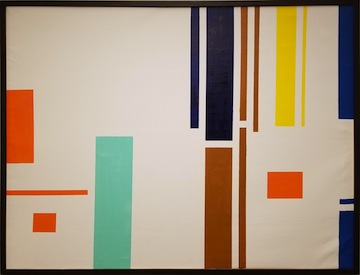
Weinstein said he will be bringing a select number of pieces to the show. Describing his art as “abstract and minimal in nature,” he said, “The purpose is to bring peace and tranquility to contemporary rooms…. My passion is to make large multi-coloured pieces that are not just pleasant to look at, but also provoke questioning and inspiration.”

About his creative process, Weinstein said, “The numbers and letters may appear as if they are there to provide meaning when in fact they are just as nonrepresentational as the rest of the shapes. One might ask, ‘Why did you add the number 7 at the bottom right corner of this piece?’ My answer would be, ‘There is no concrete reason behind that decision. It is as random as the rest of shapes, colours and signs you’re seeing. If you’re asking this question then I’ve accomplished my goal to generate interest and promote inspiration.’”

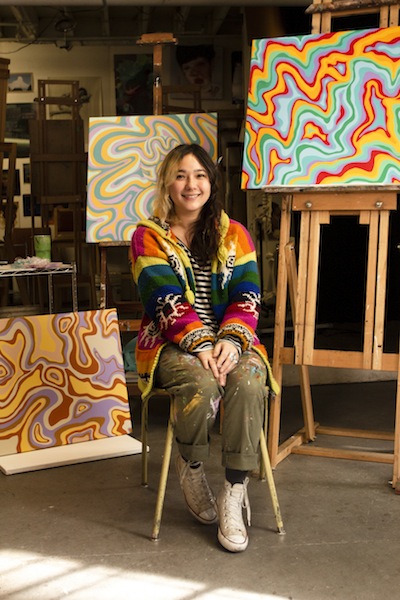
Lupovici, whose artist signature is LUPO, said, “My art is a psychedelic, abstract combination of organic and fluid lines with colour combinations that are inspired by the colours I feel.”

This year’s fair will be Lupovici’s first Art Vancouver, but she has a previous connection to the Wayrynen family. “I went to camp with Taisha and Skyla, Lisa’s daughters,” she said.

A graduate of Kwantlen Polytechnic University’s fashion marketing program, Lupovici said fashion was her main focus, and she has worked in various places, including with her father (Irwin Lupovici), at Bong Wear. “Then, one day,” she said, “I was making dinner and cut a red cabbage in half and boom! My passion for painting was back in my life.”

photo - Tara Lupovici with some of her work
Tara Lupovici with some of her work. (photo by Adrianna Hankins)

She has dedicated the last year or so to painting. “Eventually,” she said, “I will mesh my art and fashion design together and have my LUPO label.”

Half-Jewish and half-Chinese – she also speaks Cantonese – Lupovici said, “I definitely would not be the person I am without all the Jewish culture and community that I have been surrounded by. Jewish summer camp was one of the most memorable, loveliest times of my childhood and I am, to this day, close with many of the people I went to camp with. I would not say it has influenced me in design and art, but I do feel being Jewish and meeting other people in the community is inspiring in itself.”

Weinstein also said his being Jewish has had little influence on his work. However, he said, “Having grown up in a suburb of Tel Aviv, I feel connected to my Jewish identity…. The last time I visited Israel was in 2011 and I am very excited to visit again in May…. My upcoming trip is something I look forward to, as it provides a rare chance to explore my roots and reinforces my personal connection to Judaism.”

More travel is also in Wayrynen’s plans, having recently been to Korea, Taiwan, Indonesia, Australia and New Zealand.

“I started using drones just for fun in 2016 and then, in 2017, started using them for film and photography,” he said.

While he couldn’t describe the exact elements of a “perfect” shot, he said, “I like to have stuff that’s unique and can’t really be replicated – like a wave crashing, shots of wild animals or something along those lines.”

As an example, last summer, in Horseshoe Bay, he filmed a group of killer whales, which was later featured by CBC.

Not just anyone is allowed to use drones, of course, and Wayrynen said permission currently depends “on where and for what reason you fly, but it’s soon to be just a licence no matter what.”

In British Columbia, he said, “[I]t’s unlikely to get a permit to fly anywhere remotely populated and even some parks have issues with it. The states are pretty similar and, as for Mexico, I was working on a TV show that did all the paperwork for it, all I provided was the licence and insurance. We were able to film basically anywhere there during the few weeks our permits lasted.”

Weinstein summed up well the importance of venues like Art Vancouver. “If you’re reading this,” he said, “please feel free to come by my booth at the upcoming show and let me know what you think of my art. I enjoy listening to all criticism (both good and bad) and, if you have other suggestions, I’ll be happy to discuss in person.”

For more information on and tickets to Art Vancouver, visit artvancouver.net.

Format ImagePosted on April 12, 2019April 10, 2019Author Cynthia RamsayCategories Visual ArtsTags art, Matthew Weinstein, painting, photography, Talin Wayrynen, Tara Lupovici
Exhibit starts with friendship

Exhibit starts with friendship

Linda MacCannell’s photograph of John T’Seleie. (photo from Drew Ann Wake)

The new show at the Zack Gallery, Crossed Paths – which explores the connection between the Jewish and the Dene peoples – has its roots in the federal Mackenzie Valley Pipeline Inquiry.

“In the 1970s, I was a CBC reporter in the Northwest Territories,” show curator Drew Ann Wake told the Independent. “When the government proposed a pipeline through the area, they sent Justice Thomas Berger to investigate the impact of the proposed pipeline [in 1974]. He talked to over 30 native communities to get their input. When he was finished, he issued a report recommending the government settle all the claims on land that the pipeline would pass through before construction started…. They are still settling those claims. The pipeline hasn’t been built yet.”

As a journalist, Wake accompanied Berger and his team on that historic trip. She taped numerous interviews with the local people participating in the inquiry.

“Ten years ago, I found those old tapes,” she recalled. “Only audio tapes; it was so long ago. I thought it would be interesting to go back and talk to all of them again. And let their children and grandchildren listen to their elders’ voices.”

photo - Linda MacCannell’s photograph of Michael Jackson
Linda MacCannell’s photograph of Michael Jackson. (photo from Drew Ann Wake)

She invited a friend, photographer Linda MacCannell, to create portraits of some of the participants of the Mackenzie Valley negotiations. Over several years, they traveled to the villages Wake had visited with Berger. MacCannell took photos and Wake filmed her interviews. “We created a show of Linda’s portraits and the stories I collected and went on the road. By now, we’ve exhibited this show in 50 galleries across North America,” said Wake.

MacCannell’s large-scale portraits of various members of the Dene First Nations, who live along the Mackenzie River, constitute the heart of the exhibit at the Zack.

“Two years ago, we gave a presentation at the grunt gallery, an artist-run centre in Vancouver,” Wake explained. “We showed the films. After the presentation, a man approached me. He introduced himself as Michael Shumiatcher, a local artist and educator. He said he knew Justice Berger at the time of the inquiry. Michael was a high school student then, and Berger was his best friend’s father.”

Shumiatcher suggested they work together and present the exhibit to schools around the province. Wake liked the idea, and invited him to join her on her next trip north. Also joining the summer 2018 trip were artist Melenie Fleischer and her husband, cellist Eric Wilson, as well as composer Daniel Séguin.

“Daniel saw the video I made of the drummers the previous year,” Wake explained. “He wanted to write new music to incorporate the traditional drums.”

The group traveled to Fort Simpson, N.W.T., to study the drumming culture of the Dene in more depth.

“Séguin wrote a piece of music, called Dehcho, for cello and the drums,” Wake said. “That is how the local nations call the Mackenzie River – Dehcho. Wilson performed it at the local gallery presentation of our show. The gallery was packed. People sat in the hall and stood on the stairs. He had to repeat his performance for all who wanted to hear it.”

As well, Fleischer and Shumiatcher produced several paintings.

One of Fleischer’s, a herd of bison, is suffused with wild, tumultuous energy. “They were huge,” she said of the animals. “They looked up casually and continued grazing and drinking water in the shallow puddles. We were cautious and maybe even scared as we huddled close in the van to take our photographs. Thrilled at our first encounter with the ancestors of the ancient bison depicted on the cave walls of Altamira, Lascaux and others, I knew then that I was going to paint bison.”

A painting by Shumiatcher depicts Wilson blowing a shofar on the shore of the Mackenzie River. Fleischer and Wilson brought the shofar on the trip as a gift.

“Once we got our invitation from Chief Gerry Antoine to come to Fort Simpson and collaborate with Liidlii Kue First Nation on our cultural exploration of music – cello and drums – we were very excited. We were in New York at the time, and I wanted to bring Chief Antoine something special,” said Fleischer. “All I could think of was that our nation was thousands of years old, as were the indigenous people. With that in mind, we went looking for a ram’s horn from Israel, a shofar.”

They visited several Judaica stores in New York. “It was funny,” said Fleischer, “my husband Eric blowing shofars outside the stores, on the sidewalk. He is a cellist and very particular about sound.”

The next step for the group was to approach the Zack Gallery for a joint show. The Jewish artists’ paintings complement MacCannell’s photography, showing another facet of the northern experience. Just as power and serenity dominate the portraits and the photographer’s triptych of the river landscape, the paintings add a touch of awe at nature and its symbiotic relationship with humankind.

The Zack exhibit also includes traditional clothing made by several Dene artists. “Last year, we won a grant from the Canada Council [for the Arts] to commission northern artists,” Wake said. Of the pieces on display, each has a story. In some cases, the stories are real; they happened to the artists’ family members. For others, the stories are purely imaginary or are based on local folklore. Regardless, every story has a link to the tapes Wake collected in the 1970s and the people she interviewed.

Linda Wolki, known for her needlework, created a traditional yellow coat after she listened to the recording of her mother telling Wake how she hunted seals when she was young. “The woman’s story was amazing,” Wake said. “She was out hunting in the snow and cold, and four polar bears decided to chase her. She laughed.”

A pair of embroidered moccasins, made by Agnes Mitchell, is displayed in a plexiglass case next to the pair her father wore for years. The embroidery on the old moccasins – made by Mitchell’s mother – and the new ones is equally elaborate.

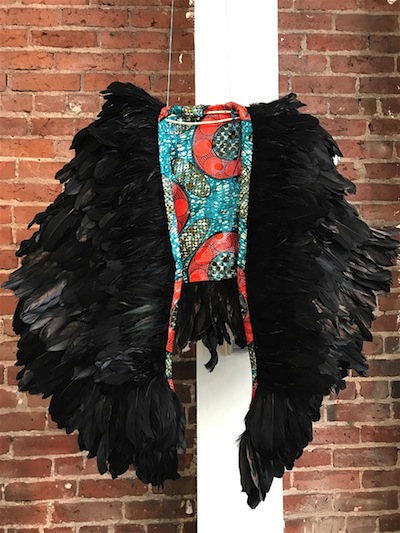
“One story I asked an artist to illustrate was an ancient northern legend about an abandoned woman,” Wake said. “The tribe abandoned that woman in the forest because of her sharp tongue. She only had a few coals for her fire, but she survived. She made herself two cloaks – one of raven feathers and another of rabbit fur – and many more objects.”

Artist Jeneen Frei Njootli has brought the cloaks to life. Her creations, a black cloak of raven feathers and another of white rabbit fur, hang in a corner of the Zack, one above another, as a tribute to her people’s tenacity and their drive to survive in the harshest conditions.

photo - Raven cloak made by Jeneen Frei Njootli
Raven cloak made by Jeneen Frei Njootli. (photo from Drew Ann Wake)

“We were very proud to learn that recently Jeneen Frei Njootli was chosen as one of the five finalists for the Sobey Art Award, an annual prize given to the most promising Canadian artist under 40,” said Wake, who then pointed to a blue coat on display. Smiling, she said, “And that coat belongs to Michael Jackson. But not the Michael Jackson of pop music. Our own Michael Jackson, a Vancouver lawyer who, in the 1970s, was part of Justice Berger’s team.”

When Wake started working on this show, one of the new interviews she conducted was with Jackson. “He worked with many First Nation people,” she said, “and I asked him how come he was so empathetic to their plight. He said it was because he was Jewish. When he grew up in London, England, he experienced antisemitism. He knew hunger as a child in post-World War Two Britain. It made him sensitive to others suffering from discrimination. Made him want to help.”

During the Berger inquiry, Jackson befriended one of the local men, John T’Seleie, who organized his community to meet with the inquiry’s lawyers.

“Their friendship has lasted for decades. They’re still friends,” Wake said. “As a child, T’Seleie was a student at a residential school. Like many others at residential schools, he suffered. As an adult, he became an advocate for his people.”

The portraits of these two friends hang side by side on the gallery walls, and the film Wake made of her interviews with them is also part of the exhibit.

“That’s how our entire show started, so many years ago,” she said, “with those two and their friendship: a Jew and a Dene.”

Crossed Paths is at the Zack until April 7.

Olga Livshin is a Vancouver freelance writer. She can be reached at [email protected].

Format ImagePosted on March 22, 2019March 25, 2019Author Olga LivshinCategories Visual ArtsTags Drew Ann Wake, First Nations, Mackenzie Valley, paintings, photography, Zack Gallery
Heart unites artworks

Heart unites artworks

Claudie Azoulai, left, and Nicole Schouela. Their work comprises the exhibit Heart to Heart, which is at the Zack Gallery until Nov. 9. (photo from the artists)

The latest show at the Zack Gallery, Heart to Heart, presents the work of two artists in two vastly different media. Claudie Azoulai makes felt tapestries, while Nicole Schouela specializes in photography. Despite the differences in material representation, however, the colour palettes and the themes are amazingly similar – places close to their heart, places that invoke love and peace. The places and the emotions they inspire consolidate the show into a seamless, cohesive whole.

“We wanted to have a shared show forever,” Azoulai told the Independent. “We’re cousins, Nicole and I. We grew up together.”

They came up with the idea of a joint show about a year ago. “The timing is perfect,” said Azoulai. “It takes me, on average, about a month to create one piece, and there are 13 pieces of mine in this show, all new.”

photo - “Heron” by Claudie Azoulai
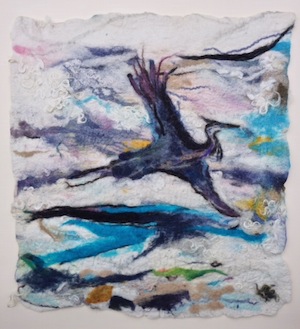
“Heron” by Claudie Azoulai.

All of these pieces are related to a children’s book Azoulai has written. “The book will be called The Spring Feast. It’s about the flora and fauna of Hornby Island, one of my favourite places. I will photograph every tapestry here, and they will be the illustrations for the book,” she said.

Azoulai considers herself a part of the great pageantry of life, and Hornby Island provides her with the opportunity to experience it firsthand. One of the tapestries, “Herring Run,” reflects her connection with nature.

“Every spring, herring come to Hornby Island to spawn,” she explained. “Then salmon come to eat the herring. Seals come to eat the salmon. Whales come to eat seals. Eagles fly over to eat the roe. Everything is alive, this great circle of life, and I’m part of it, too. When I come to Hornby Island in spring, I try to stay outside all day.”

Many of the tapestries depict various birds of Hornby Island. “I work from my imagination,” Azoulai said, “but when I need a particular pose or gesture, I go to the beach to watch the birds or look at photographs.”

Azoulai dyes her wool herself, and no batch comes out of the vat exactly the same, even if all the ingredients of the dye match. “Colours of the fleece always surprise me,” she said. “They influence the images. When I’m stuck, I would dye a new batch, and the new colours might affect the image, lead to a change. The colours dictate the picture more often than not.”

She frequently experiments with new materials, incorporating silk or synthetic particles into the base of wool to add a shine or a different texture. “As long as the fleece entangles the other threads, the image stays together,” she said about that technique.

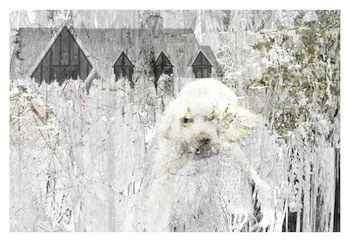
Mixing and matching is also Schouela’s preferred technique, using Photoshop to work with different parts from a multitude of photographs.

“I have nine pieces in this show,” she said. “They are places I revisit often, not by traveling far away, but the places where I live and work. The places I walk. The places I love. The places that have almost a ritualistic meaning for me.… Sometimes, they are physical places. Other times, they are mental places.”

Schouela started her artistic life as a dancer, but dance is an unforgiving art form that takes its toll on the body. She switched first to ceramics, and later dedicated herself to photography. In everything she creates – a dance or a vase or a photo collage – there is movement and transformation. The images flow through each other, striving towards abstraction and emotional truth.

photo - “Perceived Threat” by Nicole Schouela
“Perceived Threat” by Nicole Schouela.

“Photo manipulation is freeing,” she said. “I could take pieces from here and there and create a new image I want, while it still retains the essence of the originals. It might take me several months to finish one picture. I would stop working with it and then, later, I would return to it again and again, until I’m satisfied.”

She photographs places that are part of her and her search for connections and understanding. By now, she has thousands of photos in her digital archives. “Sometimes, I would use a photograph or a fragment of one years after it was taken, because it would fit one particular composition or a feeling I want to explore,” she said. “I don’t want my images to resemble the real places. The original photographs are not important by themselves. They are part of the process. Sometimes, I play with pieces of 30 to 50 photos for one picture. It is fun.”

Schouela’s abstract compositions on the gallery walls lean towards pastel or black and white, with occasional splashes of bright colour. Some are geometrical. Others tell a story or convey an emotion.

“Traditional photography doesn’t interest me anymore – anyone can take a picture now with their phones,” she said. “I don’t want my imagery to be like paintings either. Photography is a separate art form. If I wanted a painting, I would paint. No, I want my collages to keep their photographic elements obvious.”

The exhibit Heart to Heart opened on Oct. 11 and continues until Nov. 9. To learn more about the artists, check out their websites: claudieazoulai.com and nicoleschouela.com.

Olga Livshin is a Vancouver freelance writer. She can be reached at [email protected].

Format ImagePosted on October 19, 2018October 18, 2018Author Olga LivshinCategories Visual ArtsTags art, Claudie Azoulai, Nicole Schouela, photography, Zack Gallery
About the Rosh Hashanah 2018 cover art

About the Rosh Hashanah 2018 cover art

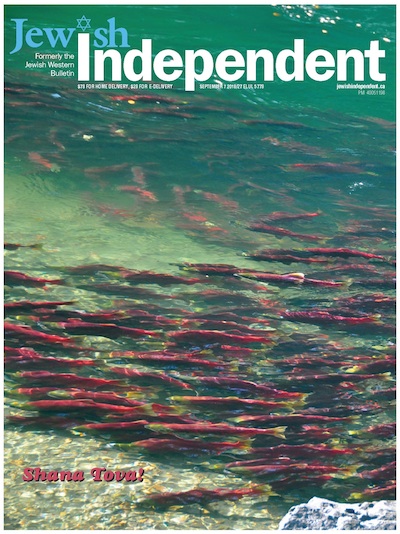
The print edition’s cover photo of the salmon run on Adams River by Leah Ramsay was taken in 2010 at Tsútswecw Provincial Park, near Kamloops, B.C. Formerly named after conservationist and author Roderick Haig-Brown, the park was renamed Tsútswecw this past June.

photo - Rosh Hashanah 2018 coverTsútswecw (pronounced choo-chwek) translates to “many rivers” and the park, established in 1977, encompasses the spawning beds of the sockeye, chinook, coho and pink salmon. Every fourth year is a “dominant” run, with millions of salmon returning – 2010, when this photo was taken, was a dominant year, as is 2018. In honour of the occasion, there is a festival held at the park, called Salute to the Sockeye, which runs this year from Sept. 28 to Oct. 21.

One of the symbols of Rosh Hashanah is the fish head – “we should be the head and not the tail.” There are the themes of creation, rebirth and renewal, as well. In the run, the salmon return from the ocean to their natal stream to spawn, after which most die, their bodies providing nutrients to the vegetation and animals, and the lifecycle begins anew. This all happens in British Columbia from September through November.

“Seeing one of the peak years of the Adams River sockeye run had been a desire for many years and it didn’t disappoint,” said Ramsay. “Even non-hardcore nature nerds are impressed – it is such a huge mass of life all moving to the same goal.”

Format ImagePosted on September 7, 2018September 6, 2018Author The Editorial BoardCategories Celebrating the HolidaysTags British Columbia, environment, photography, salmon

Posts pagination

Previous page Page 1 … Page 4 Page 5 Page 6 Page 7 Next page
Proudly powered by WordPress