Skip to content
  • Home
  • Subscribe / donate
  • Events calendar
  • News
    • Local
    • National
    • Israel
    • World
    • עניין בחדשות
      A roundup of news in Canada and further afield, in Hebrew.
  • Opinion
    • From the JI
    • Op-Ed
  • Arts & Culture
    • Performing Arts
    • Music
    • Books
    • Visual Arts
    • TV & Film
  • Life
    • Celebrating the Holidays
    • Travel
    • The Daily Snooze
      Cartoons by Jacob Samuel
    • Mystery Photo
      Help the JI and JMABC fill in the gaps in our archives.
  • Community Links
    • Organizations, Etc.
    • Other News Sources & Blogs
    • Business Directory
  • FAQ
  • JI Chai Celebration
  • JI@88! video

Recent Posts

  • BGU fosters startup culture
  • Photography and glass
  • Is it the end of an era?
  • Taking life a step at a time
  • Nakba exhibit biased
  • Film festival starts next week
  • Musical with heart and soul
  • Rabbi marks 13 years
  • Keeper of VTT’s history
  • Gala fêtes Infeld’s 20th
  • Building JWest together
  • Challah Mom comes to Vancouver
  • What to do about media bias
  • Education offers hope
  • Remembrance – a moral act
  • What makes us human
  • המלחמות של נתניהו וטראמפ
  • Zionism wins big in Vegas
  • Different but connected
  • Survival not passive
  • Musical celebration of Israel
  • Shoppe celebrates 25 years
  • Human “book” event
  • Reclaiming Jewish stories
  • Bema presents Perseverance
  • CSS honours Bellas z”l
  • Sheba Promise here May 7
  • Reflections from Be’eri
  • New law a desecration
  • Resilient joy in tough times
  • Rescue dog brings joy
  • Art chosen for new museum
  • Reminder of hope, resilience
  • The national food of Israel?
  • Story of Israel’s north
  • Sheltering in train stations

Archives

Follow @JewishIndie
image - The CJN - Visit Us Banner - 300x600 - 101625

Tag: Israel

Creating dialogue, friends

Creating dialogue, friends

The Peace Factory founders Joana Osman and Ronny Edry spoke at the University of British Columbia on Feb. 6. (photo by Zach Sagorin)

“Israel loves Iran,” “Palestine loves Israel,” “Israel loves Palestine,” “Iran loves Israel & Palestine.” The Peace Factory uses social media to connect people in the Middle East, to build relationships and see one another as human beings with visions of peace.

“People may not like the idea of inclusion, the idea of welcoming everyone, but that’s why we are here – to invite those people to learn about the various cultures and faiths that are around us,” said Shem Arce when introducing the Active Community Dialogue (ACD) event Make a Friend, Make Peace. “With some dialogue and understanding we can create a community for everyone – no matter their religion, culture or ethnic background.”

Arce, a University of British Columbia film studies student from Mexico, recently began ACD with the goal of combating discrimination through meaningful, respectful dialogue and interactions.

ACD’s Make a Friend, Make Peace event on Feb. 6 featured a presentation from the founders of the Peace Factory: Ronny Edry, an Israeli graphic designer living in Tel Aviv, and Joana Osman, a Palestinian living in Munich. The pair also spoke at King David High School.

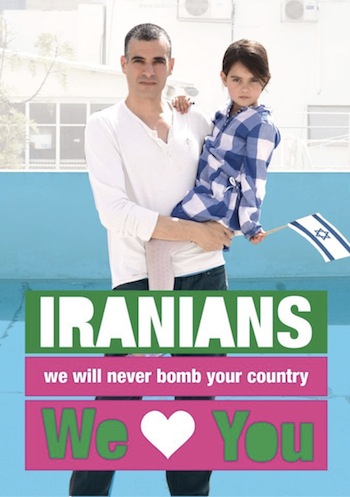
image - Israeli graphic designer Ronny Edry sent this poster out in 2012, when Israel was considering a preemptive strike against Iran
Israeli graphic designer Ronny Edry sent this poster out in 2012, when Israel was considering a preemptive strike against Iran.

The UBC event drew dozens of people, and Edry showed the crowd a poster he uploaded to Facebook in 2012, when Israeli Prime Minister Binyamin Netanyahu “was calling for preemptive strike on Iran,” when “it was quite stressing.”

The graphic designer decided to send something else to Iran. He designed a brightly coloured poster with a photo of him holding his daughter and bold text declaring, “Iranians / we will never bomb your country / We ♥ You.” Edry told the audience that the “five first comments were ‘delete it’” but, after leaving the poster online, he was surprised to find that “Iranians were commenting on the picture” and a line of communication was created.

“If something works, do it again,” said Edry. Soon, he added, “a lot of Iranians and Israelis started having a conversation.”

Interestingly, the security guard of the ACD event, an Iranian-Canadian man, had participated in the Peace Factory movement.

“When you don’t know someone and you close your eyes and think of the enemy, you end up thinking of some kind of monster,” said Edry. In Israel, “most of the time on the TV, they won’t show you the nice people of Iran.”

But, after starting the “Israel loves Iran” campaign, Edry received pictures from Iranians wanting to join. The movement has enabled many Iranians and Israelis to connect and build friendships online. And it continues to grow, with more than 121,000 likes and more than one million unique visitors each week to the “Israel loves Iran” Facebook page and more than two million views of Edry’s Ted Talk. The movement is continuing, with “both sides sharing stories and pictures of themselves,” said Edry.

With the success of “Israel loves Iran,” Edry said people were “coming up to me and saying, ‘Why don’t you do the same campaign with the Palestinians?’”

Soon after, Osman founded the group “Palestine loves Israel” to create a platform for Palestinians and Israelis to get to know one another through social media.

Together, Edry and Osman created the Peace Factory to “try to rehumanize the [other side] and give them a face and a story.”

Osman said building these connections “changes everything because, once you make a friend on the other side, everything changes for you.”

Osman said she asked herself, “As one person what can you do?” Her answer was, “You can be part of the change and you start communicating … if you can change one person’s mind, that may be enough.”

She added, “The enemy is nothing like you have in your mind … and, when you get to see his face and you see nice people,” you realize “they are not that bad.”

The Peace Factory’s vision is of a free and democratic Middle East, and they intend to build bridges and friendships to connect people with the same vision.

“It is not that we deny there is a conflict,” Osman said. “We have to pay attention to it, but I strongly believe that the solution can’t come from politics, it comes from people, real people connecting to each other…. Once you understand the other side is a real people with real pain … you come to the conclusion we are one people, one human race, with one goal to live in peace.”

To learn more, visit thepeacefactory.org. Anyone interested in future ACD events can find out more at acdmovement.com.

Zach Sagorin is a Vancouver freelance writer.

Format ImagePosted on March 10, 2017March 8, 2017Author Zach SagorinCategories LocalTags Iran, Israel, Joana Osman, Middle East, Palestine, peace, Ronny Edry, Shem Arce, UBC
Making Israeli cities bloom

Making Israeli cities bloom

Planting trees as a community project in Jerusalem. (photo by Ariella Tzuvical)

Are Israeli city-dwellers still attached to the land? The answer is yes, but the connection to the land plays itself out in a surprising way.

By and large, today’s Israelis are an apartment-bound lot, but many dream of having a house with a garden. Those who are lucky enough to have a small garden – or an apartment with a patio – plant flowers and even grow fruit. Depending on the season, many Israelis grow grapes, oranges, tangerines, pears, grapefruits, lemons, kumquats, olives and pomegranates. Interestingly, some of these items have been grown in Israel since ancient times: “a land of wheat and barley, and grapevines and fig trees and pomegranates; a land of olive trees and honey … you shall eat and be satisfied.” (Deuteronomy 8:7-10)

Community gardening is a budding and not insignificant phenomenon taking root in Israeli cities. In Jerusalem alone, there are 70 community gardens. Municipalities, community centres, local branches of national nature preservation organizations (like Hachevra L’haganat Hateva), pro-environment charitable bodies (like Keren Sheli) and the Ministry of Environmental Protection are teaming up to help urban residents create these gardens. They are assisting interested apartment dwellers by providing seed money, land or know-how to get projects off the ground and onto porches, patios and even rooftops.

Why do urban Israelis grow fruits and vegetables? One young mother from Tel Aviv commented in a Yediot Ahronot article that she wants her children to understand that produce does not come from the supermarket.

Of course, most people want to use their homegrown fruits and vegetables in their regular cooking and preserving. But some grow fruit, such as the pomegranate, for special holiday consumption. For these gardeners, the following Rosh Hashanah blessing takes on added significance: “May the desire of our G-d and the G-d of our Fathers be to increase our merit like the [seeds of the] pomegranate.”

The Jerusalem-based Melamed family says it gardens for exercise, art and culture. They maintain that gardens produce cultured people. Another Jerusalemite looks at her blossoming pear tree and says that keeping a garden enriches a person’s life.

Although Israel, like most other Western countries, has largely switched from being an agrarian society to a technological society, places like the Jerusalem Botanical Gardens believe that gardening has a place. With that in mind, the facility has hired staff to make urban gardening more relevant to those living in Jerusalem.

As well, many Israelis seem to maintain the notion that G-d provides the ingredients for surviving off the land. Thus, when Jews celebrate the rebirth (or reproduction) of the Jewish year, they read: “See, I give you every herb, seed and green thing to you for food.” (Genesis 1:28-30) The annual Torah reading about producing in order to have food has helped fix the idea in the Jewish psyche.

Dr. Rabbi Dalia Marx wrote in A Torah-Prescribed Liturgy: The Declaration of the First Fruits: “The declaration of the first fruits is a bold text.” In Deuteronomy 26, Moses addresses the Israelites on the plains of Moab, “calling upon the Israelites wandering in the wilderness with no permanent ties to the earth to imagine themselves as farmers securely living in their own land. But simultaneously, the text demands of farmers living in their own land that they remember their days as wanderers in the wilderness – and necessarily … ponder the fragility of their own lives.”

When bringing the first fruits of the land to the Temple, the farmer thanks G-d for the bounty in a manner providing for “the entire recapitulation of national history.” In essence, “the farmer teaches himself that the final chapter in the national story is unfolding in real time.”

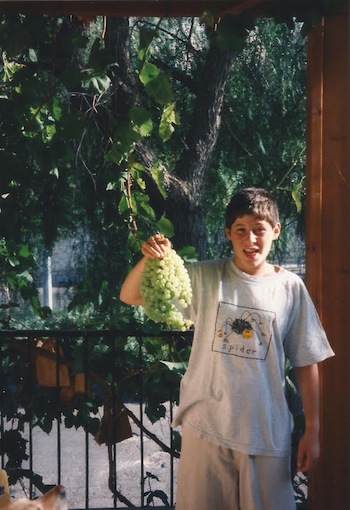
photo - Ilan Rubin Fields holds a cluster of grapes from the family’s grapevine
Ilan Rubin Fields holds a cluster of grapes from the family’s grapevine. (photo by Deborah Rubin Fields)

It should not come as a surprise that Israelis still seriously celebrate the agricultural component of their Jewish pilgrimage holidays. At Sukkot, Israelis everywhere erect sukkot, or booths, just as growers did in their fields thousands of years ago. And, of course, during Sukkot, observant Jews around the world purchase and bless the following combination of plants and fruit: the etrog (citron), lulav (palm), hadas (myrtle) and aravah (willow). These are known as the arbah minim, the four species.

The Passover seder plate contains greens that remind Jews that spring has arrived in Israel, while Shavuot commemorates the harvest that began around Pesach time and ended seven weeks later. For many years, this agricultural holiday had special meaning for those living in Israel, as the early settlers lived off farming. Today, Israel holds a variety of festivals showing off the bikurim, or first produce of the season. These holiday celebrations focus on the production of dairy products and honey.

In early winter, Jews throughout the world celebrate Chanukah by eating foods prepared in oil. Some food researchers maintain this may be related to the fact that Chanukah coincides with the end of the olive harvest. In late winter – except during the Shmitah year, when Jewish law dictates that the land be given a chance to rest – Israeli schoolchildren are out in force planting new trees on Tu b’Shevat, the birthday of the trees, which is increasingly celebrated with a special seder.

Avi Eshkoli, a veteran Jerusalem-area gardener, reported that he had seen more people trying to observe the Shmitah than he had ever witnessed before. He noted that the practice covers the gamut of Israeli religiosity and spirituality.

Part of what continues to tie Israelis to gardening is deeply implanted in Jewish tradition. There is no escaping the fact that Jewish holidays are connected to natural events. Every Jewish holiday begins with a blessing over the wine, the fruit of the vine, and special holiday texts such as Shir HaShirim (the Song of Songs), which is read on Pesach, and Megillat Ruth (the Book of Ruth), which is read on Shavuot, are ripe with references to gardens and fields.

The blessing over the wine is even part of the Jewish wedding ceremony. And, moreover, before the Sabbath eve meal, Jews recite the Kiddush that recalls G-d’s creation. Thus, at least once a week, many Jews are reminded of the process of birth, growth and production in the natural world.

Dr. Rabbi Marx points out that the “new” liturgy for Yom Ha’atzmaut, Israeli Independence Day, incorporates the concept of first fruits, reflecting “that we are home now, but acknowledg[ing] both the process leading to this moment and the fact that the dwelling in the land of Israel is not obvious or guaranteed.”

For Israelis then – and perhaps for many Jews in the Diaspora – urban gardening is not just about growing plants, but about growing spiritually as a people.

Deborah Rubin Fields is an Israel-based features writer. She is also the author of Take a Peek Inside: A Child’s Guide to Radiology Exams, published in English, Hebrew and Arabic.

Format ImagePosted on March 10, 2017March 8, 2017Author Deborah Rubin FieldsCategories LifeTags gardening, Israel, Judaism, urban gardens
High-tech, fashionable art

High-tech, fashionable art

Fashion designer Noa Raviv (photo by Ryan Duffin)

Avant-garde fashion designer Noa Raviv says her award-winning fashions were triggered by her interest in the power of mistakes.

Born in Tel Aviv in 1987, Raviv is currently developing her couture brand in New York City, after achieving global industry recognition for her Hard Copy garments combining hand-sewn, 3D-printed polymer synthetic tulle with laser-cut appliqués.

“Hard Copy was a really long process that came out of my thinking about the concept of originals and copies in our era,” she told Israel21c. “When I started working with 3D software and printing, I was intrigued by the mistakes I made. If you input a command that can’t be executed, you get unexpected results. It was kind of magical to me. I was fascinated by mistakes created by a perfect machine and started exploring how it could be my answer to designing something original – because a mistake is something you can’t replicate.”

Hard Copy features ribbed polymer shapes printed out on a Stratasys Objet Connex multi-material machine and stitched to voluminous pleated tulle, silk and organza.

Named Fashion Designer of the Year 2014 at the 3D Printshow in London, Raviv has exhibited in Carrousel du Louvre, Paris; Old Billingsgate, London; New York’s Metropolitan Museum of Art; and Boston’s Museum of Fine Arts, among other venues.

In November 2015, Raviv gave a keynote talk on The Power of Mistakes, at Futurescan 3, a conference organized by FTC (Association of Degree Courses in Fashion and Textile) at Glasgow School of Art in Scotland. She spoke on the same topic at the Museum of Design in Atlanta, Ga.

Raviv was one of four innovative Israeli women honoured at the 10th annual Israel Day at the New York Stock Exchange, Nov. 10, 2016.

Raviv, who appeared on Forbes Israel’s 2016 “30 Under 30” list, said she is “fascinated by the tension between harmony and chaos, tradition and innovation,” and wants to continue experimenting with technology.

Her current collection, Off-Line, was released in spring/summer 2016.

photo - Noa Raviv’s Off-Line collection was released in spring/summer 2016
Noa Raviv’s Off-Line collection was released in spring/summer 2016. (photo by Ryan Duffin)

Though it’s not 3D-printed, Off-Line combines elements of complex handwork and machine work, beginning with graphic design software and topped off with Swarovski crystals.

Raviv’s collaboration with Swarovski involves sending design files to Austria, where the company custom-makes molds from which millions of tiny crystals are applied onto a flexible transparent material and sent back to New York for finishing.

“Once every crystal is in the right place, they’re applied by heat to organza,” said Raviv, acknowledging that the more complicated pieces take a few weeks to complete.

“Hard Copy explored computers and digital errors. Off-Line explores the more intimate side of the creation process,” she said.

Most of the pieces in Off-Line are ready to wear and others can be made to order. Prices start at $1,800 US.

“My collections are not meant for the masses,” she admitted. “I’m still establishing my clientele – women who appreciate art, fashion and quality and care a lot about uniqueness.”

Neither is 3D fashion for the masses. In fact, Raviv doesn’t believe it will be available on the retail level anytime soon.

“Maybe in the very far future,” she said. “Fashion is far too complex to make in one machine, technique or material. There are so many nuances and the technology isn’t there yet to create what people want to wear. For now, it’s a romantic idea.”

A 3D dress made by another Israeli designer, Danit Peleg, was worn in a dance performance by U.S. snowboarder Amy Purdy at the opening ceremony of the recent Paralympics in Rio.

An intuitive choice

Always captivated by art and fashion, Raviv wavered between art school and fashion school after two years of army service and another 12-plus months pursuing other interests, including learning to speak Spanish – a very practical skill, as she is married to an Argentine-born startup entrepreneur.

“At the last minute, I intuitively went for fashion,” she said.

Raviv graduated in 2014 from Israel’s Shenkar College of Engineering and Design. Hard Copy was her senior project. Her designs also were included in 2013’s Here Comes the Bride exhibition, which opened at Beit Hatfutsot-Museum of the Jewish People in Tel Aviv and traveled to other countries.

Raviv moved to the New York City borough of Queens a little more than a year ago and is getting used to the more formal work culture in the United States.

“Israel is very small and the fashion scene is small, and it’s hard to manufacture in Israel,” she explained. “It’s important for me to be very close to the development and production of my designs.”

For more information, visit noaraviv.com.

Israel21c is a nonprofit educational foundation with a mission to focus media and public attention on the 21st-century Israel that exists beyond the conflict. For more, or to donate, visit israel21c.org.

Format ImagePosted on March 10, 2017March 8, 2017Author Abigail Klein Leichman ISRAEL21CCategories WorldTags 3D printing, fashion, Israel, New York, Noa Raviv, Swarovski, technology
תפסיקו ליילל ותתחילו להילחם

תפסיקו ליילל ותתחילו להילחם

ויויאן ברקוביצ’י (צילום: Foreign Affairs/Government of Canada via National Post)

שגרירת קנדה בישראל לשעבר ויויאן ברקוביצ’י: “השימוש בביקורת על ישראל כדי לבקר את היהודים הוא פשוט אובסביבי”

“קל לבקר את ישראל וקל לפעול נגדה. בכל המוסדות באו”ם רואים את הפעילות הזאת. השימוש בביקורת על ישראל כדי לבקר את היהודים הוא פשוט אובססיבי”. את הדברים אמרה שגרירת קנדה לישראל לשעבר, ויויאן ברקוביצ’י, במסגרת ראיון שערך עימה אתר אנרג’י. ברקוביצ’י מונתה לתפקיד על ידי ראש הממשלה הקודם של קנדה, סטיבן הרפר, והיא נאלצה לפרוש מתפקידה לאחר כשנתיים וחצי בלבד (ביולי אשתקד), לאור החלטת ראש הממשלה הנוכחי של קנדה, ג’סטין טרודו, להחליפה בדבורה ליינוס, שהייתה השגרירה באפגניסטן וקודם לכן עבדה בשגרירות קנדה בוושינגטון. ברקוביצ’י שהיא עורכת דין יהודיה מטורונטו היתה חסרה ניסיון דיפלומטי. היא אף גרה תקופתה מסויימת בישראל ופעלה בעבר בין היתר בתחום התקשורת הקנדית. ברקוביצ’י נחשבה מטבע הדברים לפרו-ישראלית בצורה מובהקת, יצאה נחרצות נגד החאמס, הרשות הפלסטינית והמשטר האיראני ויתכן ובממשל של טרודו לא אהבו זאת. בקהילה היהודית בקנדה לא קיבלו את החלפתה בהפתעה של ממש.

בנוגע לעליית הימין הקיצוני והתגברות הלאומיות במדיניות המערב אמרה ברקוביצ’י: “תמיד הייתה אנטישמיות בארה”ב ובקנדה, בדיוק כמו התנועות החברתיות שפעלו בשנות השישים לא העלימו את הגזענות. גם אני עת הייתי השגרירה של קנדה בישראל, הואשמתי בחוסר נאמנות לארצי בשל היותי יהודייה”.

ברקוביצ’י לא מקבלת את הטענות שהממשלה בקנדה מתעלמת מהאנטישמיות. לדבריה: “זה פשוט לא בסדר העדיפות שלהם מפני שזה לא משרת את האינטרסים הפולטיים שלהם”.

באשר לשאלה האם לא נכון לפעול משפטית נגד ההסתה נגד היהודים ברשתות החברתיות, אמרה השגרירה לשעבר: “גם הנוצרים טוענים כך. אנו לוחמים בזירה התקשורתית, והגישה התבוסתנית שזה לא צודק לא תעזור. יש להילחם בצורה מאורגנת תוך שימוש בצעירים מוכשרים למלחמה הזו. אני ממליצה שתפסיקו ליילל ותתחילו להילחם. אנו חייבים להגיב, לפעול עכשיו”.

הג’י.פי.אס אשם: כך טען נהג שרכבו נמצא במנהרה של הרכבת הקלה בטורונטו

נהג שרכבו נמצא תקוע על פסי הרכבת הקלה בטורונטו מאשים את מכשיר הג’י.פי.אס, שלדבריו כיוון אותו למקום. הרכב מסוג מיצ’ובישי כסוף שנתקע גרם לשיבושי תנועה חמורים של מערך הרכבת הקלה בעיר, בשעות הבוקר העמוסות שנמשכו כשש שעות תמימות.

אחד הנהגים של הרכבת הקלה שהסיע את הרכבת בסביבות חמש בבוקר נדהם לראות רכב תקוע על המסילה באחת המנהרות בדאון טאון. הוא הצליח לעצור את הרכבת מבלי לפגוע ברכב והזעיק את אנשי התחזוקה. מנוף מיוחד הובא למקום (כיוון שגרר של רכבים גם כן היה נתקע על המסילה) כדי להזיז את הרכב, ולאפשר לחדש את תנועת הרכבות הקלות בעיר.

מסתבר שבעל הרכב שנתקע בסביבות חצות ברח תחילה ממקום האירוע. למחרת בבוקר הוא הגיע למנהרה וכשראה את מפעיל הרכבת הקלה עומד במקום לידה, הוא התחיל לברוח שוב אך נתפס על ידו. לטענתו הוא נהג הישר לפסים שבמנהרת הרכבת הקלה, כיוון שכאמור הג’י.פי.אס ברכבו כיוון אותו לשם. דובר מערך התחבורה הציבורית של טורונטו, ברד רוס, לא מקבל את גירסת הנהג, כיוון שהרכב נסע על פסים קרוב לשמונה מאות מטר אל כיוון תחנת יוניון (שהיא התחנה המרכזית של התחבורה הציבורית בטורונטו), וזה דבר נדיר. לדברי רוס קרו בעבר מקרים בהם בעלי רכבים נתקעו על מסילות התחבורה הציבורית אך אף פעם הרכבים לא נמצאו עמוק בתוך המנהרות. הנהג קיבל דוח ובשלב זה לא ברור אם יפתחו נגדו הליכים פליליים.

Format ImagePosted on March 8, 2017March 7, 2017Author Roni RachmaniCategories עניין בחדשותTags antisemitism, driver ויויאן ברקוביצ'י, GPS, Israel, light rail, Toronto, Vivian Bercovici, אנטישמיות, ג'י.פי.אס, טורונטו, ישראל, נהג, רכבת הקלה

Bibi’s visit to Washington

Israeli Prime Minister Binyamin Netanyahu’s visit to the White House generated more buzz than policy direction. But there’s nearly as much to be gleaned from what he and U.S. President Donald Trump didn’t say as from what they did. Here are some takeaways.

Trump is eerily out of touch with antisemitism. Given the apparent spike in antisemitic incidents across the United States, including 60 bomb threats to Jewish community centres across North America in January alone, one reporter asked Trump what he planned to “say to those among the Jewish community in the States and in Israel, and maybe around the world, who believe and feel that your administration is playing with xenophobia and maybe racist tones.” In response, Trump opened bizarrely with a reference to the number of Electoral College votes he received. Then he deployed the classic “some of my best friends are Jewish” evasion by mentioning his Jewish daughter and son-in-law and grandchildren. He concluded by saying, “you’re going to see a lot of love.” On the heels of omitting the mention of Jews from the White House statement on International Holocaust Remembrance Day – though his opening remarks mentioned “survival in the face of genocide” – this evasion continues the chill.

Does Trump know what a one-state solution means? Trump seemed to roll back the longstanding U.S. commitment to two states by saying, “So I’m looking at two-state and one-state, and I like the one that both parties like.”

It’s not clear that Trump is aware of what he means by a “one-state” solution, particularly since people tend to use it very differently. The Israeli right-wing has, in recent years, spoken of a one-state solution involving various forms of West Bank annexation. In this scenario, it’s unlikely that Palestinians would be given full rights. However, Israeli President Reuven Rivlin has recently called for annexing the West Bank and providing full voting rights to Palestinians. On the left, the one-state solution has certainly meant a single, democratic state. In that scenario, refugees would likely be given full rights of return and the culture and identities of both national peoples would be elevated. It’s unlikely that Israel would accept such a situation. But, given the extent of settlement entrenchment in the remaining territory, which would have been allocated for a Palestinian state under a two-state scenario, all of these ideas need to be explored.

As for settlements, Trump was more critical of Israeli settlements than one might have expected, given his settlement-supporting pick for ambassador to Israel, David Friedman. “I’d like to see you hold back on settlements for a little bit,” he told Bibi.

A Jewish state is not what it seems. Bibi has done a masterful job over the last several years in pointing the world’s attention to the fact that the Palestinian Authority has not recognized Israel as a “Jewish state.” No less than five times in

Netanyahu’s remarks at the Washington press conference did he declare that Palestinians must recognize “the Jewish state.” At the same time, he hid the fact that the Palestinians have, in fact, recognized Israel’s right to exist in peace and security. On Sept. 10, 1993, the day before the Oslo Agreement was signed, Palestine Liberation Organization head Yasser Arafat wrote to Israel’s then-prime minister Yitzhak Rabin that the PLO “recognizes the right of the state of Israel to exist in peace and security.” Bibi need not look far for the texts of these letters of mutual recognition. They are on Israel’s own Ministry of Foreign Affairs website.

As for Israel’s demand that the Palestinians recognize Israel specifically as a “Jewish” state, observers realize that this is code for denying Palestinian refugees the right of return. This is a contentious issue and will have to be part of the final status negotiations. In sum, it is not up to the Palestinians to recognize

Israel’s Jewish character; that is an internal matter. It’s up to the Palestinians to recognize Israel’s existence, entailing safety and security – and that, they already have done.

What’s the substance? Skilled orator that he is, Bibi stressed he wanted to deal with “substance,” not “labels,” uttering the word “substance” five times. By substance, he made clear he wanted the Palestinians to recognize Israel as a “Jewish state” (see above) and wanted Israel to retain security control in the eastern part of the West Bank. Wouldn’t it be something if, by “substance,” Bibi meant that everyone in the areas currently under Israeli control is entitled to basic civil rights and human rights? Maybe that’s too substantive. One can dream, though.

Mira Sucharov is an associate professor of political science at Carleton University. She is a columnist for Canadian Jewish News and contributes to Haaretz and the Jewish Daily Forward, among other publications.


Posted on February 24, 2017February 21, 2017Author Mira SucharovCategories Op-EdTags Israel, Netanyahu, politics, Trump, United States

“Lost Tribe” in Canada

While I was completing my doctoral work examining the creative expression abilities of seniors with dementia and the therapeutic environment they lived in, I continued working in the Creative Expression Activities Program I had developed. Early in 2000, a group of six Jewish couples who had immigrated to Canada in their later years, asked me to conduct a series of creative expression activities with them. The participants had come from Mexico, South Africa and England to join their adult children and families in Canada. The group named themselves the Lost Tribe, after the Lost Tribes of Israel – the two tribes out of the 12 original biblical tribes that disappeared. The couples lived on the North Shore, away from the main Jewish centres in Vancouver, and strived to build a strong new community based on traditional Jewish Orthodox customs.

The group formed friendships based on common faith, customs, and the challenges of getting older and adjusting to a new country. They faced the potential loss of independence they had worked so hard to attain and the ever-increasing fear of becoming a burden on their adult children. To be successful, they knew they would need to merge the old world with the new. The group met regularly to share their spirituality and serve their social and religious needs. The couples took turns hosting our sessions at their homes and enthusiastically agreed to be filmed and recorded.

The participants were advised that this program was initially developed for seniors living with early to moderate dementia and that it would be adjusted to meet their abilities. The group was curious about the differences I observed of seniors with dementia, and I was happy to share my observations.

The Lost Tribe was a breakaway group from the main synagogue on the North Shore, based on more traditional Jewish observance during services, which members conducted themselves at a private home, occasionally joined by a professional cantor. During the High Holidays, the congregation swelled to 60 worshippers. However, on Friday and Shabbat services, it would shrink back to a handful of people, hardly enough for a minyan, where 10 males need to be present at prayer.

Members of the Lost Tribe were Lilia, late 50s, and Hilario, 65, from Mexico; Jeffrey, 82, and Greta, 72, from England; Aryeh and Rachel, both in their 60s, from Johannesburg, South Africa; Abe and Jean, both in their 70s, from Cape Town, South Africa; Mair from Morocco and Helene, from northern Alberta, Canadian by birth; and Ralph, 70, born in Turkey, who lived half his life in England, half in Canada, and Gillian, 67, who is English but lived half her life in Canada.

Creative expression

The approach to creative expression is based on nursing, psychology, social work, adult education, the arts and architecture. It aims to enhance a sense of fulfilment, personal growth and accomplishment and contributes to the appreciation of the arts in the healing process and in enhancing an individual’s quality of life. The award-winning program includes the visual and performing arts: discussion, poetry, music and dance.

The topics for discussions and the process were discussed in advance. The sessions themselves were loosely guided by me and by the group’s dynamics. Each session lasted for two hours and ended with lunch. Participants took turns providing food and snacks. No cost was involved and my services were free.

I found it remarkable that they were Jews from various corners of the world and, yet, I understood what they were talking about, I could sympathize with them, cry at their sad stories and laugh at their jokes.

As the program progressed and trust grew stronger, I realized I was recording very personal stories that were rich in details, in Jewish philosophy, thoughts on the Jewish religion, on aging and what life is all about. I was taken by surprise by the level of connectedness I felt with these perfect strangers. I noted all the familiar mannerisms, food, songs, beliefs, humour, hand gestures, life stories of great lessons and how we shared the same ethnic identity. I found it remarkable that they were Jews from various corners of the world and, yet, I understood what they were talking about, I could sympathize with them, cry at their sad stories and laugh at their jokes.

The four topics were: philosophical approaches to life based on strength versus weakness; relationships with family members (are we a burden, or is this inevitable as we grow older?); the meaning of being an elderly Jew in Vancouver and in their country of origin, and the impacts of the Holocaust in Europe; and spiritual connection to Israel. Key thoughts were highlighted and categorized into themes to demonstrate that Jewish identity matters, and these values are imbedded in the more general issues of aging, cognitive abilities and family relationships. Here are some of the participants’ thoughts.

Strength and weakness

Ralph: Strength means two things: physical strength and mental strength that goes down as you get older. Physical strength you need to survive. Mental strength is adaptability, which is the greatest thing to me. The other thing is peace. It appears to me that inner peace comes with age….

Aryeh: Unfortunately, we live in a world that there is no place for weakness … and, as we get older, we need to get stronger.

Jeffery: Not everything is strength. I will give you an example. Israel is very strong and she cannot do anything with it. Absolutely nothing….

Rachel: I believe in strength. I [have] always been strong; I [have] always been a strong believer of my faith…. People in Canada are more placid. I became quite placid. You are nowhere unless you fight. That is what I do.

Lilia: Sometimes we need to be weak in order to be strong. Like a huge tree, we need to be flexible.

Gillian: I learned to be strong at a very early age. I was shipped off to a boarding school when I was 9. I was one of four Jewish girls in the whole school and we had to stick together. We were tortured, literally. It helps to get together with others who feel the same way. It was a good lesson. I was a fighter.

Abe: I think we were all born with strength and weaknesses. There are two things that determine strength and the weakness. One is life experiences; the other, the genes that we inherit…. When being passive, it could be a show of inner strength not to react or respond to everything…. It is a delicate balance.

Family relationships

Rachel: Most older people don’t want to be a burden on their children…. The last thing they want to do is to have to live with their children.… But what happens when you are really ill?

Greta: In a twinkle of an eye, my children would look after us, but I feel my children spent many years looking after their children. When they have the freedom to live their lives, I don’t want to be a burden to them…. I like my independence.

Jean: Living with your children does not mean living in their living room.… It can be a suite or a basement and have the best of both worlds.

Abe: We need to look at the following three aspects. The state of our health at any given time, how much assistance we require from different sources, and our state of our finances…. It depends on our relationship with our children and the interplay between the parent and the child.

Aryeh: We all remember most of the 10 commandments but I believe that our children forget more than we did one really important commandment, “honour your parents that your days may be longer on earth that God has given you.” I don’t expect anything from my children. We are living in different times…. One of the concepts in Judaism is that we should be happy with our lot, whatever it is. My mother looked after her parents. It was not a question of a burden; it was accepted in those days.

Gillian: About children – they were not asked to be born. They came, you loved them with all your heart because this is what you do for children, and then you released them to have their own life…. I don’t think they owe you a thing. But, if they want to give you something, you should take it as a bonus.

Ralph: I agree with Gillian. When your children are born, you nurture them. It is an animal thing to do…. The children don’t owe the parents and the parents don’t owe to the children. Those children that want to maintain a relationship … being financial or sheer love, they do it because they want to. I feel that my grandchildren need me as much as I need them.

Being an elderly Jew

Abe: We were fortunate. Our daughter wanted us to come here since she wanted to look after us. We live in their building and we are very happy. Being close to a Jewish community is very important to us…. I was very active in the Jewish community in South Africa, all the time…. It was Orthodox almost 100%. Coming here, I had to adjust to a different set of circumstances.

Gillian: We were delighted to find this group here. We lived in many places in Canada with hardly any Jews around. It is very comforting to have other Jews around. They know your background, they understand your sense of humour. We may have arguments with them, but this is friendship and not cultural differences.

As a young boy, I grew up in the East End of London … in a violently anti-Jewish neighbourhood. So, my religious side is sadly lacking but my right arm was very strong.

Ralph: I am a reformed Jew, not a Reform Jew. Big difference…. I am not a particularly religious Jew, I do not follow all the commandments, as many as I should, but I am a Jew by birth, by faith, and a Jew by outlook. I feel much more comfortable amongst a group of Jews than in a group of non-Jews. As a young boy, I grew up in the East End of London … in a violently anti-Jewish neighbourhood. So, my religious side is sadly lacking but my right arm was very strong.

Rachel: When I was younger, I was like all mothers, I dropped off my children at the synagogue and did not go in myself and, as I became older, I became more Jewish…. Unfortunately, when we came here, there is not much Jewishness here, living on the North Shore…. Coming here, I realized what I had there and I missed it.

Greta: When I grew up, we moved to another Jewish area, probably the biggest Jewish community in London. Everywhere you went it was Jewishness, if you wanted it or not. I did want it…. It is not enough Jewish here like it was back home in London. We imparted our Jewishness with my children and they with their children. Amen.

Connection to Israel

Jean: Israel makes me proud because Israel is a country that belongs to all Jews. We can all go there any time and it is our country and it makes [us] grateful and proud. Also, it is a great source of comfort to know that it is there and, because it is there, we have got a much better standing in the world: we are not again [a] homeless, wandering people. And this tiny, tiny, little country has accomplished the greatest things, great discoveries, experiments and scientific things, winning wars. Phenomenal what this country has done, and that is why I appreciate having it as my country.

Aryeh: Having Israel is certainly one of the miracles. Going through the Holocaust, [approximately 40%] of the Jews worldwide were being destroyed, and then getting a country is unbelievable, and having to fight for this country. Israel hands us dignity.… One of the things for the messianic era is that we all will be gathered back to Israel…. The fact that America is a great ally of Israel is another modern-day miracle. Imagine if they were not.

Jean: I don’t have any dramatic stories. For me, Israel means a spiritual reality that will always exist…. Israel is the very framework for our civilization.

Greta: When Israel became a state, we were thrilled we finally at last have a country. Jews could hold their heads up when, prior to that, only a certain number of Jews could go to universities, antisemitism was everywhere. It changed a lot of things. Jews started to blossom where they were not allowed to [before]…. What I don’t understand – why the world feels sorry for what the Palestinians are going through, totally ignoring what the Jews are going through. If, God forbid, Israel did not exist, it would be the biggest tragedy that happened to the Jews.

Gillian: Israel, for me, is a beacon of light in a very darkening world. Like Greta, I was born in England, a granddaughter to Russians Jews. I was raised to put the pennies in the blue box for Israel to buy land. As I got older, I was sent to a boarding school, where I encountered for the first time really bad antisemitism…. If things got bad in Canada, we know we would have a home there. We need to protect them and we know they will protect us…. There must be always an Israel and it is up to us to make sure it always exists.

Ralph: I come from a community that up to 1939 really did not experience antisemitism for hundreds of years. A state of Israel was more in the religious context than the emotional context…. Israel since then became part of my life and being in many, many ways. I regret we did not go to Israel, partially from fear of not knowing the language, ignorance. By then, I had a wife and two small children and we needed to eat and pay the rent…. I walk with my head up, held high, because there are kids with guns in Israel. In my early years, one of the antisemitic thorns was why don’t you go back to where you came from, bloody kike? There was no place. Where could I go? From one part of London to the other. Today, there is [Israel].

I am pleased to be over 70 years old for one important reason, so I was old enough to understand what was going on when Israel was established as a state in 1948.

Abe: To me, Israel is about the most unique country in the world…. It is the modern-day realization of biblical prophesy…. I am pleased to be over 70 years old for one important reason, so I was old enough to understand what was going on when Israel was established as a state in 1948. Many, many Jews today did not go through this experience…. This was the first wave of emotion that swept me away, I just could not believe it was happening. The second time the importance of Israel to me came to the front was one week before the 1967 war. We were all sitting and praying and fearing for the annihilation of the state of Israel. How can Israel exist as she was ready to be attacked by the armies of three Arab countries: Syria, Egypt and Jordan?… Then came the Six Day War. We won wonderfully, Jerusalem was reunited. I just broke down in absolute tears…. And the third time was in 1976, when Israel conducted a raid on Entebbe, when Israel went out of its way to save Jews…. It brought home to me how terribly important the existence of Israel and its continuity is in all of us.

The tribe disbands

Eventually, two couples and their families succumbed to the attraction of joining a stronger Orthodox Jewish community and moved to Vancouver. Their move was hastened by an earlier breakdown in the group, resulting from disagreements about approach – should it be more liberal and embrace the Conservative way, or stay with the Orthodox approach. Other issues crept in – health problems, for example – and the group fell apart.

The experience with the Lost Tribe was emotionally therapeutic for all of us. This group did not differ from seniors of other cultures: staying engaged with others, coping with changes, maintaining physical, mental and financial health and learning were crucial for successful aging. Opportunities to practise religion, faith and spirituality were specifically important in coping with difficult situations. Although the seniors felt the sessions were rewarding and looked forward to each activity, tensions stemming from philosophical differences in Jewish worship and group dynamics contributed to the group’s demise after one year.

Dalia Gottlieb-Tanaka, PhD, chair of the Society for the Arts in Dementia Care, earned her PhD (2006) and post-doctorate (2011) from the University of British Columbia, and is a graduate of the Bezalel Academy of Arts and Design, Jerusalem. She developed the Creative Expression Activities Program for seniors with dementia, which won an award from the American Society on Aging and the MetLife Foundation, and continues to give presentations in the United States, Canada, Israel and Europe.


Posted on February 24, 2017February 21, 2017Author Dalia Gottlieb-TanakaCategories LocalTags creative expression, Israel, Judaism, North Shore, seniors
Bagel Club travels to Israel

Bagel Club travels to Israel

The Bagel Club will volunteer at Shalva, the Israel Association for the Care and Inclusion of Persons with Disabilities, when they are in Israel. (photo from shalva.org)

The mission of the Jewish Community Centre of Greater Vancouver’s inclusion services is “to educate, engage, train and support members with diverse needs and their families in our community.” One of the ways in which they do this is with the Bagel Club, described as “a social club for adults with diverse needs” that promotes Jewish heritage and education. In just over a week, 11 club members will experience the ultimate Jewish heritage and educational experience – a trip to Israel.

As part of its overall mission to “enhance positive identification with Jewish life and Israel and to develop good citizenship and a sense of community and belonging through various partnerships with communities in Israel,” JCC inclusion services coordinator Leamore Cohen told the Independent that, over the last 15 years, “the JCC has arranged for various cohorts, including counselors-in-training, dance troupes and specialty interest groups to experience Israel, sometimes for the very first time. Unfortunately, many of the people with diverse needs, accessing programs through inclusion services at the JCC, had never been to Israel, and many of them are older adults.”

The idea of an inclusion trip – “to allow for this group to travel in a cohort of peers, semi-independently, for a first-time trip, much like young adults do with Birthright or Taglit” – had been percolating for awhile. “We knew we wanted it to happen. It was just a matter of timing,” said Cohen.

The group leaves on Feb. 26, and will be in Israel for 10 days.

“Visiting Israel, including sites that define Israel and the Jewish people, is such an important rite of passage for Jews living outside of Israel,” said Cohen. “The potential for self-discovery and Jewish cultural connection through a trip to Israel is immeasurable. Such trips are essential to our social, cultural and religious preservation and should be shared with all members of our community – that is why the JCC is so fully invested in this trip.”

The trip is being funded by a number of sources, she said, including “the participants, the JCC, the Jewish Federation of Greater Vancouver and Partnership2Gether – an initiative that pairs Diaspora communities with regions in Israel to strengthen ties between Canadians and Israelis – and incredibly generous community members.”

Accessibility was, of course, a main consideration in the trip’s planning. In addition to the programming, Cohen said the cost also needed to be accessible.

“The reality is that this population lives on fixed incomes and has limited income-earning capacity. We wanted to correct for that,” she said. “The trip is highly subsidized so that no one who wanted to come would be priced out of the opportunity. We wanted to do things differently and make this an inclusive trip in every sense of the word.”

What makes the Bagel Club’s 10-day trip unique, said Cohen, are “the opportunities we have developed for cross-border community-building, collaboration and disability advocacy. The programming is intended to create friendships across borders and to show an Israel that is inclusive of each individual and yet supportive of individual differences. Our intention is to empower travelers and support their agency through semi-independent travel, while at the same time emphasizing and strengthening community connections through learning collectively, exploring collectively and even volunteering collectively in the Jewish homeland.

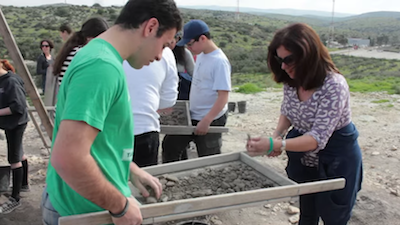
screenshot - “Every bucket could hold a treasure waiting to be discovered,” reads the caption in the brief video about Israel’s Beit Guvrin-Maresha National Park, where visitors can help with the excavations. As part of their trip to Israel, the Bagel Club will take part in the park’s Dig for a Day
“Every bucket could hold a treasure waiting to be discovered,” reads the caption in the brief video about Israel’s Beit Guvrin-Maresha National Park, where visitors can help with the excavations. As part of their trip to Israel, the Bagel Club will take part in the park’s Dig for a Day. (screenshot from mfa.gov.il)

“During our time in Israel,” she said, “we will volunteer at Shalva, the Israel Association for the Care and Inclusion of Persons with Disabilities; meet with the Access Israel disability advocacy organization; visit the Knesset, Israel’s parliament, and meet with Knesset members. We will join an established theatre group of adults with diverse needs for a drama workshop. We will visit Beit Guvrin-Maresha National Park for Dig for a Day and take part in an active dig. We will pray at the Wailing Wall and remember at Yad Vashem.

“We will also be spending part of our trip in the Galilee Panhandle, which is our partner region in Israel. During that time, we will participate in an arts and crafts workshop at [the] inclusion occupational centre Ma’arag, together will local residents. We will visit Beit Israel and meet with Krembo Wings youth group (a youth group that works with children with special needs). Also on our itinerary is a visit to the Bereshit apple factory to learn about agriculture and the production process.”

Cohen said she is “honoured to be able to experience Israel with this group.” The 11 participants are David Benbaruj, David Berger, Frederick Dexall, Marc Estrin, Mark Fugman, Julie Huber, Harriet Kositsky, Alisa Polsky, Clark Levykh, Evan Lipsky and Gail Rudin. Joining Cohen in the support-staff capacity are Kathleen Muir, assistant coordinator, inclusion services and youth services at the JCC; Shannon Gorski, managing director of the Betty Averbach Foundation and JCC board member; and Alex Krasniak, community support worker with 26 years in the field.

Cohen noted that February is Jewish Disability Awareness and Inclusion Month, “a unified effort amongst Jewish organizations worldwide to raise awareness and foster real and meaningful inclusion of people with disabilities and those who love them community-wide.”

She said the JCC is holding a traditional Birkat HaDerech (Blessing for the Way) ceremony for the Bagel Club travelers on Feb. 19, 11 a.m., at the JCC.

“The invitation is wide open,” she said. “We want to share this simchah with the whole community. It is going to be such a joyful sendoff. We’ll have the Orr Vancouver Israeli Dance troupe performing to commemorate the occasion. Can you imagine a better way to celebrate this month than helping these Jews exercise their birthright?”

Format ImagePosted on February 17, 2017February 15, 2017Author Cynthia RamsayCategories LocalTags Bagel Club, disabilities, inclusion, Israel, JCC, Leamore Cohen
Singing around the world

Singing around the world

Maya Avraham will perform on March 7 at Rothstein Theatre, as part of the Chutzpah! Festival. (photo from Chutzpah!)

With two highly praised albums under her belt and a third one in the works, Maya Avraham has come a long way from Rishon LeZion and her days as a backup singer. All her experiences have made her the talented and entertaining artist she is today, as Chutzpah! Festival audiences will see for themselves on March 7.

Avraham told the Independent that she will be coming with two of her band members and two musicians who live in Los Angeles. “From there,” she said, “we’re flying out to Vancouver to perform at the Chutzpah! Festival.”

Avraham has been performing since she was a teenager.

“At 14, I was in a band called Kol Rishon [First Voice] in my hometown,” she said. “And, at the same time, I also sang in my school band. There, I realized how much I enjoy singing and performing. We performed at all festive events in Rishon LeZion.

“I began private singing lessons at age 16,” she continued. “Already, from a young age, the atmosphere at home was musical – we heard Egyptian music and Yemenite.

“At 16, I joined the Moroccan band Sahara, which performed at major family events throughout the country. With them, I was exposed to the Moroccan music that I still listen to and am influenced by today.”

In the Israel Defence Forces, Avraham was in the army’s music ensemble, where she was a singer and also responsible for the ensemble’s schedule. “Of course, we performed all around the country, and I gained more experience,” she said. “In this group was also where I met Moran Gamliel who, eventually, wrote and composed the song ‘Lama’ [‘Why’] with Adam Perry.”

“Lama” was Avraham’s first single.

“In addition to my involvement with the band Sahara, I was also a backup singer in different studios across the country and sang with various artists who recorded albums,” explained Avraham. “In my work as a studio singer who does vocals and harmonies, I gained a lot of professionalism and accuracy. At one point, I was singing backup vocals for the album of a singer named Amir Benayoun. Amir decided to write me songs and I sent them to Helicon, the company with which he was signed. As a result, the manager of Helicon chose to sign me and we started working on the first album. That was at age 23 and I was with Helicon for five years before I ended the contract.”

It was also at 23 that Avraham met fellow Israeli musician Idan Raichel.

“While searching for musical materials for my first album after I signed with Helicon,” she said, “I had the privilege of meeting with Idan Raichel about a song he wrote for his album that he wanted me to sing. So we met. After the success of the song, Idan approached me and wanted me to be part of his project. I agreed, and started the path to my own career by being part of a larger project, called the Idan Raichel Project, which was a success worldwide.

“Working with Idan was very enriching musically and professionally. I learned a lot from him and I was privileged to work with other talented people who were also part of the group. During the many performances in Israel and abroad, I got to know a lot of talented musicians and I was always learning, gaining knowledge and experience from, for example, singers like Martha Gómez and Shoshana Damari.

“I was part of the project for 12 years and the experiences were many,” she said. “Every performance we did or country we visited, we received a lot of respect and admiration, and I am certain it also shaped and strengthened my own personal career.

“The album Rak Ratzit Ahava [All You Wanted Was Love] came out when I was signed with Helicon and the album La Yom Haze Chikiti [This is the Day I’ve Waited For] came out recently, produced by Rafi [Refael] Krispin of Ze-Nihal.”

In a 2016 interview with French magazine TipTopTelAviv, Avraham said she was nine months pregnant when she met Raichel. Two months after her second daughter was born, she said, “Idan telephoned me and asked me to leave for the United States [for a tour], which was to begin a month later. I agreed and my husband stayed with the kids!”

Avraham and her husband have four kids now: Ruth, 12, Jonathan, 10, Tamar, 5, and Hadas, 3.

“Throughout the years with the project, when I toured abroad, I always had help along the way from my parents and my husband,” Avraham told the Independent. “They’re good kids, so it’s easier to trust that everything will be fine and the support from home is important, assuring me that everything is in order. Of course, you always have to come back with gifts.”

Avraham said she is happy and excited about coming to Vancouver. According to the Chutzpah! website, she and her band will be performing her own hits, songs she sang with the Idan Raichel Project and some of her favourite covers.

Maya Avraham Band performs March 7, 8 p.m., at Rothstein Theatre. For tickets ($29.47-$36.46), call 604-257-5145 or visit chutzpahfestival.com. Other music offerings include the Klezmatics 30th Anniversary Tour (Feb. 23), David Broza and Mira Awad (Feb. 28), Marbin with the band MNGWA opening (March 3), Shalom Hanoch with Moshe Levi (March 8), Lyla Canté (March 9) and Landon Braverman and Friends (April 2). The festival also features dance, theatre and comedy.

Format ImagePosted on February 17, 2017February 15, 2017Author Cynthia RamsayCategories MusicTags Chutzpah!, Israel, Maya Avraham
2017 Dan David Prize winners

2017 Dan David Prize winners

Author Jamaica Kincaid is among the Dan David Prize winners this year. (photo from TAU via Ashernet)

Tel Aviv University (TAU) has announced the winners of this year’s Dan David Prize, which will be awarded at a ceremony at TAU on May 21. Sometimes referred to as “Israel’s Nobel Prize,” this year’s recipients are Swedish biologist Prof. Svante Pääbo, American geneticist Prof. David Reich, American author Jamaica Kincaid, Israeli author A.B. Yehoshua, American astrophysicists Prof. Neil Gehrels and Prof. Shrinivas Kulkarni, and Polish astronomer and astrophysicist Prof. Andrzej Udalski.

The prize is named after the late Dan David, an international businessman and philanthropist.

Born in Romania in 1929, David worked for Romanian TV and later became a press photographer. In 1960, he settled in Israel. A year later, he traveled to Europe. With a loan from a cousin, he won the franchise for the Photo-Me automated photography booths in certain countries, and opened branches in several European countries, as well as in Israel, and eventually took over the company.

In 2000, he founded the Dan David Foundation with a $100 million endowment. The first time the annual prize was awarded was in 2002. David’s aim was to reward those who have made a lasting impact on society and to help young students and entrepreneurs become the leaders and scholars of the future.

David died in London, England, in September 2011.

Format ImagePosted on February 17, 2017February 15, 2017Author Edgar AsherCategories WorldTags A.B. Yehoshua, Andrzej Udalski, astronomy, astrophysics, biology, Dan David Prize, David Reich, genetics, Israel, Jamaica Kincaid, literature, Neil Gehrels, Shrinivas Kulkarni, Svante Pääbo
Israel’s first whisky distillery

Israel’s first whisky distillery

Tours and tastings of Milk and Honey distillery can be booked on certain days. (photo by Ariel Fields)

Is a Bronfman family saga about to begin again? While it has a ways to go before reaching the heights of the once-mighty Seagram empire, Milk and Honey, Israel’s first whisky distillery, may one day have the last laugh. In the meantime, its young investors and workers seem to be having a good time.

I was raised to believe Jews don’t drink anything stronger than wine or the occasional beer. There were, of course, notable unexplained exceptions, as on Shabbat and holidays, when men drank schnapps or Slivovitz at the synagogue’s kiddush. My tasting and tour of Milk and Honey has forced me to change my thinking.

About four years ago, a small group of friends, all Israeli high-techies and entrepreneurs, got together to create Israel’s first whisky distillery. While it is a bit hard for me to comprehend people actually “dreaming” about starting a whisky business, don’t we attribute Herzl to saying, in 1902, “If you will it, it is no dream; and if you do not will it, a dream it is and a dream it will stay”? And this group did pick a pretty Zionist name for its company.

Located in south Tel Aviv, about a 15-minute walk from Old Jaffa, the physical plant is less than a half-block long. The building is basically divided into two sections, the liquor-making facility and the visitors centre. One section looks out on the other from a full-length no-secrets-here glass divider. Six people currently work at Milk and Honey.

As a newbie to whisky-making, I did not know that basically just three ingredients go into single malt whisky: malting barley, water and yeast. Milk and Honey uses Israeli-sourced water. The barley is imported from England’s Muntons company and then mashed at Milk and Honey. The rest of the process – the fermentation, distillation and maturing – also take place on-site.

Milk and Honey has an Israeli-made fermentation tank. One of its two stills is new, but the other was constructed in 1983. It has a capacity of 9,000 litres. To my way of thinking, copper would give the whisky a funny taste, but our guide said they purposely built the still from copper, in order to give the whisky a more delicate taste.

The whisky maturation room has an elaborate alarm system, especially against fires, as the whisky is stored in combustible, wooden barrels.

In big whisky-producing countries such as the United States, Ireland, Scotland and Japan, single malt whisky needs to sit in its cask (barrel) for three years. While lots of people complain about Tel Aviv’s high humidity and temperatures, these factors might ultimately be advantageous to this type of business. Estimates are that the heat and humidity will speed up Milk and Honey’s whisky maturation process, making it two to 2.5 times faster than the above countries’ products.

Still, it will be awhile before Milk and Honey single malt whisky is sold en masse in bottles. The company does plan, however, to market some kind of limited series, which will be periodically released over the next three years.

In the meantime, Milk and Honey has started selling a few types of other liquor, including one called New Make and another called Levantine Gin.

As its name implies, the New Make does not go through barrel aging; its chief use is apparently for cocktail-making. The Levantine Gin is noteworthy for its Middle East quality – it is made with za’atar, a Middle East plant with a thyme-like taste, and other botanicals purchased locally at Tel Aviv’s Levinsky Shuk (Market). While not mentioned by our in-house guide, the use of za’atar ties this liquor to ancient Jewish roots (no pun intended). Za’atar (or “eizov,” in Hebrew) is mentioned in the Torah: in Exodus, Leviticus and Numbers, and references are also made in Kings I and Psalms. Moreover, although he did not prescribe za’atar specifically for hangovers, 12th-century philosopher, astronomer and physician Maimonides (aka Rambam) prescribed za’atar for headaches.

Impressively, these two products have already won awards. Just the day before I visited Milk and Honey, the Levantine Gin had won a gold medal and the New Make a silver at the 2016 Terravino Mediterranean International Wine and Spirit Challenge. Not a bad start for a new company.

All of Milk and Honey’s liquor is certified kosher. Tours and tastings are available on Tuesdays, Thursdays and Fridays by prior arrangement. See mh-distillery.com/visit-our-distillery.

Deborah Rubin Fields is an Israel-based features writer. She is also the author of Take a Peek Inside: A Child’s Guide to Radiology Exams, published in English, Hebrew and Arabic.

Format ImagePosted on February 10, 2017February 8, 2017Author Deborah Rubin FieldsCategories IsraelTags distilleries, Israel, whisky

Posts pagination

Previous page Page 1 … Page 80 Page 81 Page 82 … Page 110 Next page
Proudly powered by WordPress