Skip to content
  • Home
  • Subscribe / donate
  • Events calendar
  • News
    • Local
    • National
    • Israel
    • World
    • עניין בחדשות
      A roundup of news in Canada and further afield, in Hebrew.
  • Opinion
    • From the JI
    • Op-Ed
  • Arts & Culture
    • Performing Arts
    • Music
    • Books
    • Visual Arts
    • TV & Film
  • Life
    • Celebrating the Holidays
    • Travel
    • The Daily Snooze
      Cartoons by Jacob Samuel
    • Mystery Photo
      Help the JI and JMABC fill in the gaps in our archives.
  • Community Links
    • Organizations, Etc.
    • Other News Sources & Blogs
    • Business Directory
  • FAQ
  • JI Chai Celebration
  • JI@88! video

Recent Posts

  • BGU fosters startup culture
  • Photography and glass
  • Is it the end of an era?
  • Taking life a step at a time
  • Nakba exhibit biased
  • Film festival starts next week
  • Musical with heart and soul
  • Rabbi marks 13 years
  • Keeper of VTT’s history
  • Gala fêtes Infeld’s 20th
  • Building JWest together
  • Challah Mom comes to Vancouver
  • What to do about media bias
  • Education offers hope
  • Remembrance – a moral act
  • What makes us human
  • המלחמות של נתניהו וטראמפ
  • Zionism wins big in Vegas
  • Different but connected
  • Survival not passive
  • Musical celebration of Israel
  • Shoppe celebrates 25 years
  • Human “book” event
  • Reclaiming Jewish stories
  • Bema presents Perseverance
  • CSS honours Bellas z”l
  • Sheba Promise here May 7
  • Reflections from Be’eri
  • New law a desecration
  • Resilient joy in tough times
  • Rescue dog brings joy
  • Art chosen for new museum
  • Reminder of hope, resilience
  • The national food of Israel?
  • Story of Israel’s north
  • Sheltering in train stations

Archives

Follow @JewishIndie
image - The CJN - Visit Us Banner - 300x600 - 101625

Tag: Israel

Water expertise helps

Water expertise helps

During an installation of a solar water pumping system at Nyanza Village, Uganda, Innovation: Africa’s engineer and project manager celebrate as clean water flows. (photo from Innovation: Africa via Israel21c.org)

Using ingenuity to overcome its serious water challenges, Israel has become the go-to expert for a world facing an impending water crisis. To celebrate World Water Day on March 22, Israel21c took a look at 10 of these innovative water projects, and Israel’s leadership role.

This year’s WATEC expo and conference, to be held in September in Tel Aviv, is expected to attract 10,000 stakeholders from 90 countries seeking Israeli solutions for water issues. Israel exports $2.2 billion annually in water technology and expertise. In addition, these commodities are shared on a humanitarian basis through training courses, consultations and projects. Keren Kayemeth L’Israel-Jewish National Fund (KKL-JNF) often hosts delegations from around the world – most recently, from California, Argentina and the European Policy Centre – to see how Israel’s system of treatment facilities and 230 reservoirs has achieved the world’s highest ratio of wastewater reuse. About 92% of Israeli wastewater gets treated and 75% is used for agricultural irrigation. Israel plans to recycle 95% of its wastewater for irrigation by the end of 2025.

“During the 1980s, recycling wastewater was a revolutionary concept and many people were skeptical. Today, nearly half of the irrigation in Israel comes from recycled wastewater,” said KKL-JNF development project director Yossi Schreiber.

Israeli water-tech companies are planning and building agricultural and municipal water infrastructure in countries including Angola, Ghana, Serbia, China, Spain and the United States. Here are 10 recent examples.
1. The nonprofit group Innovation: Africa won a United Nations award for transforming lives in seven African countries using Israeli technologies, such as Netafim irrigation systems, that enable farmers to grow more crops with less water; and solar energy systems that pump water from aquifers, saving villagers (mostly women and children) countless hours previously spent finding and fetching water.

2. IsraAID launched its WASH (Water, Sanitation and Hygiene) project about four years ago to tailor-make solutions for communities from Fiji to Haiti to Myanmar.

In the rain-dependent South Pacific island nation of Vanuatu, a March 2014 cyclone contaminated reservoirs and destroyed water-harvesting systems. Among other steps, IsraAID strategized the engineering of a low-tech gravity system, built and maintained by locals, to bring water from mountain springs down into two villages encompassing more than 600 people and one school. IsraAID is working with the World Bank to construct three more gravity systems.

In Kenya’s Kakuma Refugee Camp and Uganda’s Gulu township, which struggle with waterborne disease and water contamination, IsraAID trains unemployed or underemployed people to be water technicians. Graduates work with local nongovernmental organizations or water companies, or start their own businesses, to contribute their new expertise in anything from drilling wells and building latrines to teaching hygiene.

3. A massive landslide in September 2015 damaged a major irrigation canal partially built by Israeli NGO Tevel b’Tzedek in an impoverished Nepali village. Tevel staff repaired the damage with funding from the Rochlin Foundation and Jewish Coalition for Disaster Relief, and worked with the local water council to strengthen the canal walls, reestablishing and assuring water supply to 224 households (about 1,300 people) and subsistence farmers.

Also in Nepal, Tevel is fighting the effects of flash floods – which deplete water available for drinking and irrigation – by building irrigation pools and setting up zero-water-waste systems enabling villagers to conserve water through Israeli methods, including drip irrigation learned by Tevel’s native Nepal director at Ben-Gurion University of the Negev. Tevel also is teaching village farmers less water-intensive professions, such as beekeeping.

4. Israel’s Ministry of Foreign Affairs (MFA) has partnered with Caesarea-based GAL Water Technologies to provide free water-treatment products to African nations for more than 20 years. In 2016, MFA donated GAL mobile water purification, storage and distribution vehicles to drought-stricken Papua New Guinea and to the Pacific Marshall Islands.

5. Earlier this month, the MFA’s MASHAV-Israeli Agency for International Development Cooperation established the Kenya Israel Drought Resilience Agriculture Centre to help in capacity-building with the latest Israeli irrigation and water-resources management know-how.

6. MASHAV’s special envoy for water and food security went to Swaziland this month with the director of overseas training, programs and research at MASHAV-affiliated Centre for International Agricultural Development Cooperation to conduct a water survey by request of Swaziland’s prime minister. The experts are identifying possible areas of cooperation in combating drought and a shortage of water for agriculture.

7. Following a May 2016 earthquake in Ecuador, IsraAID brought a new Israeli water-purification technology from NUFiltration to several affected villages. Instead of having to buy bottled drinking water, residents can use the NUF system to turn washing water into purified drinking water without electricity. NUF was first piloted by the company in Ghana as a humanitarian project to prevent diseases from contaminated water.

8. The Tel Aviv University chapter of Engineers without Borders designed and built a rainwater collection and purification system in a Tanzanian village where the drinking water had dangerously high amounts of fluoride. Since the project was finished in 2014, it has been supplying safe drinking water to more than 400 children daily.

9. The Technion Engineers without Borders chapter designed and implemented a safe drinking-water system serving more than 600 Ethiopian schoolchildren in a rural village with no reliable source of water for drinking and handwashing. The Israelis taught the older children how to maintain the system and treat the water, and continue to provide support to assure a safe and sustainable water supply.

10. In June 2015, the Israeli Ministry of Economy committed $500,000 to the World Bank Group’s Water Global Practice to help developing countries overcome complex water security challenges. The agreement has included two years of study tours and other activities for World Bank staff and officials of various governments.

Israel21c is a nonprofit educational foundation with a mission to focus media and public attention on the 21st-century Israel that exists beyond the conflict. For more, or to donate, visit israel21c.org.

Format ImagePosted on March 31, 2017March 31, 2017Author Abigail Klein Leichman ISRAEL21CCategories WorldTags Israel, tikkun olam, water
Working to get to Olympics

Working to get to Olympics

Joel Seligstein is one of four Israeli skeleton athletes aiming for the 2018 Olympic Games in PyeongChang, South Korea. (photo by Erin Murphy)

What began as a dream 15 years ago – when David Greaves helped establish an Israeli presence in the bobsled and skeleton world – finally received the approval, recognition and support of the Israeli Olympic Committee this past December.

Greaves was a member of the Israeli bobsled team that fell short of qualifying for the Olympics in 2006, although they did compete in two world championships.

“When I retired from the sport,

I felt I wanted to continue in some capacity,” Greaves told the Independent in an interview earlier this year. “So, I took over as head of the federation, of which I’m now the president. It’s called Bobsled Skeleton Israel, which is the Israeli bobsled skeleton federation.

“I wanted to stay involved in the sport and to try to provide an opportunity for other Jewish athletes to experience something of what I did – the pride of wearing the Magen David on your jacket and competing for Israel internationally.”

The experience changed the trajectory of Greaves’ life – he was working in the sales and high-tech industry. It also made him realize what was important for him as a Jew and an Israeli.

“I came back from that experience deciding I wanted to leave the world of high-tech and focus my efforts on Jewish community and working for Israel,” he said. “That led me to volunteering for the Jewish Federation of Winnipeg. This soon led to me working on a contract basis for them, which turned into a full-time role. I became a fundraiser for the Jewish community.”

Greaves spent 10 years fundraising for Winnipeg’s federation and then for the Jewish Foundation of Manitoba, before starting his own business in 2014. Called Protexia, it helps nonprofits and charitable organizations fundraise.

With the refocus in his professional life also came a refocus in his involvement with Bobsled Skeleton Israel. As the organization’s volunteer president, he is in regular contact with the Israeli Olympic Committee as they gear up for the Winter Olympics in PyeongChang, South Korea, in 2018.

“The challenge was finding an athlete interested, sometimes from another program … the American program, whatever it happened to be. Some of the bigger programs are so deep, you can be a great athlete … but may not have an opportunity to make the big leagues and would likely not ever get the opportunity that they have now … to compete at the highest level, for a smaller nation,” said Greaves. “But now, I have four athletes competing at different levels around the world … and that’s more than most small nations have.”

While many people compete for Israel from around the world, most are not directly connected to the Israeli Olympic Committee, but, with the completion of the process in December, Bobsled Skeleton Israel is now an official Olympic sport under its umbrella. Last September, the committee had accepted Greaves’ recommendation to recognize the criteria established by the International Bobsled and Skeleton Federation as the Israeli criteria.

“It was almost anticlimactic,” said Greaves. “I was working on this for 13 years and I’d never had the opportunity to present to the Israeli Olympic Committee before, with the opportunity of them possibly accepting our recommendation. Needless to say, I was over the moon and ecstatic.

“So, now, I feel confident talking about our future, because the only step left for us to be competing at the Olympics is for one of my athletes to qualify. If we have an athlete that qualifies, then we’ll be going to Korea for the Games, as he will have met the criteria.”

To get to the Olympics, the athletes will need to be in the top 60 internationally. For the current season, the goal is to get two athletes into the top 75 world ranking, which would position them for next year. They currently only have one.

All of the Israeli athletes in the federation are competing on their own in skeleton.

“It’s been easier for us to find skeleton athletes from a budgetary standpoint, because we don’t fund our athletes,” said Greaves. “We’d love to have a bobsled team, too, but it’s a bit more work for us to really develop that program. Given I’ve got a full-time day job and we don’t at the moment have any prospects for bobsled athletes, our efforts have solely focused on developing our skeleton program.”

Israeli skeleton athlete Bradley Chalupski in action
Israeli skeleton athlete Bradley Chalupski in action. (photo from Bradley Chalupski)

Bobsled Skeleton Israel is a nonprofit in the United States, enabling them to fundraise there for their athletes. These athletes can fundraise within their circles and the organization can provide a tax receipt to donors.

“We’ve been pretty successful in the last few years in raising more money than we have in the past,” said Greaves. “It’s been allocated out to the athletes based on need. Essentially, they get reimbursed, in very small part, for their costs. If we have $5,000 or $10,000 in the bank, so to speak, and an athlete has just come back from a week of training, then they can submit a portion of their expenses. But, it’s very modest.

“We’re looking to have a fundraiser this spring in Winnipeg. There’s also now – because we’re now officially a member within the Olympic movement in Israel – the possibility for funding from the state if an athlete qualifies for funding.”

In that case, the athlete will be eligible for a few Israeli shekels a month. Even so, about 95% of the money spent in this sport by Israeli athletes is money that they themselves have raised, either through their own personal supporters or their own savings. According to Greaves, his athletes have given up the last two or three years of their lives to compete and train.

Contributions are deductible in Israel and the United States, and there is an Indiegogo campaign currently underway. Greaves is in discussion with a few Jewish organizations with the hope that they may be able to assist in accepting Canadian donations.

“We want people to understand we’re in this because of a love for Israel and a love for sport,” he said. “Our ultimate dream is to walk into the Olympic stadium with the Israeli flag. There’s such a pride that’s hard to convey. We do this out of a sense of pride and love for Israel.

“I once was asked in an interview years ago, when I was competing, if I had a choice to compete for Canada or for Israel, who would I pick? I’m a dual citizen. I said, without a doubt, I’d want to do it for Israel. There’s a special connection between my Jewishness, my connection to Israel and my Zionism. The other guys on my team feel the same way as well. Am Yisrael might make this a different experience than other athletes might have … not to take away from how amazing it would be for any athlete to represent their country.”

For more information and to follow the athletes – Bradley Chalupski, Adam (A.J.) Edelman, Joel Seligstein and Larry Sidney – visit facebook.com/israelibobsledandskeletonfederation. To contact Greaves, email [email protected].

Rebeca Kuropatwa is a Winnipeg freelance writer.


Format ImagePosted on March 31, 2017March 31, 2017Author Rebeca KuropatwaCategories WorldTags David Greaves, Israel, Olympics, skeleton, sports
Past leads to present

Past leads to present

For many of us, it is hard to get excited about a subject until we can experience it, or meet someone who has. Historical fiction can bridge the gap between simply memorizing dates and names to empathizing with those affected and taking what we learn into our lives.

Two recent Second Story Press publications do an excellent job of teaching and engaging younger readers. They also provide a starting point for these readers and their parents, family, friends and educators to discuss difficult and sensitive topics that not only relate to the past, but to current situations, as well.

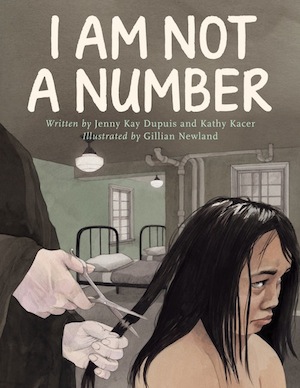
The Ship to Nowhere: On Board the Exodus by Rona Arato (for ages 9 to 13) tells the story of the ship Exodus 1947 through the eyes of 11-year-old Rachel Landesman. I Am Not a Number by Jenny Kay Dupuis and Kathy Kacer and illustrated by Gillian Newland (for ages 7 to 11) tells the story of 8-year-old Irene Couchie, who is forcibly taken from her First Nations family and home to live in a residential school in 1928. Both Rachel and Irene are real people.

Sadly, their stories are representative of what also happened to countless others. And, even more sadly, what continues to happen. The Ship to Nowhere could lead to a conversation about the Syrian refugee crisis and antisemitism in Canada and elsewhere. I Am Not a Number brings to mind some parallels between the Holocaust and the attempted genocide of Canada’s First Nations, as well as the inequalities that still exist in Canada, the treaties that have not been ratified, the reconciliation over the residential schools that is long overdue and has barely begun.

Given the ages of their intended readers, both of these books tread lightly – that said, they deliver powerful messages and succeed in their missions to educate.

book cover - I Am Not a NumberThe illustrations in I Am Not a Number, a hardcover picture book, are as revealing as the text. Irene and her siblings, as they huddle behind their father when the government agent comes to take her and two of her brothers away; the sadness on Irene’s face as a nun cuts her hair, the anger as she sits in church; and the unbridled joy when she and her brothers are back at home after a tortuous year – these are just some of the emotions Newland movingly captures.
And Kay Dupuis tells her grandmother’s story with such love. This was a family that was strong and, in the end, luckier than many, in that Irene and her brothers didn’t return to the residential school – when they came home for the summer, their family kept them hidden from the government agent.

I Am Not a Number includes a brief overview of the residential school system, and mention of the Truth and Reconciliation Commission. Kay Dupuis also tells readers a bit more about her grandmother in an afterword, where there are a few photos of the Couchie family.

The Ship to Nowhere has photos throughout, and Arato uses the author’s note at the end to let readers briefly know what happened to Rachel, Rachel’s mom and sisters (her dad was killed in the Holocaust), the ship’s captain, Yitzhak Aronowicz (known as Captain Ike) and one of the journalists who doggedly reported to the world the Exodus’s journey, Ruth Gruber.

Since it is for older young readers, there are parts of The Ship to Nowhere that are quite graphic – the incredible brutality of the British is well-depicted, as are Britain’s efforts to prevent the ship’s 4,500-plus Holocaust survivors from knowing what the media were reporting on their treatment. Even with the passage of time, the anger boils in reading about how these survivors were tear-gassed and beaten (in some cases to death) on the Exodus, forced to live as captives on three other ships after they were turned out of Palestine, and again beaten and manhandled if they refused to leave their ships in Germany, where the British took them eventually, to live in refugee camps.

There are many touching moments between the crew and their passengers and between fellow refugees. It is important to be reminded that France offered to take in all of the refugees; an offer that was declined. And it would be nice to think that, at the least, the Exodus’s plight positively influenced some United Nations members to vote in favour of the creation of Israel.

Format ImagePosted on March 31, 2017March 31, 2017Author Cynthia RamsayCategories BooksTags British Mandate, Exodus 1947, history, Israel, reconciliation, residential schools, youth

3,000 years of a language

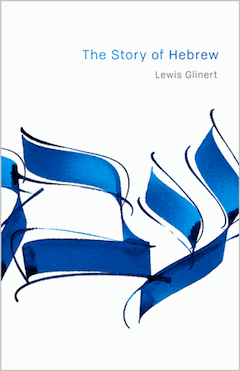
Let’s say it at the outset: this book is a gem. Every page of The Story of Hebrew by Lewis Glinert (Princeton University Press, 2017) is packed with information about the language, from its beginnings through post-1948 Israel. In addition to this longitudinal approach, Glinert, a professor of Hebrew and linguistics at Dartmouth, also approaches his subject laterally, focusing on various lands where Jewish/Hebrew life and culture thrived, like early Palestine, Babylonia, North Africa, Spain, Europe and Russia, the United States and Israel.

The book shows us how living under Greek and Roman domination affected Hebrew and how vocabulary from those occupiers seeped into the language. Two examples, the first mine, the second Glinert’s: the simple word for shoemaker in Hebrew, sandlar, which comes from the Latin sandalrius; and Sanhedrin, the Jewish High Court, which stems from the Greek synedrion. Jews did not shy away from these foreign influences; their Hebrew language embraced them.

book cover - The Story of Hebrew by Lewis Glinert Glinert also traces the changes in the use of the language from biblical times through the Mishnah (before and after 200 CE), where the Hebrew of that period was more direct and seemingly more colloquial, as can be seen by comparing a text from the Mishnah with any chapter in the Bible. During the next two or three hundred years, written Hebrew then moved on from the Hebrew-only Mishnah to the two-language Talmud, with its mix of mostly Aramaic and much less Hebrew. (In all of this, of course, we only have written texts to go by.)
With sacred books passing from generation to generation orally, correct pronunciation might be lost or distorted. Along came the Masoretes (from the Hebrew word, masorah, tradition), who, by the year 1000, had created above- and below-the-letters signs that ingeniously indicated pronunciation, melody, accent and phrasing.

Jews also contributed to scientific learning by writing about medicine in Hebrew. I am sure it will surprise many readers, as it did me, that in Italy’s first medical school, in Salerno, founded in the ninth century, the languages of instruction were Hebrew, Greek, Latin and Arabic. And, in southern France, in Arles, Narbonne and Montpellier, the official language of instruction in these medical schools was Hebrew.

Religious attitude also influenced how Hebrew was used. Glinert delves into this divide by showing that, during the 11th and 12th centuries in Ashkenaz (in northern France and the Rhineland), the accent was on liturgy and Torah scholarship – the works of Rashi, for instance – while in Sepharad (Spain) and Italy secular Hebrew poetry flourished, influenced by Arabic poetry, exemplified by Yehuda Halevi and other poets.

The book devotes two remarkable chapters to the interaction of Christians with Hebrew.

In one of these unholy intersections, two of the noted translators of the Bible from Hebrew, the church father Jerome (fourth century) and Martin Luther (1534), respected Hebrew but disparaged Jews and Judaism. In his notorious 1542 book On the Jews and Their Lies, Luther asserts, “Jews should be expelled before they poison more wells and ritually abuse more children.”

A better relationship ensued with English translators. William Tyndale was the first to render the Five Books of Moses (1530) into English directly from the Hebrew. In so doing, he defied a bishop’s ban on a translation other than the Latin Vulgate. Tyndale’s translation led to the classic 1611 King James version of the complete Bible, whose English rhythms, cadences and even sentence structure enormously affected English.

As Glinert elegantly puts it: these two translations would “inject a Hebraic quality into the syntax and phraseology of English literary usage without parallel in any other European culture.” The author further adds that echoes of this biblical English can be seen from Walt Whitman’s Leaves of Grass poetry collection to Martin Luther King’s “I Have a Dream” speech.

Hebrew also made its mark in the early history of the United States. The Pilgrims saw themselves as the New Israelites, giving their towns name like New Canaan and Salem – even their Thanksgiving was a belated Sukkot to celebrate a bountiful harvest. And Hebrew was at one time ensconced as a mandatory subject in the Ivy League colleges. I recently read that at graduation ceremonies students would deliver orations in Hebrew, Greek and Latin, and university presidents, like Ezra Stiles of Yale, would also occasionally give their commencement talks in Hebrew.

Glinert writes that the door to modernity in Europe was opened in 1780 by two books published on different sides of Europe. One, in Germany, was Moses Mendelssohn’s Biur, the first volume of his translation of the Torah into German; the other, in a small town in the Ukraine, was a book in Hebrew about Chassidic thought.

Slowly, from the advent of the Haskalah, the Jewish Enlightenment movement, through newspapers, magazines and books, modern Hebrew was being reshaped, culminating with Jews resettling Palestine in the late 19th century, along with Eliezer Ben-Yehuda’s call, at the turn of the 20th century, for Jews to speak only Hebrew. Glinert shows us how the thrust for Hebraization continued once the British got the Mandate for Palestine in 1922 from the League of Nations. They recognized Hebrew as the language of instruction for public schools, broadcasting, the courts and civil regulations. With the founding of the state of Israel in 1948 and mass immigration, Hebrew – which throughout the centuries had always been read, studied and written, and only occasionally spoken – reached its efflorescence.

The Story of Hebrew is a superb book, meticulously researched and beautifully written. Two of my favourites among the many text-enhancing illustrations and photographs are a photo of a page from one of Sir Isaac Newton’s notebooks, where he has a phrase in Hebrew written in his neat printed script; and a page from Franz Kafka’s Hebrew notebook, with two columns of nicely calligraphed Hebrew words on one side with their German translation (in longhand) on the other.

Read this marvelous study – perhaps, if you don’t know Hebrew, it will inspire you to learn it and become part of a more than 3,000-year tradition of transmission.

Curt Leviant’s most recent books are the novels King of Yiddish and Kafka’s Son.

Posted on March 31, 2017March 31, 2017Author Curt LeviantCategories BooksTags Hebrew, history, Israel, Lewis Glinert
Familiar sounds of Passover

Familiar sounds of Passover

Heron among the flowers near Kibbutz Be’eri, in southern Israel. (photo by Aliza Reshef via PikiWiki)

There is something about Passover that speaks to almost every Jew. In 1840, in a book titled Der Rabbi von Bacharach, Heinrich Heine wrote: “Jews who have long drifted from the faith of their fathers are stirred in their inmost parts when the old, familiar Passover sounds chance to fall upon their ears.”

Although my family was not Orthodox, we always held a seder in Australia, and the singing after reading the Haggadah (and eating lots of knaidel and drinking the cups of wine) was very spirited. As a child, I loved the lively “Dayeinu” and the last song, “Chad Gadya,” which we sang in English, “Only one kid, only one kid which my father bought for two zuzim….” The words seemed very funny to me, until the mood suddenly changed at the end – when we began to sing about the Angel of Death, I remember my mother’s eyes used to fill with tears.

Many years later, when I became observant and began practising mitzvot that, at first, were strange and unfamiliar to me, the seder was like coming home. No one had to explain it to me, or tell me what to do. Etched into my consciousness were the memories of the seder table … the three matzot arranged between the folds of a white cloth so that no two were touching; the dish of parsley with the bowl of salt water; the bitter herbs, the shank bone and the roasted egg.

I remember helping to make the charoset, a delicious mixture of apples and almonds moistened with wine. Passover is so rich in ritual and, that is, after all, the Jews’ survival system.

Without the seder, there’d be no reason for the family to come together at this time. Not every family is religious but, at Pesach, most are traditional. There is a special feeling about the snowy tablecloth with new dishes, the big cup of wine for Elijah, the opening of the door for the prophet to come in, and sweet children’s voices chanting “Mah Nishtanah,” like it’s a favourite pop song. “Memories are made of this”!

In Israel, Passover is a spring festival. After the cold, rainy winter, the air becomes a warm caress. The almond flaunts its white blossom and all the trees are bedecked with new green lace. Cyclamens and wild violets peep shyly from crevices in the rocks, while purple irises and scarlet poppies dot the fields. The cereal harvest season has begun.

However, Pesach is more than a link in the agricultural cycle of

Israel. Its true significance is historical, commemorating the Exodus from Egypt and our release from slavery. The matzah symbolizes the unleavened bread, which did not have time to rise in our hasty flight from Egypt.

The Hebrew word for Egypt is Mitzrayim, the root of which is tzur, meaning narrow or constrained. To say that we must leave Egypt is to say that each of us must struggle to break out of our own narrowness to obtain our full potential – spiritually, emotionally, psychologically.

The main lesson of Passover is freedom. At Passover, we celebrate it on three levels: seasonally, as we mark the release of the earth from the grip of winter; historically, as we commemorate the Exodus; and, on a broader human plane, our emergence from bondage.

In Judaism, events transcend the moments of their happening – they are part of a continuous process that involves not just a single generation, but all who went before and all who follow after. The cycle of the Jewish year is also the cycle of our survival.

May the old, familiar sounds of Passover be woven into the consciousness of you and your family. And may you truly consider the possibility when you conclude your celebration with the words: “Next year in Jerusalem!”

Dvora Waysman is a Jerusalem-based author. She has written 14 books, including The Pomegranate Pendant, which was made into a movie, and her latest novella, Searching for Sarah. She can be contacted at [email protected] or through her blog dvorawaysman.com.

Format ImagePosted on March 31, 2017March 31, 2017Author Dvora WaysmanCategories Celebrating the HolidaysTags Israel, Passover
Haggadah from 1500s

Haggadah from 1500s

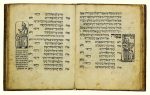
Pages from the 1500s Passover Haggadah that was recently sold to the National Library of Israel. (photo from Sotheby’s)

On the right, a man sits and prays holding a liturgical book. On the left, a rabbi is seen explaining the story of the Exodus to a child. These images were printed on the pages of a Passover Haggadah in the city of Prague in 1556.

This nearly 500-year-old Haggadah, one of only two remaining copies, is part of the Valmadonna Trust Library collection that was recently sold to the National Library of Israel, with the help of philanthropy from the Haim and Hana Salomon Fund.

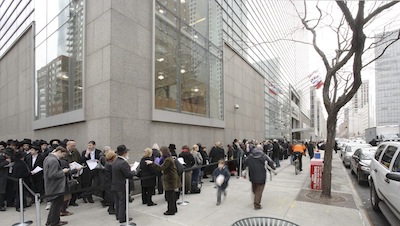
photo - The line to view the Valmadonna collection outside Sotheby’s in New York, before the collection was sold to Israel’s national library
The line to view the Valmadonna collection outside Sotheby’s in New York, before the collection was sold to Israel’s national library. (photo from Sotheby’s)

“The Haggadah is the most widely published book in Jewish history,” said Sharon Mintz, senior consultant for Judaica at Sotheby’s auction house, which arranged the sale to the Israeli library. She told JNS.org that more than 3,000 editions of the Haggadah have been printed during the last several centuries – more than the Bible.

The Valmadonna collection’s 1556 Haggadah is a rare, luxury edition with Yiddish interpolations that “constitute the earliest examples of such texts,” said Marc Michael Epstein, professor of religion and visual culture and the Mattie M. Paschall (1899) and Norman Davis Chair at Vassar College in New York.

Just a few decades after Johannes Gutenberg invented the printing press around 1440, printing spread to the Jewish world, beginning in Rome and then moving throughout Italy and the Iberian Peninsula. Scholars tend to refer to the era of early printing, before 1501, as the Incunabula period.

Jews were “tremendously excited” to be able to print multiple books, Mintz explained. “They viewed it as a gift of God,” she said.

The earliest printed Haggadah was printed in Spain in 1482. Another early Haggadah dates back to roughly 1486, and was published by the Soncino family, named for the Italian town where the family ran its printing operation. These early Haggadot were not illustrated. The earliest known illustrated Haggadah was printed in Constantinople (modern Istanbul) around 1515, but only a few pages of this Haggadah remain.

Jewish printing spread to other parts of Europe in the 1500s, which also led to a growth in competition among printers.

“The cradle of Hebrew printing is, of course, Venice. But the printing of Jewish books north of the Alps began in Prague in 1512 in the circle of Gershom ben Solomon Kohen and his brother Gronem,” said Epstein, who is the author of Skies of Parchment, Seas of Ink: Jewish Illuminated Manuscripts and The Medieval Haggadah: Art, Narrative and Religious Imagination.

“Due to the humanistic patronage of the Holy Roman Emperor and a general climate of relative tolerance and free trade, Prague in the 16th century was a place of vibrant Jewish communal and cultural life, and thus – along with Venice – a crucial centre of the newly developed art and craft of Hebrew printing,” he said. “Jewish printing spread from Prague throughout Western as well as Eastern Europe, the next great centres being in the Polish communities such as Lublin.”


Read more at jns.org.

Format ImagePosted on March 31, 2017March 31, 2017Author Alina Dain Sharon JNS.ORGCategories Celebrating the HolidaysTags Haggadah, Israel, Passover, Sotheby's, Valmadonna
Jewish values in Trump era

Jewish values in Trump era

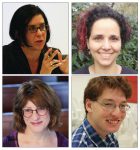
The April 9 panel discussion Israel, Canada and Me in the Age of Trump will feature, clockwise from top left, Dr. Shayna Plaut (photo from Shayna Plaut), Ofira Roll (photo from Ofira Roll), Rabbi Susan Shamash (photo by Robert Albanese) and Eviatar Bach (photo from Eviatar Bach).

Israel, Canada and Me in the Age of Trump will be the topic discussed by a panel of four Jewish speakers on April 9 at the Peretz Centre for Secular Jewish Culture.

“Trump’s election in the U.S. has shifted the relationship that Diaspora Jews in general, and progressive Jews in particular, have with Israel,” Yom-Tov Shamash, one of the organizers, told the Independent. “I believe that most Jews in Vancouver, young and old, Zionist or not, affiliated, religious or secular, feel uncomfortable with the Israel-Trump alliance. Bringing four progressive Jewish leaders from different walks of life provides an opportunity for all Jews supporting values of social justice to hear different points of view, to find common ground, to develop relationships and hopefully to get involved in common causes.”

One the participants, Dr. Shayna Plaut, is research manager of the Global Reporting Centre. She is currently teaching courses on migration and social inequalities at the University of British Columbia and is adjunct professor in international studies, Simon Fraser University.

“Ashkenazi Jews in Canada and the U.S. are in greater positions of safety than we have ever been,” two or three generations removed from the Holocaust, said Plaut. “Ashkenazi Jews can pass for white. We have a responsibility to do something with this privilege, [to uphold] the tradition of tikkun olam.

“As a descendant of refugees, I have always felt connected to refugees,” she continued. “I work to make my ancestors proud and, right now, that means standing in solidarity with this generation of refugees.

“We all have different strengths. And we have a responsibility to see, and use our strengths. My strengths are in education and connection.”

Plaut said, “The level of intolerance in Canada and the U.S. has increased. I was born and raised in the U.S. I became a Canadian because I was having a hard time recognizing my own country. It’s not like racism didn’t exist before – we are a country built on colonization and slavery – but we are also a country built on ideals and resistance. I have always worked in this positive vein of how to make things better. I view patriotism as a commitment to make my country better. It’s easier to talk about what’s wrong than to present alternatives to make things better and work together. It was in December 2015 when I [began to feel] that perhaps I was able to do this better from Canada … as a Jew, as a dual citizen of the U.S. and Canada, and as an educator and worker for human rights and social justice.”

Ofira Roll, another of the panelists, is a PhD candidate in education at UBC. Born and raised in Israel, she reflected on what is involved in activism in Israel as opposed to Canada or the United States.

“Our activism here has productive aspects. However, it feels as if we do it by remote control,” said Roll. “I truly miss the messiness in Israel – the messiness of communication, liveliness and opinions, of cultures and interests. People have opinions and they share them and embody them. I know the darker sides of living there – it’s a nationalistic state, undemocratic, racist, capitalist and anti-human rights – but it feels more real to me, where I feel pushed to the edge in all aspects of life. I am asked to speak up for what I truly care about and act on it. For me, being ‘pro-Israel’ means criticizing what’s wrong.”

Roll is critical of recent Israeli legislation excluding supporters of boycotts from entering Israel. “Personally, I don’t believe in boycotting countries. Still, I can’t accept the idea that if I came to Israel and had decided to boycott, I’m on this list. Friends of mine would be on this list. I don’t understand how a democratic country can pass such an undemocratic law. It’s not just stopping people who don’t support Israel – it stops more Palestinians than anyone else so, in a way, it really is a racist law.

“As several philosophers I am influenced by – Martin Buber, Hannah Arendt – say, engaging in dialogue doesn’t mean that we are in agreement. Dialogue is more about the process we go through in the search for new understandings. Now, when I see everyone coming together, it’s a strong moment for me. In the time of Trump, that’s what I’m happy about. People start understanding that all these divisions are fake. We are not different at the core. The women’s marches we had all over the world – for women’s rights, which are human rights – ironically, thanks to Trump.

“It’s not about convincing, but about sharing. It’s an invitation to talk, first of all, as humans. I don’t believe in all these divisions and borders. I have a hard time with flags, anthems. I think home is within you. Home is not something defined by others. It doesn’t need always to be in the name of a country.”

Roll has found the atmosphere in Vancouver’s Jewish community fairly open. “When [Israeli singer] Ahinoam Nini came here,” she noted, “people fought to bring her, with the support of the Jewish Federation, against groups who did not believe she should be invited because she supports Palestinians’ causes. I wrote a collective letter [to the Federation] on behalf of my Hebrew-speaking community theatre group. They read our letter at a Federation meeting, and they were brave enough to take a stand, and Nini was invited. In the end, they made an extra effort to bring us all together to meet Nini after the show. The Jewish community here includes many other voices, even among synagogues. There are many small groups, which don’t follow one way.”

Panelist Eviatar Bach is graduating from UBC in physics and computer science. He is involved with the Social Justice Centre at UBC, is a co-founder of the UBC Progressive Jewish Alliance and a founding editor of the Talon, a progressive online student magazine.

“With the Trump administration, it appears that the U.S. has abandoned the pretense of an ongoing ‘peace process,’ with Trump expressing indifference at the choice between a one-state and a two-state solution, and the appointment of settlement backer David Friedman as ambassador to Israel,” said Eviatar.

“At the same time,” he continued, “there is perhaps more disagreement between mainstream Jewish organizations, which tend to uncritically support Israeli actions, and young Jews in North America, than ever before. New groups such as IfNotNow, predominantly composed of young Jews, emerged during Operation Protective Edge in 2014, and have taken more confrontational stances than, say, J Street, by protesting Jewish organizations that defend occupation and killings directly.

“On university campuses, the Open Hillel movement has sought to challenge Hillel International’s guidelines, which narrowly constrain the range of views that speakers at Hillels around the world are allowed to express. Several Independent Jewish Voices chapters have started at university campuses in Canada, and the Progressive Jewish Alliance was started at the University of British Columbia.”

Rounding out the panelists is Rabbi Susan Shamash, who was recently ordained by ALEPH: Alliance for Jewish Renewal. She is a retired lawyer and an active member of Congregation Or Shalom.

“As a recently ordained, progressive rabbi, my focus is always on the Jewish values that propel me towards acts of social justice, including engagement in interfaith dialogue and commitment to family and community, which includes my Jewish family and my Jewish community.

“As a born and bred Canadian (like both my parents), my relationship with Canada is foundational to my identity,” she said. “I have a deep and abiding faith in our legal and judicial systems and in our system of government which, though imperfect, is based on values of inclusion, social welfare and multiculturalism.

“As a religious Jew, my relationship with the Jewish community in general and Israel in particular is complicated, varied and nuanced. I often find myself interceding on behalf of a different perspective, of more open thinking and understanding. There is much more to Israel than the occupation and conflict with the Palestinians, but, unfortunately, that is what defines its current reputation in the world community.

“We live in troubled and troubling times,” said Shamash. “U.S. President Trump has already changed the world order in unprecedented ways. More worrisome is that he has a lot of support both within and without the United States. This is not just an American phenomenon.

“How do my Jewish values help me to live, survive and even thrive in this new world order? There are many that we repeat over and over again: seek peace, pursue justice, love your neighbour, welcome the stranger, be a holy people, steward the earth, perform acts of loving-kindness, repair the world.”

The April 9 event is sponsored by Independent Jewish Voices, Vancouver. It begins at 1 p.m. and the suggested donation is $10.

Carl Rosenberg is a member of the United Jewish People’s Order and Independent Jewish Voices Canada. For many years, he edited Outlook: Canada’s Progressive Jewish Magazine.


Format ImagePosted on March 24, 2017March 23, 2017Author Carl RosenbergCategories LocalTags IJV, Independent Jewish Voices, Israel, Judaism, multiculturalism, Trump
Meet scientists of tomorrow

Meet scientists of tomorrow

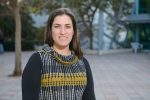
Feinberg Graduate School-Weizmann Institute student Vered Shacham-Silverberg is coming to Vancouver with two of her peers. (photo from Weizmann Canada)

Cliché as it may sound, the future is almost here. On March 29, three PhD students from the Feinberg Graduate School at Weizmann Institute of Science (WIS) in Rehovot will arrive in Vancouver. As part of a North American speaking tour called Scientists of Tomorrow, Vered Shacham-Silverberg, Adi Goldenzweig and Uri Weill will share not only details of their research but also their passion for the Weizmann Institute.

Rather than highlighting established scientists, this tour focuses on the experience of students who are performing the experiments being conducted in the labs.

“I believe that we, as students, enjoy many of the benefits the WIS provides and we can shed more light on those benefits,” said Shacham-Silverberg about why she believes she and her colleagues are well-suited to spread the word about what’s happening at the institute.

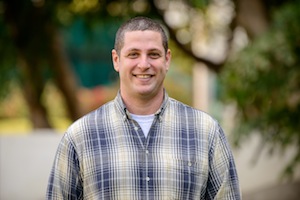
photo - Uri Weill
Uri Weill (photo from Weizmann Canada)

“We know firsthand how important it is to have a supporting and nurturing environment in research,” said Weill. “We can also bring stories from the working bench of live research that is happening now.”

WIS focuses exclusively on basic science research, the kind of investigation and experimentation that answers big questions. Its students are given the opportunity to have some of the brightest minds in the world as their supervisors and to use some of the best equipment in their research. WIS scientists are uncovering mysteries such as how the body works on the molecular level, and are translating their findings into ways to improve the world in which we live.

For example, Weill is creating a living catalogue of more than 6,000 yeast strains, so scientists can study how certain proteins function both as healthy organisms and diseased ones. His research in the department of molecular genetics could have far-reaching applications to finding cures for many illnesses.

Goldenzweig’s study of how proteins work with molecules has led to the discovery of a way to stabilize proteins that are usually structurally fragile when created in large quantities in a lab. The algorithm she has developed was recently successfully applied to a protein to combat malaria. This could be the key to developing an effective malaria vaccine.

And Shacham-Silverberg is working to discover how to improve the way the body gets rid of unproductive neurons in order to make room for the ones that will lead to best function. Her research will lead to discoveries in neurodegenerative diseases such as Alzheimer’s, ALS and Parkinson’s.

Having these students visit Vancouver is a unique chance for the local Jewish community. The students will not only share some of their research but also their perspectives on being students in Israel.

photo - Adi Goldenzweig
Adi Goldenzweig (photo from Weizmann Canada)

“Although there are many women in the life science faculties,” said Goldenzweig, “unfortunately … their number decreases dramatically in established positions. But this keeps changing and we’ll hopefully be closer to 50% within a few decades.”

WIS is also interested in promoting benefits for Canadian students interested in science. Every year, two Canadian second-year undergraduate students receive a fully paid two-month supervised internship over the summer in a lab at the institute. Two years ago, one of the recipients of this scholarship was a University of British Columbia student whose experience was so positive, he was asked to return the following summer.

The other program is the Kupcinet-Getz International Summer School, a four-week internship with funding currently for six Canadian students. The program brings together 80 pre-university students interested in research in physics, math, chemistry and the life sciences from a total of 17 countries. Many of these students are experiencing Israel for the first time, and form lasting impressions of and connections to the country. As well, they are introduced to some of the possibilities for their future in science.

The immersive scientific experience is what makes these summer programs so exciting for students, and is part of what drew Shacham-Silverberg, Goldenzweig and Weill to study at WIS.

Weill said he chose the institute because of the access to cutting-edge research tools, which enable him to ask and find the answers to new questions. He added, “At the WIS, we have collaborations with labs from around the world. It makes for the perfect conditions for scientific discovery.”

On March 29, all are welcome to come and learn more about scientific innovation in Israel. At the end of the students’ presentations, a dessert reception will provide a chance to meet the speakers, as well as the Feinberg Graduate School academic secretary, Dr. Ami Shalit. The event is being held in a private home, so if you would like to attend or are looking for more information, contact the WIS Western Canadian development associate, Camille Wenner, at 604-260-8506 or [email protected].

Michelle Dodek is a freelance writer living in Vancouver.

Format ImagePosted on March 24, 2017March 23, 2017Author Michelle DodekCategories LocalTags Israel, science, Weizmann

Anti-BDS legislation

Israel’s Knesset last week passed legislation against the boycott, divestment and sanctions (BDS) movement, representing just one of several setbacks this month for BDS around the world.

The Israeli bill, which passed its third and final reading with a 46-28 vote, grants the interior minister authority to deny entry visas to non-Israeli citizens who actively support boycotts of the Jewish state.

Conveying the rationale for the anti-BDS measure, Member of Knesset David Amsalem (Likud), chairman of the Knesset Interior Committee, said that, “if someone demeans me, I do not let them into my home.” Responding to critics of the legislation, Amsalem said the new law is not intended to stifle free speech, but was implemented to combat antisemitism and enemies of the Jewish state. These opponents of Israel, he said, “are not talking about boycotting only the settlements; they are talking about boycotting the state as a state, without any distinction. We are talking about antisemites here.”

One of the bill’s initiators, MK Bezalel Smotrich (Jewish Home), expressed similar sentiments, saying, “In recent years, a new antisemitic front has been initiated against Israel. Our enemies carry out a campaign to delegitimize and boycott Israel. Banning BDS supporters that come here to harm us from within is the minimum we can do against those Israel-haters.”

Left-wing Knesset members and several American Jewish organizations, including the Anti-Defamation League and the Reform and Reconstructionist movements, were highly critical of the new anti-BDS law. MK Tamar Zandberg (Meretz) said the law “is against freedom of expression” and “is meant to silence people.” The American Jewish lobby group J Street claimed the law “damages Israel’s democracy and helps the BDS movement.” The American Jewish Committee said it is “troubled” by the legislation.

Despite the controversy, Israel’s new law represents just one of several recent setbacks for the global BDS movement….

Read more at jns.org.

Posted on March 17, 2017March 14, 2017Author Adam Abrams JNS.orgCategories WorldTags BDS, boycott, Israel
Fundraising with food

Fundraising with food

Israeli business owner and chef Yair Yosefi helped spearhead a fundraiser for Syrian refugees. (photo from Yair Yosefi)

A Tel Aviv restaurateur and bar owner wanted to do something about the dire situation of Syrian refugees, so he turned to what he knows best – food.

Yair Yosefi is the owner of Nahalat Binyamin restaurant Brut and bar Extra Brut. Thinking about how he might be able to help, Yosefi connected with his friend Ronit Vered, who is a food journalist. Together, the two created Kitchen Without Borders, which raises awareness of the plight of and funds for Syrian refugees.

“When you see what’s happening on the other side of the border, we have to do something,” Yosefi told the Jewish Independent. “We don’t have enough power. We aren’t politicians. We thought, if we have to do something, we will cook.”

Although Yosefi said he would gladly go to Syria to cook, his Israeli passport doesn’t allow him to do so. “It was a dream of mine to go to Haleb,” he said. “When I was living in France, I had friends from there … very interesting cuisine. But, having an Israeli passport, it’s impossible. Syrians can go into Israel, but Israelis can’t go into Syria…. So, we just decided we’d do what we can.”

They have raised funds by selling Syrian-inspired dishes at their restaurants and by getting other restaurants to join in the fundraising efforts.

Yosefi started Brut and Extra Brut with partners two-and-a-half years ago, soon after he returned to Israel from Paris, where he had been living and working for 10 years. He is now married and has a four-year-old daughter.

Of the restaurant, Yosefi said, “I’m co-chefing with my best friend, Omar Ben-Gal. I’ve been cooking for the last 20 years, since I was 20. We were born and raised in Tel Aviv. It’s the heart for Israel, heart of cultural life in Israel.”

Being the father of a young child, Yosefi feels especially concerned with the situation women and children are facing in Syria. With his friends in the restaurant industry, he wanted to help, but the question was how.

“Every restaurant decided on a dish – either one inspired by Syrian cuisine or, if that wasn’t possible, like with Thai or French restaurants, they’d choose a signature dish,” said Yosefi. “All the revenue from this, which ran for a few weeks, went to a foundation called Karam, based in the U.S. and created by ex-Syrians. Karam uses donations to help, especially, kids … education…. It’s very important.

“We forget, because of the war, they haven’t gone to school or kindergarten … so they’re helping the women and the kid refugees with basic things like food, tents, clean water, education … everything.”

Restaurants throughout Israel joined in the effort to raise the funds, many in Tel Aviv, as well as some Arab and Palestinian restaurants, from large restaurant chains to small mom-and-pop operations, said Yosefi.

About how much was raised through the project, which ran Jan. 15-31, Yosefi explained that he and the other organizers decided ahead of time that every restaurant would donate directly to the foundation. “We trust each other, so we’re not even asking,” he said. “We decided not to count the money. Everybody gave what they made. I know it was quite an important amount … but, most important, it was an issue that was spoken about in Israel and the money obviously helped them – the refugees.

“From the Karam Foundation, we’ve heard two things. First, that it was a nice amount. And, secondly, that it was very heart-warming … [that] people from [across] the border, Israelis, chefs and bakers, gave money.”

As for the Israeli customers enjoying this special cuisine, Yosefi said, “People came and were looking for a certain dish from each restaurant devoted to the cause. It was very, very nice actually. It’s very nice when you go out, eat and drink, and you know that the dish means you’re donating money. Patrons are very generous.”

At Brut, they decided to make a spin-off dish, called Duhul Safadi, the recipe for which they were given by a Palestinian friend from Nazareth, though they called the dish A Night in Halab. Slow (overnight) oven-cooked lamb served on foraged vegetables cooked in yogurt, Yosefi described it as “our take on the Palestinian-Syrian dish.”

Brut chose this particular recipe because the ingredients are locally sourced, something they put an emphasis on with all their food.

Looking ahead for other ways to help, Yosefi said, “We’re going to do something, but we don’t know what yet. We want to see the reaction first.”

In September, Yosefi and his team will be going on the road for a few events in the United States, with stops in Charleston, Nashville and New York. They have been invited to Tokyo this April to do a pop-up booth.

“We’d love to bring our cuisine to Vancouver,” said Yosefi. “It would be fun. We’ll bring our knives and you bring your Canadian whisky. It could be a good match.”

Rebeca Kuropatwa is a Winnipeg freelance writer.


Format ImagePosted on March 17, 2017March 14, 2017Author Rebeca KuropatwaCategories IsraelTags Israel, Syria, tikkun olam, Yair Yosefi

Posts pagination

Previous page Page 1 … Page 79 Page 80 Page 81 … Page 110 Next page
Proudly powered by WordPress