Skip to content
  • Home
  • Subscribe / donate
  • Events calendar
  • News
    • Local
    • National
    • Israel
    • World
    • עניין בחדשות
      A roundup of news in Canada and further afield, in Hebrew.
  • Opinion
    • From the JI
    • Op-Ed
  • Arts & Culture
    • Performing Arts
    • Music
    • Books
    • Visual Arts
    • TV & Film
  • Life
    • Celebrating the Holidays
    • Travel
    • The Daily Snooze
      Cartoons by Jacob Samuel
    • Mystery Photo
      Help the JI and JMABC fill in the gaps in our archives.
  • Community Links
    • Organizations, Etc.
    • Other News Sources & Blogs
    • Business Directory
  • FAQ
  • JI Chai Celebration
  • JI@88! video

Recent Posts

  • Sharing her testimony
  • Fall fight takes leap forward
  • The balancing of rights
  • Multiple Tony n’ Tina roles
  • Stories of trauma, resilience
  • Celebrate our culture
  • A responsibility to help
  • What wellness means at JCC
  • Together in mourning
  • Downhill after Trump?
  • Birth control even easier now
  • Eco-Sisters mentorship
  • Unexpected discoveries
  • Study’s results hopeful
  • Bad behaviour affects us all
  • Thankful for the police
  • UBC needs a wake-up call
  • Recalling a shining star
  • Sleep well …
  • BGU fosters startup culture
  • Photography and glass
  • Is it the end of an era?
  • Taking life a step at a time
  • Nakba exhibit biased
  • Film festival starts next week
  • Musical with heart and soul
  • Rabbi marks 13 years
  • Keeper of VTT’s history
  • Gala fêtes Infeld’s 20th
  • Building JWest together
  • Challah Mom comes to Vancouver
  • What to do about media bias
  • Education offers hope
  • Remembrance – a moral act
  • What makes us human
  • המלחמות של נתניהו וטראמפ

Archives

Follow @JewishIndie
image - The CJN - Visit Us Banner - 300x600 - 101625

Tag: interfaith

MLA seeks out positive solutions

MLA seeks out positive solutions

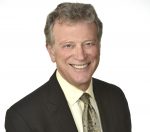
George Heyman is the member of the B.C. legislative assembly for Vancouver-Fairview. (photo from George Heyman)

George Heyman is one of numerous British Columbia residents who owe their lives to the Japanese diplomat Chiune Sugihara. Though born after the Second World War, Heyman is the son of a Polish Jewish couple who were among the estimated 6,000 Jews aided in fleeing Nazi Europe by the acts of Sugihara, who was the vice-consul for the Empire of Japan in Lithuania.

“That’s a story my parents didn’t spend a lot of time telling me about, which I’ve since found out is actually very common – parents don’t tell their story,” Heyman told the Independent. “But I learned much about it in recent years and it has been well-documented with a number of exhibits telling the story in Vancouver and the United States and other parts of Canada and in Japan.”

Sugihara risked his career – and his life – issuing transit visas to Jews. An estimated 40,000 descendants of “Sugihara Jews” are alive today because of his actions.

Once they had escaped Europe, Heyman’s parents were sponsored by family in Vancouver.

“Canada was certainly not falling over to welcome Jewish refugees,” said Heyman. “But they had distant relatives who were from Austria, who had already established here before the war started, seeing the writing on the wall. They sponsored them. My dad enlisted in the reserves, worked as a machinist in a boiler factory – even though he had an engineering degree – until he could get his credentials recognized in Canada, and eventually went on to work in the profession in which he had been trained.”

Heyman was born at Vancouver General Hospital, in the riding he now represents in the B.C. legislature, Vancouver-Fairview. The New Democrat says his family’s experience – and his own experience with casual antisemitism – helped shape his approach to the world and politics.

“I think, as a young child growing up in Canada, I just wanted to be what most children wanted, which was to be accepted,” he said. “I remember the normalization of what we would now recognize as clearly antisemitic jokes or comments or generalizations or characterizations. As a young boy, I had a hard time speaking up against it. It took a lot of courage to say, ‘you can’t talk about Jews that way’ or ‘why are you using the term Jew, my religion, in that way that is clearly not a good one?’”

These experiences, Heyman said, helped him recognize injustice and learn to value other people regardless of their economic class, ethnicity or religion, “to embrace people, not categorize them or shun them.”

“As part of that, I was also learning to stand up for who I was,” he said. “Like many young Jews, I was torn between looking for my identity and wanting to fit in. It’s been a lifelong journey.”

These experiences also helped lead him to careers in the labour movement and public office. Heyman served as head of the B.C. Government and Service Employees Union, then executive director of the Sierra Club of British Columbia, before being elected to the B.C. legislature in the 2013 election.

One of the reasons he has taken the opportunity over the years to speak up about his own experiences, Heyman said, has been “to try to deepen understanding and let people know what casual and thoughtless racist comments do to people who are the recipients of them.”

Antisemitic rhetoric and threats in North America and the murder of six Muslims in a Quebec mosque have had a range of unintended consequences, he said. They have ensured that people do not take security for granted and they have caused a coming together of disparate religious and ethnic groups.

“When Muslims at prayer in a mosque in Quebec are murdered, members of the Jewish community stood with Vancouver Muslims at the mosque and expressed their own solidarity as well as horror at the actions,” he said. “And Muslims have come to the [Vancouver Jewish Community] Centre for peace circles, to express their solidarity.… What makes us strong is when we work together, understand each other, support each other, build institutions together; not when we live in isolation or fear, because then we just give encouragement to those people who thrive on creating fear and hatred because it’s the only answer they have for what’s missing in their lives. I’d rather find a positive, constructive answer to those things that are missing in people’s lives, whether it’s spirituality, faith or some measure of economic equality, and build community solidarity that way.”

Heyman said he and the rest of the NDP caucus want to see the recommendations of the Truth and Reconciliation Commission report implemented, including educational components about the history of First Nations.

“The commission talked about ensuring that there is a healthy education component in schools, right from the earliest stages, about the history, what was wrong with it, how we can grow beyond it and heal,” he said. “The same is true of the racist laws that existed in Canada that impacted Chinese, South Asian, Japanese and other immigrants, who actually did the hard labour, in many cases, of building this country that other people weren’t willing to do. The same is true of understanding the history of the Holocaust that happened in Europe, which obviously was overwhelmingly targeted to Jews, but not only. How that connects to other aspects of racism, hatred and genocide, [and to] recognize the genocides that have happened in other parts of the world, as Jewish speakers at Holocaust memorials in the legislature have consistently done.

“We need to educate young people, both about the horror of the past and what it leads to, about the impact of thoughtless words or actions that promote or embody racist thought, but also about the benefits to us all when we live and work together and appreciate each other and embrace each other.… Government has the resources and the authority to both legislate against hatred and racism, but also to animate the actions that can ultimately, if not wipe it out, shrink it to the minimum amount that we would hope.”

On the Israel-Palestinian conflict, Heyman said he supports a two-state solution and does not support the boycott, divestment and sanctions (BDS) movement.

“I’ve never chosen to personally support or even quietly implement on my own behalf a boycott of Israeli products,” he said. “I also think it’s important in this context that we distinguish between tactics that some people choose to make a political point and whether or not that tactic is synonymous with antisemitism. I think, for instance, there are antisemites who express their views through a variety of mechanisms, and I also think there are Jews and other people who are legitimately concerned about government actions and want to find a two-state solution and peace that brings an end to the conflict and brings security to both Palestinians and Israelis who may support that tactic without being antisemitic. Personally, while I support a two-state solution, I very much want to see the hatred and conflict in the Middle East solved and that means, for me, opposing terrorism as well as opposing actions that block the road to peace.”

He added: “I think it’s important for people to recognize that those who call for a just peace and a two-state solution may be calling for justice for Palestinians and justice for Jews and Israelis, and they are not incompatible.”

As voters prepare for the May 9 election, Heyman said there are plenty of topics on the agenda.

“There are issues of affordability, issues of fairness and services for communities, for people needing healthcare, for seniors, for children, for working families, issues of housing and very important issues of, how do we build a modern, diversified economy that doesn’t threaten our children and grandchildren with an unliveable future due to climate change?” he said. “We can’t put off the choices of transitioning to a supportive society, a society that takes care of seniors and kids, as well as a society and economy that employs people productively while respecting and protecting the environment – those are the choices we need to make today.”

The Jewish Independent’s provincial election coverage continues with interviews with other candidates in future issues.

Format ImagePosted on April 7, 2017April 4, 2017Author Pat JohnsonCategories LocalTags BDS, Election, George Heyman, Holocaust, interfaith, Israel, NDP, peace, politics, racism
Faiths come together

Faiths come together

David Coskun dances as Seemi Ghazi speaks. (photo by Matthew Gindin)

On March 9, Congregation Or Shalom, in collaboration with the Anglican Diocese of New Westminster, hosted United in Compassion, an interfaith solidarity event featuring 15 different religious leaders from diverse communities of faith.

The packed synagogue was addressed by faith leaders in clerical collars, kippot, dervish dress, imam robes and even a Zen rakusu (ceremonial garment worn around the neck). During the hour-long devotional service, each leader offered brief words and contemplations on interfaith harmony and peace.

“God created a universe filled with diversity. Every human is free to choose their own beliefs. There is no compulsion in religion,” said Imam Mohammad Shujaath Ali, a Sunni Muslim of Masjid-Ul Haqq mosque, quoting the Quran. “For society to flourish,” he said, “we need these three qualities: compassion for others, collaboration among all, and toleration of views we disagree with. All creatures are God’s family, and God loves those who treat his family well.”

The imam was followed by David Coskun and Seemi Ghazi of the Rifa’i Marufi Sufi order. Coskun, dressed in a long, white, flowing robe and tall hat, performed a hypnotizing, meditative dervish twirl, while Ghazi spoke. “The path of the Sufi, it is all about tawhid (unity),” she explained. “Because of knowing the oneness of all things, we are unafraid to turn in all directions.”

photo - Sheikh Murtaza Bachoo speaks about compassion at the March 9 gathering of faith leaders at Or Shalom
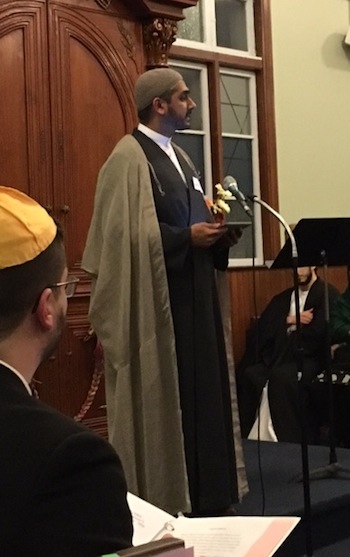
Sheikh Murtaza Bachoo speaks about compassion at the March 9 gathering of faith leaders at Or Shalom. (photo by Matthew Gindin)

Ghazi sang a haunting rendition of the Sufi song “I Desire Nothing But You,” commenting, “This is a love song to my brothers and sisters here in this synagogue and down south, that you flourish and are safe and protected.”

Sheikh Murtaza Bachoo of the Shia Muslim Community of British Columbia spoke about ar-rahma, compassion in Arabic, echoing the word for compassion in Hebrew, rachamim. “Compassion,” he said, “is the attribute of God we need to manifest in these times of racism, antisemitism, Islamophobia and xenophobia. God’s compassion is boundless and overflowing, and knows no boundaries among creatures.”

Rabbi Laura Duhan Kaplan, former spiritual leader of Or Shalom and current director of Inter-Religious Studies at Vancouver School of Theology, chanted verses from Genesis describing the creation of human beings in the divine image. She cited a midrash explaining that, when God says “in our image,” it is a reference to all of the different creatures, all of whom are spiritually interconnected. God blessed us, saying, “May you become diverse, may you take good care of each other, and of all creation.”

Bishop Reverend Dr. Gregory Mohr of the B.C. Synod of the Evangelical Lutheran Church in Canada read some of the official pronouncements of his order on the subject of “welcoming the stranger,” stressing that “the stranger” refers not only to newcomers to Canada but to “people already here, people maybe right next door, who we have overlooked and do not know.”

Some of the presenters offered brief devotions or meditations. Eric Kristensen of the Religious Society of Friends (Quakers) invited audience members to consider some leading thoughts from Quakers of the past into silent questioning.

Linda Mackintosh of the Sathya Sai community offered some thoughts of her guru on world peace, and Sandra Leigh of Give Peace a Chant Kirtan shared the musical chanting of the ancient Gayatri Mantra. Parvin Manshadi of the local spiritual assembly of the Baha’is of Vancouver recited a prayer for peace written by Baha’ullah, and Firdosh Mehta of the Zoroastrian Society of British Columbia shared teachings of the Zoroastrian scriptures on universal ethical values and peace. Michael Newton of the Mountain Rain Zen Community led the congregation in meditation on loving-kindness for ourselves and one another.

Bishop Melissa Skelton of the Anglican Diocese of New Westminster read two poems by secular poets – Israeli Yehuda Amichai and Palestinian-American Naomi Shihab Nye – to express the need for Israelis and Palestinians to embrace one another.

“Then it is only kindness that makes sense anymore,” concluded the poem by Shihab Nye. “Only kindness that ties your shoes and sends you out into the day to gaze at bread / only kindness that raises its head / from the crowd of the world to say / It is I you have been looking for / and then goes with you / everywhere / like a shadow or a friend.”

“In the parashah for this week,” said Rabbi Adam Stein of Congregation Beth Israel, “it says, ‘Build Me a sanctuary, and I will dwell among them.’ It does not say God will dwell in the sanctuary, but rather ‘among them.’ Tonight, I feel we have made a sanctuary for God and brought out the godliness that dwells among us.”

Or Shalom’s Rabbi Hannah Dresner closed the evening, leading the audience in a niggun, a sacred, wordless melody. She chose the Rav’s Niggun, composed by Rabbi Schneur Zalman of Liadi, the first Lubavitcher Rebbe, symbolizing the soul’s ascent to God, which is commonly sung at Lubavitcher weddings. “The melody brings out the solemnity and the beauty of when souls come together to truly connect with each other,” said Dresner. “This is what I feel we have done tonight.”

After the service, people met downstairs for food and drinks, having conversations together facilitated by a set of posted questions at each table on hope, inter-communal tolerance and peace.

Matthew Gindin is a freelance journalist, writer and lecturer. He writes regularly for the Forward and All That Is Interesting, and has been published in Religion Dispatches, Situate Magazine, Tikkun and elsewhere. He can be found on Medium and Twitter.

Format ImagePosted on March 24, 2017March 23, 2017Author Matthew GindinCategories LocalTags interfaith, Or Shalom
United against racism

United against racism

Artur Wilczynski, Canada’s ambassador to Norway, gave the keynote address at the Feb. 22 SUCCESS community forum. (photo from SUCCESS)

SUCCESS’s Safeguarding Our Communities, Upholding Our Shared Values: A Community Forum on Immigration and Racial Discrimination was a full-house event at University of British Columbia Robson Square on Feb. 22.

The keynote speaker, Artur Wilczynski, Canada’s ambassador to Norway, shared his family’s story about how they survived the Holocaust and came to Canada. “I am a Polish, a Jewish, a Quebecois. Most important, I am a Canadian,” he noted.

“Diplomacy doesn’t give you immunity from discrimination but gives you a platform to speak against it,” he said.

“It is important for Canadians to speak out against various forms of discrimination and xenophobia. As an immigrant to this country and the son of Holocaust survivors, I have been privileged to serve my country as an ambassador and senior official. It is why I feel it is my obligation to work towards a more inclusive and respectful Canada.”

He thanked SUCCESS for allowing him to share his story at the forum.

Wilczynski’s keynote address was preceded by two panel discussions. Panelists included, among others, Dr. Robert Krell, Vancouver Holocaust Education Centre founding president and outreach speaker; Dr. Gurdeep Parhar, University of British Columbia faculty of medicine; Chief Dr. Robert Joseph, Reconciliation Canada ambassador; and Sarah Al-Qaysi, program assistant, SUCCESS. SUCCESS chief executive officer Queenie Choo welcomed the audience to the forum. Among the sponsoring organizations of the event were the Jewish Independent, Jewish Federation of Greater Vancouver and the Centre for Israel and Jewish Affairs.

photo - Young audience members hoped to take what they learned at the forum about the immigrant experience and share it with those who could not attend the event
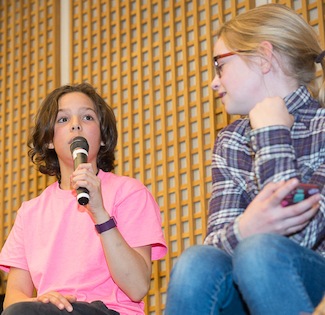
Young audience members hoped to take what they learned at the forum about the immigrant experience and share it with those who could not attend the event. (photo from SUCCESS)

At the facilitated discussion for Call for Actions, a group of young audience members raised questions on how they could share the knowledge they learned at the forum with those who were not able to attend.

SUCCESS will be launching a series of community roundtables across Metro Vancouver. These facilitated conversations will create a platform for community members to share and reflect on thoughts on diversity and inclusion, while engaging them in thought-provoking discussions regarding cultural integration in our community – to build safe, strong and enlightened neighbourhoods. Each session will be held at one of SUCCESS’s local offices or another accessible community location.

SUCCESS will also create a documentary video, featuring interviews with immigrants and community leaders, about the value and contributions of immigrants in Canada. The video will be distributed through multiple channels, including a special screening video launch, online and social media networks, and grassroots outreach through high schools and universities to help educate future generations about the stories of immigrants in Canada, who we are and where we are from.

Format ImagePosted on March 3, 2017February 28, 2017Author SUCCESSCategories LocalTags Artur Wilczynski, immigration, interfaith, racism

Blessings of love, religion

Once a month, my husband (a secular humanist Jew) and I (Roman Catholic) join the Fraytik tsu Nakht at the Peretz Centre for Secular Jewish Culture. At the Friday night secular humanist Shabbat celebration, we sing songs, light candles, eat challah bread, and sing in Yiddish and Hebrew. But what I am also learning is the humanistic approach to Jewish cultural heritage.

At the celebrations, they give a great deal of importance, as it says in the text that we read, “to human dignity and the human power to make a better world … and gratitude for the wonders of the world.” Being from a Latin American country, I do not know Yiddish or Hebrew, but I have memorized the lyrics to songs like “Daylanu Shalom” and “Hineh Ma Tov,” so I can sing along with the other people.

When I married Carl, I enjoyed imagining that I was married to a relative of Jesus Christ, since I am practising Catholicism and Jesus is Jewish. We found out that we have more things in common than we imagined. We really enjoy seeing all the similarities and sharing them. For instance, I go with Carl to his Jewish events, where we light candles “to reflect on our own light and the light of others, we praise the healers, the builders and the dreamers. We celebrate the peacemakers, those who teach, who nurture, who love, who share, and those who create for humanity.” At the same time, I have an altar in our room, where I spend time praying the rosary, lighting candles and meditating. Carl comes with me on Sunday to listen to Mass, and is curious for something new, like listening to Mass in Latin, hearing the sermon or just listening to the beautiful music from the pipe organ at Holy Rosary Cathedral, where I belong. Our relationship is based on respect and acceptance, so we can both learn from each other without judgment. Together, we discover that hope is bright and love fills our hearts.

This past year, like every year, we received a phone call from one of Carl’s friends inviting us to his home to celebrate Passover. For me, this means learning more about his culture and imagining how was the Last Supper that Jesus had with his disciples. I love the prayers, the singing and being with good friends who accept me and welcome me, even knowing that I am Catholic, but, above all, I enjoy it because I’m taking part with my husband, who I love.

Carl and I married in a civil ceremony, a Jewish ceremony and in the Catholic Church. We learned that celebrating our differences has made us closer and that religion, far from being a barrier, is a blessing from our Higher Power, however we understand It.

Delta Vazquez Leon has worked part time for Holy Rosary Cathedral for almost four years as an administrative assistant-receptionist. Her mother tongue is Spanish, and she helps Spanish-speaking parishioners in their needs. Some Sundays she assists in the distribution of Holy Communion, and participates in any way she can in Cathedral activities. In her spare time, she likes to write, draw and paint.

Posted on February 24, 2017February 21, 2017Author Delta Vazquez LeonCategories Op-EdTags Catholicism, interfaith, Judaism, love, marriage, religion
The time to act is now

The time to act is now

Temple Sholom Rabbi Dan Moskovitz addresses a Concerned Canadian Clergy for Refugees multi-faith clergy press conference at Jack Poole Plaza in Downtown Vancouver on Jan. 29. (screenshot)

The murders at a Quebec City-area mosque Sunday night shattered our sense of Canadian safety and multiculturalism. Six worshippers were killed and at least a score more injured in the shooting rampage inside a Ste.-Foy Islamic centre during evening prayers.

We are confident we reflect the intent of every reader and the broader community we serve when we offer condolences to and solidarity with the victims, their families and the entire Muslim community in Canada, each member of which must be feeling a sense of grief and fear.

We will not, however, state, as some inevitably do in such situations, that “We are all Muslims now.” After this tragedy, only members of the targeted group can fully appreciate the sense of isolation and anxiety such a tragic act instils. We cannot all understand the variety, depth and breadth of feelings of those affected, so, while we should acknowledge our common humanity and grief, we should offer special comforts to our Muslim friends and ensure that they know that Jewish Canadians and all Canadians sympathize with the uniqueness of a hate-motivated attack.

The grief that enveloped us late Sunday should not eclipse the light we witnessed on Sunday morning, when local clergy, led by Temple Sholom’s Rabbi Dan Moskovitz, other rabbis and clergy from different faith traditions, gathered to stand in solidarity against the executive orders signed by U.S. President Donald Trump last Friday.

The president decreed that all refugees would be immediately banned from entering the United States for at least 120 days. A parallel announcement declared that citizens of Iran, Iraq, Libya, Somalia, Sudan, Syria and Yemen would be banned from entering the country for at least 90 days.

The presidential orders came as a stunning blow to those who didn’t take Trump at his word. Even many who count themselves as among his fiercest opponents seemed to believe Trump would stop short of his most extreme promises. But there he was: doing exactly what he said he would do – banning Muslims from entering the United States (as well as taking preliminary steps to construct a wall along the border with Mexico).

“To be clear, this is not a Muslim ban, as the media is falsely reporting,” the president obfuscated in a written statement Sunday. “This is not about religion – this is about terror and keeping our country safe.”

Despite this contention, one of the stomach-churning aspects of this seemingly random list of Muslim-majority countries is what they share in common: as the New York Times has reported, these are countries where the Trump organization has few business interests. If one subscribed to the idea that banning people based on nationality was a wise move, certainly Saudi Arabia, which produced almost all of the 9/11 terrorists, and Egypt and the United Arab Emirates, which have not insignificant records of radicalization, would logically (if that is the correct term) be on such a list. So might Turkey. But residents of those countries can, for now, continue to enter the United States.

Trump’s orders were additionally jarring for Jews and others who were solemnly marking International Holocaust Remembrance Day at the very time Trump was turning America’s back on refugees. The history of the United States – and Canada, and almost every other country – in turning their backs on Jewish refugees is the reason the Holocaust was able to occur in the magnitude that it did. The callousness Trump exhibited in taking actions against refugees on International Holocaust Remembrance Day is abominable, even worse than his intentional omission of Jews in his Holocaust statement that day.

Syrian refugees are not, at present, finding every door in the world closed to them, as Jews did in the 1930s. They are, however, having the door to the golden medina – the great land of liberty whose preeminent symbol openhandedly welcomes the homeless, tempest-tost, huddled masses yearning to breathe free to a place of permanent refuge – slammed in their faces. In Trump’s America, Lady Liberty lifts her lamp beside the golden door only so that refugees can read the sign: “Keep out.”

The move by Canadian clergy is admirable. They deserve our thanks and support as they provide a model for individuals to take a stand at an important time.

Likewise, we were proud to see the remarks of Prime Minister Justin Trudeau, and the thousands of Canadians who have shared his sentiments, that Canada will step up where America is faltering and take in some of those refused entry to the United States. We invite readers to contact members of Parliament to let them know that plenty of Canadians – including Canadian Jews – understand that Canada is in a unique position to act at a time when the United States is betraying our erstwhile shared values.

By press time, it remained unclear what specific animosities drove the perpetrator of the Ste.-Foy attack. And, while it is premature to blame the murderer’s actions on ambient anti-Muslim agitation stoked by a swath of demagogues leading all the way up to the president of the United States, the rhetoric in which Trump and many of his supporters are engaging is certain to have negative consequences.

Consequences, too, will be felt from the actions of well-intentioned people. The rabbis and other clergy who step forward and condemn bigotry are the best antidote to the negativity and hatred we see. They are whom we should emulate. We must step forward with them.

Format ImagePosted on February 3, 2017February 1, 2017Author The Editorial BoardCategories From the JITags immigration, interfaith, Muslims, racism, refugees, Trump
Figuring out family holidays

Figuring out family holidays

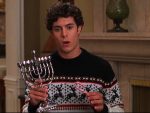
Adam Brody played Seth Cohen in the show The O.C. and celebrated “Chrismukkah.” (photo from cookiesandsangria.files.wordpress.com)

If nothing else, The O.C., the popular 2003-07 American television show that featured the overblown dramas of hyper-privileged Orange County teens and their self-obsessed parents, can be credited with making a household name of “Chrismukkah” – the handy portmanteau that character Seth Cohen used to describe his interfaith family’s fusing of Christmas and Chanukah.

With intermarriage on the rise, many Jews in Canada and the United States are partnered or raising children with spouses of Christian backgrounds. Jewish Federations of Canada-United Israel Appeal’s 2011 National Household Survey found that the intermarriage rate in this country is 25%, about half the rate in the United States.

With Christmas being the centrepiece of the Christian calendar in the West – even for the increasing number of North Americans who celebrate Jesus’ birthday only culturally – many intermarried Jews find themselves in a quandary: should they embrace “Chrismukkah,” observe Christmas and Chanukah separately, or focus on creating an exclusively Jewish home by just celebrating the Festival of Lights.

While every family’s situation is different, it seems that many interfaith couples are finding ways to mark both holidays, but with the emphasis on each one’s cultural value.

This lines up with findings from the Pew Research Centre’s 2013 study A Portrait of Jewish Americans, which notes that younger generations of American Jews – 32% among Jewish millennials – often identify themselves as Jewish on the basis of ancestry, ethnicity or culture rather than religion. This matched the broader U.S. public’s shift away from religious affiliation, which is particularly prevalent among those in the 18-to-29 age range.

As for “Chrismukkah,” the Pew report found that about one-third of Jews surveyed said they’d had a Christmas tree in their home the year prior. Among those married to non-Jews, that number was 71%.

Tyler Irving isn’t Jewish, but his wife is, and the couple had their first child last year.

“So far, I’ve found it pretty easy to celebrate both sets of holidays,” he said. “We’ve been thinking about holidays as chances to reflect on culture, spend time with family and build strong bonds, and putting less emphasis on the religious aspects.”

Because Christmas is when they visit Irving’s parents, who live in the country, he expects that his own kids will view Christmas as a time to “be with Grandma and Grandpa,” while Chanukah will be “the chance to go to spend time with Bubbie and Zaide.”

Arielle Piat-Sauvé grew up in Quebec with a Jewish mother and a Catholic father.

“We always celebrated both holidays,” she said. “We went to my dad’s family for Christmas, though we did have a tree and did gifts at our own home. On Chanukah, we’d light the candles and do something with my [maternal] grandma and cousins. When I was younger, I’d get a gift for each night, but that wore off.”

If the two holidays coincided, her family would first light the Chanukah candles and then go to her grandparents’ for Christmas dinner. She stressed that neither holiday celebration focused on their religious components, but tradition and family time.

“Often, it’s easier for families to add than subtract,” said Rabbi Jordan Helfman of Toronto’s Holy Blossom Temple, a Reform synagogue that has among its members quite a few interfaith couples.

Interfaith families with children enrolled in Holy Blossom’s supplementary religious school are asked not to celebrate Christmas in their own homes, but going to a non-Jewish relative’s place for Christmas is OK, Helfman explained.

“My experience is it’s not hard for children to make that distinction, especially when the parents are clear about, ‘This is what we do in our house, and this is what Grandma does in her house.’ Kids are smarter than we give them credit for,” he said.

Rabbi Tina Grimberg of Congregation Darchei Noam, Toronto’s Reconstructionist synagogue, said her congregation has a number of interfaith families, many of whom get involved in the shul’s Chanukah festivities, or who light candles in their own homes.

“Do I go into people’s homes and see Christmas trees? Not often at all. Do trees come up in [interfaith congregants’] homes on Dec. 24? Most likely not … though if people do celebrate both Christmas and Chanukah, they don’t tell me,” she said.

Just because a non-Jewish partner hasn’t converted doesn’t mean Christmas is central in their life, she emphasized. And, ultimately, when addressing interfaith families’ practice of Judaism, there’s a larger conversation at play.

“It’s about how to live life in a Jewish context when you have deep roots in another reality. It’s not about, ‘I’m Jewish because I don’t celebrate Christmas.’ It’s ‘How many Jewish things do I do … do I do Shabbat, go to synagogue, have a seder, do mitzvot, say Shema in the morning?’” she said. “Some people will still have a tree, because it honors their grandma, while others feel they have enough of a rich Jewish life that they no longer need it.”

Rabbi Jillian Cameron is director of the Boston chapter of InterfaithFamily, a U.S. organization that supports interfaith couples exploring Jewish life. It provides families with educational materials and connections to inclusive organizations, programs and local clergy.

She stressed that, while she doesn’t see a single trend with regard to how families led by intermarried couples approach the holidays, at this time of year, many of them are focused on figuring out how to be respectful of both Chanukah and Christmas, whether they celebrate the holidays in their own home or that of an extended family member.

While Christmas can be tough to give up for many who are raised with it, Cameron said, the religious element is secondary to “the family connections, the music, the smells, the tree … there’s a big pull to the sensory nature of Christmas.”

She added that this speaks to the wider trend of younger people finding value in tradition, but focusing on things outside of the theological realm.

While families with one Jewish and one Christian parent observe the holidays at this time of year in all sorts of incarnations, it’s clear that many, as in the general population, are most concerned about preserving tradition and a sense of family togetherness.

– For more national Jewish news, visit cjnews.com


Format ImagePosted on December 16, 2016December 15, 2016Author Jodie Shupac CJNCategories Celebrating the HolidaysTags Chanukah, Chrismukkah, Christmas, interfaith, intermarriage, Judaism

More bridges to build

The entire Jewish community was shocked to witness a spike in antisemitic vandalism in November, with incidents reported in Montreal and Toronto, and at three synagogues and a Jewish community centre, as well as at non-Jewish sites, in our nation’s capital.

The Centre for Israel and Jewish Affairs (CIJA) worked closely with targeted institutions and local police to ensure effective measures were taken to protect the community in Ottawa, and the police arrested a suspect who now faces serious criminal charges.

While these ugly crimes remind us that antisemitism – the world’s oldest hatred – still exists, solidarity demonstrated by many proves we are not alone in this battle. Countless leaders, including the prime minister, various members of Parliament, the mayor of Ottawa, police officials, the United Way, and leaders in the Christian, Sikh and Muslim communities, have denounced these incidents. In so doing, they have reminded us of the value of our efforts to build bridges with non-Jewish leaders and communities. Our voices are stronger when united in common cause. From the many communities whose interests, values, and concerns we share, I highlight just three recent examples of CIJA partnerships making an impact.

In October, CIJA was honored to meet with His Holiness Mirza Masroor Ahmad, caliph of the Ahmadiyya Muslim community. Numbering some 10 to 20 million globally, Ahmadis face persecution in much of the Muslim world. In Pakistan, they are denounced as “non-Muslim,” face systemic discrimination and are the target of harassment and terrorist attacks.

CIJA has built a relationship with the Ahmadiyya community of Canada, with whom we have established dialogue and joined in calling on the Canadian government to prioritize religious freedom abroad. The caliph (a non-political position) recently commented on the thriving Ahmadi community near Haifa and underscored his community’s belief in the need to respect all faiths. Canadian Ahmadiyya leaders have shared both their appreciation for Israel as the freest country in the Middle East and their opposition to boycotts targeting the Jewish state.

CIJA continues to enjoy warm friendships with several major Christian organizations, including the Canadian Conference of Catholic Bishops (CCCB), the Evangelical Fellowship of Canada and various mainstream Protestant denominations.

Last November, CIJA and the Canadian Rabbinic Caucus launched a partnership agreement with CCCB, including a shared commitment to join forces in countering antisemitism and hatred in all its forms. We’ve since worked with CCCB on issues as diverse as Holocaust commemoration, the persecution of Middle East Christians and – in a unique Jewish-Catholic-Evangelical-Muslim partnership – a campaign calling for a national, well-funded palliative care strategy. This latter issue is especially crucial given Canada’s aging population and evidence that far too many patients cannot access high-quality end-of-life care.

We have also mobilized the support of various Christian groups and others, including Sikhs and Muslims, in our effort to strengthen Canada’s hate crime laws. Currently, vandalism targeting places of worship is automatically treated as a hate crime with serious penalties, a designation not applied to incidents involving community centres and schools associated with an identifiable group. Working with our interfaith partners, we are urging MPs to support Bill C-305 to close this loophole in the Criminal Code.

And, while Canadian society has witnessed a generational shift regarding LGBTQ rights, many in this community continue to face bigotry. CIJA is proud to be part of the four-member executive committee overseeing Trans Equality Canada, a coalition leading the advocacy efforts for Bill C-16, which extends hate crime and anti-discrimination protections to the transgender community. This historic legislation passed the House of Commons in November and is now with the Senate.

CIJA’s role in this campaign is unique. We’re the only ethnic or religious community organization at the forefront of what is, arguably, the most important issue concerning the Canadian LGBTQ community today: the rights of transgender Canadians.

This work mirrors the efforts of local CIJA offices and grassroots Jewish groups across Canada building ties with their respective LGBTQ organizations and Pride festivals. For their work in Montreal, our team received an award from the LGBT Chamber of Commerce of Quebec.

These relationships don’t just advance human rights. They help ensure we have allies within the LGBTQ community when anti-Zionists attempt to import their bigoted agenda into Pride, just as, in October, Halifax Pride voted down a resolution to ban any mention of Israel from its events.

This is just a sample of the partnership work we’re doing to build a better society for the Jewish community and all Canadians. But it’s a work in progress, and there are countless communities with whom we will seek opportunities to strengthen ties through issues of common cause. If you have suggestions or would like to get involved, connect with us at [email protected].

Shimon Koffler Fogel is chief executive officer of the Centre for Israel and Jewish Affairs.

Posted on December 2, 2016December 1, 2016Author Shimon Koffler FogelCategories From the JITags advocacy, anti-Zionism, antisemitism, health care, human rights, interfaith, LGBTQ
Dialogue heads east

Dialogue heads east

Belle Jarniewski (fifth from the left) is one of the co-founders, with Sumera Sahar (fourth from the left), Perry Kimelman and Dr. Rory Dickson of the Muslim-Jewish Dialogue Group of Winnipeg. (photo from Belle Jarniewski)

Started in Winnipeg last year after a visit from Rabbi Shaul Osadchey of Calgary’s Beth Tzedec, Belle Jarniewski and Perry Kimelman believe that a local dialogue group with Muslims and Jews will do a lot of good for both communities.

Jarniewski is chair of the Freeman Family Foundation Holocaust Education Centre, a position she has held since 2008. And, just recently, she began a two-year term as president of the Manitoba Multifaith Council, the first woman and the first Jewish person to hold that position.

“The Manitoba Multifaith Council had brought in Rabbi Shaul Osadchey of Calgary for its Multifaith Leadership Breakfast in 2015 and I was intrigued to hear how successful he had been in his own interfaith dialogue work and to hear how well he had reached out to the Muslim community there,” she told the Independent.

Jarniewski approached her synagogue with the idea of seeing if she could work with them to hold the kinds of events with which Osadchey had seen success, but received little interest. So, she decided to start a group independently of an institution.

photo - Belle Jarniewski
Belle Jarniewski (photo from Belle Jarniewski)

“Perry and I are also members of the Arab-Jewish Dialogue Group, which discusses (primarily) the Arab-Israeli conflict, but seems to eschew any real discussion of religion,” she explained. “Both of us have been active in interfaith work for quite some time and have many connections to wonderful people. We felt that was something that was missing. Once we realized that both of us had long been interested in starting just such a group, we put our heads together to see what would be the best way forward.”

Of course, to get the idea off the ground, they needed a Muslim partner or two. They found a perfect match in Sumera Sahar, a member of the Canadian Council of Muslim Women (CCMW). The second Muslim co-convener they found was Dr. Rory Dickson of the University of Winnipeg’s department of religion and culture. And, with that, the four set out to build membership, which is now a balanced mix of almost 40 Jews and Muslims (by invitation only). Members have been proposed by other members, as well as by the conveners.

“It is important that those who join are interested in dialogue with each other, are interested in religion and culture – our own and each other’s – and accept the very few rules we have imposed upon ourselves,” said Jarniewski.

These rules, she said, include “no discussion of politics – there is already another group established for that very reason – and, as well, both groups decided early on that we preferred not to involve clergy. If someone wishes to join, they must be referred through a member.

“We also have a closed group discussion through our private Facebook page, which seems to work very well. The ages of our members are from university through … well, I don’t ask … I would say in the 60s.

“The diversity of religion streams and origins of both Jewish and Muslim members contributes to some wonderfully rich discussions,” she continued. “The group is all about learning about each other’s religion and culture and each other, and getting to know one another. For far too long, Muslims and Jews have had, at best, a polite relationship with each other, but haven’t really gotten to know one another and learned just how much our two religions have in common.”

The group has held a number of evening get-togethers, learning about Sharia and halachah side by side. “The word Sharia evokes, for most Westerners, the most extreme form of Islamic law,” said Jarniewski, “but we learned that Sharia is far more complex than this simplistic interpretation.

“One night, we had Dr. Ruth Ashrafi talk about the role of women in Jewish law and Drs. Rory Dickson and Ahmet Seyhun lecturing on family law in Islam. On another night, we had a great discussion about halal and kashrut.

“At our very first meeting, one of our Jewish members, who hails from Iran, recited a Muslim prayer in flawless Arabic. What an icebreaker that was!”

Sahar told the Independent this group “is an important initiative and much needed, given the popular and often-unchallenged notion that somehow Jews and Muslims are historical and natural adversaries.”

Sahar is an executive member of CCMW’s Winnipeg chapter, the co-coordinator of a community food bank serving Arabic-speaking refugees and has recently been invited to sit on the board of the Manitoba Multifaith Council.

The core objective of the Muslim-Jewish dialogue group is that Muslims and Jews get to know one another directly without the filter of religious or political organizations. Sahar contends that most, if not all, group members believe that the group is a crucial step toward countering antisemitism and Islamophobia and, most importantly, to bridging communities.

Like Jarniewski, Sahar has made good friends and formed a much better understanding of the similarities both religions share, not just religiously, but also as minority religious communities.

“Being a minority community has its challenges, and both Jews and Muslims share similar anxieties and concerns,” said Sahar. “We share the struggle of gaining acceptance and inclusion without losing our religious values and identity. We are also subject to the question of representation – who speaks for us?

“Both communities are pluralistic and diverse but, as is the case with most minority groups, we are often represented in the media and popular discourse as a single voice. I was struck to learn that this issue is as much a source of frustration for the Jewish members of the group as it is for the Muslim members.”

The dialogue group has provided a platform to discuss such issues and suggest some strategies to overcome them. The convenors are pleased to see the sincerity with which group members have engaged with one another and are hopeful in their potential to build understanding.

“I feel that it is more important than ever to speak up when unfortunate statements are made in these rather difficult times that attack Muslims and Islam,” said Jarniewski. “These statements are generally mired in stereotypes and ignorance. It is important that our community realize they are received in the Muslim community in the very same way that the Jewish community is hurt by antisemitic comments.”

Jarniewski is well aware that, across Canada, there are Jewish-Muslim groups such as the one in Winnipeg who are coming together to engage in dialogue. “Little by little, groups such as ours will have a very positive effect,” she said.

Jarniewski quoted Catholic priest and Swiss theologian Hans Küng: “No peace among the nations without peace among the religions. No peace among the religions without dialogue between the religions. No dialogue between the religions without investigation of the foundation of the religions.”

Rebeca Kuropatwa is a Winnipeg freelance writer.

Format ImagePosted on September 23, 2016September 21, 2016Author Rebeca KuropatwaCategories NationalTags dialogue, interfaith, Islam, Judaism, peace
Religions meet at VST

Religions meet at VST

Dr. Marc Gopin of George Mason University and Rabbi Dr. Laura Duhan Kaplan of Vancouver School of Theology at the VST event Encountering the Other: An Inter-Religious Conference. (photo from Laura Duhan Kaplan)

Encountering the Other: An Inter-Religious Conference took place at the Vancouver School of Theology (VST) May 15-17. The initiative of Rabbi Dr. Laura Duhan Kaplan, director of Inter-Religious Studies and professor of Jewish studies at VST, the conference examined how religious traditions can deal with difference and meet one another in a pluralistic society.

Thirty scholars and artists gathered for the two full days of learning about approaches to the “other” in Christianity, Judaism, Islam, indigenous traditions, Buddhism, Sikhism and Hinduism.

The conference opened with the keynote address The Journey Toward Less Violence and More Empathy: A Scientific and Spiritual Convergence by Dr. Marc Gopin, director of the Centre for World Religions, Diplomacy and Conflict Resolution at George Mason University. Gopin has long been a leader in analyzing obstacles and opportunities for religions to be peacebrokers.

Over the course of the conference, there were talks on such issues as the ongoing encounter between indigenous peoples and Christianity; the Sufi poet Rumi and his views of other religions; universalistic resources from the Hindu tradition; the interaction of Buddhism, Confucianism and Shinto in Japan; relations between the three Abrahamic religions; and the portrayal of Christianity in the Quran.

Kaplan offered a presentation on what she views as the “deep ecumenism” of Chassidic teacher Rabbi Nachman of Breslov (1772-1810). According to Rebbe Nachman, “no place in the circle of the universe is empty of God, all wisdoms express divinity,” she explains in her talk. “All are unique frequencies of Divine music that emanate from a single source. The source flows like a river between banks of polarized opinion. The biblical villain Pharaoh represents the stubborn seeker whose extreme opinions separate people. Only someone like the biblical hero Moses, who can be silent in the face of conflict, can stand up to Pharaoh.” Among other questions, she asked attendees to consider how this spiritual reality behind ordinary life could be helpful in inter-religious conflict resolution.

Another talk of particular interest to Jews was Searching for the Sacred Other in the Palestinian-Israeli Conflict by Lynn Mills. Mills, a Christian speaker, spoke of the numerous peace activists and conflict resolution organizations that are refusing to give up on finding peaceful resolutions to the conflict. She argued for the strength of approaches based on the thoughts of Jewish philosopher and early Zionist Martin Buber (1878-1965); specifically, Buber’s concept of “I and Thou,” which stresses direct, reverent meetings between people, free of intellectual and emotional baggage. According to Mills, this idea is “threaded throughout non-violent peacemaking initiatives in the region” and, she writes in her abstract, that “it is only when we cease to view the other as an enemy and instead see them as a sacred other that a true and lasting peace can be achieved.”

Kaplan said Mills’ talk was notable for the lack of controversy it engendered among listeners, as well as the sense of hope and optimism it offered.

On the Monday evening, the conference featured a presentation by Fossil Free Faith – a panel discussion on religious activism and climate change led by a Quaker, an Eastern Orthodox Christian and a Jew. And, on the Tuesday, three different bands took the stage for a world music concert – the Jewish group Sulam, the Indo-Japanese group Naad and Franco-Arabic musician Emad Armoush.

Matthew Gindin is a Vancouver freelance writer and journalist. He blogs on spirituality and social justice at seeking her voice (hashkata.com) and has been published in the Forward, Tikkun, Elephant Journal and elsewhere.

Format ImagePosted on June 17, 2016June 16, 2016Author Matthew GindinCategories LocalTags interfaith, religion, theology, VST
Interfaith volunteering

Interfaith volunteering

Among her volunteer work, Heather Fenyes started Think Good, Do Good with her cousin. (photo from Heather Fenyes)

Heather Fenyes is a full-time volunteer. She is actively involved in Saskatoon’s Jewish community, as well as with a number of organizations on the national Jewish scene. In 2011, she and her then nearly retired cousin, Jan Gitlin, started the organization Think Good, Do Good to create opportunities for people to engage in acts to improve their community.

A teacher by education, Fenyes has spent many years volunteering at the local Hebrew school, at Agudas Israel Synagogue. “We’re a pretty small community and we punch way above our weight class,” she told the Independent.

“Even when I do things with respect to the Jewish community, while Think Good, Do Good is absolutely non-political, there is spill-over in both directions,” she continued. “Because things I care about aren’t compartmentalized, so the kinds of philosophies we work with, with respect to coexistence, apply to what I want for Israel and what I want in Think Good, Do Good, and in my own community.”

As Fenyes’ kids were growing older, she recognized they were probably going to leave Saskatoon once they finished high school. Unless she created something more tangible to keep herself busy, it would be a difficult time.

“My Judaism tells me that we’re not bound by thoughts, but compelled toward to action,” she said. “We have to do good things. I’ve always wanted to work with that philosophy. I’ve always been a passionate believer in social justice and collective responsibility and, frankly, good deeds.”

Fenyes decided a good place to begin was to pay a visit to Judge David Arnot, head of the Saskatchewan Human Rights Commission, explaining to him that she wanted to find a way to work with him as a volunteer.

That initial meeting has resulted in some annual activities that incorporate Muslim-Jewish outreach, Holocaust education and school events that often revolve around Raoul Wallenberg and the concept of “the power of one.”

“We have an annual Holocaust memorial event in which we reach out to 2,000 students over a period of time,” said Fenyes. “I’m married to a refugee whose family escaped Budapest in 1956 during the revolution, after having survived the Holocaust.”

Fenyes has been spending a lot of time in classrooms, leading various lessons on citizenship, reminding students that, with all of our rights come just as many, if not more, responsibilities.

“I do a lot of conversations in classrooms about the things we take for granted and the things we are responsible for,” she said. “Part of this is just for the lesson itself, and a part of it is with the hope that teachers get this new curriculum, for K to 12 classes, in the very near future.”

For the past three years, on March 21, which is International Day for the Elimination of Racial Discrimination, Gitlin and Fenyes have chosen 250 elementary students who they work with on citizenship and take them to the university campus – with their Think Good, Do Good buttons on – to speak with students in the halls. “They approach university students and ask if they have done something good today,” said Fenyes. “I learn infinitely more from these K to 12 students than I teach them.”

While teaching one of the classes, Fenyes met a young student who said he was from Gaza. Fenyes suggested they talk about hummus. “I have a lot of friends from the Middle East and we have an ongoing discussion about who makes the best hummus,” she said.

“This young man was enthralled and we had this adorable, non-substantial discussion about hummus … and the teacher was standing looking anxious in the corner…. She said to me about a week later, ‘You cannot believe what happened Heather. Not long before you’d been in the classroom, this young man had been telling me about his family’s discomfort with Jewish people and his strong negative feelings towards Israel. When you left the classroom, he had a change.’ She said if she hadn’t seen it herself, she wouldn’t have believed it.

“He approached the teacher and shared how moved he was by having met me and asked to write a paper … and, it was on coexistence or getting to know our neighbors … something completely opposite to the things he’d been saying before.

“You know how we say, ‘To save one life’? I’m not saying that at all, but, if I changed one young man’s way of thinking, that’s a world.”

Fenyes is very aware of the immigration statistics in Saskatchewan and the challenges they pose. “If we don’t create some infrastructure and have conversations like you and I are having right now, and set up educational opportunities, we are going to be another failed example,” she said. “It’s not just that we need to do it because it’s the right thing to do. We need to do it because, otherwise, we’re going to live in a different kind of community.”

This understanding really hit home when Fenyes’ son received a death threat while studying at Western University. Fenyes did not need that wake up call, but it did remind her of why she was in classrooms and making connections with people of all faiths.

Fenyes said they have learned from experience that, if the Jewish community alone puts on events such as the annual Raoul Wallenberg program – which this year took place on Feb. 5 – they do not have the same impact. Therefore, they have given the Catholic and public schools the mandate to organize the event. This year’s program featured a young man who was born in Congo and lived in Kenya before immigrating to Saskatoon as a refugee; he just graduated from high school last year.

“In a city where we have two separate systems, the Catholic and the public school systems work together,” said Fenyes. “The superintendents from each have been meeting, which is a great image and reality, to plan this event. One year, it’s in a Catholic high school. The next year, it’s in a public one.”

On another front, Fenyes is looking forward to finding ways to work with the Centre for Israel and Jewish Affairs.

“I think that what we are doing in Saskatoon as a city and community is really impressive,” she said. “I hope we can infect others with some great kind of ailment – Think Good, Do Good. My kids tease me that I live my life with rose-colored glasses. They might mean it as an insult, but I take it as a compliment.”

Rebeca Kuropatwa is a Winnipeg freelance writer.

Format ImagePosted on June 10, 2016June 8, 2016Author Rebeca KuropatwaCategories NationalTags Fenyes, interfaith, Saskatoon, tikkun olam, volunteerism

Posts pagination

Previous page Page 1 … Page 4 Page 5 Page 6 Next page
Proudly powered by WordPress