Skip to content
  • Home
  • Subscribe / donate
  • Events calendar
  • News
    • Local
    • National
    • Israel
    • World
    • עניין בחדשות
      A roundup of news in Canada and further afield, in Hebrew.
  • Opinion
    • From the JI
    • Op-Ed
  • Arts & Culture
    • Performing Arts
    • Music
    • Books
    • Visual Arts
    • TV & Film
  • Life
    • Celebrating the Holidays
    • Travel
    • The Daily Snooze
      Cartoons by Jacob Samuel
    • Mystery Photo
      Help the JI and JMABC fill in the gaps in our archives.
  • Community Links
    • Organizations, Etc.
    • Other News Sources & Blogs
    • Business Directory
  • FAQ
  • JI Chai Celebration
  • JI@88! video

Recent Posts

  • Sharing her testimony
  • Fall fight takes leap forward
  • The balancing of rights
  • Multiple Tony n’ Tina roles
  • Stories of trauma, resilience
  • Celebrate our culture
  • A responsibility to help
  • What wellness means at JCC
  • Together in mourning
  • Downhill after Trump?
  • Birth control even easier now
  • Eco-Sisters mentorship
  • Unexpected discoveries
  • Study’s results hopeful
  • Bad behaviour affects us all
  • Thankful for the police
  • UBC needs a wake-up call
  • Recalling a shining star
  • Sleep well …
  • BGU fosters startup culture
  • Photography and glass
  • Is it the end of an era?
  • Taking life a step at a time
  • Nakba exhibit biased
  • Film festival starts next week
  • Musical with heart and soul
  • Rabbi marks 13 years
  • Keeper of VTT’s history
  • Gala fêtes Infeld’s 20th
  • Building JWest together
  • Challah Mom comes to Vancouver
  • What to do about media bias
  • Education offers hope
  • Remembrance – a moral act
  • What makes us human
  • המלחמות של נתניהו וטראמפ

Archives

Follow @JewishIndie
image - The CJN - Visit Us Banner - 300x600 - 101625

Tag: interfaith

Good neighbours, good work

Good neighbours, good work

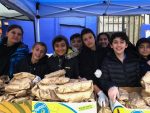
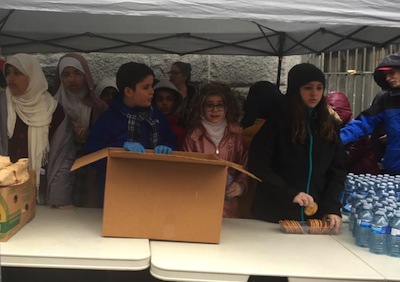
Students in grades 6 and 7 hand out sandwiches on the Downtown Eastside Nov. 15. (photo from RJDS)

On Nov. 15, 60 students from Richmond Jewish Day School and Az-Zahraa Islamic Academy went to the Downtown Eastside to meet the people in the neighbourhood and hand out food that had been prepared earlier.

photo - Students in grades 6 and 7 hand out sandwiches on the Downtown Eastside Nov. 15
Students in grades 6 and 7 hand out sandwiches on the Downtown Eastside Nov. 15. (photo from RJDS)

“The students, staff and administration of Richmond Jewish Day School have always been committed to doing what we can to improve the lives of those less fortunate among us,” said Reesa Pawer, student life coordinator at RJDS. “One of the ways we have done this is by actively participating in a week of Random Acts of Chesed.”

As part of Random Acts of Chesed Week, Grade 6 and Grade 7 RJDS students worked together with their neighbour school, Az-Zahraa, to put together 700 bags of food and more than 500 sandwiches.


Format ImagePosted on November 30, 2018November 29, 2018Author Richmond Jewish Day SchoolCategories LocalTags Az-Zahraa Islamic Academy, education, interfaith, multiculturalism, RDJS, Richmond Jewish Day School, tikkun olam

A heartening message to hear

“I’m writing this while the victims are still being buried at the Tree of Life congregation in Pittsburgh. This period, just after any death, is a hard time, and lot of meaningful things have been said in the media already. The worst part about this rise in hatred and violence is that it was entirely predictable. In fact, I wrote about it in November 2016, in an opinion piece for the CBC in a piece called “Keep your passports up to date.”

On the day of the Pittsburgh shooting, I walked to synagogue in Winnipeg, where I live, with one of my twins to go to services. The other kid had the “I’m grouchy” sniffles and stayed home with his dad. We had a marvelous Shabbat “date” together. It was only when I got home and we were eating lunch together that my husband said, “Don’t turn on the radio or TV news.” That’s how I knew something really bad had happened.

By Sunday morning, we all needed to blow off some steam. I took my kids to the brand new accessible playground at Winnipeg’s Grant Park. It’s right near the Pan Am Pool building. After 45 minutes of bone-chilling playground duty, I grabbed both boys by the hand and steered them towards the car. That’s when I saw the graffiti on a door to a mechanical room for the pool. It was a big Jewish star – and inside it was a swastika.

I went to the pool front desk at 11:15, both kids in tow, and reported it. Then, I went home and reported it, with the help of a friend, to 311, to B’nai Brith, to the editor of the Jewish Post and News and to the police. This wasn’t an active emergency, so I called the non-emergency phone number. It took more than 30 minutes to get through to the police. When I did, they said, “Well, it’s on the Pan Am’s property, they have to report it.” I got nowhere, and it was time to take my kids to their piano lesson.

I’ve learned since having kids that you can’t just put them on pause and ask them to wait around. I had to keep going with life. I also didn’t want my whole day to be about somebody’s hate graffiti. I briefly mentioned my concerns about the exchange with the police to my non-Jewish friend, Kirsten, in Brandon, Man. She apparently posted it on Facebook. Within a short time, seven Winnipeg friends of hers reported the graffiti and, get this, two American friends called long-distance. They both live in Pennsylvania: one in Philadelphia, and one in Pittsburgh.

By the time piano lessons were over at 2:15, Ran Ukashi was following up on behalf of B’nai Brith. The graffiti had been painted over.

At the end of the weekend, I felt exhausted with emotions, as I’m sure many did. My parents, who live in Virginia, send video clips to my kids, as a way of keeping up with them from afar. Their video for Monday morning was heartening. They showed “just a regular” Sunday evening at their congregation. Multiple meetings and events were scheduled, and Jewish life went on as usual – aside from the evening service, which included an impromptu memorial service.

Then I was contacted via an online forum by an online acquaintance from Quebec, a (non-Jewish) Canadian named Esther. She moved here from Germany. She felt worried. She told me she wanted to be an ally, to support and reach out, and then she gave me her full name, address and phone number. “Just in case … for an emergency,” she said.

At our community’s memorial service, the sanctuary was so full that I stood for half of it. There were hundreds of people who could not get inside, it was too crowded. There were probably more than a thousand people there, including every kind of Winnipegger. Sikhs, Muslims, Christians, women in hijabs, priests in their clerical collars – everyone. Also there were the mayor, the police chief and many other “important” political people. All there to support the Jewish community.

The service was like a Jewish funeral, but, instead of one person, we were mentioning Tree of Life congregation in Pittsburgh and doing a prayer or two for healing, peace and hope. It was a good moment to be a Canadian.

This morning, we got a video from my folks about their official memorial service, also held on Tuesday, Oct. 30. Like ours, it was completely packed to overflowing with good people who came together, from all religions, from all over the area, to support the northern Virginia Jewish community.

I wondered what to write about, and mentioned it to Kirsten. She was visiting with her dad, Bruce McFarlane, a retired professor of sociology, who is in a care home there. He recalled, with pleasure, spending time with Chassidic families at their celebrations in Montreal. His response?

“What can one write after this week? Honestly, I thought this world would have been better by the time I got this old!” Later, he said, “I’m tired of the violence. Why is it still happening?” And, finally, he wished me peace. He wished peace to me and my family.

This has been a hard time, and I can’t do any better than what Prof. McFarlane said. Jewish tradition has many prayers for peace, hope and healing, and there’s no better way to commemorate the lives lost in Pittsburgh than to find yourself a place (at a shul or wherever you worship) to say those prayers. It’s a good moment to stand tall, surround yourself with community and be counted and comforted.

I’ve been heartened by the ad hoc support the Jewish community has been offered from everyone around us during this difficult time. If someone offers you support, please say thank you. I know I sure appreciate it. I have felt so grateful to hear others tell me, out of the blue, “I have your back.”

Joanne Seiff writes regularly for CBC Manitoba and various Jewish publications. She is the author of three books, including From the Outside In: Jewish Post Columns 2015-2016, a collection of essays available for digital download or as a paperback from Amazon. See more about her at joanneseiff.blogspot.com.

Posted on November 9, 2018November 7, 2018Author Joanne SeiffCategories Op-EdTags antisemitism, interfaith, Pittsburgh shooting
Symposium provides healing

Symposium provides healing

The Jewish Seniors Alliance fall symposium on Oct. 28 was about aging across cultures. (photo from JSA)

The Jewish Seniors Alliance fall symposium, Aging Across Cultures, took place on Oct. 28. The program dealt with inclusivity while Jews everywhere were trying to cope with the horrors of what hatred can do. Still newly mourning the victims of the shooting at the Tree Of Life synagogue in Pittsburgh, attending the symposium seemed strange, but it had healing properties.

The afternoon program was a time of unity and solidarity with other cultures. Attendees learned that loving and caring for seniors in our community and for our family elders is a universal value and touches all hearts in much the same way, as well as presenting similar challenges.

In welcoming the crowd, Ken Levitt, president of Jewish Seniors Alliance, turned the subject of the Pittsburgh shooting over to Rabbi Philip Bregman, who was the event chairperson. Bregman served as senior rabbi at Temple Sholom from 1980 to 2013. He is a founding member of Jewish Christian Dialogue (since 1995) and he now functions as Jewish chaplain for the University of British Columbia and is involved with Hillel BC.

Bregman spoke about the brutal murder of people at prayer. He highlighted the many calls he has received expressing sympathy and condolences. He recalled standing outside a mosque in Vancouver after the shootings at a Quebec City mosque in 2017, where six Muslim worshippers were murdered and 19 others wounded. Among the condolences he received after the murders in Pittsburgh was a message of sympathy from the imam in Quebec.

Bregman emphasized the difference between the word “killing,” which he categorized as meaning accidental, and the word “murder,” which is intentional.

“Where do we go from here?” he asked. “We bury our dead, we mourn and we meet as a community,” he said. “We must never allow hatred to win.”

The audience stood for a moment of silence in commemoration of the 11 murdered and those injured, including several police officers.

The afternoon’s program featured a panel consisting of three accomplished women of diverse ethnic origins.

• Zarghoona Wakil is the manager of the Settlement and Integration program at MOSAIC, a nonprofit organization that helps newcomers to Canada. She also supervises MOSAIC Seniors Club, which provides services to seniors of different cultural backgrounds.

• Sinder Kaur is the executive director of health services at SUCCESS, providing a continuum of quality, culturally appropriate care services to seniors with different needs. She has worked in different leadership roles with a passion to help seniors age in place.

• Deanna Lewis, known as Kalkalath, her ancestral name, was recently elected to the Squamish Nation Council, focusing on elders and their care. Kalkalath is a former teacher, working to preserve her Skwxwu7mesh culture, spirituality and language. Raised with the teachings of her grandfather, she knows the importance of knowing who you are and where you come from.

When Bregman introduced the three panelists, he asked them to share a little about themselves and to address the issue of how their various cultures celebrate seniors.

Wakil shared that she is originally from Afghanistan, then lived in Russia. She came to Vancouver 12 years ago and is now studying at Simon Fraser University for a master’s degree in public health. Kaur is Punjabi-born, lived for 20 years in Hong Kong and moved here 17 years ago. Kalkalath’s Squamish Nation family was removed from Khatsahlano (Kitsilano) in the early 1900s and her main efforts are to teach both adults and children the Squamish language.

Despite differing cultures and traditions, Wakil and Kaur both emphasized that it is seniors who hold history in their hands and only upon opening up their hearts are they able to tie generations together and build upon that knowledge for the future generations.

It was difficult to hear that Kalkalath had to learn about her heritage from others, as her history was erased and harshly taken from her elders. It was she who sought to learn about that past and is now feeling connected again, through the learning of her own language and the ways of her people from her grandfather.

A common thread between all the panelists was that grandparents and grandchildren have a special link that allows them to relax and truly enjoy one another while parents are occupied with the comfort and needs of both these family groups.

All three speakers provided vivid descriptions of the issues and areas of concern regarding elders in their cultures. JSA thanked them for their willingness to share personal stories and stories from their communities. The similarities between cultures superseded any differences.

Claudine Malto, director of community programs at Mount Pleasant Neighbourhood House, then spoke about the house’s new initiative: multicultural circles, where seniors share stories, food, textiles, cooking classes, dance and exercise. She noted that people generally like to sit in “pockets,” which creates a divide. The motivation for this project is to answer the question, “How can we best coexist?”

Larry Shapiro, JSA board member and second vice-president, wound up the afternoon with one of the best vocal advertisements for the Jewish Seniors Alliance that we have ever heard.

Attending the symposium made the sun come out, even on a rainy, tear-filled day.

Binny Goldman is an honorary life board member of Jewish Seniors Alliance.

Format ImagePosted on November 9, 2018November 7, 2018Author Binny GoldmanCategories LocalTags culture, health, interfaith, Jewish Seniors Alliance, JSA, multiculturalism, Pittsburgh shooting, seniors
A once in 30-year occurrence

A once in 30-year occurrence

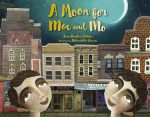
Take a seasoned children’s book author like New York-based Jane Breskin Zalben – who has created more than 50 children’s books and is an abstract painter – and pair her with Mehrdohkt Amini, an illustrator of children’s books who lives in the United Kingdom, and the result is a charming book about interfaith friendship for 3-to-7-year-olds – and older readers.

In A Moon for Moe and Mo (Charlesbridge Publishing, 2018), Moses Feldman and Mohammed Hassan meet in a Flatbush, Brooklyn, grocery store, where the storeowner mistakenly takes them for twins since they both have curly dark hair, brown eyes and olive skin. They are shopping with their mothers for their up-and-coming holidays, with Rosh Hashanah, the Jewish New Year, and Ramadan, the Muslim holy month of daylong fasts that marks the giving of the Qur’an to Muhammad, overlapping – something that happens only once every 30 years or so.

The two boys become friends, including going on a picnic, which brings their families together. That same evening in their homes, both boys see the first sliver of the new moon.

In an interview, Breskin Zalben said she was shopping with her granddaughter in a store in Brooklyn when she met an Arab mother with her child and the two children began to interact.

“After being invited to speak at many international schools, in counties where I visited mosques and old synagogues, doing this book was a natural outgrowth of those broadening journeys to other cultures,” she said.

Although Breskin Zalben was art director at Scriber Publishers and illustrated most of her other books, she knew that Amini was from Iran, saw her portfolio and wanted her to do the illustrations for this book. Amini has created beautiful acrylic, marker, ink and photo-collage artwork, which was then assembled digitally.

In the back of the book is information about Rosh Hashanah and Ramadan, notes from the author and illustrator and two recipes.

Said Breskin Zalben, “I am excited to share the diversity and the similarity of Moe and Mo…. I hope maybe this book, in any book’s small way, finds an audience. It was six years in the making and so much hard work and passion goes into every book.”

This is a very special book for children and their parents to read at Rosh Hashanah.

Sybil Kaplan is a journalist, lecturer, book reviewer and food writer in Jerusalem. She created and leads the weekly English-language Shuk Walks in Machane Yehuda, she has compiled and edited nine kosher cookbooks, and is the author of Witness to History: Ten Years as a Woman Journalist in Israel.

Format ImagePosted on August 31, 2018August 29, 2018Author Sybil KaplanCategories BooksTags children's books, friendship, interfaith, peace
On death and dying

On death and dying

Rabbi Laura Duhan Kaplan, director of inter-religious studies at Vancouver School of Theology. (photo from Laura Duhan Kaplan)

“Most of the world’s religions speak of dying to self,” said Dr. Eloecea, a Christian psychotherapist speaking at the Inter-Religious Conference on Spiritual Perspectives on Death and Dying at the Vancouver School of Theology May 22-24. “If we can do this before the time death approaches, suffering is greatly diminished for ourselves and for those around us.”

“Dying to self” refers to giving up egotism and self-centred attachments. Eloecea’s words echoed a theme that appeared in many of the sessions I attended, which was that of a holistic spiritual path of surrender and humility that unites life and death.

Rabbi Dr. Laura Duhan Kaplan, formerly of Or Shalom Synagogue and now director of inter-religious studies at VST, discussed how she had been spurred by reading Plato to take a closer examination of Jewish views of death and the afterlife. “Plato said living well is preparing for death. But what is death?” she asked.

Duhan Kaplan explained how the texts of kabbalah offer accounts of a soul’s journey after death. The soul travels through stages of physical, emotional, intellectual and spiritual purification, she said. According to Duhan Kaplan, this account of the afterlife is based both in kabbalistic theories of the soul’s development and glimpses of higher consciousness by current spiritual seekers. As Duhan Kaplan presented them, these texts are a guide to a lifetime of self-reflection, humility and non-attachment.

The stages of the soul’s ascent after death are tied to the rituals and rhythms of the traditional Jewish year of mourning that follows the death of a loved one, she said. “When I decided I would research Jewish views of the afterlife I had no idea I would discover what I did.”

Duhan Kaplan spoke of the dreams and spiritual experiences she had after the deaths of her father, mother and mother-in-law. She said the stages of her parents’ journeys offered particular gifts that related to their stages of spiritual ascent in the next worlds. The movement from the shivah period through the year of saying Kaddish to the yahrzeit and Yizkor corresponds to the soul’s difficulty in letting go, the emotional purification, the visit to the lower Gan Eden, the “paradise of understanding and good deeds,” and then the return to the storehouse of souls to merge with the divine. This description captures just one thread in the rich tapestry of connections Duhan Kaplan wove.

Other teachers at the conference presented different lenses through which spirituality relates to death. Acharya S.P. Dwivedi, poet and interfaith activist, presented the traditional Hindu view of karma, reincarnation and freedom from rebirth through non-attachment and identification with the transcendent self (atman). Dwivedi described how in the Hindu view the jiva (individual soul) moves from birth to death, experiencing happiness or suffering in accordance with the good and bad actions it commits, until finally it finds its true identity with the atman – the innermost self that is one with all of existence – and lets go, returning to its source and not again being reborn.

Syed Nasir Zaidi, Muslim chaplain at the University of British Columbia, discussed the importance in Islam of confronting and making peace with death. “Death should be our strength, not our weakness,” Zaidi said, emphasizing how thoroughly internalizing the reality of our own death and ceasing to fear it can enrich our spiritual path. Zaidi pointed out that, according Rumi, it is death that gives value to life, making it precious. Zaidi also explained that, in Islam, peace with death is accomplished through confident submission to God’s will in a life of virtue and acceptance of life’s unfolding as an expression of God. “Abraham told his children they should not die before becoming Muslims,” Zaidi said. “Obviously, this doesn’t refer to being members of the religion of Islam, but rather to having submitted to God, which is what being a muslim [submitted one] means.”

Some presenters offered specific practices. Eloecea shared a series of meditations aimed at producing positive thoughts to change the state of the brain, to shift from the egotistical self and its entrapping habits. Lynn Mills, a PhD student at Trinity College in Dublin, Ireland, Skyped in to present a liturgy for people in the early stages of Alzheimer’s, which consisted of psalms and prayers to be recited in their presence. This had two parts: the first was a morning liturgy for every day, the second a way to celebrate the person’s life before memory loss prevents them from knowing friends and family and remembering the stories they share.

A variety of other topics were covered. Mark Stein, a Jewish chaplain, tackled the issue of what to do when non-Christians (or anabaptists, who only baptize believing adults) are called upon to give baptisms for sick or stillborn children. Can a Jew baptize a child? Should they? Stein spoke of the need for chaplains to support people in these extreme situations. He spoke of the transformation this could cause in a chaplain, leading them not only to embrace a pragmatic flexibility but to an openness – seeing God’s work as something also happening beyond one’s own religion.

One recurrent issue was medical assistance in dying, about which there was a panel discussion moderated by Duhan Kaplan on the opening night of the conference. Rabbi Adam Rubin of Congregation Beth Tikvah spoke as a member of the panel. He noted the lack of a consensus about medically assisted dying across Jewish traditions, but affirmed a few core teachings. “First, because of the infinite preciousness of every life, we’re commanded to do everything we can to preserve life,” Rubin told the Independent. “Second, we must do everything we can to attenuate suffering. Some traditional rabbinic authorities hold that this imperative means that one can give a level of pain-killing medicine (morphine, for example) that might even endanger the life of a patient, in order to reduce the patient’s suffering. In addition, some authorities allow the removal of life-sustaining machines or apparatuses if they extend suffering, in order to allow the normal course of physical decline to take place. This is a tricky and controversial subject within Jewish tradition,” he said, “but the general idea is that there’s a place for ‘allowing nature to take its course’ if it is likely to reduce suffering. All of that said, there is a (rare for Judaism!) consensus in traditional Jewish law that it is absolutely forbidden to take one’s own life or to assist in taking someone else’s life.”

Rubin warned of the dangers of simplistic notions of consent or decision-making that don’t take into account the full range of pressures and emotional factors that might influence a person’s decision. “People are not robots, making ‘clean,’ rational decisions in a vacuum,” he said. “So, my approach, and my take on Jewish tradition, is that we must fight the things that might lead to someone wishing to end their life.”

In addition to the talks and panels, there was an afternoon session for musical and meditative reflections on the first day of the conference. Jewish music ensemble Sulam (which contains both Duhan Kaplan and her husband Charles Kaplan) performed, as did the Threshold Singers; the music was followed by Zen priest Myoshin Kate McCandless giving a presentation on meditation and chant in support of end-of-life care.

The keynote event of the conference, which was open to the public, was called We Die Alone and Yet We Don’t. It was a conversation with Dr. David Kuhl, facilitated by Duhan Kaplan. Kuhl is a professor in the department of family practice in the faculty of medicine at UBC. He helped design and develop the palliative care program at St. Paul’s Hospital, and is known for his 2011 book What Dying People Want: Lessons for Living from People Who Are Dying.

Matthew Gindin is a freelance journalist, writer and lecturer. He is Pacific correspondent for the CJN, writes regularly for the Forward, Tricycle and the Wisdom Daily, and has been published in Sojourners, Religion Dispatches and elsewhere. He can be found on Medium and Twitter.

Format ImagePosted on June 29, 2018June 28, 2018Author Matthew GindinCategories LocalTags death, dying, Eloecea, interfaith, Laura Duhan Kaplan, Mark Stein, spirituality, Vancouver School of Theology, VST
Communities dialogue

Communities dialogue

Teens from Temple Sholom and Al-Jamia Masjid at a dialogue session. (photo from Temple Sholom)

“We enjoy great conversation and great food and sharing some bad jokes,” Tariq Tayyib said in a recent phone interview. He was talking about the Jewish-Muslim dialogues that have been quietly underway between Temple Sholom and Al-Jamia Masjid. (Masjid is the proper Arabic name for what is often called a mosque, according to Tayyib.)

The dialogues began when Tayyib, a community volunteer involved in outreach efforts for Al-Jamia Masjid, and Haroon Khan, formerly its president and now trustee, came as observers to a Friday night service at Temple Sholom after arranging it with Rabbi Dan Moskovitz.

Tayyib and Khan have been hard at work over the past several months on an initiative called

Islam Unraveled, which seeks to explain Islam to the average Canadian and dispel stereotypes and misunderstandings.

“I wake up in the morning and turn on CNN and, more often than not, I find some crackpot doing something crazy in the name of Islam,” said Tayyib. “Muslims and non-Muslims both feel this way. Muslims are like, ‘Oh no, not another one,’ and non-Muslims are like, ‘What is it with this faith?’”

Tayyib and Khan spoke to Moskovitz about holding a dialogue, and Moskovitz suggested one for high school-age teens involved in the synagogue’s program and teens in the Al-Jamia community. In the following weeks, the teens met, and a series of other meetings occurred as well. The imam of Al-Jamia spoke at Temple Sholom to a group of seniors, and the Muslim group was invited to a Shabbat service and lunch afterward at Temple Sholom, catered by local Israeli vegan restaurant Chickpea. Following that, a delegation from Temple Sholom visited Al Jamia Masjid, bringing to a close a month of discourse events between the two communities.

Al-Jamia Masjid was founded in 1963. Khan’s father was instrumental in its founding. He said the masjid has been at the forefront of interfaith and multicultural work for generations.

“The masjid had a longstanding relationship with Rabbi [Philip] Bregman, and now with Rabbi Moskovitz,” said Khan.

In another dialogue event, Imam Aasim Rashid from the Al-Ihsan Islamic Centre in Surrey came to talk to the seniors. The meeting went well, even though the seniors asked some hard questions, according to Moskovitz – questions dealing with antisemitism in the Arab world and questions about the Israeli-Palestinian conflict, for example.

After expressing interest, Moskovitz was invited along with a group of other Temple Sholom members to the Al-Jamia, where they had a “wonderful visit.”

“Some of the members said that they had previously wanted to visit a mosque, but were unsure whether they would be welcome. It was meaningful to them to see how warmly they were met and embraced by the Al-Jamia community,” said the rabbi.

The visitors from Al-Jamia also enjoyed their Shabbat visit to Temple Sholom. “We saw many passages in the prayers which were reminiscent of the Quran,” they said. “We were very heartened by the welcome we received.”

The interaction between the teens, around 20 in total, has been particularly meaningful for both communities. The teens asked each other about their perceptions of the other community, and about similarities and differences in practice, comparing, for instance, kosher and halal.

“The questions tended to be more social and cultural than political or theological,” said Moskovitz. After the initial discussion, the teens went downstairs to hang out informally, and the adults report hearing sounds of lively and friendly conversation.

“We really saw the commonality that we share as being inspired by the Abrahamic principles and the teachings of the prophets,” said Khan. “All of the prophets of God carry a similar message. We have more in common than not. We should all make common cause to build bridges of understanding.”

Matthew Gindin is a freelance journalist, writer and lecturer. He writes regularly for the Forward and All That Is Interesting, and has been published in Religion Dispatches, Situate Magazine, Tikkun and elsewhere. He can be found on Medium and Twitter.

Format ImagePosted on December 8, 2017December 7, 2017Author Matthew GindinCategories LocalTags Al-Jamia Masjid, dialogue, interfaith, Temple Sholom, youth
Richmond’s faith groups unite

Richmond’s faith groups unite

Richmond Jewish Day School vice-principal Lisa Romalis addresses a delegation of United Nations ambassador on Nov. 13. (photo from RJDS)

India Cultural Centre of Canada / Gurdwara Nanak Niwas in Richmond hosted 11 United Nations ambassadors on Nov. 13. These diplomats represented Finland, Ghana, Guatemala, Jordan, Mali, Mauritania, Peru, United Republic of Tanzania, Uruguay, Vietnam and Canada. And they took time to meet with local residents, including representatives from Richmond Jewish Day School.

The ambassadors were in Vancouver for the Peacekeeping Defence Ministerial summit. While here, they met with the Gurdwara Management Committee (GMC) and members of the Highway to Heaven Association (HHA). Richmond’s Highway to Heaven is home to more than 20 places of worship, representing many different faiths, including Sikhism, Islam, Buddhism, Judaism, Christianity, Hinduism and others.

An outstanding feature of this event was when two educators – Sukaina Jaffer, vice-principal of Az-Zahraa Islamic Academy, and Lisa Romalis, vice-principal of RJDS, stood up, holding hands, and spoke about their students’ common activities.

The UN ambassadors, led by Marc-André Blanchard, ambassador of Canada to the UN, were keen to learn about the multiplicity of religious groups represented on this small stretch of No. 5 Road and their concerted efforts in promoting harmony and unity in diversity. They were impressed with the concept of the HHA, where people from different ethnic and religious groups come together to practise their faith and live as peaceful neighbours.

The UN ambassadors commended members of the HHA and GMC and, on behalf of cultural centre chair Asa Singh Johal, Balwant Sanghera, a member of the GMC and chair of the HHA, thanked the ambassadors for taking the time to meet.

Format ImagePosted on December 1, 2017November 29, 2017Author Richmond Jewish Day SchoolCategories LocalTags education, interfaith, Lisa Romalis, Richmond, United Nations

Need for interfaith learning

Have you heard about the sacred text in which the Almighty says, “Stand back from this community so that I may annihilate them in an instant?”

What about the king who gives permission to a people “to destroy, kill and annihilate the powers of any people or province that oppressed them, [even] young children and women, and to take their spoils.”

How do you feel about stoning a rebellious child?

That isn’t our religion! That’s not Judaism. It must be from some other religion’s holy book, right? Wrong. Actually, these come directly from the Tanach. Respectively: Numbers 16:21, Esther 8:11 and Deuteronomy 21:18.

Religious literature – heck, all literature – has concepts that might shock or offend. What about ideas that one doesn’t understand? Many educated people don’t read these sections as the literal truth. Thousands of years of commentators, in all religions, help us understand ideas that perhaps don’t make sense to modern sensibilities. These uncomfortable statements are sometimes proving a point by hyperbole, or creating metaphorical relationships to prove a point.

Many of us don’t take literature or anything we read – never mind the Torah – literally. We also know that, when something seems dubious, we should look it up. Use a dictionary, an online encyclopedia or even … a book.

Awhile back, an acquaintance sitting at a Shabbat table said something that seemed outrageous about Islam. His language and vehemence made me wish that there weren’t kids playing nearby. The man insisted he quoted the Koran correctly – nonetheless I felt concerned. Was he taking it out of context or distorting the point? When I got home, I looked it up. How? Easy, I have a copy of the Koran on my bookshelf. I took a whole course on the Koran as an undergraduate at Cornell.

Much of the time, we are too gullible. We believe what we read or hear from others or what we see reported in the news. We take it as true without thinking about it critically. We’re not always thinking about the words used in media reports … was the killer in Las Vegas a “lone wolf” or a “terrorist”? Does religion or race matter when it comes to how the media portrayed him? It does matter. A white man with Christian origins often doesn’t get called a terrorist or an extremist.

In that vein, many – including politicians and media commentators – feel free to make comments about Islam without actually reading the Koran. That sometimes results in a pretty skewed understanding of that faith tradition. Why am I talking about Islam? We live in a multicultural society. It’s important to know about our traditions and those of our neighbours.

Recently, Dr. Ruth Ashrafi gave a series of lectures to Catholics in Winnipeg about Judaism and the New Testament. She did it in connection with the Manitoba Interfaith Council, an important community organization. The president of the Interfaith Council is Belle Jarniewski, another member of the Jewish community.

These types of outreach efforts benefit everyone. Both Christianity and Islam have Jewish roots. Many Christians and Muslims want to learn more about Judaism. Further, Jews could learn a thing or two about others’ beliefs. Mutual understanding and education go a long way towards bridging differences and building on our common values. Ignorance breeds hate. We could all do with less of that, so let’s work on education.

It is easy to get whipped into a fervour when dealing with media reports or reading the newest bestselling polemical book about another people’s faith traditions. Yet, we aren’t experts in those traditions – unless we start from the beginning, read their holy texts, understand their customs, holidays and values before reading the newest polemic. Most of us aren’t even experts in our own traditions. When I was required to read the Hebrew Bible from beginning to end in graduate school, there were definitely upsetting things I read that I hadn’t known before. I had to read commentaries (both Jewish and non-Jewish ones) in order to get a better grip on what it contained.

I’m reminded, when seeing hot media rhetoric, of how my twins tell me about one of their fights. I hear the dramatic narrative from one side, and an entirely different tale from the other. The truth – or my understanding of their fight – lies somewhere in between all the different versions of their stories.

A friend of mine reads the news in multiple languages. If he has particular interest in one issue, he might use one piece of paper to take notes from all the international news sources. When he’s finished, he has created something like a Venn diagram. The news everyone seems to agree on, no matter the language or political agenda of the news source, is somewhere in the middle.

It’s only through study, asking questions and gaining knowledge that we become educated enough to understand difficult conflicts, religious disputes and political issues. We’d benefit from the programming of organizations such as the Manitoba Interfaith Council. As well, we can take time to read our sacred texts and others’ holy books in order to understand ourselves and our neighbours better.

Living an upright life as a Jew includes seriously taking responsibility for engaging with our foundational texts. Then, maybe, we’ll be living out our mandate as the People of the Book.

The next time you read a polemic against someone else’s religion (or your own) or hear a skewed media report and believe it without further research, remember that Venn diagram as a way towards better understanding.

We’re People of the Book. Maybe it’s time to crack some open? We can always learn more.

Joanne Seiff writes regularly for CBC Manitoba and is a regular columnist for Winnipeg’s Jewish Post and News. She is the author of the book From the Outside In: Jewish Post Columns 2015-2016, a collection of essays available for digital download or as a paperback from Amazon. See more about her at joanneseiff.blogspot.com.


Posted on October 20, 2017October 19, 2017Author Joanne SeiffCategories Op-EdTags interfaith, Islam, Judaism
Interfaith efforts recognized

Interfaith efforts recognized

The winners of the 2017 King Abdullah II World Interfaith Harmony Week Prize with King Abdullah, centre, at Al Husseiniya Palace in Amman, Jordan. (photo from worldinterfaithharmonyweek.com)

On April 30, the leaders of the Calgary Interfaith Council were in Amman, Jordan, to receive the 2017 King Abdullah Award for World Interfaith Harmony’s first prize from the king himself.

The council’s co-chairs – Rabbi Shaul Osadchey of Beth Tzedec Congregation, Debra Faulk of the Unitarian Church of Calgary and Imam Fayaz Tilley, a chaplain at the University of Calgary and board member of the Muslim Council of Calgary – were invited to attend the ceremony at the Royal Hashemite Palace. They were presented with the award by King Abdullah II. It included a cheque for $25,000 US to put toward their continuing work in Calgary.

Osadchey described the experience as “memorable, momentous, impactful.”

“The Calgary Interfaith Council (CIC) was reconstituted in February as part of the launch of the United Nations World Interfaith Harmony Week program,” Osadchey told the Independent. “The CIC is now the amalgamated body of five or six other smaller interfaith organizations in Calgary. It was launched as the central voice of the interfaith community here, so we decided to première that with the United Nations World Interfaith Harmony Week.

“We organized a week of programs that highlighted interfaith cooperation and strength of the community. We did a program that began with an opening ceremony at city hall. The mayor had issued a proclamation for the city that designated the week of Feb. 1st to the 7th as UN World Interfaith Harmony Week in Calgary, and he personally came and spoke.”

They had 15 different religious communities involved in the festivities, which included interfaith breakfasts, a weekend open house, and people were welcomed into various congregations for workshops and tours. There were also two “build days,” where participants volunteered to build a house with Habitat for Humanity.

“We raised $15,000 for the Habitat project,” said Osadchey. “It was a program with depth.”

The Calgary Interfaith Council submitted what they did to the website that oversees the worldwide program of activities, said Osadchey. “There were over 1,000 events worldwide and we were selected as the outstanding program for 2017 and won first prize, the gold medal. What that meant was that they asked us to send three representatives to receive the award in Jordan, along with the second- and third-place winners – the second-place winners were from Bosnia and the third-place winners were from London, England. We were flown to Jordan and spent three days there.”

According to the prize’s press release, the International Forum Bosnia’s Centre for Interfaith Dialogue was honoured “for their efforts toward dialogue and cooperation among ethnic and religious groups in Bosnia and Herzegovina” and the London-based nonprofit PL84U Al Suffa for “providing meals and services to the homeless, elderly and others in need in an atmosphere of interfaith respect and cooperation.”

At the Sunday morning awards ceremony, both King Abdullah II and Prince Ghazi ibn Muhammad were in attendance, with the latter giving a talk. Osadchey was asked to give a three-minute speech on behalf of the winning delegation.

Osadchey was the first Jew and rabbi to be part of one of the award ceremonies. “They were very respectful, very interested and engaged in the conversation about Judaism and about the Jewish experience in the interfaith arena,” he said. “Both the king and the prince were pleased to have me as a delegate and acknowledged that the interfaith dimension of the program had taken a significant expansion by having Jews included.

“I was looking forward to being able to convey some comments to the king. I began by reciting the brachah [blessing] that is said when you’re in the presence of the king or head of state. I recited it to the king in Hebrew and then translated it into English. And my comments were about how religious literacy is a necessary component for creating interfaith harmony.

“I suggested to the king that the World Interfaith Harmony Initiative develop a youth component that would focus on religious literacy among the youth of the world. And, when I received the medal from him and we had a few moments to exchange some words, he asked me to follow up on that proposal, as did the prince.”

Osadchey said he is in the process of writing a proposal to create this youth component, and added that he is looking forward to running a youth interfaith harmony week in Calgary. He hopes that others will use his model and do likewise in their communities.

“I think it’s important that not only adult leaders engage in creating relationships, but that we begin developing those among the next generation,” he said. “If we can do that, then the road to true harmony will be a lot easier to create.”

Since the world interfaith award was created in 2010, said Osadchey, there have been two other Canadian cities that have won awards – Toronto and Halifax, both achieving third place in their respective years.

The Calgary Interfaith Council is hoping to inspire a national designation of Feb. 1-7 as World Interfaith Harmony Week across the country and to bring other Canadian cities and communities into the picture. They are starting with their home province, encouraging their leaders to issue a proclamation designating it throughout Alberta. “We’re pretty close to getting that done,” said Osadchey. “Then, we’ve got an MP that’s working in Ottawa to do the same.”

Osadchey returned from Jordan full of hope and was impressed by the respect, interest and welcoming response of the Jordanian people he encountered. Nonetheless, he thought that, while interfaith activity might take place among the upper echelons of Jordanian society, he suspected that the general population is likely not as open or accepting. “That would have to do with probably lower levels of literacy, education, just in general,” he said.

He added, “The fact that their neighbour is Israel – and even though they have a fairly good relationship with Israel – it is still tinged with the Palestinian issue as well. I don’t think the ‘man on the street’ really cares about interfaith relationships in Jordan, but the leadership and the king certainly are trying to push the country more toward an acceptance of that.”

In Jordan, dialogue is mainly with the Christian world and does not seem to have any links with the Jewish world, but Osadchey is hopeful it may happen as a consequence of his visit.

“We’ll see how that takes place, but they’re reaching out,” he said. “The fact that the king of Jordan is the one responsible for this initiative…. They are trying to project a different image internationally.

“It’s really been very positive…. It’s had a positive effect on the Calgary community, both Jewish and non-Jewish, seeing this as a great recognition of our efforts in the interfaith community. It’s garnered a lot of recognition locally and spurred people to get more involved in our program, so that’s been a really positive benefit.”

For more information and to see more photos from the ceremony in Jordan, visit worldinterfaithharmonyweek.com/2017-prize-awarding-ceremony.

Rebeca Kuropatwa is a Winnipeg freelance writer.

Format ImagePosted on June 9, 2017June 7, 2017Author Rebeca KuropatwaCategories WorldTags Calgary, interfaith, Jordan, King Abdullah, religion, Shaul Osadchey, tikkun olam
Gathering in solidarity

Gathering in solidarity

Attendees spoke to one another at their tables, following a list of questions to guide discussion. (photo from Rabbi Laura Duhan Kaplan)

A small group of Jews and Christians gathered at the Jewish Community Centre of Greater Vancouver on April 4.

After the first bomb threat at the JCC, Richard Topping, principal of Vancouver School of Theology, reached out to the Jewish community. He approached Laura Duhan Kaplan, director of Inter-Religious Studies at VST and rabbi emerita of Congregation Or Shalom. Yael Levin of the Centre for Israel and Jewish Affairs and JCCGV executive director Eldad Goldfarb then organized the dialogue, at which members of the United, Anglican and Presbyterian churches were present.

The evening opened with the singing of an egalitarian version of “Hinei Mah Tov” – “How good it is when brothers dwell together as one,” with achim, brothers, changed to kulanu, everyone. Topping then took the podium.

“When the first bomb threat was made at the JCC,” he said, “people at VST began asking is there anything we can do to show our solidarity with the Jewish community? We understand that a hoax like this is scary and it makes our friends feel vulnerable. In a post-Holocaust world, we don’t want to wait and see how a threat turns out. We want to assure you that we stand in solidarity with you against antisemitism. We are here to assure you that we stand with you against violence and against threats of violence.”

Sharon Dweck, development director of the JCCGV, gave an overview of the JCCGV’s activities within the Jewish community and beyond. She then shared her recollections of the first threat. “I broke my rule about keeping my nose out of daycare and rushed to hug my child,” she said. “Days after, as ‘manager on call’ after the bomb threat, I felt afraid and vulnerable, as well as a great sense of responsibility. ‘Would another threat come on my watch?’”

In total, the JCC received two threats, both of which were hoaxes.

Attendees spoke to one another at their tables, following a list of questions to guide discussion. People talked about everything from the importance of tikkun olam to Jewish humour, people they knew in common, their Jewish or Christian upbringings, and concerns over the then-upcoming vote to support the boycott, divest from and sanction Israel movement at the University of British Columbia, which was defeated.

Matthew Gindin is a freelance journalist, writer and lecturer. He writes regularly for the Forward and All That Is Interesting, and has been published in Religion Dispatches, Situate Magazine, Tikkun and elsewhere. He can be found on Medium and Twitter.

Format ImagePosted on April 28, 2017April 26, 2017Author Matthew GindinCategories LocalTags bomb threats, interfaith, JCC, Vancouver School of Theology, VST

Posts pagination

Previous page Page 1 … Page 3 Page 4 Page 5 Page 6 Next page
Proudly powered by WordPress