Skip to content
  • Home
  • Subscribe / donate
  • Events calendar
  • News
    • Local
    • National
    • Israel
    • World
    • עניין בחדשות
      A roundup of news in Canada and further afield, in Hebrew.
  • Opinion
    • From the JI
    • Op-Ed
  • Arts & Culture
    • Performing Arts
    • Music
    • Books
    • Visual Arts
    • TV & Film
  • Life
    • Celebrating the Holidays
    • Travel
    • The Daily Snooze
      Cartoons by Jacob Samuel
    • Mystery Photo
      Help the JI and JMABC fill in the gaps in our archives.
  • Community Links
    • Organizations, Etc.
    • Other News Sources & Blogs
    • Business Directory
  • FAQ
  • JI Chai Celebration
  • JI@88! video

Recent Posts

  • Sharing her testimony
  • Fall fight takes leap forward
  • The balancing of rights
  • Multiple Tony n’ Tina roles
  • Stories of trauma, resilience
  • Celebrate our culture
  • A responsibility to help
  • What wellness means at JCC
  • Together in mourning
  • Downhill after Trump?
  • Birth control even easier now
  • Eco-Sisters mentorship
  • Unexpected discoveries
  • Study’s results hopeful
  • Bad behaviour affects us all
  • Thankful for the police
  • UBC needs a wake-up call
  • Recalling a shining star
  • Sleep well …
  • BGU fosters startup culture
  • Photography and glass
  • Is it the end of an era?
  • Taking life a step at a time
  • Nakba exhibit biased
  • Film festival starts next week
  • Musical with heart and soul
  • Rabbi marks 13 years
  • Keeper of VTT’s history
  • Gala fêtes Infeld’s 20th
  • Building JWest together
  • Challah Mom comes to Vancouver
  • What to do about media bias
  • Education offers hope
  • Remembrance – a moral act
  • What makes us human
  • המלחמות של נתניהו וטראמפ

Archives

Follow @JewishIndie
image - The CJN - Visit Us Banner - 300x600 - 101625

Tag: immigration

Operation Ezra update

Operation Ezra update

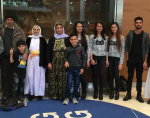
Khalaf and Gawre’s family is the 10th to come to Winnipeg thanks to Operation Ezra. (photo from Michel Aziza)

What started as a small local initiative has grown to be a leader, by example, and a reminder of what can be achieved when an intention is set and action is taken.

About a year ago, the Jewish Independent ran a story about Operation Ezra in Winnipeg that, at the time, was aiming to sponsor five Yazidi refugee families. Led by Michel Aziza, a local businessman and once a refugee himself (from Morocco), and a small group of individuals connected to the Jewish community, the initiative was a response to the plight of the Yazidi people being viciously persecuted by ISIS in Iraq.

Nafiya Naso, now a young woman, who came to Winnipeg as a child with her family, has been an instrumental figure in Operation Ezra.

“She was reaching out to people outside their community to raise awareness of the genocide that was going on, March of 2015,” said Aziza, recalling Naso’s early involvement. “I was semi-retired and looking for something to occupy myself, and this was a good opportunity for me to get involved with a volunteer-type of project. Essentially, that’s what I have been involved with over the last almost three years.

“At the beginning,” he said, “we knew nothing about the Yazidi people. After talking with Nafiya, we identified a family of eight people and thought we could raise the necessary funds to submit a sponsorship application. We started lining up a few speaking engagements for Nafiya…. We started speaking to people, making calls, and … the original target was $34,000 for this family of eight … [and] within three or four weeks, we raised $34,000. And that number kept on growing as people talked to other people.”

To date, with the generous help of people in Winnipeg and elsewhere, Operation Ezra has raised just over $500,000. This has made it possible for them to sponsor 10 Yazidi families – 55 people – with the last family having arrived in March.

“As soon as we realized this was bigger than a grassroots project, we decided to incorporate Operation Ezra within the organized Jewish community,” said Aziza.

Jewish Child and Family Service (JCFS) saw this as an opportunity to do something in line with what they were already doing – helping with the settlement of immigrants and refugees – so they came on board, gradually reaching out to other organizations and agencies.

Gray Academy of Jewish Education and the Jewish Foundation of Manitoba joined the effort and, currently, Operation Ezra is an umbrella group of some 20 different agencies and organizations. Most of the members are Jewish, but not all. There are two churches involved, the Salvation Army and a number of corporate partners, with IKEA being the biggest name.

Many volunteers help Operation Ezra in various aspects of the settlement process. Naso has been hired by JCFS to manage everything.

One service Operation Ezra offers is an English-as-an-additional-language (EAL) program, which takes place at a synagogue every Thursday, with 70 to 80 refugees attending and about 20 volunteer teachers. Some Yazidi participants are government-sponsored.

Out of the total 250 refugees who are government-sponsored, about 100 have asked for help from Operation Ezra. “So, we are touching the lives of about 200 people,” said Aziza. “We have organized and have helped organize many community events for the Yazidi people. We celebrated Yazidi New Year’s 6768 on April 18, 2018, with a very large number of people coming out for that dinner,” he said by way of example. “We’re trying to help this group of newcomers to get organized, and to organize themselves as a community … to socialize and to help each other and so on.”

According to Aziza, Operation Ezra is the only multifaith group doing this work in North America.

One recipient family of Operation Ezra is Majid and Safya, along with their children. They shared their thoughts on their experience to date, with translating help as needed from Naso.

“My name is Majid. I was born and raised in a small village…. I am married with two kids – one boy who is 4 and one girl who is 6. My wife, Safya, and I are currently enrolled in EAL classes, hoping to learn English and find work in the near future.

“On August 3rd, 2014, at around 9 a.m., my family, community members and I fled to Mount Sinjar. We were lucky to have escaped when we did. If we had stayed any longer, I would be in a mass grave with many other Yazidis. I can still hear the rapid gunfire as ISIS members surrounded everyone who wasn’t able to flee and started shooting.

“We then reached Mount Sinjar, where we stayed for seven days with little to no food or water. As we were coming down the mountain closer to the Kurdistan region, we were able to hop into a truck. But, soon after, we saw ISIS members driving at us, firing round after round. I still don’t know how we escaped that day. Everything was such a blur. All I really remember was covering my kids and wife, hoping they would make it. Fortunately, we all made it to a refugee camp in Dohuk.

“The conditions in the camp were very scary. We were always worried about getting enough to eat, drink … about medical treatment. And we stayed for a few months, but couldn’t make it. So, we left for Turkey hoping for better living conditions.

“After spending almost two years in Turkey,” he said, “we heard about Operation Ezra and reached out. And, by some miracle, we were sponsored. Everything felt like it was going to be OK after we received confirmation we would be coming to Canada.

“I will never forget the welcome we received coming down at the airport. I was in awe of all the people who had come to greet us and welcome us into their community.”

Majid said they arrived in Canada in December 2016. “My experience in Canada has been great and could not be any better!” he said. “I have many friends and family who are in refugee camps in Iraq and Turkey who call me and tell me that the situation in the camp is getting worse by the day. My dreams are that my family and I are able to live in Canada without the fear we faced back home – the constant fear for our lives, hate and discrimination we faced because of our religious beliefs.

“I encourage all Canadians to reach out to Operation Ezra and learn about this amazing program, the only program of its kind in the world today. We have thousands of Yazidi still living in segregated refugee camps, fearing for their lives and waiting for anyone to reach out and lend a helping hand. I also encourage the Canadian government to support groups like Operation Ezra to help out more refugees.”

Khalaf and Gawre’s family are the most recent Operation Ezra arrivals to Winnipeg. (Although they were the last family Operation Ezra had planned to sponsor, the group has unanimously decided to continue their efforts.)

“My name is Khalaf and I arrived in Winnipeg on March 29th with my mother, who is 83 years old, my wife, and five kids – two boys and three girls, ages ranging from 12 to 24. I was ripped away from my four older kids after ISIS attacked our village (Dugere).

“At 8 a.m., we heard gunshots and got calls from other Yazidi villages that ISIS had murdered hundreds of men and was kidnapping all the women and young girls. Ten minutes later, my family and I started walking toward the mountain. My mom and dad were so lucky they were able to get rides to the refugee camp in Dohuk. My wife, Gawre, and five children were stranded on the mountain for seven days.

“We were able to escape the mountain with the help of PKK [Kurdistan Workers’ Party]. We lived in a refugee camp on Dohuk for six months. The conditions were horrible and heartbreaking. Many people died in the camps, because there was no humanitarian aid, no water and no medical care. My father passed away, because we could not get him the medical attention he needed.

“Shortly after, we decided to go to Turkey. It was no better there, but we did not have a choice and could not afford to move back to Iraq again.

“My sister and her family were sponsored by Operation Ezra just over a year ago. We got on the list when we heard about this amazing project from the people in the refugee camp.

“Months after contacting Nafiya [Naso] and Asmaeil, we were told we would be sponsored! My family and I definitely won the lottery here. We will always be grateful for everyone who made this possible.

“My dream is to see my family and Yazidis around the world live free of persecution. We hope and encourage all Canadian and other countries around the globe to support groups like Operation Ezra and help them in saving lives.”

Naso added, “Operation Ezra is working to raise more funds and keep sponsoring Yazidi refugees. There are thousands waiting who are in desperate need of help. They have no voice, so we must be a voice for them and speak out for them.”

For more information and to make a donation, email [email protected] or visit jewishwinnipeg.org/community-relations/operation-ezra.

Rebeca Kuropatwa is a Winnipeg freelance writer.
Format ImagePosted on May 4, 2018May 2, 2018Author Rebeca KuropatwaCategories NationalTags immigration, Iraq, ISIS, Michel Aziza, Nafiya Naso, Operation Ezra, refugees, terrorism, tikkun olam, Winnipeg, Yazidi
What is it to become Israeli?

What is it to become Israeli?

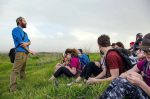
Akiva Gersh teaching a group in Israel. Gersh is the editor of, and a contributing writer to, the book Becoming Israeli: The Hysterical, Inspiring and Challenging Sides of Making Aliyah. (photo from Akiva Gersh)

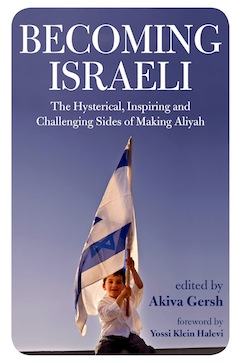
If you or someone you know is considering making aliyah, there is a book that offers a glimpse of the experience. Becoming Israeli: The Hysterical, Inspiring and Challenging Sides of Making Aliyah (Rimonim Press) is a compilation of blogs and essays written by 40 olim (immigrants), including the editor, Akiva Gersh.

“The book speaks about the various sides of aliyah, from the hysterical, to the challenging, to the frustrating, to the emotional,” Gersh told the Independent.

Gersh grew up in the New York area. He and his Philadelphia-born wife, Tamar, made aliyah about 13 years ago. As they were going through the process, Gersh wrote about it in a blog. When he realized others were doing the same thing, he was spurred to collect as much information as he could for publication in book form.

“I kept thinking, someone must have done this,” said Gersh. “People had written about their own aliyah experiences, but not a broad compilation of experiences … and that is what I wanted to do, what I wanted to share. I worked on it for about two years – finding the blogs, talking to the bloggers, telling them what I’m doing, and getting permission to use their posts in the book. And, after about two years doing all this compiling and editing, the book was born.”

In Becoming Israeli, said Gersh, there are the insights of (English-speaking) Jews who have made aliyah, as well as those who have been to Israel, but haven’t yet made the move. “In the book,” he said, “you can really sense the things they love about Israel. Above and beyond that, there is the general world … and much of that includes the Christian world who loves coming to Israel.”

image - Becoming Israeli book coverThe feedback has been good, especially from olim who have read the book and can relate to their fellow travelers. “They went, ‘Wow! Amazing!’” said Gersh. “Every page, they’re like, ‘This is my story!’ They’re laughing, they’re crying.

“I’ve read the book multiple times and I still laugh at the jokes and cry at the same emotional places,” he added. “It’s a really powerful book and I’ve had really positive feedback from olim who say ‘thank you’ and feel it is awesome … [and] exactly what they’ve been going through and experiencing.”

Gersh is a teacher by training and works in a private English-language school in Israel. He also connects with people using music, through a program he started in 2007 called The Holy Land Spirit.

As a musician and teacher, Gersh offers groups – mainly Christians – who visit Israel an evening program of music, prayer and spirituality from a Jewish perspective. “They love it,” he said. “We pray together, dance together, speak together.”

Gersh teaches at Alexander Muss High School, a study-abroad institution near Tel Aviv. There, kids from 45 different countries come to learn for a few weeks or up to a few months at a time, about Jewish history and Israel. They spend half their time in the classroom and half their time traveling around the country.

“So, it’s academic and hands on,” said Gersh. “It’s awesome. I’ve been there about 10 years now. The language of instruction is English and, for those who want to improve their Hebrew, there are opportunities.

“We have young Israelis who are fresh out of the army. And, for those who want the Hebrew experience, they can get it from them and also from being out and about in Israel.

“The kids are inspired, enlightened, pumped up about Israel,” he continued. “We’re not a religious program. We’re not a church denomination. We’re pluralistic. We have Jews on staff, but we don’t push Judaism. We just open up a space for kids to explore connections to Judaism.”

According to Gersh, many of the students are experiencing certain aspects of Judaism for the first time. This is something especially meaningful for him, he said, noting, “I had no connection to Israel growing up at all. I never thought about it, nor talked about it. It just wasn’t a thing in my community. I heard about it a couple times in Hebrew school, but it wasn’t on the radar at all. By the time I was done with high school, going into college, I was really done with anything Jewish…. In college, I began searching for something more cultural, meaningful, spiritual in my life.

“That journey, which was a three-year journey, took me to many different places, meeting different people, reading different books. At the end of the journey,” he said, “it brought me full circle to Judaism. But, I found a new side and a new expression of Judaism that I hadn’t seen before.”

Among the places Gersh traveled after college was West Africa, where he spent two months learning more about the drumming he studied in school.

“After traveling around there,” he said, “I went to Israel for the first time. I was about 22 years old at that point. I traveled around Israel for two months, backpacking and enjoying, taking a class here, a class there, doing a Shabbat and just really getting into it. After those two months, I realized I wanted to really explore my roots and see what Judaism was about. Still, at that point, I did not want to become religious.”

Eventually, Gersh did become religious. He spent some time in a yeshivah, both in Israel and in the United States, before making aliyah with his wife in 2004.

The foreword of Becoming Israeli was written by Yossi Klein Halevi, an Israeli author Gersh looks up to as a Jew, as someone who made aliyah and as a writer.

“We had a book launch at the beginning of the summer and we had a panel of me and a bunch of other bloggers from the book, and he was one of the panelists,” said Gersh. “It was amazing to have his voice and his perspective.”

Becoming Israeli is available on Amazon, and Gersh also has a website, becomingisraeli.com.

Rebeca Kuropatwa is a Winnipeg freelance writer.
Format ImagePosted on April 13, 2018April 11, 2018Author Rebeca KuropatwaCategories Books, IsraelTags Akiva Gersh, aliyah, Diaspora, immigration, Israel
Winnipeggers reach to Israel

Winnipeggers reach to Israel

Samara Carroll, second from the left, with Dawit Demoz, right, and members of his host family – Sunita and her daughter Persia. (photo from Samara Carroll)

Soon after Samara Carroll returned from a yearlong program in Israel, she took action to help African asylum seekers in Israel come to Canada.

Carroll grew up in Winnipeg, went to Talmud Torah and then to Gray Academy. She was involved in many aspects of the Jewish community growing up, including with B’nai B’rith Youth Organization, leading trips to Israel, and attending Camp Massad for 17 years (for two of which she was the camp director).

In 2012, Carroll was accepted to be the first Canadian participant of the New Israel Fund Social Justice Fellowship. “This fellowship gives you the opportunity to choose an Israeli nonprofit and work there for a year,” Carroll told the Independent.

“I chose ASSAF – Aid Organization for Asylum Seekers and Refugees – located in south Tel Aviv. I worked as a community organizer, activist and counselor, supporting families who had fled, mostly from Eritrea and Sudan, and were dealing with the trauma related to their past experiences and the ongoing challenges of being in Israeli society.”

During her time at ASSAF, Carroll heard hundreds of gut-wrenching stories, but also learned many things from the asylum seekers with whom she worked.

“The Israeli government does not have a proper process to assess whether or not someone is an asylum seeker,” said Carroll. “So, instead of creating a system, they have created policies that make life extremely difficult for asylum seekers…. They do not have basic access to healthcare, proper housing, employment or education. And, they face significant racism, directly from the Israeli government. They have been referred to as a ‘cancer.’

“The Netanyahu government claims that the asylum seekers have come to Israel for employment opportunities, but you only have to hear one story from an asylum seeker about their experience facing genocide and dictatorship in their country of origin – leaving behind everything they knew, being smuggled, human trafficked and tortured by smugglers in Sinai and then arriving in a foreign country – to understand that they are fleeing desperate situations.

“When you ask many asylum seekers where they’d want to be, they say ‘back home,’ but they cannot go back home,” Carroll said, summing up her belief using a quote from writer Warsan Shire: “You have to understand no one puts their children in a boat unless the water is safer than the land.”

After her year in Israel, Carroll decided to pursue a master of social work degree at the University of Toronto. About six months after she had arrived in Toronto, she was approached by Dawit Demoz, an Eritrean asylum-seeking man who was an activist in Israel, about giving asylum seekers more rights in Israel.

“He approached me, asking if I would sponsor him to Canada,” explained Carroll. “He felt that, although he loved the community he had established in Israel – his Israeli friends, the food and the culture – the policies of the Israeli government were just getting worse and he knew he had to try to leave the country if he ever wanted freedom.

“I agreed to sponsor him and did so through a SAH (Sponsorship Agreement Holder). The sponsorship process is detailed, but is very manageable and I believe more people would be open to sponsoring asylum seekers if they understood this.”

photo - Samara Carroll and Dawit Demoz
Samara Carroll and Dawit Demoz. (photo from Samara Carroll)

Demoz arrived in Toronto in March 2016. “He says this is the first time in his life he has felt free,” said Carroll. “He studies psychology at York University, works as an interpreter for a refugee organization, led canoe trips through Algonquin Park as a counselor last summer, and worked as a counselor at the Heart to Heart Program through Camp Shomria. He also plays soccer on a team, hosts Eritrean dinners for his many Jewish friends, and enjoys life.

“Five of our friends have submitted a Group of Five sponsorship to bring his mother [who he hasn’t seen in 10 years] to join him in Toronto,” said Carroll.

Following her example, Carroll’s parents, Sharon Chisvin and Marshall Carroll, have sponsored an Eritrean couple with the support of a local church-based sponsorship agreement agency, Jewish Child and Family Service Winnipeg and donations from friends, family and community members. The couple – Tsege and Kidane – arrived in Winnipeg in May 2016.

“They are generous, wonderful people and have created a strong community for themselves in Winnipeg, and they also support other newly arrived asylum seekers,” said Carroll. “While it is clear that you can positively shape someone’s life who has never experienced freedom before, you do not know how much they will positively impact your life.”

According to Carroll, the situation for asylum seekers in Israel has worsened since 2016. Prime Minister Binyamin Netanyahu has signed an order to deport asylum seekers from Israel to third-party countries, such as Uganda and Rwanda, she said. “This is a human rights violation, as we do not know what is waiting for them in these new countries – countries they have no connection to. Men who have already been deported there have been given no status or rights.”

For her part, Chisvin has started working with Canadians Helping Asylum Seekers in Israel (CHAI), which she described as “a grassroots group formed in Toronto in response to Netanyahu’s deportation order. It is primarily made up of Toronto Jewish activists who feel deeply that Israel’s intent to deport 38,000 African asylum seekers to third countries – and to certain suffering – is a strict violation of Jewish values, history and memory. This sentiment has been shared by 20,000 Israelis who protested against the deportation in Tel Aviv [recently], myriad Israeli rabbis, teachers, psychiatrists, El Al pilots and authors, as well as Irwin Cotler, Alan Dershowitz, the ADL [Anti-Defamation League], HIAS [Hebrew Immigrant Aid Society] and many other individuals and agencies.”

In Toronto, there is growing group of support for CHAI, and Chisvin is working to create a similar group in Winnipeg and beyond. Its goals, she explained, include raising awareness within the Jewish community about the deportation; encouraging people to ask the Israeli government to rescind its deportation order and implement a humane strategy for refugees and asylum seekers; appealing to the Canadian government to pressure the Israeli government to rescind the deportation order and work together on a solution; and encouraging people to commit to private refugee sponsorships.

“I have been assisted in my efforts, helped by a handful of people here in Winnipeg, who are helping me raise awareness in the community about the issue – urging others to speak up and fundraise for the refugees I have, and am in the process of sponsoring,” said Chisvin.

Further to that, Chisvin is in the early stages of organizing a community event to raise awareness about the issue and to explain how and why Canadian Jews should be moved by the plight of African asylum seekers who are at risk of being deported or indefinitely detained, and how and why they should commit to help sponsor some of them to Canada as refugees.

“The best solution, of course, is for Israel to rescind its deportation order, properly process the refugee claims of the asylum seekers, grant them refugee status, and all the rights inherent in that status,” said Chisvin. “But, if Israel doesn’t rescind the order, it is incumbent on Canadian Jews to lobby their government to increase the number of African asylum seekers it brings to Canada and to commit to privately sponsor African asylum seekers to Canada.”

There are many other ways to become involved, including supporting sponsors with money to help settle asylum seekers, provide housing and employment opportunities – as well as just being open and generous with newcomers. For more information, email [email protected] or visit facebook.com/canadianshelpingasylumseekersinisrael or letushelpil.org/canada.html.

“Israel needs to deal with the asylum seeker situation in their country and not force out people who have already experienced unspeakable trauma to a third country that will again violate their human rights,” said Carroll. “Our message and the message of many Jewish communities now is, ‘Do not deport. Let us help.’”

Rebeca Kuropatwa is a Winnipeg freelance writer.

Format ImagePosted on March 16, 2018March 15, 2018Author Rebeca KuropatwaCategories WorldTags asylum seekers, Canada, human rights, immigration, Israel, Samara Carroll, Sharon Chisvin
Dealing with asylum seekers

Dealing with asylum seekers

A celebration of Sigd at Ruppin College. (photo from Ruppin College)

From 1967 until the First Intifada, Palestinians filled a similar role in Israel to that of foreign labourers in many Western countries, often working in construction, agriculture and other occupations in which Israeli citizens weren’t interested. But, once the Intifada began in the late 1980s and Israel started restricting the passage of Palestinians to and from Israel, there were acute labour shortages.

According to Prof. Galia Sabar, president of Israel’s Ruppin Academic Centre (or Ruppin College), a few other factors contributed to this situation. Specifically, there was the migration of Jews from the former Soviet Union, she said. “So, you have these two mega historical events – the closure of the entrance of Palestinian workers … at the time, there were about 120,000 Palestinian workers coming in and out every day to Israel…. And, on the other side, you had about a million Jews coming within a period of less than two years.

“The Israeli government had several options. One was to have Israeli citizens work in these fields. Another was to have the new migrants [do the] work. The third one was to bring back the Palestinians. And, the fourth option was to bring in international migrant workers to do the job.”

The Israeli government chose the fourth option. However, said Sabar, “The Israeli government opted to ignore the experience in other Western countries. Now, we’re not talking about the 1960s; this is the 1990s. If the Israeli government or decision-makers would have just looked west to Germany and France, they would have noticed what the long-term consequences would be. But, you don’t bring them for a short period of time and, when the work is done, kick them out. It just doesn’t work. That is exactly what happened in Israel.

“With the Palestinians, they came to work in the morning and went back to their homes in the West Bank and Gaza at night. Israelis benefited from cheap labour and didn’t pay the price that most countries did with conventional migrant workers. Once you bring in international migrant workers, they establish families and demand rights.

“Once the borders were open and visas were issued for international migrant workers – and the price Israelis paid for their labour was much lower than paying for Israelis – then all hell broke loose. By 1996, there were already 180,000 visas issued to international migrant workers.

“Once the Israeli economy and borders were open to international labour migrants from specific countries with work visas, others without working visas started coming, too – from Latin America and the African continent. They came in on tourist or pilgrim visas and overstayed their visas … becoming illegal or undocumented migrant workers.”

photo - Galia Sabar
Galia Sabar (photo from Ruppin College)

Sabar started her research in the mid-1990s on communities of Guineans, Nigerians, and Kenyans. She recalled, “We had, at one point, representatives from about 25 different African countries in Tel Aviv alone – my first research was on African churches in Tel Aviv. The Jewish, predominantly white, city had about 55 to 60 different independent African churches just near the central bus station in southern Tel Aviv.

“A Guinean man or woman came and brought other relatives. Kids were born and whole new ecosystems of foreign migrant communities developed in Israel … around construction sites and agricultural places, and in and around the big city where people found work.

“I think most Israelis, until the early 2000s, preferred to ignore what was going on and enjoyed the cheap labour. If, before, a normal family had to take care of an elder person or sick person, they had to pay thousands and thousands of dollars to get 24/7 care. But, here you’d bring a Thai or Philippine caregiver and pay her $800 to $900 … so why worry about the long-term consequences?”

Eventually, in early 2000, the government began deporting undocumented migrant workers. Within a very short period of time, about half of the 250,000 undocumented workers were deported.

“I followed them after they were deported back to Africa, mainly West African countries,” said Sabar. “Since the beginning of the 2000s, I’ve been studying African asylum seekers, mainly Sudanese, who came via the border between Israel and Egypt, to Israel. I followed them after they returned to South Sudan in 2012. “Some who were in Israel for 10 or 12 years had savings and gained new skills, ideas, and resettled back home successfully. The other group was not as well off when they went back home. Their savings were slowly eaten away by their families. They were really wandering around. There were some who were devastated and had no future back home.”

Sabar’s focus now is on what she calls “the second wave,” with which Israel has been grappling since late 2006 – asylum seekers, mostly from Darfur and South Sudan, who came to Israel via Egypt claiming asylum. By 2012, the total number of asylum seekers had reached 60,000.

“Israel never had an office that deals with asylum requests, because we didn’t have asylum seekers coming in or refugees,” said Sabar. “It was only one or two, here or there. We’d get a boat with several dozen Vietnamese … but that was nothing. Then, suddenly, from 2006 on, we have thousands of people coming into Israel seeking asylum.

“In the beginning, it was Darfurians who were considered to be genocide survivors, and South Sudanese, which Israel has special relation with. So, Israel came up with this new idea, like an umbrella protection visa, [and] between 2006 and 2017, the 60,000 Sudanese and Eritreans built their lives in Israel. They worked, earned salaries, rented rooms, had kids, created families, lived full lives. Most of them lived in and around big cities where they could find work.”

Some Israeli ministers and other politicians started calling African asylum seekers a cancer in the heart of the Jewish nation and a “hygienic danger,” said Sabar – statements that, not so long ago, were directed at European Jews.

“I think that, owing to our own history and supposedly Jewish values, we can’t adopt this attitude,” she said. “A few thousand African asylum seekers are not a threat to the state of Israel, to the Jewish character. They are not. There have been no more asylum seekers coming into Israel since the erection of the border (between Israel and Egypt).

“We have now, in 2018, 37,000 African asylum seekers. Now, the state of Israel either puts them in jail or forces them to go to Uganda and Rwanda. But, they don’t come from there…. Where did they get this idea? Why? Because they’re both from Africa? They’re black, so that’s why we can deport them? The idea that the Israeli government is going to take thousands of Sudanese – some of them survivors of genocide – and throw them into Rwanda is terrible.”

Sabar went to Rwanda and Uganda on research missions in 2012, 2013 and 2014. She interviewed asylum seekers who were pushed out of Israel, back into refugee life, but in countries with far less than Israel’s gross domestic product and economic growth. Sabar said Israel should share the burden with the rest of the world and give asylum seekers a temporary home.

Although her efforts have mostly fallen upon deaf ears, the Dalai Lama has taken notice and has bestowed upon her the Unsung Heroes of Compassion award. “I thought it was one of these online scams, but then I communicated with them and realized it was real,” said Sabar. “I feel truly honoured, excited, and very, very surprised that the Dalai Lama acknowledges the fact that academics who do research can bring about real change. That is truly inspiring and gives me, up until today, energy to continue training my students to be critical thinkers and develop empathy for others while doing their research.

“All our students at Ruppin are encouraged to do some kind of activism as part of their academic training. A very high percentage of our students are socially engaged and active.”

While Sabar acknowledged that all sovereign states have the right and the duty to protect, first and foremost, their own citizens and territory, she is adamant that countries “should all have big doors, windows and avenues for those less fortunate seeking asylum, letting them in for temporary shelter and protection.”

Rebeca Kuropatwa is a Winnipeg freelance writer.
Format ImagePosted on February 9, 2018February 7, 2018Author Rebeca KuropatwaCategories IsraelTags Galia Sabar, immigration, migrants, Ruppin College
Plan is inhumane

Plan is inhumane

Prime Minister Binyamin Netanyahu takes off for Kenya on a trip last year. (photo by Haim Zach/GPO via Ashernet)

Recent years have seen a mass migration of people from Africa and the Middle East, primarily to Europe. Images of rickety boats filled with migrants and bodies washing up on European shores jolted the world’s conscience.

To be more accurate, these images jolted some people’s consciences. Others, like far-right political parties in Europe, have been more concerned with preventing migrants from entering their countries than they have been with the dangers the migrants face at home or in transit.

Israel’s experience has been somewhat different. Beginning even before the peak of the migration, thousands of east African migrants traveled to Israel, crossing the Sinai border with Egypt and entering Israel illegally. In some cases, migrants, many of them asylum-seekers, paid Bedouins to transport them across the border into Israel. The once-porous border has been secured and Israel’s attention has now turned to how to deal with those who entered the country illegally.

Some have been held in a facility called Holot, in the Negev, which the government describes as an “open-stay centre.” It is run by the prison authority and, while “residents” are free to leave during the day, they cannot work and if they miss an evening curfew they can be jailed.

There are an estimated 27,500 Eritreans and 7,800 Sudanese in Israel. The Israeli government department responsible says that 1,420 of these people are being held in detention facilities.

Migrants say they came to Israel to escape conflict or persecution, but the Israeli government characterizes them as economic migrants and refers to them as “infiltrators.” Prime Minister Binyamin Netanyahu has also suggested that African migrants threaten the Jewish nature of the country.

Thousands of migrants have already voluntarily left Israel, apparently not seeing a future there, despite arriving filled with the promise that life there might be free and prosperous.

Now, Netanyahu has announced a crackdown that puts the fate of the remaining tens of thousands in doubt. The government had already announced plans to deport migrants, a plan that Israel’s high court approved last summer, on the condition that safeguards were in place in third countries that would accept the expelled people. Rwanda has accepted several thousand African people from Israel.

Some who have returned to their home countries have been tortured or placed in solitary confinement. And reports say that others who have left continue their journeys through successive countries, many of them with an eye to eventually making it to Europe. Libya has been the departure point for many Africans setting off for Europe. For around 2,000, it has also been the last sign of land before drowning. In Libya, also, migrants are being sold in contemporary slave markets. Others are sexually assaulted or coerced into forced labour.

Irrespective of all of this, Netanyahu announced last week that the remaining migrants would be given the equivalent of about $3,500 US and sent packing. Those who do not leave will be imprisoned, the prime minister promises.

The choice is not necessarily obvious for everyone. One migrant told the New York Times recently: “If it’s between going back to Africa or to jail in Israel, I’ll go to jail.”

The government’s plan is inhumane.

We have plenty of sympathy for the need to maintain Israel’s Jewish character, but the assessment that 40,000 Africans present a serious threat to that demographic necessity – even generations down the line – is not credible.

A country that absorbed one million migrants from Russia in the course of a few years (albeit imperfectly) and whose entire history has been one of absorbing migrants, can do better than this for 40,000 Africans.

It is also startling to see the Jewish state behaving in such a callous way to migrants. Eve if some – or all – of these migrants were “economic” migrants rather than fleeing persecution and conflict, this would still not be an acceptable strategy. Jewish history should imbue Israel with more sensitivity to the humanity of migrants of any colour or origin. Even if the sensitivity to the migrants’ humanity were not genuine, Israel should at least be sensitive to the appearance created by their inhumanity toward the migrants.

In this space, we have always maintained that Israel has the right to determine its policies and directions first based on their self-determined needs, not on whether it makes it easier or more difficult for overseas Zionists to make our case. But does the Netanyahu government absolutely need to behave in ways so blatantly and unnecessarily nasty?

Format ImagePosted on January 12, 2018January 10, 2018Author The Editorial BoardCategories From the JITags asylum seekers, deportation, Holot, immigration, Israel, migrants, refugees
Long-overdue reunion

Long-overdue reunion

Left to right, Lilia Apelbaum, Olga Livshin and Tanya Kogan, during their reunion in Vancouver. (photo by Tanya Kogan)

For two weeks this August, my apartment was unusually crowded. Friends from Haifa and Los Angeles were staying with me. We talked almost nonstop the entire time they were here. While they have already left for their respective homes, the memory of their presence still lingers in my house, in the photographs and in my fond recollections.

In 1973, the three of us, three Jewish girls, high school graduates from different Moscow schools, lived in the Soviet Union. We met for the first time when we enrolled in the Moscow Institute of Economics and Statistics. For five student years, we were inseparable. We studied in the same groups and partied with the same friends but, after graduation in 1978, we parted ways. This year, 39 years later, the three of us met for the first time since then, at my place in Vancouver.

Many things have changed in our lives, of course, but, despite the grown-up children, deteriorating health and multiple wrinkles, all three of us have stayed basically the same: the same personalities, the same interpersonal dynamics, the same feeling of closeness as friends. And our relationship with our Jewishness also has stayed basically the same.

At the time of our youth, all observance of Jewish traditions in the Soviet Union was suppressed. Not banned, per se, but not encouraged. There was one synagogue in Moscow and, I have to admit, I never visited it. My parents tried to blend in with mainstream society, so they never visited it either. We didn’t celebrate Jewish holidays, and I didn’t even know about most of them. Only my grandfather went to synagogue on most Saturdays and some Jewish holidays. He tried to instil some sense of Jewish identity in our household (as he lived with us) but, unsupported by my parents, he was unsuccessful. I was never interested in anything Jewish when I was young.

The situation was a bit different with my two friends. Tanya Kogan (née Schneiderman) lived in a similar household to mine. Her parents’ one ardent desire was to blend in. Being “the same,” not sticking out, was safer in Communist Russia but, after her high school graduation, Tanya broke away from the “blend-in” mold.

“I wanted to know who I was,” she told me. She immersed herself not only in her academic studies at the institute but also in Jewish customs and traditions, to the extent they existed in Moscow of that time.

“I tried to learn Yiddish from my grandmother, even though she was ashamed to speak it. I went to synagogue for some Jewish holidays and, every year, for Simchat Torah. It’s such a fun holiday. Lots of students from our institute were there. Not many colleges and universities in Russia accepted Jewish students, but ours did, and there were many of us. We danced in the streets together,” she remembered. “I bought matzos every year and fasted on Yom Kippur.”

photo - Left to right, Tanya Kogan, Olga Livshin and Lilia Apelbaum – Class of 1978
Left to right, Tanya Kogan, Olga Livshin and Lilia Apelbaum – Class of 1978. (photo from Olga Livshin)

My other visiting friend, Lilia Apelbaum, was also part of the group of students that danced in the streets outside the Moscow synagogue on Simchat Torah. Her father came from a family where tradition was paramount.

“We bought matzos every year when I was a schoolgirl,” Lilia said. “We would travel on the Moscow Metro with the big packs of matzos wrapped in brown paper, to a seder in some relative’s home, and I would think: ‘I’m special. I’m better than all the people around me. I know something they don’t.’ I felt very proud.”

In 1996, Lilia, her parents and her young son immigrated to Israel. She still lives there, in Haifa.

“My father went to synagogue often when we lived in Moscow, but he stopped going after we immigrated,” said Lilia. “In Moscow, he needed it to prop his Jewish identity but, after we settled in Israel, he said he didn’t need it anymore. He felt Jewish and happy without the support of religion.”

Lilia herself doesn’t follow any Jewish tradition, doesn’t keep kosher and doesn’t attend synagogue, but she is still, as in her childhood, intensely proud to be a Jew and an Israeli. “I love Israel,” she said. “It’s a wonderful country, very humane.”

She told me a story about her neighbour and friend. “She is very sick. Once, we walked outside together, and she fell. Her legs wouldn’t support her and I couldn’t help her – she is a big woman, much bigger than myself. I panicked; didn’t know what to do. Suddenly, a couple cars passing along the street stopped. Totally unknown men climbed out of those cars, lifted her, helped her to a bench, and then drove away. Where else would a car stop just to help a strange woman on the sidewalk? Only in Israel.”

She talked about the urban improvements being undertaken in Haifa, about Israeli healthcare and technology, about her fellow Israelis, and her eyes shined with love for her country.

Tanya also left Russia. In 1996, she and her family immigrated to America and settled in Los Angeles. “I almost never go to a synagogue here,” she said. “But I do keep kosher. Mostly. In my own way. During Passover, we don’t eat bread. I make so many interesting dishes with matzos, my family always anticipates the holiday. They don’t want bread – they remember that torte and this pie for years after and always ask if I would make them again. It’s a game we play. It’s easy and fun to be a Jew in America.”

Like my friends, I left Russia, too, at about the same time. In 1994, I came to Vancouver. Unlike my friends, though, I didn’t get in touch with my Jewish roots right away. It took me some time to become a part of the Vancouver Jewish community. At first, I was busy with my computer programmer job, raising children as a single mother, and generally integrating into the Canadian society. But life has a wicked sense of humour. It pushed me toward my Jewishness in a roundabout way.

In 2002, I got very sick. My illness altered my worldview and induced me to change my priorities. In 2003, I started writing fiction. A few years later, I quit my computer job to dedicate myself fully to my writing career. At that time, I tried to find a writing gig. I took a course on a mentored job search, and one of the assignments was to find a mentor.

I scoured the internet for some Vancouver writing professional to approach, to ask to be my mentor, and came up with the name Katharine Hamer. At that time, she was the editor of the Jewish Independent, a newspaper I had never heard about before. I sent her an email and, to my amazement, she replied. She said she didn’t have time to mentor me, but she offered to add my name to the list of her newspaper contributors. I grabbed the opportunity.

My first article for the Jewish Independent was published 10 years ago, in July 2007. I write about Jewish artists and writers, teachers and musicians. I love my subjects, every one of them, but I have never written about myself before. This is the first time and my 301st article for the paper.

Three friends from Moscow, three Jewish women from around the world, spent a wonderful week together during their reunion in Vancouver. We are planning to meet again soon. We are not going to wait another 39 years.

Olga Livshin is a Vancouver freelance writer. She can be reached at [email protected].

Format ImagePosted on September 15, 2017September 14, 2017Author Olga LivshinCategories Op-EdTags immigration, Israel, Judaism, Russia, United States, Vancouver
האופציה הקנדית

האופציה הקנדית

בעידן טראמפ: האופציה הקנדית תופסת תאוצה אצל ישראלים ואמריקנים כאחד. (צילום: Cynthia Ramsay)

בעידן הנשיא האמריקני השערורייתי ביותר בתולדות המדינה, דונלד טראמפ, האופציה לעבור לקנדה תופסת תאוצה אצל אמריקנים וגם אצל ישראלים. כך מסתבר.

עיתונאית הארץ, נעמי דרום, שגרה עם משפחתה בקיימברידג’ מסצ’וסטס בשנתיים האחרונות, כותבת על האופציה הקנדית. הטור שלה שכותרתו “מתי קנדה נהיתה מגניבה בהרבה מאמריקה?” פורסם לאחרונה. דרום כותבת בכותרת המשנה כי “כמו הרבה ישראלים ולא מעט אמריקאים, גם אנחנו רואים בקנדה חוף מבטחים שאליו נוכל להיסחף כשהאפשרויות האחרות יאזלו. אבל איך קרה שאמריקה התחילה נושאת עיניים לחברה הצפונית אחרי שנים של זלזול?”

דרום אומרת כי עבור ישראלים רבים שגרים ביבשת, קנדה נמצאת שם כאופציה, פוטנציאל רומנטי בלתי ממומש. נראה שהכל שם הרבה יותר קל ושפוי: זכויות סוציאליות שזכאים אליהן כבר לאחר חודשים מועטים, ויזה קלת יחסית להשגה, קהילה יהודית נחמדה ועוזרת (היא מתכוונת לקהילה בטורונטו), הקנדים מדברים אנגלית, לא אוהבים רובים ולא אוחזים בטירוף באולטרה קפיטליזם של הדוד סם.

דרום מציינת כי מאז שטראמפ נבחר כמועמד המפלגה הרפובליקנית קנדה זוהרת כיהלום צפוני. מושב הסובלנות וביטוח הבריאות האוניברסלי, המקום שבו אוהבים מהגרים, מקבלים אותם, מאמצים פליטים סורים ומצטלמים איתם. עד הבחירות האחרונות משל בקנדה סטיב הרפר, פוליטיקאי שמרן, לא פופולרי ושנוי במחלוקת, בעוד ארצות הברית התגאתה בנשיא ליברלי, רהוט ורחום. אבל מאז התהפכו היוצרות וקנדה מתהדרת בטרודו הליברל, הפמיניסט והסובלני. האמריקנים לעומת זאת, נלכדו במערכת בחירות מכוערת

שהסתיימה בבחירתו של האיש שעוד לא פגש ניאו-נאצי שהוא לא מחבב. לאימתם גילו האמריקנים שהם פתאם פחות שווים מהשכנה המנומנמת שבה התרגלו לזלזל.

בתקופת הפריימריז לבחירות בארה”ב כותבת דרום, עיתונאי קנדי נסע לסקר את אספת הבחירות של ברני סנדרס, שהוא ותומכיו נחשבו לשמאלנים קיצוניים בין השאר בשל תמיכתם בביטוח הבריאות הציבורי. “אנחנו בסך הכל רוצים מה שיש לכם”, אמרו תומכי סנדרס לעיתונאי הקנדי, “מה כל כך קיצוני בזה?”.

אם פרסום התוצאות לבחירות בארה”ב יותר ויותר אנשים הכניסו לגוגל את המשפט “איך מהגרים לקנדה”, יותר מאשר אי פעם מאז נוסד מנוע החיפוש. בחדש שעבר פורסם כי מספר שיא של מהגרים בעיקר מהאיטי, התייאשו מארצות הברית ועברו את הגבול לקנדה.

הניו יורקר פרסם כתבה לפני מספר חודשים תחת הכותרת “הייינו יכולים להיות קנדה”. הכותב אדם גופניק, שגדל בשתי המדינות כתב בין היתר כי אמריקה תייחל, תרצה להיות קנדה, תקנא בקנדה, תכה על חטא ועוד על המהפכה האמריקנית, ערש הדמוקרטיה המודרנית?

דרום מסבירה כי גם היא ומשפחתה שקלו בשלבים מסויימים לוותר על סיבוכי הוויזה האמריקאיים ולהגר צפונה. היתרונות ידועים. אך מה אנו יודעים על קנדה? מה יש לנו בקנדה שלא גדלנו עליה, לא ראינו בטלוויזיה סדרות שלה, לא צרכנו סרטים קנדיים. מה אנו יודעים על הפוליטיקה שם? בעוד שאמריקה זורמת בעורקינו, קנדה היא טריטוריה זרה ומושלגת.

על הביקור בטורונטו היא אומרת: האנשים מנומסים אבל לא באופן מוגזם. טורונטו נראית נחמדה והחברים שלנו שגרים בה מרוצים מהחיים בה.

בין תגובות הקוראים של הרשימה: “קנדה נעימה מארה”ב, שלווה מארה”ב, אינה מושחתת כמו ארה”ב ויקרה ממנה. זו מדינה ענקית ומגוונת וכן יותר אירופאית, פחות רודפת בצע, מסודרת יותר. מס הכנסה גבוה יותר אך ביטוח הבריאות זול בהרבה. בקנדה האווירה רגועה יותר, פחות חומרנית. ארה”ב היא מדינה לעשירים ועם טראמפ הפער בין עשירים לעניים ילך ויגדל”.

Format ImagePosted on September 13, 2017September 14, 2017Author Roni RachmaniCategories עניין בחדשותTags Canada, immigration, Israel, Trump, United States, ארצות הברית, הגירה, טראמפ, ישראל, קנדה
פורום הישראלים בקנדה של תפוז

פורום הישראלים בקנדה של תפוז

פורום הישראלים בקנדה של אתר תפוז מכיל כבר ארבעה עשר אלף עוקבים. בהודעה של הנהלת הפורום נאמר בין היתר כי: פרום לקהילת הישראלים בקנדה הוא בית לישראלים הגרים במדינה השנייה בגודלה בעולם, למי שמעוניין לדעת על החיים כאן, ולאלו שבדרך. זה המקום ליצירת קשרים ומתן מידע לישראלים הרבים החיים ברחבי קנדה, עבודה, מגורים מסעדות ושאר הבילויים. הבמה פתוחה לכל נושא שמעניין את הישראלים.

לתפוז פורום נוסף בנושא ישראלים וקנדה והוא מתמקד באלה שעוברים לקנדה. לפורום זה יש כבר עשרת אלפים עוקבים. הוא משמש למתן סיוע הדדי ומקצועי, לאלו שמתחילים או נמצאים בהליך המעבר לקנדה. ובמקביל של אלה שכבר גרים כאן “ויש להם סבלנות”, רצון או אינטרס לעזור למי שמעוניין לעבור לקנדה. מטבע הדברים נושאי פורום זה מתמקדים בעיקר בהגירה, עבודה, לימודים, ניהול עסקים וגידול משפחה.

להערכת הפורומים של תפוז כמאה אלף ישראלים גרים כיום בקנדה. מרביתם כצפוי גרים באזור מטרו טורנטו וברחבי הפרובינציה הגדולה והעשירה של קנדה – אונטריו. אחריה בפרובינציה השנייה בגדולה בקנדה – מונטריאול. לפי הערכת ארגון הגג של הפדרציות היהודיות של קנדה, במדינה חיים כיום למעלה מארבע מאות אלף יהודים. מדובר אפוא בריכוז היהודים השלישי או רביעי בגודלו בעולם (מחוץ לישראל כמובן) אחרי ארה”ב, רוסיה וצרפת. יתכן שכיום מספר היהודים בקנדה אף משתווה לאלה של רוסיה וצרפת.

בחזרה לפורומים של הישראלים בקנדה. הנושאים המרכזיים העולים לדיון בפורום הישראלים בקנדה, במהלך בחודשים האחרונים הם: מערכת החינוך הציבורית הנחשבת למהטובות בעולם, חיפוש עבודה, האם ישראל יותר מושחתת מקנדה, שאלות בנוגע למיסוי לעצמאים, המלצות באיזה בנק לפתוח חשבון, מהן הדרכים להעברת כסף מישראל לקנדה, המיסים על רכישת בית או דירה בפעם הראשונה, ויזות עבודה, המלצות על חברות הובלה, רשיונות נהיגה, תחום האוכל, מבחן האזרחות בדרך לקבל אזרחות, השקעות בישראל של ישראלים שגרים בקנדה, רופאים ישראלים שעובדים בקנדה, מציאת יועצי מס, שיתוף פעולה בינלאומי של רשויות המיסים בקנדה וישראל, יועצי הגירה, טיסות מוזלות, היכן רוכשים ספרים משומשים בעברית, כמה זמן לוקח לקבל את הדרכון הקנדי המיוחל, שינויים בנושא הזכאות להגר לקנדה, האם אזרח קנדי שחיי תקופה ארוכה בקנדה מחויב להפוך לתושב, האם להשאיר את קרן הפנסיה בישראל ועוד.

הנושאים המרכזיים שעולים לדיון בפורום של תפוז שמיועד לישראלים שעוברים לקנדה הם: ויזות לזכאים, זכויות לתושבים כשעוברים ממחוז למחוז, ויזות לסטודנטים, שאלות למהגרים ותיקים, רכישת בית מיד עם המעבר, איזה תארים אקדמיים תקפים בקנדה, הגירה לעובדים עצמאים, כיצד אפשר לבדוק מראש מהי רשימת הניקוד לצורכי הגירה, העברת כספים בין ישראל וקנדה, המלצות על עורכי דין להגירה, תשלומי פנסיה בישראל למי שגרים בקנדה, יוקר המחייה כאן, זמן הטפול בבקשה להתקבל ללימודים, משפחה בקנדה, פעוטונים בקנדה, שאלות בנוגע לסיכויי ההגירה, אישורי בדיקות רפואיות ואישור משטרה לספונסרשיפ, האם ניתן להחזיק ביותר משתי אזרחויות בקנדה, מה דרוש במעבר לקנדה, האם אפשר לבקש כרטיס פי.אר אם יש כבר אישורי עבודה וכמה זמן ההליך לוקח, מערכת הבריאות בקנדה, ויזת סטודנט, חיי הייטק בקנדה, לימודים בקולג’ או אוניברסיטה בקנדה, ביטוח בריאות לסטודנטים בקנדה, לימודים לתואר שני בקנדה, תרגום מסמכים לאנגלית באישור נוטריון, המרת שקלים ודולרים אמריקנים לדולר קנדי, מורה ללימוד אנגלית לבחינה בהליך ההגירה, כיצד שולחים מטענים לקנדה, מה עדיף קנדה או ארה”ב, מסלול מזורז לאישור עבודה ועוד.

Format ImagePosted on August 16, 2017Author Roni RachmaniCategories עניין בחדשותTags Canada, immigration, Israel, Tapuz, הגירה, ישראל, קנדה, תפוז
טרנד חדש

טרנד חדש

טרנד חדש: גידול משמעותי במספר המהגרים מישראל לקנדה. (צילום: DrRandomFactor)

מספר מבקשי המקלט יוצאי אפריקה שעזבו את ישראל ועברו לקנדה עלה משמעותית מתחילת שנה זו (2017), לעומת שנת 2016. זאת לפי נתוני רשות האוכלוסין וההגירה של ישראל. כך מפרסם עיתון הארץ.

בהתאם לנתוני הרשות בחלק הראשון של שנת 2017 היגרו לקנדה מישראל קרוב לאלף אפריקאים. רובם המוחלט (כתשעים אחוז) הם יוצאי אריתראה והשאר מסודן (כשישה אחוזים) וממדינות נוספות (גם כן כשישה אחוזים). זאת לעומת כתשע מאות יוצאי שתי המדינות שעזבו את ישראל ועברו לקנדה בכל שנת 2016.

המהגרים מישראל לקנדה מקבלים כאן מעמד חוקי במסגרת התוכניות לקליטת פליטים. ממשלת קנדה מעניקה להם תושבות קבע מיד עם נחיתתם באחד משדות התעופה הבינלאומיים המקומיים, כולל זכויות סוציאליות מלאות וכן גם ביטוח בריאות (מדובר ביתרון משמעותי על פני מי שמהגר לארה”ב). לאחר שלוש שנים מלאות של מגורים בקנדה מהגרים אלה יכולים להתחיל בהליך לקבל בקשה לקבלת אזרחות מקומית קבועה.

כיום קנדה היא יעד מספר אחד של מבקשי מקלט שמבקשים להגר מישראל לאחת ממדינות המערב. אחריה במרחק רב נמצאות: הולנד, שוודיה, ארה”ב ונורבגיה. בסך הכל במחצית השנה הראשונה של 2017 כאלף שלוש מאות יוצאי אפריקה עברו מישראל לאחת ממדינות המערב. לעומת זאת יש ירידה במספר יוצאי אפריקה שחוזרים לגור בארצות המוצא שלהם.

קנדה הפכה ליעד מספר אחד למהגרים האפריקאים בשל מדיניותה הנוחה לאפשר להם להגיע לכאן, להיקלט ולקבל עזרה ואף להשתקע במדינה באופן קבוע. בין התנאים לקבלת המהגרים שמציבה ממשלת קנדה כיום: 1. מתברר שהמהגר לא יכול לחזור יותר לארצו 2. המהגר עובר בדיקות רפואיות מלאות 3. המהגר מפקיד עשרים וחמישה אלף שקל ערבות שיבטיחו כי הוא יוכל להתקיים בקנדה בשנה הראשונה (גם אם לא ימצא עבודה). 4. הגוף שמסייע להמהגר להיקלט מחוייב לדאוג לצרכים הבסיסיים שלו בשנה הראשונה.

לעומת קנדה מספר מבקשי המקלט בישראל ירד משמעותית בחמש השנים האחרונות, מאז 2012 – שהיתה שנת שיא במספר המהגרים האפריקאיים שהגיעו לארץ (מספרם נאמד אז בלמעלה מחמישים ושישה אלף איש). כיום חיים בישראל לפי הערכה באופן מורשה כשלושים ושמונה אלף מהגרים אפריקאים. ממשלת ישראל לוחצת בשנים האחרונות על המהגרים אלה לעזוב את המדינה ולחזור לארצם. מי שעוזב מקבל מענק מיוחד מהמדינה בגובה שלושת וחמש מאות דולר. ישראל כידוע מקשיחה את החוקים והתקנות נגד אזרחי היבשת השחורה בשנים האחרונות.

הקלות בוצעו בהסכמי היצוא והיבוא בין ישראל וקנדה

ישראל וקנדה חתמו לאחרונה על הסכם חדש להכרה הדדית בין התוכנית “גורם כלכלי מאושר” שמפעיל המכס בישראל, לבין תוכנית מקבילה שמפעילה רשות המכס הקנדית ונקראת “שותפים בהגנה”. על פי ההסכם החדש גורמים מאושרים ישראלים, מדובר מלמעלה ממאה גופים שעומדים בקריטריונים פיננסיים, בקריטריונים ביטחוניים ובתנאי החוק (בהם יצואנים, יבואנים, סוכני מכס, שמלחים בינלאומיים, נמלים ימיים, מסופים לוגיסטיים ועוד), שיזכו להקלות בהליכי כניסת טובין ושחרור הסחורות שלהם בקנדה. בנוסף מטעניהם יזכו לסיכון נמוך ובידוק דבר שיגרום לחסכון משמעותי הן בזמן והן בכסף. במקביל גורמים מאושרים קנדיים יזכו אף להקלות דומות בדומה לגורמים הישראליים.

יצוין כי זה ההסכם הרביעי שמדינת ישראל חותמת מאז שנת 2011 בתחום הקלות ביצוא וביבוא. לישראל יש כבר הסכמים דומים עם שלוש המדינות הבאות: ארה”ב, דרום קוריאה וטייוואן. מנהל המכס הישראלי נמצא בימים אלה בהליכים מתקדמים לחתום על הסכמים דומים עם מדינות נוספות בהן סין.

Format ImagePosted on July 26, 2017Author Roni RachmaniCategories עניין בחדשותTags Africa, Canada, economics, immigration, Israel, אפריקה, הגירה, ישראל, כלכלי, קנדה
Pivotal role in Pier 21

Pivotal role in Pier 21

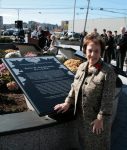
Ruth Goldbloom stands in Nation Builder Plaza in front of the Canadian Museum of Immigration at Pier 21 in Halifax. (photo from CMI at Pier 21)

The museum at Pier 21: National Historic Site opened on Canada Day, 1999. Built to commemorate the almost one million immigrants who passed through Halifax’s Pier 21 between 1928 and 1971, it was renamed the Canadian Museum of Immigration at Pier 21 and designated as a national museum in 2011.

But back to June 30, 1999, the day before it all began. There was a luncheon for the people who had helped turn a shed on the water into a comprehensive museum. Chief among them was Ruth Goldbloom, without whom the museum likely never would have been established. Goldbloom was chair of the Pier 21 Society from 1993 to 1999, and remained active on the board afterward. In 2004, she created and chaired the Pier 21 Foundation, a role that she maintained until just before her death in 2012.

Also present at the luncheon was Rosalie Silberman Abella, who passed through Pier 21 in 1950 as a 4-year-old refugee. In 2004, she became the first Jewish woman appointed to the Supreme Court of Canada.

At the luncheon, Silberman Abella shared two stories. Her parents were married in Poland the day that the Second World War broke out, she said. Her infant brother was killed, and her father’s side of the family was wiped out in the Holocaust. Her parents spent four years in concentration camps, but both survived. In 1946, Silberman Abella was born in a displaced persons camp in Germany.

“It was their way of proving to the world – and themselves – that their spirit was not broken,” she said in her speech, referring to her parents.

After years of trying, the Silbermans were granted entry into Canada. Silberman Abella’s father, a lawyer by trade, was not permitted to practise law in Canada until he became a citizen – but he couldn’t wait the five years it would take to become a citizen to work, as he had a young family to support. So, he became an insurance agent, and inspired his daughter to go into law. He died just before she graduated.

“But he knew somehow it would turn out alright for his family because he was confident in Canada’s generosity,” said Silberman Abella at the lunch. “And how generous it has been! The child my parents had to rebuild their hearts in Germany in 1946 became a judge in Canada in 1976. Remarkable.”

Canada Day, she continued, is her birthday. And what better present could there be than coming back to Pier 21?

“I will never forget how lucky we were to be able to come to Canada, but I will also never forget why we came,” she said. “These are the two stories which complete me – one joyful and one painful – and which merge in the next generation into a mother’s irrevocable gratitude to a country which has made it possible for her children to have only one story – the joyful story, the Canadian story, the story that started at Pier 21.”

Every immigrant has their two stories, at least, from before and after coming to Canada. And countless many of these stories would have been lost to time, a bit more detail lost with each retelling, were it not for the efforts of Goldbloom.

Goldbloom was born Ruth Schwartz in New Waterford, N.S., on Dec. 5, 1923. She was known for her family’s hardware store and for her tap dancing.

“This sense of charity and giving back to the community – at all the community fundraisers and anything, she would always dance at those events, so the spirit was always in her,” said Carrie-Ann Smith, chief of audience engagement at Pier 21.

Smith was one of Pier 21’s first employees. She started working there in 1998, before the museum opened, and continued working with Goldbloom until Goldbloom passed away.

“She just stayed, she just kept volunteering. She was constantly here. She never had an office, we always moved her around,” said Smith of Goldbloom. “I miss her so much.”

The idea to turn Pier 21 into a national site started with J.P. LeBlanc, founding president of the Pier 21 Society. LeBlanc was a retired immigration officer with the modest goal of acquiring an Historic Sites and Monuments Board of Canada plaque to put on the outside of the old Pier 21 building. Before he could complete his goal, however, he developed bone cancer. Around that time, he attended a Dalhousie graduation ceremony where Goldbloom was giving the convocation address.

“This was the ’80s, when people really weren’t looking back and thinking of Canada as a country of immigrants,” said Smith. “And that was the theme of [Goldbloom’s] talk, that we as a country have never really thanked our immigrants. [LeBlanc] knew that he was going to get much sicker, and he was really taken with what she said and how passionate she was about honouring the immigrants that built Canada.”

LeBlanc asked Goldbloom if she would take over the Pier 21 Society, and she did. She began fundraising almost immediately, and decided that a simple plaque wasn’t enough. For years, she worked to create the museum. She traveled the country on her own money, raising awareness and funds about the project, and used her knowledge to lobby the government.

In 1995, Halifax hosted the G7 Summit. Traditionally, the summit’s host city receives a gift and, for Halifax, it was a promise from then-prime minister Jean Chrétien to help build a museum at Pier 21. The deal was, if Goldbloom could raise $4.5 million, then the municipal, provincial and federal levels of government would work together to match that donation.

“It sounds so modest now,” said Smith of the $9 million that brought the museum into being.

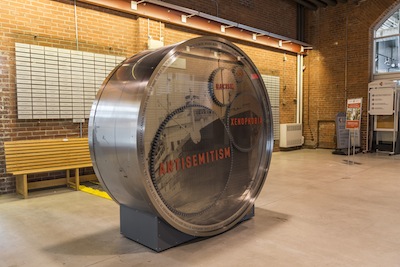
photo - The Wheel of Conscience commemorates the voyage of the St. Louis, whose 937 Jewish refugee passengers were refused entry into Canada and other countries in 1939
The Wheel of Conscience commemorates the voyage of the St. Louis, whose 937 Jewish refugee passengers were refused entry into Canada and other countries in 1939. (photo from CMI at Pier 21)

When it opened, the museum contained exhibits about the history of immigration in Canada, as well as a database of more than one million immigration records. Smith remembers the very first person who ever asked for an immigration record.

“When I showed her the record, she started crying,” said Smith. “I just didn’t realize how profound the impact of that [immigration record] collection was going to be. Her husband had just died days before, and she wanted to make sure she had the original European spelling of his last name on his grave.”

Marianne Ferguson is another woman who received a surprise on the first day the museum opened. (See “Making Canada home.”) Ferguson had come through Pier 21 in March 1939, a Polish immigrant who had escaped Europe months before the start of the Second World War. While the pier was put to military use during the war, Ferguson volunteered there once it reopened, helping refugees get settled in Canada.

By 1999, Ferguson was an established member of the Halifax Jewish community. She would always ask Goldbloom to help her out at shul, but Goldbloom was too busy. To make it up to Ferguson, Goldbloom planned a surprise for her on the opening day.

“When I got to the pier, I didn’t know what to look for,” said Ferguson. “[Goldbloom] said, ‘I’m not going to tell you, you have to find it yourself.’ And I didn’t know, what am I looking for?… I had my son Randy with me that day, he says, ‘Oh, come here, here’s something from you.’”

It was a quote from an essay Ferguson had written in 1942 as a 16-year-old schoolgirl in Canada: “Everyone asked them to take us with them, but that, too, was impossible.” The essay can be found on Pier 21’s website. The “everyone” refers to Ferguson’s extended family, all of whom died in the Holocaust.

Ferguson only had kind words to say about Goldbloom, calling her “the heart of Pier 21.”

Goldbloom would prove that multiple times over the years.

“By about 2002, 2003, it was getting pretty rough to pay the bills,” said Smith. “It was just really a shed on the waterfront, one of the windiest spots in the country, and it was expensive to heat and light … when you’re a National Historic Site, we had that status by then, that just means they can’t tear down the building. That’s all it means, it didn’t come with any funding.”

So, Goldbloom decided to set up a foundation to raise money for the museum. Instead of going door-to-door and asking a million people for $7, she decided to ask seven people for $1 million. These people would be called “Nation Builders.”

“When she had the six Nation Builders, all of her friends chipped in and made her the seventh Nation Builder,” said Smith. “That allowed us to have an endowment. That’s what she wanted – that security for us.”

This year, to celebrate Canada’s 150th anniversary, the museum is putting on a special exhibit called Canada: Day 1, which looks at what the first day in Canada is like for arriving immigrants. Since Goldbloom was born in Canada, she never had that experience. But, as she would regularly point out, the only indigenous people in Nova Scotia are the Mi’kmaq – almost everyone living in Canada can connect their history to an immigrant at some point. She dedicated much of her life to commemorating immigrants’ contributions to this country and her story is inextricably entwined with that of Canadian immigration and Pier 21.

Alex Rose is a master’s student in journalism at the University of King’s College in Halifax. He graduated from the same school in 2016 with a double major in creative writing and religious studies, and loves all things basketball. He wrote this article as part of an internship with the Jewish Independent.

Format ImagePosted on June 30, 2017June 29, 2017Author Alex RoseCategories NationalTags immigration, Pier 21, Rosalie Silberman Abella, Ruth Goldbloom

Posts pagination

Previous page Page 1 … Page 7 Page 8 Page 9 Page 10 Next page
Proudly powered by WordPress