The women of Israel

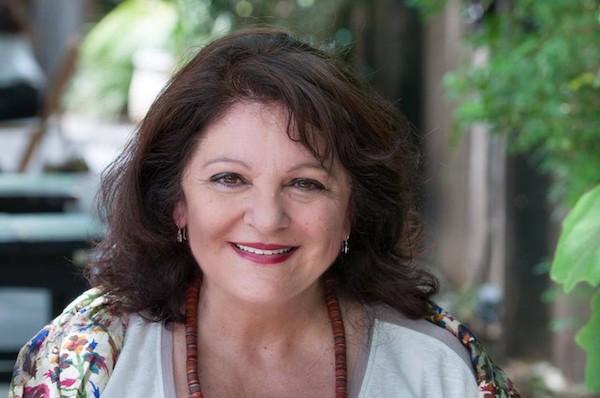
Curator and art historian Yael Nitzan, founder of Israeli Women Museum. (photo by Adi Eder)

How many “she-roes” of Israel can you name? Maybe you’d with Golda Meir, Israel’s first and only female prime minister. Or the tragic and courageous spy Sarah Aaronsohn and paratrooper Hannah Senesh. The list would include physician Vera Weizmann, the first first lady of Israel, who helped establish Chaim Sheba Medical Centre, now the largest hospital in the Middle East; and second first lady Rachel Yanait Ben-Zvi, who taught Jerusalem women how to grow vegetables, milk cows and make cheese so their husbands could go out and build the state.

These and many other women who played – and continue to play  – important roles in the history and culture of Israel will be immortalized later this year when the Israeli Women Museum opens in Haifa. The museum will showcase at least 100 noteworthy but not necessarily well-known women, from architects to lawyers to choreographers, says founder Yael Nitzan.

A curator, art historian and TV producer, Nitzan has overcome many roadblocks and setbacks in realizing her dream of opening Israel’s first museum dedicated to women.

“It was a struggle,” she admitted. “Now, with corona, the world has everyone sitting and listening, and, in three months, I accomplished what I could not accomplish in the past six or seven years.”

Nitzan gained the help of the Haifa Foundation in raising funds for the project, and she was given the rights to a former private school building in which the collections will be housed.
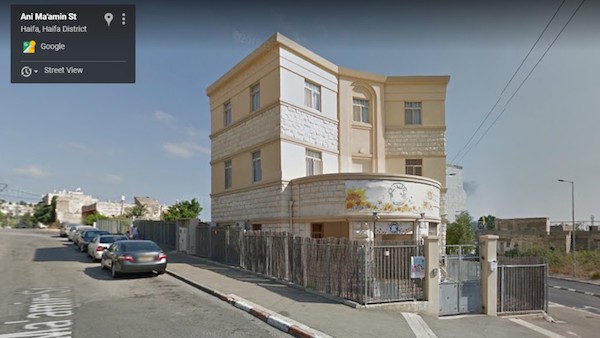
screenshot - The Haifa building that will house the Israel Women Museum
The Haifa building that will house the Israel Women Museum. (screenshot)

Brig. Gen. Gila Kalifi-Amir, former women’s affairs advisor to the Israel Defence Forces chief of staff, agreed to chair the museum. The board was joined by fellow Haifa residents Nadim Sheiban, director of the Museum of Islamic Art; and Prof. Aliza Shenhar, formerly a deputy mayor, ambassador to Russia and first female rector of an Israeli university.

“I found the right people,” Nitzan told Israel21c.

“There are currently about 45 women’s museums in the world, the most famous of which are the Women’s Rights [National Historic) Park in Seneca Falls, N.Y., and the Women’s Art Museum in Washington,” she said.

“The fundamental challenge in establishing a museum is not only in raising resources, but in creating a diverse and significant human and ideological infrastructure. The Israeli Women Museum must be a magnet of significance to the whole, or at least to large sections of, the population in Israel.”

Though Israel reportedly has the world’s highest ratio of museums per person, this will be the first one dedicated to the mostly unsung females responsible for weaving together its social, agricultural and business fabric. “Our museum will be on women in history and women in the arts,” Nitzan explained.

“The section on history commemorates the role of important women who have not been properly acknowledged.” Women like Hannah Maisel, who immigrated to Palestine in 1909 with a doctorate in agriculture and founded the region’s first agricultural training institute for women. And women like Rachel Roos Hertz (Harel), a Dutch resistance fighter who moved to Israel in 1950 after winning the U.S. Medal of Freedom and the U.K. King’s Medal for Courage in the Cause of Freedom, and became active in the Women’s International Zionist Organization (WIZO) – itself founded by Rebecca Sieff (Ziv) from the Marks family of Marks & Spencer, and whose name graces Ziv Medical Centre in Safed.

Some of the inspiration for this section comes from Prof. Margalit Shilo’s Women Building a Nation, a book published this year in Israel.
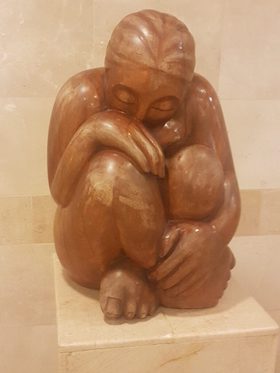
photo - Sculpture by 90-year-old Kati Paldi
Sculpture by 90-year-old Kati Paldi. (photo by Yael Nitzan)

“In the art section, we will spotlight women whose work was not considered important, as well as very important female artists of today whose work is rarely shown in museums,” said Nitzan.

Artists to be included run the gamut from Ziona (Siona) Tagger, one of the most important female Israeli artists of the early 20th century, to contemporary painter Haya Graetz Ran.

“Women in Israel contributed greatly to the establishment of the state, contributed to the construction of the infrastructure of settlement, education, defence, law, government, society, culture, cinema and theatre,” Nitzan said. “But, although they left their mark, they did not receive proper recognition and respect in building society.  The purpose of the museum is to raise their profile and to reshape the narrative of the critical role of women as full partners in leadership and public space design over the past century.”

Nitzan invites anyone to contribute stories or items relating to Israeli Jewish, Arab, Druze or Christian women, and even artists, poets and leaders from the Holocaust era who did not manage to get to Israel. She can be reached through the museum’s Facebook page. Donations for the project are being funneled through the Haifa Foundation.

Israel21c is a nonprofit educational foundation with a mission to focus media and public attention on the 21st-century Israel that exists beyond the conflict. For more, or to donate, visit israel21c.org.
Preserving Jewish past

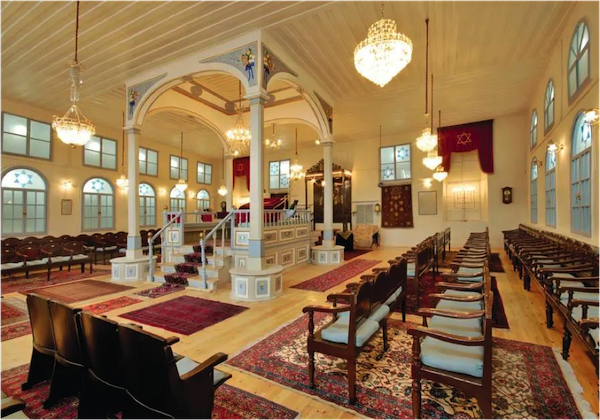
Algazi Synagogue was built in 1724 and has been renovated several times. (photo from Izmir Jewish Community Foundation)

The Izmir Jewish Community Foundation’s Izmir Jewish Heritage Project, for the preservation of Jewish heritage within the Turkish city, has started its activities. The project, financed by the European Commission, also has Our City Izmir Association as a partner.

Home to various cultures and religions, Izmir is one of the cities that has attracted Jewish immigration since ancient times. In the light of current data, the first concrete evidence of the Jewish community’s existence in the city dates to the fifth or sixth century CE. Sephardi Jews expelled from the Iberian Peninsula in 1492 and 1497 came to the Ottoman lands and settled in Izmir and its surroundings.

Since the middle of the 16th century, synagogues, hospitals, cemeteries and other institutions were established within the social, economic, cultural and administrative structure that started to form the present Izmir Jewish community. Most of the historical buildings that have survived to today are located in the Old Jewish Quarter, known as the historical centre and downtown of Izmir.

The Jewish population fluctuated after the 16th century due to earthquakes, epidemics, fires and global political, economic and sociological migrations. In the 1800s, Izmir was home to approximately 50,000 Jews, mostly Sephardi. A significant decrease in the population began in the early 1900s, when many people migrated to Europe and the Americas. Another massive outward move took place to Israel, after the establishment of the Jewish state in 1948. Today, the Jewish population of Izmir is about 1,100 people.

photo - Hevra Synagogue, which was founded in the early 17th century, is located within a complex of four synagogues that share a courtyard marketplace in Izmir
Hevra Synagogue, which was founded in the early 17th century, is located within a complex of four synagogues that share a courtyard marketplace in Izmir. (photo from IJCF)

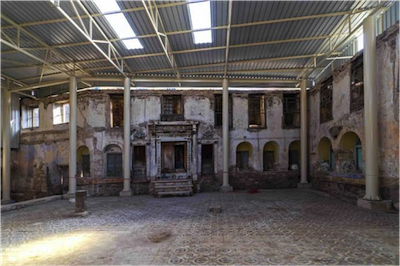
In parallel with the decrease in population, out of the city’s 34 synagogues, only 13 remained. With shrinking congregations, some of the synagogues were neglected and even disappeared over the years. In addition, seismic activity and environmental threats have put these structures in peril. As a result, all of the synagogues that have survived to the present day have to be preserved and restored.

Six of the nine synagogues in Kemeralti, the bazaar area at the heart of the city, tell the stories of centuries. Adjacent to one another and with their special architecture, they have unique value in the world. Currently, the area, consisting of the nine synagogues, one chief rabbinate building, five kortejos (courtyards) and the Juderia (Jewish district) creates a density of structures that is also of unique cultural and touristic value.

The 36-month heritage project includes:

  • A masterplan for the region of the Old Jewish Quarter, located in the historical centre of Izmir, including conservation and restoration plans for the Hevra and Foresteros synagogues, which date to the 17th century. These synagogues, witnessing much of the Izmir Jewish community history, are unique, as they form a compound of four synagogues facing the same courtyard.
  • This compound of synagogues will be promoted in Turkey and worldwide, to be recognized as a cultural heritage site, a tourist destination and an intercultural dialogue centre.
  • A platform strengthening communication with local, national and international networks will be established. A physical location where the platform will carry out its work is also planned.
  • Four books will be written and published on subjects such as Izmir Sephardi stories, Izmir Sephardi women, Jewish press in Izmir, and traditional synagogue textiles.
  • Conferences, workshops, training and study visits will be organized.
  • Works on corporate identity, website, brochures, short films, etc., will be brought to life in order to increase institutional capacity and promote this heritage.

While the project is funded by the EU, the content is entirely under the responsibility of the Izmir Jewish Community Foundation.

– Courtesy Izmir Jewish Community Foundation

Seeking siddur’s return

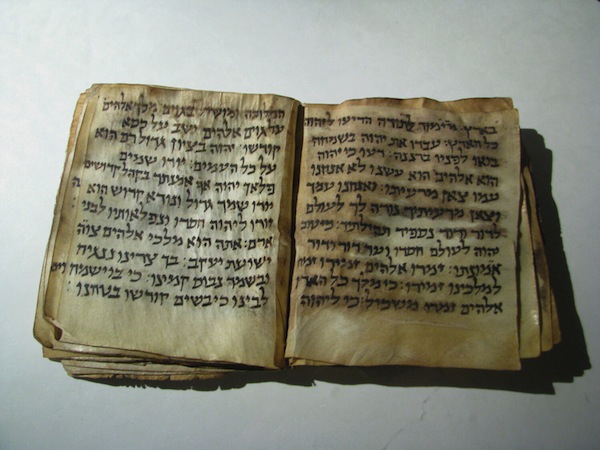
Afghanistan is seeking to repatriate a 1,200-year-old siddur, which is currently housed at the Museum of the Bible in Washington, D.C. (photo from Museum of the Bible)

The National Museum of Afghanistan, established in 1919 at the former Bagh-i-Bala royal palace overlooking Kabul, reflects both the multifaith heritage and tortured history of the Central Asian country that once dominated the Silk Road linking Europe and East Asia.

Following the outbreak of Afghanistan’s civil war in 1992, the museum was repeatedly shelled. It suffered heavy damage in a May 12, 1993, rocket strike. The combination of Taliban mortars and looters resulted in the loss of 70% of the 100,000 prehistoric, Hellenistic, Buddhist, Hindu, Zoroastrian, Islamic and Jewish objects once in its collection. Those pilfered artifacts flooded antiquities markets in London, Paris, New York and elsewhere. Now, the pro-Western regime of President Ashraf Ghani Ahmadzai – formerly an anthropology professor at Johns Hopkins University in Baltimore, Md. – wants its cultural legacy returned. Among the treasures it is seeking to repatriate is a 1,200-year-old siddur (prayer book) – the world’s oldest Hebrew manuscript after the Dead Sea Scrolls.

“It is our responsibility to get back our ancient treasures,” said Abdul Manan Shiway e-Sharq – the country’s deputy minister for information and publications in the Ministry of Information and Culture – in the first-ever on-the-record interview between an Afghani official and an Israeli journalist.

Shiway e-Sharq said photos of the ancient siddur in Kabul’s National Museum, dating from 1998, contradict the ownership documents provided by the Museum of the Bible in Washington, D.C. The MotB says it bought the siddur in 2013 from antiquities dealers in the United Kingdom who provided provenance documents showing the manuscript had been in Britain since the 1950s. The MotB paid $2.5 million for the prayer book. Though Shiway e-Sharq appraised the unique volume at $30 million for insurance purposes, it truly is priceless.

The prayer book may have belonged to the Radhanites, a little-known group of medieval merchants, some Jewish, who traded along the Silk Road linking Christian Europe, the Islamic world, China and India during the early Middle Ages. The Radhanites’ entrepôts and Afghanistan’s early Jewish community were likely destroyed in the 12th and 13th centuries, as the Mongol Empire grew from the steppes of Mongolia to extend from Europe to China.

Responding to a query, MotB’s chief curator Jeff Kloha said the museum will share results of an investigation when completed.

“As noted on the museum’s provenance research web page, museum staff continues to work with external scholars and experts to research this item’s historical and religious significance, as well the item’s history in (apparently) Afghanistan and later Israel and the United States,” Kloha said. “That research is progressing and nearing completion.”

The allegation that the MotB’s rare Afghan Hebrew prayer book is another ancient Near Eastern treasure that was smuggled out of its country of origin is the latest in a series of scandals about looted and forged antiquities that has rocked the Museum of the Bible since its 2017 opening.

The MotB recently shipped 8,000 clay tablets back to Baghdad that may have been taken from the Iraq Museum in 2003, when looters overran it during the American invasion that toppled Saddam Hussein. At the end of January 2021, the U.S. Department of Homeland Security returned 5,500 papyrus fragments from the MotB with “insufficient” provenance to Egypt’s Ministry of Tourism and Antiquities, concluding Cairo’s efforts since 2016 to regain its antiquities. And, the museum has acknowledged that all of the Dead Sea Scroll fragments it acquired are forgeries.

MotB founder Steve Green, an evangelical Christian whose family owns the Hobby Lobby craft store chain, and chief curator Kloha have worked to tighten the museum’s acquisition policies after the U.S. government reached a settlement with Hobby Lobby in 2017 requiring the chain store to pay a $3 million fine for illegally importing ancient artifacts.

Leon Hill, the in-house counsel for Transparent Business Solutions, a Dutch company that specializes in corporate integrity management, is keen to see a resolution to the dispute over the ancient siddur. He is dismissive of Green’s explanation that he and Kloha are novices in the museum business and the acquisition of artifacts. “They can’t continue to say that. They’re no longer new. They have a duty to know better. They have a duty to the history and heritage of the artifacts they purport to protect.”

He accused the MotB of “cultural imperialism.” He said, “We hope that we won’t need to be hired by the Afghan government, and that the Museum of the Bible will do the right thing in the right way quickly.”

Gil Zohar is a writer and tour guide in Jerusalem.

‘ימים טובים חלק ב

במשך שנים נעשו עבודות נרחבות של שימור וטיפול בציינה טאון של וקיטוריה, וכנראה לעיריית ויקטוריה, לקהילה הסינית ולשאר התושבים זה חשוב מאוד.
(רוני רחמני)

כפי שציינתי ברשימה הקודמת לאחר שעברתי בדיקת קורונה שתוצאותיה היו שליליות, החלטתי לצאת סוף סוף לחופשה קצרה בעיר ויקטוריה – בירת מחוז בריטיש קולומביה.

לאחר הביקור בגלריית באטמן המעניינת יצאתי ביום שישי לסיור מודרך בסירה באזור נמל ויקטוריה. הסיור בסירה הקטנה (מאותו דגם של הסירות השטות בוונקובר – מהאי גרנוויל ואליו), כרוך בתשלום של שלושים ושניים דולר. לא זול כיוון שמדובר בסיור בן ארבעים וחמש דקות בלבד אך שווה כל דקה. המדריך המנוסה שהשיט את הסירה הסביר לעומק את ההיסטוריה של ויקטוריה, האינדיאנים שכרגיל היו המתיישבים הראשונים כאן, הבריטים, האמריקנים וכמובן הקנדים. מתברר שחברת הרכבות היא שבנתה את מלון אמפרס המפואר, שמנוהל כיום על ידי רשת פיירמונט היוקרתית. המלון נבנה על קרקע בוצית שיובשה וכך גם נוקה כל האזור שהיה מלא בפסולת רעילה ממפעלים תעשייתיים שונים. עוד מתברר שלאחרונה משפחת בוסה האיטלקית רכשה את מלון אמפרס במחיר זול במיוחד שעומד על כארבעים וחמישה מיליון דולר. לא ברור למדריך ולנו כיצד הם שילמו כל כך מעט על מבנה מפואר וגדול. מכל מקום בשלב זה רשת פיירמונט עדיין מנהלת את המלון ולא ידוע מה יקרה לאחר שיסתיים החוזה עמה. אגב משפחת בוסה מחזיקה גם בחברת בנייה שבונה ללא הפסק בוונקובר ובסביבה. המדריך הסביר כיצד אוניות ענק של קווי שייט שמפעילים קרוזים מפוארים, עוגנות בנמל וקיטוריה, לאחר שהגיעו מארה”ב והן בדרכן לאלסקה. בוונקובר קשה לאוניות הענקיות לעבור מתחת לגשר ליונס גייט בדרכן לעגינה בקנדה פלייס שבנמל ונקובר. לעומת זאת בנמל של ויקטוריה אין לאוניות שום מגבלות בגלל גודלן. לקראת סיום הסיור ראינו בתים צפים בהם גרים תושבים מקומיים וכן אזור תעשייתי באו עוגנות אוניות משא, שמובילות גרוטאות של מתכת למפעל סיאטל.

את הערב סיימתי בארוחה טובה במסעדת קקטוס שבעיר ובעידן הקוביד ישבנו בחוץ. כהרגלי אכלתי סלט בריא בתוספת נתחי עוף רזים. כוס יין אדום משובח תוצרת ארגנטינה הנעים את הזמן.

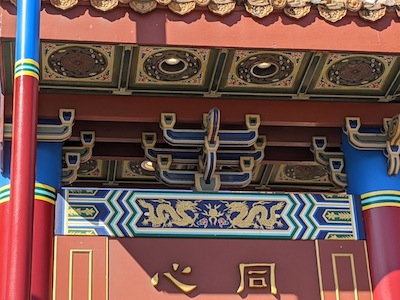
photo - Detail on building in Victoria's Chinatown
(רוני רחמני)

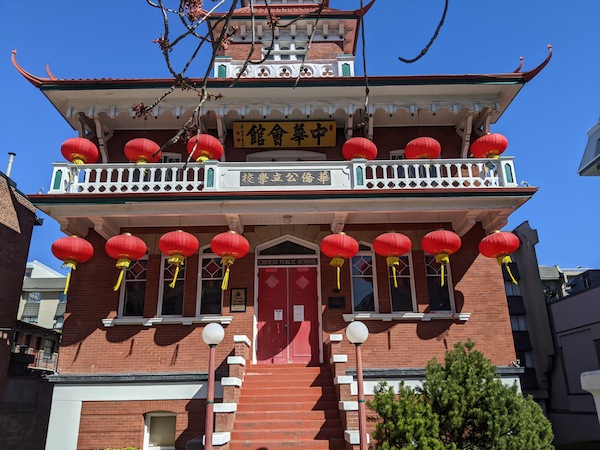
ביום שבת ארגנתי לעצמי שני סיורים מודרכים רגליים: הראשון – בציינה טאון המעניינת של ויקטוריה. בניגוד לוונקובר ציינה טאון בוויקטוריה נקייה להפליא (כמו זו של מונטריאול בקוויבק). הסיור היה מרתק ושמענו הסברים על הציינה טאון הראשונה בקנדה. הסינים הגיעו תחילה בעידן הבהלה לזהב. לאחר מכן פתחו מפעלים למכירת סם האופיום כאשר בשעתו זה היה חוקי. לאחר שהממשלה הקנדית קבעה שהתעסקות באופיום אינה חוקית עוד, הציינה טאון של ויקטוריה החלה לגסוס ואז התפתחה דווקא הציינה טאון של ונקובר. במשך שנים נעשו עבודות נרחבות של שימור וטיפול בציינה טאון של וקיטוריה, וכנראה לעיריית ויקטוריה, לקהילה הסינית ולשאר התושבים זה חשוב מאוד. לעומת זאת בוונקובר נראה שלאף אחד לא אכפת שציינה טאון המקומית גוססת, מלוכלכת, בתים נוטים להתפורר והומלסים רבים הפכו את הרחובות באזור לביתם הפרטי. פשוט מביש.

את הביקור המוצלח בוויקטוריה חתמתי בסיור מורדך נוסף והפעם בנושא ההיסטוריה העשירה של העיר. המדריך סיפר לנו על המלחמות המקומיות, השליטה הבריטית, ההתנגדות ולבסוף ההסכמה להצטרף לקנדה תוך הבטחה להקמת רשת פסי רכבת. שמענו בהפתעה כי לוויקטוריה היה גם צד אפל וחשוך בעיקר באותם ימים של תקופת הבהלה לזהב. רבים מהעובדים שנשכרו לביצוע המלאכה בזבזו את כספם על שתיית אלכוהול מרובה בעיר. אחרים מצאו להם נערות ליווי וחגגו עימן עד השעות המאוחרות של הלילה.

A great-grandmother’s song

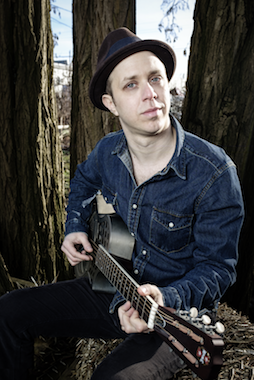
Jesse Waldman was inspired by his great-grandmother Adele Waldman to reimagine the Yiddish song “Papirosen.” (photo from Jesse Waldman)

Several weeks ago, I was offered a commission by the Shadbolt Centre for the Arts to do a musical piece for their Covid Chronicles series. A Jewish musician living in Vancouver, I made a video of the classic Yiddish tune “Papirosen.” It has special significance, and it’s something I want to share with others.

As far back as I can remember, my family has been into taking photos, videos and recordings – I have at least three huge albums and a bunch of VHS tapes from birthdays, bar mitzvahs, etc. As well, there was a piano in my grandparents’ living room and music was always part of our lives. Before my grandmother passed away, she gave me a cassette that had been made on a reel-to-reel tape machine in Toronto in 1958. It included my mom at 2-and-a-half-years-old singing nursery rhymes, interviews with other family members, and my great-grandmother, Adele Waldman, singing traditional Yiddish folk songs.

Adele was my grandfather’s mother and she died before I was born. The quality and soul of her voice is absolutely stunning – some of the most moving singing I’ve ever heard, both haunting and soothing at the same time. I could listen to the recordings a million times and still be amazed by the off-the-cuff performances she did in the kitchen of my grandparents’ house.

photo - Jesse Waldman
Jesse Waldman (photo from Jesse Waldman)

I recently went through my storage closet and found a binder of sheet music that used to live in my grandparents’ piano bench. It was mostly big band and jazz tunes, but also a handful of Yiddish songs, including “Papirosen,” which was one the songs Adele sang on those tapes. As I put the sheet music on my music stand and began to study it, I was transported back to Eastern Europe in the 1920s.

Written by Herman Yablokoff in that decade, this song has the most dark yet beautiful melody, and I absolutely adore it. I looked up the lyrics (translated into English) and was struck again by the powerful storytelling about a young boy selling cigarettes, or papirosen, on the streets, offering an introspective look at his inner world.

For the Shadbolt-commissioned piece, I combined Adele’s recorded performance of “Papirosen” and a reimagined rendition of the song that I performed on guitar. After trying a few different things, I landed on the idea of sharing the first segment of her performance (her rendition is five minutes long) followed by a one-take performance by myself. The video can be found at youtube.com/watch?v=RWAVr2W0vvo.

Declaration of independence

In this year of 2021, someone born in 1948 is or will soon be 73 years old. This is a good round age, surpassing the fabled three score and ten. A Jew born in that tumultuous year in Israel has lived their whole life in freedom, unhyphenated, and not as a member of an ethnic minority, as they might be in every other country in the world. Yet it has not been a garden of roses – three formal wars, and continuous threats from without and within.

We have to look back to better appreciate the miraculous story of Israel. In the days leading up to its Declaration of Independence, after the Partition decision at the United Nations, it seemed the whole world had turned against the Jews. Britain sold heavy weapons to a number of Arab countries, which announced non-recognition of the UN decision, and plans to march on Jerusalem. The U.S. State Department urged David Ben-Gurion not to declare statehood for fear of a new Holocaust. The Palmach numbered under 1,000; the Haganah, just organizing, a few thousand; the state, with no heavy armour and no air force. The Jewish population, numbering 600,000, scattered through the region, faced a hostile Arab population in the millions and seven organized armies amassing on its borders.

Ben-Gurion, our reborn Moses, appreciating that it was now or never, went ahead with the declaration. American President Harry Truman, thanks to the intervention of a Jewish friend, announced U.S. recognition. Nearly one million Arabs fled the territory at the urging of their Arab compatriots and for fear of Israeli retaliation.

Fighting even with sticks and stones, the Jews threw back the worst of the onslaught. Their secret weapon – they had nowhere else to go. Some Jews arrived from around the world to join the struggle. Some pilots flew in with their planes to create a small air force that was effective in turning back the Egyptian army. By the time a ceasefire was declared, Jordan had retained the Old City of Jerusalem and Judea and Samaria, which had been allocated to the Arabs. Similarly, Egypt occupied the Gaza Strip.

Israel ended with a larger land area than it had been allocated under the Partition. The price, aside from the destruction of war, was 1% of its population killed and exponentially more civilians and soldiers wounded. The agony of that time, when the issue of Israel’s existence was in doubt, is painful to relive, even today.

Egypt, Jordan and Syria attacked again in 1967, but Israel was better prepared. Israel drove out the Egyptians and Jordanians, and occupied the Egyptian Sinai, the Jordanian-controled West Bank and the Syrian Golan Heights. Though surprised by the Egyptians in 1973, Israel held the Sinai, and bartered it for a peace agreement with Egypt, followed by one with Jordan.

Today, so many things remain the same, and so many things are very different. The recent Abraham Accords have heralded a number of normalization agreements with Arab countries in the Middle East and Africa. The altered status of Israel among the nations is now recognized. Those who are near the pinnacle of technological achievement in the world recognize the Israeli presence among them, recognize that the country’s knowhow can offer important economic and security benefits to any who wish to engage to pursue such benefits. For some Arab countries, these benefits now appear much more advantageous than the sterile pursuit of Israel’s downfall.

Consider how Israel has changed the landscape around it. It is now supplying energy to Egypt and Jordan and pursuing the building of a pipeline to Europe. Arab countries are forming alliances because Israel is keeping hegemonic Iran in check both in its nuclear ambitions and militarily. Israel is working on relieving water shortages and dealing with desertification regionally and on a worldwide basis, as well as sharing security technology.

What appears no different is the widespread development of an anti-Israel sentiment, which is currently the more-politic face of antisemitic feeling. A product of pan-Arabism cum Islamism and carried into the West, it feeds and rejuvenates the embedded historic religious origins of anti-Jewish attitudes going back centuries. It has made a marriage with the white-supremacist movements in many countries, as well as making inroads in ostensibly progressive movements.

Israel is exhibiting still the growth pangs of its democracy. It is confronting the many challenges with which it was born. It is trying to absorb the 20% of its population who are Arabs, some of whom have been encouraged to exhibit rejection and hatred, some of whom are coming to the realization that life is actually better in Israel than it is for their co-religionists in the region. It also has to deal with the 10% in Orthodox Judaism who find it difficult to coexist with a secular government. It has to deal with a political system almost designed for impasse. And yet, Israelis have created a nation whose accomplishments astound the world. They will solve these problems as well.

While Jews everywhere have adhered to the biblical injunction toward loyalty and devotion to the countries of their refuge, most have never ceased “to weep by the rivers of Babylon.” This sentiment ultimately led to a “return” by some of our brothers and sisters. And, as they are our brothers and sisters, we in the Diaspora cannot fail to be concerned with their welfare. However, these days, more and more, the shoe is on the other foot. With the rising prominence and relevance of Israel, it is we Jews in the Diaspora who will be receiving warmth from the reflected glory of that Declaration of Independence.

For 2,000 years, the Jews of the world have been making it more or less on their own. They have not looked to the sovereign powers where they had landed to provide for them. They have made common cause with committed Jews and, time and time again, they have rebuilt the biblical community model. When the climate became stormy in one place, those who could ran to other places where Jews had found shelter and their brethren facilitated this when they could. Those who despaired of their fate went underground and discarded their label, some forever.

Jews in America – taking over from the Jews in Britain – have attempted to act as a proxy in defence of Jews for the last hundred or so years. In spite of the enormous resources available, rescuing important numbers of Jews in serious trouble was always limited by political considerations but it was done where possible.

The impact of Israel globally is yet to be fully appreciated. After three generations, they now have six-and-a-half million Jews, 10 times the population at inception. What will their impact be when their numbers are 10 times again?

The coming world impact of Jewry rivals that which it had during the pre- and post-Christian era of the Roman Empire. As then, our influence is in the realm of ideas. Then, it was ethics. These days, it centres on the importance of innovation and technology, though is by no means limited to these realms. The existence of the nation state concentrates the impacts and provides focus.

We Jews in the Western world may not yet have fully internalized that we now have someone in our court, as we have never had before. Wherever we are, if trouble arises, we have someone to look to. Since Israel’s Declaration of Independence, a voice has been raised when Jews anywhere are found to be in distress. Israel has done more than talk; it uses its limited resources to make a difference wherever it can – and not just for Jewish communities but for countries with few or no Jews. Israel’s independence, in part, represents our own.

Max Roytenberg is a Vancouver-based poet, writer and blogger. His book Hero in My Own Eyes: Tripping a Life Fantastic is available from Amazon and other online booksellers.

Celebrating good deeds – JMABC @ 50

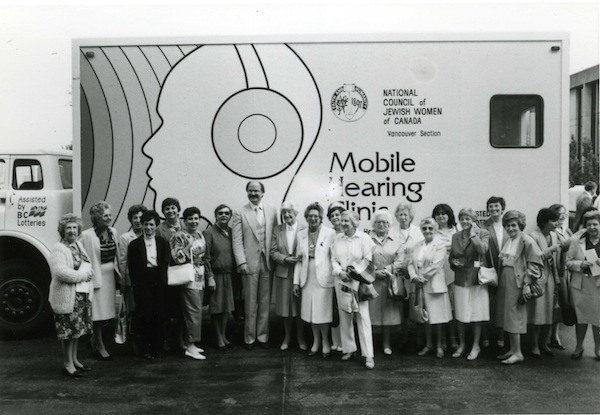
Then-Vancouver mayor Mike Harcourt and members of National Council of Jewish Women in front of the first Mobile Hearing Clinic, outside Vancouver City Hall on June 11, 1984. After raising the funds to build and operate the clinic on a trial basis, NCJW sold it to the provincial health department for the nominal price of $1. They did the same with a second mobile clinic in 1986. (photo from JMABC L.16459)

Passover is one of the foundational stories of Jewish tradition. Around the seder table each year, we learn from our elders the guiding principles of Jewish life: how to be a good person, think of others and pursue justice in the face of persecution.

These same themes can be found in the history of our community locally. The families who laid the foundations of our community, and those who continue to build its future, arrived here from all corners of the world. Mutual aid societies like the Hebrew Free Loan Association (HFLA) and the Jewish Federation of Greater Vancouver (preceded by the Jewish Community Chest and the Jewish Fund and Council) have helped welcome and support new arrivals.

The HFLA was established in 1915 by Solomon Weaver and, while it folded in 1936, it was revived in 1979 by the Jewish Family Service Agency under the leadership of Shirley Barnett. Going at first by the name of the Hebrew Assistance Association, the organization was established to aid a new wave of Jewish immigrants arriving from Russia. With initial capital provided by Joe Segal, Jack Diamond, Morris Wosk and Leon Kahn, the association began issuing loans of up to $3,000. To date, the HFLA has granted more than 2,000 loans, giving people “a hand up, not a hand-out.”

Passover also teaches us that we should apply these principles beyond our own community. As it is written in Exodus: “You shall not oppress a stranger, for you know the feelings of a stranger, having yourselves been strangers in the land of Egypt.” This philosophy can be seen as a guiding principle for community groups such as the Vancouver Holocaust Education Centre and National Council of Jewish Women (NCJW).

Founded in 1983 by local survivors of the Holocaust, the Vancouver Holocaust Centre Society for Education and Remembrance was formed with the goal of establishing an anti-racism education centre. This goal was realized in 1994 in the form of the Vancouver Holocaust Education Centre (VHEC). Education is central to the mandate of the VHEC and, each year, the centre reaches more than 25,000 students and teachers through exhibits, school programs, teaching materials and professional development initiatives for educators.

Since 1924, the Vancouver section of the NCJW of Canada has been dedicated to social action and human rights. For close to a century, its social justice efforts have taken diverse forms, from pioneering a provincial mobile hearing screening program for preschoolers to championing the cause of Nasrin Sotoudeh – illegally imprisoned in Iran – to recent fundraising and awareness initiatives against human trafficking.

These are just a few of the many organizations and individuals who make real the lessons of Passover each day. It has been inspiring to learn more about these and other people and groups as we at the Jewish Museum and Archives of British Columbia collect stories for our upcoming celebration book marking our 50th anniversary.

We invite you to share your story with us and be a part of this milestone publication. Share your family story, recognize someone notable, or sponsor this project. Full information is available at jewishmuseum.ca/fifty-years.

Recalling the Catskills

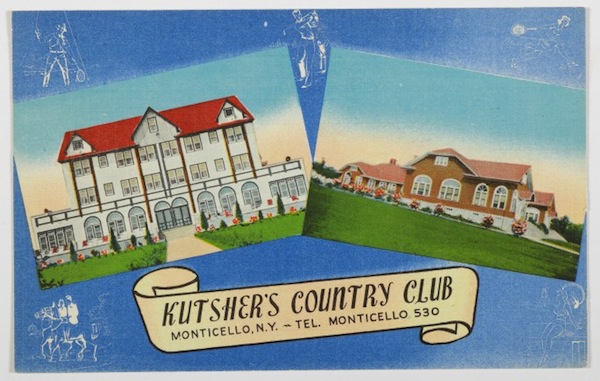
A postcard of the legendary Kutsher’s resort.

After the Lower Eastside of Manhattan, there is perhaps no place that holds so enormous a place in the imagination of Jewish life in North America as the Catskills.

The Catskill Mountains, really a region of the larger Appalachian Mountain range, is a sprawling section of southeastern New York state. Just 160 kilometres from New York City, the area is a world away from the workaday life that lower- and middle-income Jews of mid-century America experienced. The relative proximity to the world’s largest Jewish population centre made the Catskills a destination for generations of Jewish (and other) Americans.

Phil Brown, a professor at Northeastern University, author of Catskill Culture: A Mountain Rat’s Memories of the Great Jewish Resort Area and founder of the Catskills Institute, delivered a webinar March 3. It was presented by the Jewish Study Centre.

The resort region emerged, to use an inapt metaphor, by farmers trying to create a silk purse from a sow’s ear. The land was not good for farming. Chickens and dairy cows were about all it would sustain, and farmers began opening their homes to temporary lodgers.

“You didn’t come to a hotel, you didn’t come to a resort, you came to our house,” Brown reflected. “You came to our family and they treated you like family. And it didn’t matter if you wanted another potato because we grew them here, we grew the corn, we made the cheese, we made our own butter and the cows were giving us milk twice a day. We could make all the butter and cream and sour cream that you needed…. It was served with a full hand because that’s what people came up here for.”

Elaborate menus were an invitation to excess. “So many things to choose from,” said Brown, “and it wasn’t like you chose one or two of these things for breakfast, you had one from each group. You had the fruit, you had the appetizer, then the cereal, then the eggs and the pancakes.”

In addition to the three meals a day the all-inclusive resorts offered, there was a concession to buy snacks while lounging by the pool or playing tennis, then noshes during the evening program at the “casino” – this wasn’t a gambling den, just the name most resorts gave to the theatre space – and, after that, maybe a drive into town for a bite at one of the late-night diners.

In an astonishing array of about 500 “resorts” – ranging across every quality – and another 500 or so “bungalow colonies,” there was something for everybody. One colony, with accommodations that were a cross between cabins and tents, attracted single young people and newlyweds.

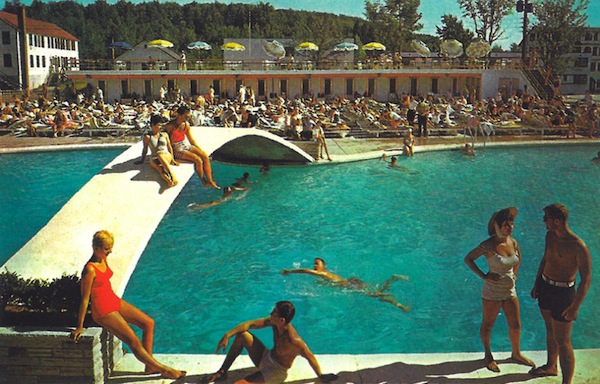
image - Pool scene at the Pines Resort in the heyday of the Catskills
Pool scene at the Pines Resort in the heyday of the Catskills.

In many cases, families would come for the entire summer – two months for a manageable price. Mom and kids might stay all through, with fathers commuting back to the city on Sundays. At its heyday, the Jewish Catskills drew 500,000 visitors a year, making it, in the 1950s and ’60s, the world’s largest resort area.

The glossy catalogues produced by the local tourism agency had subtle and less-subtle code words to segregate their clientele. “Dietary laws observed” was the signal for a Jewish resort, while “Churches nearby” sent the opposite message. The phrase “No Hebrews” left less to the imagination.

Brown’s own family story is a microcosm of Jewish American strivers taking entrepreneurial risks in the Catskills hospitality industry. “My parents began in 1946 as the owners of a small hotel called Brown’s Hotel Royal on White Lake,” he said. “They had that hotel until 1952. Not very long – six years.”

Economic challenge was a part of the Catskills experience in part because of extended families and the porous boundaries between work and play in vacationland. “It was a place where the family came to work, the family came to stay and no one could tell the difference if they were working or staying,” he said. “And this is partly why my parents went broke. People thought they would have a job there and they didn’t really do much work.”

After losing their hotel to bankruptcy, they worked for others. “My mother, always a chef, my father having other jobs, running a concession, working as a maître d’, working as a chauffeur,” Brown said. Young Phil started working in the resorts at a early age. By definition, the places that employed them were the smaller ones; the larger, swanky resorts only hired male chefs.

“After they lost their hotel in 1952, they moved down to Fort Pierce, a little town 150 miles or so north of Miami,” he said. “The idea here is that they would get a new start here and that all of the Jews coming down to go to Miami Beach would be so hungry for good New York food by the time they got to Florida that they would stop in here on the way.”

Opening a restaurant with a large sign declaring “Brown’s Jewish Restaurant” in a community where the Ku Klux Klan was still openly marching took chutzpah. They crossed local norms when an African-American family walked in and was served like any customers would be. But it was not racism or antisemitism that did the business in. “My parents, having lost a hotel because they were good businesspeople, did not do well running restaurants,” he said wryly.

They found their way to Miami Beach and they ran the coffee shop at the Haddon Hall Hotel, which was partly owned by the Kutsher family, who owned one of the Catskill’s most renowned resorts. It was not uncommon that proprietors of Catskills hotels would also own properties in Florida, capturing clientele for the summer season as well as the winter.

The resorts were not just getaways but miniature societies, where people knew lots about each other and created very intimate relationships. This was at least partly because the folks one would run into there were not usually strangers.

The Seven Gables Hotel, where Brown really learned the hotel industry ropes, was known as a “Jackson Heights hotel,” because most of the people who worked and lived there came from the Jackson Heights area of the New York borough of Queens. The owners came from there, they hired staff from there and they recruited guests via the local synagogues and social networks.

There was a huge diversity in the properties, but, generally, he said, lower-cost bungalow colonies had cabins with their own kitchens, so the food was prepared by the family rather than eating in a restaurant or dining hall. These were often built on a lake or river and so did not have swimming pools. Nor did they provide a wealth of entertainment. The bungalow colonies supplemented the low rent by selling groceries to the guests.

On the flip side, the higher-end hotels and resorts not only served multi-course meals, they also imported vaudeville acts from Manhattan’s Second Avenue theatres and other comedians, musicians and entertainers, who would work a circuit in the “Borscht Belt,” often making a good living and building a name for themselves.

By the 1970s, the Catskills were starting to decline as a destination. Some of the old resorts have become yeshivot or Jewish kids camps. Some are being used as boarding houses. Many of the smaller and mid-sized places have been converted into private homes. At least one is now a resort for Korean-Americans and another has been revived by Russian-speaking Jews. But the heyday is well and truly gone, Brown said.

“It’s a world mostly lost to us physically,” he said, “yet so powerful in our memories and emotions.”

Childhood memories

Chicken soup with matzah balls is a staple of the Ashkenazi Passover seder; for meat-eaters, at least. (photo from onceuponachef.com)

My father used to start the seder with a joke. One I remember was: Abe goes to see his boss and says: “We’re doing some heavy house-cleaning at home tomorrow for Pesach. My wife says she needs me to move all the heavy furniture, clean the stove and even clean out the garage.” “We’re short-handed Abe,” the boss replies, “I just can’t give you the day off.” “Thanks boss,” says Abe. “I knew I could count on you!”

Passover was both an exciting and an embarrassing time for me. Both my parents were born in Australia in the late 19th century, when Jews were quite a rarity there. The influx of Jews from Europe to Australia only began after the Second World War, when those lucky enough to survive the Holocaust reached our shores. Back then, I was the only Jewish child in my school, so I had no Jewish friends and, apart from some family members, neither did my parents. Of necessity, we were quite assimilated, as there were few facilities available for Jews in those far-off days.

Still, we adhered to some traditions, and one was the seder. As a child aged 7, it was exciting for lots of reasons, but I had no one to share it with except my two brothers and two sisters, all much older than I was. Our family of seven would sit around the table with Great-Aunt Frances and Uncle Dave, and some of our non-Jewish neighbours, who looked forward to being invited to join us in this, to them, odd ceremony every year. One of them was Penelope, who had a daily radio show and, the next day, she would relate to her listeners all the details that she understood and that seemed to fascinate her.

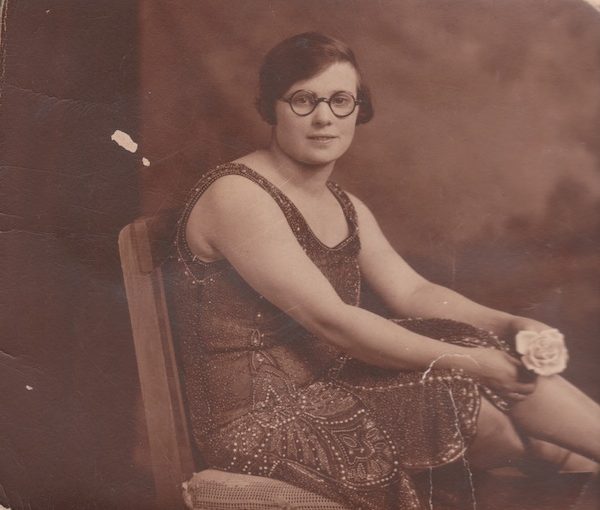
The table would be set with a white tablecloth and all the traditional seder trappings, with a big decanter of raisin wine my mother had made. I was wearing my “best” dress, which I loved. Like most people during those Depression years, we had very little money, so most of my clothes were hand-me-downs from my sisters. But this one had been bought especially for me and I loved it – pink velvet, with puff sleeves and a lace collar. It broke my heart when I outgrew it.

My father, of course, sat at the head of the table, a big pillow on his chair for reclining. Dad was a man of enormous contrasts, something of a genius. He knew Hebrew, Latin and Greek and thought no one could call themselves educated without an acquaintance of these classical languages. But he was also very modest, rarely let it be known that he was a scholar, and had a fund of off-colour stories that always made me blush and resulted in my being very prudish well into adulthood.

He would conduct the service from the Haggadah in Hebrew, giving explanations in English all the way through. He said that the Wise Son who asked questions at the seder was so intelligent that no one had the faintest idea what he was talking about. The Wicked Son had to be excluded from the table, so he went back to work and got paid double-time for working on Pesach. When the Simple Son asks, “What is this?” you just tell him, “It’s dinner.” And, as for the one who does not know how to ask, you go and wake him up and say, “Next year, remember to come to the table.”

When it came to the Four Questions, Dad had transliterated the “Ma Nishtana” for me in big English letters and the guests all thought I was very clever to be reciting something in Hebrew when I was only 7. I did nothing to disillusion them. I loved the singing and so did our guests, who, after some coaching from Dad, sang along with us heartily, with mostly mispronounced words. I remember we always sang one song in English, “Chad Gadya”: “Only one kid, which my father bought for two zuzim….”

A good meal followed, although my mother – a great cook of Australian dishes – didn’t do too well with Pesach recipes, as her own mother had died when she was my age, so she didn’t have the benefit of learning from her mom. But she tried valiantly. The chicken soup was good, apart from the matzah balls, which were as tough as bullets; and her gefilte fish I won’t attempt to describe. Our guests probably thought we were meant to suffer, and this was just another punishment like having to eat matzot for a week.

Just as I couldn’t share my friends’ Christmas and Easter festivities, I didn’t even tell them about our seder. But now I realize how special it was. When I close my eyes, my family are with me again. Maybe that seder was the last time we were all together in person, as my two brothers soon went overseas with the Royal Australian Air Force. The younger one, shot down over Rommel’s lines in Tobruk, never returned. Over the intervening eight-plus decades, the losses have multiplied. There is only one beloved sister left, and she is in Australia.

I would love my parents to be able to see my family at a seder in Israel. We are more than 50 people now, including all the grandchildren and great-grandchildren. I am sure we observe it more authentically today, but there is something special I have lost that can never be replicated – the family I once had, who gave a little girl love, safety and security.

When I think about our seder table back then, it’s not just about the matzot, shankbone, roasted egg, bitter herbs and charoset. I see the family I have loved and lost, and hear the jokes and the songs and the laughter. I have come a long way since then, both spiritually and physically, but the seeds were planted back then, at the seder table with my family, who will never be forgotten.

Dvora Waysman is a Jerusalem-based author. She has written 14 books, including The Pomegranate Pendant, which was made into a movie, and her latest novella, Searching for Sarah. She can be contacted at dwaysman@gmail.com or through her blog dvorawaysman.com.

Pyramids on the Mind

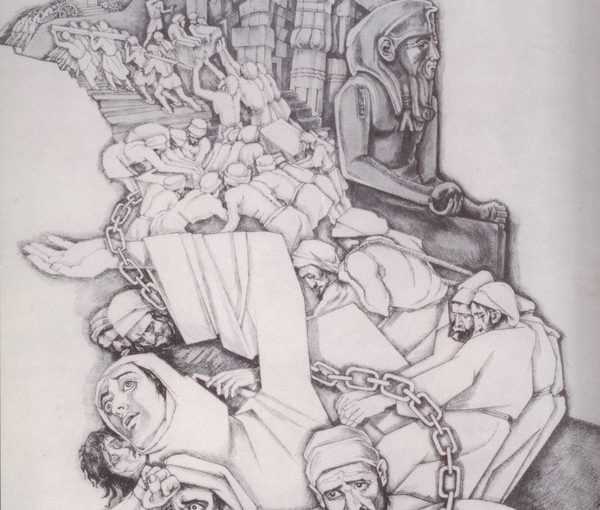
An image from the author’s 1941 Passover Haggadah by Saul Raskin.

Although they are not specifically mentioned in either the Haggadah or in the Torah, Egyptian pyramids have come to be associated with the Pesach story. That many modern Haggadot include illustrations of the pyramids points to how these structures play a key role in our collective memory.

At the Pesach seder, we say, “tze u l’mad,” “go out and learn.” In A Haggadah Happening, Rabbi Shlomo Riskin explains the idea as, “make sure your learning accompanies you wherever you go.” So what better way is there to appreciate the Hebrew slaves’ hardships than to visually present them by tangible symbols, such as the items on the seder plate, as well as the Four Sons, songs like “Ehad Mi Yodaya” (“Who Knows One”) and, of course, the pyramids?

But what specifically drew the Haggadah compilers to the pyramids? First of all, for a period of time, the Hebrews did live in Egypt. Thus, in Exodus, Chapter 5, we read about their involvement in Egyptian construction, where they are portrayed primarily as Egyptian brick-makers, not as builders: “‘Ye shall no more give the people straw to make brick, as heretofore. Let them go and gather straw for themselves.’ And the taskmasters of the people went out, and their officers, and they spoke to the people, saying: ‘Thus saith Pharaoh: “I will not give you straw.”’ So the people were scattered abroad throughout all the land of Egypt to gather stubble for straw. And the taskmasters were urgent, saying: ‘Fulfil your work, your daily task, as when there was straw.’”

Archeologists maintain that, in antiquity, Egyptian homes were constructed from mud bricks. Pyramids, however, were reportedly built of quarried, hewn stone and mud bricks. So, the more persuasive answer as to why modern Jews include pyramids in their Haggadot seems to be the pyramids’ sheer durability. That there are extant pyramids carries tremendous weight when retelling the story of the Hebrews’ time in Egypt – it connects us to our past.

Furthermore, that pyramids are still viewable is not a chance happening, apparently. According to freelance science writer Dr. Craig Freudenrich, the pharaohs built the pyramids knowing that the pyramid, with its square base and four equilateral triangular sides, is “the most structurally stable shape for projects involving large amounts of stone or masonry.”

Moreover, Donald Redford, a professor at Penn State University, reports that the ancient Egyptians probably chose that distinctive form for their pharaohs’ tombs because of their solar religion. The Egyptian sun god Ra, considered the father of all pharaohs, was said to have created himself from a pyramid-shaped mound of earth before creating all the other gods. The pyramid’s shape is thought to have symbolized the sun’s rays.

The shape of the pyramids was carefully chosen to reflect underlying aspects of divine unity. The pyramid has four faces: three faces to the heavens and one face to the earth. Architecture-by-astronomy was common in the ancient world, says archeoastronomer Giulio Magli. The Great Pyramid of Giza, for example, is aligned with amazing precision along the compass points, which would have required the use of the stars as reference points.

Three pyramids were built at Giza, and many smaller pyramids were constructed around the Nile Valley. The tallest of the Great Pyramids reaches nearly 500 feet into the sky and spans an area greater than 13 acres.

What is truly startling is that, with no connection to Egypt, other ancient cultures built pyramids in such far away places as Latin America and in what is, today, southern Illinois, in the United States. Like the ancient Egyptians, these other cultures understood the power and sway the pyramid structure had over the general population. According to history.com editors: “The Americas actually contain more pyramid structures than the rest of the planet combined. Civilizations like the Olmec, Maya, Aztec and Inca all built pyramids to house their deities, as well as to bury their kings. In many of their great city-states, temple-pyramids formed the centre of public life and were the site of holy rituals, including human sacrifice.”

While Egyptian pyramids are closely connected to the sun, Peruvian pyramids were considered to be replicas of mountains; they were thought to possess all the powers the mountains themselves possessed.

Twenty minutes away from St. Louis, Mo., are the remains of the United States’ first high-rises. They are more than 850 years old, constructed by the Cahokia Indians of Illinois. At 5,000 square feet, the house of the great chief or high priest (or another type of leader, since we really don’t know) was the most impressive of all the buildings. From the flat top of this colossus, with a footprint of 14 acres, it is larger at its base than the Great Pyramid of Khufu, Egypt’s largest.

So important is the pyramid as a symbol that it was used on the U.S. one dollar bill. According to the bill’s designer, the pyramid was used because it “signifies strength and duration … a new order of the ages.”

According to Bill Ellis, a professor emeritus of American studies at Penn State, “The pyramid was seen as the kind of human structure that lasted out the ages.” He said America’s Founding Fathers wanted the country to last as long as the pyramid – though the pyramid didn’t show up on the dollar bill until 1935, when Franklin Delano Roosevelt’s administration added them. “New order” is printed in Latin, under the pyramid, and historians say this refers to the birth of a new country and FDR liked the way it synced with his New Deal program.

Whether, in fact, the Hebrew slaves actually built the Egyptian pyramids is of secondary importance, as so many freedom struggles have been based on the tale that the Hebrews had to construct these mammoth buildings until they fled the slavery of Egypt.

Deborah Rubin Fields is an Israel-based features writer. She is also the author of Take a Peek Inside: A Child’s Guide to Radiology Exams, published in English, Hebrew and Arabic.