Skip to content
  • Home
  • Subscribe / donate
  • Events calendar
  • Business Directory
  • FAQ
  • News
    • Local
    • National
    • Israel
    • World
    • עניין בחדשות
      A roundup of news in Canada and further afield, in Hebrew.
  • Opinion
    • From the JI
    • Op-Ed
  • Arts & Culture
    • Performing Arts
    • Music
    • Books
    • Visual Arts
    • TV & Film
  • Life
    • Celebrating the Holidays
    • Travel
    • The Daily Snooze
      Cartoons by Jacob Samuel
    • Mystery Photo
      Help the JI and JMABC fill in the gaps in our archives.
  • Community Links
    • Organizations, Etc.
    • Other News Sources & Blogs
  • JI Chai Celebration
  • JI@88! video

Recent Posts

  • Or Shalom reopens its doors
  • JFS from past to future
  • Need holistic approach
  • Sharing stories, advice
  • Journalist shares fears
  • Skills to live together
  • Road to independence
  • Cutting grass with scissors
  • Zionism as a solution
  • Deceit, desire & the divine
  • Reclaiming sacredness
  • Creative project ideas
  • Summer squares and cobbler
  • Thou shalt … summer commandments
  • Legal help for students
  • Revisiting myth of Lilith
  • Wrong person rebuked
  • Canada’s mixed messages
  • Questions for museum
  • Symposium on antizionism
  • Making soccer political
  • CJPAC lauds Pulver’s impact
  • City recognizes Vrba’s legacy  
  • Organ donation saves lives
  • Theodore’s March premiere
  • A healing Shabbaton
  • Supplying healthy food
  • A chime of metal tags
  • Yellowknife seder a first
  • Ishai energizes, unifies
  • A Lag b’Omer to remember
  • Expanding the healing
  • Hannah Senesh – a unique hero
  • Community milestones … May 2026
  • Sharing her testimony
  • Fall fight takes leap forward

Archives

Follow @JewishIndie
image - The CJN - Visit Us Banner - 300x600 - 101625

Tag: health

Keeping children safe

Keeping children safe

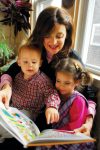
Bracha Goetz reads from one of her recent books to her two grandchildren. (photo from Bracha Goetz)

Many of us were raised to not talk to and be wary of strangers, but the sad fact is that kids are much more likely to be taken advantage of or abused by someone they know and think they can trust. This reality was the driving force behind Bracha Goetz’s book Let’s Stay Safe, which was published in English in 2011, and just came out in Yiddish this summer, as Zai Gezunt.

Born in Queens, N.Y., Goetz graduated from Harvard and started on the road to becoming a psychiatrist before heading to Israel for what was to be one summer. However, while in Israel, she become observant, and ended up staying. There, she did a further 11 years of study, got married and had a family.

Goetz and her family have since moved to Baltimore, where she coordinates a Jewish Big Brother Big Sister (JBBBS) program. As well, she writes children’s books and, to date, has published 36 of them. “They are all spiritual children’s books,” she said. “Originally, I was just writing Jewish children’s books, but now I’m also writing spiritual children’s books for anybody.

“I always wanted to write spiritual books for everyone, but I just recently found a publisher that was interested. It’s not easy. It took a long time, but I’m very happy to do that, because, although these are Jewish concepts, they are also actually universal concepts that I’d love to share with any child.

“I try to write books that I wished I could have read as a child, to answer the spiritual questions I had as a child that weren’t answered,” she continued. “They were answered for me when I was 22, but I try to write about the deepest spiritual concepts on a simple level so any child can understand them. I also try to do it in a joyful, delightful way, so that it can go right into their soul.”

In her role at JBBBS, Goetz witnesses firsthand how sexual abuse affected children. This made her think about how she was teaching her own children about such dangers.

“I realized that I didn’t raise my children with an awareness about it,” she said. “I taught my children about ‘stranger danger,’ but, when they were little, we weren’t as aware as we are today that, with most sexual abuse, the perpetrators are known to the children; that’s how they get access. It’s rare that it’s a stranger. It’s most commonly someone the child already knows. There was no book like this in the Orthodox community and some of the books (in the general community) are not culturally relevant for Orthodox people.”
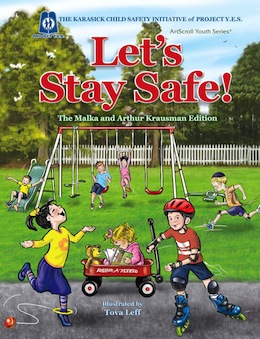
photo - Let’s Stay Safe, which was published in English in 2011, and just came out in Yiddish this summer, as Zai Gezunt
Let’s Stay Safe, which was published in English in 2011, and just came out in Yiddish this summer, as Zai Gezunt.

Goetz wanted to write a book that would be accepted by the Orthodox Jewish community specifically, as the subject tends to be less discussed in these communities. So, she wrote Let’s Stay Safe, but could not find a publisher. That is, not until Rabbi Yakov Horowitz, dean and founder of Yeshiva Darchei Noam in Monsey, N.Y., agreed to help and got the book accepted by ArtScroll.

“He really worked at it, and it was a really groundbreaking book,” said Goetz. “There was nothing like it out there. We wanted readers to understand that these were additional normative safety rules that needed to be adhered to by children to be safe. Of course, the book is also for parents, because, when parents read it to their children, they also gain an awareness.

“It’s not a good idea to leave the safety responsibility of children up to the children. It’s the parents’ responsibility. But, the parents also need to teach the awareness to their children and remind them about it every so often. As they come upon new circumstances, they need to review the guidelines.”

To take the book a step further, especially in Chassidic communities, Horowitz spearheaded a Yiddish version. “In certain Chassidic communities,” explained Goetz, “their mother tongue is Yiddish. We wanted to reach as many people as possible, so that they would bring this book into their homes and share it with their children. Even the pictures were altered to be more Chassidic-looking. We don’t want anything to stop the Yiddish-speaking population from getting this information.”

One of the concepts Goetz wanted to stress in the book was that children speak with a parent even if somebody touched them inappropriately a long time ago. It is important for these experiences to be told, she said, so that survivors can heal, and also so that the perpetrators cannot continue abusing children.

Another concept she wanted to convey clearly is not to trust someone just because she or he is dressed in Orthodox clothing, as that does not automatically mean they are safe people.

“There’s one picture of an older teenaged boy at a camp,” Goetz said, by way of example. “Many times, it’s a familial problem, where it’s an older brother, an uncle, a step-brother who is the perpetrator. Just this week, I was in a community different than I was usually in, but the people knew I was the author of the book … and, this happens a lot, people come to me with questions. I was outside watching my grandchildren and a mother came by and said, ‘Does this seem right? There’s a teenaged boy and he’s playing with all these little children. He’s playing ball with them. He doesn’t live in this community. And why is he here? He’s Orthodox, as well, just as the children, but he didn’t know any of them. Why was he playing with them?’ I said that’s definitely a red flag.

“This kind of awareness was not typical before the Let’s Stay Safe book was published. The incident illustrates the impact that the book has had. Now, there is a general awareness in our community, because there has been consciousness-raising on the issue of child sexual abuse.”

Books written by Goetz are appropriate for kids ages 2 and up, but are better starting at the ages of 3 or 4.

“This book is often read to 4- to 8-year-olds but, the truth is, older children love reading this book, too,” said Goetz. “And what I find so interesting is that a lot of children tell me it’s their favourite book of mine, which I never expected because it’s all about rules and guidelines. But, they love it. It gives them a sense of safety and security, and children ask for it as their bedtime story.”

Other books written by Goetz touch upon topics like eating healthily (and enjoying it), teaching children sensitivity, and teaching people how to interact more naturally with children with special needs.

Rebeca Kuropatwa is a Winnipeg freelance writer.
Format ImagePosted on November 10, 2017November 9, 2017Author Rebeca KuropatwaCategories BooksTags abuse, children's books, health
Talk of death is healthy

Talk of death is healthy

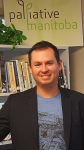
Mike Goldberg, community outreach and education coordinator at Palliative Manitoba. (photo from Mike Goldberg)

Despite the fact that the vast majority of us have lost a loved one, fear and misunderstanding often complicate the grieving process, according to Mike Goldberg, community outreach and education coordinator at Palliative Manitoba.

“Death is not a part of our culture,” said Goldberg. “We tend to revere youth and vitality over age and wisdom, as opposed to Eastern cultures.”

Goldberg, who grew up through the Jewish school system in Winnipeg – attending Ramah Hebrew School and Gray Academy of Jewish Education – earned his master’s degree in gerontology from the University of Regina. He gives many presentations and talks to people in different communities about palliative care and what he describes as “our death-denying society” – and how we can positively change that culture. He also facilitates educational programs at Palliative Manitoba for healthcare aides and support workers; assists people with intellectual disabilities; works with members of First Nations communities; and facilitates grief support groups for kids ages 9 to 12 (called Kids Grieve Too) and 13 to 17 (called Teens Grieve Too).

There was a time when people “just aged in place and the family took care of them at home … and there was nothing else to say about it,” said Goldberg. “That was just the way things were done. But, now it’s more commonplace to see somebody who is getting older being supported in a healthcare facility, a seniors care home.

“It certainly has to do with technology and the economy. You don’t see a lot of people with families that have one primary breadwinner, while the others are able to support family members who are elderly or sick in the family. Everybody seems to have to work, right?”

He said that more Eastern cultures, and sometimes South American ones, can be “more communal and more of a collective society.” He said, “I think we’d like to think we’re communal and collective in Canada, but we’re very much individualistic and self-reliant here. And, we’re very similar to the U.S. in that way.

“We don’t really have a lot of space to care for our elderly family members when it comes to the aging process, so we’ve established these support systems outside the home. And then, it sort of perpetuates itself – this cycle of having the aging experience happen outside the home … and the dying experience happens outside the house. And that has contributed to a fear or denial of death. It just doesn’t happen in our purview.

“If a person is approaching end-of-life, if they have a terminal illness or if they simply have a life-limiting illness … if they need extra supports at their place of residence, we can connect a worker to them to meet with them at home and to provide a supportive presence, to be a companion with them,” he said about Palliative Manitoba.

“For those looking for grief support,” he continued, “we have volunteers that can call you and have a conversation over the phone with you about once a week. Again, they’re not there to provide advice, they’re just there to listen and provide a supportive presence. We find the most appropriate way to support somebody through grief is to listen to them.”

Goldberg is a proponent of inviting open conversations about death and dying, and of exposing kids to death, grief and loss at a young age, not sheltering them. He suggested being as direct as possible with kids and with anyone you meet in terms of language, while also being hyper-aware of word usage – not using euphemisms and metaphors concerning death.

“It’s difficult to talk about death, because it’s something that is going to happen to all of us and represents this unknown,” he said. “But, it’s universal and, to better support each other, we need to talk about it.

“We also need to educate professionals working in this field, who are supporting those approaching end-of-life. These are the people on the ground, experiencing life and death every day. They need to have a high quality of understanding of how to communicate, what the right and wrong things are to say, and being better listeners.

“That’s really crucial,” he stressed. “It doesn’t matter what role you have in society – a nurse or whoever – if we just became better at listening to each other, then that would go a long way in having more direct conversations about death and dying, and changing the culture around it.

“The thing that I’ve come to understand working in this field is that it’s not homogenous emotions we experience. It’s a wide variety of emotions and sometimes a rollercoaster of emotions. The grieving process is not the five-step staircase we tend to think it is. It’s a fluid process that you could go back and forth between the stages.

“There’s certainly a lot of hope in grief and in death,” he said, “and I see that when people tell me that they couldn’t imagine doing what I do, because of the sadness that comes along with grief. I just tell them that I’m able to be with people in one of the most important and sacred times of their life, at the end of life. And, to be able to work with somebody and hear their stories and be with them is a privilege.

“The reality is, everybody grieves differently. There’s no right or wrong way. It’s just however you’re able to make sense of what’s going on.”

Rebeca Kuropatwa is a Winnipeg freelance writer.
 

Format ImagePosted on November 10, 2017November 9, 2017Author Rebeca KuropatwaCategories LocalTags death, end-of-life, family, health

Climate a Jewish issue

The World Health Organization has labeled climate change “the greatest threat to global health of the 21st century.” As a physician, it is difficult to ignore such a dramatic statement.

Climate change is real. The sea levels are rising, temperatures are increasing, more violent storms are becoming the norm. As Canadians, we are seeing consequences of climate change even more than other countries. Last year, Fort McMurray in Alberta was almost destroyed by a massive forest fire. This year was the worst year in British Columbia’s history for forest fire damage. (While climate change is not the sole cause of these events, it is known to be a contributing factor.)

Our glaciers are shrinking, as anybody who has visited the Athabasca Glacier in the Rockies can confirm. Temperatures in the Yukon and Northwest Territories are rising faster than in most other parts of the world. Traditional indigenous life in the north is being made much more difficult by the shortening of winter and the melting of the permafrost.

Climate change is also a Jewish issue. When the environment is changing so dramatically that human lives and well-being are at stake, Jewish values tell us that we must take action.

Pikuach nefesh (the saving of a life) is a fundamental Jewish principle. Climate change is believed to share some responsibility for present-day wars and loss of life, including the conflict in Syria. The World Health Organization predicts that 250,000 people will die each year between 2030 and 2050 due to the effects of climate change. Is it not incumbent upon us as Jews to try to mitigate these effects in line with the pikuach nefesh principle?

Climate change is a complex issue. Many people find it too complicated and too overwhelming, such that they are paralyzed into inaction. So what we can do about it?

In line with Jewish practice, the first response should be educating ourselves about the issues. There are many articles and books about the subject. One of the most compelling authors for me is Bill McKibben. He has written a book called Eaarth (Henry Holt and Company, 2010) in which he describes how the earth is changing, such that it is becoming a new and unfamiliar place.

Fossil fuels are the main culprits. Weaning ourselves off coal, oil and natural gas is paramount. Substituting sources of renewable energy such as solar, wind, tidal and geothermal is crucial.

On a society level, we can try to prevent further construction of oil and gas pipelines, and further development of the LNG (liquified natural gas) industry in northeast British Columbia. We can elect members of the Legislative Assembly and of Parliament who share our concerns.

On a personal level, we can drive less, fly less, use hybrid or electric vehicles, and support public transportation. We can eat less meat, as the cattle industry is a major contributor to increased greenhouse gases. We can consume less, recycle more and compost more.

Everybody can do something to help mitigate the effects of climate change. Doing nothing is no longer an option.

I take inspiration from the talmudic Choni, otherwise known as the Circle-maker.

One day, Choni was walking on the road and saw a man planting a carob tree. Choni asked the man, “How long will it take for this tree to bear fruit?”

The man replied, “Seventy years.”

Choni then asked the man, “And do you think you will live another 70 years and eat the fruit of this tree?”

The man answered, “Perhaps not. However, when I was born into this world, I found many carob trees planted by my father and grandfather. Just as they planted trees for me, I am planting trees for my children and grandchildren so they will be able to eat the fruit of these trees.”

This week, as we are sitting in the sukkah, let us contemplate the fragility of our planet, and strive to make the earth a more secure place for our children and grandchildren.


Larry Barzelai is a Vancouver-based family physician, who has a special interest in geriatrics. He administers the annual Public Speaking Contest organized by the Jewish Federation of Greater Vancouver. He is a member of the board of CAPE (Canadian Association of Physicians for the Environment).

Posted on October 6, 2017October 5, 2017Author Larry BarzelaiCategories Op-EdTags climate change, environment, health, Judaism
International partners

International partners

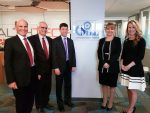
Left to right: Larry Fisher (Lark Group), David Berson (Canadian Associates of Ben-Gurion University of the Negev), Daniel Blumenthal (Centre for Digital Innovation Negev), Dianne Watts (South Surrey-White Rock MP) and Rowena Rizzotti (Health and Technology District). (photo by Yvonne Chiang)

The Health and Technology District in Surrey and the Centre for Digital Innovation in Israel have formalized a number of collaborations on health-related technologies, creating an international network between partners to support health-tech innovations in Israel and across North America.

The Centre for Digital Innovation (CDI) is located in the Advanced Technology Park in Be’er Sheba, Israel, the growing “Silicon Valley” of the Middle East. CDI is a nonprofit created through the collaborative efforts of Israeli entrepreneurs and Ben-Gurion University of the Negev. CDI operates in the areas of digital healthcare, healthy aging, education and smart cities, and brings together experienced entrepreneurs, start-up companies, innovators, researchers, industry leaders, academics, the public sector and investors to generate a high return on innovation for the challenges of the 21st century, such as the cost of healthcare and chronic diseases.

“Both CDI and Surrey’s Health and Technology District [HTD] have aggressive goals to drive innovation across the health sector and Canada stands to deeply benefit from the mentorship and leadership that Israel can bring to our innovation agenda here in Canada,” said Rowena Rizzotti, vice-president of health and innovations for HTD.

The memorandum of understanding between HTD and CDI will co-create and share respective solutions to global healthcare challenges by expediting the implementation of innovations in critical healthcare improvements for both countries.

“It’s great to see that Canada and Israel have parallel visions and focus in developing high-level innovations,” said Ziv Ofek, CDI founder and chief executive officer. “We are excited about this partnership with Canada and with the Health and Technology District and we look forward to collaborating and working together to create technologies that will benefit the world in which we live.”

The partnership was finalized during a recent trade mission organized by the Conference Board of Canada, where participants studied the culture and key success factors that have led to Israel’s groundbreaking developments in innovation and commercialization.

“Israel is a hotbed of high-tech innovations and boasts world-class skills and capabilities with universities and forward-thinking organizations developing some of the world’s latest technology breakthroughs,” said Paul Preston, Conference Board of Canada. “It’s hugely beneficial for Canadians to learn from this success and assist us in developing the talent and capacity to lead a culture in innovation in Canada.”

Every year, the Centre for Israel and Jewish Affairs (CIJA) brings more than 100 Canadians to visit and learn firsthand from the “start-up nation,” and has facilitated trips in recent years for the City of Surrey, the Government of British Columbia and the Conference Board of Canada.

“This exciting partnership is a prime example of how, in bringing the best Canadian and Israeli minds together, we can achieve remarkable things for both countries,” said Jason Z. Murray, CIJA Pacific Region chair.

HTD held a celebratory reception on March 23 with CDI and special guests Dianne Watts, member of Parliament for South Surrey-White Rock, Ofek and members of CIJA.

Developed by the Lark Group, a Canadian-based company, HTD is a series of high-tech buildings located immediately adjacent to Surrey Memorial Hospital, creating an ecosystem for clinicians and health-care providers to work alongside innovators, entrepreneurs and tech companies.

Format ImagePosted on April 7, 2017April 4, 2017Author Health and Technology District & Centre for Digital InnovationCategories LocalTags British Columbia, health, Israel, technology
Medication alert innovation

Medication alert innovation

The system concept for CuePath’s sensor-monitored blister packaging for dispensing medications. (photo from CuePath)

When blister pack medication dispensing came onto the market years ago, it was hoped that it would solve the issue of people not taking their medication on time. However, while this plastic packaging method has become commonplace, people are still forgetting to take their medicine.

One Vancouver-based start-up has come up with a solution. CuePath Innovation is creating a sensor that monitors when each blister pack is opened – connecting the sensor to care providers wirelessly. CuePath’s Jeff Nider is charged with marketing the concept.

Nider grew up primarily in Richmond. “My late father, who passed away in 2014, was a pharmacist and he had a number of different pharmacies in the Vancouver area over the years,” he told the Independent. “I grew up in and out of the pharmacy – working with my bubbie, manning the cash register, or pre-packaging medications for nursing home customers. That’s where I spent most of my summers, working in the pharmacy with my father.”

Nider earned his degree in biology at the University of British Columbia, and then his father asked him to manage one of the pharmacy locations. When they came across the blister pack technology, which makes the administering of medications more safe, they jumped at the chance.

“At the time, we had one nursing home client, and so we saw a future for the technology and decided to purchase the machine required to package it,” said Nider. “At this point, I started my sales career, going and selling … to basically convince … nursing homes to allow us to be their pharmacy provider.

“Each nursing home needs to have a single pharmacy provider for all of their residents. So, we had this technology along with some other software…. We were able to grow the business from one nursing home client to over 40, representing 1,700 residents.”

In 2012, they sold their business to a Toronto-based company and Nider stayed on as the business development manager for Western Canada. Last summer, Nider left that role after having been introduced to CuePath Innovation.

“It’s a start-up for monitoring medication for seniors living at home and in retirement communities,” he said about CuePath. “Based on the expertise I had in the pharmacy and geriatrics business, it made sense to me to get involved. So, I was approached to be essentially the third employee of the company, aside from the two co-founders, who have no pharmacy backgrounds … to take it from an idea and approve the concept through pilots and its commercial launch, which will happen in the second quarter of this year.”

CuePath’s sensor monitors each individual cell of the pack and indicates whether or not a person has broken the seal.

photo - CuePath’s Jeff Nider grew up in and around his father’s pharmacy
CuePath’s Jeff Nider grew up in and around his father’s pharmacy. (photo from CuePath)

“We also provide an alert for seniors at home, when it’s time to take their medications,” said Nider. “If they don’t take them by the appropriate time, a text message will be sent to [a] family member, so they can call and remind the family member to take them.

“If you’re an 85-year-old woman living alone, your daughter might be in Toronto or Winnipeg and have no idea what’s happening – worrying about whether or not you’re taking your meds on time, because there’s a bunch of stats on our website in respect of medication adherence: less than 50% of medications are taken as prescribed, and 22% of nursing home admissions are a result of non-adherence to medication. So, it’s very important that people take their medications the way they’re prescribed and at the right time.”

According to Nider, in some cases, just before care providers come each week, seniors will punch out all the medication in the blister pack that they have forgotten to take during the week. Therefore, everything might appear to be fine when, in actuality, it is not.

“This happens because they know you come every Sunday,” said Nider. “So, on Saturday, they go and punch out the whole card. When you come, everything looks like it’s been taken – but, it’s been taken out the day before and flushed down the toilet.”

Nider pointed out that the CuePath sensor monitors the punching of the plastic only – it does not monitor whether or not the medication was ingested. Though that addition is on the horizon.

The CuePath technology is a clip on a Bluetooth transmitter connected to the back of the blister pack. “Basically, it’s a label that the pharmacist applies to the back, which has some conductive materials in it to send the transmission as to whether or not those have been opened,” said Nider.

The service has a monthly fee and an initial hardware cost but, considering the alternative – paying a care provider to administer the medication – it is much more affordable, according to Nider.

“It runs around $30 a month; $200 for the initial gateway hardware cost,” he said. “There’s a bunch of different models right now. We are still in pilot stages, running various pilots in various forms in different retirement communities.

“In a lot of ways, this will help you avoid needing to get a caregiver and finding a time when a caregiver is necessary. We’ve seen that medications are indicators of other things as well. So, if people are taking their medications on time, they’re probably able to manage many of the other tasks, too. But, as soon as they start to slip with taking them on time, it’s usually a good indication that they may not be able to manage their cooking, they may not be doing their laundry…. It also puts them at a higher risk for falls and other issues if they aren’t taking their medications properly. It’s a good indication that now’s the time to hire a caregiver. It gives you data to what is actually going on with the senior.”

The CuePath gateway unit does not need an internet connection, as it connects to the cellular network. Each gateway comes with three Bluetooth clip transmitters that will be rotated with the pharmacy. The app that accompanies the device allows caregivers access to statistics in terms of percentage of medications taken on time and other data.

“You can see how this month compares to last month,” said Nider. “Then, this information can be printed out and brought to the physician’s office … shared with the pharmacy … so they have the information.”

Rebeca Kuropatwa is a Winnipeg freelance writer.

Format ImagePosted on March 31, 2017March 31, 2017Author Rebeca KuropatwaCategories LocalTags CuePath, health, Jeff Nider, seniors
New legion slate, and more

New legion slate, and more

Left to right: John Collier, Ralph Jackson (president), Alan Tapper (first vice-president) and Marc Perl (second vice-president) at Royal Canadian Legion Shalom Branch 178’s January general meeting. (photo from the legion)

At its general meeting in January, Royal Canadian Legion Shalom Branch 178 elected its new management slate: Ralph Jackson (president), Alan Tapper (first vice-president), Marc Perl (second vice-president), Jenica Neamu (secretary) and Jeff Simons (treasurer). The executive officers are, in alphabetical order: Libbera Amram, Eugene Edelman, Maurice Elharrak, Rosemary Harkins, Frank Long, Angela Miller, Danny Redden and Larry Shapiro.

The next general meeting will take place at the legion, 2020 West 6th Ave. For information on it and becoming involved, call Tapper at 604-263-8498 or email [email protected].

* * *

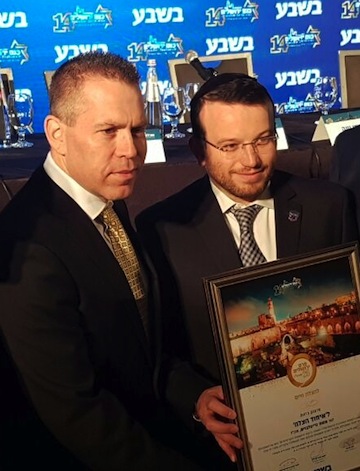
photo - Minister Gilad Erdan, left, and Moshe Teitelbaum
Minister Gilad Erdan, left, and Moshe Teitelbaum. (photo from United Hatzalah)

On Feb. 13, Israel’s national volunteer emergency medical services organization, United Hatzalah, received the Jerusalem Prize for excellence in lifesaving. The director of United Hatzalah, Moshe Teitelbaum, received the award in honour of the 3,200 volunteer EMTs, paramedics and doctors who work with the organization. The award was presented by Gilad Erdan, Israel’s minister of public security, strategic affairs and information.

Among the reasons given by the judges with regards to why United Hatzalah was selected for the award, the judges explained: “United Hatzalah is receiving this prize due to the activation and operation of its volunteers, and providing first-response emergency medical treatment in the first few minutes after an emergency occurs, before the arrival of an ambulance.”

United Hatzalah president and founder Eli Beer welcomed the prize and the recognition of the efforts of the volunteers.

“This prize was given to us due to our volunteers,” he said. “It is they who deserve it for their hard work and dedication to saving lives across Israel. They leave their beds, homes, workplaces, family and friends in order to answer the call of others and save the lives of those who need it most in their communities. Our volunteers work tirelessly, often long into the night, in order to provide fast and professional emergency response in under three minutes. May Israel be blessed with more people like our volunteers.”

* * *

Limmud, the international network of Jewish learning communities, will be awarded the Jerusalem Unity Prize in the Diaspora category on Unity Day, June 7.

President of Israel Reuven Rivlin will bestow the award in Jerusalem, recognizing Limmud’s global success in bringing Jews together. The prize is a joint initiative between Jerusalem Mayor Nir Barkat, Gesher and the families of Eyal Ifrach, Gil-ad Shaer and Naftali Fraenkel, z”l.

“We are grateful for this fabulous honour,” said Limmud chair David Hoffman. “Limmud promotes Jewish unity by offering an inclusive cross-communal space for Jews of all ages and backgrounds, to meet, learn, volunteer and build community. Unity is about celebrating our diversity while working together to build community and create a dynamic Jewish future. This is what Limmud does.”

Founded in the United Kingdom in 1980, Limmud today has spread to 84 communities in 44 countries on six continents. In 2016, Limmud’s 4,000 volunteers produced 74 Jewish learning festivals and events around the world, which drew more than 40,000 people.

A core tenet of Limmud is that everybody is an equal member of the community, whether layperson or rabbi, communal leader or educator, adult or child. Limmud’s values stipulate that it is a community of learning, recognizing that far more can be achieved together than individually. Everyone can contribute and all are responsible for one another and the communities that are created.

“Today, when deep schisms separate Jews – politically, religiously, within communities and between the Diaspora and Israel – the Limmud model and message is more necessary than ever,” stated Limmud board member and head of strategic development David Bilchitz, who is based in South Africa. “Building and sustaining unity takes hard work and a constant effort to understand and bridge our differences. Owing to Limmud’s shared values, Limmud offers a platform to explore, understand and discuss differences, emphasizing common denominators and what we can learn from each other. It is thus a beacon of light in building the future of community through respect and accepting diverse Jewish identities.”

Apart from its work in the Diaspora, Limmud has been embraced by thousands of Israelis, where nine Limmud communities bring together people across the religious spectrum and from all ethnic origins – Ashkenazim, Sephardim, immigrants from the Former Soviet Union, and many others.

The Jerusalem Unity Prize and Unity Day recognize individuals, organizations and initiatives in Israel and throughout the Jewish world that advance mutual respect among the Jewish people.

Format ImagePosted on March 31, 2017March 31, 2017Author Community members/organizationsCategories LifeTags health, Jerusalem Prize, Jerusalem Unity Prize, Limmud, Shalom Branch 178, United Hatzalah

Medical help in dying

In June 2016, it became legal in Canada for a doctor or nurse practitioner to assist someone with their death, as long as they meet certain criteria under the law.

“We’ve been providing this service here ever since,” said Dr. Stefanie Green, who lives and practices in Victoria. “I am one of the medical-assistance-in-dying providers here in British Columbia. Before that, I was primarily a maternity doctor for 20 years, where I took care of babies and newborns.”

As it happened, the Jewish Independent caught up with Green at the end of a day she spent doing circumcisions. The doctor explained that she finds it uniquely interesting dealing with both the beginning and end of life. “There are a lot of similarities to me,” she said. “There’s a lot of overlap in terms of the emotion and skills involved.”

photo - Dr. Stefanie Green believes it “is a deep privilege to be involved in this care”
Dr. Stefanie Green believes it “is a deep privilege to be involved in this care.” (photo from Dr. Stefanie Green)

Growing up in Halifax and then doing her medical training in Montreal, Green made her way west almost 15 years ago.

Helping patients die on their own terms has been an increasing part of her practice, with about 70% of people choosing to end their lives at home, and the rest in a care home or hospital.

Medical assistance in dying is only available to people who meet specific criteria in Canada. These criteria include:

  1. The patient needs to be an adult, over the age of 18.
  2. The patient doesn’t have to be a Canadian citizen, but they must be eligible for Canadian health-care insurance.
  3. Patients need to be suffering from what is considered a grievous and irremediable condition; for example, a serious illness, disease or disability in an advanced state that is irreversible, causing unbearable suffering, and, ultimately, leading to the person’s natural death in the foreseeable future.
  4. The request needs to be made voluntarily; there can be no coercion by family, doctors or anyone else. It has to come directly from the patient and be made by the patient when she/he is capable mentally of doing so.

“If someone is interested, they have to make the request,” said Green. “There’s a specific form in every province that has to be filled out … that has to be witnessed as a legal document.

“Once the request is made legally, then someone like myself – a physician or nurse practitioner – would do an assessment with them, with the family, with the family doctor or specialist, with their records, and make sure they meet the criteria.”

If satisfied at this point, a second assessment is conducted by someone else. Only if both assessments find that the patient meets the criteria, can the patient then be considered eligible and have the power to give the go-ahead if they so choose.

The law stipulates a 10-day waiting period after the request is made before the procedure can happen, unless there are very specific circumstances that require it be otherwise. The procedure itself can be done in one of two ways.

The patients themselves can administer the medication by drinking a liquid the doctor or nurse practitioner provides. The mixture is made by a pharmacy, picked up by the doctor or nurse practitioner, and given to the patient. The nurse practitioner or doctor stands by to ensure all goes smoothly. “It’s not the tastiest of drinks and takes about an hour-and-a-half to be complete,” said Green.

The other option, which more people in Canada are currently choosing, is the physician-administered route. In this case, the doctor picks up the medicine from the pharmacy and brings it to the patient wherever they are. The physician administers it intravenously into an arm and the process takes about 15 minutes.

In the IV procedure, it is a mixture of medications. The first medication is an anti-anxiety medication to relax the patient. Due to its strength, it causes most patients to fall into a light sleep. The second medication is a local anesthetic used to numb the vein being used in order to avoid the chance that it could irritate the patient when the rest of the medication is administered. The third medication moves the patient from a light sleep into a deep sleep and then coma. Many people pass away during that sleep, but not always. The fourth medication paralyzes the body, so if anything is moving, like the respiratory muscles, it will be stopped. The heart will stop soon thereafter.

According to Green, there are a number of countries around the world that have some form of a medical-assistance-in-dying (MAID) team, but Canada is one of only four countries that allows both the patient-administered and physician-administered options.

“I think we allowed it and pushed forward on the law because Canadians feel very strongly that this is a very humane act,” said Green. “It’s something they want to have available.

“What our Supreme Court has decided is that this is actually a constitutional right of Canadians for this care. This is the ability of a physician or nurse practitioner to help someone who wants to end their life at the very end of their life, and who needs help to do so. That’s what this is – a very humane, peaceful and dignified act.

“I think the last poll I saw, 87% of the Canadian public supports this kind of care. I think that this is very respectful of the idea of patient autonomy. That’s what drives this.

“I think that, from an ethical point of view, as a physician, I have the duty to help heal people and to do the best I can to promote healthy life. At the same time, I’m also bound to reduce suffering. There’s a bit of a dichotomy there as a physician. In Canada, the law is reflective of the right of the patient; it’s not about the conflicted duty of the physician.”

From a Jewish perspective, Green does not anticipate any issue from the community. So far, she has done one case within the Jewish community (of a total of 31) and has not had any trouble.

At the time of her interview with the Independent, the MAID program had overseen two to three percent of all deaths on Vancouver Island over the previous six to eight months.

“People ask me a lot about how I feel about this work and what it’s like to do this work,” said Green. “I just want to stress that I do really believe this is a deep privilege to be involved in this care. I feel like I’m helping people. I find it very rewarding at the end.

“I don’t do it for the reward,” she said, “but have been absolutely overwhelmed by the gratitude expressed by the patients I work with and their families. It’s been surprising to me, the extent of that. I want people to know that the service is available and that it’s legal. There are people out there willing to provide this care, and I think it’s a great step forward in Canada. I’m very proud of the work I do.”

Rebeca Kuropatwa is a Winnipeg freelance writer.
Posted on March 17, 2017March 14, 2017Author Rebeca KuropatwaCategories NationalTags assisted death, health
How best to treat addiction

How best to treat addiction

The Feb. 22 panel discussion at Congregation Schara Tzedeck featured, left to right, moderator Dr. Auby Axler and panelists Rabbi Andrew Rosenblatt, Dr. Jenny Melamed, David Berner and Rebecca Denham. (photo by Zach Sagorin)

Approximately 5,000 Jews in the local Jewish community need support around addiction, according to Jewish Addiction Community Services Vancouver.

JACS offers various support programs for those battling addiction, and their families and friends, and organizes events for community education and awareness. On the evening of Feb. 22, at Congregation Schara Tzedeck, the agency partnered with Schara Tzedeck and the Jewish Federation of Greater Vancouver for a panel discussion on the fentanyl crisis and addiction in the Jewish community in general. Participating panelists were Rabbi Andrew Rosenblatt, addiction medical specialist Dr. Jenny Melamed, addiction therapist David Berner and director of services at JACS, Rebecca Denham; the moderator was Dr. Auby Axler.

“JACS Vancouver is a new agency trying to tackle a taboo and shame-filled topic that can ignite passionate responses and strong resistance,” explained Denham in an email. It is committed to supporting community needs relating to substance use, and values a diversity of perspectives on addiction treatment.

At the panel discussion, Rosenblatt spoke about some of the community concerns and the internal conflicts that some people experience when trying to determine the best approaches to addiction support.

Melamed, an addiction doctor who has been treating people with opioid addiction for 15 years, said, “People have been dying from heroin, people have been dying from all drugs…. There are many drugs out there that are as dangerous. Alcohol is one of the most dangerous drugs out there, 90% of the trauma seen in the [emergency room] after midnight is from alcohol. A heroin addict is a calm, sedated person who is nodding off in a corner, he’s not violent; he’s a danger to himself, and he’s not a danger to anybody else.”

She explained, “Addiction is a … disease situated in the primitive part of the brain…. The addiction goes and sits there and it says, ‘if you do not use me, you will die, you need me.’ This is where the team comes in…. We’ve got the ability to say, ‘I’m not going to listen to you anymore.’ But the power to overcome that is what is needed and it is strong and it requires meetings, it requires therapy, it requires a team, it really is a village to keep somebody sober in the long term.”

About 40 people attended the discussion and Melamed commented, “When you look at how big the Jewish community is and how small the attendance is here tonight … we live with our heads in the sand and we don’t realize how many of us have family members who are in addiction.

“We need to remove the stigma related to addiction. When we tried to get somebody in recovery to talk tonight, we couldn’t find anybody in the Jewish community who would come and stand up, because we put that big addiction sticker on people’s forehead. But we all know that it can happen to anybody. Yes, there is an enormous genetic component, a 40% genetic component when it comes to addiction, but there is trauma. Sexual abuse happens in any religion. Everything happens across the board.”

While the Downtown Eastside is often considered the centre of addiction and drug use, Melamed said this is not the reality. “The people on the DTES make up maybe one to five percent of the drug-using population. Seventy-five percent of people using drugs are what we call functional … nobody knows what is going on out there. If you can afford your heroin habit, then you’re OK until you overdose and it takes you over to the other side.”

Berner, founder and executive director of a residential treatment centre for drug addicts and alcoholics, has conducted almost 11,000 therapy groups.

“Addictions are coping mechanisms…. I’ve never met someone in addiction who hasn’t had a terrible upbringing, who hasn’t had severe trauma, serious trauma,” Berner said. “I’ve rarely met anyone who has addiction who hasn’t suffered physical or sexual abuse, or emotional-psychological abuse, or financial abuse.”

Berner posed the rhetorical question, “Can you change? No.” But, he said, “You can change the things you do, including picking up [drugs or alcohol].”

He said, “Every week I give a lecture, every Tuesday morning, and then do group therapy. One of the things I say week in and week out is, I don’t want to hear about your substance.”

Berner also commented on the government’s spending on addiction services in Vancouver.

“We’ve got harm reduction, that’s it!” he said. “And then prevention, treatment and the law are not only ignored officially … they are officially denigrated by the health department, by the ministry of health, and anyone that can make a decision.”

In response to an audience question – “How does the word recreational fit in with the level of risk that’s involved in drugs?” – Melamed responded, “I think you have to replace the word recreational now with Russian roulette because that’s the word we’re using. There is no safe use.”

“Even with marijuana?” asked another audience member.

Melamed said she knows, based on urine samples she has taken, that “some of the marijuana is laced with fentanyl.”

However, a man in the audience, identifying himself as a federal prosecutor who works with the police on narcotics, countered that assertion. “My understanding, after looking at various police files on where this has been reported, [is that] marijuana laced with fentanyl … is anecdotal. It is from people who have overdosed in a non-fatal manner and have reported it to hospital authorities, doctors, police officers, [saying] ‘all I used was marijuana,’ and this is to avoid, in my understanding, the stigma of being labeled a hard drug user…. There has been no actual seizure by police in B.C. of marijuana laced with fentanyl.”

However, the prosecutor added, “We see cocaine laced with fentanyl, we see a lot of heroin laced with fentanyl, we see methamphetamine laced with fentanyl.”

With Purim approaching, Rosenblatt noted, “Drinking on Purim happens a lot, especially in the Orthodox Jewish community, because there is a statement in the Talmud – a person is obligated to drink on Purim until they don’t know the difference between cursed be Haman, who is the villain of the story, and blessed by Mordechai, who is the hero.”

He said, “Maimonides says the way you should be happy on Purim is by spending most of your effort feeding the poor on Purim. Why? You would think that maybe Maimonides was democratic and would say something very nice like the poor deserve a holiday, too.… That’s not what Maimonides says at all. Maimonides says that there is no greater joy in the world than helping another person.”

“JACS was born out of a necessity and I think it is important to remind you that JACS is here to support you,” said Denham in wrapping up the event. “If a question doesn’t get answered tonight or if an issue gets triggered for you, reach out to us and we will support you just as the community has supported us. We wouldn’t be here today without the kind accepting spirit that runs deep throughout this community. From the support of the rabbinical leaders, professionals, individuals, family foundations, the support of the Federation … all of whom continue to strengthen JACS services … we are bringing this much-needed discussion away from shame and into a supportive light.”

To learn more about JACS Vancouver, Denham can be reached at [email protected].

Zach Sagorin is a Vancouver freelance writer.

Format ImagePosted on March 10, 2017March 8, 2017Author Zach SagorinCategories LocalTags addiction, fentanyl, health, JACS, Rebecca Denham, substance abuse
Treating intergenerational trauma

Treating intergenerational trauma

Left to right: Nina Krieger (Vancouver Holocaust Education Centre), speaker Mark Wolynn, Richard Fruchter (Jewish Family Service Agency), Nicky Fried (Congregation Beth Israel) and Shanie Levin (Jewish Seniors Alliance of Greater Vancouver). (photo by Rhonda Dent Photography)

On Feb. 15, Mark Wolynn, director of the Family Constellation Institute, spoke to an audience of almost 1,000 people at Congregation Beth Israel on the topic Understanding Intergenerational Trauma: How Inherited Family Trauma Shapes Who We Are and How to End the Cycle. The crowd sat in rapt silence as he unfolded his own story and the stories of some of the people his therapeutic approach has helped.

Introduced by Rabbi Adam Stein, assistant rabbi at Beth Israel, and Richard Fruchter, chief executive officer of the Jewish Family Service Agency, Wolynn quipped upon taking the stage, “The last time I stood at a synagogue pulpit was at my bar mitzvah.”

Wolynn said his work on intergenerational trauma has particular relevance for those who have survived genocide and war, such as First Nations people, refugees and Jews. His efforts to understand the effects of trauma began when, as a young man, he found himself going blind. He had “the bad kind of central serous retinopathy,” he said, “the five percent kind where it can lead to becoming legally blind.”

Plagued by grey blotches and blurs distorting his vision, Wolynn said he was terrified. He tried a litany of alternative medical cures, which didn’t help, and headed off on a quest for enlightenment.

After marathon meditation sessions and audiences with several gurus, Wolynn said he waited for hours for a satsang (sacred meeting) with a swami in Indonesia. When he finally made it to the front of the line, the guru looked at him for a moment and said, “Go home and make peace with your parents.” It wasn’t until he heard the same message from the next guru he visited that Wolynn returned home to begin his journey into healing his relationships with his family.

Years later, after making both personal and scientific study of the impact of family dynamics and inherited trauma (and healing his blindness), Wolynn has emerged with a persuasive vision of the role that unaddressed trauma can have in our lives – even if the trauma happened in previous generations, and even if you didn’t know about it. “Many of us spend our whole lives believing we are the source of our own suffering when we are not,” he said.

Wolynn presents his findings in terms of epigenetics, the study of how life experience can turn on or off certain genes. He points to findings in both humans and animals showing that the children of traumatized parents react with stress, fear or aversion to stimulus that traumatized their parents, even if the children themselves have no previous negative exposure to the trigger. “We think the effects – the alteration in the genes – may last for three generations,” he said.

Wolynn described several case studies in which patients had symptoms that could be addressed only after patients understood their source in something that had been done to (or by) a mother or grandfather. Wolynn challenged the audience to ask themselves what their greatest fear was and to put it into words, explaining that this was a clue to their “trauma language,” which could, in turn, be used “like breadcrumbs” to lead them back to the unrecognized traumas in their past.

Wolynn laid out a series of steps for uncovering intergenerational traumas and healing the brain. He also shared stories of his use of visualization, ritual and family communication to free both adults and children from chains they didn’t fasten themselves.

Alan Stamp, clinical director of counseling at JFSA, a co-sponsoring agency of Wolynn’s talk, told the Independent, “What Mark is doing is putting a new spin on how to get to the heart of it and resolve the difficulty. The past is alive in the present.”

Stamp said he knows of two people who attended a follow-up training session offered by Wolynn in Vancouver after the public lecture, and who have had success applying Wolynn’s method clinically; one of them being a counselor at JFSA. “It works,” said Stamp.

JFSA offers counseling for a wide variety of issues, and Stamp is hoping that attendees at Wolynn’s talk will be inspired to pursue healing, through JFSA or elsewhere.

JFSA, the Jewish Seniors Alliance of Greater Vancouver, Congregation Beth Israel and the Vancouver Holocaust Education Centre partnered to bring Wolynn to Vancouver, and the talk was additionally sponsored by the Lutsky families and Rabbi Rokie Bernstein. Banyen Books hosted Wolynn the day after his talk at the synagogue.

Matthew Gindin is a freelance journalist, writer and lecturer. He writes regularly for the Forward and All That Is Interesting, and has been published in Religion Dispatches, Situate Magazine, Tikkun and elsewhere. He can be found on Medium and Twitter.

Format ImagePosted on March 10, 2017March 8, 2017Author Matthew GindinCategories LocalTags Beth Israel, health, JFSA, JSA, Mark Wolynn, trauma, VHEC
סדר עדיפויות שונה

סדר עדיפויות שונה

ג’סטין טרודו יחמיץ את טקס השבעתו של דונלד טראמפ. (צילום: Alex Guibord)

לראש ממשלת קנדה, ג’סטין טרודו, יש סדר עדיפויות משלו והוא בחר שלא יגיע לטקס השבעתו של הנשיא החדש של ארה”ב, דונלד טראמפ, שיערך ב-20 בחודש בוושינגטון הבירה. זאת כיוון שהוא יהיה עסוק בסיור ברחבי קנדה בעותה עת. טרודו ישלח משלחת קנדית רמת דרג לטקס במקומו אך עדיין לא פורסם מי הם חבריה.

טרודו יבקר בחמש פרובינציות בין ה-17 ל-20 בחודש ויפגש עם תושבים מקומיים כדי לשמוע את דעתם בנושאים שונים, לקראת השנה שנייה של הליברלים בשלטון. לאחר מכן הוא יתארגן לנהל את ישיבות הקבינט שיערכו באלבטרה (23-24) ויעסקו בתקציב הפדרלי. וכן בסוגיה: כיצד להיערך למדיניות של השלטון החדש בארה”ב בראשות טראמפ, שמבקש בין היתר לבטל את הסכם הסחר החופשי בין ארה”ב, קנדה ומקסיקו.

מחקר קנדי ממליץ שלא לגור ליד כבישים סואנים שמזיקים לבריאות

מחקר קנדי חדש ממליץ לתושבים שלא לגור באזורים רועשים ובעלי רמת זיהום גבוהה כמו כבישים סואנים, כיוון שזה עלול לגרום לנזקים בריאותיים קשים. המחקר המקיף נערך במחוז אונטריו במשך אחד עשר שנים. הוא עקב אחר 4.4 מיליון צעירים בגילאים שבין 20-55, וכן אחר 2.2 מיליון מבוגרים בגילאים שבין 55-85. המחקר פורסם ב-4 בחודש בכתב העת הרפואי היוקרתי הבריטי “לנסט”.

לפי תוצאות המחקר מגורים בסביבה רועשת מעלים את הסיכון לחלות במחלת הדמנציה. אלו שגרים במרחק של כחמישים מטר מכביש סואן מעלים את רמת הסיכון שלהם לחלות במחלה בשיעור של שבעה אחוזים. אלו שגרים במרחק של מעל חמישים מטר ועד מאה מטר מכביש סואן מעלים את רמת הסיכון שלהם לחלות בארבעה אחוזים, ואילו שחיים במרחק של מעל מאה מטר ועד מאתיים מטר מגדילים את רמת הסיכון שלהם בשני אחוזים בלבד.

עורכי המחקר מציינים כי החשיפה ההולכת וגדלה לתנועת רכבים שמגבירה את זיהום האוויר והרעש, תוך גידול באחוז האוכלוסייה שגרה ליד כבישים, יכולים להפוך לנטל בריאותי ציבורי גדול. מדי שנה מתים בעולם כשלושה מיליון איש רק מתוצאה של זיהום אוויר (שמגביר את הסיכון לחלות במחלות שונות בהן: מחלת לב, מחלת ריאות, מחלות נשימה וסרטן). להערכת מומחים בריטים מדובר במחקר מעניין וחשוב מאוד, וזה בהחלט הגיוני שהמגורים ליד כבישים סואנים מגבירים את הסיכוי לחלות בדמנציה. וזאת כיוון שזיהומים ורעשים מרכבים עשוים להשפיע על פעילות המוח לאורך זמן. ולכן ברור שלא מומלץ לאוכלוסייה לגור ליד כבישים סואנים.

דמנציה (בעברית שיטיון או קהיון) היא מחלה שגורמת לפגיעה רחבת היקף בתפקודו הקוגנטיבי של האדם. התפקוד הקוגנטיבי כולל את כל היכולות המוחיות הגבוהות של בני האדם, בהם: שפה, זיכרון, תפיסה, יכולת למידה, יכולת לבצע אנליזה וסינתזה (ובכך להבין את המציאות היום יומית). הגורם השכיח ביותר לדמנציה הוא מחלת אלצהיימר, שבה מתנוונים ומתים תאים מייצרי אצטילכולין באזורים שונים של המוח, ויוצרים פגיעה משמעותית ומתקדמת בתפקוד הקוגנטיבי. גורמים נוספים למחלה הם: פרקינסון, הנטינגטון, איידס, שימוש בסמים, השמנה, טרשת עורקים, רמות גבוהות של חומצת אמינו, לחץ דם גבוה או נמוך, חולשה, עישון, סכרת, פגיעות ראש, דום נשימה בשינה, עששת, מחסור בוויטמין די ומחסור בוויטמין בי-12. בדרך כלל מחלת הדמנציה פורצת בגילאים מבוגרים. כאחוז וחצי מכלל האוכלוסייה יחלו בדמנציה עד גיל 65, ועשרים אחוז מהאוכלוסייה יחלו במחלה מעל גיל 85. לפי נתוני הסטטיסיקה בעולם יש כיום כחמישים מיליון חולי דמנציה ומדי שנה מתווספים כשמונה מיליון חולים נוספים.

Format ImagePosted on January 11, 2017January 11, 2017Author Roni RachmaniCategories עניין בחדשותTags dementia, health, noise, pollution, Trudeau, Trump, בריאות, דמנציה, זיהום, טראמפ, טרודו, רעש

Posts pagination

Previous page Page 1 … Page 19 Page 20 Page 21 … Page 24 Next page
Proudly powered by WordPress