Skip to content
  • Home
  • Subscribe / donate
  • Events calendar
  • Business Directory
  • FAQ
  • News
    • Local
    • National
    • Israel
    • World
    • עניין בחדשות
      A roundup of news in Canada and further afield, in Hebrew.
  • Opinion
    • From the JI
    • Op-Ed
  • Arts & Culture
    • Performing Arts
    • Music
    • Books
    • Visual Arts
    • TV & Film
  • Life
    • Celebrating the Holidays
    • Travel
    • The Daily Snooze
      Cartoons by Jacob Samuel
    • Mystery Photo
      Help the JI and JMABC fill in the gaps in our archives.
  • Community Links
    • Organizations, Etc.
    • Other News Sources & Blogs
  • JI Chai Celebration
  • JI@88! video

Recent Posts

  • Or Shalom reopens its doors
  • JFS from past to future
  • Need holistic approach
  • Sharing stories, advice
  • Journalist shares fears
  • Skills to live together
  • Road to independence
  • Cutting grass with scissors
  • Zionism as a solution
  • Deceit, desire & the divine
  • Reclaiming sacredness
  • Creative project ideas
  • Summer squares and cobbler
  • Thou shalt … summer commandments
  • Legal help for students
  • Revisiting myth of Lilith
  • Wrong person rebuked
  • Canada’s mixed messages
  • Questions for museum
  • Symposium on antizionism
  • Making soccer political
  • CJPAC lauds Pulver’s impact
  • City recognizes Vrba’s legacy  
  • Organ donation saves lives
  • Theodore’s March premiere
  • A healing Shabbaton
  • Supplying healthy food
  • A chime of metal tags
  • Yellowknife seder a first
  • Ishai energizes, unifies
  • A Lag b’Omer to remember
  • Expanding the healing
  • Hannah Senesh – a unique hero
  • Community milestones … May 2026
  • Sharing her testimony
  • Fall fight takes leap forward

Archives

Follow @JewishIndie
image - The CJN - Visit Us Banner - 300x600 - 101625

Tag: health

Illness, not weakness

Illness, not weakness

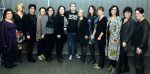
Can We Talk About … event committee, left to right: Karen Dana (event co-chair), Jenn Ritter (event co-chair), Harriet Zimmer, Rietta Floom, Einat Paz-Keynan (JCFS staff), Meytal Lavy (JCFS staff), Michael Landsberg, Sherry Lercher-Davis, Randee Pollock (JCFS staff), Danita Aziza (JCFS board chair), Pam Vine, Tara Greenberg and Jill Atnikov. (photo from Jewish Child and Family Service Winnipeg)

On Nov. 3, as part of Jewish Child and Family Service Winnipeg’s series Can We Talk About …, TSN celebrity Michael Landsberg spoke about Darkness and Hope – Depression, Sports and Me.

Landsberg has suffered from anxiety for as long as he can remember, and depression for the past 18 years.

“In 2009, I spoke about it publicly for the first time,” Landsberg shared with those gathered at Shaarey Zedek Synagogue. “I told everybody I knew. I just hadn’t used the platforms available to me to discuss it [until then], because I didn’t think it was relevant to anyone’s life.

“One day, when I was, by chance, interviewing someone who had suffered from depression, I asked him about it. I commented that I, too, had suffered. The next day changed my life.”

Landsberg received emails from people saying that the interview had been the first time they had heard two men discussing their struggles with depression; in particular, without sounding embarrassed or seeming weak.

“Because of that, they said their lives were changed,” said Landsberg. “Since that moment, I’ve tried to do exactly the same thing over and over again in as many venues as I can, including in Winnipeg.”

Landsberg tries to find ways to bring the topic to the fore whenever he feels it’s appropriate or thinks he has the opportunity to make a difference, whether it’s a public talk he’s headlining or a discussion on radio, TV or the internet.

“Every time I say I suffer from this illness and I’m not ashamed, embarrassed or weak, it changes someone’s life,” he said. “My coming out gave a purpose to this illness. It allowed me to take this poison that’s been inside me, that’s detracted from my life…. It allowed me to help someone else … so my poison is someone else’s medicine. That makes me feel good and makes me feel like I have a place in the world other than the one I was occupying before.”

According to Landsberg, before going public, his level of contribution to society was neutral, like most people’s. But, since coming out and talking about how his depression makes him feel and how it robs his self-confidence and self-esteem – yet he’s not ashamed of it – he’s no longer neutral.

“I think what I have to share most of all is me,” he said. “The more deep I go, the more details I give, the more of my struggles – not just that I’m struggling, but how my struggles feel – the more valuable it is to someone else. You want people to say, in the audience, ‘That’s me.’ And ‘Oh my gosh. My husband has that illness and I never knew that’s what was going on in his head. I understand better now.’

“I think we’re in a time now when every person is really deciding what side of history they’re on. Do you want to be on the side of history that’s changed the way we deal with mental health or do you want to be on the other side? I try to encourage people to get on the right side of it.”

Landsberg has always been a sharer and encourages others to share their struggles. As there is a deep sense of hopelessness and loneliness when it comes to depression, he said it is critical to encourage others to listen and realize they are not alone with the illness.

“More so than any event than I’ve ever been to, I was riveted and was really grabbed by several of the questions [posed to me in Winnipeg],” Landsberg told the Independent. “They weren’t so much questions as they were statements about audience members’ own situations.

“If you have a good night and you do it the right way, and there’s an audience that’s engaged that way, you’ll hear stories that have never before been shared – empowering people to share.

“My analogy is always, what I’d really like to do, is to have everyone in Canada who suffers from this illness [get together] – in the basement of a synagogue or a church, where Alcoholic Anonymous meetings take place – and [have] each of us draw from the collective strength and, at the same time, make deposits into that strength. When you turn to someone for help, you ultimately give them strength just by asking for it. That’s the spirit we felt in Winnipeg.”

One female audience member shared that she has had cancer and that it has come back, adding that she has suffered from depression for 15 years. Landsberg recalled, “She said, ‘You know, I have to be honest with you, I’ll take the cancer over the depression.’

“Also, an army veteran shared that he served in the army for 12 years and that, when he returned to Canada, there were 13 of them in his army group who had served and that, now, there are only two – the other 11 took their own lives. He said, ‘I was in the closet, so to speak, and felt desperately alone and unable to reach out. I watched a TV show you [Landsberg] did two years ago and thought, wow, if he can share, I can, too.’

“That’s enough reason to keep doing this for the rest of my life – just the knowledge that doing something that’s so easy for me, takes no effort, is a joy, [is helping]. To get up on stage and use my struggles for someone else’s benefit … it’s so easy, yet the payoff can be so massive.”

When it comes to helping a loved one who suffers from depression, Landsberg said one should start by admitting they cannot fully understand, as they have never had the disease. Then, they should ask their loved one what they want from them.

“That’s a huge thing – telling me what not to do,” said Landsberg. “The second thing is to reduce guilt. Many of us who have this illness like to please those around us. But, when we’re sick, we lose that ability, because we’re not ourselves – we can’t. I feel terribly guilty when I’m not the person I want to be.

“The people around me aren’t living their lives better because I’m there. Quite the opposite. I feel terrible that I’m actually worrying them, that I’m actually making the room worse because I’m in it. But, if you reduce my guilt, it will make a difference.”

As for someone who discovers they have the disease, Landsberg suggested education, as the more one knows about one’s illness, the more they can be an advocate and fight.

“Then, establish the thought that I will fight for my happiness,” he said. “And that’s incredibly difficult to commit to because the illness takes the life, the drive, out of us. It makes us apathetic. It makes us really incapable of doing stuff, or highly challenged to do stuff.

“If you commit to fighting for your happiness, that’s a big step. If you commit to sharing, that’s a big step. Sharing is incredibly difficult for most people because they feel shame and embarrassment. They feel like their illness is a weakness.

“You can overcome that, to some extent, by educating yourself. When you go on the internet and Google ‘depression’ and get five billion hits, you realize that 10% of the population right now may be feeling similar to you.

“People take their lives – 4,000 every year in Canada, 40,000 in the United States, and there are 25 attempts likely for every ‘successful’ suicide … that means 100,000 suicide attempts. We know there’s at least 10 to one that think about suicide, but don’t attempt it; suicide becomes appealing to them and plays out over and over in their brain.

“If you start realizing you’re just like a million other people in this country, then you’ll realize this is a sickness, not a weakness. All of these people, people that take their lives because they’re in so much pain, that’s not weakness.”

Landsberg added that speaking with someone who you know is struggling with depression is the easiest way to start sharing and healing, as you know they will not judge you and that they understand you.

“Winnipeg people liked what I did, so they went home with something,” said Landsberg. “But, I think I went home with more. I took away more than I left. What I took away were stories from people who I felt privileged to listen to…. I just loved it.”

For more information, visit sicknotweak.com.

Rebeca Kuropatwa is a Winnipeg freelance writer.

Format ImagePosted on December 23, 2016December 21, 2016Author Rebeca KuropatwaCategories NationalTags depression, health, JCFS, Michael Landsberg, TSN, Winnipeg
Keeping the weight off

Keeping the weight off

(image from wis-wander.weizmann.ac.il)

Following a successful diet, many people are dismayed to find their weight rebounding – an all-too-common phenomenon termed “recurrent” or “yo-yo” obesity. Worse still, the vast majority of recurrently obese individuals not only rebound to their pre-dieting weight but also gain more weight with each dieting cycle. During each round of dieting-and-weight-regain, their proportion of body fat increases, and so does the risk of developing the manifestations of metabolic syndrome, including adult-onset diabetes, fatty liver and other obesity-related diseases.

As recently reported in Nature, researchers at the Weizmann Institute of Science have shown in mice that intestinal microbes – collectively termed the gut microbiome – play an unexpectedly important role in exacerbated post-dieting weight gain, and that this common phenomenon may in the future be prevented or treated by altering the composition or function of the microbiome.

The study was performed by research teams headed by Dr. Eran Elinav of the immunology department and Prof. Eran Segal of the computer science and applied mathematics department. The researchers found that, after a cycle of gaining and losing weight, all the mice’s body systems fully reverted to normal – except the microbiome. For about six months after losing weight, post-obese mice retained an abnormal “obese” microbiome.

“We’ve shown in obese mice that, following successful dieting and weight loss, the microbiome retains a ‘memory’ of previous obesity,” said Elinav. “This persistent microbiome accelerated the regaining of weight when the mice were put back on a high-calorie diet or ate regular food in excessive amounts.”

Segal elaborated: “By conducting a detailed functional analysis of the microbiome, we’ve developed potential therapeutic approaches to alleviating its impact on weight regain.”

The study was led by Christoph Thaiss, a PhD student in Elinav’s lab. Thaiss collaborated with master’s student Shlomik Itav of Elinav’s lab, Daphna Rothschild, a PhD student of Segal’s lab, as well as with other scientists from Weizmann and elsewhere.

In a series of experiments, the scientists demonstrated that the makeup of the “obese” microbiome was a major driver of accelerated post-dieting weight gain. For example, when the researchers depleted the intestinal microbes in mice by giving them broad-spectrum antibiotics, the exaggerated post-diet weight gain was eliminated. In another experiment, when intestinal microbes from mice with a history of obesity were introduced into germ-free mice – which, by definition, carry no microbiome of their own – their weight gain was accelerated upon feeding with a high-calorie diet, compared to germ-free mice that had received an implant of intestinal microbes from mice with no history of weight gain.

Next, the scientists developed a machine-learning algorithm, based on hundreds of individualized microbiome parameters, which successfully and accurately predicted the rate of weight regain in each mouse, based on the characteristics of its microbiome after weight gain and successful dieting. Furthermore, by combining genomic and metabolic approaches, they then identified two molecules driving the impact of the microbiome on regaining weight. These molecules – belonging to the class of organic chemicals called flavonoids that are obtained through eating certain vegetables – are rapidly degraded by the “post-dieting” microbiome, so that the levels of these molecules in post-dieting mice are significantly lower than those in mice with no history of obesity. The researchers found that under normal circumstances, these two flavonoids promote energy expenditure during fat metabolism. Low levels of these flavonoids in weight cycling prevented this fat-derived energy release, causing the post-dieting mice to accumulate extra fat when they were returned to a high-calorie diet.

Finally, the researchers used these insights to develop new proof-of-concept treatments for recurrent obesity. First, they implanted formerly obese mice with gut microbes from mice that had never been obese. This fecal microbiome transplantation erased the “memory” of obesity in these mice when they were re-exposed to a high-calorie diet, preventing excessive recurrent obesity.

Next, the scientists used an approach that is likely to be more unobjectionable to humans: they supplemented post-dieting mice with flavonoids added to their drinking water. This brought their flavonoid levels, and thus their energy expenditure, back to normal levels. As a result, even on return to a high-calorie diet, the mice did not experience accelerated weight gain.

“We call this approach ‘post-biotic’ intervention,” Segal said. “In contrast to probiotics, which introduce helpful microbes into the intestines, we are not introducing the microbes themselves but substances affected by the microbiome, which might prove to be more safe and effective.”

Recurrent obesity is an epidemic. “Obesity affects nearly half of the world’s adult population, and predisposes people to common life-risking complications such as adult-onset diabetes and heart disease,” said Elinav. “If the results of our mouse studies are found to be applicable to humans, they may help diagnose and treat recurrent obesity and this, in turn, may help alleviate the obesity epidemic.”

Also taking part in the study were Mariska Meijer, Maayan Levy, Claudia Moresi, Lenka Dohnalova, Sofia Braverman, Shachar Rozin, Dr. Mally Dori-Bachash and staff scientist Hagit Shapiro of the immunology department, staff scientists Drs. Yael Kuperman and Inbal Biton, and Prof. Alon Harmelin of the veterinary resources department, and Dr. Sergey Malitsky and Prof. Asaph Aharoni of the plant and environmental sciences department – all of the Weizmann Institute – as well as Prof. Arieh Gertler of the Hebrew University of Jerusalem and Prof. Zamir Halpern of the Tel-Aviv Sourasky Medical Centre.

Format ImagePosted on December 23, 2016December 21, 2016Author Weizmann InstituteCategories IsraelTags health, obesity, science
Laughter a vital salve

Laughter a vital salve

“It’s that time of year, when you are wondering what to get your husband, father, uncle, friend, or any other smooth dude in your life … so why not get them that greatest of all gifts: laughter. And what’s funnier than prostate cancer? After all, it’s basically pee, poo and (no) boners, what’s not to like?”

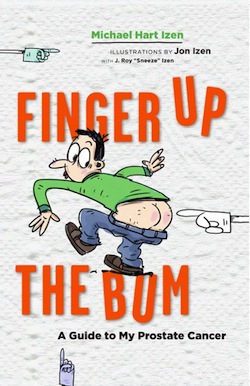
So reads the Nov. 30 post on the Facebook page of Finger Up the Bum: A Guide to My Prostate Cancer by Michael Hart Izen (Leola Productions, 2016), which features illustrations by Izen’s brother, Jon Izen, as well as some by his father, J. Roy “Sneeze” Izen. These cartoons are on the edgy side, and might offend some people, but the humor is vital, not just for the book, but for Izen, his family, his friends – for survival. The ability to see humor in even the grimmest of situations is something to be valued.

book cover - Finger Up the BumThis is one of the many takeaways from the book. Another, which appears most succinctly at the end of a short promotional video on Facebook, is “Finger up the bum … get ’er done!” In other words, men should buck up, go to the doctor and get a prostate exam.

Izen had none of the risk factors for prostate cancer. He had symptoms about which he was worried – he had to pee more often, he had some “softwood lumber issues.” After much poking, prodding and testing, trying various treatments for what might be wrong, he finally found out he had prostate cancer. He was 45. He was told, “With the removal of the prostate and hormone therapy to follow, people in your condition have a 60% survival rate in the next five years.”

After surgery, hormone therapy, radiation and all the side effects – about which Izen is candid – just when his body seemed to start functioning again, at age 49, he found out the cancer had spread. “Sure, there is always hope for some new medication or another, but the cancer is in my liver, so the best they can do is delay the inevitable,” he writes. “There is no cure. At least I am not yet at the stage where they are offering to make me comfortable.

“So now I’ve signed up for a few clinical trials and, luckily, the first of the new meds seems to be working. Hopefully, this buys me some more time, because I’m not ready to go.”

The book is dedicated to the Vancouver Prostate Centre and B.C. Cancer Agency who are trying to keep him alive, but the main dedication is to his wife, Gina Leola Woolsey. And, of course, Izen is not only thankful for her helping him shape his “ragtag ramblings … into the almost Shakespearean tale” that is Finger Up the Bum, or that “she did the research to recommend Page Two Strategies, Kickstarter and other key people on this project.” (The Kickstarter campaign raised more than its $25,000 goal to cover publishing and related costs.)

“When I was having my initial troubles,” he writes, “it was Gina who kept sending me back to the doctors to get answers. When I was not always completely forthright with my doctors, it was Gina who made me tell them everything. When my doctors were content to just pass things off as one of those things, it was Gina who made us all reconsider our next course of action. When I came home from the hospital after surgery, it was Gina who nursed me back to health with good food and great care.”

Izen thanks his brother, parents and daughter (who also helped on the book project) and many others. This might be the less obvious takeaway from this book: the importance of the people in your life, and being grateful for them. In contemplating what lies ahead, Izen says he doesn’t need “a greatest regrets tour” – “I’m not looking for more time to rewrite my life; I only want more of what I already have.”

Finger Up the Bum is available from amazon.ca, chapters.indigo.ca, smashwords.com and barnesandnoble.com, or directly from Izen, [email protected].

Format ImagePosted on December 16, 2016December 14, 2016Author Cynthia RamsayCategories BooksTags cancer, health
Biofeedback can help

Biofeedback can help

Janette Sperber (photo by Olga Livshin)

Three decades ago, Janette Sperber experienced the benefits of biofeedback personally. “At the time, I lived in San Francisco and worked in social services with abused children,” she recalled in an interview with the Independent. “I had severe asthma, went to the emergency in a hospital at least twice a year with my asthma attacks. In 1987, I became a research subject. One of the pioneers in biofeedback in America conducted a study in the new protocols for treating asthma, and I jumped at the opportunity. The program lasted for 13 weeks and it revolutionized my life.”

Since then, Sperber has never gone to emergency again. Although her asthma didn’t disappear, the program helped her manage her condition. It taught her the right breathing regimen, stress management and relaxation techniques. “Even my personality improved,” she said with a smile, “at least according to my friends. Maybe because the fear of asthma, of struggling for breath, was gone. My general way of relating to life changed. I felt more secure, more confident. Biofeedback led me from being a victim of asthma to being in control of my life. It empowered me.”

She became a huge proponent of biofeedback techniques. Whenever her coworkers complained of headaches or chronic pains, she taught them what she had learned in the program, and it helped them, too. After awhile, she started thinking of doing it professionally.

“I went for special training, took some additional classes and passed the licence exam in 1989,” she said. After a few years of working in physiotherapy clinics, she started her own biofeedback practice in San Francisco. Four years ago, she moved to Vancouver.

According to Sperber, biofeedback is a learning process, not a treatment. She teaches her clients how to manage certain physical and psychological conditions, including panic and anxiety disorders, recurring headaches, asthma, muscle-based dysfunctions and many others.

“It’s very gratifying to a counselor,” she said, “because biofeedback is a short-term process. People come to me with a complaint. I identify the problem and teach them how to deal with it, how they could help themselves. If they do their homework and practise, we both see positive results in a short time.”

One of the common problems with which she has helped her patients is chronic pain, including headaches and even cancer-related pains. “I don’t treat cancer,” she stressed, “but I can help people with the pain. When something hurts, we always want the pain to go away. We tighten our muscles to fight the pain, to resist it, but the tension often leads to the opposite results: the pain worsens. It triggers the alarm bells in our brains, and the stress level goes up, exacerbating the pain further. We need to relax instead.”

In addition to relaxation techniques, Sperber teaches her clients the right approach to breathing, which could also reduce anxiety and even prevent panic attacks. “With the optimal respiration patterns, my clients can catch a panic attack before it is fully developed, ‘nip it in the bud,’” she said.

The first stage of any treatment is to identify the source. For that, Sperber uses special sensors similar to the ones used in electrocardiogram testing. The test is painless. She applies electrodes to different parts of a client’s body to find the problem area and then teaches the client how to reduce the tension in that group of muscles. She also tests breathing and heartbeats before recommending certain techniques.

“Not everything works for everyone,” she warned, “but I try different techniques with each client to find what works best for them. The more open-minded my clients are, the better I can help them. They need to practise what I teach to get the best outcome. Those who don’t want to practise are unwilling to help themselves.”

Some of her more difficult patients include a perhaps unexpected group. “Women who are too nice are sometimes the hardest to help,” she said. “They go to their doctors with pain complaints, and the doctors recommend medications and suggest restrictions of what they should and shouldn’t do. Some doctors also recommend them to me or other biofeedback specialists. But, because these women – and it is usually women, not men – are too nice, they can’t say no. Someone asks them to do something extra at work or at home and they do it, even though it aggravates their conditions. They should learn to say no, to take better care of themselves.”

Another problem Sperber encountered recently is the gradual proliferation of fake biofeedback providers. “Biofeedback is growing in popularity,” she said. “More and more doctors recommend their patients to find a biofeedback specialist, but I’m only aware of a few other licensed biofeedback professionals besides myself in Vancouver. Lots of scams though. If you want to consult a biofeedback counselor, check the website of Biofeedback Certification International Alliance – bcia.org – for the certified practitioners in your area.”

Sperber loves what she does. “It’s wonderful to be able to help people improve the quality of their lives,” she said.

Sperber’s website is theempoweredlife.ca.

Olga Livshin is a Vancouver freelance writer. She can be reached at [email protected].

Format ImagePosted on December 16, 2016December 14, 2016Author Olga LivshinCategories LocalTags biofeedback, health
Spinal cord registry expands

Spinal cord registry expands

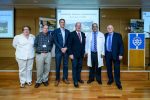
Left to right: In Jerusalem, during British Columbia’s trade mission to Israel, are B.C. MLA Dr. Moira Stillwell, Hadassah Medical Centre’s Dr. Guy Rosenthal, Rick Hansen Institute chief executive officer Bill Barrable, B.C. Finance Minister Michael de Jong; and Hadassah Medical Centre’s Prof. Eyal Itshayek and Prof. Yoram Weiss. (photo from RHI)

The medical interventions and outcomes of Israelis with spinal cord injury (SCI) can now be captured in the Rick Hansen SCI Registry (RHSCIR), a prospective observational study of individuals sustaining a traumatic SCI, thanks to the teams at the Rick Hansen Institute (RHI) and Hadassah Medical Centre.

Spinal cord injuries have a devastating impact on the health and well-being of the individuals affected. SCI health-care services are highly specialized and complex and place a significant burden on health-care systems. By connecting clinicians, researchers and health-care administrators, the goal of the registry is to advance research, improve clinical practice and reduce health-care costs.

The registry has sites at 31 major acute care and rehabilitation hospitals across Canada. In the last year, registry sites have been established in China, New Zealand and, now, Israel, marking its turn as a truly global study that connects the international SCI research and clinical care communities. There are currently more than 6,000 individuals with SCI enrolled in the registry.

At Hadassah Medical Centre, the registry pilot study is led by Dr. Eyal Itshayek and a team of researchers who will collect details about study participants’ SCI, including the extent of their injury, level of paralysis, recovery, success of various treatments and impact on quality of life and physical function.

RHI and Hadassah celebrated their established partnership with an official launch of the RHSCIR pilot study on Nov. 16. RHI’s chief executive officer, Bill Barrable, and manager of commercialization and industry relations, Jonathan Miodowski, visited the hospital as part of British Columbia’s trade mission to Israel, led by B.C. Minister of Finance Michael de Jong.

The delegation and invited guests attended a presentation from Hadasit Technology and took a tour of the trauma unit of the medical centre, which was followed by the RHSCIR pilot launch event. Elad Strohmayer from the Israel Ministry of Foreign Affairs, and Ralph Jansen, deputy head of mission from the Canadian Trade Commissioner Service, had the opportunity to say a few congratulatory words, along with de Jong, hospital representatives and Barrable. De Jong spoke highly of the partnership between Hadassah Medical Centre and RHI, and of how the launch of RHSCIR “forges another link in the chain of research that will make life better for so many people.”


Format ImagePosted on December 16, 2016December 14, 2016Author Rick Hansen InstituteCategories LocalTags British Columbia, Hadassah, health, Israel, Rick Hansen, SCI, spinal cord injury
Beef versus legumes

Beef versus legumes

If the entire population of the United States changed their diet from a beef-heavy plan to one based on chicken, it would be possible to feed 120 to 140 million more people with the same resources. (photo from wis-wander.weizmann.ac.il)

How much does a steak really cost? Or chicken nuggets, or a plate of hummus? New research by Prof. Ron Milo and Alon Shepon of the plant and environmental sciences department of the Weizmann Institute of Science, together with Prof. Gideon Eshel of Bard College in New York, took a look at the figures – including the environmental costs – of the different foods we eat. The research appeared in Environmental Research Letters.

The data for the study came from figures for cattle and poultry growing and consumption in the United States. To compare, the researchers calculated the nutritional value of each – usable calories and protein – versus the environmental cost. The latter included the use of land for fodder or grazing and the emission of greenhouse gases in both growing the food and in growing the animals themselves.

Chickens, according to the study, produce much more edible meat per kilogram of feed consumed, and they produce their meat faster than cattle, meaning more can be grown on the same amount of land. For every 100 calories and 100 grams of protein fed to beef cattle, the consumer ends up with around three calories and three grams of protein. For poultry, that figure is about 13 calories and 21 grams of protein.

The researchers then asked what would happen if the entire population of the United States were persuaded to change their diet from a beef-heavy plan to one based on chicken. Their answer: it would be possible to feed 40% more people – 120 to 140 million more people – with the same resources.

What would happen if the same population was persuaded to adopt an entirely plant-based diet? That is, instead of using land to grow cow or chicken feed and then eating the animals, to use that land to grow nutritional crops – mainly legumes, including peanuts, soya, garbanzos and lentils. These can supply all of a person’s nutritional requirements, except vitamin B12, which can be obtained from nutritional yeast.

A separate study, published in Environmental Science and Technology – “Environmentally optimal, nutritionally aware beef replacement plant-based diets,” by Milo, Shepon, Gidon Eshel and Elad Noor – suggests that an extra 190 million people could eat off the same environmental resources in this way.

“If we changed our diet, we would change the environmental price we pay, with every meal,” said Shepon. “Eating a plant-based diet can both meet our nutritional requirements and save on land use, as well as the release of greenhouse gases into the atmosphere and excess nitrogen from fertilizers into the water supply. These are real costs that we all bear, especially when people eat beef.”

Milo’s research is supported by the Leona M. and Harry B. Helmsley Charitable Trust; Dana and Yossie Hollander, Israel; and the Larson Charitable Foundation. Milo is the incumbent of the Charles and Louise Gartner Professorial Chair.

For more on the research being conducted at the Weizmann Institute, visit wis-wander.weizmann.ac.il.

Format ImagePosted on December 16, 2016December 15, 2016Author Weizmann InstituteCategories IsraelTags environment, health, science, vegetarian

Good news on Alzheimer’s

For the last three years, I have been researching, interviewing and writing articles for Senior Line, the magazine published three times a year by Jewish Seniors Alliance of Greater Vancouver. In that capacity, I read everything I can about dementia, especially Alzheimer’s disease, medical care for seniors and residential facilities for seniors.

A year ago, I succumbed and started paying for a digital subscription to the New York Times. Using their “alerts” system, my inbox is filled with relevant, current articles on these topics. I scour the media (Vancouver Sun, Zoomer Magazine, Jewish Independent, CBC News Network, CNN, documentary channels, movies portraying Alzheimer’s disease, and online newsletters from organizations such as CARP and COSCO) searching out information about these senior issues. I also began visiting the Louis Brier Home and Hospital regularly, interacting with people with dementia (with the assistance of Davka, my Standard Poodle).

Why was I obsessed with Alzheimer’s disease? The truth is that I was swimming in a turbulent sea of fear, dread and panic – analyzing every forgetful moment and constantly measuring my intellectual capacities, to be sure that I wasn’t “losing it.” This had been going on for the past five years.

My feelings and thought processes began to evolve as I gained knowledge and understanding of the causes, the progression of this condition and, of utmost importance, the changes in attitude towards the management of seniors residences and the programs offered to seniors with dementia. Most surprisingly, among the gloom and doom scenarios of “the grey tsunami” and “the stark demographic shift,” I began to understand that there is actually good news about dementia and Alzheimer’s disease. Yes, you heard me: good news!

Today, reaching the age of 100 is no longer shocking. I personally know three people who have reached that age. Seniors of my generation, and the Boomers and Zoomers, are living longer. Within this large cohort, dementia is a product of the natural aging process. The longer we live, the higher the probability of dementia. Is there anyone among you who wants to die at 65 or 71 (the risk of Alzheimer’s begins to increase dramatically at the age of 65)? Wouldn’t you rather live to 86 or 94? Of course! Well then, your chances of having dementia will increase.

At 77, I am more active and more productive than I have ever been. I know that, at any time, I may begin to deteriorate. The influence of genes is crucial: one grandmother had dementia, the other did not. My aunt has Alzheimer’s and, recently, a close relative was diagnosed with the early signs of the disease. I am shocked and saddened, but now I am able to accept the possibility, putting it in the context of the result of aging well and living longer.

What have I learned? Maria Shriver, in her Feb. 25 article on WebMD “We can handle the truth: the facts on Alzheimer’s,” writes “try to put your denial impulse aside and take a hard look at the truth about Alzheimer’s. Because the fear that causes you to deny things – like our risk of getting this mind-blowing disease – can actually be the motivator you need to stop ignoring the facts….” We know the risks and the consequences, but we are in denial and unprepared to deal with it – personally, financially and as a society. It seems that by pushing through my ignorance and my fear, I have come to a place of harsh reality and hope.

The intense desire for the discovery of a cure for dementia, or a preventive strategy for Alzheimer’s disease, is universal. Exciting research is happening in labs across the globe but, until a “miracle cure” is found, let us not refuse to act because there is no cure. Denial is the enemy of hope.

How much do you want to know about your risk of getting the disease? Here is a list of ways to learn more:

  • Review your family history with your doctor.
  • Review lifestyle factors like diet and exercise with your doctor.
  • Review your medical history with your doctor, including questions about brain trauma.
  • Take a genetic test to determine whether you have genes that raise your odds of getting the disease.
  • Get a brain scan to spot signs of the disease.

But, if you are like 41% of the people in the survey “Insight into Alzheimer’s Attitudes and Behaviors,” you have not – or are not willing to – take any of the proposed steps, according to a Feb. 25 article by Ashley Hayes on WebMD. Another 46% say they aren’t worried about getting Alzheimer’s in the future, mainly because they take care of their health and also because they can’t do anything about it. Thirty-four percent of respondents say they’re concerned about getting the disease in the future and, of those, 69% say they’re concerned because they don’t want to become a burden to their family, with 60% concerned because there’s no cure.

Michael Smith, MD, WebMD’s chief medical editor, states, “There is great concern about the impact of this disease, but denial, fear or other unknown factors seem to be preventing us from taking the necessary steps to prepare.”

People do not seem to realize that they can lower their risk. A few suggestions are offered: stay mentally or intellectually active, eat a healthy diet, take vitamins or supplements, exercise at least three times a week and stay socially active.

There is a positive link between physical exercise and brain health. There is a relationship between the foods, drugs, alcohol and nicotine we ingest and their impact on the brain. Hopefully, more informed, more realistic children will notice when a parent’s mental capacities are diminishing (if you haven’t), and they will get us to the physician or gerontologist early, wasting no time; perhaps to participate in a clinical trial or to get a new drug that could slow its progression. Plans must be made, contingency scenarios must be worked out. The best way to break through denial is to challenge it.

The good news

Dementia rates have been plunging. It took a few reports and more than a decade before many people believed it, but data from the United States and Europe are becoming hard to wave off. The latest report finds a 20% decline in dementia incidence per decade, starting in 1977.

A recent American study, for example, reports that the incidence among people over age 60 was 3.6 per 100 in the years 1986-1991 but, by the years 2004-2008, it had fallen to 2.0 per 100 over age 60. With more older people in the population every year, there may be more cases in total, but an individual’s chance of getting dementia has gotten lower and lower, as Gina Kolata reported in a July 8 New York Times article.

The psychological definition of “denial” is an unconscious defence mechanism characterized by refusal to acknowledge painful realities, thoughts or feelings. My anxiety, fear and dread have disappeared. I have faced the dreaded monster, I have embraced the enemy. I now visit with people suffering from Alzheimer’s. I have spoken to my children frankly about my wishes if I should become incapable of handling my affairs. I have decided where I wish to live if I must move into a seniors residence to receive care. I am aware of the newer approaches to residential care and housing arrangements. I have informed myself of the resources that my community can offer me.

Now, every day is an invitation to excel, to learn and to enjoy. I have become ambitious, physically stronger and more committed than ever to appreciate my good health and sense of well-being.

Dolores Luber, a retired psychotherapist and psychology teacher, is editor of Jewish Seniors Alliance’s Senior Line magazine and website (jsalliance.org). She blogs for yossilinks.com and write movie reviews for the Isaac Waldman Jewish Public Library website.

Posted on November 18, 2016November 15, 2016Author Dolores LuberCategories Op-EdTags aging, Alzheimer's, dementia, health
Advance in treatment

Advance in treatment

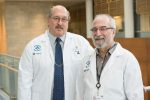
Dr. Mark Freedman, left, and Dr. Harold Atkins. (photo from Ottawa Hospital)

A Canadian research team led by Dr. Mark Freedman and Dr. Harold Atkins at Ottawa Hospital has managed to reverse severe multiple sclerosis (MS) using a patient’s own stem cells.

Freedman is a professor of neurology at the University of Ottawa, a senior scientist at the Ottawa Hospital Research Institute and the director of the Multiple Sclerosis Research Clinic.

“Considering the fact that, when I got into this business, no one even knew what MS was, then, following that, they didn’t know what to do with it, there were certainly no treatments available,” Freedman told the Independent. “So, we had to gain an understanding of some of the processes involved…. We’ve since come up with therapies that have been very effective in dealing with the disease.”

According to Freedman, “MS is a condition that refers to very specific immune system irregularity where, instead of being the defence of the body, the body mistakenly believes that the lining (called myelin), the insulation of the wires of the central nervous system, contains something foreign and proceeds to reject it. This rejection is going to live as long as the body believes the myelin is foreign or that foreign parts exist in it … which means, it’s a lifelong disease, as the immune system will continue to attack the myelin.”

Freedman went on to describe the immune system as an army in our body that is both there to protect us from foreign bodies, like viruses and cell mutations, such as cancer, and is also there to help us heal.

The problem is, in cases where the immune system turns on healthy body cells, Freedman said, “If you can’t identify who the bad guys are in the army – that’s been the attempt in the last 20 to 30 years – then you have to decide whether or not to hold back the entire army. If you do that, you take away protection from the body.

“We’ve always been caught between a rock and a hard place by allowing the army to function, [but] trying to at least curb its function when it comes to attacking the brain. All the therapies that have been developed, more or less, try to handcuff the army a little bit and prevent it from attacking the central nervous system.”

In trying to distinguish the good guys from the bad, researchers have found that each individual’s MS presents unique good guys and bad guys; not only different ones but at different times.

Freedman and his team wanted to find a way to eliminate the entire immune system with a mix of chemotherapy drugs, enabling them to start fresh, using a patient’s stem cells. “What if we flushed out the entire army and built in a brand new one?” he proposed. “This, theoretically, would not have the same mistakes, where it believes the central nervous system myelin is foreign and will attack.

“What we found out was, in fact, that, regardless of the genetic makeup of the individual, the disease ceased once we replaced the entire immune system. The trick was to do what no one else had done.”

The treatment starts by extracting stem cells from the patient and cleaning them, ensuring there is nothing remaining with the same cell mixture that may carry over the disease once the stem cells are replanted.

After killing off the entire immune system, which, Freedman pointed out, “of course has some dangers associated with it,” he said, “technology allows us to do that with success. After that, very quickly, patients settled down. They no longer had MS attacks and, over many years, their body started to heal.”

In a sense, Freedman and the team created a reset button for the immune system.

“Having a competent immune system that no longer attacks the central nervous system and can actually heal, we saw that, in our patients, it wasn’t just a short-term phenomenon,” he said. “We followed them for more than a decade.”

Freedman believes that anyone with MS can benefit from the procedure, with the important cautionary caveat that, as the procedure is complex and has risks, someone with a mild case of MS who can be treated with currently available therapies might not want to have it done.

“For some people, the risk is not necessary,” said Freedman. “But, for other patients who have disease that is quite aggressive and not easily amenable to treatment, these are the patients who should probably go this route.”

Freedman and his team are continually looking for ways to reduce the toxicity of the treatment, while also looking for ways to determine which patients are more likely to recover well. “In the meantime, we continue to use the treatments for patients who we deem early enough to respond to the treatment, at a stage that it will offer them some help,” he said.

“Unfortunately, everyone with MS comes out of the woodwork when you say you’ve got something … people who have been in wheelchairs for 25 years wanting to be signed up, as they feel they have nothing to lose. Well, you have your life. You could lose that. We aren’t ready to jump on such patients, as it could be inappropriate.”

Freedman advised that patients first speak with their neurologist, who hopefully understands their disease and can advise them whether or not this is a treatment they should consider.

“It’s not something that a patient can decide on their own,” said Freedman. “This isn’t a treatment that’s for sale. We want to help people who can be helped. We apply treatments to people who are likely to benefit and who are unlikely to be harmed.”

Rebeca Kuropatwa is a Winnipeg freelance writer.

Format ImagePosted on November 18, 2016November 15, 2016Author Rebeca KuropatwaCategories NationalTags health, multiple sclerosis, stem cells
Cancer research breakthrough

Cancer research breakthrough

Assistant Professor Avi Schroeder of the Technion faculty of chemical engineering and the Technion Integrated Cancer Centre. (photo by Ashernet)

Technion researchers in Haifa have developed a new technology for determining the suitability of specific anticancer drugs to a specific patient – before treatment begins. The study, just published in Nature Communications, was led by Assistant Professor Avi Schroeder of the Technion faculty of chemical engineering and the Technion Integrated Cancer Centre. The researchers packed miniscule quantities of anticancer drugs, as well as placebo packages (which contained no drugs), inside dedicated nanoparticles they developed, which have the ability to flow in the bloodstream to the tumor. Attached synthetic DNA sequences served as barcode readers of the activity in the cancer cells. After 48 hours, a biopsy was taken and the anticancer drugs were found mainly in dead cancer cells – that is, they had killed them – while the placebos were found mainly in live cells – that is, they had not killed the cells. A comparison between various anticancer drugs also found differences in effectiveness.

Format ImagePosted on November 18, 2016November 15, 2016Author Edgar AsherCategories IsraelTags cancer, health, Israel
Getting through menopause

Getting through menopause

Harriet Berkal unveils the secrets of menopause. Berkal began the support group Menopause Matters after experiencing a lack of help when she went through that stage of life. (photo by Manny Berkal-Sarbit)

Medical advocate Harriet Berkal recalls eagerly anticipating going through menopause, imagining it to be a fabulous life stage without having a period every 28 days or so.

“Now, if I could go back and have my periods and not go through this other nonsense, I would say, give me my periods back,” Berkal told the Independent.

Berkal works as an executive financial consultant for Sarbit Advisory Services in Winnipeg and has been struggling with menopause-related issues for the past seven years. She has leaned from experience that there is next to no help out there for dealing with the effects of menopause, and this has led her to take matters into her own hands and create a support group.

“One problem with this issue of menopause is, if you complain to a physician about something like weight gain, a symptom of menopause, they bundle everything you say after that behind that carriage,” said Berkal. “So, my GP missed the fact that I had a thyroid condition, because it was thrown into menopause – the same way that people get thrown into the irritable bowel syndrome (IBS) or the fibromyalgia hole … where anything you complain about is automatically assumed to be related to that, when it might not actually be.”

Menopause symptoms for many women include hot flashes, night sweats, migraine headaches, bladder infections, gastroesophageal reflux disease, lost libido, and painful intercourse. There are also some very rare reactions, such as feeling as though you have bugs crawling all over you, and emotional depression or anxiety, which are also related to hormonal fluctuations.

While typically menopause begins in one’s 50s, it can start in one’s 40s, where the cycles become more erratic, and, in some cases, even earlier, from induced conditions via cancer treatments, for example.

As Berkal searched for solutions, she decided to share the information she gathered with other women undergoing menopause. She approached Winnipeg’s Jewish Child and Family Services (JCFS) about starting up a learning and support group.

The idea was welcomed and the group was called Menopause Matters. Some 20 women meet once a week for five weeks to learn about different approaches to dealing with menopause symptoms and management.

“Most of the primary group are those in the throes of menopause and who aren’t functioning well,” said Berkal. “We had about 18 at last week’s meeting. It was an emotional meeting. There were some people who were extremely – not just frustrated with the system, but at the end of their rope. They don’t know who to turn to, what to do. We provide them, each week, with a different speaker and go through the whole gamut of solutions from traditional to non-traditional.”

Some education is provided by the clinic Vitality Integrated Medicine, which is run by a former pharmacist. Participants are informed about drug interactions, different kinds of tests to help determine actual lacks in their systems, and three different kinds of estrogen. According to Berkal, what often happens is that menopause-affected women consult their doctors and are told they need estrogen, and then they just take whichever one is prescribed.

Recently, Menopause Matters participants had a guest speaker who is an acupuncturist discussing stress control and how it affects hormones, and various acupuncture relaxation techniques that could help. “She brought needles and tried them out on some people,” said Berkal. “People were appreciative of that approach.”

Another scheduled guest speaker at the time of Berkal’s interview with the Independent was gynecologist Dr. Maggie Morris. She was to speak “about mainstream methods for dealing with things like Premarin estrogen application.”

Berkal’s personal experience with conventional medicine in general is that its practitioners are uncooperative from the moment she mentions that other approaches will be presented.

“The pharmacies have these ready-made solutions,” she said. “They aren’t one-size-fits-all solutions in my mind. We’re trying to provide people with a range of different solutions and methods to cope with this. One solution doesn’t do everything. You don’t want to mask symptoms. You want to get to the root. Everyone’s jockeying for position here and everyone has different approaches, so you should try figuring out what system fits you the best.”

Another speaker booked to address the support group is to talk about the importance of exercise, while another will highlight a treatment called Mona Lisa Touch, which involves the use of a laser inserted into the vagina to stimulate vaginal collagen production.

“It rejuvenates the tissue in the vagina without hormones, so you can get increased libido and increased moisture,” explained Berkal. “It helps create a better balance of health in the vagina.

“Many women get bladder infections, because the bladder and the vagina are closely linked. And, if you don’t have the right environment in the vagina, which is decreased because of menopause, you can end up with UTIs [urinary tract infections] … which I had probably 10 of last year before I started treatment.”

When Berkal underwent menopause, she said, “It was a pretty extreme and exacerbated reaction. Mood swings are a very big issue. Last week, there were several women in the group who said, ‘Does anyone feel like they’re going crazy?’ Almost everyone raised their hand.

“Hormones are so powerful. When they are working great, that’s great. When they are depleted, you are left with a shell of a body, susceptible to bone loss, memory fog, you think you’re getting the early stages of Alzheimer’s … but really, you’re not.”

Berkal believes that integrated medicine is the right direction and, in fact, integrated clinics are popping up in many places.

“But, the fact that I couldn’t find a menopause support group was mind-boggling,” said Berkal. “I approached the Mature Women’s Clinic at the Victoria Hospital and asked if they would start a support group. They said ‘no.’

“Why would they not want to help women in need? Yet, when the pharmaceutical companies sponsor a forum for one of their gynecologists to speak, they get thousands of women to come down who are in dire need of help … but they are only giving one approach.”

Shelley Levit, a social worker at JCFS, was very receptive to the integrated approach Berkal described, and the concept of letting women choose for themselves what they want to pursue.

Berkal hosted a Menopause Matters free, five-week support group from Sept. 15 to Oct. 13, via JCFS.

“We call it ‘the Sisterhood of Sharing,’” said Berkal. “Sharing is deeply required in order to feel camaraderie and kinship with these other women who really have no one else to talk to. It wasn’t intended to be targeted at Jewish women specifically. It’s like cancer – not specific to any ethnicity.”

Berkal wants to see if the group would be receptive to having partners and spouses join, so they can be present and hear from other women.

Rebeca Kuropatwa is a Winnipeg freelance writer.
Format ImagePosted on November 11, 2016November 11, 2016Author Rebeca KuropatwaCategories NationalTags health, menopause, Winnipeg

Posts pagination

Previous page Page 1 … Page 20 Page 21 Page 22 … Page 24 Next page
Proudly powered by WordPress