Skip to content
  • Home
  • Subscribe / donate
  • Events calendar
  • News
    • Local
    • National
    • Israel
    • World
    • עניין בחדשות
      A roundup of news in Canada and further afield, in Hebrew.
  • Opinion
    • From the JI
    • Op-Ed
  • Arts & Culture
    • Performing Arts
    • Music
    • Books
    • Visual Arts
    • TV & Film
  • Life
    • Celebrating the Holidays
    • Travel
    • The Daily Snooze
      Cartoons by Jacob Samuel
    • Mystery Photo
      Help the JI and JMABC fill in the gaps in our archives.
  • Community Links
    • Organizations, Etc.
    • Other News Sources & Blogs
    • Business Directory
  • FAQ
  • JI Chai Celebration
  • JI@88! video

Recent Posts

  • Sharing her testimony
  • Fall fight takes leap forward
  • The balancing of rights
  • Multiple Tony n’ Tina roles
  • Stories of trauma, resilience
  • Celebrate our culture
  • A responsibility to help
  • What wellness means at JCC
  • Together in mourning
  • Downhill after Trump?
  • Birth control even easier now
  • Eco-Sisters mentorship
  • Unexpected discoveries
  • Study’s results hopeful
  • Bad behaviour affects us all
  • Thankful for the police
  • UBC needs a wake-up call
  • Recalling a shining star
  • Sleep well …
  • BGU fosters startup culture
  • Photography and glass
  • Is it the end of an era?
  • Taking life a step at a time
  • Nakba exhibit biased
  • Film festival starts next week
  • Musical with heart and soul
  • Rabbi marks 13 years
  • Keeper of VTT’s history
  • Gala fêtes Infeld’s 20th
  • Building JWest together
  • Challah Mom comes to Vancouver
  • What to do about media bias
  • Education offers hope
  • Remembrance – a moral act
  • What makes us human
  • המלחמות של נתניהו וטראמפ

Archives

Follow @JewishIndie
image - The CJN - Visit Us Banner - 300x600 - 101625

Tag: health

Words have power to heal

Words have power to heal

Mark Waldman has been working with neuroscientist Dr. Andrew Newberg for almost two decades, including on their latest book, Words Can Change Your Brain. (photo from Mark Waldman)

According to Dr. Andrew Newberg, neuroscientist at Thomas Jefferson University, and Mark Robert Waldman, communications expert, in their book Words Can Change Your Brain: 12 Conversation Strategies to Build Trust, Resolve Conflict and Increase Intimacy, one “single word has the power to influence the expression of genes that regulate physical and emotional stress.”

Waldman and Newberg have been collaborating for almost two decades, and have written 14 books about relationships and neuroscience. They have also published many neuroscientific papers and journal articles exploring how different forms of spiritual practice and positive thinking affect the brain.

“This particular book was my idea, because I’d been working on a form of dialogue practice going back to about 1993,” said Waldman of Words Can Change Your Brain.

“A very well-known ancient Jewish meditation is to gaze at a candle until you feel that you and the candle become one … so you and the candle become the sense of united fire or energy,” he said. “You can do the same thing by focusing in on your breathing. You immerse yourself in the cool air coming into your nose, the warm air exhaling, feeling the rising and falling of your chest. When your mind wanders, you simply come back to your breathing as a training mechanism for learning how to stay in the present moment.”

All of these mindfulness practices, said Waldman, have been well documented as having many benefits – from helping lower anxiety, physical stress and emotional stress, to equipping people with better control of their emotions and raising their self-awareness and social awareness.

Waldman suggested starting by bringing mindfulness into daily activities, like eating.

“If you were to slow down and pick up a small piece of food, and hold it on your tongue and savor that one piece of food, you would discover all kinds of different flavors and sensations that we’re not normally conscious of,” he explained. “If you apply mindfulness to eating, you end up eating less and enjoying your food more. This has become an activity that’s been integrated into weight-loss programs and programs to help people interrupt eating disorders like bulimia.”

In 1993, Waldman and Newberg began asking themselves questions like how often are we aware of the words we speak, of the feelings behind those words, of how those words affect the person we are speaking to; how often do we take the time to really savor and pay attention to what the other person is saying, their facial expression, their tone of voice?

They started to develop what they dubbed “dialogical meditation,” which eventually morphed into “compassionate communication.”
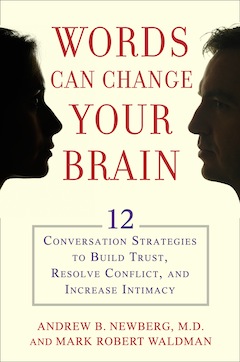
book cover - Words Can Change Your BrainAfter more than 20 years of research into what speaking mindfully means, they began working on Words Can Change Your Brain, which includes all their new research findings.

“Some of what we discovered, based on many different types of neuroscientific studies, is that the slower you speak, the more the listener’s comprehension’s increases,” said Waldman. “Their body also relaxes when you speak more slowly. And, with less physical tension, there’s more ability to be socially connected and engaged with the other individual.

“As our research unfolded, we recognized a very important neurological fact – that, consciously, we can only be aware of about seven to 10 words at a time. So, we created what we called a ‘communication game.’ We have people sit down and face each other and we ask them to speak very slowly and briefly, just one sentence. While they are doing so, we want them to experience what those words actually feel like. Then, they pause after speaking one sentence briefly. They pay close attention to the other person’s face and tone of voice while they speak … and you go back and forth like this.

“What we discovered from the very first time we did this experiment in 1993 is that 25% of those in the room, after doing this slow speaking and listening exercise, had tears rolling down their faces.”

Participants in this process were paired with people they did not know and they were not told what to say in their one sentence. The researchers found that, even when they conducted this experiment in a room with 1,500 people, within four to seven minutes, many people found themselves experiencing profound, intimate dialogue.

“They had to let the other person listen deeply to that one sentence and respond,” said Waldman. “So, we were keeping people in the present moment, grounded, not just in the thoughts they had that we are normally trying to turn into words, but to pay attention to the other person’s facial expression and tone of voice.”

Waldman went on to explain that, when it comes to communication, of the seven different elements of effective communication, words are Number 7. Number 1 is facial expression, followed by tone of voice, body language and the emotional or mental state you are in.

“So, the more relaxed you are, the more you’re actually in the present moment, the more the other person can understand what you’re saying, be affected by what you’re saying,” said Waldman.

The research found that, when participants closed their eyes and recalled a pleasant memory, visualized someone they greatly love or an event that brought them great satisfaction, 90% of them had a half-smile on their faces.

Waldman described this as a “Mona Lisa smile that, when other people see it, it triggers the trust centres in the person’s brain. You neurologically trust someone who has this Mona Lisa-like smile.”

Waldman believes that this research lends itself well to teaching managers, salespeople, teachers and those just entering the dating world. “What would happen if you slowed your speaking down and listened more closely, if you maintained that small half-smile on your face?” he asked. “As you speak, you can generate better intimacy and stimulate more collaboration and cooperation.”

Words Can Change Your Brain also documents that one single negative word triggers a dozen different stress neuro-chemicals in the brain, while spoken positive words have very little effect on the brain.

“So, the brain is designed to encode into memory every negative thought, feeling and event that we have, yet it doesn’t really do that with positive experiences,” explained Waldman. “However, if you have a brain that is filled mostly with negative memories, you’ll become chronically anxious and, eventually, chronically depressed.

“When we bring in the research of Barbara Frederickson and learn that, in relationships and in business, if you deliberately increase what she calls, ‘your positivity ratio,’ to five-to-one or to seven-to-one, for every negative thought or feeling you have … if you deliberately generate another five, six or seven positive thoughts or images … that’s how you begin to build a brain filled also with positive memories. You’re creating a form of neurological optimism. And, it turns out, these types of positive mindfulness exercises are some of the best ways to eliminate anxiety [and] depression and build more self-love and self-compassion. If your positivity ratio falls below three-to-one, you can predict very accurately that a relationship is heading toward divorce or that a company is heading toward bankruptcy.”

As Waldman presented their discoveries to the business world, he was reminded that, in this world, almost no one will give you more than 10 to 60 seconds. Most people cannot do a five-minute meditation, he said.

But, Waldman found that, if people download the mindfulness talk on their phone or computer and are willing to take 10 seconds to do one mindful yawn when they hear the alarm ring – simply notice how a yawn feels – there can be benefits.

“We have over 43 documented studies that show that yawning is one of the fastest ways to slow down an overly stressed brain,” said Waldman. “In fact, a dozen yawns or so can temporarily alleviate symptoms of Parkinson’s, epilepsy, migraines, what have you. So, yawning is the fastest way to alleviate mental stress.

“We ask a person, once an hour, to take 10 seconds to do one mindful yawn…. Take 20 seconds to do one mindful stretch, recall one pleasant memory…. Think about one single word, a value word, that you want to anchor yourself in for the next hour, something like ‘confidence,’ ‘focus’ or ‘calmness.’”

Thinking of Judaism’s role in all of this, Waldman said, “I think, for me, Judaism gave me the framework to question, challenge and think deeply about everything, which is just one of the most thrilling spiritual states I find for myself. I think this is how Judaism has influenced me in the past and continues to guide me in the present.”

Rebeca Kuropatwa is a Winnipeg freelance writer.

Format ImagePosted on September 30, 2016September 28, 2016Author Rebeca KuropatwaCategories BooksTags health, mindfulness, neuroscience

Cancer makes me angry

Cancer. Now I’ve said it. Just saying it tightens up my gut. It makes me want to swallow. I look around to see if anyone can sense the anger, the blind rage that surges through me. I find myself breathing faster. The fight-or-flight chemicals prompted by fear are racing through my body. Mostly, I try not to think about it because of the instant effect it always has upon me. I don’t know about others, but I hate it. Just the thought of it makes me angry.

To me, the idea of cancer is like a living presence, dressed up in the image of death, stalking through our lives, the destroyer of health and happiness. It looks this way and that, it looks for those at whom it will swing its lethal scythe. I know it’s really like spores in the wind, poisons in the soil, air and water, or genetic predispositions hiding in our DNA, waiting for the merest provocation to flower like a deadly bloom of nightshade. I know it is like an evil charlatan that smilingly gives way to our defensive measures, only to strike back with deadly force when we have let down our guard. I know it has so many disguises and tricks that we have to learn the new ones every day that we are alive. It takes some of our best minds to keep us relevant in that battle.

I know about all the new promises, new hopes yet to be realized. We learn something new every day. But, so does cancer, reacting to counter every twist and turn we make. We are not there yet in spite of all the public promises that are made. It is not politically correct to say it, but the same promises were being made during the time cancer was a living presence in my home. So I retain the hate that I learned.

When it struck in our home, we reacted with shock. We marshaled our resources and radically changed our lifestyle. My late spouse gave up her stressful and demanding work. She was a simultaneous translation interpreter. She was the manager and creator of her own firm, one that was preeminent in Canada, but she delegated her work and ceased professional activity. She underwent a mastectomy, radiation and chemo. We changed our diet toward the completely macrobiotic and a shelf full of recommended natural products. The result – in six months all traces of the disease were eradicated! We declared victory. My spouse became a poster child, a survivor, to rally the spirits of all victims of the disease. After a year, we relaxed our guard and returned to our previous way of life.

Four or five years later, two cancer cells were discovered during the regular screening that had been maintained. The number of cells quickly multiplied and, after a time, a regular regime of chemotherapy was reintroduced, accompanied by multiple discomforts. This continued for years. No material effect on the disease’s progress was ever noted. Eventually, several metastases were discovered, until the cancer was generalized. None of the chemotherapy offered appeared to have had the least effect.

My role changed over time, as I became a full-time caregiver. Indeed, after years of feeling like a helpless bystander, there was great consolation in, at last, being able to play a useful role. I had the feeling I was witnessing hand-to-hand combat with the cancer, a living, breathing adversary. I hated the losses we were sustaining on a daily basis. The success of radiation sessions in fighting off the external manifestations of the cancer felt like victories.

At one point, the cancer prevented the kidneys from working. The doctors asked if we wanted them to intervene. Although my late wife declined, because she was suffering the effects of uremia, which impairs judgment, my resounding yes won the day. The intervention was successful. We went off on a two-week holiday in Italy. I treasure to this day the sight of her dancing to her own music on a sunny balcony in Tuscany.

The medical resort to radiation to eliminate ugly lesions that appeared, time after time, on various areas of the body, seemed like a blessing. But, the ultimate effect of these sessions was to destroy the ability of the body to produce the red and white blood cells we depend on for life. I did not understand that these were a signal that the medical profession had given up any hope of a remission, because the doctors continually talked to us of impending victory. I did not question it, full of continuing hope as I was. In effect, they were offering palliative care, while continuing to test drug combinations on my late wife.

Eventually, these blood cells could only be provided for her by external means. We learned, after a time, that these infusions of blood cells, enormously costly, were the only way to keep my late wife alive. I always assumed these would continue, but I marveled at the generosity of the system on which her life depended. The various chemotherapy combinations, with all their accompanying distress, continued to be presented by doctors as the answer and the cure. She followed every prescription faithfully in spite of the discomfort they engendered.

Suddenly, we were informed by the hospital administration that my late spouse was to be assigned to hospice care in our home. Calls to the doctors went unanswered. Any assistance I could provide was replaced by outside help. We were told that the life-giving infusions were being withdrawn. She expired after three weeks, 10 years after first contracting the disease.

I do not know if the doctors ever confided to my late wife the real state of the struggle in which we were engaged. If they did, she never shared the details with me. We never ever spoke of her impending demise.

I remain a survivor of the experience, full of anger at the caregivers, anger at my helplessness and ignorance, and full of rage against the inexorability, the implacability of the disease. Its overwhelming power in the face of our defences, even after once having been initially repulsed, gives me little faith in the happy claims of any early relief in our struggles against the disease.

I appreciate that there have been some small victories, that some conditions have become treatable instead of fatal. I am grateful for that. I appreciate that we must encourage those who are facing the challenge and the threat. I know that they, and we, have to continue fighting it like soldiers on the frontline, despite our many losses. Cancer, I hate it!

Max Roytenberg is a Vancouver-based poet, writer and blogger.

Posted on September 23, 2016September 21, 2016Author Max RoytenbergCategories Op-EdTags cancer, health, palliative care
Yellow dates for New Year’s

Yellow dates for New Year’s

To make biblical date honey, Middle Eastern Jews boil and press dates that range in color from yellow to brown. (photo by Barry A. Kaplan)

The Torah describes Israel as eretz zvat chalav u’dvash, the land flowing with milk and honey, although the honey was more than likely date honey, since beekeeping is not mentioned in the Bible.

The word honey in Hebrew, dvash, has the same numerical value as the words Av Harachamim, Father of Mercy. We hope that G-d will be merciful on Rosh Hashanah as He judges us for our year’s deeds.

To make silan, or biblical date honey, Middle Eastern Jews boil and press dates that range in color from yellow to brown. Apples can be dipped into the date honey in the hope for a sweet new year. In the markets in Israel during this season, one finds strings of these dates.

In the 2011 article “Cooking class, it’s a date, honey,” cookbook author Faye Levy writes: “For many Jews, apples are the Rosh Hashanah fruit par excellence. For me, fresh dates are the fruit that herald the coming of the New Year. As soon as I see the bright yellow dates at the market, I begin to plan my menus.

“I’ve heard people say they’re not fond of fresh yellow dates. I have learned to enjoy them at their khalal [initial] stage, when they are crunchy and less sweet, but I prefer to wait until they become honey-brown, [the] stage called rutab.”

There are several kinds of dates grown in Israel, including Medjool, which Levy notes “are delicious and easier to find than perfectly ripened yellow dates.”

But, regardless of type, dates are a traditional Rosh Hashanah food, and form part of the Sephardi seder, which dates to the Babylonian Talmud.

“An elaborate Maghrebi [the region made up of Morocco, Algeria, Tunisia and Libya] specialty calls for nut-stuffed dates that are used to stuff a chicken or a large fish,” writes Levy. For Shabbat, she explains, dates might be added to dafina, which is a Sephardi meat stew cooked overnight to eat on Saturday lunch, or Moroccan hamin, another slow-cooked overnight stew for Saturday eating. The dates “contribute a subtle sweetness that mellows the flavor of the sauce. A dish from Baghdad from the Middle Ages calls for stewing lamb with dates and sweet spices.”

Silan, which Levy notes was brought to Israel by Iraqi Jews, is also known as date molasses or date syrup.

Varda Shilo, author of Kurdistani Cooking (in Hebrew), describes how to make it. Dried dates are simmered in water to porridge consistency, then the mixture is spooned into a cloth bag, moistened with more water and squeezed to remove the juice. This juice is simmered until thickened and is kept in jars.

Shilo explains that breakfast is the meal at which date honey is most often enjoyed in the Middle East, mixed with tahini (sesame seed paste) and served with bread.

Kinneret Farm silan makers suggest other ways of using date honey, such as adding it to stir-fried vegetables, as a sweetener for beverages, in sweet-potato pancakes, with an added dash of cinnamon.

“Dates are best known for their uses in sweets,” writes Shilo. “They are a favorite filling for the rich Middle Eastern cookies called ma’amoul and for rolled cookies resembling rugelach that are popular around the region.”

“In Persia,” write Reyna Simnegar, author of Persian Food from the Non-Persian Bride, “walnut-stuffed dates are a Rosh Hashanah treat. The stuffed dates are drizzled with a little syrup and sprinkled with cinnamon.

“Another popular way to serve dates is as a snack with tea.”

“Cooks in Egypt use the firm, fresh yellow dates to make jam,” says Levana Zamir in Cooking from the Nile’s Land (in Hebrew). “They also use them to make stuffed dates. First, they remove the dates’ very thin peel with a sharp knife and cook the dates in water until they are soft. Next, they pit the dates without cutting them in half.

Instead, they push the pit out with a hairpin so that each date can be stuffed with a blanched, peeled almond. Then they make a clove-and-lemon-flavored syrup from the dates’ cooking liquid. One by one, the stuffed dates are carefully added to the syrup, simmered and then cooled. The sweets are served with Turkish coffee and a glass of cold water. Making them is quite an undertaking but … these stuffed fresh dates are a delicacy fit for kings.”

Some Moroccans dip apples in honey and serve cooked quince, which is an apple-like fruit, symbolizing a sweet future. Other Moroccans dip dates in sesame and anise seeds and powdered sugar in addition to dipping apples in honey.

In her book The Foods of Israel Today, Joan Nathan writes about having lunch at Jerusalem restaurant Eucalyptus, when owner/chef Moshe Basson put a bowl of tahini “on the table and swirled in a date syrup called silan or halek, which he explained was a biblical ‘honey,’ one of the seven foods in the land of Canaan cited in the Book of Deuteronomy. Today, visitors can see a 2,000-year-old date-honey press, similar to an ancient wine press but smaller, near the Dead Sea at Qumran, the sites where, in 1947, a Bedouin youth found the Dead Sea Scrolls hidden in earthen jars.”

Nathan writes further that Ben-Zion Israeli, one of the founders of Kibbutz Kinneret, dressed as an Arab and, in 1933, went to Iraq and smuggled 900 date saplings back to Palestine. Over the years, with many trips, he brought back more than 7,000 saplings from Iraq, Iran and Kurdistan; about half took root. Shmuel Stoller later brought saplings from Egypt and Saudi Arabia. In the 1970s, Medjool and Deglet Noor varieties were introduced from the Coachella Valley in California.

If you are wondering about dates and your health, Judy Siegel-Itzkovich writes in the 2013 Jerusalem Post article “Local dates are best variety to fight disease”: “All nine varieties of dates grown in Israel and found on any supermarket shelf have characteristics that make them better than other varieties at helping protect those who consume them against cardiovascular diseases.

“This has just been demonstrated by Prof. Michael Aviram and colleagues from Haifa’s Rambam Medical Centre and Technion-Israel Institute of Technology. The research was published in the prestigious Journal of Agriculture Food Chemistry.”

The research team found that the most effective varieties for health are yellow, Barhi, Deri, Medjool and Halawi dates, and that, despite there being about 20 different types of dates growing around the world, those from the Jordan Valley and the Arava are the best.

Aviram warned Siegel-Itzkovich, however, that silan won’t help much. “As silan is a sweet concentrate that does not contain fibres, it is far from the real thing,” he said.

The article also noted, “A study the researchers published in the same journal four years ago showed that eating three dates a day does not raise blood sugar levels in healthy people, but it does reduce blood triglycerides and even ‘improves the quality’ of blood cholesterol by reducing its oxidation. These effects reduce the risk of heart disease, stroke and other vascular diseases, they said.”

Nonetheless, Aviram advised diabetics against eating a lot of dates, as they are high in sugar.

photo - Antioxidants from the group of polyphenols found in pomegranates, red wine and olive oil help remove plaque from inside the arteries
Antioxidants from the group of polyphenols found in pomegranates, red wine and olive oil help remove plaque from inside the arteries. (photo by Barry A. Kaplan)

In addition to the health benefits of dates, the Post article also highlighted 2009 research Aviram had led, showing that “antioxidants from the group of polyphenols found in pomegranates, red wine and olive oil help remove plaque from inside the arteries. In the new research, the team found that dates can bring about the slowing and even regression of atherosclerosis (accumulation of fatty plaque) in the coronary arteries, and that eating one of the three specific date varieties is most effective.

“The material in dates has the clear ability to speed up the removal of excess cholesterol from endothelial cells inside blood vessels, the team said.”

While dates have been grown for thousands of years and their health benefits have been cited since ancient times, it is only in relatively recent history that science is confirming many of the beliefs.

High in fibre and also containing many minerals, such as potassium, zinc, magnesium and calcium, Aviram and his team, writes Siegel-Itzkovich, “recommend following a Mediterranean diet – with its variety of vegetables and fruit (including dates), fish, whole grains and olive oil – rather than eating just one or two ingredients, so that a whole range of oxidative factors that cause atherosclerosis can be neutralized.”

Sybil Kaplan is a journalist, foreign correspondent, lecturer, food writer and book reviewer who lives in Jerusalem. She also does the restaurant features for janglo.net and leads walks in English in Jerusalem’s market.

Format ImagePosted on September 23, 2016September 21, 2016Author Sybil KaplanCategories Celebrating the HolidaysTags dates, health, pomegranates, Rosh Hashanah, Sephardi
Living with prostate cancer

Living with prostate cancer

Sima Elizabeth Shefrin’s new book, Embroidered Cancer Comic, will be launched on Sept. 15 at the Roundhouse.

Cancer is a word often whispered. Sex is certainly not spoken of in polite company. Yet Sima Elizabeth Shefrin tackles both topics in her new book, Embroidered Cancer Comic (Singing Dragon, 2016), which receives its Vancouver launch on Sept. 15 at Roundhouse Community Centre.

The comic begins with Shefrin’s husband, Bob Bossin, coming home from the doctor with a diagnosis of high cholesterol. “Oh, he also said my PSA was up,” Bossin tells Shefrin. After some understandable delays, Bossin gets the needed biopsy. While the couple are enjoying a funny movie together, the call from the doctor comes: prostate cancer.

book cover - Sima Elizabeth Shefrin’s new book, Embroidered Cancer ComicIn a mere 30 pages, with text and illustrations by Shefrin, Embroidered Cancer Comic shows Bossin’s uncertainty over treatment options, his efforts to learn more about the cancer, the emotional stress on him and Shefrin, as well as the effects of the cancer and its treatments on the couple’s sex life.

“The strain of the prostate cancer journey on relationships cannot be overstated, yet patients and their partners are left to figure this out for themselves,” writes Dr. Peter Black of Vancouver Prostate Centre – Bossin’s surgeon – in a brief commentary at the end of the comic, where both Shefrin and Bossin also share more of their story.

Helping others was one of Shefrin’s goals.

“I’m hoping the book will help couples in this situation be able to communicate,” she told the Independent.

Already, it’s had an impact.

“I thought it had potential for being a major project, especially after I got the publishing contract,” said Shefrin. “But then, of course, you don’t leave that in the hands of the gods. Singing Dragon has been very good for getting publicity in Britain, in both the comic and the medical worlds. In Canada, I’ve done most of it myself.

“I believe that this book can do real good in the world,” she said, sharing that a man in Quebec had written her “about what a difference it had made to both him and his wife.”

She said, “That’s what I’m hoping to do. I believe in the comic, so I’m willing to do whatever pushing I need to, to get it out into the world.”

Shefrin is a noted fabric artist, her website name – stitchingforsocialchange.ca – perfectly describing the nature of her work.

“I have often used my art to work through life events and to create awareness and conversation about taboo or contentious subjects,” she writes at the end of the comic book. “But nothing has made me feel as vulnerable as the creation of this comic. At the same time, it has helped me realize that, when you’re there, cancer becomes a part of daily life, like buying groceries or washing dishes.”

It took Shefrin three years to sew the embroidered line drawings, which were then photographed for the book. When asked if she ever thought of creating the images in a more expedient way, Shefrin said, “Fabric is my medium. The books I illustrated are mostly paper collage, but even when I work in paper, I think like a fabric artist. I did drawings first and then embroidered them, and I always liked the embroidered result better than the original drawing.”

The book “started out as a piece of art,” she said. “I thought I might self-publish or maybe simply photocopy a kind of catalogue for a show. But, one day, I came across the Graphic Medicine site and realized that there was a whole world out there of people making comics about medical issues. I’d had no idea.

“So, I started looking at the site regularly as well as at their Facebook page. Occasionally, there would be postings for people looking for comic strips on this and that and, if it was vaguely relevant, I’d send out my work. I do this a lot and often it comes to nothing. But, a couple of months later, I got an email from Jessica Kingsley saying they might be interested in publishing my work. It took me about an hour to figure out who they were and how they found me. They published it through their imprint, Singing Dragon. After that, the focus shifted and became about creating the comic, a story with a beginning, middle and end, instead of an art series. Now that it’s in print, I’m back to creating the quilts for the art series.”

The book has received many very positive reviews, including one in the U.K. medical journal The Lancet – and, according to the book’s Facebook page, it earned “a lovely personal note from Judi Dench,” who is mentioned in the comic. Specifically, when Shefrin asks her husband, “Who really excites you?” his answer is Dench.

The most touching review of the book comes from Bossin. “And because you live with cancer, whoever you live with lives with it, too, as Elizabeth’s comic shows so tenderly,” he writes. “For me, there is no one I would rather live with cancer with. No one.”

Those curious about what Dame Judi said and other stories behind the comic’s creation can ask Shefrin and Bossin at the Sept. 15 launch, which starts at 7 p.m. The quilted original illustrations are on display at the Roundhouse’s Window Gallery until Oct. 30.

Format ImagePosted on September 9, 2016September 7, 2016Author Cynthia RamsayCategories BooksTags Bossin, comics, health, prostate cancer, relationships, Shefrin

JACS Vancouver launch

When Paul Steinberg first read The Big Book, the “bible” of Alcoholics Anonymous, written by founder Bill Wilson, he scribbled disagreements in the margins. His sponsor later saw them and took him to task. “Do you really think you know more than Bill Wilson, who wrote a book that has saved the lives of millions of people?” he said. “Maybe it’s time for you to start looking for things you can connect with in the book, not things you disagree with!”

photo in Jewish Independent - Beit T’Shuvah Rabbi Paul Steinberg helps launch JACS Vancouver on Sept. 8
Beit T’Shuvah Rabbi Paul Steinberg helps launch JACS Vancouver on Sept. 8. (photo from beittshuvah.org)

Steinberg took the advice to heart, and a journey began. He is now the rabbi of L.A.-based Beit T’Shuvah, a Jewish centre for addiction recovery that integrates the wisdom of the 12-step program with Jewish spirituality, culture and community. He will be speaking at Congregation Beth Israel, together with Rebecca Denham of Jewish Addiction Community Services Vancouver, on Sept. 8, 7:30 p.m. The event, which officially launches JACS Vancouver, is called Opening the Door: A Conversation about Addiction in the Jewish Community.

Steinberg first came to Beit T’Shuvah, which this year celebrates its 30th anniversary, as a rabbi, a Jewish educator and an alcoholic looking for healing. After living there for five months in recovery, he began doing part-time spiritual counseling as part of the centre’s work therapy program. Eventually, he took on that role full time, then became the pulpit rabbi of the centre’s synagogue, a congregation with hundreds of attendees on Shabbat.

“The centre is unusual in many ways, one of which is in having a synagogue with a fully functioning congregational life on site,” Steinberg told the Independent. “The congregation is made up mostly of residents of the centre, alumni and their family members. Being so close to Hollywood, we have an amazing roster of artists and musicians who come to shul here – the music rocks.”

Steinberg’s rebirth was dependent on his discovering a deeper Judaism, and that is something he is passionate about sharing with other Jews in recovery. “We believe, as evidenced by the success of the 12-step program, that the spiritual is essential in recovery,” he said.

In 2014, Steinberg published the book Recovery, the 12 Steps and Jewish Spirituality: Reclaiming Hope, Courage and Wholeness, about his journey and the insights it afforded. He explained that, for many Jews, the 12 steps are uncomfortably associated with Christian spirituality, despite the open-ended approach to God in the method. “Some Jews recoil from AA for that reason. We need to give Jews access to the 12-step structure in Jewish terms,” he said.

“The addict’s world is very narrow, obsessive, self-centred. Opening up and surrendering to a greater power – whether that’s thought of as God, the universe, the Dao, the collective spirit – breaks that entrapment and allows change. It is the essence of a Jewish approach to recovery. On that ground, the disciplines of Jewish life – community, service, study, prayer – can do their work.”

Discomfort with the spirituality of AA is far from the only obstacle Jews struggling with addiction face. Steinberg said there is tremendous stigma around addiction in the Jewish community, especially around drugs and alcohol. As Rabbi Abraham Twerski discusses in the foreword to Steinberg’s book, AA groups were refused the use of synagogues for many years, reinforcing their habit of locating in church basements.

“The old saying was a shikker is a goy (a drunkard is a gentile),” said Steinberg. “Jews are not supposed to be alcoholics. The reality is that there are many Jews struggling with substance abuse, even very outwardly successful Jews. There are doctors, lawyers, businessmen and even rabbis. I was outwardly a success, but I was living a divided life. My life had to completely fall apart before I would deal with my alcoholism.”

Many struggling Jews do not know where to turn when they suffer from addiction. “It is amazing how few Jews will turn to their rabbi or their community for help,” said Steinberg. “The synagogue is all too often not seen as a place where you can air your dirty laundry, where you can be vulnerable.”

The desire to provide Jews with a place to find healing from addiction as Jews is what drove the creation of JACS Vancouver. “It is imperative to provide a safe place for Jews to get help, and to provide them with the Jewish tools they need for that healing to be successful,” said Denham.

“Addiction is an epidemic in North America,” said Steinberg. “It’s not just alcohol and street drugs; it’s also gambling, sex addiction, workaholism, pornography, opiate addiction. We need to face the brokenness in ourselves and our community without stigmatizing it, so that the healing can begin.”

To RSVP for the Sept. 8 event, email [email protected].

Matthew Gindin is a Vancouver freelance writer and journalist. He blogs on spirituality and social justice at seeking her voice (hashkata.com) and has been published in the Forward, Tikkun, Elephant Journal and elsewhere.

Posted on August 26, 2016August 25, 2016Author Matthew GindinCategories LocalTags 12 Steps, addiction, Beit T'Shuvah, health, JACS
New CEO for seniors

New CEO for seniors

David Keselman (photo from the Louis Brier)

After an extensive search, the Dr. Irving and Phyliss Snider Campus for Jewish Seniors, comprised of the Louis Brier Home and Hospital and the Weinberg Residence, have appointed David Keselman chief executive officer.

“David is the ideal candidate at this time for the organization,” said Louis Brier board chair Arnold Abramson in a press release. “David’s experience will benefit Louis Brier directly in our commitment to providing quality patient care for residents. We feel that his innovative approach, enthusiasm and leadership style will enable Louis Brier as it moves forward with both our clinical operations and our upcoming site redevelopment.”

Sandra Bressler, chair of the Weinberg Residence, echoed Abramson’s endorsement.

“I plan first to get to know and understand the environment, both clinical, social and political in the organization and in B.C. in general,” Keselman told the Independent. “The relationships with stakeholders (both internal and external) are important, as well as familiarizing myself with the Jewish community and finding opportunities for integration as appropriate.”

Born in Lvov, Keselman was raised north of Haifa, in Kiriyat Yam, and served three years in the Israel Defence Forces. At 21, he followed his high school sweetheart to Toronto and began working at Baycrest, Toronto’s major Jewish home for the elderly. He has a doctorate of health administration from Central Michigan University, and a master’s of nursing and a bachelor of science in nursing from the University of Toronto, and he worked in acute care for many years.

In Toronto, the couple had two children, now aged 20 and 17, both of whom attended Jewish day school. They live with their mother but are following in their father’s footsteps – his son is enrolled in the nursing program at Ryerson University and his daughter plans to become a nurse as well.

Coming with his partner to Vancouver from Yellowknife – where he was vice-president of patient services at Stanton Territorial Health Authority – Keselman is looking forward to getting back to a place with a Jewish community. While he admits that he does not connect with the synagogue experience, he feels connected to many aspects of the Jewish community.

“As I get older,” he said, “the affinity and need to get closer to my roots becomes more important. Seeing that I grew up in Israel, keeping our community strong and active is imperative on many levels, not only to ensure that our tradition and culture continue to exist, but also because a strong community here ensures the strength of Israel and its ability to cope with the many adversities it is facing.”

Keselman comes to the campus in the 70th anniversary year of the Louis Brier.

“I am excited about the renewal plans,” he said, “and look forward to a future design that integrates culture, tradition, values with evidence-based and best practices to create a dynamic environment that provides a holistic continuum for patients/residents of the Louis Brier and their families, with an aim of creating a centre of excellence in geriatric care anchored in the philosophy of client- and family-centred care.”

Keselman has a five-year history of involvement with Accreditation Canada, the organization that certifies health-care facilities, where he has gained considerable knowledge in the area of quality improvement and risk reduction. He has held a wide range of executive roles in Ontario and the Northwest Territories, and is an associate instructor at both the Ryerson University School of Nursing and Athabasca University.

“I believe my experiences to date culminate in a progressive, open-minded, transformational leadership style that will support the team, stakeholders and, of course, the residents of the Louis Brier in achieving quality outcomes and satisfaction from the environment and the services delivered in the organization,” he said.

Sounding like a West Coaster already, Keselman said he is looking forward to a very different lifestyle in Vancouver than he had in Yellowknife. Jewish community is a big bonus, he said, but so is the increased opportunity for fitness – Keselman has taught aqua fitness and spin classes for almost 20 years. According to Abramson, Keselman is expected to be on-site at the Louis Brier on Sept. 14.

Michelle Dodek is a freelance writer living in Vancouver.

Format ImagePosted on August 26, 2016August 25, 2016Author Michelle DodekCategories LocalTags health, Keselman, Louis Brier, seniors, Weinberg Residence

Benefit of weekly fast

Recent studies are again pointing to the potential of weekly intermittent fasting, where one greatly reduces or eliminates calories on a set number of weekdays, to fight disease and prolong life. Jewish tradition has long advocated weekly intermittent fasting, though the practice has become rare today. Maybe it’s time to bring it back.

“Periodic fasting shows the most promise in getting rid of bad cells and making good ones for regeneration and can be applied to all kinds of diseases,” Valter Longo, director of the Longevity Institute at University of Southern California, told the Washington Post.

Variations of periodic fasting have become popular, such as the 5:2 diet, which advocates five days of normal eating and two days of restricting calories by 75%. Studies suggest that such fasting may be beneficial for treating autoimmune diseases, asthma, rheumatoid arthritis, metabolic syndrome, and even cancer.

The 5:2 diet is associated with Mark Mosley, a BBC journalist who popularized it in the United Kingdom. In the United States, a more restrictive version of the diet, known as the “every other day diet,” which advocates restricting normal calorie intake by 75% every other day, has been studied and championed by Dr. Krista Varady at the University of Illinois at Chicago. Though she cautions that the 5:2 diet will only work if one does not binge on the other five days, an effect she says is avoided more easily on the “every other day” fast for reasons still being studied.

All of this reminds me of the ancient Jewish practice known as the Behab fast. Behab is formed of the Hebrew letters bet-hey-bet, numerically two-five-two, which refers to the second day of the week (Monday), the fifth (Thursday) and again the second (Monday). Without the repetition of the Mondays, the name of the diet is basically the 2:5 diet (5:2 read from left to right, ahem), though there is no known connection between Moses and Mosley.

Despite there being other fast days during the Jewish year, growing up, I had never heard of any fasts outside of the dreaded Yom Kippur deprivation, and my family’s idea of intermittent fasting was restricting oneself to little noshes between fresses. On family vacations, the favorite topic around the restaurant table was where we were going to go for the next meal. If the Behab is correctly thought of as an Ashkenazi custom, my family had long forgotten it.

For centuries, the Behab fast was used in the Ashkenazi world for repenting for inadvertent sins throughout the week – “advertent” sins would get their own specific fasts. The choice of days corresponds to the days the Torah is read, not counting Shabbat, of course, when fasting is not done. The custom of reading Torah Monday and Thursday refers to the belief that those are the days of the week Moses ascended Mount Sinai and descended again, respectively.

Despite the association with Ashkenazi custom, the Behab fast goes back earlier than Jewish settlement in Europe and is probably the fasting mentioned in the New Testament, which Jesus criticized as an attention grab. The early Christian Didache, a manual of discipline that almost made it into the Christian Bible, admonishes its readers not to do as the hypocrites (read “Pharisees”) do and fast Monday and Thursday, but rather to fast Wednesday and Friday! Among Jews, the fast was eventually restricted to periods following Pesach and Sukkot and, in recent centuries, has become obscure.

The original purpose of the Behab fast was not weight loss, of course, but repentance and spiritual purification. Regardless of where one falls on the spectrum of Jewish belief, it’s easy to envision fasting a couple of days a week as an act of repentance in our (culinary) consumer culture, and one of walking more lightly on the burdened earth – and it just might add a few years to our lives.

Matthew Gindin is a Vancouver freelance writer and journalist. He blogs on spirituality and social justice at seeking her voice (hashkata.com) and has been published in the Forward, Tikkun, Elephant Journal and elsewhere.

Posted on August 26, 2016August 25, 2016Author Matthew GindinCategories LifeTags Behab, diet, fasting, health, Judaism, Mosley
Difficulties with conceiving

Difficulties with conceiving

At Limmud in Winnipeg earlier this year, Bryan Borzykowski talked about his and his wife Lainie’s difficulties in having children. (photo from Rebeca Kuropatwa)

At this year’s Limmud in Winnipeg, on March 13, Bryan Borzykowski spoke about the miscarriages he and his wife, Lainie, experienced and, in particular, the anxiety they felt during her pregnancy after multiple miscarriages.

A woman’s body innately senses the starting point of pregnancy and it recalculates, again and again, throughout the pregnancy, often determining whether or not it is possible by week 12 to carry a baby to term. This is why women are cautioned not to mention a pregnancy until after that point.

Miscarriages and difficulties in conceiving occur more often than we know – in large part because of our discomfort in speaking openly about the topic. Recently before his Limmud talk, Borzykowski – who is a freelance writer in the field of finance – had written an article on his family’s experiences in Today’s Parent magazine.

Borzykowski and his wife had their first miscarriage before their first child, a second one between their first and second child, and three more between their second and third child.

“The first miscarriage was 10 years ago,” he said. “We’d been going through pregnancy issues for a decade. So, after we realized we had this miscarriage, it was really terrible. But, once we started talking about it, everybody said, ‘I’ve gone through this as well’ … which was really nice to hear.

Apparently, 10-20% of women go through miscarriages. I think it’s got to be higher. Pretty much everyone I know has had one.

“The problem is when you have more than one, especially when you’re dealing with your wife going through this terrible situation. You just want to be there for her. There’s not a lot of time to go talk to friends about it.”

The couple went through IUI (intrauterine insemination) treatments in the hopes of getting pregnant again after their first child. Through these treatments, they discovered they had lost their second child’s twin, which apparently is somewhat common.

“They did tell us that a lot of people have twins, but one disappears … literally, disappears,” said Borzykowski. “At eight to 12 weeks, when they do the ultrasound, it’s already gone. Sure enough, we found out that we lost this twin, which was actually really difficult. We were happy we had one, but the strange thing about this is how attached you get to this thing before it’s even a real thing.

“But you do, you get attached to the idea of the baby. It’s hard to articulate to people who haven’t gone through it. You feel stupid, dumb, getting attached to something that’s not this thing. You start thinking about ways to … avoid the thought process.”

Borzykowski has found that it gets harder to talk about miscarriages the more they happen, but the couple was determined to try for a third child. They did succeed, via in vitro fertilization, which raised questions about the $15,000 cost.

Borzykowski found himself getting into financial conversations with friends. “It’s awkward, talking about your financial situation, about how you’re paying for it,” he said.

The couple’s last miscarriage occurred at 16 weeks. They took a test that showed the baby had Down syndrome. They ended up having only a couple of days to contemplate their options before they learned they had another miscarriage. At that point, they reevaluated their desire for a third child.

“It sounds silly,” said Borzykowski. “A lot of people can’t have more than one. We fully admitted we have an amazing life and are blessed with two kids, but we wanted three. That was hard, because a lot of people would say, ‘You have two, why do want a third?’ I don’t know. We wanted another, but we were pretty close to giving up until, one day, we decided to try. We just didn’t use protection. Somehow, Lainie got pregnant – no fertility [treatments], nothing. But, we didn’t talk about it for three months … not connecting, trying not to feel like you’re going to have a baby. You don’t want to jinx it. If something happens, you don’t want to feel the pain.”

Only after the three months had passed did the couple begin, little by little, to feel a sense of hope, that this was really going to happen.

“We took this test again,” said Borzykowski. “There’s this great test. It tells you everything…. It came back negative. We immediately breathed a sigh of relief. I don’t know. Something changed.

“As time went on, we came to terms with the fact that we were having a third baby … and we started connecting to her, although we didn’t fully think it was going to happen until I was holding her.

“When she came out, it was a miracle. I appreciate her. I appreciate all my kids, but there’s something about what we had to go through to get her that just makes it special … enough to make me realize the importance of opening up, which is difficult still. It helps.”

According to Borzykowski, research and statistics show that talking about miscarriages helps you get through them and that, while men usually get over the experience faster than women, it does affect men as well, with long-lasting effects.

From his family’s experiences, Borzykowski also learned that it was OK to go for what they wanted, as long as they felt they could manage the emotional possibility of having another loss.

“We knew we wanted a third,” said Borzykowski. “That was never the question. It was just … the emotional toll. We didn’t want to break up our family. I don’t think it would have, but I can’t say for sure. But, it worked out for us. I’m glad we went for it. I’m glad it worked out well. It’s easy to say now, but I’m glad we didn’t stop.”

Something else Borzykowski learned from these experiences was the significance of he and his wife being there for each other. These were experiences that made them even closer, he said. As well, for Borzykowski, having people to talk to about it was key – whether a family member, a friend or a professional.

“It also forces you to deal with death on a more regular basis and, in a sense, gives you an advantage over some of your peers in the future,” he said. “People often don’t understand the depth of loss that comes from losing an unborn child and the only way for them to understand it is by talking about. Then, maybe people would understand that, if we need more time, that’s OK.

“When people start opening up more,” he continued, “that changes some of the cultural thinking around it…. If you knew, before the miscarriage, that everyone went through it, maybe it wouldn’t feel as shameful or you wouldn’t feel as lost.”

Rebeca Kuropatwa is a Winnipeg freelance writer.

Format ImagePosted on May 20, 2016May 18, 2016Author Rebeca KuropatwaCategories NationalTags Borzykowski, conception, health, Limmud, miscarriage

Improving celiac care

Following several months of research, discussions and consultations, the Canadian Celiac Association (CCA) is celebrating 2016 Celiac Disease Awareness Month with the unveiling of a detailed algorithm to be distributed to all family doctors across Canada. With awareness and understanding of celiac disease varying greatly within the medical community, the result until now has been a hodgepodge of treatment and follow-up plans that leads to confusion and, in many cases, continued illness and suffering.

The new best practices algorithm, developed by the CCA’s Professional Advisory Council, aims to bridge this gap by clearly outlining the diagnosis and follow-up regimen for a Canadian with celiac disease.

“We hear it all too often,” said Anne Wraggett, CCA president. “Some doctors give the patient their diagnosis and simply send them on their way. Others recognize the need to monitor vitamin and mineral absorption levels, watch out for bone density problems, and be aware of the connection between celiac disease and other serious disorders such as type 1 diabetes and thyroid disease.”

“This is all about creating a standardized regimen, based as much as possible on evidence-based medicine,” added Sue Newell, operations manager for CCA. “We hope that this will lead to a consistent approach among all medical doctors, naturopathic doctors, gastroenterologists and other medical professionals. We need everyone ‘singing from the same songbook’ on this, so those diagnosed with celiac disease get the support they need.”

Celiac disease is an autoimmune disorder in which the absorptive surface of the small intestine is damaged by gluten, a protein found in wheat, rye and barley. As a result, the body is unable to absorb nutrients such as carbohydrates, fats, proteins, vitamins and minerals, which are necessary for good health. An estimated one percent of Canadians are affected by celiac disease and an estimated additional five percent of Canadians suffer from non-celiac gluten sensitivity, which is an intolerance rather than an autoimmune disease but nevertheless requires a gluten-free diet.

Symptoms of celiac disease can include gastrointestinal distress, migraines, fatigue, extremely itchy skin rashes and more, or there may be no overt symptoms at all. For celiacs to continue to ingest gluten puts them at risk of serious associated medical conditions, such as non-Hodgkin’s lymphoma, infertility and malnutrition.

Medical professionals, patients and others can download the best practices algorithm from the CCA website (celiac.ca), which also contains up-to-date scientific information and details of CCA’s programs to support all Canadians with celiac disease or gluten sensitivity.


Posted on May 20, 2016July 2, 2020Author Canadian Celiac AssociationCategories NationalTags celiac, gluten, health

Diagnosing, treating ADHD

Why are boys three to four times more likely to be diagnosed with attention deficit hyperactivity disorder (ADHD) than girls, when studies have repeatedly shown that girls are just as likely to have it? According to psychiatrist Dr. Doron Almagor, this may be due to how it manifests differently in girls than it does in boys.

Almagor treats ADHD throughout the lifespan. He is also the president of the Canadian ADHD Resource Alliance (CADDRA), which is a Canadian body of physicians that sets the standards for treatment of ADHD in the country.

Dr. Doron Almagor
Dr. Doron Almagor (photo from Doron Almagor)

Originally from Israel, Almagor moved to Canada with his parents when he was 10 years old. During his training in child and adolescent psychiatry, Almagor became exposed to kids with ADHD.

“I found out, as I did my practice, that there was a really wide need for it,” he said. “It’s a very underserviced, under-recognized, underappreciated area within the Canadian health-care system and worldwide as well. I could see changes happening very quickly for people who may have been suffering for years and were then able to turn their lives around. So, that is something I became more involved in.

“I then became more involved with education over the years and really tried to promote the message that it’s something that’s under-recognized and easily addressed. Compared to other treatments in psychiatry, it tends to be much more effective, but underappreciated for being so.”

According to Almagor, one of the myths is that ADHD kids are hyperactive. The reality is that there are different types of ADHD, some of which have no hyperactivity associated with them at all. These used to be referred to as ADD (attention deficit disorder).

“When people hear ADHD, they may not identify themselves as having it or their children or family as having it, because they think hyperactivity has to be there,” said Almagor. “But, there are types of ADHD with no hyperactivity – that’s a more silent type and even more underappreciated.

“The problem with ADHD and all types of ADHD is that they’re defined by symptoms with attention, focus, and with the hyperactive-type problems, with hyperactivity and impulsivity. But these aren’t the real issues ADHD causes. The real issues are things like school failure, low self-esteem, social problems – things that evolve into other issues like depression and anxiety. It’s really the secondary effects of ADHD that are the real problems, rather than the pure attention or hyperactivity issues.

“If a child has ADHD and that causes self-esteem issues, they can’t focus, keep up with their peers, [they] have teachers who are negative about them, and people may say that they’re just being lazy and making careless mistakes. That’s going to be internalized into the child’s character. That will be part of their image of themselves. That’s going to affect how they relate to the rest of the world…. That’s going to be harder to fix as they get older. The earlier it can be addressed, the better.”

Learning disabilities often go together with ADHD. According to Almagor, when someone has been diagnosed with a learning disability, they should also be screened for ADHD, as 50% of those with a learning disability also have ADHD and vice versa.

If a parent is concerned about their child, his or her teachers are in a very good position to be able to gauge where the child is at, as they see them in a context of 30 other kids their age, he said.

“Often, parents may have a 7-year-old who can’t focus, but they may not know if that is the same as or similar to other 7-year-olds. Teachers are always consulted before making a diagnosis.

“Another good first step,” he continued, “is the child’s pediatrician, as many pediatricians are trained in the diagnosis and recognition of ADHD. Pediatricians may be able to diagnose it themselves or may have consultants they rely on, whether that is a child psychiatrist or specialist pediatricians (developmental pediatricians).”

Further testing may be needed to confirm an initial diagnosis, but this testing is covered by the public health-care system when prescribed by the child’s doctor. Psychiatric treatments may not be covered.

Another common misconception concerning ADHD is that medication is the only option, yet, that is only one of the potential treatments.

“Parents need to make sure the pediatrician is open and knowledgeable about ADHD,” said Almagor. “There are still some who don’t believe there is such a thing as ADHD or they’ll do a very quick assessment ruling ADHD out too soon without a full assessment.”

One of CADDRA’s missions is to educate physicians in making proper diagnoses, and providing proper treatment or referring people to the appropriate resources and experts.

CADDRA’s website provides a list of symptoms that people can access that might be helpful in trying to determine if you have a child with ADHD, but Almagor cautioned that these are all just initial screening tools that can only give an indication that further trained assessment may be needed.

“We can’t expect a 10-year-old to focus as well as a 19-year-old,” said Almagor. “Besides initial symptoms, like trouble focusing, secondary symptoms can include being very hesitant about being in school, being withdrawn about school and having low self-esteem about their abilities. These types of things are softer. They’d be good alerts that the child needs further assessment. Being behind in school is another one. But, it might not be ADHD. It might be a learning disability or something else, like depression.

“Girls tend to have the more silent type of ADHD – the inattentive type – so, not as visible. Inattention is internal – hesitancy, being withdrawn and being unsure of their abilities. These are often missed and that’s why girls are only diagnosed later in life.

“Often, when mothers bring in their daughters for assessment, they read about the diagnoses and they self-identify. I see a parent who will say, ‘Now that I’ve learned more about ADHD, my child has it and I realize I have it, too.’ It’s common as well because ADHD is about 80% genetic. So, often when there’s a child that has ADHD, one of the parents has it, too.

“I always ask and try to determine who else in the family might have ADHD and maybe encourage that they also seek out treatment, too. It’s important, as, if a parent is having ADHD symptoms themselves, it may make it harder for them to parent effectively and may make the child’s ADHD worse.

“Even when girls are hyperactive,” he continued, “they’re still often under-treated. They tend to be chatty girls in class and can’t sit still. Recent research from Denmark is showing that girls with ADHD have higher rates of effects of it than boys. So, they have higher rates of drug use and higher death rates, which may be because they’re not being treated.”

In early childhood, boys diagnosed with ADHD outnumber girls four to one, but the number of adult men and women are about equal. Overall, the number of people with ADHD has been steady for the past 30 years, according to Almagor, at around five percent. And, although Almagor said he sees many Jewish patients, he does not attribute this to there being higher percentages of Jews with ADHD as compared to the general population. Rather, he feels Jewish parents’ attentiveness to what is going on may be the cause of them bringing their kids in more often for treatment.

The way in which the condition and its treatment are perceived by the public, said Almagor, is one of the main problems, and it is a problem that may be causing harm to kids.

“I think people avoid treatment or avoid addressing it because of stigma, or they think the only option is medication,” he said. “They need to be aware that treatment for ADHD is what we call ‘integrated.’ We look at psychotherapy as well as medication choices. It can also be addressed without medication, which is often very helpful for the long-term well being of the child.”

Psychotherapy treatments may include a focus around self-regulation in cases with hyperactivity and impulsivity, or being able to learn to think before acting via exercises that include mindfulness and other ways to help children control their impulses. Other treatments for ADHD can include helping with executive functioning to improve organization, focus and the sequencing of tasks. For more information, visit caddra.ca.

Rebeca Kuropatwa is a Winnipeg freelance writer.

Posted on April 22, 2016April 20, 2016Author Rebeca KuropatwaCategories NationalTags ADHD., Almagor, attention deficit, health

Posts pagination

Previous page Page 1 … Page 21 Page 22 Page 23 Page 24 Next page
Proudly powered by WordPress