Skip to content
  • Home
  • Subscribe / donate
  • Events calendar
  • News
    • Local
    • National
    • Israel
    • World
    • עניין בחדשות
      A roundup of news in Canada and further afield, in Hebrew.
  • Opinion
    • From the JI
    • Op-Ed
  • Arts & Culture
    • Performing Arts
    • Music
    • Books
    • Visual Arts
    • TV & Film
  • Life
    • Celebrating the Holidays
    • Travel
    • The Daily Snooze
      Cartoons by Jacob Samuel
    • Mystery Photo
      Help the JI and JMABC fill in the gaps in our archives.
  • Community Links
    • Organizations, Etc.
    • Other News Sources & Blogs
    • Business Directory
  • FAQ
  • JI Chai Celebration
  • JI@88! video

Recent Posts

  • Sharing her testimony
  • Fall fight takes leap forward
  • The balancing of rights
  • Multiple Tony n’ Tina roles
  • Stories of trauma, resilience
  • Celebrate our culture
  • A responsibility to help
  • What wellness means at JCC
  • Together in mourning
  • Downhill after Trump?
  • Birth control even easier now
  • Eco-Sisters mentorship
  • Unexpected discoveries
  • Study’s results hopeful
  • Bad behaviour affects us all
  • Thankful for the police
  • UBC needs a wake-up call
  • Recalling a shining star
  • Sleep well …
  • BGU fosters startup culture
  • Photography and glass
  • Is it the end of an era?
  • Taking life a step at a time
  • Nakba exhibit biased
  • Film festival starts next week
  • Musical with heart and soul
  • Rabbi marks 13 years
  • Keeper of VTT’s history
  • Gala fêtes Infeld’s 20th
  • Building JWest together
  • Challah Mom comes to Vancouver
  • What to do about media bias
  • Education offers hope
  • Remembrance – a moral act
  • What makes us human
  • המלחמות של נתניהו וטראמפ

Archives

Follow @JewishIndie
image - The CJN - Visit Us Banner - 300x600 - 101625

Tag: health

Personally tailored workouts

Personally tailored workouts

Ariel Ziv (photo from Ariel Ziv)

Although it seems like just yesterday that many of us were making our New Year’s resolution to hit the gym more often, the first day of spring has already come and gone and summer is just around the corner. Yet much work still lies ahead to achieve that “beach bod.” Not to worry, Ariel Ziv, a Vancouver-based health educator, fitness trainer and developer of Warrior Kickbox, can help.

Ziv, 31, was born in Calgary and lived there until the age of 6, when his Sabra parents, educators at Jewish day schools, returned home after 30 years in Canada. Raised in Jerusalem, Ziv completed his schooling and then did the mandatory stint in the Israel Defence Forces (IDF), serving in an elite unit in the navy. As an officer, he trained new recruits for combat, ensuring that they could cope mentally as well as physically in high-pressure situations that require integrity and teamwork. Ziv described his five years of military service as a “life-changing opportunity where I met my best friends for life. It is a privilege to serve our country and contribute as best we can.”

Like many young Israelis, Ziv went traveling upon completion of his IDF service, embarking on a four-month trip to South America. However, he was atypical in that, “I was the only backpacker that was working out!”

In Bolivia, he went to a gym for a drop-in session despite the “crazy altitude” that made it hard to breathe. Also in Bolivia, his travel buddies were chauffeured from site to site on a three-day jeep tour of the salt flats while Ziv ran alongside the vehicle. In Colombia, he ran on the beach every day.

Ziv returned to Israel from his post-army trip and enrolled in an intensive, six-month personal training course at the Wingate Institute, Israel’s National Centre for Physical Education and Sport. All aspects of the education were holistic in scope and took into consideration the different needs and abilities of diverse clients, including pregnant women and those with many different types of injuries. Ziv complemented his personal training certification with further accreditation at Wingate in group training for kickboxing, spinning, pilates, core and stretch classes.

From there, Ziv pursued an undergraduate degree in business management at Ben-Gurion University. However, “before I even set foot on the campus, I applied for a job as a personal trainer at Great Shape, the largest gym in Beersheva!” Ziv worked there for two years, during which time he met Chen, his wife, who is a dietician and yoga instructor. He was subsequently promoted to the position of gym manager at the Rehovot branch, where he supervised 20 personal trainers and hired and trained new instructors. Ziv also taught at fitness conventions across Israel. In fact, in 2014, he was one of only four kickboxing instructors from across Israel selected to participate in the first annual Kickboxing Convention in Tel Aviv, where he was voted best instructor by attendees.

Ever committed to continuing education, Ziv traveled to Finland to study CrossFit, a fitness regimen based on constantly varied functional movements – the core movements of life – performed at relatively high intensity. At the time, CrossFit – now a global phenomenon – had not yet arrived in Israel, so Ziv received his Level 1 and Gymnastics certification in Helsinki.

Back in Israel, Ziv channeled his passion for health and fitness with his education and training into developing a unique fitness concept called Warrior Kickbox. The practice combines simple, non-contact martial arts movements with functional training exercises that mirror daily actions – sitting and standing, pushing and pulling, lifting and carrying, bending and squatting. According to Ziv, Warrior Kickbox highlights the importance of “how to use one’s body correctly in day-to-day life” to prevent injury. He taught Warrior Kickbox in Israel until his move to Vancouver in late 2014.

Ziv had decided that he wanted to share his fitness talents outside of Israel. Although it was hard to leave “home,” he and his wife had visited Vancouver several times (his sister lives here) and he said it “was always in my mind to move here,” in part because of the health-conscious, fitness-oriented lifestyle of Vancouverites. His goal is “to do the maximum and have a positive impact on the community.”

Certainly, Ziv has kept busy since arriving here. He acquired his mortgage broker’s licence and works with Averbach Mortgages, he volunteers with the Canadian Red Cross and, of course, he is a personal and group fitness instructor to clients of all ages and abilities. He teaches fitness classes for seniors at the Legacy Senior Living retirement community – and was interviewed on CTV Morning Live about the benefits of fitness for seniors. He leads a family-oriented fitness class at the Jewish Community Centre of Greater Vancouver (JCCGV) and has taught krav maga (Israeli self-defence) to elementary school-aged children through Temple Sholom. Ziv also teaches his Warrior Kickbox at the JCCGV twice a week and, recently, Inside Vancouver recognized the class as one of Vancouver’s top workouts.

The fun, high-energy, calorie-burning workouts attract a diverse group of people of different ages, gender and abilities. Accordingly, Ziv provides options for each exercise, catering to the range of different fitness levels in a class. He circulates regularly among clients to ensure that they are employing the correct technique.

A 60-minute class at the JCCGV passed quickly because of Ziv’s motivating enthusiasm and that of those in the class, including one middle-aged woman who amusingly shouted out general words of encouragement throughout the hour. The upbeat workout music, which ranged from Israeli classics to club electronica, also helped.

Rachel London, a 33-year-old mother of two and a JCCGV member, started personal and group training with Ziv approximately three months ago because she “saw him training other clients at the gym and was so impressed by how hard they worked and by the results they were getting.” She said, “Since starting training with him, I have not only gained physical strength and increased my fitness level, I have also gained confidence in my ability and potential to surpass what I thought were my limits. He is a master of creating just the right workout for you, whether you are a first-time exerciser or an advanced athlete.”

Ziv is committed to the success of his clients and finds personal training meaningful and rewarding.

“For me,” he said, “that’s the main thing – changing people’s lives [and helping them] keep healthy lives.”

One exceptionally noteworthy success story is of an overweight middle-aged man in Israel with whom Ziv worked for several months to help lose 40 pounds responsibly so that he could donate a kidney to his son.

Of teaching fitness in Vancouver and in the Jewish community, in particular, Ziv said, “I want to have a positive impact in the community [and] I really feel that [the JCCGV] is home for me. I love coming here. I love the people. I love saying Shabbat shalom, speaking in Hebrew, and playing Israeli music in my classes.”

Alexis Pavlich is a Vancouver-based freelance reporter.
Format ImagePosted on April 15, 2016April 13, 2016Author Alexis PavlichCategories LocalTags exercise, fitness, health, JCC, kickbox, training, Ziv
Making healthy eating cool

Making healthy eating cool

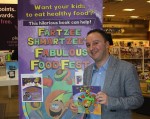
Adam Segal at Indigo Richmond Hill in Ontario last fall. (photo from adammichaelsegal.com)

Every parent knows how difficult it can be to cajole their children to eat their vegetables. Author Adam Michael Segal has come up with a tool he hopes will make it easier for parents – inspiring children to eat healthy, and combating the obesity epidemic.

The Toronto-based health communications expert and former elementary school teacher has penned Fartzee Shmartzee’s Fabulous Food Fest, a fun and whimsical book for children ages 4 to 7. The main character, Fartzee, is a quirky child with multicolored spiky hair on a quest to persuade his family to eat nutritious food. Through a series of hatched plans, a food festival and a sticker game, he succeeds in showing everyone in town that eating right can be fun.

The book is made more visually appealing with drawings by 20th Century Fox illustrator and animator Daniel Abramovici.

“This is an entertaining and imaginative story that educates children about healthy eating practices and behaviors,” said Dr. Samantha Witt, a pediatrician based in Maple, Ont.

Part of the inspiration for writing it, Segal told the Independent, included the lack of books specifically directed towards young children to teach them, in a fun way, about eating well.

According to the U.S. Centres for Disease Control and Prevention, obesity rates in Canada have nearly tripled in the past 40 years, with close to a third of children considered either overweight or obese. Diabetes, heart disease, stroke and some cancers are among the many issues that can arise from obesity.

“For generations, kids have been led to think of junk food as cool and fun, which has contributed significantly to the prevalence of childhood obesity,” said Segal. “With Fartzee, I am trying to completely shift the paradigm to obesity prevention, empowering kids to discover that nutritious food is cool, fun and delicious.”

Segal said he flipped through scores of children’s books to get a feel for what his target age group would find compelling. This is one reason why, in his book, “food is all over the place; it’s kind of messy but fun.”

For some parents, the main character’s name might sound too coarse for a child, but Segal said, so far, parents and educators haven’t had any problems.

“I was a little concerned and nervous,” he admitted, when initially sending out the book to a Grade 2 teacher, a librarian and a parent. “Not a single one had an issue with it. They said that there are already books, at least 10 others, with a character that did farts. It’s not anything unusual or out of the norm. Even someone from the ministry of education reviewed the manuscript and didn’t flinch at it, and they were a teacher for 30 years.”

The book has been read to more than 5,000 students at 15 schools across the Toronto area thus far, according to Segal. He’s finding that kids aren’t as resistant to eating right as we might have thought.

“I ask them why we eat healthy food, and they really get it. Even a 6-year-old will say it gives energy, helps you grow, it’s good for your body and brain,” he said. “At a young age, they actually understand a lot more about the benefits of nutrition than I would have thought when I wrote it.”

Fartzee Shmartzee’s Fabulous Food Fest is available through adammichaelsegal.com or amazon.com.

Dave Gordon is a Toronto-based freelance writer and the managing editor of landmarkreport.com.

Format ImagePosted on April 15, 2016April 13, 2016Author Dave GordonCategories BooksTags Fartzee Shmartzee, health, obesity
Cooking healthy, eating well

Cooking healthy, eating well

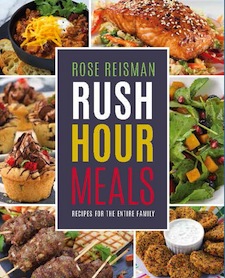
Rose Reisman’s newest cookbook is Rush Hour Meals: Recipes for the Entire Family. (photo from Rose Reisman)

Cookbook author, chef, television personality and columnist Rose Reisman helps people make better lifestyle choices.

After self-publishing a cookbook in 1988, she focused on healthy eating with Rose Reisman Brings Home Light Cooking (1993), which sold more than 400,000 copies. Since then, she’s been an oft-quoted expert on eating well, has appeared on TV and radio, worked as a teacher, and acted as a health and wellness consultant to businesses.

Reisman attended the Canadian School of Natural Nutrition to become a registered nutritional consultant. The mother of four ran a cooking school for four years, and then launched Rose Reisman Catering in 2004. She is also a nutritionist and adjunct professor at York University’s faculty of health, where she is a founding member of the university’s obesity task force.

Reisman also helps people eat well through the Personal Gourmet, a daily food delivery service launched in 2008 that offers both weight loss and healthy living plans she developed with the help of dieticians and weight management doctors. She has been a spokesperson for the national campaign of Breakfast for Learning and the national awareness campaign for the Canadian Breast Cancer Foundation, and has been an ambassador for the Canadian Diabetes Association.

book cover - Rush Hour Meals: Recipes for the Entire FamilyIn coming weeks, Reisman’s newest cookbook will be released, Rush Hour Meals: Recipes for the Entire Family. It will be her 18th – chai – book guiding readers to a better life.



When she first started cooking, she told the Independent, she was making “very delicious, high-fat foods when everybody flocked to my home. I continued to do that and I became a good cook using loads of butter and cream and chocolate…. But then I found my own family history wasn’t that healthy. I had lost my dad to heart disease in his 50s, my grandmother at 52 to diabetes type 2. Everybody had high blood pressure, high cholesterol and obesity, and I was an overweight child.

“This was all going on in my early 30s. I was slim and running every day, and I had lost the weight I had as a kid, and I figured I was fine. But then I went for a routine physical and my cholesterol was literally off the charts like somebody in their 60s or 70s who’d been eating steak every day.

“I realized that what I ate, even though I exercised and maintained a healthy weight, was still clogging my arteries, and my family history was such that I couldn’t afford to do it. It was then that I turned around, in 1993. I started researching healthier cooking, and I started to write my first book in healthy cooking. I’d written three or four books before that in higher fat meals.”

Like Reisman once did, many people equate being thin with being healthy.

“If you have skinny children, you kind of turn away as they’re eating junk because you think it’s not going to hurt them,” she said. “But what I started to learn is that cholesterol, diabetes, all of these things start when they’re children. Today, they’re finding kids in their early teens who have already got blocked arteries, high blood pressure, diabetes.”

She said that one child out of three born after 2000 will have diabetes type 2.

“I really encourage parents to be the role models at home,” she said. “I used to set the most delicious meals on the table, and they were good. I wasn’t talking vegan style, poached or steamed, but it was heart-healthy fat, and my kids would often turn up their noses. But, over the years, they picked it up, it was in the back of their minds and, today, all four of them, they’re adults, they’re really good eaters, they exercise.

“That’s one of the reasons that I launched into the books, the media, the catering company, the restaurant consulting,” she said, “because it’s really a great way to spread your message.”

It’s also a great way to spread less healthy messages. There are dozens of TV shows on food – a whole network, in fact.

“They call it ‘food porn,’” said Reisman. “It started back when I was entering the food world. I had my own TV show in 1998 to 2002. That was when the Food Network was just starting to get launched. I thought a show like that would never be successful, I thought no one would watch 24 hours a day of food. Boy, was I wrong. People loved it. And the shows got crazier and crazier, and more reality and more extreme.

“They’ve done these studies from Harvard that people who watch these shows are actually heavier than other people. Nobody really wants to watch a healthy cooking show. There’s only one or two healthy cooking shows…. It’s ridiculous. You’re piling up butter to your elbow when you’re mixing, and people just love watching that decadence.

“But, when Paula Deen came out, and she was diabetic, all of a sudden people went, ‘you know, you can’t be that heavy.’

“You don’t see in seniors homes obesity in people in their 80s. If you notice that, people die off in their 70s, 60s, from cancer, heart disease or stroke, or diabetes when you’re obese.”

For people just starting to cook for themselves, a mistake they make, said Reisman is “they can just whip something off, and not measure and not read the recipe.” She said that’s not really possible, “unless you really have a food gene,” and there are only “a handful of people like that. I’d say 99% of us can’t do that.”

Even with years of experience, Reisman still finds new foods that she both enjoys and that are healthy.

“A couple of foods that I like, that allow me to maintain a really healthy body weight, are quinoa and Greek yogurt,” she said. “Quinoa is the only seed-grain that’s considered a complete protein: a half a cup is equal to three ounces of chicken or fish. So, on the day that you don’t want to eat the hormone-injected chicken or the farm-raised fish, you can have quinoa. Put dressing on it, make it with tomato sauce, and it is a powerhouse of nutrients.

“But, the most important thing is, after you eat a bowl of quinoa versus say white rice in a Chinese food situation, [where] you burp, you eat again, you burp … with quinoa, you walk away full and you’ll find you won’t get hungry for about three hours. That’s because the glycemic index, your blood sugar, is rising very slowly, whereas with white rice or with white starch, what I call an empty grain, it’s rising quickly and then it crashes, which means you need more of that food.”

As for Greek yogurt, she said, “you can have it plain or mix it with berries for breakfast. You can even have Greek yogurt with quinoa. Greek yogurt has 18 grams of protein for three-quarters of a cup, which is unbelievable, more than you could ever imagine in eating fish or chicken in the morning, so it’s a super breakfast.”

And what about that morning coffee?

“I think coffee by itself is great, and the studies now prove more and more that it lowers cholesterol, it’s got some great antioxidant powers,” said Reisman. “The key is, you can’t be drinking coffee after coffee after coffee. If you’re starting to get anxious, or you’re not sleeping at night, you’re drinking too much!

“The problem is that coffee shops are mixing in whipping cream and syrup and tons of sugar,” she added. “If you have two double doubles every day, you’ll gain something like 12 to 13 pounds in a year, just from the cream and sugar in those two drinks. It’s not coffee. It’s candy.”

Dave Gordon is a Toronto-based freelance writer whose work can be found in more than 100 publications globally. His is managing editor of landmarkreport.com.

Format ImagePosted on March 11, 2016March 10, 2016Author Dave GordonCategories BooksTags health, Reisman

Tips for holiday fasting

Judaism requires men and women to fast at specific times throughout the year. On Yom Kippur, the holiest of days, fasting – no food or drink – from sunset to sunset, is part of our path to achieve atonement.

By not putting food or drink into our mouth, we no longer stimulate the salivary glands and thereby prevent them from producing saliva. This can produce bad breath, among other things. Saliva aids digestion because it contains enzymes and chemicals that begin the initial breakdown of the many components in our foods; as well, it maintains the balance in our mouth between harmful and helpful bacteria. Here are 10 tips for the upcoming fast.

  1. Drink 64 to 80 ounces of water during the 24-hour period before the fast begins to replenish the saliva. On a typical day, we use up to 50 ounces of saliva and fasting may increase this amount.
  2. Avoid all alcohol during the 24-hour period before the fast begins. As well, note that most mouthwashes can contain up to 27% alcohol and, therefore, create a dry mouth, making our breath worse, not better.
  3. Use an alcohol-free, oxygen-rich mouthwash, which can increase saliva by four percent.
  4. Avoid toothpaste containing sodium lauryl sulfate (SLS), scientific term for soap, before and after the fast. SLS, an ingredient put into most toothpaste formulas to create a foaming action, is a severe drying agent. According to recent studies, SLS can lead to canker sores.
  5. Avoid breath mints and gum that contain sugar, before and after the fast. Sugar feeds all types of bacteria, especially those that create bad breath, gum disease and tooth decay.
  6. Avoid acidic vegetables, such as tomatoes, and fruits, such as grapefruits, oranges and their juices, during the 24-hour period before the past begins. These acids remain on the tooth surface and, due to the lack of saliva during the fast, they cannot be naturally neutralized.
  7. Eat lots of fruits and vegetables that contain a lot of liquid, such as apples, strawberries, blueberries, raspberries, blackberries, watermelon, celery and carrots. As an aside, eating parsley won’t help!
  8. Take all medications – primarily antihistamines, high blood pressure meds and antidepressants – immediately before the fast begins with lots of water. More than 75% of prescription medications have dry mouth syndrome as a side effect.
  9. Do not skip breakfast or any meal during the 24-hour period before the fast begins.
  10. Do not schedule a medical procedure that requires avoidance of food and drink during the 24-hour period before the fast begins.

For more information, visit therabreath.com.

Posted on September 18, 2015September 17, 2015Author California Breath ClinicsCategories Celebrating the HolidaysTags breath, fasting, health, Yom Kippur
Grant-winning video

Grant-winning video

A screenshot from Erin Goldberg’s winning entry to the NSERC competition.

The public has voted, the judges’ scores have been tallied and the results are in. The 15 winners of Natural Sciences and Engineering Research Council of Canada’s Science, Action! video contest have been revealed. Jewish community member and University of Manitoba student Erin Goldberg joined McGill’s Ira Sutherland and University of Guelph’s Morgan Jackson in the top three.

may 29 Health.29.Erin Goldberg-photo by Marc Goldberg
Erin Goldberg (photo by Marc Goldberg)

Goldberg, a survivor of childhood cancer, is now 26. She has always gravitated to the sciences, she said. “I especially love biology and chemistry so, naturally, that was always a part of my education. I was able to take my first nutrition course at the U of W [University of Winnipeg], which solidified my interest in the subject. After switching to the U of M [because of their nutrition program], I fell in love with it.”

Goldberg is an animal lover who enjoys doing yoga in her spare time. She began taking university courses at the age of 15 at the U of W Collegiate, and graduated a year early by doing course work through the summers. She is currently preparing to defend her thesis at U of M.

Goldberg has always been a creative person and enjoys translating her research in a way that is understandable to laypeople, she said, so she was ready for the NSERC competition. She also had participated in the 2013 3MT (Three-Minute Thesis) competition at U of M, which involved explaining her research in basic terms in three minutes. Regardless, she said she was still apprehensive about the NSERC competition; it is open to any student in Canada holding an NSERC grant, which numbers in the thousands. “I didn’t know what to expect,” said Goldberg, who said she was ecstatic when she learned that her video was one of the 32 chosen to move to the second round.

On April 7, she received notification that she was a winner. The email read, “After careful consideration by our panel of judges, your video was selected as one of the top three entries (English submissions). They felt your video told a compelling story and exhibited an exceptional grasp of quality science communication.” Besides the recognition, Goldberg will receive a $3,000 prize.

Goldberg’s 60-second video explains her latest research project, which was funded through NSERC. It involved feeding hempseed and hempseed oil to hens to enrich their eggs with omega-3. “Ironically, humans are allowed to consume hemp, but we can’t feed it to livestock, due to concerns over THC accumulation [the psychoactive compound in marijuana],” said Goldberg about the hempseed feed. “There is actually a very miniscule trace of THC in most hemp products, so there is really little risk, but the Canadian Food Inspection Agency requires several research trials to prove this, which is what our lab group is doing.”

Goldberg’s research proved that these two ingredients are safe and effective, even at the highest possible dose, and that there is no risk in feeding hempseed to chickens. In subsequent research trials, Goldberg designed different vegetable oil blends to boost the levels of DHA in eggs. “We found that feeding a higher ratio of saturated fat, called linoleic acid (an omega-6) and oleic acid (on omega-9), can reduce the competition between omega-3 and -6, leading to greater deposition of these critical fatty acids.”

In her thesis, Goldberg examined the impact designer diets have on the fatty acids and sensory properties of the eggs of laying hens. She was able to create omega-3 eggs using novel ingredient blends (like hemp, canola and flax), and then test the egg yolk for fat profile, aroma and flavor. The egg white remains the same regardless of what you feed the bird, so the changes only occur in the yolk, she explained.

Goldberg’s interdisciplinary research was conducted at U of M’s Fort Garry campus, in the poultry barn in the animal science, food science and human ecology buildings. She completed some of her research at the Saint Boniface Research Centre, as well.

“I love that it is interdisciplinary research,” said Goldberg. “I combine my interest in sensory with analytical work. I’m fully involved from start to finish, and like that I can combine my love of animals (i.e. taking care of my birds) with my analytical work.”

Although the cancer that Goldberg had as a 6-year-old was spontaneous, she said she believes that diet plays a major role in the development of many diseases, including Type-2 diabetes, heart disease and certain cancers, such as colon and breast cancer. “I believe in disease prevention through maintaining a healthy lifestyle, (including a proper diet), which would also ease the burden on our medical system,” said Goldberg. “Because I love educating people, I also teach an undergraduate nutrition course at the U of M, called Food – Facts and Fallacies.”

Goldberg feels is it critical to focus on omega-3s. “Omega-3 fatty acids are essential in our diet,” she said. “We must consume them in our food. They are critical for normal growth and development, and have a large impact in reducing inflammation in the body, which can prevent the development and progression of numerous diseases.

“A lot of research has focused on the health benefits of the longer chain omega-3 fatty acids, EPA and DHA in particular, which play a key role in brain and eye health, as omega-3s contribute to membrane fluidity. These fats are especially critical in a child’s proper development.”

The benefits spread across the lifespan, but in infant/child development, they are mainly related to cognitive/visual function and, in adults, the major benefits are mostly in the progression or prevention of Alzheimer’s, dementia, cancer and cardiovascular disease. Omega-3s can also lower triglycerides.

Research has shown that the best source of available omega-3 comes from fatty fish, like wild salmon; farmed fish have significantly less. Omega-3-enriched eggs are an excellent source for those who cannot or do not consume fish, for example, if someone is allergic to fish or is vegetarian. They are a safe, economically viable alternative.

“You can also get omega-3s from plant foods, like hemp, flax, walnuts, canola oil and chia seed,” said Goldberg, of those who prefers to get their omegas through vegan sources. “But, your body must convert a proportion of ALA into the longer-chain EPA and DHA, and this is inefficient (and possibly insufficient) in most adults.

“In omega-3 eggs, if you choose eggs from hens fed both flax and fish oil, you’re getting a great source of both ALA and EPA/DHA. My dietary blends help to eliminate the need for fish oil in the hen diet (which is expensive), because the laying hen can convert more ALA to EPA/DHA than can humans.”

Goldberg feels it is critical to encourage women to enter the STEM fields – science, technology, engineering and mathematics – and to pursue advanced education. She believes the payoff is well worth the investment. “I’d also encourage people to think critically about the nutrition messages they hear in the media,” she said. “When in doubt, look to the research or consult a dietician for nutrition advice.

“I also recommend people use supplements with caution. Sometimes it’s necessary (like taking Vitamin D3 supplements, because we do not get enough sunshine) but, in general, I recommend people consume whole foods first and use supplements to supplement a healthy diet, not to replace it.

“Functional foods, like omega-3 eggs, are a great way to consume foods that are enhanced with certain nutrients to protect against diseases and maintain a healthy body.”

Rebeca Kuropatwa is a Winnipeg freelance writer.

Format ImagePosted on May 29, 2015May 27, 2015Author Rebeca KuropatwaCategories NationalTags Erin Goldberg, health, NSERC, omega-3
Israelis flipping for acro-yoga

Israelis flipping for acro-yoga

Jerusalem-based instructor Ayo Oppenheimer bases student Rabbi Rachel Kobrin in her first acro-yoga flight. (photo by Daniel Cuevas)

As I walk through Tel Aviv’s HaYarkon Park on a gorgeous day, I watch people enjoy nice, normal activities like soccer, running, rowing and yoga. But that’s not what I’m here for. No, I’m at the park to join a weekly meetup of people who balance, flip and manoeuvre each other in a series of gravity-defying poses called “acro-yoga.”

Even though I don’t know a soul, I instantly recognize the acro-yoga group. They are all partnered up, the “bases” lying on their backs with the “flyers” balancing on top of them.

Within minutes of joining them, I meet Yair Chuchem, a computer programmer who’s practised these strange yet fun-looking moves for more than three years. When I tell him that I’m writing an article about Israel’s growing acro-yoga craze and ask for an interview, he responds, “The best way to understand acro-yoga is to do it.”

Anything for my craft….

The next thing I know, I’m trusting Chuchem – a complete stranger – to balance me upside-down with my shoulders planted on the soles of his feet. Surprisingly, Chuchem doesn’t feel like a stranger for long. After all, we are literally in a position that requires us to communicate and cooperate clearly and patiently with each other.

“This is what acro-yoga is all about,” he said after carefully lowering me back on my feet. “It’s trust and teamwork, and it bonds people.”

Once the blood rushes out of my head, I realize he’s right. Chuchem already feels like a friend (although, had he dropped me, I might feel differently).

In terms of the physical dynamics, acro-yoga is a practice that combines acrobatics and yoga moves between the base and the flyer. But, as I learned from my first experience, it also involves cooperation and some fearlessness, which perhaps is why Israelis are going absolutely crazy for it.

“Acro-yoga is a really fun practice with lots of social components to it,” explained Ofir Gothilf, an established acro-yoga instructor based in Tel Aviv. “It’s a warm community that uses touch in a safe, secure way; and everyone is looking for that human experience – maybe Israelis more than others.”

While acro-yoga (or acro-balance) is an international practice – with the trademarked AcroYoga school founded by two Americans in 2003 – it has grown leaps and bounds in Israel, which is recognized as one of the strongest, if youngest, acro-yoga communities worldwide.

“[The community] started out as just 10 friends wanting to jam and get together in the park,” explained Eitan Padan, an Israeli acro-yoga instructor with six years of experience. “And now, in just two years, it’s grown to over 4,000 members.”

That figure is based on current members of Israel’s acro-yoga Facebook group called LaOof Nifgashim or Fly Together. Padan estimates that among the 4,500 members, several hundred of them actively practise. The interest is also evident by the sheer number of acro-yoga opportunities throughout the country. According to Fly Together, Israel boasts nearly 30 instructors, classes and self-organized meetups spanning from Eilat to Haifa.

From May 21 to 24, a few hundred Israeli acro-yoga enthusiasts of varying levels were in the Negev for the fifth Israeli Acrobatic Convention, featuring workshops led by world-class teachers hailing from cities including Berlin, Paris and Moscow.

Among the headlining instructors was Lux Sternstein, who, for his third year in a row, traveled all the way from Seattle to lead several advanced workshops throughout the convention’s four-day program. Upon each visit, Sternstein grows more impressed with the growth and diversity of Israel’s acro-yoga community.

“Most remarkable to me is the age range [in Israel],” Sternstein said. “It’s the model that I wish the entire world would practise – to have teenagers and senior citizens working together. We don’t have that in North America, where it’s typically people in their early 20s to mid-40s.”

While it might seem shocking to imagine senior citizens doing acro-yoga, it speaks to the inclusive, welcoming nature of the practice, said Padan, who is in his 50s.

“Everyone can come join,” he said. “No matter your sex, race, religion, size, age. There is no sense of competition in ‘acro’ like there is in other sports. It’s about working together.”

Beyond recreation and fitness, acro-yoga also has therapeutic applications, said Jerusalem-based instructor Ayo Oppenheimer, who taught in the United States before immigrating to Israel.

“Acro-yoga is a tool for happiness, self-awareness and empowerment,” she said. “In addition to teaching my regular practice, I’ve taught here [in Israel] at a women’s shelter for victims of domestic violence and at a hospital for teenage girls at risk. I don’t see myself as a fitness instructor. For me, I really believe that acro-yoga can improve people’s lives.”

Back at the HaYarkon acro meetup, I hear a similar sentiment. People aren’t here for exercise, per se, but for a challenge that thrives on personal connection.

“It’s nice that people are cooperating together for one goal,” said Shira Rosenzweig, who is one of the best flyers at the meetup.

Next comes a real visual treat: Rosenzweig and Chuchem pair up. From handstands to turns to straddles, Rosenzweig gracefully flows from pose to pose with Chuchem expertly guiding and supporting her. They look like an ice-dancing couple who has practised together for years. But, then I remind myself that this is acro-yoga. It’s quite possible that they only just met.

Israel21C is a nonprofit educational foundation with a mission to focus media and public attention on the 21st-century Israel that exists beyond the conflict. For more, or to donate, visit israel21c.org.

Format ImagePosted on May 29, 2015May 27, 2015Author Rachel Solomon ISRAEL21CCategories IsraelTags acro-yoga, acrobatics, Eitan Padan, health, LaOof Nifgashim, Lux Sternstein, Ofir Gothilf, Shira Rosenzweig, Yair Chuchem, yoga

Fueling your workout

With the arrival of warm weather, many Canadians take their workout outside. Whether you’re a recreational runner or an Ironman competitor, nutrition plays a vital role in your performance. Five-time Olympian Hayley Wickenheiser has said, “Good nutrition accounts for 50% of my performance, with 40% being mental and 10% being physical.”

For improving either endurance or strength training, carbohydrate is the key nutrient. Our bodies rely primarily on carbs to provide the fuel needed during aerobic, power and strength-based activities. If you are gluten-intolerant, like 12% of Canadians, it is important to find gluten-free carb sources.

Pre-workout: Eating prior to physical activity allows us to exercise harder and longer, and recover more quickly. Include a small low-fat, moderate-protein, high-carbohydrate meal or snack 30-60 minutes prior to activity, such as a fruit smoothie, toast (gluten-free breads are readily available) and nut butter, or cereal and yogurt. Wickenheiser’s favorite pre-game meal is chicken, quinoa and steamed vegetables.

During: If you’re working out for less than 60 minutes, there is no need to have anything but water during your workout. For longer workouts, choose an electrolyte-based beverage containing carbohydrates. Small portions of gluten-free bagels or cereal bars can also be quick and effective. Dehydration causes fatigue and cramping, and impairs performance, so drinking adequate fluid before, during and after exercise is important. While hydration needs vary from one person to the next, a good starting point is having one to two cups of fluid before, during and after activity.

Post-Workout: Within 30-60 minutes after physical activity, the goal is to replace the water lost in sweat, restore the muscle fuel (carbs) and promote muscle repair with protein. Great post-exercise meals and snacks include flavored dairy, soy or almond milk, stir fry with lean meat, rice and vegetables, a wrap with hummus and vegetables or trail mix.

Tristaca Curley is a registered dietitian in Kelowna. She is a member of the Sport Nutrition Advisory Committee of Canada and can be found at fuelingwithfood.com.

Posted on May 29, 2015September 2, 2016Author Tristaca CurleyCategories LifeTags fitness, Hayley Wickenheiser, health, nutrition
Nourishing the whole child

Nourishing the whole child

Dr. Adele Diamond, left, with Dr. Rania Okby at a Canadian Associates of Ben-Gurion University-hosted event at the University of British Columbia, in which Okby discussed some of the health challenges facing the Bedouin in Israel. (photo by Cynthia Ramsay)

Next week, Adele Diamond, professor of developmental cognitive neuroscience at the University of British Columbia, will be presented with an honorary doctorate from Ben-Gurion University. The professor spoke with the Jewish Independent at her lab on the UBC campus.

Born in New York City, Diamond’s academic career took root at Harvard, where she studied anthropology, sociology and psychology, but was not yet interested in the brain. After she decided to retire her first thesis idea, she was inspired to take a closer look at brain development in babies.

“My first year in graduate school, my advisor [Jerome] Kagan was jumping up and down about all the changes you see in babies’ behavior in the first year of life. No matter where they are in the world, whether they’re in kibbutzim, in nuclear families, they’re in Africa, they’re in Asia, it doesn’t matter. You see the same cognitive changes at basically the same time during the first year. He said, ‘It can’t all be learning and experience, their experiences are too different. There has to be a maturational component [in the brain].’ He was so excited about this, you couldn’t help but be excited,” she said.

Today, Diamond’s lab seeks to understand how children’s minds and brains develop. Specifically, she studies an area called the prefrontal cortex (PFC) and the cognitive abilities that depend on it, known as executive functions (EFs).

In a 2011 paper, Diamond describes the critical role of EFs. “To be successful takes creativity, flexibility, self-control and discipline. Central to all those are executive functions,” including cognitive flexibility (thinking outside the box, perspective taking), working memory (mentally relating different ideas and facts to one another) and inhibitory control. Other EFs that depend on these three building blocks include mental reasoning, creative problem solving, planning and execution.

EFs can be lacking in children who have behavioral, neurological and developmental disorders and are compromised in kids diagnosed with attention deficit disorders and autisms. The PFC is also influenced by environmental factors, compromising EF in kids experiencing poverty and other disadvantages and stressors. Fortunately, there are interventions that have been found to be successful, especially when implemented in early childhood.

“Traditional activities that have been part of all cultures throughout time (e.g., dance, music-making, play and sports) address all these aspects of a person – they challenge our EFs (requiring focus, concentration and working memory), make us happy and proud, provide a sense of belonging and help our bodies develop,” the lab’s website explains. Importantly, Diamond’s lab has “documented marked advances in executive functions due to an early childhood school curriculum (Tools of the Mind) that requires no specialists or expensive equipment, just regular teachers in regular classrooms. The children who spent more time in social pretend play outperformed their peers who received more direct academic instruction.”

She explained in a 2007 paper, “Brain-based doesn’t mean immutable or unchangeable. EFs depend on the brain, yet exercising and challenging EFs improves them, much as physical exercise hones our physical fitness. Yet, transfer is never wide; to get diverse benefits, diverse skills must be directly trained and practised.”

There is a deep connection between mental health and EF and it’s not just depression and anxiety that have a negative impact – sadness and loneliness also correlate with compromised EFs. “Prefrontal cortex and executive functions are kind of the canary in the coal mine. So, if anything isn’t right in your life, it’s going to hit prefrontal executive functions first and most,” she said. “So, if you’re sad, if you’re lonely, if you’re troubled, if you’re not physically fit, if you’re not getting enough sleep, if you don’t feel socially supported, if you feel ostracized, any of those things, it’s going to impair executive functions. A lot of people notice that when they’re feeling stressed or down for whatever reason they can’t think as clearly or exercise as good self-control – and that’s not just your perception, it’s really true … the phenomenological experience is credible.

“There are a lot of technical reasons why that’s true for prefrontal in the neurochemistry. That’s one of the reasons I argue that we have to care about the whole child. We can’t say school is just about the cognitive, because if the child is sad, if the child is stressed, if the child is lonely, the child’s not physically fit, the child isn’t going to be able to do as well academically as the child would otherwise be able to do. The child can’t show the academic potential he actually has.”

“If you step in right away when the kids disagree then they don’t have the chance to work it out among themselves…. I think a lot of kids don’t have that now. Parents are too afraid. There isn’t any place to play and I think those are important learning experiences.”

The trend towards structured play can be problematic for a child’s developing brain. “The helicopter mom, who needs to structure it all for the kids, doesn’t give them any chance to have some autonomy, have some say, use some creativity and work out disagreements,” Diamond said. “If you step in right away when the kids disagree then they don’t have the chance to work it out among themselves…. I think a lot of kids don’t have that now. Parents are too afraid. There isn’t any place to play and I think those are important learning experiences.”

Another useful tool in developing mental discipline can be memorization. In the West, we have largely decided that memorization is not a worthwhile, but there are cultures where rote memorization is still highly valued.

“In East Asia, they have too much extreme of memorization and too little creativity,” Diamond said. “The child’s goal is to learn from the masters, not question them, not try to come up with new things. First, get to know what the sages have to teach us. In some ways, I think the Orthodox Jewish education is like that. Each generation that is further from Mount Sinai knows less, and so we really want to try to absorb all that the older generations have to teach us before we think about surpassing them.

“But I think a mix is the right way…. I used to be on the bandwagon of memorization is just stupid; I hated it when I was in school. You can just look up these things, why do you have to memorize it? Then I was in Dharamsala, I gave a talk to the Dalai Lama, and we were talking afterwards. I asked him, I said, ‘I’ve told you about Tools of the Mind. What is a Buddhist way to train the minds of young children?’ The Dalai Lama said, ‘We don’t try, we wait until they get older.’ But his translator, [Thupten] Jinpa said, ‘We have them memorize. We’ll take something long and each day they have to memorize a little more. It’s a mental discipline that we’re teaching them.’ I think it’s a way of disciplining the mind, training the mind. I think there’s a real place for it, in that case.”

In fact, memorization can afford more cognitive and creative freedom. “What you want to do as you keep getting older is not have to pay attention to the fine details and be able to chunk things, so that you can deal with more and more the bigger picture and relating things,” said Diamond. “The more things are memorized, the more you can chunk it. You don’t have to go through the words of the poem, you just say the name of the poem and now you have all of it. Now you have a lot more information at your disposal to be able to play with and work with….”

Most of all, it’s important to grasp the (misunderstood) role of joy in nurturing developing minds and healthy children, she suggested.

“First, we often think that joy is the opposite of serious. If we’re walking down the school corridor and the kids are having a great time in the classroom, there’s lots of noise, we think they must be on recess, they couldn’t possibly be doing a lesson because there’s too much happy noise coming out of there. That’s, I think, a bad misconception. You can be learning and doing serious stuff and still have a great time. And you don’t have to be miserable to learn important stuff.”

Attachment is another key to healthy development. “I think Jewish families are pretty good about having secure attachment,” she said. “Sometimes they get a little enmeshed later, but I think that Jewish families really let the child know that the child is loved and cared for, they’re there for the child.”

She added, “Of course, a kid who is not securely attached is going to be more fearful, it’s going to be harder for other people to get close to him, for him to get close to other people. A kid who is securely attached thinks the world is a good place, he’s safe, he can trust other people, he can trust the world. There’s a lot more reason to feel relaxed and joyful.”

“The analogy I use is who learns a route better: the driver or the passenger? Everybody knows the driver does and we all know why, because the driver has to use the information and the passenger is just passively sitting there…. If you say, well, why should kids be actively involved in learning as opposed to just be passive recipients, everybody can understand that point and then we get to the more virtuous things.”

An influence in Diamond’s work is Abraham Joshua Heschel’s emphasis on doing. In Judaism, action, not belief, is key. “There are two things. One is, when we’re not talking about virtuous things, we learn better when we’re actively involved. The analogy I use is who learns a route better: the driver or the passenger? Everybody knows the driver does and we all know why, because the driver has to use the information and the passenger is just passively sitting there…. If you say, well, why should kids be actively involved in learning as opposed to just be passive recipients, everybody can understand that point and then we get to the more virtuous things.

“The Dalai Lama has said, if you want others to be happy, practise compassion. If you want to be happy, practise compassion. Now, the first part makes sense to everybody. The second part doesn’t always make sense.” It will never make sense intellectually, she continued, “the only way it makes sense is for you to do something nice for somebody else and see the wonderful smile you get in reaction, and then you understand. Or somebody says how meaningful that was to them or how important it was and then you see what you get back. But there’s no way to understand that without experiencing it.

“So, you tell the cynical kid, ‘I want you to just do it for awhile.’ What Heschel said is that the musician might be playing for the money but if he’s thinking about the money when he’s playing the concert he’s not gonna play a good concert. While he’s doing it, he’s got to be heart and soul in the music. So, if the child wants to see what it’s like to do nice things for people, during those few times when he’s doing nice things, he’s got to be heart and soul, not cynically doing it, but doing it genuinely. I think, in short order, the child can see that he gets something back from it. You don’t have to do it for years and years before you can see the wisdom of what mom and dad wanted. You can see it pretty quickly.”

The upcoming honor from BGU has grown out of a mutual appreciation. “I have lectured at most Israeli universities, but one of my favorites is Ben-Gurion, I think I’ve been there more than others…. I met the president [Rivka Carmi] last time I was there and she wanted me to come back and teach the course again.” They formed a personal relationship, as well, Diamond said, and then, recently, Carmi nominated her for the award.


Basya Laye is the former editor of the Jewish Independent.


Format ImagePosted on May 8, 2015May 8, 2015Author Basya LayeCategories LocalTags Adele Diamond, health, UBC, University of British Columbia

Caring for Bedouins’ health

Dr. Rania Okby was in Vancouver last week, speaking to several groups, including students at King David High School. On May 1, she addressed a small gathering at the University of British Columbia.

Fittingly, this latter talk was held in the Clyde Hertzman Boardroom of Human Early Learning Partnership, which is, according to its website, “a collaborative, interdisciplinary research network” whose “research explores how different early environments and experiences contribute to inequalities in children’s development.”

photo - Dr. Rania Okby
Dr. Rania Okby (photo by Cynthia Ramsay)

Okby spoke about traditional and environmental factors that affect the health of Bedouin women in Israel. Currently doing a one-year obstetrics fellowship at Sunnybrook Health Science Centre at University of Toronto, Okby is a graduate of the Centre for Bedouin Studies and Development, Ben-Gurion University (BGU), and is part of the staff at Soroka University Medical Centre and faculty of health sciences at BGU, specializing in high-risk pregnancy.

David Berson, executive director the B.C. region of Canadian Associates of BGU, welcomed guests to the Hertzman Boardroom and presented a brief video of the Israeli university, while UBC professors Adele Diamond and Judy Illes chaired the event. Sally McBride of HELP gave a brief overview of her organization.

In introducing Okby, Diamond highlighted the difficulties of crossing between cultures, which can make “you no longer feel at home in any one because you’ve tasted a little bit of the other, and so you’ve changed. Not only is she forging a balance between Bedouin life and Western life, but she’s also forging a balance between being the mother of two girls, ages 7 and 5, and having an incredibly active career. And, she’s not only doing that, she’s forging a balance between clinical work, teaching and research.” To do any one of these things would be a job for a lifetime, said Diamond.

Okby’s presentation offered insight into some of the health challenges facing her community. “As Bedouin women, we are discriminated in Israel on three levels,” she said. First, by living in Be’er Sheva, which is a community on Israel’s periphery; second, by being a minority with a Jewish majority; and, third, by being women in a male-dominated culture. These and other conditions – such as the rapid change from being a semi-nomadic people to living a more stationary, Western lifestyle – influence both the physical and mental health of Bedouin women, and she went on to explain in what ways.

Defining a Bedouin as “someone born and raised in the desert,” Okby said there are Bedouin living around the world. “Being a Bedouin is a lifestyle, so it has nothing to do with religion, nothing to do with nationality,” she said. There are 200,000 to 220,000 Bedouin in Israel, about half living in recognized villages; the other half not. The Bedouin comprise about 25 percent of the total population in the Negev, and are a diverse group.

In the early years of Israel, explained Okby, about half the Bedouin did not agree to leave their land to settle in cities, and these tribes are still in a dispute with the government over land ownership. People who live in unrecognized villages are not permitted to build permanent homes, so live in metal houses. There is no, or little, electricity, access to health care or public transportation, few roads and a lack of educational infrastructure.

Okby presented a statistical picture of the situation of Bedouin women: 6.2 years average education, 14.5% never went to school, 10.4% have higher education, 10% are working women, the average age of marriage is at 18.6 years old and the number of children per woman is 6.13. “When I started medical school 18 years ago, the number was 10, so things are improving and the numbers are decreasing, but still it’s a lot of [children],” she noted. Consanguinity, marrying within the same family, is 60 percent, while polygamy is 34 percent, “which has a bad influence on the mental and psychological health of the women and the kids.”

Issues such as post-partum depression, which affects one in three Bedouin women, are a challenge to treat, as the general view of psychiatry is not positive among Bedouin communities. Another major health concern, said Okby, is high infant mortality: 12% among the Bedouin compared to 6.6% among the Arab and 2.8% among the Jewish populations of Israel. “These numbers – you cannot ignore it, it is very clear,” said Okby, attributing the high rate to genetic disease or malformation, among other factors. Because of their religious beliefs, most Bedouin women won’t terminate a pregnancy beyond 17 weeks, even if prenatal screening detects problems, she said.

In addition to traditional factors, environment-related ones also affect infant mortality, including infectious disease and hypothermia. From ages 1 to 4, there are 12.7 Bedouin kids per thousand births who die from trauma compared to 1.9 in the Jewish community, and most of these Bedouin children are living in the unrecognized villages. The injuries result from a lack of awareness as well as way of life, cooking on open fires, for example.

Then there is the increasing incidence of Western illnesses, like diabetes and obesity, which are affecting the Bedouin, with lesser activity, poor knowledge about nutrition, and poverty. “About 30% of the diabetic patients don’t have enough money to get their medication, they have to choose medicine or food.” As well, Bedouin women are more at risk of breast cancer, and the average age of diagnosis is higher than in the Jewish community.

“There are lots of obstacles for the Bedouin women for better health, but there are lots of things to do, and lots of things are being done,” said Okby.

There are two main groups who can improve the situation: the Bedouin and the Israeli government. The other two important players, she said, are BGU and Soroka hospital.

To make things better, more education (of men and women) is needed, said Okby, as are systematic changes: for example, increased public transportation and doing prenatal screening before 17 weeks. Already, the age for mammography screening has been reduced to 40 (from 50) and there are mobile mammography units. As well, folic acid is being added to the bread made and sold in Bedouin villages.

Regarding BGU, Okby spoke of its Centre for Bedouin Studies and Development. When it started 18 years ago, there were only five female students, she said. There are now 265 women and 167 men in the program, said Berson.

The program has developed and now, among the changes, it includes a preparatory year, said Okby, to help with the cultural transition from community to university. And there are others helping in the region, such as the Arab Jewish Centre for Equality, Empowerment and Cooperation-Negev Institute for Strategies of Peace and Development (AJEEC-NISPED), whose contributions Okby highlighted.

In the discussion period, it was noted that the Negev comprises 60% of the land of Israel, but only about seven percent of the population. Until recently a neglected part of the country, the army is relocating its main base there and other developments are literally changing the landscape.

“This is a really important side of Israel,” said Berson, “even though there are a lot of challenging issues with the Bedouin population, there is a lot of really good news, a lot of hope here, and it really dovetails with what’s going on in the desert with Ben-Gurion University.” He said that people who haven’t visited Be’er Sheva in the last few years would “be shocked to see the changes taking place there.”

Posted on May 8, 2015May 8, 2015Author Cynthia RamsayCategories WorldTags Bedouin, Ben-Gurion University, BGU, CABG, Canadian Associates of Ben-Gurion University of the Negev, health, Rania Okby, Soroka
Some superior senior solutions

Some superior senior solutions

Michael Geller, left, and Dr. Eric Cadesky. (photo by Binny Goldman)

Every year, we look to the Jewish Seniors Alliance Spring Forum for inspiration and the 170 people gathered in the Wosk Auditorium at the Jewish Community Centre of Greater Vancouver on April 26 found it.

Debbie Cossever, representing the Jewish Seniors Alliance, and Claire Weiss of the L’Chaim Adult Day Centre were co-chairs of the partnered event, entitled YOLO: You Only Live Once – How Full is Your Cup?

Marshall Berger opened the afternoon’s program with a humorous song to the tune of “Side by Side” about a newly married aged couple. Cossever welcomed the audience, described the aims of JSA and invited newcomers to join the organization. JSA has approximately 700 members, including 34 affiliates representing more than 5,000 seniors in the Greater Vancouver area.

Cossever introduced Weiss, who explained that the afternoon was also a celebration of L’Chaim’s 30th anniversary, the group having started in the Beth Israel Youth Lounge in 1985 and then moving to the J in 1988. Last year, their staff delivered 1,933 client hours. She reminded those present that they are always looking for more members to join their “family.” The candles on a huge chocolate cake celebrating the 30 years were lit and all sang “Happy Anniversary,” which ended with calls of mazel tov!

Moderator Gloria Levi, a social services consultant, was then introduced. Levi has a master’s degree in public policy and is the author of Dealing with Memory Changes As You Grow Older and a series of booklets, Challenges of Later Life.

She introduced Michael Geller, an architect, planner, real estate consultant and property developer, who serves on the adjunct faculty of Simon Fraser University’s Centre for Sustainable Community Development. The talk was conducted in an interview format.

Geller’s topic was Lessons My Father Taught Me. He acquainted listeners with the unique and collaborative relationship he shared with his father, Sam Geller, who was one of the first members of the Jewish Senior Advisory Council (the original name of the JSA). He passed away 11 years ago at the age of 92.

Sam Geller was born in England and was a soldier in the Second World War who had survived being a prisoner of war. That occurrence colored his life. The very fact that he had survived made him happy and grateful to be alive and he never sought material things for happiness, often saying that things could have been so much worse. He moved to Vancouver from Toronto and enjoyed life at Langara Gardens, his grandchildren visiting him, doing Sudoku, crosswords, swimming and exercising daily. Then, after an emergency life-saving surgery, Geller said his father attempted to live each day to the fullest, saying, after all, it could very be his last.

Geller said his dad was a stoic, truly enjoying what he had rather than accumulating more items just to impress others who he may not care about in the first place. The lesson he received from his father was “Do what you enjoy, what makes you happy and continue contributing to the happiness of others, as that increases one’s own inner joy.” Geller recommended the book The Ancient Art of Stoic Joy by William B. Irvine.

The love and respect that Geller said he felt for his father was reflected on his face throughout the talk. Thoughts of his father swimming are with him as he does his own laps in the pool.

Levi then introduced Dr. Eric Cadesky, a family physician, assistant professor at the University of British Columbia, medical coordinator at Louis Brier Home and Hospital and a board member of Doctors of British Columbia. His presentation was entitled Getting It Just Right: How to Maximize Your Quality of Senior Life.

Cadesky disclosed that his mother-in-law was amused when she learned of his topic and asked, “What do you know about aging?” He explained that all of us age, no matter our number of years, but it is how we do it that is really important.

Cadesky believes that some of the choices we make act to decrease our quality and length of life and suggested that people live by three guidelines: Do enough. Not too much. Start now.

Enough means to be active, to walk or swim, as movement will lessen and ease pain. Enough also means to eat fresh, colorful foods that don’t require a microwave or have an expiry date. Enough means to socialize, learn a new language, do puzzles, these activities help to keep dementia at bay. Enough also means to use patience to deal with people who give you advice and knowing what advice to toss aside.

Not too much reminds us that anything that sounds too good to be true usually is. Certain vitamins (except for Vitamin D and B12) can be unhealthy to take in pill form. For example, post-menopausal women should not be taking calcium, and A, C, E, copper, zinc and selenium should be acquired from fresh food only. It is very important to be honest with your doctor when seeking medical advice. Sometimes “de-prescribing” is necessary – and an assessment can be made on all of your medications.

Start now means that we should be discussing with our doctors challenges that may be stopping us from doing what we want to be doing. Also, we generally do more for others than we choose to do for ourselves and we should start thinking of ourselves.

Cadesky advised us to have a realistic approach to life and not to fall for advertisements, which may be totally misleading. Scrutinize, be critical and intelligent in your choices and have confidence in your doctors, he said. Remember, too, he said, making others happy enriches our own happiness.

Audience questions were many. How can we ease a senior’s loneliness? Get involved in activities, he said, perhaps at JSA or L’Chaim. What are the benefits of fish oil? There is benefit in eating fresh fish but not in taking fish oil in pill form, he answered. There was also a discussion around the value of probiotics and alternative medicine. Cadesky recommended directing individual questions to your physician and stressed how critical it is to be honest with your doctor. A question, which made everyone laugh, was “Are you taking any new patients?”

Marilyn Berger, JSA president, and Serge Haber, JSA president emeritus, thanked the many volunteers who made the event possible. Special thanks went to the co-chairs, table sponsors and staff, Annica Carlsson, Karon Shear, Rita Propp, and to Stan Shear for videotaping the session, which will be posted to the JSA website (jsalliance.org).

Door prizes were then handed out to the delight of the recipients. Over tea and coffee and chocolate cake, as well as fresh fruit and veggies by Susy Segal’s Nava Catering, helped by Bagel Club volunteers Ophira Schwartzfeld, Harriet Corda and David Benbaruj, attendees felt we had experienced an extraordinary afternoon and had adhered to the advice of our two speakers and that adage of Dr. Charles Glassman, “Live your everyday extraordinary!”

Binny Goldman is a member of the Jewish Seniors Alliance of Greater Vancouver board.

Format ImagePosted on May 8, 2015May 6, 2015Author Binny GoldmanCategories LocalTags Eric Cadesky, health, Michael Geller, seniors

Posts pagination

Previous page Page 1 … Page 22 Page 23 Page 24 Next page
Proudly powered by WordPress