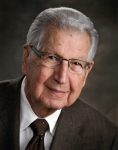
Alison Lebovitz (photo from Jewish Federation of Greater Vancouver)
The original meaning of tikkun olam, as seen in the Talmud, was to “decorate, beautify or refine” the world. The modern meaning of “repairing” the world came to be emphasized much later, in kabbalistic writings. Alison Lebovitz was taught the importance of this older sense of tikkun olam by her grandmother Mimi, though she had a different way of putting it: “Pretty is as pretty does.” In the Jewish ethical context in which she was raised, “beautiful actions” meant making the world a better place. To this day, that priority shapes Lebovitz’s life.
Lebovitz is among the speakers who will help launch the annual campaign of the Jewish Federation of Greater Vancouver on Sept. 22, with this year’s FEDtalks.
Growing up in Montgomery, Ala., Lebovitz was an active volunteer in the Jewish community. One summer, she worked with refuseniks, who had come to Birmingham as refugees. Seeing them clustered around a shelf offering several different kinds of toothpicks, paralyzed by the alien surfeit of choices, unable to select a brand, Lebovitz had a visceral confrontation with the way people lived outside of her middle-class American bubble, and how much our own over-abundance of resources should inspire us to be givers.
After moving to Chattanooga, Tenn., Lebovitz became involved with the documentary Paper Clips, working to have it shown in more schools. Paper Clips takes place in the rural Tennessee community of Whitwell, where a middle-school class attempts to understand the magnitude of the Holocaust by collecting paper clips, each of which represents a human life lost in the Nazis’ slaughter of six million Jews and millions of others.
For Lebovitz, this work naturally developed into her initiative One Clip at a Time, which is a program for taking kids from the message of Paper Clips further, into personal application and action. Students discover ways to make positive changes in their own classrooms and communities and are encouraged to continually look for ways to make a difference. “For me, growing up,” Lebovitz told the Independent, “the question my family always asked about any idea was, ‘So what?’ What does it mean in the real world? Next was, ‘Now what?’ How are you going to put that into action?”
In addition to her work with One Clip, Lebovitz has been involved in an impressive roster of other activities. For 20-plus years, she has written a column on the trials and tribulations of daily life and lessons learned called “Am I There Yet?”; columns of which were published as a book by the same name. She is host of the PBS talk show The A List with Alison Lebovitz, and is a regular public speaker, including for TED Talks.
Lebovitz views herself as a “curator of stories” and an entrepreneur with a passion for social justice. These two themes will coalesce in her FEDtalks presentation in Vancouver, where she plans to speak on “the power of story and the power of community.” She said the end game, for her, is to light the torch of the next generation and invite them to run along with us, but then to also pass on the flame to the generation that follows them.
FEDtalks takes place at Queen Elizabeth Theatre on Sept. 22, 7 p.m. For tickets and information about all the speakers, visit jewishvancouver.com/fedtalks2016.
Matthew Gindinis a Vancouver freelance writer and journalist. He blogs on spirituality and social justice at seeking her voice (hashkata.com) and has been published in the Forward, Tikkun, Elephant Journal and elsewhere.
Left to right, reciting the Four Questions at the Okanagan Jewish community’s Passover celebration: Adarah Challmie, Ben Levitan, Jordan Spevakow, David Spevakow, Samara Levitan, and Kate Spevakow. (photo by Misty Smith)
Kelowna’s Jewish community may be small, but it’s poised for growth. The latest development: an expansion of its Hebrew school’s curriculum.
Led by the family of David and Natalie Spevakow, who moved to Kelowna from Calgary some 13 years ago, Hebrew classes were first provided last year. Now, more Jewish content will be added to the lessons, as well.
At the moment, the Spevakows are spearheading this task. Parents lead classes every Monday after school, with kindergarten to Grade 3 first, followed by grades 4-to-7. The parents rotate each week, teaching the kids about Jewish traditions and the Hebrew language, prayers and blessings. Currently, there are 14 students in total (two of whom are Spevakows).
“Trying to have a Jewish life in a small community can be a challenge,” said Natalie Spevakow. “I would say our congregation at the Okanagan Jewish Community Centre is about 100 members, but only 25 to 30 are active members.
“We have a visiting rabbi who comes once a month, Rabbi [Shaul] Osadchey from Beth Tzedec congregation in Calgary. We set this up to bridge the gap with our communities, and that’s been wonderful. With us having young families, we’ve all decided that it’s important that we get together, and we wanted to build a Jewish community for ourselves and our kids.”
The Spevakows are looking to hire a part-time teacher to start in September and work through June. They are searching for a creative, energetic person knowledgeable in Hebrew and the Jewish traditions to teach children ages 4 to 14. The position involves two hours of teaching a week, plus preparation time, and the teaching material is provided. In addition to an hourly wage, the teacher would receive a free annual family membership to the Okanagan JCC. (Interested readers should call Anne at the OJCC, 250-862-2305.)
“All of our parents just want our kids to be with other Jewish children and get a sense of what it is to be Jewish,” said Spevakow.
“We also try to get together with our Hebrew school every few months for a potluck,” she added. “When we have the visiting rabbi come, we do a potluck with the rabbi and do services with our children and our families as well. We make that a time to get together and bring the community together.”
Dressed for Purim, left to right: in the front row, Bria Tizel, Anderson Parnes, Kate Spevakow, Ryder Golbey, Skyla Golbey and Chase Golbey; in the back, Jordan Spevakow, Abbey Parnes and a friend, and Adarah Challmie. (photo by Natalie Spevakow)
As of now, all the children involved in the school are Canadian-born, but there are Israeli-born children who will be joining classes when they come of age. The class curriculum is a combination of programs that the Spevakows sourced online with guidance from Osadchey. Parents are encouraged to take material home to practise during the week.
“The learning works better if they do take stuff home,” said Natalie Spevakow. “I know, for the little guys, they’re just learning the Hebrew letters and can repeat the words they learned…. We try to make it hands-on and more fun for them.”
Looking ahead, Spevakow feels that the Jewish community is growing, anticipating that one day it will be big enough to warrant more frequent visits from Osadchey.
“But, right now, with our smaller numbers, it’s very difficult for us to finance having a rabbi here all the time,” she said. “As is, we’re making it work, getting our kids educated and getting the resources we can.”
The older students are learning to lead Friday night services, with the goal of having them lead a service by May 2017, and then again, have them lead a service with Osadchey.
“We’re not on our own, trying to make things up on our own,” she said. “It’s just a matter of people making time for their kids, so the program works. I think all the parents recognize they want this for our kids and are willing to put in their time.
“We used to do it on weekends, but, with so many of us really big into skiing, it wasn’t working out. So, weekdays are definitely working better for us.”
They also recognize there may be some older members of the community who may be interested in helping with classes, so they hope to bridge the gap and find ways to bring them in, too.
“There’s something to be said about a small community, in that you really get to know all your members,” said Spevakow. “They truly do become an extension of your family. You realize that anything you’d like to see happen, things that, in a larger community you might have taken for granted because it’s available, in a small community may not exist yet…. Connecting on a deeper level with the people in our community, figuring out the assets that each can bring to the table, has really benefited our community. Knowing everyone’s faces really helps.”
Vancouver Hebrew Academy head of school Rabbi Don Pacht, right, presents Joseph and Rosalie Segal with a Stanley Cup-inspired Kiddush cup. (photo by Jocelyne Hallé)
Vancouver Hebrew Academy has outgrown its current facility and is looking to build a new school. It’s in the early stages of a capital campaign to raise $18 million, of which almost 15% has been pledged to date. Its annual Summer Garden Party added to those funds – and it also celebrated the school’s impact, the broader community, and Joseph and Rosalie Segal for their “lifetime of commitment to our Jewish future.”
The party was held on July 21 at the home of Lorne and Mélita Segal. The other event ambassadors were their siblings: Norman and Sandra Miller, Dr. Mark and Tracey Schonfeld, and Gary and Nanci Segal. The night was emceed by Howard Blank and catered by Chef Menachem.
Emcee Howard Blank in action. (photo by Jocelyne Hallé)
The evening’s program noted that VHA’s facility, which it rents from the Vancouver School Board, “doesn’t provide the space and the tools for modern education,” and doesn’t allow for growth. “The main building was built in the 1940s. Three portables have been added. The current 12,000-square-foot space is insufficient and well below the area standards recommended by the Ministry of Education for elementary schools.” VHA’s vision? “A new home for Torah education.”
Starting off the formal portion of the evening, Elizabeth Nider, co-chair of the VHA board of directors, thanked Joe and Rosalie Segal, “not just for being our honorees, but for providing an inspiration and example to our community of what it means to give.” She said this is a value that the teachers and staff of VHA are effectively imparting to students.
By way of example, Nider related the story of what happened three years ago, when her father-in-law, Marvin Nider, was diagnosed with pancreatic cancer. Her son, Yosef, who was 6 at the time, asked her and her husband what he could do to help. Over the course of a few weeks, Yosef planned and held a violin concert, raising more than $10,000 for the B.C. Cancer Foundation, “knowing that this money might not help his grandfather, but would maybe help others with cancer in the future.”
The most meaningful part for the family, she said, was that her father-in-law could watch the concert on Facetime from his hospital bed. “To us, giving back means giving and not expecting anything back. It means giving because you know it’s the right thing to do. And I thank Vancouver Hebrew Academy for teaching our children the importance of giving, and I also thank Joe and Rosalie for leading by example.”
In his dvar Torah, Rabbi Don Pacht, VHA head of school, gave a brief lesson on the mitzvah of charity, “the commandment to give and to offer assistance.” One of the most known lessons is that of the half-shekel, he said. “Everyone in the community was invited to participate and the funds raised would be incorporated into the treasury of the Temple and would benefit the entire community equally.”
“Charity is a two-way street,” he added, talking not only about those who give – making special mention of the evening’s honorees – but the receivers. “For those of us who do receive, it creates an obligation, wherever possible, for us to give back. And that is the value we try to impart at the Hebrew Academy for our families, for our students.”
VHA class of 2008 alumna Kira Smordin said, “VHA gave me the values and the skills of a Torah education, a love for my Jewish heritage, the ability to navigate across the broad spectrum of the Jewish world and the tools to engage and thrive in the secular one.”
Smordin spoke of a couple of teachers in particular who inspired and encouraged her to become a teacher herself.
“This past April,” she said, “I finished my second year of a five-year dual degree arts and education program at Queen’s University in Kingston, Ont.”
As part of the curriculum, she has to do an annual teaching practicum and, this year, she chose VHA. “My teaching practicum was the perfect opportunity for me to give back to a school and a community that has given so much to me,” she said, adding that the most important lessons she learned at VHA were about chesed (compassion) and tzedakah (charity), and that the Segals “are those lessons come to life for me…. You demonstrate by example what it means to give back. You set the bar high and challenge all of us to reach for it.”
Judy Boxer-Zack, VHA class of 1996, added her reflections.
She compared a community to an orchestra, in which everyone has a part to play. She then shared why VHA is close to her heart, and a bit about Chimp (Charitable Impact), the organization for which she works.
At VHA, she said, students were taught to treat everyone with respect, dignity and a sense of inclusiveness. “What naturally flowed from this for us was a distinctive sense that we had a responsibility for our local and broader communities. This was one of the many ways that VHA was setting the stage to inspire the next generation of Jewish leaders.”
And it specifically inspired Boxer-Zack in her career path. She has worked for a variety of nonprofits, leading up to her job at Chimp, and she was visibly proud to introduce Ariel Lewinski, vice-president of Chimp, who was the next speaker.
Recently, Lewinski and his wife, Rachael, had met with Joe Segal, learning a bit about Segal’s life and business endeavors. “What struck me,” said Lewinski, “is how Mr. Segal was so proud to mention that his children and grandchildren have carried on in this tradition of giving back, and thus creating a family legacy of giving.”
Lewinski noted, “We are all here tonight, in some capacity, because we value the importance of Torah education and recognize that, regardless of how each of us chooses to raise our children, a Torah education and an institution that serves that purpose is at the foundation of any vibrant and diverse Jewish community.”
Lewinski’s wife is a VHA alumna and currently sits on the executive board; his mother-in-law, Ruth Erlichman, was the board’s first president and currently sits on the board of governors; and his son, Yaakov, will be starting school at VHA in September. He said that he and his family are such strong supporters of VHA because not only does it provide a strong Torah education but also an excellent secular education.
Lewinski spoke about Chimp, and its objective of reversing the trend of declining charitable giving in Canada by creating and nurturing “a culture of giving by making charity accessible and an everyday part of life.” Everyone at the garden party was given a $100 gift from Chimp to give to any charity, or charities. During the proceedings that followed, Hodi Kahn challenged attendees to give to VHA, saying that the Kahn Family Foundation would match all donations, up to $10,000. As of Tuesday, with 15 days left in the fundraiser, more than $17,000 of the $20,000 goal had been donated.
Dr. Peter Legge and his wife, Kay, provided a copy to every family in attendance of his book Lunch with Joe. (photo by Jocelyne Hallé)
Another type of donation was also presented during the evening, with Dr. Peter Legge and his wife, Kay, providing a copy to every family in attendance of his book Lunch with Joe, which features a biography of Joe Segal, shares some of Segal’s philosophies on business and life, and includes the stories of more than 90 people who have had the chance to lunch with Segal at the Four Seasons Vancouver.
Addressing the honorees, Erlichman said she has had many meetings with Joe Segal over the last 18 or so years. “I always came away not only with material support, but practical suggestions to move the needs of our school forward,” she said. “You and Rosalie have been and continue to be incredible mentors – so many of us have benefited from your leadership and generosity of spirit.”
Pacht then presented the Segals with a Stanley Cup-shaped Kiddush cup. Just as the blessing over the wine helps us transition into Shabbat, said the rabbi, “you have also taught us how to take the mundane and to elevate it to the spiritual. The way that your family supports the community is exceptional in every way. It’s inspiring for every one of us here, and countless generations of children and families at the Vancouver Hebrew Academy have felt and will always feel the impact of your family.”
The inscription on the cup recognizes the Segals’ “lifetime of commitment to our Jewish future.”
When Joe Segal spoke, he acknowledged that, while he and his wife had received many accolades during the night, they were not the only ones deserving. “Everybody in this room, I’m sure, has had a special affinity,” he said, “something that was important to them [to support]…. The important thing in life is to do what you can. And the measurement is not how you do it or how big you do it, but doing it the right way.”
Segal described VHA as a “very worthy institution” because it is a “nurturing breeding ground of understanding and of belonging and of responsibility.”
He added – sharing part of a conversation from earlier that day – that Jews comprise such a small percentage of the world’s population. And so, he said, holding back emotion, “This is directed to you, Rabbi Pacht, because what you’re doing is so important – you’re planting the seeds for the evolution and the continuation of the race. Thank you.”
Naomi Hazon’s daughter, Maayan Cohen, with the striped sleeves, has been attending Beth Tikvah’s Shalom Preschool for a year. The youngsters have supervised access to an outdoor play area and garden. (photo by Naomi Hazon)
Watching parents pick up their kids at Beth Tikvah Congregation’s Shalom Preschool and then touring the facility with teacher Esther Karasenty once the hallways had cleared, it is hard to believe that only a year ago, the program was in danger of closing for lack of enrolment. No such problem now, however, and parents wanting to check out the school for their 2.5- to 5-year-old should visit sooner rather than later.
Karasenty has been teaching at Shalom Preschool since 2008.
“Esther has the skills and training to work with children and a very natural ability to connect with children…. She’s able to build trust and make connections,” parent and schoolteacher Naomi Hazon told the Jewish Independent about Karasenty.
Karasenty is “the next best thing to when Mommy’s not around. I don’t feel worried, ever, when I leave my daughter here,” Hazon said.
In addition to her teacher credentials and extensive experience – in early childhood education and instruction, and in teaching special needs children – Karasenty also speaks five languages: English, Hebrew, Portuguese, Spanish and French. Yet, even with such a capable teacher, when Hazon went to register her daughter Maayan last year, she was told that the preschool was probably going to close within a year because of low enrolment.
About that situation, Karasenty said, “The population around here changed a little bit. Young couples started selling their homes and moving away from Richmond, so we didn’t have a lot of new children that belonged to Beth Tikvah itself,” and the preschool was previously “directed toward the community of Beth Tikvah.”
When Hazon found out that the preschool she herself had attended as a child might close, Karasenty said, “She just said no.” Hazon “worked really hard to bring it back to life. It was amazing,” said the teacher. When she joined forces with Beth Tikvah to open it up beyond the synagogue community, “she reached out to everybody and that made the difference,” said Karasenty.
“In the matter of a few months, we had several open houses,” said Hazon, as well as “families through in the evenings.”
Hazon also contacted Lissa Weinberger from Congregation Beth Israel, who sent an email to the Jewish children’s book mail-out program PJ Library, to build “community connections and get the word out.”
As well, Beth Tikvah hired a new program director, Hofit Indyk, who has worked with Hazon to advertise and market the preschool.
“We have updated our website and we advertise more on social media,” said Hazon.
Preschoolers whose families are not members of Beth Tikvah “just pay a slightly different fee for being non-members,” Hazon explained, “and members’ children are obviously welcome, and we are also open to non-Jewish families that are also in our community.”
This fall, five of the eight students will be Jewish. Other cultures represented include Japanese and Indian. “So, we have really mixed families,” said Hazon.
“Even within the Jewish families,” she added, “it’s often a place where families who have mixed marriages and maybe one parent hasn’t converted, they feel welcome here.”
Hazon shared the story of a family who recently moved here from Brazil. “Their child speaks barely any English and, by word of mouth, they hear that [Karasenty] speaks Portuguese, and [their son] is able to speak his first language with her and he was able to settle in right away.”
When Hazon was signing her daughter up for Shalom Preschool last year, the Jewish Community Centre of Greater Vancouver program for 2-year-olds had a lengthy waiting list. She describes Shalom Preschool as a “hidden gem” because it is providing Jewish education to her daughter “with an incredibly gifted and talented teacher in a small group setting and it’s local and, you know what, it’s affordable … and it’s inclusive.”
Karasenty explained her approach to teaching. “I see my position in the class as a facilitator. I facilitate the children’s interaction with the world around them. I facilitate their interaction with each other and I give them skills to communicate and to express their needs…. I respect children. I don’t lie to them, I always tell them the truth. I always see them as intelligent human beings. They may be short human beings, but they are human beings.”
Karasenty derives her approach from Maria Montessori who, explains Karasenty in Beth Tikvah’s December 2015 newsletter, “was an Italian physician, educator and innovator, acclaimed for her educational method that builds on the way children naturally learn. At Beth Tikvah Shalom Preschool, I follow those guidelines, creating an environment that will promote children’s development: offering them cognitive, physical and emotional experiences that will help them in becoming critical thinkers, human beings who will have the clarity of vision to direct and shape the future of our society.”
As the Jewish community becomes more dispersed – the latest figures cited by the Jewish Federation of Greater Vancouver show that 46% of Lower Mainland Jews now live outside of Vancouver – Hazon said, “It is important that people access what’s locally available to them and that you give back to your community to keep things going.”
“Beth Tikvah is here,” said Karasenty, “to keep on the feeling of community.”
Shalom Preschool runs Monday through Friday, 9 a.m.-noon, with Shabbat-themed programming every Friday. The preschool is still accepting registration for the fall. For more information, visit btikvah.ca/learn/shalom-preschool or call 604-271-6262.
As the Jewish community expands into Coquitlam and other cities in the Lower Mainland, there must be an adjustment in the allocation of community resources. (photo by Greg Salter via Wikimedia Commons)
The face of Vancouver’s Jewish community is changing, with 36% born outside of Canada – the largest percentage in any Jewish population in the country.
In the Grade 1 classroom at Richmond Jewish Day School, half of the class is learning English as a second language, its students hailing from Israel and Argentina and speaking a mixture of Hebrew, Russian and Spanish.
Abba Brodt (photo from Abba Brodt)
“There’s definitely a growing number of Israeli families in all our Jewish day schools,” said Abba Brodt, principal at RJDS. Among them is the second wave of Russian Jews, comprised of Russian emigrés who made aliyah as children and moved to Vancouver after doing army service in Israel and starting their families. “They maintain strong Russian ties but have an incredibly strong connection to Judaism and Israel,” he said.
The new arrivals place extra demands on Jewish day schools in terms of meeting their children’s language needs, and RJDS has had to shift resources internally so the children of new immigrants can learn successfully in class.
“When people come, what’s our obligation to them?” Brodt pondered. “They want their kids to get a Jewish education as they get established. Many of these parents come without jobs, are not established financially and are trying to adjust, but it takes many, many years. The only menschlik thing to do is to open our doors, figure it out and let them know they’re not a burden at all. I think that’s the right approach for any Jewish organization in town. The faster we help them get on their feet, the better for the community.”
Adjustment is easiest for the youngest children. Brodt recalled a Russian-Israeli family that arrived in June 2014 with a child who couldn’t speak a word of English. “He entered kindergarten and by December that year he was speaking to his parents outside of school hours in English!”
Cathy Lowenstein (photo from Cathy Lowenstein)
At Vancouver Talmud Torah, head of school Cathy Lowenstein has also witnessed an influx of new immigrants from Israel, as well as from Brazil, Estonia and Hungary. “For students in the younger grades, ESL support isn’t as much of an issue, as they can really immerse themselves in language much faster than students in intermediate grades. But, over the past few years, we’ve increasingly had to allocate budget to students who require ESL support,” she said.
That can be difficult because the ESL needs vary year by year. “Often, these students don’t present until late summer, so we’re left trying to reallocate dollars in August so that we can properly help them transition into the school,” she explained.
Tuition assistance is provided on a case-by-case basis, Lowenstein said. “Even though we may have allocated our cap, we do our very best not to turn away a family wanting a Jewish education,” she said.
The high cost of living in the Lower Mainland is having far-reaching effects on the 26,250 Jews who call this corner of the West Coast home. Approximately 14,000 of them live in Vancouver, close to 6,000 in Richmond and the remainder in outlying cities including Burnaby, New Westminster, Port Coquitlam, Coquitlam, Port Moody, Maple Ridge and Langley, where Jewish resources are few and far between. That’s because the high price of housing forces many new arrivals into these outlying areas, where accommodation is a little more affordable.
While RJDS has space available for more students, the challenge lies in reaching those Jewish families who live in the suburbs.
“We know there are 700 Jewish school-age kids in the Tri-Cities of Coquitlam, Port Coquitlam and Port Moody and, as much as the schools may want them, how many families are going to have their kids get on a bus for an hour’s commute each way?” Brodt said. “You have to be super-committed to do that when there are good public schools around. If I could create a pipeline to Burnaby, I’d do it, but the possible customer base there is not ready to make that sort of commitment. They’re managing their Jewish lives out there, as is their right.”
Shelley Rivkin (photo from Shelley Rivkin)
At the Jewish Federation of Greater Vancouver, vice-president of community affairs Shelley Rivkin noted that more than 850 children now live in underserved areas beyond the borders of Vancouver and few are receiving any Jewish education. “With community support, Jewish educators can develop innovative programs via which these kids can access that education, sharing fully the richness of our traditions and strengthening their Jewish identities,” she said.
In one such program, Federation collaborated with the Jewish Community Centre of Greater Vancouver and funded a pilot project to enable Jewish children living in Coquitlam, Port Coquitlam and Port Moody to attend Jewish summer day camp. The project made transportation and fee subsidies available to 22 kids.
Federation has established a regional communities task force that began work last month. In the meantime, the organization contributes to a shuttle bus in Richmond that helps seniors attend various community activities, and Burquest seniors can enjoy another day of programming thanks to additional funding provided to Jewish Family Service Agency. For young families, PJ Library is an important outreach program, Rivkin said. “For many young families who are raising children in interfaith households and/or who live in the suburbs, PJ Library is a primary Jewish connection. Recently, 100 people attended a PJ Library Chanukah event in Coquitlam.”
Federation is seriously focused on the future of the Lower Mainland’s Jewish community and anticipating programming to reach its needs over the next 15 years.
“Our population of seniors is expected to double by 2030 and an increased number of them will be 85 or older, so programs and services for this group will need to be expanded,” said Rivkin. “As issues of affordability persist, we expect there to be more Jews moving to more affordable suburbs that have little or no Jewish infrastructure. We expect these regional communities to play a larger role, and Jewish Federation will increase its focus on programs and services to reach them.”
The cost of living in Vancouver will likely continue to impact those who pay a premium to live near Jewish services and institutions, but find that the cost of Jewish life prevents them from participating. “We expect that increased subsidies for program participation will be needed,” she added.
According to the National Housing Survey in 2011, 16% of the Lower Mainland’s Jewish community lives below the living wage of $36,504. Among Jewish immigrants to the Lower Mainland who arrived between 2005 and 2011, that low-income rate is 25%. As one communal effort in dealing with this issue, Tikva Housing Society will expand the affordable housing stock for the Jewish community by 42 additional units in Vancouver and Richmond by 2017.
Lauren Kramer, an award-winning writer and editor, lives in Richmond. To read her work online, visit laurenkramer.net. A longer version of this article was published in the Canadian Jewish News.
Aaron Friedland at Semei Kakungulu High School in Uganda. Friedland has written the book The Walking School Bus, both as a first reader but also as a means to generate funds for students to access education. To get it published, he has started an Indiegogo campaign. (photo from Aaron Friedland)
During high school and elementary, “it was too easy for me to miss school,” said Aaron Friedland, currently a master’s in economics student at the University of British Columbia. In other parts of the world, children walk great distances to attain an education.
“Five years ago, I wrote a children’s book called The Walking School Bus,” Friedland told the Independent. It was “written with the realization that students in North America really take access to education for granted.”
It was on a trip to Uganda and South Africa, he said, when he really began to understand “the distances students had to walk to obtain an education and it was startling.”
Data from the Uganda National Household Survey Report 2009/2010 indicate that 5.5% of children aged 6-12 do not attend school because it is too far away, and the average high school-aged student must walk a distance of 5.1 kilometres to the nearest government school, more than 10 kilometres every day.
“I wanted the book to serve a purpose and the purpose was twofold. I wanted it to raise awareness … that students have to walk,” Friedland said about The Walking School Bus. “But I also wanted it to be a means to generate funds for students to access education and so, in that case, I’d say the school bus itself is metaphoric and it represents access to education.
“I submitted my manuscript to a publishing house just under a year ago and it was well received, so we started moving forward. But, in order to really have a book come to fruition, it costs quite a bit of money.”
On Nov. 9, Friedland started an Indiegogo campaign to raise $15,000 to cover the costs of publication, “everything surrounding the book,” which includes editors who specialize in children’s books and the illustrations. The campaign runs for 60 days.
The Walking School Bus has the capacity to “act as a first reader and, while it does have a picture book component, I’d also like it to serve as a coffee table book and a symbol for interfaith collaboration,” said Friedland.
Friedland’s concern about and involvement in interfaith work began in 2010, when J.J. Keki, a member of the Ugandan Abayudaya Jewish community and founder of the Delicious Peace fair-trade coffee cooperative, was invited to King David High School. Many students, including Friedland, “formed a pretty special bond with him.”
A bond that continued for Friedland. “When I was in first year [university] – while all my friends were going to Mexico and hilarious holidays – I went to Uganda with my family,” he said. “It was an amazing experience for us. We benefited so much more than the ‘recipient’ community. I recognized quite quickly that our aid had been negligible, but what it did for me was it provided me with a clear trajectory, which guided me for my four years at McGill.… At McGill, I started working with the Abayudaya community in Uganda, specifically with Delicious Peace…. What most amazed me – and my rationale for getting involved – was that they employed an interfaith collaboration model in which they united these previously disparate communities, the Muslim, Christian and Jewish communities, and formed one solid frontier in which they collaborated. In collaborating, there were a variety of positive spillover effects … you see higher levels of economic prosperity in that region on Nabagoya Hill than you do in comparable areas, you see how there is much more religious tolerance.”
About his experience in Uganda, Friedland, who has worked with UN Watch, said, “I have only seen the us-against-them mentality, and this is one of the first times I have ever seen this collaboration.”
About his most recent trip to Uganda, Friedland said, “Essentially, I have been working with three schools there as well as King David over here, kind of empowering their educational sector in the interfaith forum. And the three interfaith schools I’ve been working with are the three I’m the most motivated to help provide school buses.”
While interviewing students in Uganda, he said, “One of the girls that really stood out to me was a girl named Miriam, a lovely Jewish girl from [Semei Kakungulu] high school, an 18-year-old. She was telling me that, when she walks to school, she walks six kilometres in either direction. And, in extreme rainfall events, which is pretty much all of the rainy season, she will cross a river to school and, when she goes back, the river is often flooded and she cannot cross back, so that night she’ll spend at a friend’s.”
Friedland added, “When I think about the struggle that our counterparts make to go to school and we do not – we don’t have that drive. That is something I’d like to impress on people in North America. I’m not saying you have to feel bad, just appreciate your access and your ease in getting an education and take it seriously.”
The website thewalkingschoolbus.com was created by Friedland to support the book and bus project, and sales of T-shirts and various other merchandise go towards his efforts to increase access to education. He said, “I think, as a Jew in Vancouver, in a more liberalized society, that this is the model that we should be going for … we should be supporting interfaith.”
Friedland has most recently worked with a team to connect King David’s Marketing 12 class with the entrepreneurship class at Semei Kakungulu. About his master’s degree, he said he will likely be writing his thesis on “the positive economic spillover effects from interfaith collaboration and employing interfaith collaboration, as an economic development growth model in other places, particularly Israel.”
Left to right, keynote speaker Irwin Elman and panelists Rachel Malek, James Copping and Jess Boon. (photo by Cynthia Ramsay)
“Children are not the people of tomorrow but are people of today. They have a right to be taken seriously, and to be treated with tenderness and respect. They should be allowed to grow into whoever they are meant to be.”
Polish doctor, educator, writer and orphanage director Janusz Korczak’s philosophy and writing laid the foundation for the United Nations Convention on the Rights of the Child (UNCRC). Murdered in 1942 at Treblinka with the almost 200 children in his care, Korczak’s work and life remain relevant to this day.
Jerry Nussbaum, president of the Janusz Korczak Association of Canada (JKAC), was one of the many speakers on Sept. 29 to remind the approximately 70 people in attendance of this fact. “We hold this lecture series in his honor,” said Nussbaum, “because we seek to follow his example of respecting children and honoring the whole child.”
“How to Love a Child”: The Janusz Korczak Lecture Series is co-organized by the JKAC and the faculty of education at the University of British Columbia, with contributions from other faculties, universities, activists and advocates. The first of six lectures was called Keeping our Promise to Children: The Relevance of Korczak’s Legacy for Children Today. It featured as keynote speaker Irwin Elman, provincial advocate for children and youth of Ontario, and president of the Canadian Council of Child and Youth Advocates.
Other speakers included moderator Dr. Charles Ungerleider, director of research and managing partner of Directions Evidence and Policy Research Group, LLP; Marni Point, who welcomed attendees to the traditional and unceded Musqueam territory; Dr. Krzysztof Olendhi, ambassador titulaire, consul general of the Republic of Poland in Vancouver; and. Dr. Blye Frank, dean and professor, UBC faculty of education. The most poignant tribute came from child survivor Lillian Boraks-Nemetz, board member of JKAC, author and UBC instructor.
“Korczak has been my hero all my life,” she said. Both she and Korczak were among those held in the Warsaw Ghetto. She spoke of going to school secretly until one day two Nazis came in and pushed the teachers around (they were sent to prison) – “we children sat there frozen in fear for quite some time, then the teachers sent us home. The next day, the school was boarded up. And that is what I remember, clutching my father’s hand ever so tightly while looking into the cellar through a little window at the now-empty grey room, where once there was life, color and learning. I had lost my right to education.”
Her father took her to Korczak’s orphanage. Even though the doctor was not in, they were welcomed, and she saw the children reading and doing artwork, seemingly happy “inside this space, as if the horror of the ghetto and the threat of the always-impending danger didn’t exist. This was Dr. Korczak’s world…. I had the impression that the doctor also tried to raise the children’s spirits during the terrible times in which they lived.”
She described the deportations; she, her mother and little sister narrowly missing the transport cars to Treblinka when a commotion distracted the guards and her father managed to save them out of the line. “We were lucky, not so Dr. Korczak and his children, who were destined to walk along the same route.”
On Aug. 5, 1942, the Nazis came for the children of the orphanage. While he was offered a reprieve, “Korczak refused, saying I hate desertion and besides, my children need me.
“Father often spoke of that day and how Korczak’s 200 orphans were ordered out of the building and made to march through the Warsaw Ghetto with Korczak at the helm, holding a small child in his arms and one little one by the hand. They were carrying the green banner of King Matthew, the character in his [Korczak’s] popular book for children about a child king who fought for children’s rights…. No survivor who was there at that time can forget the long procession. Many wrote about it.”
Boraks-Nemetz said her father often spoke about Korczak and taught her his principles, principles she followed in raising her own children. She concluded her remarks with the poem “And Still They March” by Yala Korwin, before presenting the first JKAC scholarship award to UBC PhD student Matthew Lee for his work on children’s social and emotional development.
When Elman began his keynote address, he admitted that he only learned about Korczak about 15 years ago, on a trip to Japan, where he was invited to “help them learn about children’s rights and to help teach them to elevate the voice of children.” When visiting a children’s home – an institution that can have as many as 200 children living in it – a staff member mentioned Korczak and was amazed when Elman, a Jewish educator who had worked with children for 20 years at that point, did not know the name.
Elman has since learned enough to know that Korczak’s work and life are relevant. “In Canada today, there are approximately 350,000 children connected to care in one way or another…. Some say that there are as many as two million former Crown wards … in this country.”
Speaking of his home province, he said there were 23,000 kids in Ontario living in some form of care, 8,000-10,000 permanently (ie. Crown wards, which, in British Columbia, are called continued custody orders) – and they are not doing well. Of those, more than 18% are aboriginal; in British Columbia, it’s 60-65%; in other provinces even higher. “It’s not hard to understand and listen to and hear the echoes of the Truth and Reconciliation Commission’s report, and the need to address this over-representation of First Nations children across the country in our systems of care.”
In Ontario, he said, children can only come into care if a social worker (or somebody in such a capacity) has deemed the child in need of protection – from abuse or neglect – and a court has agreed. The children have not done anything wrong.
When the state takes children into care, said Elman, “You’re making a promise to them. The first thing, obviously, is, you’re protected now. The second thing is … if you’re permanently in our care, we’re going to take care of you … we’re going to ensure that you’re going to live to your full potential. And, when that child is brought into care, what do they hear? Maybe we don’t say it, but they hear, we’re going to love you, it’s OK now.”
But, he said, only 40% of children in care in Ontario graduate from high school, and that percentage doesn’t vary much between provinces; 43% of the homeless population of Canada have had an in-care experience. Young people connected to care are over-represented in the justice and mental health systems.
Elman shared many stories of his work as the province’s advocate. When somebody steps up for a child, he said – whether it be a community, foster parents, a group home, adoptive parents, anyone – “the government needs to say thank you, we’ve got your back, what do you need? We’ll do whatever is necessary, because we owe our children a home in which they are nurtured and loved…. That takes a whole different way of thinking about child welfare.”
He has been told, “We can’t legislate love.” His response is, “I don’t think you can legislate love, but I do think you can create conditions in which love can flourish. The government should be all over that… And, to do that, they need to ask young people and they need to ask children and they need to ask their caregivers in whatever form that is…. We owe that to children.”
If we took that approach, he said, if children in care were listened to, they would feel in charge of their own lives. If they knew what was in their files and had a say in what was written there, they would contribute to making policy, they would have a say in where they lived. Social and child-care workers would be trained differently, including respecting all the different cultures from which children in care come. “Many practical, revolutionary things … would happen in the way in which the system is run if children felt listened to.”
Panelists Rachel Malek, Jess Boon and James Copping – all members of the Federation of B.C. Youth in Care Networks – joined Elman on stage for a 35-minute Q&A. Questioners wanted to know more about the criteria for a child going into care, how to create a sense of belonging for a child and ensure their safety, how to reduce the number of children in care, the impact of poverty, and which programs in Canada reflect Korczak’s philosophy.
As the final question, the consul general asked the young panelists, all of whom had experienced the care system, “What does it mean to you to love a child?” Boon spoke of commitment, being there for the serious and fun times but also investing in your own education to give back to the community. Copping mentioned consistency in home, support for school, having someone on whom to rely through thick and thin. For Malek, it is to be vulnerable – to open your heart, to recognize that it’s a two-way street, to be willing to go the extra mile for a child.
The next lecture in the Korczak series takes place Oct. 29, 7 p.m., at UBC Robert H. Lee Alumni Centre. Registration is required via jklectures.educ.ubc.ca.
In the longstanding debate over whether collective narratives should be transmitted as capital-T truth, or whether they should be challenged and problematized, there is a flurry of activity around rethinking Israel education for the next generation. As if they were speaking to each other (they weren’t – neither creative team knew of the other), a short documentary film and a new curriculum have emerged to address an apparent gap in critical thinking around Israel.
The director of the short film Between the Lines, Ali Kriegsman, was frustrated with the kind of Israel-right-or-wrong messaging she received growing up in Jewish day school. In the film, she interviews students, rabbis, Jewish educators and professors who each suggest that it’s time to allow the light of critical thought into our community’s classrooms when it comes to Israel.
As a professor who teaches Israeli-Palestinian relations, I am well aware that the kind of one-dimensional Israel education that some students receive does not make them well placed to take in the more intellectual, critical-thinking approach that is the hallmark of higher education. But where the film makes its most counter-intuitive suggestion is in the area of Israel advocacy on campus.
The film suggests that even for those who want to create effective Israel advocates, the current tone of Israel education falls short. Kriegsman, who says she “wants to see improvement and justice in Israel,” believes that “antisemitism still exists in the world” and is troubled by the fact that the Palestinians “are marginalized and mistreated and settlements continue to expand,” puts it this way. She believes that a student who has been force-fed a simplistic view of Israel and arrives on campus where the discourse is almost inevitably contentious and polarized will do one of three things.
In one scenario, the student will become embarrassed by the actions of the country they were taught to idealize and thus choose to detach entirely. In another scenario, the student will draw on the “AIPAC”-style advocacy “bubble” they lived inside during Jewish day school and will become completely closed to any alternative narratives. In this scenario, the hypothetical student might become an “exaggerated version of a day school student” – discriminatory and racist. In a third scenario, the hypothetical student may feel “duped or betrayed” by her Jewish day school education and burn her emotional connection to Israel entirely.
Having premièred at a SoHo loft in New York City, the documentary – which received seed money from the Bronfman fellows alumni fund – is slated for a West Coast première in October sponsored by a Los Angeles synagogue.
Unbeknown to Kriegsman, as the film was being made, a rabbi in Madison, Wis., was creating a new curriculum that appears to address the conceptual gaps that Between the Lines identifies. Called Reframing Israel, the curriculum is meant to address what Rabbi Laurie Zimmerman saw as a major deficiency in Israel education at the elementary and high school level: “There was virtually no published material that asks students to think critically about the conflict.”
The rabbi wants kids to think in more complex terms, to be inspired to look at Jewish texts.
How do you cultivate compassion for both Israelis and Palestinians? How do you understand Palestinian stories?
Rather than emphasize a “love” for Israel, Zimmerman uses the term “connection.” As she puts it, “We pick one of the following: Eretz Yisrael (the Land of Israel), Medinat Israel (the State of Israel) and Am Yisrael (the Nation of Israel). We ask, What does it mean to be connected to each of these?”
She has been piloting parts of the program over the last couple of years. Last year, two 13-year-olds created a debate with each other on the question of the one-state versus two-state solution to the Israeli-Palestinian conflict. “It didn’t matter what they believed,” she said. Rather, the act of articulating the critiques was really valuable.
Some critics of this open-minded approach will claim that, to be agnostic about whether Israel remains a Jewish state (given that a one-state solution, in its democratic form, would basically spell the end of Israel as we know it) is itself a betrayal. Zimmerman, however, “trust[s] kids enough to draw conclusions that are sound and solid.”
As for what kind of Jewish student she hopes to send to campus once they have graduated from religious school, Zimmerman wants to send kids who are “inquisitive; have open minds, can evaluate an argument, apply their knowledge; research a position and make an informed choice. I guess that makes me radical since I’m not trying to send kids to campus to defend Israel. I care mostly that they go to campus and think deeply about being Jewish, about their connection to Israel, about Palestinian perspectives. The role of education is to create people who are actively engaged in their communities.”
Mira Sucharovis an associate professor of political science at Carleton University. She blogs at Haaretz and the Jewish Daily Forward. A version of this article was originally published on haartez.com.
An important tip from Israeli experts: children recall information better when they repeat the material aloud. This is the conclusion of a study conducted at Israel’s Ariel University by Prof. Michal Ichet from the department of communication disorders in collaboration with Prof. Yaniv Mama from the department of psychology and behavioral sciences.
They found that when children hear new information and then repeat it loudly and clearly, this significantly improves their ability to remember the words, compared with their memory of words spoken by someone else.
This simple “listen and repeat” method can be used to help even pre-reading students learn and memorize information – including facts, vocabulary and foreign languages – more effectively.
The study was conducted in Hebrew but is applicable to any other language of instruction, say the researchers.
“I personally have always thought that repeating something aloud helps me commit it to memory. Now we’ve found that the research that supports this theory is indisputable,” Ichet said.
The learning is not as effective if the children hear the words spoken by someone else or if they repeat the words to themselves quietly or silently.
Previous studies on the “listen and repeat” technique have focused mostly on adults who have the ability to read and write. The increase in an adult’s capacity to remember information using this method is about 20%. In the 5-year-olds tested by Ichet and Mama, the increase was as high as 35%. They theorize that repeating words aloud creates a pathway in the brain. These words then receive “preferential status” when being set into memory and thus become more familiar.
The researchers suggest that teachers, parents and caregivers take this tip to heart in order to improve young children’s mastery of new information.
Israel21Cis a nonprofit educational foundation with a mission to focus media and public attention on the 21st-century Israel that exists beyond the conflict. For more, or to donate, visit israel21c.org.
I always enjoy seeing my kids bring home assignments from Hebrew school, and last week was no exception. On a map of Israel were labeled five major cities whose names the students had to write in Hebrew. For my part, I delighted in reminding my son that we have relatives or friends in Jerusalem, Tel Aviv and Haifa, and near Be’er Sheva. There was only one problem with the map, I noticed. There was no Green Line. So, to the untrained eye, it looked like Israel’s borders span from the Mediterranean Sea to the Jordan River.
As I often do when I want to tease out a political conundrum, I took to social media. On my public Facebook page, I offered to donate $36 to charity for the first person who can show me a Green-Line-indicated map of Israel currently being used in any Jewish educational setting. Laurie MacDonald Brumberg wrote that a Washington, D.C., Jewish day school has a National Geographic map containing the Green Line hanging in the classroom. Karin Klein of Chicago showed me a Green Line map she said was used at a Schechter day school. And from Gabriel T. Erbs I learned that J Street U has launched an initiative to circulate Green Line maps to educational institutions. Apparently, URJ President Rabbi Rick Jacobs has agreed to champion this among URJ camps and Hebrew schools, according to a March 22 article published on JewSchool by David A.M. Wilensky. Gila Miriam Chait added that Yachad, a pro-Israel, pro-peace group in the United Kingdom, is following suit.
What is at stake in the mapping debate? We all know that Middle East maps are heavily invested with the symbolism of legitimacy and delegitimization. The Palestinians have long been accused of erasing Israel from their school maps of Palestine – both from the Palestinian Authority and from Hamas. An article in the current online Jewish virtual library makes precisely this point. It’s clearly ironic that we are doing the same thing we accuse our adversaries of doing.
Some might argue, however, that since the Green Line is an armistice line, not a border, that there is no need for Israel to include it. It is true that it is not a border, but neither does Israel’s international territory extend eastward from Jerusalem all the way to the Jordan River. The point is, the West Bank is under occupation – whether one sees the occupation as justified or not – and maps should reflect this geopolitical reality.
Now, beyond simply making more accurate and, therefore, educationally useful maps, what might a more politically informed Israel curriculum entail? From my kids, I have heard about the ingenious ways that Israel foiled the Egyptian invasion of 1948, including placing stones in irrigation pipes to create noise simulating artillery. My 8-year-old was impressed. I know that for Yom Ha’atzmaut, their Hebrew school served falafel, and I hoped and expected that my kids will learn some Israeli folk songs. Some folk dancing would be great, too. What I remain less certain about, however, is how much complexity about Israel’s future our kids’ schools are willing to impart. Will kids learn who the “Palestinians” are? I know that I am guilty of frequently muttering to them about “Israel and the Palestinians” without proper context. While narratives of inter-state war can be much simpler to impart, when it comes to the Palestinian civilian aspect of Israel’s founding, and the current military occupation over millions of Palestinians, it’s difficult to know where to begin.
When we learn about the past, it’s equally important to consider the future. In fact, no one knows more about the importance of historical memory in shaping today’s collective political outlook as the Jewish community. As Wilensky writes in the context of the maps, “it’s unpleasant for many to hear, but the final status of a two-state solution – if such a thing can ever be achieved – is going to rely heavily on the Green Line. Putting visual depictions of that reality before the eyes of American Jewry will go a long way toward showing them the somewhat unpleasant truths that will help build a more absolutely pleasant future.”
As for the J Street U’s map initiative, given that Jacobs has pledged to roll them out at Reform schools, I hope he will make Ottawa’s very own Reform Judaism supplementary school an early stop.
Mira Sucharovis an associate professor of political science at Carleton University. She blogs at Haaretz and the Jewish Daily Forward. This article was originally published in the Canadian Jewish News.