Skip to content
  • Home
  • Subscribe / donate
  • Events calendar
  • News
    • Local
    • National
    • Israel
    • World
    • עניין בחדשות
      A roundup of news in Canada and further afield, in Hebrew.
  • Opinion
    • From the JI
    • Op-Ed
  • Arts & Culture
    • Performing Arts
    • Music
    • Books
    • Visual Arts
    • TV & Film
  • Life
    • Celebrating the Holidays
    • Travel
    • The Daily Snooze
      Cartoons by Jacob Samuel
    • Mystery Photo
      Help the JI and JMABC fill in the gaps in our archives.
  • Community Links
    • Organizations, Etc.
    • Other News Sources & Blogs
    • Business Directory
  • FAQ
  • JI Chai Celebration
  • JI@88! video

Recent Posts

  • עשרים ואחת שנים בוונקובר
  • Supporting the Iranian people
  • The power of photography
  • A good place to start
  • When boundaries have shifted
  • Guitar virtuosos play
  • Different concepts of home
  • Broadway’s Jewish storylines
  • Sesame’s breadth and depth
  • Dylan Akira Adler part of JFL festival
  • Mortality learning series
  • A new strategy to brighten up BC
  • Sharing latkes and light
  • Johnson awarded for human rights work
  • Cherished tradition ensured … Silber Family Agam Menorah
  • Nothing as lovely as a tree
  • Camp welcomes new director
  • Popular family camp expands
  • A life-changing experience
  • Benefits of being a counselor
  • Camper to counselor
  • האלימות בישראל מורגשת בהרבה מגזרים
  • טראמפ עוזר דווקא לנושא הפלסטיני
  • New rabbi settles into post
  • A light for the nations
  • Killed for being Jewish 
  • The complexities of identity
  • Jews in time of trauma
  • What should governments do?
  • Annie will warm your heart
  • Best of the film fest online
  • Guitar Night at Massey
  • Partners in the telling of stories
  • Four Peretz pillars honoured
  • History as a foundation
  • Music can comfort us

Archives

Follow @JewishIndie
image - The CJN - Visit Us Banner - 300x600 - 101625

Tag: community

Letters offer insights

Letters offer insights

Prof. Debórah Dwork (photo by Jonathan Edelman)

Nearly two decades ago – and a full half-century after the end of the Second World War – a man in Switzerland cleaning out the apartment of his deceased aunt came across a stash of more than 1,000 letters. The discovery disclosed the aunt’s comparatively simple but valiant acts during the Holocaust and provides new insights into the lives of Jewish children and parents separated during the Holocaust.

The aunt, Elisabeth Luz, was an unmarried Protestant woman living near Zurich who appears to have stumbled into a role as the sole connection between hundreds of divided Jewish families. Because postal service between belligerent nations was restricted during the war, neutral Switzerland provided a potential channel for communication. Through what appears to have been happenstance aided by the compassion of a single devoted individual, thousands of letters made it to their intended recipients – and the record they provide demonstrates what families chose to say, and not say, in furtive missives in times of crisis.

The nephew knew that he had stumbled upon something important. He was familiar with the book Children with a Star by Prof. Debórah Dwork, a definitive study of the experiences of Jewish children under Nazism and the adults who helped them. He contacted Dwork to ask if she would like the letters. Dwork, Rose Professor of Holocaust History and founding director of the Strassler Centre for Holocaust and Genocide Studies at Clark University, in Massachusetts, now possesses the letters and has studied them for years. She will be in Vancouver in just over two weeks to speak at the community’s annual Kristallnacht Commemorative Lecture about what they tell us about families during the Holocaust.

Dwork cannot be certain how Luz came to be the intermediary for hundreds of families.

“From what I can piece together – and this is what I believe is the case – there was a refugee camp, sort of an internment camp, not a concentration camp, for refugees that had been established by the Swiss government in that town,” Dwork said. Luz went to the camp to give voluntary aid, Dwork believes, “to show with her presence that she cared about their plight.”

One of the men in the camp asked Luz whether she would be so kind as to send a letter to his wife.

“From there, it snowballed,” said Dwork. “Some of the letters that I have from the children, for example, say, ‘you don’t know me but Susie told me that you are an auntie who is willing to write to our mothers,’ and so on.”

The parents were mostly in “Greater Germany” – Germany and the areas it occupied. The children had mostly been sent to places thought to be safe, including Britain, France, Belgium and the Netherlands.

Remarkably, the letters do not end in 1945. In the course of being a conduit between hundreds of parents and their children, Luz became a confidant to many of them – “Tante Elisabeth” – and remained in contact with several who continued their correspondence. The fact that the collection of letters exists at all is due in part to the fact that Luz hand-copied each one, believing that this would be less likely to catch the attention of war-era postal censors. She maintained the originals.

“Parents sent their letter to her, she copied every letter and then sent it on to the children and the children did the same in reverse,” said Dwork.

Some of the children were on the Kindertransport, the effort to transfer Jewish children from Germany and Nazi-occupied Europe to the United Kingdom, while others were sent by their parents to places considered safer for Jewish children.

“There were a number of children who were sent to family members or to friends or to religious organizations by their parents independently, individually,” she said, adding that there is much to be learned from the letters. “It tells us an enormous amount about family, the importance of family and the way in which family members use letters as thread to bind the family together. I think also it tells us about how children absorbed, adjusted, adapted – or did not adjust or adapt – to their ever-changing lives.”

What the letters do not always indicate is the fate of the families who sent them.

“We know a lot about the children who went on the Kindertransport to Britain, because they survived,” said Dwork. Less is known about the children sent to Belgium, the Netherlands and France. “Many of them did not survive as the Germans conquered and occupied those countries,” she said.

Of those who continued corresponding with Luz long after the war, many had lost their parents.

“Because of the relationship that developed between the children and Elisabeth Luz, those who continued to write, by and large, were now young adults whose parents did not survive and she, Elisabeth Luz, was the last tie to their prewar and wartime life,” explained Dwork. “So, she had become their confidant and that’s very important, the way Elisabeth became a confidant to the parents and the children.”

Vancouverites should join her in November not only to hear specifics about the contents of the letters, but also to reflect on some of the broader issues raised by a collection of this sort, which is a focus of Dwork’s academic work.

“The larger question, I think, is how do people keep in contact?” she said. “What do parents in Greater Germany say to their children? And what do children tell their parents about their daily lives?”

While the letters represent voices from the past, they have much to say to people today. “This is a very human story,” said Dwork. “And, as we are looking at refugees today far-flung from one spot to another, it may help us to think about how each one is a member of a family.”

The Kristallnacht Commemorative Lecture takes place Nov. 1, 7 p.m., at Congregation Beth Israel.

Pat Johnson is a communications and development consultant for the Vancouver Holocaust Education Centre. This article first appeared in VHEC’s Zachor.


Format ImagePosted on October 14, 2016October 13, 2016Author Pat JohnsonCategories LocalTags community, Holocaust, Kristallnacht, VHEC
Helping build brighter future

Helping build brighter future

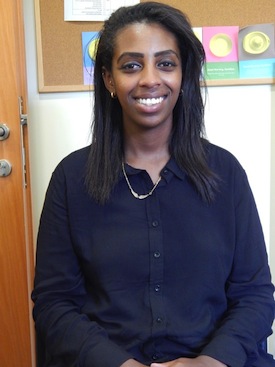
Jewish Federation of Greater Vancouver and the local Jewish community recently hosted Ethiopian-Israeli students Mazal Menashe and Ahuva Tsegaye. (photo by Cynthia Ramsay)

Every second year, the Jewish Federation of Greater Vancouver hosts two Ethiopian students from the Interdisciplinary Centre in Herzliya. This allows the students to come to Canada and intern in their chosen fields, giving them not only the educational experience but an advantage in finding work after graduation. The students also act as ambassadors for Israel while in the community and interacting with various local groups.

This year, Federation hosted Mazal Menashe and Ahuva Tsegaye. While in Vancouver for the month-long internship, the students stayed with host families Sam and Sandra Reich in Richmond and Ben and Nancy Goldberg in Vancouver; they spoke at synagogues, churches and schools.

photo - Mazal Menashe
Mazal Menashe (photo from JFGV)

In 1991, when Operation Solomon airlifted 14,325 Ethiopian Jews to Israel in 36 hours, Menashe and Tsegaye were babies. Tsegaye’s mother, who was a midwife, gave birth to her alone on the way to Addis Ababa for the airlift, on the outskirts of Gondar. Menashe, granddaughter of Qes (Ethiopian for rabbi) Menasse Zimru, was born in Addis Ababa while her mother and father awaited the Israelis.

Menashe and Tsegaye both grew up in Israel, overcoming poverty and occasional racism to become successful young women.

Upon arriving in Israel, Tsegaye’s family lived first in Jerusalem, then Haifa, then Kfar Hahoresh in the north and, finally, Migdal Haemek, where they still live today. Her mother is a homemaker, and her father, who works for the city as a street cleaner, is now semi-retired.

Menashe’s family first moved to an absorption centre in Mabu’im in the south, near Beersheva. They lived there for a year before moving to Netivot, where they stayed until Menashe was 6, and then to Ashdod, where they live today. Her mother is a caregiver for the elderly and her father works in a factory.

Both Menashe and Tsegaye served in the Israel Defence Forces.

Menashe was drafted to the IDF in 2010, and completed training in the Logistics Corps as an outstanding soldier. After serving in the Paratroopers Brigade for two months, she was asked to go into officers’ training, which she did, becoming responsible for a company of 150 soldiers. When she was released from the army after five years, it was with the rank of lieutenant.

Tsegaye served for six and a half years, the only member of her family to become an officer. She served in an air traffic control unit in the air force as an instructional officer, and completed her service with the rank of captain.

“Serving in the IDF was the most empowering experience of my life,” said Tsegaye. Menashe agreed.

photo - Ahuva Tsegaye
Ahuva Tsegaye (photo from JFGV)

Menashe and Tsegaye didn’t meet in the IDF, but rather at the Interdisciplinary Centre, where they are both enrolled. In August, Jewish Federation brought them to Vancouver to work as interns in their respective fields: Menashe in law and Tsegaye in organizational psychology.

“We feel so blessed, so appreciative for what the Jewish Federation has done for us,” said Tsegaye. “And we are very grateful to have the platform to be advocates for Israel abroad.”

Both Menashe and Tsegaye have faced many challenges to get where they are now. Ethiopians in Israel face racism, poverty and challenges related to cultural and linguistic integration. The two students were both present at the mass protests that took place in Tel Aviv and Jerusalem last year calling for an end to racism and police brutality against Ethiopian-Israelis.

Menashe and Tsegaye broadcast strength and optimism. “We cannot wait for other people to save us,” they agreed. “We are not waiting for a savior, we will work hard and make the change ourselves.”

The power to shape their own lives, and their optimism about their ability to make the lives they want, are recurring themes in Menashe and Tsegaye’s conversation. This is fitting for members of the generation that is changing the realities of Ethiopian-Israeli life in Israel. “Our generation is entering the professional classes,” noted Menashe. “We are making a new future for Ethiopian-Israelis.”

Tsegaye added that the younger generation of Ethiopian-Israelis gives her hope. She told of going to a kindergarten where a nephew is enrolled and seeing a black doll. “I had never seen a black doll before in my entire life,” she said. “The younger Ethiopian-Israelis are much more integrated. They see themselves as Israelis.”

For community members wanting to support Jewish Federation programs such as this one, the annual campaign runs to Nov. 30. For more information, visit jewishvancouver.com.

Matthew Gindin is a freelance journalist, writer and lecturer. He writes regularly for the Forward and All That Is Interesting, and has been published in Religion Dispatches, Situate Magazine, Tikkun and elsewhere. He can be found on Medium and Twitter.

Format ImagePosted on October 7, 2016October 5, 2016Author Matthew GindinCategories LocalTags annual campaign, Canada, community, Ethiopia, Federation, Israel

Connect yourself in

Are you Jewish and living outside of Vancouver? The Jewish Federation of Greater Vancouver wants to hear from you. Its Regional Communities Task Force has begun their work with a new survey to determine how best to engage Jews living beyond the borders of Vancouver, and they are asking you to respond.

From Whistler to Chilliwack, Federation wants to hear about the innovative and welcoming Jewish programs and services you – your friends and/or family – need close to your home.

The community is changing, with 46% of the Jewish community living beyond the borders of Vancouver, including many young families. They lack access to many Jewish community programs, services and institutions.

The fastest growing Jewish communities are Surrey/White Rock up 60%, Tri-Cities up 45%, Maple Ridge/Pitt Meadows/Langley up 23%.

Almost 25% of Jewish children live outside of Vancouver, and very few attend Jewish schools or camps.

A growing number of young families are intermarried and have limited or no connection to Jewish life.

Our strength as an entire community depends on our ability to embrace our diversity and to be flexible and innovative as we engage Jews in new and increasingly relevant ways. Take a moment to respond and to reach out to your friends, family and acquaintances for them to also take the survey at jewishvancouver.com/survey.

Posted on June 3, 2016June 3, 2016Author Jewish Federation of Greater VancouverCategories LocalTags community, Federation, Metro Vancouver
Transit is a Jewish issue

Transit is a Jewish issue

For most Jewish-related services – cultural events, organizational meetings, day schools, high school, camps, Jewish social services – travel is required. (photo by Arnold C via commons.wikimedia.org)

Although there are multiple levels of government in Canada, it is often said, there is only one taxpayer. So it is frustrating to see necessary public policy delayed by intergovernmental squabbling.

This is what’s happening right now with plans for the future of transportation in Metro Vancouver. A year ago, area voters rejected a referendum proposal that would have seen increased taxes to fund better transit. Stagnation has been the status of transit policy since then.

In the budget tabled in March, the federal government ponied up $370 million for transit in the region.

Last week, the provincial government announced $246 million over a three-year period to improve bus and SeaBus service, purchase more SkyTrain cars and launch “initial work towards new major rapid transit in Vancouver and Surrey.”

The provincial minister in charge of TransLink, Peter Fassbender, said he expects Metro Vancouver municipalities to raise $124 million more, for a total of $740 million over three years.

Mayors of Metro municipalities have a grander scheme – to the tune of $7.5 billion over 10 years, which they would see funded through transit fare and property tax hikes, the sale of some TransLink property and more tolls on bridges and roads.

In this space, we are more accustomed to taking on manageable issues like Middle East peace rather than the seemingly intractable difficulties of moving residents of Metro Vancouver from one part of the region to another. But the issue of transportation is having serious ramification for Metro Vancouverites and things will only get worse if something nearly revolutionary doesn’t happen soon.

This has already had and will continue to have specific implications for ethnocultural communities, including the Jewish community. Real estate realities have driven successive generations of Jewish community members out of the erstwhile “Jewish neighborhood” of Oakridge, the heydays of which will be recalled in an upcoming exhibit of the Jewish Museum and Archives of British Columbia.

Reflecting trends that transcend cultural boundaries, home buyers have moved in concentric circles in recent decades, outward from the city proper, first across the bridges to Richmond and the North Shore, then further east and south. Nearly half – 46% – of Metro Vancouver’s Jews now live outside the city limits, with recent years having seen notable increases in the Jewish populations of Surrey/White Rock, the Tri-Cities and the areas of Maple Ridge, Pitt Meadows and Langley. While there are nodes of Jewish life in each of these locations, there is no doubt that, for most Jewish-related services – cultural events, organizational meetings, day schools, high school, camps, Jewish social services – travel is required.

The Jewish Federation of Greater Vancouver has long recognized the particular challenges of providing services to and maintaining cohesion among a community spread across a large geographic space. A recent effort, Connect Me In, is surveying Jewish British Columbians who live outside Vancouver and asking how the communal umbrella agency can serve their needs.

Federation is trying to provide services to people where they live so that it is less necessary to come “into the city.” Yet even the best laid plans well executed cannot erase the barriers of time and space between, say, Squamish and 41st and Oak. Moreover, the delivery of services where Jewish people live will still require some movement … from the core outward.

Maintaining cohesion within our community in such a situation depends both on the ability of our community agencies to respond to the needs, as well as the desire of suburbanites to maintain connection to the Jewish community. It also depends, in ways we should not underestimate, on the simple ability to move from Point A to Point B in the Lower Mainland. Transit is a Jewish issue.

Format ImagePosted on June 3, 2016June 1, 2016Author The Editorial BoardCategories From the JITags community, Federation, Lower Mainland, transit, TransLink, Vancouver
Update from the Okanagan

Update from the Okanagan

Left to right: Evan Orloff, Melina Moore, Barb Pullan lighting the candles, Rebecca Morlang and Hilla Shlomi. (photo by Roger Tepper)

The Okanagan Jewish Community has been busy over the last couple of months. They are also gearing up for their annual golf tournament, which takes place in July.

On April 22, the OJC hosted a Passover seder at Summerhill Winery. Led by Allan Holender, approximately 150 people attended, including 30 kids under 12. Dr. Jessica Strasberg organized the children’s crafts and activities, Ronit Little made the charoset for all the tables and Steven Finkleman helped with many of the food preparations and putting together the 18 seder plates; David Spevakow and Barb Druxerman volunteered a great deal of their time on preparations and planning. Steven Cipes and his family, of Summerhill Winery, hosted the event.

photo - Writer and consultant Allan Holender leads the Passover seder with some young help
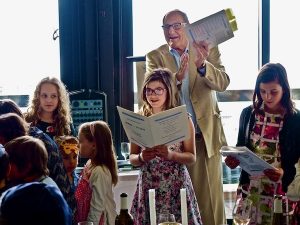
Writer and consultant Allan Holender leads the Passover seder with some young help. (photo from Okanagan Jewish Community)

Also in April, Cantor Russell Jayne from Beth Tzedec in Calgary came to the Okanagan to lead services. On May 7, with special guests from the International Christian Embassy Jerusalem (ICEJ) in attendance, OJC member Evan Orloff led the services, after which there was a dairy potluck. A new rabbi has been contracted for the High Holidays this year and the OJC is looking forward to having Rabbi Lawrence Seidman and his wife Linda – who is also a rabbi – join them.

On May 15, Orloff and fellow OJC members Ed Aizen, Max and Peggy Mandelbaum, Barb Pullan, Hilla Shlomi and Seymour Zidle attended a Holocaust remembrance service held at the Lakers Clubhouse in Vernon hosted by the ICEJ. The event was put on because members of the ICEJ were greatly disturbed by the rising amount of antisemitism in the world. The ceremony included speeches, candlelighting and the presentation of a copy of the names on Schindler’s list encased in a replica suitcase which was accepted by Orloff on behalf of the OJC. Orloff is a retired teacher in Kelowna; he dedicated much of his career to educating students about the Holocaust and why it is imperative to remember. Melina Moore performed the theme song from Schindler’s List and sang Hatikvah. The service honored the lives of those who died in the Holocaust and the resilience and courage of survivors, as well as saying “never again” and “no” to antisemitism and prejudice in all its forms. The OJC is very grateful to the ICEJ, led by members Gail Mobbs and Daniel Morlang, for putting on such a touching ceremony.

During this past month, the OJC has had seven groups of students, ranging from 30 to 50 students per group from four middle and secondary schools in the area, participate in its Talks & Tours, hosted by OJC members Finkleman and Orloff. The students heard a presentation on Judaism and then enjoyed challah and grape juice with an explanation of the significance. Some of the schools attend the seminars annually, finding the presentations educational and interesting.

Last but not least, the 19th annual OJC Golf Tournament is being held on July 21. The money generated from the tournament each year enables the OJC to continue bringing in guest rabbis and cantors and to provide programming for the community; this year, part of the proceeds will also help Canadian Blood Services, a charity chosen in honor of the late Sid Segal. There is still room available for more golfers (and hole sponsors) so, if you are interested in participating in this day of golf, food, drinks and social interaction, visit ojcc.ca or contact Anne Zazuliak at the OJC office, 250-862-2305 or [email protected].

Format ImagePosted on June 3, 2016June 1, 2016Author Okanagan Jewish CommunityCategories LocalTags community, golf, Holocaust, Kelowna, OJC, Okanagan, Passover
Community’s foundations

Community’s foundations

(photo by Cynthia Ramsay)

With the skyrocketing Vancouver real estate prices the talk of Canadian news media almost daily, less attention has been given to the fate of the many homes whose high property price-tags all but encourage demolition and rebuilds.

One Facebook group has been seeking to draw attention to the disappearing streetscape of Vancouver. With 10,000 followers, Vancouver Vanishes bills itself as “a lament for, and celebration of, the vanishing character homes in Vancouver.” Some houses – like one on West 15th, originally owned by an assistant salesman for the Canadian Pacific Railway – have already met their fate. Others are slated for demolition, with photos posted in the hopes that followers will register their protest with Vancouver City Council.

My late grandfather’s home – on Fremlin Street near West 54th Avenue – was recently torn down to make way for a generous new build. Purchased with my grandmother and their three daughters in the late 1950s, my grandfather lived in his mid-century vernacular bungalow for nearly six decades, until he died three years ago at age 97.

While it was spacious and modern by 1950s standards, my grandfather’s house probably wouldn’t have made it to the pages of Vancouver Vanishes. It was a standard bungalow with four modest bedrooms, generous entertaining spaces, a kitchen large enough to accommodate Passover and everyday dishes, and a spacious rec room with a wet bar for teenage dance parties hosted by my mom and aunts. With more room to spread out, it would have felt excitingly large to the three daughters and, soon, another girl they fostered, compared to the small character home on Quesnel Drive from which they had moved. But theirs wasn’t among the most celebrated Vancouver “heritage home” variety – the Storybook homes, or the Tudor, Georgian or Mission Revival structures.

Still, the Jewish community may want to pause to consider a special type of vanishing as more and more of these homes disappear. That is, the kind of community-building that took place within the four walls of my grandparents’ home, and in the homes of many other community leaders and activists of their generation.

In my grandparents’ home on Fremlin, there was organizing and affiliation with Schara Tzedeck Synagogue, then under the leadership of Rabbi Bernard Goldenberg and Rabbi Marvin Hier. As well, with three growing daughters, there were the activities of many youth groups: NCSY, Young Judea and Habonim. There was the founding and nurturing of Camp Miriam, where my grandmother was the first “camp mother.” There was much work to be done for Pioneer Women, for the Histadrut (Israel’s trade union association) and in the preparation of a weekly radio show my grandparents hosted on Jewish and Israeli themes. In between the many hours devoted to volunteer work, there were their small businesses to run – Clifford’s Jewellers in Kitsilano, and their real estate ventures.

Plus, there were Sunday waffle brunches for the large extended Margolis family – whose members had found their way to Vancouver starting in the 1940s after arriving in Winnipeg from Kiev two decades earlier – and visitors from Russia and Israel.

With their three daughters spread across Vancouver Talmud Torah, Kitsilano, Churchill and Eric Hamber secondary schools, there was a home library to nurture, classical music records to collect, family photos to display and a garden to tend: irises, tiger lilies, azaleas, rhododendrons, peonies and hydrangeas, and fruit trees – apple, pear and cherry.

By the time I was around, spending one memorable summer in the orange bedroom in the late 1970s, there were memories for me to make – like suffering my first wasp sting on the back patio – and hobbies for me to discover: there was a teach-yourself-to-type book and a learn-to-speak Spanish book to read, all while I took up tennis in the shadow of my grandmother’s formidable court skills. By Grade 8, having moved to Vancouver with my parents from Winnipeg, there were weekly dinners prepared for me by my grandfather between my school day at Eric Hamber and my Judaic studies classes at Congregation Beth Israel and at the home of Rabbi Daniel Siegel.

What is lost when a mid-century Vancouver bungalow is demolished? Wood siding, stucco, a large picture window, a tiled porch and a garden lovingly tended. But for communities, there is so much more: memories forged of childrearing, philanthropy and leadership. Luckily for Vancouver’s Jewish community, while the building materials of these homes may be gone, the scaffolding of a vibrant community – generations later – remains.

Mira Sucharov is an associate professor of political science at Carleton University. She is a columnist for Canadian Jewish News and contributes to Haaretz and the Jewish Daily Forward, among other publications.

Format ImagePosted on May 27, 2016May 25, 2016Author Mira SucharovCategories Op-EdTags community, housing, Vancouver, volunteerism

A healthy community

There are more than 26,000 Jews who live in Metro Vancouver. There is no possible way that a weekly newspaper can cover every event that happens, every milestone that is celebrated and every challenge that we face. But each week that we publish, we can provide a glimpse into the state of our community. And what we see is heartening.

Last week, for instance, our community hosted both Daniel Pipes and Achinoam Nini, two people firm and outspoken in their political beliefs. One could safely argue they represent near-opposite ends of the spectrum in this regard, and yet they both have a place and an audience in our community. This is healthy.

As well, while Nini’s Yom Ha’atzmaut concert sold out, there were some who chose not to attend because they disagreed with her politics. A handful of them protested peacefully outside of the concert; others chose to hold their own Israel Independence Day gathering. Our community can accommodate varied interests and opinions without coming apart at the seams. This is positive.

Currently on display at the Zack Gallery is a group exhibit inspired by Festival Ha’Rikud. The festival brought together dancers from Metro Vancouver, Miami and Kiryat Shmona to perform folk dances with elements from places such as Russia, Yemen, Georgia, Greece and Morocco. And the art exhibit, A Tapestry of Cultures, also celebrates “the diversity as well as commonality of the social groups and micro-societies that make up Israeli culture.” This is enriching.

With a strong understanding of their own culture and religion as their foundation, Vancouver Talmud Torah Grade 6 students have been exploring other faiths and spiritual practices. The students identified similarities and differences across the religions, and their essays show the breadth of what they’ve learned and the enthusiasm with which they have learned it. This is inspiring.

Tikkun olam even finds its way into the publication of a new novel for young adults, with the author donating 10% of the proceeds from sales to charity. And a high-tech entrepreneur is trying to save us from ourselves, and allow us to really – not just virtually – connect with each other via social media. These acts are motivating.

And these stories don’t even touch the surface. We are busy, engaging in the world around us, trying to make it a better place. When we do disagree, it is usually because we care so passionately about the same things. It’s worth stepping back now and then to acknowledge we are part of a community of which we should be deeply proud.

Posted on May 20, 2016May 18, 2016Author The Editorial BoardCategories From the JITags community, Festival Ha’Rikud, Noa, tikkun olam, tzedekah, Vancouver Talmud Torah, Yom Ha'atzmaut
Living at Victoria’s Hillel House

Living at Victoria’s Hillel House

Living at the Victoria Hillel House has provided Hannah Faber a space to engage with her Jewish identity in a holistic way. (photo from Hannah Faber)

When I decided to move to Victoria to finish my undergraduate degree at the University of Victoria, I was told by a longtime friend to look into the Victoria Hillel House as a place to live. At first, I was cautious because I had not been very active at the Hillel of my last university. Following that friend’s advice has turned out to be one of the most transformative experiences I have ever had. Living at the Hillel House has given me so many opportunities to be a part of the Jewish community, which has irrevocably changed my sense of Jewish identity.

Within the first week of moving to Victoria as a transfer student, I was asked by the Hillel director to volunteer at a lot of community events. There were two things that struck me deeply and had me admiring the local Jewish community. The first was how small it was and, therefore, how everything within it was such a labor of love. The second was how much older most people at community events were and how much they wanted young people to become involved. Even though I grew up in a relatively small Jewish community in Calgary, the question of whether or not young people would commit and engage in the Jewish community did not seem nearly as urgent as it does in Victoria. Victoria Jewry is made up of mostly older people who have dedicated their lives to the community and are looking for people to carry the torch.

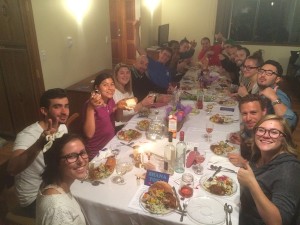
photo - The Jewish tradition of sitting down to a nice meal plays a large part at the Victoria Hillel House
The Jewish tradition of sitting down to a nice meal plays a large part at the Victoria Hillel House. (photo from Hannah Faber)

My ability to get involved with the kehilah is in part because I am a resident of the Victoria Hillel House. Living in the Hillel House has provided me a space to engage with my Jewish identity in a holistic way, to explore its many facets and intricacies. The space created is based on values like hospitality, generosity, tikkun olam, as well as inclusive and compassionate listening. I can ask questions about the intersections of feminism and Judaism in my life, and how social justice could be directly informed by my Jewish identity. It is a place where I have explored pertinent questions relating to my Jewish identity with other young Jews, been surrounded by Jewish culture, met members of the Jewish community outside of the university, as well as faculty, and done that all within the Jewish tradition of sitting down to a nice meal.

Hillel House has been a place for me to feel a sense of pride in my identity as a person who is part of a greater shared history. It is rare for one to find a place that validates oneself and simultaneously allows for personal growth. The Victoria Hillel House has done just that. It has played an integral part in allowing me to come into my Jewish identity and, for that, I am very grateful.

Hannah Faber is a Victoria Hillel House tenant, as well as the volunteer coordinator of the Jewish Students Association and an undergraduate studying theatre at the University of Victoria.

Format ImagePosted on January 29, 2016January 26, 2016Author Hannah FaberCategories Op-EdTags community, identity issues, UVic, Victoria Hillel
Survivors’ immense impact

Survivors’ immense impact

Holocaust survivors who came to Canada after the Second World War remade this country’s Jewish community.

Before survivors arrived in numbers, beginning in 1947, Canada’s Jewish community had a few poorly resourced social service agencies. The demands created by thousands of new arrivals – many with significant emotional and physical challenges – spurred the growth of Jewish communal organizations across the country. In turn, those survivors have had an impact on the community in the successive seven decades that is incalculable. The impact of the Holocaust – and the arrival of its survivors – is perhaps the defining factor in the development of Canada’s Jewish community.

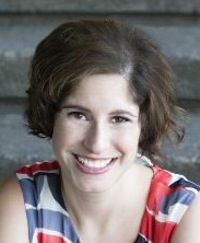
photo - Adara Goldberg
Adara Goldberg (photo from Cherie Smith JCC Jewish Book Festival)

“The Holocaust is a watershed moment and the scale of this watershed resettlement was unprecedented,” said Adara Goldberg, a Vancouverite and author of Holocaust Survivors in Canada: Exclusion, Inclusion, Transformation, 1947–1955. “Many of the agencies across Canada only came to be as a result of the Holocaust. Jewish Immigrant Aid Services [JIAS] did exist, but this was a small organization that only dealt with small numbers up to this point. Having some 35,000 people come in, in less than a 10-year span, really trampled the organizations.”

Survivors who moved to the United States joined a vibrant Jewish community already in progress, while those who came to Canada found a Jewish community with little infrastructure. What exists of the Jewish community and its social service agencies today was built, in large part, for the survivors and, subsequently, by them.

To an extent, there was an unwillingness among Canada’s existing Jewish community to address the Holocaust experiences of the newcomers – those who did not experience the Holocaust may have been afraid of opening wounds or been unwilling to hear the horrors others experienced. There was also a history in Canada of immigrants getting off the boats and throwing themselves instantly into building a new life, leaving the past behind.

Still, Goldberg said, there was a recognition by people like the head of JIAS that these immigrants had some very particular needs.

“The problem was availability,” she said. “This is uncharted territory. Social workers themselves and the Canadian Jewish community were only learning with the survivors about how to treat victims of trauma … the idea of post-traumatic stress didn’t really exist.”

Getting the newcomers integrated was not only a matter of meeting social needs, she added.

“There is also a legal element to that,” Goldberg said. “The fact is, refugees who came to Canada under the auspices of either the Canadian Jewish Congress, or who received support from JIAS or who had relatives sponsor them, were liabilities. If they didn’t find work, if they didn’t have a home, if they became dependent, they risked deportation. They risked becoming a drain on the existing Jewish community, which was already really reaching its max in terms of what they could do.”

A symbol of success is that very few fell through the cracks, although many of the case studies in the book indicate that some survivors were miserable in their assigned living conditions or workplaces.

There was a realization after the war, as the magnitude of what would come to be called the Holocaust dawned, that Canada had failed the imperiled Jews of Europe in the 1930s, when there was still time.

“After the war, relationships changed and there was significant international pressure on Canada to help do its part in relieving the postwar refugee crisis of Jewish and also non-Jewish displaced persons,” Goldberg said. “On the one hand, we can say this was a humanitarian gesture.… There’s also a practical element that we can’t overlook in that Canada stood to gain something from allowing in the Holocaust survivor refugees. There was a need for skilled laborers and this is how most survivors did come in, they came in for skilled labor posts, so Canada benefited.”

The equation of immigration and Canada’s need for labor is underscored by the fact that there was no ministry of immigration at the time – until 1950, Canada’s immigration policy was administered by the ministry of mines and resources. The influx of Jewish and non-Jewish refugees postwar familiarized the Canadian government and public to the concept of receiving refugees on humanitarian grounds. The first major instance of this reconsideration came in 1956 after the Soviet Union crushed the democratic uprising in Hungary. Canada admitted 37,000 refugees in the course of a year.

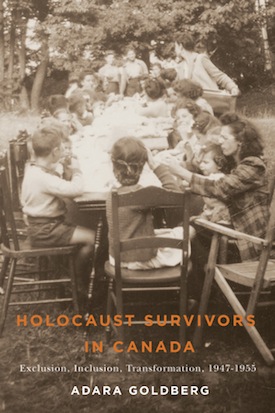
book cover - Holocaust Survivors in Canada: Exclusion, Inclusion, Transformation, 1947–1955Goldberg’s book begins with a refresher on Canada’s abominable record in the prewar period. Chapters then take on topics such as the unique requirements of young orphaned refugees; the double-edged sword of interned “enemy aliens” – Jews from enemy states, mostly Germany and Austria, whose nationality, in the eyes of Britain and its Canadian dominion, trumped their status as endangered victims of Nazism; the various programs under which refugees were admitted to Canada and how established Jewish communities, especially their women’s organizations, cared for refugees’ personal needs; the creation of social clubs and synagogues by and for survivors; the development of an ultra-Orthodox and Chassidic community here; and “transmigrants,” those who came to Canada after a sojourn elsewhere, often in Israel. She has included the stories of survivors who didn’t want to be found; those whose experiences in Europe led them to hide their Jewishness and their past as they began a new life in Canada. It is a monumental work.

A Toronto native, Goldberg wrote the book in fulfilment of her PhD at Clark University in Massachusetts and, while there are differences between the dissertation and the book, which was published in September by University of Manitoba Press, the book avoids the academic jargon that can exclude ordinary readers.

“As a social history that was created with the research that I did both in archives as well as through interviews and other sources, it was written with a wide readership in mind,” she said.

Goldberg eschews statistics in favor of personal case studies both from in-person interviews and records of social service agencies from decades past. The result is an introduction to hundreds of individuals and their stories, as well as a testament to the resilience of the survivors and the history of a small Jewish community rising – not always flawlessly – to the challenge of welcoming tens of thousands of co-religionists who had suffered unspeakable horrors.

The dissertation took about three years to complete and, after Goldberg moved to Vancouver, where she worked for three years as education director at the Vancouver Holocaust Education Centre, she took the opportunity to do additional research that incorporates more local content. The book is enriched by her background as a trained social worker, which underpins a deep analysis of the successes and failures of social service agencies in those early years.

Refugees are the top global news story today and Goldberg sees lessons for the present in her book.

“It’s a very different crisis,” she said. “I think what we can do is, without trying to compare individual experiences, to remember the risk of nativist attitudes and what happened when Canada had very discriminatory, restrictive immigration policies 75 years ago. Canada accepted the fewest number of Jewish refugees of any country in the Western world … Canada had an opportunity at that time to distinguish itself, to take a very restrictive policy and widen the gates. They could have done this and they elected not to. What we can do now is reflect on the result of this inaction. History does not need to repeat itself. Canada can distinguish itself as a world humanitarian leader.

“Similarly,” she continued, “Holocaust survivors have contributed to all aspects of Canadian society. I imagine that so, too, do other refugees to Canada and so will other waves that come in the future. There is so much that we can gain.”

The Vancouver launch of Adara Goldberg’s book takes place on Nov. 25, 5:30 p.m., at the Vancouver Holocaust Education Centre, as part of the Cherie Smith JCC Jewish Book Festival. Admission is free.


Format ImagePosted on November 13, 2015November 11, 2015Author Pat JohnsonCategories BooksTags Cherie Smith JCC Jewish Book Festival, community, Holocaust, immigration, survivors, Syria
Working in community

Working in community

Sidney Shmilovitch retired this July from Jewish National Fund, Pacific Region, after 19 years. (photo from Sidney Shmilovitch)

Being at the forefront of the baby boom generation, I was born in Vancouver after my father returned from serving overseas. The opportunity of work on Vancouver Island saw our family move and live in the small communities of Maple Bay and Departure Bay for the next 10 years. Moving back to the Lower Mainland, my parents and I settled in West Vancouver, where I graduated from West Vancouver Secondary. I then attended B.C. Institute of Technology and graduated with a diploma in X-ray technology, followed by a two-year stint as a Cuso volunteer working in small hospitals in the north and south of Nigeria.

Upon returning to Canada, and after a number of years working in Toronto, I moved back to the West Coast. Living in Abbotsford, I met and married Dan Shmilovitch, who was heading efforts to form what eventually became known as Ha’Emek Jewish Community. Holiday programming in the community was enhanced by the services of Chabad rabbis from Vancouver. When our children became of school age, we began attending Jewish events in Vancouver. A wise rabbi there told us that if we wanted our children to remain Jewish, we had to move to the city, join a synagogue and put our children in Hebrew school. So we did, in 1987, which marked the beginning of our relationship with the Jewish communities of Richmond and Vancouver.

In 1988, I began my first job in the Jewish community, working in Richmond as part-time secretary for Eitz Chaim Synagogue. This was my first experience working in the Jewish religious world and learning the complexities of growing a young congregation. Two years later, searching for full-time work, I was hired for a joint position with the Canadian Zionist Federation, Camp Miriam and the World Zionist Organization aliya department at their shared office space at the Jewish Community Centre of Greater Vancouver. The five years I spent working with these organizations introduced me to the important work of Jewish professionals, dedicated board members and volunteers.

In 1996, I joined Jewish National Fund, following in the footsteps of Maisie Myerthall, who was retiring after 26 years. And now, after 19 busy years working with JNF, it was my turn to retire this July. I will miss the special working relationships I had with colleagues in JNF offices from Vancouver to Montreal, especially of course, Ilan Pilo, Moran Nir and Liisa King in the Vancouver office – all part of the JNF family. It was a privilege for me to work with six JNF shlichim (emissaries) over the years, all of whom I admired for their humanity, love of life, energy, drive and determination.

As for me, now that I’m retired, I will volunteer with the JNF, and am considering other volunteer opportunities in the community – I’m open to ideas! And we will travel. So far, Dan and my travel plans revolve around visiting our kids and grandchildren on the east and west coasts of the United States.

I have many thanks to send. To my friends at the JCC, some of whom I have known for 25 years – keep up the good work! My sincere appreciation to the staff of communal organizations, synagogues and schools who were so accommodating and helpful to me. My love and thanks to the members of the JNF executive and board for all their support, hard work and devotion to Israel, and for being so enjoyable to work with. A thank you to all the leaders who have built a strong, vibrant and exciting community that will go from strength to strength. And, to the philanthropists, kol hakavod for your vision and inspirational generosity that make it all happen.

Format ImagePosted on November 6, 2015November 4, 2015Author Sidney ShmilovitchCategories Op-EdTags community, Jewish National Fund, JNF, retirement

Posts pagination

Previous page Page 1 Page 2 Page 3 Next page
Proudly powered by WordPress