Skip to content
  • Home
  • Subscribe / donate
  • Events calendar
  • Business Directory
  • FAQ
  • News
    • Local
    • National
    • Israel
    • World
    • עניין בחדשות
      A roundup of news in Canada and further afield, in Hebrew.
  • Opinion
    • From the JI
    • Op-Ed
  • Arts & Culture
    • Performing Arts
    • Music
    • Books
    • Visual Arts
    • TV & Film
  • Life
    • Celebrating the Holidays
    • Travel
    • The Daily Snooze
      Cartoons by Jacob Samuel
    • Mystery Photo
      Help the JI and JMABC fill in the gaps in our archives.
  • Community Links
    • Organizations, Etc.
    • Other News Sources & Blogs
  • JI Chai Celebration
  • JI@88! video

Recent Posts

  • Federation now across BC
  • Israel fighting for its existence
  • Deal strengthens Iran
  • Patriotic belonging diminishes
  • A campaign to engage
  • Upstanders’ first live event
  • Responding to Carney
  • Having your own home
  • Music a family tradition
  • Musical to warm heart
  • Community milestones … June 2026
  • Sharing her passion for Israel
  • Or Shalom reopens its doors
  • JFS from past to future
  • Need holistic approach
  • Sharing stories, advice
  • Journalist shares fears
  • Skills to live together
  • Road to independence
  • Cutting grass with scissors
  • Zionism as a solution
  • Deceit, desire & the divine
  • Reclaiming sacredness
  • Creative project ideas
  • Summer squares and cobbler
  • Thou shalt … summer commandments
  • Legal help for students
  • Revisiting myth of Lilith
  • Wrong person rebuked
  • Canada’s mixed messages
  • Questions for museum
  • Symposium on antizionism
  • Making soccer political
  • CJPAC lauds Pulver’s impact
  • City recognizes Vrba’s legacy  
  • Organ donation saves lives

Archives

Follow @JewishIndie
image - The CJN - Visit Us Banner - 300x600 - 101625

Tag: cancer

Local woman inspires chesed

Local woman inspires chesed

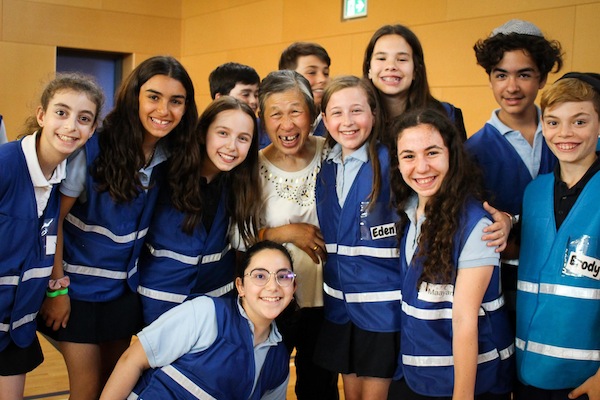
Members of Vancouver Talmud Torah’s Grade 7 chesed club with Gia Tran, a local woman who raises money for cancer research by taking refundable containers to a bottle depot. (photo from VTT)

Since 2014, Vancouver Talmud Torah has offered a chesed (kindness) program to students in grades 3 and 6. Following requests from parents, the school introduced a mandatory chesed program for Grade 7s this year, which nurtures a commitment to volunteering and social justice.

And, this year, the initiative was pursued with a particular dedication, as students mourned the recent passing of Rose Dupaya, who worked as a custodian at VTT. She took ill last fall with cancer and died suddenly, which was a tremendous shock to the school community. In response, the students – who would often greet Rose with hugs – turned their grief into action.

When the Chesed Leadership Club heard about local woman Gia Tran, who takes refundable containers to a bottle depot every day to raise money for cancer research – more than $15,000 in 22 years – they were inspired. Following in Tran’s footsteps, the kids raised $2,000 from a bottle drive for cancer research.

VTT student Julia Andison expressed her gratitude to Tran for teaching her about personal agency. “Gia taught me that even a small act like collecting cans can make a big impact on others. And, as a chesed leader, I was able to communicate this to the younger students in our school, that every little bit counts.”

Students in the chesed club do not follow a curriculum. Unlike with subjects like math or language arts, the club was founded for students to explore their values and lead a program on their own initiative. As a consequence, the program’s success lies in the development of student ideas, teamwork and leadership.

“The minute you offer something optional and student-driven, it takes on a life of its own,” said Shoshana Burton, director of Hebrew (grades 5-7) and chesed programming at VTT.

Students are not admitted automatically to the chesed club. Instead, they submit applications and sign contracts. If they do not follow up on their commitment to leadership, they can be dropped from the program, which is both an opportunity and a challenge to the students’ organizational skills and a way to exercise their moral and management muscles.

All of the students volunteer as part of the program. Some do so once a week while others volunteer their help every day. Many organizations and communities have benefitted from the support of VTT students, including the Muslim Food Bank and residents of the Downtown Eastside.

According to their teacher, the success of the club is in its spontaneous, natural development. “You can’t know the end result when you start. You can’t plan in advance,” said Burton. “The students learn how to work as part of a team, learning to commit to a project.”

Student Celia Joffe spoke of the club’s impact on her. “Helping others gives us a sense of pride and responsibility,” she said. “The project with Gia was amazing because we ended up not only helping the cancer foundation and the environment, but we also made Gia feel special and acknowledged.”

Shula Klinger is an author and journalist living in North Vancouver. Find out more at shulaklinger.com.

Format ImagePosted on July 12, 2019July 10, 2019Author Shula KlingerCategories LocalTags cancer, chesed, Gia Tran, philanthropy, recycling, tikkun olam, tzedakah, Vancouver Talmud Torah, VTT
The runway to healing

The runway to healing

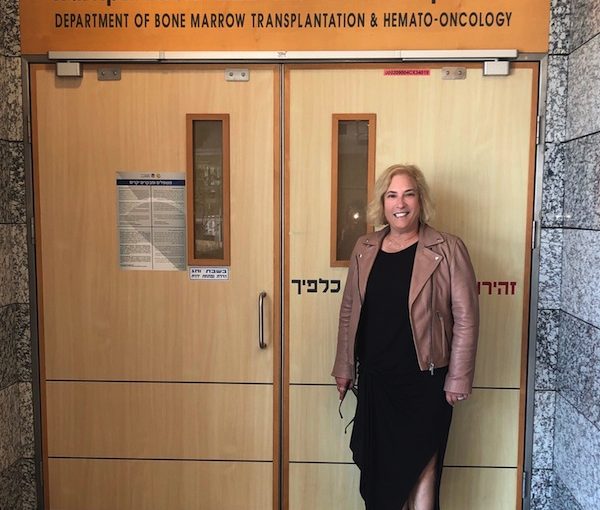
The writer at the bone marrow transplant ward at Ichilov Hospital in Israel. (photo from Ariella Stein)

Fashion is one of my many passions, as regular readers of the Jewish Independent will know by now. So, when I turned 50 this year, a milestone birthday, I decided to pursue a longtime dream – to create a fashion tract for bone marrow transplant survivors.

When I was 17 years old, I was diagnosed with Hodgkin’s lymphoma. At the time, I was in Grade 12, studying in Israel. My parents’ first reaction was for me to return to Vancouver, where they felt I should start my treatments. There was no time to waste, as it was at an aggressive stage. However, after much persuasion, I convinced my parents that I should stay in Israel. As part of the deal I made with them, I was to head back to Vancouver upon graduation and resume the next cycle of treatments.

I started chemotherapy. I had the most loving care from the staff at Tel Hashomer Hospital. I was on the road to recovery when I returned home.

After a few more bouts with chemo and some courses in radiation, however, we were given the devastating news that I had to undergo an autologous bone marrow transplant. The procedure had to start immediately. I lost the little hair I had left in just one day, couldn’t hold down any food or drink, and was separated from any ounce of humanity because I had no immunity. But I was getting better, thanks to the staff and doctors at the British Columbia Cancer Agency.

During the horrifying three-month stay in my isolated hospital room I was, paradoxically, injected with the poisonous chemo cocktail expected to cure me and the benevolent rays of light and love of my family. The support made me stronger and gave me courage. I had so much to look forward to. My two older sisters had countless discussions on having children for me if I couldn’t conceive, my father tried to grant me not just one star but the whole galaxy, my mother never left my side and my then-boyfriend-now-husband showered me with tenderness. The love in my room spread throughout the ward. Through the tears, we remembered to laugh and dream.

photo - The writer, at 18 years old, two months after being released from the hospital for treatment of Hodgkin’s lymphoma
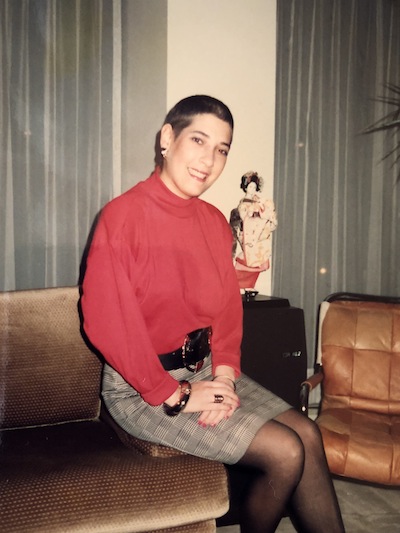
The writer, at 18 years old, two months after being released from the hospital for treatment of Hodgkin’s lymphoma. (photo from Ariella Stein)

When it was time to go home, I was nervous about leaving my protected environment but full of excitement to start my new life. All I wanted was to feel and look healthy again. I bade farewell to my dull uniform of pajamas and welcomed my new outfit, especially chosen for me. On the door, it was waiting for me, as if knowing how I was craving to look like a girl again. I fondly remember stepping out in my blue leather mini skirt, black cashmere sweater and black knee-high boots, handpicked with care by my mom, a true fashionista. I looked fabulous and felt euphoric on the 10-minute ride home, the only place I was headed for the time being.

Fast forward some 30 years, and I am the mother of two miraculous children, Daniel and Natalie, who bring me the greatest happiness and naches, spoken like a true Yiddishe Mame. I am grateful every day for my blessed life. There have been bumps along my journey, of course. I have often wondered if other women had the transformational experience I did leaving the ward. I knew the day would come for me to help other survivors in my own way. Splitting my time between Israel and Canada, I chose to initiate a fashion project in Israel.

I reached out to the head of the bone marrow transplant unit in Ichilov Hospital (Tel Aviv Sourasky Medical Centre) and, to my astonishment, within minutes was told they were on board. My dream was becoming a reality.

My mission is to offer patients, upon their release, an outfit of their wishes to raise their spirit, as my mother’s fashion choices had raised mine. I wrote letters to as many clothing stores as I could, looking to find sponsors, hoping they would donate new outfits to recipients. I received a few replies saying nice idea, good luck; some never replied. But some did reply with open hearts, willing to contribute to the project.

Getting started has been challenging, one step forward and a few back. Frustrating as it is, I understand that it will take time but, among the obstacles, I will not give up. As the writer Paulo Coelho said, “When you want something, all the universe conspires in helping you achieve it.” I have named my project Lalas Wings. Lala is a nickname, dubbed by my niece and nephew 35 years ago.

I was taught to dream big by my mentor, my father, Karl Stein. Hopefully, by sharing my dream, I can make a significant contribution to many bone marrow transplant patients, starting in Israel and eventually reaching hospitals in more and more places. My experience leads me to believe that the seemingly externally focused gift of clothing is part of a perfect beginning to the complex healing process.

If anyone has any questions about Lalas Wings, I can be reached by email at [email protected].

Ariella Stein is a mother, wife and fashion maven. A Vancouverite, she has lived in both Turkey and Israel for the past 25 years.

Format ImagePosted on April 12, 2019April 10, 2019Author Ariella SteinCategories IsraelTags Ariella Stein, cancer, fashion, health, Israel, Lalas Wings, philanthropy, tikkun olam
Adversity leads to innovation

Adversity leads to innovation

Sara Raposo-Blouw, left, and Erin Goldberg taste the chocolate mocha and vanilla blueberry flavours of Thrive. (photo by Ian Blouw)

Erin Goldberg, 30, was only 5 years old when it was discovered that she had rhabdomyosarcoma in her abdomen, attached to one of her ovaries.

Rhabdomyosarcoma (RMS) is an aggressive and highly malignant form of cancer that develops from skeletal muscle cells that have failed to fully differentiate. It is generally considered to be a disease of childhood, as the vast majority of cases occur in those below the age of 18.

Growing up in Winnipeg, Goldberg spent almost 130 days at the Health Sciences Centre (HSC) receiving treatments and recovering from procedures over a two-year span before she was cleared of RMS.

Goldberg’s struggle with the cancer and her unwavering will to make the world a better place have served as a driving force in her life ever since. And her memories from that time, as a child struggling to keep food down, have led to her helping develop a liquid food replacement that would have been priceless to her when she had RMS.

“Basically, everything I ate was making me nauseous, and that was due to chemotherapy,” Goldberg told the Independent. “It sort of alters your taste. And I would also throw up anything I would eat. It was important to have as many bland foods as possible. With liquid nutrition, it’s a lot easier to consume your calories than with anything solid. It’s denser and is a better option in the hospital.”

Goldberg said she went into nutrition because she was interested in disease prevention. After meeting Sara Raposo-Blouw and Lisa Reed, dieticians at the HSC, and them sharing their experiences with one another, they came up with the idea of a liquid nutritional drink. They knew, firsthand, the lack of options people had.

“The beverage options in hospitals were really lacking,” said Goldberg. “Patients find the taste of what there is too sweet. I recently spoke to my friend’s dad, who is a psychiatrist, and he actually prescribes Boost six times a day for one of his patients, because he has a motor disorder … he’s constantly moving, so his caloric requirement is elevated so much. He needs to have six of these beverages in addition to his regular food intake. When you have that much of something that is too sweet and has ingredients that are highly processed, or if you’re vegan or have allergies, you just can’t do it. You need an alternative. And there was really nothing out there.”

Goldberg and partners have developed a new option, called Thrive, that uses local ingredients, two of them being flax oil and pea protein. The formula is completely plant-based and free of major allergens, like dairy, soy, corn and wheat.

The trio solicited the help of a Burnaby beverage developer to help them produce the drink with the necessary specialized equipment.

While competitors have come out with flavoured drinks and drinks that cater to particular groups of users, Thrive differs in that it is a basic formula that everyone can use, adding their own ingredients as desired, depending on their needs.

“Currently, we have one adult formula, but we’re working on one for children,” said Goldberg. “The main difference between the one for adults and the one for children is the protein content. It’s very easy for us to adjust the formula accordingly. And, as far as different patient populations, we don’t have other types of formulas. Basically, if a higher caloric content is necessary, then more of the beverage would be prescribed. But, at this time, we only have one formula.

“The palatability really stands out for our product compared to these other competitors,” she said. “A lot of the ingredients they use are bitter. They are trying to mask that bitter taste with the sweetness, coming up with flavours like chocolate, strawberry and vanilla.”

Because of its mild flavour, Thrive also can be used to make solid food, similarly to milk, but with a much higher nutritional punch. For those seeking a flavoured drink, they can choose to add whatever flavour they wish to the degree of sweetness they like.

A couple of months ago, Goldberg flew to Montreal to accept the Social Mitacs Entrepreneur Award and a $5,000 cheque, in recognition of what she and her partners are doing. Different levels of government have also stepped up with funding, as has North Forage.

“We’ve been receiving support from North Forage, a business incubator in Winnipeg,” said Goldberg. “They’ve helped us get off the ground and understand the business side of things, because we are coming at it from a science background. So, the three of us needed some input there.

“We are currently looking for investors,” she added. “We have a couple that are interested, but we need more to move on to our next phase and are looking at government funding. Once we are up and running, our first year, we are planning on having online sales direct to the consumer.”

Based in Winnipeg, their initial target is to partner with the Winnipeg Regional Health Authority, as well as other health authorities across Canada. Goldberg is confident that, once they taste the product and look at the nutritional information, the authorities will sign on.

The partners are also confident that their target timeline of production by next summer can be met, even with the need to do a scale-up and validation trial in Quebec because no facility in Manitoba is currently capable of doing this.

“We require very specialized equipment when it comes to the aseptic packaging that we require, because we want our product to be shelf-stable, so it doesn’t have to be in the refrigerator,” said Goldberg. “That equipment is very expensive and very specialized. They have it in Quebec. Once we scale-up, we will go to Toronto and that will be our facility to actually produce the product on an ongoing basis.”

At the moment, the partners are working with their lawyers to set up the deal structure to bring in investors for the validation tests (costing $250,000).

For more information, visit vitalfoods.ca.

Rebeca Kuropatwa is a Winnipeg freelance writer.

Format ImagePosted on October 5, 2018October 3, 2018Author Rebeca KuropatwaCategories NationalTags cancer, Erin Goldberg, health, nutrition, Winnipeg
High-tech medicine

High-tech medicine

A 1-year-old boy being treated with a novel gene therapy drug. “Usually, this type of injury with a hemophiliac patient would involve hours in the emergency room, with repeated doses of intravenous coagulation factors,” said Prof. Gili Kenet, director of the National Hemophilia Centre at Sheba Medical Centre. (photo from IMP)

From wearables that allow cardiac specialists at a hospital in Ramat Gan to monitor a patient’s cardiac performance thousands of miles away from home, to giving gravely ill patients a new lease on life with groundbreaking new therapies, Israeli medical innovators are almost literally thumbing their noses at the Angel of Death and changing the way we live.

According to start-up “ecosystem” sources, there are at least 6,000 active start-up companies operating in Israel. Within the realm of digital health, the number of active start-up companies engaged in this field has grown from 65 companies in 2005 to more than 400 in 2018. A significant number of these start-ups are being financially supported by global corporations such as Philips, GE Healthcare, Merck and IBM. Some of these companies have opened up offices close to start-up hubs in Haifa (near the Technion) and Metro Tel Aviv, the recognized “capital” of Israeli business and high-tech.

photo - This digital watch developed by the Sheba medical team and Datos Health is equipped with an app that contains a care path specially designed for each patient
This digital watch developed by the Sheba medical team and Datos Health is equipped with an app that contains a care path specially designed for each patient. (photo from IMP)

“Israel serves as a global incubator of innovative ideas for a variety of reasons,” said Dr. Eyal Zimlichman, deputy director general, chief medical officer and chief innovation officer at Sheba Medical Centre, which is located in Ramat Gan and is the largest facility of its kind in the Middle East. “First of all, it’s in our genes. Secondly, there is the military aspect, where we are taught to improvise when necessary in the field. These things allow us to be naturally innovative. This has trickled down into the medical field, where we are offering the highest level of medical care. I also believe unique innovations in medicine, that will impact the world for the next 100 years, will be developed in Israel.”

Prime examples of Sheba Medical Centre’s innovative efforts revolve around combating potentially fatal diseases such as cancer with immunotherapy, oncology’s new medical “magic bullet”; targeting hemophilia with a novel gene therapy drug; and creating an app for a wearable device used by people with serious heart and diabetes issues.

Immunotherapy is a treatment that uses our body’s own immune system to invade and destroy cancer. CAR-T (chimeric antigen receptor) and TIL (tumour-infiltrating lymphocytes) are not universal cancer cures at this stage. However, there are ongoing clinical trials being conducted for major pharmaceutical companies and America’s National Institutes of Health at Sheba Medical Centre’s oncology unit, where end-stage cancer patients are being treated with CAR-T, which specifically targets leukemia and lymphoma, and TIL, which zeroes in on melanoma and ovarian cancer patients.

Seventeen people with cancer were treated at Sheba during an initial CAR-T trial, after all of these patients had displayed zero improvement in the wake of traditional chemotherapy treatments and bone marrow transplants. Of the 17, 75% had a complete response to the CAR-T. One of those patients, an 8-year-old girl from Bnei Brak, was the first child to achieve complete remission from childhood leukemia. A Sheba centre oncologist said, “When we came to give her the CAR-T cells, she was very, very sick. She couldn’t even get out of bed. When we came back to visit her three weeks later, she was going back and forth on her rollerblades.”

A few weeks ago, a 1-year-old boy became the youngest patient in the world suffering from both severe hemophilia A and an unusual allergy to be treated with a gene therapy drug that only recently was approved for use in the United States. The new drug, developed by an American biopharmaceutical company, contained a “bispecific antibody” that was injected into the child at Sheba Medical Centre. According to clinical trial results published in The New England Journal of Medicine, the drug has shown a 90% reduction in bleeding in children and a 70% reduction in adults.

photo - Prof. Gili Kenet
Prof. Gili Kenet (photo from IMP)

“This is a new, exciting era with many novel options for improved care and even complete cure of patients with hemophilia,” said Prof. Gili Kenet, director of the National Hemophilia Centre at Sheba. “The child’s mother is so happy with the new treatment. The child had experienced a head trauma, but required no further therapy at all. Usually, this type of injury with a hemophiliac patient would involve hours in the emergency room, with repeated doses of intravenous coagulation factors. However, there were no complications, as his hemostasis (blood factors) was completely normal.”

Within the realm of what is known as IoT (internet of things), Prof. Robert Klempfner is blazing a trail of what he has dubbed IoMT (internet of medical things), where heart patients are able to engage in cardiac care and rehabilitation using wearables (for example, a high-tech watch), without having to return to the hospital for treatment.

“Today, the challenge for both heart doctors and cardiac care patients is what happens after a coronary event (heart attack), intervention or heart surgery,” said Klempfner. “What kind of regimen can be created for someone who might have had surgery at Sheba but lives and works in faraway places such as the United States or other countries? Within the new world of telemedicine and digital health, we have the technology to create rehab programs that are a win-win experience for both the hospital and the patient.

“We give cardiac care patients a watch,” he explained, “that is equipped with an app developed by the Sheba medical team and Datos Health [an Israeli start-up company]. The app contains a care path specially designed for each patient, containing rehab regimens, education material and secure communication with our patients. The medical centre receives data from wherever he/she is located when they are walking, exercising, doing other physical activities. Our technicians then analyze the info and provide ongoing feedback, assisted by smart algorithms provided by the innovative system.

“The program is also primed,” he said, “for patients who suffer from hypertension and diabetes that are now able to transmit all their measurements automatically to our system. This not only saves the patient time, by not having him/her return to the hospital, it saves the hospital time and bed space, so we are able to treat more patients. This ushers in a new era in digital healthcare.”

For more information on Sheba Medical Centre’s oncology unit, visit shebaonline.org.

Format ImagePosted on April 20, 2018September 30, 2019Author Steve K. Walz IMP MEDIA LTD.Categories IsraelTags cancer, children, health, IoMT, IoT, science, Sheba Medical Centre, technology
Jumping gene research

Jumping gene research

Dr. Gideon Rechavi, who founded Sheba Cancer Research Centre, was in Vancouver in January for an international conference at which he presented new findings on “jumping genes.” (photo from Sheba Cancer Research Centre)

Dr. Gideon Rechavi, who founded Sheba Cancer Research Centre, in Ramat Gan, Israel, was in Vancouver in January for an international conference on DNA and RNA methylation.*

“I described a new work we just published, regarding ‘jumping genes,’” he told the Independent about his presentation at the conference. “Forty-five percent of our genome, part of what people used to call ‘junk DNA,’ is composed of genes that can jump from one place to another.”

As far as what this means for the functioning of a body, he explained, “When they jump, they can activate genes and they can also inactivate genes, and it’s a random process. Actually, when I was PhD student in ’82 at the Weizmann Institute, I found the first example of such an event in mammals.” And, he added, “We were also the first to show the role of such events in cancer.”

Rechavi explained, “In cancer, there is a set of genes called oncogenes, genes that usually are normal genes in our genome but, when they are over-activated or activated in the wrong cell or at the wrong time, they can push the cell to proliferate and can cause cancer.”

Now, he said, many years later, using advanced technologies based on whole genome sequencing, they have found that, “in a variety of neurodevelopmental disorders, such as autism and Rett syndrome and similar diseases, there is a basic gene defect in the family or in the affected child. However, the clinical presentation can differ even between identical twins. Nobody understands why the same genome and the same genetic background will result in such a difference, one patient will be affected by epilepsy, the other one by autism or mental retardation.

“The mechanism that we show is that, in the brain, there is, normally, a constant level of jumping of such genes and, probably, it’s essential for diversity of neurons and brain plasticity and activity.”

This is happening all the time in neuronal stem cells, he said. “During the differentiation of neuronal stem cells … there is a very precise time window of 48 hours when such transposition events can take place. And, probably, it’s essential, because you find it in mice, in monkeys and in humans. However, in all the diseases that we are studying, there is over-activation of the mechanism, so you have many more jumping events.”

We have neuronal stem cells dividing in the brain our whole life, said Rechavi. “In the past, we used to think that all of the neurons are created during pregnancy or soon after, but now, in the last 20 years or so, we know there are also adult neuronal stem cells. When you do gymnastics or when you take Prozac, there are more neuronal stem cells. And, in these neuronal stem cells, these transposable elements – jumping genes – are jumping and probably contribute to brain function.”

The process seems to be quite regulated, he said. “The mechanism we suggest, we call it the ‘lightning rod’ mechanism or hypothesis.”

He explained, “The majority of jumping events occur in sequences in the genome where integration will not cause harm. So, in a normal level of jumping, we expect it will be beneficial, and the chance for damage is low. Although, if, in a variety of diseases, there is uncontrolled activation of this mechanism, so there are many more jumps, then it can saturate the lightning rod safeguard mechanism and then affect genes that are relevant to neuronal diseases, and we have a lot of examples where such things happened.”

To study this, said Rechavi, they sequenced the genomes of 100 samples, which included normal, diseased and control brain samples. “We were able to show that there is a particular normal level of transposition … and, then, over-activation, with many more transposition events, in the brains of disease-affected children.”

From these results, he said, we know that “the genes affected by such insertions from these transpositions, you see that many of them are relevant to neuronal functioning, neural development and a variety of neuronal disorders, such as autism and schizophrenia.”

By understanding the biochemical mechanism in these patients, what activates the jumping, “then you can intervene,” said Rechavi. For example, perhaps a drug could be developed that would decrease the level of transposition.

“This is the next step,” he said. “Now, we have several patients where we know the gene defect involved in the syndrome and, therefore, is involved in the enhanced transposition, so now we have to find a way to shut it off, to lower the activity.”

Rechavi said his lab is researching these jumping genes and their effects in both cancer and neuronal disorders, and that they are currently looking for funding to study the involvement of such genes in Alzheimer’s and in aging.

The purpose of the jumping genes is not certain. “What people suggest,” said Rechavi, “is that it has to do with diversity.” Recalling that it is a random process, he explained, “So, instead of having all the neurons in a particular part of the brain being identical, now you have diversity and probably the diversity increases the efficiency of the brain circuits, etc. It can also be relevant to plasticity. We know that specific brain regions can take over following damage or following a kind of environmental influence and change the activity and perform new activities. So, maybe the ability to create diversity in the brain is an advantage.

“A similar model has to do with the immune system,” he added. “With the immune system, we know that there are genetic mechanisms that increase diversity and, then, the cells of the immune system of an individual can respond to any virus and any bacteria.”

The main focus of his lab at Sheba Medical Centre, he said, is to find new genetic and epigenetic mechanisms, “and then to ask, what is their relevance to normal physiology and what’s their relevance to diseases. That’s how this story that started with cancer research turned out to be very relevant to neuronal disorders and psychiatric disorders.”

Rechavi said the phenomenon of jumping genes, or transposable elements, was first identified by American scientist Barbara McClintock (1902-1992) in experiments with maize. (She won the Nobel Prize in 1983 for this and other contributions to the study of genetics.) “She found it in maize,” he said. “We found it in mammals.”

Conferences like the one Rechavi was attending in Vancouver when he spoke to the Independent by phone Jan. 23 from his room at the Fairmont Hotel Vancouver, where the conference was being held, are useful for several reasons.

“Some people, after my talk, came and they wanted to collaborate, they want to learn the methodologies. Some people suggested samples we could analyze…. This is the basis for scientific collaboration, the main reason to do scientific meetings. You can read everything on the internet,” he said, “but when you discuss with people the findings and you drink coffee together and discuss the details, you can get new information, new non-published information, and also collaborations and friendships.”

Sheba Medical Centre doesn’t have many partnerships with Canadian institutions, said Rechavi. The centre’s main collaboration in Canada, he said, is with Toronto’s Hospital for Sick Children, especially in the field of brain tumours, because one of Rechavi’s former trainees, Dr. Uri Tabori, went to SickKids to study such tumours and stayed there.

Before obtaining his PhD at the Weizmann Institute of Science, in Rehovot, Rechavi earned his doctor of medicine at Tel Aviv University’s Sackler School of Medicine. He is a professor of hematology at Sackler School and heads the Cancer Research Centre at Sheba Medical Centre, the largest hospital in Israel, which serves as a university teaching hospital (affiliated with Sackler) and as a tertiary referral centre. He has published more than 450 scientific papers.

In addition to treating some 1.5 million patients annually, Sheba Medical Centre has 75 laboratories and more than 2,000 ongoing clinical trials; 30% of Israeli medical research is performed at Sheba, which files, on average, 15 biomedical patent applications per year.

In October 2017, Sheba Medical Centre inaugurated the Wohl Institute for Translational Medicine. The idea, said Rechavi, is to take the “findings emerging from basic research and try to translate it into taking care of patients; to better diagnose, to [develop] better treatments.”

* Methylation, explained Dr. Gideon Rechavi, “is the addition of a chemical group known as methyl on the four basic letters of the genetic material (DNA and RNA) to generate a new expanded ‘alphabet.’”

Format ImagePosted on February 16, 2018February 14, 2018Author Cynthia RamsayCategories IsraelTags aging, Alzheimer's, cancer, DNA, Gideon Rechavi, health, jumping genes, medicine, methylation, neurodevelopmental disorders, science, Sheba Medical Centre
Calendar Girls now at Metro

Calendar Girls now at Metro

The cast of Calendar Girls, at Metro Theatre until Nov. 25. (photo from Metro Theatre)

It takes courage for a small semi-professional theatre to tackle a play that was made into an internationally acclaimed film, with Helen Mirren and Julie Walters in the title roles. But that is exactly what the Metro Theatre has done. And they pull it off beautifully. Their new show, Calendar Girls, opened Oct. 28.

The play, like the movie, is based on the true story of a group of middle-aged Yorkshire women, one of whom was recently widowed. After her husband died of leukemia in 1998, she and her friends decided to produce a nude calendar, with photos of themselves, to raise funds to buy a settee for the visitors lounge in the hospital where her husband had been treated. The calendar for the year 2000 was released in 1999 and became a phenomenal success. The women made calendars for several successive years, and the proceeds from this original fundraising campaign resulted in several million pounds for cancer research in England.

These wonderful women inspired Juliette and Tim Firth to write a screenplay, which became a movie in 2003. Later, Tim Firth adapted it to the stage, and the play premièred in England in 2008. The North American première took place in Winnipeg in 2011.

The director of the Metro production, Alison Schamberger, writes, “I approached directing this beautiful play with a degree of apprehension. There seemed to be many pitfalls attached to it…. Luckily, I was able to surround myself with very talented people who always make the director look good! This play is a true testament to friendship that endures all hurdles.”

The play opens in a village church in Yorkshire, where a group of six women do tai chi and listen to lectures about such scintillating topics as broccoli. Everything is ordinary, bordering on the dull. We meet Chris and Annie and their friends, and learn some of the mundane details of their lives and a bit about their very different personalities. When Annie’s husband, John, dies of leukemia, the women come together to support Annie.

They also want to buy a new settee for the hospital – more than one of them has had to sit for hours in the facility’s uncomfortable waiting area. They come up with the idea of a (tasteful) nude calendar. Not everyone is open to the radical approach at first, but eventually they all do it for John. The photo shoot scene is hilarious and heartbreaking in its intensity. The six actresses actually disrobe on stage, but the audience sees less skin than they would on a beach.

The second act is the aftermath. The media attention. The fame (or infamy), which none of the women expected, and the different ways they deal with it. Tempers collide, but friendships endure, even as the sales keep rising.

Music plays an important role in this production, perhaps as important as the actors. It supports the classy feel of the story, as does the simple, stationary set, the interior of a church, and the lighting, which produces the church’s colourful stained-glass windows, as well as the sunlit field into which the women venture on a couple of occasions.

The actors playing the calendar girls are on stage almost the entire length of the play. Their monologues and sharp banter are in turn sad or funny, poignant or irreverent. They take the audience on an emotional journey. Each of the six shines in her unique way.

Chris (Rebecca Walters) is the heart of the show. Her courage and optimism have no bounds – she is the one who comes up with the nudity idea – but she is as fallible as everyone else.

Annie (Peg Keenleyside) is grieving for her husband. Her involvement in the calendar is for his sake alone; she wouldn’t do it otherwise. Her main reason for participating is to contribute to the fight against cancer.

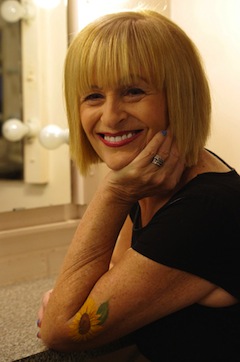
photo - Jewish community member Judy McLellan plays Cora in Metro’s Calendar Girls
Jewish community member Judy McLellan plays Cora in Metro’s Calendar Girls. (photo from Metro Theatre)

Cora (Jewish community member Judy McLellan) is a single mother worrying about her daughter’s reaction to the calendar, and all mothers would understand her concern. McLellan provides many singing interludes, and her voice is charming.

Jesse (Joan Koebel), a retired teacher, is full of pluck and laughter. She is the most comical of the cast, while Celia (Yasmin Tayob) and Ruth (Helen Martin) wrestle with their own demons.

The women’s friendship triumphs over their adversities, and their story is thought-provoking. It brings up important issues, such as how we deal with death and what we consider beautiful. As we watch the play, we contemplate our own imperfect bodies. We ask ourselves for what cause(s) would be willing to expose our vulnerability and literally ourselves to the entire world.

The play is not simply a slightly risqué comedy of manners. It raises moral questions and examines our relationships. What would we do for a friend? How would we weather the test of fame? The protagonists of Calendar Girls came out of their adventure better friends and, arguably, better people. Do we have it in us to be as brave as they were?

Calendar Girls runs at Metro Theatre (metrotheatre.com) until Nov. 25.

Olga Livshin is a Vancouver freelance writer. She can be reached at [email protected].


Format ImagePosted on November 3, 2017November 1, 2017Author Olga LivshinCategories Performing ArtsTags Calendar Girls, cancer, Judy McLellan, Metro Theatre
A fine line we all walk

A fine line we all walk

Left to right: Choices co-chair Debra Miller, Choices co-chair Sarah Marel-Schaffer, keynote speaker Lisa Friedman Clark, Choices co-chair Judith Blumenkrans and Jewish Federation of Greater Vancouver women’s philanthropy chair Megan Laskin. (photo from JFGV)

This year marked 13 years since the inception of Choices and some 450 women gathered in the Beth Israel reception hall to mingle over dinner and support Jewish women’s philanthropy. The keynote speaker was Lisa Friedman Clark, a New York native who commanded the floor as soon as she described herself as the “luckiest unlucky woman alive.”

Clark’s story is compelling. Diagnosed in 1995 at age 23 with a rare form of ovarian cancer, she endured chemotherapy and survived the illness against incredible odds. Andy Friedman, her boyfriend at the time, stood by her side throughout and, two years later, the couple married and began what she described as a “storybook life.” The arrival of twin boys completed their new family and both were pursuing successful careers up until Sept. 11, 2001. That morning, Andy went to work on the 92nd floor of One World Trade Centre and never came home.

There were audible gasps from the audience as Friedman Clark described the details of the morning her life changed forever. “He called me after the second plane had hit and said he was in a room with all his colleagues and they had plenty of air,” she recalled. “Later, we found out that the plane had hit one floor above him and the damage to the stairwells was so bad that he and his 68 colleagues could not get down. His floor was the line of demarcation between life and death. Those on floor 92 and above died.”

“I was 39 years old with two 11-year-old boys whose hero had just been killed in one of the most horrific manners one could think of,” she continued. “One minute you’re rushing to get the kids off to school and, in a split second, your husband has been murdered and life as you knew it has ceased to exist.”

Friedman Clark’s message was devoid of self-pity. “We all walk a fine line between being a donor to Federation and being a recipient of its generosity,” she told the crowd. “We never know when our lives will change.”

Federation counselors, social workers and support groups in New York were trained to deal with families affected by terrorism and came directly to the aid of her family and others in the same situation, she said. “They were uniquely able to understand our needs, and they were also there with financial aid for anyone who needed it. This help was invaluable and, had it not been for the many people that helped me at Federation, I’m not sure where I’d be today.”

Another story that touched a chord with Choices attendees was that of Ronit Yona, an Ethiopian Jew who, as a child, was rescued during Operation Moses. She lived in Israel for several years and more recently moved to Vancouver with her husband and two sons. Yona recalled her early years as a child in Ethiopia, growing up in a village that was home to 1,000 Jews and a life that revolved around home, school and synagogue. At the age of 9, everything changed. “The Ethiopian government wouldn’t allow us to practise our customs,” she explained. “I found myself following my father through the jungle at night as he led our donkey and horses, all loaded with our entire life. My father told me that, if the soldiers found us, they would kill us.”

Yona and her family became refugees in Sudan, in a tent camp where there was no sanitation and dysentery was rife. She recalled walking four hours a day to fill heavy jugs with water for the family. Then, at 10 years old, she found herself on an airplane with other Ethiopian families en route to Jerusalem. “What I didn’t know then, as a child, was that we weren’t walking alone on that journey,” she said. “ORT helped my father train as a nurse in Ethiopia and, later, the global Jewish community gave its money, time and energy to the Jewish Agency to rescue the Jews of Ethiopia who were stranded in Sudan.”

“We are all here this evening because we care about the future of the Jewish community, here at home, in Israel and around the world,” Megan Laskin, chair of women’s philanthropy at the Jewish Federation of Greater Vancouver, told attendees. “We’re celebrating making good choices for ourselves as strong women and setting a lasting example of l’dor v’dor. Women’s philanthropy is truly a force and your contributions are changing and saving lives.”

Last year, Choices generated more than $2.1 million. For information on this year’s campaign, visit jewishvancouver.com.

Lauren Kramer, an award-winning writer and editor, lives in Richmond. To read her work online, visit laurenkramer.net.

Format ImagePosted on November 3, 2017November 1, 2017Author Lauren KramerCategories LocalTags 9/11, annual campaign, cancer, Choices, Jewish Federation, Lisa Friedman Clark, philanthropy, terrorism, women
Saying goodbye to a dear friend

Saying goodbye to a dear friend

Jenny and Zvika, 2002. (photo from Jenny Wright)

I am at Vancouver International Airport and U.S. Customs hands me a card asking the purpose of my visit to the United States. Is it business, pleasure, study? “None of the above,” I respond.

If I were to write a response, it would be: “To say goodbye to a lifelong friend who is leaving our world shortly.” Even at 65, it’s the first time for me to be traveling somewhere with a purpose such as this. And I never expected it to be Zvika (Irv Spivak), a childhood friend whom I have known longer than my husband.

At 15, we met at a rural boarding school in Israel. Two “misfits” or, should I say, creative souls, who had not quite grasped how to integrate into Israel’s society. Zvika was from New Jersey and myself, England. Our friendship flourished. Our mothers, both widows, also became friends.

Zvika was a natural comedian. He could imitate anyone. Presidents, cartoon characters, teachers and family members were only a few of the objects of his jokes. He mimicked accents and, when reciting a joke, it was told with such colour and credit, it became real.

Zvika loved to perform to an audience and I became his “informal” manager in Haifa. I introduced him to my good friends Ronit and Pini and several others and we became a close group. No party was complete without an hour or two of sketches. Nobody was ever excluded and tourists often made up half the parties we held. By midnight, we were laughing and crying uncontrollably, clutching our stomachs in pain. There were frequent complaints from neighbours and we were sure they thought we were drinking and smoking funny stuff but we were all high on pure laughter.

Zvika loved flying and had developed a series of international airline stewardess skits performed in numerous languages. Eventually, when the repertoire was over, I’d lead a round of Hebrew and English folk songs into the wee hours of the morning, with harmonies added by Zvika.

We didn’t know at the time that these carefree days would end very abruptly. On Yom Kippur, a coalition of Arab states launched a surprise attack, knowing that the majority of Israelis would be in synagogue. Zvika had stayed over and we were preparing to go out when the shrill siren began blaring. We looked at each other in disbelief. Today? Yom Kippur? The holiest day? Turning on the radio, we learned that Israel had been attacked by Egypt, Syria and Jordan. We headed to the shelter and remained there for several hours until the shorter siren indicated it was safe to leave.

Our lives took a different turn. I had been hired to perform on a cruise line heading to France and Zvika was planning to actualize his dream of becoming an airline steward.

Haifa’s port, however, was now closed indefinitely, so I offered to perform for the Israel Defence Forces military troops. Together with a magician and another musician, the newly formed Tsevet Havai Pikkud Tsafon (Northern Command Entertainment Troupe) was created.

Zvika was drafted as a medic and stationed somewhere near Nazareth.

En route to the Golan Heights after several successful performances, I realized we were passing army bases in Nazareth. “Stop, stop!” I yelled to the driver. “I want to visit my friend.”

Surprisingly, the driver complied and, moments later, I was hugging Zvika.

“Join us,” I said.

“Are you kidding? I won’t be allowed, even though I do very little here.”

“Let’s speak to your base commander,” I urged. Shortly after, we were performing our tunes for the commander and soldiers. With hearty applause, the commander understood how immensely valuable our music would be for the troops and permission was granted for Zvika to leave.

Our group performed in newly acquired territories: deserted villages surrounded by cattle and sheep, bunkers, and sometimes only a few miles from the bombings. We traveled to the Lebanese, Syrian and Sinai borders. The silent and somewhat eerie landscape filled with roars of laughter as Zvika carried out his sketches for the soldiers. We would learn later that, for some, this would be the last show they would see.

Eventually, Zvika was summoned to his base and I returned to Haifa to complete my previous plan.

Zvika moved to New York to become, you guessed it, an airline steward, and I moved to England. We’d reunite on special occasions. When I moved to Vancouver, my English friends threw a farewell party and Zvika flew over to attend and share all the skits with my friends. When he finally settled in San Francisco, we always stayed in touch.

Zvika’s larger-than-life personality drew people to him from all walks of life. Everyone felt that he was their best friend. He loved people, Cuban cigars and food and, before long, began selling diamonds at a Union Square store.

However, in 1989, he developed HIV and, with every visit, I began to wonder if it would be the last one. But, he overcame it and, in contrast, developed yet a larger tenacity with life.

He became a marriage commissioner, California-style. I was fortunate enough to attend Ronit’s daughter’s wedding and witness how eloquently Zvika created meaningful wedding vows. In 1997, he officiated more than 75 weddings and then branched out to do funerals, naming ceremonies, pet funerals and being the master of ceremonies at various events.

In March 2016, Ronit informed me that Zvika had been diagnosed with an aggressive form of bile duct cancer. He sent regular updates including this one: “The standard prognosis is four to six months or an additional year or two if chemo is successful. That being said, I was told 25 years ago that I’d be dead from AIDS after six months and we all saw how that prediction turned out. :-)”

I arrive at the hospice and my other lifelong friend, Ronit, is there to greet me. Zvika clutches my hand and I suppress my tears. In the days to come, he weakens. There are swarms of people coming in to say their final goodbyes. His friends move him to his house to die peacefully. I sing our old melodies to him. There are no harmonies. But, he is surrounded by love and care until his passing.

One of Zvika’s quotes was “My friends are my greatest blessing. I value honesty, loyalty and friendship. I love making new friends.”

Sixteen years ago, in a post-birthday note to all his friends, Zvika wrote: “If I were to die today … I’d die the happiest man ever to have lived and loved for knowing you. It has never been about the material things for me (hell, I’ve lost everything twice), it has always been about the memories of good times with each and every one of you. Your footsteps are indelibly etched in my brain. You are all my personal angels and friends.”

Jenny Wright is a writer, music therapist, children’s musician and recording artist. She also teaches creative writing and can be reached at [email protected].

Format ImagePosted on January 20, 2017January 17, 2017Author Jenny WrightCategories Op-EdTags cancer, friendship, IDF, Israel
Aginsky this year’s Lamplighter

Aginsky this year’s Lamplighter

Jason Aginsky (photo from Centre for Judaism of the Lower Fraser Valley)

The Centre for Judaism of the Lower Fraser Valley has announced the recipient of its annual Lamplighter Award, which honors a child who has performed an outstanding act of community service.

Jason Aginsky, a 16-year-old Grade 11 student at McMath Secondary in Richmond, was the second-youngest participant in the B.C. Ride to Conquer Cancer in August 2016, when he rode the 250 kilometres from Surrey to Seattle over two days.

“He’d announced eight months earlier that it was a cause he was determined to support and no safety concerns raised by his worried mother could deter him,” said Mark Aginsky, Jason’s father.

Jason was motivated to do this ride after losing his grandmother, Shirley Kramer, to ovarian cancer in 2003, when he was just 3 years old. He joined the Village Idiots, a group of riders in the Steveston area, and, after raising close to $4,000 to support the B.C. Cancer Agency, powered through the race.

“We followed him on Day 1 by car and he was utterly exhausted, on the brink of admitting he’d ‘bitten off more than he could chew’ by participating,” his father recalled. “The winds were against the riders that day and it was hard going. But, when it comes to determination, Jason has it in spades and he pushed through on Day 2, waiting hours at the last stop so he could cross the finish line with other members of the group who were well behind him.”

In total, this year’s participants in the B.C. Ride to Conquer Cancer raised $7.1 million for cancer research.

Jason will receive the Lamplighter Award on Dec. 29 at the Semiahmoo Shopping Centre at a ceremony attended by Rabbi Falik and Simie Schtroks, directors of the Centre for Judaism, White Rock Mayor Wayne Baldwin, and representatives of the cities of Surrey, White Rock, Langley and Delta.

“Chanukah celebrates the victory of light over darkness and goodness over evil,” said Simie Schtroks. “This is a most appropriate opportunity to motivate and inspire young people to make this world a brighter and better place. By filling the world with goodness and kindness, that light can dispel all sorts of darkness.”

Format ImagePosted on December 23, 2016December 21, 2016Author Centre for JudaismCategories LocalTags Aginsky, cancer, Judaism, Schtroks, tikkun olam
Laughter a vital salve

Laughter a vital salve

“It’s that time of year, when you are wondering what to get your husband, father, uncle, friend, or any other smooth dude in your life … so why not get them that greatest of all gifts: laughter. And what’s funnier than prostate cancer? After all, it’s basically pee, poo and (no) boners, what’s not to like?”

So reads the Nov. 30 post on the Facebook page of Finger Up the Bum: A Guide to My Prostate Cancer by Michael Hart Izen (Leola Productions, 2016), which features illustrations by Izen’s brother, Jon Izen, as well as some by his father, J. Roy “Sneeze” Izen. These cartoons are on the edgy side, and might offend some people, but the humor is vital, not just for the book, but for Izen, his family, his friends – for survival. The ability to see humor in even the grimmest of situations is something to be valued.

book cover - Finger Up the BumThis is one of the many takeaways from the book. Another, which appears most succinctly at the end of a short promotional video on Facebook, is “Finger up the bum … get ’er done!” In other words, men should buck up, go to the doctor and get a prostate exam.

Izen had none of the risk factors for prostate cancer. He had symptoms about which he was worried – he had to pee more often, he had some “softwood lumber issues.” After much poking, prodding and testing, trying various treatments for what might be wrong, he finally found out he had prostate cancer. He was 45. He was told, “With the removal of the prostate and hormone therapy to follow, people in your condition have a 60% survival rate in the next five years.”

After surgery, hormone therapy, radiation and all the side effects – about which Izen is candid – just when his body seemed to start functioning again, at age 49, he found out the cancer had spread. “Sure, there is always hope for some new medication or another, but the cancer is in my liver, so the best they can do is delay the inevitable,” he writes. “There is no cure. At least I am not yet at the stage where they are offering to make me comfortable.

“So now I’ve signed up for a few clinical trials and, luckily, the first of the new meds seems to be working. Hopefully, this buys me some more time, because I’m not ready to go.”

The book is dedicated to the Vancouver Prostate Centre and B.C. Cancer Agency who are trying to keep him alive, but the main dedication is to his wife, Gina Leola Woolsey. And, of course, Izen is not only thankful for her helping him shape his “ragtag ramblings … into the almost Shakespearean tale” that is Finger Up the Bum, or that “she did the research to recommend Page Two Strategies, Kickstarter and other key people on this project.” (The Kickstarter campaign raised more than its $25,000 goal to cover publishing and related costs.)

“When I was having my initial troubles,” he writes, “it was Gina who kept sending me back to the doctors to get answers. When I was not always completely forthright with my doctors, it was Gina who made me tell them everything. When my doctors were content to just pass things off as one of those things, it was Gina who made us all reconsider our next course of action. When I came home from the hospital after surgery, it was Gina who nursed me back to health with good food and great care.”

Izen thanks his brother, parents and daughter (who also helped on the book project) and many others. This might be the less obvious takeaway from this book: the importance of the people in your life, and being grateful for them. In contemplating what lies ahead, Izen says he doesn’t need “a greatest regrets tour” – “I’m not looking for more time to rewrite my life; I only want more of what I already have.”

Finger Up the Bum is available from amazon.ca, chapters.indigo.ca, smashwords.com and barnesandnoble.com, or directly from Izen, [email protected].

Format ImagePosted on December 16, 2016December 14, 2016Author Cynthia RamsayCategories BooksTags cancer, health

Posts pagination

Previous page Page 1 Page 2 Page 3 Next page
Proudly powered by WordPress