Skip to content
  • Home
  • Subscribe / donate
  • Events calendar
  • Business Directory
  • FAQ
  • News
    • Local
    • National
    • Israel
    • World
    • עניין בחדשות
      A roundup of news in Canada and further afield, in Hebrew.
  • Opinion
    • From the JI
    • Op-Ed
  • Arts & Culture
    • Performing Arts
    • Music
    • Books
    • Visual Arts
    • TV & Film
  • Life
    • Celebrating the Holidays
    • Travel
    • The Daily Snooze
      Cartoons by Jacob Samuel
    • Mystery Photo
      Help the JI and JMABC fill in the gaps in our archives.
  • Community Links
    • Organizations, Etc.
    • Other News Sources & Blogs
  • JI Chai Celebration
  • JI@88! video

Recent Posts

  • SFU honours Gloria Gutman
  • Lifting people’s spirits
  • Wedding a ray of light
  • Indigeneity and Zionism
  • Rule of law broken: councilor
  • Football and its roles
  • The burden of defence
  • Fish Café returns after fire
  • All right in what goes wrong
  • Nuns & mermaids at TUTS
  • Camp offers holiday retreat
  • Students and mentors inspire
  • Once-in-a-lifetime trip
  • 100 dancers, one heart
  • Money for the sciences
  • What “Jewish food” means
  • Have a cookie, schnitzel too
  • Federation now across BC
  • Israel fighting for its existence
  • Deal strengthens Iran
  • Patriotic belonging diminishes
  • A campaign to engage
  • Upstanders’ first live event
  • Responding to Carney
  • Having your own home
  • Music a family tradition
  • Musical to warm heart
  • Community milestones … June 2026
  • Sharing her passion for Israel
  • Or Shalom reopens its doors
  • JFS from past to future
  • Need holistic approach
  • Sharing stories, advice
  • Journalist shares fears
  • Skills to live together
  • Road to independence

Archives

Follow @JewishIndie
image - CJN box ad Rockowers 2026

Tag: antisemitism

Book a cautionary tale

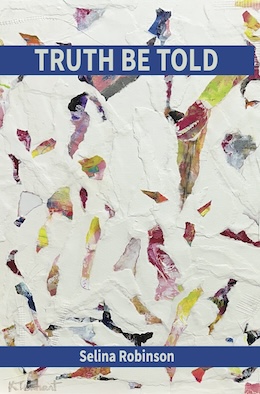
Selina Robinson will release her memoir, Truth Be Told, in a special launch event on Dec. 18. Robinson, who served in senior cabinet portfolios in British Columbia’s government, was fired earlier this year after offhand remarks about the land on which Israel was founded.

image - Truth Be Told book coverIn Truth Be Told, Robinson tells the behind-the-scenes story of what happened as she worked with the Jewish community to confront the antisemitism that erupted after the Oct. 7, 2023, Hamas terror attacks on Israel. Dubbing herself the “Jew in the Crew,” Robinson was the voice of the BC Jewish community in government.

Then, when anti-Israel protesters and a group of Muslim clergy threatened the government unless Robinson was fired, Premier David Eby called a meeting of the entire New Democrat caucus – except for Robinson herself – and immediately afterwards she was told that she needed to resign.

The book is a cautionary story of the dangers to ethnocultural communities, multiculturalism and democracy itself when leaders stay silent – or worse, capitulate – in the face of coercion and place expediency ahead of principles.

Robinson will launch the book in conversation with Global BC legislative reporter Richard Zussman at 7:30 p.m. on Wednesday, Dec. 18, in Vancouver. The specific location will be shared the morning of the event for security reasons.

There is no charge to attend the event, but registration is required at selinarobinson.ca. Copies of the book can be reserved on the website and will also be on sale at the event, with Robinson on hand to sign copies. 

– Courtesy Pat Johnson

Posted on November 29, 2024November 28, 2024Author Pat JohnsonCategories BooksTags antisemitism, British Columbia, David Eby, politics, Selina Robinson
Mobilizing against Jew-hatred

Mobilizing against Jew-hatred

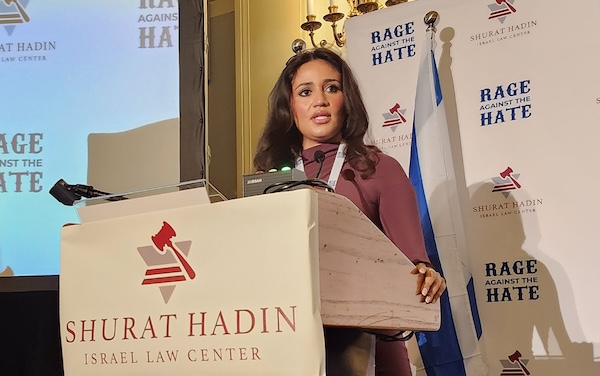
Ysabella Hazan said phrases such as “the West is next” imply “exactly what the enemies of Israel accuse us of – being a Western outpost in the Middle East, a settled body, which is not true.” (photo by Dave Gordon)

Rage Against the Hate in New York on Oct. 31 had the goal to “gather Jewish organizations, and to find ways to start fighting back, to retake the streets, to retake the campuses, to retake social media, to combat antisemitism in a way that we haven’t,” said Nitsana Darshan-Leitner, president of the Israeli nonprofit Shurat HaDin Law Centre, organizers of the full-day conference. 

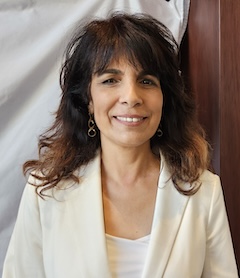
photo - Nitsana Darshan-Leitner, president of Israeli nonprofit Shurat HaDin Law Centre, which organized the Rage Against the Hate conference in New York Oct. 31
Nitsana Darshan-Leitner, president of Israeli nonprofit Shurat HaDin Law Centre, which organized the Rage Against the Hate conference in New York Oct. 31. (photo by Dave Gordon)

More than 30 organizations were conference partners and keynote speakers included radio host/author Dennis Prager, attorney Alan Dershowitz, actor Michael Rapaport, activist Shabbos Kestenbaum and NGO Monitor’s Gerald Steinberg.

Dershowitz, 86, said that after speaking to Jewish high school students, he was “stunned by their lack of knowledge” about Israel. To fill the void, he will be giving away a million copies of his latest book, The 10 Big Anti-Israel Lies and How to Refute Them with Truth, to 1,000 universities and high schools across the United States. He lambasted what he called the “educational malpractice” pervasive on college campuses, where professors “give disguise” to Jew-hatred through diversity, equity and inclusion policies, and oppressor-versus- oppressed beliefs.

“I offered $1,000 to anybody who could find me a single protester in any of these protests on university campuses that has ever called for a two-state solution. Nobody has taken me up on it. No protester wants to see an Israeli state,” he said to the audience of 300.

He added that “we are in a fight for our lives. We are in a fight for the future,” because these students will become politicians, corporate executives, media influencers and other types of leaders, and they will have all “been brought up with this kind of knee-jerk anti-Zionism.” 

Darshan-Leitner characterized Students for Justice in Palestine as a “propaganda arm of Hamas.” She believes their activity is “actually providing material support to a terror organization” and, in doing so, contravenes the Anti-terrorism Act in the United States.

Kestenbaum – who, last January, became the lead plaintiff in a lawsuit against Harvard University, alleging systemic antisemitism, and has testified before Congress about antisemitism on college campuses – told the Jewish Independent: “Jewish students are fighting a really remarkable fight with limited resources, with limited help and limited funding. It’s the Jewish nonprofits, who raise billions of dollars each year, who could be in a position to do a lot more. And so, I would encourage the Jewish nonprofits not to say, ‘What can the students be doing?’ but to ask themselves, ‘What can I be doing?’ to help students.”

“It is imperative that larger organizations actively support grassroots initiatives that can manoeuvre and mobilize quickly and efficiently, whereby large organizations cannot,” said Amir Epstein, director of Tafsik, a Jewish civil rights group that fights Jew-hatred in Canada and more broadly.

“Hundreds of millions of dollars are donated to large organizations, so it isn’t unreasonable for them to contribute considerable monetary aid to empower these grassroots efforts, so we can create a united front to combat the degradation of our Jewish community’s safety, and address the unprecedented antisemitism we face in universities, K-12 schools, media, politics and the arts,” said Epstein.

Montrealer Ysabella Hazan, who started the movement called Decolonized Judean, said phrases such as “the West is next” and “Israel is the only democracy in the Middle East” do not resonate with the younger generation. “They do not speak about us, convey our story or address the accusations that we are facing on the world stage,” she said. “And they indirectly prove exactly what the enemies of Israel accuse us of – being a Western outpost in the Middle East, a settled body, which is not true.”

Columbia business professor Shai Davidai, who has earned renown for calling out Jew-hatred on campuses, told the audience that antisemites have “created the new normal” by making students feel uncomfortable being visibly Jewish.” He said, “If we don’t fight back in the court of public opinion and in the court of law, we’re not going to win this war.”

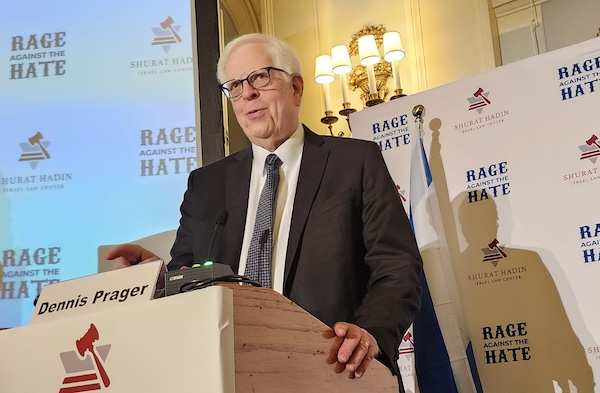
photo - At the Rage Against the Hate conference Oct. 31, Dennis Prager offered an idea of how to counter the delegitimization of Israel
At the Rage Against the Hate conference Oct. 31, Dennis Prager offered an idea of how to counter the delegitimization of Israel. (photo by Dave Gordon)

Prager, who did graduate work at the Middle East and Russian institutes of Columbia’s School of International Affairs, said, “I was basically taught by moral idiots, but they were giants compared to who’s teaching in Columbia today, or at Harvard or at Princeton.”

An argument he proposed to use against the delegitimization of Israel is to draw a parallel to the creation of Pakistan, born the same year as the modern Jewish state. “There were two Israels in history,” said Prager, “but there was no Pakistan in history. When it was created, it was wrenched out of India. Nobody ever challenges the right of Pakistan to exist.” 

Rapaport, known for his social media posts about Israel, advised: “Fight with your heart, fight with your prayers, fight with your genius, brilliant, Jewish, Zionist minds. Fight ferociously and do not take a step back,” he implored, while also encouraging Jewish education: “The more that I learn about our fantastic, magical history, the prouder I become.”

Journalist Douglas Murray, who is not Jewish, and Darshan-Leitner, shared a question-and-answer session.

Murray lamented how “very senior politicians” and “a generation of Americans” have bought into the “delusion that, if you were to solve the Israeli-Palestinian dispute, peace would break out, not just in the region, but around the world.” But a state of Palestine with Hamas leadership “will be another Iranian proxy state nearer to Israel,” he said, and it’s “an obscenity that more people don’t realize that.”

He also said this is “a great opportunity for alliance-building,” and reminded the audience “not to forget the Christian communities” and others “who have been so supportive of Israel.”

Winnipeg attorney Lawrence Pinsky told the Independent that the conference was “inspiring and helpful,” and he plans to create a community “situation room,” he said, “just so that we can have a multi-directional approach to any problem. These will be individuals who may or may not be parts of organizations, who actually want to do, and can do.” 

He said the conference helped him realize that activism should involve “no ego,” and that people should jump into action, not feeling they “have to reinvent the wheel.” 

Dave Gordon is a Toronto-based freelance writer whose work has appeared in more than 100 publications around the world. His website is davegordonwrites.com.

Format ImagePosted on November 29, 2024November 28, 2024Author Dave GordonCategories WorldTags activism, antisemitism, conferences, education, Israel, Nitsana Darshan-Leitner, Rage Against the Hate, Shurat HaDin
Israel’s war is unique

Israel’s war is unique

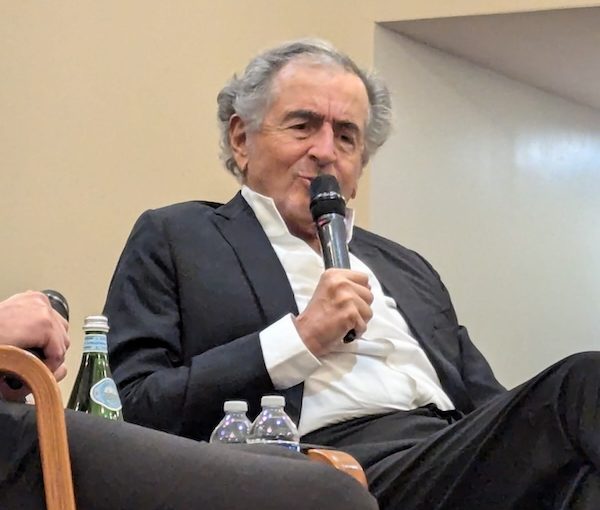
French writer, filmmaker and human rights activist Bernard-Henri Lévy was in Vancouver at Schara Tzedeck Synagogue Nov. 6, in conversation with the National Post’s Tristin Hopper. (photo by Pat Johnson)

Bernard-Henri Lévy, a public intellectual so well-known in France that he is generally referred to simply as BHL, has thrown his energies into an “emergency” effort to defend Israel in a moment of history when the world has turned against the Jewish state.

Lévy was in Vancouver at Schara Tzedeck Synagogue Nov. 6, in conversation with Tristin Hopper, a writer for the National Post.

Throughout his career as a reporter, commentator, filmmaker and activist, Lévy has written and spoken extensively about humanitarian crises in Bangladesh, Darfur, Rwanda, Bosnia and many other flashpoints. Now, he said, “I am pleading with all my energy for Israel and for the defence of Israel.”

His latest book – his 47th or 48th, he thinks – is Israel Alone.

Israel’s war is unique, he said, because it involves enemies who are not driven by ideas but by the nihilistic aim of destroying a nation and a people. The differentiation between antisemitism and anti-Zionism is irrelevant to Hamas and Hezbollah, said Lévy, noting that many of those killed on Oct. 7 were among Israel’s leading peace activists.

“Those crimes have nothing to do with seeking a political solution to the suffering of Palestinians,” he said. “They don’t care about peace. They don’t care about a two-state solution. They don’t care about the fate of the old people. They only care about killing Jews. [The victims] could have been right-wing Jews. It happens that they were left-wing Jews, but they just don’t care. For Hamas, there is not left-wing or right-wing Jews. There is just Jews who deserve to be hated, tortured and, if possible, killed.”

Lévy urges the world not to be misled into thinking that Hamas and Hezbollah are national liberation movements. “They are the proxies, the puppets, of a very powerful country, which is Iran,” he said.

Lévy is optimistic because Israel is winning the war.

“What makes me a little less optimistic, and even pessimistic, what sometimes discourages me, is the reaction of the world,” he said. “Instead of saying bravo to Israel, instead of saying thank you to Israel, instead of standing at the side of Israel, who is waging an existential war for [itself] but also a useful war for the rest of the world – instead of that, the rest of the world, sometimes the allies of Israel, mumble, object, groan, accuse and ask, demand, beg, require from Israel ceasefire, compromise, negotiation.

“When you think about it, I don’t see any precedent of a just war, a fair war, which is treated by the allies of the country that is waging it, with such strange behaviour,” said Lévy. “It is unique.”

The West is responding like cowards to the threat of Iranian-backed Islamist terror, he argued, which has formed an alliance with Vladimir Putin’s Russian regime. Part of this refusal to stand with the victims is an ingrained tendency in Western civilization, he said.

“There are a lot of people in the West who love Jews when they are victims, who love to support them and to shed tears on their face when they are beaten, wounded and sometimes killed,” he said, “but who don’t like to see them proud and strong and behaving with heads up.”

On the positive side, Lévy believes, most people in Europe and North America are not irreversibly antisemitic or anti-Israel but are influenced by biased commentary. His new book is a tool for these people and those who engage with them, he said. “Those [people] can be addressed with reasonable arguments, with historical facts, and … can be not only addressed but convinced, I’m sure of that. That is the aim of this book.”

Canada has been a safe haven for generations of Jews, he said. But now, Canadian Jews hear fellow citizens calling for their destruction.

“What is the future of the Jewish communities in France and in Canada?” he asked. “I will tell you one thing. I know very few Jews who do not have, somewhere in the back of their mind, the precise or vague or very vague idea that they could go one day to Israel. This is the state of Jewry since 1948. To be a Jew means to be a good Canadian citizen, a good French citizen, but to have somewhere, even remotely, in the mind, the idea that Israel could be an option.”

The global condemnation of Israel is a reincarnation of a long-familiar trend, Lévy said. “The new argument of antisemitism, the new form, the new phase, the new name of the virus is anti-Zionism,” he said.

The best and “only efficient way to be antisemitic today” is to be anti-Zionist, he argued. Blaming Jews for deicide or some of the other historical justifications for antisemitism is no longer effective, he said. “If you say that today, honestly, you will not meet with great success. If one wants to hate with efficiency the Jews, there is only one way left.”

Israel has few supporters among non-Jews, he said, even among ostensible allies, whose support he described as often coming with conditions.

Lévy called the former and future president of the United States, Donald Trump, “a true ally of Israel, for sure, no doubt on that.” But he also reminded the audience of an incident in the election campaign, during which Trump warned a Jewish audience that he would blame them for his loss if he were defeated.

“And if you are responsible for my defeat, within two years, Israel will disappear,” Lévy paraphrased Trump. “It was a slip of the tongue probably. [But it meant that, in Trump’s mind], the Jews deserve to be protected, but conditionally, if they supported [Trump], if they were good guys and good ladies, if they gave him victory.”

Schara Tzedeck’s Rabbi Andrew Rosenblatt welcomed the audience and acknowledged members of the Ukrainian, French and other communities in attendance. He also credited Robert Krell and Alain Guez for Lévy’s visit to Vancouver. 

Format ImagePosted on November 29, 2024November 28, 2024Author Pat JohnsonCategories LocalTags activism, antisemitism, Bernard-Henry Lévy, books, education, Israel, Israel-Hamas war, Oct. 7, Schara Tzedeck

Update on taskforce

Since Oct. 7, 2023, many members of the Jewish community have experienced antisemitism in some form or another. Jewish Federation of Greater Vancouver and the Centre for Israel and Jewish Affairs have been addressing these incidents, as well as progressing on a strategy to combat it.

A taskforce on antisemitism was appointed last November. Phase 1 was an emergency response in the months directly after Hamas’s attack on Israel. Phase 2, well underway, is about protecting the local community, strengthening relationships with allies, expanding education and raising awareness. This second phase includes an examination of how antisemitism is preventing community members from thriving, and research on how other communities have responded to similar challenges. It seeks to answer the questions, what can we learn from others and what are the best practices for combating antisemitism?

The taskforce is composed of volunteer professionals with different subject matter expertise from across the Jewish community. Between now and April 2025, they will examine manifestations of antisemitism in various sectors and how community members are responding to it. In April, they will deliver findings to the Federation board, with a formal presentation scheduled for the annual general meeting in June. The goal is to develop insights that will ensure the Jewish community can continue to thrive.

“We’re looking at different aspects of community life, including schools for children K-12, Hillel and campus life, the unions and the experiences of new Israelis coming to Vancouver,” said Mijal Ben Dori, vice-president, community planning, partnerships and innovation at Federation. “For example, new-to-Vancouver Israelis are having challenges finding jobs because they have to answer questions about whether they’ve served in the IDF and if they were in Israel after Oct. 7. Based on their answers to these questions, fewer Israelis are passing through the human resource departments of firms in BC.” 

Emet Davis, director of Community Organizing Against Antisemitism, at Federation, said the taskforce has identified key areas that are particularly egregious “In the K-12 school system, school boards and teachers unions are engaged in rewriting history or the erasure of the Jewish experience in curriculum and lesson planning,” said Davis. “At post-secondary institutions across BC, antisemitic tactics this year have been more vitriolic and widespread, posing safety threats to our Jewish students. These are areas where we really have to focus our attention.” 

The arts community is another concerning sector. “Groups like the BC Arts Council and Canada Council for the Arts are using DEI criteria to issue grants, which excludes Jews,” Davis said. “That’s not the only area where Jews are being excluded based on DEI criteria.”

This three-to-five year phase of Community Organizing Against Antisemitism will require a budget of $10 million, for staffing, fight-back advertising and a legal resiliency fund. The hope is that funding will come from private foundations, the Jewish and broader communities. 

Lauren Kramer, an award-winning writer and editor, lives in Richmond.

Posted on November 29, 2024November 28, 2024Author Lauren KramerCategories LocalTags antisemitism, CIJA, Community Organizing Against Antisemitism, Emet Davis, Jewish Federation, Mijal Ben Dori, Oct. 7
Go on offensive: Levy

Go on offensive: Levy

Pro-Israel activist Eylon Levy speaks with an audience member before his Oct. 30 talk at Schara Tzedeck, which was presented by StandWithUs Canada. (photo by Pat Johnson)

The terrorists who perpetrated the Oct. 7 attacks were products of schools paid for in part by the Canadian government, according to Eylon Levy, a former Israeli government spokesperson who addressed an audience at Schara Tzedeck Synagogue last week.

“The Oct. 7 terrorists all went to Canadian-funded schools,” he said. “That is outrageous. It’s disgusting. You need to hold [the Canadian government] accountable and say there are consequences.” 

Most schools in Gaza are run by the United Nations Relief and Works Agency (UNRWA), which is funded by UN member-states, including Canada.

Levy spoke here Oct. 30 as part of a cross-Canada tour sponsored by StandWithUs Canada, a pro-Israel educational organization focused on campuses.

Levy said Israel’s recent announcement that it was banning UNRWA from operating in Israel was the right move because the agency exists to perpetuate the Palestinian refugee problem, not resolve it, to keep the Israeli-Arab conflict alive, to indoctrinate Palestinian children and to provide the financial safety net terrorists need to engage in violent attacks like Oct. 7.

Israel has been widely condemned for the imminent ban, which came after Israel repeatedly informed the UN that UNRWA’s staff includes known terrorists, some of whose names were provided to the UN by Israel.

“They just don’t care,” Levy said of the UN’s response that terrorists are on their payroll. “Now they claim UNRWA is irreplaceable. Well, you should have thought about that when Israel gave you the evidence that it is riddled with terrorism and you chose to deny that it was a problem.”

According to Israeli authorities, 12 UNRWA staff members actively participated in the Oct. 7 attacks, with allegations that more than 30 additional UNRWA workers were involved in activities such as facilitating hostage-taking and looting. Israel’s Defence Minister Yoav Gallant has alleged that, of the 13,000 UNRWA employees in Gaza, at least 12% are affiliated with Hamas and Palestinian Islamic Jihad terror groups.

In conversation with Michael Sachs, Western regional director for Friends of the Simon Wiesenthal Centre, Levy said many people are inverting right and wrong when it comes to the Israel-Hamas war and they are trying to sway young people especially. 

“The world is trying to tell them that the cause of their generation, the great cause of this century, is the fight for Palestine, which means the destruction of the state of Israel,” Levy said.

Contesting these messages is tough, he said, especially when the agencies that represent the moral high-ground are on the wrong side.

Levy recalled a debate he had against broadcaster Mehdi Hasan.

“I knew he was going to come on the stage and say, ‘Well, the UN agrees with me, Oxfam agrees with me, Save the Children agrees with me, Red Cross agrees with me. How is it possible the whole world is wrong and you are right?’” Levy said. “That’s Jewish history: the courage to look around and say, ‘You’re all crazy. This isn’t right.’”

Levy noted that UN Secretary-General Antonio Guterres issued a statement on social media mourning the death of Muhammad Abu Atawi, who was killed by the Israel Defence Forces.

Atawi was an employee of UNRWA but, according to Israel, he was also a Hamas terrorist who led the attack on the bomb shelter near the Nova music festival, in which Hersh Goldberg-Polin and others were sheltering. 

“This is a leader I’m supposed to take seriously?” Levy asked. “The Red Cross that hasn’t lifted a finger to try to save the hostages is an organization that I am meant to take seriously? The NGOs that wouldn’t even shed crocodile tears on Oct. 7, that never tried to do any sort of campaign for the hostages, they are the ones I am meant to take seriously?”

Young people and other activists in the West who insist they are anti-Zionist and not antisemitic are deluding themselves, Levy suggested.

“You are expressing a hatred and a prejudice against the same people,” he said. “The fact that they believe that they hate the same people that their grandparents hated but it’s a complete coincidence shows a tragic lack of self-awareness.”

Getting the pro-Israel message out is especially challenging on social media, said Levy, but Jews and their allies can’t give up the battle.

Social media is problematic at the best of times – even when it is not a platform controlled by the Chinese regime, as TikTok is – because it maximizes engagement by provoking outrage and amplifies the most extreme viewpoints.

“We’re not going to win the social media battle,” he said. “But we can’t afford not to fight it.”

If the only thing that people see on social media are anti-Israel messages, what conclusion will people come to? he asked.

“But what if their friend, the person they know is a good, decent person, stands up and presents a contrary view?” said Levy. “Then at least you’ve made that person think this is complicated and there’s a case to be made on the other side. So, it requires all of us to be there, to fight the fight, to be as loud and vocal and produce as much stuff as possible.”

That battle of ideas also needs to be taken offline, he said.

It is further complicated, he added, because the Israeli government has effectively given up communicating to the world.

Levy, who was born in England to Israeli parents and made aliyah as a lone soldier, was effectively conscripted to serve as an English-language spokesperson at the beginning of the war. He was fired after a social media spat with Britain’s then-foreign secretary David Cameron. Levy cofounded the Israeli Citizen Spokespersons’ Office, which tries to fill the information gap he said the Israeli government has left.

Pro-Israel voices in the West need to change tack, according to Levy. Rather than being on the defensive and explaining Israel’s actions, Canadians and others should be calling out governments and NGOs.

“Other people owe us answers,” he said. “UNRWA owes us answers. The Red Cross owes us answers. The UN owes us answers. I think we have to go on the offensive and demand those answers from other people instead of constantly trying to defend ourselves and say, ‘I can explain.’”

Levy dismisses calls for a ceasefire. The war needs to end in the defeat of Hamas – and it’s all over but the surrender, he argued.

“Hamas has lost,” he said. “It’s game over.”

But Hamas needs the world to help it understand that fact. 

“The problem is, when international actors step in to demand a ceasefire, as opposed to Hamas’s surrender, they tell Hamas to keep fighting,” he said. With Hamas on its knees, “It’s outrageous that some countries are trying to get it back up on its feet.”

Hezbollah has also been largely eliminated, according to Levy. 

“All of its top leadership are dead,” he said. “The infrastructure along the border has been destroyed.”

Iran, of course, remains unbowed, even in the face of the damage Israel has inflicted on its proxies.

Levy said one outcome from the current crisis is that Jewish communities have come together. In Israel, individuals instantly mobilized on Oct. 7 to do whatever they could and, in the diaspora, Jews have united as they rarely have before.

“That sense of responsibility, that sense of solidarity, being there for each other and having each other’s backs, I find incredibly inspiring,” he said. “That awakening of responsibility and self-reliance and leadership in Jewish communities around the world has been an inspiration to people in Israel.”

Jesse Primerano, executive director of StandWithUs Canada, which brought Levy to Vancouver, said his group has 106 interns and fellows on campuses across Canada this year – an increase over past years and a happy surprise for Primerano. He was afraid for the organization’s programs this year, he said, concerned that they wouldn’t be able to recruit students to stand for Israel on campuses. The opposite happened.

“Numbers skyrocketed,” he said. “The truth is that they are not scared. They are empowered. They are emboldened … and they are so brave and ready to stand up.” 

SWU has also hired more staff across Canada, including a full-time position in Vancouver funded by the Diamond Foundation.

Three students from Vancouver-area campuses who are part of the SWU Emerson Fellowship program spoke to the audience, drawing ovations. 

Format ImagePosted on November 8, 2024November 7, 2024Author Pat JohnsonCategories Israel, LocalTags antisemitism, Eylon Levy, Friends of the Simon Wiesenthal Centre, Israel, Israel-Hamas war, social media, StandWithUs, terrorism, United Nations, UNRWA
A Shylock written for Rubinek 

A Shylock written for Rubinek 

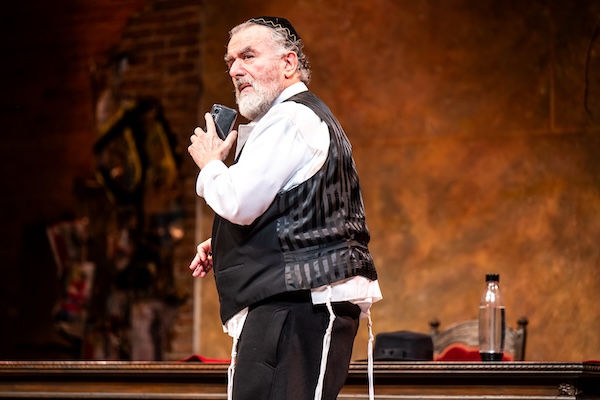
Saul Rubinek in Mark Leiren-Young’s Playing Shylock, which is playing in Toronto. Leiren-Young wrote the work with Rubinek in mind. (photo by Dahlia Katz)

Victoria playwright Mark Leiren-Young spent October in Toronto, where his Playing Shylock is appearing at Berkeley Street Theatre through Nov. 24. The one-man show, which stars Saul Rubinek, is based on the Jewish character in Shakespeare’s The Merchant of Venice.

“I’ve been attending rehearsals, run-throughs and previews as a playwright,” Leiren-Young told the Independent from Toronto before the play’s world premiere. “That means I’m around to work on the script with the actor and director. Since it’s a new script, that means I’m adjusting it to reflect ideas that come up in rehearsals, working with the costumes, the designs and the space. Really, anything that needs doing to get the script as tight and right for the actor and the production as it can be – making sure ideas are clear, jokes land and that Saul is having as much fun as possible.”

photo - Mark Leiren-Young
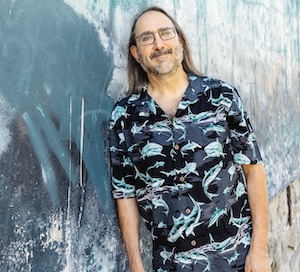
Mark Leiren-Young (photo by Jeffrey Bosdet)

Leiren-Young’s play Shylock first appeared on stage at Bard on the Beach in 1996. Playing Shylock, he said, is an all-new play with the same core premise: a production of The Merchant of Venice has been canceled in mid-run due to a controversy over the production.

“This is a bespoke piece that started during the COVID lockdown and I built it around Saul’s life experiences after studying his voice, his personal history, his greatest roles, his mannerisms,” Leiren-Young said. “This was written to sound like Saul and feel like Saul and not like a character or story created by me.”

In fact, when actor John Huston, who starred in multiple productions of Shylock, touring five provinces, asked Leiren-Young what was recognizable from that first play, the playwright responded, “The lines that Shakespeare wrote.”

“Beyond keeping some of Shylock’s best lines from Merchant of Venice, this is an all-new play because we’re in an all-new world,” said Leiren-Young. “And it’s a new world in so many ways. Think about how controversies played out before social media. Think about how the issues in theatre and society have changed, and the issues the Jewish community is facing.”

According to Leiren-Young, the original draft of Playing Shylock was completed a couple of years ago. Yet, he tries to update his plays to reflect current circumstances.

“This script always included a cancelation letter inspired by an actual cancelation announcement,” said Leiren-Young. “The original draft for Playing Shylock was inspired by a letter announcing the cancelation of a screening of the controversial opera The Death of Klinghoffer about a decade ago.”

The letter now, he said, is largely inspired by the decision of the Belfry Theatre in Victoria to cancel its January production of The Runner after protesters demonstrated and vandalized its property because they objected to a play about an Israeli volunteer with the Orthodox group ZAKA.

“Not just because it’s more current, it’s Canadian and more relevant to the times,” he said, “but because that letter appeared to be used as the template for canceling another play at a theatre across the street from the Belfry.”

Rubinek, a distinguished stage veteran, is widely known to film and television audiences. To name but a few of his credits: Wall Street, Barney’s Version, Frasier. This past June, the Globe and Mail placed Rubinek in the 25th spot on its list of the greatest Canadian actors of all time.

“I believe that if the people who made that list see this show, they’ll want to bump up his ranking by a fair bit. Watching Saul deliver Shakespeare’s lines is amazing. Watching Saul deliver my lines is a dream,” Leiren-Young said. “He’s 76 and he’s better on lines than any other actor I have ever worked with.”

Of the play, Rubinek said Leiren-Young “leaps into the historic controversy about the character of Shylock with gleeful relish and biting humour and then has the chutzpah to create a poignant study of why theatre should matter.”

The actor added, “To collaborate with on a new play – and I’ve done a lot of them – Mark is an actor’s dream: tirelessly inventive, generous, creatively stubborn in all the right places and, best of all, funny.”

This weekend, on Nov. 10, 2 p.m., at Victoria’s Congregation Emanu-El, Leiren-Young will give a talk about Playing Shylock, his original play Shylock, the character of Shylock, the impact and history of The Merchant of Venice and “anything else the audience that day wants to talk about.”

The author of numerous books, Leiren-Young is the only writer to win the Leacock Medal for Humour (Never Shoot a Stampede Queen) and the Science Writers and Communicators Award for Canada’s best science book (The Killer Whale Who Changed the World).

Leiren-Young’s Sharks Forever is a non-fiction book for middle-school readers and features an introduction by environmental activist Paul Watson. His next book, Octopus Oceans, is being released in early 2025. He is currently working on a new book for young readers focusing on how to protect the oceans and the animals who live there.

To follow Leiren-Young online, visit his website, leiren-young.com, and his Substack page, substack.com/@skaanapod?. 

Sam Margolis has written for the Globe and Mail, the National Post, UPI and MSNBC.

Format ImagePosted on November 8, 2024November 7, 2024Author Sam MargolisCategories Performing ArtsTags antisemitism, Mark Leiren-Young, Playing Shylock, playwrighting, Saul Rubinek, Shakespeare, Shylock, theatre
Comedy can unite and heal

Comedy can unite and heal

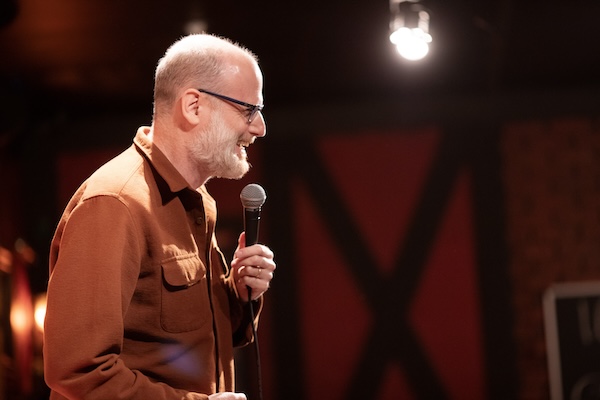
Comedian Erik Angel performs his one-man standup show, Speaking Falafel, at the Jewish Community Centre of Greater Vancouver on Nov. 14. (photo from Erik Angel)

“This year, I discovered even more how comedy is an important tool to bring people together, for release and relief, and I won’t be exaggerating if I say that comedy saved me this year,” Erik Angel told the Independent in an interview in advance of his solo performance Nov. 14, 8 p.m., at the Jewish Community Centre of Greater Vancouver. He’ll also be taking part in a show for students at the University of British Columbia while he’s here.

“This is perhaps the saddest time in my life, with a lot of pain, sorrow and worry, and going on stage night after night and making people laugh, helps me clear my mind and move on,” said Angel of the year since Oct. 7, 2023. “On stage, I deal with my reality today, with antisemitism, but I do it in an entertaining way. They say that comedy is tragedy plus time and I call my performance a humanitarian respite for the soul.”

Angel, who lives in New York, has opened for headliners like Maz Jobrani and Zarna Garg. He’s been part of several comedy festivals and has performed in more than a dozen countries to date. This will be his first time in Vancouver.

Born and raised in Israel, Angel moved to the United States for love, he said, after meeting his bashert at, of all places, the Jewish community centre in Krakow, Poland, in 2015. 

“I went to Krakow for a long weekend and all my life changed completely,” he said. 

Angel has worked in several creative fields. As a singer-songwriter, he released three albums in Israel. He studied drama and worked as an actor for five years. He did some standup comedy in Hebrew at open mics in Israel almost a decade ago, but said he quickly switched to doing routines in English, even while still in Israel.

“Since summer 2016,” he said, “I’ve been doing comedy in English, almost on a daily basis.”

The show that Angel is bringing to the Vancouver JCC next week is the product of a lot of work. 

“Speaking Falafel is an hour of comedy that I worked on for seven long years of comedy spots, day after day, and I am very proud of it. It’s a very funny show about my journey since I went on this long weekend in Krakow and met the love of my life. I share the difficulties of becoming a new immigrant, newly married in my 40s, the differences between Israeli culture and other cultures in the world, how to be now ‘the Jew’ everywhere, to live 24/7 with a second language. I tell stories, I speak with the audience, and I even sing a little bit.”

The Nov. 14 show is a bonus for Vancouverites, as Angel’s main purpose for coming to the city is the UBC show, which is the start of a winter tour for Comedy for Peace. 

Angel established Comedy for Peace five years ago.

“I grew up in Israel with two million Muslims. I never met one – not in school, not in my basketball team,” he said. “I started to meet Muslims when I started to travel the world. The meetings were always friendly, and I wanted to do something artistic together. When I moved to New York, I became part of the New York comedy scene. I produced the first show, that was a huge success, and since then we have had shows in more than 50 cities in the US and Canada.

“Comedy for Peace is not a political event,” he stressed. “It’s about different communities who sit together under one roof and have fun. Simple as it sounds, we want to show people how easy it is to collaborate, laugh, learn about each other and discover how much we are more alike than different. Today, we also have a version with Christian comedians that will travel with the West Coast tour. Nov. 9, Comedy for Peace will be part of the New York Comedy Festival for the second time.

“After Oct. 7, a few shows were canceled (and a few not) and very fast we decided that, for us now, it’s more important than ever and this is why we keep going,” added Angel. “There are comedians, mostly Muslim or Christian Arabs, that cut me off and don’t want to be a part of it – it’s painful because I didn’t change – but most of the comedians are still on board. And our goal now is to bring our message everywhere possible, and [I] will never give up and will always believe most of us, the people, just want to live together peacefully.”

Performing alongside Angel at UBC will be Liz Glazer, Gibran Saleem and Paul Schissler.

“From my experience, people that come to support the show support the idea and are not coming to protest or say something against it and I hope it will be the same this time,” said Angel when asked if he was concerned about the protests and vandalism that have taken place at UBC and other universities. “We are a non-political peace show, so it’s crazy for me to think that things will go differently. Until today, the only problem we have had to deal with was people calling/writing or trying to shame online our Muslim/Christian Arab comedians or asking them not to do it anymore. Most of them just want to do it more since then. But still, we have the reality, there are many haters out there and everything can happen. We have a Q&A session at the end and we are open to speaking with reasonable people that will come with an open heart and ask questions they want to speak about or to understand more. This is part of our mission, to be there together on stage.”

To watch some clips of Angel’s performances from around the world, visit his YouTube channel, youtube.com/@erikangelcomedy9702, or his Instagram page, instagram.com/erikangelcomedy/?hl=en. For tickets to Speaking Falafel, go to eventbrite.com. 

Format ImagePosted on November 8, 2024November 7, 2024Author Cynthia RamsayCategories Performing ArtsTags antisemitism, comedy, Comedy for Peace, Erik Angel, immigration, JCC, marriage, peace, Speaking Falafel

When new is also ancient 

It turns out that a war and a worldwide increase in antisemitism may cause more Jewish people to return to Jewish spaces. Some Jewish atheists try out fasting for Yom Kippur. New faces appear at synagogue. Lectures and events that were sparsely attended in the past seem to have more takers. If you’re a regular in a Jewish community, you may have seen this already. There are many reasons, including a need to find community and avoid antisemitism, or to return to religious practice after dealing with so much death. For those who were already attending or even occasionally attending Jewish services or events, things have also changed.

My twins had their b’nai mitzvah in June. I’d long thought of how cool it would be if they could help fill out a minyan more often (a group of 10 needed for communal prayer). However, there have been obstacles. Our congregation’s building was under renovation. The temporary spot, while lovely and hospitable, required a car ride.

This fall, the congregation moved back to its building and we live in easy walking distance. My kids attend public school and didn’t have Sukkot off. Yet, when one kid asked to attend minyan on Hoshanah Rabbah, the last day of Sukkot, I immediately said yes. He would have “an appointment” that morning, according to the attendance sheet, and arrive a little late. We figured, no need to claim a religious holiday (antisemitism concerns, again), but that’s what it was, of course.

Hoshanah Rabbah was a new experience for us, though it’s an ancient ritual. It involves circling the pulpit (a stand-in for the Temple altar) seven times, with lulav and etrog in hand. Marking the end of the fall holidays, it’s a last chance to ask for forgiveness and a better year.

Traditions differ about what is said during this ritual, but our congregation read piyyut, which are traditional poems, a part of Jewish liturgy that often includes acrostics (poems that use the alphabet). Some of the piyyut are very old. I found myself praying that my fruit trees don’t get fungus or that my fields wouldn’t be cursed. It might seem funny to ask for some of these things, but my city backyard has young apple, apricot, plum and cherry trees. I don’t want fungus!  

It was especially poignant to pray – in the “Foundation Stone (“Even Shetiyah”) poem – about “the goodness of Lebanon, beautiful place, joy of the world.” This came straight out of the Siddur Ashkenaz (the Ashkenazi prayerbook), with specific quotes from Isaiah, Psalms and Lamentations. Our historic relationship with Lebanon is a rich one. Many of us, Israelis and diaspora Jews, would love to visit Beirut, the “Paris of the Middle East.” Some of us have ancestors who lived there, and we would like to see where they grew up or spent time. This urge isn’t new; our desire to have a good connection to Lebanon as a neighbour is ancient.

Then, we all were handed bundles of willows. We beat these on the lectern with force while saying, “Save your people and bless your heritage, care for them and carry them forever.” It was primal, cathartic, and very messy. There were willow leaves everywhere. 

My kid was only a little late to first period art class. I went home in wonder. Later, I joked with one of my professors from graduate school, Jack Sasson, who I respect deeply, about how, for me, this previously unknown Jewish ritual felt stirring and exotic. He suggested that paganism still has something to teach us. The beating of the willows is ancient indeed. It’s a namburbi ritual from Mesopotamia, he said. When I remarked that I could get into this paganism thing, his reply left me laughing. “Ishtar will welcome you.”

I was still reflecting on all this when watching some new friends with young kids dancing on the evening of Simchat Torah. To help everyone through the first yahrzeit of Oct. 7/Simchat Torah, our rabbi dedicated each hakkafah (circuit around the room with the Torahs) to a different group: first responders, those who had died in the past year, the unity of the People of Israel, etc. The next afternoon, the kids came over for snacks and to play. One of the parents asked me why there was so much reference to Israel stuff. I realized that here, too, was a confluence of old customs and new experience.

I explained that some of these prayers, for instance, the prayer for the hostages, weren’t new. The Talmud, codified in 500 CE, discusses the topic of hostages at length. The first instance of the prayer for the redemption of hostages that we use today was documented in the Mahzor Vitry, named for Simhah b. Samuel of Vitry, a French talmudist who died in 1105 CE.

I reminded them that many present at the synagogue were in mourning for people who had died. While celebrating old holidays, we need to acknowledge the current situation. These days, services usually include prayers for the state of Israel and the Israeli army, too. None of these are newly written prayers. 

Of course, Sukkot itself, a harvest festival that required Israelites to go to the Temple in Jerusalem – last destroyed in 70 CE – is also all about Israel.

I drew a few conclusions from these social encounters. First, for those who may feel jaded and aware of Jewish yearly events, there’s always something new to learn. For me, it was the primal connection to Mesopotamia, namburbi ritual and, yes, Ishtar, the goddess herself. For those who hadn’t been at synagogue for some time, there were many questions, new encounters and experiences, too. What unites it all is a realization that, while our individual learning curve might be new to us, the rituals, the prayers, and the historic connections to Israel are ancient.

For all of us, in a time when political rhetoric seeks to disconnect diaspora Jews from the land of Israel, Sukkot and Simchat Torah were a powerful – and timely – reminder of our past and our future, together. 

Joanne Seiff has written regularly for the Winnipeg Free Press and various Jewish publications. She is the author of three books, including From the Outside In: Jewish Post Columns 2015-2016, a collection of essays available for digital download or as a paperback from Amazon. Check her out on Instagram @yrnspinner or at joanneseiff.blogspot.com.

Posted on November 8, 2024November 7, 2024Author Joanne SeiffCategories Op-EdTags antisemitism, community, history, hostages, Israel, Judaism, lifestyle, prayer, Simchat Torah, Sukkot, war
Samidoun on terrorist list

Samidoun on terrorist list

Samidoun was an organizer of an Oct. 7 rally celebrating Hamas’s terror attacks on Israel a  year earlier. Protesters tried to burn the Canadian flag while shouting that Israel should burn. They also chanted “death to” Canada, the United States and Israel. (screenshot Global News)

Last week, the Government of Canada designated Samidoun, a not-for-profit corporation based in Canada, as a terrorist entity under the Criminal Code. At the same time, the United States Department of the Treasury announced Samidoun is now a “specially designated global terrorist group.”

Also known as the Palestinian Prisoner Solidarity Network, Samidoun has close ties to the Popular Front for the Liberation of Palestine (PFLP), which has been designated by Canada and other countries as a terrorist group for many years. 

At rallies in Vancouver and throughout Canada, Samidoun’s international coordinator, Charlotte Kates, has expressed open support for the Oct. 7 attacks on Israel. On the one-year anniversary of the attacks, she led a rally where chants of “death to Canada, death to the United States and death to Israel” were heard. Videos show rally participants setting fire to the Canadian flag, while shouting “Israel, burn, burn,” among other things. 

“We’re very thankful for today’s decision by the Government of Canada to designate Samidoun as a terrorist entity under the Criminal Code,” said Nico Slobinsky, vice-president, Pacific Region, Centre for Israel and Jewish Affairs (CIJA). “For the past year, they’ve organized some of the most vicious protests in Canada, openly and explicitly celebrating the Oct. 7 attacks and, just last week, they were chanting ‘we are Hamas, we are Hezbollah’ at their rally.”

Kates was arrested after an April 26 rally, at which she called the Oct. 7 terrorist attacks “heroic and brave” and led chants of “Long live Oct. 7.” The conditions of her release order – which prohibited her participation or attendance at any protests, rallies or assemblies for a period of six months – expired Oct. 8 because the Crown had yet to file charges against her.

Slobinsky said CIJA called for the BC Prosecution Service (BCPS) to charge Kates under hate speech laws four months ago, so that she face the full consequences of her actions for glorifying terrorism. But just how long it will take for the BCPS to make a decision is unknown. 

Damienne Darby, communications counsel for the BCPS, confirmed that the BCPS had received a Report to Crown Counsel in relation to Kates. “We are reviewing it for charge assessment, and I am unable to provide a timeline for completion,” she wrote in an email, declining to provide further comment. 

In a statement, Shimon Koffler Fogel, president and chief executive officer of CIJA, said, “Listing the group as a terrorist entity means they will no longer be able to use our streets as a platform to incite hate and division against the Jewish community; this is a significant step toward ensuring the safety and security of Canada’s Jews.” 

But, while the designation as a terrorist group will affect Samidoun’s ability to fundraise, recruit and travel, it is unclear whether it will affect their ability to hold rallies and further promulgate hatred. 

CIJA has asked the federal government to re-examine whether Kates and her husband, Khaled Barakat, obtained Canadian citizenship fraudulently by failing to fully disclose their affiliation with the PFLP. The United States has put Barakat on a terrorism watch list for his connections with the PFLP.

Public Safety Canada notes that one of the consequences of being listed as a terrorist organization is that the entity’s property can be seized or forfeited. Banks and brokerages are required to report that entity’s property and cannot allow the entity to access their property. It’s an offence for people to knowingly participate in or contribute to the activity of a terrorist group. Including Samidoun, there are now 78 terrorist entities listed under the Criminal Code, according to Public Safety Canada.

This terrorist designation is long overdue, said Rabbi Jonathan Infeld, chair of the Rabbinical Association of Vancouver. “To have an organization that creates chaos, hatred and threatens the Jewish community operating freely in Vancouver and Canada was terrible,” he said. “When Samidoun burned the Canadian flag and called for the destruction of the US and Canada on Oct. 7, they demonstrated who they truly are. I hope this decision will give the Canadian government and the police the ability to prevent Samidoun from operating in the manner they have and to prosecute.” 

Lauren Kramer, an award-winning writer and editor, lives in Richmond.

(Editor’s Note: For the CJN Daily podcast host Ellin Bessner’s conversation with NGO Monitor’s Gerald Steinberg about Samidoun’s terror links and more, click here.)

Format ImagePosted on October 25, 2024October 24, 2024Author Lauren KramerCategories Local, NationalTags antisemitism, Centre for Israel and Jewish Affairs, Charlotte Kates, CIJA, Damienne Darby, Jonathan Infeld, Khaled Barakat, law, Nico Slobinsky, Oct. 7, Samidoun, Shimon Koffler Fogel, terrorism

שיחה ישראלית

ישראל נמצאת בסכנה קיומית מהיום שהתחלתי לנשום לפני למעלה משישים וחמש שנים ואני לא אומר זאת כדי להפחית מחומרת העניין. מצער מאוד שחבורת פושעים בלתי אנושית של החמאס וחבריהם “הזכירו” שוב לישראלים בשבעה באוקטובר, כי הם גרים באזור מסוכן ביותר. ישראל ישנה והישראלים כהרגלם התעלמו מכל התרעה אפשרית לחדירה כה קשה כפי שאירעה באוקטובר

פרופ’ ישעיהו ליבוביץ אמר לאחר כיבוש השטחים כתוצאה ממלחמת ששת הימים שנכפתה על ישראל, כי זהו דבר חמור שיגרום נזק גדול לישראל, ישחית את המדינה ואולי אף יביא לקיצה. כל יום מאז התבגרותי הרגשתי עד כמה דבריו החמורים של פרופ’ ליבוביץ נכונים, ועד כמה הישראלים ברובם לא ראו שום בעייה בנושא החזקת השטחים הכבושים. להיפך: שטחים אלו יצרו גל הולך וגדל של תנועה משיחית של יהודים פנאטיים, שמאמינים בכל ליבם שאת השטחים הכבושים הם קיבלו מאלוהים ומצווה עליהם להתיישב בהם. תנועה משיחית מסוכנת זו שמספר תומכיה גדל משמעותית כל שנה, ממשיכה במלאכת בניית התנחלויות והרחבתן בשטחים, תוך שמתקבלות תמיכה ועידוד רב ממשלות נתניהו השונות. בנימין נתניהו ראש הממשלה הנצחי של ישראל שיושב על כיסא המלך כבר כשבעה עשרה שנים, מיישם את תפיסתו ותפיסת אביו – שיש ליישב יהודים בכל ארץ ישראל, כולל ובעיקר בשטחים הכבושים. תפיסה זו שמקובלת על ידי חלק נרחב מתושבי ישראל כיום, מונעת כל אפשרות של הקמת מדינה פלסטינית בשטחים שנכבשו. וכך גם נמנע מישראל לחיות בביטחון מלא תוך אפשרות של שלום עם מרבית מדינות ערב. מי שמתעלם מהבעייה הפלסטינית בעצם מתעלם מהאופציה היחידה לפתרון הסכסוך הארוך והנוראי הזה בין ישראל לשכנותיה. בין היהודים למרבית המוסלמים בעולם

הישראלים רוצים בדומה לאזרחי מרבית המדינות בעולם לבלות, לטוס לחו”ל וליהנות מהזריחות ומהשקיעות כאחד. אך הישראלים מעדיפים לשכוח כי מי שרוצה להחזיק בשטחים של עם אחר לא יכול לחיות חיים אזרחיים רגילים, אלא חיים מלאים בצבא, ביטחון, כוננות והתרעות. כאמור מחבלי החאמאס הוכיחו לישראלים מה קורה שישנים באזור מסוכן זה

טעה מי חשב שהחזרת רצועת עשה לתושביה יפתרו כל בעיותיה של ישראל. אי אפשר להפריד בין תושבי הרצועה לבין התושבים הפלסטינים בשטחים הכבושים. לא היה שקט באזור אחד אם לא יהיה שקט גם באזור השני. ועובדה היא שהמלחה בעזה מעוררת את הפלסטינים להתעמת עם צה”ל והישראלים ופיגועי הטרור הולכים גדלים מאז באוקטובר

כשאומרים לישראלים כי לא בטוח לגור בישראל הם עונים כמעט אוטומטית כי לא בטוח לישראלים ויהודים לגור בשום מקום אחר בעולם. האם פעם אחת שאלו תושבי ישראל מדוע אחיהם בגולה לא בטוחים? השנאה והאנטישמיות הולכות וגדלות משמעותית מאז השבעה באוקטובר? האם יש שמבינים כי מה שצה”ל עושה ברצועת עזה הוא נוראי – גם לאחר המאורעות הקשים ביותר שאירעו בשבעה באוקטובר? האם זה מובן שהנקמה צריכה לבוא בכל הכוח, ללא הפסקה ולהביא למותם של אלפי פלסטינים חפים מפשע בעזה? האם בישראל מבינים שהתוצאות הקשות של המלחמה בעזה יגרמו נזק קשה מאוד למדינה ולישראלים והיהודים בחו”ל

בישראל לא אוהבים לראות את התמונה הכוללת ולחשוב על העתיד. קל יותר להתנהל מהרגע להרגע, ללא תכנון וללא ארגון. נתניהו מנהל את המלחמה הקשה הזו בעזה שלא מביאה לעתיד טוב יותר בישראל, בדיוק כמו שהוא נכשל בהגנה על גבולותיה של המדינה. נתניהו רק חושב על נתניהו ועל רצונו להמשיך ולשלוט על המדינה שהוא הורס

Posted on October 22, 2024October 22, 2024Author Roni RachmaniCategories עניין בחדשותTags antisemitism, Gaza Strip, Hamas, history, Israel, Netanyahu, occupied territories, Oct. 7, Palestinian state, Palestinians, settlements, terrorists, Yeshayahu Leibowitz, אנטישמיות, השבעה באוקטובר, חמאס, ישעיהו ליבוביץ, ישראל, מדינה פלסטינית, נתניהו, פלסטינים, שטחים, תנחלויות

Posts pagination

Previous page Page 1 … Page 10 Page 11 Page 12 … Page 45 Next page
Proudly powered by WordPress