Skip to content
  • Home
  • Subscribe / donate
  • Events calendar
  • News
    • Local
    • National
    • Israel
    • World
    • עניין בחדשות
      A roundup of news in Canada and further afield, in Hebrew.
  • Opinion
    • From the JI
    • Op-Ed
  • Arts & Culture
    • Performing Arts
    • Music
    • Books
    • Visual Arts
    • TV & Film
  • Life
    • Celebrating the Holidays
    • Travel
    • The Daily Snooze
      Cartoons by Jacob Samuel
    • Mystery Photo
      Help the JI and JMABC fill in the gaps in our archives.
  • Community Links
    • Organizations, Etc.
    • Other News Sources & Blogs
    • Business Directory
  • FAQ
  • JI Chai Celebration
  • JI@88! video

Recent Posts

  • Zionism wins big in Vegas
  • Different but connected
  • Survival not passive
  • Musical celebration of Israel
  • Shoppe celebrates 25 years
  • Human “book” event
  • Reclaiming Jewish stories
  • Bema presents Perseverance
  • CSS honours Bellas z”l
  • Sheba Promise here May 7
  • Reflections from Be’eri
  • New law a desecration
  • Resilient joy in tough times
  • Rescue dog brings joy
  • Art chosen for new museum
  • Reminder of hope, resilience
  • The national food of Israel?
  • Story of Israel’s north
  • Sheltering in train stations
  • Teach critical thinking
  • Learning to bridge divides
  • Supporting Iranian community
  • Art dismantles systems
  • Beth Tikvah celebrates 50th
  • What is Jewish music?
  • Celebrate joy of music
  • Women share experiences 
  • Raising funds for Survivors
  • Call for digital literacy
  • The hidden hand of hate
  • Tarot as spiritual ritual
  • Students create fancy meal
  • Encouraging young voices
  • Rose’s Angels delivers
  • Living life to its fullest
  • Drawing on his roots

Archives

Follow @JewishIndie
image - The CJN - Visit Us Banner - 300x600 - 101625

Definition of genocide

Definition of genocide

Raphael Lemkin, a Polish-Jewish lawyer, coined the term “genocide” in 1944. (photo from Arthur Leipzig Estate, courtesy of Howard Greenberg Gallery, via ushmm.org)

Anna-Mae Wiesenthal was in the United Kingdom recently and passed a table in Dublin that was accusing Israel of perpetrating genocide against Palestinians in Gaza. She engaged the people at the table in conversation.

It was a small act of dialogue between a few individuals, but it reflects what Wiesenthal views as a vital act in mutual understanding.

Encouraging conversations like these is one of the reasons the Vancouver educator recently led a course at Temple Sholom on the definition of genocide. 

Wiesenthal holds a master’s degree in Holocaust and genocide studies and is about to defend her PhD dissertation in the same discipline. Both degrees are from Gratz College, in Pennsylvania. She retired last year as a teacher at Vancouver’s King David High School.

The three-class course at Temple Sholom addressing the emotionally and academically challenging topic of genocide comes at a time when 

Israel is being accused of perpetrating crimes against humanity in Gaza. The topic has immediate resonance. Wiesenthal’s intention, however, was to take a more nuanced approach to the subject.

“My goal when I retired is to continue to be an educator in different capacities,” she said. After discussions with Temple Sholom’s Rabbi Dan Moskovitz, she put together the course, which ran on three consecutive Wednesdays, ending March 19.

The focus, she said, was an examination of the concept, introducing students to when and why the term “genocide” was coined, in 1944, by Raphael Lemkin, a Polish-Jewish lawyer, and looking at its definition, examining the wording and identifying problematic components. 

In 1948, the United Nations Genocide Convention defined “genocide” as: “Any of the following acts committed with intent to destroy, in whole or in part, a national, ethnical, racial or religious group, as such: killing members of the group; causing serious bodily or mental harm to members of the group; deliberately inflicting conditions intended to destroy the group in whole or in part; imposing measures to prevent births within the group; forcibly transferring children of the group to another group.”

“The word ‘intent’ in the definition is problematic,” Wiesenthal said, as an example of the exploration the class undertook. “How do you prove intent?”

The goal of the course, she said, was “to come out possibly with more questions or appreciation for the complexity of the definition.”

The small group of students analyzed the 10 Stages of Genocide, a framework developed and introduced in 1996 by Dr. Gregory H. Stanton, the founder of Genocide Watch, to help identify the warning signs of genocide and prevent it before it escalates.

These steps include classification (dividing people into “us” versus “them” based on ethnicity, race, religion or nationality); symbolization (assigning symbols or names to distinguish groups, such as the yellow Star of David for Jews in Nazi Germany); discrimination (dominant groups deny rights to a specific group, often through laws or policies); dehumanization (the targeted group is compared to animals, vermin, insects or diseases to strip them of their humanity); organization (genocidal acts are planned and coordinated, often by governments, militias or extremist groups); polarization (propaganda and hate speech are used to drive society further apart, making violence seem justified); preparation (authorities or groups begin making lists, planning logistics and even building camps or weapons for mass killing); persecution (victims are identified, isolated and deprived of rights, for example, forced deportation, concentration camps, starvation); extermination (the mass killing of the targeted group begins, often justified as “cleansing” or necessary for national security); and denial (perpetrators cover up evidence, deny crimes, blame victims or rewrite history to avoid accountability).

“It’s not always linear,” Wiesenthal said of the 10 stages. “Some of the stages can overlap, some of the stages may not necessarily be present, but it’s a way to identify and help you predict. If we see conditions of the stages unfolding then perhaps we can predict more accurately that there is groundwork being laid for genocidal actions.”

While Wiesenthal wanted to encourage depth of understanding on the topic, its immediacy – with Israel being accused of genocide by groups including Amnesty International and Human Rights Watch – led some students, and the Independent, to pressure her to comment on current events. 

“What do we say when somebody says Israel is committing genocide?” Wiesenthal asked. “I could ask a question like: What is your understanding of genocide? What does that mean to you?”

If Israel wanted to commit genocide, Wiesenthal noted, they have the military capacity to have done so on the first day of the war. This is perhaps the most immediate, if not entirely nuanced, response. 

“You can make all kinds of arguments about how there was or wasn’t enough humanitarian aid and food trucks entering Gaza,” she said. “The fact is there were food trucks entering.”

There could be legitimate discussions about what Hamas did with that aid once it entered Gaza. But, she said, the larger issue is that governments that plan on committing genocide do not provide victims with humanitarian aid, nor do they provide vaccines for children, as Israel has done.

Military experts, such as John Spencer, who specializes in urban warfare, has said that the civilian casualty ratio in Gaza is “historically low for modern warfare” and cites Israeli Defence Forces estimates that 50-60% of Gazans killed have been civilians, well below the 80-90% of civilian casualties typical in modern conflicts. 

Spencer has praised the Israeli military’s efforts to minimize non-combatant harm, citing mass warnings to Gazan civilians, providing evacuation and relocation directives to reduce casualties, and the use of “roof knocking” techniques before airstrikes. 

While Israel has been condemned for using 2,000-pound bombs in urban areas, Spencer has claimed that these are standard for penetrating fortified underground structures, like Hamas’s extensive tunnel networks, and contends that their use is not intended to cause unnecessary destruction but to legitimately and effectively serve military objectives.

Wiesenthal turns the genocide narrative around, noting that Hamas has explicitly dedicated itself to committing genocide against Israelis and Jews, both in writing and in its repeated expressed statements.

“It is part of Hamas’s charter and something they verbally repeated, that their goal is to get rid of Jews, and their readiness to commit Oct. 7 over and over again,” she said. 

This goes to the challenging issue of intent on the part of both Israelis and Hamas, she added.

“If given the opportunity, Hamas [has said it] would kill every Jew in Israel and destroy Israel,” said Wiesenthal. “Israel is not targeting the Palestinian people or the Palestinian population in Gaza. Their campaign is solely directed at the terrorist organization Hamas, which is existentially threatening Israel. Israel is responding to a genocidal attack.” 
Format ImagePosted on March 28, 2025March 27, 2025Author Pat JohnsonCategories LocalTags Anna-Mae Wiesenthal, education, genocide, Israel-Hamas war, John Spencer, military tactics, Raphael Lemkin, terrorism, United Nations
A Purim-Ramadan oasis

A Purim-Ramadan oasis

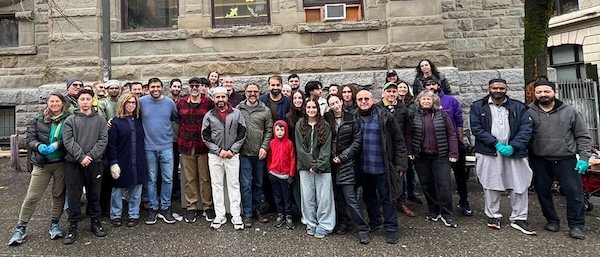
Members of the local Jewish and Muslim communities who came together in the Downtown Eastside March 16 to commemorate Shushan Purim and Ramadan by giving out food to those in need. (photo from Rabbi Philip Bregman’s Facebook page)

On Sunday, March 16, on the corner of Main and Hastings, members of the local Jewish and Muslim communities converged for a joint commemoration of Shushan Purim (the day after Purim) and the holy month of Ramadan.

Both these sacred occasions call upon their observers to feed those who are food insecure, often through charity. Muslims refer to this as “zakah,” Jews describe it as “tzedakah.” Both words denote righteousness. United in this shared charge on that day, these two Abrahamic religious traditions met at ground zero of Greater Vancouver’s mental health, addiction and housing crisis to nourish some of the residents of the Downtown Eastside. This was assuredly a “righteous” act for all participants, inspiring renewed hope for our troubled world.

The gathering was mainly the initiative of Vancouver-Granville Member of Parliament Taleeb Noormohamed, a few religious leaders of the Vancouver Muslim community and rabbis Dan Moskovitz, Philip Bregman, Jonathan Infeld and Arik Labowitz. In a social media post describing the event, Rabbi Bregman wrote: “We may not be able to solve the world’s political issues but we can come together to deal with in a small way a local issue (feeding the hungry) that affects us all.” 

It was my great honour to be a part of this group as an ordained cantor and member of the Vancouver Jewish community. My day job often places me at this street corner, serving a similar clientele. I work as a multifaith chaplain on Vancouver Coastal Health’s ACT (Assertive Community Treatment) teams, providing spiritual care to clients and staff as they navigate the existential angst, cumulative grief and moral distress that accompanies the city’s overdose crisis. Many days bring me to the same area to help provide spiritual comfort and solace through presence and song. The task often is daunting. (On the day that I wrote these words, our ACT team lost another longtime client to a preventable overdose death at the age of 29.) Standing alongside my Jewish siblings and Muslim cousins and handing out food that our respective communities had prepared and purchased brought a whole new level of hope.

I particularly needed the spiritual uplift that Sunday, which, like so many Sundays before, again witnessed my Jewish community’s impassioned rallies, calling for the release of all the remaining hostages – those alive and dead – who were taken to Gaza during the barbaric Oct. 7 pogrom that waged war against Israel’s right to exist.

I also needed the spiritual uplift that day because March 16 marked the date when 23-year-old American Jewish nonviolent human rights activist Rachel Corrie (April 10, 1979-March 16, 2003) was crushed to death by an Israeli bulldozer as she protested the demolition of Palestinian homes in Gaza. This horrific anniversary led me to spend that early morning reflecting once again on how to reconcile my abiding love of Israel with my vehement disagreement with those Israeli and American governmental policies that have violated human rights, killed innocent children and civilians and threatened ethnic cleansing.

As if to emphasize the point, earlier that same morning, I had breakfast with a Jewish friend with whom I had engaged in a book club to discuss Peter Beinart’s latest treatise, Being Jewish After the Destruction of Gaza: A Reckoning. Another Conservative cantor I know well and respect recently challenged me to open myself to voices I would not otherwise have considered regarding world affairs. I took that charge to heart and decided to read Beinart’s latest work, which I would not have been likely to peruse previously. Like the death of Corrie, reflecting on this book over breakfast proved sobering, as I continue to realize the many blind spots in my own thinking over the years.

While my mind and spirit were still reeling from navigating these concurrent realities, the Purim-Ramadan event provided me with a palpable spiritual uplift, as I witnessed Jews and Muslims standing in unity side by side with wide smiles, handing out nourishment to those deprived of food. 

The spiritual boost also came from meeting devout Muslims in their bountiful humanity.

There was Aroun, who shared with some Jewish attendees and I how members of his mosque (Al-Jamia Al-Masjid) often come downtown to provide food to the poor on Ramadan. Aroun had us all in stitches when he jokingly indicated how hard it was to handle so many edibles while observing Ramadan’s required daytime fasting. In the same breath, he  reminded us that though there are indeed extremists on both sides of the aisle, events like the present one proved that we do not have to toe their party line.

I likewise will never forget talking with another Muslim participant, Mohammed Zaid, to whom I explained the traditional duties of a cantor as a chanter of prayer. Mohammed responded by offering to demonstrate his own chanting of Quranic verses in Arabic, one of five languages that he speaks. I listened to his mellifluous voice echo the similar Middle Eastern musical modes that I employ when leading synagogue services. In his prayer, I heard words such as “Rahman,” an Arabic cognate for the Hebrew “Rachaman,” meaning Merciful One, and, of course “salaam,” which I knew as “shalom.” His singing reminded me of my late friend Imam Sohaib Sultan, z”l, who was a fellow classmate in my first chaplaincy training class years ago, and with whom I traded our traditions’ sacred melodies. 

Our spirits were raised even during the traditionally dreaded cleanup time, as we together refolded the tables we had brought, and shlepped them into vans. My friend Ben Lubinizki and I shot the breeze with young Muslim men while we waited to gain access to the trash and recycling room. At that moment, I felt inspired to pull out my recent Purim costume’s toque, on which was boldly sprawled the phrase: “Canada is not for sale.” In response to this gesture, my Muslim cousins laughed and cheered me on in solidarity. Here was another front on which we were united. 

As we said our chag sameachs, Ramadan mubaraks and salaam/shaloms, I realized that a key to interfaith dialogue – even on the most fraught issues – can occur through shared life-affirming experiences such as this one. 

The memory of that Sunday morning gathering gives me hope that our mutual striving for lovingkindness can overcome all else. As Rabbi Moskovitz reflected on the occasion, two divided communities had aligned “to feed the hungry and also to collaboratively feed our soul’s hunger for shared humanity.”

May we never forget these universal lessons for our time, lessons brought to us from a very real temporary oasis, built on the most infamous intersection in the poorest postal code in Canada. If humanity can achieve this here, of all places, we can do so in Israel, Gaza and the world. 

Cantor Michael Zoosman is a board-certified chaplain with the Canadian Association for Spiritual Care. He serves as a spiritual health practitioner for the Assertive Community Treatment teams of Vancouver Coastal Health, working with individuals in the community living with severe mental health disorders and addiction. He sits as an advisory committee member at Death Penalty Action and is the co-founder of L’chaim! Jews Against the Death Penalty. He served as cantor of Congregation Beth Israel 2008-2012. 

Format ImagePosted on March 28, 2025March 27, 2025Author Cantor Michael ZoosmanCategories Op-EdTags Downtown Eastside, interfaith, Jews, Muslims, Purim, Ramadan, spirituality, Taleeb Noormohamed, tikkun olam

Jews who’ve left their mark

In a March 2 lecture called Jewish Innovators Who Changed the World, Jonathan Bergwerk spoke about the lives and psychology of prominent historical figures.

“I’m especially interested in what makes these people tick,” said Bergwerk, the author of the Audacious Jewish Lives series, which covers a diverse selection of individuals who have left their mark on the world.

photo - Jonathan Bergwerk, author of the Audacious Jewish Lives series, spoke March 2 as part of Kolot Mayim Reform Temple’s 2024/25 Zoom series Kvell at the Well
Jonathan Bergwerk, author of the Audacious Jewish Lives series, spoke March 2 as part of Kolot Mayim Reform Temple’s 2024/25 Zoom series Kvell at the Well. (PR photo)

Bergwerk was the latest speaker in Kolot Mayim Reform Temple’s 2024/25 Kvell at the Well Zoom webinar series. He began his talk by referencing the number of Nobel Prize winners who have been Jewish – at least 214 of 976 individuals (and 28 organizations), with Albert Einstein, Richard Feynman and Jonas Salk among them. 

“They have received over 100 times the number of Nobel Prizes than might be expected. That’s astonishing,” Bergwerk said, noting that Jews comprise just 0.2% of the world’s population. 

Across fields, one finds seemingly inexhaustible lists of influential Jewish contributors: literature (Franz Kafka, Arthur Miller, IB Singer), cinema (Louis Mayer, Steven Spielberg, Stanley Kubrick) and music (George Gershwin, Barbra Streisand, Leonard Cohen).  

Bergwerk argued that, to understand the Jewish drive for innovation, one might have to go as far back as the Hebrew Bible and the story of Jacob encountering a “man” (angel, perhaps) who tries to stop him from returning home.

“The act of wrestling enabled Jacob to confront his stealing and lying, and to accept responsibility for who he had been,” Bergwerk said. “He learned that it was through struggle, and not by running away from conflict, that he could become the person he was meant to be.  So, our life’s purpose – our Jewish challenge  – is to discover who we truly are.”

In Bergwerk’s view, the Torah is replete with innovators who had a clear vision and swam against the tide of society’s expectations. Moses, though unable initially to speak clearly, became an inspired and decisive visionary, developing the fundamentals of monotheism and condemning idolatry.  

Other “audacious innovators” include Judah, Jacob’s fourth son, the first person not to blame others when things went wrong; Ruth, the Moabite, who went against the norms of a patriarchal society by leaving her people and supporting Naomi; and Elijah, who discovered “that God’s presence and guidance came through quiet, intimate moments of reflection and humility.”

Bergwerk included Jesus of Nazareth in his talk.

“Jesus was an observant, but unconventional, Jew, who was driven by profound beliefs in God, ethics and social justice. He was independent, courageous, an inspirational and charismatic revolutionary, who attracted committed followers,” Bergwerk said. “His teachings challenged religious and societal norms. He tried to be a radical reformer, but always operated within the boundaries of Judaism.”

As Bergwerk moved from the Hebrew Bible through history to present times, a lengthy catalogue of Jewish innovators was provided. Baruch Spinoza, the Rothschilds, Karl Marx and Theodor Herzl were but a few, though scores of others could have been chosen.  

Having researched more than 100 such people, Bergwerk suggested possible reasons for the seemingly disproportionate level of Jewish success.

First, Jews are perfectionists, he argued. Though perfectionists are often disappointed, by setting unrealistic goals and expectations, they carry the drive to improve the world in the face of setbacks. 

Next, he said, finding themselves as outsiders and not fully accepted has, at times, served as an advantage.

“Oppression, migration and desperate poverty were often creative forces,” said Bergwerk. “They also led to a focus on study. Jews have often been successful in the secular world because Judaism so strongly values learning.”

His third argument was the encouragement in Judaism to challenge tradition and to think independently. Here, he shared the anecdote of Nobel Prize-winning physicist Isidor Isaac Rabi, whose mother, instead of wondering if he received good grades in school, wanted to know, “Did you ask a good question today?” 

“Judaism, at its best, is a challenge to the world on how it can be improved. Many Jews dared to ask difficult questions, challenged the status quo and strove to leave the world better than they found it,” Bergwerk said. “Their story is truly inspirational. The message I take from these audacious Jews, is that we are being properly Jewish when we, like Jacob, are wrestling with our own challenges, and so contributing in ways we never thought possible.”

Bergwerk emphasized that this wrestling should not only be with ourselves, however, as that does not build community. Rather, one needs to take personal responsibility, as well as act as part of a community and take collective responsibility. 

“We should live the Jewish values of learning, justice and tikkun olam – to strive to shape society for the better,” he said. “That’s what we have done for the last 3,000 years, and the world definitely needs us to carry on providing that hope today.”

The final speaker in this year’s Kvell at the Well series is Mordechai Pinchas, a scholar and scribe who serves communities in the United Kingdom and elsewhere. Pinchas will share stories from his career on April 6, 11 a.m., in a talk called Torah Tales: Adventures in Scribal Art. To register for this free Zoom webinar, visit kolotmayimreformtemple.com. 

Sam Margolis has written for the Globe and Mail, the National Post, UPI and MSNBC.

Posted on March 28, 2025March 27, 2025Author Sam MargolisCategories LocalTags Audacious Jewish Lives, history, innovation, Innovators, Jewish history, Jonathan Bergwerk, Kolot Mayim

Community milestones … Kowalski, Redden, Simces, Haydn & Zoosman

Three members of the BC Jewish community have recently been announced as recipients of the King Charles III’s Coronation Medal, which recognizes individuals who have made a significant contribution to Canada or to a particular province, territory, region or community of Canada, or have made an outstanding achievement abroad that brings credit to Canada.

photo - Maytal Kowalski
Maytal Kowalski (photo courtesy)

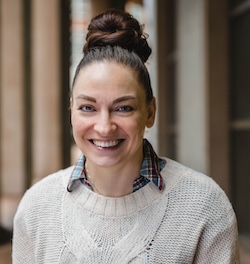
JSpaceCanada executive director Maytal Kowalski received for honour for building spaces for respectful and collaborative dialogue between Jewish, Muslim, Israeli and Palestinian communities in Canada. She is also the co-founder of Press Pause Collective, specializing in inclusive fundraising and marketing.

photo - Danny Redden
Danny Redden (photo courtesy)

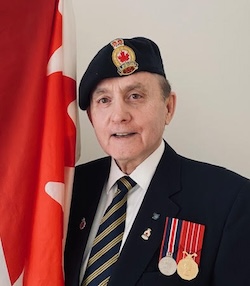
Danny Redden, president of Royal Canadian Legion Shalom Branch 178, was recognized for the significant contribution he has made to his community. Redden is also national president of Royal Canadian Legion Tuberculosis Veterans’ Section and a member of the Dominion Executive Council, the national governing body of the Royal Canadian Legion.

photo - Zena Simces
Zena Simces (photo courtesy)

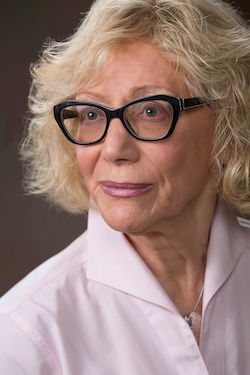
Senior consultant, author and leader Zena Simces was given the medal in recognition of her “extraordinary dedication, selflessness and service to community and country.” The acknowledgement noted: “Your contributions have made a significant impact on the lives of those around you and have set an inspiring example for others to follow.” Simces has more than 30 years of experience in the health, social services, education, justice and employment areas in government, not-for-profit and private sectors, and is the author of You Can Make a Difference: A Guide to Being a Great Consultant.

* * *

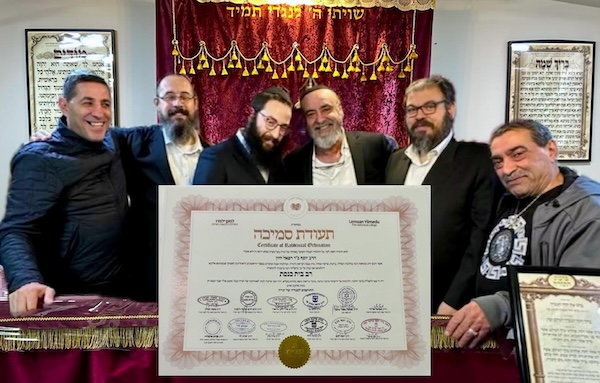
photo - Klal Israel Sephardic Orthodox Synagogue members celebrate with Rabbi Yoseph Hayun
Klal Israel Sephardic Orthodox Synagogue members celebrate with Rabbi Yoseph Hayun. (photo courtesy)

It is with great joy that Klal Israel Sephardic Orthodox Synagogue in Vancouver announces the formal ordination of Rabbi Yoseph Hayun by the Israeli rabbinate. 

Born in Israel as the youngest of nine siblings, Hayun emigrated with his family from Libya in 1949. In 1982, he served as a soldier in the Israel Defence Forces and participated in the First Lebanon War. Over the years, he built a warm and loving family, including three sons and three grandchildren. 

After moving to Vancouver in 2005, he entered the construction field and began contributing to the local Jewish community. In 2013, he joined the Sephardi synagogue Beth Hamidrash and, in 2017, was elected as its president. At the same time, he served as acting rabbi for a period.

Hayun’s desire to deepen his Torah knowledge and lead a community inspired him to begin independent rabbinical studies in 2020. He co-founded the Klal Israel community with friends and continued advancing his studies with the Chief Rabbinate in Israel.  

In September 2024, he was officially ordained as a rabbi by the Chief Rabbinate, marking a significant milestone in his spiritual and communal leadership journey. The celebration event was attended by community members and rabbis from the Vancouver Jewish community. 

In his new role as rabbi, Hayun will continue to serve the Klal Israel synagogue, providing spiritual leadership, teaching Torah and offering halachic guidance. 

* * *

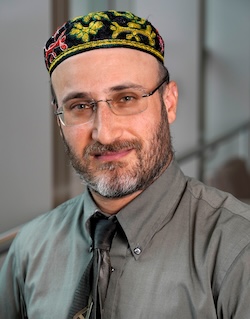
photo - Michael Zoosman
Michael Zoosman (photo courtesy)

Michael Zoosman has been awarded the Rabbinic Human Rights Hero Award by T’ruah: The Rabbinic Call for Human Rights, one of the oldest Jewish social justice organizations in Canada and the United States. The honour was given to Zoosman in recognition and celebration of his long and deep commitment to ending capital punishment.

In 2020, Zoosman and Abraham Bonowitz co-founded L’chaim! Jews Against the Death Penalty, which has 3,800 members, both Jewish and non-Jewish, and is an online forum for learning and action. Zoosman also sits as an advisory committee member at Death Penalty Action.

The recognition gala event for this year’s awardees is scheduled for May 20 in New York City.

Posted on March 28, 2025March 27, 2025Author Community members/organizationsCategories LocalTags Danny Redden, King Charles III’s Coronation Medal, Klal Israel Sephardic Orthodox Synagogue, Maytal Kowalski, Michael Zoosman, T’ruah: The Rabbinic Call for Human Rights, Yoseph Hayun, Zena Simces
Chabad opens a new library

Chabad opens a new library

Artist Mari Sue Baga listens as Rabbi Shmuly Hecht talks about a painting of the Lubavitcher Rebbe that she made in his honour. (photo from Okanagan Chabad House)

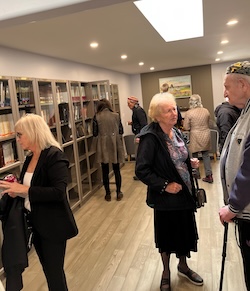
On March 9, the Chabad Living Library officially opened its doors to the public. The afternoon event was attended by members of the Okanagan Valley community and beyond, celebrating the launch of this new addition to the cultural and educational landscape of the region.

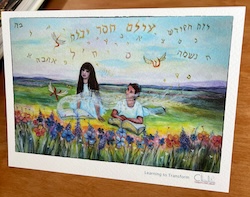
One of the highlights of the event was the unveiling of an original artwork by local Jewish artist Mari Sue Baga. The painting, entitled “Living Legacy,” depicts the Torah as a living, breathing guide, illustrating the timeless wisdom that inspires and shapes Jewish education throughout one’s life. 

photo - Artist Mari Sue Baga’s painting, entitled “Living Legacy,” hangs in the Chabad Living Library
Artist Mari Sue Baga’s painting, entitled “Living Legacy,” hangs in the Chabad Living Library. (photo from Okanagan Chabad House)
photo - Artist Mari Sue Baga’s “Living Legacy” has been made into a card
Artist Mari Sue Baga’s “Living Legacy” has been made into a card. (photo from Okanagan Chabad House)

Baga spoke about her work and shared her inspiration behind the piece. She also surprised Rabbi Shmuly Hecht with a painting of the Lubavitcher Rebbe (Menachem Mendel Schneerson) that she had made in his honour. She presented it to Hecht, thanking him for his service to the community. 

Hecht is the rabbi and emissary of Chabad to the Okanagan Valley. He spoke to the crowd about the significance of the library and its mission. He described a library as an inexhaustible source of wisdom, emphasizing that Jewish sacred literature, passed down by the sages, offers endless lessons to illuminate life’s path. He also explained that the Chabad philosophy – blending intellectual growth with emotional harmony – is embodied in the new library’s offerings.

“The essential thing is the deed,” Hecht concluded, encapsulating the library’s focus on both knowledge and action.

“In a small Jewish community, you’ve got to be creative, and keep finding new ways and avenues to engage and inspire,” he said. “The library was a perfect idea and just what the community needed. Our vision for the future is to make the library go mobile, and offer its services to communities all throughout the several-hundred-kilometre radius of space that we service, so we can include more Jewish people in the impact.”

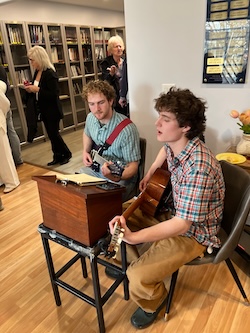
The launch featured a variety of activities for all ages, including crafting sessions for the children. Guests were treated to sushi prepared by Jewish sushi chef David Dodgson & Co. Live music from Isaac Bloom and fellow University of British Columbia Okanagan students set a lively tone, enhancing the celebratory spirit.

photo - Guests mingle at opening of the Chabad Living Library in the Okanagan
photo - Musical entertainers at opening of the Chabad Living Library in the Okanagan
photo - Guests enjoy kosher sushi at opening of the Chabad Living Library in the Okanagan

A unique feature of the library is its double play kitchen – one for meat and one for dairy – designed to teach children about kosher kitchen practices in an interactive way. The library also features approximately 100 children’s books that instil Jewish ethics and morals, relevant to families of all backgrounds and affiliations.

For adults, the library’s collection of more than 1,000 books offers a treasure trove that spans a wide range of subjects, everything from Jewish heritage to practical life lessons aimed at helping individuals grow and thrive.

Guests were invited to explore the library’s exclusive collection of books that can’t be found anywhere else in the Okanagan Valley. The library is also fully automated, with all the books input online. Members get a card with a QR code and the system reminds the member in two weeks to return the book. Everyone who became members of the library during the launch event (or signed up online prior to it) were gifted a special item, made possible by local Jewish photographers Andrew and Arlene Simpson.

In a game of Jewish Jeopardy, participants competed in teams for a chance to win a Star of David necklace. However, because of the team format, organizers decided to hold a raffle for all those present instead, and the winner of the necklace was Ezra Cipes.

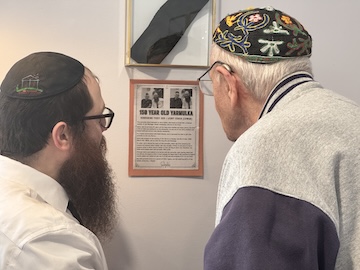
The new library houses a 150-year-old yarmulka donated by Jerry Cohen, housed in a glass frame. Cohen, 91, was present for the dedication. 

photo - Rabbi Shmuly Hecht and Jerry Cohen look at the 150-year-old yarmulka that Cohen donated to the library
Rabbi Shmuly Hecht and Jerry Cohen look at the 150-year-old yarmulka that Cohen donated to the library. (photo from Okanagan Chabad House)

The event was possible thanks to the generosity of many individuals and families whose contributions helped bring the library to life. 

The library’s offerings are not only about the books – it’s about creating a space where the community can learn, grow and connect. One of the visions is for community members to come by on Friday and pick up challah, wine and other Shabbat items, along with some books to make Shabbat more meaningful and more enjoyable. There’s also a little Judaica gift shop shelf. 

Hecht concluded the launch event by reminding the community of the wisdom shared by Jewish sages: “Don’t say, when I have time, I will study – perhaps you will never discover that you actually have time.” He encouraged all to seize the opportunity to enrich their minds and souls through the library’s collection.

The Chabad Living Library is a project of the Okanagan Chabad House. It is open Fridays and Sundays, 11 a.m. -1 p.m.; and Tuesdays, 5-6:30 p.m.

Those interested in becoming a member or learning more about upcoming events and programs, contact Okanagan Chabad House at 250-575-5384 or [email protected]. 

– Courtesy Okanagan Chabad House

Format ImagePosted on March 28, 2025March 27, 2025Author Okanagan Chabad HouseCategories LocalTags Chabad Living Library, Mari Sue Baga, Okanagan Chabad House, Shmuly Hecht
Continuing a giving legacy

Continuing a giving legacy

Rose’s Angels co-founder Courtney Cohen, left, with May Stefanov, tenant relations coordinator with Tikva Housing Society. (photo from Rose’s Angels)

Rose’s Angels recently completed its 12th year of giving, donating collected items to 14 Richmond not-for-profits, including Richmond Family Place, Colt Young Parent Program, Mamas for Mamas, Turning Point Recovery Society, Jewish Food Bank, Tikva Housing Society and Pathways Clubhouse.

Rose’s Angels, which operates under the auspices of the Kehila Society of Richmond, was created in 2012 by Courtney Cohen and co-founder Lynne Fader, in memory of Cohen’s grandmothers, Rose Lewin and Babs Cohen, who were both philanthropic and believed in giving back to community.

This year, an abundance of personal care items, non-perishable food, children’s arts and crafts, books and baby formula was donated. For many recipient agencies, baby formula and diapers are among their top priority items, and Rose’s Angels was able to give a large quantity of these items this year.

Donors, volunteers and other community members are integral to the success of Rose’s Angels. Letters were sent out to partner agencies, family, friends and others in January. Last month, monetary and physical donations were collected, Richmond Jewish Day School hosted a hygiene-item drive, and gift cards to grocery stores were purchased. Donations were then packaged and delivered by volunteers.

Cohen reflected on her hope to continue the legacy of her parents and grandparents.

“I hope to instil in my children the importance of tikkun olam (repairing the world) by focusing on one mitzvah at a time,” she said.

To learn more about or donate to Rose’s Angels, email [email protected] or call the Kehila Society at 604-241-9270. 

– Courtesy Rose’s Angels

Format ImagePosted on March 28, 2025March 27, 2025Author Rose’s AngelsCategories LocalTags Courtney Cohen, Kehila Society, Lynne Fader, Richmond, Rose’s Angels, tikkun olam
Ellis gives needed context

Ellis gives needed context

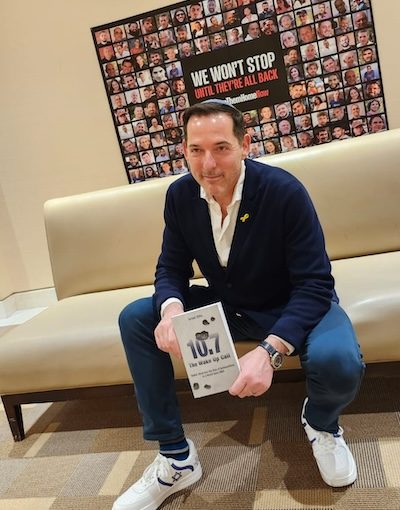
Author Israel Ellis with his new book, The Wake Up Call, after a Feb. 10 talk at Beth Tikvah Synagogue in Toronto, where he joined journalist Dave Gordon in conversation. (photo by Dave Gordon)

In his new book, The Wake Up Call: Global Jihad and the Rise of Antisemitism in a World Gone MAD, author Israel Ellis brings the events of Oct. 7, 2023, into a compelling, fact-based and easy-to-read focus.

Backed up by scores of footnotes and references, the book is a no-nonsense look at the Hamas terror attack of Oct. 7 and, poignantly, the attack on democracy Ellis believes happened in the months prior to them. The addition of personal stories from Oct. 7 survivors and family members adds another level of documentation to an already all-encompassing book.

Ellis weaves in his own lived experience and perspective as a Jewish Canadian in the diaspora with firsthand accounts of contemporary antisemitism and his reflections on being the father of an Israel Defence Forces lone soldier fighting in Gaza. His personal observations allow the reader to connect with him, as well as better understand the interconnectedness of Jews, no matter where they live, and Israel.

For non-Jews, it can be daunting to begin learning about what happened on Oct. 7, and the global repercussions. Many non-Jews do not know the history of the Middle East, how the state of Israel fits into this history, or what the definition of “antisemitism” is. Ellis helps fill in these blanks, and this is why I am so excited to introduce this book to my friends.

Since Oct. 7, 2023, Canadians (and people from other countries) have seen large pro-Palestine protests in the streets of all the major cities and in academic spaces, with large university encampments set up across the country. Most people in the Jewish community see these protests for what they are: pro-terror and anti-democratic. But, for a Canadian with little knowledge of what the Israeli/Palestinian conflict is, these protests and encampments can look like a fight for human rights. No doubt, some individuals believe they are marching for human rights while chanting  “intifada revolution,” but many are there to show support for Hamas, to some degree or another. This is why the knowledge, geopolitical insight and historical context Ellis brings with his writing is so vitally important.

I read a lot of books on Israel, as a non-Jewish Canadian interested in educating myself, and Ellis’s new book has become a favourite. One of the reasons is that Ellis writes about many protests and political events that are still fresh in our minds. He discusses protests that took place in Toronto and the encampments at McGill University (and others). He shows the utter incompetence of Canadian politicians, such as Toronto Mayor Olivia Chow, in handling the rise of radical Islam. He strongly condemns Canada’s minister of foreign affairs, Mélanie Joly, who shook the hand of Mahmoud Abbas, leader of the Palestinian Authority, in what is a now-famous Ramallah photo-op. These events, along with many others, are documented in Ellis’s book, illustrating a pattern of political complicity and complacency that he says has contributed to the eroding of Canada’s moral backbone. 

As a Canadian university student, I have experienced firsthand my peers sympathizing with and rallying for terrorist organizations. The university institutions have been complacent in protecting neutral academic spaces, allowing terrorist propaganda to infiltrate our lectures and giving some professors the ability to promote hatred of Israel and the Jewish people.

A quote from The Wake Up Call that gave me chills reads: “There is no coming invasion. It is already here. Jihad has already been invited into our universities, professions, communities and public institutions. October 7 was a wake-up call. It is an example of the hunger for Global Jihad, and what can happen if it is allowed to be satiated. To think that these events are restricted to a narrow strip on the Mediterranean is a complete miscalculation of reality.”

The Wake Up Call should be read by anyone – uninformed or well-informed, Jew or non-Jew – who wants to better understand the political, social and historical context behind the current rise in anti-democratic, pro-terror narratives that have taken over many Western spaces. 

Zara Nybo, a fourth-year student at the University of British Columbia, is a StandWithUs Canada Emerson Fellow. Connect with her via Instagram: @zaranybo.

Format ImagePosted on March 28, 2025March 27, 2025Author Zara NyboCategories BooksTags Israel, Israel Ellis, Israel-Hamas war, jihad, Oct. 7, terrorism, The Wake Up Call

Racing from Purim to Pesach

My kids were volunteering at the Purim carnival, helping younger kids do games and offering other support. My husband was there to help. I went home early “for a break.” Meanwhile, I receive “helpful” warnings from Jewish websites and other moms on social media. “Passover is coming!” they mention with cheerful purpose. Perhaps this fills some people with glee. Mostly, I feel doom in the pit of my stomach.

Following influencers who run their large observant Jewish households like a well-oiled machine actually has been useful, to some extent. Oh, if she started making chicken broth or cleaned her pantry, maybe it’s time for me to do it, too? By following these tips, sometimes I feel I can manage better.

Then, however, the system fails me. Many of these capable influencers live in large Jewish centres, surrounded by kosher grocery stores, take-out and supportive extended families. They also have the finances to travel with their families to Passover resort vacations. If they travel, they don’t have to clean their houses or cook for the holiday. If they stay home, some use catering or even disposable plates for the whole holiday, which produces mountains of trash. My environmentally conscious household would never go for that.

For those who lack a large Jewish community infrastructure, or financial and family supports, making holidays happen can feel overwhelming. We hover in between, operating in a weird middle ground that is both freeing and isolating. Our families live far away. Since public school and work don’t stop for Pesach, we don’t travel for this holiday. We care about keeping Pesach. I cook and clean for weeks in advance, but I can’t do it all. I gave up on changing the dishes the year I gave birth to twins. While I may feel some guilt, I haven’t looked back.

Facing the next holiday’s prep feels exhausting. Maybe that’s because I just finished baking dozens of cookies (hamantashen and palmiers) for our Purim mishloach manot treat bags.

I’m thinking about how successful businesses and governments work. A business that runs smoothly depends on internal systems, competent managers to keep things working and other staff at various levels. A functional government also relies on an efficient bureaucracy. Right now, we’re hearing of how President Trump’s government is “cutting bureaucracy” and creating “efficiency.” However, what has followed is chaos.

Yes, there are always cases of bloated bureaucracy or waste, but, in many contexts, efficiency can mean that only one person knows how to do something essential. If that person has an accident or falls ill or is fired? Bad things happen.

I think of this while trying to keep my Jewish household on track through our holidays and the secular calendar. It takes mental energy and organizing skill to get kids through homework, afterschool extracurriculars, volunteering, and planning for summer activities in advance. Meanwhile, the dog needs grooming and her teeth brushed. Our house could use a good vacuuming.

Running a home is historically a Jewish woman’s domain. It’s a lot of work. There are Jewish literary references to a balabusta (Jewish housewife) and even Eishet Chayil, a Woman of Valour, from the book of Proverbs, which is traditionally recited to some women on Shabbat.

Many liberal households long ago ditched the tradition of reciting Eishet Chayil on Friday nights. Neither my childhood household nor my married one has ever included this. Instead, like many other Jewish households where women are professionals, in my family, women work alongside household management. So, the historic celebration of a “women’s place” at home got scrapped, but the expectations increased.

Last night, I stayed up late after the whole household watched the movie Barbie together. Although I’m no Barbie fan, I enjoyed the subversive, witty tricks of this movie’s plot. Yet, I still had to place a grocery order afterwards. My husband was folding laundry. My twins changed their bedding before their bedtime, too. The exhaustion reminded me of one of the elements of a functional bureaucracy.

When things run smoothly, it’s because everyone has jobs – and no one’s job requires them to do everything. There is necessary duplication at work. More than one person knows how to do something, so that if a person goes away or gets sick, the system doesn’t collapse. Overlapping work roles and slack in a system are necessary. When an emergency happens, there’s extra capacity when systems overload.

Running a household smoothly, so that everyone’s well fed, valued and has their needs met, is a complicated endeavour. In the Babylonian Talmud, Tractate Sanhedrin, pages 86-88, there’s a lengthy conversation about what it means to be a “rebellious elder” and whether there are ever times when one must be executed for teaching inappropriate information. The rabbis suggest there are three different courts of appeal for these cases. Yet, there is also an understanding that some rebellious elders teach rulings based on tradition, from their teachers, and, other times, they offer a reasoned argument, based on what is “the correct understanding in my eyes.”  That is, using logic, texts and real-life examples to draw conclusions.

Historically, women oversaw their households, that’s what our texts say, but times change. Now, we also expect women to be, at least theoretically, equals in the workplace. But the research indicates that women still bear the brunt of household chores, and the mental gymnastics and emotional work related to keeping everything afloat.

It’s time to rethink business models that preach that any duplication is redundant. If we want our homes to run smoothly, we must expect that more than one person be responsible for making Passover, or even afterschool carpools, happen. We moms cannot keep this schedule up any longer.

As I wrote this, one of my children rang the doorbell. He has a key but expects me to open the door for him anyway. That same child went out this afternoon to shop for Passover foods with his dad, who also picked up the weekly grocery order and did a lot of laundry today. Like Barbie’s weird movie world, or the topsy turvy Purim story, we must keep turning things around or even upside down. We cannot expect even “women of valour” to do everything. It’s time for everybody to learn more of the jobs to make our households function. Over here in Winnipeg, this mom is tired. It’s time for everybody to pitch in. 

Joanne Seiff has written regularly for the Winnipeg Free Press and various Jewish publications. She is the author of three books, including From the Outside In: Jewish Post Columns 2015-2016, a collection of essays available for digital download or as a paperback from Amazon. Check her out on Instagram @yrnspinner or at joanneseiff.blogspot.com.

Posted on March 28, 2025March 27, 2025Author Joanne SeiffCategories Op-EdTags equality, family life, Judaism, Passover, politics, Purim, Talmud, women

In every generation …

This year, the Jewish community will greet Passover with mixed emotions. On a holiday where we celebrate the 3,500-year-old Exodus from Egyptian slavery to freedom, we also mourn the modern-day hostages held captive for so long and the loss of those who will never return to their loved ones.

Passover offers a unique opportunity for families and friends to gather around the seder table, retell the story of the Exodus, eat symbolic foods and, most challenging of all, attempt to keep the younger children engaged until the meal.

It can be difficult to explain to our children the enduring importance of Passover – a tale of survival, courage and resilience. The story of the Jewish people facing an impossible obstacle and conquering it, of our people standing up against oppression, proud of our Jewish identity, confronting and overcoming baseless hatred.

For more than a year, Jewish students have been made to feel othered, embarrassed, threatened and, sometimes, compelled to hide their Jewish identity. Since Oct. 7, 2023, online Jew-hatred and anti-Israel vitriol have become all too common. While cities, overrun by hate-filled protests, seem almost completely desensitized to the hate, we see our children suffering.

An excerpt from the Passover Haggadah reminds us that “in every generation, one must see oneself as having personally come forth from Egypt … and you will tell your child on that day.…” As we sit down at the seder table this year, we will, once again, tell the next generation the story of the Jewish people’s victory against oppression and that pride in our identity is the way to fight oppression.

The younger guests at our seder – our children, our grandchildren, our nieces and nephews – are the next generation of leaders. It will be their responsibility to challenge antisemitism head-on, and it’s our responsibility to educate them about how to do it.

The Centre for Israel and Jewish Affairs remains committed to protecting the quality of Jewish life in Canada. Our team is working with government officials to advocate for the introduction of safe access (bubble) legislation to protect schools and places of worship from the threat of violence or harassment. We are also advocating to enforce existing legislation that combats both online and real-world hate. 

We continue to demand accountability from social media platforms, institutions and organizations. We urge the government to support the provinces’ education for judges, Crown attorneys and law enforcement regarding antisemitism and hate crimes. We continue to stand by our policy priorities that include advocating for community safety, for maintaining public order and for fighting antisemitism in schools and on campus. 

The community, after a long year-and-a-half, is tired. Some of us are scared. And yet, we remain proud. We know more work must be done to protect ourselves, our children and our Jewish identity. So, this year, as we retell our ancestors’ story to our children, we are reminded that we remember the past to protect our present – and our children’s future. It starts at the seder table. But it doesn’t end there. 

Judy Zelikovitz is vice-president, university and local partner services, at the Centre for Israel and Jewish Affairs.

Posted on March 28, 2025March 27, 2025Author Judy ZelikovitzCategories Op-EdTags antisemitism, Centre for Israel and Jewish Affairs, CIJA, Exodus, Oct. 7, Passover
Key Passover imports exempt

Key Passover imports exempt

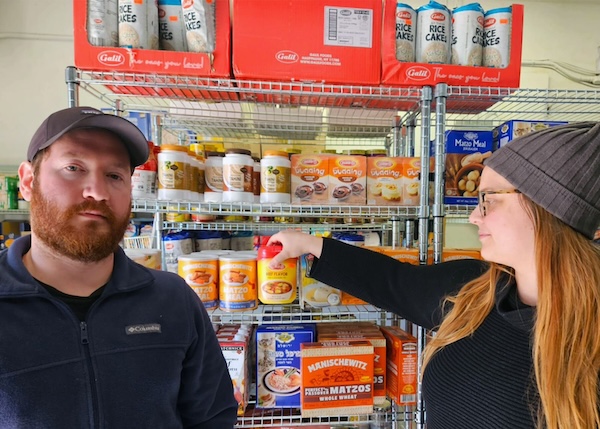
Tal Kinstlich and Stephanie Schneider, the owners of Vancouver’s Kosher Food Warehouse. (photo from Kosher Food Warehouse)

Canada is exempting key imported Passover foods from the current diplomatic trade war with the United States. The ministry of finance sent The CJN a list of kosher-for-Passover products imported from the United States, which are going to be allowed into Canada without being hit by the extra 25% retaliatory import tariffs that Ottawa began imposing on March 4.

The list includes matzah and related matzah products, cake mixes, chocolate, margarine, most juices (but not apple), gefilte fish, and canned fruit and vegetables. However, US exports of nuts, spices, dairy, wine, coffee, chicken and meat products are not exempt.

The development comes after Canada’s biggest kosher food importer recently predicted that the on-again-off-again tariff dispute would rocket prices for imported kosher-for-Passover food by up to 60%. Canadian Jewish leaders have been lobbying Ottawa to give relief to the country’s Jewish community as it heads into the holiday season.

While the news will likely bring a sigh of relief to consumers, it is only a temporary reprieve: it covers only Passover foods and runs only until the end of Passover.

For more on how these food tariffs are impacting Canadian kosher food stores and suppliers across Canada, and what advice they have for you, listen to the episode of The CJN Daily that features the owners of Vancouver’s Kosher Food Warehouse, Tal Kinstlich and Stephanie Schneider. Jack Hartstein also joins: he’s the vice-president of Montreal-based Altra Foods, the largest importer of kosher foods in Canada. The link is thecjn.ca/podcasts/key-passover-imports-will-be-exempt-from-tariff-war-with-u-s-ottawa-confirms. 

– For more national Jewish news, visit thecjn.ca

Format ImagePosted on March 28, 2025March 27, 2025Author Ellin Bessner THE CJN DAILYCategories NationalTags imports, kashrut, Kosher Food Warehouse, Passover, politics, tariffs

Posts pagination

Previous page Page 1 … Page 47 Page 48 Page 49 … Page 664 Next page
Proudly powered by WordPress