Skip to content
  • Home
  • Subscribe / donate
  • Events calendar
  • News
    • Local
    • National
    • Israel
    • World
    • עניין בחדשות
      A roundup of news in Canada and further afield, in Hebrew.
  • Opinion
    • From the JI
    • Op-Ed
  • Arts & Culture
    • Performing Arts
    • Music
    • Books
    • Visual Arts
    • TV & Film
  • Life
    • Celebrating the Holidays
    • Travel
    • The Daily Snooze
      Cartoons by Jacob Samuel
    • Mystery Photo
      Help the JI and JMABC fill in the gaps in our archives.
  • Community Links
    • Organizations, Etc.
    • Other News Sources & Blogs
    • Business Directory
  • FAQ
  • JI Chai Celebration
  • JI@88! video

Recent Posts

  • Zionism wins big in Vegas
  • Different but connected
  • Survival not passive
  • Musical celebration of Israel
  • Shoppe celebrates 25 years
  • Human “book” event
  • Reclaiming Jewish stories
  • Bema presents Perseverance
  • CSS honours Bellas z”l
  • Sheba Promise here May 7
  • Reflections from Be’eri
  • New law a desecration
  • Resilient joy in tough times
  • Rescue dog brings joy
  • Art chosen for new museum
  • Reminder of hope, resilience
  • The national food of Israel?
  • Story of Israel’s north
  • Sheltering in train stations
  • Teach critical thinking
  • Learning to bridge divides
  • Supporting Iranian community
  • Art dismantles systems
  • Beth Tikvah celebrates 50th
  • What is Jewish music?
  • Celebrate joy of music
  • Women share experiences 
  • Raising funds for Survivors
  • Call for digital literacy
  • The hidden hand of hate
  • Tarot as spiritual ritual
  • Students create fancy meal
  • Encouraging young voices
  • Rose’s Angels delivers
  • Living life to its fullest
  • Drawing on his roots

Archives

Follow @JewishIndie
image - The CJN - Visit Us Banner - 300x600 - 101625

More than a teaching position

More than a teaching position

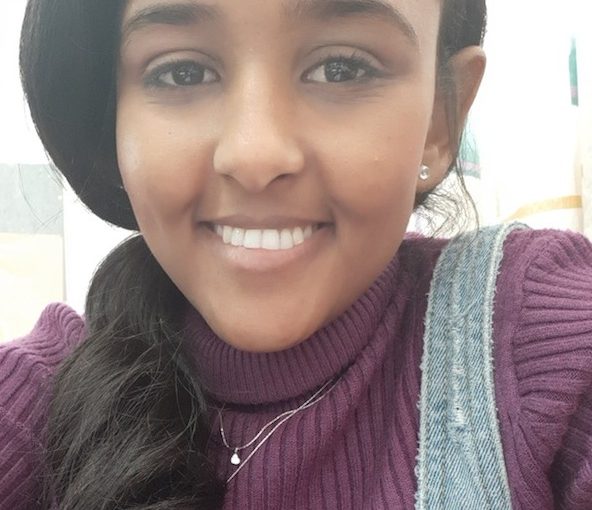
Sara Barahan, a former Israel Connect student, continues to meet with her mentor from the program, and has started helping others improve their English, too. (photo from Chabad Richmond)

Israel Connect pairs a mentor with an Israeli teen student who is wanting to improve their English reading, vocabulary and language skills. Mentors dedicate time every week to a video meeting with their student, using Israel Connect’s “Tour of Israel” curriculum. The goal is that, by the end of the school year, students have the skills and confidence they need to succeed in Israel’s national university entrance exam.

I have been blessed with the opportunity of being part of the Israel Connect program as a volunteer tutor/mentor. Having done this for a few years, I’m keenly aware of the benefits for both students and tutors.

A year-and-a-half ago, I was matched up with Sara Barahan, 23, who is older than the average student we work with and is in college. When we were first matched up, she was in her first year, studying to be an English and special needs teacher. It was pure joy from the moment we met. Her enthusiasm, motivation and single-minded pursuit for learning English was palpable, and her commitment and memory extraordinary.

We were tutor and student for a full school year and, once it finished, Sara asked if we could continue to meet via WhatsApp video, independently, and, of course, I agreed. I think I enjoy our meetings even more than Sara does! Even though I have a new Israel Connect student I tutor once a week, Sara and I continue to talk weekly, often for an hour or more. I’ve met many of her family members, virtually, and we’ve shared a lot about our lives in our many conversations.

For one of her college assignments, Sara was asked to write about the people and things that have influenced her on her journey to learn English. This is what she wrote:

“The Israel Connect Program was sponsored by Chabad. This program involves senior volunteer tutors from all over North America, who are fluent English-speakers, connect online, one-on-one via Zoom, for 30 minutes once a week with Israeli high school students who want to improve their English conversation and reading skills. The organizers know that good English skills will give Israeli students an advantage in accessing post-secondary education, and getting better jobs.

“English proficiency is crucial to Israeli students, since it makes up a third of their entrance exam marks for university. Students and tutors make great connections and it often goes beyond simply tutoring the curriculum, and turns into friendship. The program is something concrete and meaningful that helps Israeli students improve their lives. Building relationships is a highly satisfying and core part of this program, for both the students and the tutors.

“I joined the Israel Connect Program when I was in my first year in college,” said Barahan. “The lecturer offered this program (although it was meant to be for teenagers) and I saw it as an opportunity to improve my English, so I decided to participate in it. And this is how I got to know my tutor, Shelley from Vancouver, Canada, who until today is still in touch with me.

“This program is very important and meaningful to me because it is through this program that I got to meet the person who has influenced me, and a person that I enjoy talking to about different topics. This relationship has become very close and it’s not just a virtual meeting about a set curriculum; our conversations are about topics far beyond the studies. Thanks to the Israel Connect program I have gotten the chance to practise my English speaking, reading, writing and listening skills and expand my vocabulary.”

What greater accolade could Israel Connect get than this firsthand testimonial from a graduate of the program? I use the word graduate because Sara participated as an older student and has continued with her English studies.

Sara and I are fast friends, despite our 41-year age difference. We talk about school, her social life, our families, her aspirations, her frustrations, and everything in between. She confides in me and we have become very close. I would say that Sara seems like a daughter to me, except for the fact that I’m old enough to be her safta (grandmother). The age disparity isn’t an issue though; in fact, I like to think that she sees me as a kind of hip grandmother.

Sara often asks for my help proofreading her essays for school, and I love helping her learn. I see remarkable progress in her English language fluency and conversation skills. She says that I’m the only person she can speak English with, and really appreciates practising with me. What better way to learn a language than to converse at length about all sorts of topics? And Sara has gone on to tutor English to her neighbour’s 9-year-old daughter. Now, if that’s not a success story, I don’t know what is!

Other Israel Connect mentors have also expressed how gratifying it is to help these young Israeli students, and most mentors say that they’re certain they enjoy the experience at least as much as their students. They’ve described the mentoring experience as refreshing, fun, fulfilling and, at times, challenging – but always rewarding. Their students all sincerely appreciate the chance to practise their English conversation, vocabulary and reading skills with someone who is friendly and nonjudgmental. Some kids said they are embarrassed to try speaking English in class, or in front of their family, so the Israel Connect program gives them the confidence to speak. More importantly, it gives them the incentive to continue learning English, which they know will help them as they enter university and seek out good jobs.

Israel Connect always welcomes new volunteer mentors. For more information about the program and how to volunteer, go to tinyurl.com/yd6y4jrq.

Shelley Civkin is a happily retired librarian and communications officer. For 17 years, she wrote a weekly book review column for the Richmond Review. She’s currently a freelance writer and volunteer. She wrote this article for Chabad Richmond.
Format ImagePosted on August 21, 2020August 20, 2020Author Shelley CivkinCategories LocalTags Chabad Richmond, Diaspora, education, Israel, Israel Connect, Sara Barahan, volunteering
Real-life learning

Real-life learning

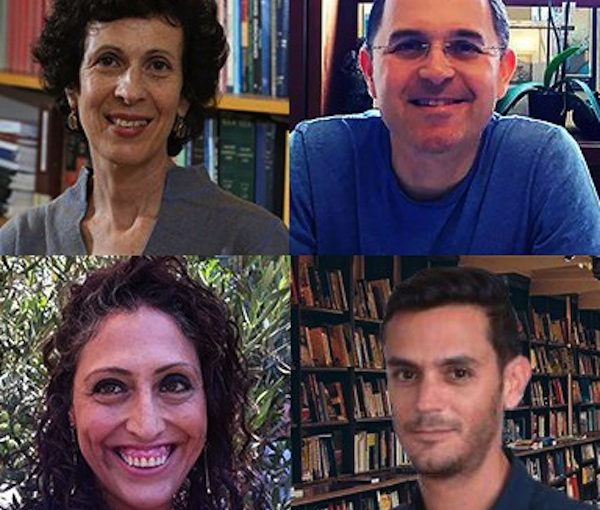
Clockwise from top left: Prof. Daphna Lewinsohn-Zamir, Prof. Guy Davidov, Ohad Amar and Vardit Dameri Madar of Hebrew University’s Clinical Legal Education Centre. (photos from cfhu.org)

Five representatives of Hebrew University’s Clinical Legal Education Centre (CLEC) took part in an online discussion about the legal aid the organization offers to disadvantaged individuals and groups.

“It is one of the jewels in our crown. CLEC has taught our students how social responsibility is an important part of the legal profession,” said Daphna Lewinsohn-Zamir, dean of HU’s faculty of law. “And it continues to do exemplary work during the coronavirus pandemic.”

Besides offering professional legal assistance to underprivileged people in Israel, particularly in the Jerusalem area, the centre provides students with hands-on experience. Each clinic, which is comprised of 16 students and includes six hours of field work each week, is overseen by an attorney and an academic advisor.

“The main goal is to demonstrate to students the difference between law in the books and law in action,” said Prof. Guy Davidov, CLEC’s academic director. “It is essential in showing how the law works in real life. We don’t want to be detached from the community in our ivory towers.”

Another key objective of the centre, Davidov said, is to present the potential (and limitations) of the law as a tool for social change, which also is better understood in practice and engagement.

To illustrate the scope of the centre, Vardit Dameri Madar, CLEC’s executive director, told the assembled Zoom audience the story of Hanna, a 32-year-old mother of six children, including one who has mental challenges. Hanna lives in severe poverty and is divorced after having suffered years of physical and mental abuse. She survives on minimum income benefits.

Just as the coronavirus struck, Hanna had her benefits stopped, said Dameri Madar. In spite of the pandemic forcing people to stay in isolation, the country’s housing department demanded that Hanna come to its offices in person to fill out the necessary documents to receive her benefits.

“Unlike a TV show such as LA Law, problems do not get resolved in the time it takes to watch an episode,” Dameri Madar explained. “In real life, it takes a long time to get a response from the housing department.”

After sending letters to the department and raising the issue in the media of Hanna’s possible eviction, a precarious circumstance shared by thousands of Israelis as the virus started, CLEC was able to make a difference – the housing department relented and allowed people to fill in their applications online.

CLEC handles 600 cases per year. The centre aims to address policy changes that affect broader populations; it initiates 35 to 40 policy change projects a year through tests cases, position papers, shadow reports, draft legislation and alternative models. CLEC also organizes about 90 lectures per year for the general population, as well as for specific groups, such as youth, single mothers and social workers.

This coming year, CLEC will run eight clinics, on the topics of at-risk youth, international human rights, marginalized communities, disability rights, criminal justice, the wrongfully accused, multiculturalism and women’s economic empowerment.

CLEC, too, has formed a Corona Crisis Program that manages existing cases related to poverty with responses in “real time”; provides Social Justice Operations Rooms on Facebook, with legal aid available in Hebrew and Arabic; and promotes policy changes stemming from the Facebook room and clinical activities.

“We decided that Facebook was a good tool to help answer people’s questions at a time when the rules were in flux,” said Ohad Amar, the lecturer at CLEC who started the Facebook groups.

From the Facebook groups, the public has easy access to specialized aid from attorneys, students and volunteers. To date, its 60 volunteers have helped more than 1,500 people.

Ariel Elkayam, a second-year law student, said “this is the best thing that happened to me with my studying here. I am so lucky to get to do this work. With the centre, you do teamwork. It really gives you a sense of belonging.”

Elkayam’s recent work with CLEC has been advocating for at-risk youth who have been fined and arrested for being out on the streets with nowhere to go during the COVID crisis – at a time when Israeli law enforcement has been clamping down on homelessness.

Every year, approximately 140 students are accepted to the CLEC clinics. For more information, visit openscholar.huji.ac.il/clinicallecen/book/clec-experience-assistance-impact-law-students.

Sam Margolis has written for the Globe and Mail, the National Post, UPI and MSNBC.

Format ImagePosted on August 21, 2020August 20, 2020Author Sam MargolisCategories IsraelTags Ariel Elkayam, CLEC, Daphna Lewinsohn-Zamir, education, Guy Davidov, Hebrew University, law, legal aid, Ohad Amar, social justice, tikkun olam, Vardit Dameri Madar
Inspiring students’ research

Inspiring students’ research

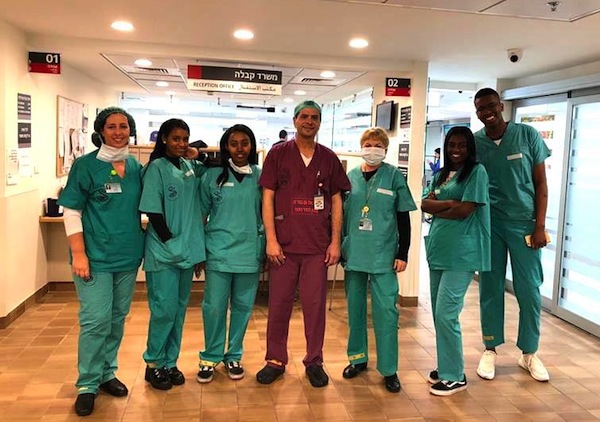
Students and staff of the recent Arrow Project on a tour of Sheba. In the centre is Prof. Eldad Katorza. Student Yair Jalmar is at the far right. (photo from IMP)

Sheba Medical Centre, Israel’s national hospital, enjoys a reputation for medical innovation, but many are unaware that it is also at the forefront of societal integration among various minority groups in Israel. In the past several years, Sheba has integrated hundreds of new Ethiopian olim (immigrants) into the hospital workforce, going as far as providing them with free classes to help them navigate Israeli bureaucracy and improve their language skills.

Recently, Prof. Eldad Katorza, senior physician at Sheba and director of the Arrow Project, decided to give youth from the Ethiopian community a head start by incorporating them into his pilot program.

The Arrow Project (Chetz in Hebrew, the initials of chokrim tze’irim, meaning “young researchers”) is an apprenticeship program for medical students, designed to pave their way into the world of research. Established in 2006, the initiative matches selected students with experienced researchers who serve as their mentors. During once- or twice-weekly meetings, the student-mentor teams work through every stage of medical research, from formulating the initial question, to collecting and analyzing data, to presenting the results at medical conferences.

This year, for the first time, each research duo also included a third tier: high school students from the Ethiopian community.

Katorza believes in the importance of encouraging students to pursue research, noting that, in med school, they do not receive sufficient exposure to research thinking or methodology.

“I believe that research makes a doctor more knowledgeable, more curious, more creative,” he said. “A doctor who engages in research is a much better doctor.”

Employing this premise, Katorza is planning to open several slots for nursing school students in the coming year’s program. “Nursing is also a field that stands to benefit greatly from adding researching to its ranks; it will raise the bar of nursing in Israel,” he said.

In the early stages of planning the pilot program for the Ethiopian high school students, it became evident to Katorza just how crucial, timely – and challenging – his initiative was. “I asked my son, then in 11th grade, to look around his own school in Givatayim for students from the Ethiopian community who might be suitable for the program,” said Katorza. “As it turned out, there wasn’t a single Ethiopian student in his school, nor in any of the good schools in the area.”

The reason can be traced to the socioeconomic realities in Israel today. Ethiopian Israelis have long experienced prejudice and being treated as second-class citizens. By and large, members of the Ethiopian community tend to dwell together in poorer neighbourhoods, where community services, schools included, are more limited. These conditions put Ethiopian teens at a disadvantage from the outset and, due to economic necessity, the youth are pushed to join the workforce at an early age, further perpetuating a cycle of poverty.

“Almost four decades have passed since the first wave of Ethiopian Aliyah,” said Katorza, “yet, judging from their rate of participation in academia, their level of affluence and other markers of social mobility, it appears that the government has failed to take the necessary steps to help them bridge the gaps and facilitate their successful absorption into mainstream Israeli society.”

Anxious to change this negative trend, Katorza decided to include outstanding students from the Ethiopian community in the Arrow Project. However, it wasn’t simple to locate high school students from the Ethiopian sector who met the criteria for participation in the program: high marks in the sciences, high motivation and interest, and living near enough to the Sheba campus to be able to easily attend the weekly meetings. Ultimately, Katorza was aided by an organization called Fidel (“Alphabet” in Amharic), which promotes the education and social integration of Ethiopian-Israeli youth. The Fidel staff welcomed this opportunity to incorporate Ethiopian students in Sheba’s research-mentoring platform, and provided 10 candidates, from which the top five were chosen.

According to Katorza, the pilot program was a resounding success and will be repeated in the coming year. “We found that, once they are freed from the limitations of their environment, the students manifested amazing capabilities,” he said. “We endeavoured to help build their self-confidence, empower them and teach them that they can do anything they put their mind to.”

Throughout the year, in addition to their full participation in research, the Ethiopian high schoolers were also exposed to the clinical activity at the hospital. “At the beginning of the year, the students didn’t have any specific plans for the future,” Katorza said. “Now, they are now seriously considering a medical career.”

One of those is Yair Jalmar, 17, from Beer Yaakov, who participated in a research project with pediatric cardiologist Dr. Shai Tejman. “This project helped me develop my interest in medicine and learn more about the advanced technologies and devices, as well as the various departments in the medical field,” he said.

In the 14 years since the project’s inception, the pool of participants, which in the beginning included only students from Tel Aviv University Sackler School of Medicine, has expanded to foreign exchange students from New York and London, as well as medical students from Ariel University, Bar-Ilan and others. Thus far, former participants in the Arrow Project have gone on to publish their findings in respected medical journals, and several have joined the team at Sheba.

– Courtesy International Marketing and Promotion (IMP)

Format ImagePosted on August 21, 2020August 20, 2020Author Sharon Gelbach IMPCategories IsraelTags education, Eldad Katorza, equality, Ethiopian Jews, health, medicine, Sheba Medical Centre
Showing appreciation

Showing appreciation

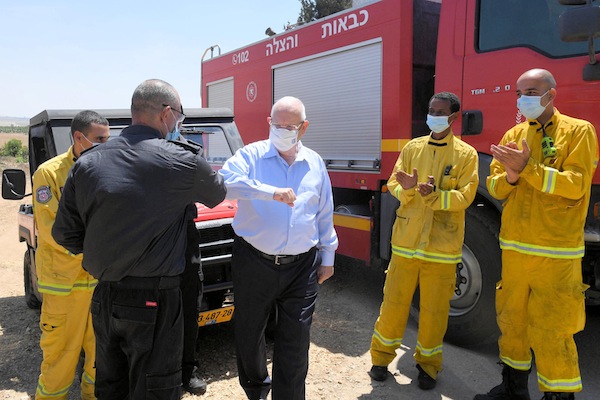
Israeli President Reuven Rivlin with firefighters near the Gaza border earlier this week. (photo from IGPO via Ashernet)

Israeli President Reuven Rivlin visited the Coordination and Liaison Administration (CLA) at the Erez border crossing point and sites where fires have been set in the area by incendiary-laden kites and balloons. The president thanked the firefighters for their determination and dedication.

“You have to deal with threats that deliberately and consistently harm Israeli citizens going about their daily lives,” the president told them. “Terrorism using incendiary devices is terrorism just like any other…. We have nothing against the people living in Gaza. On the contrary, we want them to be able to live in peace and quiet and raise their children. But they are being held hostage by Hamas, which also thinks it has us in its control. Hamas should know that this is not a game. The time will come when they must decide and, if they want war, they will get war.”

Speaking about the damage done by the fires, he said, “There is nothing more painful than seeing this good earth go up in flames. I want to offer my support to the farmers at this difficult and painful time, when they must deal with the threat of fires as well as with the economic crisis from corona. The way the residents, the farmers, the civilian security forces and you, the firefighters, stand firm is an inspiration for us all.”

Format ImagePosted on August 21, 2020August 20, 2020Author Edgar AsherCategories IsraelTags Gaza, Hamas, Reuven Rivlin, terrorism

We always find ways to learn

All over the world, students will be continuing a different school experience, one that began soon after the pandemic. Some face a new academic year with entirely virtual learning. Others are going back into classrooms with many adjustments to allow (theoretically) for safer, virus-free learning. Still others face a hybrid approach, with small amounts of time at school but more time with parents, in daycare or even without any supervision at all as their parents work.

It’s a precarious time. Most of us haven’t experienced anything like this. Yet, there have been moments throughout history when the school rules changed. Imagine the European parents of the 1930s, faced with the Nazi rules, where their kids weren’t permitted to learn in the regular schools. There were families who left everything they knew to escape and start new lives anywhere they could go. There were parents who sent their children away to English boarding schools or on the Kindertransport, knowing that they themselves might not ever be able to leave Germany, Austria, Poland, Czechoslovakia or Danzig.

Those who say children must go back to school because “school is better for them than the alternatives” make arguments like, “We don’t know what the effects of this absence from school will be.” When I hear this, I immediately think of the settler children, perhaps 150 years ago, on the prairies, who spent long winters in sod houses or log cabins. Jewish immigrant families arrived in the 1880s in Manitoba and many spent time in immigration sheds or shacks by the river – it’s unlikely those kids had formal schooling. Many immigrants taught their kids as they could. Schooling was intermittent at best.

Don’t get me wrong, for kids who are hungry, neglected or abused, school is a refuge. For refugees with traumatic pasts, interrupting school learning is not a good thing. However, many kids with stable, financially secure families are doing just fine while staying at home. It’s the safest choice.

Were all these people who lived in sod houses or who had lapses in their formal schooling permanently marred as adults? I don’t think so. I pondered all this recently as I celebrated finishing the Talmudic Tractate Shabbat – by myself. I started Daf Yomi in January of this year, and I’ve read my page online every day, often late at night. Aside from a few online exchanges, it’s all alone. I know this study is better done with a partner or chevruta (small group). This would be preferable. However, during the pandemic, at home with my family, I was lucky to squeeze in a solitary 20 minutes to study before bed. It’s been hard to listen to podcasts or chat online in a forum, and I certainly wasn’t regularly meeting with anyone in person.

I didn’t have any formal training in studying Jewish texts until I was a teenager in a summer camp program. I didn’t learn Talmud in an organized way until I was in graduate school. Yet, here I am, actively learning as an adult. Does interrupted or unconventional schooling mean less learning? I don’t think so.

In an informal survey of the online Jewish world, we’re finding learning opportunities all over the place. Whether it’s religious schools, congregational adult education, Jewish institutions for higher education, publications or more, we’re offered countless ways to listen, watch and discuss in online classrooms. My kids, age 9, were deluged with online Jewish opportunities, even outside of their bilingual Hebrew/English public school curriculum. My parents report that they are doing something interactive and learning with their congregation nearly every day.

Learning is happening in many traditional and hands-on ways. Often, it’s just having time for reading or making food from scratch. In some ways, the pandemic has motivated people of all ages to try new things. For many in the Jewish community, the pandemic has allowed us to jump into Jewish learning or to attend synagogue (virtually) more often. The need for stimulation while staying home has wakened many people’s intellectual curiosity.

For me, at least, and for my kids, school wasn’t usually the place to satisfy that curiosity. Sure, yes, we learn essential things at school. But the exploring of the outdoors and science, the building and construction with Lego, the art and design we see and draw and the music we listen to – our appetite for all this was never fully sated at school. Or, at least, not as of yet.

I have one twin who is desperate to get back to school to see his friends. He cannot wait. The other twin is not at all sure he wants to return to school ever. Given the situation we find ourselves in, each kid may get some of what he wants. A little school, and a little time at home.

I felt I didn’t need a fancy siyum (event to celebrate finishing the study of a talmudic tractate) or a seudah (celebratory meal). However, at the last moment, I signed up for a Zoom event hosted by My Jewish Learning online. Three distinguished teachers spoke, one taught the last few lines of the text, and another recited the Hadran, the special short prayer one says at the end. It says, “we will return.” We pray not to forget the tractate we’ve just studied.

I was moved by the Zoom siyum. More than 450 people attended! Although I listened while I answered kids’ questions and made salad for lunch, I still learned a lot.

I also realized that, as long as we’ve been studying Talmud, we’ve been hoping for a return, a review and a chance to learn in the future. We may sit in virtual classrooms, all alone, or in a real classroom, socially distanced, but we will return to learning – no matter what our age.

The pandemic is possibly the biggest event in our lives for some of us. To paraphrase what we say in the Hadran, we must remember that we’ll return to learning and that learning will return to us; that we will not forget you, learning, and the learning will not forget us, “not in this world, and not in the world to come.”

Wishing you a healthy and positive back-to-school learning experience – however differently we might experience it this year.

Joanne Seiff has written regularly for CBC Manitoba and various Jewish publications. She is the author of three books, including From the Outside In: Jewish Post Columns 2015-2016, a collection of essays available for digital download or as a paperback from Amazon. Check her out on Instagram @yrnspinner or at joanneseiff.blogspot.com.

Posted on August 21, 2020August 20, 2020Author Joanne SeiffCategories Op-EdTags coronavirus, COVID-19, education, Hadran, learning, lifestyle, school, Talmud

Don’t wait to tell story

The other day, I went looking for a friend I met during my university days, one I had lost touch with after years of companionship. I looked him up on the internet and discovered to my dismay that he had passed away some 11 years ago. I was too late to hear his story from his own lips. I was too late to tell him my story from my own lips to his conscious mind. I felt robbed of something I felt I was entitled to. Up until the moment I learned of his fate, he was very much alive for me.

Recently, an acquaintance of my Bride’s, someone I had gotten to know through her, a person we had been visiting because of an illness, died in hospital. She unexpectedly took a turn for the worse and, in the space of seven days, had changed from someone we had been conversing with, to a mere body. I am not a stranger to this phenomenon, having lost a spouse similarly to a lingering disease, but I was shocked at this sudden transition.

I am long since retired from being an active presence in an enterprise. I recently gave up being an active manager of my own financial affairs. What I have evolved into during the last decade or so is being a teller of stories. I am still very busy at that. One of my greatest pleasures is to hear from one of my correspondents that I have expressed for them their very thoughts, if only they had put a pen to them.

All of us have stories we want to tell. We all have lots to say, lots we wish to say. Often, we do not go to the trouble of communicating our thoughts and experiences. Too often, our stories die with us. I think that is a pity. I am trying my best to ensure I am not guilty of that.

It has been a long time since my thoughts have been shared with millions of listeners. It has been many years since mine was a household name. Little matter! Though my stories, as of late, have been shared with only a few, my pleasure is gained in the telling. And in the rare responses of some of my fellows. And in the continuing hope that I leave some residues of thought here and there. That is my immortality. (Not true, of course, as I have been blessed with progeny, but you know what I mean.)

These days, death stalks us with every breath we take. The “us” I speak of are those among us who often have more stories to tell than our younger companions, by virtue of our having been around longer. We seem to be more vulnerable to the rampant virus seeking a place for replication in the air we breathe, and this vulnerability is a reminder of how important it is to take the trouble to share some of the riches many of us have dearly accumulated. The stories we have not yet told die with us.

I am highlighting this part of our mission in life. We have held a job and hopefully it contributed something. It gave us a livelihood, which may have allowed us to raise a family and accumulate something material to pass on. We may have shared things and thoughts with others, publicly and privately. We may have enriched our own lives and the lives of others. We have stories to tell. Wouldn’t it be a pity not to share them with others? Surely there are valuable secrets in that treasure chest! Even the things you may not be proud of may have paid off in valuable lessons that you made good use of.

There is a reason for us to survive the dangers around us a little longer. So, please, more masks, more handwashing, more social distancing! We need to hear your stories before you go. You owe it to your public. You owe it to yourself.

Max Roytenberg is a Vancouver-based poet, writer and blogger. His book Hero in My Own Eyes: Tripping a Life Fantastic is available from Amazon and other online booksellers.

Posted on August 21, 2020August 20, 2020Author Max RoytenbergCategories Op-EdTags aging, coronavirus, COVID-19, identity, lifestyle, storytelling

Let’s restore ancient holiday

It is time for Jews to restore and transform the ancient and largely forgotten Jewish holiday of Rosh Hashanah l’Ma’aser b’Heimot (the New Year for Tithing Animals) into a day devoted to considering how to improve our relationships with animals. The holiday occurred on the first day of the month of Elul (Aug. 21 this year) and was initially devoted to counting domesticated animals intended for sacrificial offerings (Mishnah, Seder Moed, Tractate Rosh Hashanah 1:1).

There is a precedent for such a transformation. Rosh Hashanah l’Ilanot (New Year for Trees), a day intended for tithing fruit trees for Temple offerings, was reclaimed in the 17th century by mystics as a day – Tu b’Shevat – for appreciating nature and its beauty and bounty.

It is important that Rosh Hashanah la’b’Heimot (the New Year for Animals) becomes a day devoted to increasing awareness of Judaism’s powerful teachings on the proper treatment of animals and to a tikkun (healing) for the horrible ways that animals are treated today on factory farms and in other settings.

Currently, with regard to animals, Jewish religious services, Torah readings and education are primarily focused on the biblical sacrifices, animals that are kosher for eating, and laws about animal slaughter. This emphasis on animals that are to be killed should be balanced with a greater emphasis on Judaism’s more sympathetic teachings; for example, “God’s compassion is over all his works [including animals]” (Psalms 145:9) and “the righteous person considers the lives of his or her animals” (Proverbs 12:10). Another example is that farmers are not to yoke a strong and a weak animal together, nor to muzzle an animal while the animal is threshing in the field. As well, the Ten Commandments indicates that animals, as well as people, are to rest on the Sabbath day and there are many parts in the Torah mandating that Jews are to avoid tsa’ar ba’alei chaim, causing any unnecessary “sorrow to animals.” Moses and King David were deemed suitable to be leaders because of their compassionate care of sheep when they were shepherds.

Despite these and additional teachings, most Jews ignore the widespread abuses of animals. For example, egg-laying hens are kept in cages so small that they can’t raise even one wing, and they are debeaked – without the use of anesthetics – to prevent them from harming other birds by pecking them, due to their natural instincts being thwarted. More than 150 million male chicks are killed annually, shortly after birth, at egg-laying hatcheries because they can’t lay eggs and haven’t been genetically programmed to have much flesh. Dairy cows are artificially inseminated annually so that they will be able to continually produce milk, and then their babies are taken away almost immediately after birth, often to be raised for veal, under very cruel conditions.

Renewing and transforming the ancient holiday is especially important today because a shift away from animal-based diets, in addition to lessening the mistreatment of animals, would reduce the number of diet-related diseases that are afflicting Jewish and other communities. A shift would also reduce environmental and climate change threats to humanity that are greatly increased by the massive exploitation of animals for food. And it would encourage Jews to consider plant-based diets that are more consistent with Jewish mandates to preserve human health, treat animals with compassion, protect the environment, conserve natural resources, help hungry people, and pursue peace and justice.

Transforming the holiday would show that Judaism is applying its eternal teachings to today’s important issues, and improve the image of Judaism in the eyes of people concerned about animals, vegetarianism, the environment and related issues, by reinforcing a compassionate side of Judaism. The holiday might even bring back some Jews who are currently alienated to some extent from Judaism, especially those who are concerned about animal welfare, and strengthen the commitment of vegetarian and vegan Jews who are already involved in Jewish life, but feeling somewhat outside the Jewish mainstream, as they are often among a small minority in their congregations.

The first day of the Hebrew month of Elul is an appropriate time for this renewed holiday because this date is the beginning of the month-long period of introspection during which Jews are to examine their deeds before the High Holidays of Rosh Hashanah and Yom Kippur. Starting on that date and for the entire month of Elul (except on Shabbat), the shofar (ram’s horn) is blown in synagogues during morning services to awaken people to their responsibilities, and that is an appropriate time to consider how we can improve conditions for animals. It is significant that, for chiddur mitzvah, to enhance mitzvot (commandments), the shofar and other ritual objects should ideally come from animals that have been raised without cruelty and have died natural deaths.

A coalition of Jewish groups is leading a campaign to make this renewed holiday an important part of Jewish life today and I was part of recent Zoom events in the United States, United Kingdom and Israel, at which rabbis, Jewish vegetarian and vegan activists, and environmentalists discussed many issues related to the renewal initiative and answered questions about it. The group is also compiling lists of Jewish organizations, rabbis and other influential Jews who support the initiative. And it is planning to use the next year to create sample holiday haggadot, outlines of sample holiday seders, and other materials that can help expand holiday activities in the coming years.

Working to renew an ancient Jewish holiday that most Jews are completely unaware of may seem audacious, but it is essential, in my opinion, to helping revitalize Judaism, improving the health of Jews, sharply reducing the massive mistreatment of animals, and shifting our precious but imperiled planet onto a sustainable path.

Richard H. Schwartz, PhD, is professor emeritus, College of Staten Island, president emeritus of Jewish Veg and president of Society of Ethical and Religious Vegetarians. He is the author of several books, including Judaism and Vegetarianism and Who Stole My Religion? Revitalizing Judaism and Applying Jewish Values to Help Heal Our Imperiled Planet, and more than 250 articles at jewishveg.org/schwartz. He was associate producer of the documentary A Sacred Duty: Applying Jewish Values to Help Heal the World.

Posted on August 21, 2020August 20, 2020Author Richard H. SchwartzCategories Op-EdTags animal protection, environment, Judaism, New Year for Animals, Rosh Hashanah la’b’Heimot, Rosh Hashanah l’Ma’aser b’Heimot

Thank you to all who contributed to the Aug. 21/20 issue!!!

image - Thank you to all who contributed to the Aug. 21/20 issue ad from paper

Posted on August 21, 2020August 21, 2020Author The Editorial BoardCategories From the JITags JI, journalism, philanthropy
להאריך את הסגירה של הגבולות

להאריך את הסגירה של הגבולות

(Wikimedia Commons)

שלוש המדינות של צפון אמריקה שוב החליטו להאריך את סגירת הגבולות היבשתיים ביניהן. זאת, פרט לנסיעות חיוניות והעברת סחורות ממדינה למדינה. סגירת הגבולות בין ארצות הברית, קנדה ומקסיקו החלה כבר בחודש מרץ השנה. לאור התפרצות מגיפת הקורונה במדינות השונות ובמספרים גדולים, בעיקר בארה”ב ומקסיקו. ומקביל לאור התמיכה הגורפת בסגירת הגבולות מצד אזרחי קנדה, רבים מעריכים בצפון אמריקה שהשיגרה ופתיחת מעברי הגבול מחדש לא תחזור עד לראשית השנה הבאה, לכל המוקדם.

בראשית חודש אוגוסט החליטו הממשלות של ארה”ב, קנדה ומקסיקו להאריך בשלושים ימים נוספים את הסגירה המשותפת של הגבולות היבשתיים ביניהן. וזאת מתוך רצון לבלום את ההתפרצות המחודשת של נגיף הקורונה בשלוש מדינות אלה.

בשלב זה, מעברי הגבול בין ארה”ב ומקסיקו, ובמקביל בין ארה”ב וקנדה, יישארו סגורים עד העשרים ואחד בספטמבר, לכל הפחות. חשוב להבהיר כי הסגירה הממושכת לא משפיעה על הסחר הרב בין המדינות ושינוע של סחורות שונות (באמצעות משאיות). זאת, כמו גם על טיסות מסחריות שממשיכות להתקיים בין המדינות והעברת סחורות באמצעות מטוסים. רבים מבקרים את המדינות שלא מאפשרות להשתמש במעברי הגבול, אך מאפשרות לטוס ביניהן.

השר לביטחון המולדת בפועל של ארה”ב, צ’אד וולף, אישר את הדיווחים על המשך סגירת הגבולות בין המדינות. וולף אמר כי ארה”ב תמשיך לעבוד עם קנדה ומקסיקו כדי להאט את התפשטות מגיפת הקוביד. בהתאם לכך סוכם להאריך את המגבלה על תנועה שאינה חיונית, עד העשרים ואחד בספטמבר.

החל מהשמונה עשר במרץ השנה החליטו ארה”ב, קנדה ומקסיקו על סגירת מעברי הגבול. שלוש המדינות תיאמו זאת מראש והחליטו על המשך סגירת מעברי הגבולות ביניהן בחודש נוסף. זאת למעט נסיעות חיוניות ומעבר סחורות.

וולף ציין כי נשיא ארה”ב, דונלד טראמפ, אמר לפני מספר ימים כי הגבלת הנסיעות והגברת הפיקות על מעברי הגבולות בין המדינות, היא כלי נוסף במאבק בנגיף הקורונה.

שלוש הארכות נוספות בוצעו במאי ולאחר מכן ביוני ולאחרונה ביולי, עד העשרים ואחד בחודש זה. כך שההחלטה של שלוש המדינות של צפון אמריקה שהתקבלה לפני מספר ימים לא בדיוק הפתיעה רבים. סוכנות הידיעות רויטרס דיווחה כי בממשל טראמפ מבינים שיהיה צורך להאריך את סגירת הגבולות עד שסכנת הקורונה תחלוף, כאשר ההערכות מדברות על לפחות כמה חודשים נוספים שבהם הגבול יישאר סגור בין שלוש המדינות.

יש להזכיר כי לא מדובר במהלך חד צדדי. נראה שאזרחי מקסיקו וקנדה מגבים את החלטת הממשלות שלהם. לפי סקר שפורסם לאחרונה בקנדה מתברר כי שמונים וחמישה אחוז מהאזרחים תומכים בסגירת הגבול עם ארה”ב, עד סוף שנת אלפיים ועשרים.

על אף הקירבה הגיאוגרפית של שלוש המדינות, יש לזכור כי הן נמצאות במצבים שונים במאבקן כנגד נגיף הקורונה. בארה”ב שבה גרים כשלוש מאות ושלושים מיליון תושבים יש כבר למעלה מחמישה מיליון ומאתיים נשאים של המחלה, כאשר למעלה ממאה שישים ושבעה אלף איש מתו מהקורונה. בקנדה שבה מתגוררים כשלושים ושבעה מיליון איש יש כבר כמאה עשרים ואחד נשאים של המחלה, כאשר למעלה מתשעת אלפים מתו מהקורונה. ואילו במקסיקו שבה גרים כמאה ועשרים ושמונה מיליון איש יש כבר למעלה מכחצי מיליון נשאים של המחלה, כאשר למעלה מחמישים וחמישה אלף איש מתו מהקורונה. לפי הערכות קרוב לוודאי שלפחות במקסיקו מספר החולים והנפטרים מהמגיפה הקשה הרבה יותר גבוה.

Format ImagePosted on August 19, 2020Author Roni RachmaniCategories עניין בחדשותTags borders, Canada, coronavirus, COVID-19, Mexico, United States, ארה"ב, מגיפת הקורונה, מקסיקו, סגירת הגבולות, קנדה
משותפות אסטרטגית חדשה

משותפות אסטרטגית חדשה

אחד הפרויקטים המשותפים ינוהל על ידי פרופ’ ארי מטמון, מהמכון למדעי כדור הארץ באוניברסיטה העברית ופרופ’ מיכאל חזן מהמחלקה אנתרופולוגיה באוניברסיטת טורונטו. המחקר יתבצע בחלקו בדרום אפריקה במטרה להבין כיצד שינויי אקלים השפיעו על התפתחותם של בני האדם הראשונים במדבר הקלהארי.

(en.earth.huji.ac.il/people/ari-matmon)

כיצד תנאים סביבתיים ושינוי אקלים השפיעו על ההתפתחות האנושית המוקדמת, והאם ניתן לרתום הנדסת חלבונים כדי לחסל את נגיף הקורונה? שאלות אלה ועוד רבות אחרות נבדקו לאחרונה על ידי חוקרים וחוקרות מאוניברסיטת טורונטו והאוניברסיטה העברית בירושלים. זאת, כחלק משותפות אסטרטגית חדשה שנועדה לאפשר לחברי סגל וסטודנטים משני המוסדות לשלב מאמצים ומשאבים לצורך ביצוע מחקרים בינלאומיים פורצי דרך וייחודיים בתחומם, ולהגדיל את החשיפה של אותם מחקרים וטכנולוגיות שיפותחו לשווקים חדשים.

אוניברסיטת טורונטו נחשבת לאחת האוניברסיטאות הטובות ביותר בעולם. כיום היא ממוקמת במקום העשרים וחמישה באחד המדדים הבודקים את האוניברסיטאות המובילות בעולם, במקום העשרים וארבעה בעולם במדד אחר של האוניברסיטאות המובילות בעולם, ובמקום השמונה עשר במדד שלישי של האוניברסיטאות המובילות בעולם. בקנדה כמובן האוניברסיטה נחשבת למוסד האקדמי הטוב ביותר ביותר. במסגרת שיתוף הפעולה החדש בין שני המוסדות: מדי שנה אוניברסיטת טורונטו והאוניברסיטה העברית בירושלים יבחרו פרויקטים מחקריים שיקבלו כל אחד מימון של כמאה וחמישים אלף דולר לשנה. זאת לתקופה של עד ארבע שנים. שיתוף הפעולה החל לאחרונה וכבר נרשמו פרויקטים רבים ופוריים בין הצדדים, שצפויים לקבל חיזוק בעקבות החתימה על ההסכם החדש.

פרופ’ אורון שגריר, סגן נשיא לבינלאומיות באוניברסיטה העברית, אמר כי השותפות מאחדת בין שתי האוניברסיטאות המובילות בישראל ובקנדה, וכי הקריאה להצעות מחקר הביאה עד כה למספר פניות מרתקות. בתקופה מאתגרת זו עבור האוניברסיטאות, שותפויות בינלאומיות מעין אלה ומהוות מסגרת חשובה לקידום ותמיכה בפרויקטים מחקריים שונים, הוא הוסיף.

אחד הפרויקטים המשותפים ינוהל על ידי פרופ’ ארי מטמון, מהמכון למדעי כדור הארץ באוניברסיטה העברית ופרופ’ מיכאל חזן מהמחלקה אנתרופולוגיה באוניברסיטת טורונטו. המחקר יתבצע בחלקו בדרום אפריקה במטרה להבין כיצד שינויי אקלים השפיעו על התפתחותם של בני האדם הראשונים במדבר הקלהארי. פרויקט משותף נוסף ינוהל על ידי פרופ’ סאצ’דב סידהו מאוניברסיטת טורונטו ופרופ’ יוליה שיפמן מהמכון למדעי החיים (ע”ש אלכסנדר סילברמן) בפקולטה למדעי החיים באוניברסיטה העברית. השניים יחקרו ביחד כיצד ניתן לרתום את תחום הנדסת החלבונים לפיתוח טיפולים למחלות כולל נגד נגיף הקורונה. בפרוייקט החדש שלהם: השניים יפתחו מערכי חלבונים לכל הגנים הקיימים בנגיף הקורונה. בסופו של דבר הם אמורים לסלול את הדרך לפיתוח טיפולים אפשריים כנגד המגפה הקשה הזאת.

פשעי שינאה בבית כנסת במונטריאול: פורעים השחיתו ספרי תורה

אלמונים גרמו נזק כבד לבית הכנסת קול יהודה השוכן בשכונת קוט סנט לוק שבמונטריאול. הגבאים של בית הכנסת שהיה סגור לאחרונה בגלל מגיפת הקורונה שפגעה קשה במונטריאול, מצאו שספרי וחפצי קודש הושלכו על הריצפה וכתובות נאצה נראו במקום. בין הנזקים שאחראים להם האלמונים ושמוגדרים פשעי שינאה: תשמישי קדושה (כולל תפילין), גווילי ספר תורה וחפצי קודש שונים הושלכו על הריצפה בצורה המבזה את בית הכנסת. זאת ועוד כתובות נאצה אנטישמיות בגנות הקהילה היהודית נראו בכל מקום.

בית הכנסת כאמור סגור בגלל המגיפה ולא נערכו בון תפילות לאחרונה. לכן לא ברור מתי התרחשו פשעי השינאה במקום, שעוררו את כעסם של חברי הקהילה היהודית במונטריאול שסוערים עקב המקרה החמור.

שכונת קוט סנט לוק בפרבריה של מונטריאול נחשבת לאזור בו גרים יהודים מזה שנים רבות. לאחרונה הצטרפה לשכונה קבוצה גדולה של חסידי בעלזא, שאף פתחה במקום בית מדרש ללימוד תורה ותפילה. לקהילת היהודים בשכונת קוט סנט לוק יש מספר רב של מוסדות קהילתיים עמוסים.

Format ImagePosted on August 6, 2020Author Roni RachmaniCategories עניין בחדשותTags climate change, coronavirus, hate crimes, Hebrew University of Jerusalem, international studies, Kol Yehuda Synagogue, Montreal, University of Toronto, אוניברסיטת טורונטו, בית הכנסת קול יהודה, האוניברסיטה העברית בירושלים, מונטריאול, מחקרים בינלאומיים, נגיף הקורונה, פשעי שינאה, שינוי אקלים

Posts pagination

Previous page Page 1 … Page 254 Page 255 Page 256 … Page 664 Next page
Proudly powered by WordPress