Skip to content
  • Home
  • Subscribe / donate
  • Events calendar
  • News
    • Local
    • National
    • Israel
    • World
    • עניין בחדשות
      A roundup of news in Canada and further afield, in Hebrew.
  • Opinion
    • From the JI
    • Op-Ed
  • Arts & Culture
    • Performing Arts
    • Music
    • Books
    • Visual Arts
    • TV & Film
  • Life
    • Celebrating the Holidays
    • Travel
    • The Daily Snooze
      Cartoons by Jacob Samuel
    • Mystery Photo
      Help the JI and JMABC fill in the gaps in our archives.
  • Community Links
    • Organizations, Etc.
    • Other News Sources & Blogs
    • Business Directory
  • FAQ
  • JI Chai Celebration
  • JI@88! video

Recent Posts

  • Story of Israel’s north
  • Sheltering in train stations
  • Teach critical thinking
  • Learning to bridge divides
  • Supporting Iranian community
  • Art dismantles systems
  • Beth Tikvah celebrates 50th
  • What is Jewish music?
  • Celebrate joy of music
  • Women share experiences 
  • Raising funds for Survivors
  • Call for digital literacy
  • The hidden hand of hate
  • Tarot as spiritual ritual
  • Students create fancy meal
  • Encouraging young voices
  • Rose’s Angels delivers
  • Living life to its fullest
  • Drawing on his roots
  • Panama City welcoming
  • Pesach cleaning
  • On the wings of griffon vultures
  • Vast recipe & story collection
  • A word, please …
  • מארק קרני לא ממתין לטראמפ
  • On war and antisemitism
  • Jews shine in Canucks colours
  • Moment of opportunity
  • Shooting response
  • BC budget fails seniors
  • Ritual is what makes life holy
  • Dogs help war veterans live again
  • Remain vital and outspoken
  • An urgent play to see
  • Pop-up exhibit popular
  • An invite to join JWest

Archives

Follow @JewishIndie
image - The CJN - Visit Us Banner - 300x600 - 101625

Category: News

Supportive of Shalva

Supportive of Shalva

A 6-year-old Shai Gross with his family in 1976, after the successful Entebbe Operation. (photo from Shalva)

Seeing is believing. At first, it sounds like another cliché, another pat answer to brush off an unwanted question. But, sometimes in life, we are put in situations where our power to overcome must be seen to be believed. Last month, guests at the Shalva 26th anniversary dinner in Israel were able to see for themselves how the human spirit can overcome unbelievable odds.

The youngest of the hostages in the 1976 Entebbe Operation, Shai Gross, stood before the guests at the dinner. His presence itself was a testament to the power of human beings to do the unbelievable.

“When I was 6, my parents and I were among the hostages,” he said. “For a full week, we sat, captives in Entebbe, with pistols and grenades threatening our lives. The terrorists separated the children into business class [on the captured plane] to avoid parents acting up in defence of their children. My mother, however, was able to hide me under her seat. I was only 6 yet I remember asking her, ‘Does dying hurt?’”

The Entebbe Operation is forever marked in the collective Jewish consciousness. On June 27, 1976, four terrorists hijacked Flight 139 en route from Tel Aviv to Paris. They were armed with pistols and a grenade with the pin removed, which they held as insurance against being attacked by the passengers. The flight was diverted to Entebbe, Uganda, where the government supported the hijackers. All non-Jewish passengers were released while more than 100 Jewish passengers were held, fearing for their lives.

The horrifying ordeal came to an end on July 4, when the Israel Defence Forces launched a rescue mission. In what is still considered by many to be the most daring hostage rescue mission of all time, a group of Israeli commandos stormed the complex.

Gross recounted the last few moments before they were rescued, “All we heard were gun shots. I was paralyzed with fear. At the time, the only possible explanation to the insanity was that they were coming to finally end our lives. How could it even enter anyone’s mind that the IDF had made it all the way to distant Entebbe?!”

The rescue that was underway seemed totally unbelievable until Gross saw it with his own eyes. “After a few moments, we realized that we were being rescued by the IDF. That dramatic rush from desperation to salvation … that is a joy I will never forget.”

Nonetheless, Gross acknowledged, “This traumatic experience left its mark on me. I was emotionally disabled.”
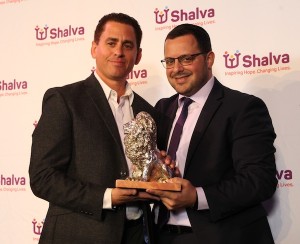
photo  - Shai Gross, left, receives the Shalva Spirit of Hope Award from Avi Samuels, deputy director of Shalva
Shai Gross, left, receives the Shalva Spirit of Hope Award from Avi Samuels, deputy director of Shalva. (photo from Shalva)

Having personally experienced how a child can overcome challenges that would try an adult, he has added empathy for the children of Shalva, where he volunteers. He contributes to Shalva in an effort to give back to Israel, and in memory of the soldiers who gave their lives to save his.

The moment when the unbelievable happens before your very eyes, when the darkness is suddenly transformed to light, is a familiar occurrence in the Shalva centre in Jerusalem. For 26 years, Shalva has been helping children with special needs move beyond their limitations. Shalva programs and services are designed to provide individual treatment for the child while also strengthening the fabric of the family. Providing services for more than 500 infants, children and young adults, Shalva accompanies each child from birth to adulthood. Individually tailored programs are designed to help participants reach their full potential and integrate into the community.

As a volunteer, Gross sees how Shalva’s approach helps kids meet their challenges. “Shalva doesn’t see children with disabilities,” he said. “No. They see superheroes that just need to conquer some challenges. After volunteering at Shalva myself, I have come to realize that we’re all the same: potential heroes trying to overcome our struggles.”

Gross has moved past the scars of his experience in Entebbe. He married and is the father of four children. He named his youngest son Yoni in memory of Yoni Netanyahu, the rescue team’s commander and the older brother of Prime Minister Binyamin Netanyahu, who was killed in the raid.

At the Shalva dinner, Gross was awarded with the Shalva Spirit of Hope Award in recognition of how he has met his personal challenges and used that experience to help others.

To learn more about the work of Shalva, visit shalva.org.


Format ImagePosted on April 15, 2016April 20, 2016Author ShalvaCategories IsraelTags disabilities, Entebbe, Israel, SHALVA
Tax reminders for students

Tax reminders for students

Canada Revenue Agency has tax credits, deductions and benefits to help students. (photo from CRA)

The Canada Revenue Agency (CRA) has tax credits, deductions and benefits to help students, and here are some tips to ensure students get them. First, of course, is to file on time.

Most Canadian income tax and benefit returns for 2015 are due on April 30. However, since this date is a Saturday, CRA will consider your return as filed on time and your payment made on time if it receives your submission or it is postmarked by midnight on May 2, 2016. Self-employed individuals and their spouses or common-law partners have until June 15, 2016, to file their income tax and benefit returns, but any balance owing is still due no later than May 2, 2016.

Claim eligible tuition fees. You should have received an official tax receipt or a Tuition, Education and Textbook Amounts certificate from your educational institution with the total eligible fees paid for the tax year.

Claim the education amount. If you are a full-time student (or a part-time student who can claim the disability amount or has a certified mental or physical impairment), you can claim $400 for each month you were enrolled in an educational institution. If you are a part-time student, you can claim $120 for each month you were enrolled.

Claim the textbook amount. If you are entitled to claim the education amount, you can claim $65 for each month you qualify for the full-time education amount or $20 for each month you qualify for the part-time education amount.

Claim the interest paid on student loans. You may be able to claim an amount for the interest paid on your loan in 2015 for post-secondary education. You can also claim interest paid over the last five years if you haven’t already claimed it. Only interest paid on loans received under the Canada Student Loans Act, the Canada Student Financial Assistance Act, the Canada Apprentice Loans Act or similar provincial or territorial legislation for post-secondary education can be claimed.

Claim the public transit amount. If you use public transit, you may be able to reduce your taxes owing by claiming the cost of your transit passes (cra.gc.ca/transitpass). Keep your transit passes for local buses, streetcars, subways, commuter trains or buses and local ferries, and enter your total public transit amount on line 364 of Schedule 1, Federal Tax.

Claim eligible moving expenses. If you moved for your post-secondary studies and you are a full-time student, you may be able to claim moving expenses. However, you can only deduct these expenses from the part of your scholarships, fellowships, bursaries, certain prizes and research grants that has to be included in your income. If you moved to work (including summer employment) or to run a business, you can also claim moving expenses. However, you can only deduct these expenses from the net income you earned at the new work location. To qualify, your new home must be at least 40 kilometres closer to your new school or work location.

Claim the GST/HST credit. If you have low or modest income, you are a resident of Canada and 19 years of age or older, you may be eligible for the goods and services tax/harmonized sales tax credit. You do not have to apply for this credit – the CRA will determine your eligibility when you file your return and send you a credit notice if you qualify for it.

Claim child-care expenses. If you have to pay someone to look after your child so you can go to school, you may be able to deduct child-care expenses.

If you need help filing your return, and you have a modest income and a simple tax situation, volunteers from the Community Volunteer Income Tax Program may be able to prepare and submit your return for you. To find a free volunteer tax preparation clinic near you, go to cra.gc.ca/volunteer.

CRA’s secure My Account service is a one-stop shop for managing your tax and benefit information. Using My Account, you can track your return status, change your address, check your RRSP and TFSA limits, register for online mail, print proof of income, and so much more. When you register for online mail, CRA will no longer print and mail you eligible correspondence. Instead, CRA will send you an email when you have mail to view in My Account. You can also securely access your information with the MyCRA app (cra.gc.ca/mobileapps), which uses the same login information as My Account.

You can get your income tax refund and your credit and benefit payments directly paid into your account at a financial institution in Canada (cra.gc.ca/directdeposit). And, new this year, the CRA’s Auto-fill My Return service (cra.gc.ca/auto-fill) is available through some certified tax preparation software. This secure service automatically fills in certain parts of your income tax and benefit return.

If you are an international student studying in Canada, you first have to determine your residency status at cra.gc.ca/internationalstudents. You may owe taxes to the Canadian government and may qualify for GST/HST credit payments. If you have questions, call the CRA’s international tax and non-resident enquiries line at 1-800-959-8281.

For more information, go to cra.gc.ca/students.

Format ImagePosted on April 15, 2016April 13, 2016Author Canada Revenue AgencyCategories NationalTags CRA, students, taxes
Germs, humans, numbers

Germs, humans, numbers

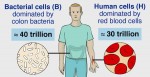
How many microbes inhabit our body on a regular basis? For the last few decades, the most commonly accepted estimate in the scientific world puts that number at around 10 times as many bacteria as human cells. In research published earlier this year in Cell, a recalculation of that number by Weizmann Institute of Science researchers reveals that the average adult has just under 40 trillion bacterial cells and about 30 trillion human ones, making the ratio much closer to 1:1.

The bacteria living in our bodies are important for our health. The makeup of each person’s microbiome plays a role in both the tendency to become obese and in each individual’s reaction to drugs. Some scientists have begun referring to it as the “second genome,” recognizing that it needs to be taken into account when treating patients.

The rising importance of the microbiome in current scientific research led the institute’s Prof. Ron Milo, Dr. Shai Fuchs and research student Ron Sender to revisit the common wisdom concerning the ratio of “personal” bacteria to human cells. Their research was undertaken as part of their work for the book Cell Biology by the Numbers, which was recently published by Milo and Prof. Rob Philips of the California Institute of Technology.

The original estimate that bacterial cells outnumber human cells in the body by 10 to one was based on, among other things, the assumption that the average bacterium is about 1,000 times smaller than the average human cell. The problem with this estimate is that human cells vary widely in size, as do bacteria. For example, fat or muscle cells are at least 100 times larger than red blood cells, and the microbes in the large intestine are about four times the size of the often-used “standard” bacterial cell volume. The Weizmann scientists weighted their computations by the numbers of the different-sized human cells, as well as those of the various microbiome cells. They also weighted their calculations for the quantities of “guest” bacteria in different organs in the body. For example, the bacteria in the large intestine dominate, in terms of overall numbers, all the other organs combined.

* * *

Feeling sick is an evolutionary adaptation, according to a hypothesis put forward by Prof. Guy Shakhar of the Weizmann Institute’s immunology department and Dr. Keren Shakhar of the psychology department of the College of Management Academic Studies, in a recent paper published in PLoS Biology.

We tend to take it for granted that infection is what causes the symptoms of illness, assuming that the microbial invasion directly impinges on our well-being. In truth, many of our body’s systems are involved in being sick: the immune system and endocrine systems, as well as our nervous system. Moreover, the behavior we associate with sickness is not limited to humans. Anyone who has a pet knows that animals act differently when they are ill. Some of the most extreme “sickness behavior” is found in such social insects as bees, which typically abandon the hive to die elsewhere when they are sick.

The symptoms that accompany illness appear to negatively affect one’s chance of survival and reproduction. Symptoms, say the scientists, are not an adaptation that works on the level of the individual. Rather, they suggest, evolution is functioning on the level of the “selfish gene.” Even though the individual organism may not survive the illness, isolating itself from its social environment will reduce the overall rate of infection in the group.

In the paper, the scientists go through a list of common symptoms, and each seems to support the hypothesis.

Appetite loss, for example, hinders the disease from spreading by communal food or water resources. Fatigue and weakness can lessen the mobility of the infected individual, reducing the radius of possible infection. The sick individual also can become depressed and lose interest in social and sexual contact, again limiting opportunities to transmit pathogens.

The scientists have proposed several ways of testing the hypothesis, but they hope its message sinks in: when you feel sick, it’s a sign you need to stay home. Millions of years of evolution are not wrong.

For more, visit wis-wander.weizmann.ac.il.


Format ImagePosted on April 15, 2016April 13, 2016Author Weizmann InstituteCategories IsraelTags bacteria, common cold, germs, illness, science
שידור הווידאו של סנודן

שידור הווידאו של סנודן

אלפים הגיעו לשמוע את שידור הווידאו של אדוארד סנודן לוונקובר (צילום: Roni Rachmani)

ליף הידוע בעולם, אדוארד סנודן, שעבד בעבר בסוכנות לביטחון לאומי של ארה”ב (האן.אס.איי), השתתף ביום שלישי שעבר בפורום על נושא “המידע גדול” שאורגן על ידי אוניברסיטת סיימון פרייזר בוונקובר. סנודן שמסתתר במוסקבה מזה כשלוש שנים, דיבר אמצעות שידור וידאו לאלפי מעריצים שמילאו עד אפס מקום את אולם תיאטרון קווין אליזבת בדאון טאון. הכרטיסים לאירוע נמכרו מראש לפני מספר חודשים בתוך שעות.

סנודן נטש את ארה”ב במאי 2013 ומשם טס להונג קונג. הוא קיווה לקבל בהונג קונג או באיסלנד מקלט מדיני מפני השלטון האמריקני שמחפש להביאו למשפט אך זה לא קרה. סנודן טס ישירות לרוסיה ושם קיבל מקלט מדיני. הוא חשף בין היתר מידע על קשרי ישראל וארה”ב, שמתאר את מערכת היחסים הקרובה בין שירותי הביטחון של שתי המדינות (בתחומי ירוט, ניתוח ודיווח) כולל העברת מידע צבאי, אזרחי ותקשורת דיפלומטית.

בדבריו בפורום התייחס סנודן לסוגיות שעומדות כיום על הפרק. בהן הדלפת המסמכים הענקית ממשרד עורכי הדין על המשקיעים ידועים מכל העולם שמחזיקים הון גדול בפנמה, החשיבות שבהדלפת חומרים מסוג כזה, על החוק נגד טרור שאושר בקדנציה האחרונה של ממשלת השמרנים בראשות סטיבן הרפר, ומה יכולים לעשות כיום אזרחים מן השורה כדי שיוכלו לשמור על פרטיותם.

לגבי פרשת פנמה טען סנודן כי שוב הוכח שאנשים עשירים בעלי השפעה מנצלים את כוחם, ופועלים לפי חוקים אחרים לעומת אזרחים מן השורה, ואף משלמים הרבה פחות מס מהם. “אנו למדים שהשחיתות אינה רק נחלתן של סין, רוסיה ואוקראינה, אלא גם של מדינות אחרות” הוא הוסיף. סנודן חזר והדגיש כי רק הדלפות כמו זו של מסמכי פנמה, המסמכים שהוא בעצמו חשף ביוני 2013 על תוכניות המעקב של האן.אס.איי, יגנו על האזרחים. הוא הדגיש כי יש לעודד ואף לתמוך במדליפים. בתשובה לשאלה שהגיע מן הקהל, הוא ענה כי לא היה לו קשר למי שהדליף את מסמכי פנמה. לגבי קנדה ציין סנודן כי כידוע למדינה יש קשרים הדוקים עם ארה”ב והן שותפות במידע עם שלוש מדינות נוספות שחברות במועדון ‘חמש העיניים’ לנושאי ביטחון וביון (בריטניה, אוסטרליה וניו זילנד). לגבי ההגנה על פרטיות האזרחים הציע סנודן כי יש לנקוט במשנה זהירות בכל הקשור לשיחות טלפון, שליחת מסרים וכדומה. הוא הציע מספר אפליקציות שחסינות ממעקב.

סנודן הוא האחראי לכך שפתאם כולם מדברים על הצפנת מסרים, נושא שנמצא בחדשות בתקופה האחרונה וכולל את כל אמצעי המדיה השונים. לפני שהחל סנודן לחשוף את מסמכי האן.אס.איי לפני כשלוש שנים, היה קשה להסביר את הצורך שבהצפנה ברוב המכשירים והיישומים. עם חשיפת מידע הריגול האדיר על האן.אס.איי והשותפות של הארגון של ידי סנודן, הופנתה ביקורת קשה מאוד אל עבר הממשל האמריקני, מצד גורמים שונים בהם חברות תקשורת רבות וממשלות באירופה. סנודן הוא זה שהביא לתודעת התקשורת והציבור הרחב את החשיבות שנושא ההצפנה.

בשידור לוונקובר אמר סנודן שהוא תומך נלהב באפליקציית המסרים של וואטסאפ (בבעלות פייסבוק שרכשה אותה לפני כשנתיים תמורת 19 מיליארד דולר). כל ההודעות שנשלחות בוואטסאפ מקבלות שידרוג אבטחה גבוה ביותר מקצה אל קצה, ממש כמו הצפנה של תכנים. לדברי סנודן זהו המערך היחידי כיום שאי אפשר לדלות את האניפורמציה שמועברת בו כולל מספרי טלפון, מסרים ותמונות. על המשתמש בוואטסאפ לבדוק שהאפליקציה שלו מעודכנת והוא משתמש בגירסה האחרונה של השירות.

Format ImagePosted on April 12, 2016April 12, 2016Author Roni RachmaniCategories עניין בחדשותTags NSA, security, Simon Fraser University, Snowden, אוניברסיטת סיימון פרייזר, ביטחון, האן.אס.איי, סנודן
Bringing our seniors home

Bringing our seniors home

The author and her youngest son, Joel, enjoy Purim at the Louis Brier Home and Hospital. Her eldest son, Benjamin, was the photographer. (all photos by Benjamin Harrington)

When the Hebrew Men’s Cultural Club met in 1945 to talk about starting a home for the elderly, their project began with 14 men, with $5 each. The first home opened in 1946 with 13 residents. Now home to more than 200 seniors, the Dr. Irving and Phyliss Snider Campus for Jewish Seniors includes the Louis Brier Home and Hospital, and the Weinberg Residence. With many new programs and services, the campus has formed powerful bonds with the surrounding community.

This spring sees the launch of a new fundraising campaign by the Louis Brier Jewish Aged Foundation, which provides financial support to the campus. To interview members of the foundation board and staff about the campaign, I made my visit to the Louis Brier Home with both of my children during their spring break. Benjamin, 8, and Joel, 5, are used to volunteering in a seniors home, and are quite comfortable coming to work with me. Without grandparents in the area, it was a blessing for us all to be able to visit the home.

photo - Music therapist Megan Goudreau provides holiday entertainment
Music therapist Megan Goudreau provides holiday entertainment.

Before even shaking any hands, the first thing we noticed was the art. There is art everywhere, and not mass-produced art but carefully curated, vibrant images, full of life, movement and different textures. According to foundation president Harry Lipetz, this is thanks to the organization’s art committee. Every piece is a donation.

We met first with Dr. Judith Globerman, interim chief executive officer of the Snider Campus. Asked to point to some of the home’s distinguishing features, she described an atmosphere that is “more personal than institutional. Our staff feels it’s their home, too, and they tend to stay with us a long time.”

Residents also have a sense of agency, so, for example, if the seniors want to suggest changes – even to the art hanging outside their room – these changes can be made quickly.

Describing her place of work, Globerman spoke about energy, love and understanding. “The energy is warm, celebrating life; people’s faces here light up, there’s always life going on around you, even if you’re not moving yourself.”

Lipetz joined the Brier Foundation for this very reason. “It is a happy place,” he said. “I saw the level of caring, from custodial staff right through to top management.”

Bernard Pinsky, chair of the current fundraising campaign, can attest to the heimish (comfortable, homey) quality of the Louis Brier Home.

“Both of my parents lived there, as well as my uncles and aunt,” he said. “For a period of 21 years, at least one of my relatives lived there. My mom was at Louis Brier for 13 years. I was there a lot and saw for myself the warmth, the quality of the care. The program director goes into residents’ rooms personally to check in, to encourage seniors to join activities. It makes such a difference to be invited personally, to keep you connected to community life.”

The Louis Brier is the only Jewish home for seniors in the province. As such, it carries a certain responsibility, said Pinsky. He speaks of the community’s pride in being able to offer a life with dignity in a warm and stimulating environment to our seniors.

“Donors’ contributions make it a Jewish home,” he said. “They allow us to offer the special things that help people to live more fulfilling lives: kosher food, a weekly minyan, festivities for every Jewish holiday.”

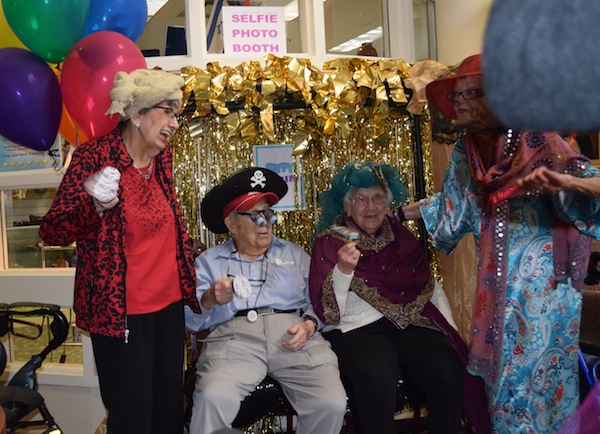
That said, nothing prepared us for our visit at Purim, where we were greeted by staff wearing rainbow tutus, feather boas, glittery glasses and spotted mouse ears. As we stood in the entrance hall among the balloons, an elderly resident wearing googly-eye glasses strolled through with some friends waving groggers. Needless to say, this was a little different from my sons’ previous experiences of seniors facilities.

photo - Residents get into the spirit of Purim
Residents get into the spirit of Purim.

When I spoke with Pinsky, he talked at length about the Louis Brier’s music therapy program. Offered by a team of professionals, it is based on research that shows how music calls on a different part of the brain than speech. Pinsky observed, “People can sing songs they knew 60 or 70 years ago, when they can’t even speak.”

He added, “We have the best seniors music therapy in the province. There’s music every single day.”

The March calendar includes weekly Shabbat music, ukelele sing-alongs and jam sessions, as well as a concert of Russian music and a piano recital. We caught a flavor of this during our visit when music therapist Megan Goudreau played her guitar and sang one of the residents’ favorite songs, “Kol Ha’olam Kulo.”

photo - Even a friendly dog joins in the festivities
Even a friendly dog joins in the festivities.

The home was a hive of activity when we visited, with youngsters volunteering, residents – and a couple of friendly dogs! – milling about. Costumed kids came by with their families and sang on both floors of the home. Nothing beats the sight of a mini race-car driver delivering a “Chag Purim!” message with a huge smile to delighted seniors.

“The three things that concern residents the most – beyond housing – are food, music and companionship. The foundation provides that. It’s beyond public funding,” said Lipetz.

The seniors “are not coming here to be housed,” he added, “they are coming here to live.”

Pinsky agreed. “It’s amazing what we’re able to do. Loneliness is one of the biggest problems for seniors, so seniors with families who live out of town can be visited by special companions.”

Louis Brier residents have access to their own rabbi, Hillel Brody, spiritual leader of the Chava and Abrasha Wosk Synagogue. Located within the home, the synagogue is funded solely by the foundation. In other words, like the music, the companions and occupational therapy, it is a gift from the community.

The new campaign is a quest to raise $1 million. Pledges are for two years, so a $5,000 donation would be given in two portions of $2,500 each.

“These funds are essential to maintain continuity in the programming,” said Pinsky. “The home needs to budget 12 months ahead, for the next fiscal year. If we fall into deficit, these life-improving programs need to be cut.”

Added Lipetz, “For many residents, this is their last home. We want to make it their best home.”

Shula Klinger is an author, illustrator and journalist living in North Vancouver.

Format ImagePosted on April 8, 2016April 6, 2016Author Shula KlingerCategories LocalTags fundraising, Globerman, Lipetz, Louis Brier, music, Pinsky, Purim, seniors, Weinberg Residence
A fresh look at Israel

A fresh look at Israel

David Decolongon participated in the first-ever mission organized by the Centre for Israel and Jewish Affairs designed exclusively for young people who originate, or whose families came from, East Asia. (photo from David Decolongon)

A Vancouver student who recently returned from Israel says he has a better understanding of the nuances of the Israeli-Palestinian conflict – and other realities of life in the region – after participating in a mission for young leaders of East Asian descent.

David Decolongon is a student at Regent College, on the University of British Columbia campus. He graduated from UBC last year in political science with a minor in philosophy, and is considering whether to pursue a full master’s degree or complete a graduate diploma in Christian studies.

He was chosen to participate in the first-ever mission organized by the Centre for Israel and Jewish

Affairs designed exclusively for young people who originate, or whose families came from, East Asia. Decolongon, who was born in Vancouver, is of Filipino heritage.

“I connected with this trip in three major ways,” he said. “Number one, religiously. I’m a practising Christian and so being able to go to a place where a lot of this history took place was big enough for me. But also, over the summer, I was involved in a startup and so being able to connect with Israel through a startup team was big with me. But also to connect with it politically was big for me because I’m involved in politics, I work and volunteer for a political party right now.”

Though he said it is a “cop-out” to say the entire trip was a highlight in itself, he does identify a number of instances that stand out when he recalls the trip, which took place in February.

“Being able to go over to Ramallah and meet the Canadian attaché to the Palestinian Authority and to be able to go up north to see the Lebanese border and to learn the history of that area and to go to a lot of those places that you hear about a lot in the news is probably the significant highlight for me in this trip,” said Decolongon.

Though he had been to Israel before, on a church-organized trip, the variety of perspectives he witnessed on this occasion, combined with the diversity of fellow participants from across Canada, opened his eyes and mind, he said.

“When it comes to thinking about a hot topic such as Israel, people tend to use a lot of political rhetoric and they tend to take very pro- and anti-, very extreme, stances. I think when you’re on the ground and you see how these things affect people on a daily basis, whether they be Jewish-Israeli, Arab-Israeli, Palestinian, it becomes more real and, once you’re on the ground, the solutions that you bring to the table tend to be a lot more common sense, a lot more feasible and a lot more geared toward achieving peace for all groups,” he said.

Being pro-Israel, he added, does not mean being anti-Palestinian.

“You can take a pro-Israeli stance while at the same time wanting to push the well-being of Palestinians. People think it’s an either-or answer but when you’re on the ground and you get to see what really happens, you’re more interested in pushing forth the betterment of life for both groups,” he said.

People everywhere have the same desires for their children, said Decolongon.

“They want to make sure that their children can grow up in safety, that their young people have jobs coming out of college and university,” he said. “We come at it recognizing that both sides have common interest and it’s going to be messy and it’s going to be complex, but I think the solutions are attainable once you realize that both sides are human and that both sides can come to the table and either side may not get 100% of what they want but we can certainly make it livable for both sides.”

Decolongon was the only British Columbian among the eight participants, though the mission was led by Sarina Rehal, an employee in CIJA’s Toronto office who is from here and who graduated from UBC. The group met with a wide range of people, including an Arab-Israeli journalist, a leader in the region’s vibrant startup sector who thinks economic opportunity is the antidote to Islamic extremism, as well as political, military and academic experts.

The newly established East Asian Student Leaders program was created by CIJA as an experiential learning initiative for students of East Asian heritage or origin who demonstrate leadership in the areas of politics, journalism or campus activism.

Nico Slobinsky, director for the Pacific region of CIJA, said it is important to engage young leaders.

“It’s an ongoing dialogue and opportunity we are forging with these young leaders as they continue to engage in their communities, with our community, with civil society in Canada, in the years ahead,” said Slobinsky. “As they progress in their leadership, in their careers, into their life, they will continue to engage and that’s why we do this.

“In the case of this mission in particular, we were looking at emerging leaders in the pan-Asian communities,” he said.

Format ImagePosted on April 8, 2016April 6, 2016Author Pat JohnsonCategories LocalTags advocacy, Centre for Israel and Jewish Affairs, CIJA, Decolongon, East Asian, Israel, mission

Our sons, daughters

What happened last month in Hebron is heartbreaking. A young soldier is being vilified for killing a terrorist who had come for the sole purpose of murdering Jews. He is now facing charges of manslaughter.

One of the most difficult things about our decision to make aliyah was knowing our four children would have to serve in the Israel Defence Forces. After all, it was our decision, not theirs, to leave the safety, security and comfort of their birthplace, Australia, to make a new life in Israel.

That was in 1971, two years before the Yom Kippur War erupted. But we stayed, and they grew up here knowing that it was a duty, even a privilege, to set aside their ambitions temporarily and devote a few years to serving their country. They became Israeli gradually and, by the time they were 18, regarded army service as a natural rite of passage.

Nevertheless, as a mother, I found it hard. I will never forget the trauma of standing on the beach at Palmachim (near Ashkelon) with the other parents and watching our younger son make his first parachute jump. Forty young paratroopers jumped that day. Because of the altitude of the planes, it was impossible to see our sons’ faces until they almost landed. We watched breathlessly to see the parachutes open, one by one. I thought each one was my son and, finally came to the realization that they were all my sons.

The years passed. Our sons and daughters enlisted, with one son fighting in Lebanon. They went to university, married, had children of their own. It was lovely to be grandparents of babies, toddlers and then young children. But now, most of them are grown up and following in their parents’ footsteps. Some have completed army service, some are currently serving and some will soon reach that significant age of 18.

We have attended numerous ceremonies where we have watched hundreds of boys take an oath of allegiance. We sang “Hatikvah” with that catch in the throat one gets at moments of high emotion. We laughed as they threw their caps in the air, signaling the end of the formal proceedings. We were so proud of them, and so afraid of what they might be called to do, what decisions they would have to make.

Just like the young soldier in Hebron.

To every parent whose children have served in the IDF, how can our hearts not go out to this young soldier’s family?

Every soldier is our son, our daughter.

Dvora Waysman is a Jerusalem-based author. She can be contacted at [email protected] or through her blog dvorawaysman.com.


Posted on April 8, 2016April 6, 2016Author Dvora WaysmanCategories IsraelTags Hebron, IDF, Israel, soldier, terrorism
Expanding outreach to Island

Expanding outreach to Island

Left to right: Members of the Legislative Assembly of British Columbia Dr. Moira Stilwell (Liberal), George Heyman (NDP) and Selina Robinson (NDP). (photo from Canadian Jewish Political Affairs Committee)

Israeli wines met Canadian cheese on March 8, when more than 100 people came together for a CJPAC (Canadian Jewish Political Affairs Committee), CIJA (Centre for Israel and Jewish Affairs) and Jewish Federation of Victoria and Vancouver Island reception in Victoria.

Attendance included four provincial government ministers – the Hon. Norm Letnick (agriculture), the Hon. Steve Thomson (forests, lands and natural resource operations), the Hon. Naomi Yamamoto (minister of state for emergency preparedness) and the Hon. Amrik Virk (technology, innovation and citizens’ services) – 28 members of the Legislative Assembly of British Columbia, 39 staffers and many community members, some of whom came to the event from Vancouver. John Horgan, leader of the Official Opposition, attended as well.

Also present were Jason Murray (chair, Local Partner Council, CIJA Pacific Region), Gabe Garfinkel (CIJA Local Partner Council member and CJPAC Fellowship alumnus), Ed Fitch (CIJA national board member), Ezra Shanken (chief executive officer of Jewish Federation of Greater Vancouver), Stephen Gaerber (JFGV board chair) and Chabad of Vancouver Island Rabbi Meir Kaplan.

While an annual wine and cheese event is held at the federal level in Ottawa, this is the first year that CJPAC and CIJA have held the joint reception in British Columbia.

“It is critical that our community get involved in the Canadian political process, and events such as these help facilitate that engagement,” said Kara Mintzberg, CJPAC’s B.C. regional director.

CJPAC’s mandate is focused on getting the Jewish and pro-Israel community involved in the democratic process. As the advocacy agent of the Jewish Federations of Canada, CIJA’s mandate is to build and nurture relationships with leaders across the country, including in government, civil society and other faith and ethnic communities, in order to advance issues of common cause for the benefit of all Canadians.

“Events like the wine and cheese in Victoria allow us to bring members of our community together with provincial officials in order to deepen the excellent relationships our community has with our elected representatives,” said Nico Slobinsky, director of CIJA Pacific Region.

Guests at the reception sampled a range of Israeli wines and many B.C.-produced cheeses.

“I was delighted that a number of members of the board of the Jewish Federation of Victoria and Vancouver Island were able to be there,” said JFVVI president Dr. Aaron Devor. “Both CIJA and CJPAC do tremendous work and it’s exciting to see them focus their outreach on communities on the Island.”

Mintzberg said that B.C. community members can expect more CIJA/CJPAC events in the future.

“Although our organizations have different mandates, we are both working toward a common goal and we think these joint events are a great way to show the community what we have to offer,” she said.

For more information about CIJA or CJPAC in the province, contact Slobinsky ([email protected] or 604-340-2437) or Mintzberg ([email protected] or 604-343-4126), respectively.

Format ImagePosted on April 8, 2016April 6, 2016Author CJPACCategories LocalTags advocacy, CIJA, CJPAC, Devor, Mintzberg, Slobinsky
An update from Aleph

An update from Aleph

Among other activities, Aleph in the Tri-Cities Israeli culture club is getting ready for Passover. (photo from facebook.com)

Looking back at 2015, Aleph in the Tri-Cities Society reports that last year’s food bank donations amounted to approximately 2,000 kilograms (more than two tons) of food items for the SHARE Family and Community Services Society and other missions around the Lower Mainland.

For Purim this year, Aleph cooked and delivered mishloach manot directly to the homeless. Community members prepared 100 trays with pasta, rice, beans, tacos and organic orange juice and distributed the food at the corner of Main and Hastings streets.

“We care. We do. Community connections” is Aleph’s slogan. The nonprofit has been helping the larger community and its neighbors since 2010. It operates as an Israeli-Canadian culture club, welcoming more than 120 young families, including many newcomers and other local Jewish families mixed with Canadian friends, all celebrating life through Israeli culture.

Aleph programs include marking the Jewish holidays and educational programs, such as Hebrew lessons, computer classes, nature walks for families, as well as providing donations to the food bank, networking and supporting each other.

The society is self-supported, relying on volunteers and donations to sustain itself. The community is preparing for Passover and will be holding a seder on April 22, 6 p.m. Anyone interested in becoming involved in the seder and other activities can do so through Aleph’s Facebook page.


Format ImagePosted on April 8, 2016April 6, 2016Author Aleph in the Tri-Cities SocietyCategories LocalTags food bank, Passover, tikkun olam, Tri-Cities
מריחואנה מייצרת הרבה כסף

מריחואנה מייצרת הרבה כסף

(צילום: Evan-Amos)

ההכנסות ממיסוי מכירת מריחואנה באופן חוקי בקנדה צפויות להגיע לכחמישה מיליארד דולר בשנה. כך מעריכים האנליסטים של בנק סי.איי.בי.סי. עד כה גם הדוחות האופטימיים ביותר לא העריכו הכנסות כה גבוהות ממיסוי הסם. ההכנסות שיועברו לקופות הממשלה הפדרלית ולממשלות המחוזות השונים שוות לכרבע אחוז מהתוצר הגולמי של קנדה.

הממשלה הליברלית בראשות ראש הממשלה, ג’סטין טרודו, הכריזה עם בחירתה לפני כארבעה חודשים, כי בתוך שנה היא תאשר את לגיליזציית הקנאביס. מפקד משטרת טורונטו לשעבר שנבחר לחבר פרלמנט מטעם הליברלים, ביל בלייר, הוא זה שאחראי על בניית המודל הרגולטורי להסדרת חוקיות ובקרת השימוש בסם. בפני בלייר ניצב אתר לא פשוט והוא מתכוון לעמוד בו, ולסיים את עבודתו כמה שיותר מהר.

טרודו הצהיר בצורה חד שמשמעית כי לגיליזציית המריחואנה לא נובעת מהרצון להגדיל את הכנסות המדינה, וכי כל הכספים יוקצו לטיפול במכורים ולאלה שיש להם בעיות נפשיות.

יצויין כי מאז הכרזת ממשלת טרודו כי עישון המריחאונה יהפוך להליך חוקי במדינה, עלו מניות החברות שעוסקות בגידול הקנאביס בצורה ניכרת.

סקס אנד דה סי: הרצאות באקווריום של ונקובר על חיי המין של בעלי החיים בים

הנהלת האקווריום שנמצא בסנטלי פארק של ונקובר חיפשה גימיק תקשורתי שימשוך מבקרים רבים יותר לאתר. היא מצאה כי הרצאות על חיי המין של בעלי החיים הימיים יעשו את המלאכה על הצד הטוב ביותר. ואכן ביקוש גבוה נרשם להרצאות היוצאות דופן שמתקיימנה בשעות הערב (בין שש לעשר). ההרצאות מטבע הדברים מיועדות למבוגרים בלבד.

ההרצאות מתקיימות באקווריום בזמן שהוא סגור לקהל הרחב. עלות הכניסה ליחיד עשרים ותשעה דולר. המוזמנים להרצאות יכולים לרכוש משקאות אלכוהוליים ולשבת בניחותה על הכיסאות שנמצאים סביב האקווריום הגדול, ולצפות להנהתם בבעלי החיים הימיים עושים אהבה לילית. בין בעלי החיים הנצפים: דגים מסוגים שונים כולל כרישים, צפרדעים וסוסוני ים. ההרצאות כוללות גם דברי הסבר מצד המדריכים של האקווריום בצרוף מצגת ווידאו מעניינת. דוברת האקווריום מציינת כי ההרצאות דומות בעצם או מזכירות את ערוץ הדיסקברי בפעולה.

יצויין כי האקווריום של ונקובר נחשב לאחד האקווריומים הגדולים והחשובים בעולם. גרים בו כיום כשבעים אלף בעלי חיים ימיים.

יוגה לארנבים: שיעורי ספורט להגברת המודעות על מצבם הקשה של בעלי החיים

“נא לשכב בבקשה על הגב. יש להניח את רגל שמאל על המזרון ואת רגל ימין ישרה קרובה לחזה. לא לשכוח שיש לשמור על כתפיים שיהיו צמודות למזרון כל הזמן. הזהרו שלא לפגוע בטעות בארנבים ששוכבים לידכם על המזרנים”. אלה פחות או יותר הוראות של מדריכי היוגה בקורס חדש שנקרא “יוגה ארנבים”. הקורס היוצא דופן בניהול עמותה שלא למטרות רווח, מיועד להגברת המודעות לאור מצבם הקשה של הארנבים במחוז בריטיש קולומביה שמספרם הולך וגדל, ויש לצורך במציאת בית חם עבורם.

ההשתתפות בשיעורי היוגה עם הארנבים עולה עשרים דולר. כל הכיתות לשיעורי הספורט עם הארנבים מלאות ורשימת הממתינים לשיעורים נוספים ארוכה מאוד. כעשרה ארנבים מסתובבים חופשי בסטודיו לספורט בכל שיעור, בו משתתפים בין עשרים לעשרים ושבעה מתרגלים. הארנבים שוכבים על המזרנים ואוכלים בנננות וירקות. בעמותה מדווחים על כך שחלק מהמשתתפים בקורס החליטו כבר לאמץ ארנבים שנחשבים לבעלי חיים שקטים וחמודים.

בעוד בקנדה מנסים לעזור לארנבים מתברר שבישראל יש חנויות שעדיין מוכרות פרוות שעשויות מעורם של ארנבים.

Format ImagePosted on April 5, 2016April 5, 2016Author Roni RachmaniCategories עניין בחדשותTags marijuana, rabbits, sex life, taxes, Trudeau, Vancouver Aquarium, yoga, אקווריום של ונקובר, ארנבים, חיי המין, טרודו, יוגה, מיסוי, מריחואנה

Posts pagination

Previous page Page 1 … Page 258 Page 259 Page 260 … Page 322 Next page
Proudly powered by WordPress