Skip to content
  • Home
  • Subscribe / donate
  • Events calendar
  • News
    • Local
    • National
    • Israel
    • World
    • עניין בחדשות
      A roundup of news in Canada and further afield, in Hebrew.
  • Opinion
    • From the JI
    • Op-Ed
  • Arts & Culture
    • Performing Arts
    • Music
    • Books
    • Visual Arts
    • TV & Film
  • Life
    • Celebrating the Holidays
    • Travel
    • The Daily Snooze
      Cartoons by Jacob Samuel
    • Mystery Photo
      Help the JI and JMABC fill in the gaps in our archives.
  • Community Links
    • Organizations, Etc.
    • Other News Sources & Blogs
    • Business Directory
  • FAQ
  • JI Chai Celebration
  • JI@88! video

Recent Posts

  • Story of Israel’s north
  • Sheltering in train stations
  • Teach critical thinking
  • Learning to bridge divides
  • Supporting Iranian community
  • Art dismantles systems
  • Beth Tikvah celebrates 50th
  • What is Jewish music?
  • Celebrate joy of music
  • Women share experiences 
  • Raising funds for Survivors
  • Call for digital literacy
  • The hidden hand of hate
  • Tarot as spiritual ritual
  • Students create fancy meal
  • Encouraging young voices
  • Rose’s Angels delivers
  • Living life to its fullest
  • Drawing on his roots
  • Panama City welcoming
  • Pesach cleaning
  • On the wings of griffon vultures
  • Vast recipe & story collection
  • A word, please …
  • מארק קרני לא ממתין לטראמפ
  • On war and antisemitism
  • Jews shine in Canucks colours
  • Moment of opportunity
  • Shooting response
  • BC budget fails seniors
  • Ritual is what makes life holy
  • Dogs help war veterans live again
  • Remain vital and outspoken
  • An urgent play to see
  • Pop-up exhibit popular
  • An invite to join JWest

Archives

Follow @JewishIndie
image - The CJN - Visit Us Banner - 300x600 - 101625

Category: News

Iran dominates AIPAC talks

Iran dominates AIPAC talks

Republican presidential hopeful Donald Trump upset AIPAC organizers when he criticized President Barack Obama. (photo by David Zam)

There were clear signs of discord in Washington, D.C., as representatives of AIPAC publicly rebuked presidential hopeful Donald Trump after he harshly criticized the sitting president.

At the pro-Israel organization’s policy conference last month, in front of some 18,000 attendees, visibly upset AIPAC president Lillian Pinkus admonished Trump on stage for his remarks a day earlier.

“Whatever policy disagreements we may have, we must not condemn the sitting president on stage,” she said. “There are people in our AIPAC family who were deeply hurt last night and, for that, we are deeply sorry.”

Chairman of the board Robert A. Cohen said that booing and clapping speakers when they attack another person was unacceptable at the event, and that “AIPAC doesn’t pick sides.”

Trump, who was cheered wildly for noting that it was President Barack Obama’s last year in office, said that “Obama rewards our enemies” and “Hillary was a total disaster as secretary of state…. Obama and Hillary have been very bad to Israel. Obama may be the worst thing to happen to Israel.”

Every major party candidate for president spoke at the dais, except the senator from Vermont, Democrat Bernie Sanders, who is Jewish. All candidates who spoke placed heavy emphasis on Iran.

GOP frontrunner Trump didn’t mince words. He called the Iran deal brokered by the P5+1 – the United States, China, Russia, France and the United Kingdom plus Germany – “awful” and “bad for Israel, the Middle East and the world.”

The $150 billion channeled to Iran in the agreement, by his reckoning, was “unbelievable” with “nothing in return,” and that the Islamic Republic will have a nuclear bomb within several years.

As president, Trump said he would “stand up to Iran’s aggression” because “I know how to deal with aggression and that’s why I’ll win.”

The Middle East’s terror activity has Iran’s fingerprints all over it, he continued, including Hezbollah in Lebanon, Hamas in Gaza, reward money for Palestinian terrorists, and influence in at least two dozen other countries.

“I will dismantle Iran’s global terror network,” Trump said. “We will enforce this deal like you’ve never seen a contract enforced before.”

The New York billionaire mogul and reality TV host took aim at two other threats to Israel, the United Nations and Palestinian terror activity.

“The UN is incompetent and no friend of Israel,” he said. “A [peace] agreement imposed by the UN would be a total disaster. And the U.S. must use our veto, which I will use 100%.”

The Jewish state, he said, has always been willing to strike a deal with its neighbors, noting that prime minister Ehud Barak in 2000 offered nearly the entire West Bank as a Palestinian state, but the offer was dismissed by then-PLO leader Yasser Arafat. Other times, he said, “Palestinian leadership has rejected very good offers.”

Trump noted that, under his purview, the U.S. embassy would move “to the eternal capital of the Jewish state, Jerusalem.”

Texas Senator Ted Cruz, trailing a distant second to Trump in GOP delegates, began his speech, “America will stand with Israel and defeat Islamic terror.”

He spoke about his three trips to Israel as senator, including a visit to Israeli hospitals that treated Syrian refugees. He noted that he had proposed legislation to ban the Iranian ambassador to the UN from entering the United States since he was involved in the 1979 Iranian hostage crisis. It passed in both the Senate and House.

Taking a jab at the Obama administration, he said it was “unjust” for them to impose a travel ban on Israel in the summer of 2014. He further called out Democrats for boycotting Israeli Prime Minister Binyamin Netanyahu’s speech last year at AIPAC.

photo - At AIPAC, Democrat frontrunner Hillary Clinton advised a three-pronged approach to global security, focusing on Iran, extremism and the attempts to delegitimize Israel
At AIPAC, Democrat frontrunner Hillary Clinton advised a three-pronged approach to global security, focusing on Iran, extremism and the attempts to delegitimize Israel. (photo by David Zam)

Hillary Clinton, the Democratic presidential frontrunner, was taken to task for saying that Hamas fires rockets from civilian areas because Gaza is tight for space. “Rather,” said Cruz, “it’s because Hamas are beasts who use human shields.”

As for the “fundamentally immoral” Iran deal, Cruz said he will “rip it to shreds on the first day,” since the Islamic Republic won’t follow it anyway.

“Hear my words Ayatollah Khomeini: If I am president and Iran launches a missile test, we will shoot that missile down,” said Cruz. “And, in January 2017, we will have a commander-in-chief who says under no circumstances will Iran be allowed to acquire nuclear weapons: either you will shut down your nuclear program or we will shut it down for you.”

Cruz compared the Iran deal to the failed 1938 agreement between British prime minister Neville Chamberlain and Adolf Hitler, which led to the Third Reich’s takeover of Czechoslovakia and allowed its continued military build-up.

If elected president, Cruz said he would move the U.S. embassy from Tel Aviv to Jerusalem, yank federal funds from schools that boycott Israel and veto any UN unilateral declaration of a Palestinian state.

Governor of Ohio John Kasich, running third in the GOP delegate count, noted his 35-year support for Israel and his role in helping erect a Holocaust monument in his state.

He called for the suspension of the Iranian nuclear deal, particularly after recent test missiles in contravention of international treaties. As president, he would “defeat ISIS and stop arms flows to Hezbollah.”

He also spoke out against the boycott, divestment and sanction movement, and antisemitism on campus. On Israel, he noted the “culture of death that the Palestinian leadership has promoted for decades,” and that “Palestinians cannot continue to promote hatred.” In sum, he called Jerusalem the eternal capital of Israel.

When she took to the stage, Clinton noted that the “the ideological gap between the parties has increased, but there’s still common agreement on Israel.”

She took a three-pronged approach to global security: Iran’s aggression, the growing tide of extremism, and efforts to delegitimize Israel. “The deal with Iran is making the world safer, including Israel,” she said. “The supreme leader still calls all the shots in Iran, but we should support voices who want to bring change in Iran.”

Regarding other parts of the region, she said that “ISIS must not be contained; it must be defeated.”

On the issue of Israel, she noted that Palestinian leadership has to stop inciting violence. “Children should not be taught to hate in schools,” she said, adding that she would oppose any attempts to “push a [unilateral two-state] solution,” including in the UN. “Palestinians should be able to govern themselves in their state,” she said, while adding that Israeli “settlements are not helpful to peace.”

She condemned BDS and said, “we have to fight against it” because “antisemitism has no place in American society.”

Meanwhile, U.S. Vice-President Joe Biden took a risk mentioning to the 18,000 attendees at the policy conference that Israeli “settlements are a barrier in the way of a two-state solution.” That risk was welcomed by a chorus of boos – despite attendees being cautioned by AIPAC leadership to not do so.

Biden insisted that, notwithstanding political differences, the United States is “united in our unwavering commitment to the Jewish state of Israel.”

However, “violent acts of retribution must stop,” he continued, “terror is terror is terror … and it must be stopped.”

The White House “stands with Israel against delegitimization” and believes that “Israel is stronger today because of the Obama-Biden administration,” he said.

Biden touted last year’s Iran deal as a “success,” explaining that many “Iranian facilities are dismantled and destroyed” and that “Iran is further away from the possibility of being nuclear. If Iran violates [the deal] there will be consequences.”

Speaking by video link from Israel, Netanyahu both criticized, and suggested salvaging, the U.S.-brokered Iranian nuclear deal.

“Those who worked for the deal and against the deal can work together to ensure that the deal is followed,” he insisted, noting that, in March, Iran tested a missile that posed a threat to Israel.

“The writing isn’t just on the wall; it’s on the missile,” said Netanyahu.

He said that Israel is singled out for condemnation at the UN and said he hopes the United States will continue its moral voting record at the Security Council.

With regard to Israel’s neighbors, he said Palestinian children are taught to hate, and showed a video of television broadcasts that illustrate his point.

“We cannot compromise with terror and must defeat it,” he said. “We need a two-state solution with a demilitarized Palestinian state.… We are ready for negotiations anywhere and anytime without preconditions.” But, he said, Mahmoud Abbas, the leader of the Palestinian Authority, “isn’t ready or willing to come” to the negotiating table.

David Zam has covered political, cultural and historical events for Landmark Report, including the 50th anniversary of the Selma to Montgomery voting rights march as White House-approved press, two AIPAC policy conferences and several other political conventions. He has degrees in history and law.

Format ImagePosted on April 1, 2016March 31, 2016Author David ZamCategories WorldTags AIPAC, Donald Trump, Hillary Clinton, Iran, Israel, Netanyahu
More work left to do

More work left to do

Call It Democracy speakers, from left to right, Mira Oreck, Margot Young and Sharon Abraham-Weiss. (photo by Zach Sagorin)

“From the Holocaust, there is a lesson we can all agree about: ‘Never again.’ There are two paths: never again to us or never again to anybody,” said Sharon Abraham-Weiss, executive director of the Association for Civil Rights in Israel.

Abraham-Weiss was speaking at the event Call it Democracy, held at Temple Sholom on March 14. She was joined by Mira Oreck, director of public engagement at the Broadbent Institute, and Margot Young, a University of British Columbia law professor, who served as facilitator.

About Israel, Abraham-Weiss said, “The Declaration of Independence from 1948 is the establishment for this democracy, promising equality for all its citizens. When I’m saying citizens, 20% of the citizens of Israel are Palestinian-Israelis, Arab-Israelis, people that were in Israel in 1948. Speaking about the occupied territories, it’s a different story.”

She said, in contrast to Canada, Israel “does not have a constitution … so, our toolkit, as lawyers, [is] the Basic Laws that we consider higher laws.” Additionally, she said, “We don’t have any separation between state and religion and this is something very important to understand.” For example, “the only way to get married … is in the Orthodox rabbinical system for Jews or other religious systems for non-Jews.”

Moreover, she continued, “In 1967, we occupied areas known today as ‘the occupied territories,’ Judea and Samaria, Palestine, you can name it. There are about two million people there, Palestinians. When I speak about democracy, it does not apply to the occupied territories. It’s different [there] because these people do not have the status of citizens, they are refugees.”

Oreck thanked the Coast Salish peoples, “whose territory we are gathered on tonight,” when she began her remarks. “I think it’s a relevant acknowledgement to the conversation around civil liberties, civil rights and human rights.”

Oreck described the notion of civil liberties as a political one. “These are political decisions that are made from country to country and we often think of civil liberties in a fairly narrow sense. What are the personal guarantees and freedoms that the government cannot infringe on by law?” she asked, listing freedom of conscience, religion, press, the right to security. “We don’t necessarily think about poverty and housing and other rights that we may think of more generally as human rights that don’t fall into our more narrow definition of civil liberties,” she said.

Young shifted the conversation to the balance between security and liberty.

“Can security reasons be justified by everything we are doing? Abraham-Weiss asked. “The answer from my perspective is no, not at all, it has to be balanced. Can we completely dismiss the idea of security reasons? And the answer is no.” She spoke about profiling at airports as an example. “It’s hard, for on one hand, we don’t want any terror attacks; on the other hand, 20% of our population belongs to the Arab minority. Can we generalize … that they are all suspects?” She said, “How do you bring your citizens to be part of the society when you always blame them? How do you bring your citizens to be part of the society when their schools, per capita, are less than the schools I am going to in west Jerusalem and other places?

“In 2010, the government of Israel joined the [Organization for Economic Cooperation and Development] and the OECD said that, if you want to be a member of the developed countries, you must show us better numbers of Arabs in the job market and better participation of ultra-Orthodox in the job market. [With] this incentive, we showed better numbers … and this, in a way, is balancing the security risks.”

In the Canadian context, Oreck referred to the passing of anti-terrorism Bill C-51, noting that the NDP was the only party that voted against it. “There are real conversations around how we address very real security threats and what the tension is,” she said. “But, also, what are we willing to trade away?… Frankly, who would be in violation of that security based on C-51?… Would people that are protesting pipelines, for example, be a threat to national security? And, if so, who are those people? Who is being threatened? Who is being protected?”

Another prominent Canadian security discussion has been about the Syrian refugees, said Oreck. “When the new government talked about bringing in Syrian refugees, well, what is the threat?… There are still many questions around what the screening process was, should men be able to come in, or should families be prioritized?”

In Canada, there is the Charter of Rights and Freedoms, Young noted in changing the topic from security to equality. “We do have a lot of these questions being decided by our Supreme Court of Canada in an authoritative way,” she said.

In Israel, explained Abraham-Weiss, “Our main tool is the Basic Law of Human Dignity [and Liberty] and, when we take things to the Supreme Court … although it is about freedoms, the word that is not [there] is the word equality and the reason equality is not there, it is because … the Orthodox were against the word equality because of women’s rights.”

She explained how equality was written “into dignity” in the 1990s. “Humiliation and discrimination harms your dignity and that is how it was justified. It is a very famous case,” she said, referring to that of Alice Miller, who wanted to be a pilot in the Israel Defence Forces. “She was rejected because she was a woman. Now, the interesting story about her … is that she was a pilot already, she just made aliyah. She moved from South Africa and she was holding a civil pilot license and they told her she can’t be a pilot, and she said, I am.” Miller became Israel’s first female pilot.

In Canada, said Oreck, “we are probably also dealing with an outdated version of gender and needing to really reevaluate the way that we look at gender rights, what does that mean.” She pointed to some advances, commending “the work the Vancouver School Board has done around gender-neutral bathrooms.” She said, “What is once at the margins, eventually, becomes mainstream.”

“Our job as a human rights organization is to find out what is … marginalized, outlined, and bring it to the heart of the consensus,” agreed Abraham-Weiss. “I think especially as minorities, it’s important to be consistent and put question marks on things that can be taken for granted.”

Abraham-Weiss used the example of administrative detention. She said it “was used, traditionally, against Palestinians and, whenever we brought it up, they would say [for] security reasons. Now, recently, it is used against right-wing settlers, Israeli-Jewish settlers. Now we are consistent about it … we are consistent about the procedure and part of the reason we have success is that we are not partisan … we work in the parliament of Israel with various members of the political spectrum. So, on children’s rights, our best ally is from [Avigdor] Lieberman’s party, which is right-wing. On International Human Rights Day, we held a conference in the Knesset held by … two members of the Knesset, one was from the joint Arab-Jewish party … and the other was Likud.”

Abraham-Weiss said, “In terms of human rights, within Judaism, we are more tolerant, [but] we are still not doing good enough, with Ethiopian Jews for example.… It takes time, but I think we are moving to it.”

Young asked Abraham-Weiss and Oreck to discuss the “elephants in each of the country’s rooms, really, really tough issues that that people dance around on, but don’t always talk about.”

Abraham-Weiss said, “The elephant in the room is the Palestinian-Israeli conflict, so, while we have tolerance and multiculturalism within Judaism, we are less tolerant to multiculturalism with the Palestinian-Israelis and their culture and I have to admit … the last couple of years, we have been dealing with what we call the shrinking democratic space in Israel due to the conflict.”

During Protective Edge, the 2014 Israel-Gaza conflict, Abraham-Weiss said, “We saw that there were voices against the war and, the voices, people were calling to marginalize them. So, they were opening Facebook pages calling to fire these people from their workplaces. Now, these are private places.… Look at the government. There were ministers saying: ‘Hey, don’t let anyone do demonstrations against the war, it is not a good time for demonstrations.’ When is a good time if this is the idea? Now that bothers me in a democratic country. In a pluralism of ideas, we have many voices. If you do have only one voice, you don’t call it a democracy anymore.… [Recently], there was an idea, a draft bill, to impeach the elected minority. So, the elected majority, the Jews, can impeach the elected minority, the Arabs?… I think this is a problem in a democracy.”

Oreck said, “Canada views itself and prides itself on being a multicultural country and yet … multiculturalism is, of course, from the ’70s … was about immigrants and was about new Canadians and it never dealt with First Peoples of this country and it never addressed the historical inequalities that we are dealing with now through reconciliation…. I think that, as a Jew anyway, that makes a challenge in some ways.

“For many of us,” she said, “Canada was a refuge and our families came here for safety and security and yet, at that exact time, of course, kids were being taken from their homes and sent to residential schools. So, how do you reconcile, how do you pride yourself on multiculturalism when, for many people that time was a very dark history.… We are still really addressing those challenges. I would argue that not having clean water on reserves is a failing of multiculturalism and I would argue that the Cindy Blackstock case on the underfunding of First Nations education is a failing of multiculturalism.… There is clearly still enormous work to do.”

Similarly, Abraham-Weiss said, “I can criticize Israel because I care about Israel. I want a better Israel and I think we all deserve a better Israel.”

Call it Democracy was co-sponsored by the New Israel Fund of Canada and Temple Sholom with Beth Tikvah Congregation, Ameinu, Hillel BC Society and Or Shalom. NIFC president Joan Garson concluded the event.

Zach Sagorin is a Vancouver freelance writer.

Format ImagePosted on April 1, 2016March 31, 2016Author Zach SagorinCategories LocalTags Abraham-Weiss, Canada, civil rights, democracy, Israel, Margot Young, Mira Oreck

Fifth in Korczak series

The fifth lecture in the Janusz Korczak series “How to Love a Child” was titled Janusz Korczak’s Enduring Legacy: Social Pediatrics in Canada and Vancouver, and it was most enlightening.

The subject was building and nurturing a network of support around the child – the “Circle of the Child” discussed by pediatrician Dr. Gilles Julien, one of the keynote speakers on Feb. 18.

Julien is the president and founder of the Fondation du Dr. Julien, and he is affiliated with McGill University and the Université de Montreal. He has made it his mission to help children from disadvantaged backgrounds develop harmoniously and reach their potential. And he has created a preventive approach – community social pediatrics – to try and guarantee that each of a child’s fundamental rights as set forth in the Convention on the Rights of the Child will be respected. Over the years, he has mobilized people from Montreal’s lower-income neighborhoods by founding two social pediatric centres, one in Hochelaga-Maisonnueve and one in Cote-des-Neiges. The model of social pediatrics that he initiated has helped shape programs across Canada.

In Julien’s own words: “Janusz Korczak’s spirit remains with us in working to build strong children. He was, and still is, a powerful inspiration for all of us who strive to prevent children from being left hanging in limbo, and obtaining [for them] the services and accompaniment to enable them to fulfil their developmental needs and preserve their rights in accordance with the United Nations Conventions of the Rights of the Child.”

The second keynote speaker on Feb. 18 was Dr. Christine Loock, a developmental pediatrician at Children’s and Women’s Health Centre of British Columbia, including Sunny Hill Health Centre for Children and B.C. Children’s Hospital, where she is medical director of the cleft palate and craniofacial disorders program and specialist lead for the social pediatrics RICHER (Responsive Intersectoral Children’s Health, Education and Research) initiative. She is an associate professor in the department of pediatrics at the University of British Columbia faculty of medicine and a recipient of the 2012 Queen’s Diamond Jubilee Medal for community service awarded by the Governor General of Canada.

Early in her medical training at Harvard University and the University of Washington, Loock developed an interest in social pediatrics. Her early clinical and research work focused on children and youth with congenital conditions and developmental disorders, including fetal alcohol spectrum disorders and birth defects prevention. Over the past decade, she has been engaged in collaborative interdisciplinary research and practice to develop the RICHER health service delivery models for socially vulnerable children and families in Canada. The child- and family-centred model takes into consideration a family’s particular needs and circumstances when determining the provision of care, linking services to specialized care, if needed, and community-based support networks.

Ardith (Walpetko We’dalks) Walkem rounded out the panel of speakers. A member of the Nlaka’pamux nation, which stretches from the B.C. Interior into Washington state, she has a master of laws from UBC, with a research focus on indigenous laws and oral traditions. Walkem has practised extensively with different indigenous communities, assisting them to assert their aboriginal title and rights and treaty rights, with a focus on helping them articulate their own laws and legal systems. She has worked as parents’ counsel on Child Family and Community Service Act cases, and as counsel for indigenous nations in matters involving their child members. She has also helped design systems based on indigenous laws for children and families.

Moderating the evening’s program was Dr. Curren Warf, a clinical professor of pediatrics and head of the division of adolescent health and medicine of the department of pediatrics at B.C. Children’s Hospital and the UBC faculty of medicine. He has a longstanding involvement in the care of adolescents and working collaboratively with community agencies.

Finally, I spoke briefly about Korczak, how he reached out far beyond the core of his specialization as a pediatrician to care for needy children and how he filled many varied roles necessary to the well-being of children.

The final lecture in the series – How to Love a Child: Turning Rights into Action – will be held on April 6, 6:15 p.m., at the Robert E Lee Alumni Centre at UBC. There will be a wine and cheese reception, exhibits and speakers. For more information and to register, visit jklectures.educ.ubc.ca.

Lillian Boraks-Nemetz is a Vancouver-based author and a board member of the Janusz Korczak Association of Canada.

Posted on April 1, 2016March 31, 2016Author Lillian Boraks-NemetzCategories LocalTags Gilles Julien, JKAC, Korczak, Loock, pediatrics, Walkem
עדיין נחשב לידיד קרוב של ישראל

עדיין נחשב לידיד קרוב של ישראל

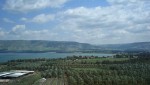
תצפית אל דרום הכנרת מהכביש היורד מיבניאל. (צילום: אלה פאוסט)

ג’סטין טרודו: מברך את העם היהודי לחג הפורים, מתקומם על החרם נגד ישראל, אך מתנגד להתנחלויות בשטחים

ראש ממשלת קנדה מטעם המפלגה הליברלית, ג’סטין טרודו, מביע לאחרונה את דעתו בפומבי בנושאים שקשורים ליהודים ולישראל. שלא כמו קודמו בתפקיד, סטיבן הרפר, טרודו לא עומד אוטומטית מאוחרי ישראל בכל עניין ועניין והוא אינו חבר של ראש ממשלת ישראל, בנימין נתניהו, אבל עדיין נחשב לידיד קרוב של ישראל.

טרודו פרסם בשבוע שעבר אגרת ברכה לאזרחים היהודים בקנדה לקראת חג הפורים. בברכה נאמר: “חג הפורים מציין את סיפורה של אסתר המלכה והדוד שלה מרדכי, אשר הצילו את העם היהודי בתקופת פרס העתיקה. אירוע זה מזכיר לנו שוב את כוחו ועוצמתו של העם היהודי, אשר שרד וגבר על הרדיפה הבלתי הנתפסת הזו. בזמן שאנו קוראים את מגילת אסתר אנו מאשרים מחדש את המחויבות הקיימת שלנו לנקוט פעולה ולעמוד נגד האנטישמיות, נגד ביטויים אחרים של שנאה ואפליה בקנדה ומחוצה לה”.

רק לפני כחודש חזר טרודו על הבטחתו מקמפיין הבחירות שלו להתנגד לכל חרם על ישראל. טרודו ומרבית חברי המפלגה הליברלית שבראשותו תמכו ב-22 בפרואר בהצעת המפלגה הקונסרבטיבית מהאופוזיציה, לגנות את כל מי שמחרים את ישראל. הפרלמנט הקנדי אישר את ההחלטה הזו ברוב גדול של 229 מול 51 מתנגדים. לפי הצעת הקונסרבטיבים על הממשלה הקנדית לגנות כל ניסיון לקדם את תנועת החרם והסנקציות נגד ישראל בקנדה ומחוצה לה. עוד נאמר בהחלטה כי תנועת החרם הבינלאומית של ‘הבי.די.אס’ פועלת לעשות דה-לגיטימציה ודמוניזציה של מדינת ישראל. שר החוץ הקנדי, סטפן דיון, אמר מספר ימים קודם לכן בצורה ברורה כי העולם לא ירוויח דבר מהחרמת ישראל ויש להילחם באינטישמיות על כל צורותיה השונות.

לעומת כל זאת טרודו לא מהסס להעביר ביקורת פומבית של מדיניותה של ישראל בשטחים. הוא אמר לאחרונה כי ישראל עושה דברים מזיקים כמו למשל ההתנחלויות הבלתי חוקיות. טרודו: “יש זמנים שאנחנו לא מסכימים עם בעלי הברית שלנו, ואנחנו לא נהסס לומרת זאת בקול רם. זהו עניין שחברים צריכים לדעת לעשות. כמו למשל ההתנחלויות שהן בלתי חוקיות”. שר החוץ דיון אמר באותו נושא קודם לכן את הדברים הבאים: “ההתנחלויות פוגעות ביכולת להגיע לפתרון צודק באזור”.

בנושא טרודו והרפר כתב ניצן הורביץ בעיתון ‘הארץ’ בין היתר: “ראש הממשלה החדש הוא איש פתוח, מתקדם ובעל חוש הומור. תשע השנים הרפר היו די והותר לקנדים. הם הבינו שהמדיניות התקציבית המרסנת שלו וההסתמכות העיוורת על חברות אנרגיה הביאו אותם אל עברי פי פחת. לעומת זאת טרודו נמצא בצד הנכון של ההיסטוריה. הוא כבר הציג ממשלה שווה של נשים וגברים”.

האם פיצה גנובה טעימה יותר: שישה שליחי פיצה נשדדו בססקטון לאחרונה

שישה נהגים שמובילים פיצות בריכבם נשדדו החל מסוף פברואר ובמהלך מרץ בעיר ססקטון. באחד מסופי השבוע נשדדו ארבעה שליחים ולאחר מכן נשדדו עוד שניים. המשטרה המקומית מאמינה שיש קשר בין כל ששת המקרים בהם משתתפים שני שודדים. המשטרה קוראת לנהגים להגביר את הזהירות ואמצעי האבטחה. עדיין לא ידועה זהות השודדים שכנראה גם מכורים למגשי פיצות חמות וטריות.

השודדים כנראה ממוצא אינדיאני (בגילאי 18-20) לבושים בשחור ופניהם מכוסות במסכות, פועלים בשעות הבוקר המוקדמות וחמושים בשלל של כלים מאיימים: צמידים מברזל, מפתח צינורות, מוטות מברזל וסכינים. צמד השודדים מאיים על הנהגים המופתעים וגונב את הכסף שבידם עם חלק מהפיצות שברכבם.

Format ImagePosted on March 30, 2016March 30, 2016Author Roni RachmaniCategories עניין בחדשותTags antisemitism, BDS, boycott, Israel, Netanyahu, pizza, Purim, robbers, Saskatoon, settlements, Trudeau, אינטישמיות, התנחלויות, חרם, טרודו, ישראל, נתניהו, ססקטון, פורים, פיצה, שודדים

Barnett fêted at Negev

Shirley Barnett, a longtime community activist and philanthropist, is to be honored by the Jewish National Fund at its annual Negev Dinner April 10.

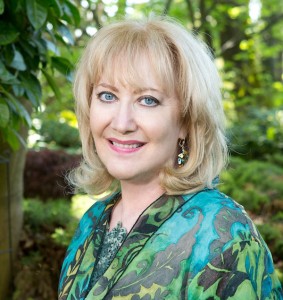
photo - Shirley Barnett
Shirley Barnett (photo from JNF Pacific Region)

“The Jewish National Fund is a strong organization that is entering a new stage of many joint ventures and many new directions and worthy of support,” said Barnett, who selected as the recipient project of the event a shelter for women and children fleeing domestic violence.

Jewish National Fund, Pacific Region, is collaborating with No to Violence Against Women, which was established in 1978 by Israel Prize laureate Ruth Rasnic, who is scheduled to be in Vancouver for the event.

The goal is to raise $1.5 million for the project, which will shelter 10 to 12 families at a time and provide victims of domestic violence with a safe environment from which they can start over. Staff and volunteers of the organization work with families to access therapy, secure income and new housing.

As many as 65% to 70% of women and children fleeing domestic abuse in Israel cannot access shelters due to lack of availability. Moreover, the shelters run by No to Violence Against Women are the only ones open to people of all religions and denominations, said Barnett.

The shelter, in Rishon Le Zion near Tel Aviv, will be named the Vancouver Shelter.

The cause is in line with Barnett’s lifetime work.

“I was involved in the women’s movement going way back to the ’60s,” she told the Independent. “I was on the board of directors of the Vancouver Status of Women in the ‘60s. I’ve always been aware of the lack of empowerment in women and the lack of women seeing their potential to be strong. And, when you’re abused, you need to develop the strength to be more resilient.”

Barnett said she knew she wanted to be a social worker from age 12. While at the University of British Columbia, she had the opportunity to work as a women’s matron at Oakalla prison in Burnaby.

“I was always interested in institutional work, I don’t know why,” she said. “I worked there for about half a year and then I did my fieldwork in juvenile probation.” She worked in other prison settings, as well as with people with addictions.

“More recently, I was on the board of the Odd Squad Society,” she said. “It’s a group of police officers who do gang prevention work in their off-hours.”

She also helped found Food Runners, now part of the Vancouver Food Bank. It is a program in which a refrigerated truck picks up surplus food from hotels and restaurants and delivers it to organizations that feed people.

After graduating with a bachelor of social work degree, Barnett worked for a federal agency setting up affirmative action projects for women and resettlement projects for Ugandan refugees.

As a volunteer, she served on the board of directors of the Jewish Family Service Agency for 12 years, including four as president. She also spent two years as the agency’s acting executive director. During that time, she founded the Hebrew Free Loan Association, which now holds more than $1 million in assets and has provided thousands of loans to people in need.

Barnett has also co-chaired campaigns for the Jewish Community Centre of Greater Vancouver (JCCGV) and the Jewish Museum and Archives of British Columbia (JMABC). She was the first president of Shalva, a facility in Israel for special needs children. She established a garden in Fir Square at B.C. Women’s Hospital and a unit for addicted mothers and their infants, a peer-to-peer coaching program at the UBC Counseling Centre, a pilot project at Vancouver Hospital for early intervention for depression in women, and led the restoration of the old Jewish Cemetery at Mountain View. She has advised the Aboriginal Mother Centre and currently serves on the faculty of arts advisory committee to the dean of arts at UBC, on the board of directors of the JMABC and on the Schara Tzedeck Cemetery board, and she is an honorary director of the Hebrew Free Loan Association.

With her brother, Philip Dayson, she administers the Ben and Esther Dayson Charitable Foundation, which provides philanthropic funds to local Jewish and other community causes, particularly in the area of non-market housing and rental subsidies for members of the Jewish community.

Barnett said that the shelter project in Israel is especially meaningful because it is supported by the JNF, a charity that her family has always supported.

“We grew up with the JNF in our house,” she said.

In addition to the latest honor from the JNF, Barnett’s contributions to the community have been recognized by the JCCGV, N’Shei Chabad and Jewish Women International, and she received the Gemilut Chasadim award from the International Association of Hebrew Free Loans.

The sold-out Negev Dinner takes place at the Four Seasons Hotel.

Format ImagePosted on March 25, 2016April 20, 2016Author Pat JohnsonCategories LocalTags Dayson, JNF, Negev Dinner, Rasnic, Shirley Barnett
From Kaifeng to Kotel

From Kaifeng to Kotel

Shavei Israel founder and chair Michael Freund greeted the five women from Kaifeng – left to right, Gao Yichen, Li Chengjin, Li Yuan, Yue Ting and Li Jing – at Ben-Gurion Airport on Feb. 29. (photo by Laura Ben-David courtesy of Shavei Israel)

Last month, five women from the ancient Chinese Jewish community of Kaifeng arrived in Israel to fulfil their dreams of making aliyah, thanks to the Jerusalem-based nonprofit Shavei Israel.

The women – Gao Yichen (“Weiwei”), Yue Ting, Li Jing, Li Yuan and Li Chengjin (“Lulu”) – have been studying Hebrew and Judaism for several years in Kaifeng. Upon arrival in Israel, they were greeted by Shavei Israel chair Michael Freund, who took them straight from Ben-Gurion Airport to the Western Wall (Kotel) so they could thank God for helping them return to the land of their ancestors.

“Kaifeng’s Jewish descendants are a living link between China and the Jewish people,” said Freund, who succeeded in obtaining the requisite permission to bring the Chinese Jews on aliyah after several years of struggling with the Israeli bureaucracy.

“After centuries of assimilation, a growing number of the Kaifeng Jews in recent years have begun seeking to return to their roots and embrace their Jewish identity,” Freund said, adding that, “These five young women are determined to rejoin the Jewish people and become proud citizens of the Jewish state, and we are delighted to help them realize their dreams.”

Believed to have been founded by Iraqi or Persian Jewish merchants in the eighth or ninth century, Kaifeng’s Jewish community built a large synagogue in 1163, which was renovated throughout the years. At its peak, during the Ming Dynasty (1368-1644), the Kaifeng Jewish community may have numbered up to 5,000 people, but widespread intermarriage and assimilation, and the death of the community’s last rabbi, brought about its decline by the early 19th century. Today, the community claims between 500 to 1,000 members.

Despite the pressure to assimilate, many Kaifeng Jews sought to preserve their Jewish identity and pass it down to their descendants, who continue to observe Jewish customs. Today, the community is experiencing a revived interest in its roots, and Shavei Israel has been providing support while helping some immigrate to Israel.

“Being part of the Jewish people is an honor, because of the heritage and wisdom,” said Li Jing, who on a brief previous visit to Israel put a note of prayer in the Kotel asking to return and live in Israel. “Now, my prayer has been answered,” she said.

The last time Shavei Israel was able to bring a group of Chinese Jews from Kaifeng on aliyah was in October 2009, when seven young men from the community arrived in the Jewish state. The organization has brought a total of 19 members of the Kaifeng Jewish community to Israel.

The five women plan to continue their Jewish studies at Jerusalem’s Midreshet Nishmat – The Jeanie Schottenstein Centre for Advanced Torah Study for Women, with the support of Shavei Israel, which will also cover their living expenses and support them as they prepare to undergo formal conversion by Israel’s Chief Rabbinate. Upon completion of the conversion process, they will receive Israeli citizenship.

Shavei Israel is currently active in nine countries and provides assistance to a variety of different communities such as the Bnei Menashe of India, the Bnei Anousim (referred to as the derogatory “Marranos” by historians) in Spain, Portugal and South America, the Subbotnik Jews of Russia, the Jewish community of Kaifeng in China, descendants of Jews living in Poland, and others. For more information, visit shavei.org.

Format ImagePosted on March 25, 2016March 24, 2016Author Shavei IsraelCategories WorldTags aliyah, China, Israel, Kaifeng, Midreshet Nishmat

Online magazine with a twist

Mashu Mashu is a labor of love for Laura Goldstein. They recently celebrated the first anniversary of their online arts and culture magazine – described as “a cultural cocktail with a Jewish twist” – and are pleased with the interest it has generated in that time.

“We’re thrilled – we went from zero to over 100,000!” said Goldstein about the magazine’s readership.

photo - Laura Goldstein
Laura Goldstein (photo by Ema Peter Photography)

Originally from Toronto, Goldstein has worked in both Canada and the United States for more than 25 years as a performing arts, design and celebrity publicist, and as a professional writer, contributing to national newspapers and magazines such as the Globe and Mail, National Post, Toronto Star, Chatelaine, Nuvo, Canadian House and Home and many others. But it was her Tel Aviv-born husband, an IT professional who manages the technical aspects of the website in his free time, who encouraged Goldstein to start Mashu Mashu.

“It was my husband’s idea because I’d always come up with 10 ideas to pitch to a magazine and they’d pick one, [which was] so frustrating. So, he said to me, ‘Why don’t you do this for yourself?’”

And so she did. Goldstein parlayed her love of the arts and writing into the founding of Mashu Mashu, which translates roughly from Hebrew to “something really special and unique.”

Goldstein’s features cover a broad range of themes, including arts, culture and style, design, food and wine, and travel. This involvement brings her into contact with people at the local, national or international level who contribute or link to a vibrant Jewish and Israeli life.

When asked which area of the arts is she drawn to most, Goldstein answered enthusiastically, “I’m equally excited about everything! The only thing we don’t do is politics. We don’t need to dip our toes into that. Frankly, there are so many Jews and Israelis that are involved in every aspect of culture and the arts and high-tech, I think let’s leave the politics and focus on the fun stuff and the interesting people.”

To date, Mashu Mashu has almost 100 diverse features that include profiles of many noted Vancouverites, such as designer Omer Arbel, philanthropist Jacqui Cohen, restaurateur Herschel Miedzygorski, as well as Vernon resident and extreme athlete turned motivational speaker Leah Goldstein (no relation).

Goldstein’s profiles also include Israeli photographer Asher Svidensky, who wowed National Geographic Traveler readers with his photos of young Mongolian eagle huntress Ashol Pan. More recently, Goldstein highlighted Svidensky’s photo of female Israeli soldier Moria Bross, which was included in Jeep’s 60-second Superbowl Sunday television commercial.

Of all the pieces Goldstein has written, two in particular stand out as perhaps the most meaningful to her, “because there’s so much history there.”

First, her piece on the recent Hollywood film Woman in Gold, about the famed Gustav Klimt painting stolen by the Nazis. For this, she interviewed British film director Simon Curtis and L.A. lawyer Randol (Randy) Schoenberg (played by Vancouver actor Ryan Reynolds in the movie), as well as author Anne-Marie O’Connor. The piece has attracted more than 10,000 readers.

Another memorable profile for Goldstein is food enthusiast, cookbook author and television personality Nigella Lawson, who “comes from a fascinating Jewish family.” Lawson’s father, for example, became British prime minister Margaret Thatcher’s chancellor of the exchequer, and her maternal grandfather was a member of the catering corps’ famine relief during the Second World War. Moreover, research undertaken by Lawson at the Imperial War Museum indicates that he may have been attached to one of the regiments that liberated the German concentration camp Bergen-Belsen.

“I’m constantly researching – all the time. I’m reading, reading, reading,” said Goldstein about her inspiration. “Because I come from a TV/researcher background, and as a publicist, I always look for information that other journalists might not find.”

Goldstein points to her well-earned reputation as an arts writer, as well as Mashu Mashu’s mission and established success to date, for her ability to secure interviews with high-profile personalities, including William Shatner and Christopher Plummer. That, and, “I never give up. If someone says no, it’s no for now, not necessarily in the future. I’m persistent and persistence pays off!”

Goldstein posts new features on Mashu Mashu approximately twice a week, depending on the amount of research the piece involves or “how quickly things come up.”

Her posts attract readers – Jewish and non-Jewish – “from all over!” According to the analytics, the magazine has readers from across North America, in Europe, notably the United Kingdom, Israel, Australia, South Africa and South America. The site also has “likes” from countries across the Middle East, including Iraq, Qatar, Egypt and Jordan. Goldstein noted that her piece about Vancouver painter Joyce Ozier’s depiction of the Jewish legacy of the village of Chefchaouen gained traction among readers in Morocco. Her interview with the star of the Israeli television series Fauda caught the eyes of readers from the United Arab Emirates, as did her piece on luxury floating homes.

Beyond Mashu Mashu’s global reach, another point of pride for Goldstein is the large, colorful photographs that accompany each of her pieces. No longer constrained by the space limitations she had when writing for print media, Goldstein delights in her newfound freedom to include “huge” pictures that dramatically complement her features. “They’re so important,” she said. “If you just have reams of copy, who’s going to be interested?”

As Mashu Mashu enters its second year, Goldstein reflects on the niche the site fills by providing an international audience with contemporary, modern stories and features – whether on design, food, film, photography – that have a Jewish twist (and often a Vancouver connection). She genuinely enjoys researching and profiling people and expositions, and discovering new links to stories.

“That’s what excites me – to make all these connections!”

Alexis Pavlich is a Vancouver freelance writer.

Posted on March 25, 2016February 4, 2021Author Alexis PavlichCategories LocalTags Laura Goldstein, Mashu Mashu
Okanagan happenings

Okanagan happenings

In costume and while enjoying treats, children in the Okanagan Jewish community learn about Purim. (photo from Okanagan Jewish Community Association)

Many children were part of the Okanagan Jewish community’s recent Purim celebrations. First, the children – dressed in costumes – participated in a half-hour Hebrew class with teacher Nir Light, where he shared the Megillah and translated the Purim story. Then, everyone went to the sanctuary with noisemakers to listen to the Megillah (a kid-friendly version) and partake in the mishloach manot (Purim baskets).

A potluck dinner was followed by services led by Rabbi Shaul Osadchey of Calgary’s Congregation Beth Tzedec. Kaddish was said for Irmgard Reimer, a longtime and very involved member of the Okanagan Jewish community, who passed away recently and will be dearly missed. The rabbi also acknowledged Sam Larry, who was a member of the community for many years and led services from time to time, as Debbie Larry recently donated two chairs for the synagogue in Sam’s memory.

In other news, 100 students from Okanagan Mission Secondary came to visit the OJC Centre on March 8 for a Talk & Tour session. OJCC religious committee chair Evan Orloff, a retired teacher, addressed the students and answered their questions. The OJCC has various schools that visit throughout the year, some every year. The next tour – on April 7 – will be with a group of Mount Boucherie Secondary students, with the talk given by OJC member Steven Finkleman, who has been one of the community’s main presenters.

The annual OJC Passover seder is being planned for April 22 at Summerhill Winery. For more information on the OJC, visit ojcc.ca.

Format ImagePosted on March 25, 2016July 2, 2020Author Okanagan Jewish Community CentreCategories LocalTags Debbie Larry, Nir Light, Okanagan, Purim, Shaul Osadchey
Reduce, reuse, recycle

Reduce, reuse, recycle

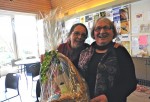
Prize winner Irene Behrmann, left, and speaker Ranka Burzan. (photo by Binny Goldman)

On March 3, 75 people attended the Jewish Seniors Alliance Snider Foundation Empowerment Series workshop Don’t Agonize, Organize/Downsize, led by author and professional organizer Ranka Burzan, founder of Solutions Organizing Simple.

Rev. Dr. Steven Epperson of the Unitarian Church of Vancouver welcomed those gathered at JSA’s headquarters, telling the crowd he enjoyed having a Jewish organization as part of his community’s centre. He shared that, over the years, he has dealt personally and professionally with life-changing events in his church members’ lives: marriages, births, health setbacks, deaths. He said these difficult times are especially hard if no plans have been made in advance for the transitions.

JSA president Marilyn Berger pointed to her walker when introducing Burzan, and said this reflected her home, too, as the walker held a coffee cup, papers and other items. Berger spoke of Burzan’s work to assist people with the physical and emotional demands of transition and change, and said she looked forward to learning some pointers that would help her and others.

When Burzan asked the crowd how many of them were organized, a few hands went up. When she asked how many of them would like to be organized, everyone’s hands shot into the air. According to her, time is wasted searching for things like keys, scissors, staples, papers, which leads to time spent being overwhelmed with frustration and not able to start the task we set out to do.

Change is very difficult and we are afraid of it, she said. We procrastinate, we stress, we start but do not finish tasks, we hold onto things given to us, because of guilt.

Quoting Gandhi – “You must be the change you want to see” – Burzan illustrated that it is up to us to initiate change, and proceeded to give tips on how to do so.

She said, ask yourself these questions: Do I like where I live and with whom? Do I like what I am doing in my job? Do I need this item or do I just want it around emotionally?

Then – listen to your answers.

We only use 20% of what we own, she said. The other 80% we keep, just in case – our children, grandchildren, friends or neighbors may want it. Some people rent storage to keep those “just in case” items, she said.

Commit five to 15 minutes of time, she continued, recommending that people set a kitchen timer and stay with the planned task until the time has elapsed.

Simple tools – such as boxes, bags, tape, markers – gathered before the task is started will aid in its accomplishment. She advised people to start with a small area to sort, like a junk drawer or purse. This will give the boost of confidence needed to carry it and other tasks through to completion.

To show how simple it can be to discard things within a planned five-minute period, Burzan had someone pass around a small wastebasket into which she asked people to toss any unwanted item from a purse or pocket. Serge Haber wryly remarked he would prefer a truck sent to his house to help him get rid of items there rather than a tiny wastebasket, which caused a ripple of understanding laughter in the audience. And, indeed, the wastebasket rapidly filled up and its contents were tossed – proving that it can be quite easy to throw something away: a theatre stub, an old gum wrapper, a cash receipt.

Burzan said the benefits of organizing are multiple: higher productivity, less stress, more free time to enjoy socializing or working; feeling the pleasure of knowing that others might be benefiting from your accumulated clutter, that the discarded “trash” might be treasure for someone else.

Clutter is a barrier to life, she said, and it creates guilt. We keep things because of emotional attachment. We start projects – scrapbooks, for example – that go untended. But if, after three months we have not completed a project, it should be discarded, she said.

So, ask yourself what’s holding you back. Start organizing when your energy level is highest during the day. Consider what would you take with you in the event of a fire. Ask for help – from family and positive-thinking friends who can help you reach your goal. Burzan pointed to her friend and assistant, Mara Lees, without whom she said she could not accomplish as much in her own day.

After Burzan’s talk, Empowerment Series chair Gyda Chud highlighted the lecture’s key points and thanked the speaker. She then invited the crowd to enjoy bite-size noshes while mulling over which bite-size portions of change they will attempt at home.

Complementing the workshop session was a talk by archivist Alysa Routtenberg of the Jewish Museum and Archives of British Columbia, who spoke of the JMABC’s work in collecting hundreds of thousands of items documenting the history of Jews and Jewish life in the province. The JMABC provides material for research, mounts exhibitions and stores family memories. Routtenberg asked attendees to not throw away their personal family treasures before checking with the JMABC (604-257-5199 or [email protected]), as there may be items that would enrich their collection, such as letters, photographs, pins and medals.

To those planning to promptly put to use what they had learned at Burzan’s session, this was a most welcome request. We walked away with our minds full of ideas, knowing that we needed to start now, before we procrastinated, so that we could reduce, reuse and recycle and see the results – a rewarding experience.

A raffle basket donated by Burzan containing her cleaning tips, tools and one of her books was won by Irene Behrmann. Karon Shear, Rita Propp and volunteers Bev Cooper, Jackie Weiler and Jennifer Propp contributed to the event’s success, and Stan Shear filmed it. The video can be viewed and more information about JSA can be found at jsalliance.org.

Binny Goldman is a member of the Jewish Seniors Alliance of Greater Vancouver board.

Format ImagePosted on March 25, 2016March 24, 2016Author Binny GoldmanCategories LocalTags archives, downsizing, JMABC, JSA, organizing, Ranka Burzan

Memorial to be built

Schara Tzedeck Cemetery is establishing a memorial wall at the cemetery in New Westminster to provide an opportunity for community members to create a tribute for family who have passed away and are buried in cemeteries located elsewhere. The memorialization will take the form of an inscription on two new black granite memorial walls located in a prominent section of the cemetery.

With the creation of this memorial, those living in Vancouver will have a physical place nearby to visit and remember their loved ones whose gravesites are located far away. This also provides a way to pay tribute to and preserve the memories of community members who made a contribution here, but who have been buried elsewhere.

The Schara Tzedeck Cemetery board has been operating in Metro Vancouver since 1929, providing Chevra Kadisha and funeral services to the Jewish community, as well as operating three cemeteries for use by the entire community, regardless of synagogue membership.

For more information on the memorial wall or the cemetery, contact Howard Jampolsky at 604-733-2277.

Posted on March 25, 2016March 24, 2016Author Schara Tzedeck CemeteryCategories LocalTags cemetery, Chevra Kadisha, Jampolsky, Schara Tzedeck

Posts pagination

Previous page Page 1 … Page 259 Page 260 Page 261 … Page 322 Next page
Proudly powered by WordPress