Skip to content
  • Home
  • Subscribe / donate
  • Events calendar
  • News
    • Local
    • National
    • Israel
    • World
    • עניין בחדשות
      A roundup of news in Canada and further afield, in Hebrew.
  • Opinion
    • From the JI
    • Op-Ed
  • Arts & Culture
    • Performing Arts
    • Music
    • Books
    • Visual Arts
    • TV & Film
  • Life
    • Celebrating the Holidays
    • Travel
    • The Daily Snooze
      Cartoons by Jacob Samuel
    • Mystery Photo
      Help the JI and JMABC fill in the gaps in our archives.
  • Community Links
    • Organizations, Etc.
    • Other News Sources & Blogs
    • Business Directory
  • FAQ
  • JI Chai Celebration
  • JI@88! video

Recent Posts

  • Story of Israel’s north
  • Sheltering in train stations
  • Teach critical thinking
  • Learning to bridge divides
  • Supporting Iranian community
  • Art dismantles systems
  • Beth Tikvah celebrates 50th
  • What is Jewish music?
  • Celebrate joy of music
  • Women share experiences 
  • Raising funds for Survivors
  • Call for digital literacy
  • The hidden hand of hate
  • Tarot as spiritual ritual
  • Students create fancy meal
  • Encouraging young voices
  • Rose’s Angels delivers
  • Living life to its fullest
  • Drawing on his roots
  • Panama City welcoming
  • Pesach cleaning
  • On the wings of griffon vultures
  • Vast recipe & story collection
  • A word, please …
  • מארק קרני לא ממתין לטראמפ
  • On war and antisemitism
  • Jews shine in Canucks colours
  • Moment of opportunity
  • Shooting response
  • BC budget fails seniors
  • Ritual is what makes life holy
  • Dogs help war veterans live again
  • Remain vital and outspoken
  • An urgent play to see
  • Pop-up exhibit popular
  • An invite to join JWest

Archives

Follow @JewishIndie
image - The CJN - Visit Us Banner - 300x600 - 101625

Category: News

Telling our stories with food

Telling our stories with food

Michael Schwartz, director of community engagement at the Jewish Museum and Archives of British Columbia, speaks to guests at a Chosen Food Supper Club gathering. (photo from JMABC)

This spring, the Jewish Museum and Archives of British Columbia began airing the podcast The Kitchen Stories. The series, which is focused on Jewish food, is the brainchild of Michael Schwartz, the museum’s director of community engagement.

“A podcast is not so different from a museum exhibit,” said Schwartz in an interview with the Independent. “It is a way to present a story…. It doesn’t have a visual component but, unlike a museum exhibit, people can take a podcast with them, listen to it whenever they have the time.”

While podcasts have evolved on and from the internet, Schwartz considers the format a renaissance of a much older type of media – the radio talk show. “Like radio, a podcast is an audio presentation, but on a different technological level. In the past couple of years, there have been some creative and innovative podcasts, and we’re trying to add to their number.”

The idea of a food-related podcast came to him after he experimented with a couple of other topics. “My role at the museum is to make people, both Jews and non-Jews, more aware of our museum. I tried several different themes – architecture, photography – but food seems to be universal. Everyone is interested in food, especially in Vancouver. We are a foodie city, so it seemed appropriate to ride that momentum, to let people tell their stories about food. That’s what a museum does: it lets people tell their stories. Ideally, the museum staff should be invisible.”

The Kitchen Stories concept, as well as the museum’s Chosen Food Supper Club – a dinner series where people meet each other, learn about and enjoy the food being served – crystallized for Schwartz simultaneously. “We started the podcasts a bit earlier, in March, and the supper club in April…. Lots of storytelling happens during the club meetings,” he explained. “Like the podcasts, each club meeting has a theme. Sometimes, it is geographical: food from different parts of the globe. Sometimes, thematic, like holiday food.”
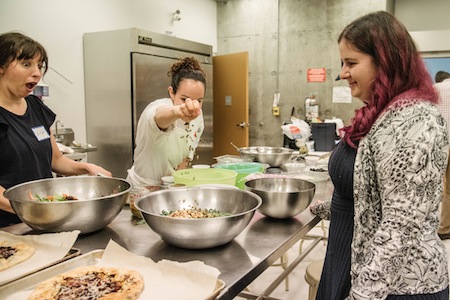
photo - Chef Lior Ben-Yehuda puts the finishing touches on a salad as Erika Balcombe, left, and JMABC archivist Alysa Routtenberg look on
Chef Lior Ben-Yehuda puts the finishing touches on a salad as Erika Balcombe, left, and JMABC archivist Alysa Routtenberg look on. (photo from JMABC)

A similar variety of themes characterizes the podcasts. To date, shows have examined food links to family dynamics and worldwide migrations, climate and gender roles, cultural customs and regional culinary quirks.

“We brainstormed the possible themes as we listened to other podcasts, read books on culinary history. We tried to pinpoint what is missing and use those points as our guidelines. One of the underlying themes in our podcasts is the tension between traditional and modern. How people adapt to the local food sources when they move, how the familiar recipes change with times and places. How those recipes diverge when members of one family move to different countries, or continents, and the usual ingredients become unavailable.”

Schwartz believes that the museum has to be open to the stories of all Jews, regardless of their religiosity, affiliation or geographic roots. “The museum’s role is not to provide answers but to discuss a question, to open a forum for conversation. In The Kitchen Stories, food is a medium of telling stories. We explore healthy food choices and how they change with generations: what our grandmothers thought healthy and what we think healthy could be different. We talk about kosher food and organic food. And, of course, when people talk about food, everyone has an opinion.”

The topics are approached often from an historical perspective. “Food is a way to keep history alive,” Schwartz said. “When a kid asks his parents or grandparents why do you cook this way, stories emerge. We wanted to showcase those stories. Food is also a way towards peace and harmony. When we share food with friends, we talk and try to understand each other. Food is a means of communication.”

Schwartz doesn’t create the podcasts alone. Co-producer April Thompson has been working for the museum for the past year.

“I do research on the theme we select, I conduct the interviews,” Thompson said. “Sometimes we interview people in their homes or their businesses. Other times, they come here to the museum; we use a quiet room for the interviews. The museum has had an oral history program for decades, so we use the existing museum equipment for recording. Then I do the editing, choose the music. After I’m done, Michael listens to my material. He records the narration, inserts special terminology sometimes, or we move the pieces around to structure the story better.”

“April is very important to the series,” said Schwartz. “She is not Jewish, and that fact has given her an interesting angle on the project. She brings necessary curiosity to some things those of us within the Jewish community take for granted.”

“Yes,” Thompson agreed. “I’m like a child. I ask: why do you do this, because I don’t know. I want to know. I’m now working on a podcast about [dealing with] grief through food, about the Jewish shivah custom. It’s different from many other cultures.”

All of the podcasts can be found at jewishmuseum.ca/the-kitchen-stories.

Olga Livshin is a Vancouver freelance writer. She can be reached at [email protected].

Format ImagePosted on July 14, 2017July 11, 2017Author Olga LivshinCategories LocalTags culture, food, Jewish museum, JMABC, Michael Schwartz, podcasts
Galilee as a food-tech hub

Galilee as a food-tech hub

Former chief scientist of Israel Avi Hasson, left, and MK Dr. Erel Margalit. (photo from Noa Yaar)

Having the Upper Galilee be the world’s food-tech hub is the dream of Israeli Member of Knesset Erel Margalit, who recently announced he will run for leadership of the Labour party. And the work has started in the form of Israel Initiative 2020 (ii2020).

Leading the establishment and development of the food-tech hub in Kiryat Shmona is Michal Drayman, a partner and chief financial officer of Jerusalem Venture Partners (JVP). She has 11 years of high-tech experience and 14 years’ experience in the agro-bio medical activity area of investment.

For Drayman, ii2020 is her volunteer job, and she describes her role as “vice-chairman.” The initiative started up nearly four years ago, focusing much of its work in Israel’s upper north and south.

“We decided to focus on agri-food development in the Eastern Galilee, which is made up of a group of 22 municipalities, from Tiberius in the south, up to Metula in the north and the Golan Heights in the east,” she told the Independent.

They began working with the region in January 2014, holding brainstorm sessions and doing about six months of research with 10 leaders from the region to pinpoint a focus, which became agriculture.

“Anything that can be grown on earth can be grown in the Eastern Galilee,” said Drayman. “Because of the difference in height, climate, water and land, it allows them to grow anything from tropical things to cherries, apples and everything in between.

“We also discovered that the area already has a lot of activity when it comes to agro-bio research – in particular, with Migal, a foundation founded in the early ’70s that has about 115 employees, 65 PhDs and about 50 laboratories developing food and agro-bio activity.”

With Tel-Hai College to develop the academic focus – most of its 5,000 students are studying agriculture, bio-technology, food and nutrition – the region is well-positioned in the field.

As Drayman and team sought an even more specific focus, they decided on medical food, which means any food promoting health and preventing illness. “With this, we’re taking into consideration modified food, functional food, macro-bio activities, and how it will affect us concerning nutrition going forward,” said Drayman.

While work in this field is being done on a large scale by the Volcani Centre, as well as by other institutions throughout Israel, it has rarely reached the market. It took Drayman only six months to get consensus from area municipalities that medical food would be their focus, after which she began on the year-long process of writing up a plan.

“Bio-technology and health, there’s so much to do that, with the right investment, we see the potential of growing something significant in that area,” she said. “In food tech, there’s a lot of innovation and research, but not a lot of invested money. Much of the work that is done is void of being able to monetize it. That’s true of the world, not just in Israel.”

Looking at how food companies impact health by what they put into the food they make – ingredients such as sugar and salt, for example – Drayman and team are working with the industry to change regulations, especially food labeling. The goal is to give customers clear information about the nutrition content in the product they are buying.

“The idea is that companies cannot just [add] sugar whenever they don’t have another ingredient and want to fill [the product] with something very cheap,” said Drayman. “We’re going to show … a red stop light on food. If it has too much salt or sugar, it will be identified on the wrapping.

“The food industry is going through significant change,” she added. “Regulations, GDP talks, and the fact that people are more educated and understanding about what we’re eating, will affect how we’ll be when we get older. If we’re going to make sure we’re eating proper nutrition, then probably we’re going to affect a lot of the illnesses and reduce the amount of obesity.”

Exactly three years from the initiation of the project, with the 22 municipalities participating, the government approved about 80% of Drayman and team’s submitted budget. Next, they will speak with various multinational companies to see if they will invest in research and development in the area.

“One of the things that’s already in process is the movement of the Volcani Centre that is currently in the Tel Aviv area to the Galilee,” said Drayman. “It was declared, but I’m less optimistic about how fast it will happen. But it was declared it will happen, which is huge, because we’re talking about 5,000 scientific people doing research. So, moving that kind of activity would be significant.”

The municipality of Kiryat Shmona has allocated a building to house the new food innovation centre and funds are being collected to allow for the renovations, with Jewish National Fund picking up half of the $6 million tab.

“Basically, we want it to be an iconic building in the centre of Kiryat Shmona, something that will be visible from the road,” said Drayman. “It will have an accelerator for food-tech activities and activities with kids and education – trying to have two percent of top-tier students working together with the accelerator, incubator and entrepreneurship … being part of a success story.

“We’re going to also have music, because we don’t want to have it only as a high-tech building. We want to make sure we have regular people being part of it, living the scene, and not isolating this kind of activity.”

To raise the remainder of the needed funds, Drayman is working to create a consortium of five multinational companies that would run the accelerator and, subsequently, create and run an incubator.

“The accelerator, as opposed to regular accelerators that only do mentoring and primarily help when you’ve started to build a theme … we want to do proof of concept with our accelerator,” said Drayman. “We’d like to invest money, not only time and support, from high-tech people. We want to actually invest money and run the project for four to 12 months to identify an actual R&D project or research and bring it to commercialization.

“Assuming it’s able to be commercialized, then we’d like to take it into the space of an incubator and invest larger amounts of money to be able to run the project until an actual company is created.”

As of press time, IBM was considering providing data analytics.

For more information or to get involved with ii2020, contact Noa Yaar at [email protected] or 1-781-530-8025.

Rebeca Kuropatwa is a Winnipeg freelance writer.

Format ImagePosted on July 14, 2017July 11, 2017Author Rebeca KuropatwaCategories IsraelTags food, high-tech, ii2020, Israel, Kiryat Shmona, technology
Homemade shakshuka

Homemade shakshuka

Shakshuka is a combination of flavours, aromas and colours that appeals to all our senses. (photo from Café FortyOne)

Choosing a dish that defines us gastronomically is an impossible task because Jewish cuisine comprises a long and varied history of aromas and flavours fused by our many journeys around the world. But, if we narrow our task to discussing a representative Israeli dish, then shakshuka might be it.

Although there are many variations, shakshuka is generally made with stewed tomatoes, spices and eggs. It is one of the foods most loved by Israelis and it is a dish that has been enjoyed by countless tourists to the country. It is said that its secrets were brought to Israel by Jewish immigrants from North Africa but, for me, it also has a taste of home. My parents used to prepare it to pamper us, using the recipe of my grandparents from Turkey and giving it an Argentine touch. And there is nothing like shakshuka as an example of how certain foods have traveled with us throughout our history and to the different countries in which we have settled.

Shakshuka means “a mixture.” It is a combination of flavours, aromas and colours that appeals to all our senses. In Israel, it is often eaten for breakfast, a bright and spicy way to start the day. But it is also an excellent dish for lunch or for a special brunch.

Like many great dishes, there are as many versions of shakshuka as there are cooks who have made it, and it can be found on café and restaurant menus throughout the world. Modern culinary interpretations enhance the basic dish with salsa, with all kinds of vegetables, including eggplant and kale, and with cheeses such as feta. Some even incorporate meat into the recipe, modifying it according to personal taste. Some variations replace the tomatoes entirely – for example, there is a version that replaces the tomato sauce with one of spinach and cream.

Although there are many ways to cook shakshuka, from the Mexican version called huevos rancheros to the Turkish menemen, my shakshuka cuts to the traditional. The recipe below will give you a lovely shakshuka, rich in flavour. Once you have mastered the basics, you can add your own touch by using other ingredients that you like. However, this dish has one must: it must be accompanied by pita, challah or one of your favourite breads. Why? Simply because the sauce is really delicious and you will not want to leave a drop of it in the pan.

But, enough talk. This recipe I’m sharing is special – it is the one my family uses and which has given us many beautiful memories. It makes enough for two people.

SHAKSHUKA

5 ripe large tomatoes
1 large chopped onion
1 red pepper
4 garlic cloves (if you find it too strong, remove the centre)
2 tbsp extra virgin olive oil
4 eggs
touch of kosher sea salt
2 tbsp paprika
pinch of cumin
chopped parsley for decoration
tomato paste or concentrated tomato (optional, for a stronger taste)

  1. Pour the olive oil in a frying pan over medium heat. Add the onions and sauté until lightly softened, stirring occasionally. Add the red pepper and garlic, frying for a few minutes until they are soft and lightly browned.
  2. Add chopped tomatoes, paprika, cumin and salt. Stir until all ingredients are well mixed, then cover and simmer for about 10 minutes. The idea is for the tomatoes to become soft.
  3. Once the tomatoes are cooked, stir and then make two holes with a spoon in the surface of the sauce. Break an egg into each one of the holes. Arrange the eggs and the surrounding sauce so that the egg whites are below the surface of the sauce.
  4. Cover and let simmer for five to seven minutes, until the egg whites are cooked but the yolk is still runny.
  5. Sprinkle with chopped parsley and serve immediately in the pan it was cooked in, along with pita (or other bread), hummus and an Israeli salad.

Yamila Chikiar co-owns Café FortyOne with her husband, Daniel Presman.


Format ImagePosted on July 14, 2017July 11, 2017Author Yamila ChikiarCategories LocalTags Café FortyOne, Diaspora, food, Israel, shakshuka
Purifying water

Purifying water

photo - In February 2015, Gal Water Technologies Co., from nearby Caesarea, launched the mobile water purification systemOn July 10, at Givat Olga, Indian Prime Minister Narendra Modi, centre-left, and Israeli Prime Minister Binyamin Netanyahu sample water that has just been purified to the World Health Organization standard in the Galmobile. In February 2015, Gal Water Technologies Co., from nearby Caesarea, launched the mobile water purification system. The small vehicle, the first of its kind in the world, weighs 1,540 kilograms, operates on a 12-volt electric supply and can be set up in less than half an hour. It can connect to almost any water source. (photos from Ashernet)

Format ImagePosted on July 14, 2017July 11, 2017Author Edgar AsherCategories IsraelTags Galmobile, high-tech, technology, water
החלטות ממשלת ישראל פוגעות

החלטות ממשלת ישראל פוגעות

הכותל (צילום: Golasso)

יו”ר מועצת המנהלים של הג’ואיש פדריישן: “החלטות ממשלת ישראל פוגעות במרקם היחסים המיוחד בין הקהילות בקנדה לישראל”

“ההחלטות האחרונות שהתקבלו על ידי ממשלת ישראל פוגעות מאוד מרקם יחסים המיוחד שקיים בין הקהילות בקנדה לישראל”. דברים חמורים אלה נאמרים על ידי יו”ר מועצת המנהלים של הג’ואיש פדריישן של מטרו ונקובר, קרן ג’יימס. זאת, בתגובת להחלטות הממשלה על הקפאת מתווה הכותל שהיה אמור לאפשר להכשיר את החלקה הדרומית, שם יהיה ניתן לקיים תפילה שוויונית. וההחלטה בנושא חוק הגיור שקובע כי כל הגיורים יהיו רק במסגרת הרבות הראשית בישראל, וכן תהיה בחינה של כל הגיורים שכבר קיימים. משמעות הדבר שיהודים שמשתכיים לזרמים שונים ביהדות דבר שמאפיין את הרוב הגדול של יהדות התפוצה, יהדותם לא תהיה מוכרת על ידי ישראל. אם כן גל המחאות הקשות נגד החלטת הממשלה שהתחיל בקרב יהודי ארה”ב מתפשט גם לקנדה. יש לזכור שבקנדה יש כיום את הקהילת היהודים השלישית בגודלה בעולם, מחוץ לישראל.

ג’יימס (ילידת 1952) כיום היא אשת עסקים שגרה בוונקובר, ועבר נמנתה על נבחרת השחייה של קנדה לאולימפיאדת מינכן שערכה ב-1972, בה נרצחו תשעה ספורטאים ושני מאמנים של נבחרת ישראל על ידי טרוריסטים.

ג’יימס ביקרה בחודש שעבר בישראל כולל אצבע הגליל, במסגרת השותפות של שש קהילות יהודיות בקנדה (מוונקובר, אוטווה, קלגרי, אדמונטון, וויניפג והליפקס) עם האזור שבצפון. השותפות בין הקהילות לאצבע הגליל כוללת קצאת מיליוני שקלים לטובת מערכות החינוך והרפואה באזור, וכן פעילויות משותפות עם אחד עשר בתי ספר באזור, משלחות נוער ותורמים רבים. ג’יימס מזכירה שהקהילה היהודית בוונקובר מקיימת מערכת יחסים מיוחדת עם אצבע הגליל לאורך עשרים השנים האחרונות, שכוללת השקעות כספיות גדולות, על מנת לשפר את איכות החיים של התושבים המקומיים. “במהלך שנים אלו נבנה גשר חי בין שתי הקהילות, שכולל חברויות רבות של בני משפחה אחת גדולה, של עם אחד”.

ג’יימס מוסיפה: “כל זה עומד בניגוד מוחלט להחלטות ממשלת ישראל בנושא מרחב תפילה שיווני בכותל ובנושא חוק הגיור, שמעניק לרבנות שליטה על הגדרת מי הוא יהודי. ובכך מעמיד את הסטטוס של אלפי יהודים בסימן שאלה”. היא מדגישה כי החלטות הממשלה בסוגיות חשובות אלה פוגעות במשמעות התפיסה של מה זה להיות עם אחד, והממשלה שולחת מסר לרוב היהודים בצפון אמריקה כי היא איננה מכירה ביהדותם. “זה מעמיד את המשך תמיכתם של יהודי התפוצות בישראל במצב של סיכון משמעותי. ולכן המצב כרגע הוא חמור ביותר”.

לדברי ג’יימס היא משתייכת לאחד מבתי הכנסת הגדולים ביותר של ונקובר, בו גברים ונשים יושבים ומתפללים ביחד. וכן נשים חובשות כיפה וטלית אם כך הן חפצות. לא מעט גברים ונשים מבית כנסת זה עשו עלייה לישראל. סגנון תפילה זה המשותף לגברים ונשים הוא הנורמה המקובלת עבור מרבית היהודים החיים בצפון אמריקה. ג’יימס מסיימת בדברים אלה: “אני מאמינה כי הזהות המשותפת של כולנו כעם יהודי אחד, ללא קשר לזרם היהדות אליו כל אחד מאתנו בוחר להשתייך, גדולה ומשמעותית לגשר על כל שוני באשר הוא”.

יצויין כי הקונסולית הכללית של ישראל בקנדה, גלי ברעם, שלחה מברק למשרד החוץ בישראל כי קיבלה מסרים חריפים מבכירים בקהילות היהודיות בטורונטו וונקובר, שמזהירים כי שתי החלטות הממשלה יחמירו את הניכור כלפי ישראל, בקרב הדור הצעיר של יהודי קנדה. לדבריה אחד הרבנים בקנדה אמר לה כי סטודנטים יהודים אומרים שמה שישראל עושה זו אנטישמיות”.

Format ImagePosted on July 12, 2017July 11, 2017Author Roni RachmaniCategories עניין בחדשותTags Canada, Diaspora, Gali Baram, Israel, Karen James, Kotel, גלי ברעם, התפוצות, ישראל, כותל, קנדה, קרן ג'יימס
Marketing of technology

Marketing of technology

Yonatan Avraham, student ambassador of HUstart, left, and Tamir Huberman of Yissum are two of the four speakers who will be participating in Jerusalem of Gold: Capital of Innovation & Tech on July 16. (photos from CFHU Vancouver)

“I have always loved the thrill you feel while creating your own project, seeing it grow and being responsible for the outcomes – and the satisfaction you feel while convincing a stranger to give his or her resources (time or money) for your product,” said Yonatan Avraham, student ambassador of HUstart, Hebrew University of Jerusalem’s entrepreneurship centre, about what excites him about being an innovator and entrepreneur.

Avraham is one of four speakers who will participate in Jerusalem of Gold: Capital of Innovation & Tech, which will take place on July 16 at the Jewish Community Centre of Greater Vancouver. The event is being hosted by Canadian Friends of the Hebrew University, the Jerusalem Foundation and JCCGV. Avraham will be joined by Lior Schillat of Jerusalem Institute for Policy Research; Maya Halevy of Bloomfield Science Museum Jerusalem; and Tamir Huberman of Yissum, HU’s technology transfer company. The Jewish Independent’s interviews with Schillat and Halevy appeared in last week’s issue (see jewishindependent.ca/jerusalem-a-high-tech-hub).

“All of the speakers are coming from Israel especially for this tour in Western Canada. We will be in Vancouver on July 16, Calgary on July 17 and Edmonton on July 18,” said Dina Wachtel, Western region executive director of CFHU, of the tour, which celebrates the 50th anniversary of the reunification of Jerusalem.

“Tamir is going to give a talk on Friday, July 14, at Simon Fraser University titled The Power of Social Networks: Boosting the Marketing of Innovations, organized by Fred Popowich, executive director of Big Data Initiative at Simon Fraser University,” she said. “Part of our mandate is to create these living bridges between Hebrew U and our local universities; hence, this is part of this initiative.”

Huberman is Yissum’s vice-president of business development and director of information technology. At the JCCGV, he will talk on Marketing Innovation: Changing Israel and the World.

In the press material, Huberman notes, “As the only university in Israel with a school of agriculture, research in non-GMO hybrid seeds at Hebrew U is changing the way millions of people eat now and into the future.” He also notes that Mobileye, which recently sold to Intel for $15.3 billion US, was founded by HU Prof. Amnon Shashua.

Yissum “operates on a royalty-based model which channels proceeds from successful products back to the researchers, their labs and the university itself,” he explains. It also generates funds “by attracting corporations to collaborate with Hebrew University labs to find the answers the businesses are seeking.”

About what B.C. (and other) universities could learn from HU, Huberman told the Independent, “I believe that the top lessons are how to be more effective and how to remove barriers for doing business. In most cases, tech transfer companies around the world are [viewed] as a bureaucratic entity that complicates things. The greatest lesson is making adaptations that would make things simpler for the companies that want to do business with us…. The second lesson is the realization that, for each new technology, there either has to be someone in the world that would be interested in acquiring a licence, or someone in the world that knows the technology does not have a chance. It is the ‘job’ of the tech transfer to find that ‘someone’ and, from my experience, the best way to do that is by using social networks. The revolution of social media allows getting fast replies from people all around the world, even if you’ve never met them.”

Huberman has always loved innovation and, he said, “it was a big dream of mine to be an inventor and work with new inventions.”

While working for the company Medis from 1996 to 2002, he was exposed to the world of patents and the process of writing patents as an inventor. “After my own experience as an inventor,” he said, “I knew I had to find a place that works with new patents at a massive scale.”

It was his “strong passion for new patents and ideas that was the top reason for joining Yissum,” he said. “Second was the opportunity to work with some of the most brilliant researchers in their fields. Third was my realization that there was something missing at the time before I joined Yissum, which had to do with the very low use of the internet in order to expose the technologies from the universities to the world.

“Before I arrived at Yissum, I made a simple search using freely available patent databases and saw that only a small fraction of the patents I found [were] on the tech transfer websites. When I realized this, I had a vision of changing how tech transfer companies worked…. My dream materialized when I created the first portal for all the technologies at Yissum and later created the ITTN website (Israel Technology Transfer Organization). ITTN was the first website in Israel that allowed all of the inventions from academic institutions in Israel to be found in one central portal.”

He added, “I believe that there is a lot that can be done to make a better and faster connection between companies seeking talent or innovation to the offerings of universities…. [B]uilding a portal that connects more universities in Israel and the world could help make that matching much more efficient.

“Another realization is that tech transfer companies traditionally showcase technologies and I believe that this is not the best approach…. [T]he portals should focus on the researchers and their capabilities, rather than just the patents that a small portion of them invented. We have multiple examples of companies that were interested in researchers that we did not even know [because] they never had any patents.”

One of the jobs of HUstart – of which Yissum is part, along with HU’s science faculty and business school – is to provide “practical education, support, mentorships and connections needed” for students and others “to become effective entrepreneurs.”

Avraham is a third-year physics student at Hebrew U and is in the first cohort of the new Physics and Entrepreneurship program, which connected him – during his second year of study – with his business partners. Avraham and fellow students Michael Levinson and Tom Zelanzy co-founded the start-up Gamitee, which “links social media and shopping websites, making it possible for friends to easily invite others to join them in a shopping experience.”

Avraham has other ideas, such as one for an “infant sleeper that monitors a baby’s vital signs, a technology that could potentially prevent SIDS.” And he and his wife – who is an archeologist – also run a tutoring business. In Vancouver, he will speak on The Making of a Serial Entrepreneur.

“I think they have a lot of similarities,” he said about physics and building a tech start-up. “In both, you need to solve complex questions and problems that are comprised of several independent factors. Both of them are professions that people rarely choose. And they are both very, very hard to understand. I think my physics background [increased] my range of abilities needed [to be] an entrepreneur.”

Jerusalem of Gold: Capital of Innovation & Tech is open to the public. Tickets are $45, though students who register at the CFHU office can receive a free ticket. For tickets and the speakers’ bios, visit cfhu.org, email [email protected] or call 604-257-5133.

Format ImagePosted on July 7, 2017July 17, 2017Author Cynthia RamsayCategories LocalTags CFHU, entrepreneurship, Hebrew University, Israel, Jerusalem, technology
The two sides of surrogacy

The two sides of surrogacy

Jennifer Clarke with three of her children. (photo from Jennifer Clarke)

By the time Cyrus and Pam Mizrahi met in the summer of 2015, Pam had already gone through menopause, yet they wanted to have kids. After getting married in December of that year, the couple decided to explore their options.

“We both wanted to have children and Pam was not in a condition to have babies, so it was adoption or a surrogating program,” said Cyrus.

They chose surrogacy, Cyrus explained, because with “surrogacy you have all sorts of options when it comes to having your own kids or children. Adoption is different. You take babies from another parent.”

The Mizrahis did some research and opted for an agency in their home city of Boston, called Circle Surrogacy, an established firm that connected them with a surrogate from the City of Surprise, Ariz. Though they would have loved to have found a Jewish surrogate, none was available at the time. They consulted their rabbi.

“We contacted the rabbi who officiated our wedding,” said Cyrus. “He approved it and said it was a great idea. He said that what is more important is how we bring up our babies – providing Jewish education and raising them Jewish, if we want them to maintain a Jewish identity. It’s certainly important, of high importance, to us.”

The next step was working with the laboratory to produce the embryos. The Mizrahis wanted a boy and a girl. Luckily, both embryos took, and the twins were born on May 17, 2016.

“The first thing we did when the babies were born was we had the bris for the boy, of course,” said Cyrus. “I’ve taken them to shul a number of times and I’ll continue doing that. We have a kosher kitchen at home. We’re not Orthodox, but we observe to some degree. We’re hoping to send them to Jewish school and provide them with a Hebrew education.”

He said, “We named them after my parents’ Hebrew names. Our son is named Sol for Solomon (but only Sol) and our daughter is named Alexa. Sol is after my father – we have the tradition that we can name him after someone who is alive – and his middle name is Michael, named after my wife’s uncle. Alexa is a Hebrew name, named after my mom.” (It is an Ashkenazi custom to not name a child after a living person.)

The connection with the surrogate was very positive and strong. She has come to visit the twins and new parents three times within the past year.

“She lives far away, but she comes from time to time to visit us,” said Cyrus. “We’re always welcoming and it’s fine with us. We want to keep her as a friend in the family.”

With Cyrus having many relatives in Israel, he is anxious to take his kids for a visit there – and he and Pam are planning to do so when the twins turn 4 or 5 years old. “I have many cousins, first and second cousins,” said Cyrus. “A whole tribe. They are all over Israel – Petah Tikva, Jerusalem, Kfar Saba, all over.”

As for the surrogate, her name is Jennifer Clarke. She teaches high school Spanish just outside Surprise, which is a suburb of Phoenix.

For Clarke, the idea of surrogacy arose a few years back when she saw an ad at her church posted by a couple who could not have their own children. They were seeking a surrogate, and Clarke thought to herself, “I can have babies so easily…. I have four. I’ve never had any problems or complications, and others can’t and really want kids. So, I thought I’d offer to do that if she’d cover the medical expenses…. I talked my then-husband into it – he did think I was crazy … but he was used to my crazy ideas and eventually was accepting of it. I approached the girl about it and they had just received confirmation of getting two children from Mexico, a 3-year-old and a 5-year-old, so they didn’t need a service like that any longer.”

But, as Clarke already had made up her mind to help, she began doing some research, looking for someone else she might be able to assist. Clarke found a few companies that provide surrogacy service and went through the extensive application process.

“They want to make sure you’re mentally stable and that you’re financially sound,” she said. “You can’t be doing this if you want money … they don’t offer very much. It’s mostly just expenses plus a bonus. You can’t be in it for the money.”

The application took about two hours to complete over the phone. The company also screens the surrogacy applicant’s friends and spouse (if there is one). Everyone gets at least one hour-long phone call, to try and ensure that the surrogate has a strong support system and that there will not be an issue with the spouse or anyone else close to the surrogate. If the applicant qualifies – including being given the green light by their doctor and obstetrician/gynecologist – a profile is created of her, which is shown to “intended parents” (IPs).

The company selects some potential surrogates who match what the IPs are seeking – including factors such as how much communication they want with the surrogate, what the surrogate’s habits are (for example, diet, activity level, etc.) – and shows their files to the potential parents. “They sort of match you like a dating service,” said Clarke. “It might take a couple of interviews to find someone who fully suits you, but then you get matched and start the process of hormone treatments, implantation and such.”

Having Our Baby: The Surrogacy Boom, a documentary by Vancouver filmmaker Nick Orchard, aired recently on the Documentary Channel in Canada. While there are some differences between Canada and the United States when it comes to surrogacy, it seems that both countries’ systems work to ensure that the surrogate is entering the arrangement with mainly altruistic rather than monetary aims.

According to Orchard, infertility is often a “disability, for lack of a better word,” that couples hide. Therefore, he said, “most people are unaware of how, for some couples, it’s a real problem – conceiving and having a child of their own. So, it’s a situation where couples and gay couples and, every now and again, some single people really want to have a child, but they can’t do it without help from someone else. That’s when they reach out.”

He said, “The surrogates are doing this because they very much want to help someone. What they are doing is incredibly selfless – to put their … in many cases … own lives on the line. There are dangers involved in having a baby and to do all of that, I find it quite incredible. That was one of the things that first drew me to the topic.”

Some of the costs involved in hiring a surrogate in Canada, according to Orchard, include $10,000 to an agency; $20,000 for a surrogate’s expenses; $30,000 in fees for the clinics doing the transfers, developing the embryos, and so on; and $30,000 in legal fees for agreements drawn up between the surrogate and the IPs, to reduce the risks of having a surrogate change her mind and keep the baby once the process is done.

“You have to really want to have a child and, of course, it’s never a sure thing either,” said Orchard. “You can pay that money and you create the embryo … you might have to get the eggs from an egg donor … who you cannot pay [it is illegal]. You can get the embryos created and implant them, but, in many cases, they don’t take on the first go-around. So, you’ve just lost $10,000 and you have to start all over again.”

For more information on Orchard’s documentary and some of the facts about surrogacy in Canada, visit cbc.ca/documentarychannel/docs/having-our-baby.

Rebeca Kuropatwa is a Winnipeg freelance writer.

Format ImagePosted on July 7, 2017July 5, 2017Author Rebeca KuropatwaCategories WorldTags family life, infertility, Judaism, surrogacy
יום ההולדת המאה וחמישים של קנדה

יום ההולדת המאה וחמישים של קנדה

(צילום: mint.ca)

קנדה זוהרת: מטבע לוני מיוחד הנופק ליום ההולדת המאה וחמישים

המטבעה המלכותית הקנדית החליטה להנפיק מטבע מיוחד ליום ההולדת המאה וחמישים של קנדה, שנחגג ביום שבת האחרון (ה-1 ביולי). במטבעה הוחלט להנפיק כשלושה מיליון מטבעות של שני דולר (לוני) זוהרים, ולהכניסם למחזור הכללי. מדובר באורות של זוהר הצפוני היחודיים לקנדה (ירוק וכחול) מעל שני חותרים אינדיאנים בסירת קאנו, באגם שמוקף בעצים. יצויין כי המטבע מורכב משתי מתכות והאורות שמכילים חומר זוהר יחודי בוהקים בלילה. במקביל הונפק מטבע זוהר לאספנים לחגיגות המאה וחמישים שנה עם ציור של דגל המדינה האדום לבן ומעליו זיקוקים (שעלותו 30 דולר).

קנדה היא בעצם המדינה הראשונה בעולם שהטביעה כבר מבטע זוהר וזאת כבר החל משנת 2004. המטבעות הזוהרים מעשי ידי המטבעה יועדו עד כה לאספנים בלבד ולא הוכנסו למחזור הכללי כמו המטבע הנוכחי.

המטבעה המלכותית הקנדית ממוקמת באוטווה ויש לה סניפים בווניפג וונקובר.

האם הייתה חצר? בטח שהייתה חצר: תושב נובה סקוטיה רכש בית עם חצר ופתאם התברר לו שהחצר לא שלו

ריאן מנינג, תושב הישוב הקטן סלומון ריוור באזור העיר הליפקס במחוז נובה סקוטיה שבמזרח המדינה, נדהם לדעת יום אחד שהחצר שצמודה לביתו איננה שלו. לפני מספר חודשים במהלך היום נקש מישהו על דלת ביתו של מנינג, והציע לו שירכוש את החצר שמאחורי ביתו. מנינג הנדהם מדברי האיש אמר לו נחרצות: “האם אתה השתגעת? החצר שייכת לי ולא לאף אחד אחר”. הוא אף הראה למציע את חוזה לרכישת הבית עם החצר שמאחוריו.

מנינג רכש את הקוטג’ והחצר הצמודה לו (שכולה מגודרת מסביב) בהליך מכירה, שהנוהל על ידי ההוצאה לפועל לפני כשלוש שנים. לאחר שהעביר את הכסף להוצאה לפועל הוא קיבל את מפתחות הבית וכן את מפתחות צריף קטן שנמצא בקצה החצר שמאחור. מנינג היה מרוצה מהעיסקה שעשה, תיכנן לבצע שיפוצים נרחבים בבית ומחוצה לו ולהשכיר חלק ממנו. אך כאמור הסתבר לו פתאם ביום בהיר אחד שרק הבית שייך לו.

בצר לו פנה מנינג לעורך דינו שיצא בינתיים לפנסיה, לסוכן הנדל”ן שתיוווך בעיסקה לרכישת הבית והחצר שגם הוא פרש מעבודה, לחברה שהוציאה את הבית למכירה במסגרת ההוצאה לפועל, לבעלים הקודם של הכנס והחצר, וכן לחברה שהייתה אחראית על שינוי שם בעלי הנכס ברישום בטאבו. למרות שכל הנוגעים בדבר הבינו את מצוקתו הקשה, אף אחד מהם לא הסכים לקחת אחראיות והם כולם אחד אחר השני, השיבו את פניו ריקם. מנינג הספיק בינתיים ללמוד כי הבית והחצר עומדים על מגרשים שונים וזה כנראה המקור לבעייה שנוצרה. הוא לא ידע מה הוא עוד יכל לעשות כדי להשיב לעצמו את החצר שרכש בכסף מלא.

בלית ברירה פנה מנינג לכתב של תחנת טלוויזיה מקומית של רשת החדשות הציבורית הסי.בי.סי, שהתחיל לחקור את הפרשה המסובכת לעומקה. לכתב התברר שקרתה טעות חמורה ברישום בעת הליך המכירה של הנכס, ובעצם רק הבית נרשם על שמו של מנינג למרות שהוא לא ידע על כך. הצדדים הקשורים בעיסקת מכירת הבית הבינו שכדאי להם להתעשת מהר לאור התערבות עיתונאי הסי.בי.סי, ואכן הם הצליחו להגיע להסכם עם מנינג שמקנה לו בברור בעלות חוקית על החצר שנגזלה ממנו. מנינג יכול עתה להירגע: מאחורי ביתו נמצאת באופן חוקי החצר שלו והוא יכול להמשיך ולתכנן את השיפוצים בכל הנכס. הוא יכול גם להגיד לעצמו: “מזל שיש תקשורת”.

Format ImagePosted on July 5, 2017Author Roni RachmaniCategories עניין בחדשותTags Canada 150, Halifax, Royal Canadian Mint, Ryan Manning, ההולדת המאה וחמישים של קנדה, הליפקס, המטבעה המלכותית הקנדית, ריאן מנינג
Jerusalem a high-tech hub

Jerusalem a high-tech hub

Lior Schillat of Jerusalem Institute for Policy Research and Maya Halevy of Bloomfield Science Museum Jerusalem will speak at Jerusalem of Gold: Capital of Innovation & Tech on July 16. (photos from CFHU Vancouver)

“Hebrew University is probably the only university that ‘founded’ a state rather than vice versa, as the cornerstone for the university was laid on July 24, 1918, and, on April 1, 1925, the Mount Scopus campus was opened,” Dina Wachtel, Western region executive director, Canadian Friends of the Hebrew University, told the Independent. “The contemporary history of the city of Jerusalem and the story of the Six Day War is intertwined with the story of the university – what better way to celebrate that than by bringing in four of Jerusalem’s change-makers?”

The July 16 TED Talk-style event at the Jewish Community Centre of Greater Vancouver – hosted by CFHU, the Jerusalem Foundation and JCCGV – “is a celebration of the start-up nation and the role the city is playing in becoming a centre for innovation and technology,” said Wachtel. “Thus, it is also the story of how innovation improves the lives of humanity in this world regardless of boundaries of any kind: geographical, political, ethnic, religious.”

At the event called Jerusalem of Gold: Capital of Innovation & Tech, the speakers will be Lior Schillat, director general of Jerusalem Institute for Policy Research; Maya Halevy, executive director of Bloomfield Science Museum Jerusalem; Yonatan Avraham, student ambassador of HUstart, the university’s entrepreneurship centre; and Tamir Huberman, vice-president of business development and information-technology director of Yissum, the technology transfer company of Hebrew U. The Jewish Independent interviewed each of the presenters in anticipation of their Vancouver visit, and will feature Schillat and Halevy this week, and Avraham and Huberman on July 7.

Schillat will talk about Jerusalem’s Population: What Does the Future Hold? But first, what about the Jerusalem of the past – what would have inspired a Canadian Jew to make aliyah 50 years ago?

Actually, said Schillat, in the 20th century, the biggest wave of immigrants from countries such as Canada came right after the Six Day War.

“If you’re Canadian and you’re making aliyah in ’67 and you’re choosing Jerusalem for your home, I guess the main reason you would do that would be because of the spiritual effect the glorious victory of 1967 would have on you,” said Schillat.

“If you are a bit more practical, you also understand that, with this victory, Jerusalem, for the first time since 1948, became again the centre of the country … centre in the geographical meaning and also the centre of attention as to what was going on in the country.”

Fifty years later, he said, while “we still haven’t reached some kind of stability in the situation in Jerusalem,” the city “is one of the most interesting … cities in Israel, and why is that? First of all, it’s Jerusalem, meaning it’s beautiful, it has stories that are in the heart of billions of people all over the world…. I would say the Jerusalem brand is stronger than any other brand in Israel, including the Israeli brand itself…. So, if you would come to Jerusalem, it would be because you want to spend your life in a way that is a bit more meaningful than … in any other city in Israel, in any other Western country.”

In Jerusalem, he said, “from the moment you wake up until the moment you go to sleep, you live for something, for an idea. It’s true for everyone – of course it’s true for religious people, but it’s also … true for secular people. Life here just has much more meaning. You know, it’s not for nothing that Jerusalem is 10% of the Israeli population but 25% of civic society organizations are based here. And if you look at Israel’s biggest struggles or debates, many of them were generated from the Jerusalem society.”

Jerusalem is a completely different city than it was 50 years ago, said Schillat. “Jerusalem is one of the most advanced high-tech ecosystems in the world today…. When you look at the numbers, you see that, today, Jerusalem is considered among the 30 biggest ecosystems in the world. And some of the researchers even say that they would consider it for next year among the 20.”

It’s not the tech hub that Tel Aviv is, he acknowledged, but, in proportion to its population, Jerusalem rates high on the tech scene. And this shouldn’t be surprising, he said.

“People here are using their minds all the time, and high-tech is exactly that – it’s how you use your mind in order to create gain, in order to create technology that could help better the world…. The number of technological companies in this city has more than doubled in the last four years. The number of employees in high-tech is growing 15% every year for the last three years.”

Schillat gave as the best example of Jerusalem’s growing prominence in this area the recent acquisition by Intel of Jerusalem-based company Mobileye for $15.3 billion. Not only that, he said, but Intel also has decided to base in Jerusalem its international research and development centre for autonomous cars.

“I don’t see the Jerusalem of the future as being another New York or another Frankfurt or another Tel Aviv; it won’t be a financial centre. I see it as a city of knowledge; of creating fruits from thinking, from knowledge, from discussion. And I also think that Jerusalem is facing now the amazing challenge, and very hard challenge, of integrating into this group of thinkers and builders the more weak populations…. The real test for Jerusalem for the next 50 years would be, ‘Did you integrate the Charedi groups, did you integrate the Arab groups into this economic development model of a city of thinkers, or did you just go with this idea by yourself, meaning just a small elite group of thinkers went with it by themselves and left the majority of the city behind?”

One facility that is trying to integrate various population groups is Bloomfield Science Museum. Founded and operated by the Jerusalem Foundation and HU, the museum is supported by the national and municipal governments. Its website describes science “as a common language that disregards physical borders, cultural and religious differences and enables dialogue among participants with a common interest and diverse backgrounds.” Halevy will talk on the topic Raising a Start-up Nation.

“There is much research that shows that young kids love science and science classes,” she said, “but they don’t see themselves in a STEM [science, technology, engineering and mathematics] career, mainly because they believe that having a STEM career is being a scientist, which they think it is to work alone in a lab, and can be relevant only to the best scholars. Our role is to show the variety of opportunities that STEM learning can open for them in a future career.”

Bloomfield serves as a lab and hub for education programs, she said. “As a lab, we develop new approaches, new pedagogy, new tools, and we test those with a variety of people, as we are also a hub for all the communities in Jerusalem.”

The museum collaborates with institutions around the world, as well. A current exhibit that will travel to Ottawa, among other places, is the Bicycle Exhibition 2 x 200. The new Canada Science and Technology Museum is set to open in November after extensive renovations and the exhibit is scheduled to arrive there after a few other stops.

The idea for the exhibit came when Halevy was on a visit to Ottawa in October 2015, at the request of then-Israeli ambassador to Canada Raphael Barak, “who wished to develop cooperation among cultural institutions from Canada and Israel.”

Visiting the museum while it was under renovation, Halevy saw the collection of bicycles it had in storage and learned that 2017 would mark 200 years since this invention.

“So we decided to focus our cooperation on a bicycle exhibition,” she said, “to use their collection and to add interactive exhibits – we are very experienced in this field – and the idea was that we will develop and build the whole exhibition in Jerusalem and later on it will travel to Ottawa.

“We were lucky to find two more partners, from Germany and Italy, that loved the concept of the exhibition and that wished to join us, so the tour will start in Jerusalem, will move to Bremen (July 2018) and then to Naples (July 2019) and will end in Ottawa (2020). We were also approached by other museums that wish to present the exhibition after the partners’ tour ends.”

Bloomfield signed a letter of intent with Ontario Science Centre last year. “The main idea is to develop our cooperation around the culture of innovation and to start developing this culture from an early age, as the future of both our economies is based today on innovation and entrepreneurship,” explained Halevy. “We plan to develop together an interactive exhibition and special programs for young children and youth and to connect them to each other. We wish to open the exhibition and launch the programs in 2018 – 70 years to the establishment of Israel. During my time in Toronto, I will have a meeting with the CEO and president of the Ontario Science Centre, Dr. Maurice Bitran, to discuss it more in-depth.”

As for other collaborations with Canadian institutions, Halevy said, “We might develop new collaborations on my tour, as I plan to visit my colleagues from Calgary and Vancouver.”

Jerusalem of Gold: Capital of Innovation & Tech is open to the public. Tickets are $45, though Wachtel said, “Students who are interested in coming to the event are welcome to register at our office and receive a free ticket.” For tickets, the speakers’ bios and other information, visit cfhu.org, email [email protected] or call 604-257-5133.

Format ImagePosted on June 30, 2017June 29, 2017Author Cynthia RamsayCategories Israel, LocalTags Bloomfield, CFHU, Dina Wachtel, Hebrew University, high-tech, Israel, Jerusalem, Maya Halevy, museums, science, Tamir Huberman, Yissum

Digital marketing expertise

Mitch Joel is an expert in digital marketing, a sought-after speaker and an author.

Twenty years ago, the president of Mirum – a marketing agency operating in more than 45 offices around the globe, with more than 2,500 employees – was the editor of In Montreal, a newspaper geared to the university-aged set of Federation CJA. Among other endeavours along his media path, he was editor of two boutique music magazines and he co-launched Distort Entertainment.

Last week, Joel was one of the keynote speakers at the Call to Action Conference in Vancouver. His professional mission, he told the Independent, is to help companies “figure out how to transform their business in this digital world,” while “taking large, complex, usually highly regulated organizations and brands, and helping them make a big shift.”

In 2002, Joel joined digital marketing company Twist Image, whose clients included Home Depot, Microsoft, Fujifilm and other corporations and financial institutions. Three years ago, Twist was acquired by WPP, the largest marketing communications network in the world – worth $30 billion US – and it became Mirum.

To keep his proverbial finger on the pulse of industry trends, Joel uses a skill set honed early in his career.

photo - Mitch Joel, president of Mirum marketing agency
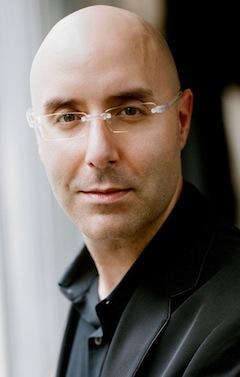
Mitch Joel, president of Mirum marketing agency. (photo from Mitch Joel)

“My first real job was in journalism,” he said. “A ‘nose for news’ doesn’t just apply to journalists, it applies to life. It’s a curiosity. It’s not really satiable, so I can’t imagine not having an entrepreneurial spirit, even if I was an entry-level employee.”

In addition to having one’s antennae always up, Joel encourages businesspeople to not fly solo, if they can help it. “Choosing that partner – making sure it’s the right fit – is really critical,” he said, noting that Mirum’s corporate leaders complement each other in their abilities. “We each hate what the other one is doing,” he said, with a chuckle.

Knowing one’s strengths and weaknesses is important, and so is knowing to whom your product or service is directed, he said. Joel is less interested in making broad generalizations of any generation – be it boomer, Gen X or millennial – than on the type of consumer.

“Selling to moms is very different than if we are selling to healthcare professionals. Selling to healthcare professionals is very different than selling to a group you are trying to get to open a checking account,” he explained. “I know a lot of people are making a lot of money on, ‘How do you speak to millennials?’ I think it is really hard to look at millennials and say they are a segment. You are talking about people of different gender, people of different interest levels, people of different education, people of different geography.”

In addition to his speaking engagements and corporate marketing advising, Joel has imparted some of his advice via two bestselling books. His first, Six Pixels of Separation, was named after his popular blog and podcast, and his second, CTRL ALT Delete, was named one of the best business books of 2013 by Amazon.

In CTRL ALT Delete, Joel discusses “flow,” a figurative time-management, three-legged stool, consisting of the personal, communal and professional. It’s a balancing act with which the husband and father of three still struggles.

“I just try to make sure that there is a balance of that stool because, if one leg is shorter than the other, it’s going to tip over,” he said.

But that doesn’t mean that work and family can’t overlap.

“I don’t consider it stressful to look at my inbox or think about a project when I’m not in the office. And vice versa, when I’m in the office, I might take off because there’s something with my kids, or there’s another thing I can do, and I can pick up on the work a little bit later,” he explained. “I’m not 100% successful all the time at hitting that balance, and there are moments when that stool looks like it’s tipping over dramatically. But, I’m aware of it and I think about it, and I focus on that – and I don’t beat myself up over it.”

Dave Gordon is a Toronto-based freelance writer whose work has appeared in more than 100 publications around the world.

Posted on June 30, 2017June 29, 2017Author Dave GordonCategories NationalTags Mirum, Mitch Joel, technology

Posts pagination

Previous page Page 1 … Page 211 Page 212 Page 213 … Page 322 Next page
Proudly powered by WordPress