Negev Dinner gala in photos

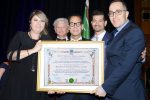
Left to right: Shannon Gorski, Gary Averbach, JNF Pacific Region president David Goldman, Michael Averbach and JNF shaliach Ilan Pilo. (photo by Robert Albanese)

The soldout Jewish National Fund of Canada, Pacific Region, Negev Dinner on June 4 at Four Seasons Hotel Vancouver honoured Gary Averbach and his two children who live locally, Michael Averbach and Shannon Gorski, for their service to the community. Proceeds from the gala will fund infrastructure improvements to the Israeli Scouts (Tzofei Tzamid) facilities in Raanana and Dimona, in order to make them more accessible for children and youth with disabilities. The Israeli Scouts, which runs programming for youth aged 9-21, has more than 80,000 members, including more than 2,500 children and youth with disabilities.

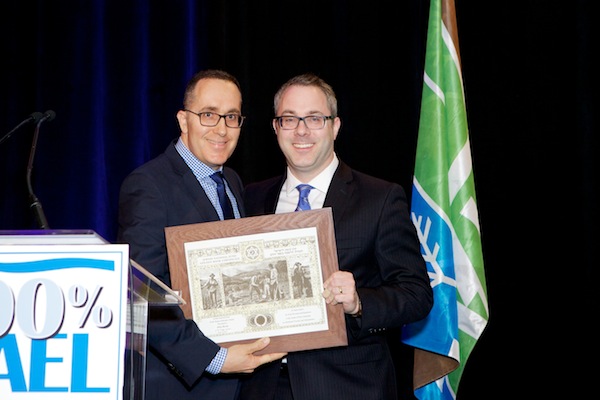
photo - Richmond Jewish Day School principal Abba Brodt, right, was honoured with JNF’s Education Award
Richmond Jewish Day School principal Abba Brodt, right, was honoured with JNF’s Education Award. (photo by Robert Albanese)
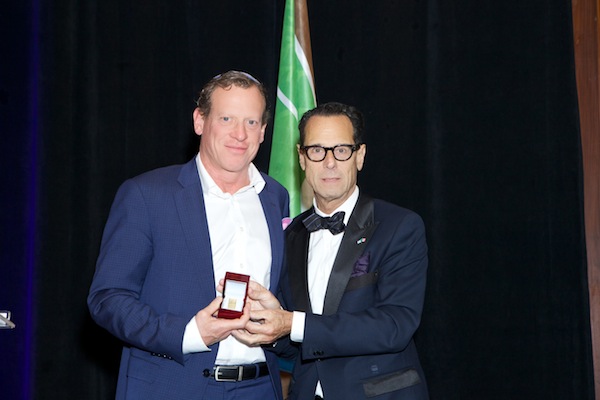
photo - Current JNF Pacific Region president David Goldman, right, presents the president’s pin to immediate past president Frank Sirlin
Current JNF Pacific Region president David Goldman, right, presents the president’s pin to immediate past president Frank Sirlin. (photo by Robert Albanese)
photo - Elaine and Zev Shafran, honourary gala chairs, together with Shay and Mickey Keil, and Ariel and Rachael Lewinski
Elaine and Zev Shafran, honourary gala chairs, together with Shay and Mickey Keil, and Ariel and Rachael Lewinski. (photo by Robert Albanese)
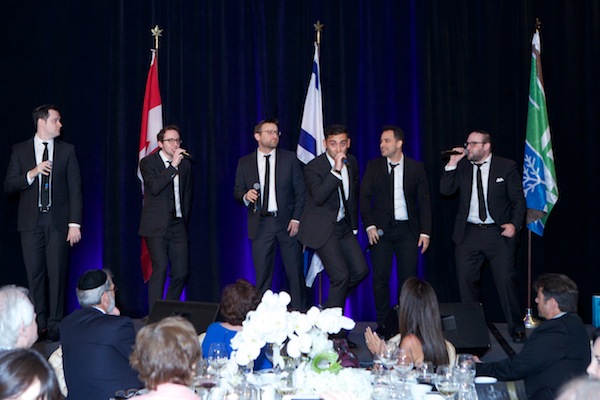
photo - The Maccabeats got the crowd up and moving
The Maccabeats got the crowd up and moving. (photo by Robert Albanese)

Bringing hope, saving lives

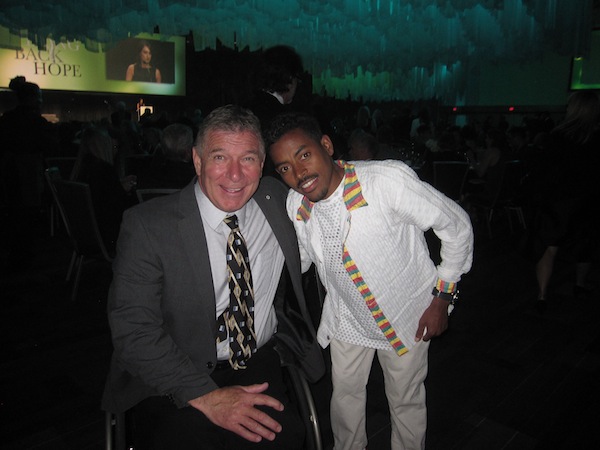
Right to left: Peter Legge interviews Dr. Rick Hodes and Dr. Oheneba Boachie-Adjei. Three of Hodes’ adopted children joined them onstage. (photo by Cynthia Ramsay)

An Evening to Bring Back Hope on June 8 raised almost $2 million for the work of Dr. Rick Hodes, medical director of Ethiopia for the American Jewish Joint Distribution Committee (JDC) and senior consultant at Mother Teresa Mission; spine surgeon Dr. Oheneba Boachie-Adjei, president and founder of FOCOS (Foundation of Orthopedics and Complex Spine) in Ghana; and the University of British Columbia Branch for International Surgical Care.

photo - Bring Back Hope co-chairs Nanci and Gary Segal
Bring Back Hope co-chairs Nanci and Gary Segal. (photo by Cynthia Ramsay)

The evening at Vancouver Convention Centre-East began with remarks from representatives of the three main religious communities in attendance: Jewish, Christian and Muslim. A two-minute video that was introduced by Justin Segal – son of gala co-chairs Gary and Nanci Segal – and Tesfaye Anagaw – who has become a part of the Segal family – showed the many things that had been accomplished with the funds raised at the previous Evening to Bring Back Hope, which took place in 2012.

There were greetings from senior representatives of JDC, Jewish Federation of Greater Vancouver and the UBC Branch, as well as an onstage interview by Peter Legge of Hodes and Boachie-Adjei, with many stories about the courage of their patients.

Gary Segal spoke about how he was inspired to help by Anagaw, Hodes and Boachie-Adjei. He met first met Hodes as part of a 2007 Federation/JDC trip to Ethiopia, where he learned that Anagaw’s spine had collapsed from tuberculosis and could not be operated on in Ghana. With the help of the Segals and others, the young man, then 18, arrived here in mid-2009 and received the life-saving surgery he needed at Vancouver General Hospital.

photo - Rick Hansen, left, and Tesfaye Anagaw
Rick Hansen, left, and Tesfaye Anagaw. (photo by Cynthia Ramsay)

The story of Mesfin Yanna, one of Hodes’ heart patients, was told through a video and the reading of an essay he wrote for his high school graduation in Atlanta – these were followed by his appearance onstage, holding his 5-year-old son. “This is a man who would have died twice were it not for Rick but has gone onto a productive life and one of giving back,” said Segal after the event.

Looking back, he said the event achieved his main goals: raising a large sum of money to support Hodes’ work and save as many lives as possible, to “inspire everyone in the room and, for at least that one night, bring a ray of light into an often-dark world filled with unfathomable violence and infuse people with a message of hope for our common humanity.”

Both Hodes (with three of his adopted sons) and Anagaw came to Vancouver from Ethiopia for the event, and stayed for a visit.

Community birthdays, awards

Team BC Junior Olympic level 10 (16+) were bronze medalists in the 2017 Canadian Championships in Artistic Gymnastics that took place in Montreal May 25-28. Congratulations to the whole Gymnastics BC team, which included 18-year-old Rachel Rubin-Sarganis (third from the left). (photo from Gymnastics BC)

***

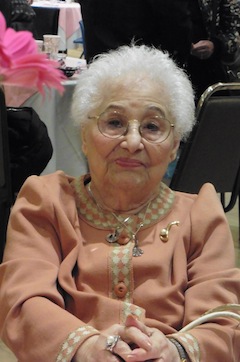
photo - Sylvia Hill
Sylvia Hill (photo from Jewish Seniors Alliance)

In the Pirkei Avot (Ethics of Our Fathers), we learn the saying, “Teach us to number our days so that the experiences of life should provide us with wisdom that only years can bring.” How fortunate we are that we have this exceptional woman, Sylvia Hill, admired by all who know her.

Sylvia has been part of the Jewish Seniors Alliance of Greater Vancouver since its inception and is an honourary life member. On June 6, Sylvia turned 103 years old. We honour her as she continues to inspire us with her staunch resolve to advocate for better lives for seniors – be it in the home where she was once president of the residents or within the community at large.

In the newsletter put out by the Snider Campus, Sylvia was called “the Face of Louis Brier” and was honoured during morning services on June 10, with a special kiddush following. On the day, we of JSA proudly wished you, dear Sylvia, a yom huledet sameach, a happy birthday, and we wish you continued good health for many years to come … beez (until) 120, and thriving, as has been the theme of JSA’s Empowerment Series this season. Continue being a beacon of light for us to follow!

With love and deep respect.

* * *

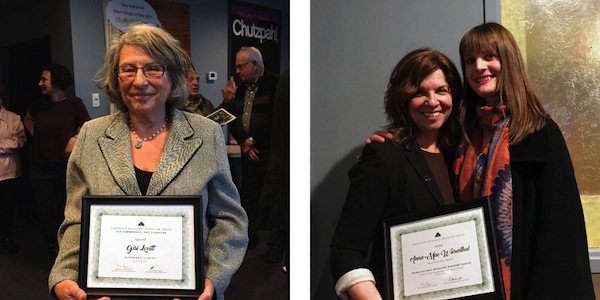
At the annual general meeting of the Vancouver Holocaust Centre Society for Education and Remembrance on June 14, Gisi Levitt received a Life Fellow Award for her 12 years of service as VHEC’s director of survivor services.

The Meyer and Gita Kron and Ruth Kron Sigal Award for Excellence in Holocaust Education was awarded to Anna-Mae Wiesenthal, who teaches Jewish history and English at King David High School. She recently worked together with VHEC on the Student Docent Training Initiative, a successful pilot project in which volunteer students from KDHS were trained to become docents. Two of the student docents, Milena Markovich and Jacqueline Belzberg, did an outstanding job of sharing with the audience their experiences of guiding their fellow students through the VHEC exhibition In Defiance: Jewish Resistance During the Holocaust.

photos - Gisi Levitt, and Anna-Mae Wiesenthal, left, and VHEC education director Ilona Shulman Spaar
Gisi Levitt, and Anna-Mae Wiesenthal, left, and VHEC education director Ilona Shulman Spaar. (photos from VHEC)

* * *

On June 20, Women in Film & Television Vancouver celebrated leaders for their outstanding work and contribution to advancing opportunities for women with their annual Spotlight Awards. This year’s recipients included Mark Leiren-Young, who received the Iris Award.

The Iris Award is given to a person who has demonstrated a commitment to the promotion of female creators and their screen-based works, either through curating or programming or through print and online media sources. Named after the Greek mythological figure Iris, associated with communication, messages and new endeavours.

Leiren-Young was also one of the finalists for the 2017 BC Book Prizes’ Hubert Evans Non-Fiction Prize for The Killer Whale Who Changed the World (Greystone Books).

Killer whales had always been seen as bloodthirsty sea monsters. That all changed when a young killer whale was captured off the west coast of North America and displayed to the public in 1964. Moby Doll – as the whale became known – was an instant celebrity, drawing 20,000 visitors on the one and only day he was exhibited. He died within a few months, but his famous gentleness sparked a worldwide crusade that transformed how people understood and appreciated orcas. Because of Moby Doll, we stopped fearing “killers” and grew to love and respect “orcas.”

Leiren-Young is a journalist, filmmaker and author. His Walrus article about Moby Doll was a finalist for the National Magazine Award and he won the Jack Webster Award for his CBC Ideas radio documentary Moby Doll: The Whale that Changed the World.

* * *

It was a banner year for the Leo Awards, which received a record 1,295 entries, from 301 unique programs in 14 different categories. Among the finalists was David Kaye – for best lead performance by a male in a motion picture for his work in Cadence and as part of the cast of Grocery Store Action Movie, which was nominated in the category of best music, comedy or variety program or series.

הערים היקרות בעולם

המדד מצביע השנה באופן מפתיע על העיר לואנדה (בירת אנגולה) כעיר היקרה בעולם. (צילום: oneVillage Initiative)

חברת הייעוץ הבינלאומית מרסר פרסמת כמדי שנה את מדד יוקר המחייה של הערים היקרות בעולם. המדד מצביע השנה באופן מפתיע על העיר לואנדה (בירת אנגולה) כעיר היקרה בעולם. העיר הזולה ביותר היא תוניס (תוניסיה) שממוקמת במקום ה-209. לקנדה יש חמש ערים ברשימה: ונקובר במקום ה-107, טורונטו 119, מונטריאול 129, קלגרי 143 ואוטווה 152. ישראל מיוצגת על ידי תל אביב במקום ה-17.

תשע הערים המשלימות את העשירייה הראשונה הן: הונג קונג (הונג קונג), טוקיו (יפן), ציריך (שווייץ), סינגפור (סינגפור), סיאול (דרום קוריאה), ז’נווה (שווייץ), שנחאי (סין), ניו יורק (ארה”ב) וברן (שווייץ). שווייץ מתברר יש ייצוג של שלוש ערים בעשירייה הראשונה.

הסקר שכולל 209 ערים בולטות בעולם מתבסס על השוואת מחירים של למעלה מ-200 תחומים שונים בהם: דיור לרכישה והשכרה, מזון ושתייה, תחבורה ודלק, ביגוד והלבשה, בידור ותרבות. המידע נועד לעזור לחברות בינלאומיות שמעוניינות לנייד עובדים בין מדינות. לפי המדד החדש הערים האירופיות ממשיכות לרדת בדרוג העולמי ולעומתן הערים האסיתיות עולות מעלה.

העשירייה השנייה כוללת את: בייג’ין (סין), טיינג’ין (סין), שנג’ן (סין), מוסקבה (רוסיה), ויקטוריה (סיישל), נג’מנה (צ’אד), תל אביב (ישראל), קינשסה (הרפוליקה הדמוקרטית של קונגו), גואנגג’ואו (סין) ודובאי (איחוד האמירויות הערביות).

העשירייה השלישית כוללת את: אוסקה (יפן), סן פרנסיסקו (ארה”ב), אבו דאבי (איחוד האמירויות הערביות), לוס אנג’לס (ארה”ב), סידני (אוסטרליה), טאיפיי (טאיוואן), סאו פאולו (ברזיל), קופנהגן (דנמרק), לאגוס (ניגריה) ולונדון (בריטניה המאוחדת).

העשירייה הרביעית כוללת את: ברזוויל (קונגו), שיקגו (ארה”ב), נאנג’ינג (סין), ליברוויל (גבון), נגויה (יפן), סנט פטרסבורג (רוסיה), הונולולו (ארה”ב), דאקה (בנגלדש), וושינגטון (ארה”ב) ובואנוס איירס (ארגנטינה).

העשירייה החמישית כוללת את: מיאמי (ארה”ב), שן-יאנג (סין), נומאה (קלדוניה החדשה), אביג’אן (חוף השנהב), צ’ינגדאו (סין), מלבורן (אוסטרליה), צ’נגדו (סין), אוסלו (נורווגיה), ג’יבוטי (ג’יבוטי) ופרת’ (אוסטרליה).

העשירייה השישית כוללת את: בוסטון (ארה”ב), ריאד (ערב הסעודית), בירות (לבנון), אקרה (גאנה), מנאמה (בחריין), ריאו דה ז’ניירו (ברזיל), מומבאי (הודו), אשגבאט (טורקמינסטן), עמאן (ירדן) ואבוג’ה (ניגריה).

העשירייה השביעית כוללת את: אוקלנד (ניו זינלד), דאלס (ארה”ב), פריס (צרפת), ווייט פליינס (ארה”ב), מונטווידאו (אורגוואי), דבלין (אירלנד), סנטיאגו דה צ’ילה (צ’ילה), יאנגון (מיאנמר), בנגקוק (תאילנד) ויאונדה (קמרון).

העשירייה השמינית כוללת את: קנברה (אוסטרליה), מילאנו (איטליה), בריזביין (אוסטרליה), יוסטון (ארה”ב), פורט אוף ספיין (טרינידד וטובגו), סיאטל (ארה”ב), אדלייד (אוסטרליה), וינה (אוסטריה), סאן חואן (פוארטו ריקו) ורומא (איטליה).

העשירייה התשיעית כוללת את: דוחה (קטר), מוריסטאון (ארה”ב), אטלנטה (ארה”ב), בנגי (הרפובליקה של מרכז אפריקה), אמסטרדם (הולנד), ולינגטון (ניו זילנד), מינאפוליס (ארה”ב), פנמה סיטי (פנמה), ג’קרטה (אינדוניזיה) והלסינקי (פינלנד).

העשירייה ה-10 כוללת את: קונאקרי (גינאה), מסקט (עומאן), דקר (סנגל), יאונדה (קמרון), דטרויט (ארה”ב), מנילה (הפיליפינים), הו צ’י מין סיטי (וייטנאם), מינכן (גרמניה), ניו דלהי (הודו) וקליבלנד (ארה”ב).

העשירייה ה-11 כוללת את: סנט לואיס (ארה”ב), האנוי (וייטנאם), באנדר סרי בגוואן (ברוניי), בריסל (בלגיה), לימה (פרו), שטוקהולם (שבדיה), ונקובר (קנדה), לוקסמבורג (לוקסמבורג), פיטרסבורג (ארה”ב) וסן חוסה (קוסטה ריקה).

העשירייה ה-12 כוללת את: גואטמלה סיטי (גואטמלה), נירובי (קניה), כווית סיטי (כווית), מדריד (ספרד), פנום פן (קמבודיה), פורטלנד (ארה”ב), פרנקפורט (גרמניה), ג’דה (ערב הסעודית), טורונטו (קנדה) וברלין (גרמניה).

והעשירייה ה-13 כוללת את: ברצלונה (ספרד), דיסלדורף (גרמניה), טשקנט (אוזבקיסטן), קיטו (אקוודור), המבורג (גרמניה), ברזיליה (ברזיל), ריגה (לטביה), במקו (מאלי), מונטריאול (קנדה) ופואנט-א-פיטר (גוודאלופ).

Roots cultivates peace

Left to right: Ali Abu Awwad, Shaul Judelman and Rabbi Hanan Schlesinger. (photo by hiddensparksphotography.com)

By bringing together Jewish settlers and Palestinian refugees, Roots is trying to help achieve peace.

Rabbi Hanan Schlesinger is one of the leaders of this group, which was established in 2014 by Ali Abu Awwad and Shaul Judelman. In being involved, Schlesinger said he is following in the steps of Rabbi Menachem Froman, who, “for most of his career, for three or four decades, advocated getting Palestinians who we live among to come to a point of dialogue, reconciliation and understanding.

“Froman’s students started a movement called Eretz Shalom, Land of Peace,” explained Schlesinger. “This organization did some activities to bring together Palestinians and Israelis, but really never made it off the ground. When he died, in 2013 … the students who were following in his footsteps, in terms of dialogue connections between Palestinians and Israelis, felt that they had better do something to continue his legacy…. Otherwise, it’s going to be gone.

“Those students, with his widow, in the last week of January 2014, had a little event together with some Palestinians they’d met, which brought together about 15 people from each of the sides. And, 95% of the people there were Israelis and Palestinians who’d met the other side during their lifetime, [were] involved a little bit in reconciliation. The one person there who had never been before was me.”

Schlesinger was deeply affected by the event. He had lived in Gush Etzion for 30 years, and had never met a Palestinian. And, upon meeting some of them, he realized how distorted his idea was of Palestinians.

“I went into a spiritual introspection of revisiting who I was and what I was doing on this land,” Schlesinger told the Independent. “And I forced myself to begin a journey that was leading me to examine many of my core beliefs – realizing it wasn’t just me and my people, that there was another people here who also belong here.

“Without really meaning to, I found myself creating a movement that was embodying this need to open up eyes and hearts, and continue my spiritual process, as well as help others in the spiritual process … that we, the Jews, are not the only ones in this land … that there are other people here and we need to take into account their existence, their humanity, their needs, their suffering.”

Schlesinger met with Palestinians who had been working toward a solution for more than a decade, but only with secular Israelis in Tel Aviv. Until Schlesinger made the connection, they had not sat down with Jewish settlers.

“They’d never met their own neighbours, who are religious Jews, who are deeply connected to the land in a religious, historical sense,” said Schlesinger.

As was the case with Schlesinger, these Palestinians began to undergo a transformation in their understanding. The Israelis with whom they had spoken before then had explained Zionism as of 1948, sometimes as far back as the 1880s. But the secular Israelis had never explained, because, Schlesinger said, they didn’t really know themselves, the ancient Jewish connection to the land – the land from the Jordan to the Mediterranean.

“These Palestinians were getting to know the foundations of Zionism and the Jewish history, culture and religion … just as I was getting to know the fact that there are Palestinians and that they have been living here for many, many years,” said Schlesinger. “Both sides were undergoing revelations.”

Seeing these positive results on a micro-level, with one another, they decided to create a foundation for macro-transformation.

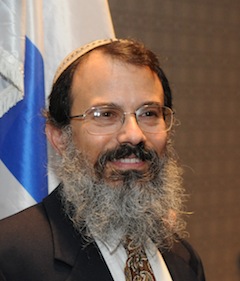
photo - Rabbi Hanan Schlesinger
Rabbi Hanan Schlesinger (photo from Roots)

According to Schlesinger, the Oslo Accord did not go far enough. He explained, “It didn’t involve religious Jews or settlers who are deeply connected to the roots of the conflict, the land and history. It marginalized them and swept under the rug, ignoring the roots of the conflict. On the Palestinian side, it didn’t involve observant Muslims. It didn’t involve people deeply connected to the land and history – the people today that they call ‘Hamas.’”

With about a thousand people from each side stepping up and coming to events, Schlesinger understands this is only a drop in the bucket. But, he takes solace in the fact that this is only the beginning.

“Those who do hear of us on both sides, most are critical or skeptical … [seeing us as] ridiculous or traitorous … [because we believe] the other side is worthy to talk to … is human,” said Schlesinger. “It’s really hard going, an uphill struggle. I’ll even say that, especially for our Palestinian partners, it’s particularly challenging. They’re being confronted in their societies and are asking themselves how they can allow themselves to go against the accepted narrative.”

Roots has created different activities with a focus on the youth, keeping in mind the larger goal of transforming Israeli and Palestinian societies.

“For the Palestinians, in their society, ‘dialogue’ is a dirty word,” said Schlesinger. “Dialogue is just a way for the Israelis to buy time before they completely take over their land and destroy them…. Again, their narrative is that Israelis just want to talk and that nothing comes of it.

“When we organize our summer camp and photography workshop, we have to really make it clear to Israelis that the goal is not [only] to get to know the Palestinians. The goal is to get to know them, so that we will have a foundation to bring peace and justice.”

Roots is now working with high school students, where the youth meet three times a month and have joint activities, meals, field trips and conversations about identity, narrative and truth. “This is creating ongoing connections that are powerful,” said Schlesinger.

The group is working to develop political awareness on both sides. They are finding that this aspect is moving much faster on the Palestinian side, as their situation is more dire.

“For the Israelis living here, life is more or less normal,” said Schlesinger. “Every once in awhile, someone is attacked with a knife or a gun and someone may be killed or injured, and that’s a terrible tragedy. But, most people are not killed in terrorist attacks and most don’t have children with relatives killed. Most people have normal lives.

“On the Palestinian side, it’s different. They live under military occupation every single day and they are suffering: suffering from poverty, disenfranchisement and from having their dignity stripped of them.

“I say all that to explain that although on the Israeli side the status quo, is not so bad and most people are willing to live with it … on the Palestinian side, the status quo is insufferable. Our hope is nothing less than peace, justice and reconciliation.”

A documentary has been made about Roots. Called The Fields, it focuses on the founding leaders on both sides – Schlesinger and Judelman on the settlers’ side and Awwad and Khaled Abu Awwad on the Palestinian side. A trailer of it can be watched at friendsofroots.net.

Rebeca Kuropatwa is a Winnipeg freelance writer.

Jews under the rule of Timur

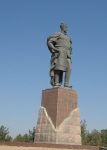
A statue of Amir Timur. (photo by Deborah Rubin Fields)

The 14th century was not a great time for European Jewry, to say the least – there were various kinds of persecution, including forced conversions, expulsions and massacres, especially in Western Europe. Yet, the Jews of what is now Uzbekistan got through this period relatively unmolested.

Turko-Mongol military leader Timur (Iron), who ruled from 1370 to his death in 1405, is also known historically as Tamerlane, from the Persian Timur-i lang (Timur the Lame), and Amir Timur (or Temur).

Timur conquered central Asia and parts of India – today’s Iraq, Iran, Afghanistan, Pakistan, Azerbaijan, Georgia, Uzbekistan, Turkmenistan, Tajikistan, Kyrgyzstan, large chunks of Turkey and Syria, and the northwestern portion of India. While it is estimated that his armies killed 17 million people, about five percent of the global population at the time, it seems he left Jews alone.

“Over the years, the moral justification for [Timur’s] campaigns … had evolved into a formality,” writes Justin Marozzi in Tamerlane: Sword of Islam, Conqueror of the World. “If the objects of his attentions happened to be Muslim, as they almost invariably were, then they had become bad Muslims. If they were infidels, so much the better.” Yet Michael Shterenshis, in Tamerlane and the Jews, contends that Timur did not consider Jews as infidels, at least not infidels needing to be violently eliminated, perhaps because they had no political ambitions and all they sought was Timur’s protection.

It would seem that Timur’s Jews were of more service alive than dead – which is a good thing, as Timur once reportedly constructed 28 towers from 70,000 of his enemies’ skulls, each tower consisting of 2,500 heads. According to Shterenshis, the ruler primarily used his Jewish subjects as taxpayers and skilled artisans. Jewish weavers and dyers contributed greatly to his efforts to rebuild the region and to reinstitute the abandoned Silk Road, which connected Europe to Asia.

Yu Datkhaev’s The Bukharan Jews is mentioned in Alanna E. Cooper’s Bukharan Jews and the Dynamics of Global Judaism. According to Cooper, Datkhaev argues that the term “Bukharan Jews” came to be after Timur moved several hundred Jewish families from Bukhara to Samarkand to assist in overhauling Samarkand, his designated capitol. These Jews reportedly lived near Timur’s recently rehabilitated and stunning Registan.

Timur’s Jewish subjects appear to have been loyal followers. Indeed, while Jews are not mentioned in his court history, there is a preserved letter from Herat physicians who ask the permission of Shah Rukh (one of Timur’s sons) to treat Timur’s injured soldiers. Significantly, they are offering their services to the state army, notes Shterenshis.

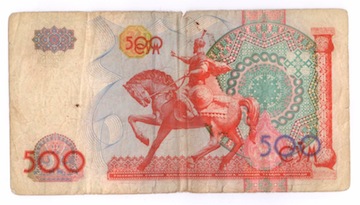
photo - Timur depicted on Uzbekistan’s 500 som note
Timur depicted on Uzbekistan’s 500 som note. (photo by Deborah Rubin Fields)

Timur seemingly responded in kind. He never issued anti-Jewish proclamations, laws, orders or restrictions. He never oppressed the Jews for being Jews, says Shterenshis. Under Timur, he adds, Jews were able to own houses and land, and they could be farmers – the regime did not impose upon Jews the role of moneylenders.

Jews under Timur’s reign were better off than the Jews of Europe and those in the Mamluk Sultanate, but were worse off than those who lived under the Mongols of China. Under Timur, Jews enjoyed a legal, but inferior status, writes Shterenshis. In contrast to their appointed role in other countries, Timur’s Jews were not particularly used as translators or envoys and their main occupations seem to have been as artisans, local merchants and doctors, says Shterenshis, noting that Jewish doctors under Timur did not enjoy the enhanced status they had previously, from the 10th to 12th centuries. Nonetheless, in local Jewish legends, Tamerlane is painted in a favourable light, says the historian, and is even supposed to have moved the Prophet Daniel’s remains to a tomb in Samarkand.

Some sources indicate that the Jewish presence in Samarkand pre-dates Timur’s rule. Tenth-century Samarkand (as well as Khorezm, Osh and Kokand) apparently hosted famous Jewish scholars, known in the singular as khabr, a word derived from the Hebrew chaver (friend or colleague), “which they used to distinguish themselves from ‘commoners,’” writes Irena Vladimirsky in “The Jews of Kyrgyzstan” (bh.org.il/jews-kyrgyzstan).

Indeed, the notion that Jews had been living in Central Asia prior to Timur’s rise to power is reinforced by the late-12th-century traveling Jewish chronicler Binyamin M’tudela (Benjamin of Tudela), who described this community as having as many as 50,000 members, among them “wise and very rich men.” Furthermore, the Samarkand community apparently appointed someone as nasi (head) of their community, who collected the requisite taxes of a recognized ahl al-demma (protected group).

In that period, Jews reportedly made Samarkand a major Jewish centre, and community members contributed to the construction of Samarkand’s aqueduct.

In the centuries after Timur, Jews came to dominate the region’s textile and dye industry, according to historian Giora Pozailov.

Uzbekistan’s aging Jewish population is now mainly concentrated in the cities of Tashkent, Samarkand and Bukhara. Even before the demise of the Soviet Union, Uzbek Jews began leaving, mainly for the United States and Israel. As the JTA article “Dwindling at home, Central Asia’s Bukharian Jews thrive in

Diaspora,” which can be found at ucsj.org, notes, Bukhara’s two synagogues almost never open at the same time, so that at least one of them has a minyan.

Deborah Rubin Fields is an Israel-based features writer. She is also the author of Take a Peek Inside: A Child’s Guide to Radiology Exams, published in English, Hebrew and Arabic.