Skip to content
  • Home
  • Subscribe / donate
  • Events calendar
  • News
    • Local
    • National
    • Israel
    • World
    • עניין בחדשות
      A roundup of news in Canada and further afield, in Hebrew.
  • Opinion
    • From the JI
    • Op-Ed
  • Arts & Culture
    • Performing Arts
    • Music
    • Books
    • Visual Arts
    • TV & Film
  • Life
    • Celebrating the Holidays
    • Travel
    • The Daily Snooze
      Cartoons by Jacob Samuel
    • Mystery Photo
      Help the JI and JMABC fill in the gaps in our archives.
  • Community Links
    • Organizations, Etc.
    • Other News Sources & Blogs
    • Business Directory
  • FAQ
  • JI Chai Celebration
  • JI@88! video

Recent Posts

  • BGU fosters startup culture
  • Photography and glass
  • Is it the end of an era?
  • Taking life a step at a time
  • Nakba exhibit biased
  • Fight for Jewish rights
  • Film festival starts next week
  • Musical with heart and soul
  • Rabbi marks 13 years
  • Keeper of VTT’s history
  • Gala fêtes Infeld’s 20th
  • Building JWest together
  • Challah Mom comes to Vancouver
  • What to do about media bias
  • Education offers hope
  • Remembrance – a moral act
  • What makes us human
  • המלחמות של נתניהו וטראמפ
  • Zionism wins big in Vegas
  • Different but connected
  • Survival not passive
  • Musical celebration of Israel
  • Shoppe celebrates 25 years
  • Human “book” event
  • Reclaiming Jewish stories
  • Bema presents Perseverance
  • CSS honours Bellas z”l
  • Sheba Promise here May 7
  • Reflections from Be’eri
  • New law a desecration
  • Resilient joy in tough times
  • Rescue dog brings joy
  • Art chosen for new museum
  • Reminder of hope, resilience
  • The national food of Israel?
  • Story of Israel’s north

Archives

Follow @JewishIndie
image - The CJN - Visit Us Banner - 300x600 - 101625

Category: Arts & Culture

Healing after tragedy

Healing after tragedy

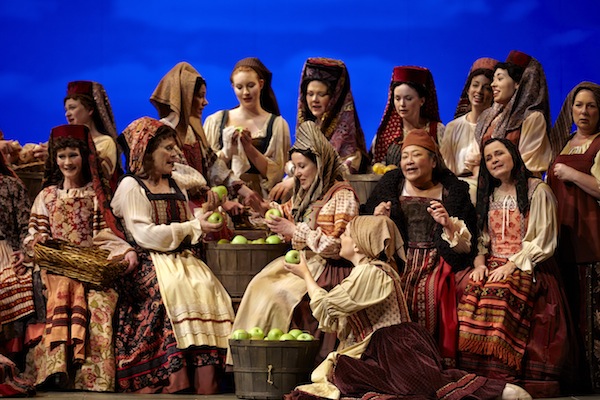
Mishelle Cuttler has the challenge of supervising the musical elements of The Events, which features a different community choir every show. (photo from Pi Theatre)

In 2011, while he was out with his son, who was then 12 years old, writer David Greig read the news that Anders Breivik had killed 77 people in Norway – eight using a car bomb in Oslo, which also injured more than 200 other people, and then traveling to the island of Utøya to a summer camp for teens, where he shot and killed another 69 and injured more than 100.

“My son saw I was very affected and, because he was wondering why, I began to try and tell him what the news was and its implications,” said Greif in an interview with BBC Writersroom. “He just kept repeating the question why? why? why? and I found the discussion quickly became very profound, about the nature of evil and whether it is ever possible to understand someone who shoots children for a political reason. I found trying to answer these questions became a compulsion I had to try and understand.”

The result was The Events, which came into being when Greig met producer Ramin Gray at the Edinburgh Fringe. Gray had been having similar thoughts, said Greig. “That meeting made me know it had to be a play.”

It’s a play that has been staged around the world, and presenting it in Vancouver are Pi Theatre and the PuSh International Performing Arts Festival. After every performance, there will be a post-show discussion and, after the Jan. 17 preview, Rabbi Laura Duhan Kaplan, director of inter-religious studies at Vancouver School of Theology, will speak about various aspects of the play.

While its initial questions came from the terrorist attack in Norway, The Events centres on Claire, a priest who works and lives in her community, including leading a community choir. When The Boy attacks that choir, Claire survives the shooting, setting her on a quest similar to Greig’s – and that of most of us, when such a horrific act is committed. She needs to know, why?

There are only two actors in the production. In Vancouver, Luisa Jojic will play Claire, while Douglas Ennenberg will play six characters opposite her, including The Boy, a grief counselor, the shooter’s father, a school friend of the shooter, Claire’s lover, and various others to whom Claire speaks in her effort to find understanding. A unique aspect of this play is that the choir is “played by” real community choirs, who have practised the music (score by John Browne), sing some songs from their own repertoire, and have some lines to read, but are not given the script.

Jewish community member Mishelle Cuttler has the challenge of being the musical supervisor and accompanist for the local show, which is directed by Richard Wolfe.

“The great thing about The Events is that the choirs are given ownership of the music,” Cuttler told the Independent. “We’ve provided each choir director with the material they need to learn, and my job is to facilitate their integration into the show each night…. I’ll be visiting each choir during their regular rehearsals and hearing how they’ve interpreted the music. I’ll talk them through how they will fit into the play, but they don’t ever see the full script. There will certainly be a lot of variables onstage each night, and that’s what makes this piece so exciting. The singers will be witnessing the show for the first time along with the audience.”

And the focus will be on the dialogue and music, without many other distractions.

“There will be a very small amount of recorded sound in the show,” said Cuttler, “but the majority of the aural experience will come from the singers, the actors and one upright piano.”

Pi Theatre has spent several months planning the logistics. “Essentially,” notes the press material, “more than 220 community members from 12 different choirs will participate over the show’s run.”

It also notes that, while Claire “struggles to understand the event that changed her life, we are asked to decide whether love and hope can survive in the wake of an inexplicable act of violence.”

The Events previews Jan. 17 and runs Tuesdays to Sundays until Jan. 28, with evening and matinée performances, at the Russian Hall, 600 Campbell Ave. Tickets ($31/$26) are available from pitheatre.com/the-events.

Format ImagePosted on January 12, 2018January 10, 2018Author Cynthia RamsayCategories Performing ArtsTags hope, music, religion, terrorism
Perpetrators offers new insights

Perpetrators offers new insights

Who could shoot at close range two million children, women and men who were standing at the sides of graves they had just been forced to dig? And then, when this process proved inefficient, who could herd four million more into cement bunkers and drop cyanide pellets on top of them? Were they monsters?

“Monsters do exist,” Primo Levi once said, “but they are too few in number to be truly dangerous. More dangerous are the common men, the functionaries ready to believe and act without asking questions.”

Christopher Browning, in his famous 1992 study of Holocaust perpetrators, Ordinary Men, came to the same appalling conclusion: the killers were simple, middle-class working men, “believing Christians” from all walks of life (including thousands of priests and seminarians), just witlessly and anxiously “following orders” and blindly obeying peer pressure, not, in most cases, virulent antisemites.

book cover - Perpetrators: The World of the Holocaust KillersThe controversial nonagenarian scholar Guenther Lewy, the author of Perpetrators: The World of the Holocaust Killers (Oxford University Press, 2017), and son of a camp survivor, begins his new study of Holocaust perpetrators with the same question: “How could such terrible deeds happen in the heart of Christian Europe and among a nation known for its poets and thinkers? What had converted so many seemingly ordinary people into killers, willing participants in what is the worst crime in modern history?”

Lewy’s study is the first English-language volume to make use of the 49-volume collection of 929 German trial records of Holocaust perpetrators recently published by the University of Amsterdam (it is not made clear why the records were not published in Germany). He also draws upon an enormous accretion of “previously untapped” sources such as the 50,000 letters and diaries of Wehrmacht soldiers recently released by German archives, as well as victim recollections and, most importantly, hundreds of trial records of Nazi functionaries, beginning in Nuremberg in 1945 and continuing to the present day. Of the 1,200 citations in the 25-page bibliography and the 600 footnotes, by far most of them are from the late 1990s to the present.

Lewy’s conclusion is similar to Levi’s and Browning’s: the perpetrators were not characteristically sadists or psychopaths, or even necessarily antisemites, but simply obtuse followers of orders, vassals to peer pressure, or simply “ordinary people” trying to advance their careers.

Lewy’s graphic details and conclusions will be familiar to readers of Saul Friedlander’s monumental Nazi Germany and the Jews, 1939-1945: The Years of Extermination (2007), but Lewy’s access to the most recent documentation brings some new and important facts to light.

First, the whole notion of a “clean Wehrmacht” can now be dismissed. Lewy proves conclusively that there was close contact between the Wehrmacht and the SS and particularly the 38 “Totenkopf” (“Death’s Head”) divisions of the Waffen-SS: new evidence shows that Jews were “squarely in the crosshairs of the Wehrmacht” and that the number of members of the Wehrmacht who took part in the murder of Jews “is in the tens of thousands.”

Second, Lewy’s close study of the new material available allowed him to conclude that “not a single person who asked to be relieved [from duty in the killing squads] was tried by a military court” and, in fact, “most of their requests were granted.” Lewy found 85 cases of Wehrmacht soldiers who refused to shoot civilians: all were simply transferred to other duties. The significance of this finding, of course, is that it puts the lie to the excuse frequently made by the killers that they “had no choice” and “had to follow orders.” (Lewy points out, significantly, that Yad Vashem has in fact recognized 45 Wehrmacht soldiers as “saviours of Jews.”)

In the sixth chapter of Perpetrators, “Flawed Justice,” Lewy makes his most significant mark. Here, Lewy reveals that, of the 200,000 or so former Nazi killers who, through 2005, were investigated by German authorities, fewer than 10% had charges brought against them; and, of these, only half were convicted. Light sentences were the norm; and only eight of the 2,000 former members of the Einsatzgruppen investigated received life sentences. Most of these examples of “flawed justice,” Lewy concludes, had to do with the fact that so many judges were “tainted” as former party members, and that German law (unlike Canadian law) distinguished between perpetrators and accomplices, usually finding the latter innocent, as they were “only following orders,” that they were only “tools” or were not “unseemingly zealous” in their murderous actions. (Two years ago, German courts finally adopted Canadian/American style “common design,” sharing the guilt between perpetrators and accomplices.)

In his final chapter, “Explaining the Holocaust,” Lewy concludes that nobody, ultimately, can simply give up his freedom. Situation, genetics, conditioning are all significant, but “they do not dictate or determine character.” In fact, recalling how anxiously in 1945 the Nazis strove to cover up what they had done led Lewy to conclude that “even Hitler and the members of his immediate entourage probably knew deep down that they were doing wrong.”

And, as Lewy concludes, in his last sentence, “The fact that so few avoided evil orders remains an ineradicable blot on an entire German generation and a cross that their descendants continue to bear.”

Perpetrators is a valuable addition to a long story, one which may never be conclusively told.

Graham Forst, PhD, taught literature and philosophy at Capilano University until his retirement and now teaches in the continuing education department at Simon Fraser University. From 1975 to 2010, he co-chaired the symposium committee of the Vancouver Holocaust Education Centre.

Format ImagePosted on January 12, 2018January 10, 2018Author Graham ForstCategories BooksTags Guenther Lewy, history, Holocaust, Nazis, Perpetrators
A history of Jewish humour

A history of Jewish humour

Matthew Gindin takes a pause in his talk, The History of Jewish Humour. (photo from Jewish Seniors Alliance)

On Nov. 24, the first session of the 2017-18 Empowerment Series started with a bang. Almost 80 people came out to launch the series’ season, which has the theme of Laughter and Music: Feeding the Soul. This first meeting was co-sponsored by Jewish Seniors Alliance and Sholem Aleichem Seniors of the Peretz Centre for Secular Jewish Culture, and it took place at the centre.

Featured speaker Matthew Gindin spoke on the topic The History of Jewish Humour. Gindin is a journalist, lecturer and teacher, and a regular writer for the Jewish Independent.

Gyda Chud, coordinator of Sholem Aleichem Seniors and vice-president of JSA, began the session by introducing JSA president Ken Levitt, who spoke briefly about JSA, and urged those who hadn’t yet joined, to become supporters and members.

Gindin began his talk by posing the questions, Why speak of Jewish humour; why do these words go so well together? He then proceeded to answer the question.

Jews have been over-represented in the comedy scene. At one time, they comprised 75% of the comics in America, while they were less than three percent of the population, he said.

Humour has a long tradition in Judaism dating back to biblical times. The name Yitzchak, Isaac, means “he will laugh,” explained Gindin. The prophet Elijah said that two jesters in the marketplace already had a place in the World to Come because they made people laugh. Reb Nachman of Bratzlav, the founder of the Chassidic movement, preached about the importance of happiness. Sigmund Freud also spoke of happiness and humour in his book Jokes and Their Relation to the Unconscious.

Jews are known for making fun of themselves, said Gindin. They have used humour as a means of preparing for things that could go wrong. It was a method of coping with the many negative experiences in their lives. He pointed out that this type of humour was mainly a product of Ashkenazi culture.

Gindin described several different types of humour. For example, jokes about assimilated Jews trying to fit into non-Jewish society, Chassidim telling jokes about themselves, Jewish folk humour, jokes told under Nazism and communism in order to relieve tension, and jokes about Israeli life. An example of folk humour can be found in Sholem Aleichem’s glossary of his stepmother’s curses. For example: “May you grow so rich that your wife’s second husband never has to work for a living.”

In the United States, Jewish humour became popular in theatres and comedy routines starting in the Borsht Belt, said Gindin. Much of this humour was self-deprecating. The comedians focused on such themes as Jewish-gentile differences, Jewish family dynamics, the stereotype of the Jewish mother, Jewish professions, the diminished role of the rabbi. An example is a joke about waiting for Moshiach (Messiah) – “at least it’s steady work.”

Gindin told many stories and had the audience in stitches. He then asked if there were questions or comments and if anyone had any good stories. The audience responded with many amusing jokes of their own.

Chud thanked Gindin and commented on how well he wove the theme of humour into its time and places and how well he explained how the words Jewish and humour went together. She then invited everyone for coffee and dessert.

The second session in this season’s Empowerment Series will take place on Jan. 24, in cooperation with Jewish Community Centre Seniors and will feature the film Broadway Musicals, A Jewish Legacy. This documentary, by Michael Kantor, narrated by Joel Grey, explores the unique role of Jewish composers and lyricists in the creation of the modern American musical.

There will be three more sessions on the Laughter and Music theme: March 21, with Temple Sholom seniors; April 17 with Beth Israel seniors, in conjunction with Jewish Family Services’ lunch program; and June 25, with Kehila Society in Richmond. For more information, visit jsalliance.org.

Shanie Levin, MSW, worked for many years in the field of child welfare. During that time, she was active in the union. As well, she participated in amateur dramatics. She has served on the board of the Jewish Federation of Greater Vancouver and is presently on the executive of Jewish Seniors Alliance and a member of the editorial committee.


Format ImagePosted on December 15, 2017December 14, 2017Author Shanie LevinCategories Performing ArtsTags comedy, Empowerment, humour, Jewish Seniors Alliance, JSA, Judaism, seniors
Play faces our mortality

Play faces our mortality

Kelly Sheridan and Peter Wilson in The Realistic Joneses. (photo by Nancy Caldwell)

The unfortunate truth is that we are all going to die some day. How we cope with our mortality defines our approach to life. Playwright Will Eno encapsulates this concept in his award-winning play The Realistic Joneses, produced by the Mint Collective and currently running at the Vancouver Culture Lab at the Vancouver East Cultural Centre until Dec. 17.

The New York Times has called Eno, “a Samuel Beckett for the Jon Stewart generation.” His life view comes through an intellectual lens of verbal dexterity and abstract projections that, at first blush, seem disjointed and oddly out of place, but eventually morph into a revelatory and provocative perspective on death and dying. Eno is a wordsmith but it takes some time and mental effort to understand exactly what is happening on stage.

The play had its debut at Yale Repertory Theatre in 2012 and then went on to a successful Broadway run in 2014, including a Drama Desk Award Special Award.

Next-door neighbours, both with the surname Jones, live in smalltown America. Bob and Jennifer, middle-aged longtime residents, are the foils for the newly wed 30-somethings John and Pony, whose lives intersect through the tragedy of the male side of each couple having the same degenerative neurological condition that affects memory and speech. Both men are undergoing experimental treatments from a local specialist. Each knows there is no cure and deals with this reality in his own way. Their coping mechanisms define the play and expose the vulnerability and pathos of those with terminal conditions.

The action is portrayed in a series of vignettes, snapshot moments in the lives of these two generationally divided families as they forge an uneasy friendship in the dance towards death. These people are real, albeit a little weird. The dialogue is witty and fast-paced – in this play, “the words are the thing.” Despite the dark nature of the subject matter, there are some very funny moments.

Joan Bryans is brilliant as Jennifer, the long-suffering and brave wife who has given up her career to become her husband’s caregiver and tries to give his deteriorating life a sense of normalcy. Community member Charles Siegel plays Bob with an almost childlike, naive demeanor as his memory slowly fades. As the younger couple, Peter Wilson plays John, the quirky doting husband, in a maniacal sort of way and Kelly Sheridan is the scatterbrained Mrs. Jones Junior.

The intimacy of the black-box Culture Lab adds to the audience experience. The divided set is simple: one half is the backyard of the older Joneses, the other half is the kitchen of the younger duo. Lighting and sound design complement the simplicity of the production. It is smalltown in anywhere America on a summer’s eve, replete with chirping crickets, hooting owls, barking dogs and chiming church bells.

There is no easy resolution at the end of the play, no happy ending tied up with a shiny bow to send audiences on their merry way out into the night, just the thought that this is the reality of life, with all its complications, and maybe, just maybe, that’s OK.

Tickets and more information can be found at thecultch.com or by calling 604-251-1363.

Tova Kornfeld is a Vancouver freelance writer and lawyer.

Format ImagePosted on December 15, 2017December 14, 2017Author Tova KornfeldCategories Performing ArtsTags Cultch, death
Reinvention of Salomé myth

Reinvention of Salomé myth

For the past five years, Jewish community member Adeena Karasick has been working with Grammy Award-winning composer/trumpeter Frank London on Salomé: Woman of Valor, a total art experience, groundbreaking in its interplay of poetry, music, dance and film.

Karasick’s libretto, which she will perform live, is a mix of historical, pop cultural, midrashic and kabbalistic references. The score blends Arabic, klezmer, jazz and Bhangra musics by the recently knighted (for his contribution to world music) London; performed with Indian percussionist virtuoso Deep Singh and Middle Eastern keyboard player Shai Bachar; dance created and performed by two dancers on the New York scene, (fellow Jewish community member) Rebecca Margolick and Jesse Zaritt; video by Elizabeth Mak, which deconstructs Charles Bryant’s 1923 silent film Salomé; and directed by Alex Aron, co-creator of A Night in the Old Marketplace.

After years of research, learning there was no basis for the way Salomé has been historically represented, Karasick wanted to re-insert Salomé back into her rightful place in history as a powerful revolutionary. She refutes Oscar Wilde’s misogynist and antisemitic interpretation, and has translated the myth to (no surprise!) one of female empowerment, socio-political, erotic and esthetic transgression.

Creating a work of this scope is an enormous undertaking, and the creative team has launched a Kickstarter campaign to raise money for the production’s world première at Vancouver’s Chutzpah! Festival, and then to take Salomé: Woman of Valor on tour internationally. The total project budget is more than $40,000 and the team needs to raise at least $20,000 to make its vision a reality. Each $180 gets the creative team an additional hour of time in the studio.

There has been nothing quite like this – poetry as a spoken word opera of exceptional scale and scope. Salomé: Woman of Valor offers new ways of seeing, reminding us how there is never one story or perspective to be told and allowing the unvoiced be celebrated and heard.

All donations are tax-deductible. To donate, visit kickstarter.com/projects/womanofvalor/salome-woman-of-valor. The all-or-nothing campaign deadline is Jan. 12.

Format ImagePosted on December 15, 2017December 14, 2017Author lome’s creative teamCategories Performing ArtsTags fundraising, Kickstarter, Salomé
A toast to love, Onegin

A toast to love, Onegin

(photo by Baila Lazarus)

Josh Epstein raises a glass to toast lyubov (love) in recognition of the theme of the hit play Onegin, in which he plays a jealous lover. In a rare opportunity, theatre-goers are actually encouraged to bring their drinks with them into the auditorium in order to join the cast when they toast. Onegin, which is a musical with comedic overtones, has been brought back to the Arts Club after a successful showing in 2016 and runs until Dec. 31 at the Granville Island stage. For tickets and more information, visit artsclub.com.

Format ImagePosted on December 15, 2017December 14, 2017Author Baila LazarusCategories Performing ArtsTags Arts Club, Josh Epstein, Onegin
Modern ancient Jewish tales

Modern ancient Jewish tales

“Golem,” by Dina Goldstein. Pigment print on paper. 32 x 40 3/8 inch. (© Dina Goldstein)

Artist Dina Goldstein is a proven storyteller, so it’s not surprising that she was asked to take part in the exhibit Jewish Folktales Retold: Artist as Maggid, which opened at the Contemporary Jewish Museum in San Francisco on Sept. 28. Metro Vancouverites will also have the chance to see her photographic interpretations of 11 “classic Jewish tales” – Snapshots from the Garden of Eden – at the Zack Gallery this month.

Jewish Folktales Retold was inspired by the book Leaves from the Garden of Eden: One Hundred Classic Jewish Tales by Howard Schwartz (Oxford University Press, 2008). As CJM executive director Lori Starr explains on the exhibit’s website: “Schwartz elucidates four varieties of these tales: fairy tales, folktales, supernatural tales and mystic tales. Fairy tales, he writes, are ‘fantasies of enchantment.’… Folktales ‘portray the lives of the folk as they imagined them, with … magical and divine intervention.’… Supernatural tales portray fears about the powers of evil entities and, finally, mystical tales are teaching stories of the great rabbis.”

“I was asked to participate over a year and a half ago,” Goldstein told the Independent. “At first, I discussed this with the curator, Pierre-François Galpin. At that time, I was planning on starting another series and I told Pierre-François that I just couldn’t take this on, as I saw it as quite an ambitious project.”

But, Goldstein was curious enough that she asked Galpin – who worked with CJM chief curator Renny Pritikin on the exhibit – to send her Leaves from the Garden of Eden so she could take a look.

“After receiving it,” she said, “I found that I really enjoyed reading these ancient stories. I told him that I could possibly photograph a few pieces as a contributing artist.

“I became intrigued by a few specific characters in the book and proceeded to take on more than I had anticipated at the beginning. I continued to photograph 11 pieces for the exhibit. I also decided to photograph the series in black-and-white large-scale tableau.”

Goldstein had free creative rein. “The museum did not give me any direction at all,” she said. “In fact, I came back to them with the chosen characters and ideas that I had for the retelling of these folktales. They did not see the work until it was completed.”

photo - Dina Goldstein was one of the artists whose work was commissioned by the Contemporary Jewish Museum in San Francisco for the exhibit Jewish Folktales Retold: Artist as Maggid
Dina Goldstein was one of the artists whose work was commissioned by the Contemporary Jewish Museum in San Francisco for the exhibit Jewish Folktales Retold: Artist as Maggid. (photo from Dina Goldstein)

The characters Goldstein has reinvented for contemporary audiences include Lilith (from the story “The Queen of Sheba”), Elijah (“The Cottage of Candles”), Golem (“The Golem”), King Solomon (“The King’s Dream”), the Princess in the Tower (in the story of the same name), the positive spirit Ibbur (“The Soul of the Ari”), the malicious spirit Dybbuk (“The Dybbuk in the Well”), the Tree of Life (“An Apple from the Tree of Life”) and Ashmodai (“The Bride of Demons”). She has also created an image inspired by the story “The Hair in the Milk.”

“I selected characters that were relevant and reappear throughout many of the tales in the collection,” Goldstein told the Independent. “I chose characters from each of the four types of tales: folktales, fairy tales, supernatural and mythical tales.”

She created two images for Ashmodai.

“I very much enjoyed this narrative, ‘The Bride of Demons,’ with relevant themes of desire and retribution,” said Goldstein. “The story is quite long, so I wanted to create a diptych to illustrate and interpret it in my own way.”

The Snapshots catalogue explains, “A devil king, Ashmodai is mentioned in talmudic legends and Renaissance Christianity. He is regarded as the demon of lust and is responsible for twisting people’s sexual desires.”

In one of the Ashmodai images, a woman in a bridal dress looks happily at herself in a half-length mirror; there are other mirrors in the room, which show her from different angles. In the second image, we see what looks like a garden, with the woman, buried, screaming, only her head and bridal veil above ground. The quote accompanying this disturbing scene is, “… And he longed to look at her … but he remembered the words of the rabbi and did not turn his gaze away from the king of demons. If he had, he would have seen his bride buried in the earth up to her neck, for she was almost lost to the Devil.”

All of Goldstein’s tableaux are striking, fascinating to explore and contemplate.

“I very much enjoyed uncovering these richly textured ancient tales and short stories, which include magnificent characters: kings and queens, princes and princesses, witches, mystics and malevolent wandering spirits,” she said. “Each of the characters face extraordinary challenges – placed in front of them by fate – that they must overcome. Every society is replete with myths and legends that transform and bend into parables that attempt to make order of life. It is this impact on culture, old and new, that led me to create a body of work that plays with satire, metaphor and irony.”

Goldstein’s photographic creations challenge viewers’ perceptions, asking them to reconsider the stories they’ve been told. Her collections include Fallen Princesses, which imagines how 10 of Disney’s princesses would face the challenges of real women; In the Dollhouse, which focuses on Ken and Barbie’s not so happily ever after; Gods of Suburbia, which brings various deities down to earth; and Modern Girl, which looks at consumerism in Western culture using the imagery of Chinese pinup girls from the 1930s.

The creative process for Snapshots from the Garden of Eden was similar to that of these previous works.

“I do my usual research online and then I hit the library for historical references,” said Goldstein. “I like to get a sense of how these characters have been depicted in art throughout history, what has been written about them from various sources. Many of these characters are actual historical figures. Others are supernatural and exist in various forms throughout the stories.”

It took her eight months to produce and photograph the series, she said. “Much of my work is in preproduction, organizing the cast and crew, the locations, and collecting all of the props and costumes and details that are germane to the final result of the piece.”

She concluded, “I am very fortunate to live in the city which has so much talent to utilize. All of the cast and crew are from Vancouver. I reached out on Facebook and social media to find all sorts of strange items – people pulled together to help out. I am thankful to Gordon Diamond, who has been a great supporter of my work throughout the years. Gordon will donate the series for viewing at the Jewish Community Centre in December.”

And, because of that, local community members will have the chance to see Goldstein’s work at the Zack. Snapshots from the Garden of Eden opens Dec. 14, 7 p.m., and runs until Jan. 20.

Format ImagePosted on December 1, 2017November 29, 2017Author Cynthia RamsayCategories Visual ArtsTags Dina Goldstein, folk tales, Judaism, photography, Zack Gallery
Reinventing old-time music

Reinventing old-time music

Woody Forster and Devora Laye of the Burying Ground. (photo by Mary Matheson)

Contrary to what you might expect, given the band’s name, there is much joy in the Burying Ground. Woody Forster and Devora Laye obviously love what they do, and it comes through in their music, their performances, their promotional photos and even in their responses to an email interview. So, from where does the name come?

“The name came from the Blind Lemon Jefferson song ‘One Kind Favor,’ where he uses the line to describe his resting place,” explained Forster. “I also see it as maybe a metaphor for us finding this music for ourselves that has essentially been buried and forgotten in popular music today, and we are trying to draw from that place and explore those musical styles again.”

The Burying Ground plays 1920s and ’30s blues, ragtime, country and jazz, as well as original works in those genres. Their upbeat songs evoke images of musicians jamming away on the wooden porch of a farmhouse, people dancing and enjoying some moonshine. Their hurtin’ songs, with Forster’s gravelly voice, can make you feel like pouring yourself a stiff drink. The pair share the vocals, with Forster on guitar and Laye on myriad instruments, including the washboard, cymbals, tin can and cowbell – the sounds she produces with the saw will make you shiver. Various other musicians join the duo for performances and recordings.

“I can’t exactly find a reason why I love the music from that era,” said Forster. “I just seemed to get drawn deeper into it as I explored the history and the musicians that created it all. There is certainly a raw intensity in the sounds, as well as a very genuine feeling that I maybe don’t get out of other types of popular music through the last century.”

In November, the Burying Ground released a vinyl version of their eponymous album, which came out in June this year. It followed by a mere six months the group’s January 2017 release, Country Blues & Rags, which is “a collection of the band’s renditions of some of their most beloved songs.” The Burying Ground’s first album was Big City Blues, in 2015.

“The new EP is 11 original songs,” Laye told the Independent. “Our process is different from song to song. The last song on the album, ‘Longing for Home,’ is a song that I wrote for guitar and voice. The melody often comes to me while I’m walking around. For this particular song, I was walking around Vancouver when I smelled woodstove smoke, which made me miss living on Hornby Island, where I spent a couple years in my mid-20s. I sang it for Woody and he played along.

“‘Mean Spirit Blues’ was a trickier process for it’s a more complex song. I hummed the melody to Woody and he put the music to it. He often suggests a bridge or middle part of the song and we just play around with the ideas. We bounce ideas off of each other and give each other feedback. It’s fun, challenging and a nonstop learning process.”

“We are always bouncing ideas off of each other creatively to see whether we are liking what the other is bringing to the table, and tweaking the songs so we are both happy with the final outcome,” agreed Forster.

“We are learning a lot about writing music together and pushing ourselves to constantly grow and improve – and, at the same time, having a lot of fun doing it,” he added.

The two are definitely in sync. They have known each other a long time.

“Devora and I met around 15 years ago now, although we didn’t start playing music with each other until much later,” said Forster. “The Dire Wolves [band] started around 2008 and it was originally formed as a three-piece with me on mandolin, Blake Bamford on guitar and Joshua Doherty on harmonica, with Devora joining in on washboard a short time after. When the band split up around 2013, Devora and I kind of threw around the idea of starting a new project – we were both huge fans of early Americana music and both got more serious about it. And, from there, it has grown into the project we have created, and continues to grow.”

Both Laye and Forster come out of Vancouver’s punk scene, having been in different groups over the years. “As time went on, I gradually got more into old-time, and started studying it seriously in the last five years,” said Forster. “One of our first performances was at a venue called the China Cloud and I can remember being super-nervous, my hands were shaking, and I forgot lyrics, but somehow got through it with out train-wrecking the show. It has taken me awhile to get used to singing and playing guitar in front of people in such a stripped-down form of acoustic music. Not to say I still don’t get nervous, but I can hide it a little better now.”

Laye’s musical path has been varied.

“At home,” she said, “I was always surrounded by music. My dad plays guitar and has always written songs. He used to sing and play for us at bedtime and, of course, many other times. Growing up, I was exposed to different types of music, from classical to folk to Jewish music (Shlomo Carlebach was a big hit for me). My part of going to synagogue every week was the singing. When I was old enough to walk to the synagogue on my own, I would go for the evening/ma’ariv service on Saturdays to sing the zemirot with the enthusiastic congregation.

“I always loved to sing and play,” said Laye. “My eldest sister, Aviva, played the flute and I thought that was really cool and decided I wanted to learn how to play. I started taking lessons from Andrea Minden when I was 7 years old. Started on the recorder, of course, because my hands were too small for flute!

“Anyhow, I studied with Andrea until I was about 14. She was in a family band called the Minden Ensemble and they’d play all sorts of unusual instruments, such as vacuum hoses, bottles, spoons, pots and pans and the saw. Andrea showed me how to hold and bow the saw. When I was in my early 20s, I decided to pick it up and teach myself how to play along to songs, and have been having a lot of fun with it ever since.”

And how did she come to the washboard, which she also plays in the Myrtle Family Band?

“I’ve always loved to tap on nearby objects,” she said. “I’d tap on tables, chairs, find music and rhythm in glasses. I think my parents have learned to appreciate that side of me! Haha. I taught myself to play a drum kit when I moved out of my parents’ house, and played drums for some years before picking up the washboard. I had a partner who played old-time banjo and he suggested that I pick up the washboard so we could jam. I wasn’t sure it was a real instrument and thought it slightly inferior to a stringed instrument but, soon after, realized it added a lot to the music and can really be the backbone of a band. I ended up getting more and more into the old styles and into the playing and here I am today playing every day.”

Forster and Laye are based in Vancouver now, but this has not always been the case.

“I spent much of the past year on the Sunshine Coast and commuting to the city for gigs and to see family and friends,” said Laye. “The coast has been really great. I love to be surrounded by the trees, down the street from the ocean – bears, deer, coyotes and cougars through my backyard! Room to think in the quiet.

“The community on the coast has been so supportive of the Burying Ground,” she said. “I didn’t really have any expectations of what it would be like. I didn’t really know anyone when I moved over to Gibsons, and feel very grateful to have met such kind, supportive and inspiring people. Smaller communities are often more supportive, there is the time for that when the pace is slower. The city can be real tricky to break into. There are so many musicians, so much going on all the time.

“The coast is also limiting,” she added. “As professional musicians, there are only so many gigs you can play. Our band lives in the city.”

For more information about the Burying Ground, to hear their music and check out their upcoming shows – including the JI Chai Celebration on Dec. 6 – visit theburyingground.com.

Format ImagePosted on December 1, 2017November 29, 2017Author Cynthia RamsayCategories MusicTags blues, Devora Laye, jazz, ragtime, The Burying Ground, Woody Forster
Help share aliyah story

Help share aliyah story

An illustration from Yerus Goes to Jerusalem. (photo from Sid Tafler)

The Ethiopian aliyah to Israel inspired people around the world when it was first revealed in the 1980s. Today, there are 125,000 first-, second- and third-generation Israelis from Ethiopia.

The story of the courage and determination of the community to return to Eretz Yisrael after 2,000 years of isolation from the rest of the Jewish world is told in the beautiful children’s book Yerus Goes to Jerusalem. About a young girl’s experience making the difficult journey from her village in Ethiopia, the award-winning book, written in Hebrew and illustrated by Ethiopian artist Moran Yogev, is well known to thousands of Israeli students and their parents. A new crowdfunding campaign will translate it into English, to make it accessible to Jewish schoolchildren everywhere, so they can share in the triumph of the Ethiopian community in achieving their dream.

Everyone is invited to join this venture with a donation of any amount, large or small. Only $20 will reserve one of the first copies of Yerus Goes to Jerusalem published in English for your children, grandchildren or your synagogue or Hebrew school.

This campaign is led by Dror Yisrael, a service organization in Israel, and a committee of organizers, mostly in Israel and the United States, including Sid Tafler of Victoria, the only Canadian on the committee.

To donate to the crowdfunding campaign, which ends Dec. 1, and for more information, visit jewcer.org/project/yerusgoestoyerusalem or facebook.com/yerusgoes. For the options of how to donate after Dec. 1, email Gilad Perry at [email protected].

Format ImagePosted on December 1, 2017November 29, 2017Author Sid TaflerCategories BooksTags aliyah, Ethiopia, fundraising, Israel, Yerus
The prayers within the walls

The prayers within the walls

Nolan Hupp and Annika Hupp play two schoolchildren who protest to save the shul in The Original Deed. (photo by Gayle Mavor)

When Rabbi Shlomo Carlebach, z”l, sometimes known as the “Singing Rabbi,” visited Victoria on a concert tour in the 1960s, he heard about a plan to move the city’s downtown synagogue, Congregation Emanu-El, to the suburbs. According to local lore, the singer/songwriter’s impassioned advice to the shul community was, “Don’t sell the place. There’s too many prayers in the walls!”

In The Original Deed, staged for the first time last month by the play’s author, Sid Tafler, a similar thought emerged from the lips of the story’s main character, Sam Abelman, played with pathos and humour by Toshik Bukowiecki.

Sam, an amalgam of several longtime Victoria residents, invited his granddaughter, Ellen (delightfully portrayed by Ava Fournier), to listen as they walked together through the synagogue on a wet November day.

All Ellen heard was the sound of traffic outside. Sam smiled and said he heard people praying, even though the two of them were the only living souls walking around the old shul.

The plan of Sam’s son, Morris, to sell the old synagogue puts him at odds with his father, who had his heart set on restoring it. Their struggle fills most of the play, providing a perfect storm of difficult family dynamics made even more poignant by Jewish geography.

An active city-centre heritage synagogue is rare in Canada. During the last half-century, most urban Jewish communities moved to the suburbs, but not Victoria. This play helps us imagine why.

photo - Zuzana Macknight plays Rivka Abelman
Zuzana Macknight plays Rivka Abelman. (photo by Penny Tennenhouse)

Performed at Congregation Emanu-El, the action unfolded within the synagogue’s sanctuary, mystically directed from the bimah by the ghost of Sam’s wife, Rivka.

The role of Rivka was tenderly portrayed by Zuzana Macknight, an accomplished Czech actress forced from her homeland in 1968 after it was invaded by the Soviet Union and its Warsaw Pact allies. Macknight expressed a deep affinity for Rivka’s emotional journey through life as a child Holocaust survivor. Rivka felt such a passion for peace in her family that she managed to influence the play’s happy outcome from beyond the grave.

The greatest magic in this play swirled around its youngest actors. As Sam tells his granddaughter the story of his solo escape from Germany on a Kindertransport train to England during the Second World War, Nolan Nupp stole the show as Sam’s younger self. Nolan is a natural as Young Sam, who gave his bewildered little sister, Esther (played by Nolan’s real sister, Annika), a candy to help her remember him, as their mother tearfully forced them apart at a German train station.

In another flashback, Nolan communicated the horror Sam experienced as he watched the destruction of his beloved German synagogue during Kristallnacht, the Night of Broken Glass, which unmasked the Nazis’ murderous intent in November 1938.

All four child actors staged a protest as Victoria Hebrew School students, chanting and waving signs proclaiming, “Save our Shul,” dressed as the elders who inspired them.

Although you may have missed this heart-warming show, which only ran four nights to packed houses in Congregation Emanu-El’s storied sanctuary, you can still visit. Come for Shabbos on a Saturday morning when you can hear prayers in the walls and add your own.

Shoshana Litman, Canada’s first ordained maggidah (female Jewish storyteller), lives in Victoria.

Format ImagePosted on December 1, 2017November 29, 2017Author Shoshana LitmanCategories Performing ArtsTags Emanu-El, history, Original Deed, Sid Tafler, theatre, Victoria

Posts pagination

Previous page Page 1 … Page 102 Page 103 Page 104 … Page 163 Next page
Proudly powered by WordPress