
Skip to content
  • Home
  • Subscribe / donate
  • Events calendar
  • News
    • Local
    • National
    • Israel
    • World
    • עניין בחדשות
      A roundup of news in Canada and further afield, in Hebrew.
  • Opinion
    • From the JI
    • Op-Ed
  • Arts & Culture
    • Performing Arts
    • Music
    • Books
    • Visual Arts
    • TV & Film
  • Life
    • Celebrating the Holidays
    • Travel
    • The Daily Snooze
      Cartoons by Jacob Samuel
    • Mystery Photo
      Help the JI and JMABC fill in the gaps in our archives.
  • Community Links
    • Organizations, Etc.
    • Other News Sources & Blogs
    • Business Directory
  • FAQ
  • JI Chai Celebration
  • JI@88! video

Recent Posts

  • Sharing her testimony
  • Fall fight takes leap forward
  • The balancing of rights
  • Multiple Tony n’ Tina roles
  • Stories of trauma, resilience
  • Celebrate our culture
  • A responsibility to help
  • What wellness means at JCC
  • Together in mourning
  • Downhill after Trump?
  • Birth control even easier now
  • Eco-Sisters mentorship
  • Unexpected discoveries
  • Study’s results hopeful
  • Bad behaviour affects us all
  • Thankful for the police
  • UBC needs a wake-up call
  • Recalling a shining star
  • Sleep well …
  • BGU fosters startup culture
  • Photography and glass
  • Is it the end of an era?
  • Taking life a step at a time
  • Nakba exhibit biased
  • Film festival starts next week
  • Musical with heart and soul
  • Rabbi marks 13 years
  • Keeper of VTT’s history
  • Gala fêtes Infeld’s 20th
  • Building JWest together
  • Challah Mom comes to Vancouver
  • What to do about media bias
  • Education offers hope
  • Remembrance – a moral act
  • What makes us human
  • המלחמות של נתניהו וטראמפ

Archives

Follow @JewishIndie
image - The CJN - Visit Us Banner - 300x600 - 101625

Byline: The Editorial Board

Hope amid the conflict

We are still reeling from what happened in Israel on Oct. 7 and the war that has ensued.

Hamas carried out a brutal terror attack on Israel that targeted civilians, murdering 1,400 people and kidnapping more than 200 Israeli hostages. Jews worldwide are grief-stricken, angry and scared. It is hard to see the hope, as images of dead Israelis mix with images of dead Palestinians.

There is no doubt in our minds that Hamas needs to be incapacitated – its covenant explicitly states their intention to eliminate Israel and kill Jews. On Oct. 7, they reasserted their intention with a vengeance that cannot be ignored. Their unambiguous goal is genocide.

Posters we see around Vancouver that simultaneously accuse Israel of genocide for defending itself and call for the genocide of Israelis – “From the river to the sea, Palestine will be free!” – are abhorrent. People who support Hamas’s genocidal actions, implying, or outright stating, that Israelis deserve such cruelty do not care about humanity, do not believe in peace.

The people who are putting up the posters that ask, “Do you support indigenous rights? Then you support Palestine” are implying that Jews are colonizers and, therefore, deserve to be expelled, no matter how. But the Jewish connection to the land goes back thousands of years; we were dispossessed of it but never ceded it.

There are some two million Palestinians in Gaza, and they cannot be similarly dispossessed. More than half the population has been asked to leave their homes. Reports are that more than 4,500 have been killed from Israel’s bombing campaign.

Our hearts break at the type of war that fighting Hamas entails. The terror group uses civilians and civilian infrastructure as shields, ensuring that hundreds or thousands of innocent Palestinians die every time Israel defends itself militarily, even when it adheres to international law in its actions, including allowing humanitarian aid into Gaza.

One way or another, the people who live between the river and sea must find a way to coexist. That is quite literally the only way forward. As simplistic as this sounds, it is nevertheless true. That is impossible with Hamas as the controlling force in Gaza. But, when they are removed, what then? Replacing the figures at the top – whether in Gaza or in the Israeli government, the latter of which is something that will certainly be discussed in the aftermath of this horror – will not automatically negate deep mutual distrust among populations.

There are so many complexities and no end of theories as to how we have arrived at this point. What will happen next is less discussed, though there is the all-too-real possibility that the conflict will become regional – already the 22,000 residents of Kiryat Shmona, the largest community in the Vancouver Jewish community’s partnership region of the Upper Galilee, are being evacuated because of terrorist attacks from Hezbollah in Lebanon, which are expected to increase once Israel begins its ground offensive in the south. Some fear that the Hamas attack is less the main event than a distraction, a trap to lure Israel into an even more existential fight on multiple fronts.

Closer to home, there are security threats to Jews in the diaspora. Thankfully, Hamas’s call for a day of rage on Oct. 13 did not result in serious incidents. But the fear is real, and that is the purpose of terrorism. Jewish organizations and law enforcement agencies are working together to keep us safe. We must continue to live our lives as Jews, and not hide.

Some of our local community members have gone to Israel to fight. Other community members are rallying, marching and postering to make sure that the Israeli hostages being held captive in Gaza are returned home. More than $15 million was raised for Israel in just two weeks by the Jewish Federation of Greater Vancouver’s emergency campaign.

And, there are Israelis (Jewish, Muslim, Christian and others) and Palestinians who, despite the terrorist attacks and the war, continue against so many odds to work for peace. Groups such as Standing Together, Women Wage Peace, the Parents Circle, and others are working to shore up hope for peace, equality and coexistence. These groups deserve our support, moral and financial.

At the same time as we support our family and friends in Israel and one another here, as we call for the immediate return of the hostages and as we raise funds for aid, we must also support those activists and dreamers on the ground who advocate for a better postwar world.
Posted on October 27, 2023October 26, 2023Author The Editorial BoardCategories From the JITags evacuations, Gaza, genocide, Hamas, Israel, Kiryat Shmona, Palestinians, peace, terrorism, war

Grief is overwhelming

The Jewish community worldwide is experiencing pain and despair. Feelings of grief for the murdered, empathy for the injured, rage at the perpetrators and anguish and terror for the kidnapped are overwhelming. The deep heartbreak is palpable.

While events in the past have harmed Israelis’ sense of security and hopes for peace, these attacks seem to have shattered them. The invasion of Jewish homes, the seizing of Jewish people, young and old, reaching for their loves ones as they are dragged away – these are images hauntingly redolent of a stateless past, without a government capable of preventing large-scale, coordinated assaults on the dignity, human rights, freedom and lives of Jews. The magnitude of this terror, with the heart-rending images and videos that illustrate the dehumanization in a way impossible until recent technological advances, means this moment is uniquely affecting.

Israeli politicians and military strategists have largely aimed to “manage” the conflict. Now, there will be calls for a lasting resolution. Israelis will not tolerate a second experience like this. After a decade and a half of successive skirmishes and wars with Hamas, many, including top military officials, are warning this will be the last.

A resolution to the status quo is something everyone – even Hamas terrorists – agree on. What that resolution will look like is where differences emerge. The approach Israel takes will affect not only the reality there but, secondarily, the world’s attitudes and approaches to Israel … and to Jews, as is often the case. There is fear and anger and understandable calls for retribution – actions that, at press time, were partly being tempered by the presence in Gaza of an estimated hundred-plus hostages from Israeli villages and towns.

History has shown one thing to be sure of, and to brace for – the window of empathy for Israeli victims will inevitably close. The author Dara Horn wrote that “people love dead Jews.” What the world seems to welcome far less enthusiastically are Jews, and a Jewish state, that are very much alive, with agency in the world. As Israel’s response rolls out, we can expect much of the nascent public sympathy to evaporate.

We cannot predict the mayhem and pain that seems imminent for both Israelis and Palestinians in the coming days, weeks, months and possibly years as a result of this radically changed circumstance. However, the temptation to assert that “this changes everything” is almost certainly false. Some things will remain the same.

There is a core of intolerance and hatred at the heart of opposition to the Jewish presence in the region and to Jewish national self-determination. Peace has rarely seemed further away.

Not incidentally, some of the central values of Israeli society – providing affected individuals and families with support and resources in times of crisis – have been left to individuals and various networks of mutual aid. The governmental and political failure goes beyond not having been prepared for the terrorist attacks but extends to the aftermath. Families have been left by their government with little communication or intelligence on their lost, possibly dead, loved ones. Among all the sacred things left in ruins today, this may prove to be one of the most shattering remnants from this time. That, at least, was something that Israelis could rely on – and even that has been ripped away.

For Jewish Canadians, this conflict is at once so far away and so close and, for some of us – like the family and friends of Ben Mizrachi, the young Vancouver man murdered Saturday – so very close. Wherever we are, we must be there for one another, across all lines of geography, affiliation, background and, yes, politics. Right now, a resolution forced by military might be the preference of the most vocal people. The middle of a war can be a hard time to talk about peace. A moment of agony and outrage is a difficult moment to encourage reflection and restraint. And yet, lasting peace and justice depends on what happens next and how our institutions react. We cannot control the actions of others, as psychiatrist and Holocaust survivor Viktor Frankel suggested, we can only control our responses to these events. This is the choice each of us makes as we assimilate the inhumanity around us and reflect on our deeply held values.

Posted on October 12, 2023October 12, 2023Author The Editorial BoardCategories From the JITags antisemitism, Gaza, Hamas, Israel, terrorist attacks, war

Past, present & future

Jewish tradition says that all Jews were at Sinai. The people of Israel who fled Egypt received the Torah, but not just the travelers from the Exodus story were there. In the Jewish narrative, the handing down of the word was so definitive and essential that even Jews not yet in existence – up to the present day and on into forever – were said to have been present when Moses descended from the mountain. So profound was this moment that every Jew in all of eternity needed to be there to witness it.

Talk about togetherness! A people who humour portrays as intrinsically divided – “two Jews, three opinions”; the lone Jew rescued from the desert island who had built two synagogues (“The one I attend and the one I’d never set foot in”); “Everyone to the right of me is meshugenah, everyone to the left of me is a goy”; the jokes are endless – all in the same place at the same time, all united (well, except for the little golden calf incident).

It is tempting to imagine the Jewish people today as more divided than ever, at least in recent memory, especially in contrast with the aforementioned story of togetherness across all time and space. The various divisions in the local and global Jewish community are exacerbated by significant divisions in the body politic in Israel.

It may be true. Perspective on the forest is difficult when you are surrounded by trees. The present reality depends on the future. If the current political situation in Israel proves to be an aberration – if the proposed judicial reforms were to fail, say, and attempts to impose a more permanent intolerant conservative and religious imprint should falter – future Jews might look back on this moment as just one of Jewish history’s eras of communal discord. On the other hand, the future may cite this critical moment as a turning point.

There have been many turning points in Jewish history, of course. The Exodus was a pretty big one. Another big one was the declaration of the state of Israel, tangibly marked by the signing of the Declaration of Independence. And there have been many more turning points in between.

In an article recently, the chairman of the World Zionist Organization, Yaakov Hagoel, makes an interesting historical connection. Like the unity at Sinai, he argues that all Jews were present in Tel Aviv on that day in May 1948, each adding their name to that historic scroll.

“Beside the 37 actual signatures on it,” he writes, “there are millions more invisible signatures. Everyone has signed the Declaration. Each of us with his own special pen, values, stories and hopes. Over the years, we learned to unite around the Declaration, adding more and more signatures. Today, the Declaration is the basis of Israeli identity for all.”

The Declaration is indeed a model of compromise and inclusion. Notably, the inclusion of the “Rock of Israel,” which could be interpreted as God by the religious or literally as the rock, the land itself, for those of a less traditional bent.

Today, some enemies (and, frankly, some friends) depict Zionism as inherently a right-wing ideology. Of course, it is not. The belief that Jews have the right to national self-determination transcends politics. Zionism is not left, right, centre or limited to any other segment. It is a universal belief, inclusive of all who believe in the right of Jews to be “a free people in our own land.”

This is a pretty idea, easier in theory than in practice. Recently in this space, we lamented the large number of Israelis who say they are prepared to abandon the enterprise and leave Israel. We cannot judge people for the choices they make in their lives. Israel is not an easy place to live. Most, if not all, of us reading this right now do not live in Israel. We can, though, do everything in our power to advance an Israel and a Zionism that is inclusive … a Zionism that recognizes the diversity – as well as the unity, obscure though it may seem at times – among the Jewish people. We can commit what voice and power we have to advancing an Israel that not only encourages those already there to stay, but makes it a welcoming homeland for Jews everywhere, both in the present and in the future. Even, we might add, an Israel that is welcoming to Jews of the past – that is, respectful of the diversity they represented. The 37 diverse Jews who put pen to parchment 75 years ago represented the spectrum of Jewish ideas and visions at the time. The least we can do is attempt to do the same.

Posted on September 22, 2023September 21, 2023Author The Editorial BoardCategories From the JITags community, Declaration of Independence, Exodus, history, Israel, unity
VIFF 2023 ticket giveaway

VIFF 2023 ticket giveaway

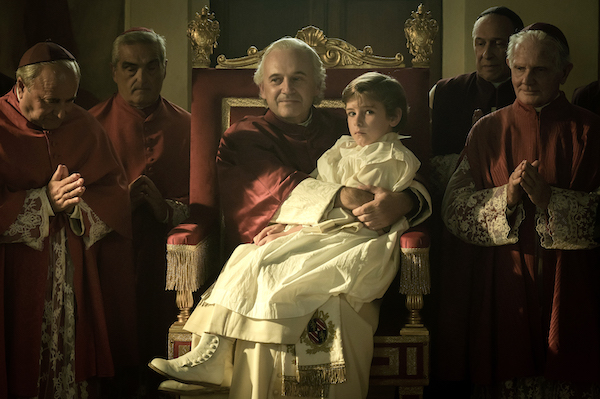
A still from the film Kidnapped, which is set in 19th-century Italy. In it, a 6-year-old Jewish child is abducted by papal soldiers who inform his parents that the boy was secretly baptized by a maid. If they want him back, they must convert to Catholicism. In the meantime, the boy will be educated in the Vatican at the feet of Pope Pius IX (Paolo Pierobon). There’s an international outcry, but even as the Church loses political ground with the emergence of an Italian state, the Pope remains adamant: the child has been saved.

Marco Bellocchio (The Traitor, Dormant Beauty and Exterior Night) seizes on this true story to mount a fierce denunciation of antisemitism and the excesses of the Catholic Church, as well as to chronicle a pivotal chapter in Italian history.

Email [email protected] by Sept. 27 for a chance to win two vouchers to see the Jewish Independent-sponsored film Kidnapped at the Vancouver International Film Festival Sept. 28, Oct. 3 or Oct. 6.

Format ImagePosted on September 22, 2023September 21, 2023Author The Editorial BoardCategories TV & FilmTags giveaway, Marco Bellocchio, Vancouver International Film Festival, VIFF

Moment for gratitude

This fall, for people with compromised immune systems or other health issues, extra precautions – social distancing and masking – remain a wise choice. For most people in Canada, the pandemic is over.

While the pandemic will never truly be past for those who lost family members and those whose health has been permanently affected (in ways we may not fully understand for years), this will be the first fear-free High Holidays since 2019 for the vast majority of Jews.

At the beginning of the pandemic, we were told it might take a couple of weeks’ isolation to overcome the spread. That stretched to three years of various levels of regulation and recommendations, decreasing and increasing again based on numbers of transmissions. Each new cycle of the calendar brought its own adaptations, beginning with outdoor seders and simchas – fine in Tel Aviv and Miami, less so, sometimes, in Winnipeg and Warsaw.

It is perhaps a symptom of both Jewish and human nature that, when one problem is resolved, we focus on another. It has been a dependable habit since the creation of the state of Israel that, when immediate external threats subside, attentions turn to internal disagreements – “Who is a Jew?” is a repeating topic, for example. Of course, one thing need not preclude the other. Israel is currently experiencing both external threats, in terms of a spate of terrorist attacks, and unprecedented political and social divisions.

But let’s not be so quick to find something to worry about. At this time of reflection, we all deserve to take a moment to consider the successes of the recent past. As we gather around holiday tables, we probably do not need to be reminded how fortunate we are to be together. Let us consider extending that sense of gratitude into the rest of our lives.

As young people return to classes, let’s celebrate the incredible resilience of kids who had formative years of their lives disrupted – and their teachers, who responded to exceptional circumstances! And parents, who admirably acted in the breach.

The synagogues and nonprofit organizations that are the backbone of our community transitioned on a dime to deliver programs and services as best they could during the pandemic – in many cases reaching more people virtually than they had in person, and expanding inclusivity and accessibility for all ages and abilities, as well.

Businesses that form the foundation of our economy – locally and globally – encountered supply chain (and plenty of other) constraints that they confronted as best they could.

We should also celebrate the manner in which our community steps up to respond to other urgent issues. Most recently, wildfires in British Columbia, Canada’s north, Hawaii and elsewhere – with Jewish people and organizations helping with accommodations for evacuees, food and other supplies, and more.

We have plenty of reasons to be concerned about the state of the world. There is time for that. During the month of Elul and into the Days of Awe, as we ponder the transcendent, take a few moments to consider and celebrate both the recent challenges overcome and the good fortune you experience in the day-to-day of life.

Posted on September 1, 2023August 29, 2023Author The Editorial BoardCategories From the JITags community, COVID, gratitude, Israel, Rosh Hashanah

To give up is un-Israeli

Israelis might be among the world’s most resilient people. Across 75 years of constant war or threats of war, terrorism, geopolitical isolation and global political assault, the Israeli people have built one of the world’s strongest democracies and most powerful economies.

Faced with an endless succession of external existential threats, not to mention internal divisions, Israelis have fought hard to survive and build the sort of state that accommodates, however imperfectly, the diversity of Jewish (and non-Jewish) identities encompassed by the population.

This is now under threat. The current government’s efforts to chip away at democratic structures is a grievous concern. And the political disruption is having demonstrative economic impacts as well. The “startup nation” has seen investment nosedive this year. In the first half of 2023, private financing fell 29% from the previous six-month period and 67% from the same period a year earlier.

While the economic numbers are the most tangible measure of the dangers of political instability and skirmishes, an opinion poll number stands out as at least as grave. A survey last month indicated that 28% of Israelis are considering leaving the country.

A recent feature story about a colony of expat Israelis who have made Hebrew a common sound on the streets of Thailand cited affordability and a laid-back lifestyle as among the draws that have brought more than 100 families to the town of Ko Pha Ngan in the last year alone. These families joined hundreds of Israelis who had already set up homes there. The Times of Israel reports most migrants cite Israel’s “pressure cooker” atmosphere as a leading reason for their move. We get that. People deserve to live the lives they want.

What is more challenging to understand is Israelis who are motivated to quit the country because they don’t like its political direction. The same opinion poll that said more than a quarter of Israelis are considering emigration showed that the current government would be headed for (by Israeli standards) a decisive defeat if an election were held now. Shouldn’t that count for something?

A plurality of Israelis seems poised to oust the government (if given the chance) and yet, rather than seeing this poll as a harbinger of hope, the children and grandchildren of those who persevered against enormous and impossible odds to rebuild the Jewish homeland are ready to give up the fight. (And, of course, we mean “fight” figuratively. Despite the fact that 56% of Israelis worry about civil war, the institutions the current government is attacking, though battered, are still strong and should not yet be dismissed as ineffectual.) If 28% of Israelis left, you can bet that the government that most of them oppose and which led them to abandon their homeland would be reelected in a landslide and be given a free hand to remake the country in the image they want.

We are worried by the apparent depth and breadth of the hopelessness. But hundreds of thousands of Israelis not only wish to change the government, they are taking to the streets every single week for many months to register their disapproval. Many of these are people who have never before engaged in politics. If the current government is traveling down untrodden paths of autocracy and iniquity, it is not meaningless that an enormous movement is amassing in response, potentially laying the foundation for a future sea change.

A lesson from close to home might be instructive. In the 1980s, British Columbia’s Social Credit government instituted a “restraint program” inspired by Reaganomics and Thatcherism that led to mass marches in the streets. Hopelessness gave way to one of the biggest mass mobilizations in the province’s history, in the form of Operation Solidarity. Long story short, that opposition movement, in a sense, emerged into the movement that is now dominant and that has transformed the province, the New Democratic Party having won one of the biggest majority governments in history, in 2020. John Horgan, the former premier who led the New Democrats to that huge victory, was inspired to get involved in politics during that tumultuous earlier time.

Presumably, an entire new generation of Israeli leaders are likewise being forged in reaction to the current developments. Whether they have the impact that British Columbia’s opposition movement-cum-government has had depends on whether they turn this moment into a lasting movement.

If we can point to any reason to lose hope, it is less the direction of the current government than, on the other side, the loss of hope and determination itself. If the policies of the current government seem un-Israeli to many of us, it seems no less un-Israeli to look at an existential challenge and give up.

Posted on August 18, 2023August 17, 2023Author The Editorial BoardCategories From the JITags emigration, Israel, opinion polls, politics

Pill-popping for peace?

Antisemitism, dubbed “the longest hatred,” has seemed impervious to challenge. It is a social problem that shifts to meet demand, allowing perpetrators to tailor it to fit their “need.” What if there were a pill you could prescribe to “cure” a person of antisemitism? There may be.

It seems almost like an April Fool’s joke or a Purim spoof, but the timing isn’t quite right. Rob Eshman, senior contributing editor to the Forward, published a piece last weekend suggesting there may indeed be a pharmaceutical answer to this age-old problem.

MDMA, the understandably needed short form for the drug methylenedioxymethamphetamine – aka “Ecstasy” or “Molly” – has been popular for some time, primarily with people who enjoy what the U.S. National Institutes of Health calls its effects of “sympathomimetic arousal, sensual enhancement, feelings of euphoria, and emotional closeness to others.”

Like most good things, of course, this drug comes with a wide range of unwelcome side effects. But the trade-offs have been deemed worthy enough that the drug has been used in Israel since 2019 to combat post-traumatic stress disorder, Eshman writes, and the U.S. Food and Drug Administration is expected to approve it for some uses in the next couple of years.

Israel’s use of MDMA for PTSD is far from the only Jewish connection the author found. The drug was first synthesized more than a century ago by Alexander Shulgin, a California pharmacologist whose Jewish family fled Russia, and who has been called “the zeyde of psychedelics.”

Last month, science journalist Rachel Nuwer (also Jewish) published the book I Feel Love: MDMA and the Search for Connection in a Fractured World, in which she shares the story of a white supremacist who was integral to the 2017 hate rally in Charlottesville, Va. After treatment with MDMA, the individual renounced his racist orientation and declared “Love is the most important thing.”

If there is a chance that an ingestible element (currently a banned substance in Canada, the United States and most places) could address a major scourge of civilization – not just antisemitism but all forms of hatred – do we not owe it to ourselves to allocate resources to investigating the pros (and cons)?

A variety of research is ongoing, of course, including an annual Jewish Psychedelic Summit, where medical, religious, psychology and other experts discuss psychedelics and Judaism. (It’s a virtual affair, so one can only imagine the hospitality suites if it were in-person.)

The application of plant medicines and synthetic drugs to combat what we generally deem a social problem may seem dubious – and researchers say it probably wouldn’t work if the recipient isn’t predisposed to change. However, the idea may not be as outrageous as it sounds. We recently ran an article about the late psychotherapist Dr. Theodore Isaac Rubin, whose landmark 1990 book Anti-Semitism: A Disease of the Mindposited that bias against Jews could in many instances be considered a mental disorder. We have long accepted, welcomed even, pharmaceutical responses to treatable mental issues. Why not this one?

Of course, anything that changes brain chemistry or neurobiology should be approached with immense care – more care, for example, than we have demonstrated in wildly embracing over the past several decades the new technologies that have been shown to shorten our attention spans and alter the functioning of our brains, as we discussed in this space last issue.

At the same time, we would be foolish to ignore the potential for something that could ameliorate some of the worst characteristics of the human experience. Think back at the horrors that might have been alleviated had we been able to slip a “love potion” into the water glasses of history’s most evil figures.

Some experts, Eshman explains, are looking into the role MDMA could play in addressing the Israeli-Palestinian conflict. While we work on other avenues for the changes needed to bring more love and justice to the challenges inherent in that conflict, if there is a glimmer of hope that a chemical solution exists for some of the most destructive features of our species, we would be fools to dismiss it.

Posted on July 21, 2023July 20, 2023Author The Editorial BoardCategories From the JITags Alexander Shulgin, Israeli-Palestinian conflict, MDMA, mental health, methylenedioxymethamphetamine, psychedelics, PTSD, Rachel Nuwer, Rob Eshman, science, Theodore Isaac Rubin

Artificial just got real

Jews have been called “the people of the book.” It was the power of and devotion to the received and unfolding written word that ensured the Jewish people’s unity (and diversity) across almost 2,000 years of exile. But who reads books anymore?

If you are perusing these pages, you probably belong to what has become a somewhat exclusive club – readers. Beginning with the advent of radio, picking up speed with the development of television, then supercharging connectivity while reducing attention spans with the advent of internet and social media, books have, for many people, ceased to be the primary go-to source for entertainment, pastime, learning or self-improvement.

When social media took off, in the early 2000s, most people, experts and us ordinary folks, didn’t really fathom the impact it would have on our society or on our physiology. Now, a few short years later, science is demonstrating that the speed with which images and ideas flash into our senses may be literally changing how our brains work.

It may be safe to say that giant leaps in artificial intelligence just in the last few months will have at least the same breadth of impact on societies and individuals.

Skeptics among us, who have dabbled a little in public interfaces like ChatGPT, have come away gobsmacked by the capabilities we have discovered – which are clearly just the tip of the iceberg. Perhaps the most wondrous (and scary) thing about artificial intelligence is that it may represent the beginning of an exponential, self-sustaining explosion. The Industrial Revolution began less than 300 years ago. Every modern convenience – practically everything we have outside of turnips and animal-skin garments – is a result of that explosive growth in human capability. For better and worse. For all the incredible advancements we have made, the price we are paying appears to be the future of our planet itself. All this in a mere three centuries. Artificial intelligence, even if we do not understand it now, will likely speed up change in ways that make today’s offerings look like the cotton gin.

The written word is just a small part of what artificial intelligence can do. Because it is one of the easier things to access for most laypeople, this component of ChatGPT is the one that most of us have probably played around with. Professors, employers and others are suddenly confronted with uncharted moral territory in dealing with brilliantly written submissions from students, employees and other correspondents, any of which may or may not have been written by human hands and minds. As one professor commented in media recently, what tipped him off to the problem was how dazzling some of the essays he received were.

And the time-saving! Artificial intelligence can write a letter to a recalcitrant employee, a grandparent, an old friend or a government official in a tiny fraction of the time it would take the ordinary person to draft a letter of far lower quality.

But who is going to read all these words?

Already, plenty of people have largely abandoned books. Even Jews, the people of the book, find much to do beyond reading. Just a little microcosm in our own community tells us this. Look at the corners of the Vancouver JCC that are the busiest at any given time. History and stereotypes should suggest that the Isaac Waldman Jewish Public Library would be packed with people from morning to night. It’s got a devoted and steady clientele, do not misunderstand, but, judging by foot traffic, you might think 21st-century Jews would be better known as the “people of the gym,” “the people of the pool” or “the people who gab endlessly in the boardroom.”

The bigger issue is, at some point with the advent of technology that just keeps producing more words, we will reach a tipping point at which there are more “writers” (human or otherwise) than there are readers. If a tree falls in the forest and there is nobody to hear it fall, it has been asked, does it make a sound? If words are put to paper (or screen) and never read, might it be as well if they had never been written at all?

Again: we use words as an example here because that is the field we know best. AI is set to upend almost every facet of our society. It feels like we are at a moment much more significant than that time 20 years ago when we first encountered social media, or 30 years ago, when most of us first ventured onto the World Wide Web. We can only barely fathom the good and bad (and indifferent) changes imminent.

Posted on July 7, 2023July 6, 2023Author The Editorial BoardCategories From the JITags AI, artificial intelligence, books, future, reading

An unwelcome precedent

An Israeli cabinet minister visited Canada recently and, with due respect, some of our journalistic colleagues buried the lede.

In journo parlance, the “lede” is the most important and, therefore, first item mentioned in a conventional news story. To “bury the lede” is to (intentionally or unintentionally) downplay the most important thing that happened by talking about other things first.

This was the case when Amichai Chikli, Israel’s new minister for Diaspora affairs and combating antisemitism, visited Canada recently. Some of our colleagues reported on Chikli’s condemnations of Canada’s government for not following some other countries in moving our embassy to Jerusalem from Tel Aviv and commended the Conservative party for “unwavering support for Israel and Jerusalem.” The minister’s abandonment of international diplomatic protocols appeared lower in the coverage.

It seems to us that there is a bigger story than an Israeli pol backslapping overseas allies and criticizing the government in power – although that is not unrelated from the bigger problem here. The main thing – the lede, as it were – is that an Israeli government minister came to Canada, sidestepped conventional protocols around meeting with commensurate-level officials, hung out instead with an ad hoc group of mostly opposition members of Parliament, spoke to an evangelical Christian audience and then scooted back to the Middle East.

Canada and Israel have deep, historic bilateral bonds. The Jewish community in Canada is tied to Israel emotionally, spiritually and familially. There have been diplomatic disagreements between our governments – and, indeed, there are some very basic divergences right now between Canadian Jews and what is happening in the Jewish state – but there are ways that things are done. And there are ways that things are just not done.

For four years, what many people view as the highest political office in the world was held by a man who betrayed every diplomatic nicety and convention imaginable. It may be that, among the countless ways the former U.S. president’s smashing of standards has lowered the collective bar, an Israeli politician sees it as acceptable to barge into Canada and behave as though he is a free agent rather than an official representative of the Israeli people. Canadians should not see it as acceptable. Canadian Jews should be particularly concerned.

An elected official who is not a member of a cabinet is free to travel to foreign lands and meet with ideological cohorts. A member of the government is expected to represent his (or her) country, not their own narrow interests.

The Canadian group that hosted Chikli – a new entity called the Israel Allies Caucus – is also to blame. Apparently operating outside the more formalized parameters of the longstanding official Canada Israel Interparliamentary Group, the new body appears to be made up of evangelical Christians and political conservatives, and it is abandoning protocols in favour of its own agenda. This should be particularly concerning to Canadian Jews who care about our country’s relations with Israel, as well as being overshadowed by groups that may not represent our interests.

Presumably, the new group views Canada’s official approach to Israel as not the right kind of support – but the specifics of government policy are not the biggest issue here.

Let us not forget that there are activists in Canada who recently tried to prevent former Israeli prime minister Naftali Bennett from entering Canada, accusing him of being a “war criminal.” Other voices, critical of policies of the current government, want to ban representatives of that government based on political disagreements.

Diplomatic protocols exist to create a space where representatives of countries can keep lines of communication open even when we have grievous disagreements, as we do, for example, with the worst human rights violators in the world. Indeed, Canada has carved out a role in the world as a “soft power” that uses words, rather than weapons, to bring sparring parties closer together.

If we diverge from diplomatic protocols and allow activists on any side to subvert these carefully constructed channels of communication, we risk further politicizing issues that should be above politics. More to the point, making Canada’s relations with Israel a political football is to risk long-term gain for someone’s perception of short-term gain. It may have made partisan ideological activists feel good to shmooze with an Israeli cabinet minister. It will feel less good for all concerned when policies that strengthen the Canadian-Israeli bond become viewed through a prism of which Canadian political parties benefit from their adoption.

Further, if we accept, from apparently “pro-Israel” activist MPs, a flouting of protocol, we will be hard pressed to complain when MPs host other overseas visitors we might view as troubling. If an opposition MP invites an Israeli, Palestinian or other speaker that many or most Canadian Jews view as deeply problematic and rolls out the red carpet on Parliament Hill as the Israel Allies Caucus did for Chikli, we will have no moral pedestal from which to complain.

Chikli should have known better. Higher-ups in his government should dress him down for his breach of protocol. But it was the leader of his government – the prime minister of Israel – who first and most egregiously breached such protocols, accepting an invitation several years ago from the U.S. Congress, rather than the U.S. president. (Of course, it was the Congress that broke the protocol first by extending the invitation, so we are addressing a larger pattern of inappropriate behaviour.) But Canadian Jews, even – perhaps especially – those who most enthusiastically welcomed Chikli, his undiplomatic behaviour and his impolitic remarks (whether we agreed with them or not!), should be aware of the unwelcome precedent they may have set.

Posted on June 23, 2023June 22, 2023Author The Editorial BoardCategories From the JITags Amichai Chikli, Canada, diplomacy, governance, Israel, Israel Allies Caucus, politics

Talking about antisemitism

The administration of U.S. President Joe Biden released its National Strategy to Counter Antisemitism recently. Unveiled by First Gentleman Doug Emhoff, Jewish husband of Vice-President Kamala Harris, the strategy rests on four main pillars: to increase awareness and understanding of antisemitism, including its threat to America, and broadening appreciation of Jewish American heritage; to improve safety and security for Jewish communities; to reverse the normalization of antisemitism and counter antisemitic discrimination; and to build cross-community solidarity and collective action to counter hate.

Canadian officials at the federal and provincial levels have also convened summits on the subject and introduced a range of strategies and programs to confront the problem. This recognition at the highest levels is crucial. As antisemitism has increased in North America and Western Europe, elected officials have overwhelmingly, with some notable exceptions, said and done the right things.

In his remarks at the launch of the U.S. strategy, Emhoff called for a “whole-of-society” approach to the problem. And this short reference is vital. Governments have been grappling with the rising problem of antisemitism and some other allies, organizations, antiracism activists and commentators have addressed it, but there is not a larger societal conversation about it.

We have not seen much discussion of antisemitism beyond the Jewish community the way we have seen contemporary popular engagement with, for example, anti-Black racism, as witnessed through the Black Lives Matter movement; women’s equality, as addressed through many approaches, including #MeToo; and Indigenous issues, most recently in Canada with the Truth and Reconciliation Commission.

The arc of the moral universe is long, but it bends toward justice, as Martin Luther King Jr. said. There has been hard-won progress in the six decades since the milestones of the Black Civil Rights Movement. But, sadly, most white people only became more engaged in recent years, as outrage over police-involved shootings and similar injustices became top stories. These spurred conversations at dinner tables, in work lunchrooms, boardrooms and among friends.

We have seen similar leaps forward in awareness and discussion around issues faced by Indigenous peoples in Canada, and those exchanges have likewise taken place at the person-to-person level, involving Indigenous and non-Indigenous people, but also as importantly, between non-Indigenous people themselves.

The #MeToo movement and a greater openness to talking about violence against women and gender equality are other cornerstones of social change in the past few generations.

Perhaps no single example of progress is more stunning than attitudes toward LGBTQ+ people, which has gone from literal criminal prohibition to a level of social acceptance in less than a single average lifetime. This, too, is a result of connecting at the personal level. Legislation and leadership from elected officials, clergy, journalists and commentators and other thought leaders have been important. But the thing that has the most power to change hearts and minds is hearing personal stories from people affected and hashing out moral questions among friends.

While other forms of discrimination and bias have been confronted to varying degrees, antisemitism is on a precarious upswing, but the public dialogue has yet to begin.

There is no single explanation for why this is so, but one undeniable characteristic of antisemitism is the trope of “Jewish power.” In the simplest formulation, if Jews are powerful, why would activists and antiracism advocates devote resources to this cause? This is especially true in the context of the larger discussion on race currently taking place, which emphasizes power versus powerlessness.

There are other reasons. Canada’s Jewish community is comparatively tiny and overwhelmingly concentrated in Toronto and Montreal. People in other parts of the country might not know many Jews – and knowing members of a minority community has been shown to be the likeliest prerequisite to overcoming prejudice (though it is by no means foolproof, of course).

Another factor is that, even for non-Jews who know Jewish people, those Jews may not be comfortable opening up about discrimination and oppression they have faced. Too often, Jews have been told, implicitly or explicitly, that they are not disadvantaged but privileged, that the Jewish people’s time as the victim du jour is passed. Complicating the discussion is the chasm of miscommunication and misunderstanding between Jewish and non-Jewish Canadians on issues relating to Israel and the centrality of the cradle of Jewish peoplehood in the hearts of nearly all Jews, regardless of affiliation, ideology or other differences.

As is the case with other minority groups, it should not be left to Jewish people to fight the discrimination against them and its associated manifestations. But it is, for the most part. Jews need to be prepared to start these conversations, and this involves educating ourselves, so that we can better articulate what are often painful and vulnerable personal relationships with discrimination.

Governments and Jewish agencies are doing what they can to confront antisemitism. Ordinary people, chatting with friends and colleagues, need to help bring this work to an interpersonal level. In an environment where Jewish experiences with discrimination are often actively mocked, this is a tall order. But it is even more reason we need to share our experiences and ideas more broadly – to start more discussions.

Posted on June 9, 2023June 8, 2023Author The Editorial BoardCategories From the JITags anti-racism, antisemitism, dialogue, discrimination, education

Posts pagination

Previous page Page 1 … Page 6 Page 7 Page 8 … Page 49 Next page
Proudly powered by WordPress