Skip to content
  • Home
  • Subscribe / donate
  • Events calendar
  • News
    • Local
    • National
    • Israel
    • World
    • עניין בחדשות
      A roundup of news in Canada and further afield, in Hebrew.
  • Opinion
    • From the JI
    • Op-Ed
  • Arts & Culture
    • Performing Arts
    • Music
    • Books
    • Visual Arts
    • TV & Film
  • Life
    • Celebrating the Holidays
    • Travel
    • The Daily Snooze
      Cartoons by Jacob Samuel
    • Mystery Photo
      Help the JI and JMABC fill in the gaps in our archives.
  • Community Links
    • Organizations, Etc.
    • Other News Sources & Blogs
    • Business Directory
  • FAQ
  • JI Chai Celebration
  • JI@88! video

Recent Posts

  • Story of Israel’s north
  • Sheltering in train stations
  • Teach critical thinking
  • Learning to bridge divides
  • Supporting Iranian community
  • Art dismantles systems
  • Beth Tikvah celebrates 50th
  • What is Jewish music?
  • Celebrate joy of music
  • Women share experiences 
  • Raising funds for Survivors
  • Call for digital literacy
  • The hidden hand of hate
  • Tarot as spiritual ritual
  • Students create fancy meal
  • Encouraging young voices
  • Rose’s Angels delivers
  • Living life to its fullest
  • Drawing on his roots
  • Panama City welcoming
  • Pesach cleaning
  • On the wings of griffon vultures
  • Vast recipe & story collection
  • A word, please …
  • מארק קרני לא ממתין לטראמפ
  • On war and antisemitism
  • Jews shine in Canucks colours
  • Moment of opportunity
  • Shooting response
  • BC budget fails seniors
  • Ritual is what makes life holy
  • Dogs help war veterans live again
  • Remain vital and outspoken
  • An urgent play to see
  • Pop-up exhibit popular
  • An invite to join JWest

Archives

Follow @JewishIndie
image - The CJN - Visit Us Banner - 300x600 - 101625

Byline: Cynthia Ramsay

Praise for whistleblowers

Praise for whistleblowers

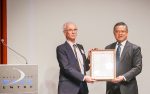
Alan Le Fevre, president of the Wallenberg-Sugihara Civil Courage Society, and Acting Mayor Raymond Louie, right, with the City of Vancouver’s proclamation of Raoul Wallenberg Day. (photo by Masumi Kikuchi)

“If we had a society that was free from embezzlement, free of theft, free of dishonesty, free of unethical conduct, we wouldn’t need whistleblowers. But, unfortunately, we are not a perfect society,” said Ujjal Dosanjh in his keynote address at the 13th annual Raoul Wallenberg Day event, which was held on Jan. 14 at the H.R. MacMillan Space Centre.

Dosanjh, a former federal cabinet minister, B.C. attorney general and the province’s 33rd premier, was, in 2015, the inaugural recipient of the Wallenberg-Sugihara Civil Courage Society’s Civil Courage Award. He was recognized for “his great courage in the face of escalating violence by extremists in the Indo-Canadian community that arose from conflicts that had erupted in India,” said WSCCS board member Ana Policzer in her remarks on Sunday.

The society hosts the annual Wallenberg Day event and, this year, they honoured Vancouver-based lawyer Alayne Fleischmann with the Civil Courage Award.

Fleischmann was born in Terrace, B.C. She got her bachelor’s degree in philosophy from the University of British Columbia, her master’s in international and comparative law from the Institute of International and Comparative Law, Cornell Law School and Université Paris (Sorbonne), and her juris doctor degree from Cornell. In 2006, she was working in quality control at JPMorgan Chase in New York. There, she discovered and tried to stop what she described as “massive criminal securities fraud” – mortgage operations similar to those of many other financial institutions, which led to the 2008 economic collapse. Her efforts resulted in a $9 billion fine being levied on JPMorgan Chase, but no one from the bank was ever prosecuted. She moved back to British Columbia in 2008.

In a 2014 Rolling Stone article, writer Matt Taibbi goes into great detail about Fleischmann’s experiences, the difficulties she faced in bringing the truth to light and the limited impact the truth played in whatever minor justice was carried out against all the banks guilty of mortgage-related wrongdoings. In effect, Taibbi argues, the U.S. department of justice “struck a series of historic settlement deals with Chase, Citigroup and Bank of America. The root bargain in these deals was cash for secrecy. The banks paid big fines, without trials or even judges – only secret negotiations that typically ended with the public shown nothing but vague, quasi-official papers called ‘statements of facts,’ which were conveniently devoid of anything like actual facts.”

The full Rolling Stone article can be accessed via wsccs.ca/wallenberg-days/2018. At the Wallenberg Day event, organizers screened a 2014 interview with Taibbi and Fleischmann by Democracy Now! WSCCS president Alan Le Fevre also spoke briefly about Fleischmann’s actions and why she was chosen to receive the Civil Courage Award. Unfortunately, Fleischmann could not accept the award in person because of the ongoing litigation.

In his remarks, Dosanjh saluted whistleblowers. “In Canada,” he said, “we don’t know too many of our own heroes…. But we have them. One that we have amongst us in Canada is the honouree tonight, Alayne Fleischmann.”

There are monetary costs to illegitimate or immoral actions, Dosanjh said, but such actions also “jeopardize the health, safety and well-being of the employees, the customers and the society of the institutions.”

Whistleblowers like Fleischmann set out to right a wrong, he said. They are morally compelled to the point where they take the “risk of losing their careers,” “being ostracized” and having rumours spread about them to “delegitimize the truth that they’re trying to tell.”

After such individuals come forward, he said, “life is never the same. You lose friends, you lose relationships, obviously you lose a job possibly, or you’re not promoted or you’re demoted…. And, sometimes, it can be dangerous physically. People have been known to be killed, at least across the border, for trying to expose the truth. Karen Silkwood comes to mind.”

Dosanjh warned that whistleblowers aren’t always correct, however, giving the example of eight B.C. health ministry workers who were found to have been wrongly dismissed in 2012, amid allegations of wrongdoing. “It’s a risky business,” he said. “You’re playing with your own life but you’re also playing with the lives of others you’re trying to expose.” So, you have to not only have the courage to speak up, he said, but the wisdom to know when to not do so, or when to investigate further before doing so.

Several audience members gave their take on corporate and government corruption in the question-and-answer period. Dosanjh said people need to get more vocal about these issues. “There is no silver bullet to deal with any particular issue,” he said. “It’s just a matter of becoming more active politically and raising your voices.”

To an audience member who decried greed as criminal, Dosanjh said, “If you say greed is the basic urge to make more money, that shouldn’t be a crime…. You want to make money, you want to work more … that’s what keeps the world going…. Illegal greed should be a crime – and it already is! The fact is we’re not prosecuting criminals, we’re not apprehending them, we’re not investigating them as much as we should, and we’re falling down in some respects.”

The afternoon event also included the reading by Acting Mayor Raymond Louie of the City of Vancouver proclamation of Jan. 14 as Raoul Wallenberg Day. He thanked event organizers and attendees for taking the time “to remember and to also recommit … with this ongoing effort to have a better world overall.”

The WSCCS is continually “seeking to identify people who, at significant personal risk, have helped to improve or save the lives of others by going against unjust laws or conventions.” For more information, visit wsccs.ca.

Format ImagePosted on January 19, 2018January 17, 2018Author Cynthia RamsayCategories LocalTags Alayne Fleischmann, Civil Courage Award, corruption, economics, finance, law, Ujjal Dosanjh, Wallenberg Day
Healing after tragedy

Healing after tragedy

Mishelle Cuttler has the challenge of supervising the musical elements of The Events, which features a different community choir every show. (photo from Pi Theatre)

In 2011, while he was out with his son, who was then 12 years old, writer David Greig read the news that Anders Breivik had killed 77 people in Norway – eight using a car bomb in Oslo, which also injured more than 200 other people, and then traveling to the island of Utøya to a summer camp for teens, where he shot and killed another 69 and injured more than 100.

“My son saw I was very affected and, because he was wondering why, I began to try and tell him what the news was and its implications,” said Greif in an interview with BBC Writersroom. “He just kept repeating the question why? why? why? and I found the discussion quickly became very profound, about the nature of evil and whether it is ever possible to understand someone who shoots children for a political reason. I found trying to answer these questions became a compulsion I had to try and understand.”

The result was The Events, which came into being when Greig met producer Ramin Gray at the Edinburgh Fringe. Gray had been having similar thoughts, said Greig. “That meeting made me know it had to be a play.”

It’s a play that has been staged around the world, and presenting it in Vancouver are Pi Theatre and the PuSh International Performing Arts Festival. After every performance, there will be a post-show discussion and, after the Jan. 17 preview, Rabbi Laura Duhan Kaplan, director of inter-religious studies at Vancouver School of Theology, will speak about various aspects of the play.

While its initial questions came from the terrorist attack in Norway, The Events centres on Claire, a priest who works and lives in her community, including leading a community choir. When The Boy attacks that choir, Claire survives the shooting, setting her on a quest similar to Greig’s – and that of most of us, when such a horrific act is committed. She needs to know, why?

There are only two actors in the production. In Vancouver, Luisa Jojic will play Claire, while Douglas Ennenberg will play six characters opposite her, including The Boy, a grief counselor, the shooter’s father, a school friend of the shooter, Claire’s lover, and various others to whom Claire speaks in her effort to find understanding. A unique aspect of this play is that the choir is “played by” real community choirs, who have practised the music (score by John Browne), sing some songs from their own repertoire, and have some lines to read, but are not given the script.

Jewish community member Mishelle Cuttler has the challenge of being the musical supervisor and accompanist for the local show, which is directed by Richard Wolfe.

“The great thing about The Events is that the choirs are given ownership of the music,” Cuttler told the Independent. “We’ve provided each choir director with the material they need to learn, and my job is to facilitate their integration into the show each night…. I’ll be visiting each choir during their regular rehearsals and hearing how they’ve interpreted the music. I’ll talk them through how they will fit into the play, but they don’t ever see the full script. There will certainly be a lot of variables onstage each night, and that’s what makes this piece so exciting. The singers will be witnessing the show for the first time along with the audience.”

And the focus will be on the dialogue and music, without many other distractions.

“There will be a very small amount of recorded sound in the show,” said Cuttler, “but the majority of the aural experience will come from the singers, the actors and one upright piano.”

Pi Theatre has spent several months planning the logistics. “Essentially,” notes the press material, “more than 220 community members from 12 different choirs will participate over the show’s run.”

It also notes that, while Claire “struggles to understand the event that changed her life, we are asked to decide whether love and hope can survive in the wake of an inexplicable act of violence.”

The Events previews Jan. 17 and runs Tuesdays to Sundays until Jan. 28, with evening and matinée performances, at the Russian Hall, 600 Campbell Ave. Tickets ($31/$26) are available from pitheatre.com/the-events.

Format ImagePosted on January 12, 2018January 10, 2018Author Cynthia RamsayCategories Performing ArtsTags hope, music, religion, terrorism
Celebrating chai, community

Celebrating chai, community

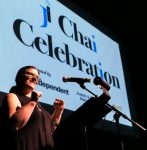
Cynthia Ramsay, publisher of the Jewish Independent. (photo by Alan Katowitz)

The JI Chai Celebration on Dec. 6 at the Rothstein Theatre was a sold-out event. The high-achievers and community-minded individuals who won the JI’s 18 Under 36 Awards were the highlights of an evening that included world-class entertainment and the launch of a brief video explaining the history of the Jewish Independent, which began its newspaper life as the Jewish Western Bulletin.

In my remarks at the celebration, I noted, “For 88 years, this newspaper has been bringing this community together. And yet, in all that time, there has never been an event – to my knowledge – where people have come together – literally, in the same room, like we all are tonight – to celebrate or acknowledge the existence of our community newspaper.

photo - JI’s 18 Under 36er Rabbi Levi Varnai, left, with JI Chai Celebration presenting sponsors Lorne Segal, centre, and Gary Segal
JI’s 18 Under 36er Rabbi Levi Varnai, left, with JI Chai Celebration presenting sponsors Lorne Segal, centre, and Gary Segal. (photo by Alan Katowitz)

“It’s funny to think how many annual general meetings, how many lectures, how many Negev Dinners, Innovators Lunches, JCC Sports Dinners, book festivals, film festivals, social, intellectual, religious events of every description, that the paper has covered in these decades. Yet the community has never before gathered together to turn our gaze toward the newspaper. In 88 years, there has never been an event like tonight’s.”

The JI Chai Celebration was presented by the Jewish Independent with the generous sponsorship of the Joseph and Rosalie Segal family and the Chutzpah! Festival. Both Gary Segal and Lorne Segal presented awards, as did Jewish Federation of Greater Vancouver board chair Karen James and CJPAC B.C. Region director Kara Mintzberg, who was the external adjudicator of the awards. The winners, in alphabetical order, were Rebecca Baron, Ezequiel Blumenkrans, Erin Brandt, Marcus Brandt, Ayelet Cohen Weil, Courtney Cohen, Aaron Friedland, Sam Heller, Talya Mallek, Ariel Martz-Oberlander, Logan Presch, Maya Rae Schwartz-Dardick, Mike Sachs, Allie Saks, David Schein, Rotem Tal, Carmel Tanaka and Rabbi Levi Varnai.

Several community members stepped up as sponsors – Gary Averbach, Shirley Barnett, David Bogoch, Tzipi Mann, JB Newall Memorials, Olive+Wild, Mark James and Red Truck Beer, Vancouver Learning Centre, Byron Sheardown and Web exPress and Yosef Wosk. And all of the performers – Amanda Hartley, Lisa Ehrlich, Goldie Hoffman, Vitaly Beckman, Jacob Samuel, Roller Dance Owl, Barbara Adler, Ron Samworth, Warren Kimmel and Wendy Bross Stuart – donated their time, and the Jewish Museum and Archives of British Columbia created a photo exhibit especially for the occasion. There were dozens of auction and prize donors. Under the direction of Bonnie Nish, JI staff and volunteers helped make the night the success it was.

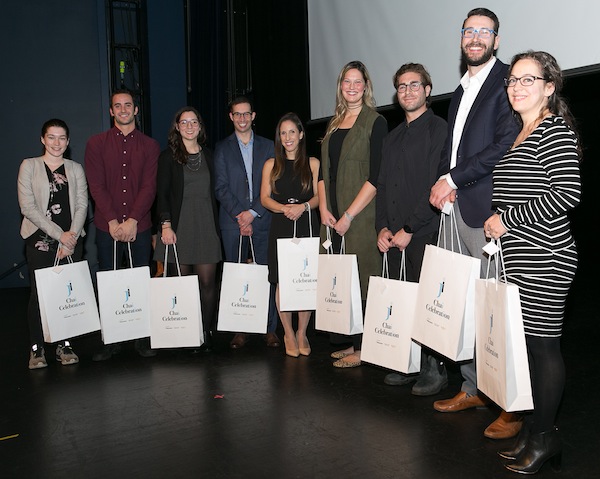
photo - Left to right, JI’s 18 Under 36 Award winners Rebecca Baron, Ezequiel Blumenkrans, Erin Brandt, Marcus Brandt, Ayelet Cohen Weil, Courtney Cohen, Aaron Friedland, Sam Heller and Talya Mallek
Left to right, JI’s 18 Under 36 Award winners Rebecca Baron, Ezequiel Blumenkrans, Erin Brandt, Marcus Brandt, Ayelet Cohen Weil, Courtney Cohen, Aaron Friedland, Sam Heller and Talya Mallek. (photo by Alan Katowitz)

“I hope we agree on the importance of having a Jewish community newspaper,” I said at the event. “I hope, further, that most of us would like one that represents all segments of the community and most opinions – we do have our red lines, I will admit.

“If we agree, I’m asking you to keep supporting the paper. And, I’m asking those of you who are new to the paper through this event, to subscribe, to advertise your business or organization, or to donate every so often if you prefer to just check out the website or pick the paper up for free at one of our 40 depots.

“And, I’m asking all of you to pass this message on to your friends. This newspaper is our collective record, our community’s mirror and its voice.”

photo - Left to right, JI’s 18 Under 36 Award winners Ariel Martz-Oberlander, Logan Presch, Allie Saks, David Schein, Maya Rae Schwartz-Dardick, Rotem Tal, Carmel Tanaka, Mike Sachs and Rabbi Levi Varnai
Left to right, JI’s 18 Under 36 Award winners Ariel Martz-Oberlander, Logan Presch, Allie Saks, David Schein, Maya Rae Schwartz-Dardick, Rotem Tal, Carmel Tanaka, Mike Sachs and Rabbi Levi Varnai. (photo by Alan Katowitz)

I acknowledged, “Of course, our community has many needs. We have so many superb organizations doing crucial work. And the Jewish Independent can’t give tax receipts like most of the others can. But we’re not a charity – we are your community asset … And we need your support.”

I concluded, “Thank you to everyone who has supported this paper for the past 18 years. In fact, there are some who have supported the paper for most of its 88 years. May I ask you to support us to 120 – and then may it be your grandchildren’s problem.”

To watch the video The Jewish Independent: 88 Years … and Counting!, click here.

Format ImagePosted on December 15, 2017January 30, 2018Author Cynthia RamsayCategories LocalTags #18under36, JI Chai Celebration
Publisher’s welcome

Publisher’s welcome

Cynthia Ramsay (in 2017). (photo by Lianne Cohen)

When we decided to have a celebration marking 18 years since the beginning of the latest chapter of the Jewish Independent’s nearly-nine-decade history, it made perfect sense to focus on the future as much as the past.

The centrepoint of the JI Chai Celebration is the JI’s 18 Under 36 Awards. The day’s headlines might be cause for dejection, but anyone who works with, or spends any time with, members of this community’s younger generations knows that the future is bright.

This truly is reason to celebrate.

I am amazed to think I’ve owned the newspaper for longer than some of our awardees have been alive. I don’t feel that old. On the other hand, it does seem like another lifetime when Kyle Berger, Pat Johnson and I bought the Independent’s predecessor, the Jewish Western Bulletin, from publishers Sam and Mona Kaplan. Kyle was 24, Pat was 34 and I was 29 – we all would have qualified for the JI’s 18 Under 36 Awards, and I’d like to think we might have offered some tough competition.

I would say to younger audiences, as both a promise and a warning: beware of how way leads on to way. Sometimes wonderful things happen and the mission of your life presents itself without you even realizing what’s happening.

My roots are not here. My immediate family has lived in Ontario for a long time now. And, when I came here about 25 years ago from Ottawa, I intended to spend a year in British Columbia, get my master’s in economics at Simon Fraser University, then return east and do a PhD in economics at University of Toronto.

But, I got a job in Vancouver as I was finishing my MA, and worked as an economist until, one day, I took a phone call from the then-publisher of the Jewish Western Bulletin. I’d never heard of him … or it. My involvement with the Vancouver Jewish community was through music – with the Vancouver Jewish Folk Choir, with whom I still sing today, and Beth Israel Choir. The paper was looking for someone to fill in writing editorials and I was looking for a change, so I agreed to take the job – for the summer.

As I mentioned, one thing leads to another, and the Kaplans, who had published and edited the JWB since 1960, wanted to retire. Pat and Kyle, my then-newfound friends and colleagues, suggested we put in a bid to buy the paper. I didn’t think the Kaplans would sell it to such a green team, as there were some other serious bidders with far more experience in business.

photo - Kyle Berger, left, Pat Johnson and Cynthia Ramsay, in 1999
Kyle Berger, left, Pat Johnson and Cynthia Ramsay, in 1999. (photo by Baila Lazarus)

But the Kaplans saw something in the three of us that I certainly did not. They were Orthodox Jews, Zionists who brokered no criticism of Israel, and believed in advocacy journalism. We were secular, Zionists of a rather more open-minded variety, firm advocates of free speech and believed that journalism should be as objective as possible. Despite our obvious differences, I think the Kaplans recognized in us something of the inevitable future.

While Kyle and Pat have moved on to other endeavours, they thankfully remain involved in the paper and are there to help and offer advice, with Pat still doing much writing, as well as serving on the editorial board.

Looking back at the past 18 years, I can say that, while we’ve had challenges, we’ve overcome them and we’ve had many more successes. And this is one of the major reasons for the JI Chai Celebration. We want to celebrate the fact that, with the community’s help and the hard work and dedication of so many over the decades, the Jewish Independent, this community’s newspaper, is a vibrant and evolving enterprise.

Still … it is no secret that the newspaper industry is a tough one these days, to put it mildly. We must find a way to keep the Independent a sustainable and quality publication – not just for the coming months, but for the coming generations. The funds raised through the JI Chai Celebration will go, in part, toward a study of North American Jewish community newspapers and other examples of community journalism, which might direct us to best practices and models for the future of the JI.

The incredibly generous financial support of Joseph and Rosalie Segal and family, and the support of Mary-Louise Albert of the Rothstein Theatre and Chutzpah! Festival, laid the foundation for this celebration. The contributions of Gary Averbach, Shirley Barnett, David Bogoch, LKP Holdings (Tzipi Mann and family), JB Newall Memorials, Olive+Wild, Red Truck Beer, Vancouver Learning Centre, Web exPress, Yosef Wosk and so many others made it all possible. Led by talented event manager Bonnie Nish, all of this came together in three months.

Everyone performing here today is donating their time, as is the bartender and the volunteers you’ve seen on tickets, at the auction tables, ushering, all about. And about that auction table – thank you so much to all the donors to the auction and those who contributed the prizes for tonight, including the gift packages for the 18 awardees.

In addition to funding a study that can set the course of the paper’s future, revenue from this event will help stabilize the Independent and let us continue the important role we play as a mirror to and a voice of this community.

To ensure that independent Jewish journalism survives and thrives in this city and province, though, it ultimately depends on you. I ask you to support this newspaper by reading, sharing, subscribing, advertising or donating.

If you still wonder why and for whom we need to continue building this community and strengthening the media that shares its stories, look only to the 18 individuals being honoured tonight and to the future that they represent.

Format ImagePosted on December 8, 2017December 7, 2017Author Cynthia RamsayCategories LocalTags 18 Under 36, Cynthia Ramsay, Jewish Independent, JI, JI Chai Celebration, JWB, Kyle Berger, newspapers, Pat Johnson
Modern ancient Jewish tales

Modern ancient Jewish tales

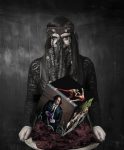
“Golem,” by Dina Goldstein. Pigment print on paper. 32 x 40 3/8 inch. (© Dina Goldstein)

Artist Dina Goldstein is a proven storyteller, so it’s not surprising that she was asked to take part in the exhibit Jewish Folktales Retold: Artist as Maggid, which opened at the Contemporary Jewish Museum in San Francisco on Sept. 28. Metro Vancouverites will also have the chance to see her photographic interpretations of 11 “classic Jewish tales” – Snapshots from the Garden of Eden – at the Zack Gallery this month.

Jewish Folktales Retold was inspired by the book Leaves from the Garden of Eden: One Hundred Classic Jewish Tales by Howard Schwartz (Oxford University Press, 2008). As CJM executive director Lori Starr explains on the exhibit’s website: “Schwartz elucidates four varieties of these tales: fairy tales, folktales, supernatural tales and mystic tales. Fairy tales, he writes, are ‘fantasies of enchantment.’… Folktales ‘portray the lives of the folk as they imagined them, with … magical and divine intervention.’… Supernatural tales portray fears about the powers of evil entities and, finally, mystical tales are teaching stories of the great rabbis.”

“I was asked to participate over a year and a half ago,” Goldstein told the Independent. “At first, I discussed this with the curator, Pierre-François Galpin. At that time, I was planning on starting another series and I told Pierre-François that I just couldn’t take this on, as I saw it as quite an ambitious project.”

But, Goldstein was curious enough that she asked Galpin – who worked with CJM chief curator Renny Pritikin on the exhibit – to send her Leaves from the Garden of Eden so she could take a look.

“After receiving it,” she said, “I found that I really enjoyed reading these ancient stories. I told him that I could possibly photograph a few pieces as a contributing artist.

“I became intrigued by a few specific characters in the book and proceeded to take on more than I had anticipated at the beginning. I continued to photograph 11 pieces for the exhibit. I also decided to photograph the series in black-and-white large-scale tableau.”

Goldstein had free creative rein. “The museum did not give me any direction at all,” she said. “In fact, I came back to them with the chosen characters and ideas that I had for the retelling of these folktales. They did not see the work until it was completed.”

photo - Dina Goldstein was one of the artists whose work was commissioned by the Contemporary Jewish Museum in San Francisco for the exhibit Jewish Folktales Retold: Artist as Maggid
Dina Goldstein was one of the artists whose work was commissioned by the Contemporary Jewish Museum in San Francisco for the exhibit Jewish Folktales Retold: Artist as Maggid. (photo from Dina Goldstein)

The characters Goldstein has reinvented for contemporary audiences include Lilith (from the story “The Queen of Sheba”), Elijah (“The Cottage of Candles”), Golem (“The Golem”), King Solomon (“The King’s Dream”), the Princess in the Tower (in the story of the same name), the positive spirit Ibbur (“The Soul of the Ari”), the malicious spirit Dybbuk (“The Dybbuk in the Well”), the Tree of Life (“An Apple from the Tree of Life”) and Ashmodai (“The Bride of Demons”). She has also created an image inspired by the story “The Hair in the Milk.”

“I selected characters that were relevant and reappear throughout many of the tales in the collection,” Goldstein told the Independent. “I chose characters from each of the four types of tales: folktales, fairy tales, supernatural and mythical tales.”

She created two images for Ashmodai.

“I very much enjoyed this narrative, ‘The Bride of Demons,’ with relevant themes of desire and retribution,” said Goldstein. “The story is quite long, so I wanted to create a diptych to illustrate and interpret it in my own way.”

The Snapshots catalogue explains, “A devil king, Ashmodai is mentioned in talmudic legends and Renaissance Christianity. He is regarded as the demon of lust and is responsible for twisting people’s sexual desires.”

In one of the Ashmodai images, a woman in a bridal dress looks happily at herself in a half-length mirror; there are other mirrors in the room, which show her from different angles. In the second image, we see what looks like a garden, with the woman, buried, screaming, only her head and bridal veil above ground. The quote accompanying this disturbing scene is, “… And he longed to look at her … but he remembered the words of the rabbi and did not turn his gaze away from the king of demons. If he had, he would have seen his bride buried in the earth up to her neck, for she was almost lost to the Devil.”

All of Goldstein’s tableaux are striking, fascinating to explore and contemplate.

“I very much enjoyed uncovering these richly textured ancient tales and short stories, which include magnificent characters: kings and queens, princes and princesses, witches, mystics and malevolent wandering spirits,” she said. “Each of the characters face extraordinary challenges – placed in front of them by fate – that they must overcome. Every society is replete with myths and legends that transform and bend into parables that attempt to make order of life. It is this impact on culture, old and new, that led me to create a body of work that plays with satire, metaphor and irony.”

Goldstein’s photographic creations challenge viewers’ perceptions, asking them to reconsider the stories they’ve been told. Her collections include Fallen Princesses, which imagines how 10 of Disney’s princesses would face the challenges of real women; In the Dollhouse, which focuses on Ken and Barbie’s not so happily ever after; Gods of Suburbia, which brings various deities down to earth; and Modern Girl, which looks at consumerism in Western culture using the imagery of Chinese pinup girls from the 1930s.

The creative process for Snapshots from the Garden of Eden was similar to that of these previous works.

“I do my usual research online and then I hit the library for historical references,” said Goldstein. “I like to get a sense of how these characters have been depicted in art throughout history, what has been written about them from various sources. Many of these characters are actual historical figures. Others are supernatural and exist in various forms throughout the stories.”

It took her eight months to produce and photograph the series, she said. “Much of my work is in preproduction, organizing the cast and crew, the locations, and collecting all of the props and costumes and details that are germane to the final result of the piece.”

She concluded, “I am very fortunate to live in the city which has so much talent to utilize. All of the cast and crew are from Vancouver. I reached out on Facebook and social media to find all sorts of strange items – people pulled together to help out. I am thankful to Gordon Diamond, who has been a great supporter of my work throughout the years. Gordon will donate the series for viewing at the Jewish Community Centre in December.”

And, because of that, local community members will have the chance to see Goldstein’s work at the Zack. Snapshots from the Garden of Eden opens Dec. 14, 7 p.m., and runs until Jan. 20.

Format ImagePosted on December 1, 2017November 29, 2017Author Cynthia RamsayCategories Visual ArtsTags Dina Goldstein, folk tales, Judaism, photography, Zack Gallery
Reinventing old-time music

Reinventing old-time music

Woody Forster and Devora Laye of the Burying Ground. (photo by Mary Matheson)

Contrary to what you might expect, given the band’s name, there is much joy in the Burying Ground. Woody Forster and Devora Laye obviously love what they do, and it comes through in their music, their performances, their promotional photos and even in their responses to an email interview. So, from where does the name come?

“The name came from the Blind Lemon Jefferson song ‘One Kind Favor,’ where he uses the line to describe his resting place,” explained Forster. “I also see it as maybe a metaphor for us finding this music for ourselves that has essentially been buried and forgotten in popular music today, and we are trying to draw from that place and explore those musical styles again.”

The Burying Ground plays 1920s and ’30s blues, ragtime, country and jazz, as well as original works in those genres. Their upbeat songs evoke images of musicians jamming away on the wooden porch of a farmhouse, people dancing and enjoying some moonshine. Their hurtin’ songs, with Forster’s gravelly voice, can make you feel like pouring yourself a stiff drink. The pair share the vocals, with Forster on guitar and Laye on myriad instruments, including the washboard, cymbals, tin can and cowbell – the sounds she produces with the saw will make you shiver. Various other musicians join the duo for performances and recordings.

“I can’t exactly find a reason why I love the music from that era,” said Forster. “I just seemed to get drawn deeper into it as I explored the history and the musicians that created it all. There is certainly a raw intensity in the sounds, as well as a very genuine feeling that I maybe don’t get out of other types of popular music through the last century.”

In November, the Burying Ground released a vinyl version of their eponymous album, which came out in June this year. It followed by a mere six months the group’s January 2017 release, Country Blues & Rags, which is “a collection of the band’s renditions of some of their most beloved songs.” The Burying Ground’s first album was Big City Blues, in 2015.

“The new EP is 11 original songs,” Laye told the Independent. “Our process is different from song to song. The last song on the album, ‘Longing for Home,’ is a song that I wrote for guitar and voice. The melody often comes to me while I’m walking around. For this particular song, I was walking around Vancouver when I smelled woodstove smoke, which made me miss living on Hornby Island, where I spent a couple years in my mid-20s. I sang it for Woody and he played along.

“‘Mean Spirit Blues’ was a trickier process for it’s a more complex song. I hummed the melody to Woody and he put the music to it. He often suggests a bridge or middle part of the song and we just play around with the ideas. We bounce ideas off of each other and give each other feedback. It’s fun, challenging and a nonstop learning process.”

“We are always bouncing ideas off of each other creatively to see whether we are liking what the other is bringing to the table, and tweaking the songs so we are both happy with the final outcome,” agreed Forster.

“We are learning a lot about writing music together and pushing ourselves to constantly grow and improve – and, at the same time, having a lot of fun doing it,” he added.

The two are definitely in sync. They have known each other a long time.

“Devora and I met around 15 years ago now, although we didn’t start playing music with each other until much later,” said Forster. “The Dire Wolves [band] started around 2008 and it was originally formed as a three-piece with me on mandolin, Blake Bamford on guitar and Joshua Doherty on harmonica, with Devora joining in on washboard a short time after. When the band split up around 2013, Devora and I kind of threw around the idea of starting a new project – we were both huge fans of early Americana music and both got more serious about it. And, from there, it has grown into the project we have created, and continues to grow.”

Both Laye and Forster come out of Vancouver’s punk scene, having been in different groups over the years. “As time went on, I gradually got more into old-time, and started studying it seriously in the last five years,” said Forster. “One of our first performances was at a venue called the China Cloud and I can remember being super-nervous, my hands were shaking, and I forgot lyrics, but somehow got through it with out train-wrecking the show. It has taken me awhile to get used to singing and playing guitar in front of people in such a stripped-down form of acoustic music. Not to say I still don’t get nervous, but I can hide it a little better now.”

Laye’s musical path has been varied.

“At home,” she said, “I was always surrounded by music. My dad plays guitar and has always written songs. He used to sing and play for us at bedtime and, of course, many other times. Growing up, I was exposed to different types of music, from classical to folk to Jewish music (Shlomo Carlebach was a big hit for me). My part of going to synagogue every week was the singing. When I was old enough to walk to the synagogue on my own, I would go for the evening/ma’ariv service on Saturdays to sing the zemirot with the enthusiastic congregation.

“I always loved to sing and play,” said Laye. “My eldest sister, Aviva, played the flute and I thought that was really cool and decided I wanted to learn how to play. I started taking lessons from Andrea Minden when I was 7 years old. Started on the recorder, of course, because my hands were too small for flute!

“Anyhow, I studied with Andrea until I was about 14. She was in a family band called the Minden Ensemble and they’d play all sorts of unusual instruments, such as vacuum hoses, bottles, spoons, pots and pans and the saw. Andrea showed me how to hold and bow the saw. When I was in my early 20s, I decided to pick it up and teach myself how to play along to songs, and have been having a lot of fun with it ever since.”

And how did she come to the washboard, which she also plays in the Myrtle Family Band?

“I’ve always loved to tap on nearby objects,” she said. “I’d tap on tables, chairs, find music and rhythm in glasses. I think my parents have learned to appreciate that side of me! Haha. I taught myself to play a drum kit when I moved out of my parents’ house, and played drums for some years before picking up the washboard. I had a partner who played old-time banjo and he suggested that I pick up the washboard so we could jam. I wasn’t sure it was a real instrument and thought it slightly inferior to a stringed instrument but, soon after, realized it added a lot to the music and can really be the backbone of a band. I ended up getting more and more into the old styles and into the playing and here I am today playing every day.”

Forster and Laye are based in Vancouver now, but this has not always been the case.

“I spent much of the past year on the Sunshine Coast and commuting to the city for gigs and to see family and friends,” said Laye. “The coast has been really great. I love to be surrounded by the trees, down the street from the ocean – bears, deer, coyotes and cougars through my backyard! Room to think in the quiet.

“The community on the coast has been so supportive of the Burying Ground,” she said. “I didn’t really have any expectations of what it would be like. I didn’t really know anyone when I moved over to Gibsons, and feel very grateful to have met such kind, supportive and inspiring people. Smaller communities are often more supportive, there is the time for that when the pace is slower. The city can be real tricky to break into. There are so many musicians, so much going on all the time.

“The coast is also limiting,” she added. “As professional musicians, there are only so many gigs you can play. Our band lives in the city.”

For more information about the Burying Ground, to hear their music and check out their upcoming shows – including the JI Chai Celebration on Dec. 6 – visit theburyingground.com.

Format ImagePosted on December 1, 2017November 29, 2017Author Cynthia RamsayCategories MusicTags blues, Devora Laye, jazz, ragtime, The Burying Ground, Woody Forster
Drawing on identity, Judaism

Drawing on identity, Judaism

Artist and graphic novelist Miriam Libicki is currently Vancouver Public Library’s writer-in-residence. (photo from VPL)

“I think that a lot of my stuff does end up having to do with identity, through both the books I’ve published and the one I’m in the process of starting to draw right now, as well. I’m very interested in identity and I’m interested in identity as something that can change,” Miriam Libicki told the Independent in a phone interview.

Libicki is Vancouver Public Library’s writer-in-residence this fall. Her first event was Sept. 14 and her teaching sessions have been consistently full. At her finale event Dec. 7, attendees will get a preview of her new work. Libicki will also be making appearances at the Cherie Smith JCC Jewish Book Festival, Nov. 26 and 30.

Both of her published books – jobnik! an american girl’s adventures in the israeli army (real gone girl studios, 2008) and Toward a Hot Jew (Fantagraphics Books, 2016) – have received acclaim. The former, which was based on the diary she kept during her service in the Israel Defence Forces, was a finalist for the Gene Day Award for Canadian self-publishing. The latter, a collection of graphic essays, won the 2017 Vine Award for Canadian Jewish Literature in the non-fiction category.

She attributes her curiosity about identity to her upbringing. “Part of it is the idea that I grew up in a very strong and defined community, which was Modern Orthodox Judaism, in the suburbs of the U.S., and yet, I always kind of felt that we were not the platonic ideal of Modern Orthodox American Judaism,” she said. “I guess, partially, because my mother was a convert, which, in some thought, is still kind of taboo, although, in the U.S., it’s very common … and that she was not ashamed or disparaging of where she came from at all, we were still very close with everyone in her family…. She was never somebody who preached that Modern Orthodoxy was the only way to live a moral life.”

This led to some tension, said Libicki, who went to an Orthodox day school. “Also, in my teens, being very attuned to hypocrisy – as many teens are – when people are doing things so much differently than what they preach,” it was challenging. “And then, going to Israel and finding that the social categories were completely different again, that Orthodox was a certain other thing,” raised other questions, such as, “Is religion a belief or is it a social category?”

Libicki spent four years in Israel “trying to be an Israeli.” But, she said, “I was constantly judging, with my over-analytical and insecure mind, whether I was succeeding at being an Israeli or whether I was doing something wrong. And then, I ended up leaving Israel and felt very ambivalent about that…. I think that that has driven a lot of my comics.”

Now living in Coquitlam and a mother of two, Libicki said, “I’m sending my kids to school and that involves a whole other declaration of identity.”

She and her partner, Mike, have a daughter, who just started kindergarten at Vancouver Talmud Torah, and a son, who is 2. “I’ve always … wanted to send my kids to Jewish school – I’m not ambivalent about it,” she said.

Libicki’s current project – the one people will get a peek at on Dec. 7 – focuses on the exodus of Jews from the Soviet Union as it was collapsing in the late 1980s and early 1990s. She has finished the script, she said, which is about “232 pages at this point. And now I’m starting to break it down into thumbnail drawings and starting to draw the first few pages of it.”

Of those Jews who emigrated, she said, about half went to Israel and just under half came to the United States, with the rest going to Canada, Australia and elsewhere. “My town – Columbus, Ohio – which was not a huge Jewish community, although we had five synagogues and a private day school, got a big influx of families … so my little Jewish day school, which was very small, was about a third to two-fifths Russian-speaking by the time that I was in high school. When I was in kindergarten, there were no Russians and then, by the time I was in middle school, there were lots. Growing up, my community was not very diverse and it was interesting to see this whole other community fall into the middle of my community.”

Libicki conducted the initial research for this project for her master’s in creative writing, which she recently completed at the University of British Columbia. For her thesis, she said, “I went back to Columbus and I interviewed a lot of people that I went to high school with, that I’d lost touch with, most of them immigrants, kids who came in the ’90s.

“My parents had moved to Ashkelon … in a community in Israel that I thought was somewhat analogous [to Columbus] in that it’s not a big or culturally important town, but it also absorbed a lot of immigrants in a short time. I tried to find a sociologically equivalent sample of Russian immigrants in Israel, who had come at the same time and had all gone to the same high school together in Ashkelon, and I interviewed them.

“Those interviews, and other people’s flashbacks, make up a big part of the book. And then, in with that, I also have the part where I’m analyzing it and deconstructing it through different lenses, and I also have my current-day life of trying to figure out what I am and what my family is, and children are.”

While jobnik! is mainly autobiographical, Toward a Hot Jew – a collection of essays written over the space of about 10 years, starting in 2005 – is a mix of autobiography, cultural commentary and analysis. In both books, Libicki doesn’t shy away from difficult topics, and is quite candid about her feelings, sexuality and other sensitive issues.

“A lot of my favourite writers do that and a lot of my favourite cartoonists, so that’s why I felt from the beginning that I should do this. I like reading memoir, and you can tell when people are trying to let themselves off easily or inflate something or avoid talking about something,” she said. “Obviously, nobody talks about everything, but I think you can tell in some memoirs when there’s a certain topic that really is germane and it’s being avoided or it’s being glossed over versus when somebody tries to confront something with honesty and openness. Since I liked reading that stuff, that’s what I wanted to write.

“I don’t think I’ve had too many regrets about doing that. One thing is that it does help to write about people who are far in the past, although this current book, it will have scenes from my current-day life, so I’m going to have to – I’ve been avoiding, actually, showing pages to my partner, but I’m going to have to do that before submitting it to publishers.”

When Libicki was discharged from the IDF, she applied to a few art schools and universities, in Israel and the United States, as well as a non-art-related university in Seattle, which she chose because she had friends in the city. She and her now-husband, who was based in Vancouver, had mutual friends. After about a year of dating, seeing each other on weekends, he suggested she apply to art school in Vancouver.

Libicki enrolled at Emily Carr in 2003 and now teaches at her alma mater, though her main job at the moment is being VPL’s writer-in-residence. “It’s a temporary thing but it’s a full-time job,” she said.

Writers-in-residence spend about 60% of their time on their own writing, she explained, and about 40% interacting with the public, in workshops, lectures and advising people on their writing projects. She has a studio at VPL, to which she commutes from her home in Coquitlam.

As to what led her to the graphic novel form, she said, “It’s something that just kind of happened. It happened while I was in undergrad. I always read comics. I was a big fan of comics, and I was a fan of more alternative and literary comics that started to come out, essentially, in the ’90s and beyond. But I never thought I’d make comics because whenever I had an idea, I didn’t follow through, and the idea of drawing the same character over and over and over was not something I thought I could do. But, I really wanted to be an artist. I drew a lot of portraits…. I thought I might be a children’s book illustrator. So, when I went to art school, I was just thinking of doing a drawing major but then I did one comics art class.”

In that class, she said, she used one of the entries from the diary she kept while in the Israeli army – “I’d had a particularly eventful and bad week, and adapted that into a five-page comic.”

The response to that work – which grew into jobnik! – was positive. “People were curious, they said they wanted to see more of my army stories, and it seemed like a better way to talk about my experience,” she said.

During undergrad, she started doing more comics, and the title essay in Toward a Hot Jew – about “the Israeli soldier as fetish object” – was created as her senior project in art school. Not only did she want to write a research essay that people would actually read, she said, “I wanted to do something that I could use pictures … as part of my argument that I was making, add a nuance through the drawings, as well.”

Libicki said she writes “in a pretty systematic way,” starting with brainstorming, “then I’ll do an outline, then I’ll break down my outline into pages and do a map of it that way, then I’ll do a script and then I’ll do thumbnails and then I’ll move on to art.

“I guess that a lot of people who do any creative endeavour have a lot of anxiety around it and fear that, every time you start a new project, perhaps you’ve forgotten how to do this, so I try to break down my practice into as many small steps as possible, so each one will not be as scary,” she said.

And, a shorter project is something she can put together for a comicon. For example, she created The Quotable Mered – based on tweets she had written about cute things her daughter had said – specifically for VanCAF (Vancouver Comic Arts Festival), a free, annual two-day event that has taken place at the Roundhouse since 2012.

The genre – which she described as “daily journal comics or comics about a small theme” – was something she had never done before, and she wanted to try the style, as well as drawing a bit more loosely and “writing to a punchline.”

“It was an experiment, and I did learn things from it,” she said. “I might do one of those again but I just have so many things to do.”

Format ImagePosted on November 24, 2017November 27, 2017Author Cynthia RamsayCategories BooksTags art, graphic novel, Miriam Libicki, Vancouver Public Library
Canadian Jewish history

Canadian Jewish history

Rabbi Dr. Yosef Wosk was the keynote speaker at the Vancouver exhibit. (photo by Cynthia Ramsay)

The Canadian Jewish Experience traveling exhibit opened at the central branch of Vancouver Public Library on Nov. 16. The display is presented by the Jewish Museum and Archives of British Columbia, the Centre for Israel and Jewish Affairs, Jewish Federation of Greater Vancouver and VPL.

The opening event was hosted by Michael Schwartz, JMABC director of community engagement. Kayla Epstein, VPL board chair, and Karen James, Jewish Federation board chair, said a few words, as did Tova Lynch, who led the committee that created the exhibit, which opened in April in Ottawa. The multi-panel display celebrates the history of Jews in Canada and was made for the occasion of the 150th anniversary of Confederation. The set that is on display at VPL has an additional panel dedicated to the B.C. Jewish community.

“To date, we have created 15 various sets [of the exhibit] that are traveling around the country,” said Lynch. To date, it has been to 35 places, and is scheduled for more, including a push to have it on university campuses. Among the major supporters of the exhibit, she said, are Fred Belzberg and Sam Belzberg. She thanked the Belzbergs, who couldn’t attend the event, as well as Rabbi Dr. Yosef Wosk, whose contributions, she said, made the event possible.

Wosk was also the keynote speaker. He spoke of the importance of books, of stories, of the relative youth of Canada as a nation and about the Jewish community’s participation in national life. He expressed gratitude for living in a country that is safe for Jews and other minorities, but also recalled that it wasn’t always so and that immigrants today still face problems.

The Hon. Dr. Hedy Fry, member of Parliament for Vancouver Centre, offered greetings from Prime Minister Justin Trudeau, as well as her own comments on the contributions of Jewish and other immigrants to Canadian society.

The Canadian Jewish Experience is on view at VPL until Nov. 30.

Format ImagePosted on November 24, 2017November 23, 2017Author Cynthia RamsayCategories LocalTags CIJA, Jewish Federation, Jewish history, JMABC, Vancouver Public Library, VPL
A moving story

A moving story

Left to right are Dávid Szigeti (cello), Erik Gow (who plays Alvin Kelby), Kevin Woo (clarinet), Wendy Bross Stuart (piano, music director) and Chris Adams (who plays Thomas Weaver), in rehearsal for The Story of My Life, which is at the Canadian Music Centre for five remaining performances, Nov. 25 and 30, Dec. 1 and 2, 8 p.m., and Nov. 26, 2 p.m. (photo by Ron Stuart)

Directed by Stephen Aberle, this story of friendship is an intimate and moving portrayal, performed by a talented and hardworking ensemble. I got a sneak peak at the production earlier this week. It had me laughing. I related to both of the characters (their good and more challenging traits/actions) and the actors had great chemistry and intensity. By the end, I was crying. It starts with Thomas trying to write the eulogy of his boyhood friend Alvin, and it takes the audience through some of the stories of their lives. The music is wonderful and the performers are top-notch. See it if you can.

Tickets can be purchased from eventbrite.com.

Format ImagePosted on November 24, 2017November 23, 2017Author Cynthia RamsayCategories Performing ArtsTags musical theatre, Snapshots
Information and chaos

Information and chaos

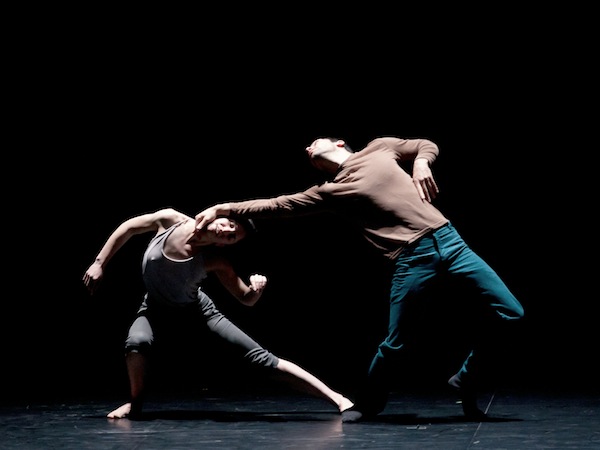
Wells Hill has its world première Nov. 24-26 at DanceHouse. (photo by David Cooper)

“What does it mean to imagine a world where we are not connected all the time?” This is just one of the many questions choreographer (and Jewish community member) Vanessa Goodman is exploring in Wells Hill, which has its world première Nov. 24-26 at DanceHouse.

Goodman is artistic director of the dance company Action at a Distance. Wells Hill was commissioned by Simon Fraser University’s Woodward’s Cultural Programs (SFUW) and is co-presented by DanceHouse and SFU’s School for the Contemporary Arts. It is a Celebrate Canada 150+ event, but its genesis goes back a few years.

“In early 2014, SFU’s Michael Boucher and I were out for coffee discussing my work,” Goodman told the Independent. “At the time, I was planning what I was going to present at the Chutzpah! Festival in 2015. In our conversation, I shared the anecdote that I grew up in philosopher Marshall McLuhan’s former family home [on Wells Hill Road] in Toronto and that Glenn Gould would sometimes visit. As two towering figures in 20th-century Canada, the idea of being a fly on the wall during their conversations was fun to imagine. Michael helped me recognize the seeds for a piece in this story, and has since supported its creation and production through SFUW.”

In creating Wells Hill, Action at a Distance collaborated with a team including composers Loscil (Scott Morgan) and Gabriel Saloman, lighting designer James Proudfoot and projection artists Ben Didier and Milton Lim. The promotional material notes that, in the work, seven dancers “splice together themes of technology and communication.”

“In Understanding Media, McLuhan stated that different media invite different degrees of participation on the part of the person who consumes it,” explained Goodman. “For me, this draws parallels to consuming dance and is one of the themes I explore in the piece. McLuhan divided media consumption into two categories: hot and cool. Hot media consumption requires the viewer to intensify the use of one single sense and is called ‘high definition.’

“McLuhan contrasted this with cool media consumption, which he claimed requires more effort on the part of the viewer to determine meaning due to the minimal presentation of detail. In these cases, a high degree of effort is necessary to fill in the blanks in areas where the information is obscured. It demands much more conscious participation by the person to extract value and meaning. This type of consumption is referred to as ‘low definition.’ When applied to dance, the audience would be required to be more active here, which includes their perceptions of abstract patterning and simultaneous comprehension of all the working parts.

“In this work,” she said, “I apply hot and cool media consumption to crafting the material and finding authenticity within the embodiment of the performers. While I still believe that the audience needs an entry point into the work to become invested, I am interested in defining the hot and cool medium consumption in my staging, demanding the viewer work through their high and low definition comprehension. I am interested in the interplay between hot and cool as a continuum: where they are measured on a scale and also on dichotomous terms.”

Wells Hill isn’t about raising or answering any specific questions, she said, “as much as it is about observing and interpreting some of McLuhan and Gould’s fascinating ideas. In making this work, I kept coming back to the Douglas Coupland quote, ‘I miss my pre-internet brain.’ What does it mean to imagine a world where we are not connected all the time? In some ways, it’s comforting to be plugged into this collective human mass. On the other hand, there is an anxiety linked to this relationship and violence associated with this ceaseless bombardment of data. As McLuhan predicted, technology has become an extension of our nervous system. This is why I feel dance is such an incredible medium to explore these ideas: at its core, human movement is neuromuscular connectivity. I have developed movements with my collaborators that are derived from tasks from our physical reactions to technology: from our Pavlovian responses to messages and social media notifications to the deeper impact on our attention spans while we’re connected. I want to capitalize on both the order that we receive information in and the chaos it can create.”

In response to a question about what McLuhan and Gould each offer by way of the content or structure of Wells Hill, Goodman said that the sound score “is heavily influenced by the history of the house.”

She said, “Eric McLuhan, Marshall’s eldest son, told me that Gould would often come to the home for visits, where he would discuss media, performance and art with his father. Gabriel Saloman and Scott Morgan, both incredible composers that I have been collaborating with over the past few years, have each composed pieces of the music for Wells Hill. They have incorporated audio samples of both McLuhan and Gould speaking about their theories. This adds an interesting entry point to the ideas that inspired Wells Hill. The house has a rich past that has been documented through the written form but has never been explored performatively. I am drawing from this story for the staging of this work, which creates an environment and historical context for the non-linear story arc.”

Wells Hill is at Fei and Milton Wong Experimental Theatre, SFU Goldcorp Centre for the Arts, on Nov. 24-25, 8 p.m., and Nov. 26, 2 p.m. In conjunction with the show, there are a few community events. Speaking of Dance Conversations on Nov. 21, 7 p.m., at SFU Goldcorp Centre for the Arts (free), is a community roundtable conversation around McLuhan and the Global Village, led by moderator Richard Cavell, founder of UBC’s Bachelor in Media Studies program and author of McLuhan in Space: A Cultural Geography, and guest speakers. There are also pre-show chats Nov. 24-25, at 7:15 p.m., at the centre, and a post-show social on Nov. 24. Tickets and more information can be found at dancehouse.ca or by calling 604-801-6225.

Format ImagePosted on November 17, 2017November 15, 2017Author Cynthia RamsayCategories Performing ArtsTags Canada 150, contemporary, DanceHouse, Glen Gould, Marshall McLuhan, SFU, Vanessa Goodman

Posts pagination

Previous page Page 1 … Page 57 Page 58 Page 59 … Page 84 Next page
Proudly powered by WordPress