Skip to content
  • Home
  • Subscribe / donate
  • Events calendar
  • News
    • Local
    • National
    • Israel
    • World
    • עניין בחדשות
      A roundup of news in Canada and further afield, in Hebrew.
  • Opinion
    • From the JI
    • Op-Ed
  • Arts & Culture
    • Performing Arts
    • Music
    • Books
    • Visual Arts
    • TV & Film
  • Life
    • Celebrating the Holidays
    • Travel
    • The Daily Snooze
      Cartoons by Jacob Samuel
    • Mystery Photo
      Help the JI and JMABC fill in the gaps in our archives.
  • Community Links
    • Organizations, Etc.
    • Other News Sources & Blogs
    • Business Directory
  • FAQ
  • JI Chai Celebration
  • JI@88! video

Recent Posts

  • Sharing her testimony
  • Fall fight takes leap forward
  • The balancing of rights
  • Multiple Tony n’ Tina roles
  • Stories of trauma, resilience
  • Celebrate our culture
  • A responsibility to help
  • What wellness means at JCC
  • Together in mourning
  • Downhill after Trump?
  • Birth control even easier now
  • Eco-Sisters mentorship
  • Unexpected discoveries
  • Study’s results hopeful
  • Bad behaviour affects us all
  • Thankful for the police
  • UBC needs a wake-up call
  • Recalling a shining star
  • Sleep well …
  • BGU fosters startup culture
  • Photography and glass
  • Is it the end of an era?
  • Taking life a step at a time
  • Nakba exhibit biased
  • Film festival starts next week
  • Musical with heart and soul
  • Rabbi marks 13 years
  • Keeper of VTT’s history
  • Gala fêtes Infeld’s 20th
  • Building JWest together
  • Challah Mom comes to Vancouver
  • What to do about media bias
  • Education offers hope
  • Remembrance – a moral act
  • What makes us human
  • המלחמות של נתניהו וטראמפ

Archives

Follow @JewishIndie
image - The CJN - Visit Us Banner - 300x600 - 101625

Author: Sybil Kaplan

Delicious and new recipes

Delicious and new recipes

Naomi Nachman’s Fudgy Chocolate Bundt Cake with Coffee Glaze is gluten-free. (photo by Miriam Pascal)

What? Another cookbook for Pesach? Yes. And a welcome one – Perfect for Pesach: Passover Recipes You’ll Want to Make All Year by Naomi Nachman (Artscroll/Shaar Press, 2017).

“As a chef specializing in Passover, I wanted to provide home cooks with delicious recipes that bring something new to the table,” Nachman explains in the press material. “Some of the recipes in this book reflect my years of catering Pesach dinners and others are brand new to reflect today’s kosher cooking styles. All my recipes use fresh, simple and delicious combinations of ingredients that you can get all year long and create interesting meal choices.”

Nachman, who lives with her family on Long Island, N.Y., grew up in Australia. She served Long Island’s Five Towns through her personal chef business, the Aussie Gourmet. She led a culinary arts program at a Poconos camp for seven summers and, currently, she is director of the Culinary Arts Recreational Program for VIP Ram Destinations’ Pesach holiday in Florida. She also hosts a weekly show on the Nachum Segal Network and writes a monthly column for Mishpacha magazine.

She certainly has the credentials! And what variety in this book.

book cover - Perfect for Pesach: Passover Recipes You’ll Want to Make All Year by Naomi NachmanPerfect for Pesach features more than 125 recipes, with mouth-watering photography by kosher blogger and cookbook author Miriam Pascal.

There are appetizers, such as Hush Puppy Potato Knishes and Southwestern Chicken Egg Rolls; dips and salads, including Chimichurri Coleslaw and Kale and Roasted Butternut Squash Salad; soups such as Kitchen Sink Vegetable Soup and Kale, Apple and Sausage Soup; fish dishes like Red Snapper en Papillote and Sweet and Sour Tilapia; poultry choices like White Wine and Herb Roasted Turkey Roll and Hawaiian Pargiyot; meat recipes such as Coffee Infused Chili and Maple Glazed Rack of Ribs; dairy recipes such as Quinoa Granola Parfait and Oozy Fried Mozzarella; side dishes like Cauliflower Fried “Rice” and Broccoli Kishka Kugel; and desserts including Pomegranate Pistachio Semifreddo and Mini Lemon Curd Trifles.

In her introduction, Nachman writes that her intention is to present “recipes that are easy to make with ingredients that are generally easily accessible from your local supermarket or online.” She highly recommends using fresh lemons and limes, fresh herbs, fresh spices, and a variety of oils.

Each recipe includes cook’s tip, ideas for year-round serving, an author’s comment and, my favourite, method steps that are numbered. The press release says all the recipes are gluten-free.

Don’t bother to look around for a house gift if you are going to a seder at a friend or relative’s home. Perfect for Passover is the perfect gift – all year round.

Here are just two of Nachman’s recipes.

ZUCCHINI KUGEL
pareve, 8-10 servings

6 medium zucchini, grated with peel
1 grated onion
4 beaten eggs
1 1/2 cups matzah meal
1 tbsp baking powder
3/4 cup oil
1 tbsp kosher salt
1/4 tsp ground black pepper

  1. Preheat oven to 350°F. Prepare a nine-by-13-inch baking pan.
  2. Add all ingredients to a large bowl; stir well to combine.
  3. Pour into prepared pan. Bake, uncovered, for 90 minutes, until lightly browned and centre is firm.

FUDGY CHOCOLATE BUNDT CAKE WITH COFFEE GLAZE
pareve, freezer-friendly

2 1/2 cups almond flour
1 cup cocoa powder
1/2 cup potato starch
1 tbsp instant coffee granules
1 1/2 tsp baking powder
1/2 tsp kosher salt
1 1/2 cups sugar
1/2 cup oil
1 tbsp imitation vanilla extract
6 eggs

  1. Preheat oven to 350°F. Grease a Bundt pan well; set aside.
  2. In a small bowl, whisk together almond flour, cocoa powder, potato starch, coffee, baking powder and salt. Set aside.
  3. In a separate bowl, whisk together sugar, oil, vanilla and eggs. Add dry ingredients; stir to combine.
  4. Pour batter into Bundt pan; bake 40-45 minutes, until toothpick inserted into the centre comes out clean. Set aside to cool completely in the pan. Remove from pan; glaze with coffee glaze, below.

Coffee glaze:
1 cup powdered sugar
1 tbsp brewed coffee
1 tsp oil

  1. In a small bowl, whisk together all ingredients to form a glaze. If the glaze is too thick to pour, add water, a half teaspoon at a time, until desired texture is reached.
  2. Pour glaze over cooled cake.

Sybil Kaplan is a journalist, lecturer, book reviewer and food writer in Jerusalem. She created and leads the weekly English-language Shuk Walks in Machaneh Yehudah, she has compiled and edited nine kosher cookbooks, and is the author of Witness to History: Ten Years as a Woman Journalist in Israel.

Format ImagePosted on March 31, 2017March 31, 2017Author Sybil KaplanCategories Celebrating the HolidaysTags baking, cakes, cookbooks, food, Naomi Nachman, Passover
Familiar sounds of Passover

Familiar sounds of Passover

Heron among the flowers near Kibbutz Be’eri, in southern Israel. (photo by Aliza Reshef via PikiWiki)

There is something about Passover that speaks to almost every Jew. In 1840, in a book titled Der Rabbi von Bacharach, Heinrich Heine wrote: “Jews who have long drifted from the faith of their fathers are stirred in their inmost parts when the old, familiar Passover sounds chance to fall upon their ears.”

Although my family was not Orthodox, we always held a seder in Australia, and the singing after reading the Haggadah (and eating lots of knaidel and drinking the cups of wine) was very spirited. As a child, I loved the lively “Dayeinu” and the last song, “Chad Gadya,” which we sang in English, “Only one kid, only one kid which my father bought for two zuzim….” The words seemed very funny to me, until the mood suddenly changed at the end – when we began to sing about the Angel of Death, I remember my mother’s eyes used to fill with tears.

Many years later, when I became observant and began practising mitzvot that, at first, were strange and unfamiliar to me, the seder was like coming home. No one had to explain it to me, or tell me what to do. Etched into my consciousness were the memories of the seder table … the three matzot arranged between the folds of a white cloth so that no two were touching; the dish of parsley with the bowl of salt water; the bitter herbs, the shank bone and the roasted egg.

I remember helping to make the charoset, a delicious mixture of apples and almonds moistened with wine. Passover is so rich in ritual and, that is, after all, the Jews’ survival system.

Without the seder, there’d be no reason for the family to come together at this time. Not every family is religious but, at Pesach, most are traditional. There is a special feeling about the snowy tablecloth with new dishes, the big cup of wine for Elijah, the opening of the door for the prophet to come in, and sweet children’s voices chanting “Mah Nishtanah,” like it’s a favourite pop song. “Memories are made of this”!

In Israel, Passover is a spring festival. After the cold, rainy winter, the air becomes a warm caress. The almond flaunts its white blossom and all the trees are bedecked with new green lace. Cyclamens and wild violets peep shyly from crevices in the rocks, while purple irises and scarlet poppies dot the fields. The cereal harvest season has begun.

However, Pesach is more than a link in the agricultural cycle of

Israel. Its true significance is historical, commemorating the Exodus from Egypt and our release from slavery. The matzah symbolizes the unleavened bread, which did not have time to rise in our hasty flight from Egypt.

The Hebrew word for Egypt is Mitzrayim, the root of which is tzur, meaning narrow or constrained. To say that we must leave Egypt is to say that each of us must struggle to break out of our own narrowness to obtain our full potential – spiritually, emotionally, psychologically.

The main lesson of Passover is freedom. At Passover, we celebrate it on three levels: seasonally, as we mark the release of the earth from the grip of winter; historically, as we commemorate the Exodus; and, on a broader human plane, our emergence from bondage.

In Judaism, events transcend the moments of their happening – they are part of a continuous process that involves not just a single generation, but all who went before and all who follow after. The cycle of the Jewish year is also the cycle of our survival.

May the old, familiar sounds of Passover be woven into the consciousness of you and your family. And may you truly consider the possibility when you conclude your celebration with the words: “Next year in Jerusalem!”

Dvora Waysman is a Jerusalem-based author. She has written 14 books, including The Pomegranate Pendant, which was made into a movie, and her latest novella, Searching for Sarah. She can be contacted at [email protected] or through her blog dvorawaysman.com.

Format ImagePosted on March 31, 2017March 31, 2017Author Dvora WaysmanCategories Celebrating the HolidaysTags Israel, Passover

Food with long history

What food, served with cooked beef, is an essential component of a traditional wedding dinner in southern Germany? It is also used in salad served with lamb dishes at Easter in Transylvania and other Romanian regions. In Serbia, it is an essential condiment with cooked meat, including roasted pig. In Slovenia, it is a traditional Easter dish, grated and mixed with sour cream, hard-boiled eggs or apples. And, in southern Italy, it is a main course with eggs, cheese and sausage. It is probably indigenous to eastern Europe but has been cultivated since antiquity and was known in Egypt in 1500 BCE.

One final hint, and you will know immediately. According to the Haggadah, we are to eat it to symbolize the bitterness of slavery in Egypt. “And they made their lives bitter with hard labour, in mortar and in brick, and in all manner of work in the field….” (Exodus 1:14)

Maror is one of the foods on the seder plate, which we bless then dip into charoset to symbolize the mortar the Israelites used to bind the bricks. Shaking off the charoset, we eat the minimum amount of maror, the volume of an olive.

Horseradish. The English word, coined in the 1590s, combined horse, meaning coarse or strong, and the word radish.

According to John Cooper in Eat and Be Satisfied: A Social History of Jewish Food, “the Mishnah enumerated five vegetables that could be utilized as the bitter herb for the seder service, all of which should have leaves. The five are chazeret, ilshin, tamchah, charchavina and maror.”

Chazeret refers to lettuce; ulshin is either endive or chicory or both; tamchah was a leafy, dull green herb also known as horehoud, which is used in cough medicine and liqueur; charchavina was either field or sea eryngo; and maror possibly a wild lettuce or type of cilantro. Sephardim interpret chazeret as Romaine lettuce.

Rabbi Alexander Suslin of Frankfurt, who died in 1394, was the first authority to permit the use of horseradish where lettuce was not available, although this vegetable was primarily a fleshy root that did not strictly conform with the halachic requirement of eating leaves. The Talmud also says, besides leaves, maror should have white sap and dull green foliage, neither of which is in horseradish. The medieval German rabbinic authorities appear to have identified horseradish incorrectly: merretich, in German, with merirta, the Aramaic form of maror, the Hebrew for bitter.

Prior to this, according to Gil Marks in the Encyclopedia of Jewish Food, Eliezer ben Nathan of Mainz, who lived from 1090 to 1170, mentions chrain (paste made with horseradish). Rabbi Eleazar ben Judah of Worms in Sefer ha-Rokeach (published around 1200) included it in his charoset ingredients.

It was not until Rabbi Yom Tov Lipman Ben Nathan Heller (1579-1654) of Moravia, in his commentary on the Mishnah, considered horseradish to be the tamchah mentioned in the Talmud. In Hebrew, it is called chazeret, which is on the talmudic list of accepted types of maror.

Horseradish is a root vegetable in the same family as mustard, wasabi, broccoli and cabbage. When the plant grows, it can reach 4.9 feet and is cultivated for its root, which has hardly any aroma. When the root is cut or grated, cells break down and produce an oil, which irritates the nose and eyes.

German immigrants in the late 1800s began growing horseradish in Collinsville, Ill., a Mississippi River basin area adjacent to St. Louis. This self-proclaimed horseradish capital of the world – this is where most of the world’s supply is grown, some six millions gallons annually – has been hosting the Horseradish Festival since 1988.

The first American Jewish cookbook, Jewish Cookery (1871), included a recipe for horseradish stew. When the Settlement Cookbook was published in 1901, horseradish sauce, beer and relish were included.

H.J. Heinz processed and bottled horseradish in 1869. In 1932, Hyman Gold and his wife, Tillie, processed and bottled horseradish in their Brooklyn apartment.

Today, Gold’s and other private labels produce 90,000 bottles a day of the classic plain and grated beet horseradish without sugar.

My husband likes to tell the story of coming home from school one day before Passover, at the age of 8, and going into the kitchen where his grandmother was grating the horseradish; she made horseradish almost every week. He jumped up on a chair, took one big whiff and fell over backwards! Thank goodness his father was in the room and caught him.

Sybil Kaplan is a journalist, lecturer, book reviewer and food writer in Jerusalem. She created and leads the weekly English-language Shuk Walks in Machaneh Yehudah, she has compiled and edited nine kosher cookbooks, and is the author of Witness to History: Ten Years as a Woman Journalist in Israel.

Posted on March 31, 2017March 31, 2017Author Sybil KaplanCategories Celebrating the HolidaysTags cooking, food, Passover

The path to our destination

More than 100 years ago, no one could have imagined the destruction that would ravage the earth, nor the scientific breakthroughs that would transform it. Yet, in every generation there are rare visionaries who provide us with a blueprint for the future, and the 20th century was no different.

While Albert Einstein was publishing revolutionary theories that would change the world, in a small town in White Russia called Lubavitch (the city of love), Rabbi Shalom Dovber Schneersohn, the Rebbe Rashab and fifth Lubavitcher Rebbe (1860-1920), was advising us on what was to come.

On Passover in 1908, the Rebbe Rashab delivered a discourse – The Voice of My Beloved, Behold the One that Leaps over the Hills – which was later delivered by his son, Rabbi Yosef Yitzchak Schneersohn, the sixth Lubavitcher Rebbe. In retrospect, we can see how critically important were his words.

The Rebbe Rashab begins with a mystical analysis of the history of the empires that controlled the world. Based on various sources, including the Midrash and the writings of the great kabbalist Rabbi Isaac Luria, known as the holy Arizal, the Rebbe takes us on a journey to the time of Abraham. In the words of the Torah: “As the sun was setting, a deep sleep fell upon Abram: and a deep dark dread fell upon him. [G-d] said to Abram: ‘Know for sure that your descendants will be foreigners in a land that is not theirs for 400 years. They will be enslaved and oppressed. But I will finally bring judgment against the nation who enslaves them, and they will then leave with great wealth….’” (Genesis 15:12-14)

What was the dread that befell Abraham? The Midrash explains that he was shown the future empires that would control the world, each in their own way: the Babylonian, Persian, Greek, Roman and Ishmaelite empires.

The Arizal explains that these empires represent the different stages of refinement we achieve through the generations. He explains that everything in our material existence contains Divine “sparks,” i.e. spiritual energy. We are charged with the mission to redeem and elevate these sparks, thereby refining the material universe and transforming it into a vehicle for spiritual expression, its true purpose. Starting with the Egyptian empire, the archetype and root of all the exiles and empires, each subsequent empire symbolizes another stage in integrating matter and spirit. The process will conclude with the refinement of the last two powers, Edom (Esau) and Ishmael, leading to the Messianic age, a world where there is no more destruction and terror, and all children of Abraham serve the one G-d of Abraham in peace and harmony.

We now stand, according to the 1908 discourse, in the final stage, when Edom – the Western world, descendants of Rome – and Ishmael – the Ottoman Empire – dominate. The Ottoman Empire began to dissolve in 1908 and, a few years later, would join the powers who lost to the Allies in the First World War. The Arizal explains that the refinement of Edom and Ishmael, our work today, corresponds to netzach (endurance) and hod (humility/acknowledgement). Most of the 1908 talk elaborates on the practical application of these two features.

Two states of spiritual consciousness are possible. One, which personifies earlier generations, is a state of revelation, when the “Divine Face” is exposed and souls are aflame with passion. In a spiritually evolved environment, beings naturally gravitate toward the Divine when minds and hearts are attuned to the sublime, emotions are deeply felt and lives are dedicated to service. In such a state, the higher emotions of love (chesed), awe (gevura) and empathy (tiferet) reign.

The second state, which reflects our times, is a spiritual awakening that comes out of a void: when

G-d said to Moses that He would cover His face, there was no darker hour in history. In a state of spiritual darkness, our primary effort must be netzach and hod. Netzach is the determination and fortitude to overcome any adversary and challenge. Hod is a profound sense of acceptance and acknowledgement of a higher presence, rising from the depths of the soul. Both of these forces stem from the innermost essence of the human soul, which cries out in times of pain and discovers the greatest strength in times of challenge.

Both netzach and hod, in one word, are commitment. They are the unimaginable efforts we will exert when our lives or the lives of the ones dearest to us are at stake; the absolute faith in good even when facing death; the hope that can be elicited from each of us when our essential beliefs are challenged.

When the darkest and brightest moments of the 20th century were about to unfold, the fifth Lubavitcher Rebbe in 1908 and the sixth Lubavicher Rebbe in 1924 and 1949 told us that these are the two forces that we will need as we face the challenges ahead.

There is a moment of truth that comes from seeing the light, and there are truths that are born in darkness. When things aren’t apparent and there is no revelation, or oppressive forces consume us and want to extinguish the fire of the soul, then netzach and hod, which are rooted in the essence, surface with their unfathomable intensity. Even the greatest souls have their spiritual fluctuations but the essence remains steady and reliable.

All three discourses address times of prosperity as well. Standing in the early part of the century, the Rebbe’s primary focus is on the darkness. But, recognizing the century would also bring untold success and technological advancement, he addresses the best of times, briefly, in 1908. The 1924 and 1949 discourses elaborate more.

In 1949, the sixth Lubavicher Rebbe said, “Just as one needs unwavering fortitude in troubled times, the same is true in opposite times. When a person is blessed in all his endeavours, both at home and at work, and his heart is lifted to great and exalted heights, endowed with wealth and great success, with many investments and all the anxieties connected with absorption in business matters, despite all these distractions, his heart should not digress from his spiritual commitments, he should consistently maintain his commitments to ongoing, designated time for study and prayer, without any alteration – with the unwavering fortitude and resolution of netzach.”

If you think about it, it is absolutely brilliant advice and it captures the essence of all the suggestions you will ever read in personal growth manuals: never waver from your good actions and commitments to positive causes. Even when you feel down, overwhelmed or distracted, hold on with your dear life to the constructive things that you are connected with. It is this absolute dedication that will carry you through. It is this fortitude that will save your life.

Today, we’re blessed with freedom and many comforts. We also don’t live in a world of Divine revelation. Today, the darkness is within. Complacency and apathy are apparent. As we focus on outer success, it seems our inner lives suffer in direct proportion. It creates a profound void.

So, as we prepare to enter this year’s Passover, beginning on Monday evening, April 10, and celebrate the seder with family, friends and guests, let’s try to be persistent and accepting of our Divine mission, to know with a lightness of spirit and firm belief that, if we are consistent and absolute in our dedication and commitment, we will see the end of the exile and reach our destination: personal and global redemption.

Wishing everyone a happy and kosher Pesach!

– Excerpted from an article by Rabbi Simon Jacobson by local educator, writer and counselor Ester Tauby with permission. For the full piece, visit meaningfullife.com/acharei-calling-generation.

Posted on March 31, 2017March 31, 2017Author Rabbi Simon JacobsonCategories Celebrating the HolidaysTags Chabad, Lubavitch, Passover, Rebbe, redemption
Singing about national miracles

Singing about national miracles

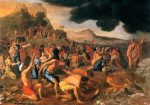
“The Crossing of the Red Sea,” a painting by Nicolas Poussin, which was commissioned in 1632. It can be found at the National Gallery of Victoria in Melbourne, Australia. (photo by Nicholas Poussin via Wikimedia Commons)

The Israelites left Egypt on the first day of Passover, but the Egyptians didn’t leave them until the sea separated them forever on the seventh day. By celebrating Passover for seven days, we celebrate ambivalent feelings of joy and stress. Shabbat Shira – the Shabbat whose Torah portion contains the song sung by Israel after the splitting of the Red Sea – invites us to focus on the miracle of Passover’s seventh day.

Just imagine the unbearable stress when Israel was caught in a death trap between the Egyptians and the sea, the shouts, cries and prayers. Imagine the hand of Moses raised, the long and dark night between the protecting pillar of fire and the cloud, the great wind splitting the sea in two, the first steps into the water, crossing on dry land, seeing the vicious enemy destroyed.

It is not surprising that it resulted in an epic song. While evil was drowned in deep water, happiness flooded Israel. Only a heartless man wouldn’t sing. How many of us are capable of imagining this and meaning what they say in Exodus (15:1-2): “Sing to God…. This is my God, and I will glorify Him.” What a great national miracle that was, once upon a time.

Is this episode still relevant for us today? When we think of the Sinai revelation, it’s clear – we have the Torah. But is something left from the Song at the Sea? If the answer is yes, what is the key for finding meaning?

Our sages interpreted the future tense of the song as indicating a song that hasn’t yet been sung. Thus, for example, they say, “It is not written, ‘then Moshe sang,’ but ‘will sing.’” The sages also attributed a double reading to the words “Elohai avi” – they read it as both, “the God of my fathers,” and “God is my father.” They elaborated on the significance of the song to “every single generation.”

Indeed, the secret for singing a song of faith lays in this verse. My teacher, Rabbi Prof. David Hartman, used to point out that the coin has two sides. Many can tell about our own God; many can tell stories about the God of our fathers. The secret of the Jewish people lays in the way we identify our own God with the God of our fathers.

My grandmother, Savta Privah, sang her personal song at the sea more than 70 years ago, when she was liberated from Auschwitz. On her way from the refugee camps to Israel, she told my grandfather, “Now that we are making aliyah to Israel, from now on, we are Zionists.”

Going down from the ship, my grandfather, Saba Menachem, was asked for his occupation. He had lost his parents at a young age and had worked for his living even before the Holocaust.

“I’m a tinsmith,” he said.

Very well, they said, register with the labour union and we will find you a job.

“I had enough red flags in Europe,” my grandfather said, and established his own business.

Ironically, he found work at Mishmar Ha’Emek, one of the most anti-traditional Israeli kibbutzim. He was the only observant employee. Back then, they had two dining rooms, one for the young kibbutznikim and another one for the elders, because only they kept kosher.

My grandfather – a young man at that time – used to eat with the elders. One day, Shoshana Hazan, mother of Yaakov Hazan, leader of the Shomer Hatza’ir youth movement, came to his table with two Shabbat candlesticks.

“These are our family silver Shabbat candlesticks,” she said, “but my daughter-in-law would never use them. Take them to your wife to light Shabbat candles.”

Read more at jns.org.


Dr. Shraga Bar-On is a member of the Beit Midrash for New Israeli Rabbis Program of the Shalom Hartman Institute and HaMidrasha at Oranim.

Format ImagePosted on March 31, 2017March 31, 2017Author Dr. Shraga Bar-On JNS.orgCategories Celebrating the HolidaysTags Exodus, Passover
Haggadah from 1500s

Haggadah from 1500s

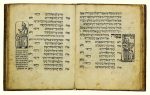
Pages from the 1500s Passover Haggadah that was recently sold to the National Library of Israel. (photo from Sotheby’s)

On the right, a man sits and prays holding a liturgical book. On the left, a rabbi is seen explaining the story of the Exodus to a child. These images were printed on the pages of a Passover Haggadah in the city of Prague in 1556.

This nearly 500-year-old Haggadah, one of only two remaining copies, is part of the Valmadonna Trust Library collection that was recently sold to the National Library of Israel, with the help of philanthropy from the Haim and Hana Salomon Fund.

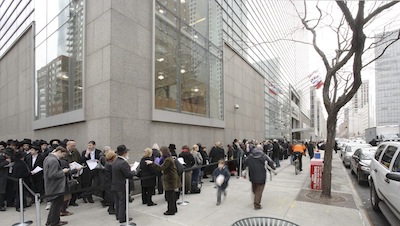
photo - The line to view the Valmadonna collection outside Sotheby’s in New York, before the collection was sold to Israel’s national library
The line to view the Valmadonna collection outside Sotheby’s in New York, before the collection was sold to Israel’s national library. (photo from Sotheby’s)

“The Haggadah is the most widely published book in Jewish history,” said Sharon Mintz, senior consultant for Judaica at Sotheby’s auction house, which arranged the sale to the Israeli library. She told JNS.org that more than 3,000 editions of the Haggadah have been printed during the last several centuries – more than the Bible.

The Valmadonna collection’s 1556 Haggadah is a rare, luxury edition with Yiddish interpolations that “constitute the earliest examples of such texts,” said Marc Michael Epstein, professor of religion and visual culture and the Mattie M. Paschall (1899) and Norman Davis Chair at Vassar College in New York.

Just a few decades after Johannes Gutenberg invented the printing press around 1440, printing spread to the Jewish world, beginning in Rome and then moving throughout Italy and the Iberian Peninsula. Scholars tend to refer to the era of early printing, before 1501, as the Incunabula period.

Jews were “tremendously excited” to be able to print multiple books, Mintz explained. “They viewed it as a gift of God,” she said.

The earliest printed Haggadah was printed in Spain in 1482. Another early Haggadah dates back to roughly 1486, and was published by the Soncino family, named for the Italian town where the family ran its printing operation. These early Haggadot were not illustrated. The earliest known illustrated Haggadah was printed in Constantinople (modern Istanbul) around 1515, but only a few pages of this Haggadah remain.

Jewish printing spread to other parts of Europe in the 1500s, which also led to a growth in competition among printers.

“The cradle of Hebrew printing is, of course, Venice. But the printing of Jewish books north of the Alps began in Prague in 1512 in the circle of Gershom ben Solomon Kohen and his brother Gronem,” said Epstein, who is the author of Skies of Parchment, Seas of Ink: Jewish Illuminated Manuscripts and The Medieval Haggadah: Art, Narrative and Religious Imagination.

“Due to the humanistic patronage of the Holy Roman Emperor and a general climate of relative tolerance and free trade, Prague in the 16th century was a place of vibrant Jewish communal and cultural life, and thus – along with Venice – a crucial centre of the newly developed art and craft of Hebrew printing,” he said. “Jewish printing spread from Prague throughout Western as well as Eastern Europe, the next great centres being in the Polish communities such as Lublin.”


Read more at jns.org.

Format ImagePosted on March 31, 2017March 31, 2017Author Alina Dain Sharon JNS.ORGCategories Celebrating the HolidaysTags Haggadah, Israel, Passover, Sotheby's, Valmadonna
An artificial odour test

An artificial odour test

(image from wis-wander.weizmann.ac.il)

Say someone claims to have developed a system to “capture” any odour in the form of a digital code – one that could be transmitted online or uploaded to the internet and faithfully reproduced at the receiving end. How could we be sure that the system is valid? In other words, how can we know that, for any possible odour someone has captured digitally and transmitted, the smell we receive is indeed a recognizable, fair rendition of the original?

Prof. David Harel of the Weizmann Institute of Science’s computer science and applied mathematics department explains that, as opposed to video and audio, an odour reproduction system is still far from viable, although some of the components already exist.

“We still don’t understand the process by which the numerous combinations of odourants in our environment are identified and sensed as a particular smell in our brains after they enter our noses, attach to the several hundred kinds of odour receptors there and are transferred to the brain as signals,” he said. But he and his colleagues had, already 15 years ago, laid out the basic principles of such a digital smell system.

This system would need a “sniffer” – a sort of artificial nose – to take “snapshots” of the odourous substances in the air. It would also need a “whiffer” that, something like a colour printer, would be able to mix a fixed set of around 50 chemical odourants in precisely given proportions – something in the way a printer mixes a small number of inks – and release measured amounts of the resulting odour into the air accurately, in a controlled manner.

photo - Prof. David Harel of the Weizmann Institute of Science
Prof. David Harel of the Weizmann Institute of Science. (photo from wis-wander.weizmann.ac.il)

Harel believes that such systems will eventually exist, pointing out that research is continually improving our understanding of how smell is “encoded” and how we perceive it. Although reasonably good sniffers and whiffers exist, the tantalizing scientific challenge is to work out the algorithm for connecting the sniffer’s reading into the whiffer’s emission; that is, a method is needed for translating any given odour into precise instructions for the whiffer to follow. The output mixtures would have to be experienced by humans in the way that photos are today – as reproductions that our sense recognizes as faithfully capturing the original.

Despite the fact that this challenge appears to be extremely difficult, Harel recently devised a test that could be used to assess the validity of such a system, if and when one is proposed. One of his inspirations was the Turing test proposed by the British father of computer science, Alan Turing, to test claims of human-like intelligence in a machine. A tester sits in one room and holds conversations with entities in two other rooms – one a human and the other the candidate computer. Through questions, chitchat and serious discourse, the tester tries to identify which is which; if repeated tests cannot distinguish the computer from the human, it is said to possess artificial intelligence. “The problem with using such a test for artificial olfaction,” said Harel, “is that such blind comparisons are detached from the element of human recognizability; and there is no adequate language to describe smells in general, meaning verbal discussions would not work either.”

Harel devised a “lineup” test, whose key feature is the immersion of odours with their natural audio-visual references, thus eliminating the need for verbal description. A team of neutral testers is given several short video clips – for example, of a bakery, a zoo, a dusty attic, a flowering meadow, etc. – and is asked to match an odour emitted by the sniffer with its correct clip. The clips are prepared by a team of challengers, whose role is to try to disprove the claim that the proposed system is valid.

To make sure that the test is fair – for example, the subjects won’t be required to identify the odour of a damp cave hidden from view in the clip of a meadow scene – the group is divided into two. One half is exposed to the actual odours collected and preserved at the video sites, and the other to the artificial, chemically reproduced odour created by the sniffer-whiffer system. That way, the second team of participants – those smelling the whiffer output – are required only to correctly match the odour to its clip when the first team – those exposed to the real odour – succeeds. As in the Turing test, the artificial is pitted against the natural in a blinded experiment, but here the test uses odour immersion for recognizability, and the test is asymmetric, requiring from the artificial no more than is required from the real thing in order to be declared successful.

For more on the research being conducted at the Weizmann Institute, visit wis-wander.weizmann.ac.il.

Format ImagePosted on March 31, 2017March 31, 2017Author Weizmann InstituteCategories IsraelTags David Harel, science, Weizmann Institute
הערים היקרות בעולם

הערים היקרות בעולם

השבועון האנגלי לחדשות ואקטואליה ‘האקונומיסט’ פירסם את המדד השנתי שלו על הערים היקרות ביותר בעולם. קנדה מיוצגת בדוח על ידי שלוש ערים בלבד: ונקובר במקום ה-39, מונטריאול הרחק במקום ה-62, ואילו טורונטו במקום ה-86. (צילום: Cynthia Ramsay)

השבועון האנגלי לחדשות ואקטואליה ‘האקונומיסט’ פירסם את המדד השנתי שלו על הערים היקרות ביותר בעולם. הדוח לשנת 2017 כולל 133 ערים מרכזיות ובולטות, שיוקר המחייה בהן הוא הגבוה ביותר בעולם. הדוח מתבסס על 400 פרטי מחירים של 160 מוצרים ושירותים שונים. ובהם: אוכל, משקאות, ביגוד, תחבורה, שכירות, חשמל, בתי ספר פרטיים, פעילויות פנאי ועזרה ביתית.

קנדה מיוצגת בדוח על ידי שלוש ערים בלבד: ונקובר במקום ה-39 לעומת מקום 49 אשתקד, מונטריאול הרחק במקום ה-62 לעומת מקום 71 אשתקד, ואילו טורונטו רחוקה עוד יותר ונמצאת במקום ה-86 לעומת מקום 88 אשתקד.

העשירייה הראשונה בדוח: את רשימת הערים שיוקר המחייה בהן הוא הגבוה בעולם מובילה סינגפור (במקום ראשון אשתקד), הונג קונג במקום השני (במקום שני אשתקד), ציריך במקום השלישי (במקום שני אשתקד), טוקיו במקום הרביעי (במקום אחד עשר אשתקד), אוסקה במקום החמישי (במקום ארבעה עשר אשתקד), סיאול במקום השישי (במקום שמיני אשתקד), ג’נבה במקום השביעי (במקום רביעי אשתקד), פריז גם כן במקום השביעי (במקום החמישי אשתקד), ניו יורק במקום התשיעי (במקום שביעי אשתקד), קונפנהגן במקום העשירי (במקום שמיני אשתקד).

העשירייה השנייה: תל אביב נמצאת במקום האחד עשר (במקום ארבעה עשרה אשתקד), לוס אנג’לס גן כן במקום האחד עשר (במקום שמיני אשתקד), אוסלו גם כן במקום האחד עשר (במקום שלושה עשר אשתקד), סידני במקום הארבעה עשר (במקום עשרים אשתקד), מלבורן במקום החמישה עשר (במקום עשרים ואחד אשתקד), שנחאי במקום השישה עשר (במקום אחד עשר אשתקד), הלסיניקי גם כן במקום השישה עשר (במקום שבעה עשר אשתקד), אוקלנד גם כן במקום השישה עשר (במקום שלושים ושמונה אשתקד), וולינגטון גם כן במקום השישה עשר (במקום ארבעים ושתיים אשתקד).

העשירייה השלישית: שנג’ן במקום העשרים ואחד (במקום שישה עשר אשתקד), וינה גם כן במקום העשרים ואחד (במקום שמונה עשר אשתקד), פרנקפורט במקום העשרים ושלושה (במקום שמונה עשר אשתקד), לונדון במקום העשרים וארבעה (במקום שישי אשתקד), דבלין במקום העשרים וחמישה (במקום עשרים וארבעה אשתקד), מינאפוליס גם במקום העשרים וחמישה (במקום עשרים וארבעה אשתקד), שיקגו במקום העשרים ושבעה (במקום עשרים ואחד אשתקד), וושינגטון גם כן במקום העשרים ושבעה (במקום עשרים ושישה אשתקד), מילאנו במקום העשרים ותשעה (במקום עשרים ושמונה אשתקד), עמאן גם כן במקום העשרים ותשעה (במקום עשרים ותשעה אשתקד).

העשירייה הרביעית: בריזביין במקום השלושים ואחד (במקום ארבעים ותשעה אשתקד), דאליין במקום השלושים ושתיים (במקום עשרים ואחד אשתקד), המבורג גם כן במקום השלושים ושתיים (במקום שלושים וארבעה אשתקד), סן פרנסיסקו גם כן במקום השלושים (במקום שלושים וארבעה אשתקד), מינכן במקום השלושים וחמישה (במקום שלושים ואחד אשתקד), יוסטון גם כן במקום השלושים וחמישה (במקום שלושים ואחד אשתקד), רומא גם כן במקום השלושים וחמישה (במקום שלושים וארבעה אשתקד), אדלייד גם כן במקום השלושים וחמישה (במקום חמישים ושלושה אשתקד), דיסלדורף במקום השלושים ותשעה (במקום שלושים וארבעה אשתקד), ברצלונה גם כן במקום השלושים ותשעה (במקום שלושים ושמונה אשתקד), בריסל גם כן במקום השלושים ותשעה (במקום שלושים ושמונה אשתקד), נומאה גם כן במקום השלושים ותשעה (במקום ארבעים ושתיים אשתקד), ונקובר גם כן במקום השלושים ותשעה (במקום הארבעה ותשעה אשתקד).

אלמטי נחשבת לזולה ביותר בעולם מבחינת יותר המחייה והיא נמצאת במקום המאה שלושים ושלושה והאחרון (במקום מאה עשרים ושבעה אשתקד).

Format ImagePosted on March 29, 2017Author Roni RachmaniCategories עניין בחדשותTags Economist, most expensive cities in the world, האקונומיסט, הערים היקרות בעולם
Jewish values in Trump era

Jewish values in Trump era

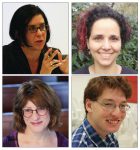
The April 9 panel discussion Israel, Canada and Me in the Age of Trump will feature, clockwise from top left, Dr. Shayna Plaut (photo from Shayna Plaut), Ofira Roll (photo from Ofira Roll), Rabbi Susan Shamash (photo by Robert Albanese) and Eviatar Bach (photo from Eviatar Bach).

Israel, Canada and Me in the Age of Trump will be the topic discussed by a panel of four Jewish speakers on April 9 at the Peretz Centre for Secular Jewish Culture.

“Trump’s election in the U.S. has shifted the relationship that Diaspora Jews in general, and progressive Jews in particular, have with Israel,” Yom-Tov Shamash, one of the organizers, told the Independent. “I believe that most Jews in Vancouver, young and old, Zionist or not, affiliated, religious or secular, feel uncomfortable with the Israel-Trump alliance. Bringing four progressive Jewish leaders from different walks of life provides an opportunity for all Jews supporting values of social justice to hear different points of view, to find common ground, to develop relationships and hopefully to get involved in common causes.”

One the participants, Dr. Shayna Plaut, is research manager of the Global Reporting Centre. She is currently teaching courses on migration and social inequalities at the University of British Columbia and is adjunct professor in international studies, Simon Fraser University.

“Ashkenazi Jews in Canada and the U.S. are in greater positions of safety than we have ever been,” two or three generations removed from the Holocaust, said Plaut. “Ashkenazi Jews can pass for white. We have a responsibility to do something with this privilege, [to uphold] the tradition of tikkun olam.

“As a descendant of refugees, I have always felt connected to refugees,” she continued. “I work to make my ancestors proud and, right now, that means standing in solidarity with this generation of refugees.

“We all have different strengths. And we have a responsibility to see, and use our strengths. My strengths are in education and connection.”

Plaut said, “The level of intolerance in Canada and the U.S. has increased. I was born and raised in the U.S. I became a Canadian because I was having a hard time recognizing my own country. It’s not like racism didn’t exist before – we are a country built on colonization and slavery – but we are also a country built on ideals and resistance. I have always worked in this positive vein of how to make things better. I view patriotism as a commitment to make my country better. It’s easier to talk about what’s wrong than to present alternatives to make things better and work together. It was in December 2015 when I [began to feel] that perhaps I was able to do this better from Canada … as a Jew, as a dual citizen of the U.S. and Canada, and as an educator and worker for human rights and social justice.”

Ofira Roll, another of the panelists, is a PhD candidate in education at UBC. Born and raised in Israel, she reflected on what is involved in activism in Israel as opposed to Canada or the United States.

“Our activism here has productive aspects. However, it feels as if we do it by remote control,” said Roll. “I truly miss the messiness in Israel – the messiness of communication, liveliness and opinions, of cultures and interests. People have opinions and they share them and embody them. I know the darker sides of living there – it’s a nationalistic state, undemocratic, racist, capitalist and anti-human rights – but it feels more real to me, where I feel pushed to the edge in all aspects of life. I am asked to speak up for what I truly care about and act on it. For me, being ‘pro-Israel’ means criticizing what’s wrong.”

Roll is critical of recent Israeli legislation excluding supporters of boycotts from entering Israel. “Personally, I don’t believe in boycotting countries. Still, I can’t accept the idea that if I came to Israel and had decided to boycott, I’m on this list. Friends of mine would be on this list. I don’t understand how a democratic country can pass such an undemocratic law. It’s not just stopping people who don’t support Israel – it stops more Palestinians than anyone else so, in a way, it really is a racist law.

“As several philosophers I am influenced by – Martin Buber, Hannah Arendt – say, engaging in dialogue doesn’t mean that we are in agreement. Dialogue is more about the process we go through in the search for new understandings. Now, when I see everyone coming together, it’s a strong moment for me. In the time of Trump, that’s what I’m happy about. People start understanding that all these divisions are fake. We are not different at the core. The women’s marches we had all over the world – for women’s rights, which are human rights – ironically, thanks to Trump.

“It’s not about convincing, but about sharing. It’s an invitation to talk, first of all, as humans. I don’t believe in all these divisions and borders. I have a hard time with flags, anthems. I think home is within you. Home is not something defined by others. It doesn’t need always to be in the name of a country.”

Roll has found the atmosphere in Vancouver’s Jewish community fairly open. “When [Israeli singer] Ahinoam Nini came here,” she noted, “people fought to bring her, with the support of the Jewish Federation, against groups who did not believe she should be invited because she supports Palestinians’ causes. I wrote a collective letter [to the Federation] on behalf of my Hebrew-speaking community theatre group. They read our letter at a Federation meeting, and they were brave enough to take a stand, and Nini was invited. In the end, they made an extra effort to bring us all together to meet Nini after the show. The Jewish community here includes many other voices, even among synagogues. There are many small groups, which don’t follow one way.”

Panelist Eviatar Bach is graduating from UBC in physics and computer science. He is involved with the Social Justice Centre at UBC, is a co-founder of the UBC Progressive Jewish Alliance and a founding editor of the Talon, a progressive online student magazine.

“With the Trump administration, it appears that the U.S. has abandoned the pretense of an ongoing ‘peace process,’ with Trump expressing indifference at the choice between a one-state and a two-state solution, and the appointment of settlement backer David Friedman as ambassador to Israel,” said Eviatar.

“At the same time,” he continued, “there is perhaps more disagreement between mainstream Jewish organizations, which tend to uncritically support Israeli actions, and young Jews in North America, than ever before. New groups such as IfNotNow, predominantly composed of young Jews, emerged during Operation Protective Edge in 2014, and have taken more confrontational stances than, say, J Street, by protesting Jewish organizations that defend occupation and killings directly.

“On university campuses, the Open Hillel movement has sought to challenge Hillel International’s guidelines, which narrowly constrain the range of views that speakers at Hillels around the world are allowed to express. Several Independent Jewish Voices chapters have started at university campuses in Canada, and the Progressive Jewish Alliance was started at the University of British Columbia.”

Rounding out the panelists is Rabbi Susan Shamash, who was recently ordained by ALEPH: Alliance for Jewish Renewal. She is a retired lawyer and an active member of Congregation Or Shalom.

“As a recently ordained, progressive rabbi, my focus is always on the Jewish values that propel me towards acts of social justice, including engagement in interfaith dialogue and commitment to family and community, which includes my Jewish family and my Jewish community.

“As a born and bred Canadian (like both my parents), my relationship with Canada is foundational to my identity,” she said. “I have a deep and abiding faith in our legal and judicial systems and in our system of government which, though imperfect, is based on values of inclusion, social welfare and multiculturalism.

“As a religious Jew, my relationship with the Jewish community in general and Israel in particular is complicated, varied and nuanced. I often find myself interceding on behalf of a different perspective, of more open thinking and understanding. There is much more to Israel than the occupation and conflict with the Palestinians, but, unfortunately, that is what defines its current reputation in the world community.

“We live in troubled and troubling times,” said Shamash. “U.S. President Trump has already changed the world order in unprecedented ways. More worrisome is that he has a lot of support both within and without the United States. This is not just an American phenomenon.

“How do my Jewish values help me to live, survive and even thrive in this new world order? There are many that we repeat over and over again: seek peace, pursue justice, love your neighbour, welcome the stranger, be a holy people, steward the earth, perform acts of loving-kindness, repair the world.”

The April 9 event is sponsored by Independent Jewish Voices, Vancouver. It begins at 1 p.m. and the suggested donation is $10.

Carl Rosenberg is a member of the United Jewish People’s Order and Independent Jewish Voices Canada. For many years, he edited Outlook: Canada’s Progressive Jewish Magazine.


 

Format ImagePosted on March 24, 2017March 23, 2017Author Carl RosenbergCategories LocalTags IJV, Independent Jewish Voices, Israel, Judaism, multiculturalism, Trump
A pre-election townhall

A pre-election townhall

Queenie Choo, chief executive officer of SUCCESS (photo from SUCCESS), and Jacob Switzer, member of CIJA’s Local Partners Council (photo from CIJA Pacific Region), spoke with the Independent about the upcoming townhall April 2.

Immigration, security, inclusivity and affordability are among the subjects to be addressed at the April 2 Provincial Pre-election Townhall.

The townhall is being presented by SUCCESS and the Centre for Israel and Jewish Affairs (CIJA). SUCCESS chief executive officer Queenie Choo told the Independent, “The topics were determined based on … dialogue between the two organizations.”

“We wanted to find topics that were of relevance and concern for both sets of constituents, as well as current,” said Jacob Switzer, a lay leader involved in planning the event, as a member of CIJA’s Local Partners Council. Culturally sensitive care for seniors, and accessibility and transportation will also be covered.

Scheduled to participate in the discussion as of press time were Michael Lee, B.C. Liberals candidate, Vancouver-Langara; George Chow, B.C. NDP candidate, Vancouver-Fraserview; and Michael Markwick, Green Party candidate, West Vancouver-Capilano. The townhall will take place at Choi Hall, SUCCESS Social Service Centre, 28 West Pender St.

“The event will allow our community to hear from its potential political leaders and learn about their views, as well as engage politically,” said Switzer. “It also lets us tailor questions to issues that are of specific importance to our respective communities, which often overlap and which may not be as central a concern in other forums.”

About SUCCESS, he added, “we have very much enjoyed cooperating with them, both on this event and in the past.”

“It has always been our mandate to support integration of newcomers to our Canadian communities, as well as helping them to understand the rights and responsibilities of being a Canadian citizen, particularly in the civic responsibility,” said Choo. “As such, SUCCESS and CIJA have taken a leadership role to host this pre-election townhall to ensure we have an opportunity for the community to understand the positions each political party holds on the key areas of our interest. This will help voters in making an informed decision on May 9.”

“One of the key discussion points for the event will be community security and the apparent rise in bigotry and hate crimes, which is a highly current issue,” said Switzer. “We expect that both of our communities will want to hear about what policies are being considered to improve these issues and we anticipate questions from the floor around security (particularly in light of the recent bomb threats to the Vancouver Jewish Community Centre).”

With respect to the seeming rise in expressions of bigotry and hatred, Choo said, “Through the townhall, I am sure this issue will surface. It is important for the community to hear what are the directions or policies in addressing discrimination and racism from each political party. We would also like to hear how our future government will uphold our shared values of inclusion and diversity.”

The format of the event will be that of “a non-debate-style townhall,” said Switzer. “Each participant will be given a brief period for initial remarks (order is set by draw) and then will have the opportunity to answer the questions that we are already receiving via email or phone call. All will be given time to answer the same question so they can present their party’s perspectives. They will have another period to share any final comments with the audience.

“We have found that this format works well with the candidates and allows for a respectful and organized interaction among themselves and the public.”

The pre-submitted questions will be facilitated by a moderator at the townhall, noted Choo.

“This event is open to the public and free of charge,” she added. And the hope, she said, is “to engage as many people as possible, as it is important to understand what are the directions the next government will hold, especially on our important topics.”

“We are co-hosting this event with our friends at SUCCESS because we believe that joining forces with partners in other communities can only strengthen us,” said Switzer. “We are looking forward to a well-attended and meaningful event.”

The townhall will run 2:30-4:30 p.m. on April 2. To submit questions on the aforementioned topics for any party candidate, email [email protected] with the subject line “Provincial Pre-election Townhall Question.”

Format ImagePosted on March 24, 2017March 23, 2017Author Cynthia RamsayCategories LocalTags CIJA, Election, Jacob Switzer, politics, Queenie Choo, SUCCESS

Posts pagination

Previous page Page 1 … Page 455 Page 456 Page 457 … Page 667 Next page
Proudly powered by WordPress