Caring in times of need

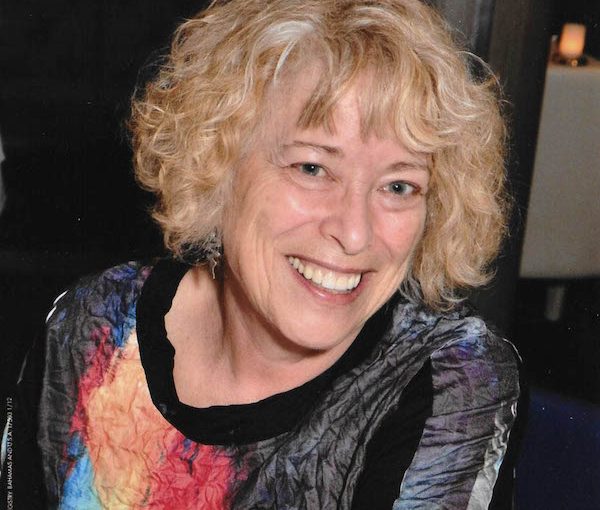
Chaplain Sari Shernofsky (photo by Norwegian Cruise Line)

Earlier this month, Sari Shernofsky described her experiences as a chaplain in a Zoom lecture called Stories from a Narrow Bridge: Meeting People in Time of Need. The talk’s title comes from a quote by Reb Nachman of Breslov: “All the world is just a narrow bridge and the main thing is to have no fear at all.” For Shernofsky, a recent transplant to Victoria from Calgary, those words were a call to pursue training as a multifaith hospital chaplain.

Shernofsky’s talk was part of Kolot Mayim Reform Temple’s current lecture series, Building Bridges: Hineini – Answering the Call to Heal the World. It took place on Jan. 8.

Shernofsky worked in hospital and hospice settings for 15 years, with the objective of offering compassionate care to those in need. She also served as the Calgary Jewish community chaplain where, in addition to visiting individuals, she helped set up support groups and various training workshops for synagogues that wanted to become involved in community care.

According to Shernofsky, to care for others in their time of need – whether it be an illness, end-of-life care or simply to connect with those who are isolated or alone – is not a choice but an obligation she views as a profound Jewish value.

A chaplain provides spiritual and emotional support to people in institutional settings. Healthcare chaplains, such as Shernofsky, are trained to work with people of different faiths. Though derived from a Christian word, a current use of chaplain encompasses the work done by spiritual-care providers. Many who go into the field do so later in life, as life experience is advantageous to the job. Shernofsky had worked in the corporate world before entering the chaplaincy. “I wanted at a certain point to work with my heart and not my head – to [be able to] look back at the end of my life and say I did something to help someone else that was meaningful,” she said.

“Maybe we are the bridge, and we are reaching out our hands to others – that is basically what a chaplain does. And there is a chaplain in all of us, to reach out our hands and make tikkun olam [repairing the world] happen,” she said.

As she explains it, her job was to visit people and let them take her into their world. Among the visits was one to someone she met while studying to be a chaplain. One evening, at midnight, she received a message on her pager notifying her that the daughter of an elderly evangelical man was looking for a Bible so she could read scripture to him. Once brought, the Bible did not create the desired effect, so the daughter asked for a hymnbook. Shernofsky returned with a hymnbook, which didn’t work either.

Silence ensued. Shernofsky finally walked over to the head of the bed and placed her hand on the man’s forehead. “I told him what a special life he led and how loved he was. I talked about the family being around and how much love was surrounding him. As I was talking gently to him, the daughter and her friends started humming ‘Amazing Grace’ in the background. I had a back-up group. And it was the most magical moment, a holy, sacred moment. When it was over, the daughter had a wonderful smile on her face. We gave her a moment that she needed. I walked out of the room at two in the morning and I was higher than a kite.”

In another instance, a Jewish man in his 60s came into the hospital in critical condition. At a certain point, doctors considered removing his life support, but his rabbi objected and he remained in hospital for another month.

“I realized that the family had time during that month to get over the initial shock and get used to the idea. Perhaps more importantly, they did not have to make a decision to pull the plug. And I don’t know how families can do that, and how awful it must be because there has got to be a place in the back of your head that says, ‘What if I hadn’t?’ It was a real learning experience for me about timing.”

She also recounted the lesson she received from a woman who had been bedridden in a hospital for several years. The woman was adored by hospital staff, Shernofsky said. “I learned that, when you have so little, you can still make a difference.”

Shernofsky ended with a few words about medical assistance in dying, or MAiD. “People choose MAiD because they are afraid of suffering, they don’t want to be helpless and don’t want to be a burden to others,” she said. “Maybe some of those reasons are a bit misguided. What happens with MAiD is often poor information. People are not told what other supports are available, like palliative home care and hospice. There are lots of good things about hospice, people are not educated about them and that’s a shame.”

The next speaker in the series is McGill University’s Prof. Morton Weinfeld, who recently published an updated edition of his book, Like Everyone Else But Different. He speaks Feb. 5, 11 a.m. To register, visit kolotmayimreformtemple.com.

Sam Margolis has written for the Globe and Mail, the National Post, UPI and MSNBC.

Students are learning to cook

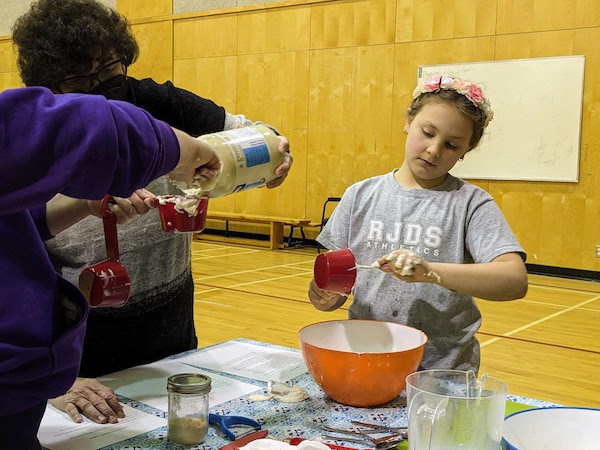
In Richmond Jewish Day School’s Food Lab Program, students help prepare meals once a month. (photo from RJDS)

One by one, students at Richmond Jewish Day School filter down the hallways following the smells of a delicious and nutritious meal. Waiting for them in the gym is lasagna, Caesar salad and a pesto prepared by RJDS students with the help of Jewish Family Services culinary master, Chef Zoe Sorokin.

RJDS’s Food Lab Program is the first of its kind in a Jewish day school in Metro Vancouver. It is just one of the current programs running in RJDS to enhance students’ access to healthy and nutritious food in a way that promotes community and inclusiveness. Every week, JFS makes and delivers hot meals at no cost to the students or their families. Once a month, students in grades 4 through 7 take an active part in this, helping with the preparation of the meals, including chopping, grating and cooking the plant-based ingredients.

photo - Once a month, students in grades 4 through 7 take an active part in this, helping with the preparation of the meals, including chopping, grating and cooking the plant-based ingredients
Once a month, students in grades 4 through 7 take an active part in this, helping with the preparation of the meals, including chopping, grating and cooking the plant-based ingredients. (photo from RJDS)

“I enjoy learning new cooking skills,” said Naomi, a Grade 4 student. “My favourite dish was the bean soup.”

“I love that we use all our senses when cooking,” said Ella, who is in Grade 5.

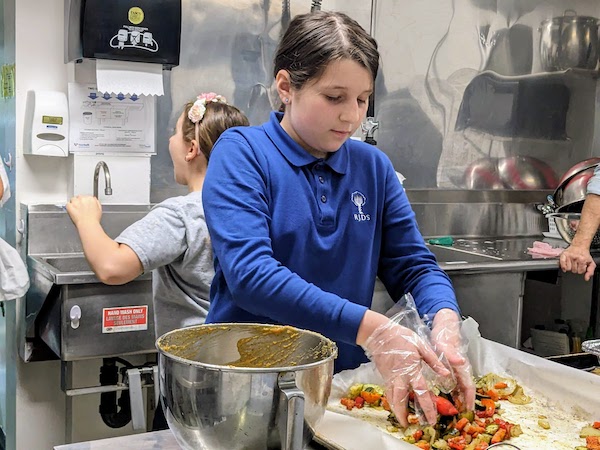
With demand at food banks growing over the course of the pandemic and rising inflation, food insecurity has become a reality for more families. RJDS students and school staff have led several efforts, with the support of social service partners, to help families feeling the pinch. Last year, with the assistance of the Jewish Federation of Greater Vancouver, Kehila Society and JFS, RJDS began a community fridge and pantry program. The partner agencies, plus the Richmond Food Bank, keep the fridge and pantry stocked and RJDS families can access free healthy snacks, dry goods, fresh produce and meals during school hours. The Food Lab represents an expansion of the school’s food programs.

photo - The Food Lab represents an expansion of the school’s food programs
The Food Lab represents an expansion of the school’s food programs. (photo from RJDS)

“The students at Richmond Jewish Day School have absolutely loved the weekly hot lunches,” said principal Sabrina Bhojani. “Our parents have also expressed their delight with this program, knowing that their children are receiving a warm, healthy and nutritious meal at school. The research is clear – good nutrition helps our children to focus, concentrate and self-regulate, which, in turn, results in improved learning and student performance.”

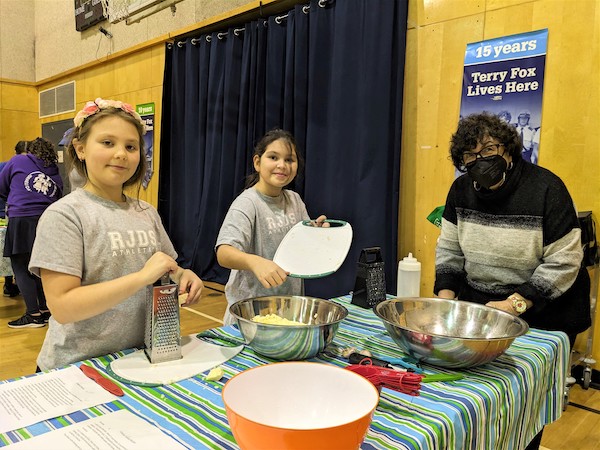
She added, “Not only are the students helping in preparing food to be enjoyed by the school, they are also learning about making informed decisions about food choices, food safety, the importance of food supply and healthy nutrition.”

photo - Students helping preparing food to be enjoyed by the school
Students helping preparing food to be enjoyed by the school. (photo from RJDS)

“I love participating in the Food Lab program,” said Yahel, who is in Grade 5. “It is a fun experience and I get to learn new skills that I can use at home.”

Vienna, also in Grade 5, agrees, saying: “I enjoy learning new cooking skills that I can share with my family.”

The RJDS kitchen has become a place for children to learn new and valuable life skills, to enjoy good food with friends and, most importantly, a place in which they can contribute and build strong relationships.

– Courtesy Richmond Jewish Day School

Many first-time experiences

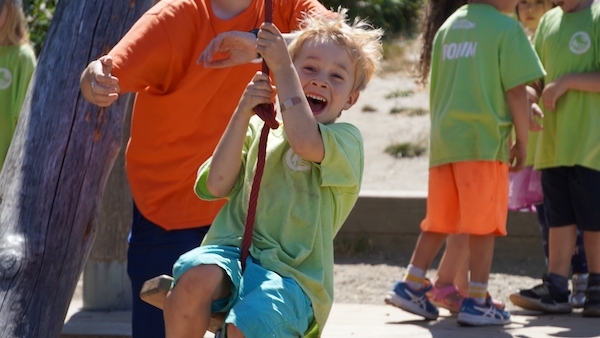
Camp Shalom knows that first experiences are a huge milestone in a child’s development, shaping their individuality, interests and futures. (photo from JCC Camp Shalom)

Day camps have always been places for firsts. For many, camp is the place where they are in a structured setting that isn’t school, where fun comes first. Serving children and youth from 3 to 16 years old, Camp Shalom has always viewed the experience from the lens of “what memorable first experience can we give campers?” For some kids, that experience is as simple as the first time being on a school bus going to a field trip. For others, it may be the opportunity to go camping or have a sleepover away from their homes.

These types of firsts are a pivotal part of growing up and becoming an independent person. With year-round programming during school breaks and professional development days, Camp Shalom is able to give many children and youth experiences they would not normally get to have. It’s an opportunity to meet other children who do not go to the same school as them or kids who have just moved to Vancouver. Such firsts leave a lasting impression and have the potential of creating lifelong friendships. Camp Shalom is dedicated to making camp a safe and accessible place where children want to go.

Thanks to the ongoing and generous contribution of the Diamond Foundation and the Snider Foundation, Camp Shalom is also able to support campers with diverse needs. Staff are provided with special training sessions, mentorship programs and one-on-one support to ensure each camper can have the best experience. Campers who were part of the inaugural Inclusive Summer Camp Experience have now grown and become teens and young adults who are still connected to Camp Shalom, some of whom are now camp staff.

photo - With year-round programming during school breaks and professional development days, Camp Shalom is able to give many children and youth experiences they would not normally get to have
With year-round programming during school breaks and professional development days, Camp Shalom is able to give many children and youth experiences they would not normally get to have. (photo from JCC Camp Shalom)

During their camp years, kids are transitioning from childhood into teenage-hood and teens are about to become counselors. First experiences are a huge milestone in a child’s development, shaping their individuality, interests and futures. Each year, after camp is over, counselors and staff hear about campers who have gone on to explore new interests that they gained while at camp.

A couple of summers ago, Camp Shalom introduced fencing – for almost everyone it was their first time doing this sport, and most initially knew nothing about it. One camper in particular found so much joy in this first that he has continued participating in it since. In the camp’s teen programs, many participants discover their passion for working with children or in community volunteering. Even staff are affected by these new experiences, and some have changed career paths after working at camp.

This summer, Camp Shalom will be operating at the Jewish Community Centre of Greater Vancouver and King David High School in Vancouver, Har El Synagogue in West Vancouver, and Richmond Jewish Day School in Richmond. Families can choose the location that best suits them.

For more information about the Inclusive Summer Camp Experience or Camp Shalom’s teen programs, contact Ben Horev, camp director, at 604-638-7282 or ben@jccgv.bc.ca.

– Courtesy JCC Camp Shalom

Community milestones … Gordon, Segal, Roadburg foundations & West

Dr. Paula Gordon and Gary Segal have been appointed to the Order of Canada.

On Dec. 29, Governor General of Canada Mary Simon announced new appointments to the Order of Canada. The list included two members of Vancouver’s Jewish community: Dr. Paula Gordon and Gary Segal.

“What a beautiful way to end the year, honouring Order of Canada appointees and learning about the depth and range of their accomplishments,” said Simon in a press release. “Celebrated trailblazers in their respective fields, they are inspiring, educating and mentoring future generations, creating a foundation of excellence in our country that is respected throughout the world. Their commitment to the betterment of Canada fills me with pride and hope for the future. Alianaigusuqatigiivassi. Congratulations.”

Gordon is a clinical professor in the department of radiology at the University of British Columbia. Her research interests include breast ultrasound for diagnosis and for supplemental screening for women with dense breasts. She has been the chair of numerous committees, including ones dealing with provincial health policies and screening programs. She has been a reviewer for academic publications, published extensively in peer-reviewed journals, and volunteered in numerous capacities. Gordon was appointed an officer of the Order of Canada for “advancing ultrasound imaging and technology in the early detection of breast cancer, as a prominent radiologist and researcher.”

Segal, executive/principal of Kingswood Capital Corp., is a philanthropist who also volunteers in several organizations. His current roles include chair of the board of directors of the VGH & UBC Hospital Foundation, several responsibilities with the Jewish Joint Distribution Committee, founder and chair of the Bring Back Hope initiative for Ethiopia, governor and founding member of St. Paul’s Hospital Foundation, and a member of the board of directors of the Jewish Federation of Greater Vancouver. Segal was appointed a member of the Order of Canada for “his enduring commitment to humanitarian work, philanthropy and service to the community.”

Philanthropy

On Jan. 17, JWest announced a leading $36 million capital campaign matching challenge by the Ronald S. Roadburg Foundation and the Al Roadburg Foundation. This is the first time the two private charitable foundations have collaborated on a major initiative, and they hope to inspire the community through the Roadburg family’s legacy. This gift marks the single largest donation given to the JWest project.

The Ronald S. Roadburg Foundation was established in 2021 through the estate of the late Vancouver businessman Ronald Roadburg. Rooted in a strong sense of community and responsibility, the foundation engages in philanthropic initiatives in the Jewish and broader communities locally and around the world. Promoting transformational change, it looks to support populations disproportionately affected by circumstance or inequities, strengthen and secure the Jewish community and other at-risk communities, and address complex social challenges.

“Strengthening and securing communities is at the heart of the Ronald S. Roadburg Foundation, and we saw this as a once-in-a-lifetime opportunity to do just that,” said foundation chair Bernard Pinsky. “Ronald Roadburg was active in Vancouver real estate. With his vision to establish philanthropic goals for his estate, JWest is a perfect opportunity to leave a legacy in the city of Vancouver.”

Founded in 1997, the Al Roadburg Foundation seeks to support charitable organizations across Vancouver and in Israel responding to food and housing insecurity and health care issues. The foundation also looks to assist groups that help at-risk youth and those with disabilities and debilitating diseases.

“Al Roadburg was a quiet businessman who nevertheless had a presence in many parts of Greater Vancouver,” said its chair, Robert Matas. “The JWest project will create a robust athletic, social and cultural hub that is bound to strengthen both the Jewish community and the broader community across the region. With the Roadburg family’s support for community in mind, we’re pleased to be part of making it happen.”

Al Roadburg was born in Vancouver in 1913. At an early age, he began working as a scrap dealer. Over the years, he built his business, Richmond Steel Recycling, into a multi-million-dollar operation, with the largest automobile shredder in the province. In the 1950s, he began building a portfolio of rental apartments, multi-purpose warehouses, commercial spaces and office buildings. His company, Broadway Properties, bought and held the buildings, providing security for tenants and stability to neighbourhoods in Greater Vancouver. After he died, his son Ronald took over the real estate business.

The Roadburg family lived as active members of the Jewish community and were business leaders in Vancouver. They made decisions that ensured they remained charitable through their estates. With the recent announcement, they have established a legacy that will benefit the city and community where they lived and raised their family.

“We’re immensely grateful to the Roadburg family for issuing this challenge. When the challenge is met, it will represent a profound investment in the Jewish community and the community at large,” said Alex Cristall, JWest capital campaign chair. “To achieve this goal, we will first be meeting with major donors across our community to match this challenge. However, this is a community-wide project and, in due course, we will be inviting everyone to join us in creating a legacy for future generations.”

When complete, JWest will house all programs and services offered at the current Jewish Community Centre of Greater Vancouver in larger, purpose-built spaces. It will also include expanded space for the Vancouver Holocaust Education Centre and, in the second phase of construction, mixed-use rental housing and a new home for King David High School.

In September 2022, the Diamond Foundation donated $25 million, marking the first philanthropic donation to the project, a contribution that was matched by community donors. The $36 million matching challenge from the Roadburg family foundations brings the total amount raised to $88 million of the $161 million philanthropic goal.

In addition to community philanthropy, JWest gratefully acknowledges the $25 million received from the Government of British Columbia and the $25 million contributed by the Government of Canada.

For more information, visit jwestnow.com/about.

מקטאר לוונקובר

צלום: Province of British Columbia

לאחר סיום המונדיאל האחרון בקטאר לפני שבועות מספר, מתחילה ההיערכות למונדיאל הבא – אליפות העולם שתיערך לראשונה בשלוש מדינות בו זמנית: ארצות הברית, מקסיקו וקנדה. זאת בעוד כשלוש וחצי שנים: בחודשים יוני ויולי בשנת אלפיים עשרים ושש

הטורניר בצפון אמריקה יכלול יותר מקומות לאפריקה ומרכז אמריקה, העפלה צפויה של ניו זילנד, שדרוג מזערי לאירופה ורמה נמוכה בשלב הבתים. המארחות ארה”ב, קנדה ומקסיקו כבר מתחילות להיערך לקראת אירוח המונדיאל הראשון שיכלול לא פחות מארבעים ושמונה נבחרות

 אחרי סיום המשחקים בקטאר, בעולם הכדורגל מתחילים להביט קדימה אל עבר טורניר הבא שיתקיים בארצות הברית, קנדה ומקסיקו. כיוון שהטורניר בקטאר התקיים בינואר (לאור החום הכבד בקיץ שם), אוהדי הכדורגל ימתינו רק שלוש שנים וחצי עד המונדיאל הבא ולא ארבע כמו בדרך כלל. כידוע, למרות הביקורות הקשות, המונדיאל הבא יתקיים בפורמט שונה. יותר נבחרות, יותר משחקים ויותר שחקנים. לטענת הרבה מאוד מבקרים, גם צפויה רמה נמוכה מאוד של משחקים בשלב הבתים – לאור העפלה של נבחרות בינוניות ואף פחות מכך. הרחבת המונדיאל של צפון אמריקה תסייע בעיקר לנבחרות מאפריקה, אסיה מרכז וצפון אמריקה, וגם לניו זילנד. מי שייהנו פחות מכך באופן יחסי, הן הנבחרות הטובות יותר השייכות ליבשות של אירופה ודרום אמריקה. שם בית המוקדמות יכלול עשר נבחרות, ועשויות לעלות לשלבים המתקדמים לא פחות משמונה מהן. הסיפור המעניין מגיע הפעם מצפון ומרכז אמריקה. זאת כיוון ששלוש המארחות (ארצות הברית, מקסיקו וקנדה) עולות אוטומטית למונדיאל. ולכן ייפתחו שלושה מקומות נוספים ושתי נבחרות נוספות יגיעו לפלייאוף. בסופו של דבר יכול להיות שיהיו שמונה נציגות משם מצפון ומרכז אמריקה. ניו זילנד, שמאז הצטרפות אוסטרליה למוקדמות באסיה תמיד מסיימת במקום הראשון באוקיאניה, תהיה פייבוריטית ברורה לעלייה אוטומטית. נבחרת איי שלמה במוקדמות 2022 הגיעה לגמר נגד האול וייטס, תעפיל עד לפלייאוף אם שוב תסיים כסגנית

נבחרות כמו ג’מייקה, טרינידד וטובגו ואל סלבדור ייאבקו על חזרה לגביע העולמי ובדרום אמריקה ונצואלה – היחידה שמעולם לא עשתה זאת – יכולה לחלום על הופעת בכורה בזכות העובדה ששבעים אחוזים מהמתחרות בתמונה העלייה. השינוי היחיד שזוכה למשוב חיובי מכל הכיוונים הוא בשיטת הפלייאוף. במונדיאל אלפיים עשרים ושתיים למשל, הגיעו לפלייאוף ניו זילנד, פרו, קוסטה ריקה ואוסטרליה, בהגרלה עיוורת נקבעו שני משחקים שהניבו שתי עולות. בפורמט החדש שלב הפלייאוף יתקיים בשיטת ליגה אינטרקונטיננטלית, שתכלול שש נבחרות מחמש יבשות. הן ישחקו אחת נגד השנייה ושתי הראשונות יעפילו למונדיאל

הטורניר של המונדיאל אלפיים עשרים ושש ייערך בשישה עשר אצטדיונים שונים. אחד עשר בערים האלה בארצות הברית: ניו ג’רזי/ניו יורק, דאלאס, קנזס סיטי, יוסטון, אטלנטה, לוס אנג’לס, פילדלפיה, סיאטל, סן פרנסיסקו, בוסטון ומיאמי. שלושה בערים האלה במקסיקו: מקסיקו סיטי, גוודלחרה ומונטריי. שניים בערים האלה בקנדה: טורונטו וונקובר

למרות שהתאחדות הכדורגל העולמית (פיפ”א) החליטו לפני מספר שנים לשחק בפורמט של שישה עשר בתים, שיכללו שלוש נבחרות כל אחד, ייתכן שהתוכנית לא תצא אל הפועל במונדיאל של ארצות הברית, מקסיקו וקנדה. ויתכן שהמונדיאל הצפון אמריקני יתקיים באותה מתכונת ידועה של ארבע נבחרות בכל בית ובסך הכל מדובר בשנים עשר בתים. זאת מתוך רצון לשמור על תחרותיות עד המחזור האחרון של שלב הבתים. לפי התכנון המקורי הפורמט החדש: שישה עשר בתים כאשר יש שלוש נבחרות בכל אחד מהם (בהן אירופית אחת בכל בית). שתי הראשונות עולות לשלב פלייאוף שכולל שלושים ושניים נבחרות וממנו מעפילות לשמינית הגמר

משחקי גביע העולם הבאים בארצות הברית, מקסיקו וקנדה מבטיחים ככל הנראה רגיעה מסוימת בכל הנוגע לתאונות בנייה. זאת לעומת המחדלים הנוראיים שהתרחשו במונדיאל האחרון שנערך בקטאר. המונדיאל העשרים ושלוש במספר יתקיים בשלוש המדינות של צפון אמריקה (ארצות הברית, מקסיקו וקנדה) מצוידות באצטדיונים שהוקמו זה מכבר, בהבדל מאלה בקטאר. מרבית האיצטדיונים במדינות שיארחו את המונדיאל הבא הוקמו בחלקם במאה הקודמת ואחרים בשנים האחרונות. הידוע מביניהם שהפך

למיתוס הוא אצטדיון האצטקה במקסיקו סיטי, שבו נכבש “שער יד האלוהים” על ידי דייגו מראדונה, בשנת אלף תשע מאות שמונים ושש, במשחק רבע הגמר במונדיאל נגד אנגליה. לקראת המונדיאל הקרוב של ארצות הברית, מקסיקו וקנדה, צפוי שכמה מהאצטדיונים בהם יתקיימו משחקי הכדורגל יעברו שידרוג ושיפוץ ואף מספר המושבים יגדל משמעותית. יש להאמין שהפעם בניגוד למה שקרה בקטאר וללא הצדקה, העבודות השונות לא יביאו למותם של פועלים. אם זאת יש לזכור שבמונדיאל הקרוב של צפון אמריקה יש אלמנט שלילי מאוד משמעותי והוא: המרחקים הארוכים בין אתרי המשחקים של ארצות הברית, מקסיקו וקנדה. אלו יצריכו נסיעות וטיסות של מאות ואלפי קילומטרים. כך שהנוחות לא תהיה במיטבה באליפות העולם בכדורגל הבאה

הנבחרות של ארצות הברית וקנדה שהבטיחו כבר אוטומטית את השתתפותן במונדיאל של צפון אמריקה, מחפשות מסגרת איכותית להתחרות בה, במסגרת ההכנות שלהן לגביע העולם הביתי שלהן. זאת, כיוון שלא ישתתפו במוקמות של הבית הצפון אמריקאי לקראת המונדיאל. על כן שתי הנבחרות המארחות של אליפות העולם בכדורגל הבאה פנו לאחרונה התאחדות הכדורגל של דרום אמריקה, וביקשו להשתתף במשחקי אליפות דרום אמריקה לנבחרות, קופה אמריקה, שיערכו בשנת אלפיים עשרים וארבע. בכירים בהתאחדות הדרום אמריקנית מציינים כי אין להם התנגדות לצרף את ארצות הברית וקנדה למשחקי קופה אמריקה הבאים. לעומתן, נבחרת מקסיקו לא בוחנת לפי שעה להצטרף למשחקי הקופה אמריקה. יצויין כי מקסיקו השתתפה בקופה אמריקה בקביעות עד אלף תשע מאות תשעים ושלוש

אליפות הקופה אמריקה של שנת אלפיים עשרים וארבע, בה תשתתף נבחרת ארגנטינה כאלופה המכהנת החדשה, הייתה אמורה להתקיים באקוודור. זאת בהתאם לסבב הקבוע שנהוג בהתאחדות הדרום אמריקאית. אך אקוודור דחתה את האפשרות לארח את המשחקים ובשלב זה טרם ידוע היכן תיערך האליפות הדרום אמריקנית בכדורגל. יש סיכוי מסויים כי ארצות הברית עשויה לארח את קופה אמריקה, כמובן אם יאושר שהיא תוכל להשתתף באליפות. ארצות הברית אגב שיחקה כבר בקופה אמריקה ארבע פעמים. בשנת אלפיים ושש עשרה היא אף אף אירחה את הטורניר, במהדורה המיוחדת לכבוד מאה שנים שנים למפעל המכובד, שכללה גם שש נבחרות מצפון אמריקה. לעומת זאת קנדה מעולם לא השתתפה בטורניר הדרום אמריקני

נבחרת קנדה בכדורגל ממוקמת כיום במקום החמישים ושלושה בעולם, לפי רשימת הדירוג של פיפ”א. הנבחרת הקנדית הצליחה להעפיל לגביע העולם בכדורגל רק פעמיים: בשנת אלף תשע מאות שמונים ושש ולמונדיאל האחרון שנערך בקטאר. לעומת זאת הנבחרת הצליחה יותר באליפות של צפון ומרכז אמריקה, ואף זכתה בה בשנת אלפיים. ואילו בשנים אלפיים ושתיים ואלפיים ושבע הגיעה קנדה למקום השלישי. באלפיים ואחת הגיע קנדה למקומות שלוש-ארבע. הרכב הנבחרת הקנדית כולל כיום תשעה שחקנים המשתתפים במשחקי הכדורגל של הליגה קנדה. מדובר: בשישה המשחקים בקבוצה של מונטריאול, שניים המשחקים בקבוצה של טורונטו ואחד המשחק בקבוצה של ונקובר ואיטקאפס

Reading expands experience

Letters that highlight friendship, writing that facilitates healing, stories that dissect societal mores – the books reviewed by the Jewish Independent this week represent only a small fraction of those featured at the Cherie Smith JCC Jewish Book Festival this year.

While the official festival runs Feb. 11-16, opening with Dr. Gabor Maté in conversation with Marsha Lederman about his latest book, The Myth of Normal: Trauma, Illness & Healing in a Toxic Culture, there are a couple of pre-festival events this month: German writer Max Czollek launches the English version of his book De-Integrate! A Jewish Survival Guide for the 21st Century on Jan. 19 and American-Israeli photographer Jason Langer presents his book Berlin: A Jewish Ode to the Metropolis on Jan. 26. As well, there is a post-festival event, on Feb. 28, which sees former federal cabinet minister and senator Jack Austin launching his memoir, Unlikely Insider: A West Coast Advocate in Ottawa.

If the books reviewed by the Independent are any indication, attendees of the festival can expect to have their views challenged and their perspectives broadened; they will be moved, disturbed and amused, sometimes all at once.

Intimate portraits

Two years ago, the JCC Jewish Book Festival featured the book Memories of Jewish Poland: The 1932 Photographs of Nachum Tim Gidal (jewishindependent.ca/gidals-photos-speak-volumes). It was the fulfilment of a dying request that Israeli photographer Tim Gidal made in 1996 to Vancouver scholar, writer and philanthropist Yosef Wosk. The book was released at the same time that an exhibit of its photos was mounted at the Zack Gallery (jewishindependent.ca/jewish-poland-in-1932).

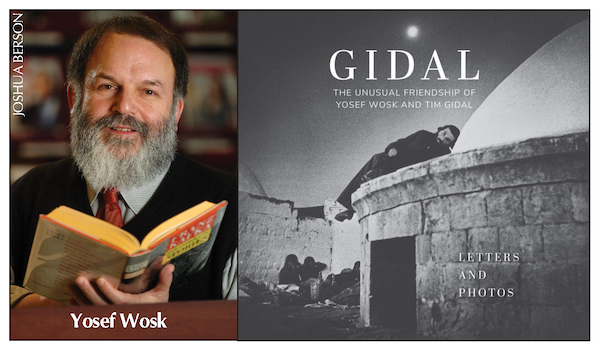
The friendship between Wosk and Gidal was evident in that book and in the exhibit. How the two men – separated in age by some 40 years and in geography by almost 11,000 kilometres – became such good friends is the subject of Gidal: The Unusual Friendship of Yosef Wosk and Tim Gidal, written by Wosk (and, technically, Gidal) and edited by another of Wosk’s good friends, Alan Twigg.

photo - Alan Twigg
Alan Twigg (PR photo)

The bulk of Gidal is letters that Gidal and Wosk wrote to each other from 1993, soon after they met, through to Gidal’s death in 1996. The postscript is a letter from Wosk to Gidal’s wife, Pia, mourning Gidal’s death and hoping that “his work and vision continue to inspire others.” Twigg has masterfully edited the multi-year correspondence, which comprised hundreds of letters, into an engaging narrative that offers insight into the core of these undeniably brilliant men, their work, ideas, loves, frustrations, sadnesses and more. Their vulnerability makes this a brave publication for Wosk to have created, and a meaningful one.

The other main component of Gidal is, of course, Gidal’s photographs, which, Wosk writes in the afterword, “serve as background to the letters.” As he did with Memories of Jewish Poland, Wosk mostly lets the photographs speak for themselves. Each photo section has a theme but each image within the section is simply captioned, placed and dated, without commentary.

There is a short chapter on Gidal and one on his and Wosk’s friendship and how this book came about. Gidal is creatively and esthetically put together. Each letter is headed by a key quote from the missive and the date it was sent. Images are included of some of the actual letters, most of which were sent by fax. It is interesting to contemplate whether this fount of communication would exist if it had been made via email.

Wosk and Twigg will talk about Gidal on Feb. 14, 7 p.m., at the book festival. The event is free of charge.

 Therapeutic memoirs

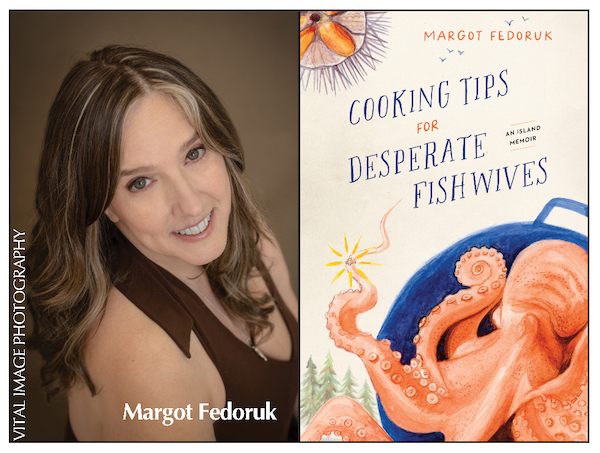
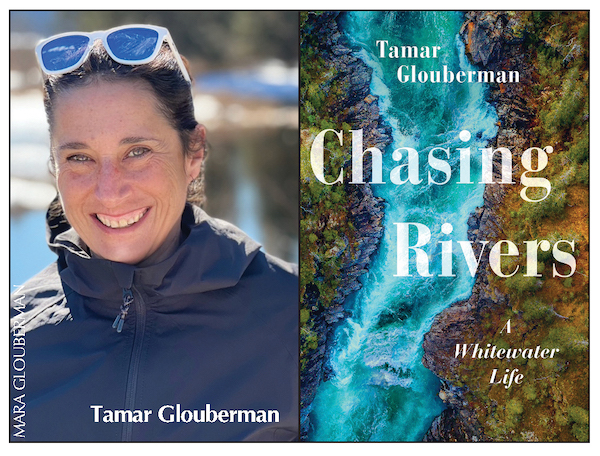
Paired together for a presentation are Margot Fedoruk and Tamar Glouberman. The program categorizes them as “modern-day women” who will be presenting their “offbeat memoirs,” summarized by the question, “How B.C. is that?” Indeed, both Fedoruk and Glouberman tell coming-of-age stories of a sort, Fedoruk’s beginning in her 20s and Glouberman’s in her 30s. And they both lead outdoorsy, independent lives that could be described as the B.C. ideal, yet both have also faced many challenges and darker sides of that ideal.

Fedoruk is the author of Cooking Tips for Desperate Fishwives, in which she openly shares her anxieties of being married to a West Coast sea urchin diver – she is lonely without him, must raise their two daughters mostly without him and is worried that an accident may result in her having to live without him. Yet, she loves Rick, even though she does try (unsuccessfully) to convince him to take up another profession and stay closer to home. The pair moves around a lot, and Fedoruk herself takes up many different jobs over the years to make ends meet. But they stick together, getting married after their daughters are all grown up and have left home.

images - Margot Fedoruk and Cooking Tips for Desperate Fishwives coverAs dysfunctional as their relationship appears at times, Fedoruk had a more challenging life before she met Rick. Her father is a horrible man, her mother dies of cancer and she and her sister lose the family home to her mother’s second husband, also a horrible man. And there’s more. It is no wonder she leaves Winnipeg, eventually settling in British Columbia, though settling may be too strong a word, as she and her family do live in several different places on the coast, with some time in Calgary.

What makes Fedoruk’s memoir unique is the inclusion of a recipe in almost every chapter that reflects the mood or subject matter of the chapter, like the Killer Lasagne in the introduction, which begins, “The night I ran over Rick with my car, I was over four months pregnant with our first daughter.” Other recipes include Easy Curried Chickpeas With Rice, which appears as an affordable comfort food in a chapter about her being exhausted, on her own, caring for her two then-young daughters; and Wild-crafted Stinging Nettle Pesto, which comes after one of her descriptions of the soaps she makes – her business is Starfish Soap Company.

Near the end of her memoir, Fedoruk mentions that she has started therapy. I would have liked her to have written this book further into that process. As honest as she is about her feelings and circumstances, the memoir would have been more layered and impactful had she been further along in understanding how her traumatic childhood experiences, her genes and other factors affect how she moves through the world.

Glouberman has a less tragic background but a similarly transient life – and also loves something that gives her both great joy and great anxiety, the latter of which eventually takes over. In Chasing Rivers: A Whitewater Life, she shares her emotional journey of trying to make a life as a whitewater rafting guide.

images - Tamar Glouberman is the author of Chasing Rivers: A Whitewater LifeOne of the few women to guide tours, Glouberman does face sexism, her skills often underestimated by clients, but her male bosses and colleagues all seem to appreciate her abilities – certainly more than she does. She is constantly worried about making a mistake that will kill her or someone else and, while this is rational, given her job and its risks, the feeling becomes overwhelming. With an accident on the road – there is a lot of travel required to get to places like Chilko River, Williams Lake and further afield, outside the province – and her worst nightmare coming true on a rafting trip, Glouberman’s fears have very real incidents on which to grow.

Glouberman tries other types of work, but is always drawn back to the water. She struggles with depression and has a few other harsh experiences that add to her self-doubt. She tries various forms of therapy, some of which make her feel worse. Her family is supportive, though, and her sister’s home in Whistler is a refuge. She is only beginning her journey to healing when the memoir ends, and part of that has to do with getting into a master’s writing program. Both she and Fedoruk, who also went back to university for a writing degree, thank several people for their memoirs coming to fruition.

Glouberman and Fedoruk present at the book festival Feb. 12, 2 p.m. (tickets are $18). They also speak at Congregation Har El that day, at 11 a.m.

The price of victory

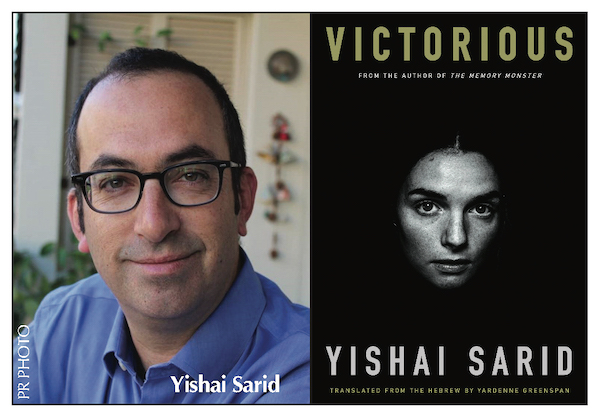
The harm inflicted on a society by war culture is front and centre in Israeli writer Yishai Sarid’s book Victorious. The main character, Abigail, is a military psychologist who, basically, tries to make soldiers into better killers, both “helping” them through trauma after they’ve experienced it and teaching them ways to be immune to trauma so that they can “beat the enemy.” Her father, who strongly disapproves of her work with the army, is a renowned clinical psychologist. On more than one occasion, he tries to talk her out of working for the military, but does not succeed. That the character of the father is dying of cancer is not coincidental.

images - Yishai Sarid and Victorious book coverAbigail blurs professional lines everywhere, working for the married man who fathered her son, the man who is now the army’s chief of staff; sleeping with a patient/friend; trying to become close friends with a former patient; and having a sexual relationship with one of the young soldiers whose unit she’s evaluating. The lessons she teaches are chilling, as is her abandonment of a patient who becomes too difficult for her to handle and some of her other actions.

She believes her job is her patriotic duty, even as her own son, Shauli, enters military service, in the paratroopers no less, and her fears for him fight with her pride in his choice. Though, with both his father and mother being staunch militarists, it could be argued that Shauli doesn’t really have a choice.

Victorious is a sparingly written novel that readers will not only ponder but feel well after they put it down. Translator Yardenne Greenspan must be given credit for making Sarid’s words as impactful in English as they are in Hebrew.

Sarid’s book festival event is Feb. 12, at 8 p.m. Tickets are $18.

For the full author lineup and to purchase festival tickets or passes, visit jccgv.com/jewish-book-festival or call 604-257-5111.

Controversy welcome

Soldiers of Tomorrow, about Itai Erdal’s experiences in the Israeli army, is at the Roundhouse Feb. 3-5. (photo from the Elbow Theatre)

“I know that this play will piss off a lot of people on both sides of the conflict, but I welcome the controversy. I am taking some strong stances and talking about some explosive subject matters (pun intended) so, if it wasn’t going to piss people off, then I probably didn’t do my job properly,” Itai Erdal told the Independent. “I think it’s good to challenge people and I welcome the discussion that this play will generate.”

Erdal was talking about Soldiers of Tomorrow, which he wrote with Colleen Murphy. The play is part of this year’s PuSh International Performing Arts Festival, and sees its world première Feb. 3-5 at Roundhouse Performance Centre.

Presented by the Elbow Theatre and PuSh, Soldiers of Tomorrow is directed by Anita Rochon and performed by Erdal with Syrian musician Emad Armoush.

“When I was a kid growing up in Israel, peace seemed inevitable – it was just a matter of time, there were countless songs about the day peace will arrive. The adults would always say, ‘By the time you grow up, we won’t need an army anymore.’ No one says that today,” writes Erdal on his website. “Most Israelis accept that their children will be soldiers. One day, when my nephew was 8, he came home from school with an empty box to fill with stuff to send to soldiers on the front line. Inside the box his teacher had written: ‘To the soldiers of today from the soldiers of tomorrow.’”

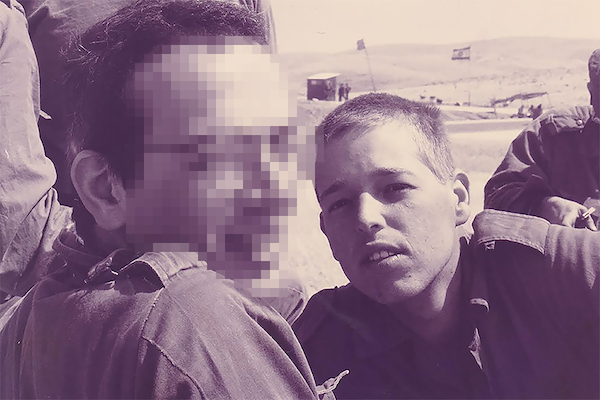
This experience inspired the play. While fictional, it is about real events that happened to Erdal during his time in the Israel Defence Forces in the early 1990s.

“I served in the army for three years and as a combatant soldier,” said Erdal. “I would have had to be in the reserves until the age of 45, which I didn’t want to do. I was in Jerusalem during all the suicide bombings in the ’90s and my reluctance to continue to be a soldier and my exhaustion of the political situation definitely contributed to my decision to immigrate to Vancouver.”

Erdal has made his mark here in many ways, including as an award-winning playwright, performer and lighting designer. He created the Elbow Theatre in 2012 “to confront urgent social and political issues.” Soldiers of Tomorrow is its sixth production. The PR blurb notes that, in it, Erdal “relates his actions in the army, exploring his personal culpability in the face of complex geopolitical forces in his former country – a place that he loves ‘with a broken heart.’”

“I pitched the idea for this play to Colleen Murphy in 2018 when we were working together in Stratford,” Erdal told the Independent. “We met a few times that year, but it really took off when the pandemic started. For almost two years, Colleen and I would meet on Zoom every Monday and Thursday for two hours. It was really great to have a project during the lockdown, it kept me sane.”

Although it is a one-man play, Armoush will also be on stage with Erdal, performing the music live. As to how he connected with Armoush, Erdal said, “I was looking for a Palestinian musician but there aren’t many of them in Vancouver and Emad was highly recommended by my Israeli musician friends.”

About the timing, Erdal explained, “During my lifetime, the situation for Palestinians has only gotten worse, it never gets better. Israel recently formed the most extreme right-wing government in its history, with several openly racist and homophobic ministers. Many Israelis and Palestinians are bracing themselves for the worst. Unfortunately, this play is more relevant than ever.”

He is not concerned about how Jews in general or Israelis specifically will be perceived by non-Jewish people who see the play.

“I am a very proud Jew and, even though I criticize the state of Israel, I do so because I love it, and I think that love is clear in the play,” said Erdal, who shared the following quote from the play: “I am aware that this is a topic that intimidates many Canadians. I’ve seen the glazed look in your eyes. I’ve had many people ask me to explain the conflict to them and, after one minute, they are searching for the exit. I’ve also seen many people twist themselves into pretzels in order not to take sides because they were concerned about appearing antisemitic. I hope by the time you leave here, you’ll be able to criticize Israel without worrying about appearing antisemitic.”

Soldiers of Tomorrow is at the Roundhouse Feb. 3-4, 7:30 p.m., and Feb. 5, 2 p.m., with a post-show talkback after the Feb. 4 performance. The show is 75 minutes long, with no intermission. Tickets ($34) can be purchased at pushfestival.ca.

The PuSh International Performing Arts Festival runs Jan. 19-Feb. 5. It features 20 original works – theatre, dance, music, multimedia and circus – from 12 countries and includes six world premières, one North American debut, six Canadian and two Western Canadian openings and one Vancouver première. Single tickets start at $34 in-person, $25 online, plus there are pay-what-you-can and free events; passes, which offer a discount and other perks, are available for both in-person and digital shows. Visit pushfestival.ca or call 604-449-6000.

Democracy in danger

A pageant of pandemonium consumed the United States House of Representatives last week as it took 15 votes to confirm Kevin McCarthy as speaker. The chaos was caused by a group of far-right congresspeople representing less than five percent of the total House membership. Eventually, McCarthy triumphed – well, squeaked through – by cutting backroom deals that will empower the extremists and weaken the office of the speaker.

Although the holdouts are on the far-right fringes of American society, personality was a major factor in the weeklong deadlock. The opponents have issues with McCarthy as a person and a politician as much as they have with his policies. To succeed, McCarthy had to agree to concessions and cough up inducements that defile the dignity of his office and put the House of Representatives in jeopardy of being hopelessly deadlocked and dysfunctional.

An analogous situation is unfolding in Israel, where Binyamin Netanyahu has returned to the prime ministership. To do so, he had to make some very grubby deals with some very distasteful people.

Here, too, personalities were at play, as much as policies. There is a swath of centre-right politicians who would have joined a coalition that was not headed by Netanyahu. As a result, to regain power, Netanyahu was forced to make deals with far-right figures who should never have been considered for inclusion in a democratic government.

Both of these situations speak to an unfortunate reality of parliamentary democracy. When a bloc fails to attain a comfortable majority, they can find themselves dependent on the support of narrowly focused, ideologically driven extremists that represent very few voters. In many cases, the extremist tail ends up wagging the dog.

This is regrettable and it is sometimes inevitable. Democracy is by no means without its downsides. In fact, Winston Churchill’s aphorism – “Democracy is the worst form of government – except for all the others that have been tried” – resonates here.

The foundational piece of democracy is free elections and the peaceful transition of power, a cornerstone that was attacked on Jan. 6 two years ago at the U.S. Capitol. That cornerstone is now under siege in Brazil, in a striking parallel – as if the supporters of defeated former president Jair Bolsonaro directly stole the playbook of the American Republicans’ “stop the steal” scheme to subvert the 2020 U.S. election.

Violent protesters ransacked Brazilian government buildings this week, stealing weapons and artifacts and vandalizing facilities. Brazil does not have as long a history of democratic infrastructure as Israel or the United States, which could make it more vulnerable to attack. One core difference in the Brazilian case, versus the Israeli or American situation, is that the threats, at this point, are coming from outside the government – the protesters are supporters of a defeated (and possibly self-exiled) former leader. In the United States, the insurgents have an apparent stranglehold on one of the houses of Congress and, in Israel, are fully in charge.

The biggest concern in a democracy comes when the extremist tail that wags the dog not only influences policies but actually begins chipping away at the institutional underpinnings of democracy itself. This is a legitimate concern in Israel, as some partners in the coalition are threatening the judicial system, the functioning of police and the very definition of Israeli citizenship. The vote for U.S. House speaker did not itself represent a threat to democracy, though the final votes poignantly took place on the second anniversary of the insurrection that was the greatest attack on American democracy since the Civil War – a moment from which the country and its democratic foundations still reel. And continued dysfunction in the House portends a difficult road ahead for U.S. democracy as voters tire of do-nothing legislative bodies and what some perceive as broken political systems.

Both Israel and the United States are on unprecedented precipices. (Brazil, ironically, probably less so.) However, in both Israel and the United States, entrenched civil society organizations and strong parliamentary opponents are in place to monitor and bolster the fundamentals of their societies. Those on the (geographical and/or ideological) outside should support in every way we can the movements for democracy, pluralism and tolerance in Israel, the United States and everywhere in the world where these values are threatened, including if we see dangers to them here at home.

Resilience amid disruptions

I’ve been thinking about my childhood school bus driver, “Dot” or Dorothy Gelles. I lived in a house that was technically not too far from school to walk, but there weren’t enough sidewalks and there was one dangerous intersection. As a result, I rode Bus #302 and then, later, when #302 was retired, #562, with Mrs. Gelles. Ours was a relationship that lasted from kindergarten until Grade 12.

I started driving in Grade 10, lived in Israel on a kibbutz in Grade 11, and mostly drove my younger brother to school when I returned for Grade 12. Still, I rode the bus every day until those last few years. I sat at the front, chatting with Mrs. Gelles and enjoying the ride. Later, I read, did homework or talked to other kids. The bus wasn’t late. Mrs. Gelles rarely missed a day driving us. We trusted Mrs. Gelles. She was a dependable, reliable and kind part of our lives.

Though growing up in a different country, my kids are also eligible for the school bus through Grade 6. They go to a Hebrew-English bilingual school that requires a bus ride. I’ve always thought it was a wonderful gift to parents and good for the environment that they could take the school bus. Although there have been some years in which the bus has been dependable, with mostly the same drivers, I have never properly managed to figure out each driver’s name or been introduced. To me, this is the most precarious part of the school day during Winnipeg winters – I’ve always felt a little nervous about the ride, the drivers, and whether they’d make it to school or home.

This year, due to the pandemic, sick days, the labour shortages and lack of trained drivers, things are the worst they’ve ever been. When there was a bus drivers’ strike, we knew that the school bus wasn’t coming. We were responsible for getting our kids to school and home. When someone contacts us early in the morning and says, “This route is canceled,” we shuffle around our work days to get the kids to school. Sometimes, there’s no notice at all: scared kids and panicked parents result.

On the last day before winter break, our kids weren’t dropped off at the bus stop at 3:46 as per the schedule. They didn’t get home until after 4:35 p.m., more than an hour after the school day ends, at 3:30. The high that day was around -22°C. We were lucky: our kids are 11, old enough to cope, and we figured out what had happened. Their dad was working from home. He dropped everything, stayed at the bus stop in the cold while I phoned the bus transportation office and the school. We found out that there had been a late bus that didn’t get to the school until after 4 p.m., a substitute driver, and that driver got lost. Everything went wrong. The school secretary apologized – she should have called me sooner. I knew that not only would my kids be upset, but they’d missed their piano lessons, too.

This is part of a bigger disruption narrative. So far, this year, Grade 6, is my kids’ first school year since Grade 1 where we haven’t had a teacher change or disruption yet. It’s true that everyone feels jostled by the COVID pandemic but, starting six years ago, before this virus happened, every year something interrupted their learning. Everyone deserves maternity leave and, yes, teachers retire and principals shift schools, but theirs has not been world’s most stable learning environment. Everyone wants to blame COVID but the problems are much bigger than that. Yes, we’re lucky in many ways, but expecting a stable schooling environment shouldn’t be unreasonable with all our other privileges in Canada.

Being resilient in the face of change has been seen as an important skill to have as the world shifts to cope with pandemics, climate change, wars, supply chain issues, etc. There is much to be said for being flexible and able to roll with what happens. At the same time, most adults are resistant to change and don’t like it. For many, we want our coffee or tea with breakfast, our meals cooked in a certain way, our exercise routine or housecleaning to be orderly. Ritual and routine reassure everyone.

In many ways, Judaism reflects this. We’re still praying in ways our ancestors prayed thousands of years ago. Our holidays, sanctuaries and social halls look remarkably similar from one country to the next, even with culturally different norms. We relish the familiar, even as it slowly changes and adapts to fit modern sensibilities. No matter what Jewish movement you’re accustomed to, Orthodox, Chabad, Reform, Reconstructionist, Conservative or Renewal, or if you use terms like secular, traditional … we’ve all made adjustments reflecting our evolving understanding of Judaism and the world around us, or in reaction to those things.

What makes our traditions comforting, reassuring or even just functional is not the same for everybody. However, one thing remains the same. Aside from catastrophic events, it’s the way we react to and adjust to change that matters. Finding a positive way forward, moving towards solutions – these help us grow and learn. Jewish communities, forced through pogroms, expulsions and murders, have created art, literature, liturgy and rabbinic rulings to cope with terrible circumstances we could not control.

As everyone now knows, we cannot control everything. We can only hope to give the resources and resiliency to help everyone cope. In Winnipeg, making sure the kids wear warm sweaters and snow pants along with parkas and boots? That is one step. Another is offering contingency plans: an extra set of house keys, feeling comfortable with the neighbours, knowing there’s a safe place to go if they get locked out.

Many in North America, pre-pandemic, were used to stability. We made plans for weddings or trips a year in advance. It may be that our new “normal” brings us much closer to what our ancestors knew long ago. With increasing weather, climate and health emergencies, and political upheaval, we need to find resources and solutions when change happens. Cause change is going to happen.

Meanwhile, we can also all strive to be a bit more like Mrs. Gelles: caring, reliably on time and trustworthy. I can never see a driver open those school bus doors without smiling and thinking of her. And hoping for the best and wishing for that stability for my children, too.

Joanne Seiff has written regularly for CBC Manitoba and various Jewish publications. She is the author of three books, including From the Outside In: Jewish Post Columns 2015-2016, a collection of essays available for digital download or as a paperback from Amazon. Check her out on Instagram @yrnspinner or at joanneseiff.blogspot.com.

Local heads CAPE crusaders

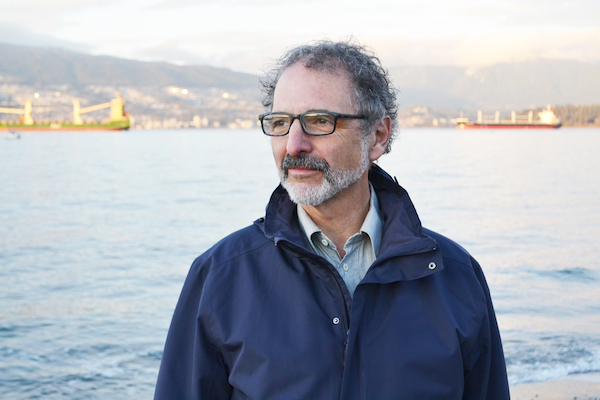
Dr. Larry Barzelai chaired the recent Canadian Physicians for the Environment climate conference. (photo from Larry Barzelai)

We can recycle everything possible, drive electric vehicles and take other steps to ameliorate our carbon footprints. At some point, though, says Dr. Larry Barzelai, we need to address our culture of consumption because we are simply using more resources than the planet can sustain.

Barzelai, chair of the B.C. branch of Canadian Association of Physicians for the Environment (CAPE), spoke to the Independent following a conference he chaired on climate issues. The third annual event, held entirely virtually, brought together doctors, nurses and other medical personnel to discuss climate and the environment from a specifically health-related perspective.

“It’s a physicians organization,” said Barzelai. “So people who tend to be most interested are doctors. But we’re always trying to expand it into other healthcare professionals.”

Interested people outside the profession are welcome to join, he said.

“It’s a general information conference to appeal to people that don’t know very much about environment or climate issues and people that are well-versed,” he explained. “We’re hoping there will be something in the conference for both those groups.”

Topics included “radical overconsumption, environmental genocide, economics and de-growth,” mobilizing climate action within the medical community, the impacts of food systems on the climate, and strategic approaches to successful advocacy campaigns. Canadian filmmaker, broadcaster and activist Avi Lewis gave a closing presentation.

Barzelai retired from his practice as a family physician in June of last year but still does work in seniors facilities including the Louis Brier Home and Hospital. He was pleased that, with the exception of Nunavut, the conference had representation from all provinces and territories.

The conference took place under the auspices of the continuing professional development department of the University of British Columbia and, while it is a national conference, most of the members of the steering committee are from the West Coast.

The October event was the third annual conference and Barzelai laughed about the fact that they had thought they were breaking new technological ground when they began planning for the first gathering. Believing that too many people spend too much time and resources flying, with deleterious impacts on the climate, they envisioned a virtual conference, or possibly a hybrid version with hubs in Vancouver and Toronto where locals could attend in person. By the time the inaugural event was nearing, the entire world had adopted virtual meetings (as well as religious services, seders and just about every other kind of interaction).

While Barzelai has thrown himself into the climate issue in recent years, he calls himself a “Johnny-come-lately” to the topic.

“I’m a late joiner,” he admitted. “A lot of the people in the organization have been doing this all their lives [and] are really dedicated people.”

Barzelai began reading and thinking more deeply about climate issues after encountering the American environmental author and activist Bill McKibben at a conference several years ago. He was particularly impacted by McKibben’s book Eaarth: Making a Life on a Tough New Planet.

Barzelai explained why McKibben spelled the book (and the planet) “Eaarth.”

“It’s changing and it’s changing rapidly and he says the expectations that seasons would be similar and that you would be able to predict rainfalls and temperatures on a fairly regular basis, with some exclusions, year after year – now that’s all gone out the window,” said Barzelai. “It’s a different world. That’s why he is calling it by a different name. He says, with a lot of work and a lot of luck, maybe we can create a new world that is somewhat akin to our old world, but it’s never going to be the same. We are going down a new direction here in a future that’s undefined and we’ve got to be careful and not let climate change get too far ahead of us.”

At the recent conference, Barzelai was struck by the message that, even as humans are taking these issues more seriously, we are still not getting to the core problem.

“Two of our speakers talked about consumption, that we can recycle as much as we want and drive as many battery-operated cars as we want but, at some point, we have to reduce consumption,” he said. “Even if we were as green as can be, we are still utilizing more resources than the earth can put out, so reducing consumption has to be a big part of this. It’s a tough topic because our whole society is based on consumption. But a lot of people think that we’re not going to get anywhere with climate change issues unless there is a general reduction of consumption in First World societies.”

Another issue to which Barzelai urged people to pay attention is corporate “greenwashing,” a topic addressed at the conference by Prof. Calvin Sanborn of the University of Victoria.

“That’s a big, big issue,” said Barzelai. “The fossil fuel companies are saying that they are greening and changing but, in reality, they’re just trying to find ways to keep doing what they’re doing and they don’t really want to change.”

Due to university copyright issues, recordings of the conference are not publicly available, but more information about CAPE is online at cape.ca.