On return to Canada, life changes

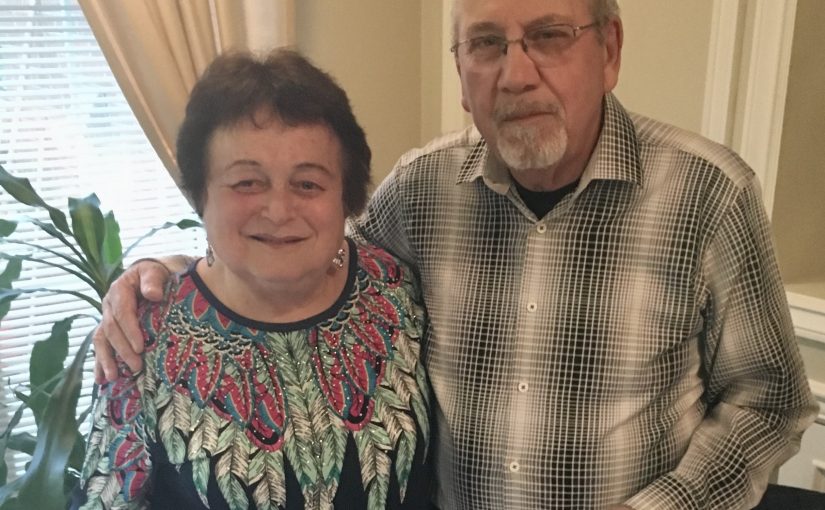
Victor Neuman (photo from Victor Neuman)

In this eight-part series, the author recounts his life in Israel around the time of the 1973 Yom Kippur War. The events and people described are real but, for reasons of privacy, the names are fictitious.

Part 8: Epilogue

In a backhanded, minor way, I was a casualty of the war, too. The lack of help during the conflict meant I had to work alone trying to preserve the banana crop. One day, on my tractor, I was in a hurry, carrying several sacks of fertilizer to the fields. They had to go into the distribution tank before the irrigation timers flipped a switch and began irrigating another field. Someone at the kibbutz had helped me load them onto the hood of the tractor, with the idea that, at that height, I could drop them easily into the tank at the other end.

It didn’t work out that way. I hit a rut in the road and all the sacks slid to the ground. As fast as I could, I reloaded all the bags – which were 50 kilos each – lifting them from the ground to the tractor hood, and carried on. I felt OK at the time but I had herniated a disc in my back. The pain started later that day and got worse over the next few days. I saw a doctor in Hedera and got a daunting prognosis. My back might need surgery but no surgery would be possible in the near future. Wounded soldiers had priority, so only life-saving procedures were available to civilians. Had I been lucky enough to have been shot as well, they could have done something for my back.

I had to return to Canada to get the operation and, although I didn’t realize it at the time, my time in Israel was coming to an end. My plan was clear in my head. I would go home, get the surgery, return to Israel cured, become a kibbutz member, marry Tamar and live happily ever after. As the saying goes: “Man plans and God laughs.”

Away from Tamar in Canada, I had the growing realization that I wasn’t going back to Israel. The best explanation I can give is to repeat what a friend once told me.

He was a rude bugger but he had the right of it when he said, “Millions of years of evolution have turned men into slobbering idiots around women. Our problem is that we’re always thinking with the wrong head.”

Whatever Tamar and I had going on, it wasn’t happening between my ears. As beautiful as she was, I couldn’t imagine spending my life with her and I had to end things. And, if I ended things, I could never return to the kibbutz after jilting their darling firstborn-on-kibbutz child. And that particular kibbutz was the only place in Israel where I could imagine a life for myself.

It was over in every sense and way. I wrote a painful letter to Tamar. She wrote an even more painful letter back to me, using English expressions I didn’t know she had. She hated me. That made two of us. Lost another woman. Lost a country. Lost my purpose in life. How careless can you get?

Ironically, my back injury, which had started the whole process of turning my life on its head, simply healed itself. No surgery and no pain after just a few months. My life had completely changed direction because a few sacks of fertilizer fell off a tractor. Once again, life turning on a dime.

As much as I loved English literature, I still had no notion of how to use my master’s degree. Teaching wasn’t my thing and, with that degree, there wasn’t much else. I had to change gears – drastically. Then I recalled something from my time doing archeology.

While we tourist-volunteers struggled in the heat and dust, digging endlessly to uncover the ruins of Tel Beersheva, a surveyor stood over us and used his instrument to map out the location of walls as they were discovered. To do it, he spent most of his time staring through his instrument at his survey assistant – a woman in a two-piece bathing suit who was holding the survey rod. I started thinking an archeological surveyor was the job for me. You may think of me as a shallow person. In my defence, I am.

To make a long story short, I began studying survey technology at the British Columbia Institute of Technology. That morphed into surveying fish hatcheries, which morphed into surveying logging roads, which morphed into designing logging roads, which morphed into a lifelong career designing highways for the Province of British Columbia and an engineering firm called Binnie Engineering Consultants. Nowhere along the line did I ever do archeological surveying, and the only survey assistants I ever had wore flannel shirts, jeans and hiking boots.

In time, my road design work left me feeling a little parched, culturally. I decided to join the Vancouver Jewish Folk Choir. There, I met the gal who has been the love of my life for the past 31 years and counting. After meandering through life for what seemed like an eternity, what I wanted was crystal clear to me. I wanted her. And I learned something about finding my purpose in life. The main deal is to find the right person. The rest is just commentary.

We had our first date on New Year’s Eve. We were engaged by February and planning to be married by May. Her family was apoplectic about the timeline so we pushed the marriage date to September. I’ve stuck by her and she is stuck with me. And so, more than 30 years after puberty, I was finally all grown up. And you know what? By all I hold dear, she is the most beautiful creature I’ve ever laid eyes on.

Time is a river, they say, and this river may have almost run its course to the sea. But I remember the stream that became that river. I can never get Israel out of my mind, after all this time. And my leaving that country to lead the easy, secure life in Canada will always haunt me. It was 1974 and I still remember, clear as a bell, the sign I passed in Lod airport on the way to my plane home. In Hebrew and English, it said: “Will the last one to leave the country please turn off the lights.” Even believing I was soon coming back, I felt like a traitor.

A long time ago, when I was courting the dear lady I married, I did something very old-fashioned. I wrote her love poems. She may have married me because of them or in spite of them, I’m not sure which. I reread one of them recently and something dawned on me. It wasn’t a poem just for my beloved. It was also a poem for everybody in that land; everybody trying to hold onto their place in the sun or everybody trying to find it. It’s called “Magic”:

On this shattered summit / Over plains flooded red by sunfall / Where insect armies sullen, blooded / Crawl craters in search of victim’s missed / We perch uneasily / And wonder at a lethal world

But then, conjured by you / I felt for one bedazzled, high moment / We were magicians such as none before / And with our silk top hats / And our crimson capes, love-woven / We could pluck rabbits out of a hat / Launch birds out of a box / Or trick the world into decency.

(Previously: “Learning the lay of the land”; “When Afula road went quiet”; “Tending the banana fields in war”; “Weapon training begins”; “Near tragedy on guard”; “Fighters return to kibbutz”; “The fire-like impacts of war”)

Victor Neuman was born in the former Soviet Union, where his family sought refuge after fleeing Poland during the Second World War. The family immigrated to Canada in 1948 and Neuman grew up in the Greater Vancouver area. He attended the University of British Columbia and obtained a BA and MA with majors in English literature and creative writing. Between 1968 and 1974, he made two trips to Israel, one of which landed him on a kibbutz at the time of the 1973 Yom Kippur war. Upon his return to Canada, he studied Survey Technology at BCIT and went on to a career of designing highways for the Province of British Columbia and the firm of Binnie Civil Engineering Consultants. When he retired, he reconnected with his roots in creative writing and began writing scripts for Vancouver Jewish Folk Choir concerts and articles for the Jewish Independent. Neuman and his wife, Tammy, live in southeast Vancouver and enjoy the company of friends, their extensive extended family and their four sons.


אז מה אם הוא ראש הממשלה?

בנימין נתניהו (en.kremlin.ru)

אינכם מבינים עד כמה אני עסוק? יש לי עניינים מעניינים שונים לעסוק בהם. מכאן ועד שם. אז מה אם הוא ראש הממשלה? מה אתם חושבים שיש לי זמן להתפנות ולשמוע אותו נואם בחדשות המרכזיות של הערוץ המרכזי בשעה המרכזית?

אני חייב להתקדם בענייני הדחופים – הרי אני מייצר עניינים כדי להיות עסוק. נא להבין ולהתחשב בי. אמנם אינני שותה שמפניות ורודות או כל משקה אחר למכובדים ואף לא מוזמן לאירועים רבי מעלה, אך באמת ובתמים עסוק כל יום מהבוקר עד הלילה. לישון מוקדם כי בוונקובר כולם ישנים מוקדם? מה השתגעתם? אפילו ראש הממשלה לא ישן מוקדם – אז למה אני?

נכון בצעירותי נהגתי לעשן סיגרים מדי פעם לפעם בעיקר לאחר שחברי משפחה שונים ומשונים בחתונות, דחפו לי אותם לכיס החולצה הלבנה המגוהצת שלי. כן נכון! זה לא באשמתי. הרגשתי לרגעים חבר במועדון המכובדים בזמן העישון המרגיע ועם סיום הסיגר גם התחושה הזו הסתיימה. בוונקובר אגב לא עישנתי אפילו חצי סיגר.

אחד מיריביו של ראש הממשלה הושמץ בעבר הרחוק כל פעם. אמרו עליו שאמו ערביה ושיש לו מניות בתדיראן. כמובן מדי יום הזכירו בחדשות שהוא חתרן בלתי נלאה. ואני לעומתו: אף לא חושד שאימי ערביה, שאולי בטעות יש לי מניות בתדיראן או שאני חותר נגד מישהו או משהו – אני בכלל לא יודע לחתור. אבל למרות זאת מספיק שונאים גידלתי לעצמי. אבל למה זה מגיע לי? כיוון שאני עסוק כל כך?

אז מה אם הוא ראש הממשלה שמסרב להיפרד מהכיסא? אני מבין שהוא עשה לכם הרבה נזק ועשה הרבה לעצמו. אז זה אומר גם שאני צריך להיפרד מהרגלי להיות עסוק כל הזמן או ללכת הביתה? תרכשו לו כרטיס לכיוון אחד ותעזבו אותי בשקט. אנא רבותי לא לשכוח: אני הרי עובד מהבית בוונקובר אז לאן אתם רוצים שאלך בדיוק לעזאזל? מה אני הומלס? אנא קצת רחמו עלי לשם שינוי.

אני יושב כאן במשרדי שבביתי בדאון טאון וחושב על ראש הממשלה. חושב כיצד הוא ממשיך לשבת על הכיסא ולא משנה מה היו או יהיו תוצאות הבחירות האלה והקודמות, ומה קורה למדינה שלנו-שלכם. ולא דיברנו עוד על כתבי האישום העומדים נגדו למרות שלדבריו “לא היה כלום ואין כלום”.

כמוהו כמוני גם אני לא עוזב את הכיסא ונצמד אליו חזק חזק. אם הוא יכול אז גם אני יכול, למרות שאין נגדי שום כתבי אישום ושוב כתב בכלל עד לרגע זה. רק אני ועצמי לי. אז מה אם הוא ראש הממשלה? האם זה אומר שאני צריך לתמוך בו? בדרכו הקלוקלת? לא ולא.

מוונקובר שבמערב קנדה הכל נראה רחוק וטוב שכך אם כי גם לנו ביבשת הצפונית יש מנהיג שמתנהג בדומה לראש הממשלה. כן הנשיא של המדינה השכנה מדרום ממש כמוהו מצפצף על כולם. מופרע לחלוטין. אז מה אם הוא הנשיא? האם זה אומר שאני צריך לשבת מול המסך ולראות אותו מדבר במהדורה המרכזית, בשעה המרכזית של הערוץ המרכזי? או לקרוא את השטויות שלו בטוויטר?

אולי בכלל כדאי לרכוש מניות של טוויטר? כל עוד שהנשיא האמריקני המופרע ממשיך להשתלח בכל העולם ואשתו באמצעות טוויטר – המיזם המדיומי הזה צובר מבקרים רבים יותר וערכו עולה. אז מה אם הנשיא מצייץ בטוויטר? האם זה אומר שגם אני צריך לצייץ?

Historic JCC-Fed agreement

A rendering of the development that is planned to replace the current Jewish Community Centre of Greater Vancouver. (image from JCCGV)

A recently signed agreement is a significant next step in the largest infrastructure project in the history of British Columbia’s Jewish community. The deal is expected to create a new Jewish community centre, as well as at least 300 rental housing units and larger, renewed facilities for many communal institutions, replacing the existing, almost 60-year-old community centre.

A memorandum of understanding between the Jewish Community Centre of Greater Vancouver (JCC) and the Jewish Federation of Greater Vancouver was signed last month. The agreement will likely see the land owned by the JCC transferred to a new community-wide agency. According to a joint statement by the two organizations, the proposed new 200,000-square-foot “recreational, cultural and community centre [will include] new childcare spaces, more services for seniors, an expanded space for the Vancouver Holocaust Education Centre, a new theatre and more.” At least 15 not-for-profit community organizations are anticipated to be housed there, as well as updated and enlarged facilities for arts and culture, aquatics, and fitness programs. Mixed-use rental housing units included in the plan are expected to be offered at or below market value and be open to everyone.

The project will advance based on a collaborative fundraising initiative. A campaign goal has not been announced.

“This agreement is an important initial step toward acting upon the community’s vision for a revitalized JCC that would become a legacy for the Jewish community and the city,” Salomon Casseres, president of the JCC board, said in the statement. “Our board is excited to partner with Jewish Federation. We believe that this collaboration puts the project on a strong foundation for success, from a community, financial and governance perspective.”

“An opportunity like this comes along perhaps once in a generation, so we are very proud to be working closely with the JCC on this historic project,” Alex Cristall, Jewish Federation’s board chair, said in the statement. “Jewish Federation takes a broad, long-term view of the sustainability, growth and evolution of the local Jewish community, and we believe that this project will create a strong core that will ultimately allow us to increase our reach and our impact.”

Ezra Shanken, chief executive officer of the Jewish Federation, told the Independent that the collaboration is a “big win” for the community.

“Federation has always been a proponent for the concept of working together on projects that have an impact that’s beyond the reach of one agency and we are thrilled that the JCC agrees with us that this is one of those projects,” he said. “It absolutely should be common in all cities.… For me, it’s best practice.”

The new JCC will strengthen the entire community, he said, adding that the impacts will reach far beyond the Oakridge neighbourhood.

“We are not just creating a strong future for that 41st and Oak corridor, the Vancouver Jewish community, but I believe we’re creating a strong future for the community across the Lower Mainland as a whole,” Shanken said, expressing his gratitude to the JCC and its leadership.

“I think the JCC has shown immense foresight and courage in coming together with us, to have the openness to work through the challenges and opportunities that exist in partnership, and I believe that this partnership will glean really great results for the Jewish community as a whole,” he said.

Eldad Goldfarb, executive director of the JCC, said working together hand in hand is the best way forward and the partnership is a natural one. The collaboration between the JCC and Federation is the largest partnership, but is part of a broader engagement process, he added.

“The master planning process of this legacy community project has involved an extensive engagement effort by the JCC, reaching out and having conversations with more than 30 Jewish community organizations, many stakeholders, donors and community members,” said Goldfarb. “The JCC, as we know it today, is home to 15 different Jewish community organizations and the new redevelopment might increase these collaborations opportunities.”

Discussions about the partnership between the two organizations have always been very collaborative, open and in good faith, Goldfarb said.

“This project is about creating a JCC for the future of the community, with more and better childcare, seniors, wellness, arts, culture and education state-of-the-art spaces, but is not limited to only that,” he said. “Our vision is to create an innovative community site which will include a brand new J, as well as a welcoming and collaborative home for many other community organizations and, of course, the much-needed large rental affordable housing towers.”

Vancouver City Council unanimously approved the JCC site redevelopment plan in September 2018. Several major steps remain in the design and planning process, as well as the raising of the millions of dollars required to complete it.

Bahr’s many personas

Writer and comedian Iris Bahr performs at the Rothstein Theatre on Nov. 12 and 13, as part of the Chutzpah! Festival. (photo by Gail Hadini)

Award-winning writer, actor, director and producer Iris Bahr delves into serious issues using humour – and by being someone other than herself. She will bring some of her many characters to the Rothstein Theatre stage Nov. 12 and 13 as part of the Chutzpah! Festival.

Bahr hosts the weekly podcast X-RAE, as alter ego Rae Lynn Caspar White. In her one-woman show DAI (enough), she portrays 11 different characters in a Tel Aviv coffee shop. In her comedy series Svetlana, which ran for a couple of seasons, she starred as the Russian prostitute and political consultant. These are but a few examples of the personas she has created.

“I think I was about 6 years old,” Bahr told the Independent about when she did her first impression. “My family went on a trip to Italy and I began to imitate the tour guide, who kept going on and on in a heavy Italian accent about ‘marble from Carrera’ and so, for years after that, I would always be asked to ‘perform my Italian woman’ when my parents had company over.”

Using the example of the character of Rae Lynn, Bahr explained how an alter ego allows for a better conversation.

“I host my X-RAE podcast in character because I find it puts people at ease and they open up about topics they wouldn’t otherwise,” she said. “Rae Lynn flips from highbrow to lowbrow in a heartbeat and talks openly and outrageously about parenting, marriage and various R-rated topics. During my interview with Lawrence O’Donnell, for example, we veered from Marxism to Penn Gillette’s sex parties in a single breath.”

A magna cum laude graduate of Brown University, in Providence, R.I., Bahr studied neuropsychology, and has done brain research, as well as cancer research.

“I think I gravitated towards neuroscience because the inner workings of the brain fascinate me and I’m equal parts cerebral and highly emotional, and so that translates into all my work,” she explained. “I have a splintered identity, but not in a 50-50 kind of way – I actually feel 100% American and 100% Israeli at all times and that feeling of connection yet constant alienation lends itself to me inhabiting different characters and being able to truly commit to different viewpoints.”

Bahr was born and raised in the Bronx but moved to Israel as a teenager, staying there through military service; she still has family there. Her latest satire, The Olive Tree, about the Israeli-Palestinian conflict, recently had a soldout reading in New York and is set to open in spring of next year. DAI came to the stage in 2006 and audiences have included the United Nations, in 2007.

“I was invited to perform the show for over 100 ambassadors and delegates and the experience was unforgettable,” she said. “They were highly attentive and laughed at all the right moments, which I was not sure was going to happen. I felt like a diplomat for a day.”

Bahr said she wrote DAI “to communicate the intricacy and complexity of life in Israel, the inner conflicts prevalent in Israeli society, and how they are affected by living under constant threat of suicide bombings/sudden death, which, as any Israeli will tell you, instil not a feeling of helplessness but a vibrancy and love for life. On the flip side, is how that very fact is perceived by visiting outsiders and Palestinians affected by the conflict. The characters we meet in the café – from all walks of life, ideological spectrums and backgrounds – have no idea their lives will be ending abruptly [by a suicide bomber] and so their monologues range from outrageously humourous, vengeful, disillusioned and more.”

She first performed DAI at Baruch College in New York City, “as part of a festival sponsored by the Culture Project,” she said. “I had no idea it would get picked up immediately for a commercial run, and so that was a phenomenal development.

“A lot has changed since I first wrote DAI, in terms of how the conflict is manifesting itself on both sides, and yet the situation has sadly stayed the same. Thankfully, suicide bombings seem to be a thing of the past, but my dear childhood friend and father of four was stabbed to death only last year while out shopping, the Palestinian plight has not improved and the political climate is worse than ever. Nevertheless, the characters in DAI have sustained their relevancy; my German character talks about rising antisemitism in modern-day Germany, for example; my Israeli former military man talks of his son who doesn’t want to serve in the military; and the snooty ex-pat woman who lives in New York City, well, those types of women only seem to multiply by the minute.”

She stressed, “The play is not a polemic – it is a collection of social observations that speak from many different viewpoints. The piece aims to entertain, offer a visceral theatrical experience and, hopefully, also illuminate and enlighten. Thankfully, it has been warmly received amongst extremely ‘pro-Israel’ audiences and also ‘pro-Palestinian’-leaning crowds both in Europe and here in America. Of course, certain right-wingers think it’s too leftist and left-wingers think it’s too right, which is all I could really hope for as a piece about humanity.”

For tickets to see Bahr perform at Chutzpah!, and for more festival offerings, visit chutzpahfestival.com.

Dance biennial to start

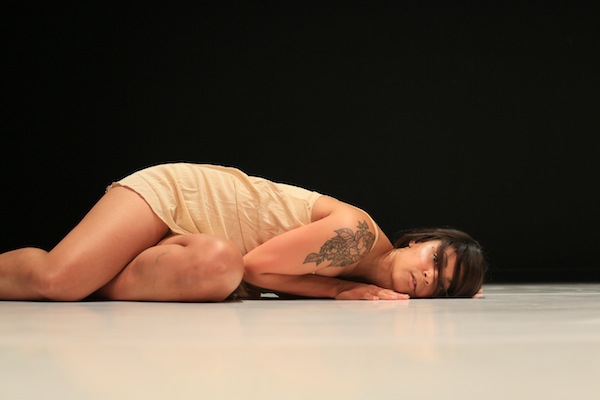
Amber Funk Barton presents VAST at the Dance Centre Nov. 22, as part of Dance in Vancouver. (photo by Chris Barton)

From Nov. 20 to 24, the Dance Centre presents the 12th biennial Dance in Vancouver. This year’s event was programmed by Dieter Jaenicke, director of the internationale tanzmesse nrw in Dusseldorf, Germany, and features the work of at least two Jewish community members, Amber Funk Barton and Noam Gagnon.

“What I find most impressive about dance in Vancouver is the fact that there are so many different identities of contemporary dance, connected to certain studios, companies, artists,” Jaenicke told the Independent. “It feels like the dance is spread out in the entire city, in very different and distant neighbourhoods, with the Dance Centre in the centre…. Trying to get familiar with dance in Vancouver, I felt like a collector of stories, stories about dance, stories about human beings…. That is why I chose the sentence of the Vancouver dancer and choreographer Amber Funk Barton as a kind of motto for this edition of Dance in Vancouver: ‘There are global stories in everything.’”

Barton, an award-winning choreographer, formed her company response. in 2008, but she will be performing the solo piece VAST, “an ode to the explorer that resides in all of us, the traveler and the dreamer who wonders what resides beyond the edge,” at DIV on Nov. 22. Noam Gagnon’s company, Vision Impure, will be presenting Pathways, which “explores the intricate push and pull of relationships impacted by urban living,” on Nov. 21. During DIV, there will also be performances by Raven Spirit Dance, Joshua Beamish/MOVETHECOMPANY and OURO Collective, with installations by Company 605 and Lee Su-Feh/battery opera, as well as discussions and other free events.

About how he chose the program, Jaenicke said, “First, I tried to get an overview of what is happening in dance in Vancouver – I visited companies, studios; saw rehearsals, performances; talked to many artists from the dance field. I was impressed by the diversity, the different backgrounds, cultures, approaches to dance and about the high quality of dancers and choreographic creativity.

“The selection was very difficult due to the amount of very interesting and convincing proposals,” he said. “With the choices I had to make, I tried to follow the diversity which I found so impressive, to include established and emerging artists, include the different cultural and artistic backgrounds of the choreographers, include indigenous works, different styles and genres of contemporary dance. But, the most important criteria was, of course, the artistic quality. Although it is difficult to describe what is artistic quality, I believe it is something objective to be seen, to be discovered, to be chosen.”

Both VAST and Pathways saw their premières at the Vancouver International Dance Festival.

“I am so pleased and honoured to perform VAST as it originally premièred in 2018 – and in the same theatre – for Dance in Vancouver,” Barton told the Independent.

The creation of the work started in 2015. Surfing the internet, Barton came across the quote from Carl Sagan that is included in the description of VAST: “We are a way for the universe to know itself. Some part of our being knows this is where we came from. We long to return. And we can, because the cosmos is also within us. We’re made of star stuff.”

“I was so struck by the poetic nature of the quote and found it so beautiful and comforting,” said Barton. “It made me start to think a lot about life, my life, and how everything and all of us in the universe are connected.

“That also got my imagination going and soon I realized I had an idea for my next work. I knew quite early on that this was supposed to be a solo and that I needed to perform it. I knew, as a choreographer and dance artist, that all the feelings and emotions and images I wanted to explore and express would have to come from my body and personal expression.

“I also knew, but was unclear at the start of the project, how to transform the performance space so that the audience could suspend belief and be transported with me into an otherworldly arena. My instincts told me I needed to work with a scenographer or set designer.”

Barton approached Andreas Kahre and they “started to have many discussions about universal space and The Little Prince.” She also brought her long-term collaborator and light designer, Mike Inwood, into the process.

“Together, our research began in the theatre, playing with objects and materials to create the surface of the moon and other environments relating to space and scale,” she said.

After that, “I knew it was time to go back and figure out how to create a journey through dance and movement, which then seemed like such a daunting task.

“By this time, I brought in another dear long-term collaborator of mine, music and sound designer Marc Stewart. He had the opportunity to have a glimpse and visit us while we were building environments in the theatre and, from there, he created a couple of 20-minute series of sound samples. Upon hearing one, I knew it was the direction I wanted to go and it helped me immensely to start creating a movement journey.

“Because the music at that point was a series of samples, the sound was constantly changing, which I thought was perfect,” said Barton. “As far as the loose narrative of the solo goes, I wanted to create the sense of waking up in a dream, being lost and, as in a dream, constantly dealing with new environments and surroundings out of my control.”

Along the way, the creative team engaged more support to both flesh out and edit down their ideas. They also had a two-week residency supported by Dance Victoria, which, said Barton, “was instrumental in finalizing the set and visual aesthetic of the production.” About a year later, they had a week residency at the Massey Theatre, which led to the première, in March 2018, at the Dance Centre, as a co-production with the Vancouver International Dance Festival.

On the response. website, VAST is described as “a singular expression of an individual’s choice to be by oneself, a meditation on our limitations as human beings and how, despite these limitations, we still desire to propel ourselves forward into unknown territory.”

“As human beings, there are times we assert our agency and choose to be ‘by oneself’; that night you wanted to stay in, the decision to leave a relationship, the choice to travel and/or explore alone. For me,” said Barton, “‘being alone’ can be similar, such as being alone with your thoughts and/or feelings, but then ‘being alone’ is that liminal space I think we’ve all experienced: feeling so small, as if you couldn’t possibly make a difference in the world. Feeling overwhelmed by how we want to, or should, live our life. Feeling lost as to what our purpose on this planet is. And then, hopefully, to choose to face our fears by ‘being alone’ and to overcome and/or embrace them.”

The story of the protagonist of VAST “starts with waking up in an environment and quickly realizing she has no control of the world around her,” said Barton. “At times, this is playful and full of wonder but, for the most part, it is terrifying. When I perform the work, I always imagine myself being trapped in a dream and being unable to wake up. And, of course, it is terrifying being in unknown territory alone.

“Being alone, traveling by yourself, exploring on your own – I believe these are the biggest gifts we can give ourselves because they ultimately bring us closer to meeting our true selves. There is a point, where we learn to stop fighting the rhythm of life and accept it, embrace it, realize that there is a force greater than us that is allowing our heart to beat and the conjunction of the planets. There are simply things we will never be able to understand and/or explain or have the answers to.”

Towards the end of Barton’s solo, when she is “exhausted and feeling completely alone, there is a faint sound in the distance,” she said. “A message. A song. Something that connects with our molecules and convinces us to keep going. I think we have to be very quiet to get our ‘messages.’ For me, in the dance, when I receive my message, it is also completely submitting to the universe, accepting my fate, accepting my weaknesses and limitations, realizing I am no better or worse than anyone else…. My absolute final movement is inspired by the whirling dervishes of Turkey, who spin with one open palm towards the sky, the other palm facing downwards towards the ground in recognition of the soul’s connection to both heaven and earth. I can’t think of a more appropriate image for VAST to end with.”

VAST does not provide any answers to life’s questions, but, rather, said Barton, “I think of VAST as a moving meditation and I feel it is quite interactive for the audience with regards to how they interpret the journey of the protagonist.”

Of venturing into the unknown herself as a creative person, Barton said, “We all have the capacity to investigate change. But, of course, it is not easy and certainly not encouraged in our society. It’s scary so, sometimes, we need people to remind us to take that leap. I think artists play a very important part in our society, of not only inspiring their communities but also reminding them that we are not alone in our thoughts and feelings. I believe art is a confirmation of our humanity and, a lot of the time, it is art that encourages people to take that next step or to pursue their dreams.”

“Speaking as a creator,” Gagnon told the Independent, “the act of creating a new work is an act of courage. There is no guarantee that the images I initially picture in my mind and what I intend to evoke will reach the audience with the right attention to tension. What is required of me is the deepest awareness and careful attention to each and every aspect I can think of in order to find the perfect physicality, musicality and intention in the talented dance artists with whom I am working. That awareness of and attention to every aspect is what I was referring to when I described Pathways as being my ‘heart, soul and brain.’”

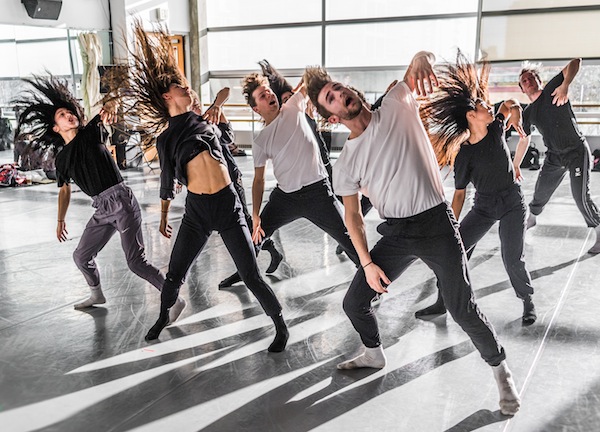
photo - Vision Impure in rehearsal for Pathways, which is at the Dance Centre Nov. 21
Vision Impure in rehearsal for Pathways, which is at the Dance Centre Nov. 21. (photo by Erik Zennström PhotoArt)

The Independent interviewed Gagnon prior to the première performances of Pathways at the Vancouver International Dance Festival this past March. (See jewishindependent.ca/dance-explores-our-relationships.) The JI asked him whether any elements of the work had changed since then.

“When the 10 incredibly generous and talented dance artists of Vision Impure return to rehearse one week before the Dance in Vancouver biennial begins, I will likely be making the few changes that I feel are most needed,” said Gagnon. “My first priority for the upcoming process is keeping my dance artists safe and ready to blow the roof off the theatre the night they perform Pathways. The work is mentally, physically and emotionally demanding and requires the same focus from the dance artists that I required of myself during creation. We have a tough job ahead of us because, with this kind of intense work, nothing can be taken for granted.”

Pathways has not been performed since the dance festival in March, but Gagnon would like more audiences to see it.

“Speaking for this generous cast of dance artists, they can hardly wait to be performing this beast of a work,” he said. “Like me, they are deeply aware that the effort and demands required to perform this work may seem impossible at times, but the result is this incredibly empowering, life-changing reward. We are all keeping our fingers crossed that the Dance in Vancouver biennial presentation will be productive.”

For tickets ($34/$25) to DIV, visit ticketstonight.ca or call 604-684-2787. For more information, visit thedancecentre.ca or call 604-606-6400.

People and places of Cuba

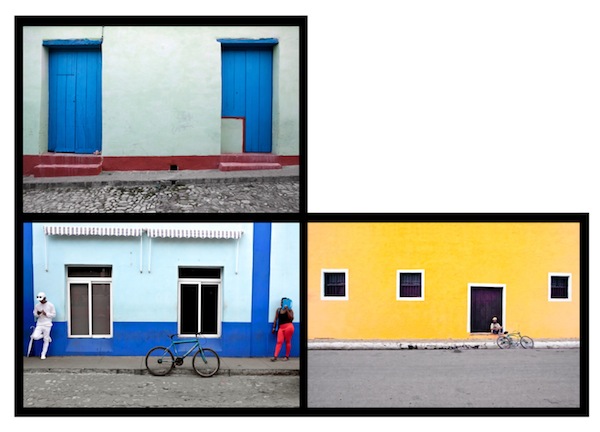
Lorne Greenberg’s solo show, Cuba, comprises photographic compositions, such as this one. (photos by Lorne Greenberg)

The origins of Lorne Greenberg’s solo photography exhibition Cuba can be traced back more than 35 years. “I had my MFA in photography from the University of Arizona in 1983,” he told the Independent. “In 1984, I began photographing Mexican street art.”

At first, he photographed on the American side of the border, but later visited Mexico several times, taking pictures of streets and buildings in many Mexican border towns. “I have an affinity for Latin American art,” he said. “I also read many Latin American writers.”

After a few years, though, Greenberg turned his artistic eye to other interests and new subjects. He only started refocusing on Mexico five years ago.

“In 2014, I began to photograph in Mexico again,” he said. “This time, I was interested in streets, buildings and yards, objects as artifacts of culture. I see it as the archeology of Man, a study of Man in his environment through the observance of objects and artifacts. There is no sky in my Mexican photos, but walls and doors and windows. Colours, shapes and lines, and where things are in relation to each other.”

He wanted to dig deeper in that direction, but, having been in Mexico multiple times, he turned to Cuba. “I had never been to Cuba before. I wanted to see it,” he said. “I heard that [Barack] Obama was going there, and I decided that I’d better go before Americanization.”

In spring 2016, Greenberg flew to Cuba for the first time. “Just me, my camera and my backpack. I came a few days after Obama left. I was there for about 10 days and visited three cities: Havana, Santa Clara and Trinidad.”

He wandered the streets and photographed doors and walls and windows, but with a new mode of expression. “I started seeing people,” he said. “Before, there were hardly any people in my photos. Now, I wanted to photograph them as part of the streetscape.”

He continued his Cuban exploration in 2018, on his second trip to the country. This time, he stayed exclusively in Havana. “When I was there, I ate, slept, photographed and listened to jazz,” he recalled. “It’s a vibrant place, with music a prevalent part of life.”

Again, he roamed the streets, without a plan, photographing houses and people. “Nothing is staged in my photos; nobody posed,” he said. “I just waited until I had a perfect image, and then I took it. I wasn’t trying to make a statement, didn’t have any preconceived idea. I just wanted to find what is there, discover the relationship between people and places, the coherence of individuals and their building backdrops. If some people didn’t want to be photographed, they would say it, and I didn’t take their pictures, but that happened only three times.”

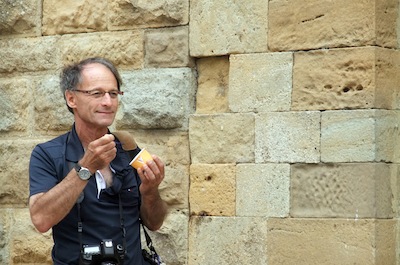
photo - Lorne Greenberg in Italy
Lorne Greenberg in Italy. (photo by Lorne Greenberg)

In selecting the images to include in his solo show, from the hundreds he took in Cuba, he said, “I didn’t want to show just 10 or 15 large pictures. A single large image has a privileged status, and I wanted to create an experience of Cuba, to show people what I saw.”

Therefore, he compiled his photographs into compositions, which made it possible to increase the number of different images on display. Each composition is more than a collection of individual photos – it is a work of art on its own.

“There are 102 different pictures in the show, combined into eight compositions,” Greenberg said. “At first, I considered each composition as a tic-tac-toe grid, but it didn’t work. It was too orderly, too tight, didn’t give the sense of Cuba. Then I thought about the sculptures of Alexander Calder. I changed the layout of my compositions, opened them up, created a flow. They are not individual photographs anymore. They are installations, and they incorporate the gallery space as part of the experience. Each composition has a certain colour scheme, and its lines and shapes create a whole, simultaneously dynamic and static, random and structured.”

The arrangement of the compositions was as creative an endeavour as was taking photographs. “It was fun moving pictures around, seeing different possibilities. I could have done it for much longer, if I didn’t have a deadline for the show,” he joked.

Greenberg’s Cuban compositions reflect the political reality of the country. The lively colours of the buildings preen under the heat and light of the sun, while simultaneously exposing the peeling paint, dirty or moldy walls, and the rusty metal of fences and shutters, which hint at the poverty that exists in the country.

“I see beauty, aesthetics and humanity,” said Greenberg. “Poverty is more in the ethical dimension, and everything for me is in the aesthetic world.”

The show Cuba opened on Oct. 24 at the Zack Gallery and continues until Nov. 24. The opening reception was held on Oct 30. For more information on Greenberg’s work, visit lornegreenbergphotography.ca.

Olga Livshin is a Vancouver freelance writer. She can be reached at olgagodim@gmail.com.

The next generations

An important event took place in Vancouver last weekend, as hundreds of child survivors of the Holocaust convened at a downtown hotel for the conference of the World Federation of Jewish Child Survivors of the Holocaust and Descendants. A Shabbat dinner, moving speeches, presentations and other events were attended by survivors, their children and grandchildren, with specific programs organized with the interests and needs of each group in mind.

Attendees felt the heavy presence of time, as some reflected that these conferences are seeing fewer survivors and that the firsthand knowledge of these events will soon be carried only by the second and third generations. (See next week’s paper for coverage of the event.) Attendees, who fortunately witnessed Vancouver over a few days of autumn sunshine, raved about the welcome they received from locals and the quality of the program and the achievements of the organizers. But it is Vancouverites who should be most honoured to have been able to meet and experience the spirit and resilience of these remarkable individuals. Each survivor has a very different survival story and life history, yet they come together in part because of a need to connect with others who are most likely to understand not only the facts of their Holocaust experiences, but the unique hurdles – and, notably, the many, many achievements – of having survived and thrived after an early life of often-unimaginable challenge.

We are now amid a week of solemn remembrance – the 81st anniversary of Kristallnacht, on the night of Nov. 9-10, followed by Remembrance Day, Nov. 11. These weighty commemorations are an opportunity to reflect on the past and to rededicate ourselves to a world free of hatred, war and genocide.

The past cannot be undone, but restitution and reconciliation can help to take that past and, in some small ways, find meaning that restores honour and dignity to the victims and those who carry their legacies. That is one of the themes of the new exhibit just opened at the Vancouver Holocaust Education Centre (VHEC).

Treasured Belongings: The Hahn Family and the Search for a Stolen Legacy opened Thursday, launched at the annual Kristallnacht Commemoration with a presentation by Dr. Michael Hayden, a renowned Vancouver medical researcher. Hayden’s grandparents, Max and Gertrud Hahn, who were murdered in the Holocaust, had one of Germany’s most significant collections of Judaica. The story of the survival of parts of that collection – and the ongoing efforts to locate and restitute other items – is not so much, he says, about the artifacts themselves, but about reclaiming the individuality and dignity of his grandparents and the lives that were stolen from them. (Again, next week’s paper will feature coverage of this event.)

For Hayden, the process has been emotional, sometimes rewarding, sometimes disheartening. But it is an act of dedication to restore the individuality of two of Nazism’s victims. Sheer numbers of genocide victims are almost incomprehensible, especially to young minds, which are the most critical target of contemporary Holocaust education. Intergenerational narratives like those of the Hahn-Hayden family, illuminated with tangible artifacts, are a vital means to bring this history in a meaningful way to the generations who will not have the opportunity to meet and hear testimony from those who witnessed and experienced that cataclysmic history themselves.

Those of us who have had the privilege of being entrusted with the stories of survivors, or the experiences of veterans of the wars against tyranny, must appreciate the importance of being witnesses to the witnesses. We should take a moment over this weekend to consider how we can act in our daily lives to advance a world that does justice to their memories and experiences.

The joy of Israeli dance

Tamar Cohen and her husband, Michael Gal. (photo from Vancouver Israeli Folk Dance Society)

After 43 years of teaching with the Vancouver Israeli Folk Dance Society (VIFS), Tamar Cohen is retiring. One of the early leaders of the VIFS and co-founder, with Rivka Cohen, in 1981, of the Shalom Dancers, an Israeli dance performance group, Tamar Cohen has inspired generations of dancers.

Cohen’s passion for dance began in Israel, in her teens, when she was introduced to Israeli dancing in school, in Kiryat Haim, a suburb of Haifa. At that time, in the late 1940s, in the formative years of the state of Israel, there was an avid interest among the youth in Israeli cultural activities, including folk dance. She joined a performance group in high school and then trained as a teacher, both as a profession and as a dance instructor.

“We did couple and circle dances, no line dancing, and there really weren’t that many dances, not like today,” she explained.

Cohen also trained as a school teacher, and taught Judaic studies for more than 40 years in Israel, the United States and Canada, including at Vancouver Talmud Torah.

It was in 1960 that Cohen brought her dance talents to Canada, teaching and starting a performing dance group in Winnipeg, where she met her husband, Michael Gal. In 1975, moving to Vancouver, she was part of the formation of the Vancouver Israeli Folk Dance Society, where she has taught continuously since 1976.

“In those days, we used records, and then tapes,” she said. “My son would help me shlep all these big cartons with records on Sundays and Wednesdays.” Now, of course, everything is on computers.

Cohen taught at the Jewish Community Centre of Greater Vancouver, the Peretz Centre for Secular Jewish Culture and at Congregation Beth Tikvah. Many dancers who still gather at the JCC on Wednesday and Sunday evenings, including Lorna Donner and Marilyn Weinstein, both on the current VIFS executive, were introduced to Israeli dancing during the nine years Cohen taught at Beth Tikvah.

“In 1992, in the Beth Tikvah social hall, Marilyn and I started dancing by following our teacher, Tamar, around the circle,” said Donner. “Here we are, decades later, still sharing our love and enthusiasm for Israeli dance. Thank you, Tamar!”

Cohen became a VIFS board member when it first became a society, and served as president from 1985 to 1987. She remains on the VIFS executive and is a valued part of its community of dancers – approximately 80 active members – who come from a range of ages and walks of life: teenagers to dancers in their 80s; students, artists and professionals; beginners to those, like Cohen, who have danced all their lives.

“I’ve known and shared the dance floor with Tamar since the early ’80s, when I first began to attend Israeli dance sessions at the JCC,” said Nona Malki, VIFS executive director. “Tamar’s dedication and commitment to the local dance community, to the Israeli dance movement and to the Vancouver Israeli Dance Society, as one of its founders, was both profound and inspirational. Tamar took it upon herself to mentor me and, due to her guidance and encouragement, my passion for Israeli dance was sparked.”

Reflecting on the changes in Israeli folk dance over the years, Cohen said, “To me, folk dancing is for the folks, not for the professional or the advanced. I’m a little bit nostalgic in that regard. The dances used to be much shorter and quite symmetric. It came so naturally. I find that, nowadays, the dances are longer and more complicated. The old dances were easier to remember. I might belong to a different generation,” she said, chuckling.

Speaking about the future of Israeli dancing, Cohen said, “Israeli dancing is very popular.” There are scores of choreographers from Israel and around the world, she said, and countless new and challenging dances.

Certainly, it was the joy of dancing that hooked Cohen decades ago. However, she said, “I also see Israeli dancing as an ambassador for Israel. By presenting the folklore, the culture, the music and songs, it brings people, Jews and non-Jews, closer to Israel. Israeli dancing is beautiful. I think it’s very important that it continues.”

For more information about VIFS, visit vancouverisraelidance.com.

Glenda Leznoff is a member of the Vancouver Israeli Folk Dance Society.

Reimagining Hatikvah

Molly-Ann Leikin (photo from Molly-Ann Leikin)

For most of her five-decade musical career, Molly-Ann Leikin felt something was missing – many English speakers singing Hatikvah had no idea what the Hebrew words coming out of their mouths actually mean. So, she set about creating an English version of the Israeli national anthem.

Her version is not a translation, Leikin stressed in an interview with the Independent, from her home in Santa Barbara, Calif. She contends that no translation could possibly convey the meaning of the original Hebrew. Instead, she wanted an anthem set to the same melody that everyone singing it could enjoy, understand and, as she said, “feel the passion.”

Born in Ottawa, Leikin graduated from the University of Toronto. The author of How to Write a Hit Song and How to be a Hit Songwriter, she has composed themes and songs for more than five dozen television shows and movies, and her work has been performed by a diverse array of entertainers, such as Anne Murray, Tina Turner and Billy Preston. Among many other things, she has done private songwriting coaching in Vancouver since the 1980s.

Early in her career, Leikin said she felt there was no way for a tunesmith to make a living in Canada, so she hopped into her dented red Volkswagen Bug and drove – starting her journey during a severe snowstorm – to Los Angeles. Now, she co-writes and consults with new artists and lyricists, helping them advance their original songs to compete in the marketplace.

Leikin lists 12 of her clients as Grammy winners, another 17 as Grammy nominees. According to the latest count on her website, she has helped 7,518 writers and artists place their work in movies, television shows, on CDs, in video games and commercials, and their tracks can be downloaded from various sources on the internet.

“My motto is, ‘If you’ve got the tracks, I’ve got the contacts,’” she said.

In addition to writing songs, Leikin writes bar/bat mitzvah speeches, toasts, roasts, vows and memorials.

Revisioning Hatikvah

When she was a university student in the late 1960s, Leikin spent a year in Ashkelon and, after attending an ulpan for four months, could understand the lyrics of Hatikvah (The Hope).

In 2014, while in Toronto for the Toronto International Film Festival, she was stung by bees and fell into a coma for two years. By the time she recovered, in 2016, a freak accident on her right foot left her unable to walk for another 18 months. Every doctor she saw in Santa Barbara misdiagnosed her. Devastated and unable to work, she lost her home, her businesses and her savings.

In 2017, an old friend she had not seen in 37 years called from Montreal to wish her happy birthday. The friend arranged for Leikin to be transported from Santa Barbara to Los Angeles’s Cedars-Sinai Medical Center. There, the doctors discovered the problem and a 45-minute operation fixed it.

On the way into surgery, she promised God, if He would heal her, she would use her gifts to create something to benefit the Jewish community throughout the world.

During her three-month recovery, she tuned into a classical station and kept hearing the melody to Hatikvah. The words to what would become her take on the anthem slowly began to form.

A family in Toronto, for whom she had written a eulogy, asked Leikin what her next project would be. She told them about Hatikvah, and they arranged for a grant for her to record it. (That family wishes to be anonymous.)

Hatikvah became Israel’s official anthem in 2004. The melody had been heard throughout Europe and was adapted by Czech composer Bedrich Smetana. The Hebrew lyrics are based on a poem by Naftali Berz Imber, who was from what is now Zolochiv, Ukraine.

A growing number of synagogues in the Los Angeles area and throughout the continent, Leikin said, have been playing her version, the chorus of which is “Feel the hope that’s rising everywhere / Feel our song become an answered prayer / For our sisters and brothers as we stand with all of them / In our homeland Jerusalem.”

The B.C. connection

Leikin maintains strong ties to British Columbia. Early in her songwriting career, she was hired to write “It’s Time to Say I Love You,” the theme song for The Other Side of the Mountain Part 2, filmed at Victoria’s Butchart Gardens.

“I flew up to see what I would be writing about and, in the middle of all that beautiful, I didn’t want to leave,” she said. “Almost every summer since 1977 I’ve been back to Vancouver. I go there to celebrate the High Holidays and Passover. When you guys figure out how to make it rain less, I’m moving into English Bay.”

Leikin’s “Hatikvah” can be heard at youtu.be/XV0cX7jB4Q0.

Sam Margolis has written for the Globe and Mail, the National Post, UPI and MSNBC.

Justice visits Richmond

Justice Richard H. Bernstein, of the Michigan Supreme Court, speaks in Richmond on Nov. 17. (photo from Chabad Richmond)

Michigan Supreme Court Justice Richard H. Bernstein will speak at the Hilton Vancouver Airport Hotel in Richmond on Nov. 17. The event, co-hosted by Chabad Richmond and the Jewish Learning Institute, is called Blind Justice.

“It will feature the inspiring life story and remarkable achievements of this brilliant, blind justice who has overcome countless challenges,” said Rabbi Yechiel Baitelman, director of Chabad Richmond. “Aside from his many legal accomplishments, Justice Bernstein has run 23 marathons and completed an Ironman triathlon, the Israman triathlon’s half Ironman in Eilat.”

Blind since birth, Bernstein became the first blind justice elected to the Michigan Supreme Court in 2014. A Phi Beta Kappa graduate of the University of Michigan, he earned his juris doctorate from Northwestern University School of Law. Even prior to becoming a justice, while working as an attorney for the Sam Bernstein Law Firm, he was known for being an advocate for the rights of people with disabilities.

Bernstein’s cases often set national standards protecting people’s rights and safety. He successfully partnered with the United States Department of Justice to force the City of Detroit to instal wheelchair lifts in city buses, establishing a precedent for accessibility in public transportation. In a landmark settlement against Delta Airlines and Detroit Metro Airport, Bernstein gained accessibility for travelers with disabilities, helping set the standard by which airlines and airports are to be covered under the Americans with Disabilities Act of 1990.

Bernstein also challenged the City of New York to make Central Park and all parks safer for visitors and accessible for individuals with disabilities, including those with visual impairments. This came after he sustained a serious injury in 2012, when he was struck by a speeding cyclist while walking in Central Park.

The justice’s honours include Michiganian of the Year from the Detroit News; one of Crain’s Detroit Business 40 Under 40; and recognition by CNN as a leader in keeping government honest. He was selected by the Young Lawyers Section of the State Bar of Michigan as the 2003-2004 Regeana Myrick Outstanding Young Lawyer Award recipient for exceptional commitment to public service, and is the recipient of the 2008 John W. Cummiskey Pro Bono Award from the State Bar of Michigan, in recognition of his leadership as an advocate and activist.

Michigan Lawyers Weekly named Bernstein a 2009 Leader in the Law and the University of Michigan presented him with the James T. Neubacher Award in 2011, for his commitment to equal rights and opportunities for people with disabilities. Also in 2011, L. Brooks Patterson, Michigan’s Oakland county executive, selected Bernstein as one of the region’s Elite 40 Under 40. In 2013, Bernstein was inducted into the National Jewish Sports Hall of Fame.

On Nov. 17, Blind Justice starts at 7:30 p.m. Tickets are $25 in advance, $35 at the door, and $15 for students; the cost for preferred seating is $40 and the VIP meet-and-greet is $180 per couple. To register or for information, call 604-277-6427 or email admin@chabadrichmond.com.