A musical tribute to Denburg

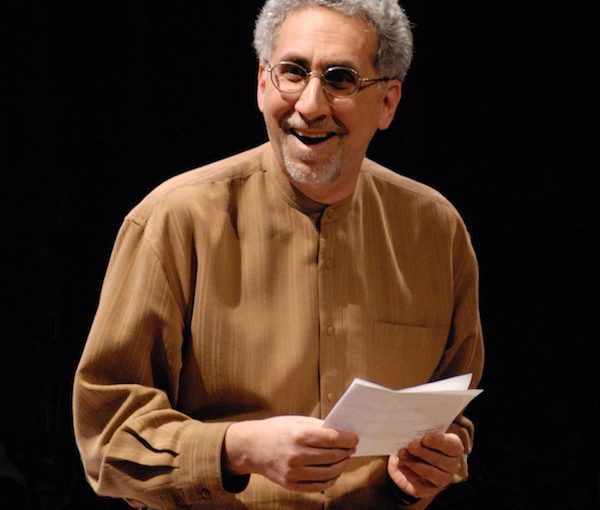
Moshe Denburg’s music will be featured in a tribute concert by the Orchid Ensemble on Nov. 10 at the Annex. (photo from Orchid Ensemble)

The Orchid Ensemble is giving composer Moshe Denburg a most appropriate gift for his 70th birthday – a concert.

The Nov. 10 tribute at the Annex will feature Denburg’s music, as well as the world première of a new work inspired by the melody of one of his first recorded songs. Denburg has collaborated with the Orchid Ensemble over the years and has been a driving force in intercultural music in Canada, including being the founder of the Vancouver Inter-Cultural Orchestra, in 2001.

On the Orchid Ensemble’s tribute program are the three pieces Denburg wrote for the group’s Road to Kashgar (2001), which was nominated for a Juno Award; “El Adon” (2009), a four-movement work that will be performed consecutively as a suite for the first time (one movement being a world première); “Petals of the Flame” (2012), which will be performed with flamenco dancer Michelle Harding; and the North American première of “In Midstream” (2010), a solo zheng (Chinese zither) work performed by Dailin Hsieh.

The icing on the cake, so to speak, will be the performance by the ensemble – Lan Tung (erhu/Chinese violin), Hsieh (zheng) and Jonathan Bernard (percussion) – of “And Gather Our Dispersed from the Ends of the Earth,” by Denburg’s nephew, composer Elisha Denburg.

“I haven’t heard it yet, so I can’t say much about it at all!” said the elder Denburg. “As he has said, it is based on a musical melody of mine, which I set to the liturgical text ‘Gather our dispersed from the ends of the earth….’ This song appears on one of my first albums, and was recorded in New York City in the mid-’70s with a certain well-known ensemble there called the Neginah Orchestra. For many years, it received regular airplay on Kol Israel Radio. I am really looking forward to hearing what Elisha did with it. I will plug him here – he is a composer of depth and originality.”

The younger Denburg’s music has been commissioned, performed and recorded across Canada, as well as in the United States. The award-winning composer has collaborated with numerous artists and his music has aired on CBC Radio 2. Essential Opera commissioned him, with librettist Maya Rabinovitch, to create a one-act chamber opera, titled Regina, about the first female rabbi, Regina Jonas, who was ordained in 1935.

About how his uncle’s melody inspired him, Elisha Denburg told the Independent, “It is a song that invokes very specific and special memories for me, singing around the Shabbat table with him and my family when I was young. It also espouses a key Jewish value: the strength of community. This is why I always try to incorporate it into my chanting whenever I help lead Rosh Hashanah services at my synagogue in Toronto (First Narayever Egalitarian Congregation). In composing a new work for intercultural trio, inspired by this melody, I am attempting to give back to him and our community the musical and spiritual gifts I have been so fortunate to receive in my life so far.”

In looking back at his professional life and how his composing has evolved, Moshe Denburg said, “At the beginning, I was mainly a songwriter and melodist, though I did take it seriously and I still consider a good song and a well-formed melody to be a real achievement. However, over the years, I delved much more deeply into the art of composition, and by that I mean writing for larger forces (like orchestras) and utilizing a broader musical language.”

Denburg has been creating music for almost all of his 70 years; his first composition coming before he was 10 years old. “As a child,” he said, “I improvised melodies, even at the age of 4 or 5. I believe it was when I was 8, I improvised a melody to the words of the synagogue prayer ‘Hashiveinu Hashem eilecha …’ (‘God, bring us back to you …’), and it stuck. It was very cantorial, as this, being the son of a rabbi, was my first influence and inspiration – the modes of synagogue prayer.”

The interest in world music came later. “For many of my generation,” said Denburg, “this connection with and attraction to the music of other cultures started in the 1960s, with the Beatles and others, who were incorporating non-Western instruments – tabla and sitar, for example – into their works. It was a great new stream to draw upon, in order to create something new and exciting. I still think of intercultural music-making as having unlimited potential, with a much larger palette of sounds, and a noble endeavour and homage to everyone’s humanity.”

Retirement is not in Denburg’s plans. He said, “There are three prongs to my musical life, which continue unabated:

“1. Tzimmes, my Jewish music ensemble, is back in the studio, working on some tracks both old and new. Some tracks were begun in 2005-06 and have sat on the back burner for many years. Some pieces are newly composed and arranged. I hope to release them, perhaps as an album or perhaps singly online, over the next year or two.

“2. The Vancouver Inter-Cultural Orchestra (VICO) continues to be a going concern and, though I have stepped back from being hands-on in the organization, I am still involved creatively, contributing compositions and participating in a variety of concert and recording projects.

“3. Apart from the VICO, I am still a composer for hire. In fact, Lan Tung, the leader of the Orchid Ensemble and my musical colleague of many years, recently initiated a project that would see me, funding permitting, commissioned to write for another intercultural ensemble of hers, the Sound of Dragon Ensemble.”

In addition, Denburg has at least two “bucket list” items: “Writing a large-scale work of many movements for the full Vancouver Inter-Cultural Orchestra (25-30 players); continuing to record my works, both Jewish and intercultural.”

For tickets to And Gather Our Dispersed from the Ends of the Earth – Moshe Denburg Tribute Concert at the Annex on Nov. 10, at 4 p.m., visit mosheorchid.brownpapertickets.com.
AvevA plays at Chutzpah!

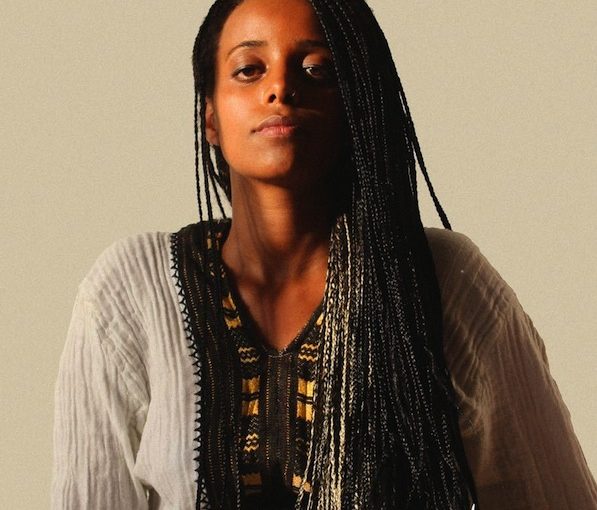
AvevA and her band perform at the Rickshaw Theatre Nov. 14. (photo from Chutzpah!)

“I’m really looking forward to performing for a new audience in Vancouver, and to seeing Vancouver for the first time,” Israeli-Ethiopian singer-songwriter AvevA Dese – who goes by her first name – told the Independent.

The Rehovot-based musician will perform at the Rickshaw Theatre Nov. 14 as part of the Chutzpah! Festival. She will be coming with a band: Noam Israeli (drums), Nadav Peled (guitar) and Itamar Gov-Ari (keyboard). While in North America, the group will also perform in New York and Los Angeles.

Though AvevA has been singing since she can remember, she started songwriting in her teens. Her participation, in 2012, on the Israeli reality TV show The Voice led her to Rimon School of Music, in Ramat Hasharon, a suburb of Tel Aviv. This, in turn, led the musician – who mainly listened to American soul music when she was a kid – to explore her roots. While AvevA was born in Israel, her parents made aliyah in 1984, having escaped civil war and famine in Ethiopia by making the weeks-long journey to a refugee camp in Sudan, from where they were brought to Israel as part of Operation Moses.

“It was a process, trying to get in touch with my roots, my heritage,” she said. “As a child, I wasn’t interested in my heritage because I felt I had to choose either I’m Ethiopian or I’m Israeli. So, I chose Israeli because I wanted to fit in.

“Growing up, I understood that I can be both, but I wasn’t eager to learn and know about my Ethiopian roots – that acutely started through music. When I was at Rimon School of Music, I started singing in an ensemble called Afro-Pop, where the music we played was mostly African music, and I fell in love with it. That same year, I was invited to perform with the Idan Raichel Project, where I performed an Ethiopian song for the first time. I started collaborating with Ethiopian writers, I’ve visited Ethiopia three times in the last four years, and I’m still learning more each day.”

AvevA’s discography includes the EP Who Am I, which was released in November 2016, and the LP In My Thoughts, released in March of this year. “I’m now working on some new songs that I can’t wait to release,” she said. “I hope it will happen in 2020.”

AvevA said she generally begins composing on the guitar. “I’ll start jamming and, when I find something that I like, I just go with it and try to complete that idea into a song.” However, she added, “A song can change a lot in the process of recording and working with a producer. For example, my song ‘Won’t Let You’ wasn’t written before I started working with the producer Isaac DaBom. I had a whole different song that he didn’t think was good enough, so he asked me to rewrite it and that’s how I wrote ‘Won’t Let You.’”

AvevA sings in English and Amharic (the national language of Ethiopia), and some of her songs use Ethiopian scales.

“Ethiopian music is primarily based on a five-tone scale system, known as a pentatonic scale, and the Western scale generally consists of seven notes,” she explained.

AvevA said she feels no pressure to be a “poster girl” for Israel’s openness to diversity. “I don’t feel that pressure,” she stressed. “I share my story and the way that I see things. In Israel, like in any other place, there are beautiful sides and there are ugly sides.”

B.C.-based Leila Neverland, in her trio Mountain Sound, opens for AvevA on Nov. 14, 8 p.m. For tickets to the concert – Rickshaw Theatre is a 19+ venue – and other Chutzpah! shows, visit chutzpahfestival.com.

Finding hope during war

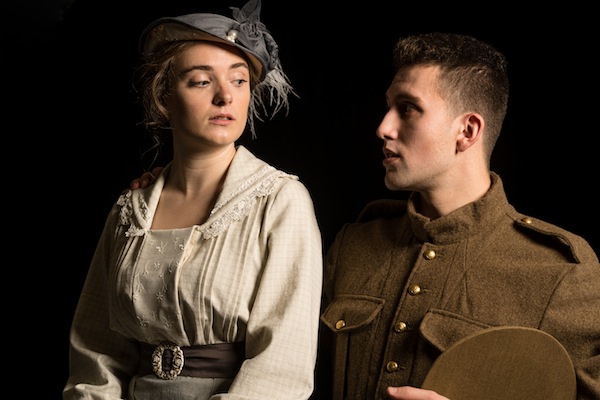
Laura Reynolds and David Volpov in The Wars, which opens Nov. 7. (photo by Javier R. Sotres)

Timothy Findley’s award-winning novel The Wars, adapted by Dennis Garnhum for the stage, comes to University of British Columbia’s Frederic Wood Theatre Nov. 7-23. Directed by Lois Anderson, it will be performed by UBC Theatre and Film’s graduate class of 2020, among whom is Jewish community member David Volpov.

Volpov takes on the leading role of Robert Ross, who is described as “a tender-hearted idealist who shares a strong bond with his wheelchair-bound sister” and “trades his comfortable Canadian life for the harsh world of trench warfare in World War I.”

“What I find challenging about playing Robert is imagining the play as a series of events, with each event slowly transforming him into a new person,” Volpov told the Independent. “At first, he’s a shy city boy who comes from a wealthy family. Over the course of the play, he becomes a confident lieutenant, who’s gained a lot more life experience. It’s not until he escapes his domestic life and goes to war that he truly discovers who he is. He discovers more about his sexuality, his morality around war and his will to live.

“As well as being a war story, the play is also a coming-of-age story. Finding those moments of change has been a rewarding experience because Robert is such a complicated character to crack. Even though he’s so young, he has so much trauma and weight that he carries with him to France. It feels like a big step for Robert every time he grows or learns something, or pushes past his comfort levels.”

Volpov is in his final year of the bachelor of fine arts acting program at UBC. As a writer, his plays include The Minimum-Wage Dame and Ten Years Later. His acting credits include Promethean Theatre Company’s productions of Of Mice and Men and Saint Joan.

“I love working with Promethean because we’re a small group of friends who are passionate about theatre,” he said. “We come together and discuss what stories we want to tell, what stories we think are important to tell. Then we go ahead and tell them. There’s nothing high-brow about it.”

Volpov’s appreciation for storytelling comes in part from his parents.

“My parents were Jewish immigrants from the former Soviet Union – my mom from Latvia and my dad from Belarus. Having grown up persecuted for being Jewish, they found it important to pass on their life stories to me, and that I understood what it meant to be Jewish,” he explained.

Growing up in Richmond as a secular Jew, he said, “It wasn’t until I was a teenager and spent one summer at Camp Tel Yehudah in Upstate New York that I felt connected to my heritage. The camp was oriented on teen leadership, so each camper chose a global issue which they were passionate about, researched it and created an activism action plan.

“The issue I chose to dive into was gun safety,” he said. “My group and I created a policy plan that we got the chance to take to Washington, D.C. We met with senators’ aides and representatives of the NRA [National Rifle Association] and the Brady Campaign. It was very important to be able to speak with people on both sides of the issue and still be able to have a healthy discussion. The experience impacted me a lot because it was the first time that I felt like I had a voice about something I was passionate about, something that felt so personal to me. That’s one thing that really helped in my acting from then on. Before that, I knew how to read and play someone else’s script, but that was when I learned how to make someone else’s text feel like it was my own.”

Considering the text of The Wars, Volpov said that one of the reasons Findley wrote about the First World War “is because that was the war that changed everything. It marked the first use of chemical weapons in war and the first time that the senselessness of war was widely reported. World War I marked a point where the world shifted to a much more cynical outlook, where the chaos of the world was realized.

“Presently,” he said, “we’re living in a similarly cynical time, in a new age of increasing isolationism – of Brexit and [Donald] Trump, and the climate crisis, too. The message that the play applies to the First World War can also apply to today: even when we’ve lowered our faith in our leaders and in humanity, we can always hold onto hope and lean on meaningful connections to others to get by.”

He added that “these connections take precedence over mere survival. The play is so life-affirming because it’s all about finding hope and joy even during the hardest times.”

For tickets to The Wars, call 604-822-2678 or email box.office@ubc.ca.

Choosing love not hate

On Sunday, vigils were held in many cities to commemorate the 11 worshippers killed at Tree of Life Synagogue in Pittsburgh on Oct. 27, 2018. The shooting was the deadliest attack on Jews in American history.

As we have mourned and taken greater measures toward protecting ourselves, we have, mainly, not let fear paralyze us or isolate us from our neighbours and the larger world. We have continued to live Jewishly, whatever that means to each one of us; whether it’s helping those less fortunate, lobbying for sound government policies, going to synagogue or simply being kind to the people we encounter in our day.

In Vancouver, community members and others could join two collective moments of remembrance on Sunday: the Jewish Federations of North America’s Pause with Pittsburgh, which included the livestreaming of a public memorial service, and a service at Congregation Beth Israel, organized by the Rabbinical Association of Vancouver with the Centre for Israel and Jewish Affairs, the Jewish Community Centre of Greater Vancouver, Hillel BC and the Jewish Federation of Greater Vancouver.

Over the weekend, Jews were also encouraged – as they were in the wake of the tragedy last year – to #ShowUpForShabbat, an initiative of the American Jewish Committee, calling for us “to honour the victims and raise our collective voice for a world free of antisemitism, hate and bigotry.”

Beth Israel’s Rabbi Jonathan Infeld, who grew up in Pittsburgh, told News 1130, “There are still many people who are frightened and worried about what took place a year ago…. There are people who are concerned about coming to synagogue and people who are concerned about antisemitism. Especially on holidays, one of the messages I deliver is that, unfortunately, antisemitism is on the rise in the world. But we have to remain strong, to have the courage to come to synagogue, and to not allow attacks like this to prevent us from being who we are and to deprive us of the benefits that come from being in a sacred space.”

Infeld also noted, “One of the aftermaths of the attack is that people in Pittsburgh didn’t feel this was an attack just on a synagogue, they felt it was an attack on Pittsburgh…. We have to understand an attack on any sacred space is an attack on an entire community, so we need to stand together as one community with the message that love is stronger than hate.”

While the situation is not as bad as elsewhere in the world, the number of hate crimes and the incidences of antisemitism in Canada, including in British Columbia, have increased worrisomely. Love has a long row to hoe. Not only to give us the courage to speak up in the face of prejudice, but also to confront and temper our own. Not only to make us self-assured enough to make space for those with whom we agree and for whom we care, but also for those with whom we disagree and whom we dislike. Not only to inspire us to dream of a better world, but to give us the imagination and resourcefulness to bring those aspirations into being.

Love can only be stronger than hate if we choose to make it so.


The knowledge that we die

Shabbat, Oct. 26
B’reishit, Genesis 1:1-6:8
Haftarah, Isaiah 42:5-43:10

One Yom Kippur, a rabbi was warning his congregation about the fragility of life.

“One day, everyone in this congregation is going to die,” he thundered from the bimah.

Seated in the front row was an elderly woman who laughed out loud when she heard this.

Irritated, the rabbi said, “What’s so funny?”

“Well!” she said, “I’m not a member of this congregation.”

Membership and affiliation aside, the most important lesson we learn in life is that one day it will end: one day we are going to die.

This is the great lesson and gift of the parashah B’reishit, with its iconic tale of Adam and Eve in the Garden of Eden.

Amid all the lush greenery, flowing rivers and natural beauty of the garden, at its centre stood two trees. All of the trees and their fruits were permitted to human beings as food, except for the Tree of All Knowledge and the Tree of Life. We read: “God Eternal then commanded the man, saying, ‘You may eat all you like of every tree in the garden – but of the Tree of All Knowledge you may not eat, for the moment you eat of it you shall be doomed to die.’” (Genesis 2:16-17)

When they eat from the Tree of All Knowledge, the knowledge they get is that, one day, they are going to die. Before the forbidden fruit, they didn’t even know death was part of the equation. Now they know and it scares them – to death. They like the garden: life there is beautiful, they don’t want it to end and, standing right next to the Tree of All Knowledge, is the answer to their anxiety – the Tree of Life. One bite from that fruit and they will live forever. This terrifies God. We read: “God Eternal then said, ‘Look, the humans are like us, knowing all things. Now they may even reach out to take fruit from the Tree of Life and eat, and live forever!’ So the Eternal God drove them out of the Garden of Eden to work the soil from which they had been taken.” (Genesis 3:22-23)

God kicks them out of the garden – not as punishment, but as a blessing. If they think they will never die, then how will they truly live? If you have eternity, then there is no urgency for anything; with unlimited tomorrows, everything can wait.

The German existentialist Martin Heidegger, in his masterwork Being and Time, taught this: he said that, in order to truly live authentically, we have to confront death head-on. In other words, knowing that I am going to die is what allows me to truly live. Heidegger wrote: “If I take death into my life, acknowledge it and face it squarely, I will free myself from the anxiety of death and the pettiness of life – and only then will I be free to become myself.”

But, as Ernest Becker wrote in his Pulitzer Prize-winning masterwork The Denial of Death, even though we objectively know that we are all going to die, we don’t actually believe what we know to be true.

Becker’s work is important because of his astute observation that our obsession with not dying actually gets in the way of our fully living.

We are so focused on outwitting, outlasting and outplaying death, staying in our own Garden of Eden, that we make amazingly selfish choices in life. We set up what Becker calls “immortality systems” – non-rational belief structures that give way to the belief that we are immortal.

For example, we try to buy immortality by accumulating possessions and wealth, as if our things will somehow protect us when death comes knocking. We take on heroic roles in our business or our household: we think that, if we make ourselves indispensable, death can’t touch us. “I can’t die this week; I have a sales meeting on Thursday.”

Judaism suggests a different approach to death and to life. Rather than deny death, Jewish tradition instructs us to embrace it. Judaism teaches that we should live each day as if it is our last because we don’t know, it very well may be (Babylonian Talmud, Shabbat 153a).

Imagine, as God does in this parashah, if human beings directed all the energy they focus on not dying toward the more sacred goal of truly living. How would you fill each moment of every day if you truly knew and understood that you will never get that moment back once it has passed; that it is gone forever?

The psalmist declares: “The span of our life is 70 years or, given the strength, 80 years … and they pass by speedily and we are in darkness; teach us to count our days rightly, that we may attain a wise heart.” (Psalm 90:10, 12)

The wise person, our rabbis teach, counts each day and makes each day count. Knowing that our days are numbered helps us clarify our priorities and our purpose. Our most precious possession is not money or things: you can always get more of those. No, our most precious and finite possession is time.

Henry David Thoreau wrote: “I went to the woods because I wished to live deliberately…. I wanted to live deep and suck out all the marrow of life, to put to rout all that was not life, and not, when I had come to die, discover that I had not lived.” (Walden, reissue edition, Princeton University Press, 2016)

When Adam and Eve are kicked out of the garden, the Torah records the very first thing they do. “And Adam knew his wife Eve and she bore him a son.” (Genesis 4:1) They have a child: the very realization of “I’m not going to live forever” is answered with our best attempt at immortality – progeny.

And so, a final question remains. Where is the true paradise? Is it in the Garden of Eden where no one ever dies and time is limitless? Or is it East of Eden, outside the garden, where every moment is precious, every decision is life-changing and the fruit, sometimes bitter, compels us to appreciate the sweet?

Rabbi Dan Moskovitz is senior rabbi at Temple Sholom and author of The Men’s Seder (MRJ Publishing). He is also chair of the Reform Rabbis of Canada. His writing and perspective on Judaism appear in major print and digital media internationally. This article originally appeared on reformjudaism.org.

Fighters return to kibbutz

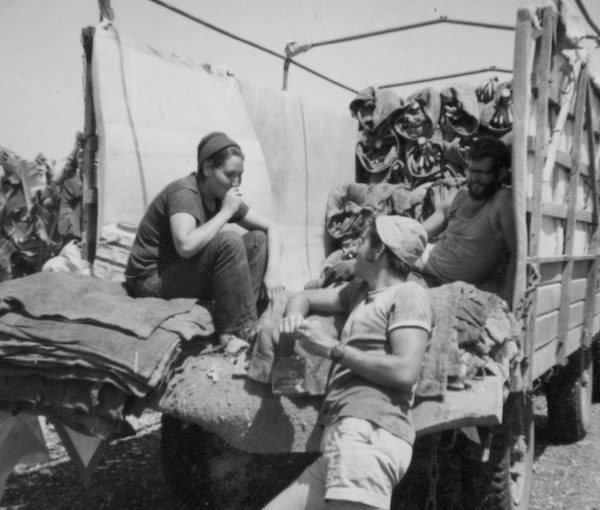
Stacking the banana bunches in the wagon required a type of superpower. (photo from Victor Neuman)

In this eight-part series, the author recounts his life in Israel around the time of the 1973 Yom Kippur War. The events and people described are real but, for reasons of privacy, the names are fictitious.

Part 6: War Comes Home

My first inkling of how fighting is done in this region of the world came in 1969, when I was working on the pipeline near Arad. Our crew was encamped at a motel and so were some Israeli soldiers. At that time, there were infiltrators crossing from Jordan into Israel and planting bombs wherever vehicles were likely to pass. Tourists like myself were warned to hitch rides while standing on the paved part of the road – never the soft shoulder. Similarly, the cars picking you up never pulled over; they simply stopped in the travel lane and waited.

The Israeli patrols were setting up ambushes in wadis in the area. When they came back to the motel to warm up, I talked with them about what they were doing.

As darkness came, the soldiers drove out to a wadi that showed signs of human activity, positioned themselves and waited. It was damn cold, they told me, especially when you had to remain still for a long time. Their jackets and leggings kept most of their bodies warm but their hands became very cold. You can’t properly operate a weapon with gloves on.

“So, what did you do to keep your hands warm?” My question got laughter in response.

“Shall we tell him?”

“Yes, who cares? Tell him.”

“Well, if you must know, we all sit around with our hands in our crotch. That’s the only way to keep them warm.”

Still the greenhorn, I asked them if they had any luck or taken any prisoners. Again, they looked at each other – in more seriousness this time.

“It’s dark and you can’t see what they have in their hands even when their hands are in the air. We just kill them all.”

I had no more questions.

Now, it was 1973 and the war had been going on for two weeks. The tide had turned. Syria had been pushed back from the Golan and Egypt had been cut off in the Sinai. To the relief of all of us on the kibbutz, Jordan’s only contribution to the war had been to send some soldiers to fight alongside the Syrians. There was no Jordanian third front in the war.

A trickle of kibbutz members – mainly the older reservists – began returning from the front lines. One of them was a good friend and a fellow banana worker named Moti.

Moti’s talent in the fields showed itself during our time of kateef (cutting, or harvesting). Moti received the bunches and quickly stacked them in the wagon, usually about eight rows high. His superpower was being able to do this in a way that the row would not collapse before the next row shored it up. I tried it once and produced a banana avalanche. It was one of those things that is funny in hindsight – at the time, we had to empty the whole wagon and start over. Time was wasted, bananas were bruised, Lev was pissed.

Moti told me he hadn’t been on the front but had heard stories from those who were. They told him that they had retaken outposts that were overrun in the first days of the war. They found Israeli soldiers tied to the four corners of their bunk with their bellies cut open. I asked him if he had seen any of this; he told me he hadn’t. They were just stories he had heard, but he believed them.

Having Moti back was like old times. Moti, Lev and I were all back in the bananas, along with a number of tourist-volunteers. We were able to properly tend the fields again and we wished to think that life was returning to normal.

Still, the war came home whenever someone else came back on furlough and brought their stories. Next to return were Tzvie and Ari – good friends who, in peacetime, worked the fields together and, in wartime, shared a tank. Just before the war, they had completed their three years of military service and were off on a tour of Europe. No one on the kibbutz could afford to do such things, so the kibbutz rewarded everyone who completed their army stint with an all-expenses paid trip to Europe. It was a once-in-a-lifetime chance to see the world before settling down and all the kibbutz kids dreamed of their time abroad.

Tzvie and Ari were two weeks into their trip when the news reached them that Israel was under attack. Ari wanted to carry on with the tour, arguing that the war would be over before they got home, but Tzvie would have none of it. He told Ari that he would go insane if he were walking around Europe while his country was at war and he became so agitated that Ari agreed to return.

One of the war stories they shared was that, on one of their forays, their tank was hit by a wire-guided missile – a portable device enabled the operator to fire the missile and control it in flight by means of a wire that played out as the missile flew on its path. The Egyptian army had many of these missiles and they took a deadly toll on Israeli tanks in the opening days of the war.

When Tzvie and Ari’s tank was hit, it was immediately disabled and the entire crew had to abandon it quickly. With the enemy nearby, they couldn’t exit from the top of the tank so they dropped the hatch at the bottom and escaped using their tank’s track-and-wheel assembly as cover. They were tripping and stumbling over anti-tank wires from an earlier battle but managed to haul their guns and a box of ammunition to a nearby hill. They were grateful to be alive but less so when they realized they had brought the wrong ammunition; it was compatible with one of the tank’s machine guns but none of the weapons they were carrying. In despair, they hunkered down and waited to be attacked. Then they began to notice how quiet it was. In fact, there was no one around but them. They came down from the hill to investigate and found that their tank had actually hit a land mine.

Ari said of the experience, “Yes, it was scary, but at least our job is driving a tank. It’s worse to be a paratrooper. There they tell you that, if your chute doesn’t open, point yourself head down toward the ground. That way they can reuse your boots.”

At this point, Ari and Tzvie smacked each other on the back and laughed their heads off. Seeing our cue, we all laughed as well.

Now I had the whole range of it. War, murderous and savage. War as slapstick.

(Next Time: The Ceasefire)

(Previously: “Learning the lay of the land”; “When Afula road went quiet”; “Tending the banana fields in war”; “Weapon training begins”; “Near tragedy on guard”)

Victor Neuman was born in the former Soviet Union, where his family sought refuge after fleeing Poland during the Second World War. The family immigrated to Canada in 1948 and Neuman grew up in the Greater Vancouver area. He attended the University of British Columbia and obtained a BA and MA with majors in English literature and creative writing. Between 1968 and 1974, he made two trips to Israel, one of which landed him on a kibbutz at the time of the 1973 Yom Kippur war. Upon his return to Canada, he studied Survey Technology at BCIT and went on to a career of designing highways for the Province of British Columbia and the firm of Binnie Civil Engineering Consultants. When he retired, he reconnected with his roots in creative writing and began writing scripts for Vancouver Jewish Folk Choir concerts and articles for the Jewish Independent. Neuman and his wife, Tammy, live in southeast Vancouver and enjoy the company of friends, their extensive extended family and their four sons.