Peretz Centre alumni reunite

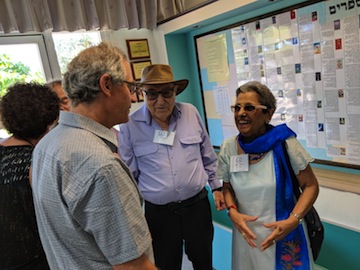
From generation to generation: A Peretz Centre reunion attendee pauses to send a text while walking through an exhibit of archival photos. (photo from Peretz Centre)

On June 20, Vancouver’s Peretz Centre for Secular Jewish Culture held its first-ever reunion of alumni.

The enthusiastic crowd at the reunion, which took place in the Ben Chud Auditorium of the institute’s home on Ash Street, included those who had attended at each of the centre’s locations over the years. When it was founded in 1945, the Peretz Centre offered preschool and after-school classes in Yiddish and Yiddishkeit in the basement of the old Jewish Community Centre at Oak and 11th Avenue, but soon the members purchased a house on Broadway near Alder (now the site of a liquor store and a high-rise). It operated there for 15 years, and it had more than 100 students when it moved to its current location.

The Peretz Centre is dedicated to non-political, secular Jewish and progressive education. Speaking at an open mic, alumni, many now seniors, shared stories dating back to the early days. They recalled a warm sense of community and an education that lived up to the centre’s progressive ideals, including the principle of tikkun olam, the duty to work with others to heal the world. The reunion also provided an opportunity for many to thank the activists who established the centre and for years have dedicated themselves to sustaining it. Some of those first-generation leaders were able to attend the reunion, including Seemah and Harold Berson, Galya Chud, Arlene Jackson and Claire Osipov. Some alumni traveled from out of town to attend, from Winnipeg, Calgary and Denver.

Among the attendees were graduates from the Peretz’s secular B’nai Mitzvah Program, which continues to be one of the centre’s most important offerings. The program approaches Jewish identity through a range of topics, including genealogy and family history, Jewish history and culture, ethics, traditions, Yiddish and Hebrew language studies and more. Avrom Osipov, a Peretznik who in the mid-1960s was the first to complete a Peretz bar mitzvah, spoke at the open mic about the controversy the program caused at the time. The idea of a secular bar or bat mitzvah was new and challenging, he said, even attracting some attention from the local news media.

Reunion attendees enjoyed a display of archival photos from the old days, and Peretz graduates provided much of the entertainment, including emcee and magician Steven Kaplan (aka “the Maestro of Magic”), saxophonist Saul Berson and singers Lisa Osipov-Milton and Sheryl Rae. Pianists Nick Apivor and Wendy Bross Stuart accompanied. The reunion wrapped up with a rousing singing of the old Peretz Shule Hymn, the chorus of which is, “Yud Lamed Peretz a likhtiker kval / tsint unzer hartz on fun dor tsu dor / di tsukunft fun folk balaykht un bashtralt / es vinkt shoyn di nayer kayor” (“This school, our shule, may it blossom and grow / It was built with great effort and love / To teach all the youth who are placed in our care / About ethics and justice for all.”

Paul Headrick is a Vancouver novelist and short story writer. He attended classes at the Peretz Centre in the early 1960s.

Community honours and reunions

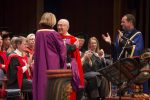
Honourary degree recipient Robert Waisman, centre, is congratulated by University of Victoria chancellor Shelagh Rogers as UVic president Jamie Cassels, right, applauds. (photo from UVic Photo Services)

The Vancouver Holocaust Education Centre extends a mazal tov to board director and longtime volunteer Robert (Robbie) Waisman, who received the degree of honourary doctor of laws from the University of Victoria on June 13.

Waisman was one of the “Boys of Buchenwald” before he was liberated from the concentration camp, eventually emigrating to a new life in Canada, where he built a successful career and now dedicates himself to Holocaust education. He is a community leader, a philanthropist, a founder and past president of the VHEC, and an extremely effective educator who promotes social justice and human rights for all by sharing his experience as a child survivor.

Audiences impacted by Waisman’s VHEC outreach activities include thousands of British Columbian students each year, as well as students and community groups throughout Canada and the United States. He has served as a mentor to survivors of the Rwandan genocide who were wanting to share their eyewitness accounts. Also notable, Waisman was inducted by the Truth and Reconciliation Commission as an Honourary Witness in 2011, and has spoken alongside First Nations leaders and survivors of residential schools about reconciliation and healing.

***

photo - Left to right: Ilan Pilo, JNF, Pacific Region, shaliach; David Goldman, JNF-PR president; Ilene-Jo Bellas JNF-PR past president; Bonnie Belzberg, JNF Canada national vice-president; Wendy Eidinger Spatzner, JNFC national president; and Lance Davis, JNFC chief executive officer
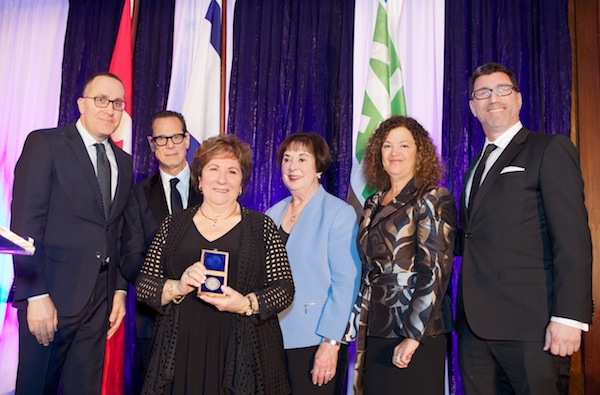
Left to right: Ilan Pilo, JNF, Pacific Region, shaliach; David Goldman, JNF-PR president; Ilene-Jo Bellas JNF-PR past president; Bonnie Belzberg, JNF Canada national vice-president; Wendy Eidinger Spatzner, JNFC national president; and Lance Davis, JNFC chief executive officer. (photo by Robert Albanese)

Dedicated teacher, outstanding volunteer, loving daughter, sister and wife, Jewish National Fund of Canada Bernard M. Bloomfield Medal for meritorious service recipient Ilene-Jo Bellas can be called a “Woman for All Seasons.”

A retired high school teacher, Bellas taught English and theatre arts for 32 years in the Delta School District. She directed more than 100 popular plays and musicals at Delta Secondary School in Ladner. Many of her students have graduated to become successful actors, writers, directors and educators, and they keep in touch with their first teacher/director. She was president of the Association of B.C. Drama Educators, and was instrumental in procuring funding for and in the designing of Genesis Theatre, a fully professional theatre in Ladner.

Bellas was born and raised in Vancouver. She attended Sir Winston Churchill High School and Schara Tzedeck Synagogue Religious School. She developed her strong community commitment through youth activities in Young Judaea, Camp Hatikvah, Camp Biluim and working as a camp counselor. In university, she was involved in the Student Zionist Organization and held leadership roles in Hillel. She became a charter member and eventually president of Atid chapter of Hadassah-WIZO Vancouver; she also served as the Vancouver council vice-president.

Since her retirement in 2003, Bellas has used her many talents and skills to serve her community: three years as secretary of the Jewish Seniors Alliance, four years on the board of the Louis Brier Home and Hospital and president of the ladies’ executive of the Richmond Country Club. She also directed musical shows at Vancouver Talmud Torah, produced souvenir books, chaired and worked on dinner committees for Congregation Schara Tzedeck, Vancouver Talmud Torah, Israel Bonds and the JNF. In 2013, Bellas and her husband Joel, z’l, were awarded the Betzalel Award at Schara Tzedeck Synagogue. Most recently, she chaired a very successful fundraising gala for RAPS (Regional Animal Protection Society).

Bellas served as president of JNF Pacific Region from 2012 to 2015. She remains active to this day, continuing as a board member, chairing and co-chairing Negev Dinner committees and producing the souvenir books. Bellas is on the national board of JNF and states that she is very proud to be part of such a proactive organization for the benefit of the state of Israel.

Bellas attributes much of the success of her stellar volunteer career to the loving support and encouragement she received from her beloved husband Joel, z’l.

***

photo - The June 28 event honouring Dr. Saul Isserow raised more than $3 million for two initiatives
The June 28 event honouring Dr. Saul Isserow raised more than $3 million for two initiatives. (photo from CFHU)

Hebrew University of Jerusalem is known for innovation. With nine Nobel Prize and Fields Medal winners among its alumni and being ranked 12th in the world for biotechnology patent filings, there is an abundance of creativity and ingenuity emanating from the university. It should come as no surprise then that the Canadian Friends of Hebrew University (CFHU) co-convened a fundraising event honouring cardiologist Dr. Saul Isserow on June 28. Hosted by CFHU and VGH & UBC Hospital Foundation in the Landmark Aviation Hangar at YVR, the casual-chic event – which sold out just weeks after it was announced – hosted a capacity crowd of 500-plus people.

The huge walls of the hangar were draped and a lighting and sound system had been installed along with a cabana that was a full-service bar. There were five food stations, including one serving South African specialties. One wall of the hangar was open to the runway and a private jet was on display to top off the evening’s decor.

Among other things, Isserow is director of the Vancouver General Hospital Centre for Cardiovascular Health, director of cardiology services at University of British Columbia Hospital and medical director of Sports Cardiology B.C.

“It’s not in my nature to be fêted in this way,” said Isserow in his address, stressing that the evening was intended to be a fun night to celebrate the achievements of the cardiac team with whom he works, as well as his heartfelt support and love for the state of Israel.

There were more than three million reasons for celebration by the end of the night – to be exact, $3,046,350 was raised to support two initiatives. The money will be divided between CFHU’s Inspired by Einstein student scholarship program and, locally, Isserow’s Sports Cardiology B.C. program at UBC Hospital. Barbara Grantham, chief executive officer of the VGH & UBC Hospital Foundation expressed her gratitude to Isserow for agreeing to be honoured at this event. She said Isserow is a humble man who works tirelessly for his patients and credits his team for his successes.

A short video tribute to Isserow and his journey from South Africa to Canada revealed that he and his wife, Lindsay, began their lives in Canada in Nipawin, Sask. His journey from rural Saskatchewan to the upper echelon of Vancouver’s cardiology community is a testament to his talent and perseverance.

In addition to Grantham and Isserow, CFHU national board chair Monette Malewski gave brief remarks, which were followed by a performance by the Emily Chambers band while dinner was served. The crowd was treated to a short African drumming performance prior to a brief address by Ambassador Ido Aharoni, who spoke about the strong connection between the principles of Hebrew University founding member Albert Einstein and Hebrew U’s function as a launch pad for creative innovation in all areas. After Isserow addressed the group, the evening was rounded off with a DJ and dancing.

***

photo - Sunshine Coach
(photos from RJDS)

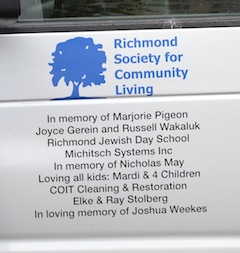
photo - Sunshine Coach inscriptionFor the past few years, Richmond Jewish Day School’s Student Council committee has been collecting donations to support different charities throughout the Lower Mainland. As part of their ongoing fundraising, the school was able to donate $1,150 to the Variety Club Sunshine Coach program and the school’s name was recently inscribed on the side of a 15-passenger Sunshine Coach, which will be used by Richmond Society for Community Living. The vehicle will transport youth with diverse abilities to various programs throughout the city.

***

photo - From left to right, Rabbi Shawn Zell, Maury Miloff, Sam Petuchowski, Tessa Hoffman, Esti Friedman and Allan Pollack stand in front of their class photo, taken with David Ben-Gurion
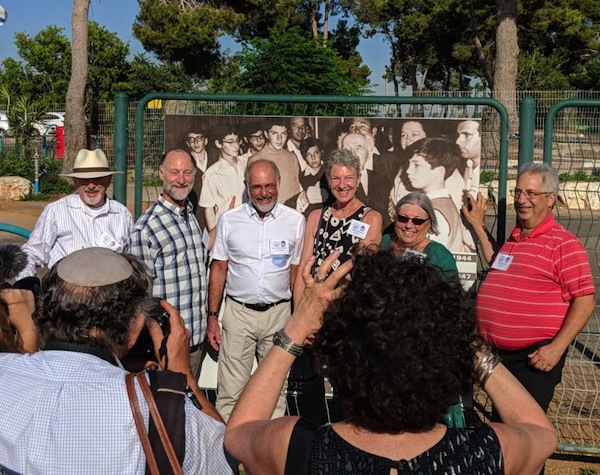
From left to right, Rabbi Shawn Zell, Maury Miloff, Sam Petuchowski, Tessa Hoffman, Esti Friedman and Allan Pollack stand in front of their class photo, taken with David Ben-Gurion. (photo by Noam Ziv)
photo - Aliza and Joe Ziv, who now live in Israel, speak with Vancouver dentist Dr. Brian Goldenberg. Aliza Ziv was Goldenberg’s Grade 1 teacher at Vancouver Talmud Torah
Aliza and Joe Ziv, who now live in Israel, speak with Vancouver dentist Dr. Brian Goldenberg. Aliza Ziv was Goldenberg’s Grade 1 teacher at Vancouver Talmud Torah. (photo by Noam Ziv)

Last month, several Canadians – or former Canadians – attended the 50th anniversary of Hadassim Children and Youth Village in Israel. Reunion organizer Rabbi Shawn Zell and the other attendees were among the first young Diaspora Jews to spend a year in Israel on a sponsored program – in their case, one organized by Canadian Hadassah-WIZO.


Rabbis call on Trudeau

Five local rabbis – Rabbi Lindsey bat Joseph, Rabbi Shmuel Birnham, Rabbi Laura Duhan Kaplan, Rabbi David Mivasair and Rabbi Dan Moskovitz – are among the 33 signatories to a public statement issued July 11 calling upon the Trudeau government to suspend Canada’s Safe Third Country Agreement with the United States. The 33 rabbis from across the country represent a diversity of Canadian Jewry.

The statement calls for the agreement to be suspended “until such time that Canadians can be confident that the United States is in fact a country to which refugee claimants can be returned safely.

“Our own Jewish people’s history instructs us of the necessity to find safe refuge in times of turmoil and lethal threat.

“Our people’s spiritual legacy teaches us that we must not stand idly by the blood of our sisters and brothers, regardless of where they are from.

“The Trump administration’s decision to separate children from their families seeking refuge along the U.S.-Mexican border and its neglect of a plan to reunite them seems to us to amply demonstrate that the U.S. is not a safe country to which refugees should be returned.”

The statement notes that the “agreement requires the Canadian government to review continually the human rights record of the U.S. There were calls to end the agreement in January 2017, when the Trump administration implemented its travel and immigration ban. At this time, it is clear beyond any reasonable doubt that Canada must review and re-evaluate the U.S. qualification as a safe third country.

“Nearly 2,000 children entering the U.S. for the purposes of claiming asylum between April and May have been separated from their families and are being held at detention centres. No one knows the effects of this trauma on these youth, but the human rights abuses are grotesque. According to ACLU, HRW, Amnesty International and media reports, minors are being held in metal cages, given foil blankets and, in many cases, without any visual stimuli in the format of books or toys. In some cases, parents are told their children will be taken for a bath but are not returned. Teenagers in cages are required to care for the younger children, including diaper changes. At one detention centre, staff are not allowed to console, lift or even touch the children, no matter how much agony or fear the child may express. Some children being held are still breastfeeding.”

The Canadian rabbis, “cognizant of our people’s own history as desperate refugees and our tradition of seeking justice … urge the Trudeau government to acknowledge that the United States is not a safe third country and to suspend the Safe Third Country Agreement until the U.S. meets its requirements.”

Talmudic advice on life, work

If you listen to lifestyle advice, finding one’s work-life balance has never been harder. Indeed, work obsesses many of us 24/7. We’re always struggling to find time for family, household and leisure activities. Like every generation, we think we’ve invented a new problem.

It only takes a little while studying Jewish texts to respond to this with a “Don’t be ridiculous!” Yes, our technology makes our work lives faster and more omnipresent, but, in Jewish tradition, we’ve been discussing and debating how to balance these issues for thousands of years.

When I started thinking about this, I remembered how many detailed tips are available to us by studying Midrash and Talmud. There are discussions about how much sleep we need. Depending on their profession, there are views about how many times a week men are obligated to be intimate with their wives. There is advice on how to raise your (Jewish) children and how to take care of your livestock.

By the way, in case you raise livestock (for work or fun) or have pets, you should always feed them first, before you eat. Is that irrelevant? Not in my household, where we conscientiously feed our dogs first every morning and evening, before breakfast and dinner. (It cuts down on begging at the table, too.)

A few weeks ago, a new start-up that works on networking and advice for people in university alumni communities asked me to participate in a career path interview. It was done entirely online. I was happy to do it, because it struck me as a useful exercise. New university graduates might be able to learn from older peers, and gain useful information and connections. I responded to the questions without hesitation.

Although I listed plenty of professional qualifications, I focused on how important it was to be flexible, evolving and intellectually curious as your life changes. In my experience, things like getting married, having health issues or kids, or moving affect your career path enormously. I figured this was not news to anyone, but that it was advice worth offering to 20-somethings or career changers.

To my surprise, someone at the start-up contacted me and asked if they could feature me in a “career journeys” email. At first, I thought, “Sure, why not?” I even wondered if it might bring in more writing or editing jobs. Then I read their draft.

Their draft email sandwiched my photo and quote in between two male professionals, a medical physician/specialist and a virtual reality DJ. The quote they chose for me highlighted that moving for my husband’s academic career forced me reinvent myself to find paying work and to stay competitive.

I was the only woman featured, and the only professional whose married status was mentioned first. I felt angry. Why were my peers’ work credentials front and centre but, for me, it was about marital status and career sacrifice for a partner?

I asked them to cut me from their interview or significantly revise what they posted. I pointed out why. They responded quickly, apologized, and let me revise the text so that it featured what I brought, as a professional, to the conversation rather than my gender or family status. In the end, my quote read: “You do not need to know ‘what you want to be when you grow up’ when you are 18 or 21. We need to be flexible, evolving and intellectually curious.”

So far, at least, I have heard nothing as a result of the e-newsletter’s publication but, at least, I’m not embarrassed by it.

Twenty years ago, this past June, our wedding program featured a quote from Bava Metsia 59a. It came from what Rav Papa said to Abaye: “If your wife is short, bend down and listen to your wife, and whisper in her ear.” If you’ve ever met me (and my partner) in person, you know that I am certainly short … and the key to keeping a healthy balance is in these discussions, too. If we want to maintain good work lives and, more importantly, healthy, happy overall lives, we need to listen to one another, and value what we each bring to the table.

Sometimes, it’s hard work to maintain a marriage, raise kids, or even feed the dogs promptly before we eat. The technology aspect of the work-life balance makes us think that it’s all new, but something was always the newest thing in every generation. Rather, look at it another way. We aren’t alone. Network backwards. We’re lucky to be bolstered by thousands of years of good Jewish advice. Just like our ancestors, we’re free to sift through it and take what works best for us.

Joanne Seiff writes regularly for CBC Manitoba and various Jewish publications. She is the author of three books, including From the Outside In: Jewish Post Columns 2015-2016, a collection of essays available for digital download or as a paperback from Amazon. See more about her at joanneseiff.blogspot.com.

Grouchy Historian’s lessons

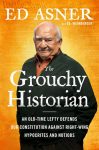
The gruff yet endearing Jewish character actor Ed Asner is instantly recognizable to many people for his portrayal of the equally gruff yet amiable Lou Grant in the classic 1970s television sitcom The Mary Tyler Moore Show and its spinoff drama Lou Grant. Fewer people realize that the Emmy Award-winning actor is also a well-known political activist, whose views became more prominent in the 1980s during his two terms as president of the Screen Actors Guild. Asner, now 88 and far from retirement – he just performed here in April in a one-man stage play – has written The Grouchy Historian: An Old-Time Lefty Defends Our Constitution Against Right-Wing Hypocrites and Nutjobs (Simon & Schuster, 2017) with Ed Weinberger, longtime screenwriter for The Mary Tyler Moore Show.

In this compelling read, Asner attempts – in his own words – to “reclaim the [U.S.] Constitution” from far-right conservative pundits. Making no secret of his ideological perspective, Asner argues, “The constitution is the cornerstone of the Republican party’s agenda, along with small government, less regulation and making sure the rich pay less taxes than the rest of us.” Yet, he maintains, the constitution was written to form a robust central government – giving sweeping powers to Congress (not the states) – secured by an equally strong executive branch. He further asserts, “Nothing in the constitution suggests, let alone enforces, the concepts of limited government, limited taxes and limited regulations.” Far from hating taxation, the framers of the constitution, writes Asner, desperately needed taxes because “[t]hey had a war to pay off.”

Asner notes that John Adams had wanted the presidential role to have even more powers by not requiring the “advice and consent” of the Senate to make federal and cabinet appointments, “a clear signal that Adams, like [Alexander] Hamilton, believed in a strong central government headed by an executive with vigorous powers.”

About the constitution’s founders and framers, Asner says they were “petty, flawed, inconsistent and all too human,” but, he concedes, they were highly educated “eloquent orators and brilliant writers,” who, “[u]nlike the current right-wing doomsayers and fearmongers, they were all, truly, apostles of optimism.”

Asner spends several chapters discussing God and the constitution – notably God’s absence from the preamble, as well as the Presidential Oath of Office – and speculates why the framers took their approach. He points out George Washington was a Grand Master Mason on whose Bible he took his oath of office, noting, “Masonic Bibles do not acknowledge the divinity of Jesus Christ.” As for Benjamin Franklin, Asner says, “you can quote endlessly about Franklin’s faith in Christian ethics, but none about his faith in Jesus the Christ.” Regarding Adams, Asner mentions that, as a member of the New England branch of the Unitarian Church, Adams and fellow “Unitarians did not believe in the divinity of Jesus Christ, the infallibility of the Bible, the Holy Trinity or Original Sin.” In other words, Asner takes a swipe at the Christian right who claim Christian origins for the American constitution. Asner points out that the entire career of James Madison Jr., as “a politician, lawmaker, intellectual – was devoted to the separation of church and state.” Yet Asner defends First Amendment rights for freedom of religion.

Not only does Asner explore in great detail the actual writing of the constitution and the financial backgrounds of all 55 delegates to the Constitutional Convention, but he does so in the gruff and thorough style of newsman Lou Grant. About these delegates – whom he claims conservative legal theory holds were “infallible patriots” who behaved “solely to establish national unity, economic development and the civil liberties of all citizens” – Asner concludes, “One thing is for certain: they are not the saints living in the imagination of the right wing, acting out God’s will.”

Asner notes that more than 40 delegates held government bonds, more than 15 were slave owners, and several were land and debt speculators. Most participated in more than one category, like Washington, who was not only “a slave owner [but] a money lender, a land speculator and the largest holder of government IOUs in the country.” Asner points out that small farmers, shopkeepers, labourers, Revolutionary War veterans and slaves, among others, were not at the convention. Hence, he paints a picture of a small group of “capitalist elites” with personal interests – two notable exceptions being Madison and Hamilton – who framed the constitution. In reaching his conclusions, Asner draws on the ideas of American historian Charles A. Beard’s admittedly controversial early 20th-century economic views of the document.

Asner shows his creativity in a humorous way, like in his “Open Letter to Senator Ted Cruz, Written in the Style of 1787,” where he states, “I am prompted to write this upon discovery of a foreword you penned to The U.S. Constitution for Dummies.” He proceeds to carefully address, in language of the day, five of Cruz’s assertions, after which he closes with “Whilst This Flame Exists Within Me, I Remain Your Most Staunch Adversary.”

Not many could pull this off as well as Asner. Same goes for his scathing review of the controversial personal and constitutional views of Dr. Ben Carson, neurosurgeon and secretary of housing and urban development. And Asner goes further in his criticism of such contemporary conservative social critics as Ann Coulter.

Asner critiques the origins of the Bill of Rights using language of the era in the inventive form of a series of letters from Madison to heighten the drama of the time. After all, as Asner correctly notes, “It is the Bill of Rights – guaranteeing our freedoms of speech, conscience, religion, and the press – that is the centrepiece of America’s exceptionalism.” However, he also argues its practical limitations over the centuries through a careful description of a series of legal cases.

Asner even shares his own set of constitutional amendments, both humorous and real, including his desire for a guaranteed minimum income, which he is careful to note was not just a liberal idea but was also advocated by conservative economist Milton Friedman and nearly implemented by Richard Nixon in the 1960s. Yet, for a self-declared “old-time lefty,” Asner surprises the reader with his qualified defence of the Second Amendment. He devotes an entire chapter to it.

Asner says he is “not against guns and the good people who own them.” He even admits to owning a Glock 15 – obtained for reasons of self-defence after receiving a death threat in 1979 – and a Beretta Px4, because he “liked its look and the heft of it” in his hand. However, he convincingly argues that American “gun culture” has led to too many deaths. He concedes, “It’s a bloody trail that leads right back to the Second Amendment,” specifically, “the right wing’s interpretation of it: an unfettered licence for every American to own, carry, collect, trade and eventually shoot a gun.” He maintains that this item in the Bill of Rights was not the clearest constitutional amendment ever written because, when it states the need for “a well-regulated militia,” that does not automatically imply a concurrent “personal right” for the individual citizen “to keep and bear arms.”

Asner takes this view from a close examination of the wording used by the framers of the constitution. “The only two subjects in the Second Amendment,” notes Asner, “are collective nouns: ‘state militia’ and ‘people.’” Asner asks, “where, then, can anyone find an individual right to own a weapon except as part of a ‘well-regulated militia’”? He maintains that, historically, Madison’s intent was to limit the Second Amendment “only to state militias” and that the United States was, in fact, “founded on gun control,” with a balance between gun ownership and the desire for public safety. He goes on to outline a very persuasive argument to support his case while emphasizing that “today, despite the evidence, the gun lobby has the chutzpah to claim that the Second Amendment belongs to them and them alone.” According to Asner, the issue boils down to whether the Second Amendment represents a fundamental or absolute right that cannot be limited nor regulated – Asner maintains the former view.

Ultimately, Asner feels it’s time to return to the kind of America its founders envisioned, including a “government that rules by reason, tempered with compassion and advanced by science,” that guarantees free speech and respects liberties for all while protecting its most vulnerable citizens.

Whether left, right or centrist, readers will learn much from Asner, who comprehensively studied the topic and arrived at a serious analysis along with amusing takes. Since his voice is heard throughout the book, it’s easy to imagine this tome being transformed into a one-man stage play some day. But no one could do it as well as Asner. As for why an award-winning actor like him would write about the U.S. Constitution, Asner states without equivocation, “Well, why not me? After all, I have played some of the smartest people ever seen on television.” Newsman Lou Grant would be the first to agree.

Arthur Wolak, PhD, is a freelance writer based in Vancouver and a member of the board of governors of Gratz College. He is author of The Development of Managerial Culture and Religion and Contemporary Management, available in hardcover and ebook formats from all online retailers.

Mystery photo … July 20/18

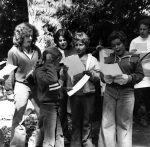
Camp Miriam, 1979. (photo from JWB fonds, JMABC L.09623)

If you know someone in this photo, please help the JI fill the gaps of its predecessor’s (the Jewish Western Bulletin’s) collection at the Jewish Museum and Archives of B.C. by contacting archives@jewishmuseum.ca or 604-257-5199. To find out who has been identified in the photos, visit jewishmuseum.ca/blog.

יש לעצור את טראמפ

עכשיו זה כבר ברור לרבים: נשיא ארה”ב, דונלד טראמפ, גורם נזק ממשי לכלכלת העולם. טראמפ שמתהלך ומתנהג כבריון שכונתי מאיים על כולם, מביא לפרוד רציני בין ארה”ב לאירופה וקנדה ושאר הידידות המסורתיות שלה, דבר שרק מעלה חיוכים אצל הרוסים והסינים. טראמפ שהוא בסך הכל סוחר ממולח וכוחני עד להחריד עם מונטין רע מאוד (כאשר מי שעשה עימו עסקים בעבר לא יעיז בכלל להתקרב אליו עוד), חושב שזו הדרך לנהל יחסים דיפלומטים עם המדינות החשובות בעולם. אך הוא לא מבין בתחום זה כמו בתחומים רבים אחרים (מלבד בלעשות כסף), הוא לא מכיר את ההיסטוריה ולא מכבד את מי שיש לו דעה אחרת, ובדרך כלל מדובר בליבראלים ובאנשים משכילים ממנו, שמחפשים לשתף פעולה אחד עם השני – בניגוד הגמור אליו.

בכל פעם שאחד ממנהיגי המדינות החשובות בעולם נאלץ להיפגש עם טראמפ, רואים בברור שהוא לא רווה נחת והיה מעדיף להיות רחוק מהנשיא האמריקני עד כמה שאפשר. בין היתר מדובר בראש ממשלת קנדה, ג’סטין טרודו, שהבין מהר מאוד שגם הוא לא חסין וטראמפ יתקיף גם אותו. לא נראה שטראמפ יודע לנהוג אחרת. עד עידן טראמפ ארה”ב וקנדה נחשבו לידידות קרובות ביותר ובעלות ברית בלתי ניתנת לערעור. השכנות ביניהן הפכה אותן לא פעם כמעט למדינה אחת. אך טראמפ הרס את הקשר המיוחד הזה של שתי המדינות, כמו שהוא הורס כל דבר אחר בו הוא נוגע.

לפי עיתון הפייננשל טיימס הבריטי מלחמת הסחר בה פתח טראמפ בתרחיש הגרוע שלה, יכולה להתנפח אף לטריליון דולר. היקף המכסים שארה”ב הטילה ובתגובה קנדה, מקסיקו, האיחוד האירופי וסין הטילו מכסים מצדן, יכול להשתוות בהיקף כולל לכרבע המסחר של ארה”ב עם העולם, או לחילופין ישתווה לשישה אחוזים מהיקף המסחר העולמי בסחורות (במונחים של אשתקד).

להלן שלוש הסיבות העיקריות לכך שמלחמת הסחר יכולה להגיע להיקף של כטריליון דולר:

1. ארה”ב הטילה מכסים על סחורות סיניות בהם דודי שמש ומחרטות לרובטים תעשייתים ורכבים חשמלים. בתגובה סין הטילה מכסים על סחורות אמריקניות בהם פולי סויה, מאכלי ים ונפט גולמי. טראמפ הרגזן הודיע כי יטיל מכסים על מוצרים סינים נוספים וסין מצידה איימה שוב בתגובה הולמת. לכן ניתן להעריך כי בתוך מספר חודשים רוב או כל הסחר בין ארה”ב לסין שמגיע לכ-640 מיליארד דולר – ימוסה. סין תגיב מצידה בצעדים לכיסוי הפער.

2. טראמפ מאיים בהטלת מכסים בגובה של כ-20 אחוז על כלי רכב וחלקים לכלי הרכב, בטענה המגוחחת שזה פוגע בביטחון הלאומי של ארה”ב. אשתקד ארה”ב ייבאה כלי רכב בשווי כ-192 מיליארד דולר וחלקים לכלי הרכב בשווי כ-143 מיליארד דולר. האיחוד האירופאי, יפאן וקנדה מאיימות בהטלת מיסים משלהן באותו היקף. כך שימוסו סחורות עולמיות בשווי כ-650 מיליארד דולר.

3. טראמפ ממשיך לאיים על שתי השכנות של ארה”ב קנדה מצפון ומקסיקו מדרום, כי יבטל את הסכם הסחר החופשי של צפון אמריקה נפט”א. דרישותיו בהן הסכם חדש כל חמש שנים נדחו על ידי קנדה ומקסיקו. ארה”ב הטילה בשלב זה מיסים על פלדה ואלומיניום מקנדה ומקסיקו, ועתה היא מאיימת במיסים על כלי הרכב וחלקים לכלי הרכב המיוצרים אצלן. אשתקד ארה”ב ייבאה כלי רכב וחלקים לכלי הרכב מקנדה ומקסיקו בשווי של כ-158 מיליארד דולר (במסגרת הסכם נפט”א).

B.C. helps JCC re-do

Left to right: The Hon. Selina Robinson, B.C. minister of municipal affairs and housing; Michelle Pollock, past president of the Jewish Community Centre of Greater Vancouver; and Eldad Goldfarb, JCCGV executive director. (photo from JCCGV)

Selina Robinson, British Columbia’s minister of municipal affairs and housing, visited the Jewish Community Centre of Greater Vancouver last month to make an announcement regarding the centre’s planned redevelopment.

On June 13, Robinson announced a provincial contribution to support the planning phase of the redevelopment, which intends to replace the existing JCC with a new facility where the existing parking lot is located, as well as a multi-use tower to be located on the site of the existing JCC, most of which will be housing. (For details of the plan, see jewishindependent.ca/jcc-site-to-be-redeveloped.)

“The B.C. government is committed to increasing the affordability and availability of housing in B.C. and we welcome opportunities, like the community centre-led project, that can support these goals,” the ministry of municipal affairs and housing said in a statement to the Independent. “A total of $200,000 has been provided to the Jewish Community Centre to support further development of the housing component of their plan. This plan has the potential to serve people at all ages and stages of life with housing, a new community gathering place, and services for seniors, children and their parents.”

Eldad Goldfarb, executive director of the JCCGV, said the province’s support for this component of the process is an important recognition of the value of the project for the community.

“It’s a very helpful contribution toward the planning process. It’s not money that will be used toward bricks and mortar because, at this point, we’re doing the planning, the rezoning, the budgeting and all these parts that are comprised of planning,” he said. “It’s an initial infusion of support, an investment by the province, to help us move the planning along towards getting this project started and completed.”

The redevelopment dovetails with a number of the provincial government’s priorities, including affordable rental housing, the creation of new childcare spaces, supports for seniors and cultural spaces.

Goldfarb said the community centre is keeping federal, provincial and civic officials closely informed about the project’s progress.

The City of Vancouver is expected to convene a public hearing on the proposed redevelopment this fall.

“We’re excited to see the B.C. government provide planning funds for the JCC redevelopment,” said Karen James, board chair of the Jewish Federation of Greater Vancouver, in a statement to the Independent. “This will be a transformational project for our community and the Oakridge area.”

*** This article has been edited to reflect that the redevelopment will no longer include a new home for the Louis Brier Home and Hospital. ***

Sweet birthday party for kids

Jordana Saks gets great joy from baking. (photo from Saks of Sweets)

“I love baking, because it’s a fun activity that allows me to be creative. More importantly, there is nothing more fulfilling than the wide-eyed smiles I see on other faces when they enjoy something that I have baked.”

Jordana Saks’ love of baking inspired her to create Saks of Sweets, which plans and leads kids’ birthday parties. “What better way to celebrate a birthday than with friends while baking, decorating and eventually eating the delicious cookies?” she asks on the business’s website.

Born and raised in Niagara Falls, Ont., Saks studied cognitive science at McGill University in Montreal, before heading to San Francisco for a year. She arrived in Vancouver about 18 months ago, and has been in love with the city ever since.

Recalling her early sweet baking impressions, Saks said, “I started baking as young as 6 years old. My mom and aunt inspired me to bake, and taught me the tricks of the trade. When the eggs in my aunt’s fridge were past the expiry date, she used to call me over to practise the art of cracking an egg.

“Every year at Chanukah, for the family party, my aunt and I would make cookies and spend hours decorating them with unique designs. In addition to this tradition, we baked at least one new recipe each month. Still, to this day, when I visit home, we get together for a baking day – trying new recipes and recreating past ones.”

When Saks was studying at McGill, she used baking as a stress reliever, leaving her and her roommate with an abundance of baked goods.

“To prevent ourselves from eating an entire cake or a couple dozen cookies, I started an Instagram account called Saks of Sweets, where I could share when and what I was baking,” said Saks. “My friends would comment on what they wanted to try. I would find out where they were studying on campus and would deliver the goods, until nothing was left of that batch.”

When she moved to Vancouver, Saks recalls listening to a podcast called Side Hustle School, with Chris Guillebeau. “The entrepreneurial wheels in my brain were turning,” she said. “I was thinking about my passions and how I could channel those into a business. And, combined with my love for baking is my love for working with children. I’ve had many experiences working with kids and have enjoyed every one of them. After sitting down for an hour at a coffee shop and thinking about how to combine these two passions, the idea for Saks of Sweets quickly emerged.”

Saks of Sweets provides in-house baking birthday parties. Saks’ clients have loved the parties because, as parents, they do not need to stress or worry about anything except for inviting the children. The rest of the planning is in the hands of Saks of Sweets and Saks leads every party, along with one helper.

“We set up the individual baking stations, and the children will learn to roll out the Saks of Sweets shortbread cookie dough,” said Saks. “They will then choose from a wide variety of cookie cutters to create their cookies.

“While the cookies are in the oven, the children will decorate and personalize their baking aprons. Lastly, they will have a wide range of icing colours and sprinkles to decorate their unique creations. As an extra bonus, the take-home box for the cookies and the personalized aprons double as a loot bag.”

Prospective clients only need to provide a table for the rolling and decorating, and a working oven for the baking. Some parents like to provide a meal for the children, like ordering in pizza.

photo - Saks of Sweets brings the party to your children
Saks of Sweets brings the party to your children. (photo from Saks of Sweets)

For those not wanting to have the party in their own home, Saks of Sweets partners with the Jewish Community Centre of Greater Vancouver, so that people can rent the centre’s party room for the birthday celebration.

“Right now, I am doing cookie cutting and decorating, but I’d like to move more into baking other delicious things, such as cakes, cupcakes, pies and more,” said Saks. “This expansion will happen soon, when the time is right.

“When I started this business, my hope was to channel my passions into throwing a creative birthday party that makes both the children and parents happy. I wasn’t overly concerned about the business scalability or strategy, because I didn’t want to get bogged down in the details or dissuade myself from taking that first step.

“From that perspective, my hopes have been met. Each party has been extremely well received by the parents, and the children are always smiling. My only new hope is that I can throw these more often.”

Saks of Sweets is Vancouver’s only in-house baking birthday party. The business concept is all about convenience. It is meant to be stress-free for parents, so they can also enjoy their child’s party.

Saks of Sweets can accommodate most dietary restrictions or allergies and works with clients to tailor the party to any needs or wishes. “For example, in the past, I’ve had to ensure all ingredients are kosher … and I can do parties for families that are kosher,” said Saks. “Furthermore, the ingredients and the cookies are all nut-free. However, they may contain traces of nuts, due to baking utensils that may have touched nuts in the past.”

The cost for a Saks of Sweets party for 10 to 12 children is $300, and each additional child after 12 is $22. For more information, visit saksofsweets.ca.

Rebeca Kuropatwa is a Winnipeg freelance writer.

Redefining antisemitism

An Illinois congressional district leans so heavily Democratic that no serious figures contested the Republican nomination for this fall’s midterm elections. As a result, an avowed Nazi has become the official Republican standard bearer in the suburban Chicago area.

The issue is not that he stands a hope of winning. He doesn’t. The critical test is the degree of unanimity with which the mainstream body politic of the United States comes together to condemn the candidate and reject the normalization of his positions. So far, results are tepid.

Some GOP figures are advising voters not to cast a ballot in the race, which seems like bad advice in a democracy. Others are saying, simply, “Don’t vote for the Nazi,” without suggesting voters support the Democrat. When asked if he was urging Republicans to support the Democrat in the district, Illinois Governor Bruce Rauner simply said, “No.”

We have been seeing far too many examples of Americans putting party over country and humanity recently. President Donald Trump has been able to get away with his worst excesses only through the support of a Republican Congress.

Nevertheless, for whatever limits partisanship puts on bulwarks to bad things, most Americans agree Nazism is bad and should be condemned.

A more ambivalent reaction is taking place in the United Kingdom. The British Labour party has been embroiled for some time in a very serious internal conflict around antisemitism. Senior party figures, including MPs, have uttered (or expressed on social media) things that any “woke” person would recognize as founded on antisemitic premises. In some cases – including in a “closed” Facebook discussion group of which party leader Jeremy Corbyn was a part – the most medieval and unequivocal stereotypes, accusations, conspiracies and Jew-hatred have gone unchallenged.

Members of the party have been kicked out after being subjected to internal party investigations for antisemitic rhetoric. But some have been allowed back in and others have been let off without any censure, even after expressing what the most casual observers would recognize as unacceptable attitudes toward a minority group.

A reckoning has been coming. So, in an effort to set some ground rules, a party committee adopted a definition of antisemitism last week that will serve as the measuring stick in upcoming investigations around whether party figures have or have not engaged in antisemitic rhetoric or behaviour.

The party based their new rules on the standards created by the International Holocaust Remembrance Alliance (IHRA) – criteria that have attained a degree of consensus as perhaps the most conclusive definition we can hope to develop for something as amorphous as antisemitism. The guidelines have been adopted by governments and quasi-governmental agencies worldwide, including Britain’s, but the Labour party thought the guidelines could use some improvements – and so they made their own tidy edits.

The Labour party’s red pen took out references that assign antisemitic intent to the equation of Zionism with Nazism. They deleted the parts where the IHRA says that antisemitism includes accusing Jewish people of being more loyal to Israel than their home country. Under the new Labour party rules, it’s OK to say that Israel’s very existence is racist. Holding Israel to a higher standard than any other countries is also fine with the party.

In short, the Labour party retrofitted the definition of antisemitism to comport with the attitudes and actions of their members, instead of forcing their members to adhere to international standards that reject antisemitism.

The new rules also put the onus on the victims to prove intent, which is almost unprovable. In effect, a Labour member can say whatever they wish – “ZioNazi” is a favourite, it seems – as long as they declare that their intent was not antisemitic. For whatever else this represents, it is a betrayal of a core tenet of the global progressive movement: that those who experience discrimination are the ones who get to define it.

As disturbing as the antisemitism crisis in U.K. Labour is – especially as Theresa May’s Conservative cabinet is imploding and a new election could come any day – it is an important moment for addressing left-wing antisemitism throughout the West.

It is one of the first formal, structured discussions we have seen in Western countries around the issue of defining, identifying and censuring antisemitism within mainstream political discourse. It is not a good thing that it is necessary, but it is good that the necessary discussion is taking place.

Of course, this could go (at least) two ways. Labour could experience a backlash over their efforts to redefine antisemitism to their political benefit, realize that they are far outside acceptable discourse and undertake a genuine correction. Alternatively, they could stick with their highly problematic definition of antisemitism, leave their substantial problem of institutional anti-Jewish bias in place and still win the next U.K election. In which case, they will have moved the goalposts of acceptable discourse in dangerous new directions, with implications that go far beyond Britain.