Skip to content
  • Home
  • Subscribe / donate
  • Events calendar
  • News
    • Local
    • National
    • Israel
    • World
    • עניין בחדשות
      A roundup of news in Canada and further afield, in Hebrew.
  • Opinion
    • From the JI
    • Op-Ed
  • Arts & Culture
    • Performing Arts
    • Music
    • Books
    • Visual Arts
    • TV & Film
  • Life
    • Celebrating the Holidays
    • Travel
    • The Daily Snooze
      Cartoons by Jacob Samuel
    • Mystery Photo
      Help the JI and JMABC fill in the gaps in our archives.
  • Community Links
    • Organizations, Etc.
    • Other News Sources & Blogs
    • Business Directory
  • FAQ
  • JI Chai Celebration
  • JI@88! video

Recent Posts

  • המלחמות של נתניהו וטראמפ
  • Zionism wins big in Vegas
  • Different but connected
  • Survival not passive
  • Musical celebration of Israel
  • Shoppe celebrates 25 years
  • Human “book” event
  • Reclaiming Jewish stories
  • Bema presents Perseverance
  • CSS honours Bellas z”l
  • Sheba Promise here May 7
  • Reflections from Be’eri
  • New law a desecration
  • Resilient joy in tough times
  • Rescue dog brings joy
  • Art chosen for new museum
  • Reminder of hope, resilience
  • The national food of Israel?
  • Story of Israel’s north
  • Sheltering in train stations
  • Teach critical thinking
  • Learning to bridge divides
  • Supporting Iranian community
  • Art dismantles systems
  • Beth Tikvah celebrates 50th
  • What is Jewish music?
  • Celebrate joy of music
  • Women share experiences 
  • Raising funds for Survivors
  • Call for digital literacy
  • The hidden hand of hate
  • Tarot as spiritual ritual
  • Students create fancy meal
  • Encouraging young voices
  • Rose’s Angels delivers
  • Living life to its fullest

Archives

Follow @JewishIndie
image - The CJN - Visit Us Banner - 300x600 - 101625

Tag: science

The science behind addiction

Every year, more Canadian teenagers die by suicide than by all medical diseases combined, including cancer, diabetes, asthma and infections.

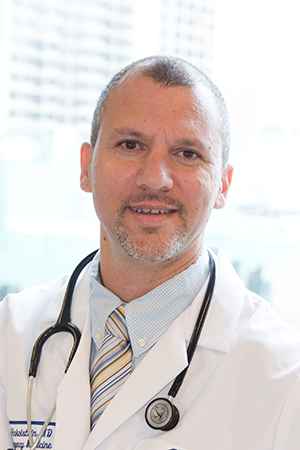
Dr. Yaron Finkelstein, a professor of pediatrics, pharmacology and toxicology at the University of Toronto and a staff physician at the Hospital for Sick Children (known as SickKids), shared this fact with the Jewish Independent in advance of Bridging Hope: Science and Testimonial in the Fight Against Addiction. Presented by Canadian Friends of the Hebrew University of Jerusalem, King David High School (KDHS) and Vancouver Talmud Torah (VTT), the Sept. 26 event at KDHS will also feature Dr. Yonatan Kupchik, senior lecturer, department of medical neurobiology, the Hebrew University of Jerusalem (HU), and Dr. Rami Yaka, head of the School of Pharmacy at HU, discussing the science of addiction. The testimonial part of the gathering will be shared by members of the Epstein-Bogdonov family. In this issue of the Independent, we talk to the doctors. Next issue, we will meet Elana Epstein and David Bogdonov, who, with their son, Noah Bogdonov, will speak in September about their family’s experience with addiction.

“Drug overdose, led by the opioids crisis, is an immense public health problem in BC, Canada and globally,” Finkelstein said. “Effectively addressing the loss of so many people for overdose daily, a largely preventable condition, must be a national priority. Indeed, youths are also highly affected, and we see them in the emergency departments, in clinics and, sadly, on the streets. Further, some youths use overdose as a common means of self-harm and suicide attempt.”

Finkelstein added that “most medications administered to children, particularly in hospitals (up to 85% in some acute care settings) have not been properly studied and approved in this population. Rather, we ‘borrow’ them from our experience in adults, scale the dose down to the child’s weight and hope to achieve the same effects and outcomes. However, we know this is not always the case, sometimes the outcomes are unwarranted, and I have personally noticed that repeatedly over the years. The goal of my research program is to work hard and close this knowledge gap – find the safest and most effective medications for children, and tailor their dosing regimens to the pediatric needs.”  

photo - Dr. Yaron Finkelstein
Dr. Yaron Finkelstein (photo from Sickkids website)

At Bridging Hope, Finkelstein will discuss “the impacts of cannabis legalization on pediatric poisonings – trends and severity (for example, many do not appreciate that edible cannabis products can kill a child) – and on mental health, including addiction and the risk of developing schizophrenia in youths and adults.”

Canada became the second country to legalize cannabis for recreational use in 2018, he said. “This ‘natural experiment’ has led to numerous unanticipated outcomes, many have negative impacts on public health, and particularly on children.”

Finkelstein’s main research is centred on pediatric therapeutics in acute-care settings, with the long-term goal of optimizing drug safety.

“During my clinical clerkship in medical school, my passion to help children grew tremendously, and I was inspired by my mentors,” he shared. “Children have immense resilience, and their recovery is often fast and remarkable, and provides hope. I was always fascinated by the mechanistic actions of drugs on the human body, and combining those passions felt natural.”

“From the early beginning of my studies, I was thrilled to understand how the brain functions,” said Yaka, who not just heads HU’s School of Pharmacy but conducts research as well. “The brain reward circuitry is the most important system in any living creature, since it is responsible for our survival and reproduction, therefore, our existence. My main research is focused on synaptic function in health and disease.”

photo - Dr. Rami Yaka
Dr. Rami Yaka (photo from HU website)

Yaka joined the School of Pharmacy in 2003 and has served in many capacities. “Since I feel that the School of Pharmacy is like my second home and I really care about its future, and since I have all the necessary experience to take this mission, I volunteered to head the school,” he said. “Maintaining the right balance between the administrative duties and the research (my main cause of being here) is challenging. I work harder and try to pay the same attention to both tasks without reducing any effort for either.”

On Sept. 26, Yaka will talk about “‘out of the box’ research to battle drug addiction.”

“Since addiction to drugs, screens, food, etc., is very common and spreads all over the world very easily, this subject is very popular among laypeople,” he said. “Therefore, for me, it’s easy to adopt lay language to explain in simple words what the problem is and what we can do to avoid having it. I think that a huge part of the problem is the lack of knowledge among users (mainly young) about the adverse effects and negative impact that drugs have on the brain.”

With respect to educating youth and engaging them more broadly in science, Kupchik sees his role as a principal investigator at a leading university as “not only to generate new knowledge that may lead the world forward but also to plant the seeds for the next generation of principal investigators.”

“In Israel,” said Kupchik, “there are several programs that select the top high school students in the country and expose them to academia at their early age. This is excellent, but … there are many excellent students that we may be missing as a society just because they live in underprivileged places. Therefore, we try in the lab to specifically target those populations of students, and we do it in various ways. For example … [we] started an initiative that invites local high school students to scientific conferences taking place in their vicinity. For many students, this is the first interaction with science and many of them reported later that it induced interest in the scientific world. We also invite high school students to our laboratory and provide an interactive experience in which they learn about the brain and how scientific research is performed.”

photo - Dr. Yonatan Kupchik
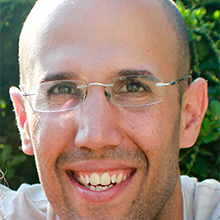
Dr. Yonatan Kupchik (photo from HU website)

What most intrigues Kupchik about neurobiology “is how a biological organ, composed of billions of neurons that communicate with each other, generates such complex phenomena as behaviour, emotion, thoughts, etc.” His lab at HU researches the changes occurring in single neurons or in brain circuits in drug addiction or obesity. Among other things, they are currently collaborating with two neighbouring labs.

“One is with the laboratory of Dr. Shai Sabbah, an expert in the neurobiology of light processing in the eye. It is known that exposure to light can affect mood and the neural activity in brain areas related to emotions. We are investigating in this collaboration whether light exposure could also affect drug-seeking behaviour.

“Another collaboration is with the laboratory of Dr. Danny Ben-Zvi, an endocrinologist and expert of the bariatric surgery. As bariatric surgery decreases the craving for rewarding foods, we are now investigating together whether the bariatric surgery drives permanent changes in the reward system of the brain and whether it could affect the craving for other, non-food, rewards.”

Kupchik said, “We believe that there are many similarities between behaviours that may reflect addiction, such as drug dependence, overeating, gambling, hoarding, computer gaming, social media use and so on, and hope that understanding the neurobiological mechanisms in one kind of addiction could hint about the mechanisms of other addictions. We chose to focus on drug addiction and on obesity both because these are two main global health challenges that remain unsolved and because these are conditions that can be modeled in laboratory animals.”

At King David High School, Kupchik “will try to show some of the permanent changes we found that occur in the reward system after using cocaine, and after withdrawal.”

For tickets ($18) to Bridging Hope, visit register.cfhu.org/bridginghope. 

Posted on August 23, 2024August 22, 2024Author Cynthia RamsayCategories LocalTags addiction, Bridging Hope, Canadian Friends of the Hebrew University, CFHU, disease, Hebrew University, KDHS, King David High School, Rami Yaka, science, SickKids, Vancouver Talmud Torah, VTT, Yaron Finkelstein, Yonatan Kupchik
Fringe Fest coming soon

Fringe Fest coming soon

Jem Rolls’ The Kid Was a Spy is part of this year’s Vancouver Fringe Festival, which runs Sept 5-15. Other Jewish community members with shows include Rita Sheena, with Everybody Knows: Leonard Cohen Dance Theatre, and Theatre Terrific artistic director Laen Hershler and Susan Bertoia co-direct Proximity: The Space Between Us, which was co-created by an all-abilities cast. For the full festival lineup and tickets, visit vancouverfringe.com.

Format ImagePosted on August 23, 2024August 22, 2024Author Vancouver Fringe Festival press materialCategories Performing ArtsTags Jem Rolls, Laen Hershler, Rita Sheena, science

Pill-popping for peace?

Antisemitism, dubbed “the longest hatred,” has seemed impervious to challenge. It is a social problem that shifts to meet demand, allowing perpetrators to tailor it to fit their “need.” What if there were a pill you could prescribe to “cure” a person of antisemitism? There may be.

It seems almost like an April Fool’s joke or a Purim spoof, but the timing isn’t quite right. Rob Eshman, senior contributing editor to the Forward, published a piece last weekend suggesting there may indeed be a pharmaceutical answer to this age-old problem.

MDMA, the understandably needed short form for the drug methylenedioxymethamphetamine – aka “Ecstasy” or “Molly” – has been popular for some time, primarily with people who enjoy what the U.S. National Institutes of Health calls its effects of “sympathomimetic arousal, sensual enhancement, feelings of euphoria, and emotional closeness to others.”

Like most good things, of course, this drug comes with a wide range of unwelcome side effects. But the trade-offs have been deemed worthy enough that the drug has been used in Israel since 2019 to combat post-traumatic stress disorder, Eshman writes, and the U.S. Food and Drug Administration is expected to approve it for some uses in the next couple of years.

Israel’s use of MDMA for PTSD is far from the only Jewish connection the author found. The drug was first synthesized more than a century ago by Alexander Shulgin, a California pharmacologist whose Jewish family fled Russia, and who has been called “the zeyde of psychedelics.”

Last month, science journalist Rachel Nuwer (also Jewish) published the book I Feel Love: MDMA and the Search for Connection in a Fractured World, in which she shares the story of a white supremacist who was integral to the 2017 hate rally in Charlottesville, Va. After treatment with MDMA, the individual renounced his racist orientation and declared “Love is the most important thing.”

If there is a chance that an ingestible element (currently a banned substance in Canada, the United States and most places) could address a major scourge of civilization – not just antisemitism but all forms of hatred – do we not owe it to ourselves to allocate resources to investigating the pros (and cons)?

A variety of research is ongoing, of course, including an annual Jewish Psychedelic Summit, where medical, religious, psychology and other experts discuss psychedelics and Judaism. (It’s a virtual affair, so one can only imagine the hospitality suites if it were in-person.)

The application of plant medicines and synthetic drugs to combat what we generally deem a social problem may seem dubious – and researchers say it probably wouldn’t work if the recipient isn’t predisposed to change. However, the idea may not be as outrageous as it sounds. We recently ran an article about the late psychotherapist Dr. Theodore Isaac Rubin, whose landmark 1990 book Anti-Semitism: A Disease of the Mindposited that bias against Jews could in many instances be considered a mental disorder. We have long accepted, welcomed even, pharmaceutical responses to treatable mental issues. Why not this one?

Of course, anything that changes brain chemistry or neurobiology should be approached with immense care – more care, for example, than we have demonstrated in wildly embracing over the past several decades the new technologies that have been shown to shorten our attention spans and alter the functioning of our brains, as we discussed in this space last issue.

At the same time, we would be foolish to ignore the potential for something that could ameliorate some of the worst characteristics of the human experience. Think back at the horrors that might have been alleviated had we been able to slip a “love potion” into the water glasses of history’s most evil figures.

Some experts, Eshman explains, are looking into the role MDMA could play in addressing the Israeli-Palestinian conflict. While we work on other avenues for the changes needed to bring more love and justice to the challenges inherent in that conflict, if there is a glimmer of hope that a chemical solution exists for some of the most destructive features of our species, we would be fools to dismiss it.

Posted on July 21, 2023July 20, 2023Author The Editorial BoardCategories From the JITags Alexander Shulgin, Israeli-Palestinian conflict, MDMA, mental health, methylenedioxymethamphetamine, psychedelics, PTSD, Rachel Nuwer, Rob Eshman, science, Theodore Isaac Rubin
Tracking earth’s winds

Tracking earth’s winds

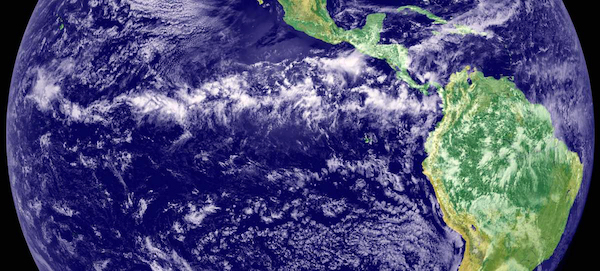
A band of clouds above the equator, created by the rise of air within the Hadley cell and responsible for heavy rainfall in this region. (photo from Weizmann Institute)

Why do parts of earth become rainforests, whereas others turn into deserts? A new study exposes the far-reaching impact of human activity on a global airflow phenomenon that crucially affects earth’s regional climates.

In the tropics, above the equatorial rainforests and oceans, the strong solar radiation hitting earth propels a stream of warm, moist air far upward. Once reaching the upper atmosphere, this stream moves in both hemispheres toward the poles; it then descends in the subtropical regions at around 20 to 30 degrees latitude, contributing to the creation of massive deserts like the Sahara in northern Africa. From there, the stream – known as the Hadley cell – returns to the equator, where it heats up and rises again, embarking on its circular journey anew.

The two Hadley cells – the northern and the southern – circulate most of the heat and humidity across low latitudes, greatly affecting the global distribution of climate regions. When the warm, moist air rises, it cools down, allowing water vapour to condense, which leads to heavy rainfall deep in the tropics. In contrast, the streams of air that descend toward the earth in subtropical regions are accompanied by warm, dry winds that reduce rainfall. In essence, the Hadley cells determine which regions in the tropics and the subtropics will have arid deserts and which will be blessed with abundant rainfall. Israel is located on the margins of the northern Hadley cell, which contributes to the country’s semiarid climate.

Because of their huge significance, the Hadley cells are of great interest to climate scientists. However, while there is plenty of global data about rainfall and temperature, measuring airflow throughout the atmosphere is next to impossible. Adding to the quandary, the various models seeking to make sense of the Hadley cells have been found to contradict one another. Global climate models, which are used for climate projections, indicate that the northern Hadley cell has weakened over the past few decades, whereas observation-based analyses suggest the exact opposite.

An uncertainty over a system that is so essential to earth’s climate detracts from the researchers’ ability to assess how much humans have contributed to recent climate change. This, in turn, undermines the credibility of climate projections, making it ever harder to formulate policies required for dealing with the climate crisis. The latest report of the Intergovernmental Panel on Climate Change, the most important document in the field, makes a special point of this issue.

In a paper published in Nature, Dr. Rei Chemke, of the earth and planetary sciences department at the Weizmann Institute of Science, and Dr. Janni Yuval, of the Massachusetts Institute of Technology, address the uncertainty that has plagued the existing models for the past two decades. They propose an observation-based method for measuring the intensity of airflow in the Hadley cells.

To tackle the challenge, Chemke and Yuval looked for readily available data they could use to formulate a new way of measuring the cells’ intensity. After examining physics equations describing airflow, they identified a relationship between the Hadley cell intensity and a constantly monitored parameter: air pressure at sea level. They then examined observational data collected over several decades and reached the conclusion that the intensity of the northern Hadley cell has indeed been weakening – just as suggested by global climate models. Moreover, they were able to show, with more than 99% certainty, that this weakening has been the result of human activity and will likely continue.

What, then, is to be expected? Over the coming decades, the weakening of the northern Hadley cell is likely to mitigate the projected precipitation changes at low latitudes. It will act to temper both the increase of rainfall in equatorial regions and the reduction of rainfall in the subtropical regions. This tempering, however, might only reduce, but not overcome, the projected aridification and desertification of Israel.

“In our follow-up study,” said Chemke, “we will examine whether a similar weakening in the Hadley cell has happened in the past thousand years owing to natural phenomena – and that will allow us to assess how unprecedented these human-induced changes are.”

– Courtesy Weizmann Institute

Format ImagePosted on June 9, 2023June 8, 2023Author Weizmann InstituteCategories IsraelTags climate change, climate crisis, science, weather, Weizmann Institute, winds
Uncovering Israel’s wonders

Uncovering Israel’s wonders

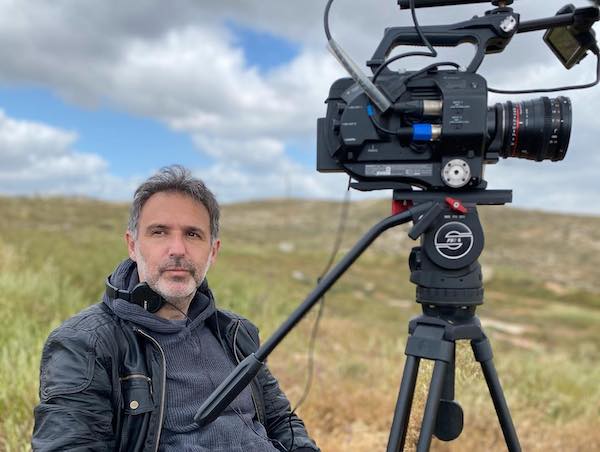
Igal Hecht filming Secrets of the Land. (photo from Chutzpa Productions Inc.)

The Western Wall area, with thousands of metres of subterranean space, contains much that is yet to be discovered. The latest find in this space is a market. While not open to the public, people can get a glimpse of the ancient market on the new Yes TV documentary series Secrets of the Land, directed, produced and written by Israeli-Canadian filmmaker Igal Hecht.

Each episode of Secrets of the Land, which is presented by Chutzpa Productions Inc., takes viewers behind the scenes of substantial excavations in Israel, and features some of the region’s top archeologists and most historically significant sites. The series debuted March 15, and runs each week for 13 episodes.

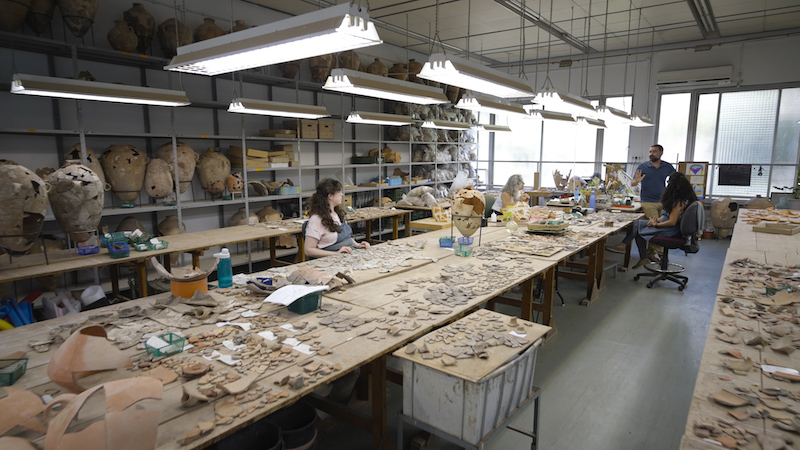
In addition to on-site discoveries, Hecht visits the labs that explore the meanings of each artifact.

“I realized that the way archaeology is explored today is very CSI,” said Hecht, referring to the popular television series. “The excavations themselves might be low-tech, but everything that comes after, such as carbon dating and things along those lines are very high-tech.”

One of many examples is when archeologists found grape seeds in 2,000-year-old donkey feces and, through that, determined the types of people who lived in the area.

photo - Prof. Erez Ben-Yosef speaking with colleagues in the archeology lab at Tel Aviv University
Prof. Erez Ben-Yosef speaking with colleagues in the archeology lab at Tel Aviv University. (photo from Tel Aviv University / Chutzpa Productions Inc.)

Hecht and his crew – which included Lior Cohen, Gabriel Volcovich, Nikki Greenspan and Julian Hoffman – take viewers on a journey through various parts of the Holy Land. Hecht said he learned something every step of the way.

“I had very little knowledge [of archeology],” Hecht told the Independent. “In fact, in the show, I don’t pretend that I do. That makes the show work. I am there experiencing the discoveries in the same manner that the audience does, as they watch at home.”

Among many sites, the crew visited Timna, the location of Solomon’s Mines, where Hecht was awed by the landscape. “The rock formation is something you’d see in Petra in Jordan or the Grand Canyon,” he said. “There’s so much beauty and history to explore there.”

Other locales included Tower of David, also known as the Citadel, located near the Jaffa Gate entrance to the Old City of Jerusalem. There’s also an episode about Shiloh, in Samaria, or the West Bank, where the Israelites, prior to King David’s time, set up a sanctuary and city, and where the Ark of the Covenant was housed for hundreds of years. Meanwhile, Magdala is home to an ancient city from the first century, where recent excavations revealed the Migdal Synagogue, dating from the Second Temple.

Over the past quarter-century, Hecht has been involved in the production of more than 50 documentary films and more than 20 television series. His projects have appeared on Netflix, BBC, Documentary Channel, CBC, HBO Europe, and others. Secrets of the Land is the latest in a string of Jewish-themed films, such as A Universal Language, which taped six comedians performing in Israel. An upcoming project includes The Jewish Shadow, a documentary that explores the lives of Soviet Jews in 1970s Ukraine.

For Hecht, Secrets of the Land wasn’t merely a project, but very much a passion to do his part to help the Jewish people.

“I think the biggest takeaway for Jewish audiences is the historical and unbreakable connection of the Jewish people to that land,” he said. “That archeology truly proves that the Jews were, in fact, living in Judea and Samaria, Jerusalem and all over the Fertile Crescent thousands of years ago.”

Dave Gordon is a Toronto-based freelance writer whose work has appeared in more than 100 publications around the world. His website is davegordonwrites.com.

Format ImagePosted on April 14, 2023April 12, 2023Author Dave GordonCategories TV & FilmTags archeology, history, Igal Hecht, Israel, science, Secrets of the Land
Look on bright sides of earth

Look on bright sides of earth

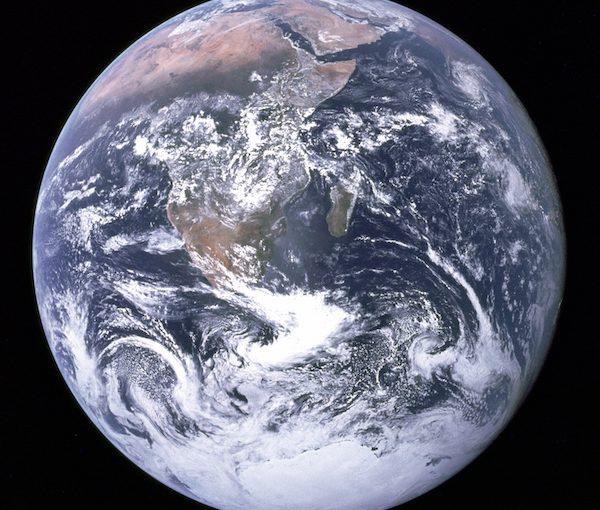
The southern and northern hemispheres look equally bright in this iconic image of earth, titled “The Blue Marble,” which the crew of the Apollo 17 spacecraft took on Dec. 7, 1972. (photo from NASA)

Why do earth’s hemispheres look equally bright when viewed from space? Weizmann Institute scientists offer an answer to this decades-old question.

When looking at the earth from space, its hemispheres – northern and southern – appear equally bright. This is unexpected because the southern hemisphere is mostly covered with dark oceans, whereas the northern hemisphere has a vast land area that is much brighter than these oceans. For years, the brightness symmetry between hemispheres remained a mystery. In a new study, published in the Proceedings of the National Academy of Sciences (PNAS), Weizmann Institute of Science researchers and their collaborators reveal a strong correlation between storm intensity, cloudiness and the solar energy reflection rate in each hemisphere. They offer a solution to the mystery, alongside an assessment of how climate change might alter the reflection rate in the future.

As early as the 1970s, when scientists analyzed data from the first meteorological satellites, they were surprised to find out that the two hemispheres reflect the same amount of solar radiation. Reflectivity of solar radiation is known in scientific lingo as “albedo.” To better comprehend what albedo is, think about driving at night: it is easy to spot the intermittent white lines, which reflect light from the car’s headlights well, but difficult to discern the dark asphalt. The same is true when observing earth from space: the ratio of the solar energy hitting the earth to the energy reflected by each region is determined by various factors. One of them is the ratio of dark oceans to bright land, which differ in reflectivity, just like asphalt and intermittent white lines. The land area of the northern hemisphere is about twice as large as that of the southern and, indeed, when measuring near the surface of the earth, when the skies are clear, there is more than a 10% difference in albedo. Still, both hemispheres appear to be equally bright from space.

In this study, the team of researchers, led by Prof. Yohai Kaspi and Or Hadas of Weizmann’s earth and planetary sciences department, focused on another factor influencing albedo, one located in high altitudes and reflecting solar radiation – clouds. The team analyzed data derived from the world’s most advanced databases, including cloud data collected via NASA satellites (CERES), as well as data from ERA5, which is a global weather database containing information collected using a variety of sources in the air and on the ground, dating back to 1950. ERA5 data was used to complete cloud data and to cross-correlate 50 years of this data with information on the intensity of cyclones and anticyclones.

photo - Prof. Yohai Kaspi, left, and Or Hadas of the Weizmann Institute of Science
Prof. Yohai Kaspi, left, and Or Hadas of the Weizmann Institute of Science. (photo from Weizmann Institute)

Next, the scientists classified storms of the last 50 years into three categories, according to intensity. They discovered a direct link between storm intensity and the number of clouds forming around the storm. While northern hemisphere and land areas in general are characterized by weaker storms, above oceans in the southern hemisphere, moderate and strong storms prevail. Data analysis showed that the link between storm intensity and cloudiness accounts for the difference in cloudiness between the hemispheres.

“Cloud albedo arising from strong storms above the southern hemisphere was found to be a high-precision offsetting agent to the large land area in the northern hemisphere, and thus symmetry is preserved,” said Hadas, adding: “This suggests that storms are the linking factor between the brightness of earth’s surface and that of clouds, solving the symmetry mystery.”

Will climate change have an impact?

Earth has been undergoing rapid change in recent years, owing to climate change. To examine whether and how this could affect hemispheric albedo symmetry, the scientists used CMIP6, a set of models run by climate modeling centres around the world to simulate climate change. One of these models’ major shortcomings is their limited ability to predict the degree of cloudiness. Nevertheless, the relation found in this study between storm intensity and cloudiness enables scientists to assess future cloud amounts, based on storm predictions.

Models predict global warming will result in a decreased frequency of all storms above the northern hemisphere and of weak and moderate storms above the southern hemisphere. However, the strongest storms of the southern hemisphere will intensify. The cause of these predicted differences is “Arctic amplification,” a phenomenon in which the North Pole warms twice as fast as earth’s mean warming rate. One might speculate that this difference should break hemispheric albedo symmetry. However, the research shows that a further increase in storm intensity might not change the degree of cloudiness in the southern hemisphere because cloud amounts reach saturation in very strong storms. Thus, symmetry might be preserved.

“It is not yet possible to determine with certainty whether the symmetry will break in the face of global warming,” said Kaspi. “However, the new research solves a basic scientific question and deepens our understanding of earth’s radiation balance and its effectors. As global warming continues, geoengineered solutions will become vital for human life to carry on alongside it. I hope that a better understanding of basic climate phenomena, such as the hemispheric albedo symmetry, will help in developing these solutions.”

Other collaborators in conducting this study include Dr. George Datseris and Prof. Bjorn Stevens of Max Planck Institute for Meteorology, Germany; Dr. Joaquin Blanco and Prof. Rodrigo Caballero of Stockholm University, Sweden; and Dr. Sandrine Bony of Sorbonne University, France. Kaspi is head of the Helen Kimmel Centre for Planetary Science; his research is supported by the Yotam Project and Rene Braginsky.

– Courtesy Weizmann Institute

Format ImagePosted on April 14, 2023April 12, 2023Author Weizmann InstituteCategories IsraelTags climate change, earth, moon, science, Weizmann Institute, Yohai Kaspi
BGU moving to solar

BGU moving to solar

(photo from BGU)

Ben-Gurion University of the Negev will soon produce 20% of its energy needs on the Marcus Family Campus from solar energy. Recently, solar panels were installed on the roofs of three buildings on campus in the first stage of the initiative.

The project is estimated to cost NIS 2 million (approximately $736,000 Cdn). Once completed, it will replace more polluting fuels that are typically used to power buildings. The university is expected to recoup this investment within a few years as it reduces its energy expenses.

Dr. Daniel Farb has donated a small wind turbine called the Tulip, developed by his company, which will charge laptops and phones from wind energy.

In April 2022, BGU announced it would stop investing in companies that produce oil and coal and move those investments and all future investments into alternative energies and investment vehicles governed by ESG (environmental, social and governance) principles.

The university was awarded Green Campus status by the Israeli Ministry of Environmental Protection in 2010 and has been among the top universities worldwide in green rankings. Bike racks, electronic recycling and solar and wind-powered charging stations can be found all over campus.

BGU’s Jacob Blaustein Institutes for Desert Research have been studying environmental issues for 50 years. Leveraging these strengths, the Goldman Sonnenfeldt School of Sustainability and Climate Change was dedicated in May 2022. It brings together more than 150 labs on the university’s three campuses to tackle these issues.

 – Courtesy Ben-Gurion University of the Negev, BC & Alberta Region

Format ImagePosted on April 14, 2023April 12, 2023Author CABGU - BC & Alberta RegionCategories IsraelTags Ben-Gurion University, climate change, environment, science, solar power
Research in community living

Research in community living

Left to right: Rachelle Patille, Cari Randa, Eireann O’Dea (Jewish Seniors Alliance board member and event moderator) and Boah Kim. (Courtesy JSA)

On Dec. 4, Jewish Seniors Alliance presented their fall symposium: Aging in Place: Gerontology Research in Community Living. The speakers – Rachelle Patille, Cari Randa and Boah Kim – and the moderator, Eireann O’Dea, are all graduate students in gerontology from Simon Fraser University and they shared their research on intergenerational connections, dementia-friendly communities and the role of informal caregivers for older adults.

The event took place at the Peretz Centre but was also available by Zoom. Aside from the JSA annual general meeting, this gathering was the first event presented in a dual format since the outbreak of COVID. Fifty participants joined online and about 20 were present in person.

Tammi Belfer, president of JSA, explained that the JSA’s fall symposium focuses on an educational theme and offers a more serious discussion than other programs. She said JSA wishes to provide outreach, advocacy and education services for all seniors, with the goal being “Seniors Stronger Together.” She then introduced the speakers and turned over the mic to O’Dea, who is a PhD candidate in gerontology at SFU. O’Dea’s interests are in social participation among older adults, particularly in volunteering and intergenerational activities; experiences among ethnocultural minority groups; and generativity. She has been a board member of JSA for three years.

The first speaker, Patille, conducts research focused on “intergenerational opportunities in bridging the gap between generations in Metro Vancouver.” She said she grew up having a lot of contact with her grandmother, and she believes that this fact led to her interest is this field. She defined intergenerational contact as a social benefit that facilitates mutual interaction and exchange between generations, and she discussed factors in society that have impeded such contact; for example, age segregation and geographic divisions among generations that lead to ageism.

Older adults living alone is the number one risk factor for isolation and loneliness, she said. These factors underline the need for connections through programming that will bring older adults into contact with other people, including other older adults. This can be accomplished through such things as home sharing, community programs, tutoring and art projects. These projects allow older adults to be part of the community through participation and mentoring, increasing the person’s feeling of self-worth. For some young people, this may be their first contact with older adults and can lead to reciprocity of social networks.

Patille spoke about generativity, which is the passing down and transfer of knowledge and information 

between generations. She will also be looking at “voluntary kin”; that is, having younger members of society replace missing family for older adults.

The next speaker, Kim, focuses her research interests on integrated care, formal and informal caregiving, continuity of care and healthy aging. One of the difficulties for older adults is navigating complex community and healthcare systems. Two-thirds of older adults have health limitations and thus need a close connection with the healthcare system, she said. A geriatric care manager could be helpful in bridging gaps in services and helping to predict difficulties, she added. Many factors such as age, background or health issues, cannot be changed, but a care manager and caregivers could help with these situations.

The third speaker, Randa, is the project manager of the Public Health Agency of Canada-funded research project titled Dementia-Inclusive Streets and Community Access, Participation and Engagement (DEMSCAPE). The focus is on inclusion of those living with dementia in the 

general community, as 70% live in their own homes. Planned inclusion in neighbourhood design is paramount in creating areas of accessibility, especially outdoor spaces, she said. Randa will be interviewing participants mostly in an outdoor setting to learn their feelings about public spaces with regard to safety and comfort. She is planning a documentary about these issues and the tools available to help, and DEMSCAPE is developing a design and planning guide to aid dementia patients in the community.

In the discussion that followed the presentations, someone noted that many countries are further ahead of Canada in a number of these areas raised. One of these is the availability of affordable home care, which would further facilitate aging in place. Jackie Weiler, a member of the JSA board and also a member of the Senior Advisory Committee for the City of Vancouver, mentioned the idea of a senior planner to promote accessibility. 

Gyda Chud, chair of the program committee, brought the afternoon to a close with a quote from her 99-year-old mother, Gallia, expressing a hope for world peace, diversity, inclusion and social justice for all.

Shanie Levin is a Jewish Seniors Alliance Life Governor. She is also on the editorial committee of Senior Line magazine.

Format ImagePosted on December 23, 2022December 22, 2022Author Shanie LevinCategories LocalTags aging, Boah Kim, Cari Randa, community living, Eireann O’Dea, gerontology, Jewish Seniors Alliance, JSA, Rachelle Patille, science, seniors
Growing plants on the moon

Growing plants on the moon

Prof. Simon Barak of the Jacob Blaustein Institutes for Desert Research at Ben-Gurion University of the Negev, right, is coordinating all the plant biologists and imaging specialists. (photo from CABGU)

Can plants grow in a barren landscape such as the surface of the moon? If so, what types of plants? Could enough plants grow to support a future moon colony? These are the types of questions the Lunaria One consortium has set out to answer.

An experiment proposed by Lunaria One, known as Aleph, was selected by SpaceIL, a nonprofit aerospace organization, to be included as one of the payloads on board their Beresheet2 lander. The Beresheet2 mission, scheduled to launch in mid-2025, will consist of two landers, landing on each side of the moon, and an orbiter that will continue to orbit the moon for up to five years. Aleph will consist of a tray of seeds and dehydrated plants, a device that will water them, heaters and cameras to monitor the plants.

Prof. Simon Barak of the Jacob Blaustein Institutes for Desert Research (BIDR) at Ben-Gurion University of the Negev is coordinating all the plant biologists and imaging specialists. They include three Australians, one South African and two of his colleagues from BIDR at Ben-Gurion University: Prof. Aaron Fait and Dr. Tarin Paz-Kagan.

“The chosen experiment has enormous value both for our life here on earth and for humanity’s progress in space exploration,” said Shimon Sarid, SpaceIL chief executive officer. “Examining plant growth under extreme conditions will help us as far as food security is concerned. Plant growth in extreme conditions will help humanity in the long run. We are happy to cooperate with Lunaria One and are very excited.”

“The motivation for this mission comes from humanity’s passion to explore and see life thrive in barren landscapes,” explained Barak. “We see the Aleph payload as an important step towards our eventual goal of providing plants for food, medicine, oxygen production, CO₂-scrubbing and general well-being for future astronauts inhabiting the moon and beyond.”

“The central value guiding this project is that space exploration is for everyone; we don’t want a future where only autonomous and remote-controlled machines inhabit realms beyond earth, but where humans can live and thrive,” said Lunaria One director Lauren Fell. “The key to this is to get humans involved and to give them a say in how we get there. The Aleph project aims to open up the science and engineering behind growing life on the moon so that anyone can be involved.”

Growing plants on the moon means overcoming several challenges, such as massive temperature swings on the way to the moon, a water supply for the plants, and high temperatures when growing the plants. The plant types will need to be those that can germinate and grow to an appropriate size for imaging within 72 hours of deployment.

The research team expects their plant selections to be relevant for vertical farming and resource-challenged landscapes here on earth.

The project also has a strong citizen science component. Parallel science experiments will be carried out by amateurs (for example, high school students) and professionals to compare growth to that on the moon.

Additional universities participating in Lunaria One include Queensland University of Technology, the Royal Melbourne Institute of Technology and the Australian National University, in Australia, and the University of Cape Town, in South Africa.

“The earth is finite,” said Barak. “Its resources are finite. So humanity’s future depends upon reaching the stars.”

– Courtesy Canadian Associates of Ben-Gurion University of the Negev

Format ImagePosted on December 9, 2022December 8, 2022Author CABGUCategories IsraelTags Ben-Gurion University, Israel, moon, planets, science, Simon Barak, space travel
Averbach reaches Kamloops

Averbach reaches Kamloops

Day 17: Gary Averbach at Sicamous, a resort town about halfway between Calgary and Vancouver.

At press time, Gary Averbach had reached Kamloops, completing 23 days of his walk to raise money for cancer research, which started in Calgary on June 25. Averbach is doing the fundraising walk in memory of Robert (Bob) Golden, Ronnie Onkin, Darlene Spevakow and Angelita Tica.

In a June email, he wrote, “’Some years ago, as part of my ‘bucket list,’ I decided that, in my 80th year, I was going to walk from Calgary to Vancouver. But, early in 2021, my dear cousin, business partner and lifelong friend, Robert (Bob) Golden, was diagnosed with a rare and almost always fatal bone cancer, chondrosarcoma. On the eve of his passing, on Aug. 26,, 2021, Bob asked that I do my walk in his memory, to raise funds for cancer research, especially the insidious one that was killing him.

“Of course, I couldn’t refuse. And so I changed the focus from just being a personal bucket list item to cross off my list and instead started planning Bob’s Walk for Cancer Research.

“Then, sadly <\a> in the span of a little under seven weeks <\a> starting early in April, I lost two more cousins, Ronnie Onkin and Darlene Spevakow, and a treasured housekeeper, Angelita Tica, to lung, liver and pancreatic cancer, respectively.

“Because of those tragedies, I have since decided to do this walk in memory not just of Bob, but also in memory of Ronnie, Angelita and Darlene.”

At the end of Day 23, Averbach blogged, “So the challenge facing us today and the weeks ahead is not the ‘walk’ but making sure that we achieve our goal of $500,000, hopefully before I end the walk in August but most definitely by my 80th birthday on Oct. 10. My current projections – depending on the size of the outstanding gifts – has me as high as $425,000 to as low as $385,000.”

To donate, go to bccancerfoundation.com/events/community-event/bobs-walk-for-cancer-research. All donations over $10 will receive a tax receipt from the B.C. Cancer Foundation.

To follow Averbach’s blog, visit polarsteps.com/garyaverbach.

Format ImagePosted on July 22, 2022July 20, 2022Author Gary AverbachCategories LocalTags Bob's Walk, cancer, Gary Averbach, research, science

Posts pagination

Previous page Page 1 Page 2 Page 3 … Page 11 Next page
Proudly powered by WordPress